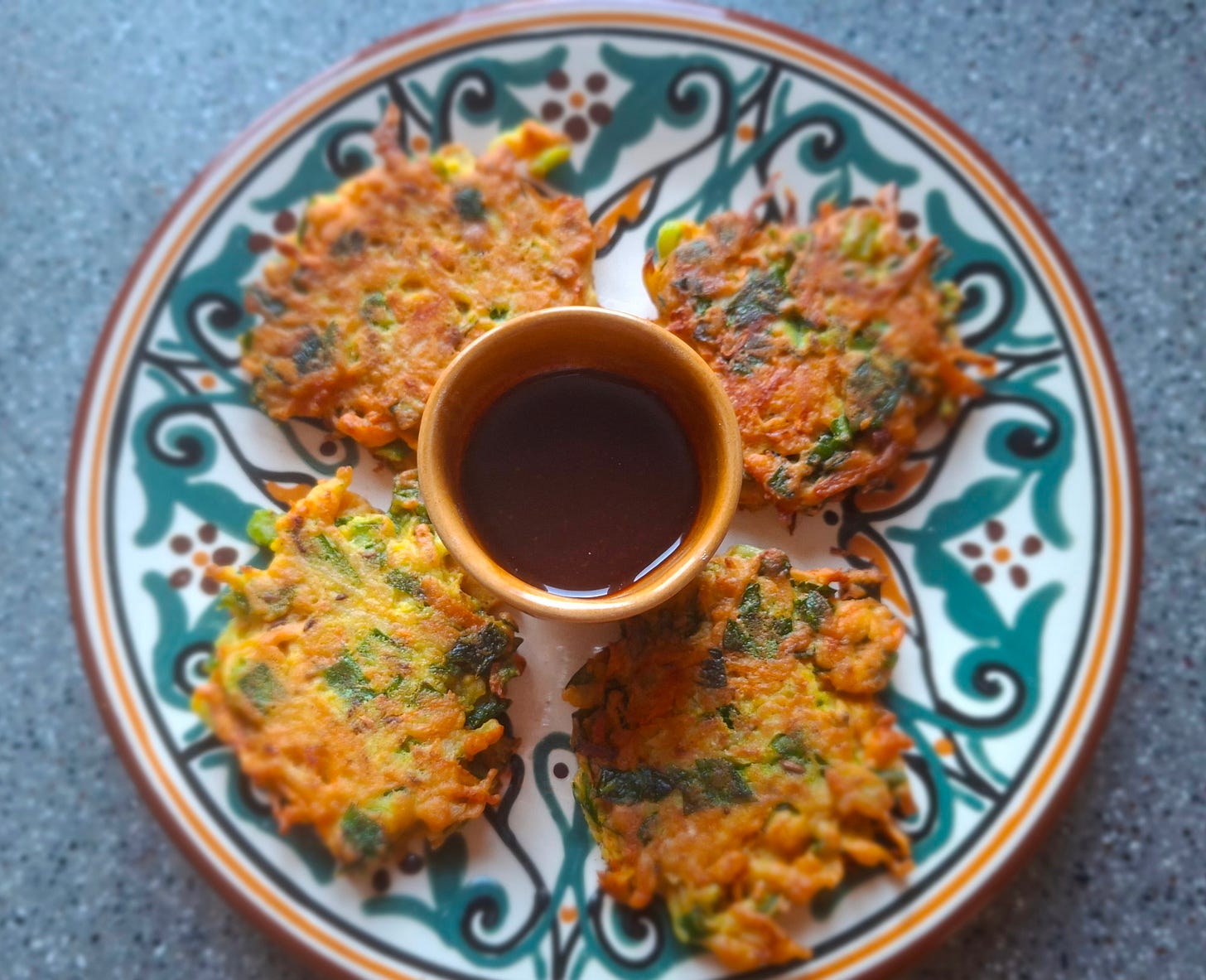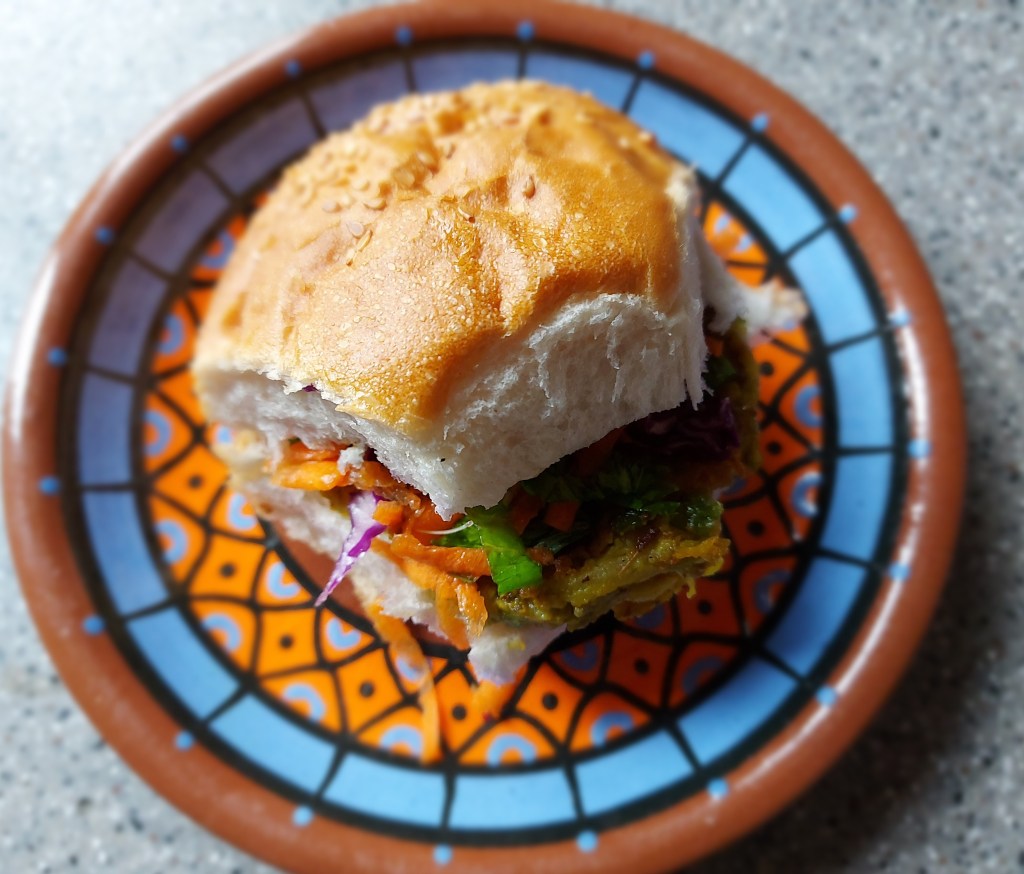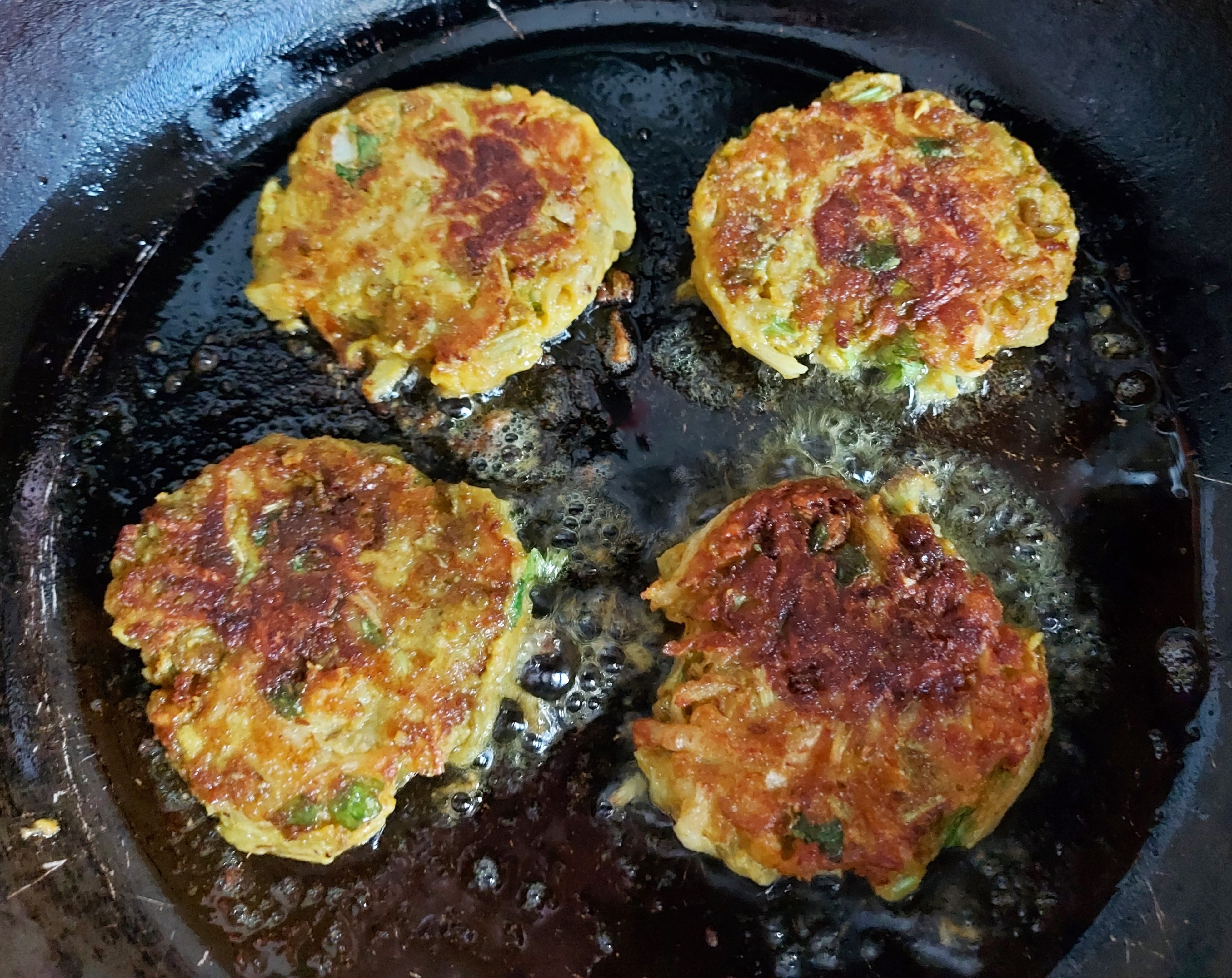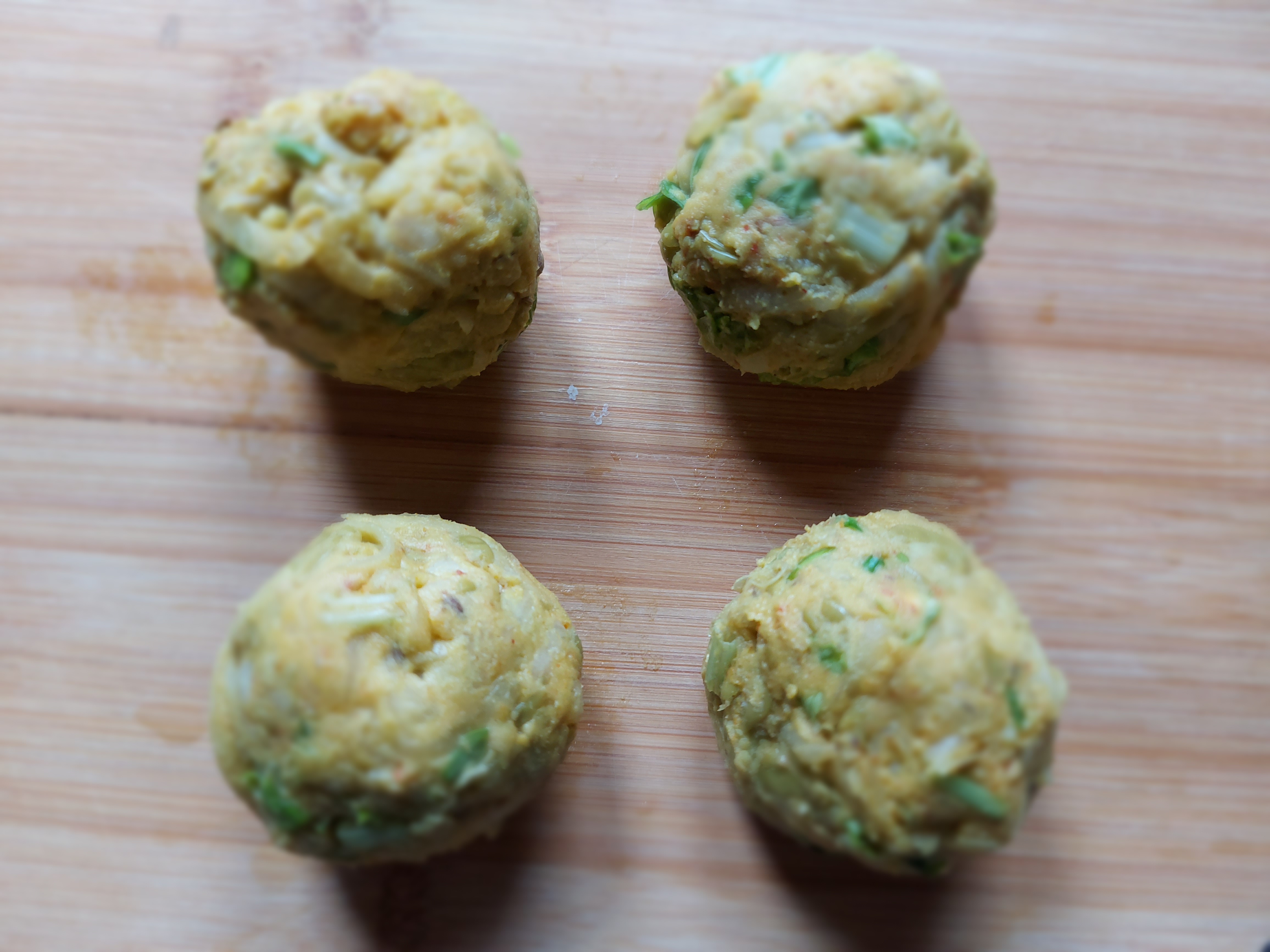
With autumn upon us once again, it’s time for pumpkin to make a return to the table. This versatile memeber of the squash family makes for perfect comfort food for the longer, chillier nights. KCC’s back catalogue features a number of pumpkin dishes – try this cousin of lasagne made with chickpeas and mixed greens and this roasted pumpkin with halloumi for starters.
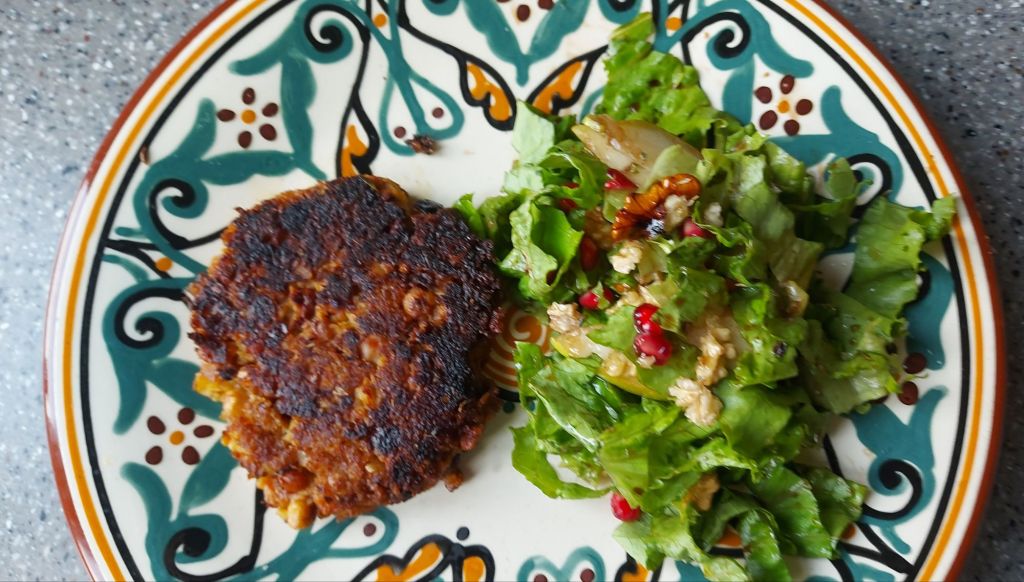
A nutty chickpea and pumpkin fritter served with a lettuce, pear, pomegranate and walnut salad
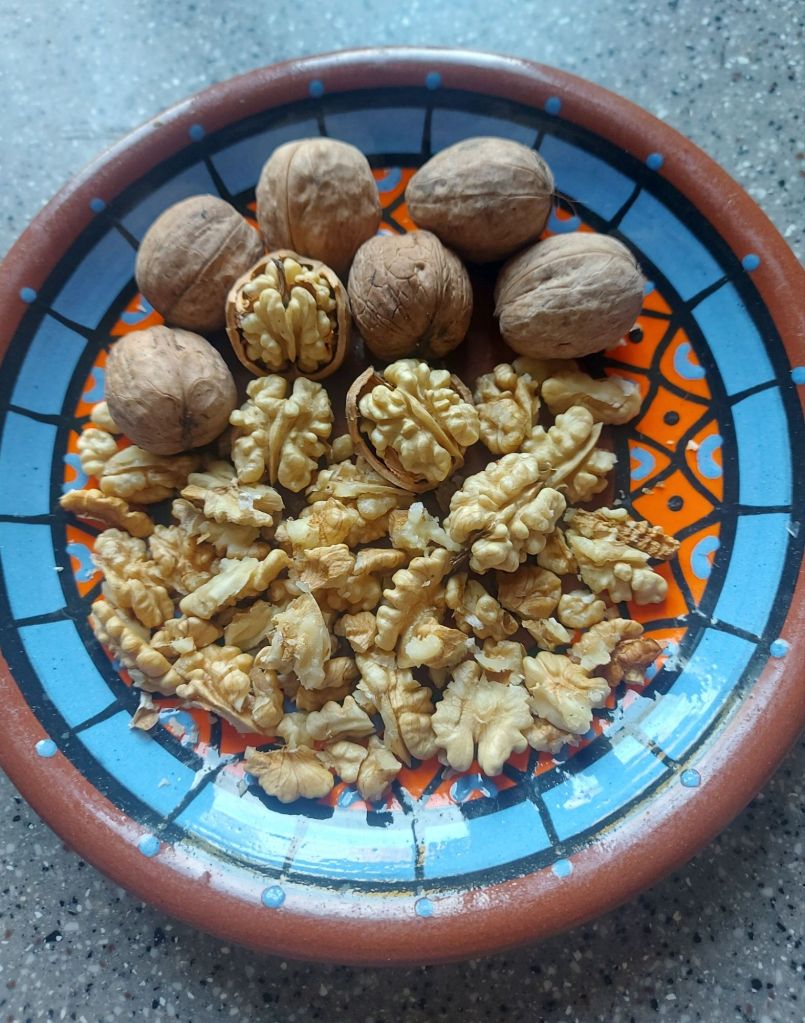
This time, we’re using the pumpkin in a fritter made with chickpeas and fine bulgur wheat. Recently, we recieved some walnuts from a friend of a friend’s dacha outside Almaty, here in Kazakhstan, which are ideal for adding a nutty edge to these chickpea and pumpkin fritters. We also added some walnuts to a fruity salad made with lettuce, pear and pomegranate seeds to accompany the fritters. Dress it with equal parts of balsamic vinegar and extra virgin olive oil.
This year’s walnuts fresh from the dacha in Almaty, Kazakhstan
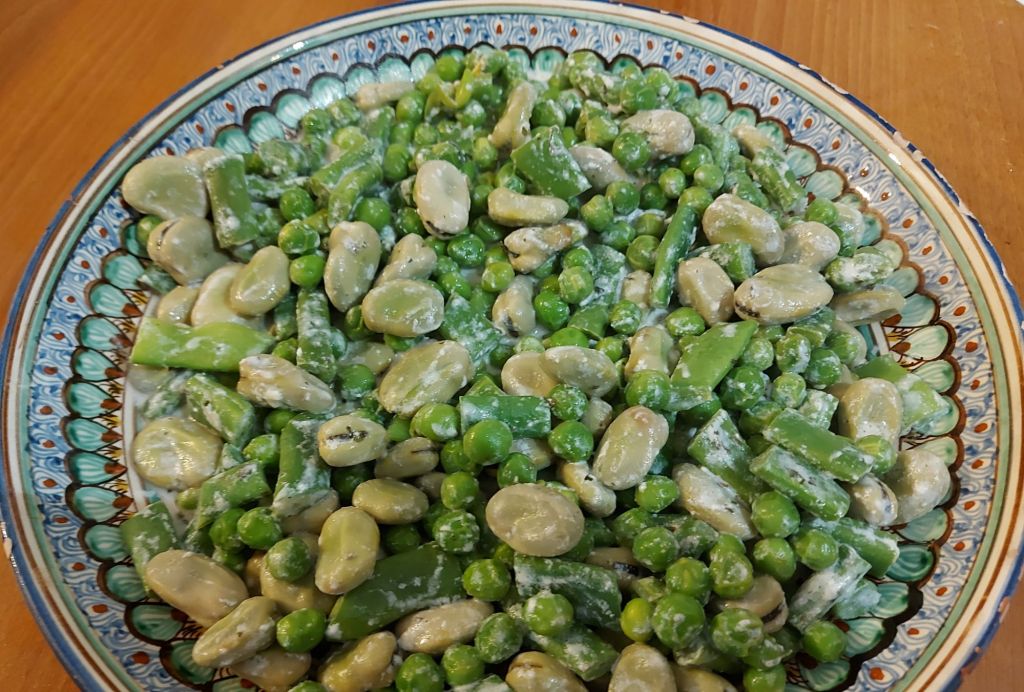
Summer is in full flow so it’s time for some lighter dishes that bring to the fore fresh seasonal ingredients at their best. I found this on-trend recipe that uses fresh peas, broad beans and runner beans while going through some old stuff in the UK recently.
A taste of summer
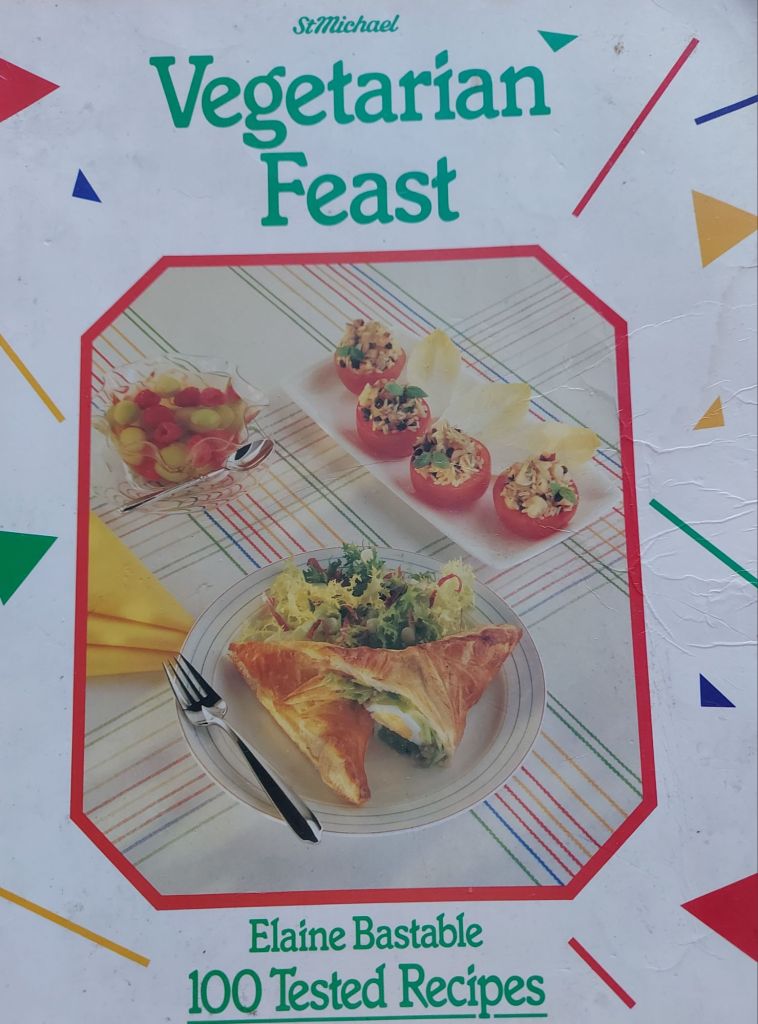
I was at my late parents’ old place and during the archaeological dig I found a copy of the first vegetarian cookbook that I owned – Elaine Bastable’s Vegetarian Feast, a Christmas present from way back in 1985. It was sold by Marks & Spencer under its StMichael guise.
Vegetarian Feast was quite advanced for its time with a recipe for Avocado (and Stilton) on Toast, a Felafel recipe and other dishes that were very exotic for Margaret Thatcher’s meat-heavy Britain of the 80s. The cookbook’s over-reliance on butter comes across in the 2025 filter as a bit dated, but it still stands the test of time in many respects.
A blast from the past
1985 was the year I finally took the plunge and went vegetarian. It had been coming for a while. As an impoverished student the meat that I could afford was of the type that had featured in documentaries of the time looking at the meat industry.
Affordable processed products such as burgers and sausages were shown to contain all parts of an animal – mashed up eyelids, lips, bollocks and toes, to be precise.
Although there are now many more vegans and vegetarians, not much has changed in the meat industry – as I write the Guardian is carrying this article on the shocking rise of factory farms across Europe and the UK.
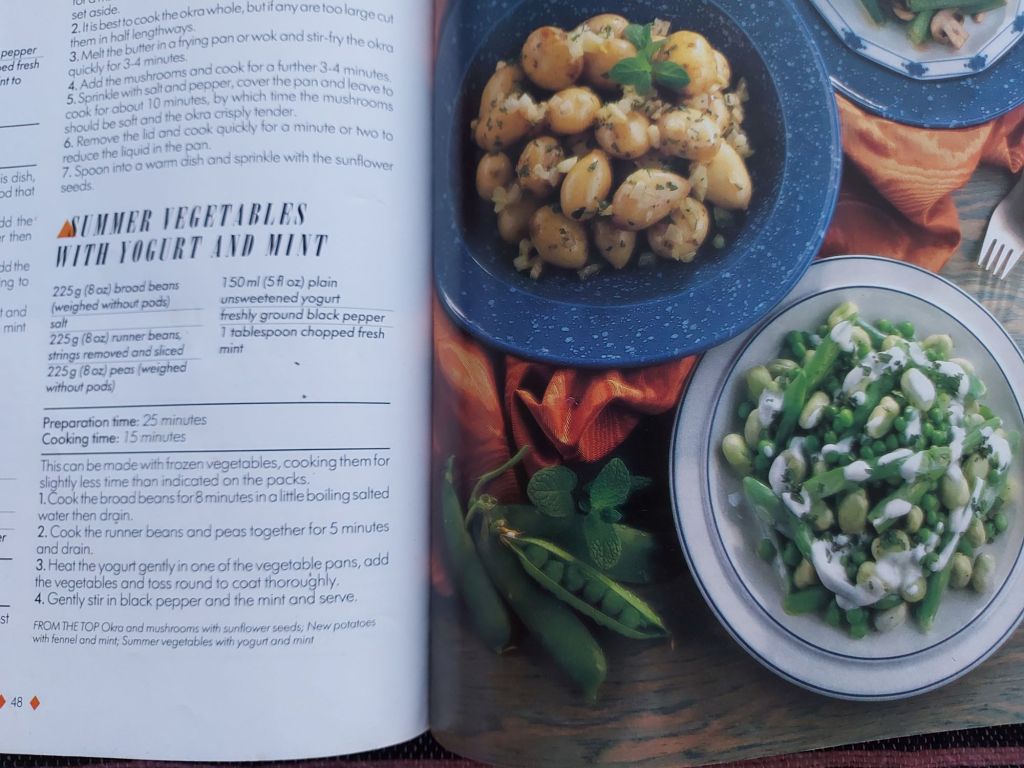
Here’s the recipe
In the summer of 1985 I had just finished uni and I was travelling through Yugoslavia, as was, to Greece via Bulgaria and Turkey. Bulgaria was a veggie turning point. Cafe menus featured a wide selection but when asking for a particular dish a frosty niama (approx: We don’t have it) was the usual response. Baked meat(of dodgyprovenance) was the only option other than abundant salads. Who needed meat, especially baked meat of unknown origin, with all those veggies on offer?
Moving on into Greece, after the vegetarian heaven of Turkey’s ev yemekleri cafes, I finally started eating tomatoes, which I’d hated with a vengeance since my childhood. The tomato breakthrough opened up many new veggie avenues. From that point on I stopped eating meat and haven’t looked back since.
So, turning back to Vegetarian Feast, I found the recipe for this side dish of summer vegetables and Datça market came up trumps with fresh peas, broad beans and runner beans. Check out the recipe in the picture above.
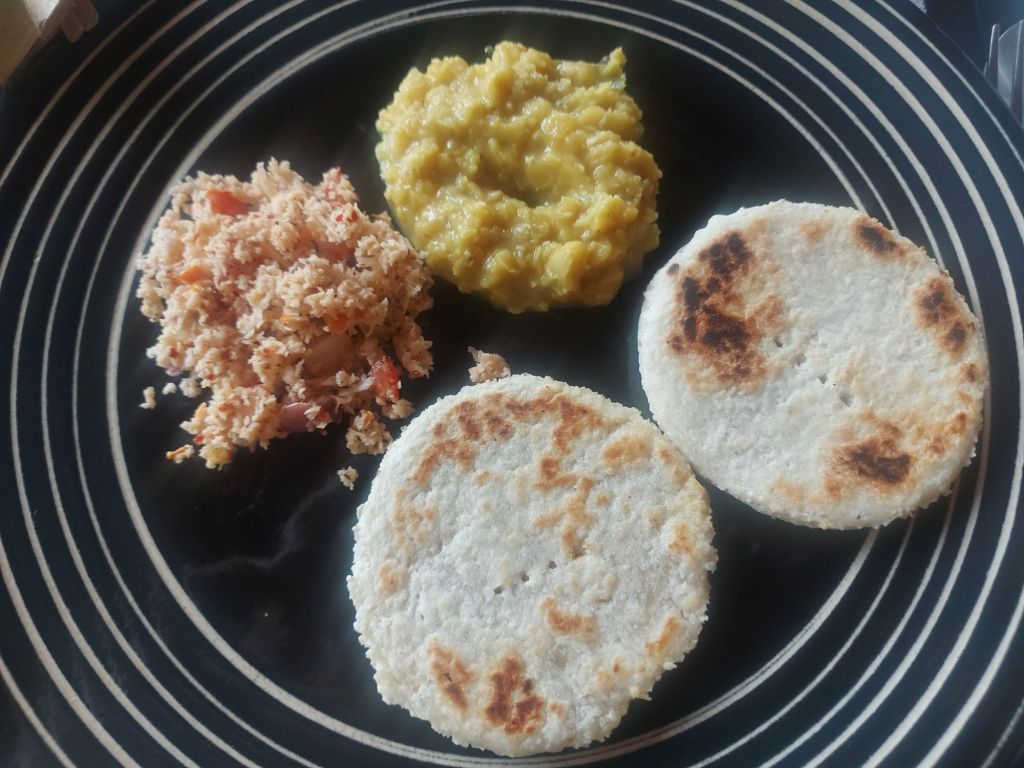
If you’re looking for a quick and easy yet filling snack, then look no further than KCC’s stuffed coconut roti. This dish is inspired by Sri Lanka’s coconut rotis, that are served with a fiery coconut sambal and a gloopy red lentil dhal.
KCC’s coconut roti with a dhal filling
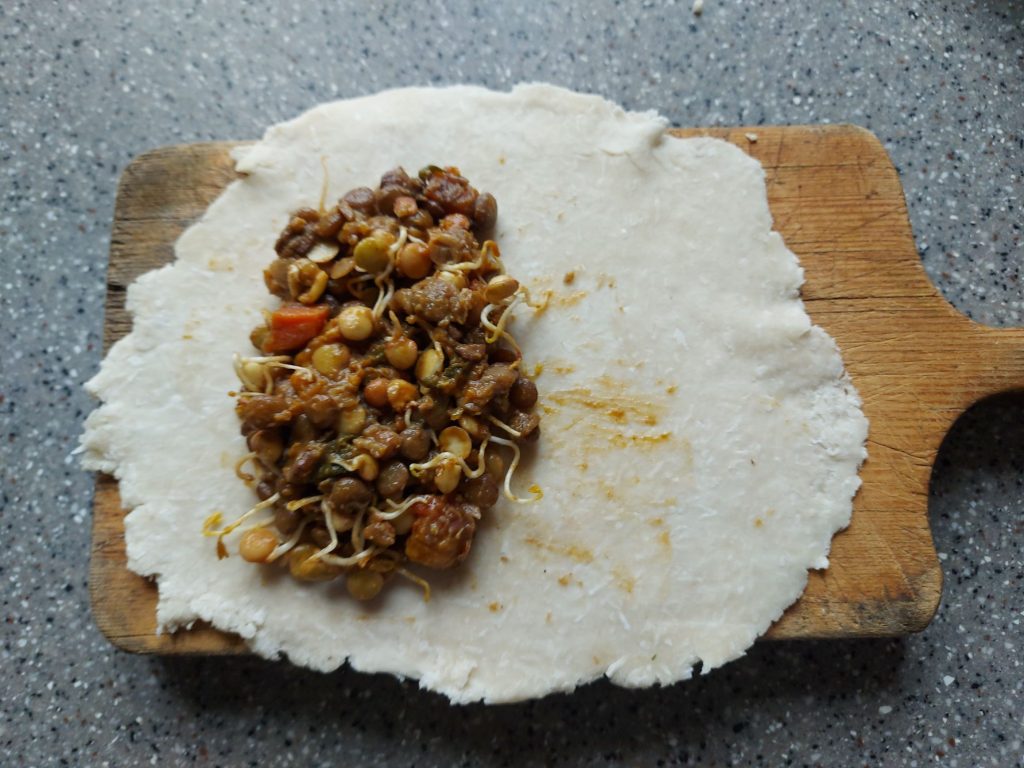
We decided to combine the roti and dahl in one package. The rotis are easy to prepare, the dough just needs a few hours to rest, so it can be made in advance. It can be kept in the fridge, but needs to come to room temperature before using. If you only want a coconut roti, then skip the filling stage – just roll out the roti and cook it on both sides.
Coconut roti with pol sambol and dhal in a cafe in Sri Lanka
As for the filling, you don’t need anything special. We used some leftover dhal – it always tastes better after being left overnight, and added some fesh lentil sprouts to add a bit of crunch. Here are some ideas for the filling from KCC’s back catalogue – here’s a rhubarb dhal or how about a classic red lentil dhal or even some bulgur biryani – the choice is yours.
Spread the filling over half the rotithen fold it over and fry on both sides
Ingredients (makes four rotis)
200 g bread flour
75 g dessicated coconut (unsweetened)
60 ml coconut milk
60 ml cold water
Salt to taste
Method
Combine all the ingredients together. Knead until you get a smooth dough – if it’s too sticky, add a touch more water.
Leave the dough to stand for a few hours before using. The dough can be kept for a few days in the fridge – remember to let it come to room temperature before using.
Split into four parts and roll the dough as thinly as you can on a lightly floured surface. Place the filling on one half of the roti and then fold the top over. Press the edges together with a fork.
Add a few drops of oil to a frying pan and then cook the roti on both sides until it turns a golden-brown colour, adding a few more drops of oil if needed.
This weekend is Nowruz, a spring festival which originated in Persia some 3,000 years ago. Nowruz, or New Day, is a celebration of the end of winter and the start of a new year on the date when day and night are equal in the Northern Hemisphere – usually on or around the 20 – 21 March. The holiday is celebrated in Iran, Afghanistan, Azerbaijan and Central Asia, and in parts of Turkey, Syria, India, Iraq, Pakistan, Russia and China.
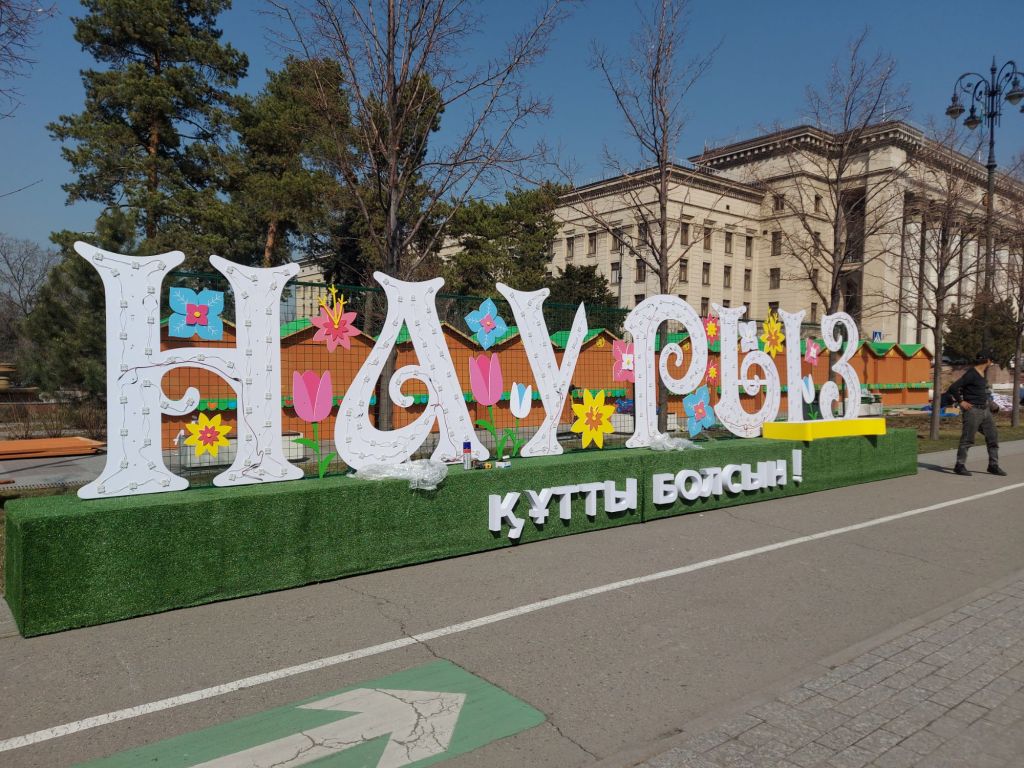
Preparing for Nowruz (Nauryz) in Almaty, Kazakhstan
There are many traditional foods associated with the holiday – Uzbekistan has sumalak, a paste made from what flour, sprouted wheat and oil. Kazakhstan has Nauryz Kozhe, a soup made from seven ingredients: barley, meat, kumis (fermented horse milk), onion, garlic, water and salt.
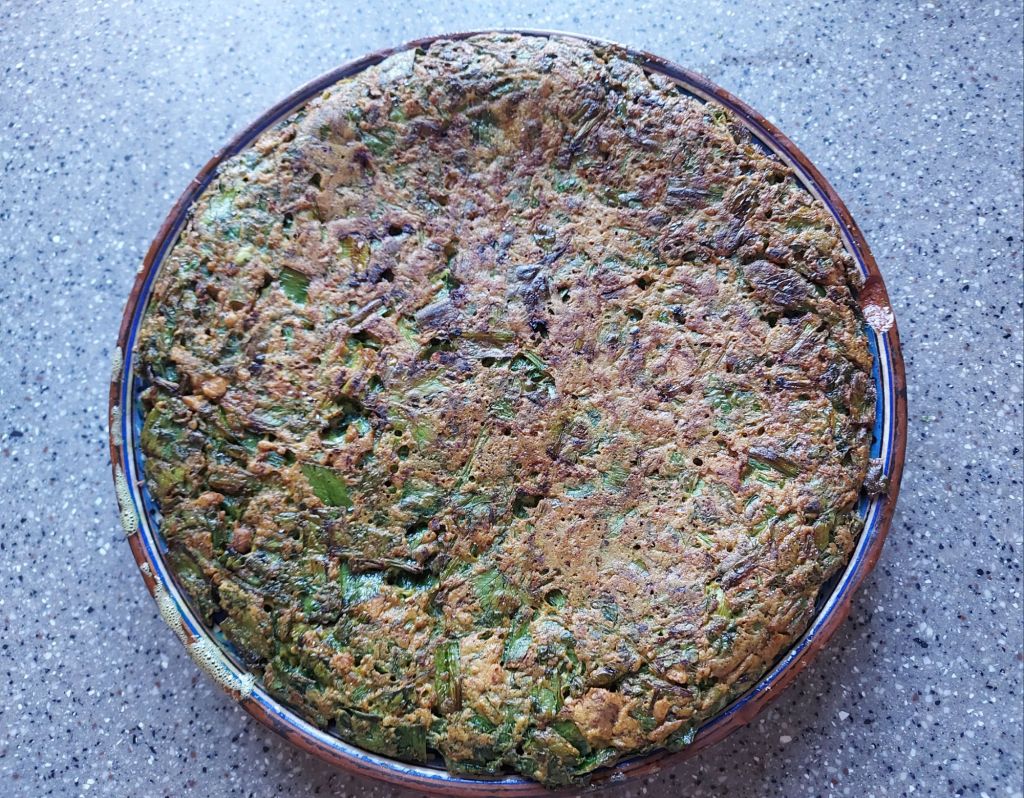
Iran’s Kookoo Sabzi – a herby frittata
Iran’s Nowruz table features the wonderfully named Kookoo Sabzi, sometimes written as Kuku – a herb-filled cousin of Italy’s frittata. The fresh herbs represent rebirth, while the eggs stand for fertility.
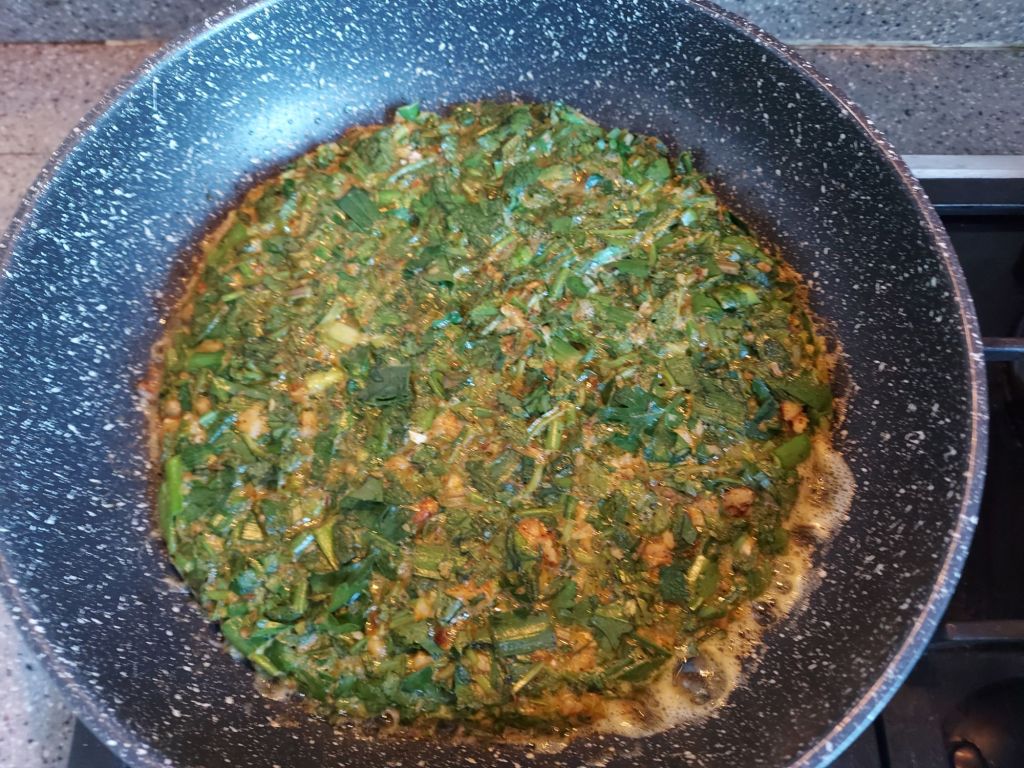
This Kookoo Sabzi’s ready to flip
Kookoo Sabzi is usually a combination of garlic chives, corainder (cilantro) and dill, but seeing as we’re not fans of dill, we’ve opted to replace it with parsley and mint. You can also omit the coriander if that’s not your thing (feel free to add some dill if you must). We’ve added parsley and mint, along with toasted walnuts, for some protien, and barberries (if you can find them – we couldn’t), to add a tart edge to the dish. Cranberries are a good replacement if barberries are proving hard to track down.
Turn it onto a plate and slide it back into the pan
Ingredients (makes four servings)
50 g fresh parsley
50 g fresh coriander
50 g garlic chives (jusai)
25 g fresh mint leaves
50 g walnuts
10 g dried barberries (or cranberries)
4 eggs
20 g chickpea flour
One teaspoon each of: cumin seeds, sumac and turmeric
25 ml olive oil
Method
Wash the garlic chives and cut into 0.5 cm pieces. Leave to dry on a tea towel or kitchen paper. Wash and finely chop the parsley, coriander (including stems) and mint leaves. Combine all these ingredients with the chickpea flour, spices, berries and the eggs.
Crush and then toast the walnuts (without oil) for 10 minutes in a 12 cm frying pan. Remove the walnuts and mix them in with the herbs and eggs. Put half the olive oil in the frying pan and heat it up and then add the herb mixture, flattening it with a spatula.
Cook over a medium heat for 10 minutes. Put a plate on top of the kookoo and turn the frying pan over. Add the rest of the oil to the empty pan and heat it up. Slide the kookoo back into the frying pan and cook for another 10 minutes.
Cut the kookoo into four slices and serve with a dollop of natural yogurt and some olives.
Almonds are on the agenda in KCC’s spiritual home of the Datça Peninsula this weekend as the Turkish seaside town hosts its annual Almond Blossom Festival.
The festival, which celebrates the blossoming of the peninsula’s almond trees, takes place between 13-16 February. Alongside live entertainment, with local faves Rampapa performing on Thursday and Anatolian psych rock legends Moğollar headlining on Saturday, there are cookery competitions, sports events and a speedy almond cracking contest.
Datça’s tasty almonds, badem in Turkish, are rightly famous all over Turkey – I remember sitting on a terrace in Istanbul’s Beyoğlu district, back in the days when it still had tables on the street, when a guy came round selling ice-chilled Datça almonds.
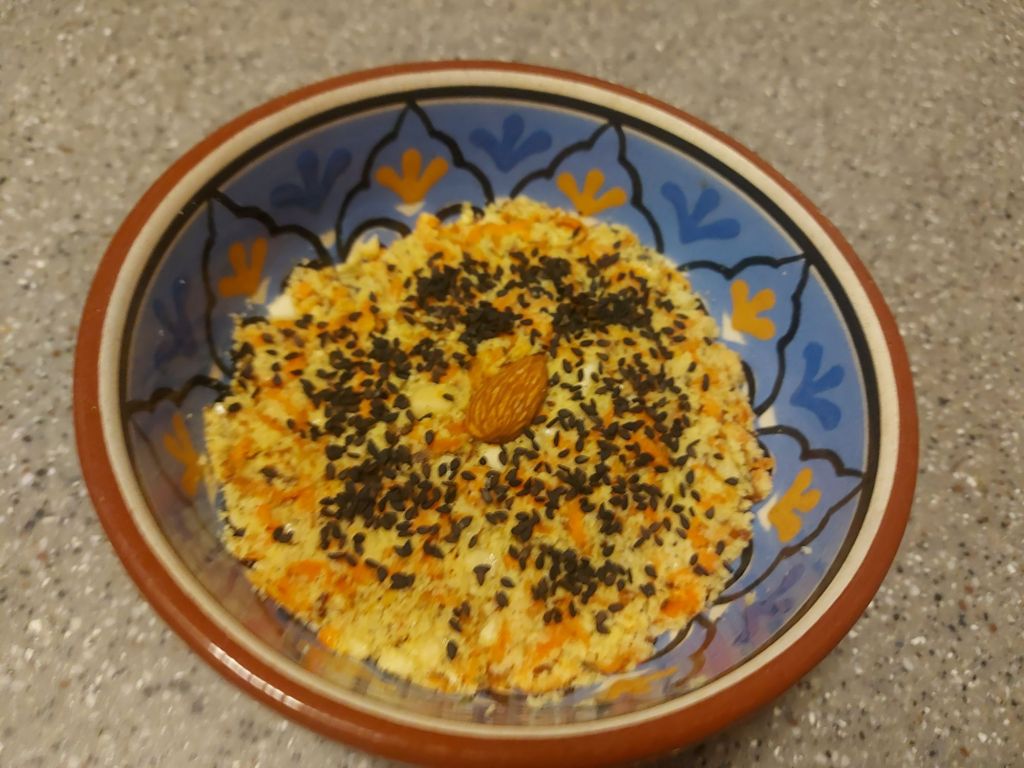
Bademli havuç tarator (carrot and almond tarator)
In Istanbul and along the Aegean coast tarator is a yogurt-infused meze made with carrots or courgettes and walnuts (recipe link here). Tarator started life in the eastern Mediterranean as a tahini-based dipping sauce for falafel. In Ottoman times it referred to a sauce made from walnuts, breadcrumbs and lemon juice (often served with kalimari), before it took on its yogurt iteration in the modern day. In Bulgaria, Tarator is the name of a yogurt-based, cold soup.
We adapted the recipe to make it vegan by replacing the yogurt with almond cream and gave it more of a Datça vibe by using almonds instead of walnuts and throwing in some local capers to give it an umami kick. The resulting dip had a thicker consistency than the yogurt version – it came out more like a savoury carrot halwa, but was still delicious.
Ingredients
100 g blanched almonds
50 ml cold water
Two teaspoons apple cider vinegar
20 capers (with brine)
150 g carrot
One or two garlic cloves (optional)
Pinches of herbs and spices of your choice (e.g. oregano, black pepper, salt, sumac, red chili flakes)
One teaspoon nigella (black cumin) seeds
Method
If your almonds have skins on, then pour hot water over the almonds and leave for a minute or two. Drain off the water and peel the nuts between your fingers. Set aside 20 g of the nuts. Cover the remaining almonds with cold water and leave to soak overnight.
Drain the almonds and put in a blender bowl. add the vinegar, capers and water and blitz to a smooth cream. Add more water if needed (10 ml at a time) to get the required creamy consistency.
Heat the oil in a heavy-based pan, grate the carrot and saute it in the oil for ten minutes over a medium heat. Add diced garlic (if using), the remaining almonds (crushed with a rolling pin or wooden spoon) and pinches of herbs and spices (as needed).
Allow the carrot mix to cool and then blend with the almond cream. Garnish with nigella seeds and some unblanched almonds. Serve as part of a meze set or as a dip.
Here at KKC we’re big fans of smashed avocado, but in Kazakhstan it can sometimes be difficult to find the ideal fruit when needed – they’re either underripe and too hard to use immediately or gone mushy with grey stringy bits. Another problem is that most of these fruit that make their way here are grown in Israel and Colombia. So, a less well-travelled alternative is needed – look no further than the humble garden pea.
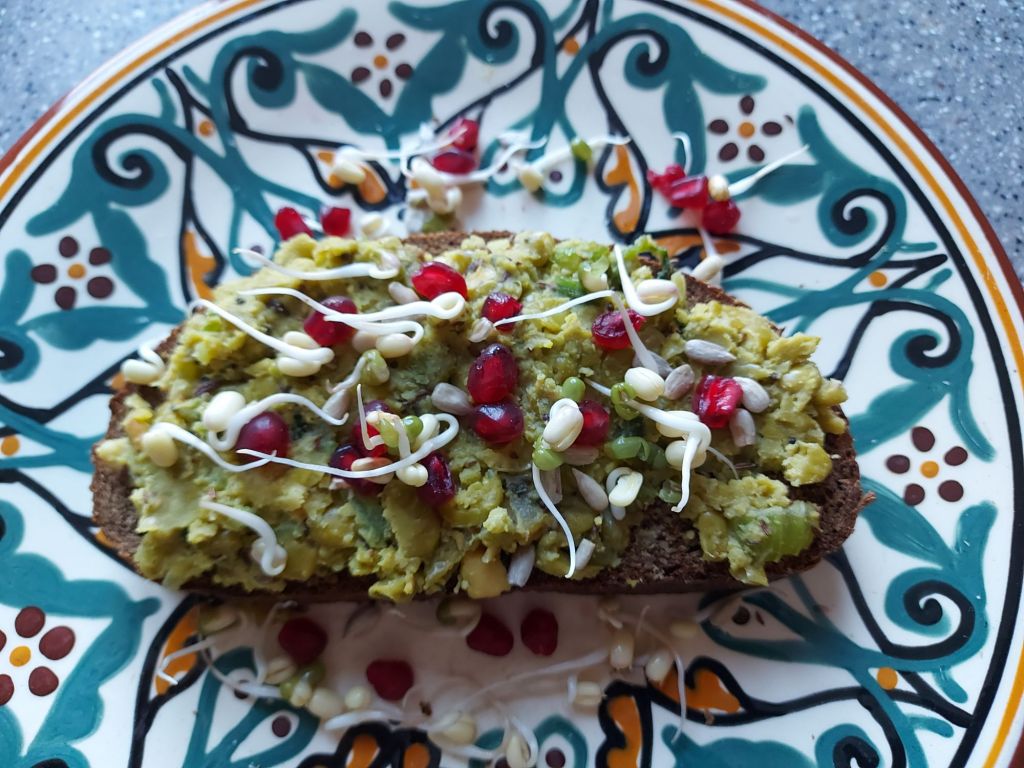
Move over avocado, here come the smashed peas!
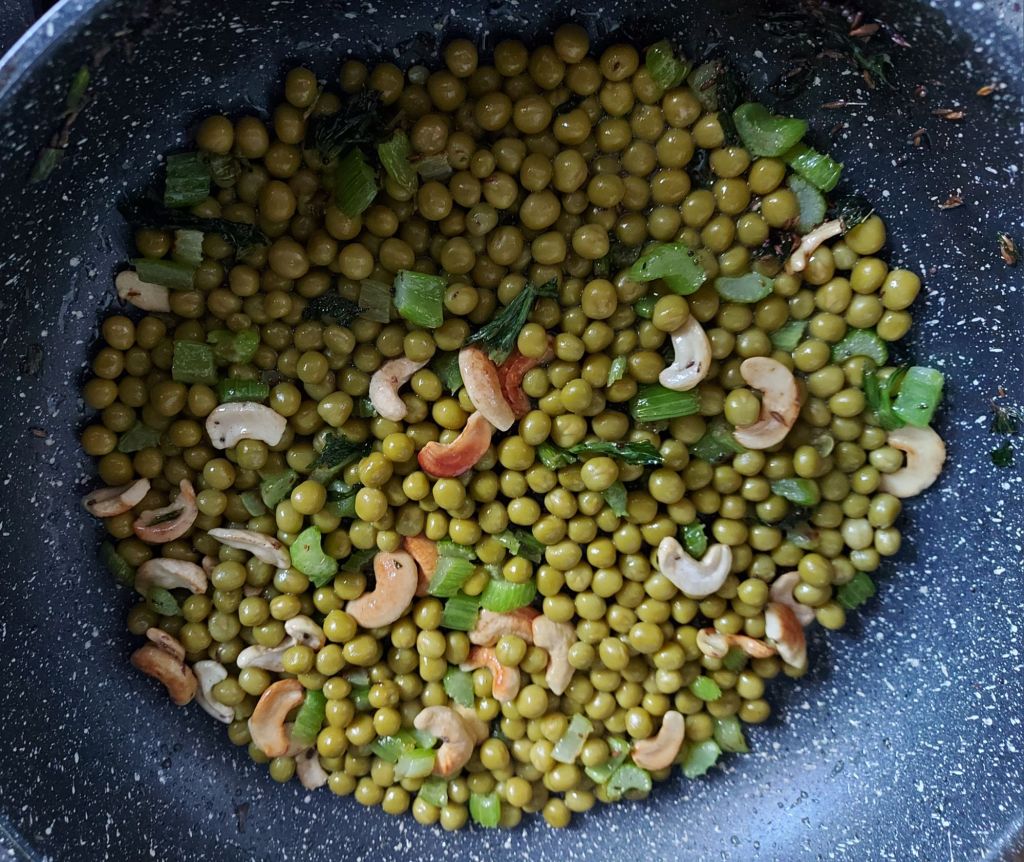
Smashed peas can be used replacement for avocado, and involve a lot less food miles. We combined our peas, from a tin as there were no frozen peas in our local supermarket, with some unsalted cashews and chopped celery to make a great substitute for the alligator pear.
There could be a solution in the offing to the problem of sourcing avocadoes in Kazakhstan. An enterprising farm in the south of the country, near Shymkent, has started growing bananas in greenhouses. This is quite a feat in a country with a sharp continental climate with hot summers and freezing winters.
Get ready to smash those peas…
This year’s banana crop will cover around 5% of demand in Shymkent and the commercial hub, Almaty. And in the coming years, GenGroup Qazaqstan hopes to add mangoes and avocadoes to the supply chain of locally grown fruits, significantly reducing the food miles clocked up for these treats.
Ingredients (makes four servings)
250 g peas
75 g celery
25 g cashew nuts
15 ml olive oil
One teaspoon cumin seeds
One teaspoon mustard seeds
To garnish: a handful of beansprouts
One teaspoon sunflower seeds (per serving)
One teaspoon pomegranate seeds (per serving)
Method
Heat the oil in a heavy-based frying pan and add the mustard and cumin seeds,. When they start popping, add the chopped celery and stir fry over a medium heat for two minutes and then add the cashews and continue to stir fry for another few minutes until the cashews start to brown.
Turn the heat down and add the peas. When the peas are warmed up, turn off the heat and use a potato masher to smash all the ingredients together. Spread the smashed peas on wholemeal bread or toast and garnish with pomegranate seeds, sunflower seeds and beansprouts.
Turkey meets India this time round on KCC as we cook Turkey’s beloved bulgur wheat in in Indian biryani style. Bulgur, parboiled, dried and cracked wheat, is a quick-cooking alternative to rice that works really when combined with spicy vegetables.
Bulgur biryani
Biryani belongs to the family of layered rice dishes that includes Uzbekistan’s plov and other pilafs. The name is from the Persian barian, which translates as ‘roasted’.
The dish was originally brought to the Indian sub-continent by travellers from Iran and has developed into a number of regional variations, with the Hyderabadi one, served with a yoghurty raitha, being the most famous.
As bulgur is parboiled, it cooks really quickly. It takes around 15 – 20 minutes to cook – the total prep time for this dish is less than an hour from start to finish and it is cooked in one-pan, so less washing up to worry about.
Ingredients (for two servings)
100g coarse bulgur
100g diced carrot
100 g courgette
150 g cooked chickpeas
25 g tomato paste
25 g pepper paste (we used tatli (sweet), if you want it hot, use acili)
20 ml olive oil
1 stick of celery (approx 25 g)
2 spring onions (approx 10 g)
1 green pepper (approx 30 g)
250 ml vegetable stock
1 cinnamon stick
1 teaspoon each of mustard seeds, cumin seeds, turmeric, fenugreek, chilli powder
25 g fresh coriander
Method
Heat the oil in a large frying pan and add the mustard seeds. When they start to pop, add the chopped spring onion and celery and cook for two minutes. Then add the chopped green pepper and diced carrot and cook for two more minutes. Add the courgettes and cook for another two minutes.
Add the spices and stir well and then add the cooked chick peas and the vegetable stock. Stir in the tomato and pepper paste, bring to a boil and then reduce the heat to a gentle simmer. Add the bulgur in a layer over the veggies. Put a lid on the pan and cook over a low heat for 15 – 20 minutes until all the liquid is absorbed.
Turn off the heat and allow the mix to rest for ten minutes or so. Stir well and then serve. Garnish with chopped coriander.
This year is flying by, I can’t believe it’s already Halloween and the time for Diwali, the Hindu festival of lights. The transition into winter is gaining pace with the leaves falling and the nights closing in. The summer veg has given way to pumpkins and squash – an ideal base for comfort food as the colder months approach in the northern hemisphere.
Pumpkin and white cheese pasta
Over the last month, my Insta feed has been full of variations on baked pumpkin and white cheese dishes. Many of these dishes use sprigs of rosemary but I think that the more woodsy flavour of sage makes a better partner for pumpkin.
Oven-baked pumpkin goodness
For this recipe, I used a cheese called adygeisky, a white cheese with a slightly sour taste, that originates in the mountains of the Caucasus between the Caspian and Black Seas. Feta or any other crumbly white cheese that is available in your area that holds itself together under heat will work just as well.
Ingredients (serves two)
300 g pumpkin or butternut squash
100 g white cheese (Feta, halloumi or similar)
140 g dried pasta (of your choice)
25 ml pasta cooking water
Dried sage
Drizzle of olive oil
two teaspoons pumpkin seeds
Method
Line a baking dish with baking paper. Cut the pumpkin into 1 cm cubes. Place the cheese in the middle of the dish and arrange the pumpkin cubes around it. Sprinkle with crumbled sage leaves and drizzle with olive oil.
Bake in a pre-heated oven at 200 c for 30 minutes covered with tin foil and then bake for another 10 minutes uncovered. While it’s baking, prepare the pasta (according to the packet instructions).
Mash the pumpkin with a potato masher and mix with the cheese. Add the drained pasta and 25 ml of cooking water. Stir well and serve straight away with a garnish of pumpkin seeds.
We’re taking a detour to Crete this time round to have a look at another iteration of the börek, which featured in an earlier post that delved into Turkey’s yufka (filo pastry) traditions.
A slice of Chaniotiko Boureki
Before going on holiday I had some filo pastry, courgettes, carrots and potatoes to be used up and a quick google search with those ingredients turned up Chaniotiko Boureki, a wonderful, slow-cooked pie from Chania in Crete.
A Chaniotiko Boureki fresh from the oven
Crete, the largest of the Greek islands, was under Ottoman rule for over 200 years from the mid-17th century, and while the island’s Turkish population has long since left, their legacy is still found in many dishes eaten on the island today.
The boureki is a prime example, with its name harking back to this era. The Ottoman’s made Chania, where the pasha, or governor, lived, their capital and the city’s old town still has mosques, domed bathhouses and fountains from those days.
Stage one: layer the veggies
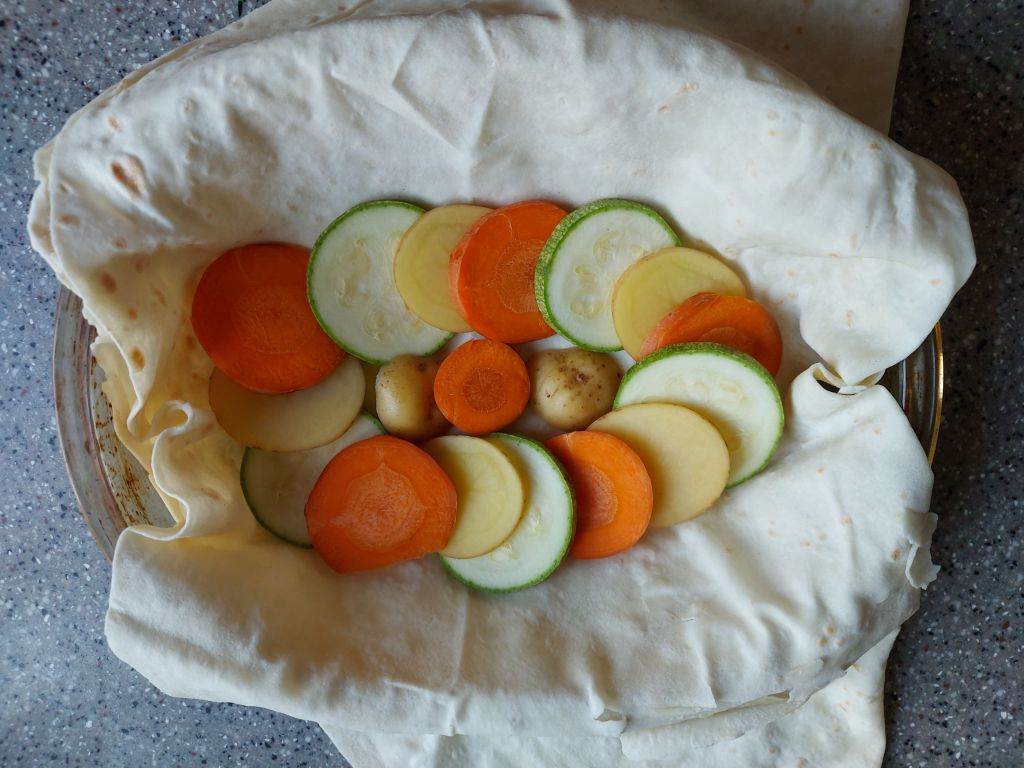
Chaniotiko Boureki is made from potato and courgette (zucchini), and whatever’s in season – carrot, pumpkin or tomatoes to name a few. The sliced veg is layered on a sheet of yufka lining a pie dish and then Crete’s myzithra cheese, a creamy, white cheese similar to ricotta, is crumbled on top of the veggies, along with chopped mint.
Add the cheese and herbs
If myzithra is unavailable in your area, you can use feta (or any ricotta-type cheese). The closest I could find here in Almaty, Kazakhstan was a Circassian cheese called adygeisky, a crumbly white cheese with a slightly sour taste, that, like halloumi, holds up well under heat.
If you want to make your boureki vegan, then this recipe from foodaciously substitutes firm tofu marinated in lemon juice for the white cheese.
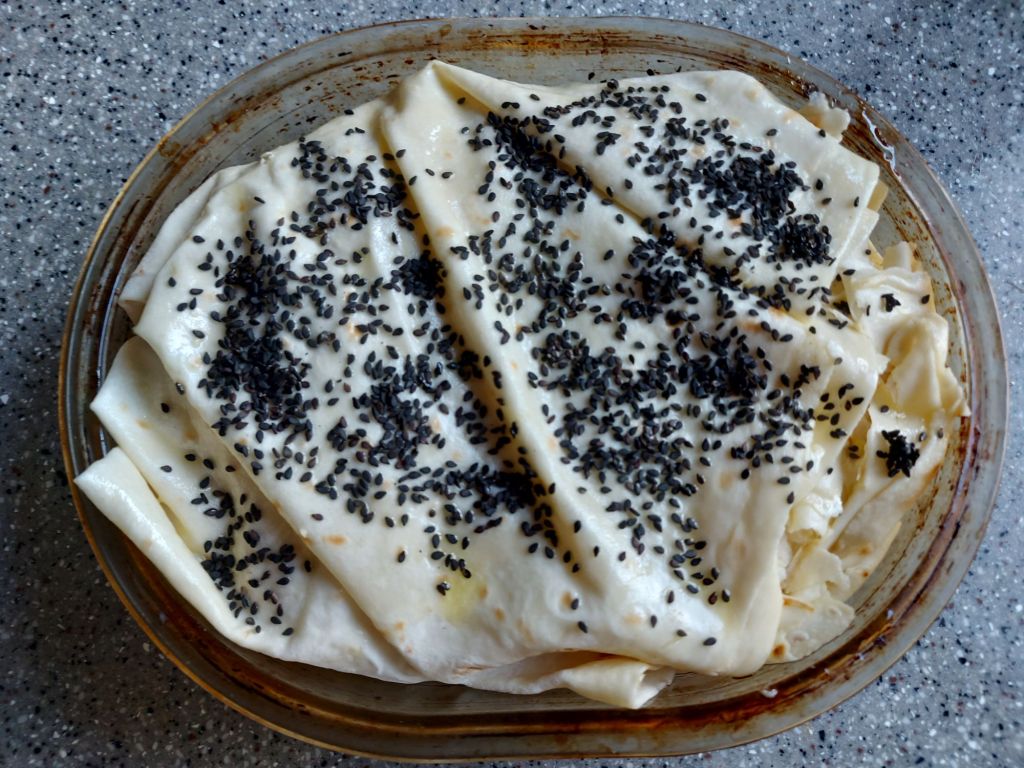
Fold the yufka, brush with oil, sprinkle with nigella seeds and then bake
100 g crumbly white cheese (feta, ricotta or something similar)
ten fresh mint leaves
a pinch of ground cinnamon
one teaspoon nigella seeds
Method
Thinly slice the carrot, courgette and potato into rounds. Put the yufka in a greased baking dish. Brush with olive oil and alternate the sliced vegetables.
Crumble half the cheese over the slices and half the chopped mint leaves. Drizzle with a glug of olive oil then repeat the layering.
Close the boureki with the overlapping pastry, brush with olive oil and sprinkle nigella seeds over the top.
Cover with tin foil and bake slowly at 150 c for 1.5 hours. Serve straight away or allow it to cool and serve later.
On the surface, Turkey’s çiğ köfte, which translates as “raw meatball”, doesn’t sound too promising for veggies. Originally made from raw meat and fine bulgur wheat, since 2008 only sales of meat-free çiğ köfte (pronounced: chee kofteh) have been permitted in Turkey, following numerous tapeworm infections from the raw meat version.
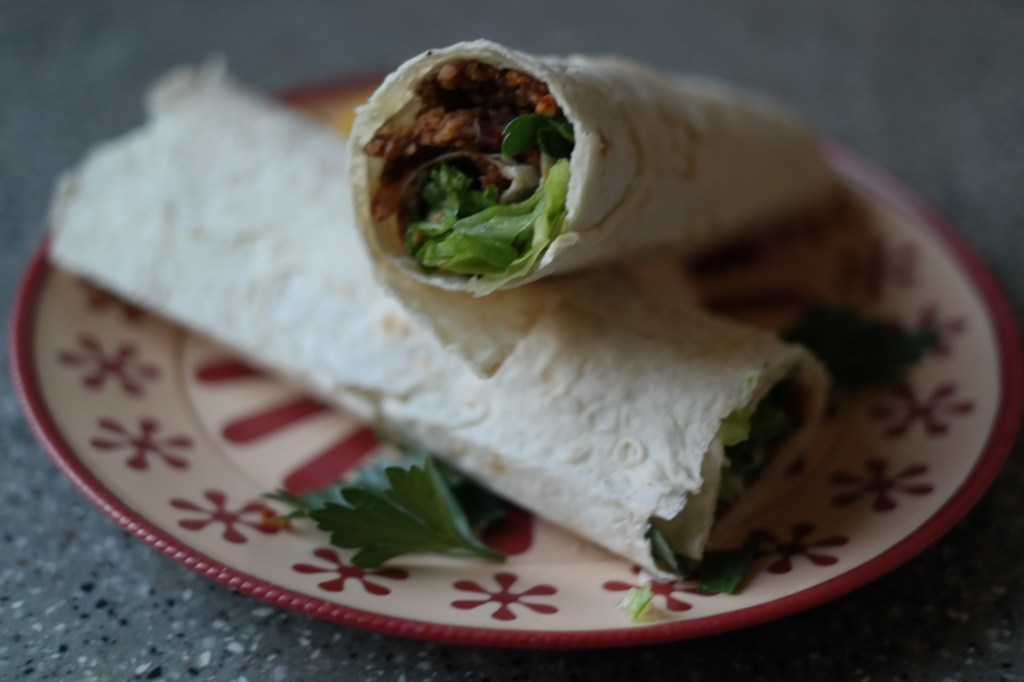
Çiğ köfte wrap
This is good news for veggies and vegans as this popular snack is now guaranteed to be totally plant based. It consists of bulgur wheat mixed with tomatoe paste, red pepper paste, red onions, lemon, olive oil, pomegranate syrup (nar ekşisi) and spices, all kneaded into a smooth consistency. The kneading is what gives the dish its special taste. If you’re pressed for time, then you can use a mixer or a food processor to blend the mixture.
Çiğ Köfte
This dish hails from Urfa, a city in south-eastern Turkey near the border with Syria. The food from this part of the country tends to be spicier than that found in the west with the local isot biber, a mild chilli pepper with a distinctive, earthy flavour with a hint of smoke, and other spices, such as cumin and sumac, liberally used in the local cuisine. Bulgur wheat is cracked, parboiled wheat and comes in various forms, but for çiğ köfte look for the fine variety of bulgur (called “köftelik”) not the coarser variety (called “pilavlık”). If you can track down the dark, fine bulgur (“esmer”), then this is more authentic in this dish, but if you can’t, then the paler version works just as well.
As bulgur is derived from wheat, this recipe is not suitable for people on a gluten-free diet. You can replace the bulgur with boiled quinoa to make this recipe gluten-free.
Çiğ köfte is traditionally eaten with a lettuce leaf as the wrapper, but is now common in a wafer-thin flatbread, such as lavaş or a tortilla, and served with a wedge of lemon, pomegranate syrup and shredded lettuce and fresh parsley. This version is called Çiğ Köfte Dürüm in Turkish, or a wrap.
Ingredients (makes 16 -20 köftes)
125 g esmer köftelik bulgur
125 ml hot water
50 g red onion (finely diced)
25 g tomato paste
25 g red pepper paste (sweet)
10 ml olive oil
25 ml freshly squeezed lemon juice
25 ml pomegranate syrup
One teaspoon cumin seeds
One teaspoon isot pepper
One teaspoon sumac
Method: Four steps to çiğ köfte: 1. Cover the bulgur wheat with hot water, stir and cover. Leave for 15 minutes or so until the liquid is mostly absorbed. Check that it has the right consistency; squeeze some bulgur in your hand – if it stays together it is wet enough, if it falls apart then a little more liquid is needed.
2. Add the spices and knead the mixture by hand on a baking tray (or a ridged çiğ köfte tray if you have one) or put in a blender. One-by one add the chopped spring onion, tomato paste, red pepper paste, olive oil, lemon juice and pomegranate syrup and knead or blend after each ingredient is added. The process should take 30 minutes or so until you have a smooth mixture – it will be quicker in the blender.
3. Take a teaspoon of the mix and shape the individual köfte in the palm of your hand to achieve the ridged shape.
4. Serve the çiğ köfte in a lettuce leaf and garnish with lemon juice, parsley and pomegranate sauce or serve as a wrap in a thin flatbread.
Summer is that time of the year when you just want to kickback and enjoy a sundowner or two. As the heat of the day begins to recede, there’s nothing better than a refreshing fizzy cocktail.
Start by stepping peach slices in vodka in a glass jar – leave in a cool, dark place for a least two weeks. Brew a pot of your favourite green tea, let it cool, and then add 100 ml to 25 ml of peach vodka in an ice-filled glass. Top up with tonic or soda water, kickback and relax!
With the rain finally relenting here in Almaty, Kazakhstan, it’s time to hit the great outdoors for the BBQ season. Courgettes, zucchini to our North American friends, are in their prime at the moment and this versatile vegetable makes a great addition to a barbecue platter.
One thing about courgettes is that they contain a lot of liquid, so before cooking you can remove some of the excess by cutting the courgette into two slices down the middle and then use a knife to cut diagonals into the fleshy side. Sprinkle with salt and leave for 30 minutes then squeeze out the excess liquid.
Pour some olive oil over the courgette halves into the diagonal cuts and then cook on the grill, turning to brown both sides. These courgette slices can also be baked in a hot oven (180 c) for 30 minutes or fried in a pan until browned. We served them with some parboiled new potatoes, finished on the grill, and a slab of char-grilled halloumi. Add a green salad for a great outdoor meal.
If you’ve ever been to Turkey, or eaten in a Turkish cafe, then you’ll probably be familiar with the börek, a tasty treat consisting of wafer-thin sheets of yufka (filo pastry) brushed with lashings of olive oil, stuffed with cheese or vegetables and sprinkled with black seeds.
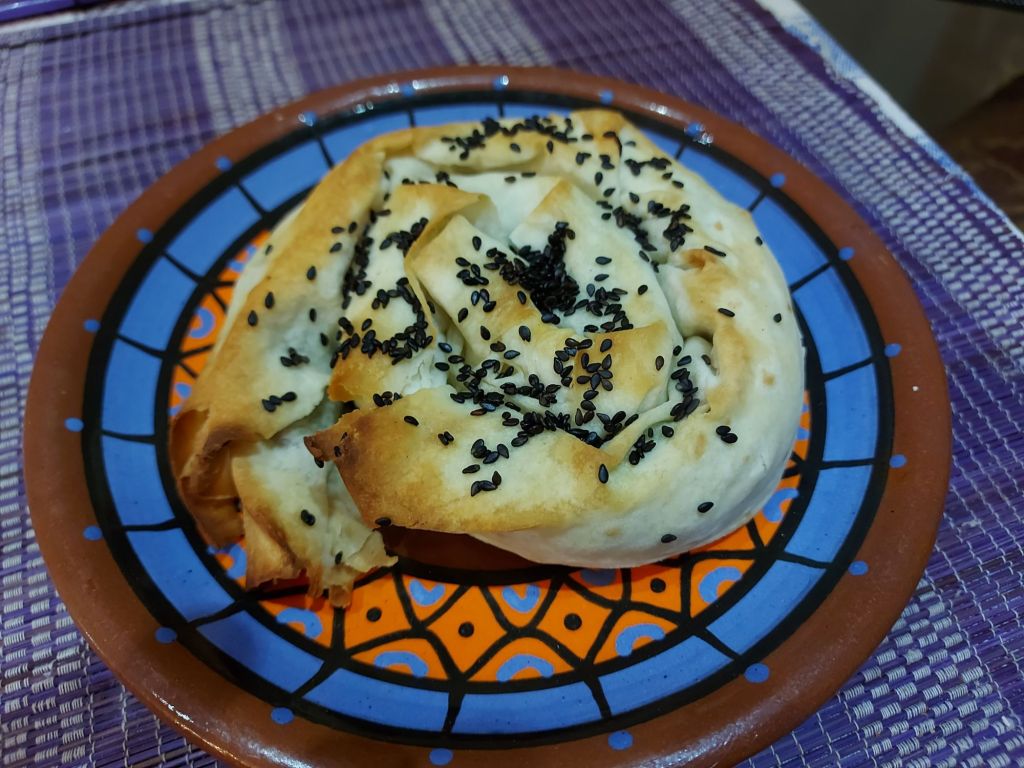
Flower Power Börek
Börek is found in all corners of Turkey and comes in a variety of shapes – sigara, like a cigar, gül, like a rose, triangle-shaped or as a layered pie, tepsi böreği, among others.
As for the fillings, alongside the more familiar white cheese (beyaz peynirli), spinach (ıspanaklı) or potato (patatesli), it’s worth looking out for the lesser-spotted leek filled version, known as pırasalı börek in Turkish, and the elusive kabaklı, prepared with courgettes. (Veggie warning – there are meat-stuffed ones too).
Ingredients for the filling – makes 2
100 g radish leaves
100 g spinach
25 g parsley
25 g walnuts
25 g olives
25 g capers
50 ml olive oil
One teaspoon of dried rosemary, cumin seeds, sumac, nigella seeds
Four big sheets of filo pastry (approx 30cm x 50 cm)
Ingredients for yufka (Filo Pastry) – makes 4 sheets
300 g all-purpose flour
100 ml olive oil
20 ml vinegar (apple or white wine)
150 ml warm water
Method
To make the filo pastry, combine the sieved flour with the olive oil and vinegar. Slowly add the water a bit at a time and mix it all together with a wooden spoon until the dough forms into a smooth ball. Knead for 10 minutes on a lightly-floured surface to make the dough more stretchy. Separate into four tennis-ball sized pieces. Lightly coat with olive oil, cover with clingfilm and leave for an hour at room temperature.
Heat 25 ml of olive oil in a heavy-based pan over a medium heat. Add the cumin seeds and fry until starting to pop. Reduce the heat to low and add the chopped greens (radish leaves, spinach and parsley), rosemary and sumac. Stir fry until the leaves are wilting. Stir in the toasted, chopped walnuts, capers and minced black olives.
Roll out the filo sheets as thinly as you can using a rolling pin or the palm of your hand. They should be around 30 cm by 50 cm and become clear in places. Brush one sheet with olive oil and then place another on top.
Add half the filling along the shorter edge. Roll up the mixture into a long cylinder and then roll around in a spiral to make the rose shape. Brush liberally with olive oil, sprinkle nigella seeds over the börek, then bake for 20 minutes at 200 c until they turn a golden-brown colour. Serve hot or allow to cool – they taste great both ways.
It’s that asparagus time of year once again. These tasty green spears are a harbinger of the warmer months of Spring and Summer – the first tips are ready for harvest shortly after the ground temperature hits 10°C.
Asparagus and chickpea pasta
Here in Almaty, Kazakhstan, locally-grown asparagus is currently having its moment in the sun, with many restaurants offering seasonal dishes featuring these flavour-packed spears of goodness.
Asparagus from Kazakhstan
Over the years, KCC has featured a number of asparagus dishes, such as a bulgur pilaf with asparagus (KCC’s first ever recipe), Mr Alan’s Top Tips, and in a stir-fry. This time round, after tracking down some locally-grown asparagus in Almaty, we’ve cooked it with chickpeas, capers, walnuts and tagliatelle:
Ingredients (for 2 servings)
150 g asparagus
175 g chickpeas
30 g walnuts
20 g capers
50 – 100 ml aquafaba (chickpea cooking liquid)
25 ml olive oil
150 g dried taglaitelle
One teaspoon fresh or dried rosemary
Method
To make the green sauce, blitz 50 g of chopped, raw asparagus in a blender with 75 g chickpeas, the chopped walnuts and capers and olive oil. Keep adding aquafaba slowly until the sauce had a creamy consistency,
Cook the pasta according to the packet instructions in a pan of boiling, salty water. Slice the remaining asparagus into 3 mm slices and cook with the pasta for the last five minutes. While the pasta is cooking, add the remaining chickpeas to the green sauce in a heavy-based pan, warm over a low heat and stir in the rosemary.
Drain the pasta and asparagus, reserving some of the cooking Waterloo to loosen the sauce, if needed, and add to the green sauce and chickpeas, combine well and serve.
Recently, Knidos Cookery Club was back in its spiritual home on the Datça peninsula in Turkey, getting back to its roots in the place where its culinary journey began eight years ago.
Getting back to our roots… carrots, celeriac and kohlrabi
This blog was named after the ancient Greek city of Knidos, the ruins of which are located on the tip of the peninsula. KCC started out exploring the veggie and vegan dishes eaten around this point where the Aegean Sea meets the Mediterranean Sea.
Since 2016, it has expanded its exploration to Central Asia and many other corners of the globe, seeking out new dishes to tickle your tastebuds!
Now, in addition to its WordPress blog, KCC is making its debut on Substack, where a regular newsletter will keep you up to speed with KCC’s latest culinary adventures, along with updated posts from the archive.
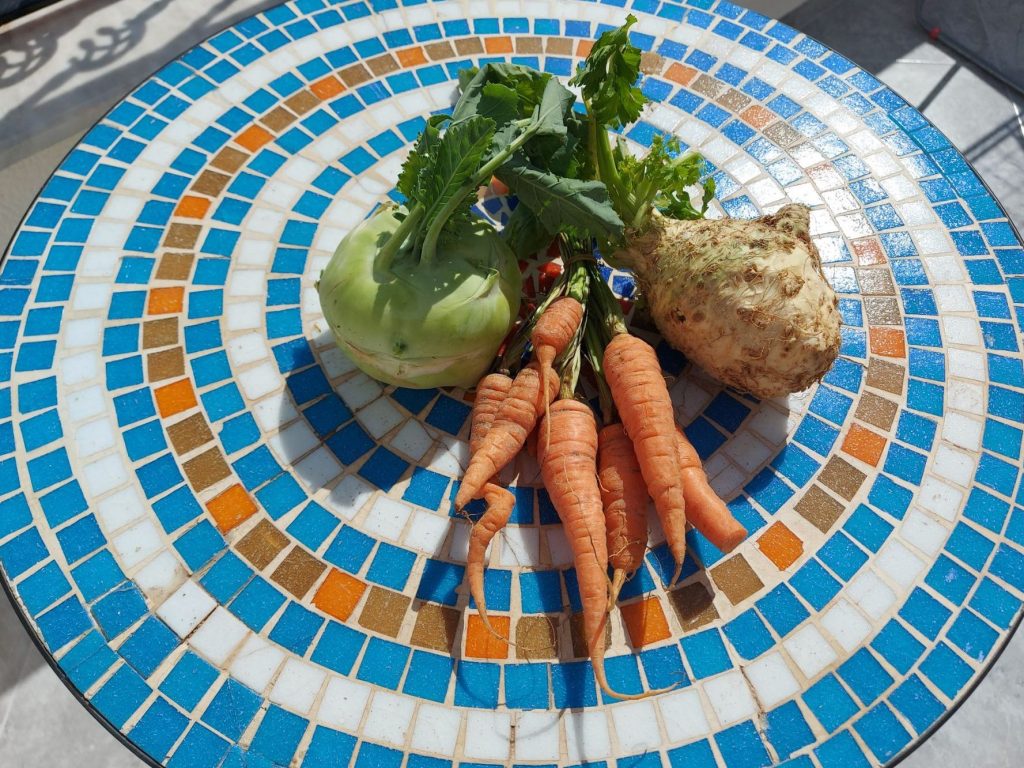
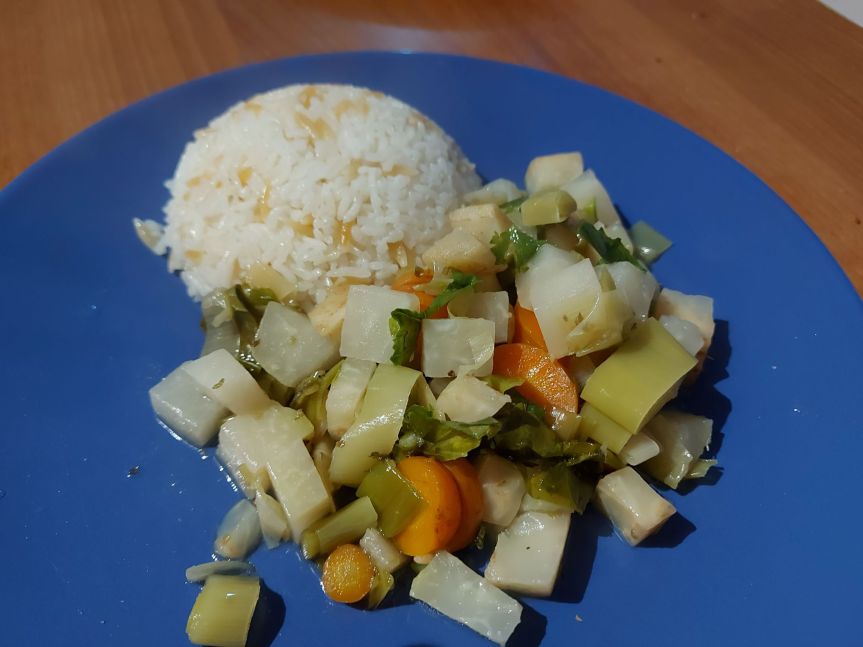
Zeytinyağlı carrot, celeriac, kohlrabi and leek with rice
After spending the winter in Kazakhstan, it was a treat to get back to Turkey with its wider choice of ingredients – it was time to move on from the winter staples, such as pumpkin and potatoes, and dig up some root vegetables that are less seen in Central Asia.
The local market turned up trumps with celeriac, kohlrabi and leeks on sale, perfect for making a zeytinyağlı (with olive oil) dish, so-called as these dishes are prepared with lashings of olive oil.
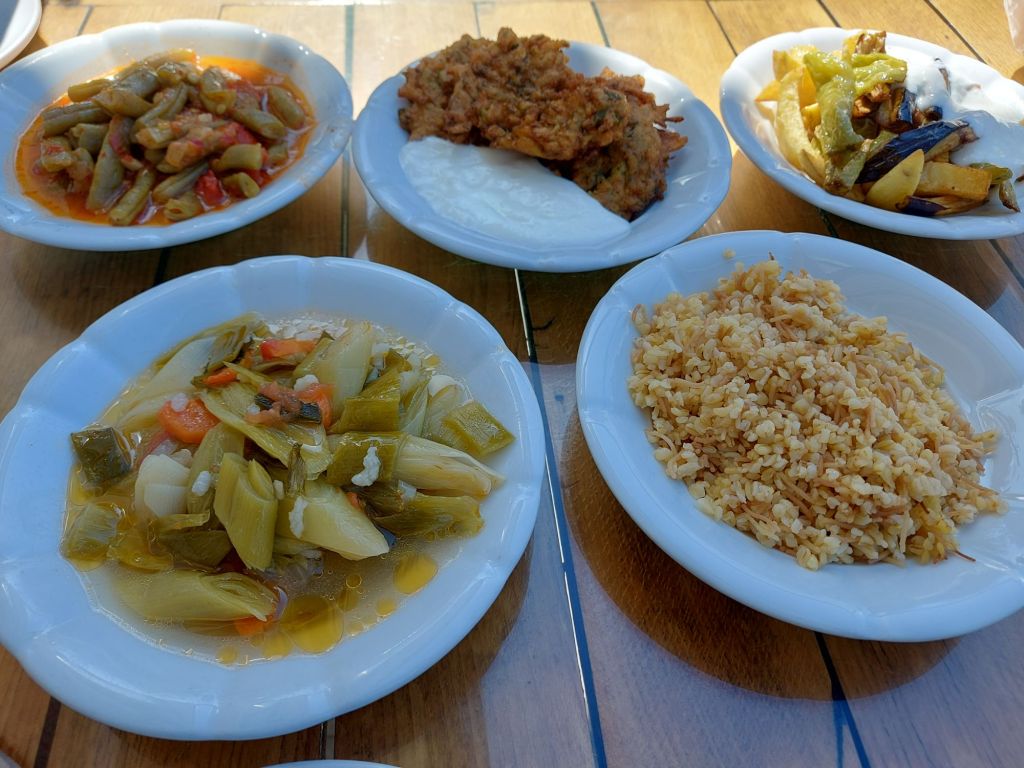
Standards include green beans (taze fasulye), artichoke (enginar) and leek (pırası). They are a staple of ev yemekleri (home-cooked food) restaurants, lokanta in Turkish, cheap and cheerful canteen-style eateries.
A selection of zeytinyağlı dishes – green beans, leeks and aubergines, green peppers and potatoes – from Datça’s Korsar/Erkin’nin yeri restaurant, located by the harbour
The last few years have seen the price of the key ingredient, olive oil, soar. This is due to numerous factors, including unexpectedly cold and wet conditions at the start of the growing season and drought and forest fires in the summer, that have led to poor harvests in the main olive-producing regions.
Global olive oil production has dropped by a third in just two years, which in turn has led to higher prices for consumers. However, we think it’s still worth shelling out that bit more for a bottle of extra virgin olive oil, as its fruity, peppery flavour adds so much to a cornucopia of delicious dishes, such as this carrot, celeriac, kohlrabi and leek zeytinyağlı one:
Ingredients (makes 3-4 servings)
One medium-sized kohlrabi (approx 200 g)
One medium-sized celeriac (approx 200 g)
One bunch of baby carrots (approx 200 g)
One leek (approx 200 g)
One small lemon
75 ml extra virgin olive oil
100 ml vegetable stock
Two teaspoons dried oregano
One teaspoon sumac
Method
Wash the leek well and then cut it into 2 cm slices. Top and tail the carrots, kohlrabi and celeriac, put the leaves and stems to one side, and then peel off the hard outer skin of the kohlrabi and celeriac and chop both into 1 cm cubes. Slice the washed carrots into 2 mm rounds. Roughly chop the leaves and stems from the carrots, kohlrabi and celeriac.
Heat 50 ml of olive oil in a heavy-based pan over a low heat and then add the leeks. Stir fry for five minutes and then add the carrots, kohlrabi and celeriac and cook for another five minutes, stirring occasionally. Add the chopped leaves and stems and cook for another five minutes, continuing to stir every now and then.
Add the vegetable stock, the juice of the lemon and oregano and cook over a low heat for 15 minutes until all the vegetables are soft but still holding their shape. Stir in 25 ml of olive oil, garnish with sumac and serve with rice and some crusty bread to mop up the juices.
To celebrate Navruz this year, KCC has gone for a Kazakh mashup with a loose variation on Kazakhstan’s national dish, Beshbarmak. Lurking at the back of the cupboard was a pack of zhaima, the pasta sheets used in the dish.
Beshbarmak refers to the method of eating this meat and pasta dish, using your hand, or “five fingers.” There are iterations such as “Fishbarmak,” so we decided it was time for a variation on the theme of “Vegbarmak.”
Pasta sheets (zhaima) for Beshbarmak from Kazakhstan
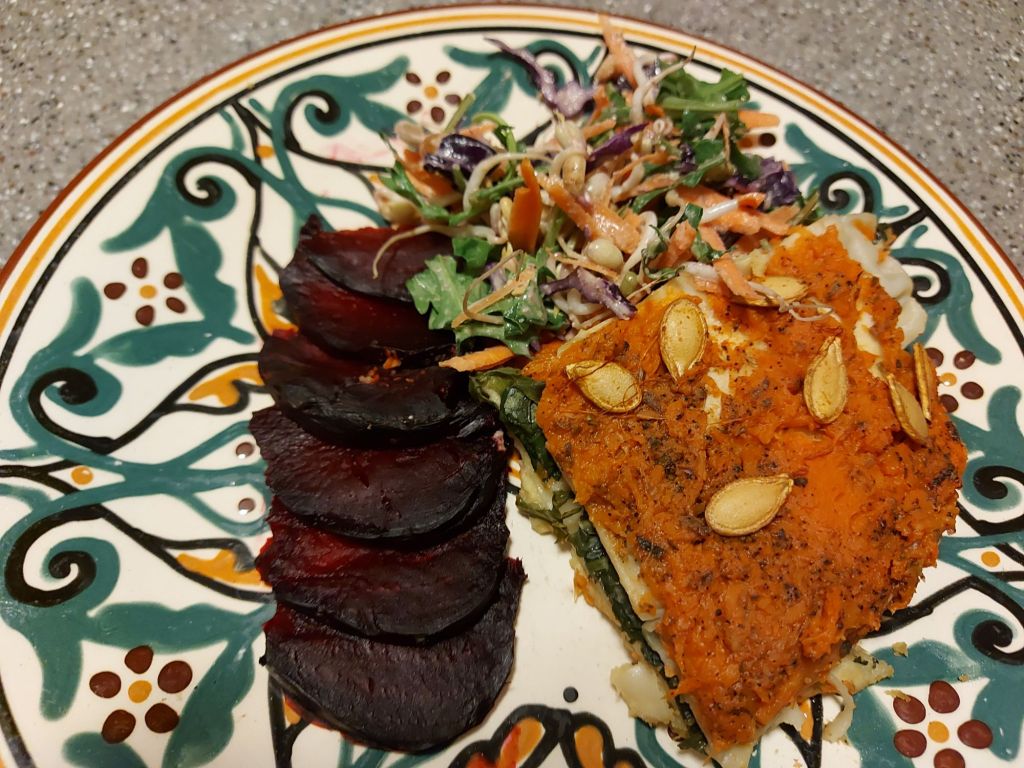
On closer inspection, the pasta sheets looked good for a lasagne-style dish, but the dish that eventually emerged was closer to Turkey’s su böreği. This consists of layers of boiled pastry sheets with a cheesy filling. We used different layers of vegetables and pulses to achieve something between a veg barmak and a su böreği.
Put a layer of mixed greens on top of the chickpeas that have been covered with pasta sheetsPut another layer of pasta sheets and then top with mashed pumpkin and decorate with pumpkin seeds
Ingredients (serves 3-4)
300 g cooked chickpeas
400 g roasted pumpkin
50 g spinach
50 g rocket
50 g tahini
50 ml chickpea water (aquafaba)
16 pasta sheets (the ones used were 6 cm x 11cm)
Sprinkling of pumpkin seeds
Three teaspoons dried oregano
One teaspoon dried sage
One teaspoon cumin seeds
Method
Pre-heat the oven to 180 c. Put 150 g of chickpeas in a blender with the tahini, aquafaba and one teaspoon of oregano and blend until smooth. Mix with the remaining chickpeas and then put this mixture into the bottom of an ovenproof dish. Place the pasta sheets in hot water for a minute and then arrange over the chickpea mixture.
Put the washed greens on top of the pasta, sprinkle another teaspoon of oregano over the greens and then put another layer of sheets on top of the greens. Mash the pumpkin and mix with the sage and cumin seeds and oregano. Smooth this over the pasta sheets and decorate with pumpkin seeds.
Bake in the oven for one hour at 180 c – cover with tinfoil for the first 40 minutes and then cook uncovered for the last 20 minutes. Cut into four slices – it can be served either hot or cold.
It’s been a crazy winter here in Almaty, Kazakhstan. It didn’t really get going until after New Year and has seen short cold snaps interspersed with rapid thaws as the temperature creeps into positive territory. This has made it particularly dicey when walking by buildings, as chunks of ice have a tendency to fall from roofs as the temperature rises. Usually, this is a once in a winter event, but this year it seems to be every few days.
A tahini-infused cauliflower and spinach soup
We’ve been getting through a lot of tahini recently, using it as a salad dressing, a pasta/noodle sauce, in variations on hummus, and, in this case, as an earthy, nutty base for a thick soup – he intermittent cold snaps call for a comforting bowl of hearty, seasonal goodness.
Crazy Almaty weather for 15 Feb 2024 onwards
Tahini is easy to make if you can’t find it in your local Middle eastern store – you just need some white sesame seeds, some olive oil and a good blender. Here’s a link to our tahini recipe from a few years ago.
Ingredients (serves 3-4)
500 g cauliflower
150 g spinach
100 g celery
5 g fresh coriander
500 ml vegetable stock
50 ml tahini
25 ml olive oil
one teaspoon soy sauce
one teaspoon caraway seeds
one teaspoon dried oregano
Method
Heat the olive oil and then fry the chopped celery and caraway seeds in a large pan. Cook over a medium heat for five minutes and then add the cauliflower, broken into small florets, and the oregano. Stir fry over a medium heat for five minutes and then add the vegetable stock. Bring to a boil and simmer for ten minutes.
Put half the soup in a blender, add the soy sauce and tahini and blend until smooth. Add to the other soup in the pan, stir well and add the spinach leaves and cook until the spinach wilts. Garnish with chopped coriander and serve piping hot.
We’re almost two weeks into 2024, but in some parts of the world the new year is marked according to the Julian calendar rather than the Gregorian, which means that Old New Year’s Eve is celebrated on 13 January. This date is still marked in many parts of Eastern Europe. It’s also celebrated in parts of Wales, where it’s calledHen Galan(old new year), and some parts of Scotland, on 12 January .
Cheers, and Happy Old New Year, with an Almaty Apple Spritz!
Here at KCC, we regard old new year as the end of the holiday season, allowing a few weeks of respite before Chinese New Year! To mark the occasion, this cocktail combines cloudy apple juice with a cinnamon-infused cold brew. To see off the old year with a kick, add some shots of vodka to this apple spritz.
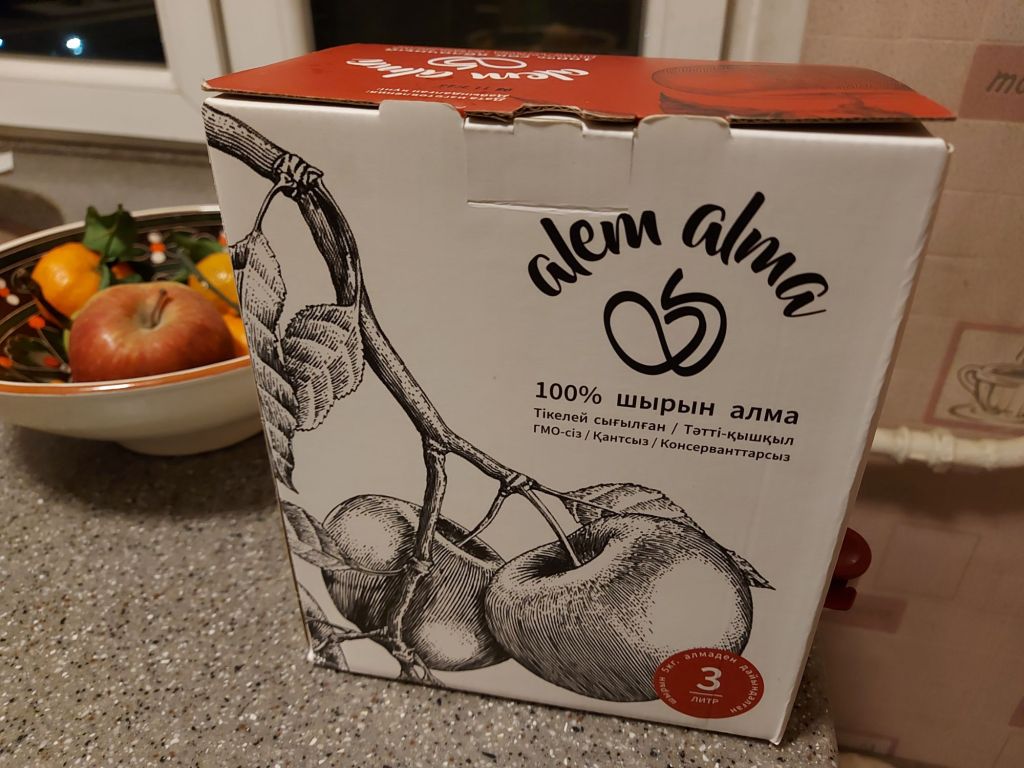
Any apple juice can be used – we used a local one from Almaty, Kazakhstan that’s free from extra sugar and other additives and is naturally cloudy. Almaty, whose name translates as “place of apples”, is where the antecedents of today’s apples evolved.
Apples are from Almaty!
To make the cold brew, add a cinnamon stick, or a teaspoon of powdered cinnamon, five cloves, two teaspoons of fresh ginger and a pinch of nutmeg to a litre of cold water. Shake well and leave overnight in the fridge.
For one serving of the the Almaty Apple Spritz, put some ice cubes into a tall glass, pour in 25 ml of any vodka of your choice (or 50 ml if you want to get a jag on, if you’re doing dry January, just omit the vodka!). Add 75 ml of the cinnamon cold brew, 50 ml of apple juice and top up with fizzy water, garnish with a slice of apple and stir before drinking.
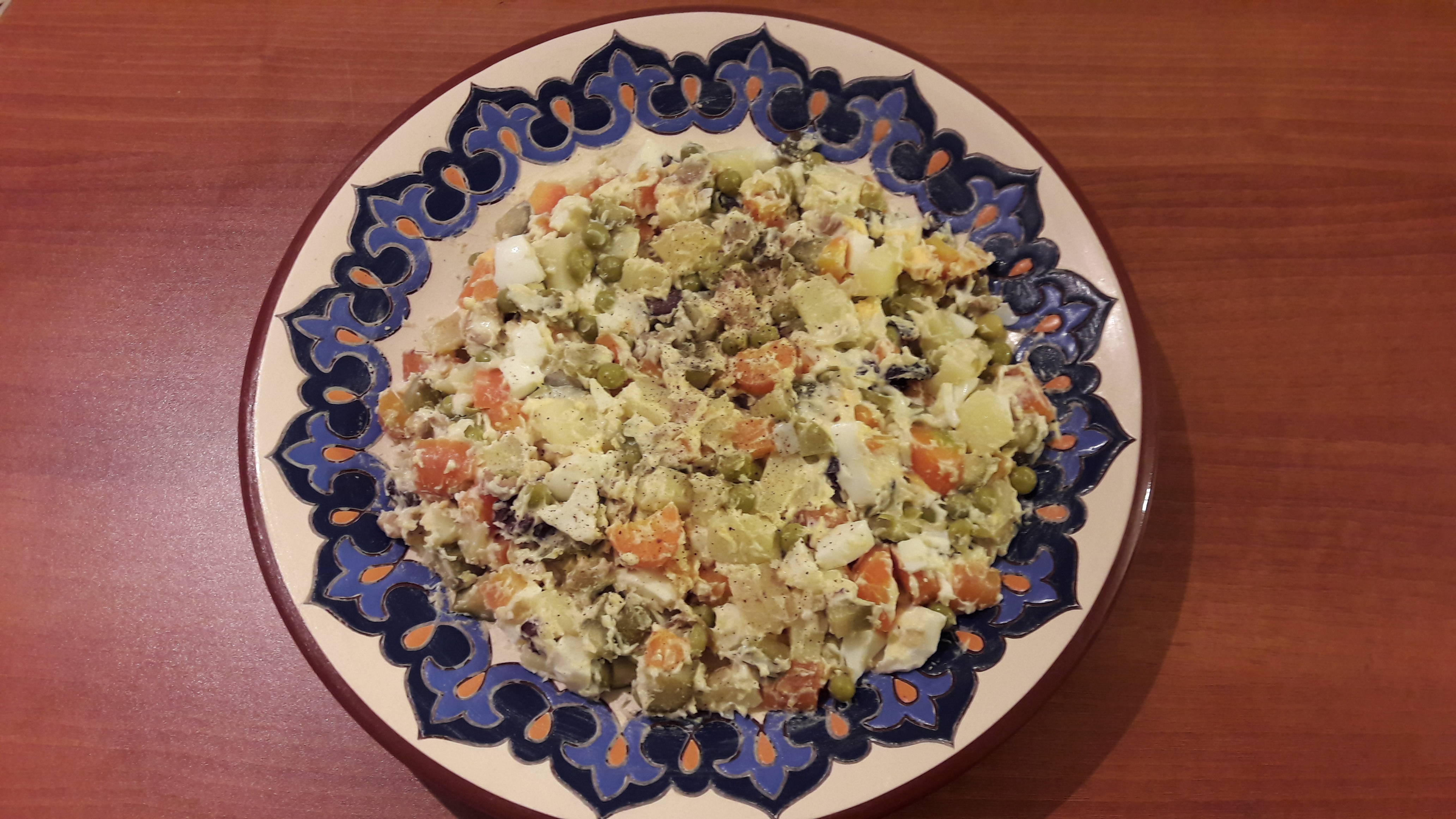
This cocktail also works well warmed up (you don’t need the ice or fizzy water).The spices and apple juice evoke a cosy mulled cider vibe. Simply heat until it’s just about to boil and serve asap. A recommended food pairing is with KCC’s coleslaw variation or a traditional new year Olivier salad.
As 2023 draws to a close, let’s take a look at some striking winter salads to liven up the end-of-year table. To complement our perennial favourite, our Olivier (with an Edge) salad, we’re looking to a coleslaw variation to add some colour to the New Year’s Eve spread. With the new year just around the corner, KCC wishes all its readers a prosperous and peaceful 2024, full with culinary adventures and many more mouth-watering meals!
This winter has been a strange one here in Kazakhstan. We should be in the depths of winter now, but the snow didn’t arrive until the first week of December. Then there was a week or so of freezing weather with the temperature dipping to -28c, but now, as we approach the end of December, there’s very little snow on the ground in Almaty – it’s even been raining, which is really unusual at this time of the year.
KCC’s coleslaw variation with pear and rocket
The purple hues of red cabbage pair so well with the orange of carrots and the green of rocket. For a bit of bite, we’ve added some grated radish (we used green radishes, but you can use red radishes or mouli if you can’t find green ones), along with some grated pear and pomegranate seeds for a sweet and tart note. Add in some pumpkin and sunflower seeds and raisins before dressing with tahini and pomegranate sauce.
Ingredients (serves 3-4)
100 g shredded red cabbage
100 g grated carrot
50 g chopped rocket
50 g grated green radish
50 g grated pear
25 g pomegranate seeds
25 g raisins
1 teaspoon dried oregano
2 teaspoons pumpkin seeds
2 teaspoons sunflower seeds
1 tablespoon tahini
1 tablespoon pomegranate sauce
a slice of fresh lime
Method
In a large bowl mix the red cabbage, carrot, rocket, green radish, pear and pomegranate seeds together. Add the raisins, oregano, pumpkin seeds and sunflower seeds. Make a dressing with equal parts pf tahini and pomegranate sauce and thin with a bit of hot water to obtain a smooth consistency. Pour over the salad, stir well, give it a squeeze of lime and serve.
With Halloween and Thanksgiving, the two times in the year when pumpkins take centre stage, now behind us, we’ve got a simple idea to use up any leftover pumpkin you may have with this quick and easy spinach and pumpkin fritter recipe.
Spicy Spinach and Pumpkin Fritters
These fritters are totally vegan – there’s no need to add an egg to bind them together as chickpea flour and rolled oats do a great job of soaking up any extra moisture from the spinach and pumpkin and help the fritters hold their shape. They can be shallow fried on both sides in a little oil or baked in the oven for 30 minutes at 180 c. These spicy fritters taste good served with a side salad and chips or in a burger bun or pita with your choice of toppings.
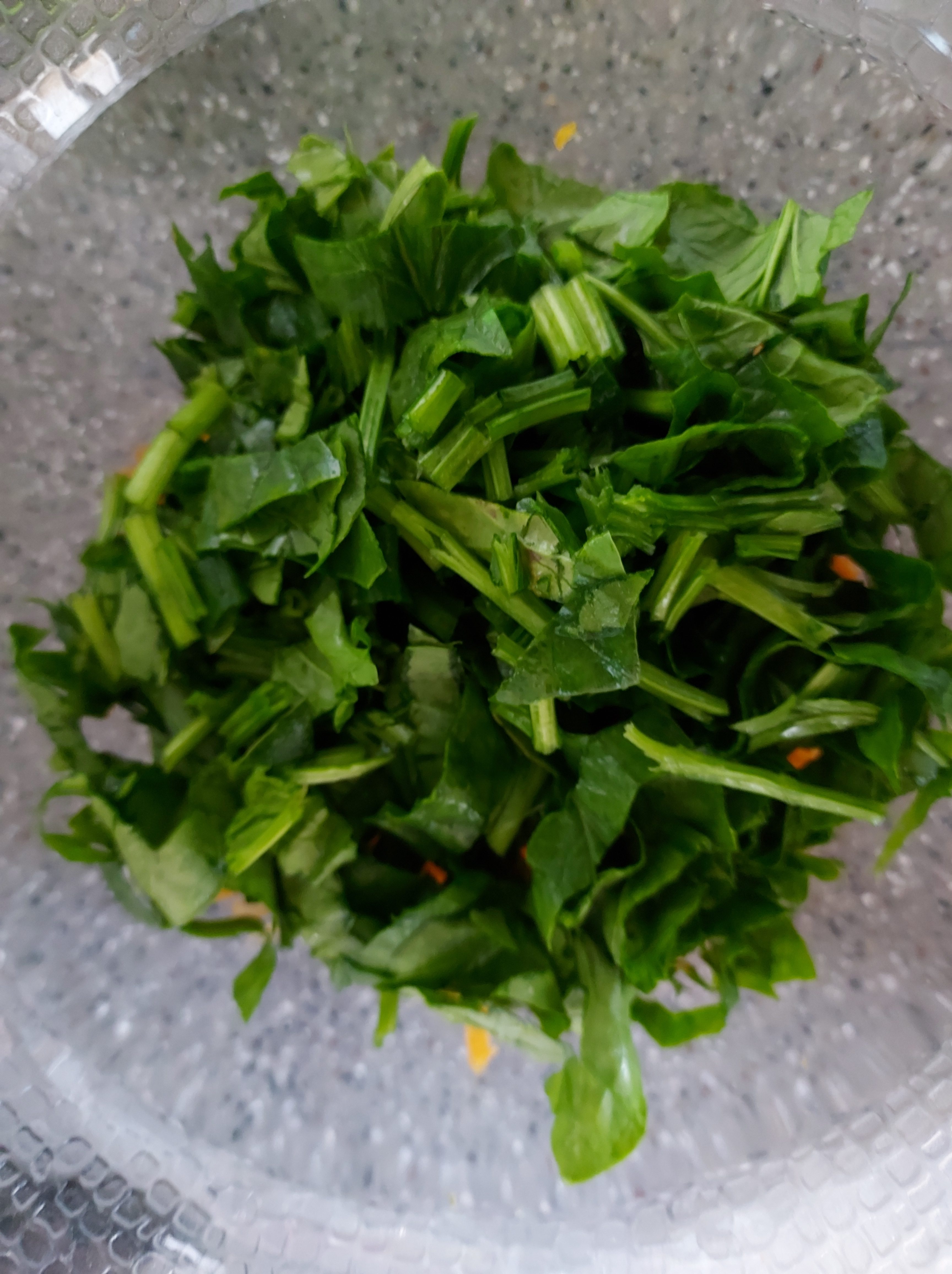
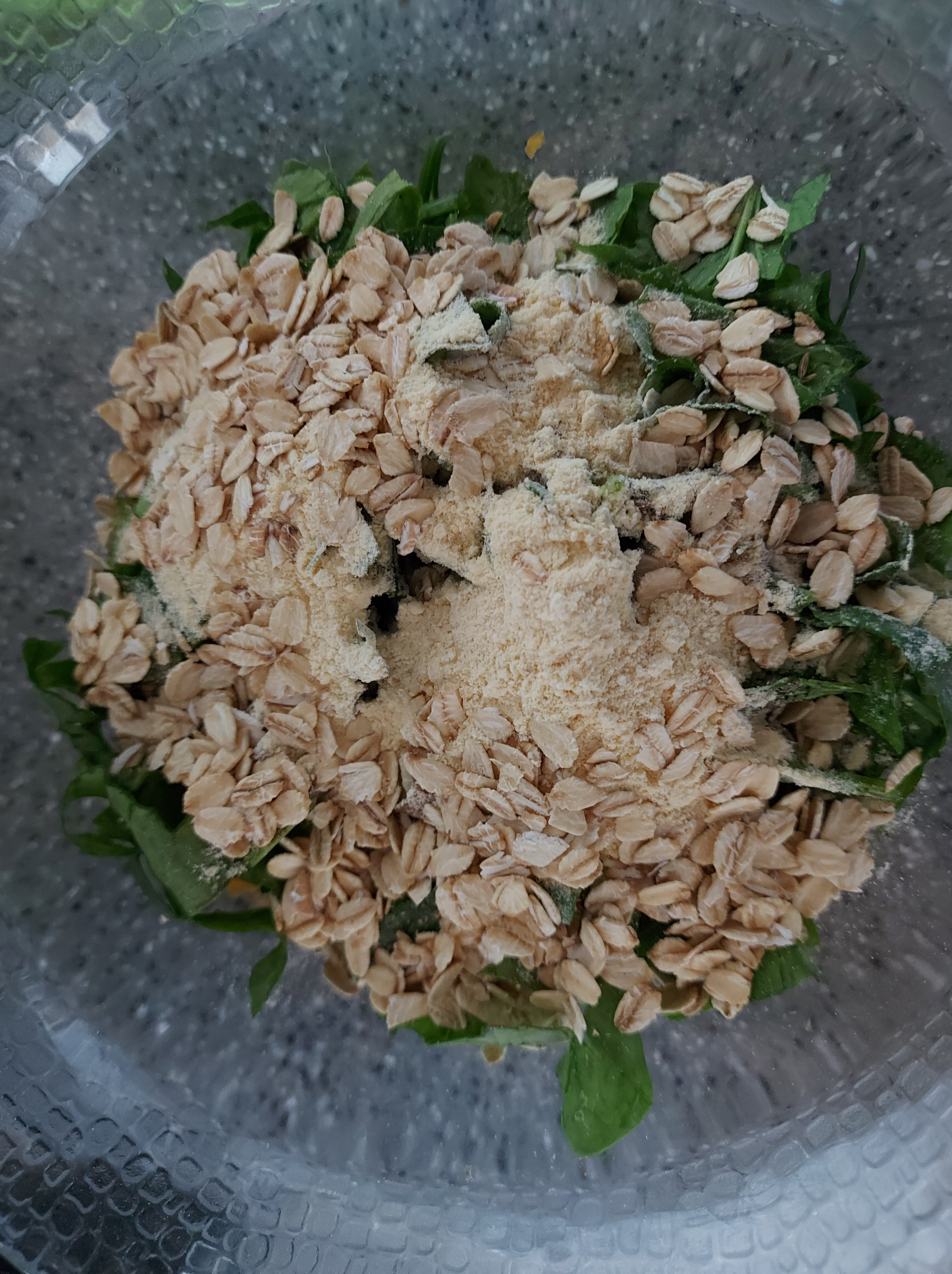
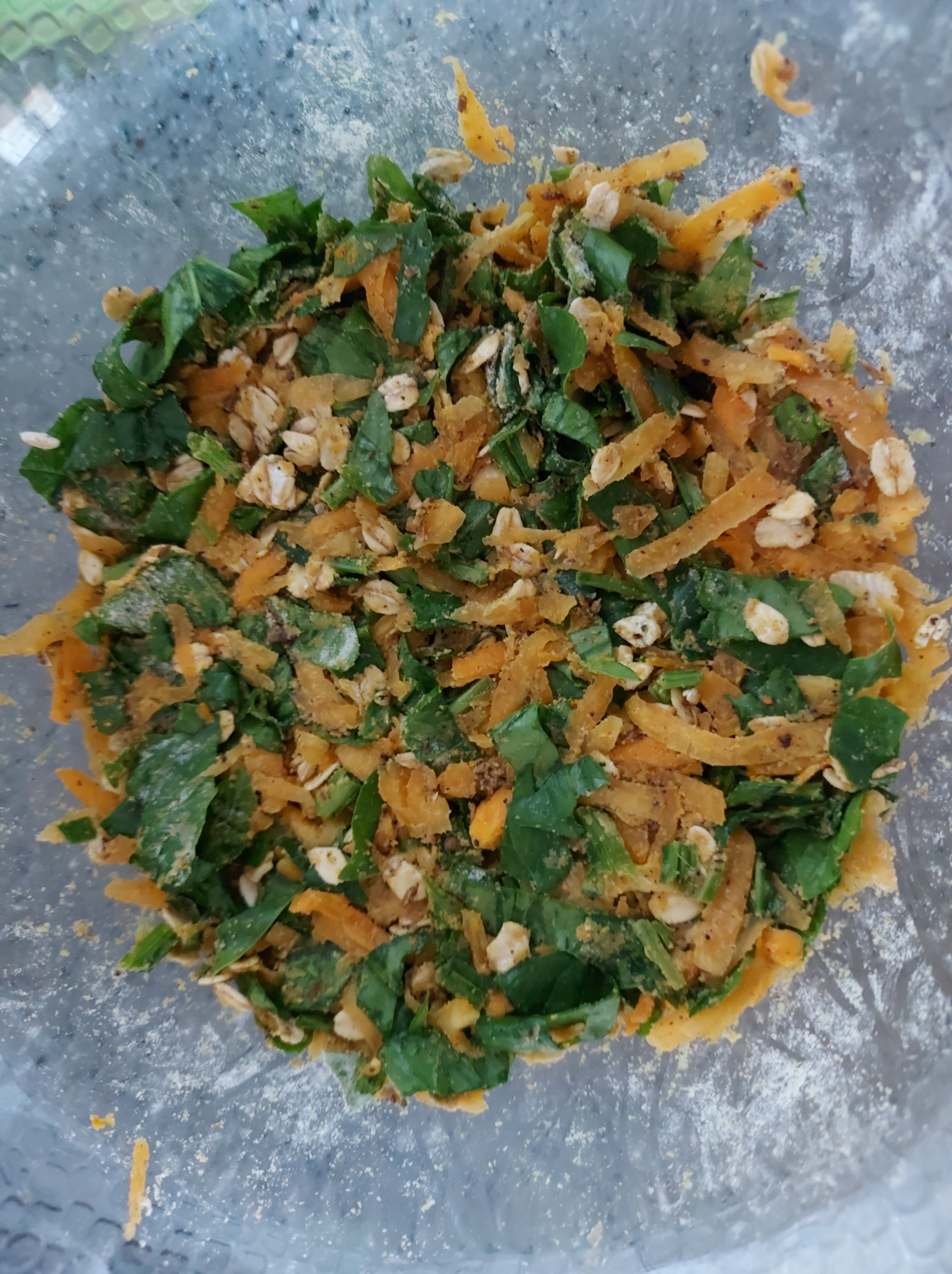
Grate the pumpkinAdd the chopped spinachAdd the herbs and spices then mix Add the rolled oats and chickpea flour Mix it all together, then put it in the fridge for two hoursForm into balls, fry on both sides, then eat!
Ingredients (Makes 6-8 fritters)
175 g grated pumpkin
50 g chopped spinach
50 g chickpea flour
25 g rolled oats
One teaspoon each of cumin seeds, coriander seeds, oregano, sumac and turmeric.
Half a teaspoon cinnamon
25 ml oil for frying
Method
Grate the pumpkin into a large bowl, add the chopped spinach and herbs and spices and combine all the ingredients. Now add the rolled oats and chickpea flour and mix well. Leave the mixture to rest for two hours in the fridge, so that any excess moisture is absorbed.
Form the mixture into small balls (about the size of a golf ball) in your hands. Heat the oil in a frying pan then turn the heat down low and add as many of the balls as will fit in the pan. Flatten them with a fish slice and after a few minutes turn them over. Cook until golden brown on both sides and then serve straight away.
Hummus is one of those dips that we come back to time after time here on KCC. Beyond the classic basic dip of chickpeas, tahini, garlic, lemon juice and olive oil, the possibilities are endless. Our latest version is inspired by a recent trip to Myrtos, Crete where we tasted a beetroot-driven hummus at the excellent O Platanos restaurant.
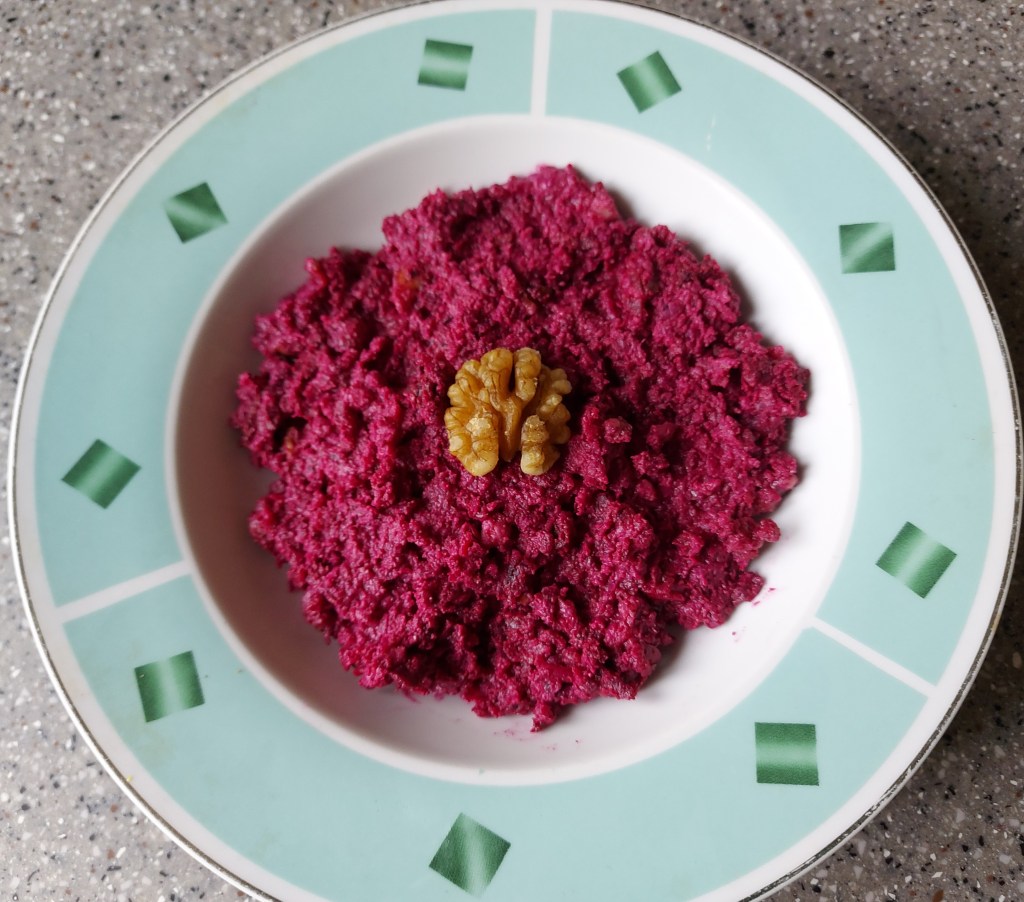
In the past, we’ve made a turmeric-infused hummus and one from red beans, now here’s our latest variation. Beetroot is one of our favourite root vegetables, and it’s really good for you to boot. Taking some tips from Georgia, where a similar dip called pkhali is a regular feature on the dinner table, we’ve added some walnuts to give this hummus an extra protein boost.
Ingredients
125 g baked beetroot – grated
125 g crushed chickpeas
50 g tahini – mixed with up to 50 ml of hot water
25 g toasted walnuts
One garlic clove
100 ml aquafaba (chickpea water)
a few dashes of olive oil
Two teaspoons of sumac
pinches of ground cumin and coriander
Method
Grate the beetroot and then put in a large bowl and crush with a fork (you can also put it in the blender, if you have one). Add the mashed up chickpeas and stir well. Combine the tahini with hot water until you have a creamy paste and then add to the mix.
Add the crushed, toasted walnuts, finely chopped garlic and sumac (this replaces lemon juice to give the hummus a citrusy kick without the acid) and stir together. Add some aquafaba and some splashes of olive oil and blend until the dip achieves your favoured consistency. Season with cumin and coriander and serve with warm pita bread.
Over the next few weeks on KCC, we’ll be looking at some dishes inspired by a recent visit to Crete, Greece’s largest island.
Avocado Tzatziki – with love from Crete!
Crete has dishes not commonly found in other parts of Greece, including hortapitakia, small pies filled with leafy greens and fresh herbs picked from the slopes of the island’s plentiful mountains and a tzatziki made with avocado – check the recipe for this dish below.
KCC spent some time this summer in Myrtos on the south-east coast of Crete. A favourite taverna was O Platanos, which had some imaginative takes on some Greek classics, such as avocado tzatzikl, beetroot hummus, fried manouri cheese with honey and sesame seeds and a moussaka made with sweet potato.
Avocado Tzatziki à la Platanos, Myrtos, Crete
Ingredients (makes four servings)
200 ml Greek yogurt
75 g avocado
75 g cucumber
One garlic clove
Add fresh basil, oregano or dill (to your taste)
Simply smash the avocado, grate the cucumber and mix with the yogurt and then add crushed garlic if using and the herbs of your choice. Hey presto, your tzatziki is ready! Serve with warm pita bread.
This time round on KCC. we’re experimenting with a tomato-free twist on shakshuka, that North African breakfast staple.
Rip Red Shakshuka with beans and beetroot
Our latest shakshuka (click here for our grip green one from last year), replaces tomatoes and onions, which have a high acid content, with beetroot and red beans as the base to poach the eggs in.
This makes for a dish that is easier on the stomach and is ideal for people suffering from GERD, Gastroesophageal reflux disease, which occurs when excess stomach acid flows back into the tube connecting your mouth and stomach.
Ingredients
150 g cooked red beans
100 g diced cooked beetroot
25 g celery
150 ml vegetable stock
A pinch of fresh thyme
2 teaspoons sumac
2 eggs
Mix the beetroot, red beans, celery, carrot and thyme together in a frying pan and add the vegetable stock. Bring to a boil and then reduce the heat so the mixture is simmering.
Cook for five minutes and then make two wells in the mix and break the eggs into these wells. Cover the pan and cook over a low heat for 4-5 minutes until the eggs are set. Sprinkle with sumac and serve with crusty bread or fresh pitas.
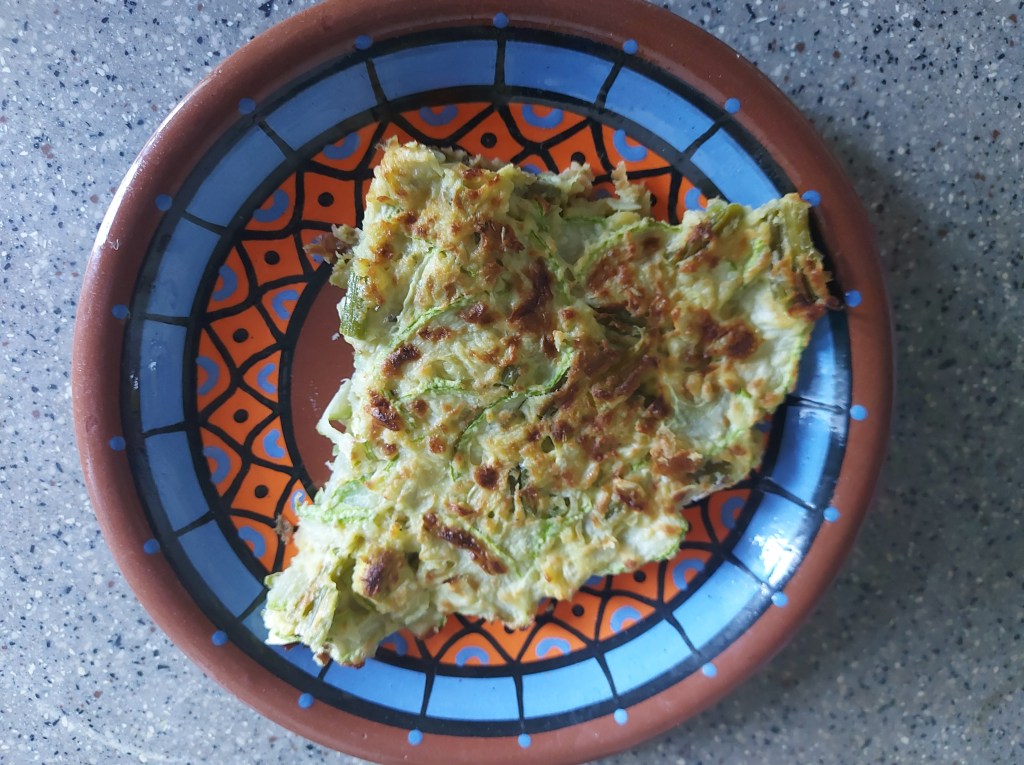
It’s that time of year again when you’ve got more courgettes than you know what to do with so here at KKC we’re looking at scarpaccia from Italy’s Tuscany region. Our take on this crispy tart uses chickpea flour, thinly sliced courgettes, garlic scapes, rosemary, parsley and the mystery ingredient, hemp seed oil.
Try a slice of KCC’s scrappy, hempy courgette hash!
A friend in Uzbekistan recently gave KCC a bottle of locally-produced, premium quality, first pressing hemp seed oil from a company called Leodar. Hemp seed oil adds an earthy, nutty flavour to dishes and salad dressings.
Hemp, the non-psychoactive cousin of marijuana, grows wild in many parts of Central Asia. It’s ideally suited to the arid conditions found here – a much better choice than thirsty cotton. Besides oil, this versatile plant can be used for textiles, paper and bio fuel amongst others.
The return of the scapes!
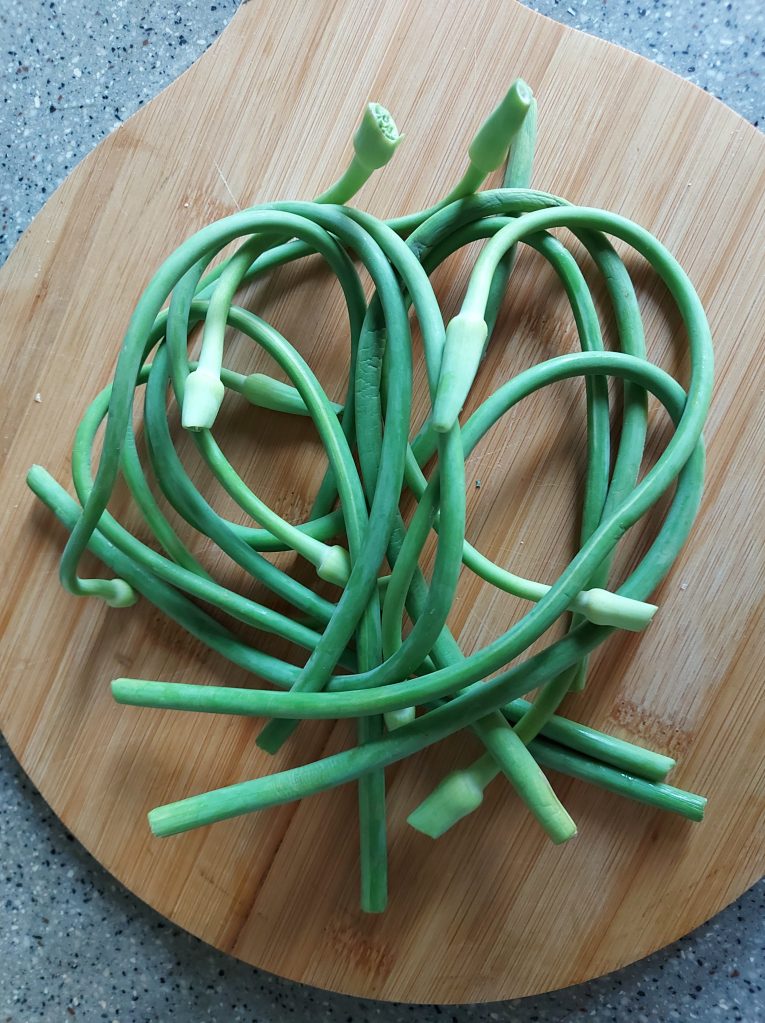
Regular readers may well remember garlic scapes, the edible stem that grows from the garlic bulb, from a previous recipe – a variation on the mücver theme. This flavoursome peduncle gives a mild garlicky kick to pies and tarts, soups and salads, pesto and stir fries.
Ingredients (serves 4)
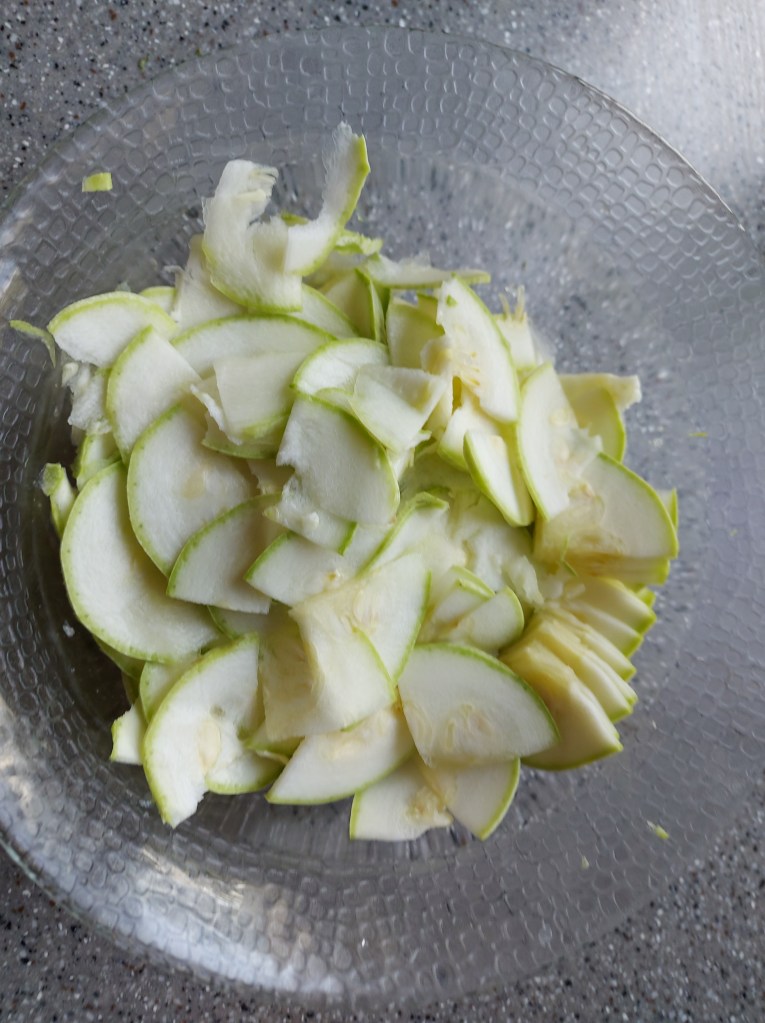
500 g courgette – thinly sliced with a potato peeler or similar
50 g garlic scapes – cut into 1 – 2 cm slices
2 teaspoons rosemary
5 g fresh parsley
50 g chickpea flour
25 ml hemp seed oil (or any flavoursome oil you have to hand)
75 ml water, including any liquid left over from straining the sliced courgettes
Method
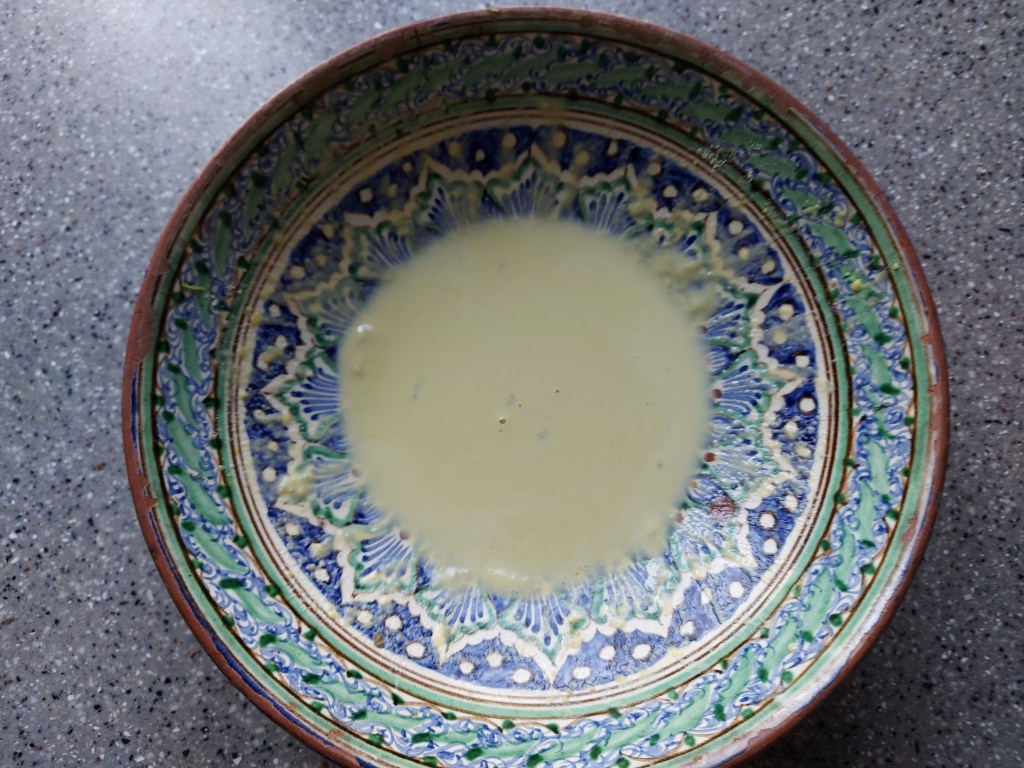
Thinly-sliced courgettesGarlic scapes – cut into 1-2 cm slicesCombine the courgette slices, garlic scapes and rosemary and mix with your hands until courgette softens and starts releasing liquidPut in a colander, place a plate on top, weigh it down with some heavy jars and leave to drain for at least an hourMix the chickpea flour with the hemp seed oil and water , including any water from the courgettes, to make a smooth batterAdd the parsley and miix the courgettes with the batterPut the mix into a greased, heavy-based frying pan, press down with a potato masher and cook over a low heat for ten minutes. Then finish off under a hot grill for another ten minutes until the top is browning and going crispy. Alternatively, cook in the oven for 30 minutes at 180 c.Cut into four slices and serve.
As the July heat builds up here in Almaty, where daytime temperatures are heading for the high 30s, we’ve been looking around for some cold drinks to chill down a bit.
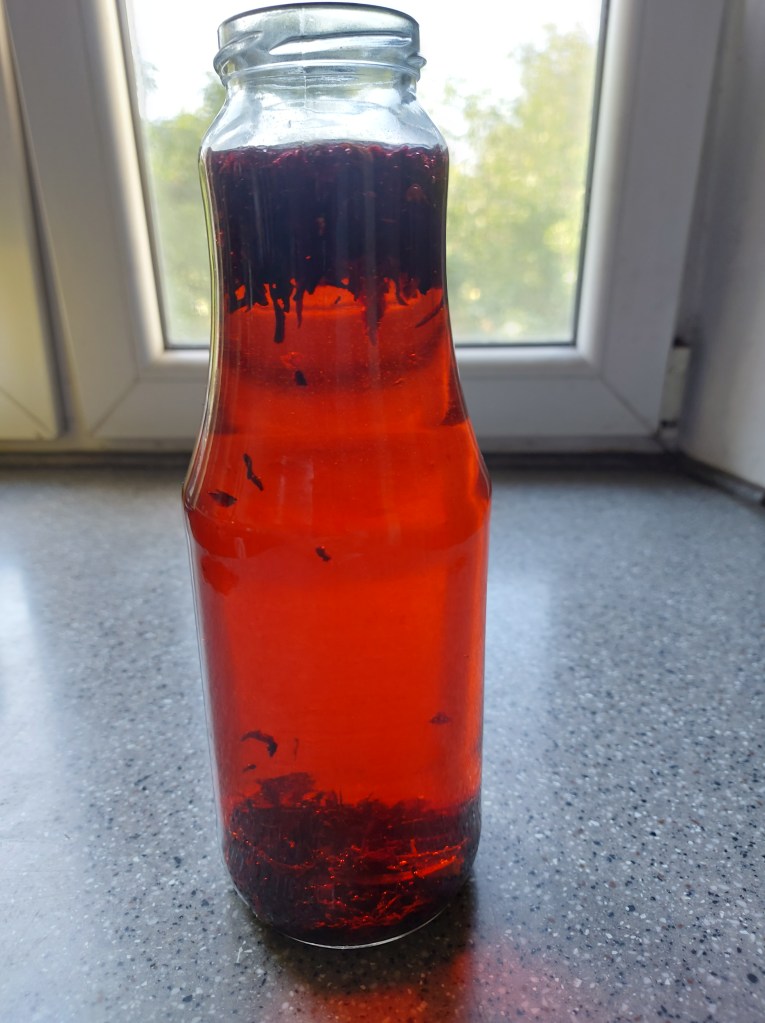
Hibiscus Heat Haze
We’re not fans of overly sweet drinks here at KCC so this tart hibiscus and cinnamon cold brew really hits the spot. It’s a refreshing brew that will help you keep your cool in the heatwave.
Hibiscus and cinnamon cold brew
It’s easy to make – put 15g of hibiscus flowers and a cinnamon stick in a 1 litre glass jar. Add cold water to the top of the jar and leave overnight in the fridge. Strain off the leaves and cinnamon stick and serve with ice. Add more water or some sugar or honey if you find it tastes too tart.
For a summertime cocktail, fill a tall glass with ice, add 10 raspberries, 100ml dry vermouth, 100ml hibiscus cold brew and top up with sparkling water. Add a shot of white rum or brandy to give your Heat Haze an extra bit of oomph.
If you’re a purist who believes that fruits have no business being in salads, then this is not the place for you. At KCC we have no such qualms about mixing vegetables and fruits. In the past we’ve featured a salad with raspberries, one with grilled peaches and another with watermelon, to name a few. As long as something salty, like feta or halloumi cheese, is included to counterbalance the sweetness, then adding fruit to to your salad is fine in our book.
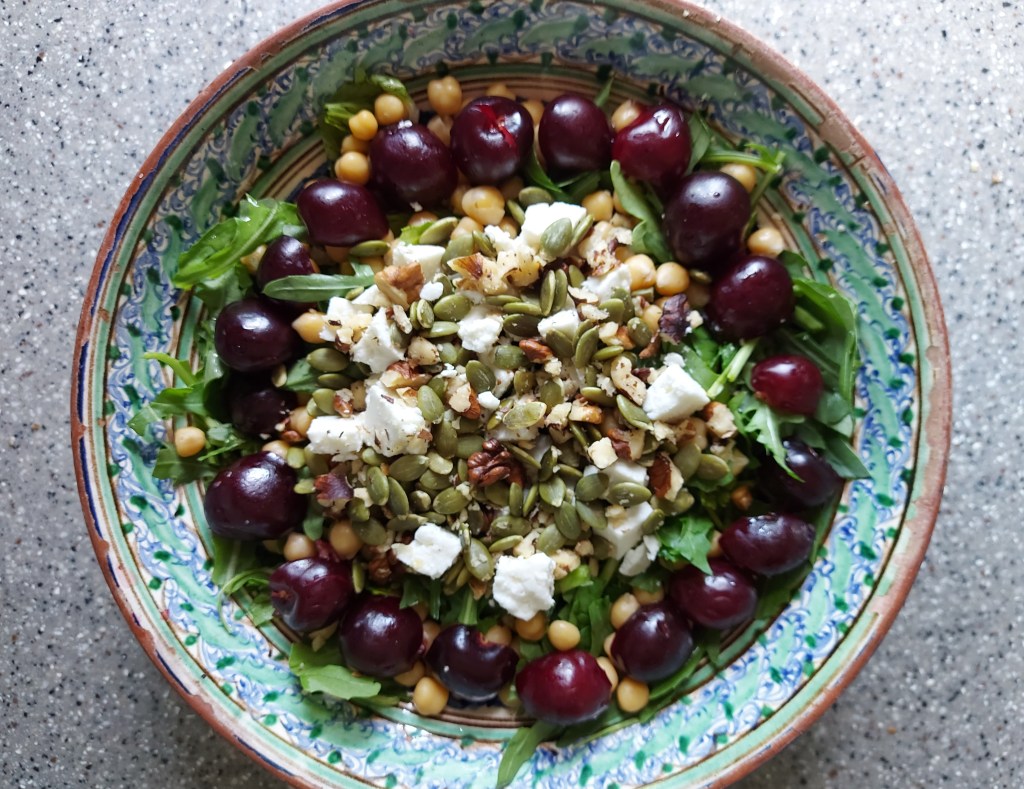
A rocket-fuelled cherry, chickpea, feta and walnut salad
Cherries are at their peak at this time of the year. Whatever variety you can get your hands on – sweet or sour, both work fine in this salad. Prepare a bed of rocket and celery, top with chickpeas, pumpkin seeds, walnuts and feta, arrange the cherries around the edge and dress with pomegranate sauce and olive oil to make a balanced meeting of sweet and sour in this early summer special.
KCC has been spending some time exploring the culinary scene in Latvia. In our travels, we came across grey peas, a pulse that is native to this part of the world and has been a basic staple since neolihic times. In 2015, it was included on the EU’s Protected Designations of Origin (PDO) list.
In Latvia, grey peas,also known as carlin or pigeon peas, are usually served at Christmas with bacon – our take, of course, omits the bacon and combines these indigenous peas with a selection of local vegetables and caraway seeds.
Dried Grey Peas are actually more brown in colour
Despite being called grey peas, when dried they turn brown and resemble chickpeas. Soaked overnight, they cook in about 30 minutes to produce a pea that is crunchy on the outside but soft in the middle.
The crunchy soft taste sensation was reminiscent of Thailand’s baby aubergines, leading to the idea that grey peas would work in a coconut milk gravy. Add some cabbage, carrot, celery and beetroot and some caraway seeds, a distinctive taste in central and eastern European cooking, for a tasty grey peas potage.
Ingredients (serves 4)
250 g dried grey peas
100 g shredded white cabbage
100 g grated carrot
100 g grated beetroot
2 teaspoons caraway seeds
200 ml coconut milk
400 ml grey peas cooking liquid
Method
Soak the grey peas overnight in 500 ml cold water. Drain and add fresh water before cooking. Bring to the boil in a large pan and reduce heat and simmer for around 20 – 30 minutes until tender but not falling apart.
Drain the peas and retain 400 ml of the cooking liquid in the pan. Add the coconut milk and the shredded cabbage, sliced celery, grated carrot. beetroot and the caraway seeds. Bring to a boil and then simmer for ten minutes. Add the grey peas and simmer for ten more minutes, stirring occasionally.
A recent visit to Barcelona serves as the inspiration for this roasted red cabbage dish that KCC tried as part of the veggie restaurant Sésamo‘s 30 euro tasting menu. The great value menu includes seven tapas plates (that can be served as vegan or veggie), a dessert and a glass of local wine.
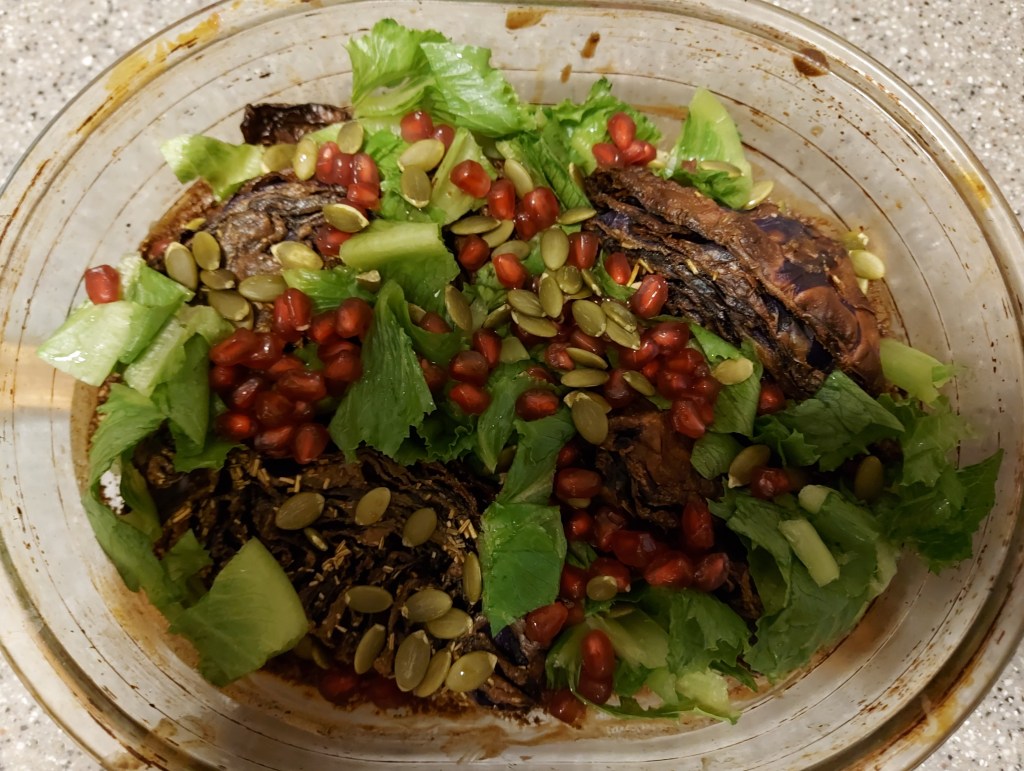
Sésamo’s baked cabbage was cooked with pesto, mint and dukkah – from the ingredients we had at hand we decided to cook ours with tahini, soy sauce and a sprinkling of sesame seeds. It can be served on its own as a main dish or as a salad – we added some shredded baby romaine lettuce and some pomegranate and pumpkin seeds to add some more colour to the dish.
If you’re in Barcelona, then we fully recommend you head for Sésamo which is located near Sant Antoni market. Unlike in most other tapas joints, you can be sure of a meat-free experience at this little gem of a restaurant. It’s closed on Tuesdays and Wednesdays but otherwise works from 19.00 to midnight. If you’re not planning on being in Catalonia, then follow the recipe below to recreate a taste of one of Sésamo’s signature dishes.
Ingredients (serves 4)
Half a red cabbage
50 g baby romaine lettuce
25 ml olive oil
50 ml tahini
10 ml soy sauce
One teaspoon sesame seeds
One tablespoon pumpkin seeds
One tablespoon pomegranate seeds
Method
Remove the tough outer leaves from the cabbage. Cut off the top half of the cabbage (not the stalk end) and then cut this into four slices. Mix the olive oil, tahini, rosemary and soy sauce together in a glass or ceramic baking dish with a fork. Coat the cabbage slices in the dressing. Bake for 30 minutes at 180 c.
Sprinkle with sesame seeds and serve hot immediately or let the cabbage cool down and then mix it with the baby romaine lettuce, add the pumpkin and pomegranate seeds and serve as a salad.
Winter Solstice is upon us once again so it’s time to kick off the holiday season. If you’re looking for something a bit different for your festive feast this year, then look no further than the Hasselback potato, an attractive dish that tastes like a jacket potato crossed with a roast potato.
This method of preparation involves cutting the potato into thin slices that fan out while baking. It can be used for other vegetables like beetroot, carrot and butternut squash, as well as a sweet version using fruits like apple and quince.
Hasselback potato with a pasty and salad
Hasselback potatoes originated in Sweden with the dish featuring in a 1929 recipe book “The Princesses’ Cookbook” by Jenny Åkerström. In 1953. Lief Elisson, a rookie chef at Stockholm’s Hasselbacken restaurant, revived this method for preparing the humble spud.
Preparing the Hasselback
To prepare the fruit or vegetables of your choice, place chopsticks or wooden spoon handles on either side and cut into thin slices until the blade hits the wood.
Ingredients
Four medium potatoes
25 ml olive oil
One teaspoon rosemary or thyme (fresh if available or dried)
One teaspoon cumin seeds
Method
Put two chopsticks or the handles of two wooden spoons on either side of the potato. Cut into 1-2 mm slices, cutting until the blade hits the wood.
Put the potatoes in an ovenproof dish with the cut side facing up. Drizzle liberally with olive oil and sprinkle cumin seeds and thyme (or rosemary) over them.
Bake in a pre-heated oven at 180 c for one hour. Serve on their own or as part of a main course with a pasty or nut roast along with your choice of side vegetables or a salad.
This time round on KCC we’re taking a look at mooli, or daikon as some of you might know it. This large, white member of the radish family is common in Japanese, Korean and Chinese cuisine and is also widely used in the Indian sub-continent. It’s a versatile, vitamin-packed vegetable that can be eaten raw or cooked in a variety of dishes. It has a milder flavour than its smaller red cousins but adds an interesting, mildly spicy crunch to salads and stir fries.
Mooli mattar mücver served in a bap with salad
Mücver fritters are a perennial KCC favourite so we decided to make some with grated mooli, mattar (green peas), celery and some chickpea flour to glue it all together for our latest mücver variation. This version is great served in a burger bun or baguette with some fresh coleslaw, shredded salad greens and a dash of soy sauce.
Meet the mooli aka daikon or winter radish
The mooli can be quite wet when grated so give it a good squeeze to remove the excess liquid. The chickpea flour will help bind the fritters together and soak up any remaining moisture so that they hold their shape better when frying.
Ingredients (makes four 125 g fritters)
200 g grated mooli
200 g green peas (fresh, tinned or frozen)
1 celery stick
50 g chickpea or pea flour
One teaspoon cumin seeds
One teaspoon turmeric
Two teaspoons paprika
Oil for frying
Method
Peel and grate the mooli into thin strips. Squeeze the moisture from the grated mooli. Chop the celery stalk and leaves finely and put into a bowl with the grated mooli. Add the peas and the spices and mix well. Now add the chickpea flour and blend everything together. The mix should be sticky but not wet – if it’s too moist, then add a bit more flour until you get a sticky consistency.
Heat the oil in a frying pan. Form the mix into four golf ball-sized pieces. Place in the pan and flatten with a fish slice. Turn the fritters over after frying for two to three minutes. Cook for another two to three minutes until both sides are a golden brown colour. Serve in a burger bun or in a baguette. Top with grated carrot and red cabbage and shredded lettuce or rocket, add a splash of soy sauce and enjoy!
Looking like something between an apple and a pear, the quince comes across as an exotic addition to the fruit basket. However, this hard, astringent fruit, that needs to be cooked before eating, has a long history in Europe. It was already well-known in Ancient Rome having arrived from its home in Central Asia.
When cooked, quince turns from a yellow hue to a deep amber colour. In Spain, quince is the base for ‘Membrillo‘, a sweet jelly that is served with Manchego cheese. In Turkey, which accounts for more than a quarter of the world’s quince crop, it can often be found stewed in syrup as part of a classic Turkish breakfast spread alongside cheese and olives or baked in the oven and served with clotted cream. It’s also popular in Uzbekistan – we once had a plov garnshed with quince slices and cashews.
Plov with quince and cashew
Quince has quite a short season, so we decided to turn our haul into a spicy, amber-coloured chutney to prolong its shelf life. Chutney is a lot more forgiving to prepare than jam – and this one is perfect served with crackers spread with hummus or with a selection of robust cheeses.
It’s an apple. It’s a pear. It’s superquince!
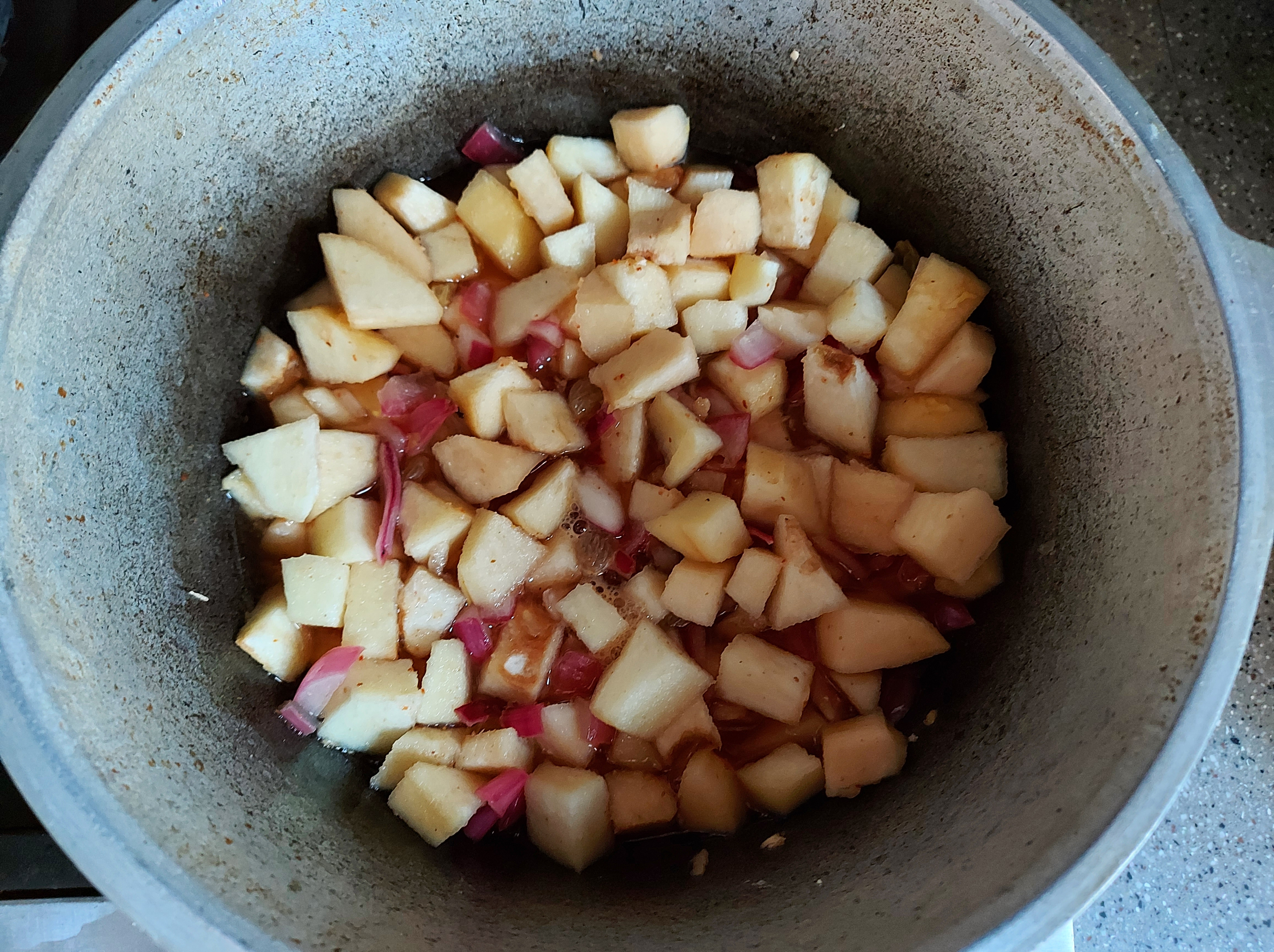
Chopped up and added to the pot
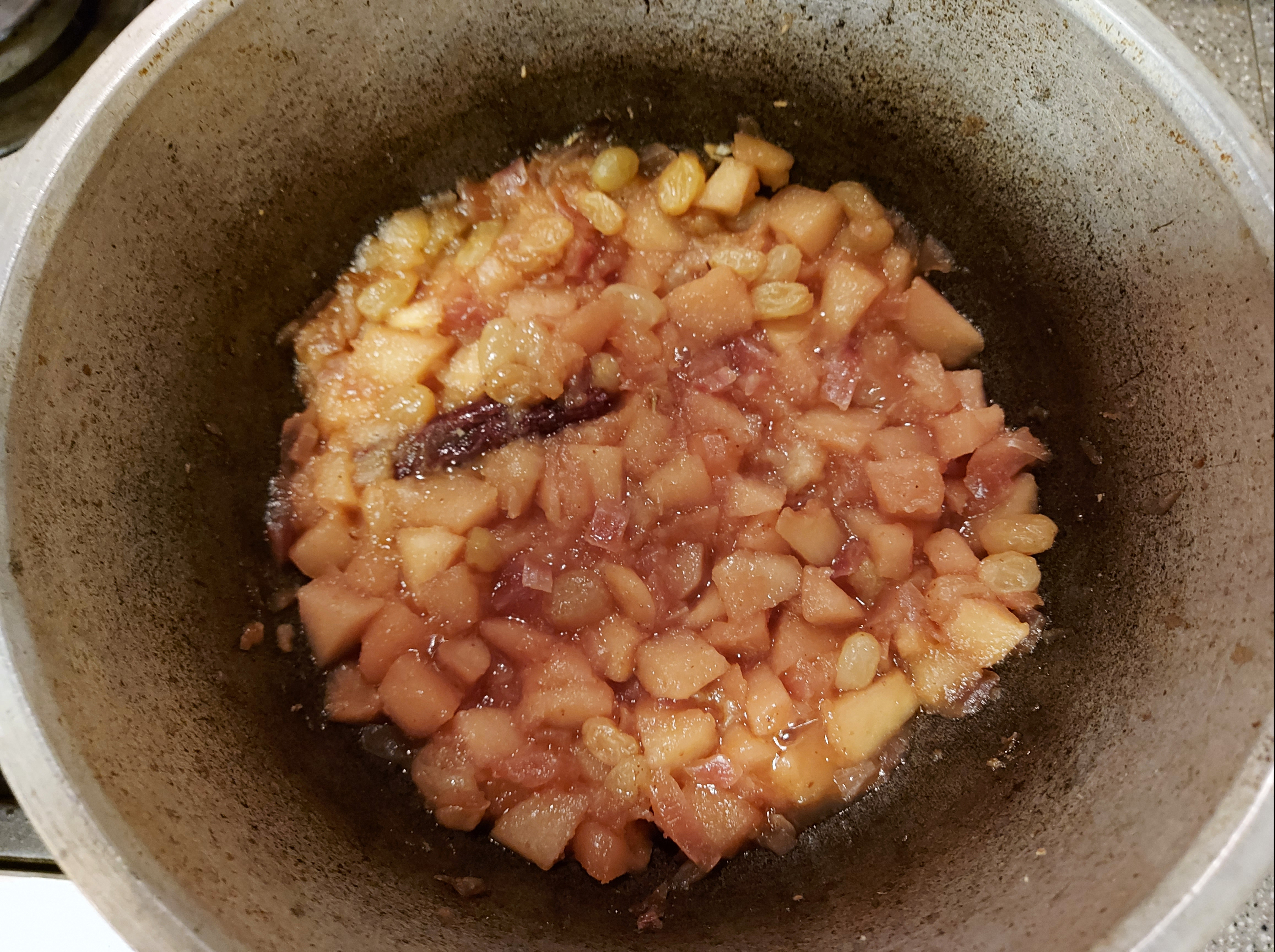
Starting to pink up
KCC’s Quintessentially Quince Chutney
Ingredients (makes around 500 g of chutney)
500 g quince (peeled, cored and cut into 1 cm cubes)
125 g red onion (roughly chopped)
100 g brown sugar
50 g sultanas
10 g fresh ginger (grated)
One teaspoon paprika
One cinnamon stick
250 ml apple (cider) vinegar
Method
Put all the ingredients in a heavy-based pan. Bring to a boil and then simmer over a low heat, stirring regularly, for at least one and a half hours – it should thicken up into an amber-coloured mass.
Allow the chutney to cool and then put into sterilised glass jars (leave the jars in an oven heated to 50 c for 30 minutes prior to filling). Leave in a dark, cool, dry place for at least four weeks. Should keep for up to a year in the cupboard.
As the first snow falls here in Almaty, it’s time for some heartier fare. This recipe started out life as courgette soup, but the sudden drop in temperature called for something with a bit more oomph so we added some mung beans and dried coconut to give it a more stew-like consistency. To add a bit of colour, we sprinkled some pomegranate seeds on top and gave it a drizzle of pomegranate sauce before serving.
KCC’s Courgette, Coconut and Mung Bean Mash Up
The delicate, thin courgettes of the summer are giving way to the robust, denser marrows of autumn – perfect for making into a soup. Mung beans are a versatile store cupboard basic – they can be added to stews or grown into bean sprouts for stir fries and salads – check out more recipe ideas here. They’re a staple in home-cooked meals in Uzbekistan, where they’re known as mash, hence the “mash up” in the name of this dish.
Winter is coming to Almaty…
Ingredients (makes four servings)
1 kilo courgette
One celery stick
One medium onion
Bunch of radish leaves
200 g dried mung beans (soaked overnight)
50 g desiccated coconut
50 ml olive oil
Two teaspoons dried thyme
Two teaspoons cumin seeds
1.5 litres vegetable stock
Pomegranate seeds and Pomegranate sauce to garnish
Method
Heat the olive oil in a heavy-based pan and fry the cumin seeds until starting to crackle and then add the diced onion and cook for five minutes over a medium heat. Next add the diced celery, lower the heat and and cook for another five minutes, stirring occasionally. Cut the courgette into four pieces lengthwise and then slice into 1 cm thick chunks. Add to the pan along with the thyme and stir fry for ten minutes. Add one litre of vegetable stock and the chopped radish leaves and simmer over a low heat for twenty minutes.
While the soup is simmering, cook the mung beans in a separate pan with 500 ml vegetable stock and the coconut. Cook for twenty – thirty minutes or so until the beans are softening or until all the liquid is absorbed.
Remove around 25% of the courgette mix and blend the rest to a smooth consistency with a stick blender. Add these blended courgettes to the cooked mung beans and stir well. Bring to a boil and then add the reserved courgette mix. Pour into soup bowls, garnish with a few pomegranate seeds and a drizzle of pomegranate sauce and serve immediately.
Here in the northern hemisphere we’re moving into the “darker half” of the year with the nights growing longer and the mercury dropping rapidly. Halloween is just around the corner so it’s that pumpkin time once again. Here at KCC we’re always looking cut down food waste so this year we’ve got another idea of how to use up your excess squash – a vegan variant on Shepherd’s pie.
Pumpkin-topped Beany Bake a.k.a. Halloweenish Shepherd’s Pie
Halloween has its origins in the Celtic pagan festival of Samhain that marked the end of the harvest period and the onset on the dark months of winter. It was an excuse for a wild party with feasting and drinking at a time when the boundary between our world and the spiritual world was held to be at its thinnest.
Halloween, which is the evening before All Saints’ Day, 1 November, in the Christian calendar, is still the time when many remember the souls of the dead. Many Halloween traditions in North America were influenced by Irish and Scottish immigrants, harking back to the festival’s pagan roots.
The pumpkin, the round, oversized orange vegetable, native to the New World, has become a symbol of the festival. This has led to millions of pumpkins going to waste so here’s a reminder of some more of our pumpkin recipes to try and reduce the scale of this problem.
Ingredients (serves four)
500 g pumpkin
One medium onion
One stick of celery
One medium carrot
One medium green pepper
One medium courgette
Two medium tomatoes
One tablespoon tomato paste (or Turkish hot pepper paste if you can find it)
300 g cooked beans (cannellini or kidney beans 0r a mix of the two)
75 g red lentils
200 ml vegetable stock
50 ml olive oil
One teaspoon chilli flakes
One teaspoon turmeric
Method
Clean the pumpkin by removing the hard outer skin and the seeds (if there are any) and then chop into small cubes, put into a baking dish and drizzle with olive oil and mix well. Roast in a pre-heated oven at 180 c for 30 minutes, stirring occasionally.
While the pumpkin is roasting, heat the oil in a heavy-based pan and then cook the finely chopped onion over a medium heat for five minutes. Add the diced celery, green pepper and carrots and cook for another five minutes.
Mix in the cooked beans, vegetable stock and tomato paste, chilli flakes and turmeric and stir well. When it boils, add the lentils, stir and then cook for 20 minutes or so until all the liquid is absorbed. While this is cooking, top and tail the courgettes and cut into 1cm thick rounds. Thinly slice the tomato.
Remove the pumpkin and mash with a fork or a potato masher. Put the bean mixture into the bottom of the baking dish and cover with courgette rounds. Cover the courgette with tomato slices and then pack the mashed pumpkin on top of the tomatoes. Decorate with pumpkin seeds and bake at 180 c for 30 minutes or until the top of the pie begins to char.
It’s that in-between time of year as the nights grow longer and thoughts turn towards more substantial meals after a long summer of salads and lighter fare. The last of the seasonal vegetables such as tomatoes and courgettes are perfect for stuffing and baking in the oven, making a bridge between summery salads and the heartier soups and stews of winter that are coming up.
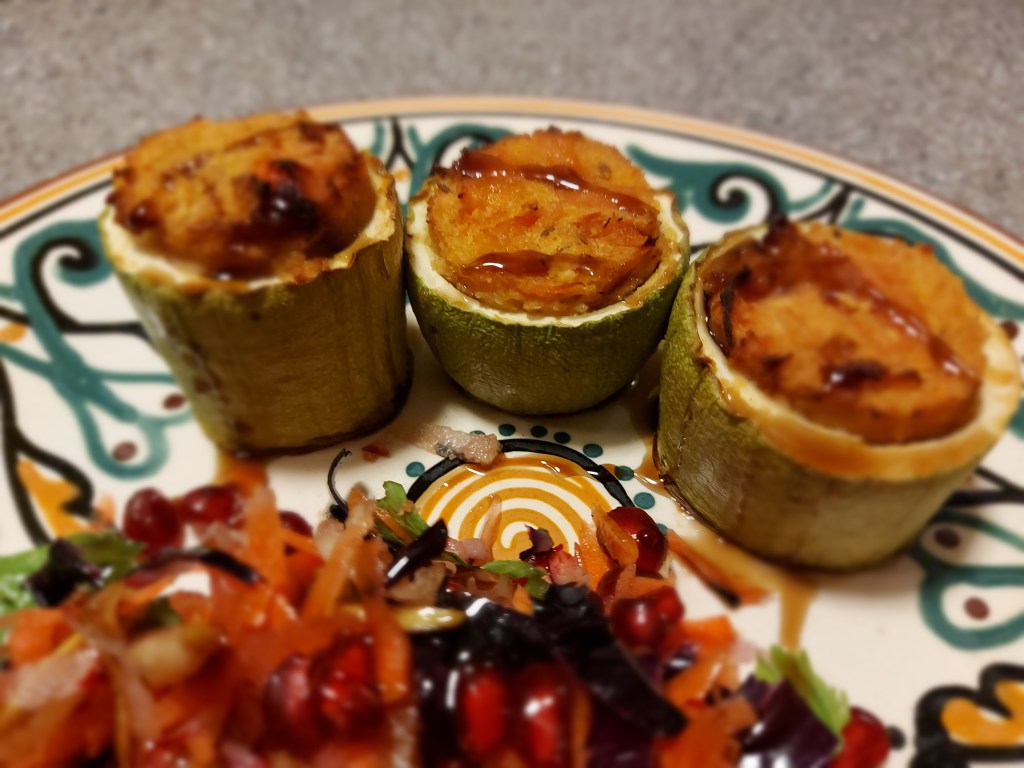
Apricot and lentil courgette roundels drizzled with pomegranate sauce and served with a seasonal salad
We stuffed some courgettes with a mixture of red lentils, apricots, tomato, onion, bulgur wheat and lemon juice to make a versatile roundel that can be served as part of a main course or eaten on its own as a meze, a fully vegan alternative to the sausage roll!
Apricot and lentil courgette roundel – a vegan alternative to the sausage roll?
The autumn fruit is at its best at the moment, and we’ve added some pear and pomegranate to an autumnal red cabbage, carrot, celery and radish salad to accompany these apricot and lentil courgette roundels to make a great lunch or supper. By adding a jacket potato, you can make it into a more filling main course.
Ingredients (makes enough mixture for 10-12 roundels)
Three medium sized courgettes
100 g red lentils
50 g dried apricots (or four fresh apricots if available)
One small red onion (approx 75 g)
One medium tomato (approx 100 g)
50 g fine bulgur wheat
25 ml olive oil
200 ml vegetable stock
Juice of half a lemon
One teaspoon cumin seeds
One teaspoon red chilli flakes
Black pepper to taste
Method
Cut the dried apricots into eight pieces and soak in hot water for at least 30 minutes. While the apricots are soaking, heat the oil in a heavy based pan and add the cumin seeds. When they start to sizzle, add the finely chopped onion and fry over a medium heat until they start to soften. Grate the tomato into the fried onion and cook over a low heat for five minutes or so, stirring occasionally.
Now add the washed lentils, pour in the stock and stir. Cook over a low heat for 15-20 minutes until most of the water has been absorbed. Add the fine bulgur wheat, mix it in well and leave covered for 15 minutes. Drain the apricots and stir them into the mixture. Add the lemon juice, chilli flakes and black pepper to taste and mix well.
While the lentils are cooking, start to prepare the courgettes by slicing off the ends to make them flat. Cut into 3 cm slices. Gouge out the seeds with a small spoon, leaving a little bit of flesh at the bottom of the roundel.
Pre-heat the oven to 180 c. When the lentil mix is cool, pack it into the courgette roundels and stand them on a baking tray with the filling topmost. Bake at 180 c for 30 minutes or so – the courgette should still be firm and not too squidgy and the lentil mix should rise slightly and be beginning to brown on top.
Serve alongside a salad of red cabbage, carrot, celery, radish, pear and pomegranate and a jacket potato, drizzling pomegranate sauce over the roundels or allow to cool and serve the roundels as a snack on their own.
This time round on KCC, we’ve brought a recipe back from our heartland of the Datça peninsula that uses fresh almonds, lemons and olive oil to make an amandine dressing for green beans based on France’s classic almond sauce.
Green beans amandine – an almond, lemon and chilli dressing
We had some great meze dishes on our travels around the peninsula including one made with fresh black-eyed beans – börülce in Turkish – and almonds at Ada Pansiyon on Ovabükü beach. Having failed to track down fresh black-eyed beans back in Almaty, we opted for green beans as they were available.
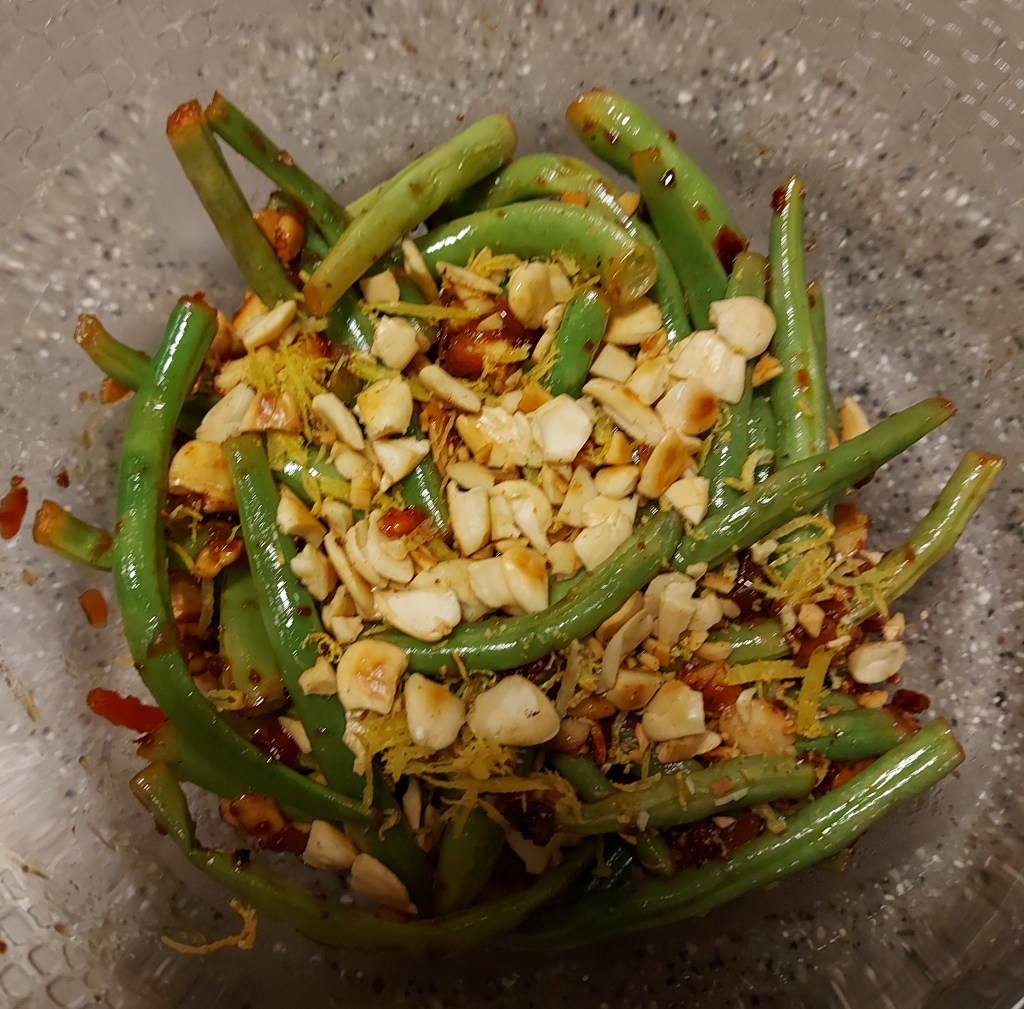
Toasted almonds with stir-fried green beans and lemon zest
This dish can be served along other meze dishes – check out some of our other meze ideas here, or with bulgur, rice or pasta as more of a main course. The amandine dressing also works well with other vegetables such as broccoli and cauliflower.
Ingredients
500 g green beans
100 g red onion
100 g almonds
50 ml olive oil
One lemon
One teaspoon chilli flakes
Method
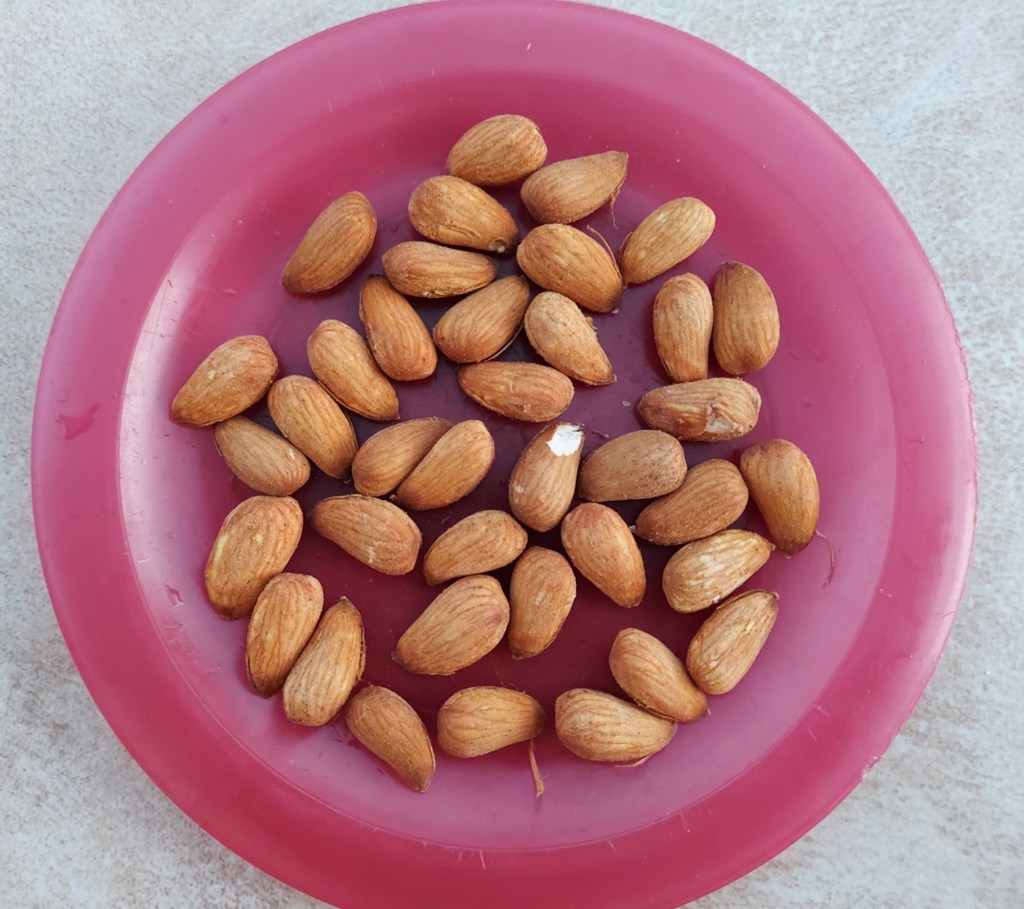
Peel the almonds – put them in hot water for 30 seconds and then into cold water, the skins should now be easy to remove. Break the almonds into small chunks and toast in a frying pan over a low heat until they go a golden brown colour. Remove from the pan and set aside.
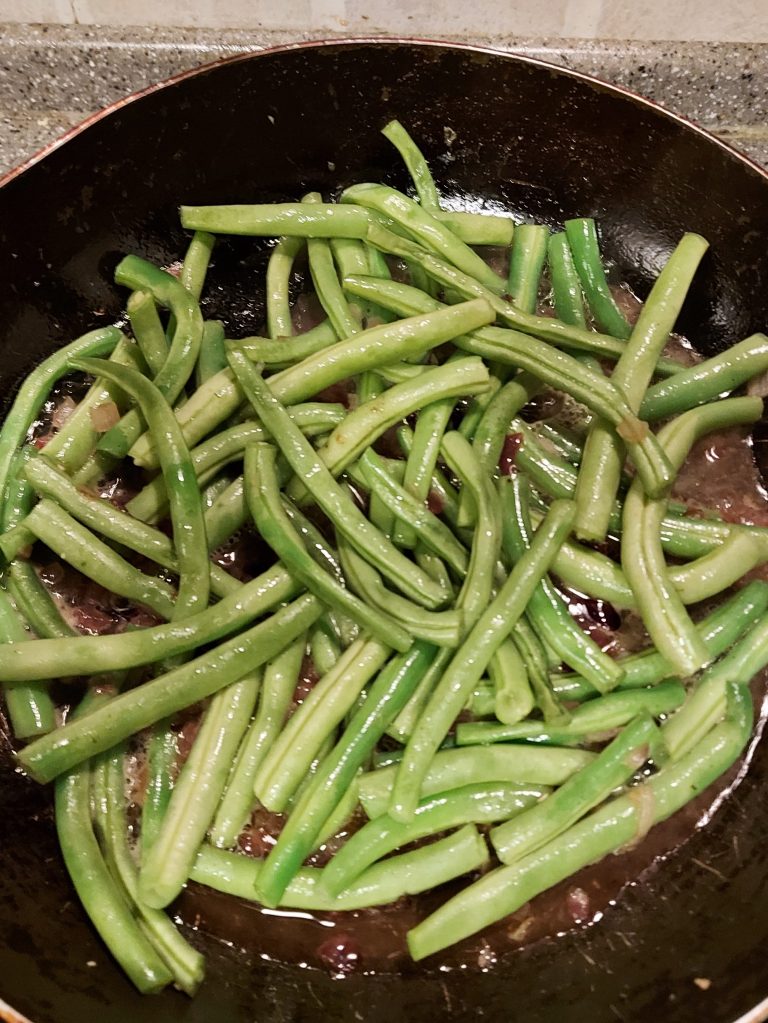
Top and tail the green beans and slice into 5 cm lengths. Heat the oil in the frying pan and then fry the chopped onion for five minutes and then add the beans and stir fry over a medium heat for five minutes or so – they should retain a little bit of crunch. While the beans are cooking, zest the lemon and then squeeze the juice.
Combine all the ingredients in a large bowl, including the lemon juice and chilli flakes and serve straight away or allow to cool if you prefer.
To celebrate being back in KCC’s spiritual homeland of the Datça peninsula, we’ve created a variation on the Moscow Mule using ingredients sourced from around the village of Mesudiye, which is on the sun-drenched southern coast of the peninsula.
The Mesudiye Mule
Our take on this classic cocktail uses some staples grown around the peninsula our homemade fig-infused vodka of a pre-pandemic vintage, almond flavoured soda water and green lemons.
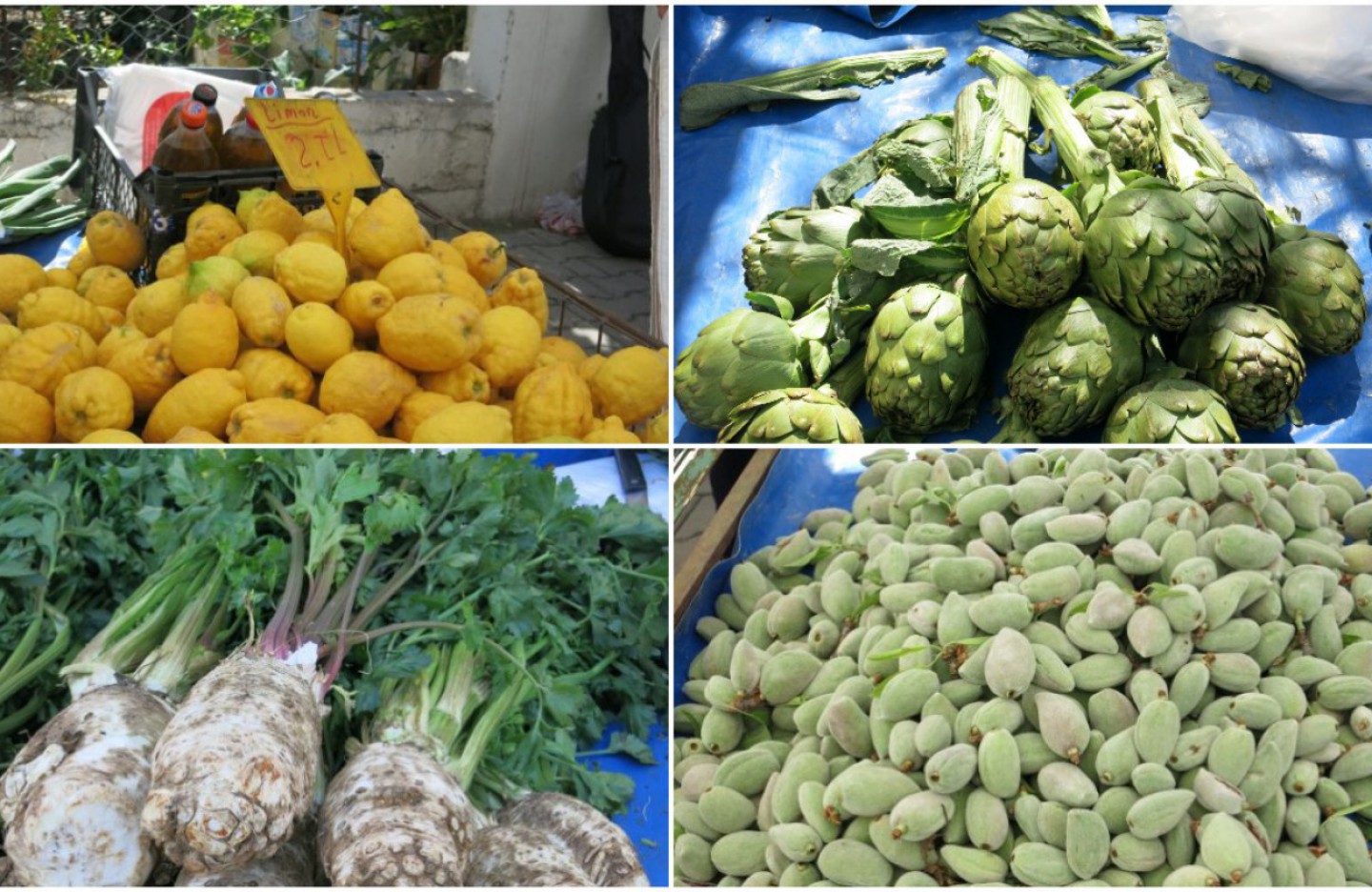
Almonds and green lemons – key crops grown on the peninsula
To make a Mesudiye Mule, pour 50 ml of fig vodka into a metal beaker filled with ice (we used a Greek aluminium wine jug as no copper mug was available), add 200 ml almond soda water and the juice of two green lemons. Garnish with a slice of lemon and serve with the freshest almonds you can find – cheers!
Almonds straight from the tree!
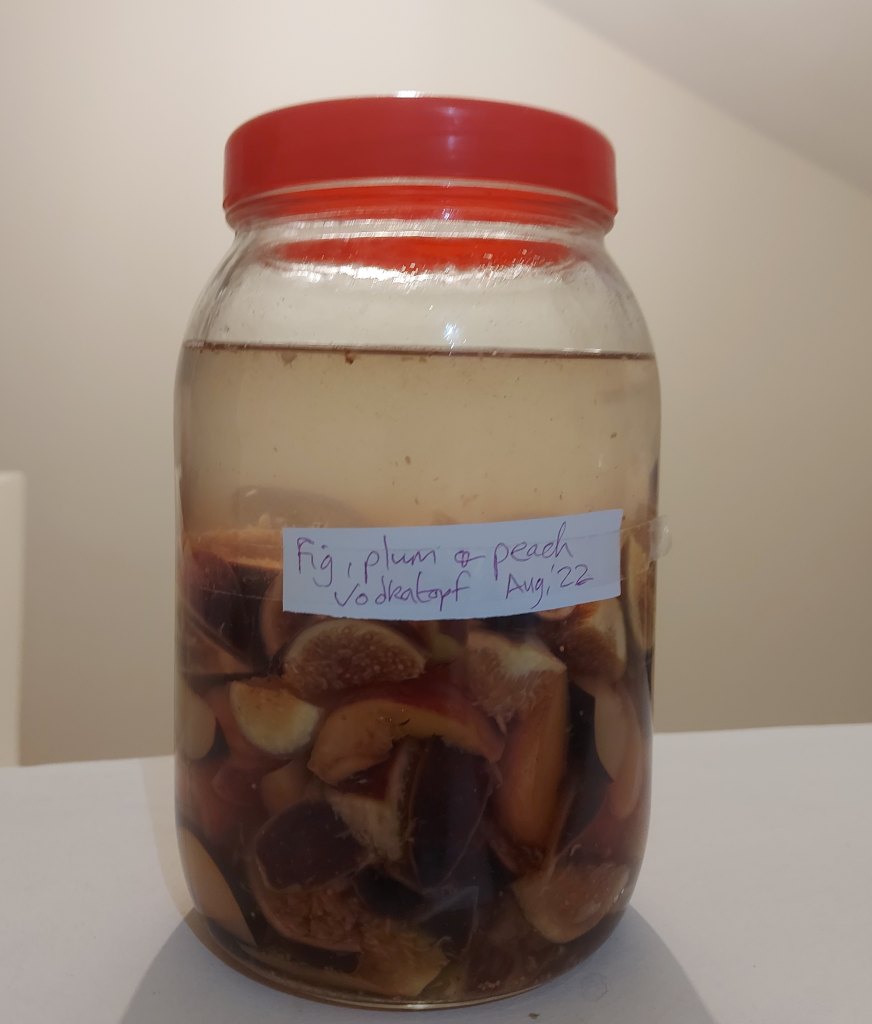
To make the fig vodka, wash and quarter 0.5 kilo of figs and put them in a steriised one litre glass jar. Pour vodka to cover the figs, put the lid on and leave in a cool, dark place for a few months before drinking. Here’s our latest batch with peach and plum added.
With Wimbledon in full swing and the British hopes fading fast, it’s time to seek some consolation in some seasonal soft fruits. Strawberries and cream, of course, is a dish associated with the tennis extravaganza in SW19.
This summer, KCC has noticed a glut of strawberry recipes in the mainstream UK press and on Instagram, using these berries in salads or in gazpacho, a cold, blended vegetable soup.
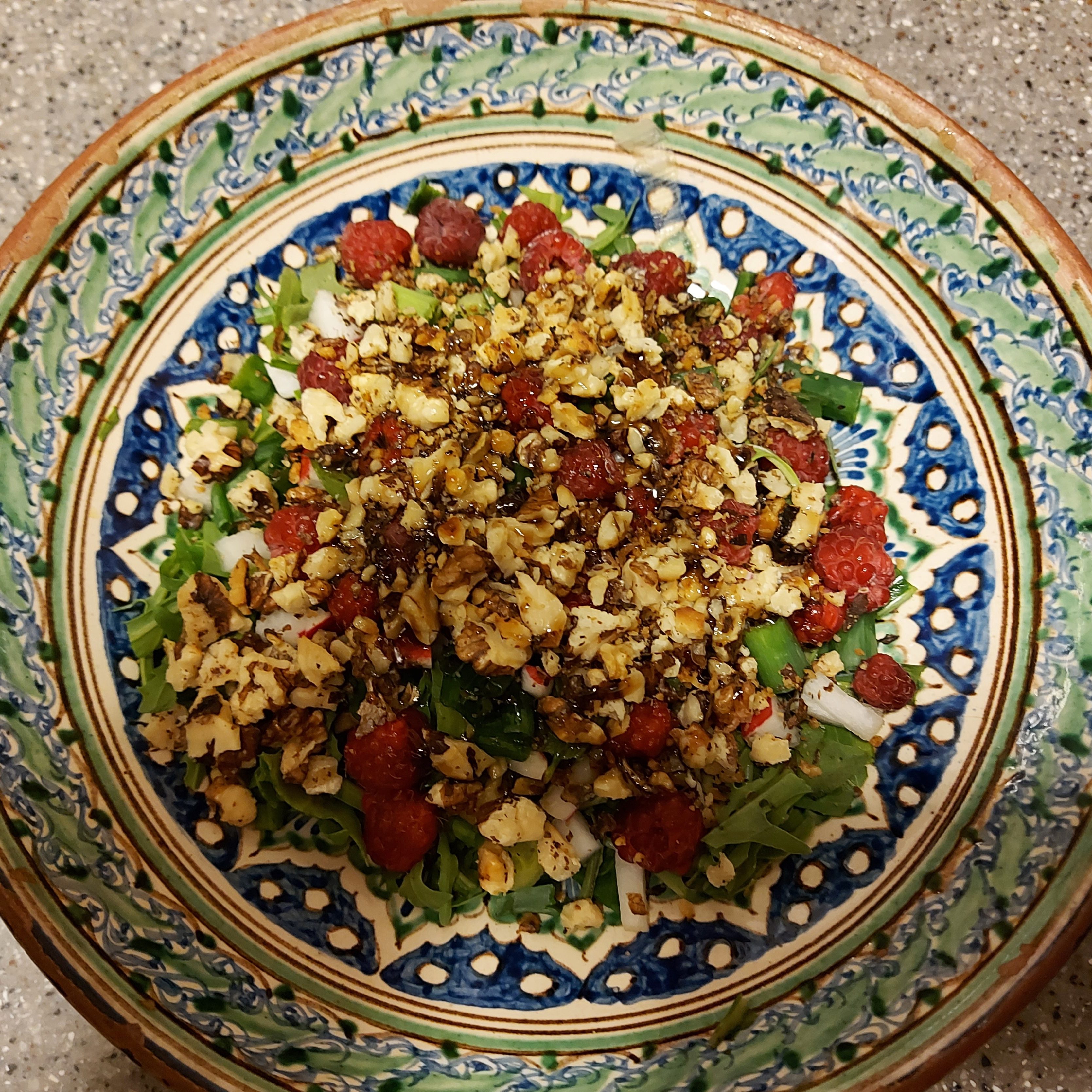
KCC’S Raspberry, rocket and walnut delight
We popped along to see Gulzhaina, our local greengrocer in Almaty, but alas she only had raspberries in stock. Not to worry, though, as these tart berries are also great when used in a salad.
We served our raspberries on a bed of rocket, radish and spring onion and topped with toasted walnuts, pomegranate sauce and olive oil – a great combination on a hot summer’s day.
Serves 2: 50g chopped rocket leaves Add one sliced radish and one spring onionAdd 50g raspberriesAdd 25g toasted walnuts and dress with 10ml pomegranate sauce and 10ml olive oil
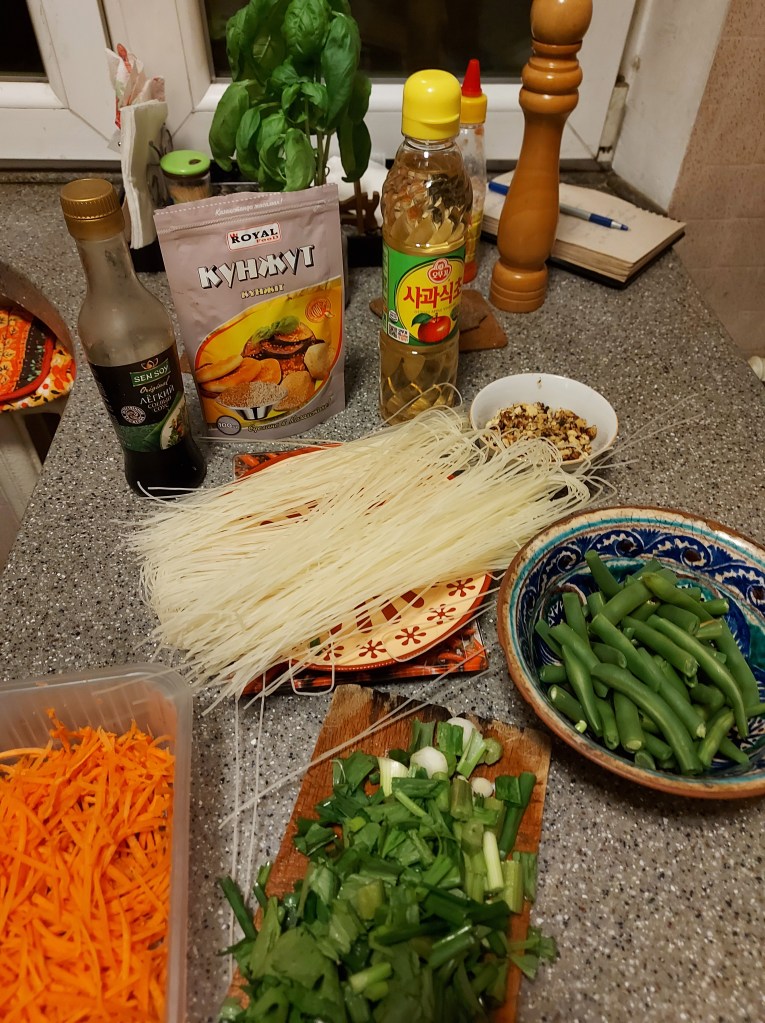
Continuing with our summery vibe, the year’s first green bean crops are appearing. Green beans are great for adding a bit of crunch to a stir fry or a salad, we’ve gone for the best of both worlds by mixing our green beans in with celery, carrots, spring onions and walnuts on a bed of funchoza (vermicelli) noodles, liberally dressed with soy sauce, apple vinegar and sesame seeds.
KCC’s green bean funchoza supreme
This recipe lends itself to the pictorial treatment – see below for the steps needed to assemble this summery salad. Also check out our reel on Instagram as well with an orangey red, green and gold inspired Black Uhuru backing track.
Get the ingredients ready – serves twoPut a bed of 150g noodles in the bowl – cook them according to the pack instructions and cool in cold waterAdd 50g sliced celery and 50g chopped spring onionAdd 75g grated carrotsAdd 150g cooked green beans – cook in boiling water for five minutes and then put in cold water to keep them crunchyAdd 50g chopped walnuts – toast them for a tastier flavourSprinkle with one teaspoon sesame seeds, 10ml soy sauce and 10ml apple vinegar, mix well and serve in two smaller bowls
It’s that asparagus time of year, a herald of early summer, although you wouldn’t know it in Sweden, where the weather remains distinctly chilly.
Spears of destiny – stir fried with broccoli and red onions
We wrote about asparagus in our very first post, a bulgur risotto, back in 2016. Already this summer we’ve come across locally grown varieties in Kazakhstan and Sweden.
These tasty spears are great in a vegan stir fry served with rice or noodles, or if you eat eggs, then you can turn it into an omelette or a quiche.
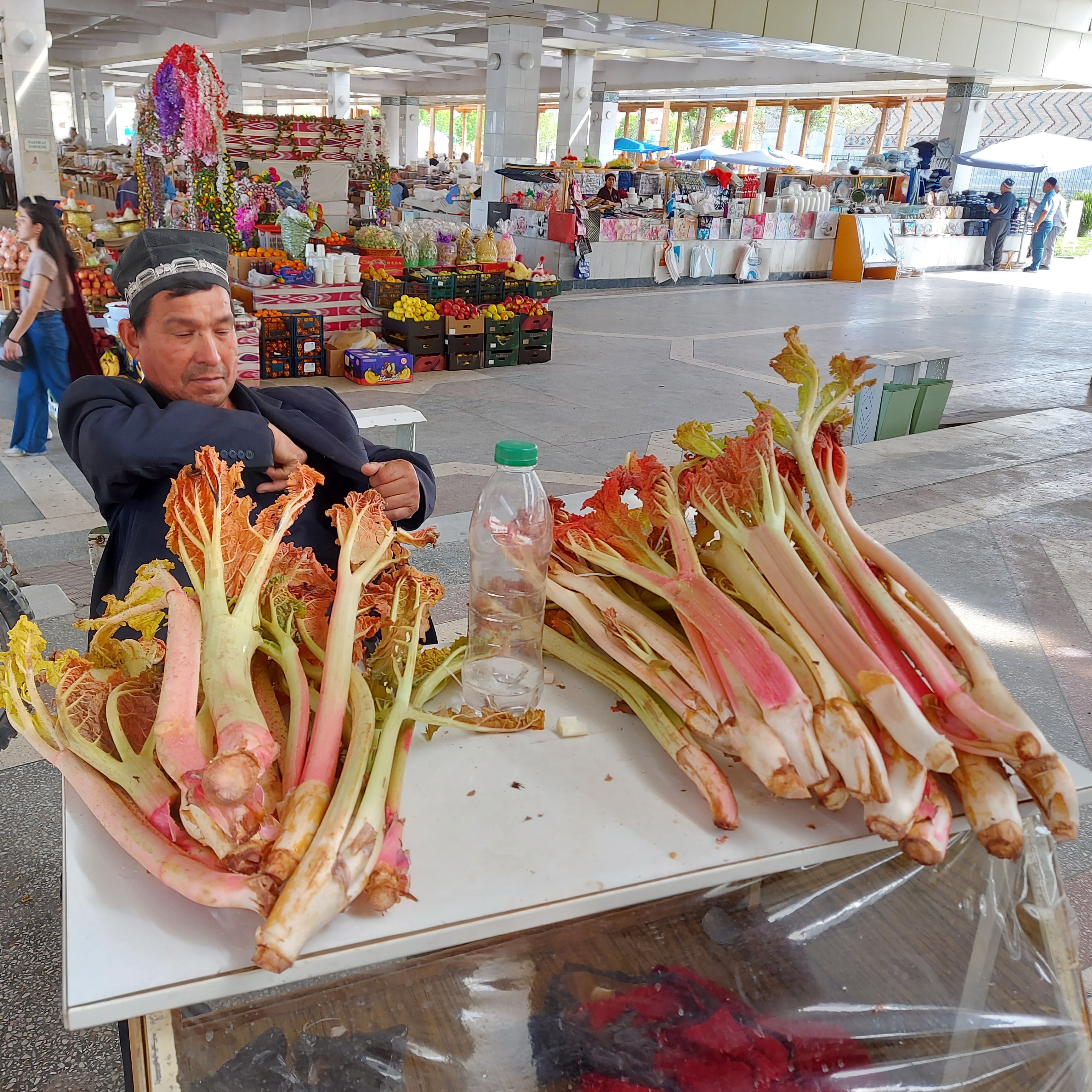
While walking through the market in Samarkand recently we came across tables laden with something we hadn’t seen for quite a while – rhubarb, those colourful stalks that instantly evoke childhood memories of rhubarb crumbles served with custard. In Samarkand, the favoured way to eat the stalks is raw.
It’s a tiring business selling rhubarb in Samarkand
Rhubarb is a classic harbinger of spring, with its short growing season over by summer. Often thought of as a fruit because of its use in puddings, complete with lashings of sugar to counteract its tartness, these stalks are in fact a vegetable.
Rhubarb dhal with a fruity plov
Rhubarb has a long history in Chinese traditional medicine. It started to be imported into the west, where it was prized for its medicinal properties, along the Silk Roads in the 14th century. Transport costs, along with its popularity and relative scarcity, saw it command a higher price than cinnamon, saffron, and opium at one point.
Its high price spurred efforts to localise its cultivation and by the 18th century it was being successfully grown in Europe. The edible stalk’s greater availability, combined with the arrival of affordable sugar, led to it becoming a culinary staple in the world of desserts.
KCC’s Rhubarb fritter
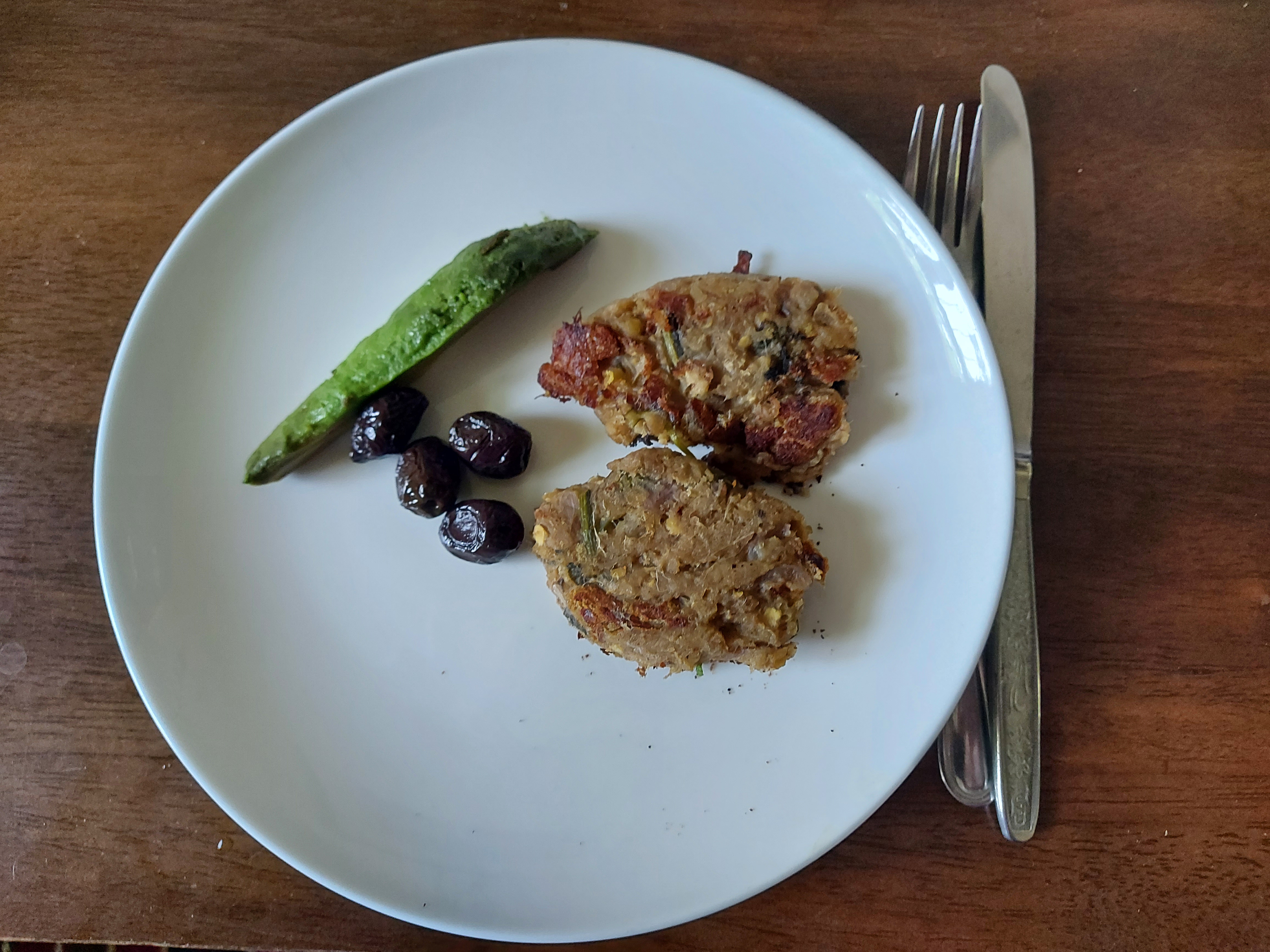
Rhubarb also has its uses in savoury dishes with its sharp flavour adding an interesting note to a lentil dhal. We served our dhal with a fruity plov and some flat bread. Any leftovers can be mixed with chickpea flour to make a fritter as part of an unusual brunch.
Ingredients (makes four servings)
200 g rhubarb
One large onion
150 g red lentils
75 g spinach
25 ml olive oil
500 ml vegetable stock
One teaspoon cumin seeds
One teaspoon cinnamon
One teaspoon red chilli flakes
50 g chickpea flour
Method
Heat the oil and cumin seeds in a heavy-based pan. When the seeds start to sizzle, add the chopped onion. Cook for five minutes over a low heat, stirring occasionally. Add the cinnamon and red chilli flakes and the rhubarb stalk, cut into 1 cm slices – do not use the leaves as these can be bad for your health.
Cook for three minutes over a low heat, stirring occasionally, and then add the washed lentils and the vegetable stock. cook over a low heat for 20 minutes or until all the liquid has been absorbed. Stir in the washed spinach and serve hot with rice or flat bread (or both!)
To make rhubarb fritters, mix leftover 200 g dhal with 50 g chickpea flour. Form into eight walnut-sized balls and fry in oil on both sides until starting to brown, flattening with a fish slice as they cook.
With spring greens making a welcome reappearance, it’s time for a brunch special – green shakshuka, North Africa’s breakfast star.
Grip Green Shakshuka
This dish, usually made with tomatoes and peppers, is originally from Tunisia but has now spread all over the Middle East.
For our spring greens version, we made a bed of cumin fried onions, banana peel, radish leaves and spinach on which to poach some eggs for our sublime, zero waste brunch special.
Ingredients (for two servings)
one medium onion
one banana peel
100 g spinach
50 g radish leaves
four eggs
one teaspoon cumin seeds
one teaspoon chilli powder
25 ml olive oil
Method
Heat the oil in a heavy-based pan and add the cumin seeds. When they start to pop, add chopped onion and cook for five minutes over a low heat. Add the banana peel (to prepare, use a knife or spoon to scrape off any remaining banana flesh (use this in a cake, smoothie or banana bread) and then slice the peel into 1 mm strips).
Stir fry for another five minutes and then add the chopped radish leaves and three minutes later add the washed and chopped spinach. Cook until the spinach starts to wilt.
Make a depression in the mix and pour an egg into it, repeat with the other eggs, sprinkle chilli powder over the eggs put, put a lid on and steam until the eggs are set
Happy Nauryz – the day of the Spring Equinox that marks the start of the new year in some parts of Asia. it’s a big celebration in Central Asia with a focus on things coming back to life after the long winter months. This year we’ve made some green noodles inspired by shivit oshi – dill noodles from Khiva, Uzbekistan, to mark the coming of spring.
Rolling out the noodlesReady for the potNauryz noodle stir fry
As you may recall, here on KCC we’re not huge fans of dill, aka the devil’s weed, so we replaced it with spinach to give our noodles their distinctive green colour. We served our noodles with an orange and green stir fry made from pumpkin, carrots, spring onions, beansprouts and broccoli.
Shivit Oshi – dill noodles in Khiva, Uzbekistan
We washed our Nauryz noodles down with some Turan Tiger beer as a nod to the year of the tiger.
Ingredients (makes four servings)
For the noodles
300 g plain flour
100 ml water
40 ml olive oil
120 g spinach
For the stir fry
100 g spring onion
300 g pumpkin
200 g carrot
300 g broccoli
200 g beansprouts
50 ml olive oil
20 ml soy sauce
Two teaspoons cumin seeds
Method
For the noodles
Pour boiling hot water over the washed spinach leaves and leave for one minute. Drain and then cover with cold water. Drain again and put in a blender with the water and blend to a smooth paste.
Stir the oil into the flour and then add the blended spinach. Mix well and knead the dough. Make sure it is neither too sticky (add more flour if so) or too crumbly (add more liquid if so). Cover with cling film and leave in the fridge until you are ready to use it.
Roll the dough to 1 mm thickness on a lightly floured surface. Fold the dough over three or four times and then cut off 2 mm slices and pull out the noodles by hand.
Cook in a pot of boiling water for five minutes – taste to check that the noodles have the texture that you prefer (e.g. al dente or softer). Drain and serve immediately.
For the stir fry
Heat the oil in a heavy-based pan and add the cumin seeds. When the seed begin to pop, add the chopped spring onions and stir fry over a medium heat. Add the pumpkin, cut into 1 cm cubes and stir fry for five minutes.
Next add the broccoli and stir fry for another five minutes over a medium heat. Add the grated carrot and beansprouts along with the soy sauce and cook for a few more minutes. Serve on a bed of noodles.
As Putin’s horrific war rages on in Ukraine, now into its third week and with no signs of the death and destruction abating, we’ve been looking at some ways of making a contribution to help people on the ground.
One initiative that caught our eye was the #CookForUkraine project that was set up by London-based chefs Olia Hercules, who originally hails from Ukraine, and Alissa Timoshkina, originally from Russia. The initiative, which is inspired by 2016’s CookFor Syria project, uses food to raise awareness about the conflict whilst raising funds to support humanitarian causes (the money raised goes to Unicef UK).
KCC’s take on deruny, Ukraine’s potato pancake
Across the world, restaurants, chefs and amateur cooks are putting Ukrainian dishes on their menus and organising fund-raisers by hosting Ukrainian food-themed supper clubs or selling Ukrainian specialities such as syrnyky (cottage cheese pancakes), varenyky (Ukraine’s take on ravioli) and golubtsi (stuffed cabbage leaves) along with baked goods.
We hope we’re doing out little bit by featuring this recipe for deruny, the Ukrainian take on the potato pancake that finds many forms across Europe. Our version used grated potato mixed with onion, caraway seeds and chickpea flour. They had a coarser texture than some versions that use egg and sour cream in the mix but tasted great all the same.
To support the CookFor Ukraine project, you can host your own supper club or sell some Ukrainian food or just make a donation direct to their JustGiving page – click here to donate.
Ingredients (makes 8 pancakes)
300 g potato
150 g red onion
50 g chickpea flour (or plain flour)
One teaspoon caraway seeds
50 ml cooking oil
Method
Peel the potatoes and then roughly grate them. Wrap the grated potato in a tea towel and squeeze out the moisture. Add the chopped onion, caraway seeds and chickpea flour and mix well.
Form the mix into eight golf ball sized pieces and fry in the oil over a medium heat. Flatten the balls with a fish slice and then flip them over and cook until golden brown on both sides. Serve with a dollop of sour cream.
This time round on KCC we’re going for a chickpea, aka chana, chilli that includes a slab of dark chocolate to balance out the acidity of the tomato sauce – a combination that works surprisingly well.
Chocolate chilli chana
We first came across the dark chocolate infused mole sauce many years ago in a Mexican restaurant in Barcelona. It’s been on the list of things to cook for a while and having received a selection of Green and Black’s chocolate that included an 85% cocoa bean bar there were no longer any excuses not to try it out.
We served our chickpea chilli with some pearl barley – it’s also good with brown rice, couscous, bulgur wheat or some flatbread to mop up the chocolate rich sauce. We also recommend washing it down with a margarita or two.
Ingredients (makes 3-4 servings)
300 g chickpeas (cooked)
150 g carrot
150 g onion
50 g red lentils
250 g tomatoes
20 g dark chocolate
25 ml olive oil
150 ml aquafaba (chick pea cooking water)
1 teaspoon cumin seeds
1 teaspoon coriander seeds
1 teaspoon paprika (smoked if you can get it)
1 teaspoon chilli powder (or chilli flakes)
2 cm cinnamon stick
5 cloves
1 bunch fresh coriander
Method (Cooking time approx 45 minutes)
Heat the olive oil in a heavy-based pan and add the cumin seeds. When the seeds start to pop add the diced onion. Stir fry for five minutes over a medium heat and then add the diced carrots. Cook for five more minutes and then reduce to a low heat. Add the chopped tomatoes and cook for another five minutes.
Add the aquafaba, ground coriander seeds, cinnamon, cloves, paprika and chilli powder and stir well. When the mix starts to bubble, stir in the red lentils. Simmer the mixture and after 15 minutes add the cooked chick peas. Cook for another 10 minutes over a low heat and then add the dark chocolate.
Serve with pearl barley or a grain of your choice and garnish the Chocolate Chilli Chana with fresh coriander. Take a slug of margarita and enjoy!
Seasoned greetings to all our readers from KCC — with Christmas fast approaching, here’s our recipe for a festive pie filled with a nutty, lentily barley roast, spinach pkhali and a mystery guest – banana peel!
A nutty, lentily barley filled piece with spinach pkhali and banana peel
We’ve come under the spell of The Great British Bake Off winner Nadiya Hussain who caused a splash in lockdown in 2020 when she advocated the use of banana peel as an ingredient. KCC is always on the lookout for ingenious solutions that cut down on waste and this use of banana peel certainly fits the bill perfectly.
KCC’s Festive Feast 2021
The banana peel has a texture that is a bit like mushroom and makes for an unusual addition to the standard nut roast. The peel can also be put in curries and stir fries — a great move for fans of zero waste.
Ingredients (serves 3-4)
For the pie
75 g pearl barley
50 g green lentils
2 cm cinnamon stick
2 cm ginger
3 cloves
Zest of one lemon
1 litre hot water
1 banana skin
150 g onion
50 g celery
75 g walnuts
75 ml olive oil
100 ml white wine
250 ml vegetable stock
1 teaspoon cumin seeds
1 teaspoon oregano
1 teaspoon thyme
1 teaspoon rosemary
3 teaspoons chia seeds
250 g puff pastry
For the spinach pkhali
200 g fresh spinach
75 g walnuts
One small onion (around 75 g)
One garlic clove
5 g fresh parsley
5 g fresh coriander
1 teaspoon blue fenugreek powder
1 teaspoon black pepper
20 ml wine vinegar
Method
Wash the pearl barley and green lentils until the water runs clear and then soak in the hot water for one hour with the cinnamon stick, chopped ginger, cloves and lemon zest. While this is soaking, cook 75 g of sliced onion in 25 ml of olive oil over a low heat until turning translucent.
To prepare the banana skin, wash the peel thoroughly in cold water and then use a spoon or knife to remove the pulp from the inside of the peel (you can use this in a smoothie or a cake). Slice the peel into thin strips about 2 cm long and 2-3 mm thick. Now add to the fried onions and cook util the peel starts to go crispy. Set aside to cool.
Fry the sliced celery and the rest of the chopped onion in the remaining olive oil in a different pan, add the cumin seeds, oregano, thyme and rosemary and cook over a low heat for 10 minutes and then add the soaked barley and lentils along with the cinnamon stick, ginger, cloves and lemon zest (you can use the soaking water to make our LGBTQ drink).
Then add the white wine and vegetable stock and stir well. Leave to cook over a low heat, stirring occasionally, until all the liquid is absorbed, this should take up to 30 minutes.
While this is cooking, make the spinach pkhali. Cook the spinach in boiling water for 5 minutes until it begins to wilt. Remove and place in cold water and then drain. Finely chop the onion and put it in a mixing bowl with the garlic, herbs and spices. Toast the walnuts over a low heat for 5-10 minutes and then add to the bowl. Add the vinegar and use a blender to make a smooth paste. Add the spinach and keep blending until you have a gloopy mixture.
Toast the remaining chopped walnuts and then add to the cooled barley and lentil mix along with the cooked banana peel and chia seeds. Mix well.
To assemble the pie, cut the pastry into two rectangles, one slightly smaller than the other. roll out the smaller piece and top with the nut roast mix, leaving 1 cm around the edges. Put a layer of spinach pkhali on top of the nut mix.
Roll out the other piece of pastry, brush the 1 cm edge of the pie with olive oil and then place the larger piece of pastry over the top of the nut and pkhali mix and then crimp down the edges with a fork. Brush the pie with olive oil and bake in an oven heated to 180 c for 30 minutes or until the pie is a golden brown colour.
Serve with seasonal roasted vegetables — we used potatoes, beetroot, onion and carrots, and a gravy of your choice (we made one with a pomegranate sauce base).
This time round on KCC we’ve been inspired to take on a curry house favourite of ours, matar paneer, cubes of fresh white cheese cooked with peas in a spicy tomato-rich gravy.
Spicy peas ‘n’ cheese aka matar paneer
We’ve been in Bishkek, Kyrgyzstan for the last two weeks to polish off the final chapter in a gruelling two-year run of Central Asian elections. While browsing around the supermarket, we came across a pack of locally made Ricotta cheese. Its dry, crumbly texture immediately reminded us of fresh paneer cheese from the Indian sub-continent, bringing to mind matar paneer.
Spicy peas and cheese with pumpkin dhal and rice
This white cheese does not taste of much on its own so it needs to soak up some flavour. We prepared a tomato gravy and then marinated the cubes of cheese and the peas in the sauce overnight before heating it through just before serving. For any vegans reading, substitute chunks of plain tofu for the paneer cheese – tofu is another ingredient that benefits from being marinated for a while. Serve with our pumpkin dhal and rice or flat bread.
Ingredients (makes 4 servings)
3 medium tomatoes (approx 250 g)
1 medium onion
1 clove of garlic
200 g paneer cheese or tofu
250 g peas (tinned, frozen or fresh if you can get them)
25 ml olive oil or other vegetable oil
1 teaspoon cumin seeds
1 teaspoon chilli powder
1 teaspoon cinnamon
1 teaspoon black pepper
1 cm knob of chopped ginger
1 small bunch fresh coriander
Method
Finely chop the onion and cook for five minutes in the oil over a medium heat in a heavy-based pan. Turn down to a low heat and add the spices and the minced garlic and stir well. Cook for another two minutes and then add the chopped, peeled tomatoes. Cook for 20-30 minutes over a low heat until the tomatoes have formed a smooth gravy with the onions.
Allow the sauce to cool and then add the white cheese (paneer) or tofu, cut into 1 cm cubes, and the peas and mix well. Leave to marinate for an hour or two at least – overnight in the fridge is better, and then heat through. Sprinkle with fresh coriander before serving with our pumpkin dhal and rice. Also goes well with a flat bread of your choice.
Greetings from Tashkent, Uzbekistan where KCC has been based for the last three weeks on a foodie fact finding mission. Uzbekistan is the land of plov, but is also home to a wide range of pasta dishes such as manti (dumplings), laghman noodles and many cousins of ravioli.
Lentily Lecho Laghman
The autumn pickling and preserving season is in full swing with vegetables such as peppers, tomatoes and aubergines cheap and abundant. Our friend gave us a jar of her homemade lecho, a pepper, tomato and onion stew, with herbs and spices added according to your taste. Lecho originated in eastern Europe, so you should be able to track down a jar in your local Polish shop.
Homemade lecho
We decided to cook up this lecho with some courgettes and protein-rich red lentils to make a tasty laghman noodle sauce. One of the advantages of being in Central Asia is the ready availability of fresh, hand-pulled noodles in the shops, but if you don’t have access to laghman noodles where you are, then try making your own. Check out this laghman recipe here – it’s a bit time consuming but rewarding!
Ingredients (makes 3-4 servings)
125 g fresh noodles per person
2 small courgettes
1 large red onion
100 g red lentils
250 g lecho
50 ml olive oil
One teaspoon cumin seeds
One teaspoon red chilli flakes
Method
Wash the lentils until the water goes clear and then soak for around 30 minutes. While the lentils are soaking, fry the thinly sliced onion in the olive oil and add the cumin seeds. Cook over a medium heat for ten minutes and then add the courgette that has been grated or cut into 1 mm thick, 5 mm long slices. Cook for ten more minutes over a low heat.
Take the red peppers from the lecho and cut into thin slices and add to the pan with the onion and courgette mix. Cook for another ten minutes over a low heat and then drain the lentils and add to the pan along with the red chilli flakes and the liquid from the lecho. Cook until the liquid has been absorbed and the lentils are chewy not mushy.
Bring a pan of salted water to the boil and then turn off the heat and put the noodles in for a few minutes, Drain and then add the noodles to the sauce and stir well. Serve straight away with a flat bread of your choice.
We’re back in action after another glamping trip to Bubble Gum View near Almaty. This peaceful spot, located a 45-minute drive from the city centre, is situated in an orchard and consists of four pods. This time round we were treated to an upgrade to the en-suite pod that has a kitchen and an upstairs bedroom too.
Our glamping pod at Bubble Gum View in an orchard near Almaty, Kazakhstan
Apples are from Almaty region!
2021’s apple harvest begins in Almaty, Kazakhstan
Kazakhstan, Almaty region in particiular, is widely acknowledged as the place where the ancestors of today’s apples evolved. The name Almaty translates from the Kazakh as ‘the place of apples.’ With autumn approaching, the apples are beginning to ripen and we picked a few to bring back to Almaty.
Almaty apple, caper, courgette and rocket salad
With summer making a last stand – the mercury is still hitting the 30s here in Almaty, we used the apples in a salad based on one we had in Greece one time. The Greek version used pears and lettuce, but we’ve swapped in rocket and our homecoming apples. We served it in a wrap with some fresh, homemade hummus and crispy falafels, but it works equally well wherever you’d normally eat salad.
Ingredients (serves 3-4)
125 g courgette
100 g apple
75 g rocket
20 g capers
1 teaspoon chia seeds
Juice of half a lemon
15 ml olive oil
Method
Roughly chop the rocket leaves and put at them at the bottom of your salad bowl. Grate the courgette over the rocket leaves. Now grate the apple over the courgette layer, add the capers and sprinkle the chia seeds over the top. Dress with lemon juice and olive oil and mix well.
This time round on KCC we’re cooking up orzotto – the barley-based cousin of risotto. The name is taken from orzo, the Italian for barley with the ‘otto’ coming from the rice-fuelled risotto. There’s also a rice-shaped pasta called orzo, but for this recipe you’ll need pearl barley, not the pasta.
Broccoli Orzotto
Barley, a hardy crop that can be grown in challenging environments, was one of the first cereal crops to be cultivated around 10,000 years ago in the grasslands where Asia and Europe meet – modern day Central Asia, from where it spread into neighbouring areas and became a staple part of the diet.
Pearl barley is a grain that has been processed to remove the hull and some of the bran – this makes it easier to cook. It cooks in roughly the same time as rice, especially if you soak it for a few hours beforehand – you can kill two birds with one stone with our recipe for lemon barley water which can be drunk on its own or in cocktails.
We made our orzotto with broccoli and celery but you can substitute any vegetables you have to hand – mushrooms work well in this recipe, as do courgettes.
Ingredients (makes 4 servings)
200 g pearl barley
300 g broccoli
One medium-sized onion
One stick of celery
50 ml olive oil
Two teaspoons cumin seeds
500 ml vegetable stock
125 ml dry white wine
Method
Soak the barley for a few hours in cold water – this will make it cook more quickly. Heat the oil in a heavy-based pan on a low heat. Add the cumin seeds and when they begin to pop add the diced onion and celery and cook for five minutes. Break the broccoli into small florets and finely chop the stem and then add to the pan. Cook for another five minutes, stirring occasionally.
Add the soaked barley and stir well to coat the individual grains. Pour on the white wine and stir occasionally. When the wine has been absorbed, add 125 ml of vegetable stock and when that is absorbed keep adding liquid until the barley is tender – you might not need to use all the stock. It will take about 30 minutes to cook the orzotto. Serve immediately with a green salad.
Welcome to the first Knidos Cookery Club of the new year. While many of us have returned to the daily grind, it’s still party-time in some parts of the world.
in Russia, people are preparing to celebrate New Year’s Eve on 13 January – the Orthodox Church still follows the Julian calendar rather than the Gregorian calendar, which Russia adopted after 1917’s October Revolution. This switch created a 13-day lag between the calendars so, for followers of the Orthodox faith, Christmas Eve falls on 6 January and 13 January marks the end of the old year.
KCC’s take on Russia’s classic Olivier salad
A centre-piece of Russian tables on this day, as people prepare to welcome in novy god, is the Olivier salad – a concoction of boiled potatoes, pickled cucumbers, peas, eggs, carrots and boiled beef or chicken in a mayonnaise dressing. This version dates from Soviet times as all the ingredients could usually be procured even in the depths of winter and despite chronic shortages.
Arrange
Mix
Serve!
A version of the salad, omitting the meat and eggs, is made in Turkey where it’s known as Rus Salatası – we’ve made our own veggie version that replaces the meat (Olivier purists look aside now, please) with black and green olives and uses sour cream in place of mayonnaise.
When I lived in Moscow in the 1990s I got it into my head that Olivier salad should include olives (mistakenly thinking that Olivier referred to olives rather than the salad’s originator!) and I was disappointed when it came minus olives – so now I finally have a chance to put this right!
Ingredients (serves 3-4)
150 g potatoes
150 g carrots
150 g peas
150 g pickled cucumbers
150 g black and green olives
two hard boiled eggs
150 ml sour cream or natural yogurt
pinches of salt and black pepper
Method
Boil the whole carrots and potatoes until cooked but not going mushy and boil the eggs for 5 minutes or so. While they’re all cooking, chop the pickled cucumbers and olives into small cubes.
Drain the potatoes and carrots and cover with cold water to stop them cooking. Do the same with the eggs. Chop the potatoes, carrots and eggs into small cubes and arrange around the side of a large serving dish in separate sections with the olives, peas and cucumbers.
Pour the sour cream or yogurt into the middle of the bowl and season with salt and pepper. Now mix all the ingredients thoroughly, making sure they all get a good coating of sour cream or yogurt.
Leave in the fridge before serving alongside other Russian-themed salads, such as this veggie take on caviar made from beluga lentils, and wish a hearty S Novym Godom with shots of vodka and/or a glass of chilled Sovyetskoye Shampankskoye (if you can get hold of it in your local offie!) as you prepare to welcome Old New Year in true Russian-style!