Some Striking Salads for the (not so)Bleak Midwinter

29 December 2023

As 2023 draws to a close, let’s take a look at some striking winter salads to liven up the end-of-year table. To complement our perennial favourite, our Olivier (with an Edge) salad, we’re looking to a coleslaw variation to add some colour to the New Year’s Eve spread. With the new year just around the corner, KCC wishes all its readers a prosperous and peaceful 2024, full with culinary adventures and many more mouth-watering meals!

KCC’s take on Olivier salad uses olives instead of meat

This winter has been a strange one here in Kazakhstan. We should be in the depths of winter now, but the snow didn’t arrive until the first week of December. Then there was a week or so of freezing weather with the temperature dipping to -28c, but now, as we approach the end of December, there’s very little snow on the ground in Almaty – it’s even been raining, which is really unusual at this time of the year.

KCC’s coleslaw variation with pear and rocket

The purple hues of red cabbage pair so well with the orange of carrots and the green of rocket. For a bit of bite, we’ve added some grated radish (we used green radishes, but you can use red radishes or mouli if you can’t find green ones), along with some grated pear and pomegranate seeds for a sweet and tart note. Add in some pumpkin and sunflower seeds and raisins before dressing with tahini and pomegranate sauce.

Ingredients (serves  3-4)

  • 100 g shredded red cabbage
  • 100 g grated carrot 
  • 50 g chopped rocket
  • 50 g grated green radish
  • 50 g grated pear
  • 25 g pomegranate seeds
  • 25 g raisins
  • 1 teaspoon dried oregano
  • 2 teaspoons pumpkin seeds
  • 2 teaspoons sunflower seeds 
  • 1 tablespoon tahini
  • 1 tablespoon pomegranate sauce
  • a slice of fresh lime

Method

  • In a large bowl mix the red cabbage, carrot, rocket, green radish, pear and pomegranate seeds together. Add the raisins, oregano, pumpkin seeds and sunflower seeds. Make a dressing with equal parts pf tahini and pomegranate sauce and thin with a bit of hot water to obtain a smooth consistency. Pour over the salad, stir well, give it a squeeze of lime and serve.
Rocket-Fuelled Cherry, Chickpea, Feta and Walnut Salad

9 June 2023

If you’re a purist who believes that fruits have no business being in salads, then this is not the place for you. At KCC we have no such qualms about mixing vegetables and fruits. In the past we’ve featured a salad with raspberries, one with grilled peaches and another with watermelon, to name a few. As long as something salty, like feta or halloumi cheese, is included to counterbalance the sweetness, then adding fruit to to your salad is fine in our book.

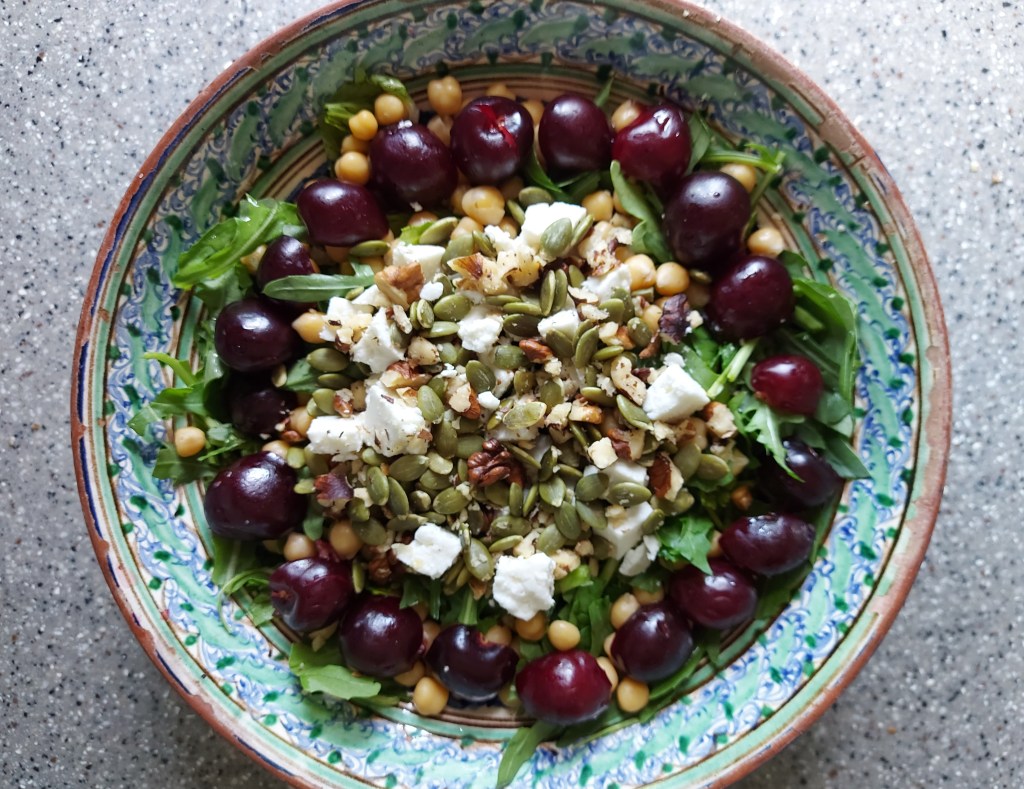
A rocket-fuelled cherry, chickpea, feta and walnut salad

Cherries are at their peak at this time of the year. Whatever variety you can get your hands on – sweet or sour, both work fine in this salad. Prepare a bed of rocket and celery, top with chickpeas, pumpkin seeds, walnuts and feta, arrange the cherries around the edge and dress with pomegranate sauce and olive oil to make a balanced meeting of sweet and sour in this early summer special.

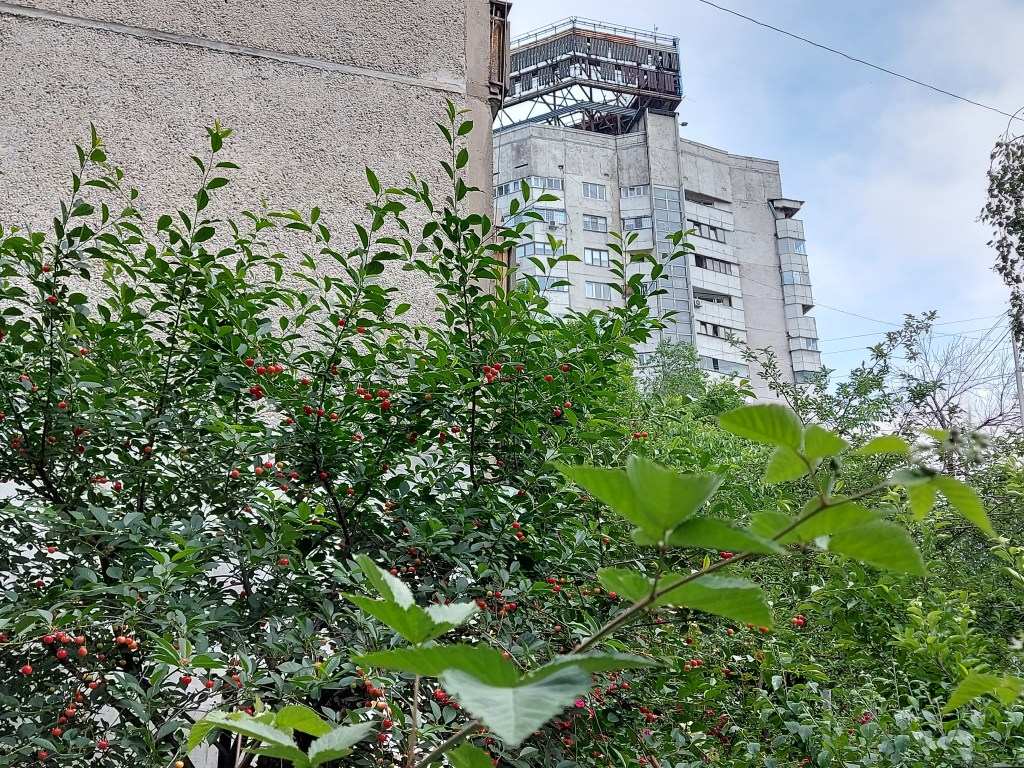
Cherries growing in Almaty’s urban jungle

Ingredients (serves 4)

  • 200 g cooked chickpeas
  • 150 g rocket leaves
  • 100 g crumbled feta cheese
  • 50 g celery
  • 20 cherries, halved and de-stoned
  • 40 g walnuts, lightly toasted
  • 40 g pumpkin seeds
  • 25 ml olive oil
  • 25 ml pomegranate sauce

Apricot and Lentil Courgette Roundels

13 October 2022

It’s that in-between time of year as the nights grow longer and thoughts turn towards more substantial meals after a long summer of salads and lighter fare. The last of the seasonal vegetables such as tomatoes and courgettes are perfect for stuffing and baking in the oven, making a bridge between summery salads and the heartier soups and stews of winter that are coming up.

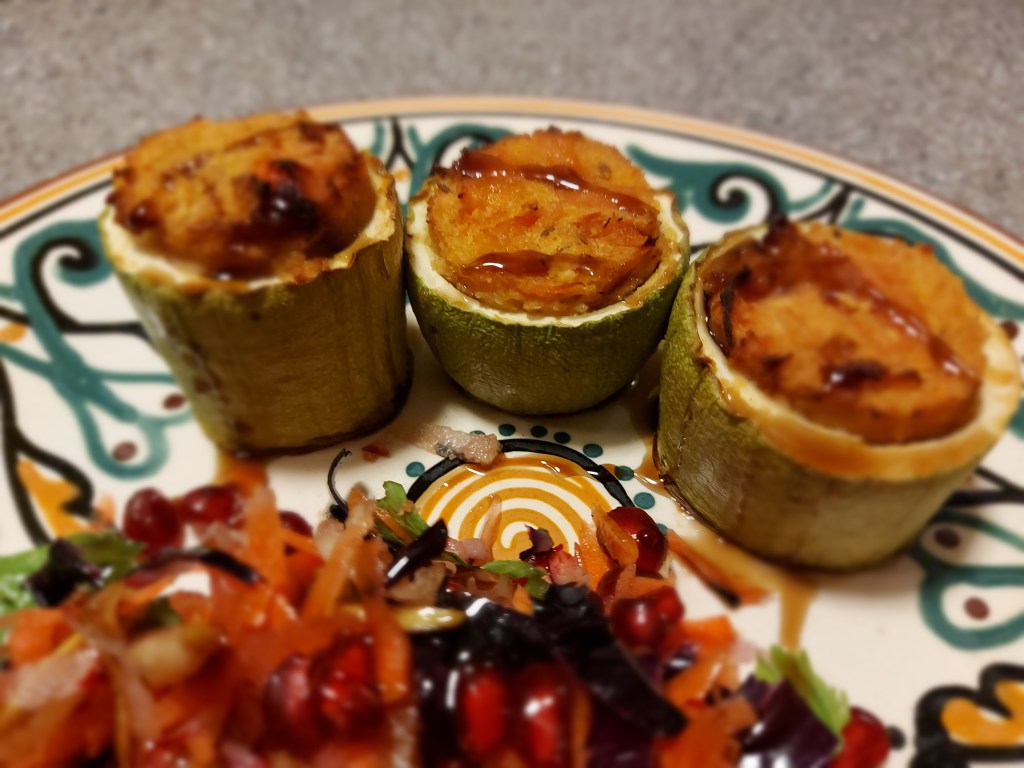
Apricot and lentil courgette roundels drizzled with pomegranate sauce and served with a seasonal salad

We stuffed some courgettes with a mixture of red lentils, apricots, tomato, onion, bulgur wheat and lemon juice to make a versatile roundel that can be served as part of a main course or eaten on its own as a meze, a fully vegan alternative to the sausage roll!

Apricot and lentil courgette roundel – a vegan alternative to the sausage roll?

The autumn fruit is at its best at the moment, and we’ve added some pear and pomegranate to an autumnal red cabbage, carrot, celery and radish salad to accompany these apricot and lentil courgette roundels to make a great lunch or supper. By adding a jacket potato, you can make it into a more filling main course.

Ingredients (makes enough mixture for 10-12 roundels)

  • Three medium sized courgettes
  • 100 g red lentils
  • 50 g dried apricots (or four fresh apricots if available)
  • One small red onion (approx 75 g)
  • One medium tomato (approx 100 g)
  • 50 g fine bulgur wheat
  • 25 ml olive oil
  • 200 ml vegetable stock
  • Juice of half a lemon
  • One teaspoon cumin seeds
  • One teaspoon red chilli flakes
  • Black pepper to taste

Method

  • Cut the dried apricots into eight pieces and soak in hot water for at least 30 minutes. While the apricots are soaking, heat the oil in a heavy based pan and add the cumin seeds. When they start to sizzle, add the finely chopped onion and fry over a medium heat until they start to soften. Grate the tomato into the fried onion and cook over a low heat for five minutes or so, stirring occasionally.
  • Now add the washed lentils, pour in the stock and stir. Cook over a low heat for 15-20 minutes until most of the water has been absorbed. Add the fine bulgur wheat, mix it in well and leave covered for 15 minutes. Drain the apricots and stir them into the mixture. Add the lemon juice, chilli flakes and black pepper to taste and mix well.
  • While the lentils are cooking, start to prepare the courgettes by slicing off the ends to make them flat. Cut into 3 cm slices. Gouge out the seeds with a small spoon, leaving a little bit of flesh at the bottom of the roundel.
  • Pre-heat the oven to 180 c. When the lentil mix is cool, pack it into the courgette roundels and stand them on a baking tray with the filling topmost. Bake at 180 c for 30 minutes or so – the courgette should still be firm and not too squidgy and the lentil mix should rise slightly and be beginning to brown on top. 
  • Serve alongside a salad of red cabbage, carrot, celery, radish, pear and pomegranate and a jacket potato, drizzling pomegranate sauce over the roundels or allow to cool and serve the roundels as a snack on their own.

Ride the Raspberry Rocket

30 June 2022

With Wimbledon in full swing and the British hopes fading fast, it’s time to seek some consolation in some seasonal soft fruits. Strawberries and cream, of course, is a dish associated with the tennis extravaganza in SW19.

This summer, KCC has noticed a glut of strawberry recipes in the mainstream UK press and on Instagram, using these berries in salads or in gazpacho, a cold, blended vegetable soup.

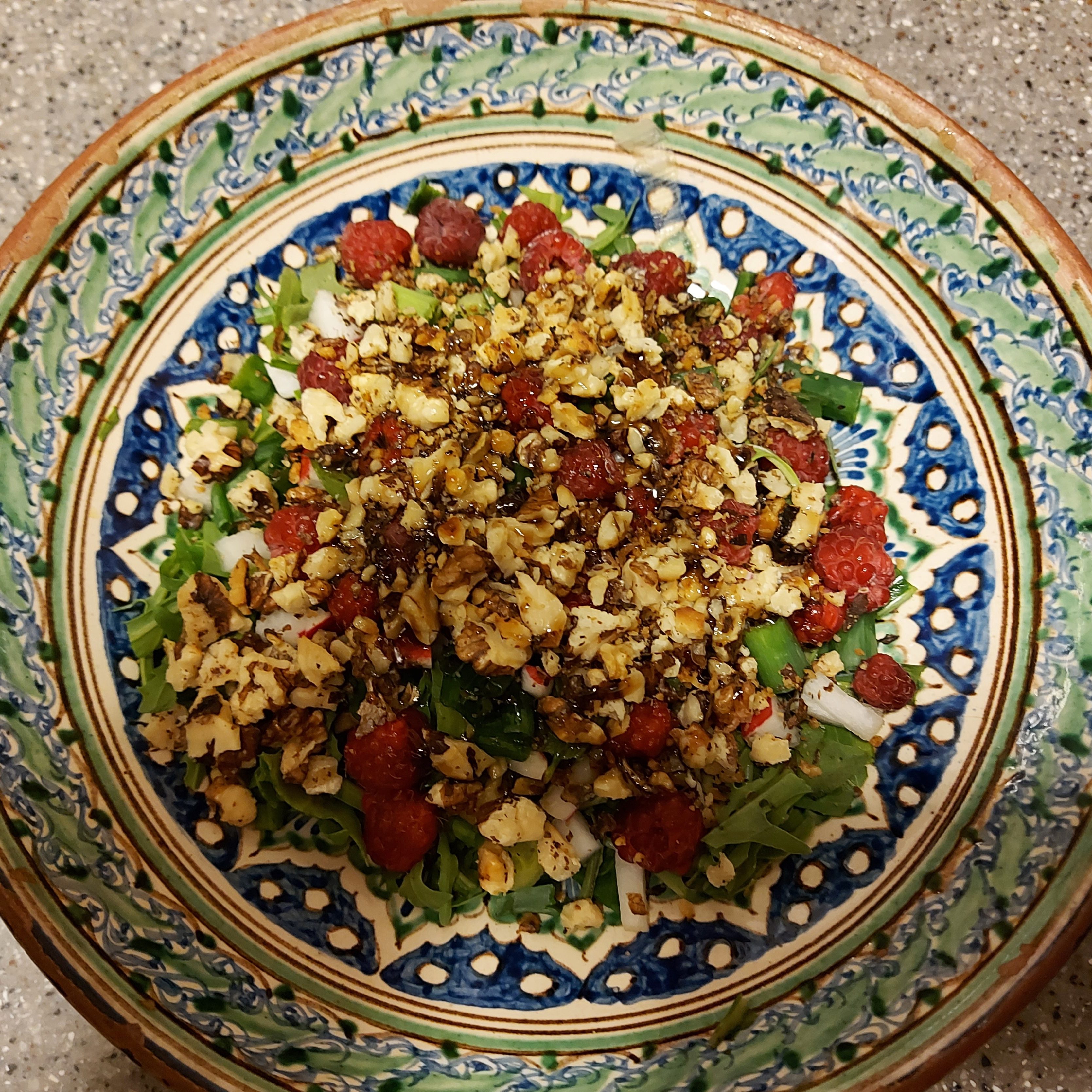
KCC’S Raspberry, rocket and walnut delight

We popped along to see Gulzhaina, our local greengrocer in Almaty, but alas she only had raspberries in stock. Not to worry, though, as these tart berries are also great when used in a salad.

We served our raspberries on a bed of rocket, radish and spring onion and topped with toasted walnuts, pomegranate sauce and olive oil – a great combination on a hot summer’s day.

Cocktail Special: Summertime Meloncoolia!

5 August 2021

With the summer temperatures peaking, we’ve come up with a melon and raspberry fuelled rum cocktail to help you keep cool.

The melon season is in full swing in Kazakhstan with honeydew melons and watermelons both at their sweetest. You can find piles of ripe melons on sale all over the country. Its hot, arid climate is particularly well-suited to this instant summer dessert. Stalls appear on street corners with tempting mounds of golden yellow and green streaked melons.

We’ve used melon in a cocktail this time round, along with raspberries, white rum or vodka and Martini Fiero, an orange-flavoured aperitif that’s been a hit with the KCC crew this summer. You can also try melon in a seasonal salad with halloumi cheese – here’s our recipe for this summertime special from a few years back.

IMG_1324
                                                               Double meloned squeaky cheese salad

Ingredients (makes one litre)

  • 150 g honeydew melon
  • 100 g raspberries
  • 250 ml water
  • 200 ml Martini Fiero
  • 100 ml white rum or vodka
  • 250 – 300 ml tonic or soda water

Method

  • Put the fruit in a blender with the water and mix it into a smooth consistency. Pour the juice, spirit and Martini Fiero into an empty one litre plastic or glass bottle. Top up to a litre with tonic water or soda water and shake well. Fill a tumbler with ice and pour the Meloncoolia over the rocks, put your feet up and enjoy!

Modern Day Plovers

17 June 2021

This time round on KCC we’re turning our attention to plov — Central Asia’s favourite rice dish. There are no hard and fast rules for plov, with regional variations prizing different ingredients and each family having its own take on what should go into the dish. One thing is for sure — this spicy rice, carrot, onion, garlic and dried fruit concoction makes for a great centrepiece for any party and is perfect for sharing with family and friends.

KCC travelled up to Kazakhstan’s capital Nur-Sultan to visit a modern day plov-meister who has perfected a tasty, meat-free take on this classic Uzbek dish. Our plov-meister learnt his trade on the mean streets of Hojeli, Karakalpakstan and in the student dorms of Tashkent, Uzbekistan.

Keeping the vampires at bay…

There are no strict cooking times for this recipe — it’s more of a feeling than an exercise in clock watching. Apart from the holy trinity of onion, carrot and rice, our plov-meister deploys whatever is to hand in the kitchen, adding dried fruits and spices along with a surfeit of garlic. For best results, your plov should be cooked in a kazan, a cast iron cauldron, but a deep, heavy-based saucepan or a casserole dish will suffice at a pinch. The pan should retain the heat to enable the plov to cook slowly and for the myriad flavours to meld.

Serve the plov alongside a spicy achik chuchuk tomato and onion salad, steaming bowls of green tea and Uzbek bread, non, click here for a recipe from Caroline Eden’s excellent Central Asian focussed cookbook Red Sands.

Ingredients (makes enough for 8-10 servings)

  • 100 ml cooking oil (For the authentic Uzbek taste track down some cottonseed oil, but failing that sunflower, rapeseed or olive oil works just as well)
  • 500 g onion
  • 500 g carrot
  • 500 g short grain rice
  • 6 heads of garlic
  • 150 g currants /raisins /sultanas – or a mix of all three
  • 100 g dried apricots (with stones)
  • 1 teaspoon cumin seeds
  • 1 teaspoon black peppercorns
  • 1 teaspoon coriander seeds

For the salad:

  • 250 g tomatoes
  • 250 g onion
  • One teaspoon dried basil
  • 1 – 3 Chilli peppers, finely sliced (adjust as to how hot you like your food)

Method

  • Heat the oil over a low heat in a heavy-based pan and then add the sliced onion. Fry the onion until it gets a golden-brownish colour so that later the rice will get its distinctive orangey colour. Cut the carrots into 5 cm long slices, a few millimetres wide and then add to the onions. Cook until the carrots are very tender so that they can easily be cut by a spatula or a wooden spoon while stirring. 
  • Now add the spices, the whole dried apricots, currants, sultanas or raisins (or all three) and whole heads of garlic. Cook for a few minutes to allow these ingredients to absorb the oil and the carrot/onion juice.
  • Rinse the rice carefully until the water runs clear and then put the washed rice on top of the spicy, fruity vegetable base and then pour water over the top through a fish slice to allow an even distribution of the liquid.
  • Cover the rice with an extra 1 cm of water and then cook over a high heat and  when the water disappears from the top of the rice, turn it down to a very low heat, close the lid and allow it to steam for about 20 minutes.
  • Serve with a spicy tomato and onion salad — achik chuchuk — a salad made from thinly sliced tomato and onion, a sprinkling of dried basil and diced chilli peppers, according to how hot you like it, and oven-fresh non bread.

Falafel to the Fore

18 June 2020

This time round on Knidos Cookery Club we’ll be taking an armchair culinary tour to the Middle East and looking at the origins of the humble falafel. Arguments abound as to where this street snack par excellence originated, but most likely it was Egypt according to the evidence.

SAMSUNG CSC
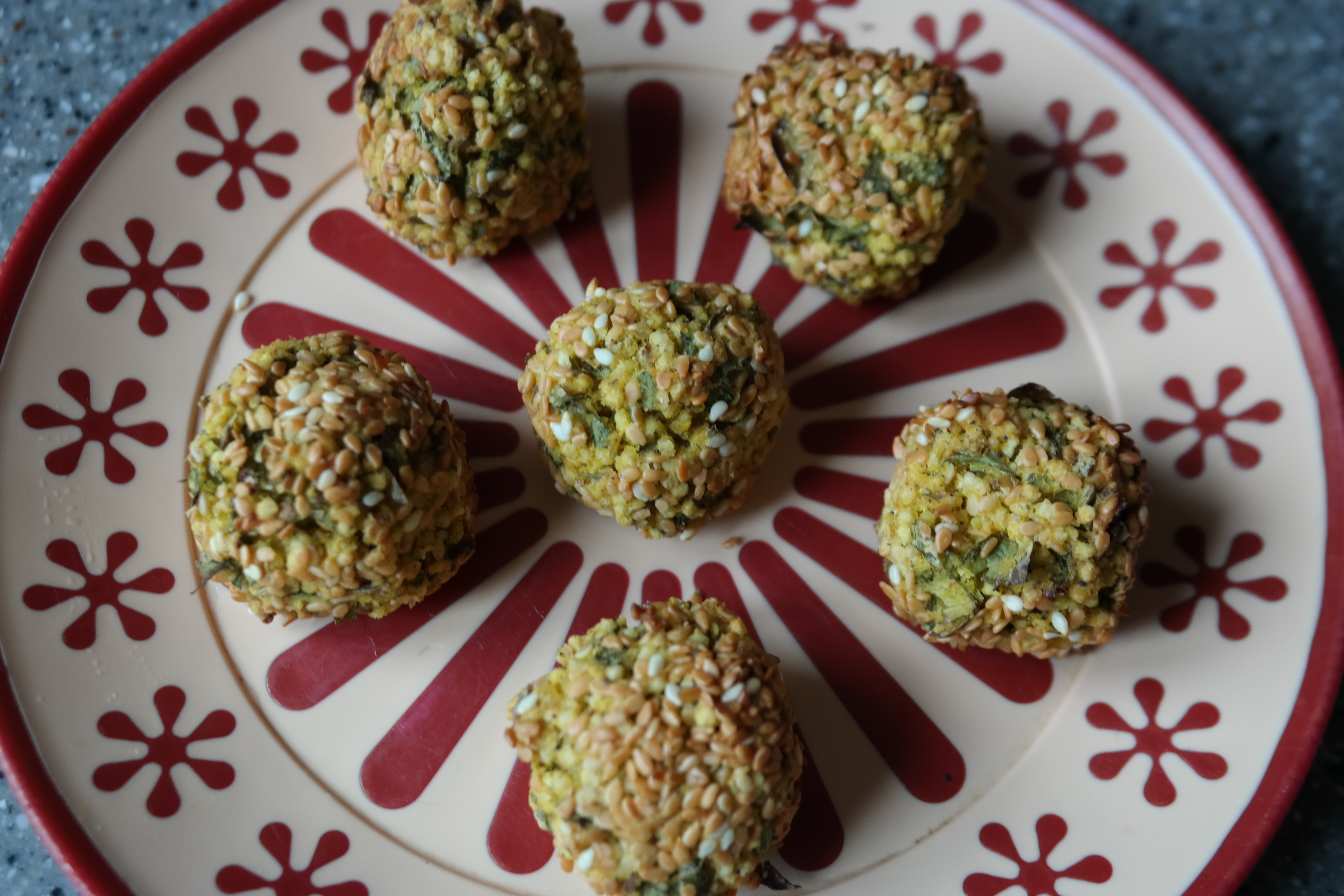
Millet falafel, anyone?

The Egyptian version of this tasty bite is usually made with fava beans, known as fūl in Arabic, which is thought to be the base for the name falafel , whilst in other parts of the Mediterranean region chickpeas are preferred.

SAMSUNG CSC
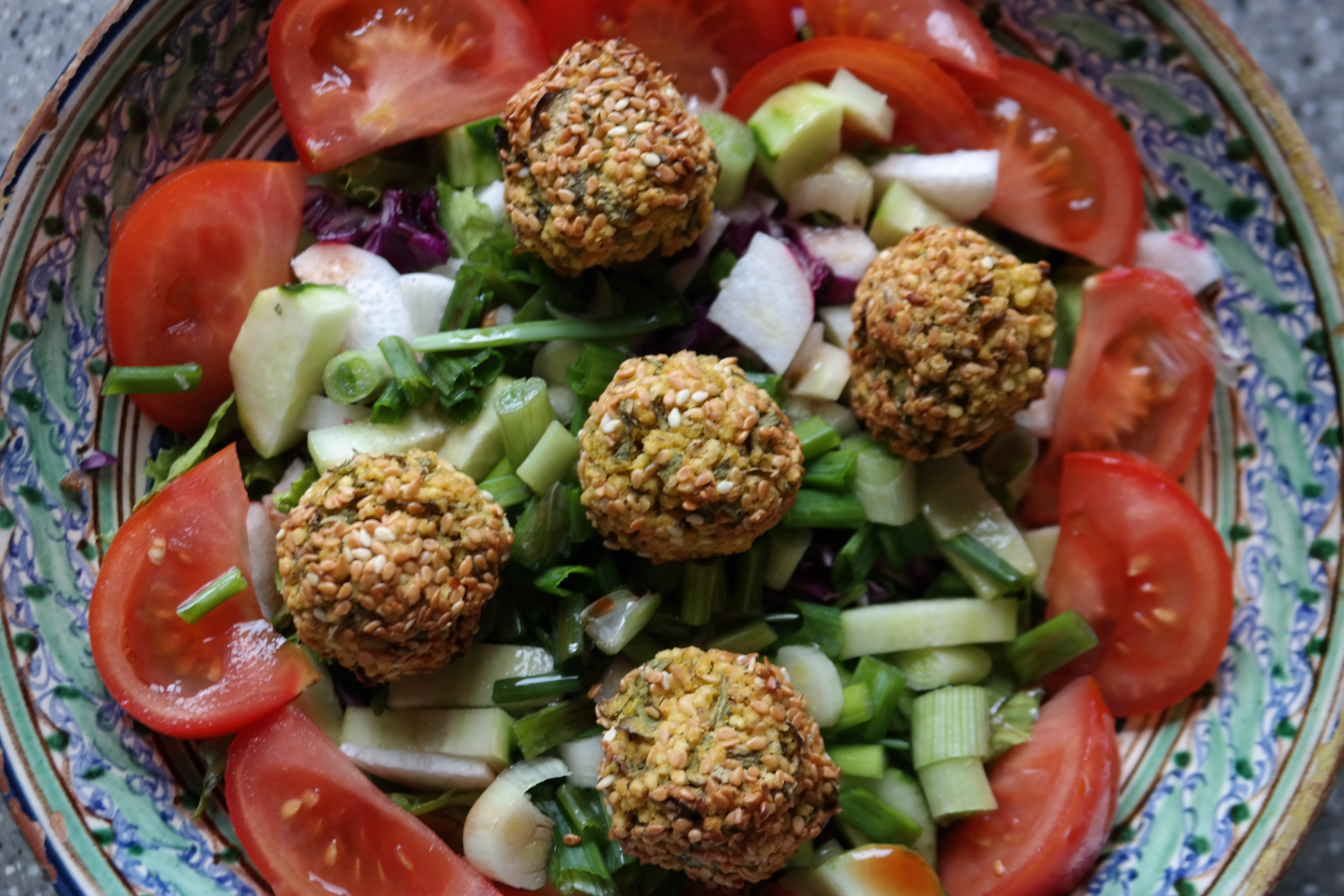
Falafel salad

With both chickpeas and fava beans in short supply in Almaty at the moment, it was back to the drawing board to look for an alternative base for our falafel. While stocking up during lockdown in our local shop we came across a pack of millet and a spot of googling revealed that this would work just fine as the base for our take on the falafel.

SAMSUNG CSC
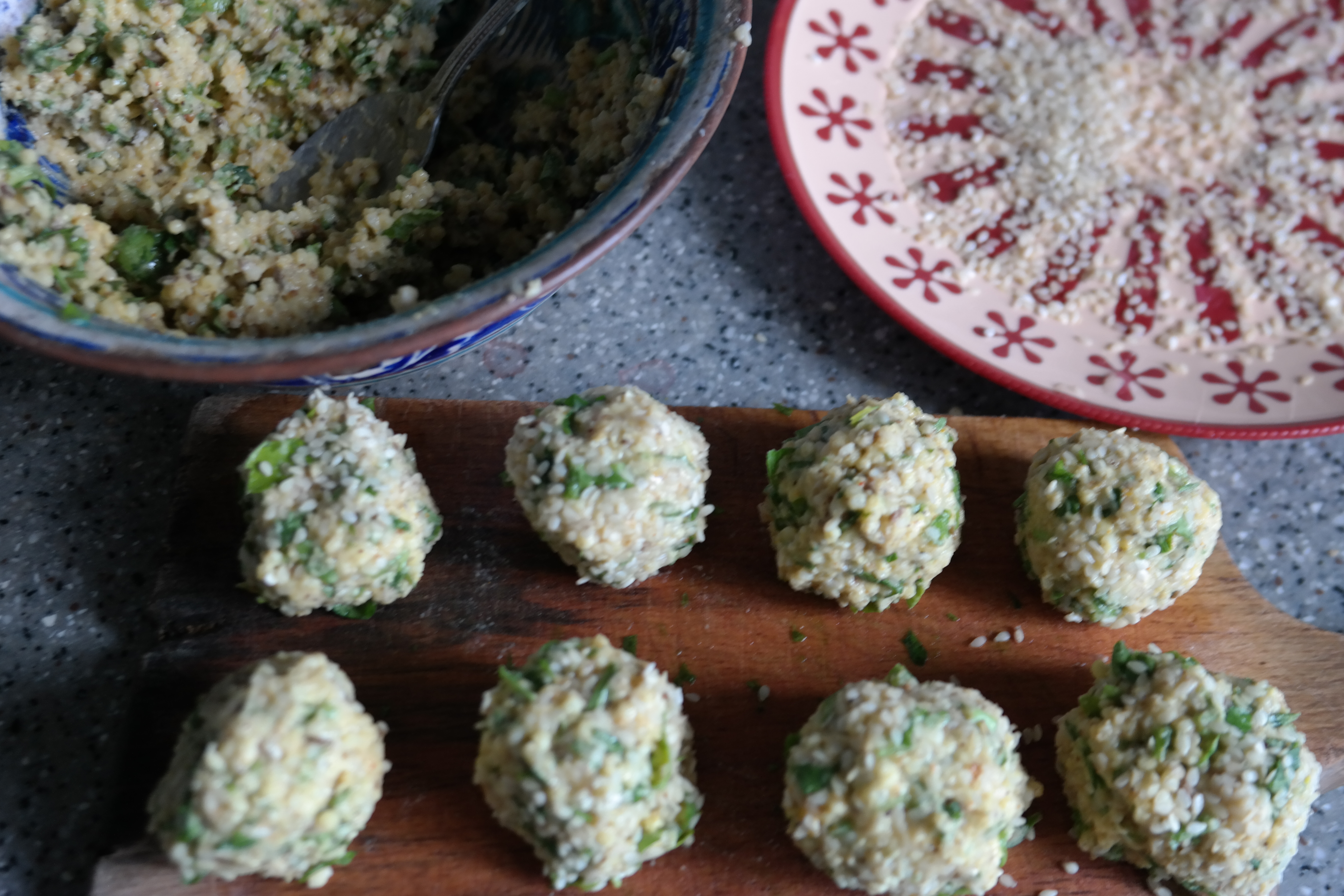
Forming the falafel

We baked them in the oven rather than deep-fried them as it’s a lot less hassle. Be sure to use plenty of parsley, cumin, coriander and chilli powder to spice up the millet. The resulting falafel were crisp on the outside but soft and fluffy in the centre, just as they should be.

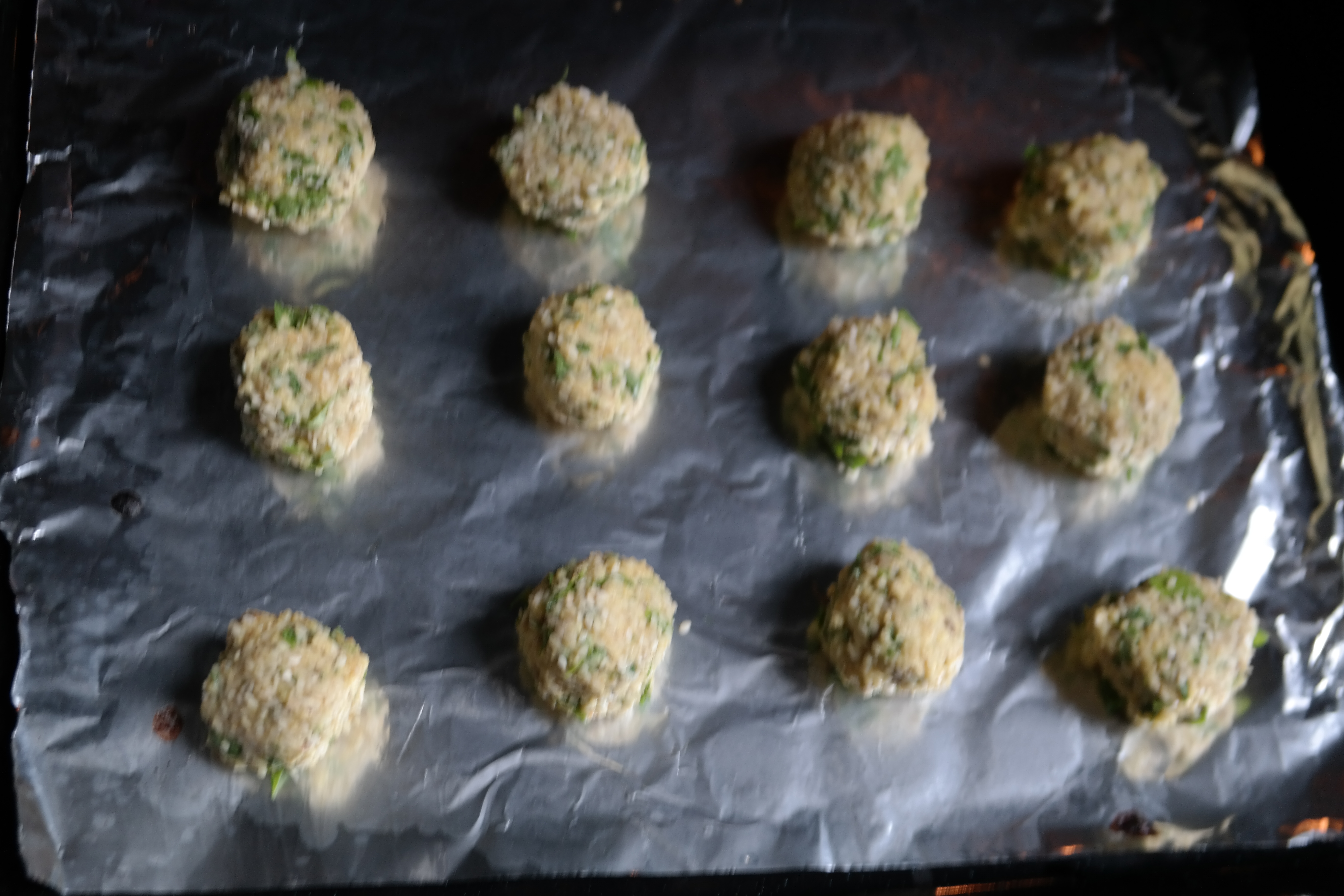
SAMSUNG CSC
Bake the falafel in the oven

Be careful when cooking millet as it has a tendency to stick to the pan if you don’t keep an eye on it and stir regularly. We found it best to rinse and soak it for a few hours before cooking as this reduces the time needed to cook it.

Ingredients (makes 12-16 falafel)

  • 150 g millet
  • 300 ml water or vegetable stock
  • one garlic clove
  • one bunch of parsley
  • one teaspoon cumin
  • one teaspoon coriander
  • one teaspoon chilli powder
  • Sesame seeds to coat the falafel

Method

  • Rinse and then soak the millet in a pan for four hours. Drain the millet and cover with water or vegetable stock. Bring to a boil and then simmer until the liquid is absorbed. Stir regularly as the millet will stick to the bottom of the pan if not watched carefully.
  • Finely chop the parsley, both leaves and stalks, mince the garlic clove and add to the cooked millet. Add the spices – if you want to give your falafel more oomph, double the amount. Mix well and then form into balls. Roll the balls in the sesame seeds and then place on a tray and oven bake for 20 minutes at 200 c, or until the falafel turn a golden-brown colour.
  • Serve in pita bread with salad and sauces of your choice or as part of a salad – we made one from cucumber, tomato, spring onion, celery, red cabbage and radish. These falafel will keep in the fridge for a few days so you can cook a large batch at the same time.

Lockdown Lunch: Get Stuffed!

23 April 2020

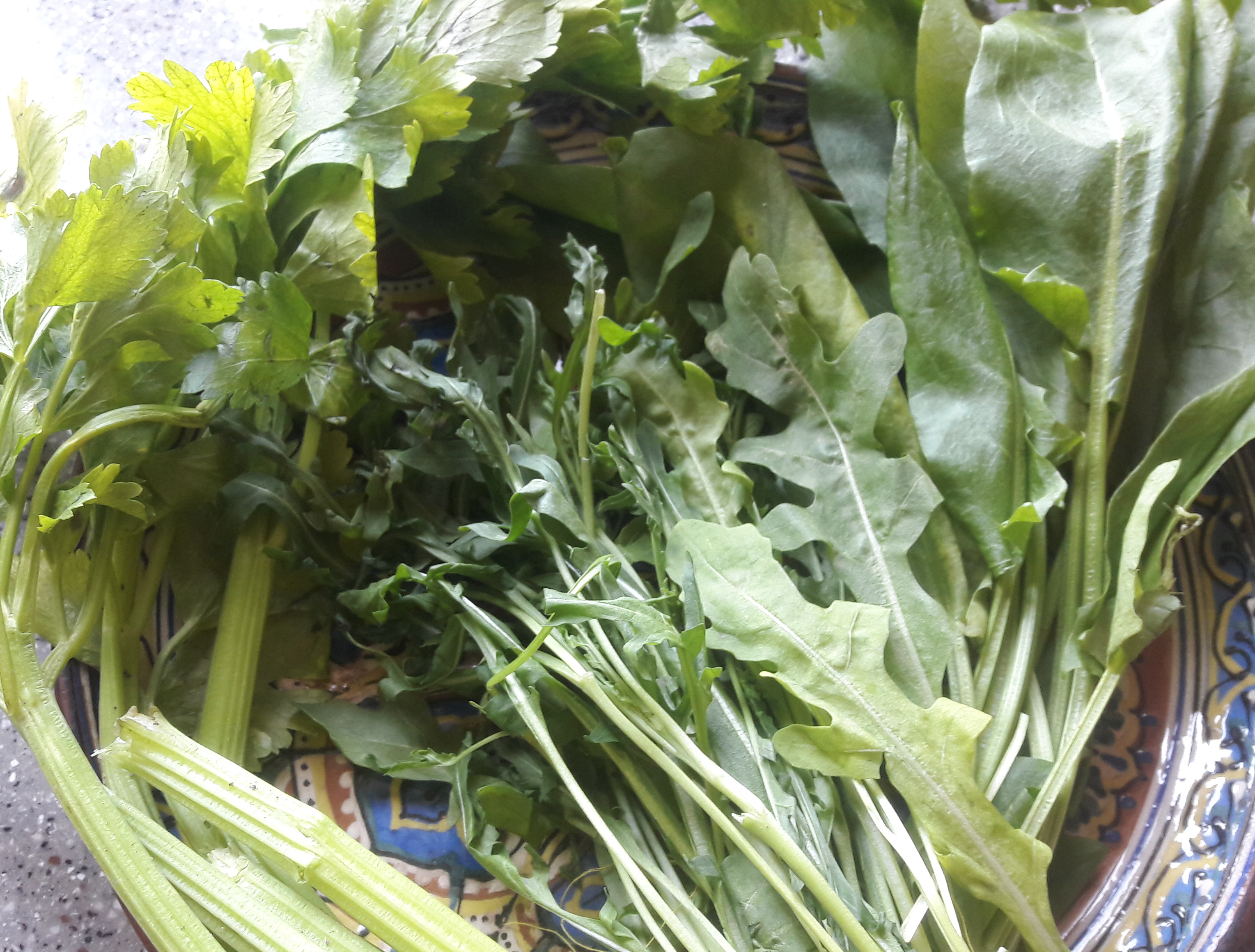
Nearing four weeks of lockdown in Almaty and supplies are holding up surprisingly well, especially now that spring greens are beginning to come on tap. This week our local veg shop had rocket, celery and sorrel – all the makings of a peppery green salad to perk up the lunch menu.

20200422_143130
Spring greens coming on tap in Almaty

We’re coming to the end of our super-sized cabbage, which was bought in the early days of lockdown, so we decided to use the remaining leaves to make cabbage rolls, a popular dish in eastern and southern Europe.

SAMSUNG CSC
KCC’s Stuffed Cabbage Leaf

We stuffed the leaves with some rip-red risotto, a recipe we made a few years back that combines coarse bulgur wheat with beetroot and walnuts (if you want a gluten-free option, you can use arborio rice or pearl barley instead).

This slideshow requires JavaScript.

Simmer the stuffed cabbage parcels in a tomato and herb sauce for thirty minutes for a winning lockdown lunch. It makes for a tasty veggie take on that beloved Ukrainian / Russian dish, golubtsi, or ‘little doves’, or dolma as they are dubbed in some parts of the Mediterranean and into the Caucasus.

Ingredients (serves 3-4 people)

  • Four large cabbage leaves or eight smaller ones
  • (See here for the stuffing: rip-red risotto)

For the tomato sauce:

  • Three medium tomatoes
  • Three spring onions
  • Three sprigs of parsley
  • One stick of celery
  • One tablespoon tomato paste
  • One teaspoon mustard seeds
  • two or three basil leaves
  • 25 ml olive oil
  • 100 ml water

Method

  1. Separate the leaves carefully from the cabbage. Place in boiling water for five minutes to soften. Put the leaves in cold water and then drain. Cut out the tough, lower bit of the stalk (about 2-3 cm). Place a tablespoon of filling above the cut and then fold and roll the leaves into cigar shapes.
  2. To make the sauce, heat the olive oil in a frying pan, add the mustard seeds and when they start to pop, add the chopped spring onions, celery and parsley. Cook for five minutes and then add the chopped tomatoes. Add the tomato paste and water , stir well and bring to the boil.
  3. Lay the stuffed leaves in an ovenproof baking dish and pour the hot tomato sauce over them. Cover the dish with tin foil and bake at 200 c for thirty minutes. Sprinkle the cooked cabbage leaves with basil leaves before serving with a green salad.

Lockdown Lunch: Kicking off with Kısır

9 April 2020

We’re heading towards the end of the second week of serious lockdown here in Almaty. Our local shops remain well-stocked with basics (we’re not supposed to go further than 500 metres form home) and the greengrocer’s reopened after closing for a week, so fresh vegetables are readily available.

SAMSUNG CSC
Basic kısır with radish

For this week’s Lockdown Lunch we’re making kısır, Turkey’s bulgur wheat salad answer to the Middle East’s tabbouleh salad. Kısır is one of those dishes that everyone has their own recipe for, but the basic ingredients are fine bulgur wheat, onion, chilli pepper, tomato paste, olive oil, lemon juice, parsley and pomegranate sauce.

SAMSUNG CSC
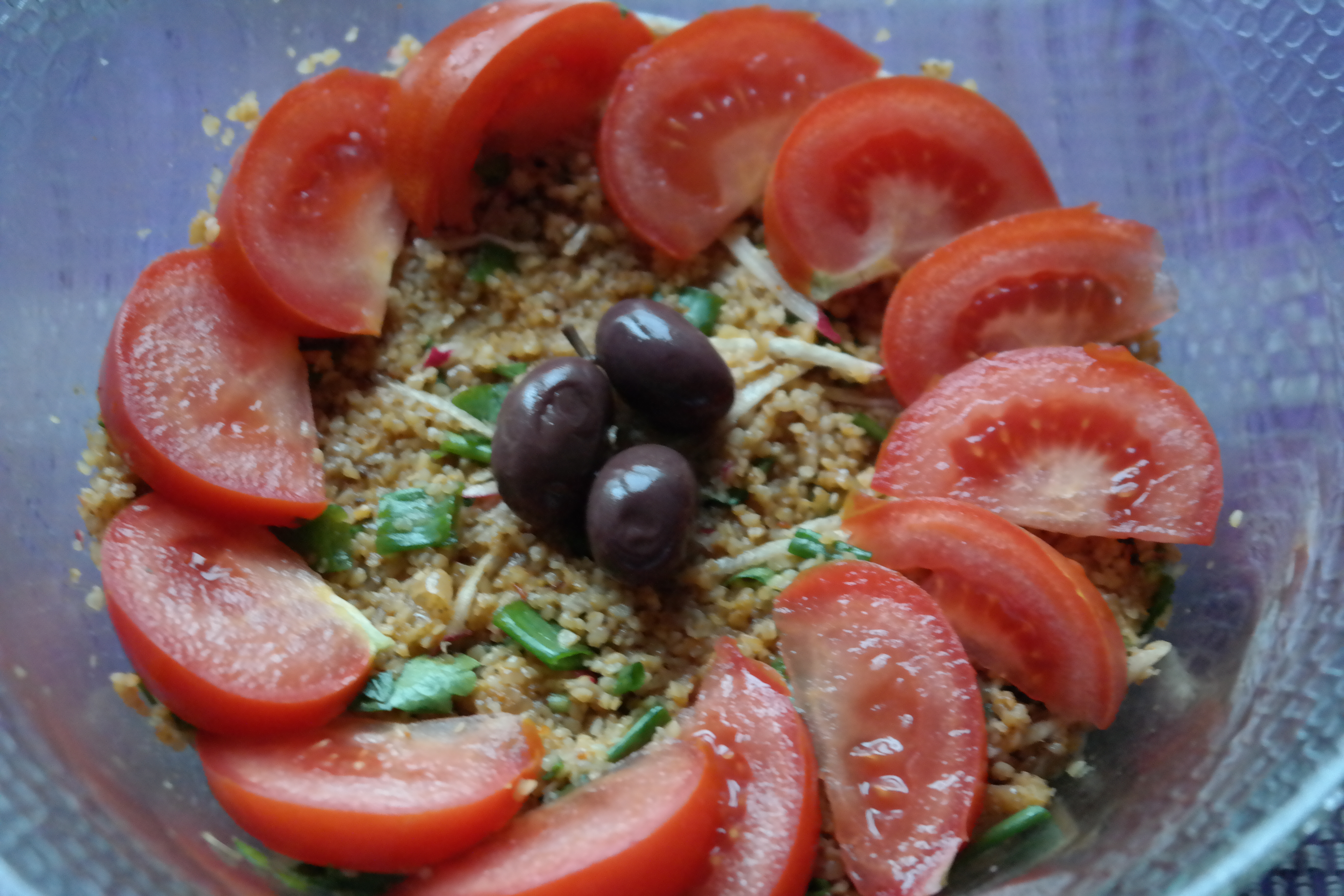
Kısır with olives and tomatoes

We’ve added some radishes, tomatoes, spring onion and black olives to the standard package above that can be eaten as a main meal (you might want to add some nuts or beans for a protein punch) or as a side salad. If you are on a gluten-free diet, then you can use millet in place of bulgur wheat.

SAMSUNG CSC
A fresh kick for your kısır

Kısır is easy to prepare and it benefits from sitting in the fridge overnight – leaving more time for all those Zoom parties and, of course, the Tajik football season, which kicked off last weekend.

Ingredients (for 3-4 servings)

  • 100g fine bulgur wheat
  • 200 ml vegetable stock or water
  • One medium onion
  • One medium tomato
  • One medium radish
  • One spring onion
  • One garlic clove
  • Ten black olives
  • Two tablespoons tomato paste
  • 25 ml olive oil
  • One lemon
  • 25 ml pomegranate sauce
  • Few sprigs of parsley
  • One teaspoon chilli pepper flakes
  • One teaspoon cumin seeds
  • One teaspoon sumac

Method

  • Heat the oil in a frying pan and add the cumin seeds and fry until they start to sizzle. Add the finely chopped onion and mashed garlic and cook for a few minutes over a low heat, stirring occasionally. Add the chilli pepper and sumac and stir.
  • Add the fine bulgur wheat and stir to cover the grains then add the stock or water, Add the tomato paste, pomegranate sauce and the juice of half the lemon. Stir and bring to the boil. When boiling, turn off the heat, cover the pan and leave to stand for 30 minutes or so until most of the liquid is absorbed.
  • Fluff up the grains with a fork and add the grated radish, sliced spring onion and chopped parsley. Mix together and put in a salad bowl. Before serving, garnish with lemon and/or tomato slices and black olives.

Lockdown Lunch: Beansprout Bonanza

2 April 2019

With movement getting ever more restricted in the lockdown — we’re now limited to not going more than 500 m from our flat in Almaty, which rules out big supermarkets for shopping trips, maintaining a supply of fresh ingredients is becoming more tricky – so this is the time when beansprouts come into their own…

This slideshow requires JavaScript.

So, this time round we’ll be looking at some things you can do in the home, such as sprouting beans and lentils, to add a fresh, nutritious kick to your salads and stir-fries. We’ve gone for mung beans which are easy to sprout – your first crop will be ready in a matter of days and all you need is a glass jar and some mesh netting (we re-purposed a yoga mat bag by recycling the nylon mesh for our sprouter).

SAMSUNG CSC
KCC’s sprout-powered salad with carrot, chickpeas, spring onions and radish.

Here are the steps for germinating mung beans:

  • Select clean, undamaged mung beans and wash them thoroughly.
  • Sterilise your glass jar and mesh lid with boiling water and/or in a hot oven.
  • Fill the jar about a quarter of the way with washed beans.
  • Soak the beans in cold water in the jar for at least four hours.
  • Drain off all the water and put the jar in a cool, dark cupboard.
  • Rinse the mung beans a few times a day with cold water and drain the liquid off.
  • After two or three days, your first crop will be ready for eating.
  • When the sprouts are around 2-3 cm long, put them in the fridge until using.

Warning: Raw bean sprouts can lead to food poisoning if not prepared in sterile conditions and regularly washed with clean water.

  • If the sprouts look slimy or smell strange, throw them away.
  • Once sprouted, store the sprouts in the fridge and try to use them as quickly as possible.
  • And don’t forget to wash your hands frequently, especially when preparing food.