This time round on KCC. we’re experimenting with a tomato-free twist on shakshuka, that North African breakfast staple.
Rip Red Shakshuka with beans and beetroot
Our latest shakshuka (click here for our grip green one from last year), replaces tomatoes and onions, which have a high acid content, with beetroot and red beans as the base to poach the eggs in.
This makes for a dish that is easier on the stomach and is ideal for people suffering from GERD, Gastroesophageal reflux disease, which occurs when excess stomach acid flows back into the tube connecting your mouth and stomach.
Ingredients
150 g cooked red beans
100 g diced cooked beetroot
25 g celery
150 ml vegetable stock
A pinch of fresh thyme
2 teaspoons sumac
2 eggs
Mix the beetroot, red beans, celery, carrot and thyme together in a frying pan and add the vegetable stock. Bring to a boil and then reduce the heat so the mixture is simmering.
Cook for five minutes and then make two wells in the mix and break the eggs into these wells. Cover the pan and cook over a low heat for 4-5 minutes until the eggs are set. Sprinkle with sumac and serve with crusty bread or fresh pitas.
This time round on KCC we’re taking a look at mooli, or daikon as some of you might know it. This large, white member of the radish family is common in Japanese, Korean and Chinese cuisine and is also widely used in the Indian sub-continent. It’s a versatile, vitamin-packed vegetable that can be eaten raw or cooked in a variety of dishes. It has a milder flavour than its smaller red cousins but adds an interesting, mildly spicy crunch to salads and stir fries.
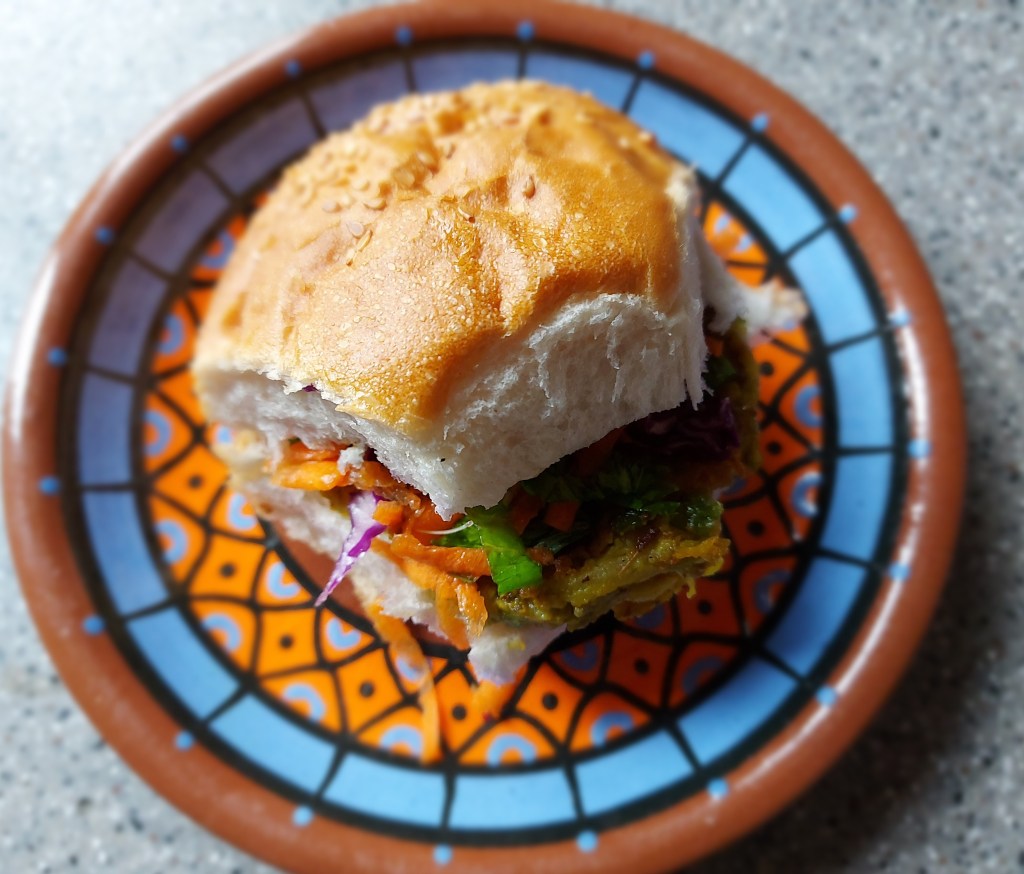
Mooli mattar mücver served in a bap with salad
Mücver fritters are a perennial KCC favourite so we decided to make some with grated mooli, mattar (green peas), celery and some chickpea flour to glue it all together for our latest mücver variation. This version is great served in a burger bun or baguette with some fresh coleslaw, shredded salad greens and a dash of soy sauce.
Meet the mooli aka daikon or winter radish
The mooli can be quite wet when grated so give it a good squeeze to remove the excess liquid. The chickpea flour will help bind the fritters together and soak up any remaining moisture so that they hold their shape better when frying.
Ingredients (makes four 125 g fritters)
200 g grated mooli
200 g green peas (fresh, tinned or frozen)
1 celery stick
50 g chickpea or pea flour
One teaspoon cumin seeds
One teaspoon turmeric
Two teaspoons paprika
Oil for frying
Method
Peel and grate the mooli into thin strips. Squeeze the moisture from the grated mooli. Chop the celery stalk and leaves finely and put into a bowl with the grated mooli. Add the peas and the spices and mix well. Now add the chickpea flour and blend everything together. The mix should be sticky but not wet – if it’s too moist, then add a bit more flour until you get a sticky consistency.
Heat the oil in a frying pan. Form the mix into four golf ball-sized pieces. Place in the pan and flatten with a fish slice. Turn the fritters over after frying for two to three minutes. Cook for another two to three minutes until both sides are a golden brown colour. Serve in a burger bun or in a baguette. Top with grated carrot and red cabbage and shredded lettuce or rocket, add a splash of soy sauce and enjoy!
As the first snow falls here in Almaty, it’s time for some heartier fare. This recipe started out life as courgette soup, but the sudden drop in temperature called for something with a bit more oomph so we added some mung beans and dried coconut to give it a more stew-like consistency. To add a bit of colour, we sprinkled some pomegranate seeds on top and gave it a drizzle of pomegranate sauce before serving.
KCC’s Courgette, Coconut and Mung Bean Mash Up
The delicate, thin courgettes of the summer are giving way to the robust, denser marrows of autumn – perfect for making into a soup. Mung beans are a versatile store cupboard basic – they can be added to stews or grown into bean sprouts for stir fries and salads – check out more recipe ideas here. They’re a staple in home-cooked meals in Uzbekistan, where they’re known as mash, hence the “mash up” in the name of this dish.
Winter is coming to Almaty…
Ingredients (makes four servings)
1 kilo courgette
One celery stick
One medium onion
Bunch of radish leaves
200 g dried mung beans (soaked overnight)
50 g desiccated coconut
50 ml olive oil
Two teaspoons dried thyme
Two teaspoons cumin seeds
1.5 litres vegetable stock
Pomegranate seeds and Pomegranate sauce to garnish
Method
Heat the olive oil in a heavy-based pan and fry the cumin seeds until starting to crackle and then add the diced onion and cook for five minutes over a medium heat. Next add the diced celery, lower the heat and and cook for another five minutes, stirring occasionally. Cut the courgette into four pieces lengthwise and then slice into 1 cm thick chunks. Add to the pan along with the thyme and stir fry for ten minutes. Add one litre of vegetable stock and the chopped radish leaves and simmer over a low heat for twenty minutes.
While the soup is simmering, cook the mung beans in a separate pan with 500 ml vegetable stock and the coconut. Cook for twenty – thirty minutes or so until the beans are softening or until all the liquid is absorbed.
Remove around 25% of the courgette mix and blend the rest to a smooth consistency with a stick blender. Add these blended courgettes to the cooked mung beans and stir well. Bring to a boil and then add the reserved courgette mix. Pour into soup bowls, garnish with a few pomegranate seeds and a drizzle of pomegranate sauce and serve immediately.
Here in the northern hemisphere we’re moving into the “darker half” of the year with the nights growing longer and the mercury dropping rapidly. Halloween is just around the corner so it’s that pumpkin time once again. Here at KCC we’re always looking cut down food waste so this year we’ve got another idea of how to use up your excess squash – a vegan variant on Shepherd’s pie.
Pumpkin-topped Beany Bake a.k.a. Halloweenish Shepherd’s Pie
Halloween has its origins in the Celtic pagan festival of Samhain that marked the end of the harvest period and the onset on the dark months of winter. It was an excuse for a wild party with feasting and drinking at a time when the boundary between our world and the spiritual world was held to be at its thinnest.
Halloween, which is the evening before All Saints’ Day, 1 November, in the Christian calendar, is still the time when many remember the souls of the dead. Many Halloween traditions in North America were influenced by Irish and Scottish immigrants, harking back to the festival’s pagan roots.
The pumpkin, the round, oversized orange vegetable, native to the New World, has become a symbol of the festival. This has led to millions of pumpkins going to waste so here’s a reminder of some more of our pumpkin recipes to try and reduce the scale of this problem.
Ingredients (serves four)
500 g pumpkin
One medium onion
One stick of celery
One medium carrot
One medium green pepper
One medium courgette
Two medium tomatoes
One tablespoon tomato paste (or Turkish hot pepper paste if you can find it)
300 g cooked beans (cannellini or kidney beans 0r a mix of the two)
75 g red lentils
200 ml vegetable stock
50 ml olive oil
One teaspoon chilli flakes
One teaspoon turmeric
Method
Clean the pumpkin by removing the hard outer skin and the seeds (if there are any) and then chop into small cubes, put into a baking dish and drizzle with olive oil and mix well. Roast in a pre-heated oven at 180 c for 30 minutes, stirring occasionally.
While the pumpkin is roasting, heat the oil in a heavy-based pan and then cook the finely chopped onion over a medium heat for five minutes. Add the diced celery, green pepper and carrots and cook for another five minutes.
Mix in the cooked beans, vegetable stock and tomato paste, chilli flakes and turmeric and stir well. When it boils, add the lentils, stir and then cook for 20 minutes or so until all the liquid is absorbed. While this is cooking, top and tail the courgettes and cut into 1cm thick rounds. Thinly slice the tomato.
Remove the pumpkin and mash with a fork or a potato masher. Put the bean mixture into the bottom of the baking dish and cover with courgette rounds. Cover the courgette with tomato slices and then pack the mashed pumpkin on top of the tomatoes. Decorate with pumpkin seeds and bake at 180 c for 30 minutes or until the top of the pie begins to char.
It’s that in-between time of year as the nights grow longer and thoughts turn towards more substantial meals after a long summer of salads and lighter fare. The last of the seasonal vegetables such as tomatoes and courgettes are perfect for stuffing and baking in the oven, making a bridge between summery salads and the heartier soups and stews of winter that are coming up.
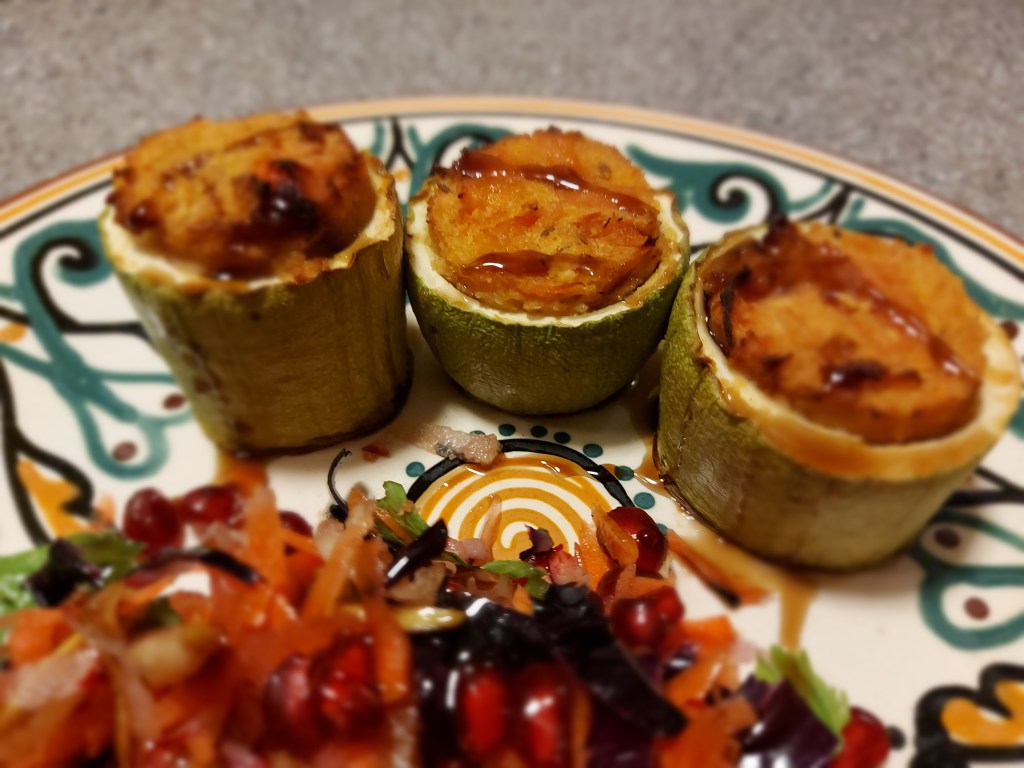
Apricot and lentil courgette roundels drizzled with pomegranate sauce and served with a seasonal salad
We stuffed some courgettes with a mixture of red lentils, apricots, tomato, onion, bulgur wheat and lemon juice to make a versatile roundel that can be served as part of a main course or eaten on its own as a meze, a fully vegan alternative to the sausage roll!
Apricot and lentil courgette roundel – a vegan alternative to the sausage roll?
The autumn fruit is at its best at the moment, and we’ve added some pear and pomegranate to an autumnal red cabbage, carrot, celery and radish salad to accompany these apricot and lentil courgette roundels to make a great lunch or supper. By adding a jacket potato, you can make it into a more filling main course.
Ingredients (makes enough mixture for 10-12 roundels)
Three medium sized courgettes
100 g red lentils
50 g dried apricots (or four fresh apricots if available)
One small red onion (approx 75 g)
One medium tomato (approx 100 g)
50 g fine bulgur wheat
25 ml olive oil
200 ml vegetable stock
Juice of half a lemon
One teaspoon cumin seeds
One teaspoon red chilli flakes
Black pepper to taste
Method
Cut the dried apricots into eight pieces and soak in hot water for at least 30 minutes. While the apricots are soaking, heat the oil in a heavy based pan and add the cumin seeds. When they start to sizzle, add the finely chopped onion and fry over a medium heat until they start to soften. Grate the tomato into the fried onion and cook over a low heat for five minutes or so, stirring occasionally.
Now add the washed lentils, pour in the stock and stir. Cook over a low heat for 15-20 minutes until most of the water has been absorbed. Add the fine bulgur wheat, mix it in well and leave covered for 15 minutes. Drain the apricots and stir them into the mixture. Add the lemon juice, chilli flakes and black pepper to taste and mix well.
While the lentils are cooking, start to prepare the courgettes by slicing off the ends to make them flat. Cut into 3 cm slices. Gouge out the seeds with a small spoon, leaving a little bit of flesh at the bottom of the roundel.
Pre-heat the oven to 180 c. When the lentil mix is cool, pack it into the courgette roundels and stand them on a baking tray with the filling topmost. Bake at 180 c for 30 minutes or so – the courgette should still be firm and not too squidgy and the lentil mix should rise slightly and be beginning to brown on top.
Serve alongside a salad of red cabbage, carrot, celery, radish, pear and pomegranate and a jacket potato, drizzling pomegranate sauce over the roundels or allow to cool and serve the roundels as a snack on their own.
This time round on KCC, we’ve brought a recipe back from our heartland of the Datça peninsula that uses fresh almonds, lemons and olive oil to make an amandine dressing for green beans based on France’s classic almond sauce.
Green beans amandine – an almond, lemon and chilli dressing
We had some great meze dishes on our travels around the peninsula including one made with fresh black-eyed beans – börülce in Turkish – and almonds at Ada Pansiyon on Ovabükü beach. Having failed to track down fresh black-eyed beans back in Almaty, we opted for green beans as they were available.
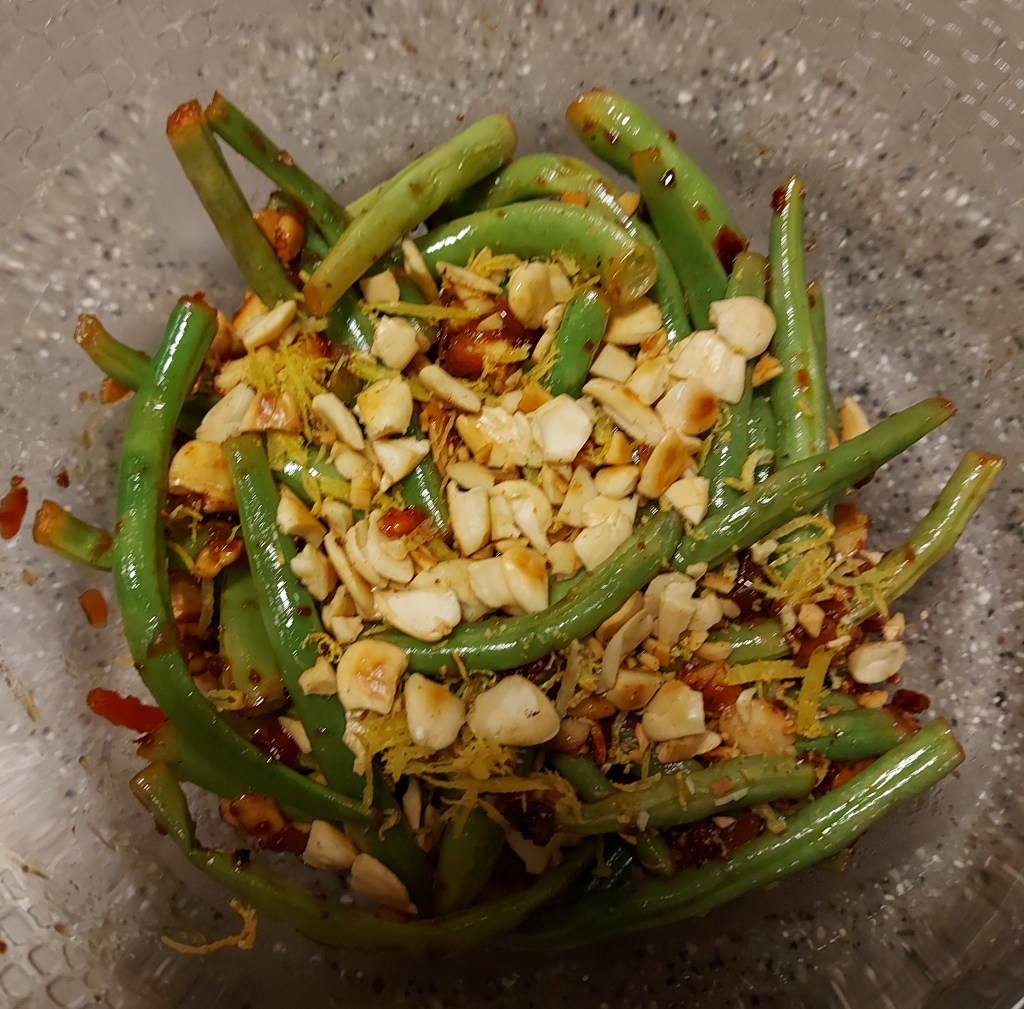
Toasted almonds with stir-fried green beans and lemon zest
This dish can be served along other meze dishes – check out some of our other meze ideas here, or with bulgur, rice or pasta as more of a main course. The amandine dressing also works well with other vegetables such as broccoli and cauliflower.
Ingredients
500 g green beans
100 g red onion
100 g almonds
50 ml olive oil
One lemon
One teaspoon chilli flakes
Method
Peel the almonds – put them in hot water for 30 seconds and then into cold water, the skins should now be easy to remove. Break the almonds into small chunks and toast in a frying pan over a low heat until they go a golden brown colour. Remove from the pan and set aside.
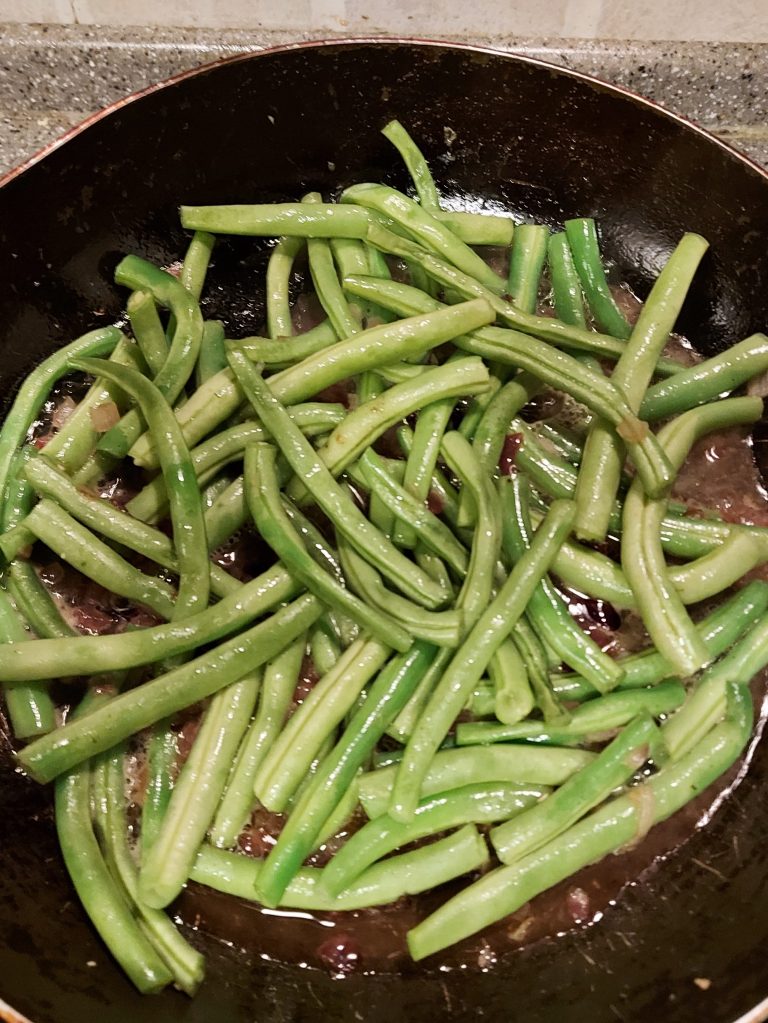
Top and tail the green beans and slice into 5 cm lengths. Heat the oil in the frying pan and then fry the chopped onion for five minutes and then add the beans and stir fry over a medium heat for five minutes or so – they should retain a little bit of crunch. While the beans are cooking, zest the lemon and then squeeze the juice.
Combine all the ingredients in a large bowl, including the lemon juice and chilli flakes and serve straight away or allow to cool if you prefer.
This time round on KCC we’re going for a chickpea, aka chana, chilli that includes a slab of dark chocolate to balance out the acidity of the tomato sauce – a combination that works surprisingly well.
Chocolate chilli chana
We first came across the dark chocolate infused mole sauce many years ago in a Mexican restaurant in Barcelona. It’s been on the list of things to cook for a while and having received a selection of Green and Black’s chocolate that included an 85% cocoa bean bar there were no longer any excuses not to try it out.
We served our chickpea chilli with some pearl barley – it’s also good with brown rice, couscous, bulgur wheat or some flatbread to mop up the chocolate rich sauce. We also recommend washing it down with a margarita or two.
Ingredients (makes 3-4 servings)
300 g chickpeas (cooked)
150 g carrot
150 g onion
50 g red lentils
250 g tomatoes
20 g dark chocolate
25 ml olive oil
150 ml aquafaba (chick pea cooking water)
1 teaspoon cumin seeds
1 teaspoon coriander seeds
1 teaspoon paprika (smoked if you can get it)
1 teaspoon chilli powder (or chilli flakes)
2 cm cinnamon stick
5 cloves
1 bunch fresh coriander
Method (Cooking time approx 45 minutes)
Heat the olive oil in a heavy-based pan and add the cumin seeds. When the seeds start to pop add the diced onion. Stir fry for five minutes over a medium heat and then add the diced carrots. Cook for five more minutes and then reduce to a low heat. Add the chopped tomatoes and cook for another five minutes.
Add the aquafaba, ground coriander seeds, cinnamon, cloves, paprika and chilli powder and stir well. When the mix starts to bubble, stir in the red lentils. Simmer the mixture and after 15 minutes add the cooked chick peas. Cook for another 10 minutes over a low heat and then add the dark chocolate.
Serve with pearl barley or a grain of your choice and garnish the Chocolate Chilli Chana with fresh coriander. Take a slug of margarita and enjoy!
We’re back in action after another glamping trip to Bubble Gum View near Almaty. This peaceful spot, located a 45-minute drive from the city centre, is situated in an orchard and consists of four pods. This time round we were treated to an upgrade to the en-suite pod that has a kitchen and an upstairs bedroom too.
Our glamping pod at Bubble Gum View in an orchard near Almaty, Kazakhstan
Apples are from Almaty region!
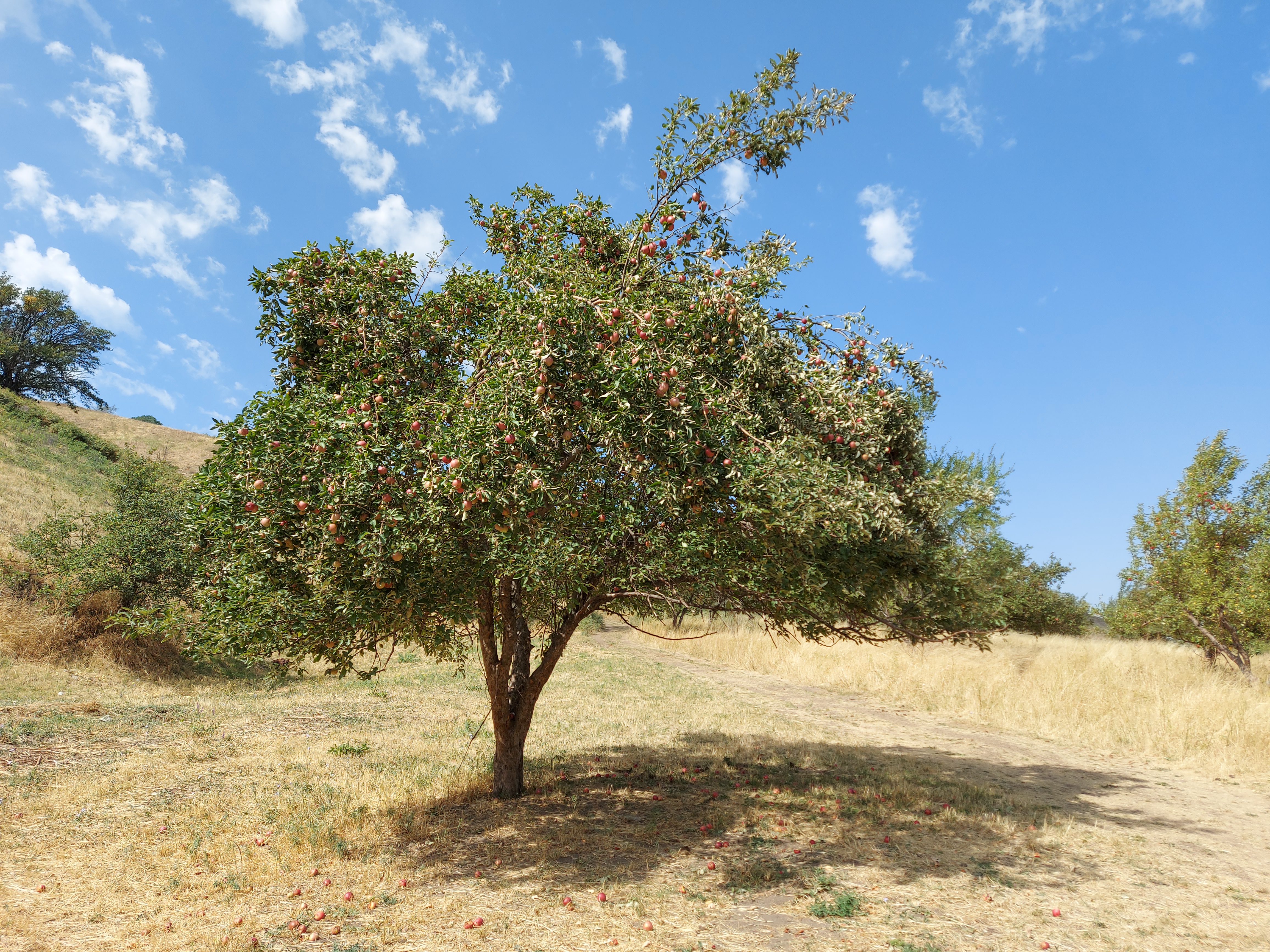
2021’s apple harvest begins in Almaty, Kazakhstan
Kazakhstan, Almaty region in particiular, is widely acknowledged as the place where the ancestors of today’s apples evolved. The name Almaty translates from the Kazakh as ‘the place of apples.’ With autumn approaching, the apples are beginning to ripen and we picked a few to bring back to Almaty.
Almaty apple, caper, courgette and rocket salad
With summer making a last stand – the mercury is still hitting the 30s here in Almaty, we used the apples in a salad based on one we had in Greece one time. The Greek version used pears and lettuce, but we’ve swapped in rocket and our homecoming apples. We served it in a wrap with some fresh, homemade hummus and crispy falafels, but it works equally well wherever you’d normally eat salad.
Ingredients (serves 3-4)
125 g courgette
100 g apple
75 g rocket
20 g capers
1 teaspoon chia seeds
Juice of half a lemon
15 ml olive oil
Method
Roughly chop the rocket leaves and put at them at the bottom of your salad bowl. Grate the courgette over the rocket leaves. Now grate the apple over the courgette layer, add the capers and sprinkle the chia seeds over the top. Dress with lemon juice and olive oil and mix well.
This time round on Knidos Cookery Club we’ll be looking at some innovative uses for plov, Central Asia’s favourite rice dish. As you probably know, we don’t like wasting food at KCC, so we’ve come up with a couple of ways to make the most of any leftover plov you may have — plov fritters and the plov wrap.
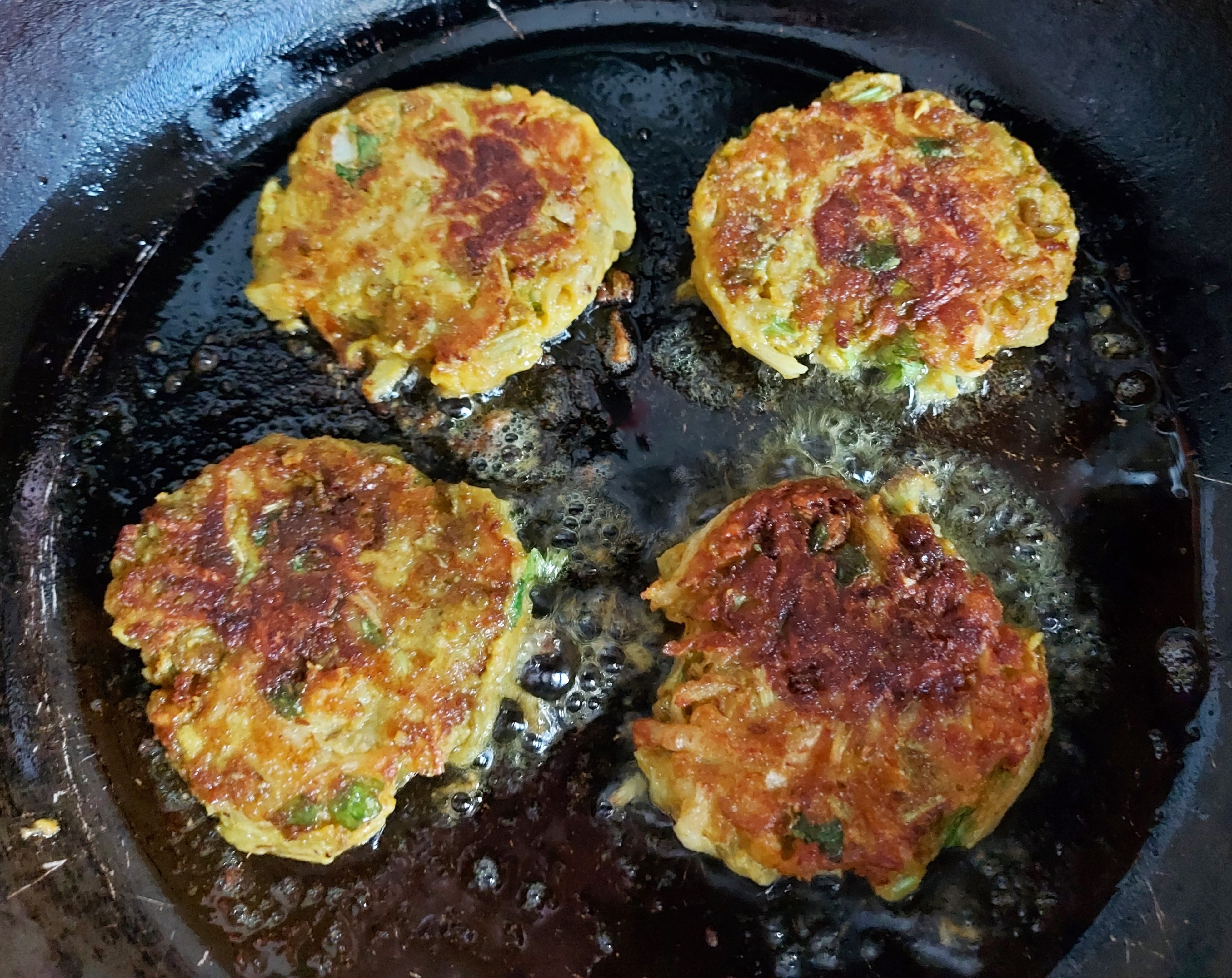
Plov Fritters sizzling in the pan
Plov makes a great base for fritters – simply add some grated carrot, potato, beetroot or courgette and some flour or an egg to bind the mixture together. Fry or grill until golden brown on both sides and then serve in a burger bun or as part of a meal with salad and other side dishes.
A plov supreme!
While walking around the streets of Almaty recently, KCC came across a fast food kiosk specialising in local dishes such as plov, lagman noodles and manty dumplings. One dish that caught our eye was the plovash, a plov burrito if you like!
Plovash – the plov burrito
Plovash is a clever play on words — lavash is a paper thin flat bread commonly found in the Caucasus and Central Asia — simply filling the lavash with plov gives us the plovash.
100 g grated raw carrot (or potato, courgette or beetroot)
50 g chickpea flour (or one egg)
25 ml oil
Method
Combine the leftover plov with the grated carrot and then stir in the chickpea flour (or egg) and mix until all the ingredients are combined well. Make into 4 – 6 burger shapes. Heat the oil in a heavy-based frying pan and fry the fritters until golden brown on both sides. The fritters can also be grilled or cooked on the barbecue. Serve with a salad or on its own in a burger bun or pita.
This time round on KCC we’re turning our attention to plov — Central Asia’s favourite rice dish. There are no hard and fast rules for plov, with regional variations prizing different ingredients and each family having its own take on what should go into the dish. One thing is for sure — this spicy rice, carrot, onion, garlic and dried fruit concoction makes for a great centrepiece for any party and is perfect for sharing with family and friends.
A plov supreme!
KCC travelled up to Kazakhstan’s capital Nur-Sultan to visit a modern day plov-meister who has perfected a tasty, meat-free take on this classic Uzbek dish. Our plov-meister learnt his trade on the mean streets of Hojeli, Karakalpakstan and in the student dorms of Tashkent, Uzbekistan.
Keeping the vampires at bay…
There are no strict cooking times for this recipe — it’s more of a feeling than an exercise in clock watching. Apart from the holy trinity of onion, carrot and rice, our plov-meister deploys whatever is to hand in the kitchen, adding dried fruits and spices along with a surfeit of garlic. For best results, your plov should be cooked in a kazan, a cast iron cauldron, but a deep, heavy-based saucepan or a casserole dish will suffice at a pinch. The pan should retain the heat to enable the plov to cook slowly and for the myriad flavours to meld.
Achik Chuchuk – add chilli pepper to taste
Serve the plov alongside a spicy achik chuchuk tomato and onion salad, steaming bowls of green tea and Uzbek bread, non, click here for a recipe from Caroline Eden’s excellent Central Asian focussed cookbookRed Sands.
Ingredients (makes enough for 8-10 servings)
100 ml cooking oil (For the authentic Uzbek taste track down some cottonseed oil, but failing that sunflower, rapeseed or olive oil works just as well)
500 g onion
500 g carrot
500 g short grain rice
6 heads of garlic
150 g currants /raisins /sultanas – or a mix of all three
100 g dried apricots (with stones)
1 teaspoon cumin seeds
1 teaspoon black peppercorns
1 teaspoon coriander seeds
For the salad:
250 g tomatoes
250 g onion
One teaspoon dried basil
1 – 3 Chilli peppers, finely sliced (adjust as to how hot you like your food)
Method
Heat the oil over a low heat in a heavy-based pan and then add the sliced onion. Fry the onion until it gets a golden-brownish colour so that later the rice will get its distinctive orangey colour. Cut the carrots into 5 cm long slices, a few millimetres wide and then add to the onions. Cook until the carrots are very tender so that they can easily be cut by a spatula or a wooden spoon while stirring.
Now add the spices, the whole dried apricots, currants, sultanas or raisins (or all three) and whole heads of garlic. Cook for a few minutes to allow these ingredients to absorb the oil and the carrot/onion juice.
Rinse the rice carefully until the water runs clear and then put the washed rice on top of the spicy, fruity vegetable base and then pour water over the top through a fish slice to allow an even distribution of the liquid.
Cover the rice with an extra 1 cm of water and then cook over a high heat and when the water disappears from the top of the rice, turn it down to a very low heat, close the lid and allow it to steam for about 20 minutes.
Serve with a spicy tomato and onion salad — achik chuchuk — a salad made from thinly sliced tomato and onion, a sprinkling of dried basil and diced chilli peppers, according to how hot you like it, and oven-fresh non bread.


















 Knidos Cookery Club