Red Bean Hotpot

6 February 2020

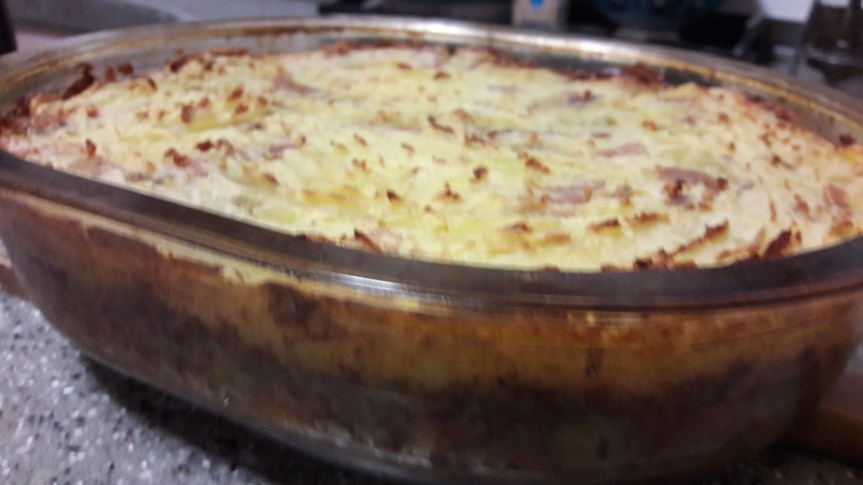
This time round on Knidos Cookery Club, we’re turning our attention to a winter classic from the UK – the Lancashire Hotpot. Our spiced up, veggie-friendly version replaces the meat traditionally used with red beans and red lentils and is topped off with sliced potatoes, helping to retain the hearty, comforting hit of the original.
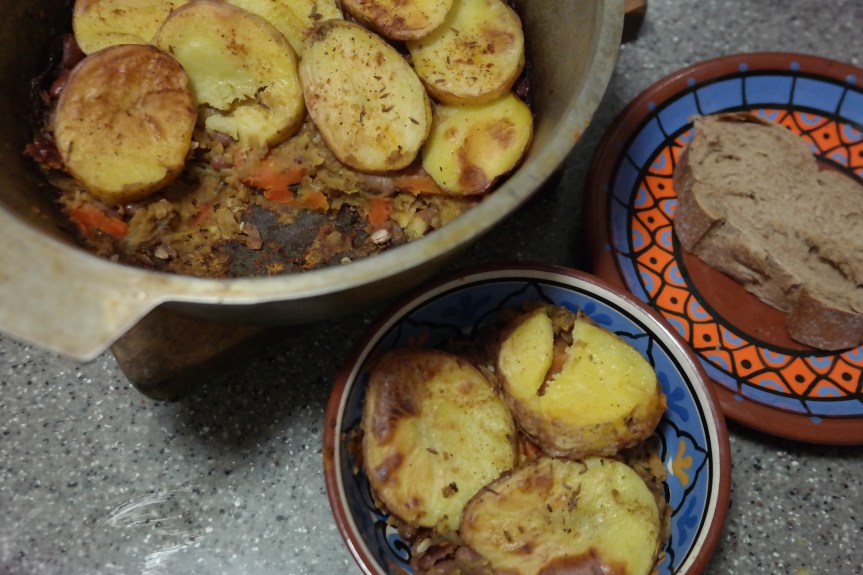
SAMSUNG CSC

This casserole originated in the north-west of England as a dish that could be left  cooking slowly in the oven over a low heat while families worked from home spinning thread.

The term hotpot is thought to derive from the mixture of ingredients used, although it’s also claimed to be named after the clay pot originally used to cook the dish.  It’s not to be confused with the Chinese Hotpot that uses a steaming pot of stock placed in the centre of the table to cook ingredients.

Ingredients (serves 2)

  • 125 g red lentils
  • 250 g cooked red beans
  • 3 medium potatoes
  • 2 medium carrots
  • 1 medium onion
  • 1 stick of celery
  • 1 garlic clove
  • 50 ml olive oil
  • 600 ml vegetable stock
  • 1 teaspoon each of mustard seeds, coriander seeds, fenugreek seeds, cumin seeds, chilli flakes, turmeric
  • 1 cinnamon stick
  • 1 bay leaf

Method

  • Heat the olive oil in a casserole dish or an ovenproof pan. Fry the onions, garlic, ginger and spices all together for five minutes or so over a medium heat. Add the diced carrot and celery and cook for five more minutes. Add the lentils and 300 ml of stock and cook over a low heat until the water is absorbed and the lentils are cooked but not mushy.
  • While this is cooking, boil the potatoes (cut into 1/2 cm thick slices) for 10 minutes, pour off the water and cover with cold water. Add the cooked beans and the rest of the stock to the lentils and stir well. Place the potato slices in layers over the top of the stew and pour some olive oil over them.
  • Put the casserole dish or pan into an oven heated to  200 c and cook for 30 minutes at this temperature until the potato slices are starting to go a golden brown colour. Serve immediately in individual bowls with a hunk of bread.

The Golden Soup of Samarkand

23 January 2020

This week’s offering – a soup made from chickpeas and carrots, was inspired by a recent visit to a funky Central Asian restaurant called Saksaul in Nur-Sultan, Kazakhstan. This soup appeared on the menu, but unfortunately there wasn’t any left that day. Spotting yellow carrots on sale in the market after returning home, we decided to cook up our own version.

KCC’s Golden Soup of Samarkand featuring yellow carrots and chickpeas

Our soup contains two ingredients that are common in the cookery of Samarkand in Uzbekistan – chickpeas and yellow carrots. Not all carrots are orange in Central Asia, you can even find black ones on occasion, but we find these yellow ones particularly sweet and tasty.

Yellow (and a bit green!) carrots on sale in Kazakhstan

This famed Silk Road city of Samarkand provided further inspiration for our golden potage with spices such as cumin, coriander and turmeric that are still bought and sold along this ancient trade route.

Ingredients (makes 4 portions)

  • 500 g yellow carrots
  • 500 g chickpeas
  • Two yellow onions
  • Two garlic cloves
  • Two teaspoons mustard seeds
  • Two teaspoons chilli powder
  • Two teaspoons cumin seeds
  • Two teaspoons coriander seeds
  • Two teaspoons turmeric
  • 50 ml vegetable oil
  • One litre vegetable stock

Method

  • Heat the oil in a heavy-based pan and add the mustard seeds. When the seeds begin to pop, add the chopped onion and garlic and cook over a medium heat for five minutes. Add the other spices and mix well.
  • Next add the diced carrot and stir to coat the carrot with the mix. Cook for five more minutes, stirring occasionally. Add the chickpeas and stir well, then add the stock and reduce to a low heat and simmer the soup for 30 minutes or so.
  • Using a stick blender, liquidise the soup. Pour into bowls and garnish with chickpeas and a sprinkling of cumin seeds. Serve with bread – we used a flatbread but any crusty bread will work just as well.

Pump up the Dhal

20 February 2020

On these chilly, wintry nights there’s nothing better than a bowl of dhal, the Indian subcontinent’s beloved lentil-based comfort food, to warm you up. We’ve added some chunks of roasted pumpkin that blend perfectly with the red lentils, whilst adding a hint of sweetness to the rich, spicy blend.

20191203_221509
KCC’s pumpkin enriched red lentil dhal

In Sri Lanka, where Knidos Cookery Club has just been on a foodie fact-finding mission, dhal (also spelt dal or daal) is a mainstay of the island’s signature curry and rice dish. It’s served any time of the day – it was particularly good served with string hoppers, little nests of steamed rice noodles, and coconut sambol (grated coconut with chillies and lime juice) – a popular breakfast on the island.

SAMSUNG CSC
Breakfast Sri Lankan style – string hoppers with coconut sambol and red lentil dhal in the background

Dhal can be a meal on its own when served with rice or flatbreads, or try it alongside a selection of your favourite vegetable curries. It’s a dish that tastes even better the next day when the spices have been left over night, allowing the different flavours to mix and mingle.

Ingredients (makes 4-6 servings)

  • 125 g red lentils
  • 200 g roasted pumpkin
  • 250 ml water or vegetable stock
  • 50 ml coconut milk
  • 200 g tomatoes
  • One medium onion
  • One teaspoon each of mustard seeds, cumin seeds, coriander seeds, cloves and chilli flakes
  • Two teaspoons turmeric
  • 1 cm knob of ginger
  • One garlic clove
  • One cinnamon stick
  • One star anise
  • One bunch fresh coriander
  • 50 ml olive oil

Method

  • Roast the chunks of pumpkin in a hot oven at 200 c for 20 minutes. While the pumpkin is cooking, heat the oil in a heavy based pan and add the mustard seeds. When the seeds begin to pop, turn the heat down and add the chopped onions, ginger and garlic and the other spices and stir well. Cook for 10 minutes over a medium heat.
  • Wash the lentils until the water runs clear and then add them to the onion mix with the vegetable stock and chopped tomatoes, stir and cook until all the liquid is absorbed. Add the pumpkin chunks and coconut milk. Cook over a low heat until it starts to bubble. When cooked, remove the cinnamon stick and star anise. Garnish with the chopped coriander and serve with rice and/or a flat bread such as chapati or pita.

KCC’s Nutty Festive Fare

22 December 2019

Seasoned greetings from Knidos Cookery Club – we’d just like to take this opportunity to thank all our readers, old and new, in 2019 and wish you a great holiday season and all the best for the New Year.

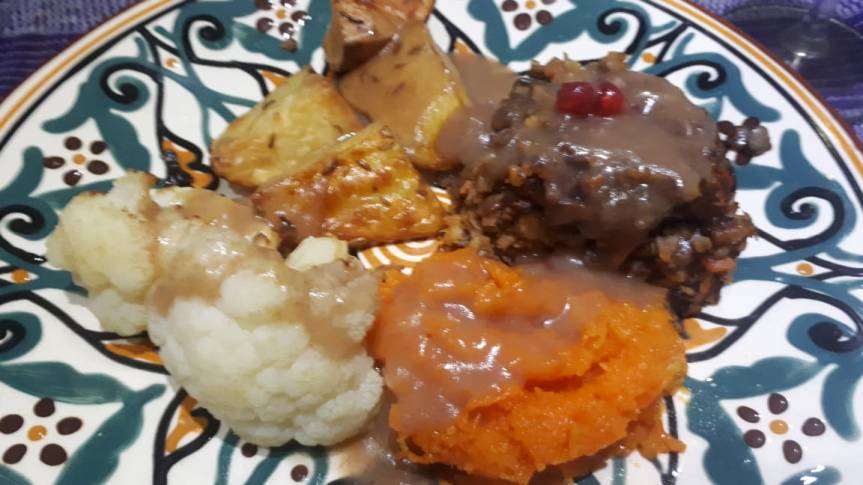
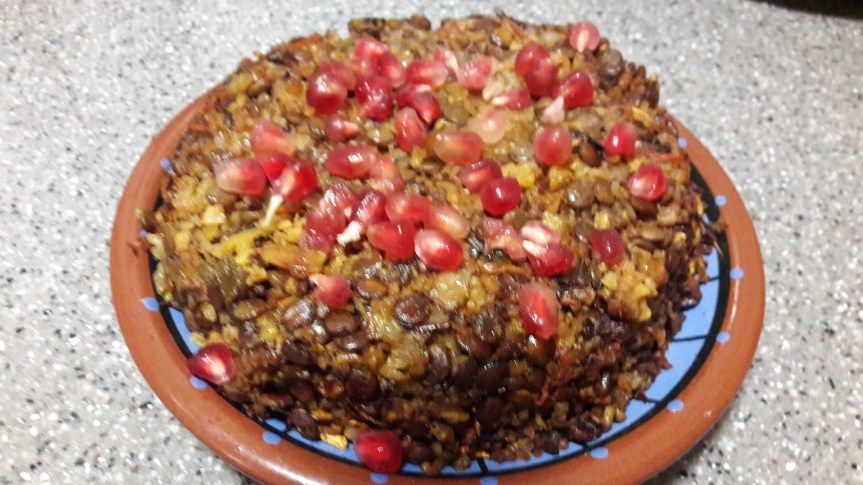
With the winter solstice, Hanukkah, Christmas and New Year all upon us, we’d like to share this nutty lentil bake recipe with you. It makes a great centrepiece for a festive feast.

We served it with roast potatoes, charred cauliflower and smashed pumpkin and then poured a rich pomegranate sauce over everything.

Ingredients (for 6 servings)

  • 150 g green lentils
  • One carrot
  • One medium-sized onion
  • One stick of celery
  • 75 g walnuts
  • 75 g coarse bulgur
  • Two tablespoons tomato paste
  • Two teaspoons cumin seeds
  • One teaspoon coriander seeds
  • One teaspoon chilli powder
  • Half a teaspoon cloves
  • 50 ml olive oil
  • 250 ml vegetable stock
  • 25 g chickpea flour
  • Pomegranate seeds

Method

  • Cook the lentils in the vegetable stock until most of the liquid has been soaked up. The lentils should still be firm, not mushy. Stir in the bulgur and leave to stand for 30 minutes.
  • Heat the olive oil in a heavy based pan and add the spices. Cook for a few minutes and then add the chopped onions, grated carrot and thin slices of celery and cook for 10 minutes, stirring regularly.
  • Combine the vegetable mix with the lentils. Stir in the tomaro paste. Toast the chopped walnuts for 5 minutes then add to the lentil mix. Finally add the chickpea flour to thicken the mix.
  • Pack the mix into a greased baking dish and cook for 30 minutes in an oven pre-heated to 180 c. Garnish with pomegranate seeds and then cut the loaf into 6 slices and serve.

Battered Halloumi = Pakora Paradise

5 December 2019

Over the last few days, we’ve been experimenting with perfecting a batter to make pakora – a deep-fried snack from the Indian sub-continent. After testing a few recipes we’ve hit on a formula that can be used to coat a variety of vegetables from cauliflowers to carrots, parsnips to peas, and also cheese!

20191101_234037
Halloumi pakora with potato wedges and peas

While on a recent visit to the UK, we came across battered halloumi on many menus – the squeaky cheese from Cyprus that stays firm when cooked. We’ve discovered that it makes a perfect partner for our pakora batter when deep-fried.  We recommend you try it with this spicy Yemini sauce, zhug.

But you’ll need to be quick, as halloumi has been a victim of its own success. Severe global shortages of this versatile cheese are predicted as demand far outstrips supply. Luckily for us here in Kazakhstan, a local producer has started making a version of this cheese. We’re pleased to report that it tastes pretty good, so for now the crisis has been averted in our winter base.

Ingredients (makes enough batter for a  sliced up 250 g block of halloumi)

  • 100 g chickpea flour (also known as gram flour or besan)
  • One small onion
  • 1 cm knob of ginger
  • One garlic clove
  • One teaspoon red chilli flakes
  • One tablespoon of fresh coriander
  • 50-100 ml cold water

Method  

  • Mix all the ingredients together with a fork or a whisk, adding water until you get a smooth consistency that is neither too runny not too thick with no lumps. Cover the batter with clingfilm and let it stand for an hour or so before using.
  • Heat a litre of cooking oil, we used sunflower oil but any will do, in a heavy-based pan over a medium heat until it reaches 180 c. To test the temperature, dip a chopstick or the handle of a wooden spoon in the oil – if the oil starts to bubble vigorously,  then it is at the right temperature.
  • Slice a 250 g block of halloumi into eight pieces. Coat the halloumi slices in the pakora batter and drop into the oil. When the pakora rise to the surface and are a golden-brown colour, remove with a slotted metal spoon and drain on kitchen towel.
  • Serve hot with potato wedges or roast potatoes and minted peas. The pakora goes well with a coriander and coconut chutney – this site has a good recipe for this sauce, or with our zhug sauce.


Put a Bit of Zhug in your Life

14 November 2019

On a recent flying visit to Glasgow, KCC dropped into Ox and Finch in the city’s West End for a bite to eat. This Sauchiehall Street eatery offers a range of tapas-style sharing plates – we opted for the giant couscous with grilled halloumi, a plate of braised leeks, beetroot hummus, grilled baby gem lettuce and, with this being Glasgow, chips of course. 

20191114_140452
A spicy bowl of zhug sauce

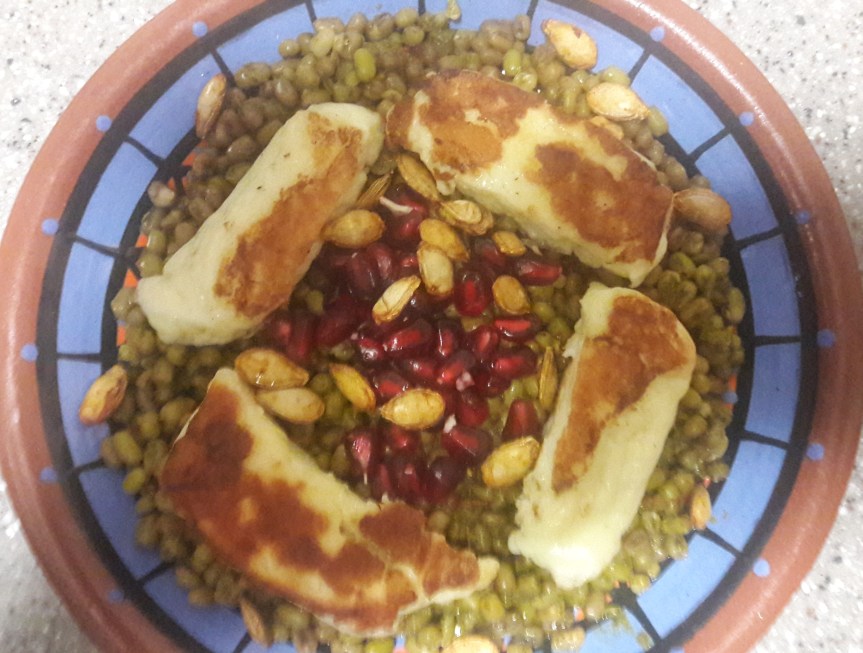
This time round, we’ll be recreating the giant couscous dish, made with ptitim, toasted pearls of wheat and semolina, first cooked up in Israel in the 1950’s when rice was in short supply in the early days of the Israeli state. This couscous relative was dubbed Ben-Gurion rice after Israel’s first prime minister. After scouring our local supermarkets, ptitim proved to be in short supply so we’ve replaced them with mung beans!

20191108_222230
Mung beans, zhug, halloumi, pomegranate and pumpkin seeds

Key to this salad is the dressing, a piquant sauce called zhug,  which was brought to Israel by emigrées fleeing persecution in Yemen in the late 1940s. This spicy cousin of Italy’s milder pesto and Mexico’s equally fiery salsa verde, is served often alongside falafel and hummus. The name is said to be derived from mas-chag, the name of the grinding stone traditionally used to crush the spices and herbs into a paste.

Ingredients (serves 2-4)

  • 100 g mung beans
  • 125 g halloumi
  • Sprinkling of pomegranate seeds
  • Sprinkling of roasted pumpkin seeds

For the zhug sauce:

  • One bunch fresh coriander
  • One bunch fresh parsley
  • One garlic clove
  • Two teaspoons red chilli flakes
  • One teaspoon black peppercorns
  • One teaspoon cumin seeds
  • One teaspoon coriander seeds
  • One teaspoon cardamom seeds
  • Juice of half a lemon
  • 25 ml olive oil

Method 

  • To make the zhug sauce, put all the ingredients except for the olive oil in a blender and give it quick blitz. Don’t overdo the blending as you want a slightly chunky texture. Now slowly add the olive oil, blitzing until it is mixed in with the other ingredients. Put in a glass jar – it should keep for a couple of weeks in the fridge.
  • Cook the mung beans until tender. While the mung beans are cooling, grill the halloumi until a golden-brown colour. Then mix the cooled mung beans with a tablespoon of zhug, arrange the grilled halloumi on top, sprinkle with pumpkin and pomegranate seeds and serve with a selection of your favourite meze dishes.


KCC’s Buckwheat Cottage Pie

31 October 2019

This time round on Knidos Cookery Club we’re using buckwheat, a cereal (or rather a pseudocereal) that has thus far been neglected on our site.  Buckwheat’s name is misleading as it’s not really wheat, but rather a plant that is more closely related to sorrel, knotweed and rhubarb, which makes it suitable for those of you on a gluten-free diet.

20191011_222708.jpg
KCC’s Buckwheat Cottage Pie

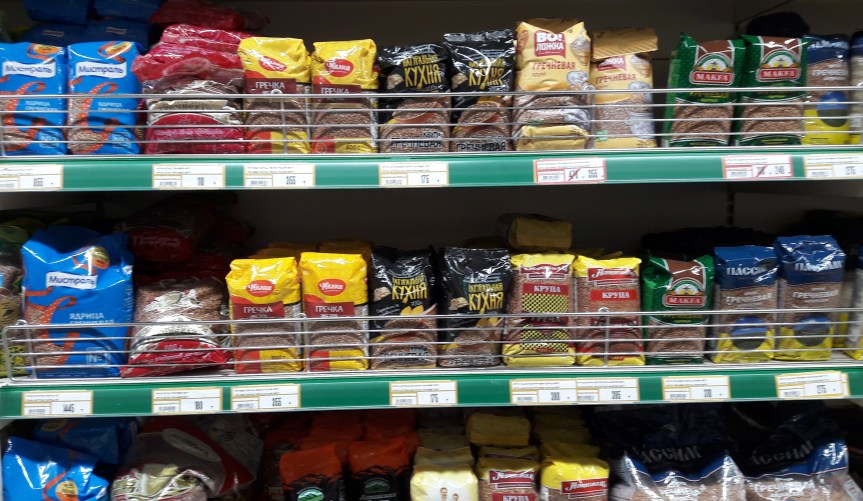
Buckwheat, or grechka, is wildly popular across the countries of the former Soviet Union and eastern Europe – you can find whole aisles in supermarkets dedicated to it. The groats are used to make porridge and the flour to make pancakes. In Japan, the flour is  used to make soba noodles.

20191015_113946.jpg
Row upon row of buckwheat groats in a supermarket in Almaty, Kazakhstan

We’ve taken that classic British comfort food, Cottage Pie, and replaced the meat with a mix of the nutty-tasting buckwheat and vegetables all topped with a thick slab of mashed potato – perfect fodder for the colder autumn and winter evenings and ready to eat in around an hour.

Cottage pie and two veg

Ingredients (makes 4 servings)

  • 150 g buckwheat groats
  • One carrot
  • One medium-sized onion
  • One green pepper
  • Three medium-sized tomatoes
  • Three medium-sized potatoes
  • Six small dried mushrooms
  • 25 ml olive oil
  • 500 ml vegetable stock
  • One teaspoon sumac
  • One teaspoon chilli flakes
  • Two teaspoons dried thyme
  • One bay leaf

Method

  • Heat the olive oil in a heavy-based pan and add the minced onion. Cook for five minutes over a medium heat and then add the diced carrot and green pepper and cook for another five minutes, stirring occasionally. Add the sumac, chilli flakes and thyme and the chopped tomatoes and diced mushrooms.
  • Reduce the heat and cook for another 10 minutes then add the buckwheat and stir well. Pour the stock over the mixture, add the bay leaf and simmer for 20 minutes or so or until the moisture has been absorbed. While this is bubbling away, cook the potatoes, drain and then mash them.
  • Put the buckwheat mixture in the bottom half of a baking dish and then cover the mix with a layer of mashed potato. Run a fork across the top of the potato to get a ridged finish and than bake at 180 c for 30 minutes. Serve hot with roasted or  steamed, seasonal vegetables such as  cauliflower and pumpkin.


The Turk-Mex Chronicles: A Crazy Cactus Salad

5 September 2019

This week we’re cooking up a cactus salad with the main ingredient foraged from some wild prickly pear bushes in Turkey. In an earlier post we reported on some of the similarities between Turkish and Mexican cooking – they both love hot chilli peppers in their food, there’s plenty of beans used, fresh white cheese is a key ingredient and wrapping food in flat bread is popular.

20190827_165824.jpg
A prickly pear cactus growing wild in Datça, Turkey

A key area of difference is the use of cacti, a staple of Mexican cuisine. In Mexico the prickly pear paddles, known as nopales or napolitoes (from the Spanish for cactus), are used in a variety of dishes. They can be found in salads, as a taco or tortilla filling, simply grilled or scrambled up with eggs. They have a crunchy taste similar to green beans.

20190829_210243.jpg
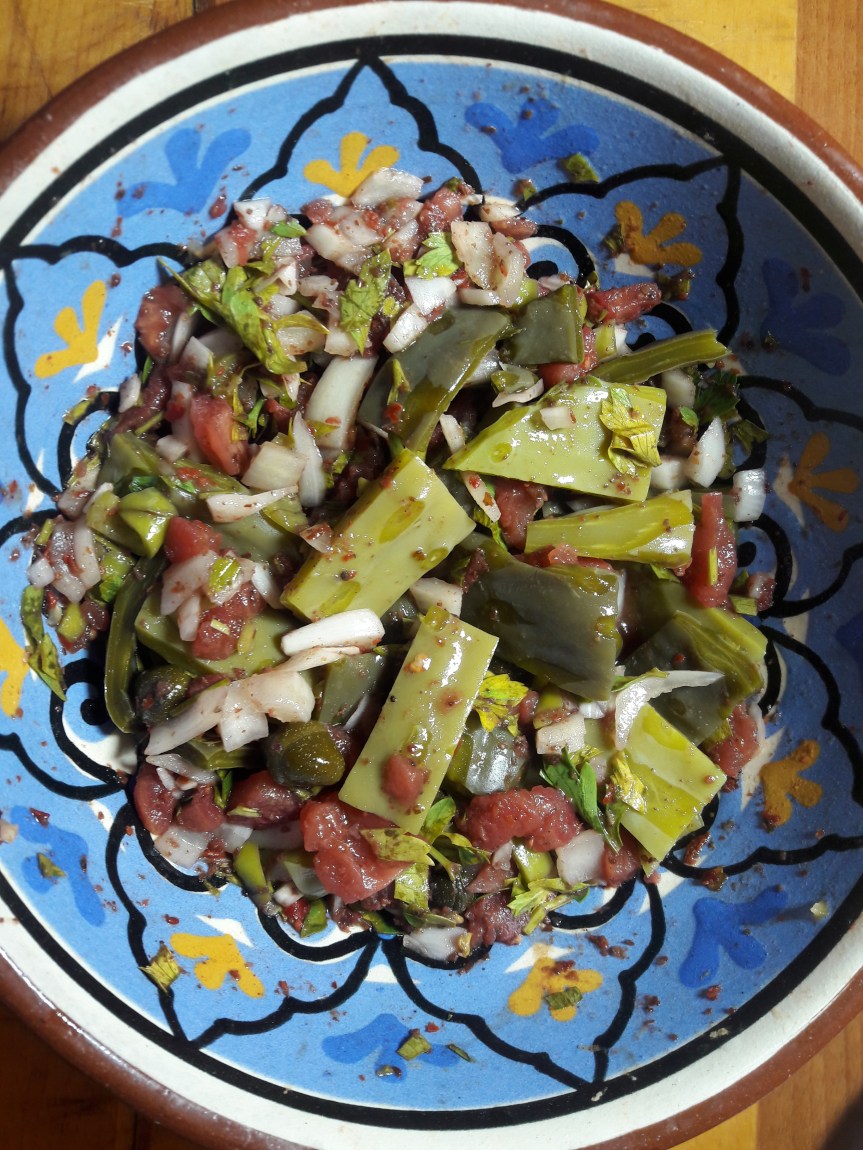
Kaktuslu acili ezme

Whilst the prickly pear cactus grows all over southern Turkey, only the fruit – the prickly pears, are usually eaten and sometimes used in cocktails! We’re about to change all that with the first of one of our irregular ventures into the world of Turk-Mex cuisine…

How to deal with a thorny problem…

This slideshow requires JavaScript.

We harvested a few cactus paddles from a secret location in Datça, Turkey. After harvesting, we put on our marigolds and removed the thorns with a sharp knife, sliced the pads up and then boiled them. Next we mixed then in with a spicy tomato sauce, aka acili ezme, to create this Crazy Cactus Salad.

Ingredients (serves 3-4)

Four prickly pear cactus paddles (roughly hand-sized)

For the sauce:

  • One medium-sized onion
  • Three medium-sized plum tomatoes
  • One medium-sized green pepper
  • One garlic clove
  • One teaspoon capers
  • One bunch of parsley
  • One teaspoon dried mint
  • Three teaspoons red chilli flakes
  • Two teaspoons sumac
  • One teaspoon flavoured vinegar (such as apple or fig)
  • Three teaspoons pomegranate sauce

Method

Remove all the thorns from the pads with a sharp knife. Slice into 1 cm strips and then cut into 2 cm pieces. Boil in salted water for 8-10 minutes until cooked but still crunchy – cook them too long and they can go a bit slimy. Drain and rinse in cold water and then mix with the acili ezme salad (instructions below).

For the sauce:

  • Peel the tomatoes and de-seed (to peel: plunge the tomatoes into boiling water for 30 seconds then place in cold water – the skin should now come off easily). Chop the tomatoes, green pepper, onion, garlic and parsley as finely as you can.
  • Put all the ingredients into a bowl, add the herbs and spices, vinegar and pomegranate sauce and mix well. Leave to chill in the fridge for at least two hours before serving.


The Turk-Mex Chronicles: Corny Courgette Fritters (aka Return of the Mücver Variations)

3 October 2019

This time round on Knidos Cookery Club we’re adding to the recipe bank of our Turk-Mex influenced cuisine. We’ve taken a Turkish favourite, mücver, a fritter made from grated courgettes, and added a Mexican staple, corn, to create our latest mücver variation.

20190927_224339

It’s believed that corn was first domesticated in southernMexico around 9-10,000 years ago. From there it slowly spread across the Americas before finding its way into Europe in the 16th century; brought back by the explorers who had landed in what became dubbed ‘The New World’.

These tasty fritters can be served like a burger in a bun, wrapped in a tortilla, stuffed into a pita bread or just plain with a jacket potato and some salad for a healthy snack that can be eaten at any time of the day.

Ingredients (makes around 8 large fritters)

  • Two courgettes
  • One corn cob
  • Three tablespoons wholemeal flour
  • 75 ml olive oil
  • Two teaspoons cumin
  • Two teaspoons red chilli flakes
  • Two teaspoons dried thyme
  • One teaspoon turmeric

Method

  • Bring a pan of water to boiling and then switch off the heat. Soak the corn cob in the boiled water for five minutes and then put in a pan of cold water. Remove the kernels by slicing downwards with a knife on the sides of the cob.
  • Grate the courgettes into a large bowl and mix with the flour, herbs and spices, reserving 25 ml of the olive oil for cooking. Add the corn kernels and mix well. Leave the mix to stand for a few hours in the fridge.
  • Heat the remaining olive oil in a frying pan. Take a golf ball sized scoop of the mix and put it into the pan and flatten it with a spatula. Cook over a medium heat for five minutes and then flip over and cook for another five minutes. Alternatively, you can bake the fritters in the oven for 30 minutes at 180c or grill on a barbecue.


Julienne Funchoza’s Noodle Extravaganza

18 July 2019

This time round on Knidos Cookery Club we’re looking at some ways to beat the heatwave with a noodle-based salad that can be whipped up with the minimum of fuss.

20190711_203617

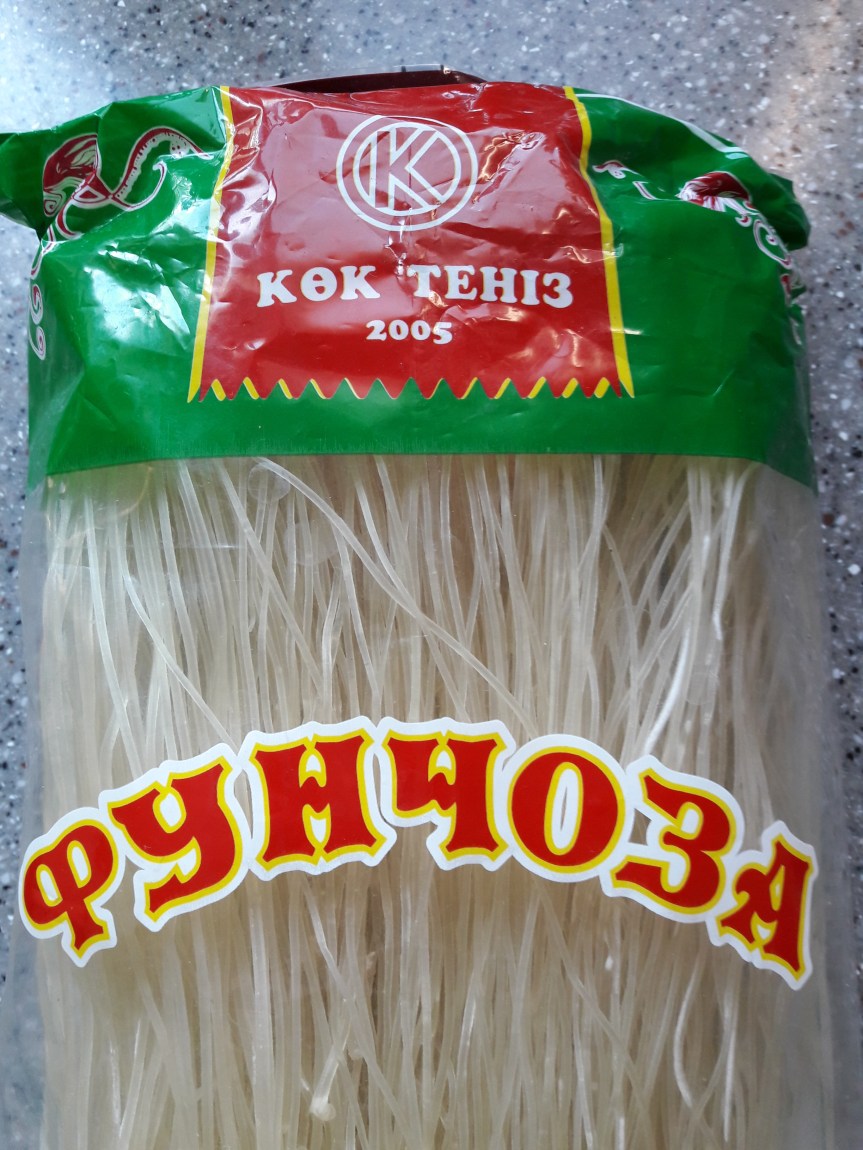
Funchoza is a popular salad across Central Asia that combines glass noodles, which can be produced from various forms of starch such as rice or mung bean, with julienned raw vegetables and a spicy dressing. The noodles just need to be cooked in boiling water for a few minutes so it’s a cinch to prepare on a hot summer’s day.

20190711_182826

These noodles are a staple of Uighur cuisine, but have been adopted by the Central Asia’s Korean community who have made funchoza famous to a wider audience across the former Soviet Union and beyond.

The Uighurs are Turkic-speaking  muslims living mainly in Xinjiang, an autonomous territory in northwest China, where they face increasing persecution by the Chinese authorities, under the pretext of a crackdown on terrorism.

To this end, thousands of Uighurs, Kazakhs, Kyrgyz and Chinese muslims have been interred in ‘re-education’ camps and, as the Guardian put it in a recent editorial, “Those who are nominally free in fact exist in a digital gulag of constant surveillance.”

Earlier this month, 22 states – including Britain, Canada, France, Germany, Australia and Japan – signed a letter to UN human rights officials in condemnation of China’s treatment of Uighur and other minorities there.

Ingredients (makes 3-4 servings)

  • 150 g dried glass noodles
  • 10 g dried seaweed
  • 2 small cucumbers
  • 2 radishes
  • 8 spring onions
  • 2 red peppers
  • 2 carrots
  • Coriander seeds

For the dressing:

  • 4 teaspoons tahini
  • 2 tablespoons apple vinegar
  • 2 tablespoons soy sauce
  • 2 tablespoons pomegranate sauce (Nar Eksisi)
  • 2 teaspoons chilli powder

Method

  • Bring a large pan of water to the boil and cook the noodles in the water according to the pack instructions. Remove and put in a pan of cold water until needed.
  • Soak the dried seaweed in cold water for 15 minutes, drain the water. While the seaweed is soaking,  cut the spring onions into 1 cm slices, remove the seeds for the cucumber and then julienne along with the other vegetables into long, thin slices (use a grater  or chop finely if you don’t have a julienne peeler). Chop the seaweed into 5 cm strips.
  • Remove the noodles from the cold water and cut into 10 cm strips and put in a large bowl. Add the julienned vegetables and mix all the ingredients together. Put all the dressing ingredients into a glass jar with a screw top and shake well, then pour over the salad and mix well. Grind some coriander seeds over the salad.
  • Serve cold – let the flavours mingle by keeping the salad in the fridge for a couple of hours.