Some Striking Salads for the (not so)Bleak Midwinter

29 December 2023

As 2023 draws to a close, let’s take a look at some striking winter salads to liven up the end-of-year table. To complement our perennial favourite, our Olivier (with an Edge) salad, we’re looking to a coleslaw variation to add some colour to the New Year’s Eve spread. With the new year just around the corner, KCC wishes all its readers a prosperous and peaceful 2024, full with culinary adventures and many more mouth-watering meals!

KCC’s take on Olivier salad uses olives instead of meat

This winter has been a strange one here in Kazakhstan. We should be in the depths of winter now, but the snow didn’t arrive until the first week of December. Then there was a week or so of freezing weather with the temperature dipping to -28c, but now, as we approach the end of December, there’s very little snow on the ground in Almaty – it’s even been raining, which is really unusual at this time of the year.

KCC’s coleslaw variation with pear and rocket

The purple hues of red cabbage pair so well with the orange of carrots and the green of rocket. For a bit of bite, we’ve added some grated radish (we used green radishes, but you can use red radishes or mouli if you can’t find green ones), along with some grated pear and pomegranate seeds for a sweet and tart note. Add in some pumpkin and sunflower seeds and raisins before dressing with tahini and pomegranate sauce.

Ingredients (serves  3-4)

  • 100 g shredded red cabbage
  • 100 g grated carrot 
  • 50 g chopped rocket
  • 50 g grated green radish
  • 50 g grated pear
  • 25 g pomegranate seeds
  • 25 g raisins
  • 1 teaspoon dried oregano
  • 2 teaspoons pumpkin seeds
  • 2 teaspoons sunflower seeds 
  • 1 tablespoon tahini
  • 1 tablespoon pomegranate sauce
  • a slice of fresh lime

Method

  • In a large bowl mix the red cabbage, carrot, rocket, green radish, pear and pomegranate seeds together. Add the raisins, oregano, pumpkin seeds and sunflower seeds. Make a dressing with equal parts pf tahini and pomegranate sauce and thin with a bit of hot water to obtain a smooth consistency. Pour over the salad, stir well, give it a squeeze of lime and serve.

Spicy Spinach and Pumpkin Fritters

30 November 2023

With Halloween and Thanksgiving, the two times in the year when pumpkins take centre stage, now behind us, we’ve got a simple idea to use up any leftover pumpkin you may have with this quick and easy spinach and pumpkin fritter recipe.

Spicy Spinach and Pumpkin Fritters

These fritters are totally vegan – there’s no need to add an egg to bind them together as chickpea flour and rolled oats do a great job of soaking up any extra moisture from the spinach and pumpkin and help the fritters hold their shape. They can be shallow fried on both sides in a little oil or baked in the oven for 30 minutes at 180 c. These spicy fritters taste good served with a side salad and chips or in a burger bun or pita with your choice of toppings.

Ingredients (Makes 6-8 fritters)

  • 175 g grated pumpkin
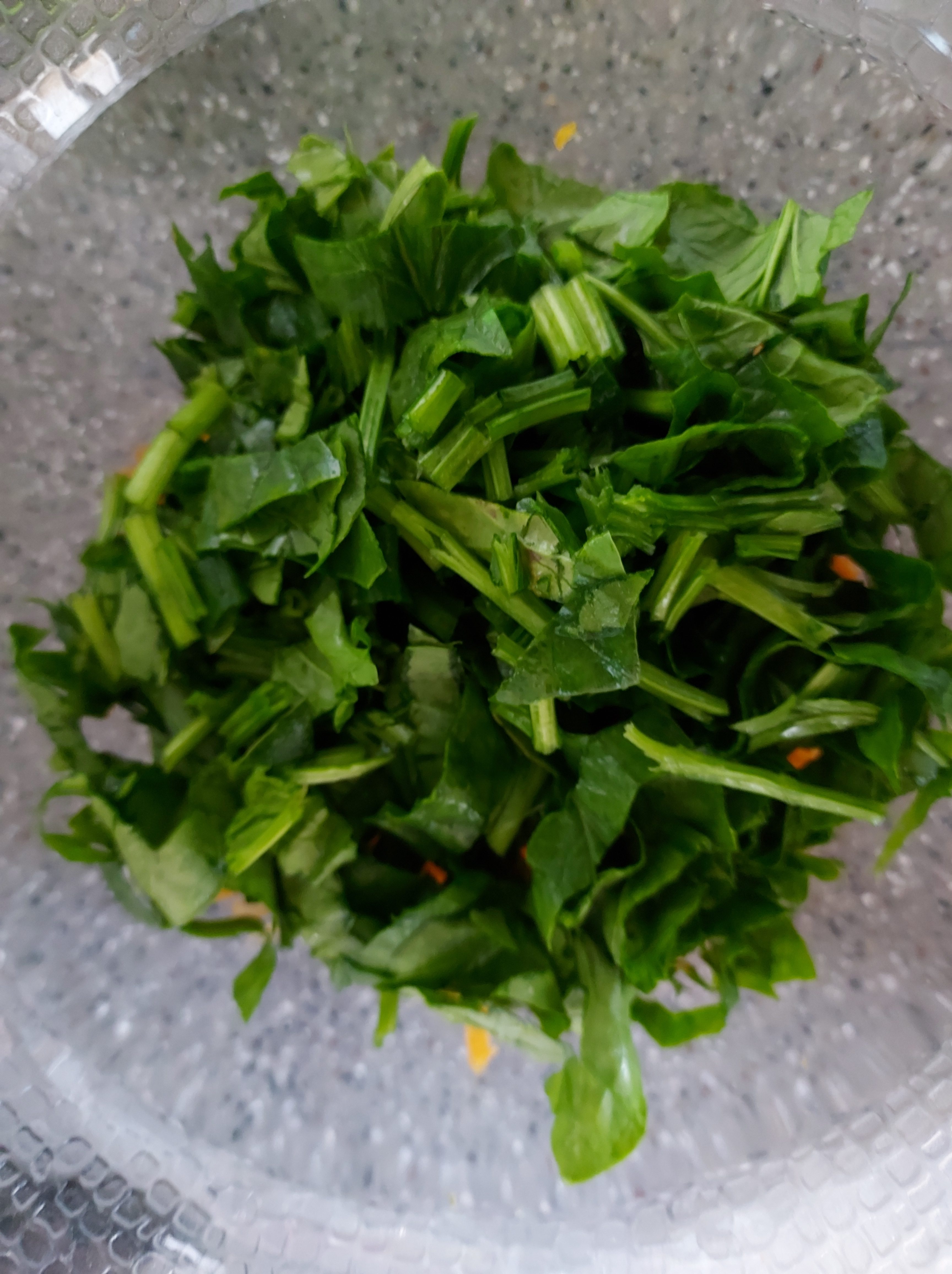
  • 50 g chopped spinach
  • 50 g chickpea flour
  • 25 g rolled oats
  • One teaspoon each of cumin seeds, coriander seeds, oregano, sumac and turmeric.
  • Half a teaspoon cinnamon
  • 25 ml oil for frying

Method

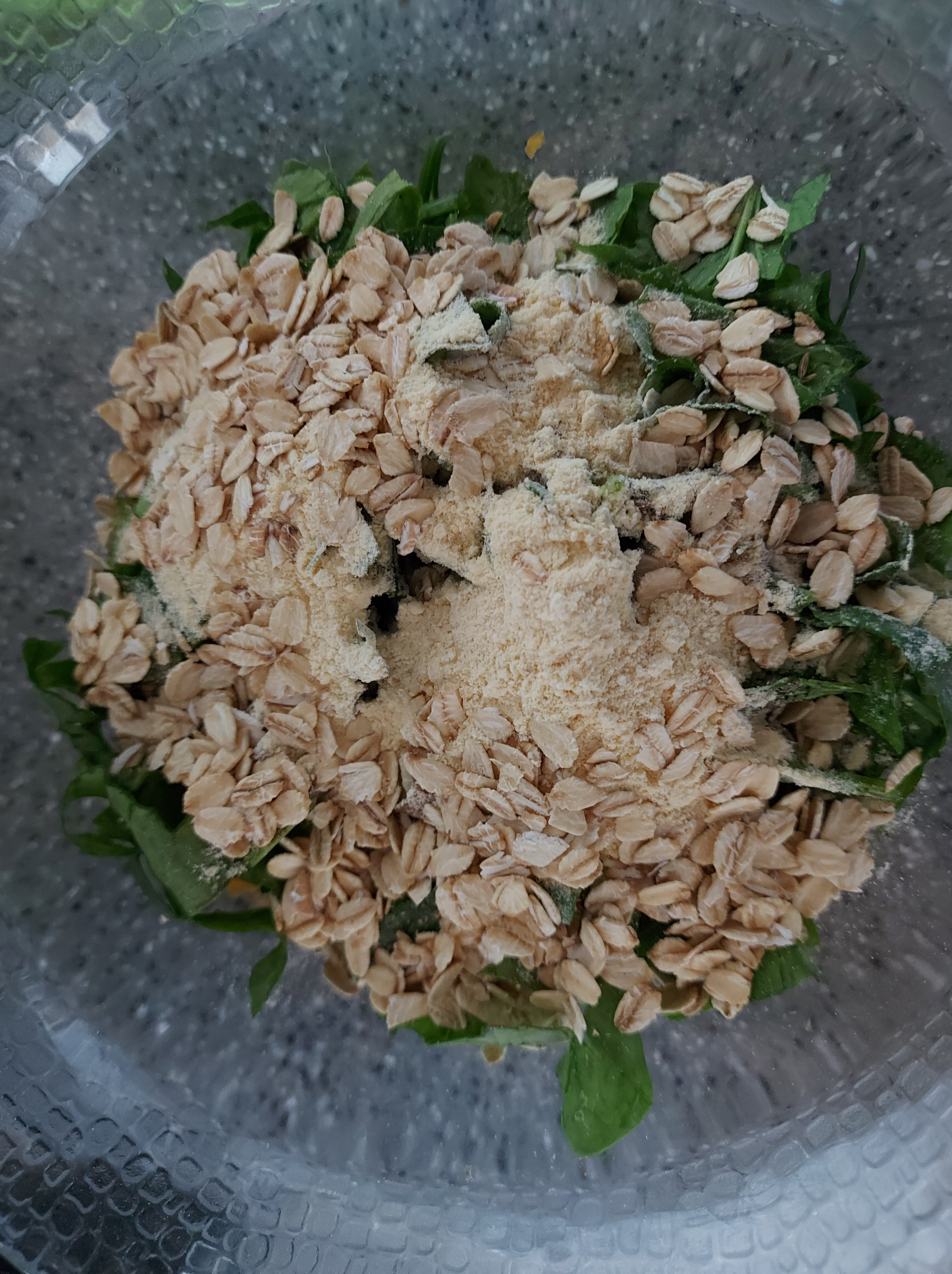
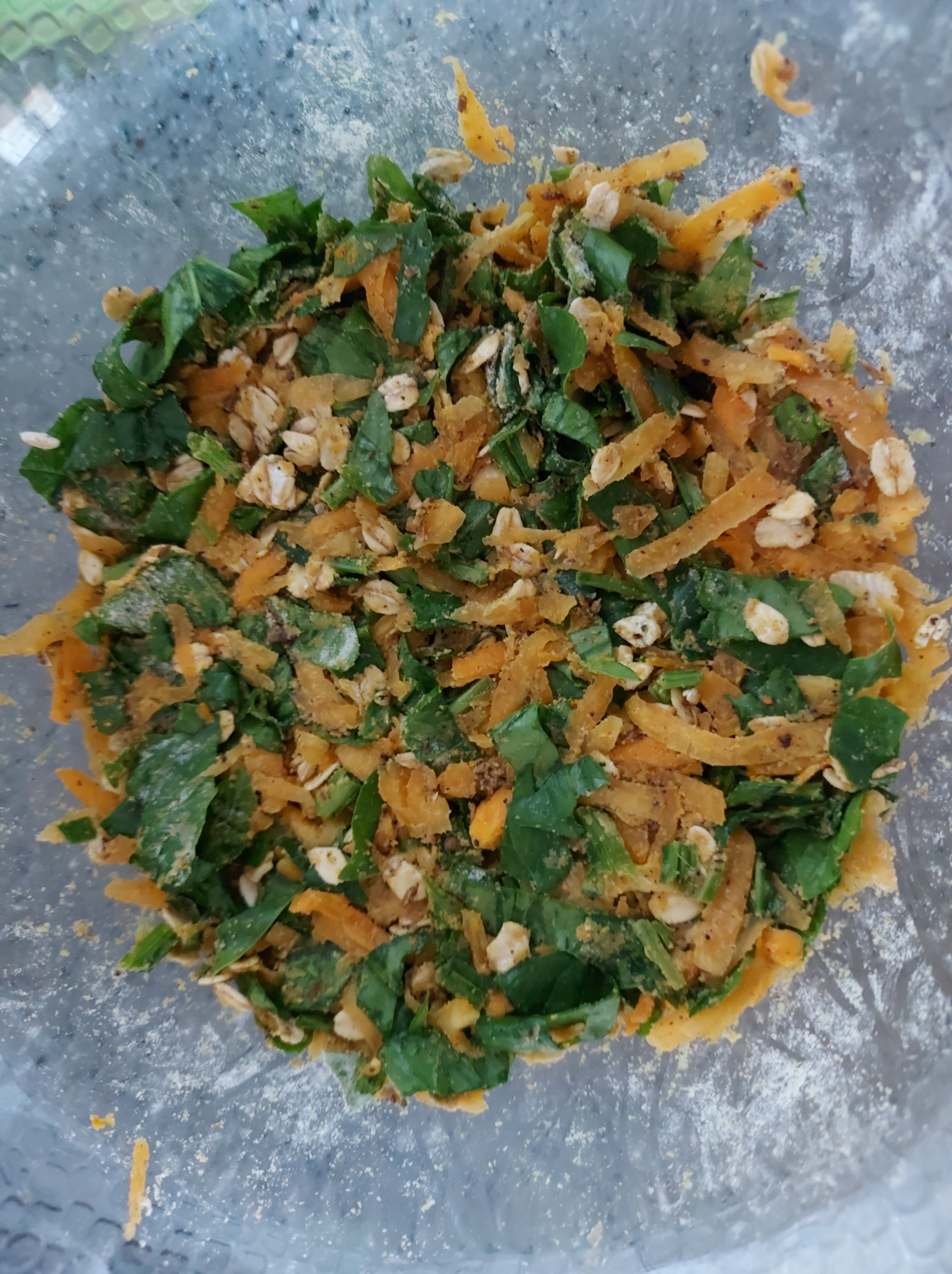
  • Grate the pumpkin into a large bowl, add the chopped spinach and herbs and spices and combine all the ingredients. Now add the rolled oats and chickpea flour and mix well. Leave the mixture to rest for two hours in the fridge, so that any excess moisture is absorbed.
  • Form the mixture into small balls (about the size of a golf ball) in your hands. Heat the oil in a frying pan then turn the heat down low and add as many of the balls as will fit in the pan. Flatten them with a fish slice and after a few minutes turn them over. Cook until golden brown on both sides and then serve straight away.

The HummusVariations: Beetroot and Walnut Hummus

02 November 2023

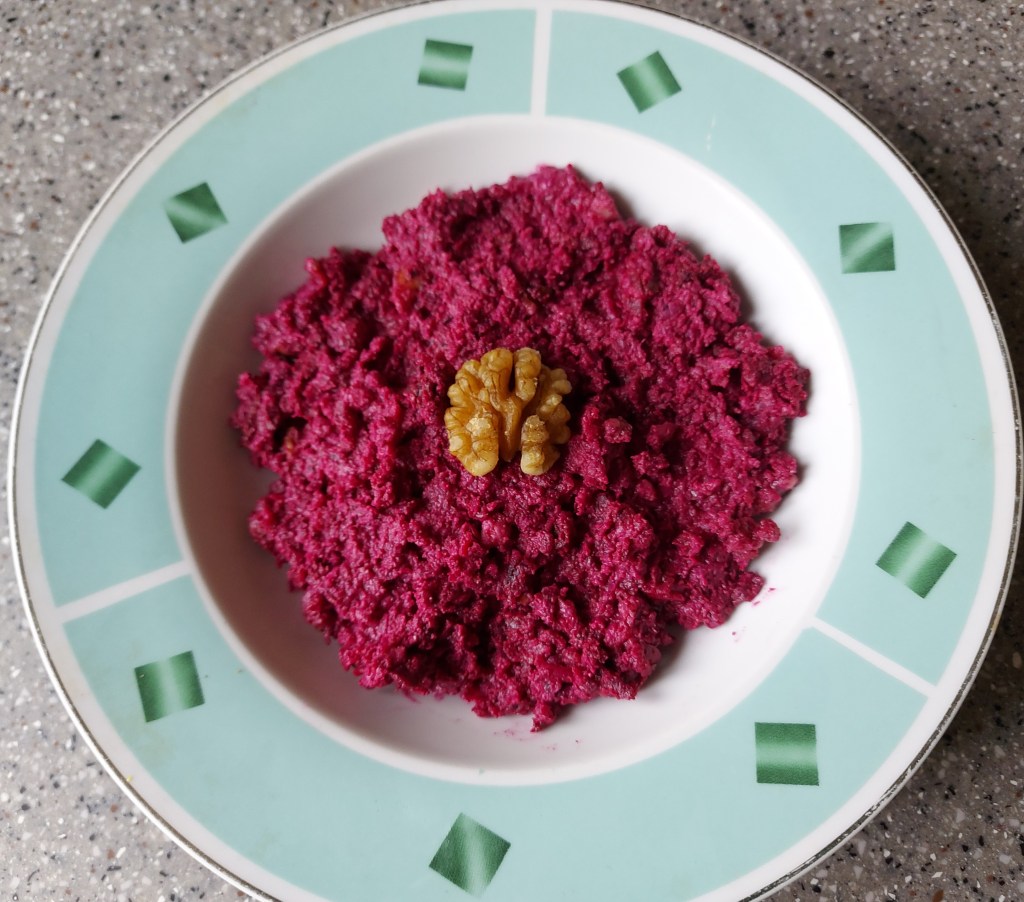
Hummus is one of those dips that we come back to time after time here on KCC. Beyond the classic basic dip of chickpeas, tahini, garlic, lemon juice and olive oil, the possibilities are endless. Our latest version is inspired by a recent trip to Myrtos, Crete where we tasted a beetroot-driven hummus at the excellent O Platanos restaurant.

In the past, we’ve made a turmeric-infused hummus and one from red beans, now here’s our latest variation. Beetroot is one of our favourite root vegetables, and it’s really good for you to boot. Taking some tips from Georgia, where a similar dip called pkhali is a regular feature on the dinner table, we’ve added some walnuts to give this hummus an extra protein boost.

Ingredients

  • 125 g baked beetroot – grated
  • 125 g crushed chickpeas
  • 50 g tahini – mixed with up to 50 ml of hot water
  • 25 g toasted walnuts
  • One garlic clove
  • 100 ml aquafaba (chickpea water)
  • a few dashes of olive oil
  • Two teaspoons of sumac 
  • pinches of ground cumin and coriander

Method

  • Grate the beetroot and then put in a large bowl and crush with a fork (you can also put it in the blender, if you have one). Add the mashed up chickpeas and stir well. Combine  the tahini with hot water until you have a creamy paste and then add to the mix.
  • Add the crushed, toasted walnuts, finely chopped garlic and sumac (this replaces lemon juice to give the hummus a citrusy kick without the acid) and stir together. Add some aquafaba and some splashes of olive oil and blend until the dip achieves your favoured consistency. Season with cumin and coriander and serve with warm pita bread. 

Scrappy, Hempy Courgette Hash

10 Aug 2023

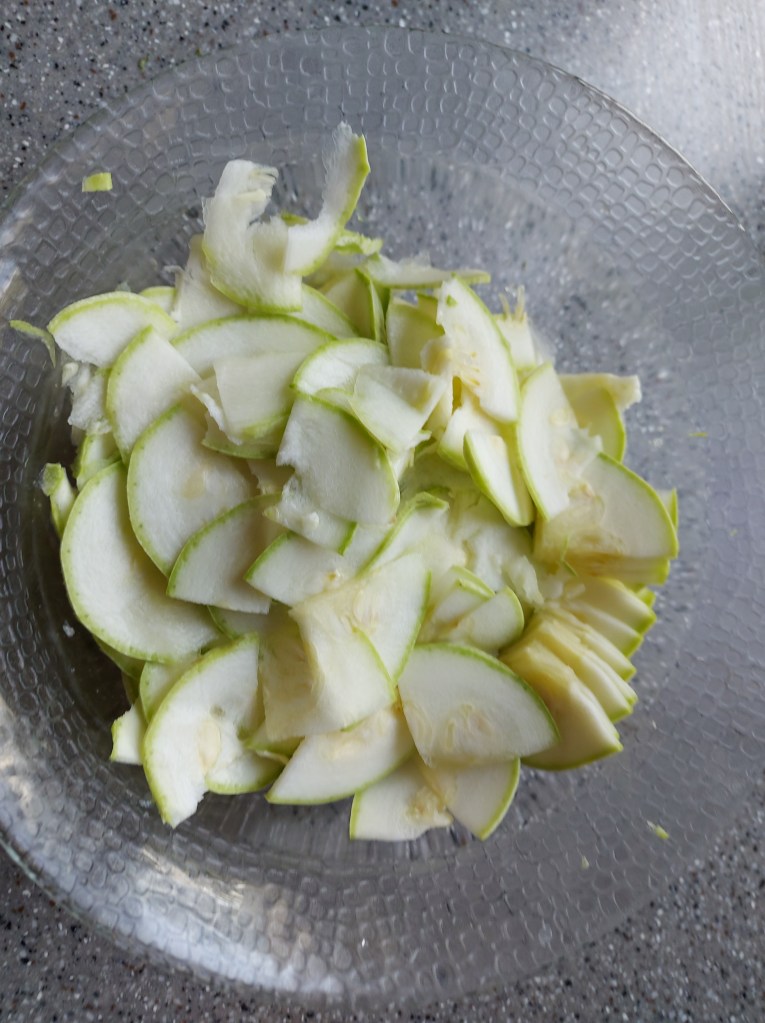
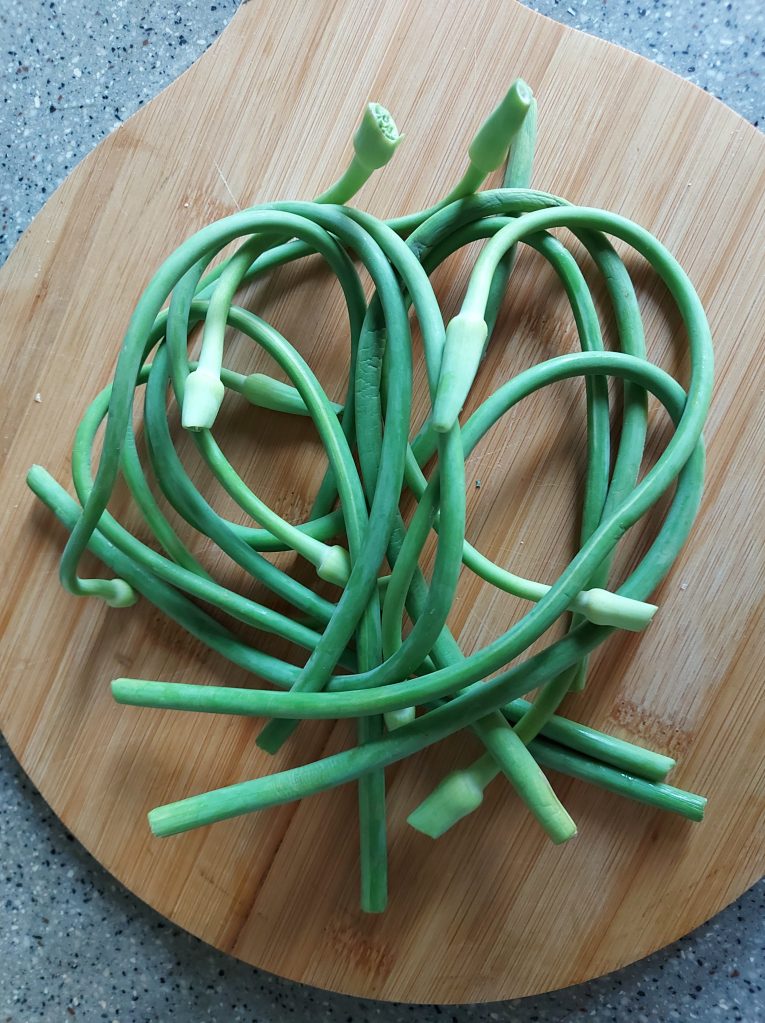
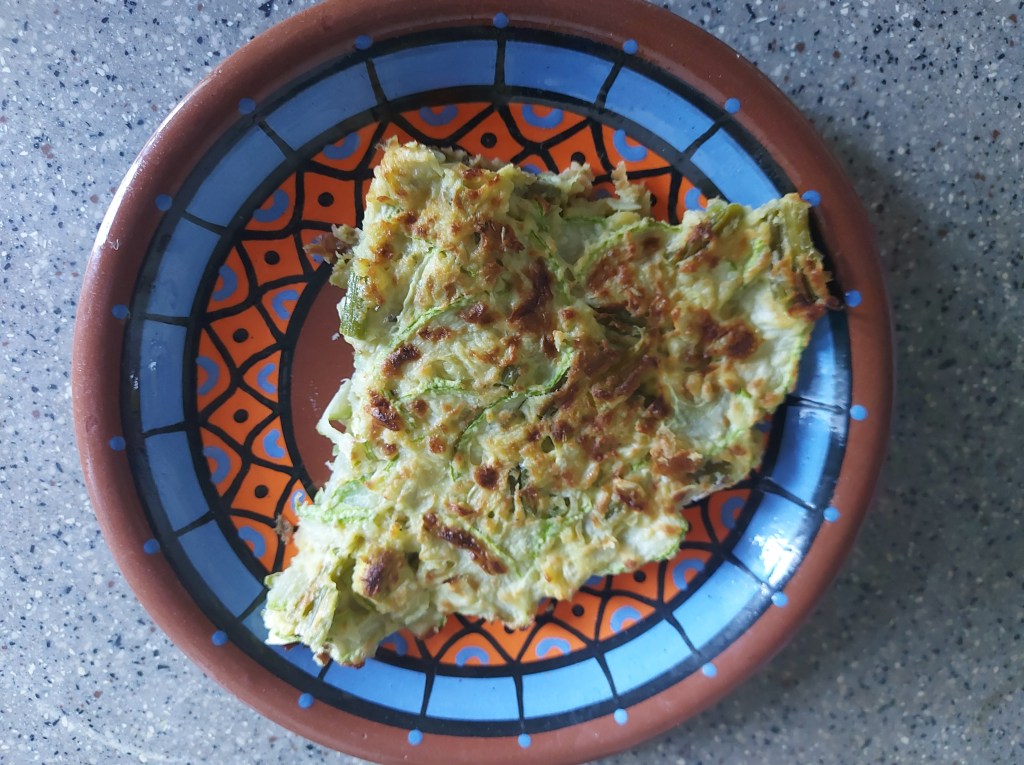
It’s that time of year again when you’ve got more courgettes than you know what to do with so here at KKC we’re looking at scarpaccia from Italy’s Tuscany region. Our take on this crispy tart uses chickpea flour, thinly sliced courgettes, garlic scapes, rosemary, parsley and the mystery ingredient, hemp seed oil.

Try a slice of KCC’s scrappy, hempy courgette hash!

A friend in Uzbekistan recently gave KCC a bottle of locally-produced, premium quality, first pressing hemp seed oil from a company called Leodar. Hemp seed oil adds an earthy, nutty flavour to dishes and salad dressings.

Hemp, the non-psychoactive cousin of marijuana, grows wild in many parts of Central Asia. It’s ideally suited to the arid conditions found here – a much better choice than thirsty cotton. Besides oil, this versatile plant can be used for textiles, paper and bio fuel amongst others.

The return of the scapes!

Regular readers may well remember garlic scapes, the edible stem that grows from the garlic bulb, from a previous recipe – a variation on the mücver theme. This flavoursome peduncle gives a mild garlicky kick to pies and tarts, soups and salads, pesto and stir fries.

Ingredients (serves 4)

  • 500 g courgette – thinly sliced with a potato peeler or similar
  • 50 g garlic scapes – cut into 1 – 2 cm slices
  • 2 teaspoons rosemary
  • 5 g fresh parsley
  • 50 g chickpea flour
  • 25 ml hemp seed oil (or any flavoursome oil you have to hand)
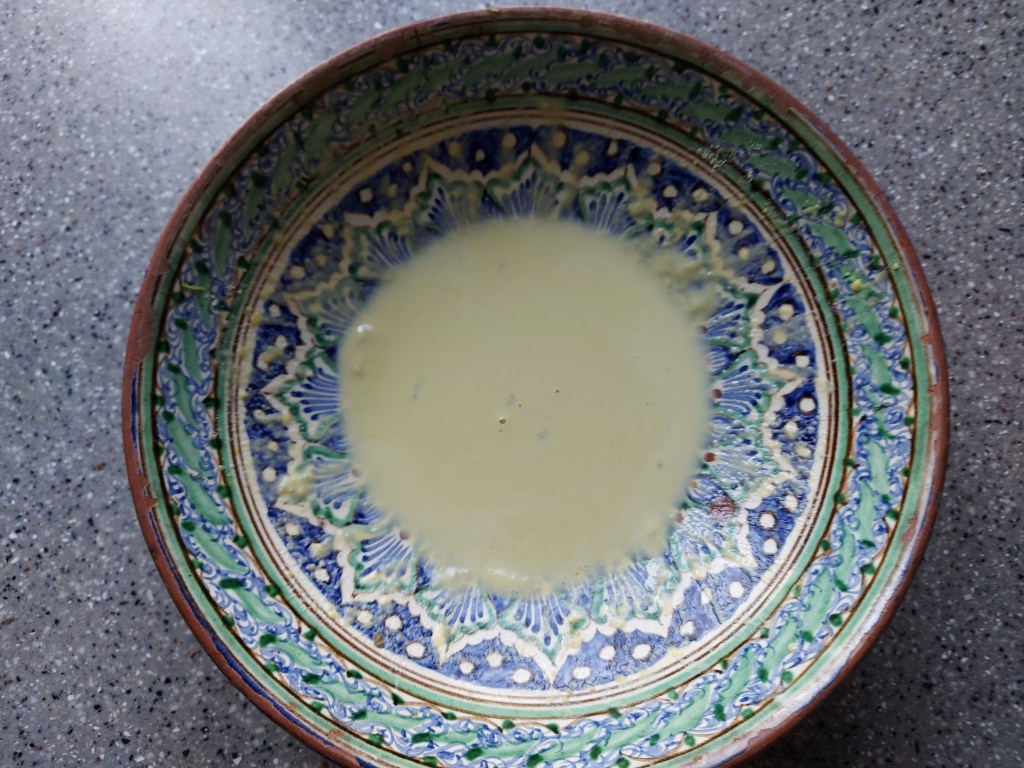
  • 75 ml water, including any liquid left over from straining the sliced courgettes

Method

Roasted Red meets Baby Romaine

9 March 2023

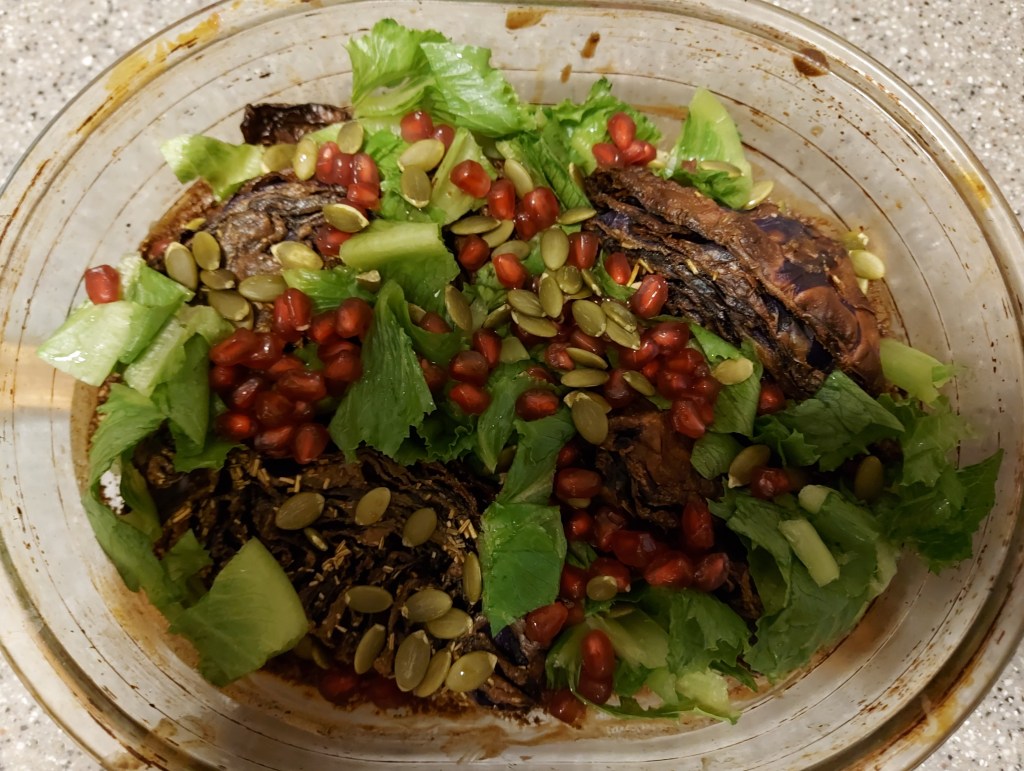
A recent visit to Barcelona serves as the inspiration for this roasted red cabbage dish that KCC tried as part of the veggie restaurant Sésamo‘s 30 euro tasting menu. The great value menu includes seven tapas plates (that can be served as vegan or veggie), a dessert and a glass of local wine.

Sésamo’s baked cabbage was cooked with pesto, mint and dukkah – from the ingredients we had at hand we decided to cook ours with tahini, soy sauce and a sprinkling of sesame seeds. It can be served on its own as a main dish or as a salad – we added some shredded baby romaine lettuce and some pomegranate and pumpkin seeds to add some more colour to the dish.

If you’re in Barcelona, then we fully recommend you head for Sésamo which is located near Sant Antoni market. Unlike in most other tapas joints, you can be sure of a meat-free experience at this little gem of a restaurant. It’s closed on Tuesdays and Wednesdays but otherwise works from 19.00 to midnight. If you’re not planning on being in Catalonia, then follow the recipe below to recreate a taste of one of Sésamo’s signature dishes.

Ingredients (serves 4)

  • Half a red cabbage
  • 50 g baby romaine lettuce
  • 25 ml olive oil
  • 50 ml tahini
  • 10 ml soy sauce
  • One teaspoon sesame seeds
  • One tablespoon pumpkin seeds
  • One tablespoon pomegranate seeds

Method

  • Remove the tough outer leaves from the cabbage. Cut off the top half of the cabbage (not the stalk end) and then cut this into four slices. Mix the olive oil, tahini, rosemary and soy sauce together in a glass or ceramic baking dish with a fork. Coat the cabbage slices in the dressing. Bake for 30 minutes at 180 c.
  • Sprinkle with sesame seeds and serve hot immediately or let the cabbage cool down and then mix it with the baby romaine lettuce, add the pumpkin and pomegranate seeds and serve as a salad.


Meet the Hasselback Potato

21 December 2022

Winter Solstice is upon us once again so it’s time to kick off the holiday season. If you’re looking for something a bit different for your festive feast this year, then look no further than the Hasselback potato, an attractive dish that tastes like a jacket potato crossed with a roast potato.

This method of preparation involves cutting the potato into thin slices that fan out while baking. It can be used for other vegetables like beetroot, carrot and butternut squash, as well as a sweet version using fruits like apple and quince.

Hasselback potato with a pasty and salad

Hasselback potatoes originated in Sweden with the dish featuring in a 1929 recipe book “The Princesses’ Cookbook” by Jenny Åkerström. In 1953. Lief Elisson, a rookie chef at Stockholm’s Hasselbacken restaurant, revived this method for preparing the humble spud.

Preparing the Hasselback

To prepare the fruit or vegetables of your choice, place chopsticks or wooden spoon handles on either side and cut into thin slices until the blade hits the wood.

Ingredients

  • Four medium potatoes
  • 25 ml olive oil
  • One teaspoon rosemary or thyme (fresh if available or dried)
  • One teaspoon cumin seeds

Method

  • Put two chopsticks or the handles of two wooden spoons on either side of the potato. Cut into 1-2 mm slices, cutting until the blade hits the wood.
  • Put the potatoes in an ovenproof dish with the cut side facing up. Drizzle liberally with olive oil and sprinkle cumin seeds and thyme (or rosemary) over them.
  • Bake in a pre-heated oven at 180 c for one hour. Serve on their own or as part of a main course with a pasty or nut roast along with your choice of side vegetables or a salad.

Mooli Mattar Mücver

10 February 2023

This time round on KCC we’re taking a look at mooli, or daikon as some of you might know it. This large, white member of the radish family is common in Japanese, Korean and Chinese cuisine and is also widely used in the Indian sub-continent. It’s a versatile, vitamin-packed vegetable that can be eaten raw or cooked in a variety of dishes. It has a milder flavour than its smaller red cousins but adds an interesting, mildly spicy crunch to salads and stir fries.

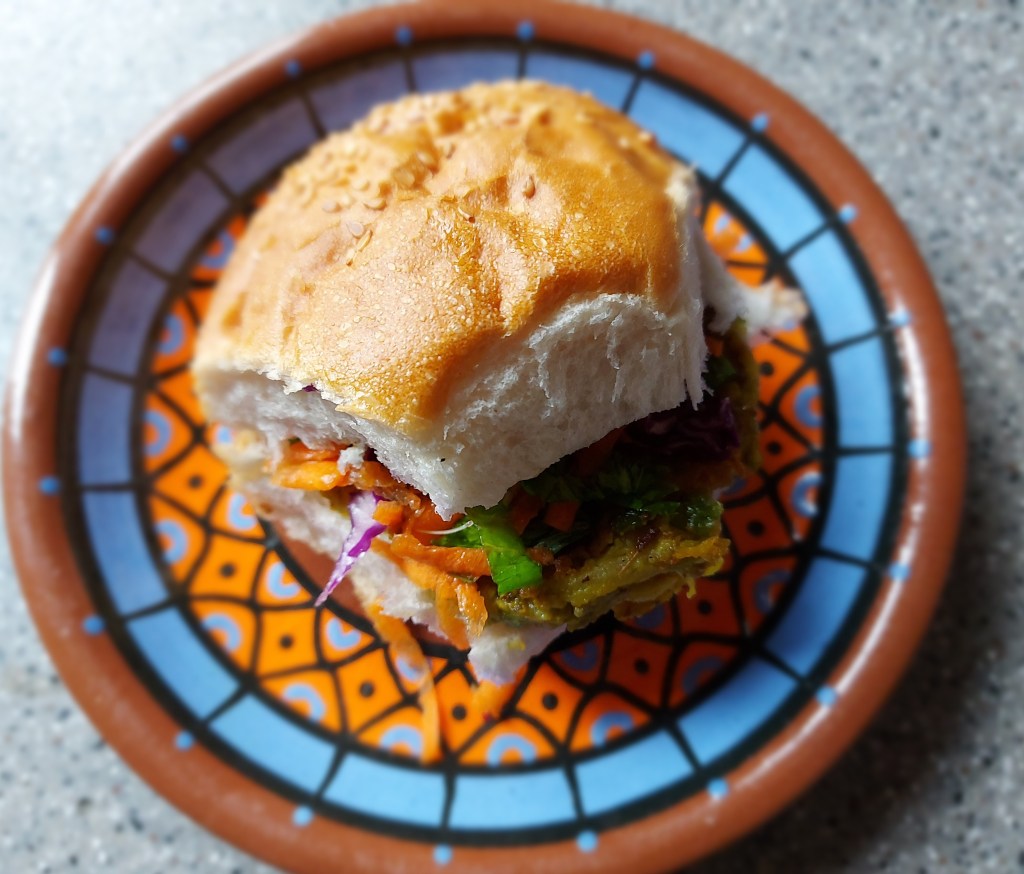
Mooli mattar mücver served in a bap with salad

Mücver fritters are a perennial KCC favourite so we decided to make some with grated mooli, mattar (green peas), celery and some chickpea flour to glue it all together for our latest mücver variation. This version is great served in a burger bun or baguette with some fresh coleslaw, shredded salad greens and a dash of soy sauce.


Meet the mooli aka daikon or winter radish

The mooli can be quite wet when grated so give it a good squeeze to remove the excess liquid. The chickpea flour will help bind the fritters together and soak up any remaining moisture so that they hold their shape better when frying.

Ingredients (makes four 125 g fritters)

  • 200 g grated mooli
  • 200 g green peas (fresh, tinned or frozen)
  • 1 celery stick 
  • 50 g chickpea or pea flour
  • One teaspoon cumin seeds
  • One teaspoon turmeric
  • Two teaspoons paprika
  • Oil for frying

Method

  • Peel and grate the mooli into thin strips. Squeeze the moisture from the grated mooli. Chop the celery stalk and leaves finely and  put into a bowl with the grated mooli. Add the peas and the spices and mix well. Now add the chickpea flour and blend everything together. The mix should be sticky but not wet – if it’s too moist, then add a bit more flour until you get a sticky consistency. 
  • Heat the oil in a frying pan. Form the mix into four golf ball-sized pieces. Place in the pan and flatten with a fish slice. Turn the fritters over after frying for two to three minutes. Cook for another two to three minutes until both sides are a golden brown colour. Serve in a burger bun or in a baguette. Top with grated carrot and red cabbage and shredded lettuce or rocket, add a splash of soy sauce and enjoy!

KCC’s Courgette, Coconut and Mung Bean Mash Up

10 November 2022

As the first snow falls here in Almaty, it’s time for some heartier fare. This recipe started out life as courgette soup, but the sudden drop in temperature called for something with a bit more oomph so we added some mung beans and dried coconut to give it a more stew-like consistency. To add a bit of colour, we sprinkled some pomegranate seeds on top and gave it a drizzle of pomegranate sauce before serving.

KCC’s Courgette, Coconut and Mung Bean Mash Up

The delicate, thin courgettes of the summer are giving way to the robust, denser marrows of autumn – perfect for making into a soup. Mung beans are a versatile store cupboard basic – they can be added to stews or grown into bean sprouts for stir fries and salads – check out more recipe ideas here. They’re a staple in home-cooked meals in Uzbekistan, where they’re known as mash, hence the “mash up” in the name of this dish.

Winter is coming to Almaty…

Ingredients (makes four servings)

  • 1 kilo courgette
  • One celery stick
  • One medium onion
  • Bunch of radish leaves
  • 200 g dried mung beans (soaked overnight)
  • 50 g desiccated coconut
  • 50 ml olive oil
  • Two teaspoons dried thyme
  • Two teaspoons cumin seeds
  • 1.5 litres vegetable stock
  • Pomegranate seeds and Pomegranate sauce to garnish

Method

  • Heat the olive oil in a heavy-based pan and fry the cumin seeds until starting to crackle and then add the diced onion and cook for five minutes over a medium heat. Next add the diced celery, lower the heat and and cook for another five minutes, stirring occasionally. Cut the courgette into four pieces lengthwise and then slice into 1 cm thick chunks. Add to the pan along with the thyme and stir fry for ten minutes. Add one litre of vegetable stock and the chopped radish leaves and simmer over a low heat for twenty minutes.
  • While the soup is simmering, cook the mung beans in a separate pan with 500 ml vegetable stock and the coconut. Cook for twenty – thirty minutes or so until the beans are softening or until all the liquid is absorbed. 
  • Remove around 25% of the courgette mix and blend the rest to a smooth consistency with a stick blender. Add these blended courgettes to the cooked mung beans and stir well. Bring to a boil and then add the reserved courgette mix. Pour into soup bowls,  garnish with a few pomegranate seeds and a drizzle of pomegranate sauce and serve immediately.

Pumpkin-topped Beany Bake a.k.a. Halloweenish Shepherd’s Pie

28 October 2022

Here in the northern hemisphere we’re moving into the “darker half” of the year with the nights growing longer and the mercury dropping rapidly. Halloween is just around the corner so it’s that pumpkin time once again. Here at KCC we’re always looking cut down food waste so this year we’ve got another idea of how to use up your excess squash – a vegan variant on Shepherd’s pie.

Pumpkin-topped Beany Bake a.k.a. Halloweenish Shepherd’s Pie

Halloween has its origins in the Celtic pagan festival of Samhain that marked the end of the harvest period and the onset on the dark months of winter. It was an excuse for a wild party with feasting and drinking at a time when the boundary between our world and the spiritual world was held to be at its thinnest. 

Halloween, which is the evening before All Saints’ Day, 1 November, in the Christian calendar, is still the time when many remember the souls of the dead. Many Halloween traditions in North America were influenced by Irish and Scottish immigrants, harking back to the festival’s pagan roots.

The pumpkin, the round, oversized orange vegetable, native to the New World, has become a symbol of the festival. This has led to millions of pumpkins going to waste so here’s a reminder of some more of our pumpkin recipes to try and reduce the scale of this problem.

Ingredients (serves four)

  • 500 g pumpkin
  • One medium onion
  • One stick of celery
  • One medium carrot
  • One medium green pepper
  • One medium courgette
  • Two medium tomatoes
  • One tablespoon tomato paste (or Turkish hot pepper paste if you can find it)
  • 300 g cooked beans (cannellini or kidney beans 0r a mix of the two)
  • 75 g red lentils
  • 200 ml  vegetable stock
  • 50 ml olive oil
  • One teaspoon chilli flakes
  • One teaspoon turmeric 

Method

  • Clean the pumpkin by removing the hard outer skin and the seeds (if there are any) and then chop into small cubes, put into a baking dish and drizzle with olive oil and mix well. Roast in a pre-heated oven at 180 c for 30 minutes, stirring occasionally.
  • While the pumpkin is roasting, heat the oil in a heavy-based pan and then cook the finely chopped onion over a medium heat for five minutes.  Add the diced celery, green pepper and carrots and cook for another five minutes.
  • Mix in the cooked beans, vegetable stock and tomato paste, chilli flakes and turmeric and stir well. When it boils, add the lentils, stir and then cook for 20 minutes or so until all the liquid is absorbed. While this is cooking, top and tail the courgettes and cut into 1cm thick rounds. Thinly slice the tomato.
  • Remove the pumpkin and mash with a fork or a potato masher. Put the bean mixture into the bottom of the baking dish and cover with courgette rounds. Cover the courgette with tomato slices and then pack the mashed pumpkin on top of the tomatoes. Decorate with pumpkin seeds and bake at 180 c for 30 minutes or until the top of the pie begins to char.


Apricot and Lentil Courgette Roundels

13 October 2022

It’s that in-between time of year as the nights grow longer and thoughts turn towards more substantial meals after a long summer of salads and lighter fare. The last of the seasonal vegetables such as tomatoes and courgettes are perfect for stuffing and baking in the oven, making a bridge between summery salads and the heartier soups and stews of winter that are coming up.

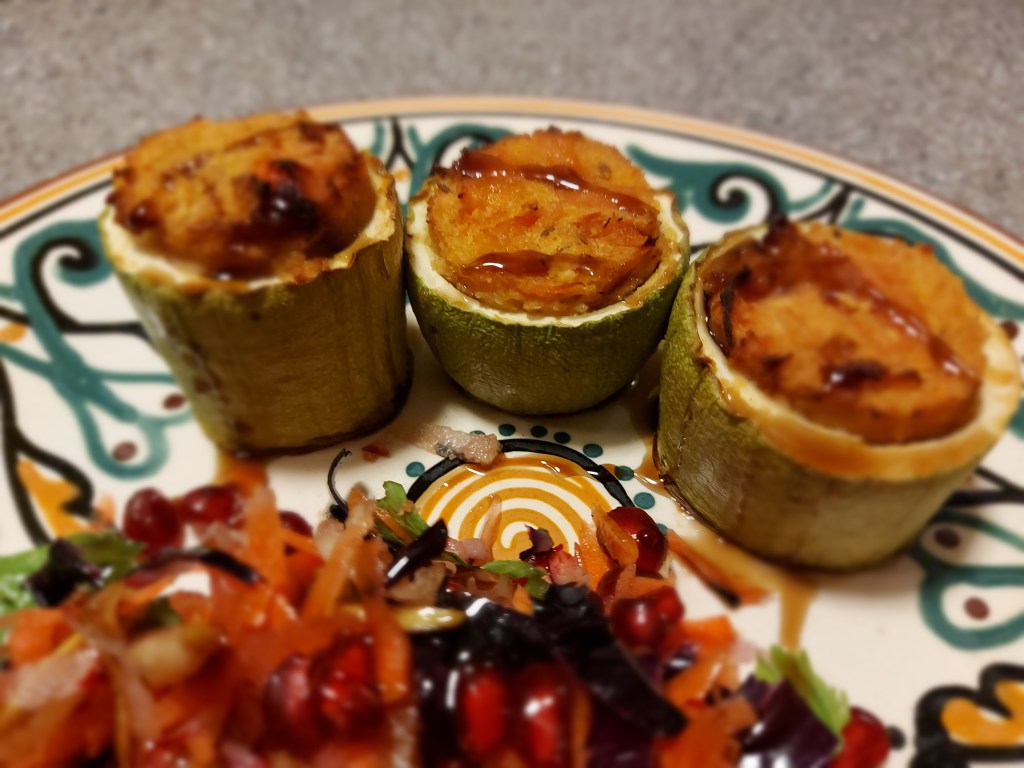
Apricot and lentil courgette roundels drizzled with pomegranate sauce and served with a seasonal salad

We stuffed some courgettes with a mixture of red lentils, apricots, tomato, onion, bulgur wheat and lemon juice to make a versatile roundel that can be served as part of a main course or eaten on its own as a meze, a fully vegan alternative to the sausage roll!

Apricot and lentil courgette roundel – a vegan alternative to the sausage roll?

The autumn fruit is at its best at the moment, and we’ve added some pear and pomegranate to an autumnal red cabbage, carrot, celery and radish salad to accompany these apricot and lentil courgette roundels to make a great lunch or supper. By adding a jacket potato, you can make it into a more filling main course.

Ingredients (makes enough mixture for 10-12 roundels)

  • Three medium sized courgettes
  • 100 g red lentils
  • 50 g dried apricots (or four fresh apricots if available)
  • One small red onion (approx 75 g)
  • One medium tomato (approx 100 g)
  • 50 g fine bulgur wheat
  • 25 ml olive oil
  • 200 ml vegetable stock
  • Juice of half a lemon
  • One teaspoon cumin seeds
  • One teaspoon red chilli flakes
  • Black pepper to taste

Method

  • Cut the dried apricots into eight pieces and soak in hot water for at least 30 minutes. While the apricots are soaking, heat the oil in a heavy based pan and add the cumin seeds. When they start to sizzle, add the finely chopped onion and fry over a medium heat until they start to soften. Grate the tomato into the fried onion and cook over a low heat for five minutes or so, stirring occasionally.
  • Now add the washed lentils, pour in the stock and stir. Cook over a low heat for 15-20 minutes until most of the water has been absorbed. Add the fine bulgur wheat, mix it in well and leave covered for 15 minutes. Drain the apricots and stir them into the mixture. Add the lemon juice, chilli flakes and black pepper to taste and mix well.
  • While the lentils are cooking, start to prepare the courgettes by slicing off the ends to make them flat. Cut into 3 cm slices. Gouge out the seeds with a small spoon, leaving a little bit of flesh at the bottom of the roundel.
  • Pre-heat the oven to 180 c. When the lentil mix is cool, pack it into the courgette roundels and stand them on a baking tray with the filling topmost. Bake at 180 c for 30 minutes or so – the courgette should still be firm and not too squidgy and the lentil mix should rise slightly and be beginning to brown on top. 
  • Serve alongside a salad of red cabbage, carrot, celery, radish, pear and pomegranate and a jacket potato, drizzling pomegranate sauce over the roundels or allow to cool and serve the roundels as a snack on their own.