With autumn upon us once again, it’s time for pumpkin to make a return to the table. This versatile memeber of the squash family makes for perfect comfort food for the longer, chillier nights. KCC’s back catalogue features a number of pumpkin dishes – try this cousin of lasagne made with chickpeas and mixed greens and this roasted pumpkin with halloumi for starters.
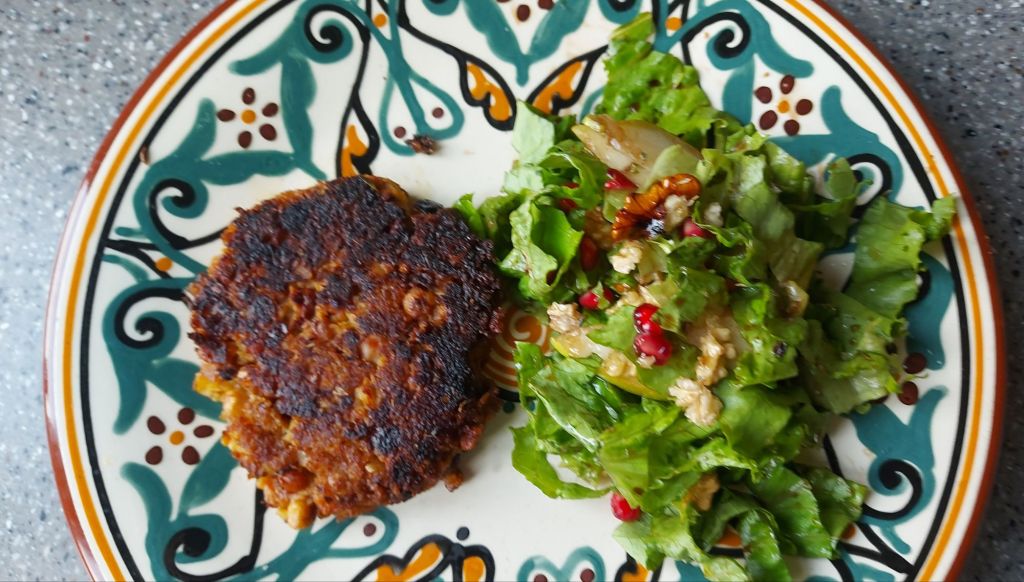
A nutty chickpea and pumpkin fritter served with a lettuce, pear, pomegranate and walnut salad
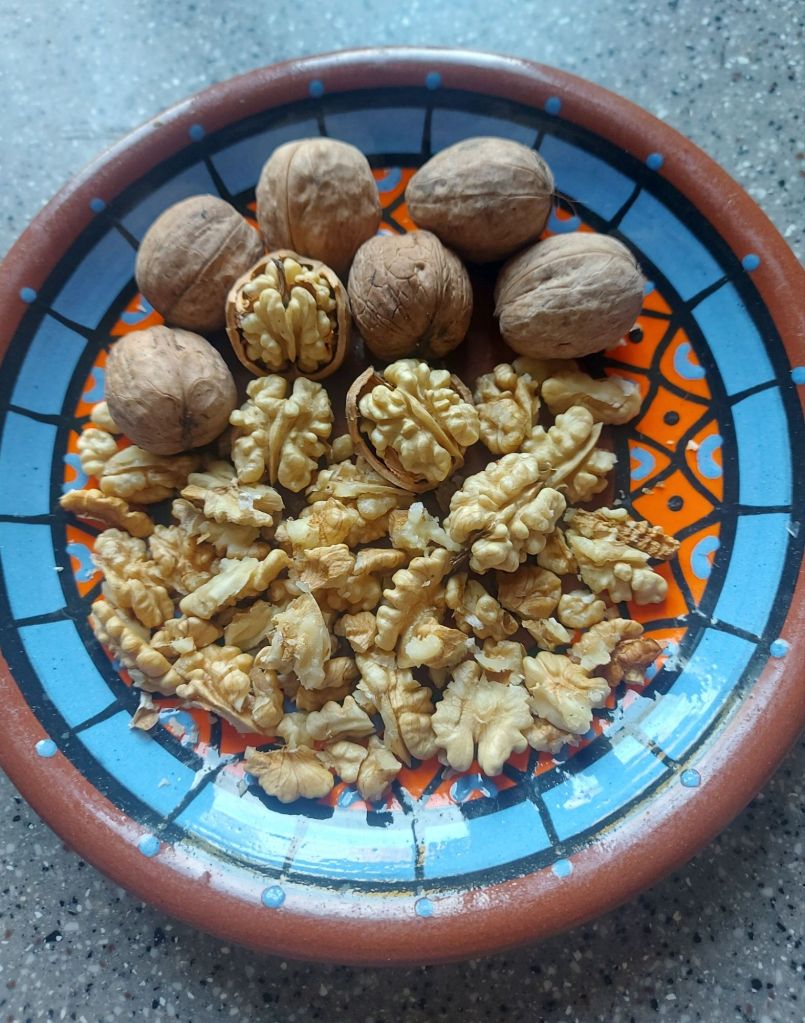
This time, we’re using the pumpkin in a fritter made with chickpeas and fine bulgur wheat. Recently, we recieved some walnuts from a friend of a friend’s dacha outside Almaty, here in Kazakhstan, which are ideal for adding a nutty edge to these chickpea and pumpkin fritters. We also added some walnuts to a fruity salad made with lettuce, pear and pomegranate seeds to accompany the fritters. Dress it with equal parts of balsamic vinegar and extra virgin olive oil.
This year’s walnuts fresh from the dacha in Almaty, Kazakhstan
Recently, Knidos Cookery Club was back in its spiritual home on the Datça peninsula in Turkey, getting back to its roots in the place where its culinary journey began eight years ago.
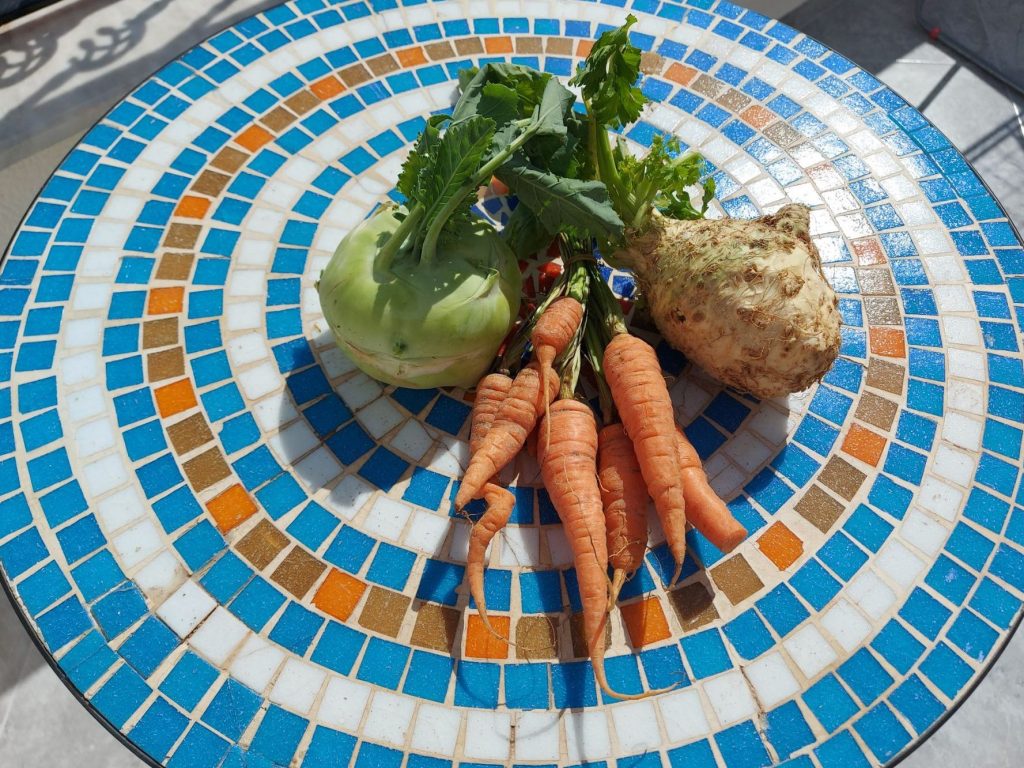
Getting back to our roots… carrots, celeriac and kohlrabi
This blog was named after the ancient Greek city of Knidos, the ruins of which are located on the tip of the peninsula. KCC started out exploring the veggie and vegan dishes eaten around this point where the Aegean Sea meets the Mediterranean Sea.
Since 2016, it has expanded its exploration to Central Asia and many other corners of the globe, seeking out new dishes to tickle your tastebuds!
Now, in addition to its WordPress blog, KCC is making its debut on Substack, where a regular newsletter will keep you up to speed with KCC’s latest culinary adventures, along with updated posts from the archive.
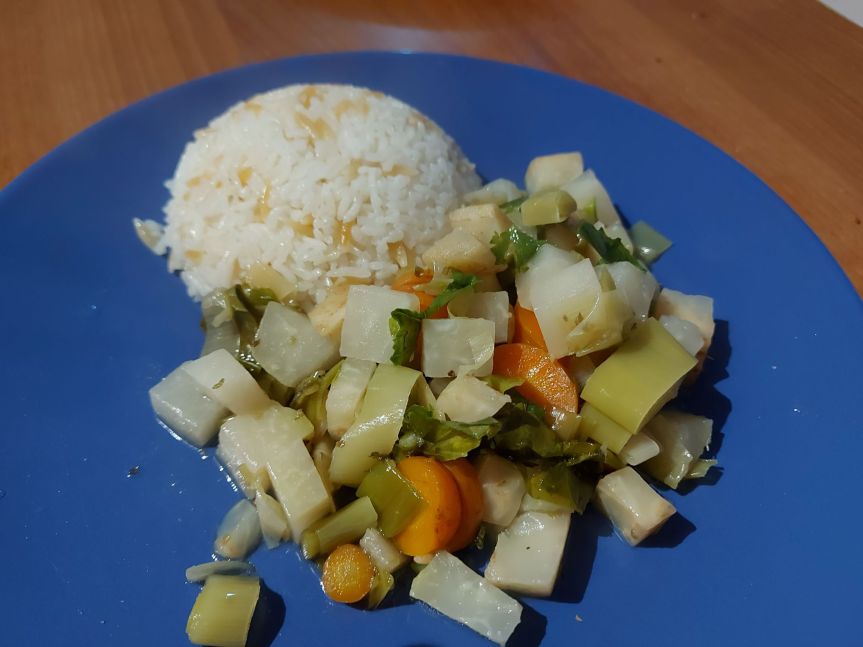
Zeytinyağlı carrot, celeriac, kohlrabi and leek with rice
After spending the winter in Kazakhstan, it was a treat to get back to Turkey with its wider choice of ingredients – it was time to move on from the winter staples, such as pumpkin and potatoes, and dig up some root vegetables that are less seen in Central Asia.
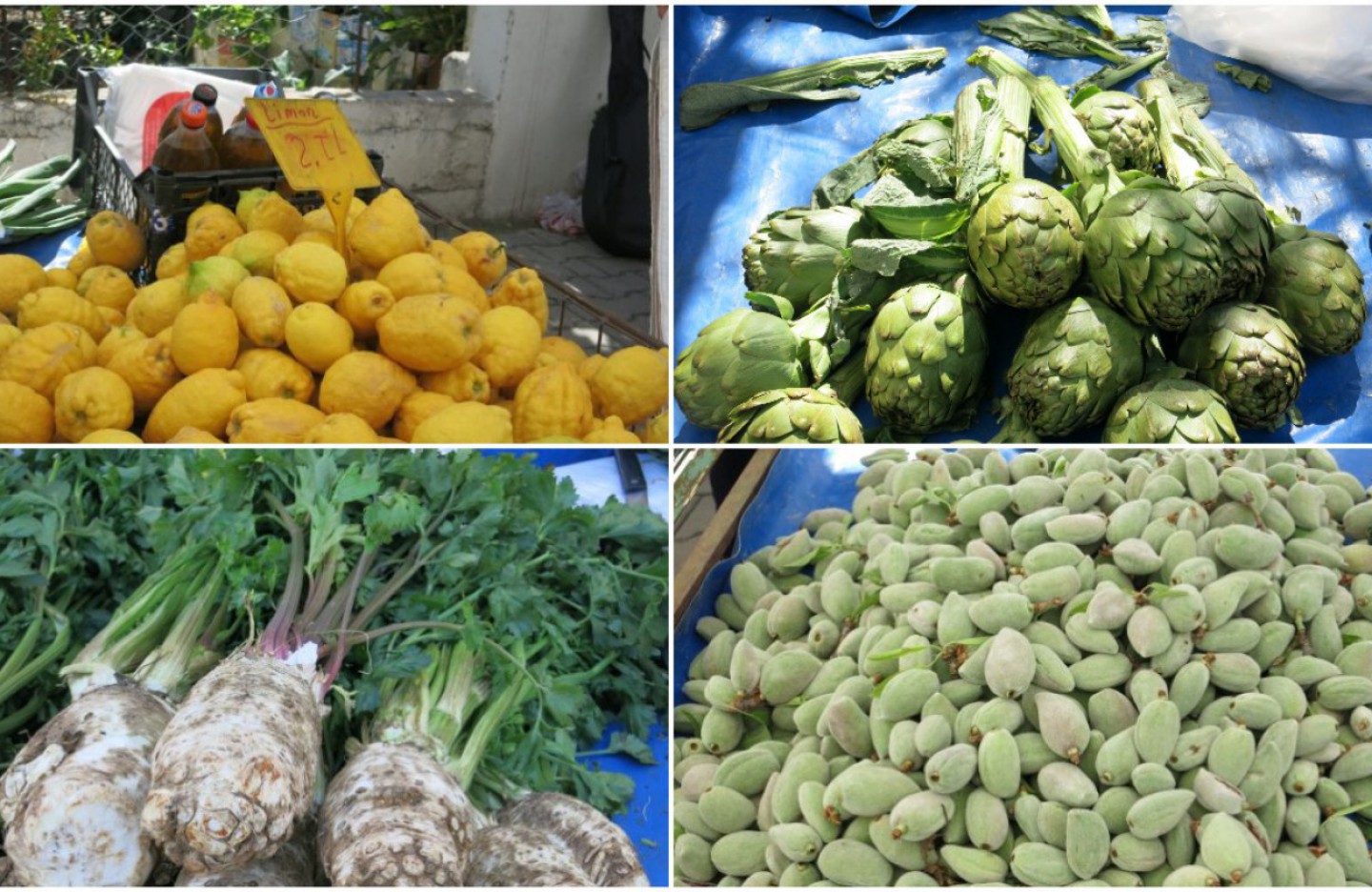
The local market turned up trumps with celeriac, kohlrabi and leeks on sale, perfect for making a zeytinyağlı (with olive oil) dish, so-called as these dishes are prepared with lashings of olive oil.
Standards include green beans (taze fasulye), artichoke (enginar) and leek (pırası). They are a staple of ev yemekleri (home-cooked food) restaurants, lokanta in Turkish, cheap and cheerful canteen-style eateries.
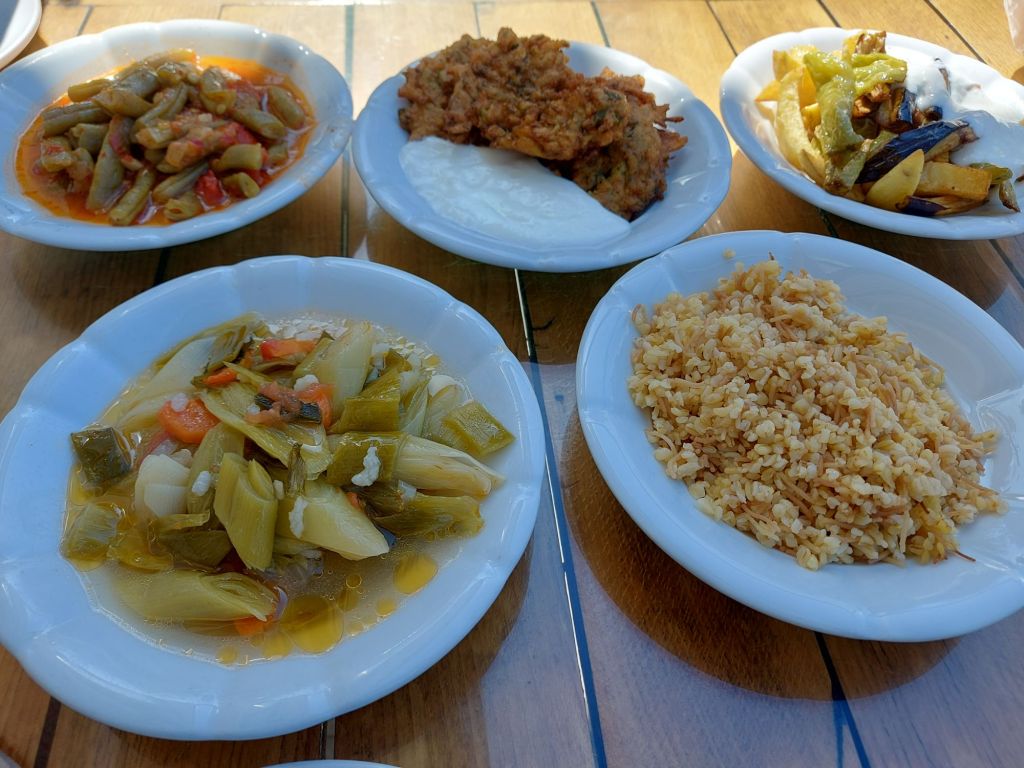
A selection of zeytinyağlı dishes – green beans, leeks and aubergines, green peppers and potatoes – from Datça’s Korsar/Erkin’nin yeri restaurant, located by the harbour
The last few years have seen the price of the key ingredient, olive oil, soar. This is due to numerous factors, including unexpectedly cold and wet conditions at the start of the growing season and drought and forest fires in the summer, that have led to poor harvests in the main olive-producing regions.
Global olive oil production has dropped by a third in just two years, which in turn has led to higher prices for consumers. However, we think it’s still worth shelling out that bit more for a bottle of extra virgin olive oil, as its fruity, peppery flavour adds so much to a cornucopia of delicious dishes, such as this carrot, celeriac, kohlrabi and leek zeytinyağlı one:
Ingredients (makes 3-4 servings)
One medium-sized kohlrabi (approx 200 g)
One medium-sized celeriac (approx 200 g)
One bunch of baby carrots (approx 200 g)
One leek (approx 200 g)
One small lemon
75 ml extra virgin olive oil
100 ml vegetable stock
Two teaspoons dried oregano
One teaspoon sumac
Method
Wash the leek well and then cut it into 2 cm slices. Top and tail the carrots, kohlrabi and celeriac, put the leaves and stems to one side, and then peel off the hard outer skin of the kohlrabi and celeriac and chop both into 1 cm cubes. Slice the washed carrots into 2 mm rounds. Roughly chop the leaves and stems from the carrots, kohlrabi and celeriac.
Heat 50 ml of olive oil in a heavy-based pan over a low heat and then add the leeks. Stir fry for five minutes and then add the carrots, kohlrabi and celeriac and cook for another five minutes, stirring occasionally. Add the chopped leaves and stems and cook for another five minutes, continuing to stir every now and then.
Add the vegetable stock, the juice of the lemon and oregano and cook over a low heat for 15 minutes until all the vegetables are soft but still holding their shape. Stir in 25 ml of olive oil, garnish with sumac and serve with rice and some crusty bread to mop up the juices.
As 2023 draws to a close, let’s take a look at some striking winter salads to liven up the end-of-year table. To complement our perennial favourite, our Olivier (with an Edge) salad, we’re looking to a coleslaw variation to add some colour to the New Year’s Eve spread. With the new year just around the corner, KCC wishes all its readers a prosperous and peaceful 2024, full with culinary adventures and many more mouth-watering meals!
This winter has been a strange one here in Kazakhstan. We should be in the depths of winter now, but the snow didn’t arrive until the first week of December. Then there was a week or so of freezing weather with the temperature dipping to -28c, but now, as we approach the end of December, there’s very little snow on the ground in Almaty – it’s even been raining, which is really unusual at this time of the year.
KCC’s coleslaw variation with pear and rocket
The purple hues of red cabbage pair so well with the orange of carrots and the green of rocket. For a bit of bite, we’ve added some grated radish (we used green radishes, but you can use red radishes or mouli if you can’t find green ones), along with some grated pear and pomegranate seeds for a sweet and tart note. Add in some pumpkin and sunflower seeds and raisins before dressing with tahini and pomegranate sauce.
Ingredients (serves 3-4)
100 g shredded red cabbage
100 g grated carrot
50 g chopped rocket
50 g grated green radish
50 g grated pear
25 g pomegranate seeds
25 g raisins
1 teaspoon dried oregano
2 teaspoons pumpkin seeds
2 teaspoons sunflower seeds
1 tablespoon tahini
1 tablespoon pomegranate sauce
a slice of fresh lime
Method
In a large bowl mix the red cabbage, carrot, rocket, green radish, pear and pomegranate seeds together. Add the raisins, oregano, pumpkin seeds and sunflower seeds. Make a dressing with equal parts pf tahini and pomegranate sauce and thin with a bit of hot water to obtain a smooth consistency. Pour over the salad, stir well, give it a squeeze of lime and serve.
Here in the northern hemisphere we’re moving into the “darker half” of the year with the nights growing longer and the mercury dropping rapidly. Halloween is just around the corner so it’s that pumpkin time once again. Here at KCC we’re always looking cut down food waste so this year we’ve got another idea of how to use up your excess squash – a vegan variant on Shepherd’s pie.
Pumpkin-topped Beany Bake a.k.a. Halloweenish Shepherd’s Pie
Halloween has its origins in the Celtic pagan festival of Samhain that marked the end of the harvest period and the onset on the dark months of winter. It was an excuse for a wild party with feasting and drinking at a time when the boundary between our world and the spiritual world was held to be at its thinnest.
Halloween, which is the evening before All Saints’ Day, 1 November, in the Christian calendar, is still the time when many remember the souls of the dead. Many Halloween traditions in North America were influenced by Irish and Scottish immigrants, harking back to the festival’s pagan roots.
The pumpkin, the round, oversized orange vegetable, native to the New World, has become a symbol of the festival. This has led to millions of pumpkins going to waste so here’s a reminder of some more of our pumpkin recipes to try and reduce the scale of this problem.
Ingredients (serves four)
500 g pumpkin
One medium onion
One stick of celery
One medium carrot
One medium green pepper
One medium courgette
Two medium tomatoes
One tablespoon tomato paste (or Turkish hot pepper paste if you can find it)
300 g cooked beans (cannellini or kidney beans 0r a mix of the two)
75 g red lentils
200 ml vegetable stock
50 ml olive oil
One teaspoon chilli flakes
One teaspoon turmeric
Method
Clean the pumpkin by removing the hard outer skin and the seeds (if there are any) and then chop into small cubes, put into a baking dish and drizzle with olive oil and mix well. Roast in a pre-heated oven at 180 c for 30 minutes, stirring occasionally.
While the pumpkin is roasting, heat the oil in a heavy-based pan and then cook the finely chopped onion over a medium heat for five minutes. Add the diced celery, green pepper and carrots and cook for another five minutes.
Mix in the cooked beans, vegetable stock and tomato paste, chilli flakes and turmeric and stir well. When it boils, add the lentils, stir and then cook for 20 minutes or so until all the liquid is absorbed. While this is cooking, top and tail the courgettes and cut into 1cm thick rounds. Thinly slice the tomato.
Remove the pumpkin and mash with a fork or a potato masher. Put the bean mixture into the bottom of the baking dish and cover with courgette rounds. Cover the courgette with tomato slices and then pack the mashed pumpkin on top of the tomatoes. Decorate with pumpkin seeds and bake at 180 c for 30 minutes or until the top of the pie begins to char.
It’s that in-between time of year as the nights grow longer and thoughts turn towards more substantial meals after a long summer of salads and lighter fare. The last of the seasonal vegetables such as tomatoes and courgettes are perfect for stuffing and baking in the oven, making a bridge between summery salads and the heartier soups and stews of winter that are coming up.
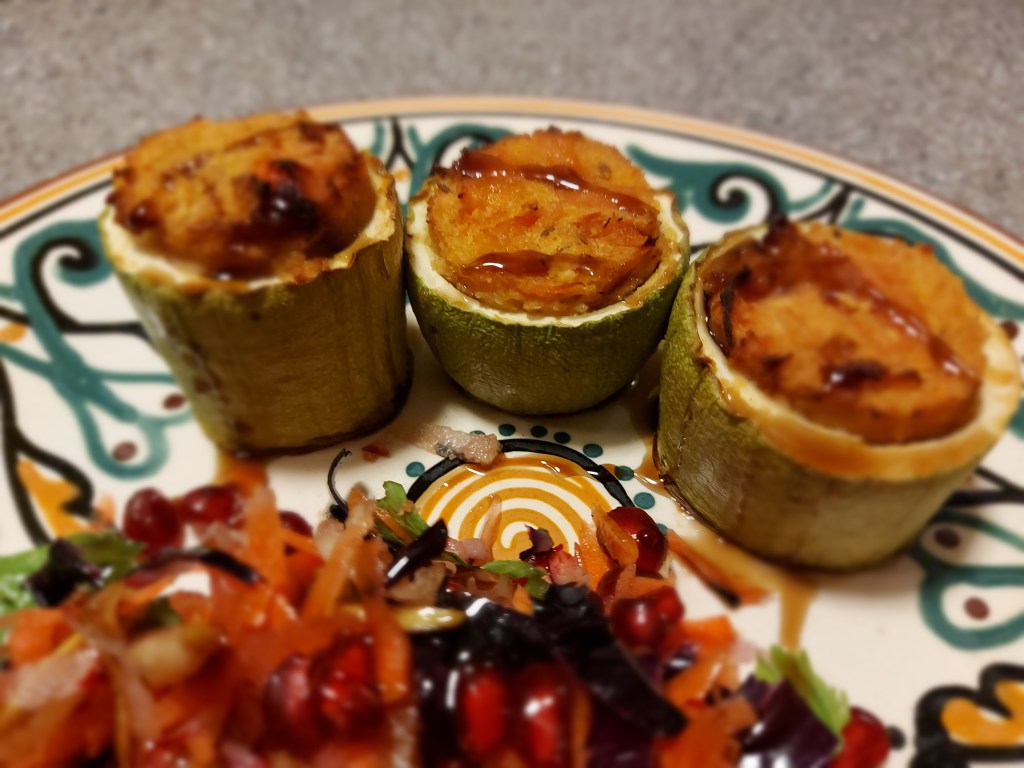
Apricot and lentil courgette roundels drizzled with pomegranate sauce and served with a seasonal salad
We stuffed some courgettes with a mixture of red lentils, apricots, tomato, onion, bulgur wheat and lemon juice to make a versatile roundel that can be served as part of a main course or eaten on its own as a meze, a fully vegan alternative to the sausage roll!
Apricot and lentil courgette roundel – a vegan alternative to the sausage roll?
The autumn fruit is at its best at the moment, and we’ve added some pear and pomegranate to an autumnal red cabbage, carrot, celery and radish salad to accompany these apricot and lentil courgette roundels to make a great lunch or supper. By adding a jacket potato, you can make it into a more filling main course.
Ingredients (makes enough mixture for 10-12 roundels)
Three medium sized courgettes
100 g red lentils
50 g dried apricots (or four fresh apricots if available)
One small red onion (approx 75 g)
One medium tomato (approx 100 g)
50 g fine bulgur wheat
25 ml olive oil
200 ml vegetable stock
Juice of half a lemon
One teaspoon cumin seeds
One teaspoon red chilli flakes
Black pepper to taste
Method
Cut the dried apricots into eight pieces and soak in hot water for at least 30 minutes. While the apricots are soaking, heat the oil in a heavy based pan and add the cumin seeds. When they start to sizzle, add the finely chopped onion and fry over a medium heat until they start to soften. Grate the tomato into the fried onion and cook over a low heat for five minutes or so, stirring occasionally.
Now add the washed lentils, pour in the stock and stir. Cook over a low heat for 15-20 minutes until most of the water has been absorbed. Add the fine bulgur wheat, mix it in well and leave covered for 15 minutes. Drain the apricots and stir them into the mixture. Add the lemon juice, chilli flakes and black pepper to taste and mix well.
While the lentils are cooking, start to prepare the courgettes by slicing off the ends to make them flat. Cut into 3 cm slices. Gouge out the seeds with a small spoon, leaving a little bit of flesh at the bottom of the roundel.
Pre-heat the oven to 180 c. When the lentil mix is cool, pack it into the courgette roundels and stand them on a baking tray with the filling topmost. Bake at 180 c for 30 minutes or so – the courgette should still be firm and not too squidgy and the lentil mix should rise slightly and be beginning to brown on top.
Serve alongside a salad of red cabbage, carrot, celery, radish, pear and pomegranate and a jacket potato, drizzling pomegranate sauce over the roundels or allow to cool and serve the roundels as a snack on their own.
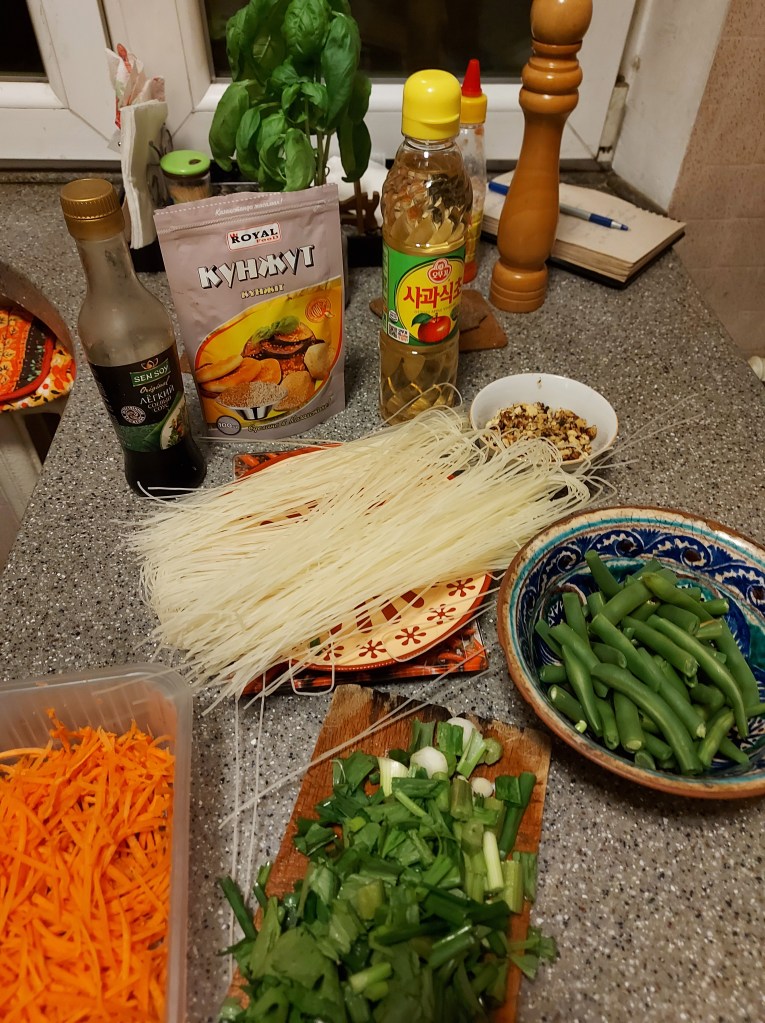
Continuing with our summery vibe, the year’s first green bean crops are appearing. Green beans are great for adding a bit of crunch to a stir fry or a salad, we’ve gone for the best of both worlds by mixing our green beans in with celery, carrots, spring onions and walnuts on a bed of funchoza (vermicelli) noodles, liberally dressed with soy sauce, apple vinegar and sesame seeds.
KCC’s green bean funchoza supreme
This recipe lends itself to the pictorial treatment – see below for the steps needed to assemble this summery salad. Also check out our reel on Instagram as well with an orangey red, green and gold inspired Black Uhuru backing track.
Get the ingredients ready – serves twoPut a bed of 150g noodles in the bowl – cook them according to the pack instructions and cool in cold waterAdd 50g sliced celery and 50g chopped spring onionAdd 75g grated carrotsAdd 150g cooked green beans – cook in boiling water for five minutes and then put in cold water to keep them crunchyAdd 50g chopped walnuts – toast them for a tastier flavourSprinkle with one teaspoon sesame seeds, 10ml soy sauce and 10ml apple vinegar, mix well and serve in two smaller bowls
The anniversaries are coming thick and fast here at Knidos Cookery Club and to celebrate our 150th post we’re bringing you a hassle-free recipe for pakora, a spicy fritter from the Indian subcontinent, that can be prepared in under 30 minutes.
Cauliflower pakora meets cucumber raita
Pakora are a great snack that you can eat at any time of the day and are easy to make – just coat vegetable or paneer cheese slices with a spiced chickpea flour batter and then deep-fry them. For a more user friendly and healthier take on this street food classic, you can bake them in the oven as we did with this batch.
We’ve used cauliflower to make pakora this time round, but you can use onion, carrot, potato, peppers, mushrooms or combinations of more or less any vegetable you have handy. Paneer cheese (or halloumi) also works well with this versatile batter. We like to serve the pakora straight from the oven with a yogurt-based cucumber raita to dip them into.
Ingredients (makes enough for 3-4 people)
100 g chickpea flour (also known as gram or besan)
100 ml water
250 g cauliflower broken into florets
One teaspoon each of: chia seeds, cumin seeds, turmeric, ginger, chilli powder, black pepper
Method
Heat the oven to 200 c. Put the chickpea flour in a large bowl and add the seeds and spices. Slowly add the water and mix to form a batter that is neither too dry nor too runny. Stir in the cauliflower florets and coat thoroughly.
Place the individual florets on a baking tray and cook in the top half of the oven for 20 minutes or so – keep an eye on them and if they start to char a bit then they are ready.
Serve them straight away with a raita sauce made from yogurt, cucumber and mint.
It’s that time of year again when millions of pumpkins will be turned into jack o’ lanterns for Halloween — in the UK alone the environmental charity Hubbub estimates that some 24 million pumpkins will be carved this year but more than half, around 12.8 million, will go uneaten.
A scary 58% of the people surveyed by Hubbub were unaware that you can eat pumpkins. This October, we’ve been highlighting squash recipes on Knidos Cookery Club in the hope that more pumpkin ends up on our plates rather than on the rubbish tip.
Mix the flour and oil together and then slowly add the cold water and knead until you have a smooth, elastic dough. Wrap in clingfilm and leave in the fridge while preparing the filling.
Heat the oil in a frying pan and add the cumin seeds. When they start to sizzle add the finely chopped onion. Peel the pumpkin, remove the seeds (save these to put on the samsa) and cut into 1 cm cubes.
Fry the onion for five minutes and then add the pumpkin cubes. Stir fry for five more minutes and then add the stock and simmer for 20 minutes until the pumpkin is cooked. Allow to cool and then mash to a smooth paste with a fork or a potato masher.
Roll the dough to a 2 mm thickness and then fold it over to produce a cylinder of dough. Break this dough into six pieces. Flatten the dough ball into a disc with the palm of your hand until you have a 1 mm thick circle.
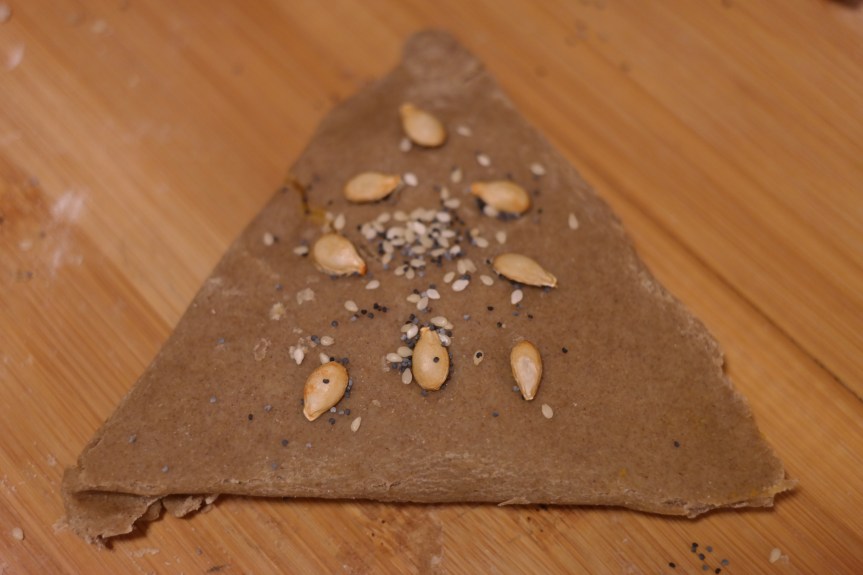
Put a triangle of filling in the middle of the circle and then fold over the edges to make a triangle shape. Brush with olive oil and arrange the pumpkin, sesame and poppy seeds on top of the samsa. Bake in the oven at 200 c for 25 -30 minute until the samsa turns a darker brown colour.
This time round on Knidos Cookery Club we’re taking an armchair culinary trip to Egypt to sample koshari, the country’s tasty street food staple – a hearty combo of lentils, rice and pasta, all topped off with a spicy tomato sauce and crispy, caramelised onions.
KCC’s flavour-packed koshari
Koshari was brought to Egypt in the late 19th during the period when the country was part of the British Empire. Previously rice and pasta were not widely used in Egyptian cooking, but this combination caught on locally after occupying soldiers brought the dish with them from another part of the empire, the Indian sub-continent.
Lemon, barley and ginger
Our version uses pearl barley in place of the rice as we have been using a lot of barley to make a lemon, ginger and barley tonic drink to mix with fizzy water or put in cocktails. The barley cooks at the same rate as the green lentils so they can be cooked together in the same pan.
KCC’s multi-purpose spicy tomato sauce
With tomatoes cheap and in abundance at the moment, we’ve been making large amounts of a spicy sauce that goes well with this dish. It can be used with pasta or potatoes – we’ve been freezing any leftover sauce to use in the winter when tomatoes are much more pricey and not half as tasty, to spice up the staples.
Ingredients (for 3-4 servings)
150 g pearl barley
150 g green lentils
300 ml vegetable stock
One large onion
50 g vermicelli pasta
50 ml olive oil
For the spicy tomato sauce:
500 g plum (Roma) tomatoes
100 g onion
One garlic clove
One stick of celery
One teaspoon mustard seeds
One teaspoon cumin seeds
One teaspoon chilli powder
2.5 cm knob of ginger
Two bay leaves
50 ml olive oil
Method (Spicy tomato sauce)
Heat the oil in a heavy-based pan and add the spices. When the oil is sizzling, add the finely chopped onion, diced garlic and sliced celery and stir fry until the onions go translucent. Turn down the heat.
Cut the tomatoes in half and grate into the onion and celery mix. Throw the tomato skins into a pot with the onion skins and 500 ml water to make vegetable stock. Add the bay leaves and cook over a low heat until the amount of liquid has halved and then pour over the barley and lentils. You can store any leftover sauce in a glass jar in the freezer.
Method (Lentils and barley)
Fry the onion in the olive oil over a low heat until crispy and caramalised and put aside – this can take up to an hour. Cook the barley and lentils in the same pot with the vegetable stock for 20-30 minutes over a low heat until all the liquid is absorbed.
Fry the pasta in a little oil until golden brown and then scatter on top of a bowl of lentils and barley. Pour a generous glug of spicy tomato sauce over the barley and lentil base top with caramalised onions before serving.
We’re turning our attention back to Georgia to take a look at how walnuts form the backbone of the nation’s cuisine. This versatile nut can be made into a sauce, bazhe, and slathered on slices of fried aubergine or poured over a cucumber and tomato salad. It’s also used liberally in the vegetable dip, pkhali, in the thicker satsivi paste and in the red bean dish, lobio.
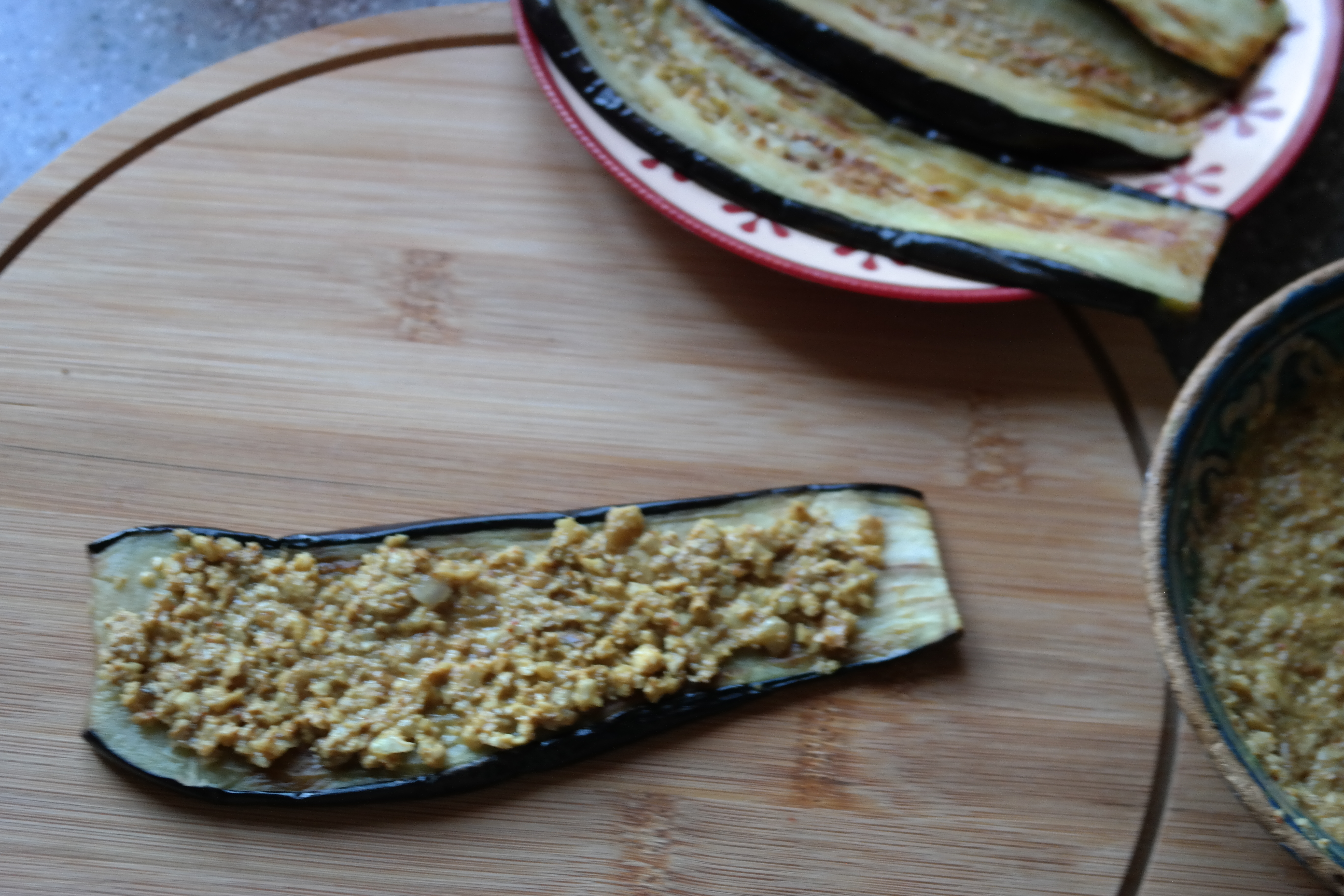
Aubergine slices stuffed with bazhe, Georgia’s versatile walnut sauce
We made some bazhe to roll up in slices of fried aubergine, a favourite from the days of visiting Georgian restaurants. These aubergine rolls, nigvziani badrijani in Georgian, are usually served at the start of the meal, especially at lengthy wine and chacha (a grape-based spirit akin to Italy’s grappa or Greece’s tsipouro) fuelled banquets, but we think they’re great to eat at anytime and they’re particularly handy for picnics or barbecues.
Bazhe – Georgia’s versatile walnut sauce
To remove the bitter taste of the aubergine, sprinkle with salt and leave for 30 minutes. Rinse in cold water and pat dry with kitchen roll. Make sure the oil is very hot when frying the slices – this will help them not to soak up too much fat while cooking.,
Spread the sauce on the fried aubergine slice and then roll it up
Ingredients (for 16-20 aubergine rolls)
3 or 4 large aubergines
100 ml cooking oil
100 g walnuts
2 garlic cloves
1 tablespoon vinegar (red or white wine or apple)
1 tablespoon pomegranate sauce
1 teaspoon blue fenugreek (use cumin seeds if you can’t find this)
1 teaspoon marigold flower (use turmeric if you can’t find this)
1 teaspoon coriander seeds
1 teaspoon paprika
50 ml cold water
Salt to sprinkle over the aubergine slices
Fresh basil and coriander leaves to garnish
Method
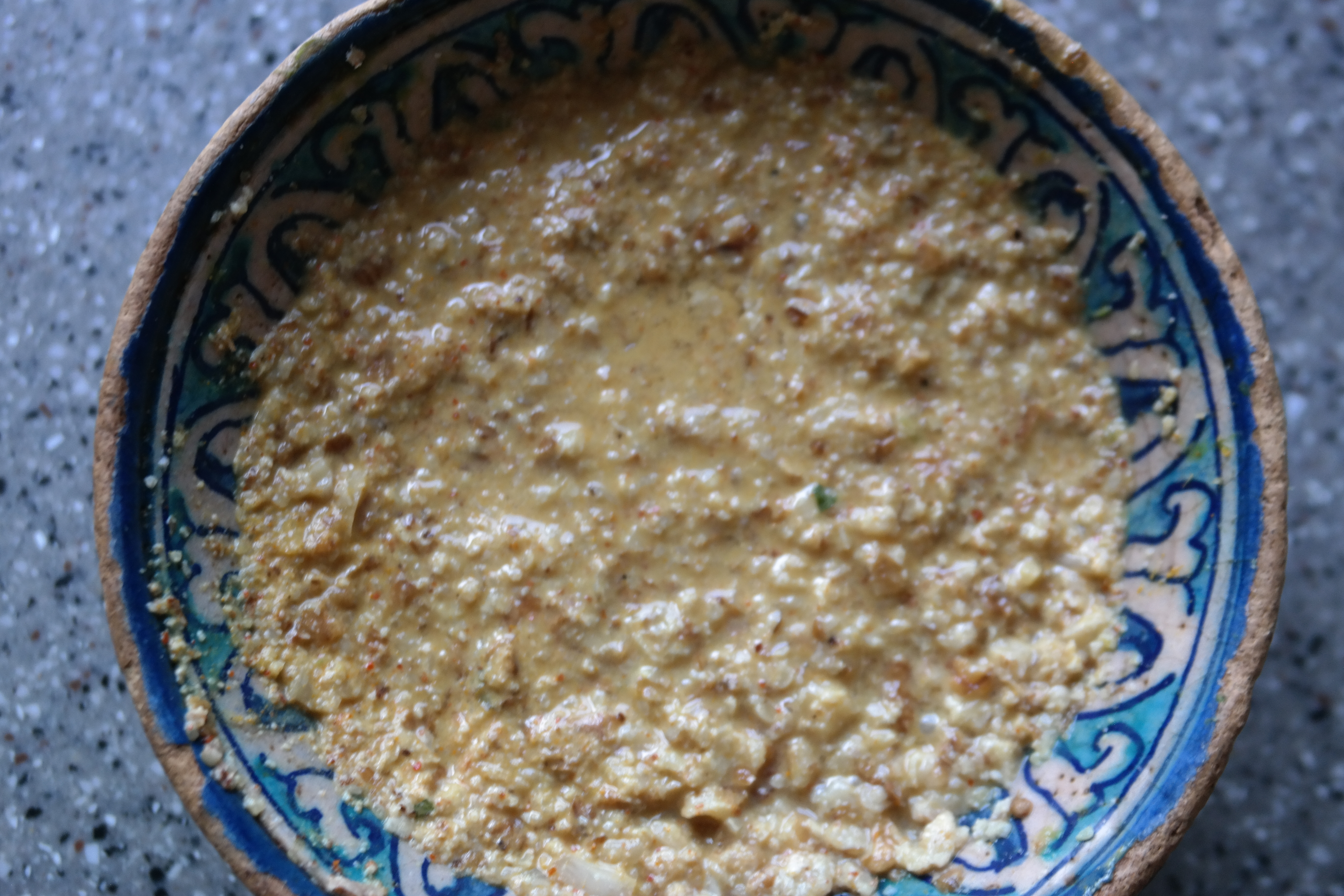
Make the walnut sauce first. Crush the nuts using the back of a wooden spoon on a wooden chopping board. This method gives the sauce a more crunchy texture. Mince the garlic and mix with the nuts in a bowl. Add the spices, vinegar and pomegranate sauce and combine all the ingredients into a smooth paste. Add water until the sauce has a more runny consistency but is still quite thick.
While the sauce is chilling in the fridge, fry the aubergine. Heat 50 ml of oil in a heavy based pan. Top and tail the aubergine and slice off a thin layer of skin on both sides. Cut the aubergine into 0.5 cm slices lengthways and then fry on both sides until golden brown. Drain on kitchen paper.
When the slices have cooled down, spread the walnut sauce onto the slice and then roll it up. Garnish with fresh herbs such as coriander and basil, and pomegranate seeds (if you have any – we’re not expecting any until autumn) and serve cold with other Georgian starters such as pkhali and crusty bread.











 Knidos Cookery Club