Bring on the Bazhe – Georgia’s Versatile Walnut Sauce

6 August 2020

We’re turning our attention back to Georgia to take a look at how walnuts form the backbone of the nation’s cuisine. This versatile nut can be made into a sauce, bazhe, and slathered on slices of fried aubergine or poured over a cucumber and tomato salad. It’s also used liberally in the vegetable dip, pkhali, in the thicker satsivi paste and in the red bean dish, lobio.
SAMSUNG CSC
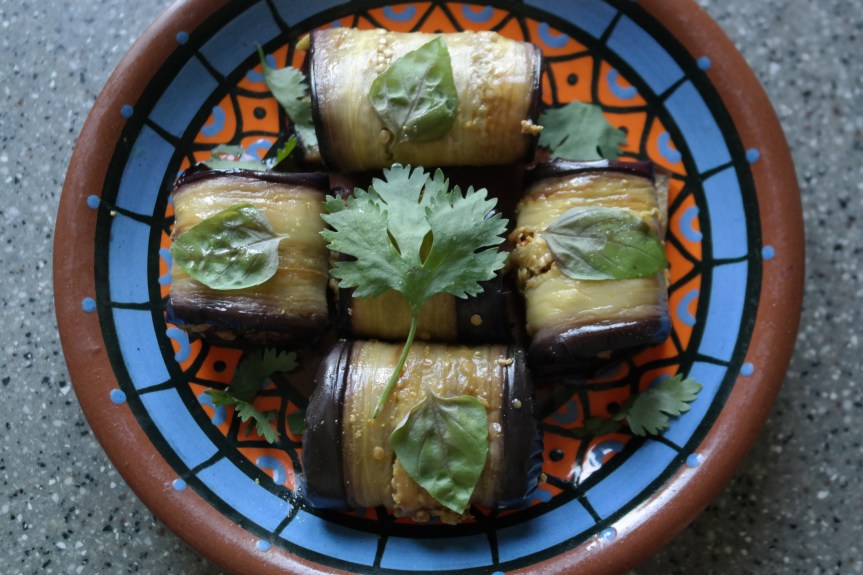
Aubergine slices stuffed with bazhe, Georgia’s versatile walnut sauce

We made some bazhe to roll up in slices of fried aubergine, a favourite from the days of visiting Georgian restaurants. These aubergine rolls, nigvziani badrijani in Georgian, are usually served at the start of the meal, especially at lengthy wine and chacha (a grape-based spirit akin to Italy’s grappa or Greece’s tsipouro) fuelled banquets, but we think they’re great to eat at anytime and they’re particularly handy for picnics or barbecues.

SAMSUNG CSC
Bazhe – Georgia’s versatile walnut sauce

To remove the bitter taste of the aubergine, sprinkle with salt and leave for 30 minutes. Rinse in cold water and pat dry with kitchen roll. Make sure the oil is very hot when frying the slices – this will help them not to soak up too much fat while cooking.,
SAMSUNG CSC
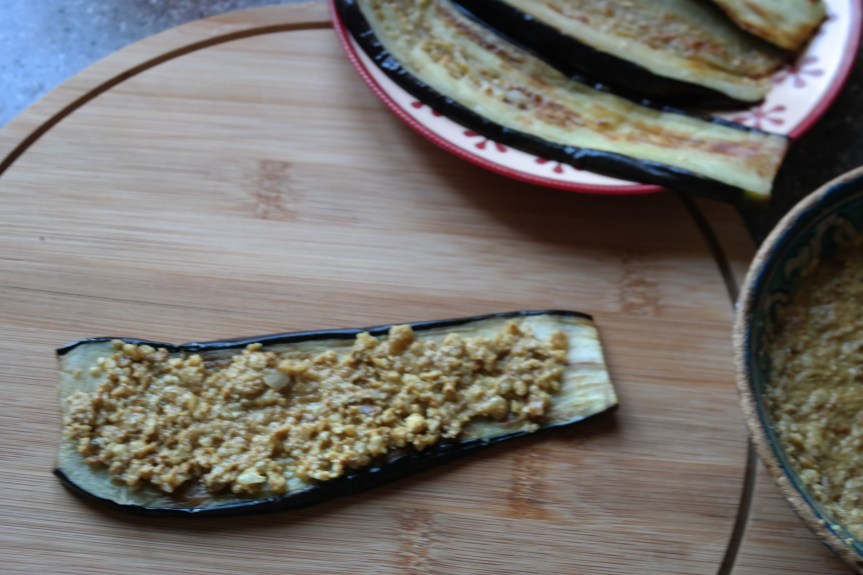
Spread the sauce on the fried aubergine slice and then roll it up

Ingredients (for 16-20 aubergine rolls)

  • 3 or 4 large aubergines
  • 100 ml cooking oil
  • 100 g walnuts
  • 2 garlic cloves
  • 1 tablespoon vinegar (red or white wine or apple)
  • 1 tablespoon pomegranate sauce
  • 1 teaspoon blue fenugreek (use cumin seeds if you can’t find this)
  • 1 teaspoon marigold flower (use turmeric if you can’t find this)
  • 1 teaspoon coriander seeds
  • 1 teaspoon paprika
  • 50 ml cold water
  • Salt to sprinkle over the aubergine slices
  • Fresh basil and coriander leaves to garnish

Method

  • Make the walnut sauce first. Crush the nuts using the back of a wooden spoon on a wooden chopping board. This method gives the sauce a more crunchy texture. Mince the garlic and mix with the nuts in a bowl. Add the spices, vinegar and pomegranate sauce and combine all the ingredients into a smooth paste. Add water until the sauce has a more runny consistency but is still quite thick.
  • While the sauce is chilling in the fridge, fry the aubergine. Heat 50 ml of oil in a heavy based pan. Top and tail the aubergine and slice off a thin layer of skin on both sides. Cut the aubergine into 0.5 cm slices lengthways and then fry on both sides until golden brown. Drain on kitchen paper.
  • When the slices have cooled down, spread the walnut sauce onto the slice and then roll it up. Garnish with fresh herbs such as coriander and basil, and pomegranate seeds (if you have any – we’re not expecting any until autumn) and serve cold with other Georgian starters such as pkhali and crusty bread.

Double Radish Courgette Quiche

23 July 2020

With reports coming in from allotment owners in the UK of a bumper post-lockdown vegetable crop, we’re revisiting an old favourite — a quiche made with courgettes, peppery radish leaves and a healthy dash of horseradish.

SAMSUNG CSC
Courgette, radish leaf and halloumi quiche

In a topical touch, we’ve added a dash of horseradish (хрен in Russian), the latest plant to be touted as a defence against coronavirus in Central Asia, following hard on the heels of garlic.

20200722_162910
Horseradish sauce with beetroot


Demand for horseradish, a root vegetable which is traditionally mixed with honey to fight colds and coughs, has soared in in Kazakhstan and Uzbekistan in recent weeks, along with the price. We bought a jar of horseradish sauce, flavoured with beetroot, as the fresh roots are in short supply.

SAMSUNG CSC
Going a bit crackers in lockdown

Crackers have also been hard to find in Almaty in recent weeks, so we used up the leftover pastry from making the quiche to prepare our own. Simply roll the pastry out to a thickness of 1 mm and then use a glass or mug to cut out a round shape. Bake in a hot oven (200 c) on a baking tray for 8-10 minutes until they start to brown.

Ingredients (3-4 portions)

For the pastry:

  • 250 g  flour (we used a 50/50 mix of rye and wheat flour)
  • 60 ml olive oil
  • 120 ml cold water
  • One teaspoon cumin seeds
  • One teaspoon sesame seeds
  • Healthy sprinkling of black pepper

For the filling:

  • One medium courgette
  • Bunch of radish leaves
  • One teaspoon horseradish sauce (or freshly grated if you can find it)
  • One small onion
  • One egg
  • 100 g halloumi
  • 50 ml olive oil

Method

  • Put the flour in a large bowl with the cumin and sesame seeds and a sprinkling of black pepper. Mix the flour and oil together with a fork and then slowly add the water and keep mixing until it starts to come together. Knead with your hands for 5-10 minutes until you have a stretchy ball of pastry. Leave in the fridge covered in clingfilm for an hour or so.
  • Heat the oven to 200 c. Roll the pastry on a lightly floured surface until it is about 2 mm thick. Grease a baking dish and then put the pastry in the dish to form a pie crust. Prick all over with a fork and bake in the oven for 10-15 minutes. You can use any leftover pastry to make crackers – put them on the top shelf of the oven at the same time as you’re baking the pie base.
  • Heat 25 ml of oil in a heavy based pan and chop the courgette into 5 mm slices. Cook the courgettes on both sides until browning. Put the courgettes to one side and add the rest of the oil to the pan.  While the pie base is baking, cook the sliced onion and chopped radish leaves in the hot oil.
  • Add the horseradish sauce and the egg to the mixture when the radish leaves are wilting. Stir well and then pour this into the pie crust. Place the fried courgette slices on top and put strips of halloumi around the courgettes. Bake for another 20-30 minutes at 180 c until the pastry is starting to go brown and the cheese has started to melt.

String Hoppers à la Qazaq

9 July 2020

With no end in sight to the COVID-19 pandemic – infections continue to rise steadily here in Kazakhstan, averaging around 1500 new cases a day over the last week – it’s time for some more culinary escapism. We’re transporting our taste buds to Sri Lanka for our take on string hoppers, a super tasty noodle, dhal and chutney combo.

SAMSUNG CSC
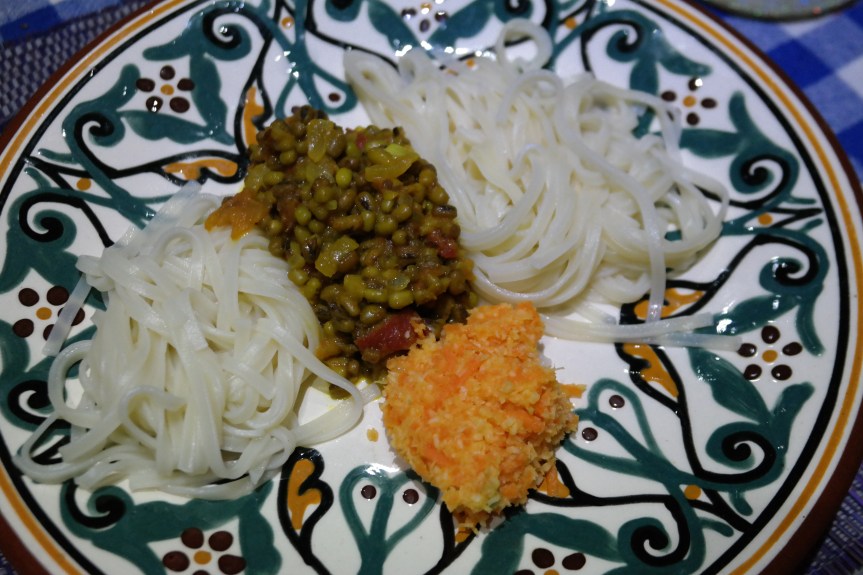
String Hoppers à la Qazaq with mung bean dhal and coconut and carrot sambol

It’s usually served for breakfast on the island, but in our opinion it also works really well as a main meal. Our version features some locally sourced kespe, or noodles, as we couldn’t find red rice noodles in our local supermarket (!) and a dhal made with mung beans –  check out KCC’s dhal recipe here (simply replace the red lentils and pumpkin with 200 g mung beans – soak the beans for 3 – 4 hours before cooking).

The sambol, a quick and easy chutney, is an essential part of the string hopper experience. It saves on waste, as you can use the dried coconut left over from making the coconut milk for the dhal – click here for our coconut milk recipe.

Carrot and Coconut Sambol

Ingredients (serves 3-4)

  • 50 g desiccated (dried) coconut
  • 150 g carrot
  • One small onion
  • One small tomato
  • One fresh green chilli
  • One lemon

Method

  • Grate the tomato and mix with the finely chopped onion in a large bowl. Add the dried coconut and the juice of the lemon and then add the grated carrot and combine all the ingredients together. Gradually add the finely chopped green chilli, tasting every now and then until you reach your chilli heat tolerance levels.
  • Serve alongside the mung bean dhal mentioned above and with noodles or spaghetti — use about 75 g of dried pasta per person, cooked according to the instructions on the pack.

Falafel to the Fore

18 June 2020

This time round on Knidos Cookery Club we’ll be taking an armchair culinary tour to the Middle East and looking at the origins of the humble falafel. Arguments abound as to where this street snack par excellence originated, but most likely it was Egypt according to the evidence.

SAMSUNG CSC
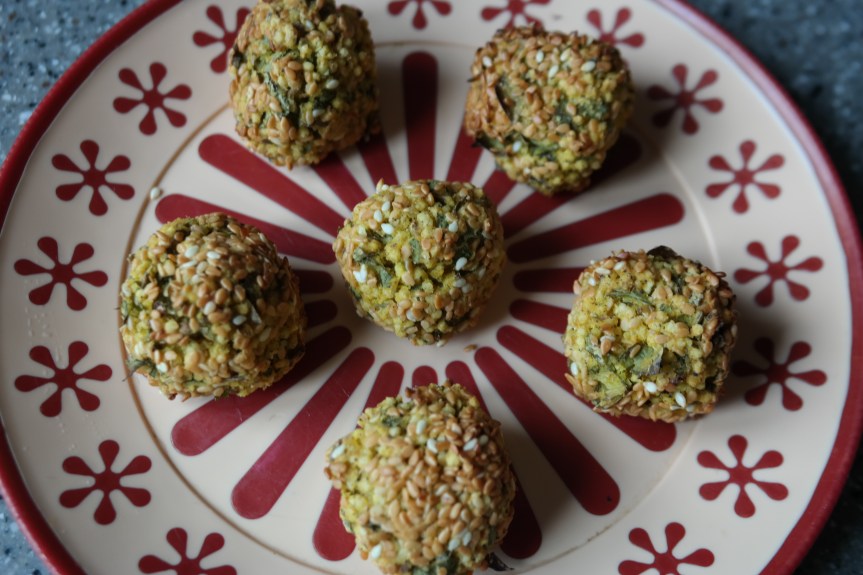
Millet falafel, anyone?

The Egyptian version of this tasty bite is usually made with fava beans, known as fūl in Arabic, which is thought to be the base for the name falafel , whilst in other parts of the Mediterranean region chickpeas are preferred.

SAMSUNG CSC
Falafel salad

With both chickpeas and fava beans in short supply in Almaty at the moment, it was back to the drawing board to look for an alternative base for our falafel. While stocking up during lockdown in our local shop we came across a pack of millet and a spot of googling revealed that this would work just fine as the base for our take on the falafel.

SAMSUNG CSC
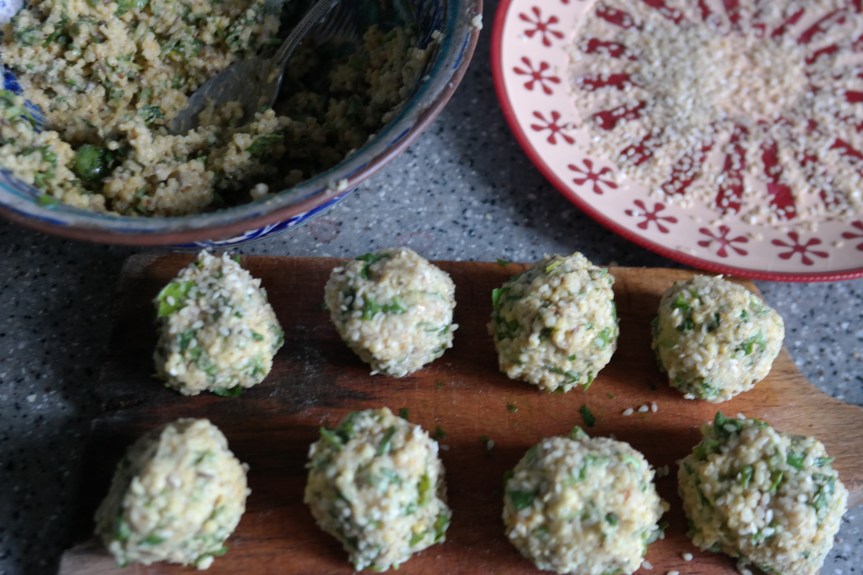
Forming the falafel

We baked them in the oven rather than deep-fried them as it’s a lot less hassle. Be sure to use plenty of parsley, cumin, coriander and chilli powder to spice up the millet. The resulting falafel were crisp on the outside but soft and fluffy in the centre, just as they should be.

SAMSUNG CSC
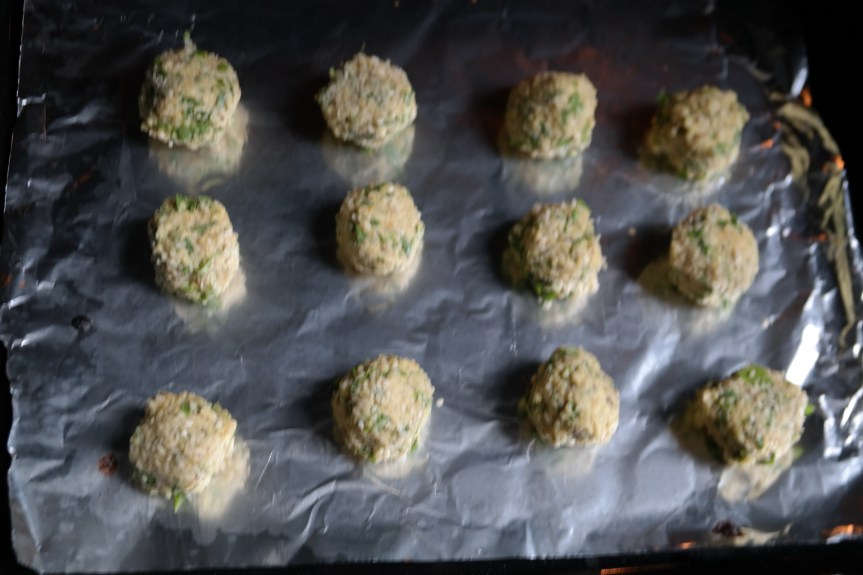
Bake the falafel in the oven

Be careful when cooking millet as it has a tendency to stick to the pan if you don’t keep an eye on it and stir regularly. We found it best to rinse and soak it for a few hours before cooking as this reduces the time needed to cook it.

Ingredients (makes 12-16 falafel)

  • 150 g millet
  • 300 ml water or vegetable stock
  • one garlic clove
  • one bunch of parsley
  • one teaspoon cumin
  • one teaspoon coriander
  • one teaspoon chilli powder
  • Sesame seeds to coat the falafel

Method

  • Rinse and then soak the millet in a pan for four hours. Drain the millet and cover with water or vegetable stock. Bring to a boil and then simmer until the liquid is absorbed. Stir regularly as the millet will stick to the bottom of the pan if not watched carefully.
  • Finely chop the parsley, both leaves and stalks, mince the garlic clove and add to the cooked millet. Add the spices – if you want to give your falafel more oomph, double the amount. Mix well and then form into balls. Roll the balls in the sesame seeds and then place on a tray and oven bake for 20 minutes at 200 c, or until the falafel turn a golden-brown colour.
  • Serve in pita bread with salad and sauces of your choice or as part of a salad – we made one from cucumber, tomato, spring onion, celery, red cabbage and radish. These falafel will keep in the fridge for a few days so you can cook a large batch at the same time.

Lockdown Brunch: Bubble and Squeak

30 April 2020

Nearing the fifth week of lockdown here in Almaty, Kazakstan. We’ve found that one of the ways of coping with this situation it to try and stick to as normal a routine as possible. This means logging on in the working week to see if there’s any work around and then trying to switch off from everything as much as possible at the weekend.

SAMSUNG CSC
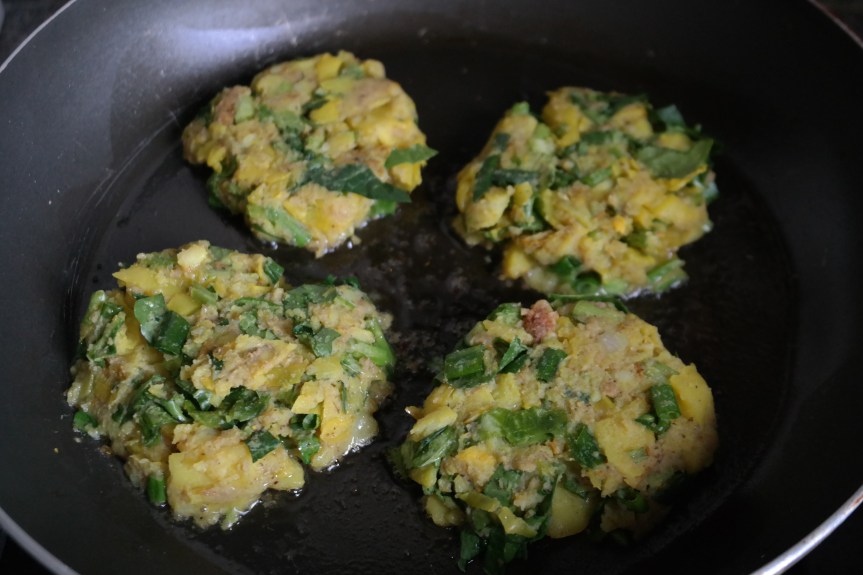
Bubble and squeak: the great British hangover cure

With this in mind, we’ve come up with a classic weekend, switching-off brunch featuring that classic British comfort food  – bubble and squeak, or fried potato and cabbage cakes to the uninitiated. You really can’t beat a good fry-up after a hectic evening spent zooming and netflixing and supporting the local viniculture industry.

Bubble and squeak takes its name from the sizzling, spitting sounds the mixture makes when being fried. Its a great way to use up any leftovers you have – you just need the base of mashed potato and boiled cabbage. We’ve spiced it up with some coriander, cumin and turmeric and also added in some fresh spinach. Serve with baked beans and a fried egg to get your weekend off to a flyer.

Ingredients (makes four hearty cakes)

  • One large potato
  • 100 g cabbage
  • 50 g spinach
  • Two spring onions
  • One teaspoon cumin seeds
  • One teaspoon turmeric
  • One teaspoon coriander
  • Oil for shallow frying

Method

  1. Cube the potato, cover with cold water and bring to the boil in a heavy-based pan. Simmer for five  minutes and then add the finely chopped cabbage along with the coriander, turmeric and cumin seeds. Simmer for another five minute and than add the chopped spring onion and spinach.
  2. Drain off any excess liquid then mash all the ingredients together with a fork or a potato masher.  Season with salt and black pepper according to taste. Heat the oil in a frying pan. Form the mixture into golf ball-sized pieces and then place in the frying pan. Flatten the balls with a spatula or fish slice and fry on a medium heat. After five minutes, turn the bubble and squeak over and cook for another five minutes until a golden-brown colour on both sides.


Lockdown Lunch: Red-hot Hummus

16 April 2020

We’re now nearing the end of the third week of Almaty’s lockdown. Life has settled into a pattern of venturing out as little as possible and relying more on what we have stored away. After a delve in the cupboards, we came up with one of the stalwarts of the staple food world – a pack of dried beans.

SAMSUNG CSC
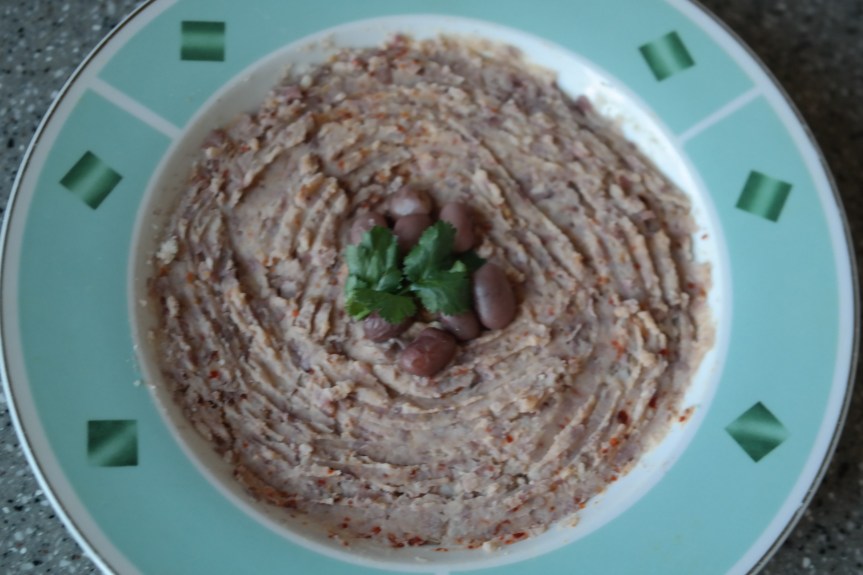
KCC’s Red-hot, red bean hummus

After soaking in cold water overnight, these red beans can be used in endless ways – from soups, stews and curries to burgers, salads and dips. We’ve gone for a easy-to-make red bean hummus; you’ll just need to add tahini, lemon juice, olive oil and some spices. Serve with flat bread and salad for a tasty lunch.

Don’t worry if you haven’t got any tahini on hand, you can make your own by toasting some sesame seeds and mixing them with olive oil – here’s a link to last year’s post on DIY tahini.

Ingredients (makes around 300 g)

  • 250 g cooked red beans (reserve 50 ml of the cooking water)
  • Two tablespoons tahini
  • 25 ml olive oil
  • One lemon
  • One garlic clove
  • One teaspoon cumin seeds
  • One teaspoon sumac
  • Two teaspoons red chilli flakes
  • A few sprigs of coriander

Method

  • Mash the beans with a potato masher or a fork and add the tahini. Mix well then add olive oil and lemon juice and blend until you get a smooth consistency. If the hummus is too thick, use some of the cooking water, Add the minced garlic and spices and mix a bit more with the fork. Garnish with a few beans, a drizzle of oil, a sprinkling of chilli flakes and a sprig of coriander.


Lockdown Lunch: Kicking off with Kısır

9 April 2020

We’re heading towards the end of the second week of serious lockdown here in Almaty. Our local shops remain well-stocked with basics (we’re not supposed to go further than 500 metres form home) and the greengrocer’s reopened after closing for a week, so fresh vegetables are readily available.

SAMSUNG CSC
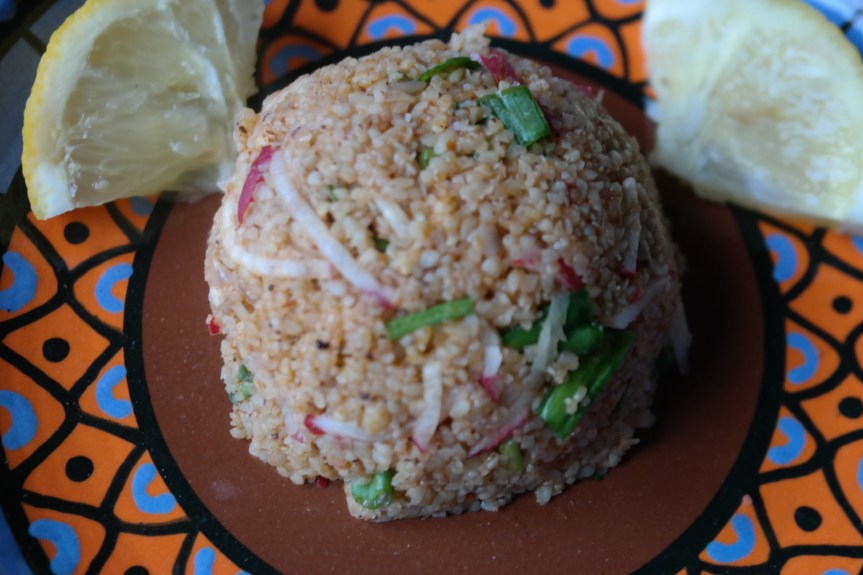
Basic kısır with radish

For this week’s Lockdown Lunch we’re making kısır, Turkey’s bulgur wheat salad answer to the Middle East’s tabbouleh salad. Kısır is one of those dishes that everyone has their own recipe for, but the basic ingredients are fine bulgur wheat, onion, chilli pepper, tomato paste, olive oil, lemon juice, parsley and pomegranate sauce.

SAMSUNG CSC
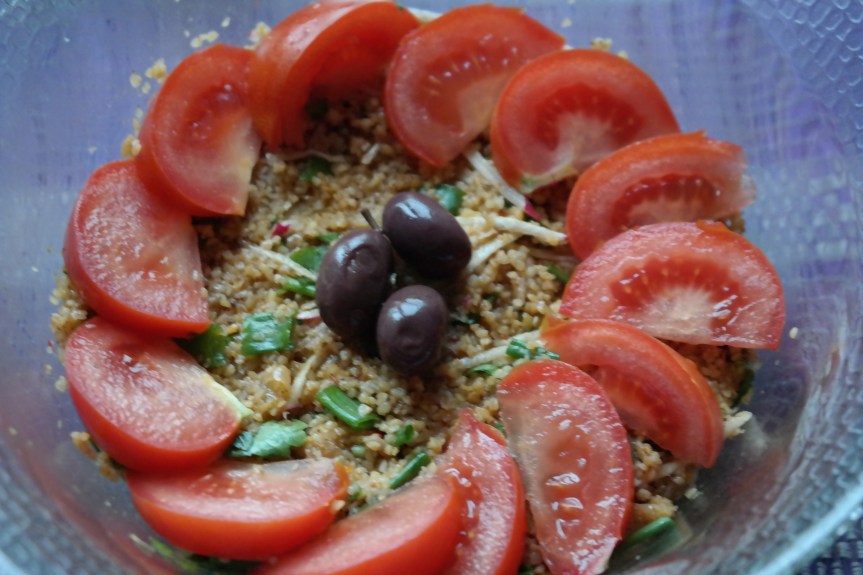
Kısır with olives and tomatoes

We’ve added some radishes, tomatoes, spring onion and black olives to the standard package above that can be eaten as a main meal (you might want to add some nuts or beans for a protein punch) or as a side salad. If you are on a gluten-free diet, then you can use millet in place of bulgur wheat.

SAMSUNG CSC
A fresh kick for your kısır

Kısır is easy to prepare and it benefits from sitting in the fridge overnight – leaving more time for all those Zoom parties and, of course, the Tajik football season, which kicked off last weekend.

Ingredients (for 3-4 servings)

  • 100g fine bulgur wheat
  • 200 ml vegetable stock or water
  • One medium onion
  • One medium tomato
  • One medium radish
  • One spring onion
  • One garlic clove
  • Ten black olives
  • Two tablespoons tomato paste
  • 25 ml olive oil
  • One lemon
  • 25 ml pomegranate sauce
  • Few sprigs of parsley
  • One teaspoon chilli pepper flakes
  • One teaspoon cumin seeds
  • One teaspoon sumac

Method

  • Heat the oil in a frying pan and add the cumin seeds and fry until they start to sizzle. Add the finely chopped onion and mashed garlic and cook for a few minutes over a low heat, stirring occasionally. Add the chilli pepper and sumac and stir.
  • Add the fine bulgur wheat and stir to cover the grains then add the stock or water, Add the tomato paste, pomegranate sauce and the juice of half the lemon. Stir and bring to the boil. When boiling, turn off the heat, cover the pan and leave to stand for 30 minutes or so until most of the liquid is absorbed.
  • Fluff up the grains with a fork and add the grated radish, sliced spring onion and chopped parsley. Mix together and put in a salad bowl. Before serving, garnish with lemon and/or tomato slices and black olives.

Red Bean Hotpot

6 February 2020

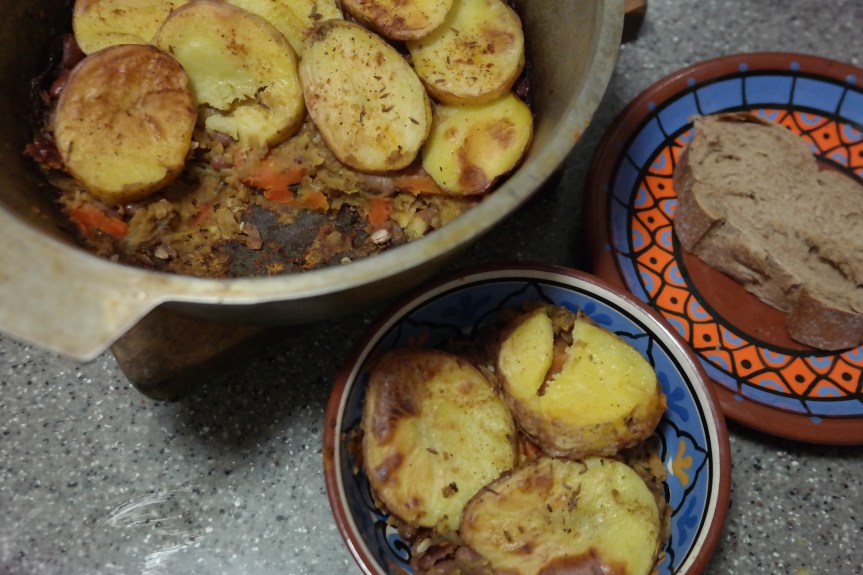
This time round on Knidos Cookery Club, we’re turning our attention to a winter classic from the UK – the Lancashire Hotpot. Our spiced up, veggie-friendly version replaces the meat traditionally used with red beans and red lentils and is topped off with sliced potatoes, helping to retain the hearty, comforting hit of the original.

SAMSUNG CSC

This casserole originated in the north-west of England as a dish that could be left  cooking slowly in the oven over a low heat while families worked from home spinning thread.

The term hotpot is thought to derive from the mixture of ingredients used, although it’s also claimed to be named after the clay pot originally used to cook the dish.  It’s not to be confused with the Chinese Hotpot that uses a steaming pot of stock placed in the centre of the table to cook ingredients.

Ingredients (serves 2)

  • 125 g red lentils
  • 250 g cooked red beans
  • 3 medium potatoes
  • 2 medium carrots
  • 1 medium onion
  • 1 stick of celery
  • 1 garlic clove
  • 50 ml olive oil
  • 600 ml vegetable stock
  • 1 teaspoon each of mustard seeds, coriander seeds, fenugreek seeds, cumin seeds, chilli flakes, turmeric
  • 1 cinnamon stick
  • 1 bay leaf

Method

  • Heat the olive oil in a casserole dish or an ovenproof pan. Fry the onions, garlic, ginger and spices all together for five minutes or so over a medium heat. Add the diced carrot and celery and cook for five more minutes. Add the lentils and 300 ml of stock and cook over a low heat until the water is absorbed and the lentils are cooked but not mushy.
  • While this is cooking, boil the potatoes (cut into 1/2 cm thick slices) for 10 minutes, pour off the water and cover with cold water. Add the cooked beans and the rest of the stock to the lentils and stir well. Place the potato slices in layers over the top of the stew and pour some olive oil over them.
  • Put the casserole dish or pan into an oven heated to  200 c and cook for 30 minutes at this temperature until the potato slices are starting to go a golden brown colour. Serve immediately in individual bowls with a hunk of bread.

The Golden Soup of Samarkand

23 January 2020

This week’s offering – a soup made from chickpeas and carrots, was inspired by a recent visit to a funky Central Asian restaurant called Saksaul in Nur-Sultan, Kazakhstan. This soup appeared on the menu, but unfortunately there wasn’t any left that day. Spotting yellow carrots on sale in the market after returning home, we decided to cook up our own version.

KCC’s Golden Soup of Samarkand featuring yellow carrots and chickpeas

Our soup contains two ingredients that are common in the cookery of Samarkand in Uzbekistan – chickpeas and yellow carrots. Not all carrots are orange in Central Asia, you can even find black ones on occasion, but we find these yellow ones particularly sweet and tasty.

Yellow (and a bit green!) carrots on sale in Kazakhstan

This famed Silk Road city of Samarkand provided further inspiration for our golden potage with spices such as cumin, coriander and turmeric that are still bought and sold along this ancient trade route.

Ingredients (makes 4 portions)

  • 500 g yellow carrots
  • 500 g chickpeas
  • Two yellow onions
  • Two garlic cloves
  • Two teaspoons mustard seeds
  • Two teaspoons chilli powder
  • Two teaspoons cumin seeds
  • Two teaspoons coriander seeds
  • Two teaspoons turmeric
  • 50 ml vegetable oil
  • One litre vegetable stock

Method

  • Heat the oil in a heavy-based pan and add the mustard seeds. When the seeds begin to pop, add the chopped onion and garlic and cook over a medium heat for five minutes. Add the other spices and mix well.
  • Next add the diced carrot and stir to coat the carrot with the mix. Cook for five more minutes, stirring occasionally. Add the chickpeas and stir well, then add the stock and reduce to a low heat and simmer the soup for 30 minutes or so.
  • Using a stick blender, liquidise the soup. Pour into bowls and garnish with chickpeas and a sprinkling of cumin seeds. Serve with bread – we used a flatbread but any crusty bread will work just as well.

Pump up the Dhal

20 February 2020

On these chilly, wintry nights there’s nothing better than a bowl of dhal, the Indian subcontinent’s beloved lentil-based comfort food, to warm you up. We’ve added some chunks of roasted pumpkin that blend perfectly with the red lentils, whilst adding a hint of sweetness to the rich, spicy blend.

20191203_221509
KCC’s pumpkin enriched red lentil dhal

In Sri Lanka, where Knidos Cookery Club has just been on a foodie fact-finding mission, dhal (also spelt dal or daal) is a mainstay of the island’s signature curry and rice dish. It’s served any time of the day – it was particularly good served with string hoppers, little nests of steamed rice noodles, and coconut sambol (grated coconut with chillies and lime juice) – a popular breakfast on the island.

SAMSUNG CSC
Breakfast Sri Lankan style – string hoppers with coconut sambol and red lentil dhal in the background

Dhal can be a meal on its own when served with rice or flatbreads, or try it alongside a selection of your favourite vegetable curries. It’s a dish that tastes even better the next day when the spices have been left over night, allowing the different flavours to mix and mingle.

Ingredients (makes 4-6 servings)

  • 125 g red lentils
  • 200 g roasted pumpkin
  • 250 ml water or vegetable stock
  • 50 ml coconut milk
  • 200 g tomatoes
  • One medium onion
  • One teaspoon each of mustard seeds, cumin seeds, coriander seeds, cloves and chilli flakes
  • Two teaspoons turmeric
  • 1 cm knob of ginger
  • One garlic clove
  • One cinnamon stick
  • One star anise
  • One bunch fresh coriander
  • 50 ml olive oil

Method

  • Roast the chunks of pumpkin in a hot oven at 200 c for 20 minutes. While the pumpkin is cooking, heat the oil in a heavy based pan and add the mustard seeds. When the seeds begin to pop, turn the heat down and add the chopped onions, ginger and garlic and the other spices and stir well. Cook for 10 minutes over a medium heat.
  • Wash the lentils until the water runs clear and then add them to the onion mix with the vegetable stock and chopped tomatoes, stir and cook until all the liquid is absorbed. Add the pumpkin chunks and coconut milk. Cook over a low heat until it starts to bubble. When cooked, remove the cinnamon stick and star anise. Garnish with the chopped coriander and serve with rice and/or a flat bread such as chapati or pita.