Almond Party Time in Datça

12 February 2025

Almonds are on the agenda in KCC’s spiritual home of the Datça Peninsula this weekend as the Turkish seaside town hosts its annual Almond Blossom Festival.

The festival, which celebrates the blossoming of the peninsula’s almond trees, takes place between 13-16 February. Alongside live entertainment, with local faves Rampapa performing on Thursday and Anatolian psych rock legends Moğollar headlining on Saturday, there are cookery competitions, sports events and a speedy almond cracking contest.

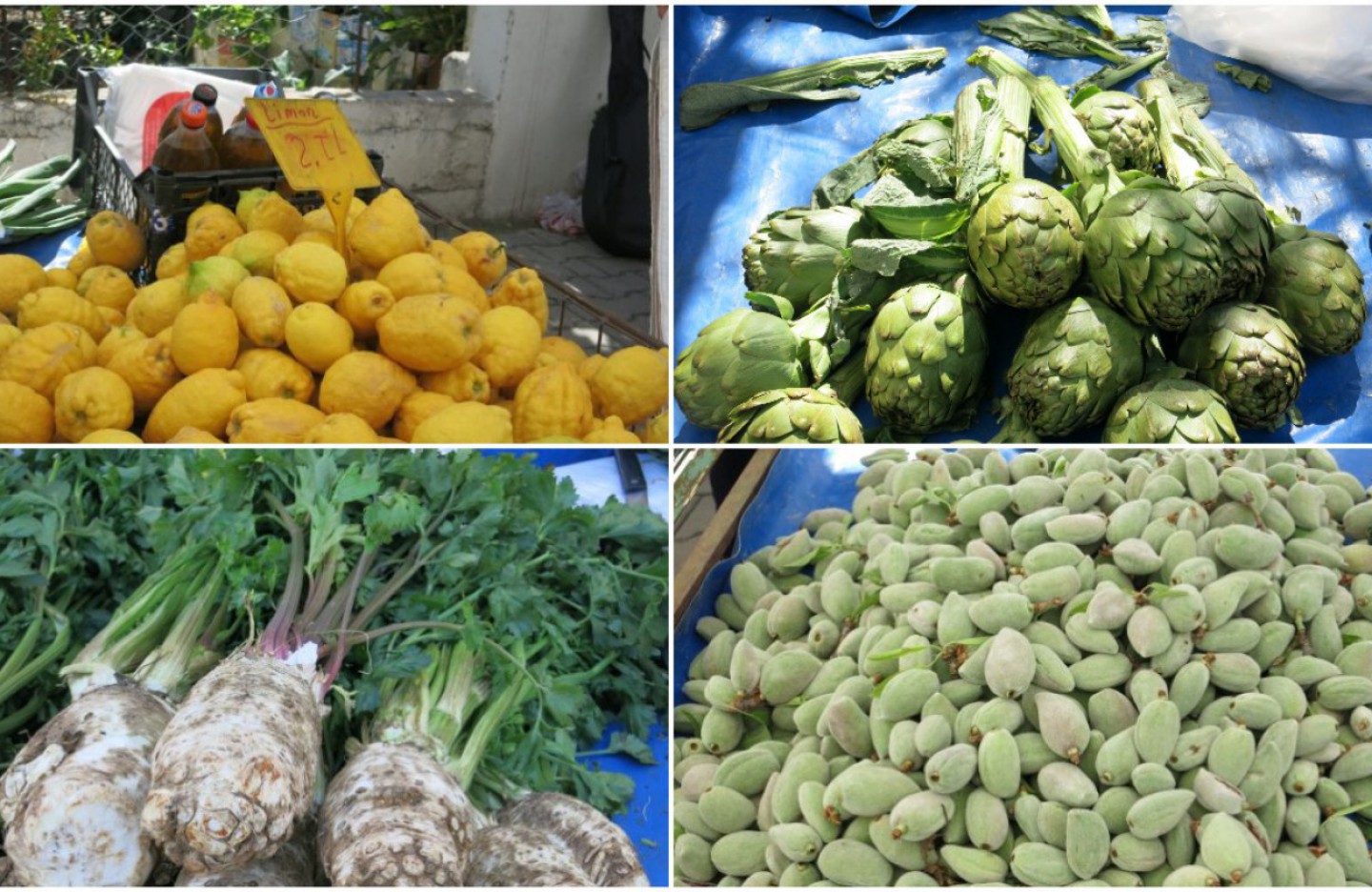
Datça’s tasty almonds, badem in Turkish, are rightly famous all over Turkey – I remember sitting on a terrace in Istanbul’s Beyoğlu district, back in the days when it still had tables on the street, when a guy came round selling ice-chilled Datça almonds.
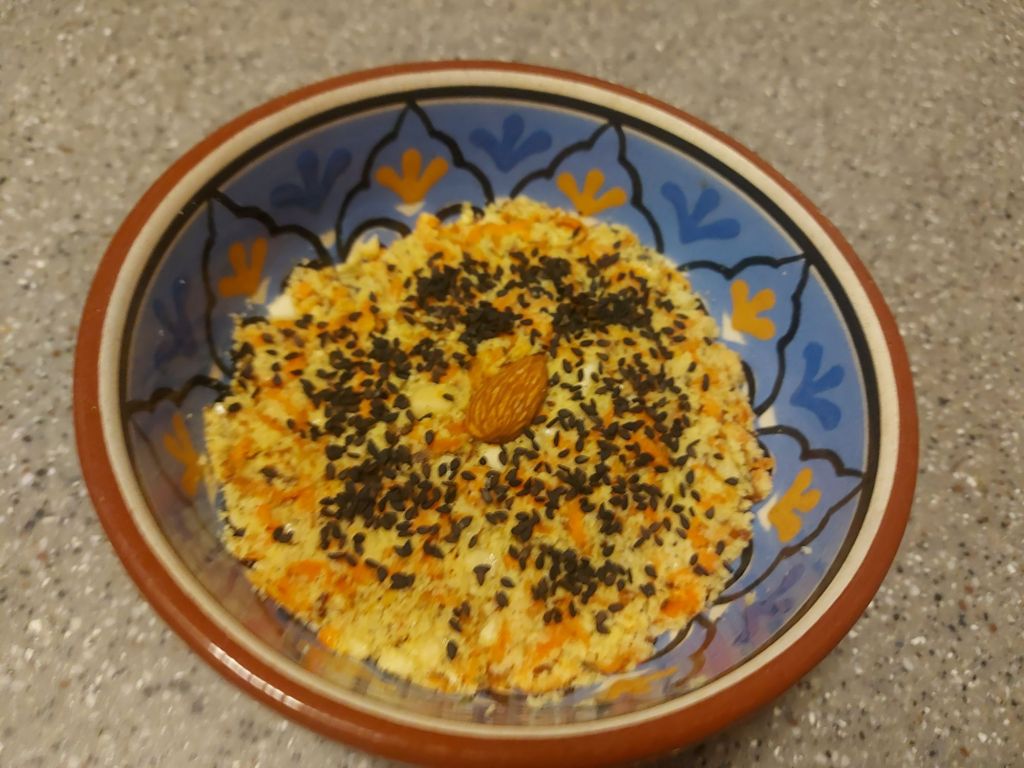
Bademli havuç tarator (carrot and almond tarator)

In Istanbul and along the Aegean coast tarator is a yogurt-infused meze made with carrots or courgettes and walnuts (recipe link here). Tarator started life in the eastern Mediterranean as a tahini-based dipping sauce for falafel. In Ottoman times it referred to a sauce made from walnuts, breadcrumbs and lemon juice (often served with kalimari), before it took on its yogurt iteration in the modern day. In Bulgaria, Tarator is the name of a yogurt-based, cold soup.

We adapted the recipe to make it vegan by replacing the yogurt with almond cream and gave it more of a Datça vibe by using almonds instead of walnuts and throwing in some local capers to give it an umami kick. The resulting dip had a thicker consistency than the yogurt version – it came out more like a savoury carrot halwa, but was still delicious.

Ingredients

  • 100 g blanched almonds
  • 50 ml cold water
  • Two teaspoons apple cider vinegar
  • 20 capers (with brine)
  • 150 g carrot
  • One or two garlic cloves (optional)
  • Pinches of herbs and spices of your choice (e.g. oregano, black pepper, salt, sumac, red chili flakes)
  • One teaspoon nigella (black cumin) seeds

Method

  • If your almonds have skins on, then pour hot water over the almonds and leave for a minute or two. Drain off the water and peel the nuts between your fingers. Set aside 20 g of the nuts. Cover the remaining almonds with cold water and leave to soak overnight.
  • Drain the almonds and put in a blender bowl. add the vinegar, capers and water and blitz to a smooth cream. Add more water if needed (10 ml at a time) to get the required creamy consistency.
  • Heat the oil in a heavy-based pan, grate the carrot and saute it in the oil for ten minutes over a medium heat. Add diced garlic (if using), the remaining almonds (crushed with a rolling pin or wooden spoon) and pinches of herbs and spices (as needed).
  • Allow the carrot mix to cool and then blend with the almond cream. Garnish with nigella seeds and some unblanched almonds. Serve as part of a meze set or as a dip.

Bulgur Biryani

15 November 2024

Turkey meets India this time round on KCC as we cook Turkey’s beloved bulgur wheat in in Indian biryani style. Bulgur, parboiled, dried and cracked wheat, is a quick-cooking alternative to rice that works really when combined with spicy vegetables.

Bulgur biryani

Biryani belongs to the family of layered rice dishes that includes Uzbekistan’s plov and other pilafs. The name is from the Persian barian, which translates as ‘roasted’.

The dish was originally brought to the Indian sub-continent by travellers from Iran and has developed into a number of regional variations, with the Hyderabadi one, served with a yoghurty raitha, being the most famous.

As bulgur is parboiled, it cooks really quickly. It takes around 15 – 20 minutes to cook – the total prep time for this dish is less than an hour from start to finish and it is cooked in one-pan, so less washing up to worry about.

Ingredients (for two servings)

  • 100g coarse bulgur
  • 100g diced carrot
  • 100 g courgette
  • 150 g cooked chickpeas
  • 25 g tomato paste
  • 25 g pepper paste (we used tatli (sweet), if you want it hot, use acili)
  • 20 ml olive oil
  • 1 stick of celery (approx 25 g)
  • 2 spring onions (approx 10 g)
  • 1 green pepper (approx 30 g)
  • 250 ml vegetable stock
  • 1 cinnamon stick
  • 1 teaspoon each of mustard seeds, cumin seeds, turmeric, fenugreek, chilli powder
  • 25 g fresh coriander

Method

  • Heat the oil in a large frying pan and add the mustard seeds. When they start to pop, add the chopped spring onion and celery and cook for two minutes. Then add the chopped green pepper and diced carrot and cook for two more minutes. Add the courgettes and cook for another two minutes.
  • Add the spices and stir well and then add the cooked chick peas and the vegetable stock. Stir in the tomato and pepper paste, bring to a boil and then reduce the heat to a gentle simmer. Add the bulgur in a layer over the veggies. Put a lid on the pan and cook over a low heat for 15 – 20 minutes until all the liquid is absorbed.
  • Turn off the heat and allow the mix to rest for ten minutes or so. Stir well and then serve. Garnish with chopped coriander.

Getting Back to our Roots

25 April 2024

Recently, Knidos Cookery Club was back in its spiritual home on the Datça peninsula in Turkey, getting back to its roots in the place where its culinary journey began eight years ago.

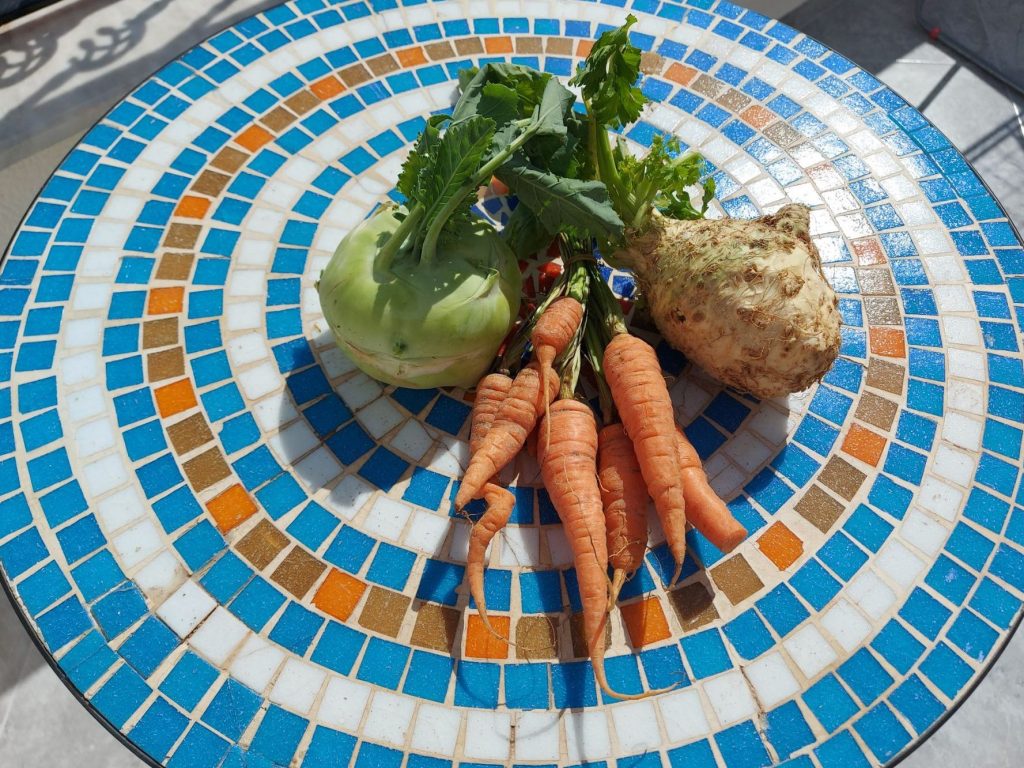
Getting back to our roots… carrots, celeriac and kohlrabi

This blog was named after the ancient Greek city of Knidos, the ruins of which are located on the tip of the peninsula. KCC started out exploring the veggie and vegan dishes eaten around this point where the Aegean Sea meets the Mediterranean Sea.

Since 2016, it has expanded its exploration to Central Asia and many other corners of the globe, seeking out new dishes to tickle your tastebuds!

Now, in addition to its WordPress blog, KCC is making its debut on Substack, where a regular newsletter will keep you up to speed with KCC’s latest culinary adventures, along with updated posts from the archive.

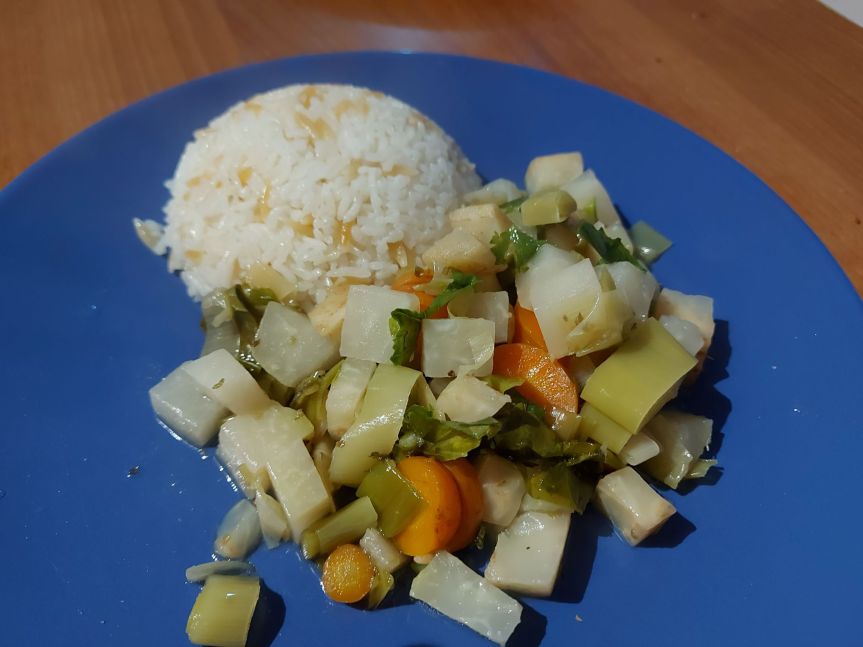
Zeytinyağlı carrot, celeriac, kohlrabi and leek with rice

After spending the winter in Kazakhstan, it was a treat to get back to Turkey with its wider choice of ingredients – it was time to move on from the winter staples, such as pumpkin and potatoes, and dig up some root vegetables that are less seen in Central Asia.

The local market turned up trumps with celeriac, kohlrabi and leeks on sale, perfect for making a zeytinyağlı (with olive oil) dish, so-called as these dishes are prepared with lashings of olive oil.

Standards include green beans (taze fasulye), artichoke (enginar) and leek (pırası). They are a staple of ev yemekleri (home-cooked food) restaurants, lokanta in Turkish, cheap and cheerful canteen-style eateries.

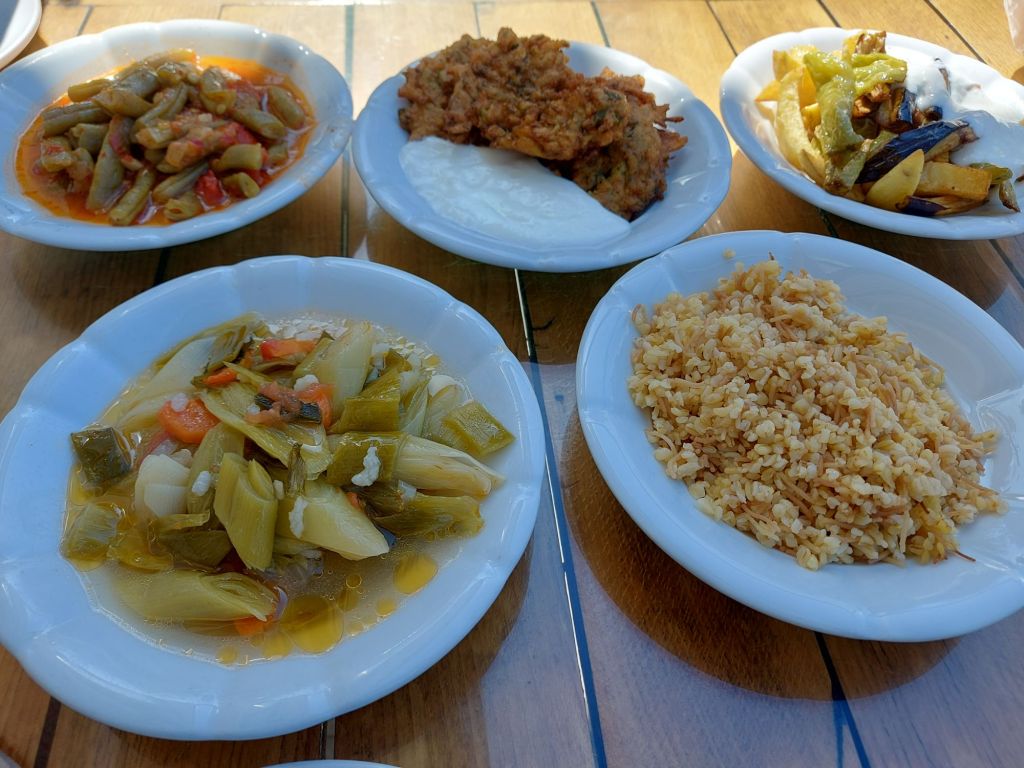
A selection of zeytinyağlı dishes – green beans, leeks and aubergines, green peppers and potatoes – from Datça’s Korsar/Erkin’nin yeri restaurant, located by the harbour

The last few years have seen the price of the key ingredient, olive oil, soar. This is due to numerous factors, including unexpectedly cold and wet conditions at the start of the growing season and drought and forest fires in the summer, that have led to poor harvests in the main olive-producing regions.

Global olive oil production has dropped by a third in just two years, which in turn has led to higher prices for consumers. However, we think it’s still worth shelling out that bit more for a bottle of extra virgin olive oil, as its fruity, peppery flavour adds so much to a cornucopia of delicious dishes, such as this carrot, celeriac, kohlrabi and leek zeytinyağlı  one:

Ingredients (makes 3-4 servings)

  • One medium-sized kohlrabi (approx 200 g)
  • One medium-sized celeriac (approx 200 g)
  • One bunch of baby carrots (approx 200 g)
  • One leek (approx 200 g)
  • One small lemon
  • 75 ml extra virgin olive oil
  • 100 ml vegetable stock
  • Two teaspoons dried oregano
  • One teaspoon sumac

Method

  • Wash the leek well and then cut it into 2 cm slices. Top and tail the carrots, kohlrabi and celeriac, put the leaves and stems to one side, and then peel off the hard outer skin of the kohlrabi and celeriac and chop both into 1 cm cubes. Slice the washed carrots into 2 mm rounds. Roughly chop the leaves and stems from the carrots, kohlrabi and celeriac.
  • Heat 50 ml of olive oil in a heavy-based pan over a low heat and then add the leeks. Stir fry for five minutes and then add the carrots, kohlrabi and celeriac and cook for another five minutes, stirring occasionally. Add the chopped leaves and stems and cook for another five minutes, continuing to stir every now and then.
  • Add the vegetable stock, the juice of the lemon and oregano and cook over a low heat for 15 minutes until all the vegetables are soft but still holding their shape. Stir in 25 ml of olive oil, garnish with sumac and serve with rice and some crusty bread to mop up the juices.

Some Striking Salads for the (not so)Bleak Midwinter

29 December 2023

As 2023 draws to a close, let’s take a look at some striking winter salads to liven up the end-of-year table. To complement our perennial favourite, our Olivier (with an Edge) salad, we’re looking to a coleslaw variation to add some colour to the New Year’s Eve spread. With the new year just around the corner, KCC wishes all its readers a prosperous and peaceful 2024, full with culinary adventures and many more mouth-watering meals!

KCC’s take on Olivier salad uses olives instead of meat

This winter has been a strange one here in Kazakhstan. We should be in the depths of winter now, but the snow didn’t arrive until the first week of December. Then there was a week or so of freezing weather with the temperature dipping to -28c, but now, as we approach the end of December, there’s very little snow on the ground in Almaty – it’s even been raining, which is really unusual at this time of the year.

KCC’s coleslaw variation with pear and rocket

The purple hues of red cabbage pair so well with the orange of carrots and the green of rocket. For a bit of bite, we’ve added some grated radish (we used green radishes, but you can use red radishes or mouli if you can’t find green ones), along with some grated pear and pomegranate seeds for a sweet and tart note. Add in some pumpkin and sunflower seeds and raisins before dressing with tahini and pomegranate sauce.

Ingredients (serves  3-4)

  • 100 g shredded red cabbage
  • 100 g grated carrot 
  • 50 g chopped rocket
  • 50 g grated green radish
  • 50 g grated pear
  • 25 g pomegranate seeds
  • 25 g raisins
  • 1 teaspoon dried oregano
  • 2 teaspoons pumpkin seeds
  • 2 teaspoons sunflower seeds 
  • 1 tablespoon tahini
  • 1 tablespoon pomegranate sauce
  • a slice of fresh lime

Method

  • In a large bowl mix the red cabbage, carrot, rocket, green radish, pear and pomegranate seeds together. Add the raisins, oregano, pumpkin seeds and sunflower seeds. Make a dressing with equal parts pf tahini and pomegranate sauce and thin with a bit of hot water to obtain a smooth consistency. Pour over the salad, stir well, give it a squeeze of lime and serve.

Bean and Beetroot Shakshuka

14 September 2023

This time round on KCC. we’re experimenting with a tomato-free twist on shakshuka, that North African breakfast staple.

Rip Red Shakshuka with beans and beetroot

Our latest shakshuka (click here for our grip green one from last year), replaces tomatoes and onions, which have a high acid content, with beetroot and red beans as the base to poach the eggs in.

This makes for a dish that is easier on the stomach and is ideal for people suffering from GERD, Gastroesophageal reflux disease, which occurs when excess stomach acid flows back into the tube connecting your mouth and stomach.

Ingredients

  • 150 g cooked red beans
  • 100 g diced cooked beetroot
  • 25 g celery
  • 150 ml vegetable stock
  • A pinch of fresh thyme 
  • 2 teaspoons sumac
  • 2 eggs

Mix the beetroot, red beans, celery, carrot and thyme together in a frying pan and add the vegetable stock. Bring to a boil and then reduce the heat so the mixture is simmering.

Cook for five minutes and then make two wells in the mix and break the eggs into these wells. Cover the pan and cook over a low heat for 4-5 minutes until the eggs are set. Sprinkle with sumac and serve with crusty bread or fresh pitas.

Meet the Hasselback Potato

21 December 2022

Winter Solstice is upon us once again so it’s time to kick off the holiday season. If you’re looking for something a bit different for your festive feast this year, then look no further than the Hasselback potato, an attractive dish that tastes like a jacket potato crossed with a roast potato.

This method of preparation involves cutting the potato into thin slices that fan out while baking. It can be used for other vegetables like beetroot, carrot and butternut squash, as well as a sweet version using fruits like apple and quince.

Hasselback potato with a pasty and salad

Hasselback potatoes originated in Sweden with the dish featuring in a 1929 recipe book “The Princesses’ Cookbook” by Jenny Åkerström. In 1953. Lief Elisson, a rookie chef at Stockholm’s Hasselbacken restaurant, revived this method for preparing the humble spud.

Preparing the Hasselback

To prepare the fruit or vegetables of your choice, place chopsticks or wooden spoon handles on either side and cut into thin slices until the blade hits the wood.

Ingredients

  • Four medium potatoes
  • 25 ml olive oil
  • One teaspoon rosemary or thyme (fresh if available or dried)
  • One teaspoon cumin seeds

Method

  • Put two chopsticks or the handles of two wooden spoons on either side of the potato. Cut into 1-2 mm slices, cutting until the blade hits the wood.
  • Put the potatoes in an ovenproof dish with the cut side facing up. Drizzle liberally with olive oil and sprinkle cumin seeds and thyme (or rosemary) over them.
  • Bake in a pre-heated oven at 180 c for one hour. Serve on their own or as part of a main course with a pasty or nut roast along with your choice of side vegetables or a salad.

Apricot and Lentil Courgette Roundels

13 October 2022

It’s that in-between time of year as the nights grow longer and thoughts turn towards more substantial meals after a long summer of salads and lighter fare. The last of the seasonal vegetables such as tomatoes and courgettes are perfect for stuffing and baking in the oven, making a bridge between summery salads and the heartier soups and stews of winter that are coming up.

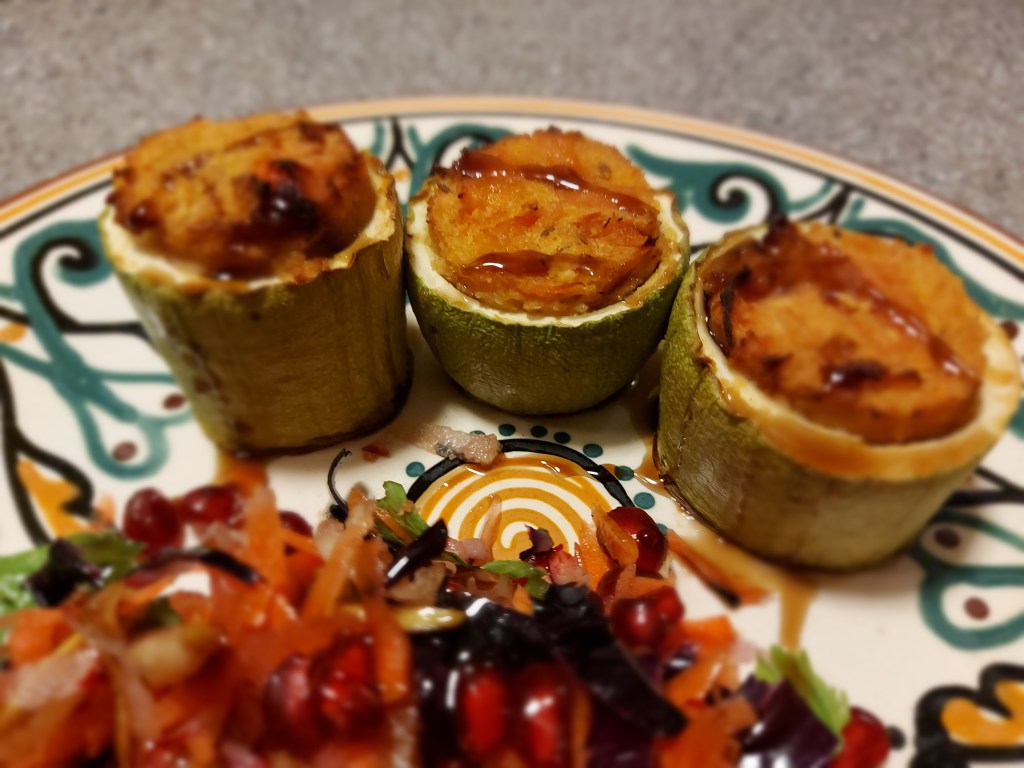
Apricot and lentil courgette roundels drizzled with pomegranate sauce and served with a seasonal salad

We stuffed some courgettes with a mixture of red lentils, apricots, tomato, onion, bulgur wheat and lemon juice to make a versatile roundel that can be served as part of a main course or eaten on its own as a meze, a fully vegan alternative to the sausage roll!

Apricot and lentil courgette roundel – a vegan alternative to the sausage roll?

The autumn fruit is at its best at the moment, and we’ve added some pear and pomegranate to an autumnal red cabbage, carrot, celery and radish salad to accompany these apricot and lentil courgette roundels to make a great lunch or supper. By adding a jacket potato, you can make it into a more filling main course.

Ingredients (makes enough mixture for 10-12 roundels)

  • Three medium sized courgettes
  • 100 g red lentils
  • 50 g dried apricots (or four fresh apricots if available)
  • One small red onion (approx 75 g)
  • One medium tomato (approx 100 g)
  • 50 g fine bulgur wheat
  • 25 ml olive oil
  • 200 ml vegetable stock
  • Juice of half a lemon
  • One teaspoon cumin seeds
  • One teaspoon red chilli flakes
  • Black pepper to taste

Method

  • Cut the dried apricots into eight pieces and soak in hot water for at least 30 minutes. While the apricots are soaking, heat the oil in a heavy based pan and add the cumin seeds. When they start to sizzle, add the finely chopped onion and fry over a medium heat until they start to soften. Grate the tomato into the fried onion and cook over a low heat for five minutes or so, stirring occasionally.
  • Now add the washed lentils, pour in the stock and stir. Cook over a low heat for 15-20 minutes until most of the water has been absorbed. Add the fine bulgur wheat, mix it in well and leave covered for 15 minutes. Drain the apricots and stir them into the mixture. Add the lemon juice, chilli flakes and black pepper to taste and mix well.
  • While the lentils are cooking, start to prepare the courgettes by slicing off the ends to make them flat. Cut into 3 cm slices. Gouge out the seeds with a small spoon, leaving a little bit of flesh at the bottom of the roundel.
  • Pre-heat the oven to 180 c. When the lentil mix is cool, pack it into the courgette roundels and stand them on a baking tray with the filling topmost. Bake at 180 c for 30 minutes or so – the courgette should still be firm and not too squidgy and the lentil mix should rise slightly and be beginning to brown on top. 
  • Serve alongside a salad of red cabbage, carrot, celery, radish, pear and pomegranate and a jacket potato, drizzling pomegranate sauce over the roundels or allow to cool and serve the roundels as a snack on their own.

Green Bean Funchoza Supreme

17 June 2022

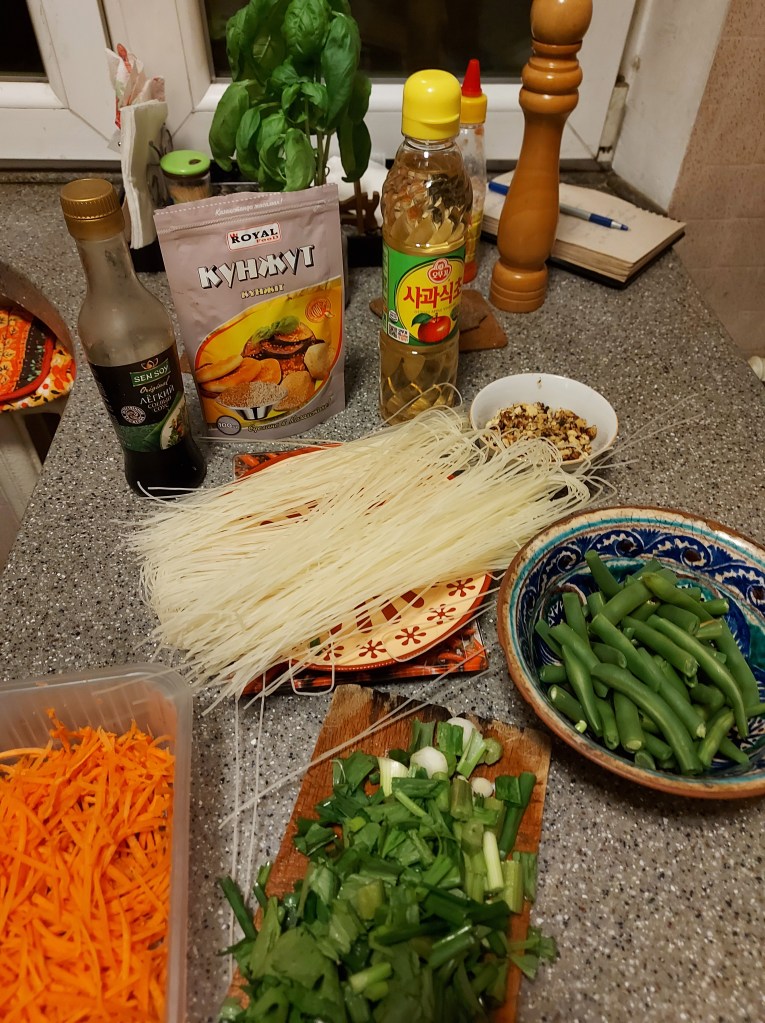
Continuing with our summery vibe, the year’s first green bean crops are appearing. Green beans are great for adding a bit of crunch to a stir fry or a salad, we’ve gone for the best of both worlds by mixing our green beans in with celery, carrots, spring onions and walnuts on a bed of funchoza (vermicelli) noodles, liberally dressed with soy sauce, apple vinegar and sesame seeds.

This recipe lends itself to the pictorial treatment – see below for the steps needed to assemble this summery salad. Also check out our reel on Instagram as well with an orangey red, green and gold inspired Black Uhuru backing track.

Nauryz Noodles

21 March 2022

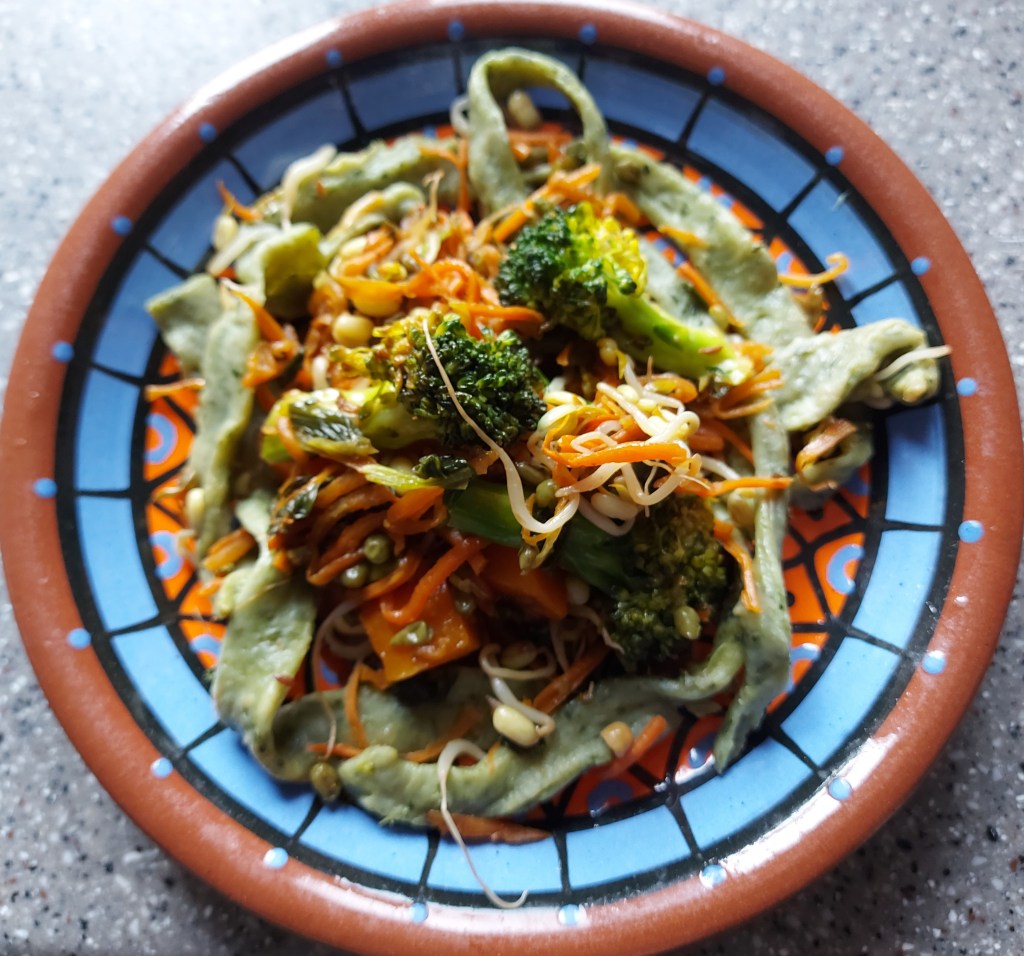
Happy Nauryz – the day of the Spring Equinox that marks the start of the new year in some parts of Asia. it’s a big celebration in Central Asia with a focus on things coming back to life after the long winter months. This year we’ve made some green noodles inspired by shivit oshi – dill noodles from Khiva, Uzbekistan, to mark the coming of spring.

As you may recall, here on KCC we’re not huge fans of dill, aka the devil’s weed, so we replaced it with spinach to give our noodles their distinctive green colour. We served our noodles with an orange and green stir fry made from pumpkin, carrots, spring onions, beansprouts and broccoli.

We washed our Nauryz noodles down with some Turan Tiger beer as a nod to the year of the tiger.

Ingredients (makes four servings)

For the noodles

  • 300 g plain flour
  • 100 ml water
  • 40 ml olive oil
  • 120 g spinach

For the stir fry

  • 100 g spring onion
  • 300 g pumpkin
  • 200 g carrot
  • 300 g broccoli
  • 200 g beansprouts
  • 50 ml olive oil
  • 20 ml soy sauce
  • Two teaspoons cumin seeds

Method

For the noodles

  • Pour boiling hot water over the washed spinach leaves and leave for one minute. Drain and then cover with cold water. Drain again and put in a blender with the water and blend to a smooth paste.
  • Stir the oil into the flour and then add the blended spinach. Mix well and knead the dough. Make sure it is neither too sticky (add more flour if so) or too crumbly (add more liquid if so). Cover with cling film and leave in the fridge until you are ready to use it.
  • Roll the dough to 1 mm thickness on a lightly floured surface. Fold the dough over three or four times and then cut off 2 mm slices and pull out the noodles by hand.
  • Cook in a pot of boiling water for five minutes – taste to check that the noodles have the texture that you prefer (e.g. al dente or softer). Drain and serve immediately.

For the stir fry

  • Heat the oil in a heavy-based pan and add the cumin seeds. When the seed begin to pop, add the chopped spring onions and stir fry over a medium heat. Add the pumpkin, cut into 1 cm cubes and stir fry for five minutes. 
  • Next add the broccoli and stir fry for another five minutes over a medium heat. Add the grated carrot and beansprouts along with the soy sauce and cook for a few more minutes. Serve on a bed of noodles.

Chocolate Chilli Chana

3 February 2022

This time round on KCC we’re going for a chickpea, aka chana, chilli that includes a slab of dark chocolate to balance out the acidity of the tomato sauce – a combination that works surprisingly well.

Chocolate chilli chana

We first came across the dark chocolate infused mole sauce many years ago in a Mexican restaurant in Barcelona. It’s been on the list of things to cook for a while and having received a selection of Green and Black’s chocolate that included an 85% cocoa bean bar there were no longer any excuses not to try it out.

We served our chickpea chilli with some pearl barley – it’s also good with brown rice, couscous, bulgur wheat or some flatbread to mop up the chocolate rich sauce. We also recommend washing it down with a margarita or two.

Ingredients (makes 3-4 servings)

  • 300 g chickpeas (cooked)
  • 150 g carrot
  • 150 g onion
  • 50 g red lentils
  • 250 g tomatoes
  • 20 g dark chocolate
  • 25 ml olive oil
  • 150 ml aquafaba (chick pea cooking water)
  • 1 teaspoon cumin seeds 
  • 1 teaspoon coriander seeds
  • 1 teaspoon paprika (smoked if you can get it)
  • 1 teaspoon chilli powder (or chilli flakes)
  • 2 cm cinnamon stick
  • 5 cloves
  • 1 bunch fresh coriander

Method (Cooking time approx 45 minutes)

  • Heat the olive oil in a heavy-based pan and add the cumin seeds. When the seeds start to pop add the diced onion. Stir fry for five minutes over a medium heat and then add the diced carrots. Cook for five more minutes and then reduce to a low heat. Add the chopped tomatoes and cook for another five minutes.
  • Add the aquafaba, ground coriander seeds,  cinnamon, cloves, paprika and chilli powder and stir well. When the mix starts to bubble, stir in the red lentils. Simmer the mixture and after 15 minutes add the cooked chick peas. Cook for another 10 minutes over a low heat and then add the dark chocolate. 
  • Serve with pearl barley or a grain of your choice and garnish the Chocolate Chilli Chana with fresh coriander. Take a slug of margarita and enjoy!