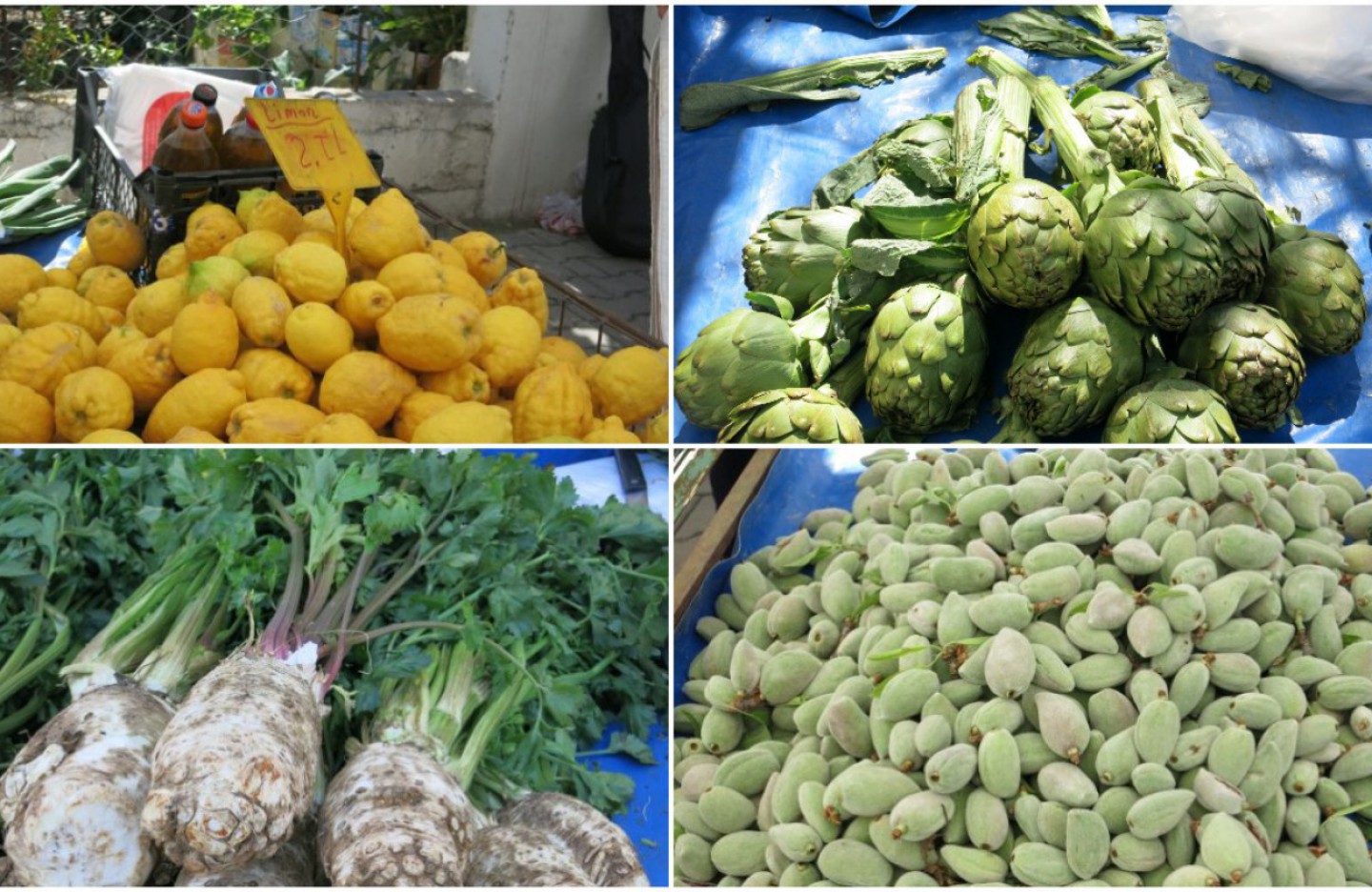
Summertime Veggies with Yogurt and Mint

26 June 2025

Summer is in full flow so it’s time for some lighter dishes that bring to the fore fresh seasonal ingredients at their best. I found this on-trend recipe that uses fresh peas, broad beans and runner beans while going through some old stuff in the UK recently.
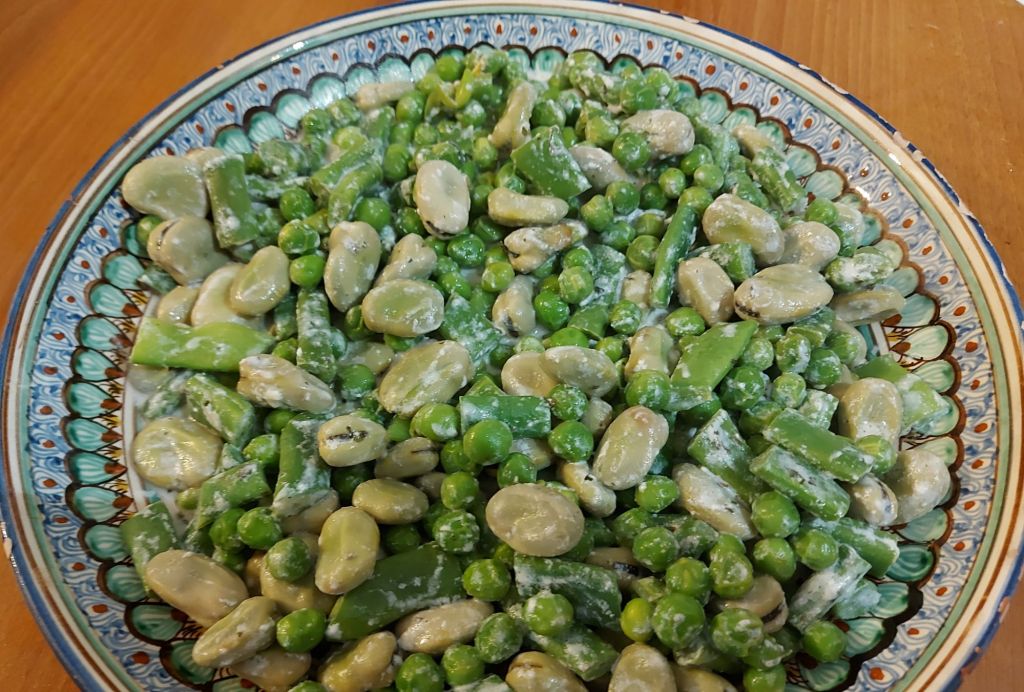
A taste of summer

I was at my late parents’ old place and during the archaeological dig I found a copy of the first vegetarian cookbook that I owned – Elaine Bastable’s Vegetarian Feast, a Christmas present from way back in 1985. It was sold by Marks & Spencer under its StMichael guise.

Vegetarian Feast was quite advanced for its time with a recipe for Avocado (and Stilton) on Toast, a Felafel recipe and other dishes that were very exotic for Margaret Thatcher’s meat-heavy Britain of the 80s. The cookbook’s over-reliance on butter comes across in the 2025 filter as a bit dated, but it still stands the test of time in many respects.

A blast from the past

1985 was the year I finally took the plunge and went vegetarian. It had been coming for a while. As an impoverished student the meat that I could afford was of the type that had featured in documentaries of the time looking at the meat industry.

Affordable processed products such as burgers and sausages were shown to contain all parts of an animal – mashed up eyelids, lips, bollocks and toes, to be precise.

Although there are now many more vegans and vegetarians, not much has changed in the meat industry – as I write the Guardian is carrying this article on the shocking rise of factory farms across Europe and the UK.
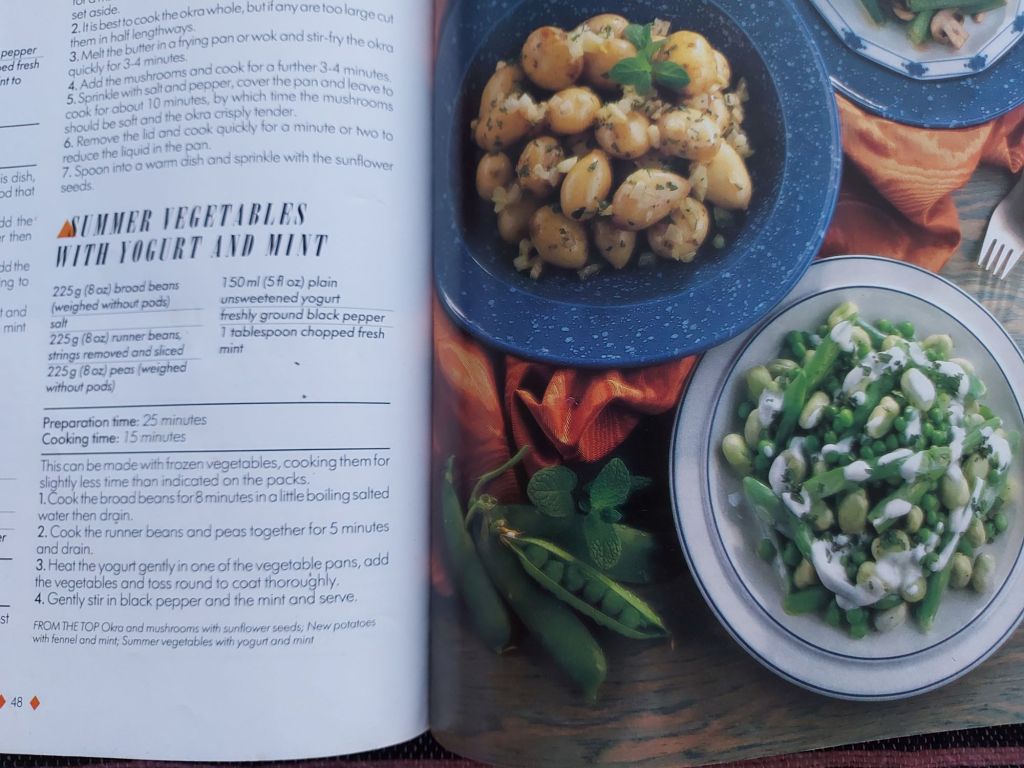
Here’s the recipe

In the summer of 1985 I had just finished uni and I was travelling through Yugoslavia, as was, to Greece via Bulgaria and Turkey. Bulgaria was a veggie turning point. Cafe menus featured a wide selection but when asking for a particular dish a frosty niama (approx: We don’t have it) was the usual responseBaked meat (of dodgy provenance) was the only option other than abundant salads. Who needed meat, especially baked meat of unknown origin, with all those veggies on offer?

Moving on into Greece, after the vegetarian heaven of Turkey’s ev yemekleri cafes, I finally started eating tomatoes, which I’d hated with a vengeance since my childhood. The tomato breakthrough opened up many new veggie avenues. From that point on I stopped eating meat and haven’t looked back since.

So, turning back to Vegetarian Feast, I found the recipe for this side dish of summer vegetables and Datça market came up trumps with fresh peas, broad beans and runner beans. Check out the recipe in the picture above.

Kookoo Sabzi – Welcoming Nowruz with a Herby Frittata

19 March 2025

This weekend is Nowruz, a spring festival which originated in Persia some 3,000 years ago. Nowruz, or New Day, is a celebration of the end of winter and the start of a new year on the date when day and night are equal in the Northern Hemisphere – usually on or around the 20 – 21 March. The holiday is celebrated in Iran, Afghanistan, Azerbaijan and Central Asia, and in parts of Turkey, Syria, India, Iraq, Pakistan, Russia and China.

Preparing for Nowruz (Nauryz) in Almaty, Kazakhstan

There are many traditional foods associated with the holiday – Uzbekistan has sumalak, a paste made from what flour, sprouted wheat and oil. Kazakhstan has Nauryz Kozhe, a soup made from seven ingredients: barley, meat, kumis (fermented horse milk), onion, garlic, water and salt.

Iran’s Kookoo Sabzi – a herby frittata

Iran’s Nowruz table features the wonderfully named Kookoo Sabzi, sometimes written as Kuku – a herb-filled cousin of Italy’s frittata. The fresh herbs represent rebirth, while the eggs stand for fertility.

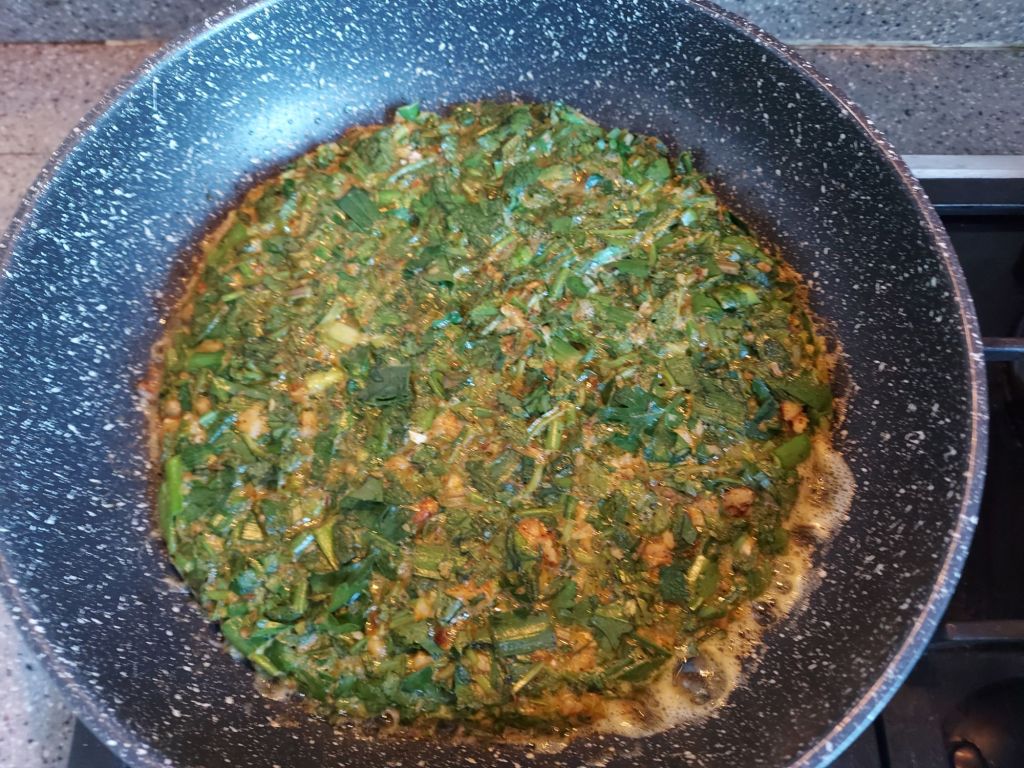
This Kookoo Sabzi’s ready to flip

Kookoo Sabzi is usually a combination of garlic chives, corainder (cilantro) and dill, but seeing as we’re not fans of dill, we’ve opted to replace it with parsley and mint. You can also omit the coriander if that’s not your thing (feel free to add some dill if you must). We’ve added parsley and mint, along with toasted walnuts, for some protien, and barberries (if you can find them – we couldn’t), to add a tart edge to the dish. Cranberries are a good replacement if barberries are proving hard to track down.

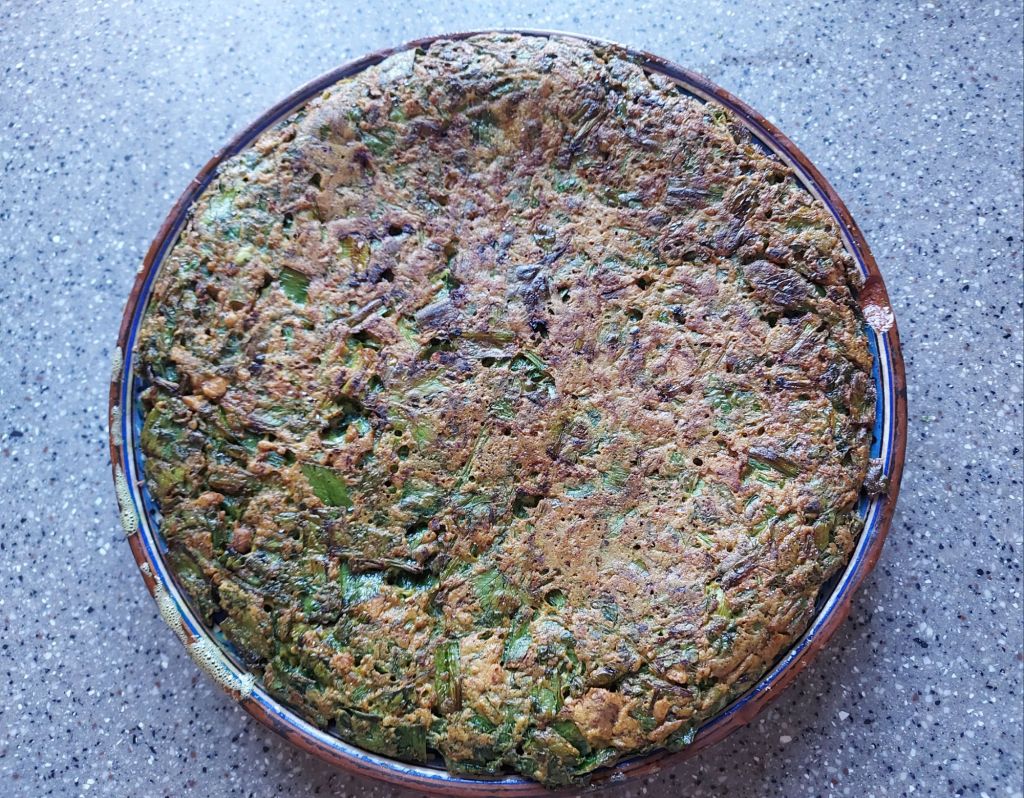
Turn it onto a plate and slide it back into the pan

Ingredients (makes four servings)

  • 50 g fresh parsley
  • 50 g fresh coriander
  • 50 g garlic chives (jusai)
  • 25 g fresh mint leaves
  • 50 g walnuts
  • 10 g dried barberries (or cranberries)
  • 4 eggs
  • 20 g chickpea flour
  • One teaspoon each of: cumin seeds, sumac and turmeric
  • 25 ml olive oil

Method

  • Wash the garlic chives and cut into 0.5 cm pieces. Leave to dry on a tea towel or kitchen paper. Wash and finely chop the parsley, coriander (including stems) and mint leaves. Combine all these ingredients with the chickpea flour, spices, berries and the eggs.
  • Crush and then toast the walnuts (without oil) for 10 minutes in a 12 cm frying pan. Remove the walnuts and mix them in with the herbs and eggs. Put half the olive oil in the frying pan and heat it up and then add the herb mixture, flattening it with a spatula.
  • Cook over a medium heat for 10 minutes. Put a plate on top of the kookoo and turn the frying pan over. Add the rest of the oil to the empty pan and heat it up. Slide the kookoo back into the frying pan and cook for another 10 minutes.
  • Cut the kookoo into four slices and serve with a dollop of natural yogurt and some olives.

Hash Greens: More Mücver Variations

17 September 2020

This time round on KCC we’re returning to mücver, Turkey’s versatile courgette fritter, with our take on that brunch staple Hash Browns. This mücver variation adds potato and garlic scapes to the mix to give us a fritter we’ve dubbed Hash Greens.

These fritters are super-easy to prepare and cook and are great as part of a breakfast or brunch. They can also be served in a roll to make it closer to a veggie burger.

We came across garlic scapes, the edible stem that grows from the bulb, on a recent visit to the local greengrocer while looking for green beans. This flavoursome peduncle gives a milder garlicky kick to soups, pestos and stir fries. It’s not an overpowering flavour as it adds a subtler, roasted garlic undernote to these dishes.

Ingredients (Makes 6-8 fritters)

  • One medium courgette (zucchini) (approx 200 g)
  • One medium potato (approx 200 g)
  • One small onion (approx 100 g)
  • 50 g garlic scapes
  • 100 g chickpea flour
  • 25 g mixed fresh herbs
  • One teaspoon cumin seeds
  • One teaspoon chilli flakes
  • One teaspoon turmeric
  • One teaspoon black pepper
  • 50 ml olive oil

Method

  • Grate the potato and courgette and mix together in a large bowl. Finely chop the garlic scapes and add to the bowl. Stir in the chickpea flour and add the herbs (use and fresh herbs you have e.g. parsley, coriander, mint) and spices and mix well so you have a smooth that’s neither too dry and crumbly nor too wet and sloppy.
  • Heat the oil in a frying pan. Form the mix into golf-ball sized patties and then put in the pan and flatten with a fish slice or spatula. Fry until golden-brown on both sides. Serve as part of a breakfast or brunch or in a bun as a burger with toppings of your choice.

The Turk-Mex Chronicles: A Crazy Cactus Salad

5 September 2019

This week we’re cooking up a cactus salad with the main ingredient foraged from some wild prickly pear bushes in Turkey. In an earlier post we reported on some of the similarities between Turkish and Mexican cooking – they both love hot chilli peppers in their food, there’s plenty of beans used, fresh white cheese is a key ingredient and wrapping food in flat bread is popular.

20190827_165824.jpg
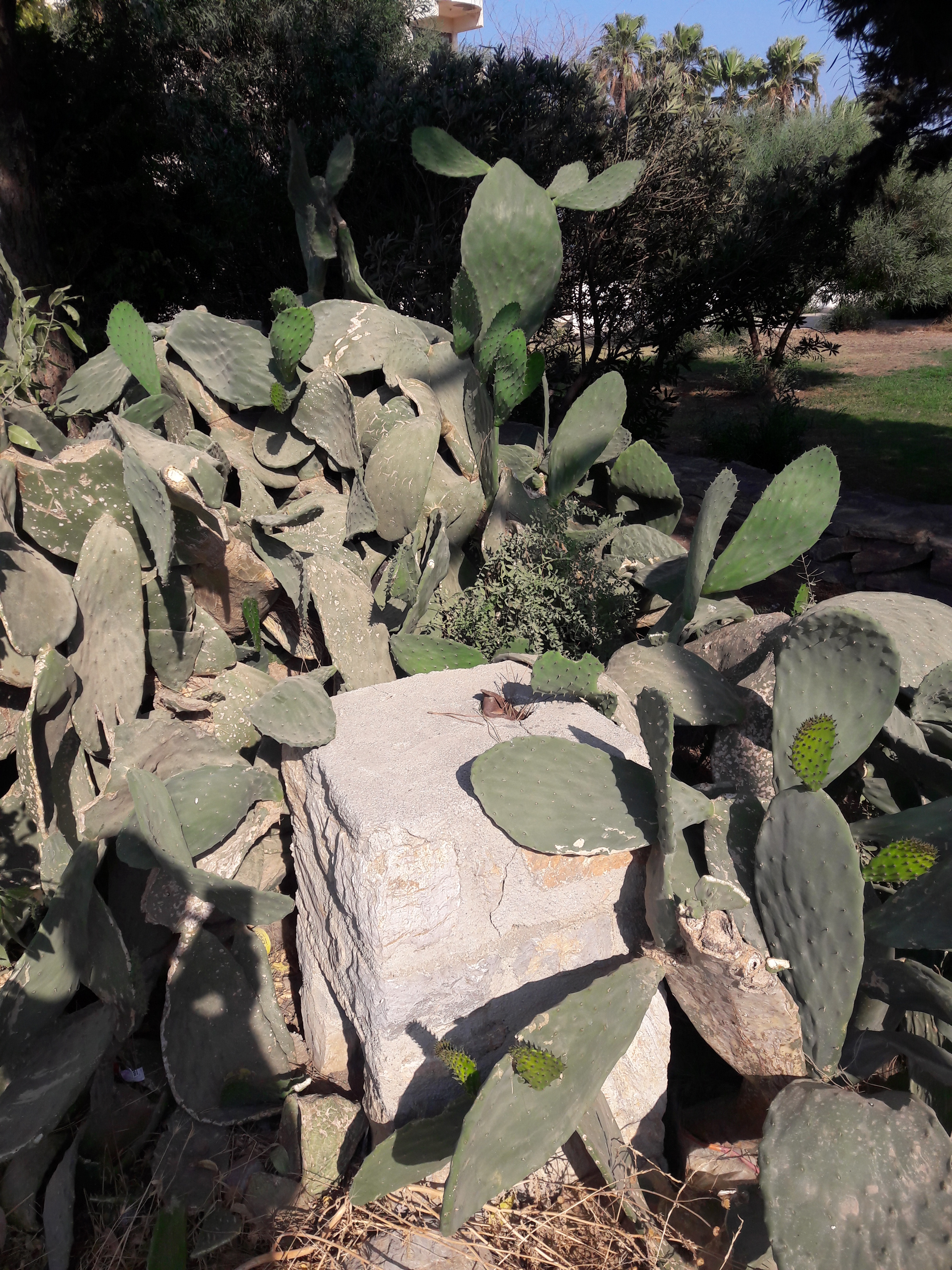
A prickly pear cactus growing wild in Datça, Turkey

A key area of difference is the use of cacti, a staple of Mexican cuisine. In Mexico the prickly pear paddles, known as nopales or napolitoes (from the Spanish for cactus), are used in a variety of dishes. They can be found in salads, as a taco or tortilla filling, simply grilled or scrambled up with eggs. They have a crunchy taste similar to green beans.

20190829_210243.jpg
Kaktuslu acili ezme

Whilst the prickly pear cactus grows all over southern Turkey, only the fruit – the prickly pears, are usually eaten and sometimes used in cocktails! We’re about to change all that with the first of one of our irregular ventures into the world of Turk-Mex cuisine…

How to deal with a thorny problem…

This slideshow requires JavaScript.

We harvested a few cactus paddles from a secret location in Datça, Turkey. After harvesting, we put on our marigolds and removed the thorns with a sharp knife, sliced the pads up and then boiled them. Next we mixed then in with a spicy tomato sauce, aka acili ezme, to create this Crazy Cactus Salad.

Ingredients (serves 3-4)

Four prickly pear cactus paddles (roughly hand-sized)

For the sauce:

  • One medium-sized onion
  • Three medium-sized plum tomatoes
  • One medium-sized green pepper
  • One garlic clove
  • One teaspoon capers
  • One bunch of parsley
  • One teaspoon dried mint
  • Three teaspoons red chilli flakes
  • Two teaspoons sumac
  • One teaspoon flavoured vinegar (such as apple or fig)
  • Three teaspoons pomegranate sauce

Method

Remove all the thorns from the pads with a sharp knife. Slice into 1 cm strips and then cut into 2 cm pieces. Boil in salted water for 8-10 minutes until cooked but still crunchy – cook them too long and they can go a bit slimy. Drain and rinse in cold water and then mix with the acili ezme salad (instructions below).

For the sauce:

  • Peel the tomatoes and de-seed (to peel: plunge the tomatoes into boiling water for 30 seconds then place in cold water – the skin should now come off easily). Chop the tomatoes, green pepper, onion, garlic and parsley as finely as you can.
  • Put all the ingredients into a bowl, add the herbs and spices, vinegar and pomegranate sauce and mix well. Leave to chill in the fridge for at least two hours before serving.


KCC 100: You Can’t Run Away from Pravda Punch

13 June 2019

Welcome to the 100th post from the weird and wonderful culinary world of Knidos Cookery Club! To celebrate this occasion, we’ve come up with a rose-tinted cocktail, Pravda Punch.

20190519_015403
You can’t run away from Pravda Punch…

Last Sunday saw Kazakhstan’s new president win a vote marred by allegations of rigging. The election campaign came to life when peaceful protestors put up a banner at Almaty’s marathon in May calling for a fair election and warning “От правды не убежишь” (You can’t run away from the truth) in Russian.

Screen Shot 2019-06-13 at 18.46.11
“You can’t run away form the truth” banner at Almaty Marathon, April 2019

To celebrate both this act and our 100th post, we’d like to raise a glass of Pravda (Truth) Punch in the hope that one day there will be free and fair elections in Kazakhstan.

How to make your own Pravda Punch:

  • 3 ice cubes
  • One part raspberry vodka
  • One part Martini Rosato
  • Two parts cucumber Sprite
  • Two parts still lemonade
  • Mint leaves
  • Slice of lemon

Put the ice cubes in a tall glass and pour raspberry vodka over them. Add the mint leaves and muddle with a wooden spoon. Add the Martini Rosato, cucumber Fanta, still lemonade and stir. Add a slice of lemon and serve.

Make Time for Tabbouleh

2 May 2019

This time round on Knidos Cookery Club we’re taking advantage of some fresh, seasonal ingredients to make one of our favourite springtime salads, tabbouleh.

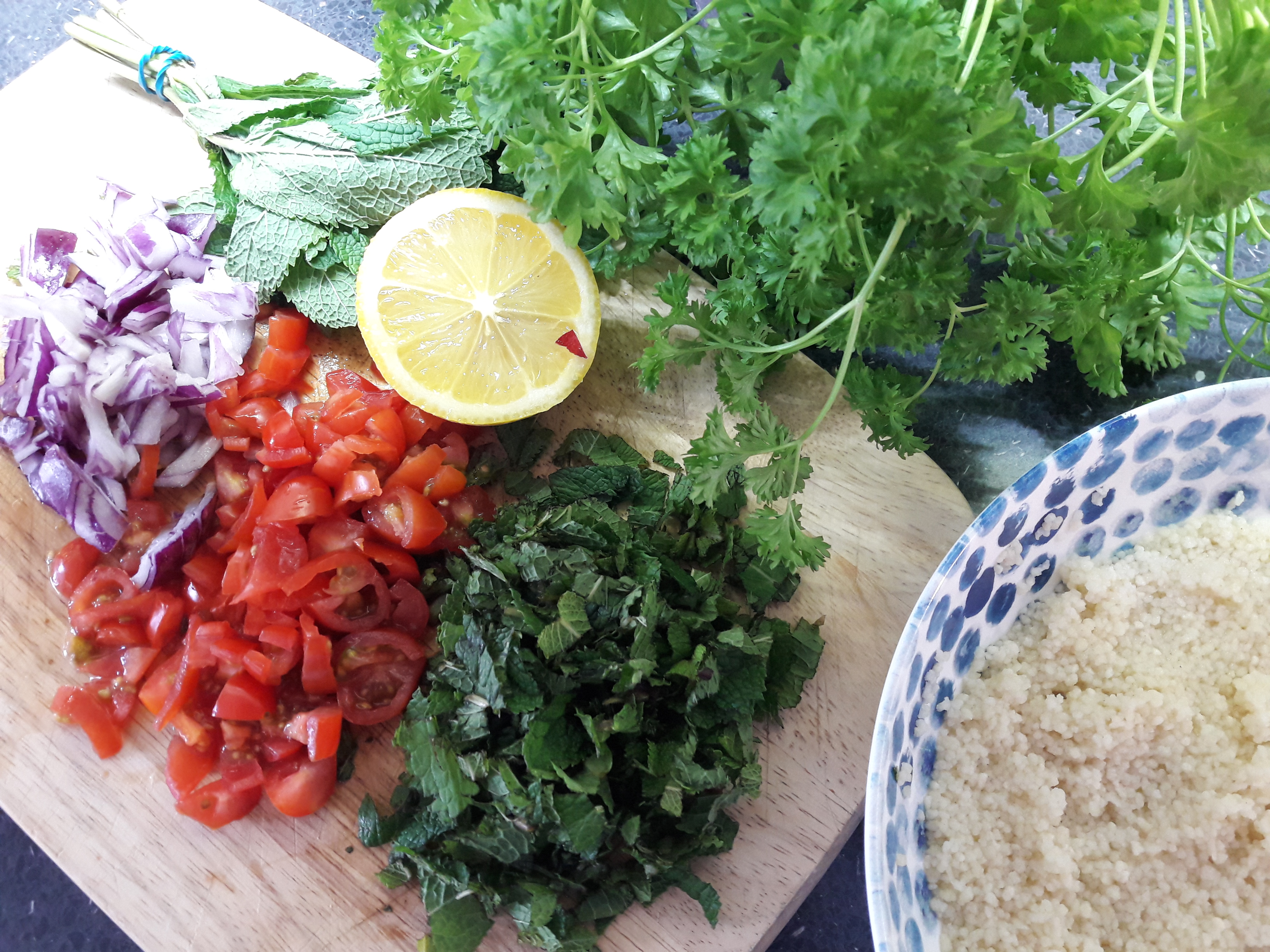
This winning combination of freshly-picked herbs, vegetables, lemon and olive oil with a grain such as couscous or bulgur wheat, that origianets on the eastern shores of the Mediterranean Sea, makes for a light, fresh-tasting dish that works well as part of a meze platter or alongside a selection of barbecued food.

20190419_185838-1.jpg

It’s easy to prepare, giving you more time to lounge in the sun with a glass of chilled wine while making the most of the long evenings.

Ingredients (serves 3-4)

  • 100g grain – couscous or bulgur wheat (coarse or fine both work well here)
  • 200 ml vegetable stock
  • One medium red onion
  • 12 cherry tomatoes
  • One bunch of fresh parsley
  • One bunch of fresh mint
  • Juice of one lemon
  • 25 ml olive oil

Method

  • Heat the vegetable stock until it’s boiling and then pour it over the couscous or bulgur wheat. Cover and leave to stand for 30 minutes or until all the liquid is absorbed.
  • While the couscous or bulgur wheat is soaking, prepare the rest of the ingredients. Dice the onion, quarter the tomatoes, finely chop the mint and parsley and squeeze the lemon.
  • Mix all the ingredients together and then add the olive oil and stir well. Leave to stand in the fridge for 30 minutes and then serve.


Vine Leaves Stuffed to Perfection

16 August 2018

This time round on Knidos Cookery Club we’re stuffing again to make one of favourite summertime snacks – dolma (stuffed vine leaves).

20180801_153038

These stuffed vine leaves are great as part of a barbecue spread or to add some rice oomph to a selection of dips and mezes.

20180801_113236.jpg
Ready to roll…

Rolling the leaves can be a bit fiddly at first, but you’ll soon find yourself getting into the rhythm. it’s best to make a big batch of these little stuffed marvels so you’ve got some ready-made snacks giving your more time at the beach.

20180801_114836.jpg
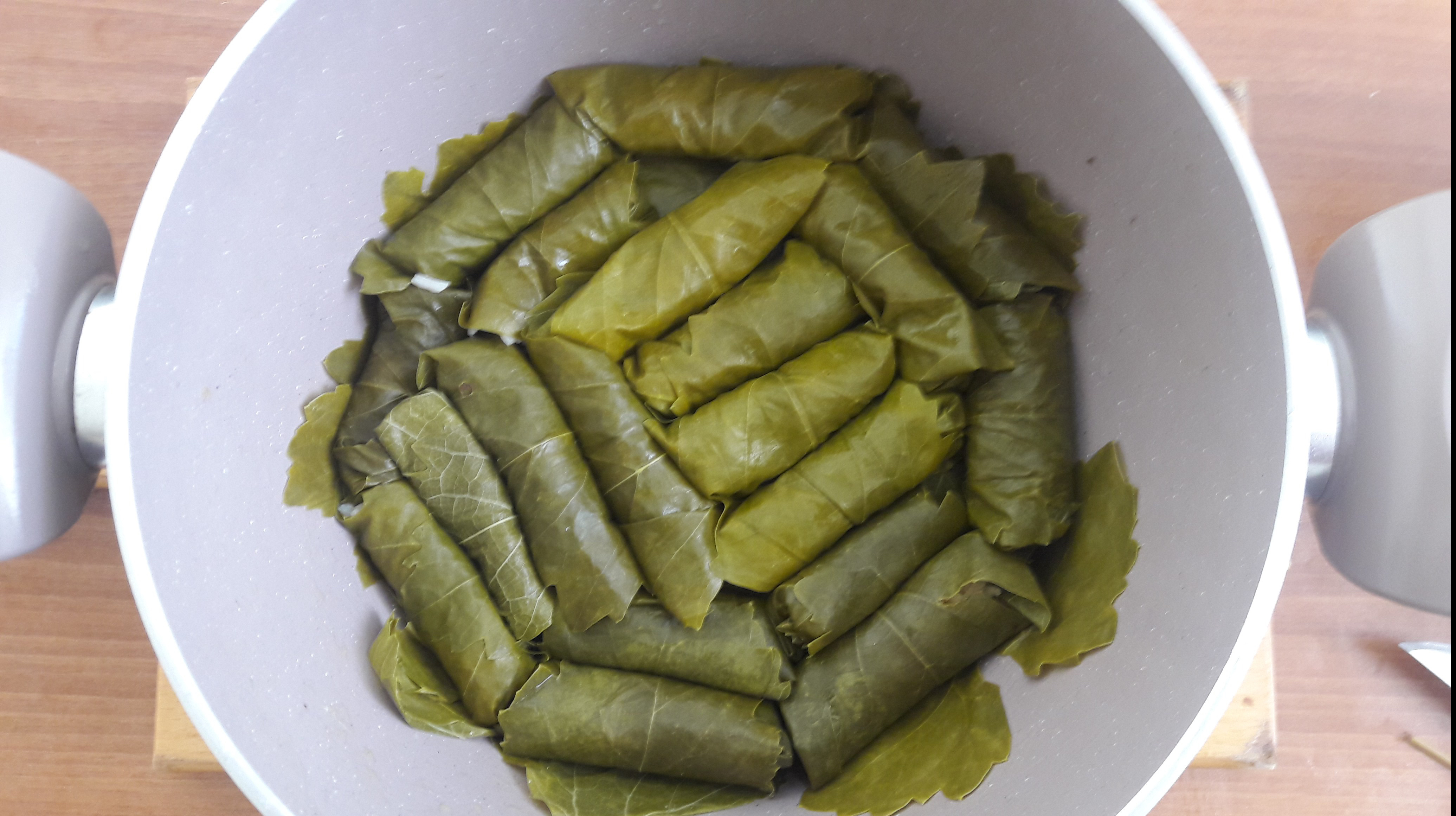
Layer the cylinders tightly in the pan

If you have any vine leaves left over, then hang on to them as we’ll be featuring another vine leaf recipe next time round on KCC.

Ingredients (makes 48 dolmas)

One onion

200 g long grain rice

50 ml olive oil

750 ml water

One lemon (zested and juiced)

50 g chopped almonds

two teaspoons dried thyme

one teaspoon cinnamon

one teaspoon cumin

10 g fresh mint

Pack of preserved vine leaves (or fresh leaves if you can get them)

Method

Fry the finely chopped onion in 25 ml of oil for five minute over a medium heat. While this is cooking, wash the rice until the water runs clear. Now soak the vine leaves for 30 minutes and then rinse well to remove any taste of brine or other preserving agents.

Add the thyme, cinnamon and cumin to the onion and stir. Now add the rice, mixing well to coat the grains. Cover with 375 ml of water and cook until the water is absorbed. The rice does not need to be fully cooked at this stage. When ready, add the chopped almonds, lemon zest and mint and mix well.

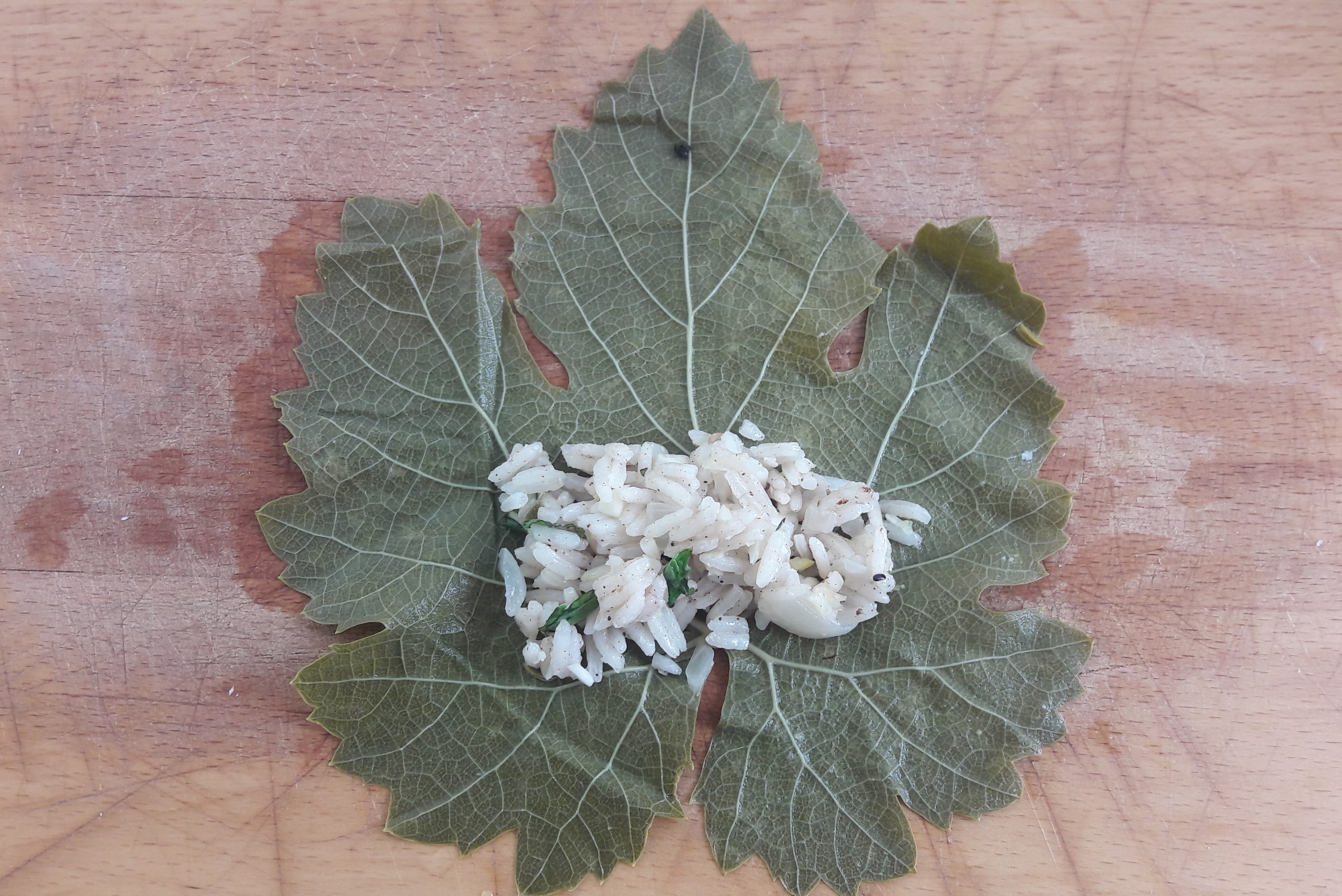
Now it’s time to stuff. Take a vine leaf, cut off the stalk and place a teaspoonful of rice mix on the leaf (see picture above). Tuck in the sides of the leaf and roll into a tight cylinder.

Put a layer of unstuffed vine leaves on the bottom of the pan to stop the stuffed ones sticking to the bottom. Layer the dolmas tightly in a heavy-based pan, putting another layer on top if you run out of space. Pour 25 ml of olive oil, the juice of the lemon and 375 ml of water over the vine leaf parcels.

Put a plate on top of the vine leaves and then put the lid on the pan and cook over a low heat for 45 minutes or until all the liquid is absorbed. Allow to cool before serving. If left in the fridge for a few hours, the stiffed vine leaves will firm up nicely.

Mezemania: Funky Lentil Pâté

26 July 2018

In our ongoing series on mezeler, or starters, we’ve come up with a funky little lentil spread to add to the collection.

20180712_135704
Funky Lentil Pâté

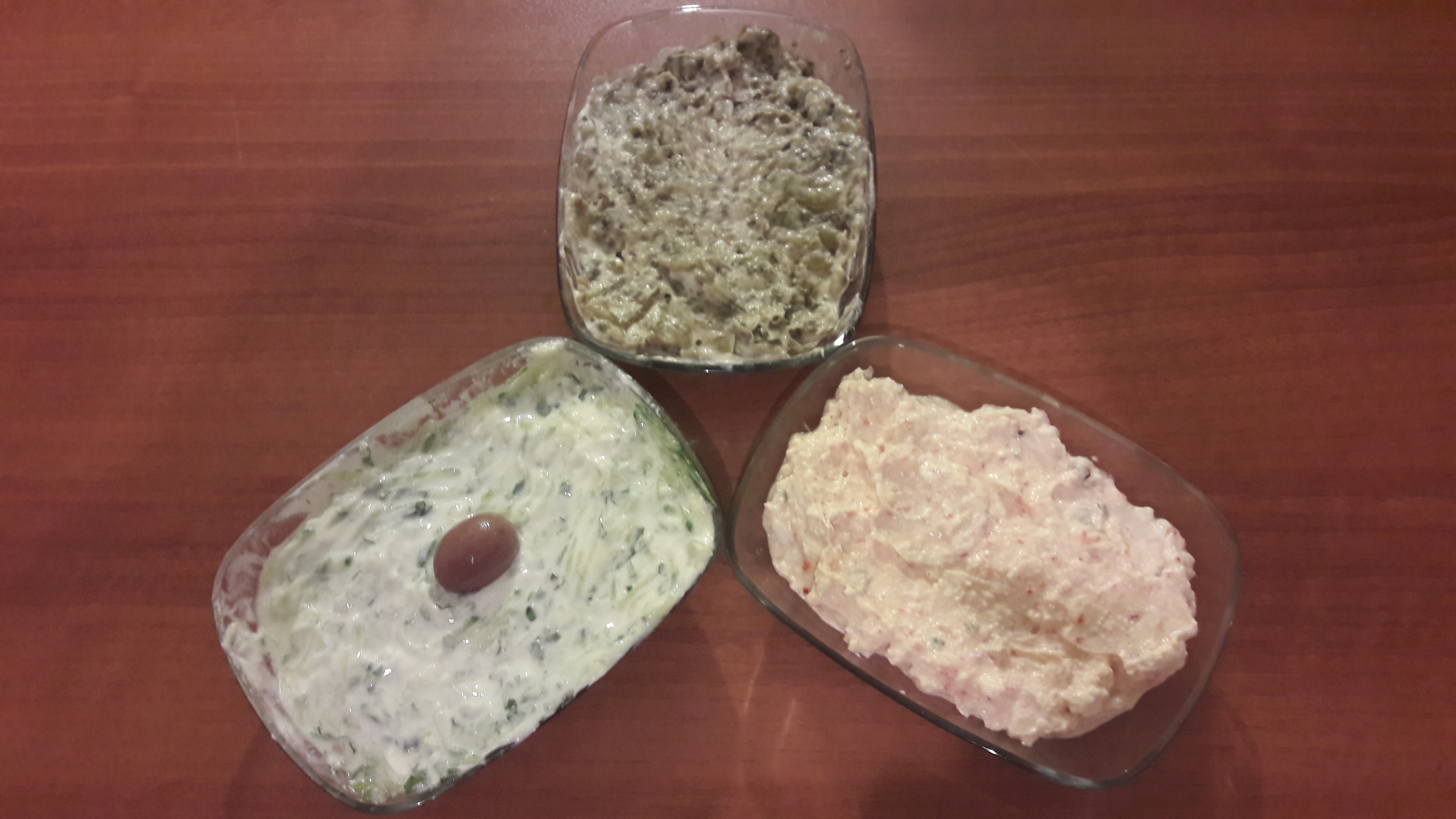
In the past on Knidos Cookery Club we’ve featured the following mezes: two types of fava (Turkish and Greek),  these little numbers (smoky aubergine dip, Psimeni Raki and feta dip and tsatsiki) inspired by the Greek island of Amorgos, fiery red pepper-fuelled muhammara and acili ezme and a creamy almond and courgette dip as part of our esteemed meze collection.

20170819_212721
Amorgoan Delight: smoky aubergine dip, Psimeni Raki and feta dip and tsatsiki

You can serve this simple to prepare red Lentil Pâté alongside these other dishes for a great spread of mezeler for a light feast that’s perfect for sharing with friends  on a balmy summer’s night.

Ingredients (makes around 200g)

125 g red lentils

One bayleaf

300 ml cold water

Two tablespoons fine bulgur wheat

4 or 5 spring onions

10 g fresh parsley

25 ml olive oil

One teaspoon mustard seeds

One teaspoon cumin seeds

Two teaspoons paprika

One teaspoon ground coriander seeds

One teaspoon black pepper

Half a teaspoon turmeric

Method

Clean the lentils in cold water and then put them in a pan with the bayleaf. Pour 300 ml of water over the lentils and bring to a boil. Reduce the heat and simmer until the lentils are beginning to go mushy and most of the water has been absorbed.

Remove the bayleaf and add the fine bulgur wheat to the lentils and mix well. Leave covered for 30 minutes. heat the oil in a heavy-based pan and add the mustard and cumin seeds. Fry for a few minutes and then add the paprika, coriander, black pepper and turmeric, cook for a minute stirring constantly and then add the finely chopped spring onion and parsley and cook for five more minutes over a medium heat.

Stir this into the lentil and bulgur mix and leave to stand for a few hours in the fridge. Garnish with a sprig of fresh mint and serve with crusty bread.

Fava a la Turca

5 October 2017

This time on Knidos Cookery Club we’ll be looking at fava, a popular Turkish meze made from broad beans (we’ve used dried but use fresh if you have them). Greece also has a dish called fava, but its version uses split peas and is an all-together different beast to Turkey’s variant which is left in the fridge to firm up into a spread that can be sliced into chunks (more on the Greek variation next time round).

20170929_122236.jpg
Knidos Cookery Club’s take on fava served with mint

Our variation on the Turkish fava theme turned out a bit less smooth than the one served up in Turkish cafes but it still tasted great! Having cooked up the beans into a mush, we went for a swim while it cooled down. Apparently, it should have been pushed through a sieve while still warm, but no worries – it turned out all right on the night albeit a bit lumpier than expected!

20171005_114611
Fava served with … dill in a restaurant in Akyaka, Turkey’s slow food capital

In Turkey fava comes adorned with sprigs of dill (some recipes even put dill in the bean mix itself). Knidos Cookery Club is not a big fan of dill, so we’ve used some fresh mint leaves to adorn our take on this Turkish classic.

Ingredients (makes around 8-10 individual servings)

200 g dried broad beans (soaked overnight in cold water)

One small red onion

400 ml water

One teaspoon honey

25 ml olive oil

Pinch of salt

Mint leaves to garnish

Method

Put the drained beans into a heavy-based pan with the finely chopped onion, olive oil, honey and salt and pour the water over the top. Bring to the boil and simmer over a low heat for an hour or so until all the water is absorbed and the beans are breaking up to form a thick paste.

Allow the mix to cool and while still warm press through a metal sieve with a wooden spoon to remove any excess liquid. Oil a glass serving dish and pile the bean mix into the dish. Cover with clingfilm (clear plastic wrap) and leave overnight in the fridge.

Serve in cubes or diamond shapes, cutting the solid mass with a wet knife (to avoid it sticking). Garnish with mint leaves and a drizzle of lemon juice and olive oil and serve with crusty bread as part of a meze platter.


Spice it up with Sumac!

21 September 2017

This time round on Knidos Cookery Club we’ll be looking at a spice called sumac that is ubiquitous in Turkish cooking. Sumac comes from the flowering plants of the genus Rhus and its powdered purple-reddish berries give a tart but tangy boost to everything from soups and dips to grilled vegetables and kebabs. It also gives a rich dark burgundy hue to the dishes it flavours.

20170919_133053
Sumac

We’ve decided to use it in acili ezme, a fiery tomato, onion and pepper dip that is delicious eaten on it’s own with bread,  used as a sauce to accompany dishes such as pide, Turkey’s take on pizza, as part of a meze plate with our carrot and walnut tarator and our  creamy almond and courgette dip or with mücver, Turkey’s courgette fritter.

20170919_133855.jpg
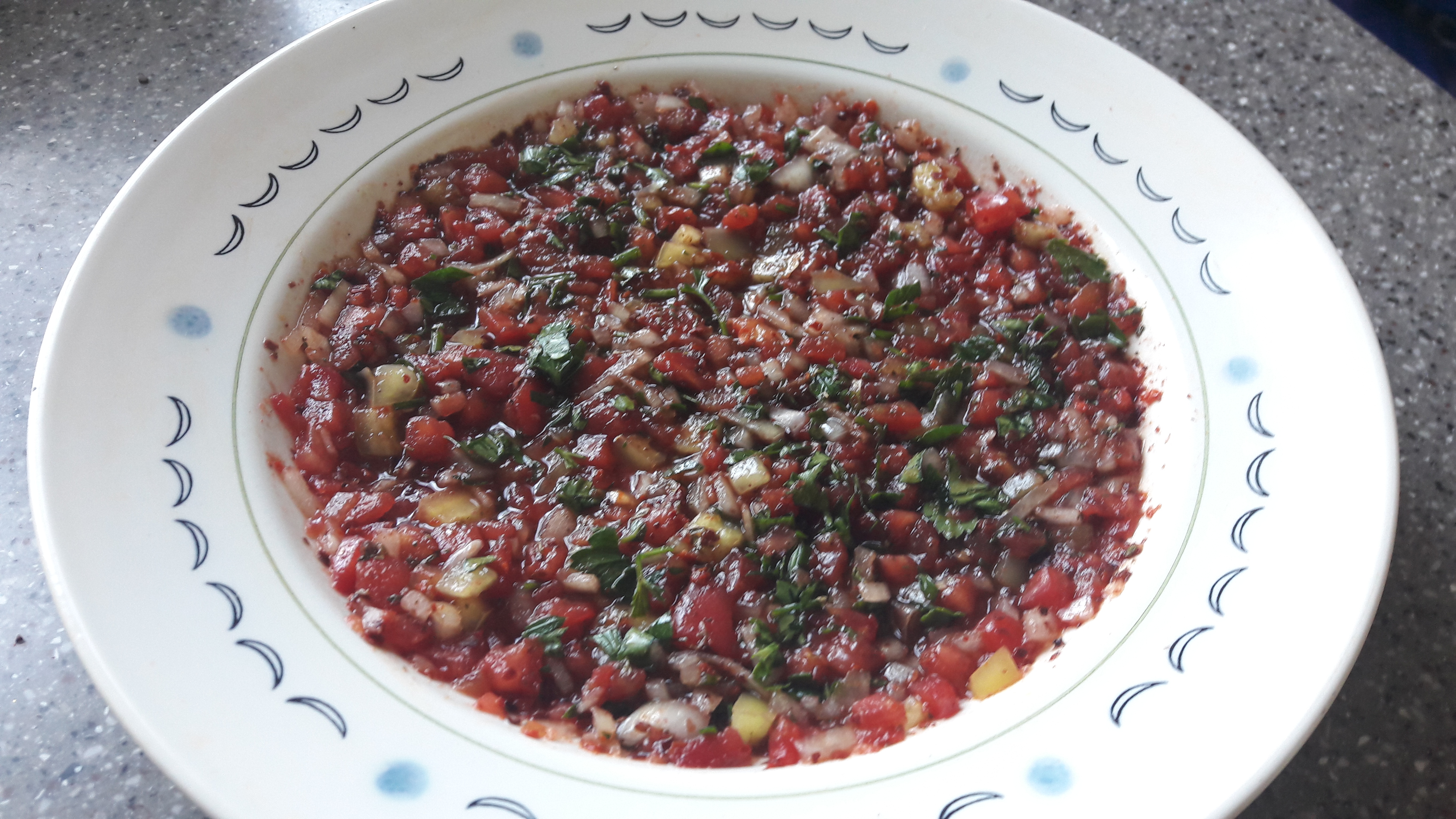
A fearsome acili ezme

The secret to a successful acili ezme is to chop the ingredients as finely as you can with the sharpest knife you have and to chill it for a few hours before serving so the flavours have a chance to blend.

We’ve added red chilli flakes and sumac to give it a kick and used mint and parsley to balance out the flavours. If you like your dips hot, then use green chillies in place of green peppers in this recipe.

Ingredients (serves 3-4)

One medium-sized onion

Three medium-sized plum tomatoes

One medium-sized green pepper

One garlic clove

One bunch of parsley

One teaspoon dried mint

Three teaspoons red chilli flakes

Two teaspoons sumac

One teaspoon flavoured vinegar (such as apple or fig)

Three teaspoons pomegranate sauce

Method

Peel the tomatoes and de-seed (to peel: plunge the tomatoes into boiling water for 30 seconds then place in cold water – the skin should now come off easily). Chop the tomatoes, green pepper, onion, garlic and parsley as finely as you can.

Put all the ingredients into a bowl, add the herbs and spices, vinegar and pomegranate sauce and mix well. Leave to chill in the fridge for at least two hours before serving with flat bread.