The Knidos Cookery Club kitchen was forced to decamp to Bishkek, Kyrgyzstan this week as an unfolding political crisis rocked this Central Asian state that neighbours Kazakhstan.
Making a meal out of it…
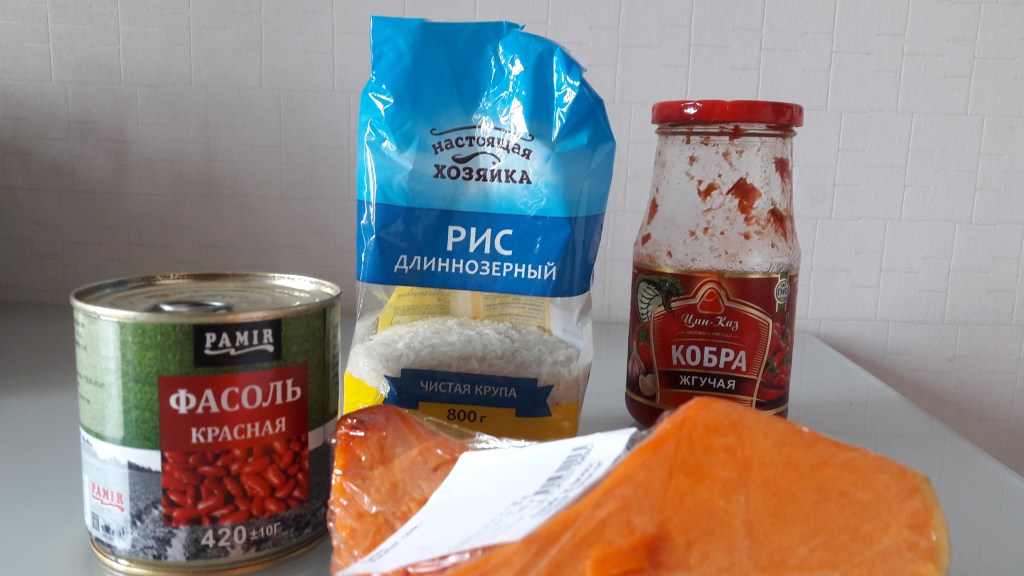
In the spirit of the recently revived 90s TV cookery show, Ready Steady Cook, we grabbed a selection of items after a quick dash around the nearest supermarket and came up with a red bean and pumpkin chilli, continuing our October Squashfest theme.
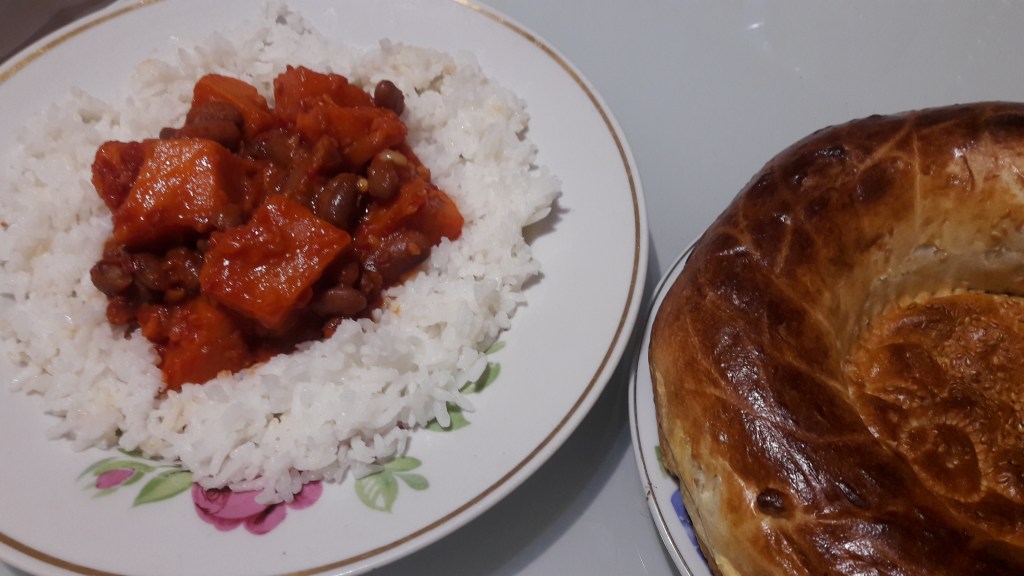
Hasty tasty pumpkin chilli with Kyrgyz naan
We had to opt for a bit of convenience this time as it’s hard cooking in a strange kitchen, so we bought a jar of a spicy tomato sauce called Cobra, and used ready cooked red beans. If you have more time on your hands, then substitute the Cobra with KCC’s very own spicy tomato sauce and soak some dried beans overnight.
Ingredients (Makes 3-4 servings)
500 g pumpkin
250 g spicy tomato sauce
250 g cooked red beans
50 ml olive oil
Method
Heat the olive oil in a frying pan and then add the pumpkin, chopped into 2 cm x 1 cm cubes, and stir fry for five minutes over a medium heat.
Add the spicy tomato sauce, stir well and simmer for 20 minutes or so until the pumpkin is cooked but firm.
Add the red beans and stir well and heat through. Serve with boiled rice and some crusty bread.
This time round on KCC we’re returning to mücver, Turkey’s versatile courgette fritter, with our take on that brunch staple Hash Browns. This mücver variation adds potato and garlic scapes to the mix to give us a fritter we’ve dubbed Hash Greens.
Hash Greens – a mücver variation
These fritters are super-easy to prepare and cook and are great as part of a breakfast or brunch. They can also be served in a roll to make it closer to a veggie burger.
Garlic scapes – a long internode that forms the basal part or the whole of a peduncle
We came across garlic scapes, the edible stem that grows from the bulb, on a recent visit to the local greengrocer while looking for green beans. This flavoursome peduncle gives a milder garlicky kick to soups, pestos and stir fries. It’s not an overpowering flavour as it adds a subtler, roasted garlic undernote to these dishes.
Ingredients (Makes 6-8 fritters)
One medium courgette (zucchini) (approx 200 g)
One medium potato (approx 200 g)
One small onion (approx 100 g)
50 g garlic scapes
100 g chickpea flour
25 g mixed fresh herbs
One teaspoon cumin seeds
One teaspoon chilli flakes
One teaspoon turmeric
One teaspoon black pepper
50 ml olive oil
Method
Grate the potato and courgette and mix together in a large bowl. Finely chop the garlic scapes and add to the bowl. Stir in the chickpea flour and add the herbs (use and fresh herbs you have e.g. parsley, coriander, mint) and spices and mix well so you have a smooth that’s neither too dry and crumbly nor too wet and sloppy.
Heat the oil in a frying pan. Form the mix into golf-ball sized patties and then put in the pan and flatten with a fish slice or spatula. Fry until golden-brown on both sides. Serve as part of a breakfast or brunch or in a bun as a burger with toppings of your choice.
This time round on Knidos Cookery Club we’re taking an armchair culinary trip to Egypt to sample koshari, the country’s tasty street food staple – a hearty combo of lentils, rice and pasta, all topped off with a spicy tomato sauce and crispy, caramelised onions.
KCC’s flavour-packed koshari
Koshari was brought to Egypt in the late 19th during the period when the country was part of the British Empire. Previously rice and pasta were not widely used in Egyptian cooking, but this combination caught on locally after occupying soldiers brought the dish with them from another part of the empire, the Indian sub-continent.
Lemon, barley and ginger
Our version uses pearl barley in place of the rice as we have been using a lot of barley to make a lemon, ginger and barley tonic drink to mix with fizzy water or put in cocktails. The barley cooks at the same rate as the green lentils so they can be cooked together in the same pan.
KCC’s multi-purpose spicy tomato sauce
With tomatoes cheap and in abundance at the moment, we’ve been making large amounts of a spicy sauce that goes well with this dish. It can be used with pasta or potatoes – we’ve been freezing any leftover sauce to use in the winter when tomatoes are much more pricey and not half as tasty, to spice up the staples.
Ingredients (for 3-4 servings)
150 g pearl barley
150 g green lentils
300 ml vegetable stock
One large onion
50 g vermicelli pasta
50 ml olive oil
For the spicy tomato sauce:
500 g plum (Roma) tomatoes
100 g onion
One garlic clove
One stick of celery
One teaspoon mustard seeds
One teaspoon cumin seeds
One teaspoon chilli powder
2.5 cm knob of ginger
Two bay leaves
50 ml olive oil
Method (Spicy tomato sauce)
Heat the oil in a heavy-based pan and add the spices. When the oil is sizzling, add the finely chopped onion, diced garlic and sliced celery and stir fry until the onions go translucent. Turn down the heat.
Cut the tomatoes in half and grate into the onion and celery mix. Throw the tomato skins into a pot with the onion skins and 500 ml water to make vegetable stock. Add the bay leaves and cook over a low heat until the amount of liquid has halved and then pour over the barley and lentils. You can store any leftover sauce in a glass jar in the freezer.
Method (Lentils and barley)
Fry the onion in the olive oil over a low heat until crispy and caramalised and put aside – this can take up to an hour. Cook the barley and lentils in the same pot with the vegetable stock for 20-30 minutes over a low heat until all the liquid is absorbed.
Fry the pasta in a little oil until golden brown and then scatter on top of a bowl of lentils and barley. Pour a generous glug of spicy tomato sauce over the barley and lentil base top with caramalised onions before serving.
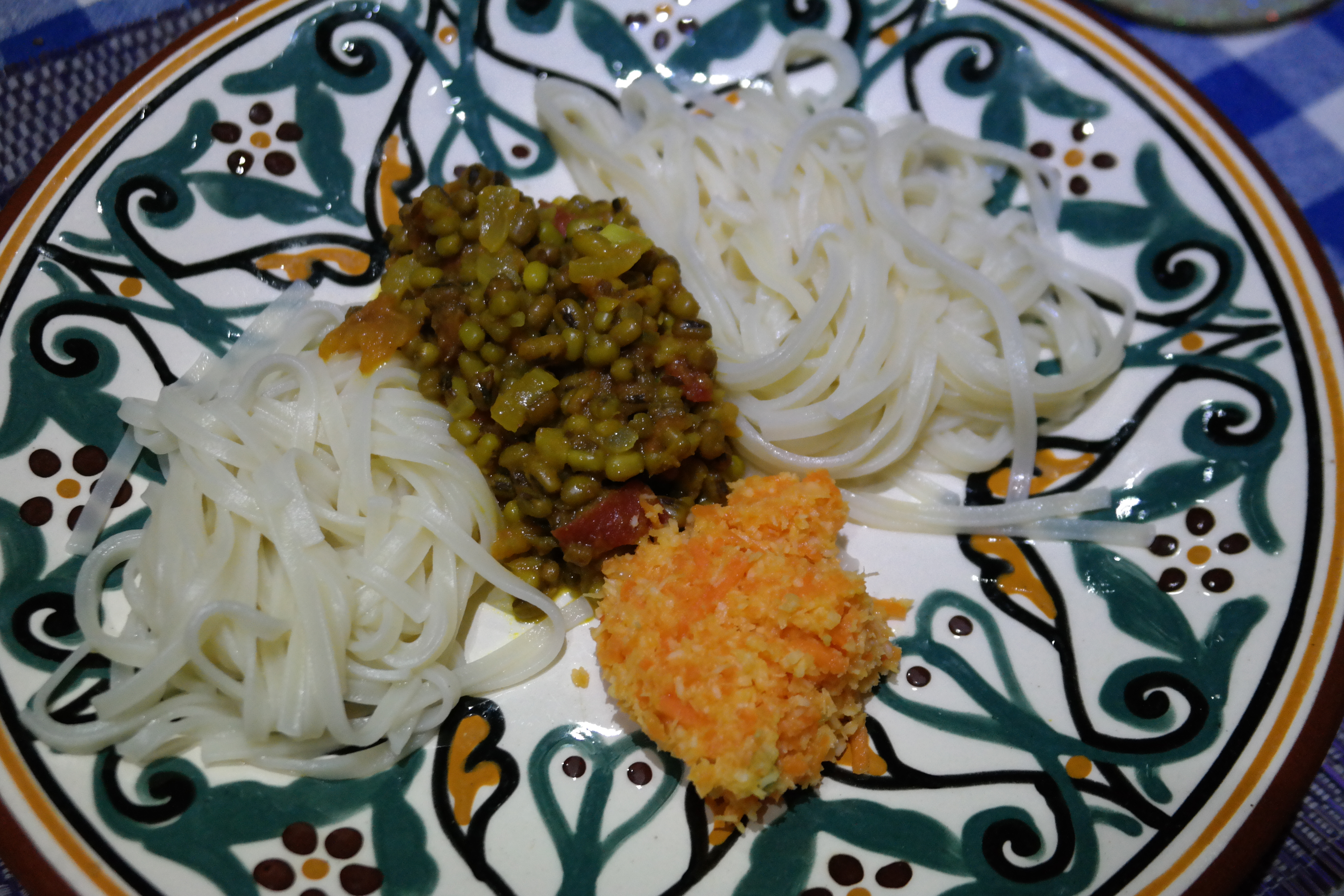
With no end in sight to the COVID-19 pandemic – infections continue to rise steadily here in Kazakhstan, averaging around 1500 new cases a day over the last week – it’s time for some more culinary escapism. We’re transporting our taste buds to Sri Lanka for our take on string hoppers, a super tasty noodle, dhal and chutney combo.
String Hoppers à la Qazaq with mung bean dhal and coconut and carrot sambol
It’s usually served for breakfast on the island, but in our opinion it also works really well as a main meal. Our version features some locally sourced kespe, or noodles, as we couldn’t find red rice noodles in our local supermarket (!) and a dhal made with mung beans – check out KCC’s dhal recipe here (simply replace the red lentils and pumpkin with 200 g mung beans – soak the beans for 3 – 4 hours before cooking).
Green hot chilli peppers
Coconut and carrot sambol
Breakfast Sri Lankan style – string hoppers with coconut sambol and dhal in the background
The sambol, a quick and easy chutney, is an essential part of the string hopper experience. It saves on waste, as you can use the dried coconut left over from making the coconut milk for the dhal – click here for our coconut milk recipe.
Kespe – noodles from Kazakhstan
Carrot and Coconut Sambol
Ingredients (serves 3-4)
50 g desiccated (dried) coconut
150 g carrot
One small onion
One small tomato
One fresh green chilli
One lemon
Method
Grate the tomato and mix with the finely chopped onion in a large bowl. Add the dried coconut and the juice of the lemon and then add the grated carrot and combine all the ingredients together. Gradually add the finely chopped green chilli, tasting every now and then until you reach your chilli heat tolerance levels.
Serve alongside the mung bean dhal mentioned above and with noodles or spaghetti — use about 75 g of dried pasta per person, cooked according to the instructions on the pack.
This week were honing in on a favourite Italian starter, bruschetta – slices of toasted bread served with a range of different toppings. We’ve opted for a heartier version using chunky slices of bread that can double up as a main meal when you add a salad of your choice.
In Italy the slices of bread are toasted on abrustolina, a device made from sheet metal with holes on the bottom and a wire rack on the top (see pictures below taken from the Grand Voyage Italy website). This is placed over the heat source on your stove top and can be used to make toast, grill polenta and roast peppers, courgettes or aubergines.
Put the brustolina over the flame
A brustolina in action
Being unable to make it to Italy to pick up a brustolina at this point in time due to the pandemic, we’ve had to make do with our oven to toast the bread. Brush your thickly cut slices with olive oil and a rub of garlic and cover one side with a topping of your choice.
We went for capers, sun-dried tomatoes and black olives with thin slices of courgette and basil leaves for the first option and home-made guacamole, topped once again with thin slices of courgette and basil leaves, for option two. Simply leave in a hot oven (200 c) for ten minutes or so until the bread just begins to burn at the edges. Serve immediately with your favourite salad.
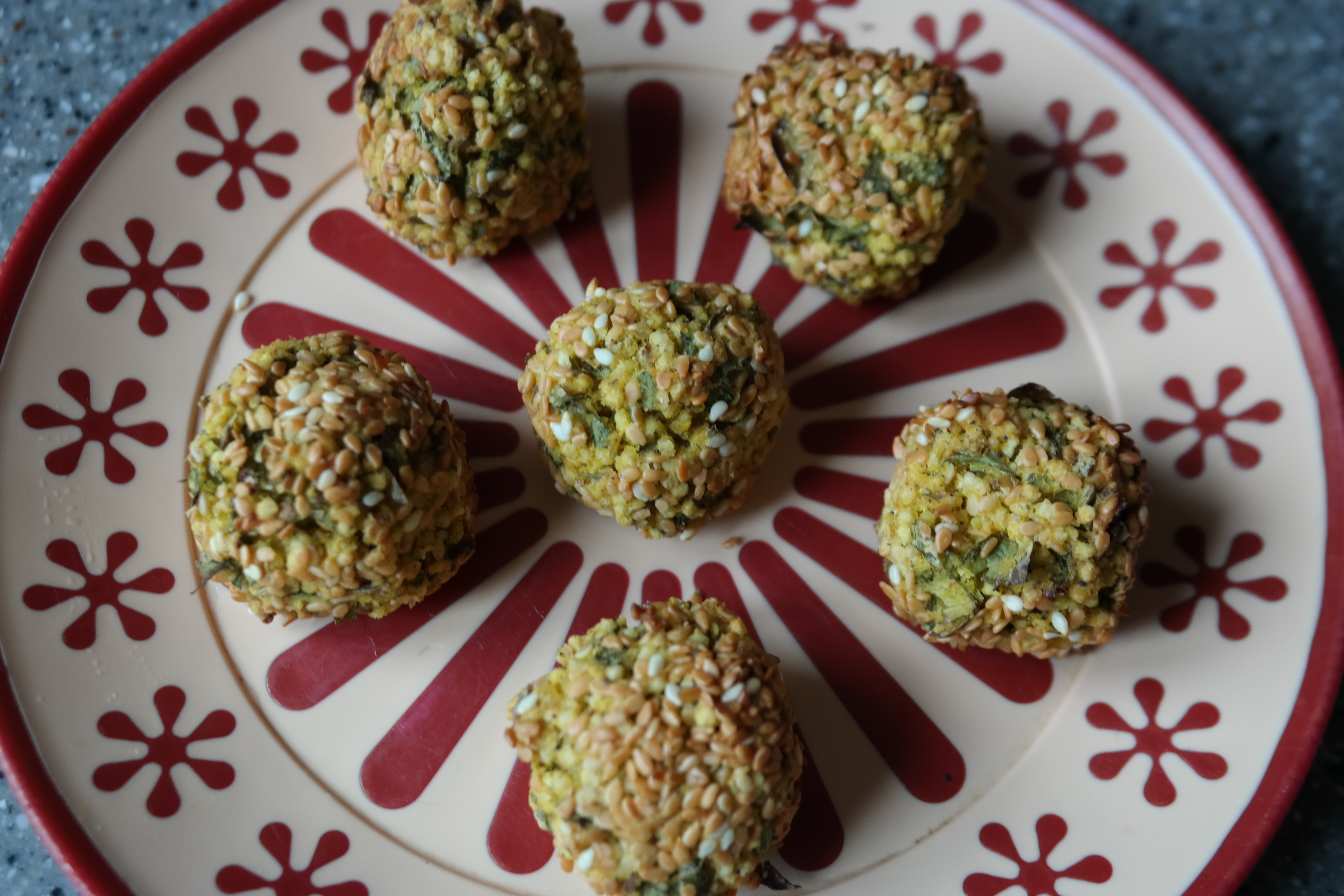
This time round on Knidos Cookery Club we’ll be taking an armchair culinary tour to the Middle East and looking at the origins of the humble falafel. Arguments abound as to where this street snack par excellence originated, but most likely it was Egypt according to the evidence.
Millet falafel, anyone?
The Egyptian version of this tasty bite is usually made with fava beans, known as fūl in Arabic, which is thought to be the base for the name falafel , whilst in other parts of the Mediterranean region chickpeas are preferred.
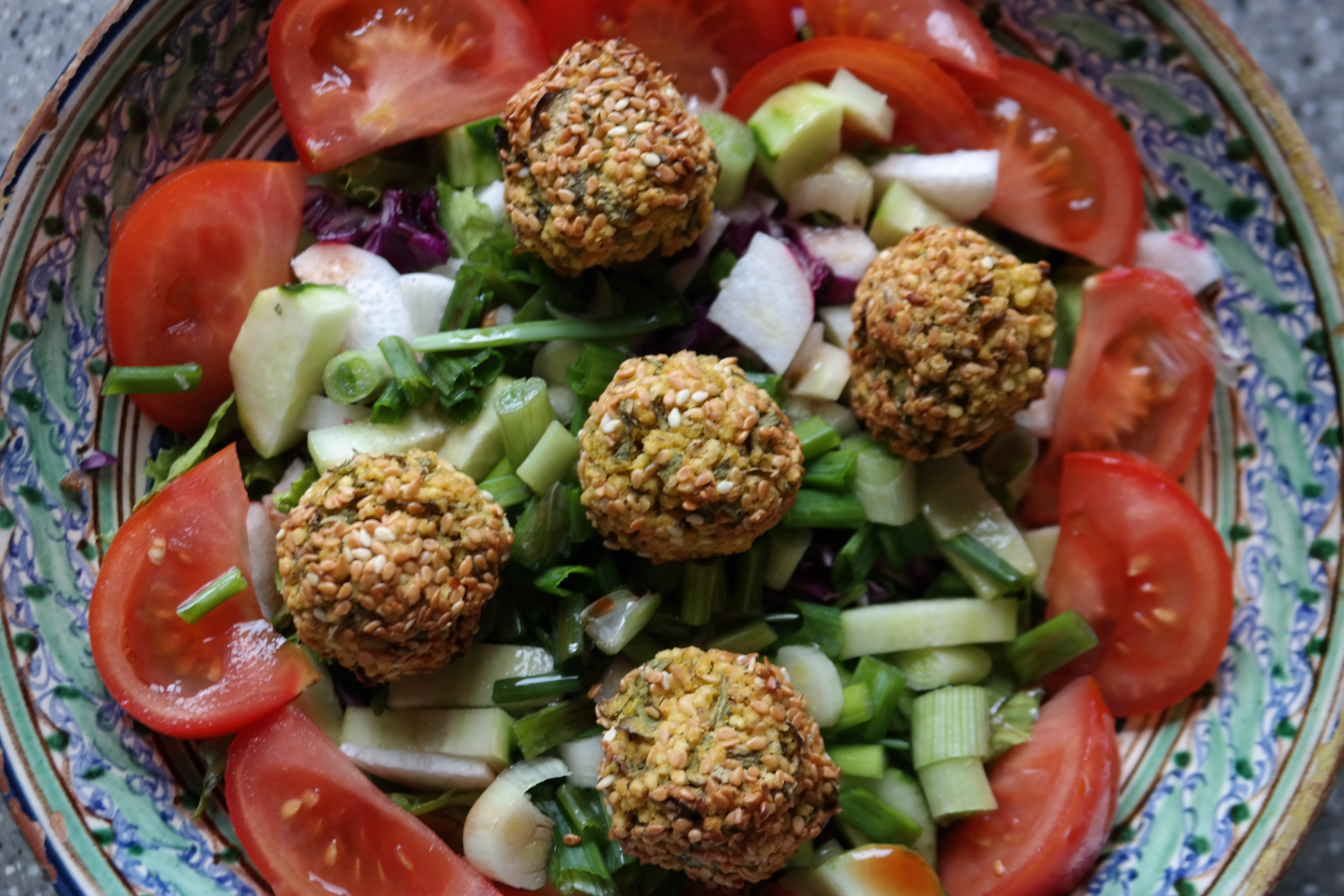
Falafel salad
With both chickpeas and fava beans in short supply in Almaty at the moment, it was back to the drawing board to look for an alternative base for our falafel. While stocking up during lockdown in our local shop we came across a pack of millet and a spot of googling revealed that this would work just fine as the base for our take on the falafel.
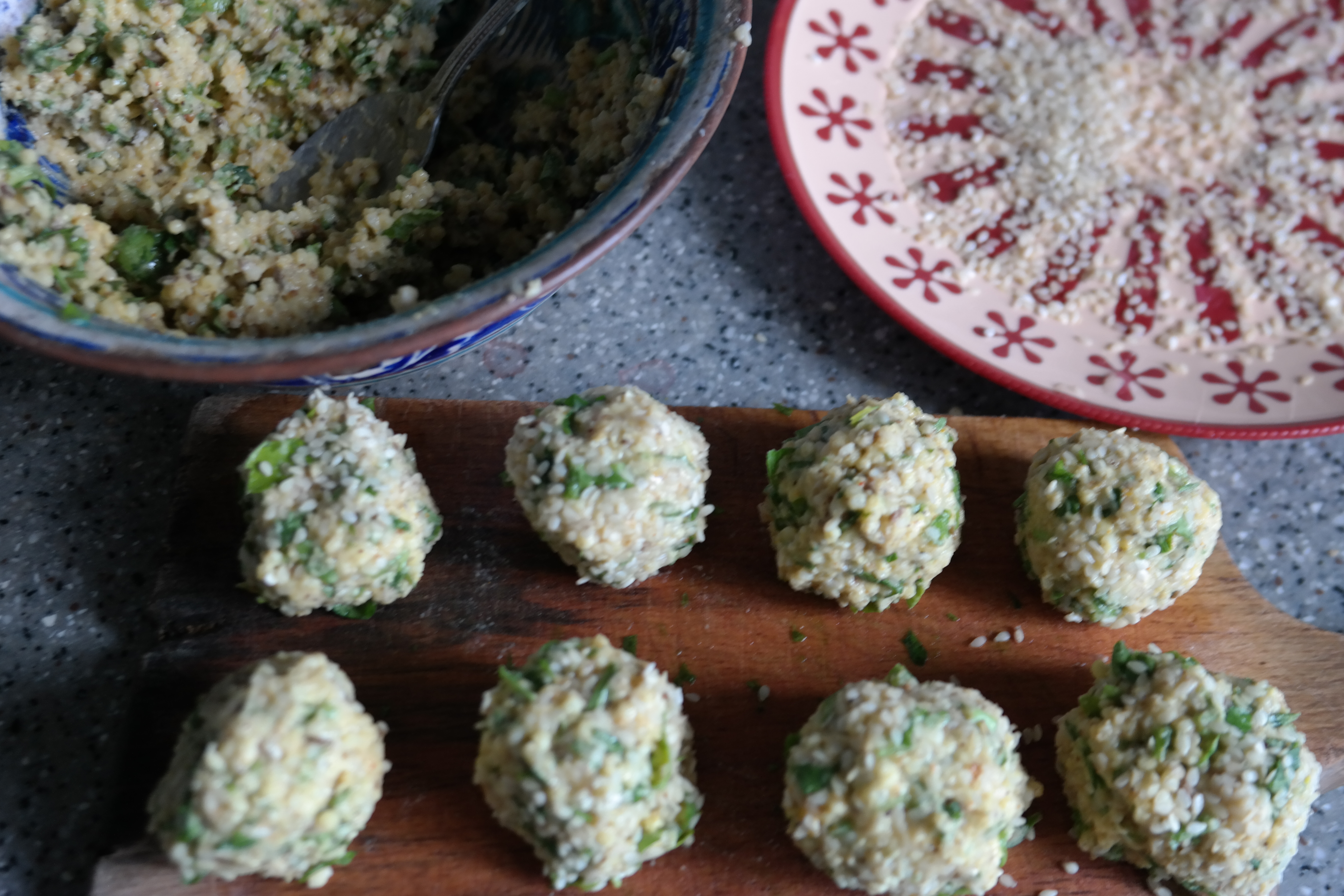
Forming the falafel
We baked them in the oven rather than deep-fried them as it’s a lot less hassle. Be sure to use plenty of parsley, cumin, coriander and chilli powder to spice up the millet. The resulting falafel were crisp on the outside but soft and fluffy in the centre, just as they should be.
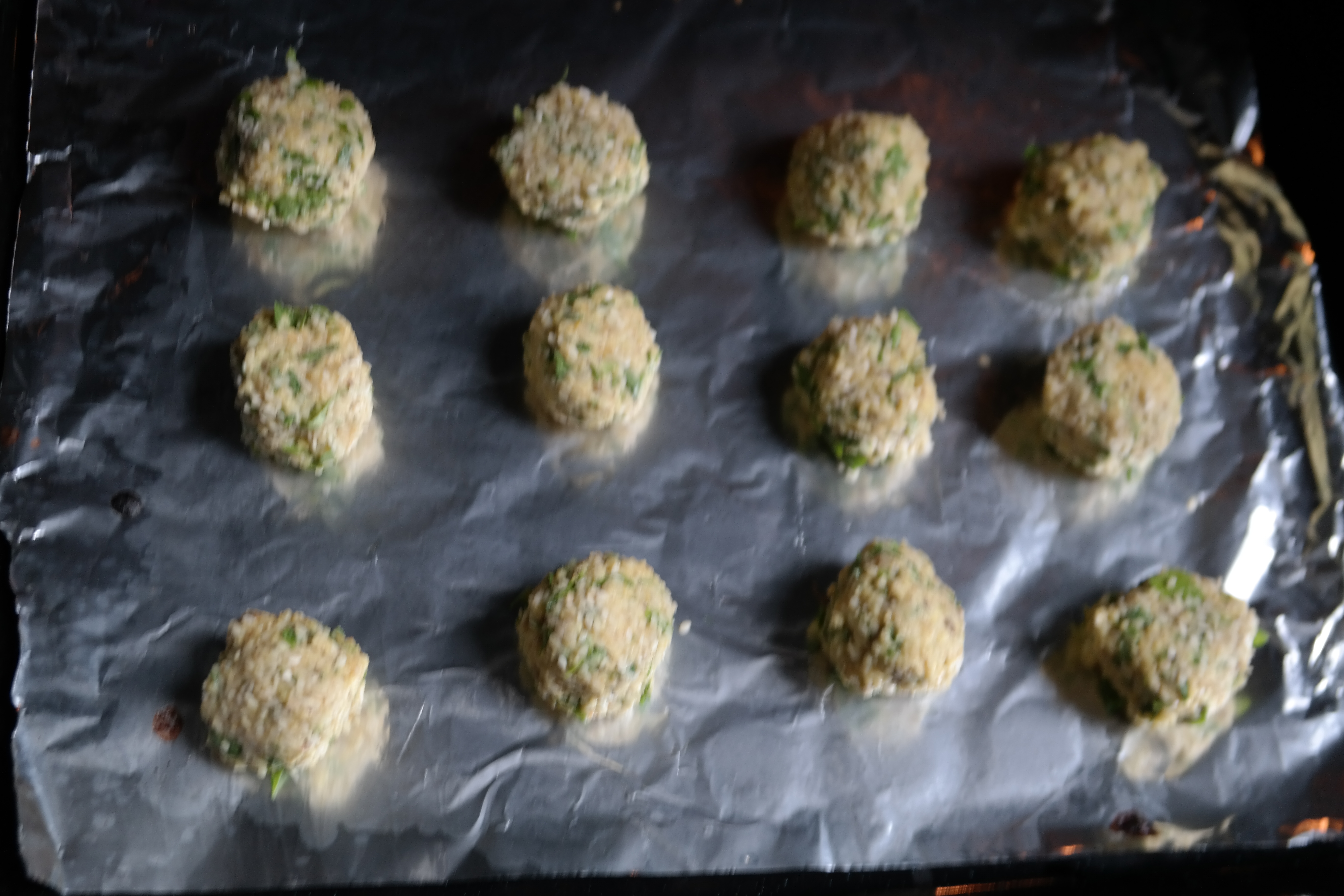
Bake the falafel in the oven
Be careful when cooking millet as it has a tendency to stick to the pan if you don’t keep an eye on it and stir regularly. We found it best to rinse and soak it for a few hours before cooking as this reduces the time needed to cook it.
Ingredients (makes 12-16 falafel)
150 g millet
300 ml water or vegetable stock
one garlic clove
one bunch of parsley
one teaspoon cumin
one teaspoon coriander
one teaspoon chilli powder
Sesame seeds to coat the falafel
Method
Rinse and then soak the millet in a pan for four hours. Drain the millet and cover with water or vegetable stock. Bring to a boil and then simmer until the liquid is absorbed. Stir regularly as the millet will stick to the bottom of the pan if not watched carefully.
Finely chop the parsley, both leaves and stalks, mince the garlic clove and add to the cooked millet. Add the spices – if you want to give your falafel more oomph, double the amount. Mix well and then form into balls. Roll the balls in the sesame seeds and then place on a tray and oven bake for 20 minutes at 200 c, or until the falafel turn a golden-brown colour.
Serve in pita bread with salad and sauces of your choice or as part of a salad – we made one from cucumber, tomato, spring onion, celery, red cabbage and radish. These falafel will keep in the fridge for a few days so you can cook a large batch at the same time.
There were signs this week of life slowly beginning to return to some sort of normal. Cafes and terraces are set to open once again in Almaty from next week and the streets are busier. We’re not planning on changing too much at the moment and, in the meantime, we’re content to continue our armchair culinary travels.
Half-way there – assembling the briam…
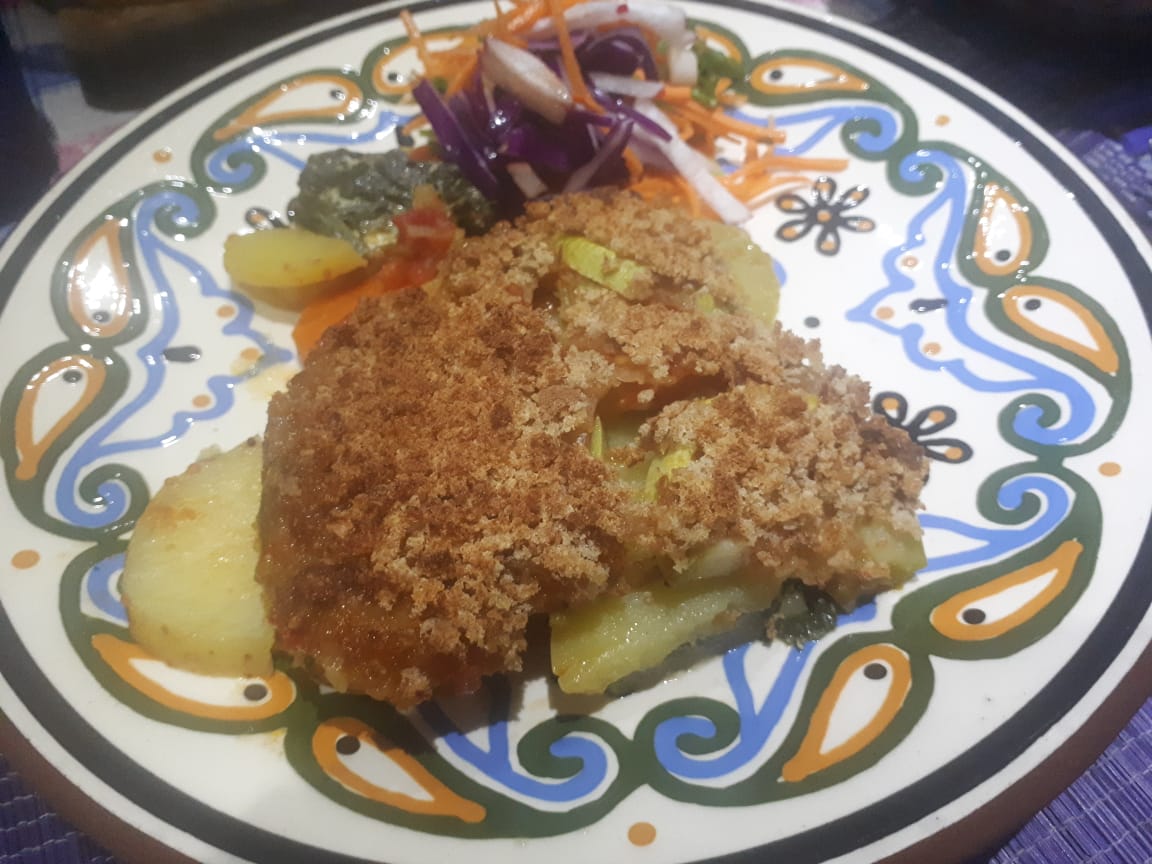
Greece has been in the headlines this week with the news that its beaches are reopening and it’s preparing to open its borders to tourists next month. This news brought back memories of holidays in the Greek islands and the great food in the tavernas. One of our favourite dishes is briam (pronounced bree-AM) – a delicious stew of oven-roasted seasonal vegetables.
Briam – good enough to eat
As usual, we’ve taken a few liberties with the recipe, omitting aubergines (usually a key ingredient) as they are not quite in season in Almaty yet, so foodie purists please look away. We’ve added carrot and spinach to the usual potatoes and courgettes and then cooked it slowly in a tomato sauce. We’ve also topped it with some breadcrumbs to enclose our briam.
The name briam has an interesting history – it is a borrowed word – there is no letter ‘b’ in the Greek alphabet, instead this sound is represented by combining the letters ‘μ’ (m) and ‘π’ (p) – ‘μπ’. Many Greeks call this casserole tourlou tourlou (all mixed-up), so briam could have come from Greeks who lived in Anatolia until the mass population exchanges in the early 20th century.
Briam and salad
In the Ottoman era, there was a word biryan, spelt büryan in modern Turkish, which refers to a side of lamb cooked slowly over charcoal in a pit in the ground – a speciality of Siirt in the Kurdish area on the borders with Iraq and Syria. This in turn could come from Persian, where biryan means roasted (notice the similarity with India’s biriyani). Whatever the name’s origin, it tastes great!
Ingredients (serves 4)
For the bake:
Two courgettes (approx 300 g)
Four potatoes (approx 300 g)
One carrot (approx 100 g)
200 g spinach
75 g breadcrumbs
For the tomato sauce:
One red onion
250 g tomatoes
One bunch of parsley
20 capers
25 ml olive oil
One teaspoon mustard seeds
250 ml vegetable stock or water
Method
Make the tomato sauce first. Heat the oil in a heavy based pan, add the mustard seeds and when they start to pop add the chopped onions and cook over a medium heat, stirring occasionally. After five minutes reduce the heat and add the chopped tomatoes. Stir and simmer for ten minutes then add the stock, chopped parsley and capers. Cook until the liquid has reduced by half.
Cook the spinach for a few minutes until it is beginning to wilt and then set aside. Cut the potato, courgette and carrot into 1 mm slices and put a layer of potatoes, then courgettes and then carrots into a greased baking dish. Add the spinach and pour half the tomato sauce over the vegetables. Add another layer of potatoes and courgettes and then pour the remainder of the tomato sauce over the layers. Spread the breadcrumbs over the top.
Cover with tin foil and bake in an oven at 180 c for around 1.5 hours. After an hour, remove the foil and cook for another 20-30 minutes until the breadcrumbs go start to go a golden brown colour. Keep an eye on it to make sure the breadcrumbs aren’t burning. Serve immediately with a fresh salad – it’s also great when it’s cooled down a bit.
Nearing the fifth week of lockdown here in Almaty, Kazakstan. We’ve found that one of the ways of coping with this situation it to try and stick to as normal a routine as possible. This means logging on in the working week to see if there’s any work around and then trying to switch off from everything as much as possible at the weekend.
Bubble and squeak: the great British hangover cure
With this in mind, we’ve come up with a classic weekend, switching-off brunch featuring that classic British comfort food – bubble and squeak, or fried potato and cabbage cakes to the uninitiated. You really can’t beat a good fry-up after a hectic evening spent zooming and netflixing and supporting the local viniculture industry.
Bubble and squeak takes its name from the sizzling, spitting sounds the mixture makes when being fried. Its a great way to use up any leftovers you have – you just need the base of mashed potato and boiled cabbage. We’ve spiced it up with some coriander, cumin and turmeric and also added in some fresh spinach. Serve with baked beans and a fried egg to get your weekend off to a flyer.
Ingredients (makes four hearty cakes)
One large potato
100 g cabbage
50 g spinach
Two spring onions
One teaspoon cumin seeds
One teaspoon turmeric
One teaspoon coriander
Oil for shallow frying
Method
Cube the potato, cover with cold water and bring to the boil in a heavy-based pan. Simmer for five minutes and then add the finely chopped cabbage along with the coriander, turmeric and cumin seeds. Simmer for another five minute and than add the chopped spring onion and spinach.
Drain off any excess liquid then mash all the ingredients together with a fork or a potato masher. Season with salt and black pepper according to taste. Heat the oil in a frying pan. Form the mixture into golf ball-sized pieces and then place in the frying pan. Flatten the balls with a spatula or fish slice and fry on a medium heat. After five minutes, turn the bubble and squeak over and cook for another five minutes until a golden-brown colour on both sides.
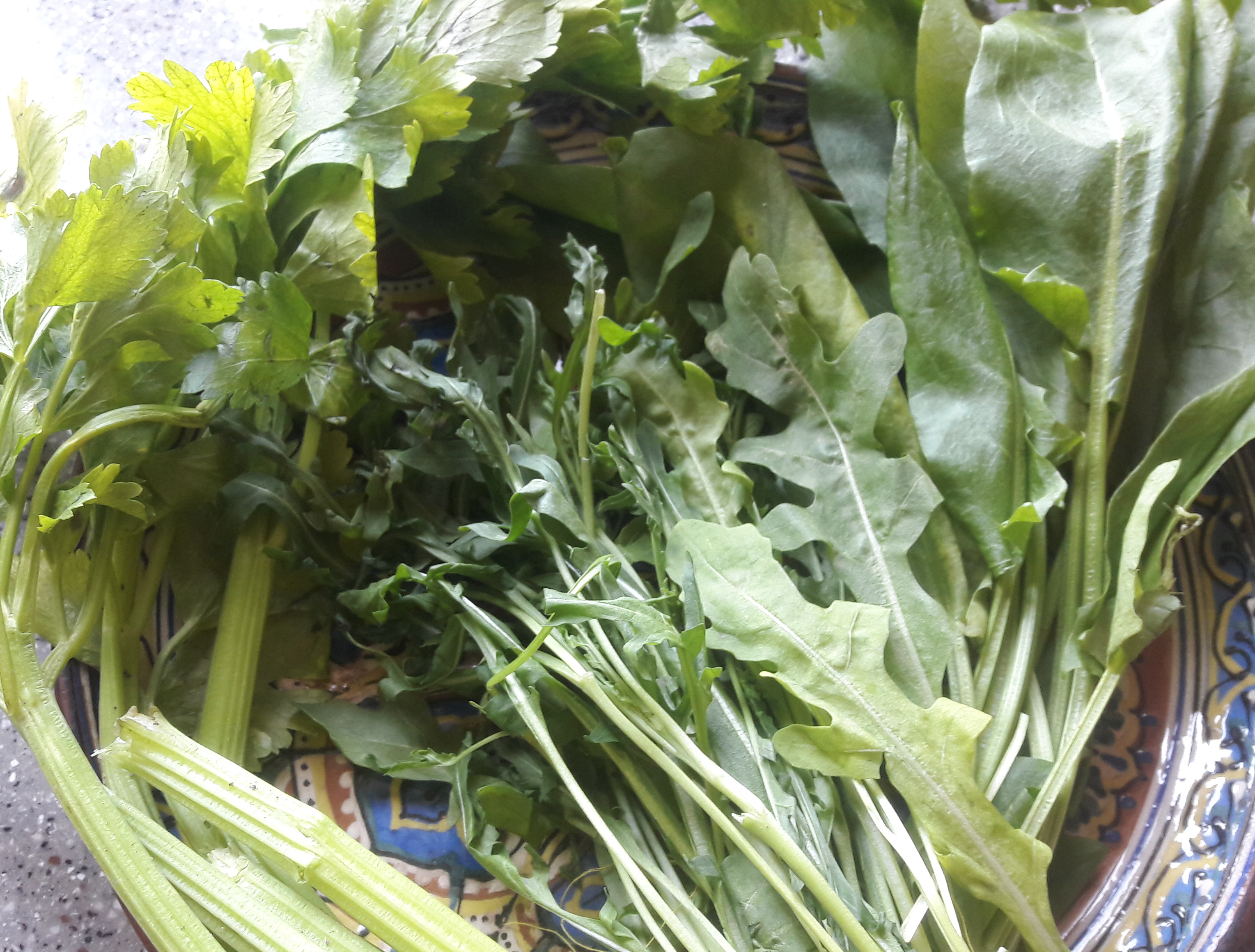
Nearing four weeks of lockdown in Almaty and supplies are holding up surprisingly well, especially now that spring greens are beginning to come on tap. This week our local veg shop had rocket, celery and sorrel – all the makings of a peppery green salad to perk up the lunch menu.
Spring greens coming on tap in Almaty
We’re coming to the end of our super-sized cabbage, which was bought in the early days of lockdown, so we decided to use the remaining leaves to make cabbage rolls, a popular dish in eastern and southern Europe.
KCC’s Stuffed Cabbage Leaf
We stuffed the leaves with some rip-red risotto, a recipe we made a few years back that combines coarse bulgur wheat with beetroot and walnuts (if you want a gluten-free option, you can use arborio rice or pearl barley instead).
This slideshow requires JavaScript.
Simmer the stuffed cabbage parcels in a tomato and herb sauce for thirty minutes for a winning lockdown lunch. It makes for a tasty veggie take on that beloved Ukrainian / Russian dish, golubtsi, or ‘little doves’, or dolma as they are dubbed in some parts of the Mediterranean and into the Caucasus.
Separate the leaves carefully from the cabbage. Place in boiling water for five minutes to soften. Put the leaves in cold water and then drain. Cut out the tough, lower bit of the stalk (about 2-3 cm). Place a tablespoon of filling above the cut and then fold and roll the leaves into cigar shapes.
To make the sauce, heat the olive oil in a frying pan, add the mustard seeds and when they start to pop, add the chopped spring onions, celery and parsley. Cook for five minutes and then add the chopped tomatoes. Add the tomato paste and water , stir well and bring to the boil.
Lay the stuffed leaves in an ovenproof baking dish and pour the hot tomato sauce over them. Cover the dish with tin foil and bake at 200 c for thirty minutes. Sprinkle the cooked cabbage leaves with basil leaves before serving with a green salad.
We’re now nearing the end of the third week of Almaty’s lockdown. Life has settled into a pattern of venturing out as little as possible and relying more on what we have stored away. After a delve in the cupboards, we came up with one of the stalwarts of the staple food world – a pack of dried beans.
KCC’s Red-hot, red bean hummus
After soaking in cold water overnight, these red beans can be used in endless ways – from soups, stews and curries to burgers, salads and dips. We’ve gone for a easy-to-make red bean hummus; you’ll just need to add tahini, lemon juice, olive oil and some spices. Serve with flat bread and salad for a tasty lunch.
Toasted sesame seeds
Add olive oil, and you have tahini
Don’t worry if you haven’t got any tahini on hand, you can make your own by toasting some sesame seeds and mixing them with olive oil – here’s a link to last year’s post on DIY tahini.
Ingredients (makes around 300 g)
250 g cooked red beans (reserve 50 ml of the cooking water)
Two tablespoons tahini
25 ml olive oil
One lemon
One garlic clove
One teaspoon cumin seeds
One teaspoon sumac
Two teaspoons red chilli flakes
A few sprigs of coriander
Method
Mash the beans with a potato masher or a fork and add the tahini. Mix well then add olive oil and lemon juice and blend until you get a smooth consistency. If the hummus is too thick, use some of the cooking water, Add the minced garlic and spices and mix a bit more with the fork. Garnish with a few beans, a drizzle of oil, a sprinkling of chilli flakes and a sprig of coriander.









 Knidos Cookery Club