Kookoo Sabzi – Welcoming Nowruz with a Herby Frittata

19 March 2025

This weekend is Nowruz, a spring festival which originated in Persia some 3,000 years ago. Nowruz, or New Day, is a celebration of the end of winter and the start of a new year on the date when day and night are equal in the Northern Hemisphere – usually on or around the 20 – 21 March. The holiday is celebrated in Iran, Afghanistan, Azerbaijan and Central Asia, and in parts of Turkey, Syria, India, Iraq, Pakistan, Russia and China.

Preparing for Nowruz (Nauryz) in Almaty, Kazakhstan

There are many traditional foods associated with the holiday – Uzbekistan has sumalak, a paste made from what flour, sprouted wheat and oil. Kazakhstan has Nauryz Kozhe, a soup made from seven ingredients: barley, meat, kumis (fermented horse milk), onion, garlic, water and salt.

Iran’s Kookoo Sabzi – a herby frittata

Iran’s Nowruz table features the wonderfully named Kookoo Sabzi, sometimes written as Kuku – a herb-filled cousin of Italy’s frittata. The fresh herbs represent rebirth, while the eggs stand for fertility.
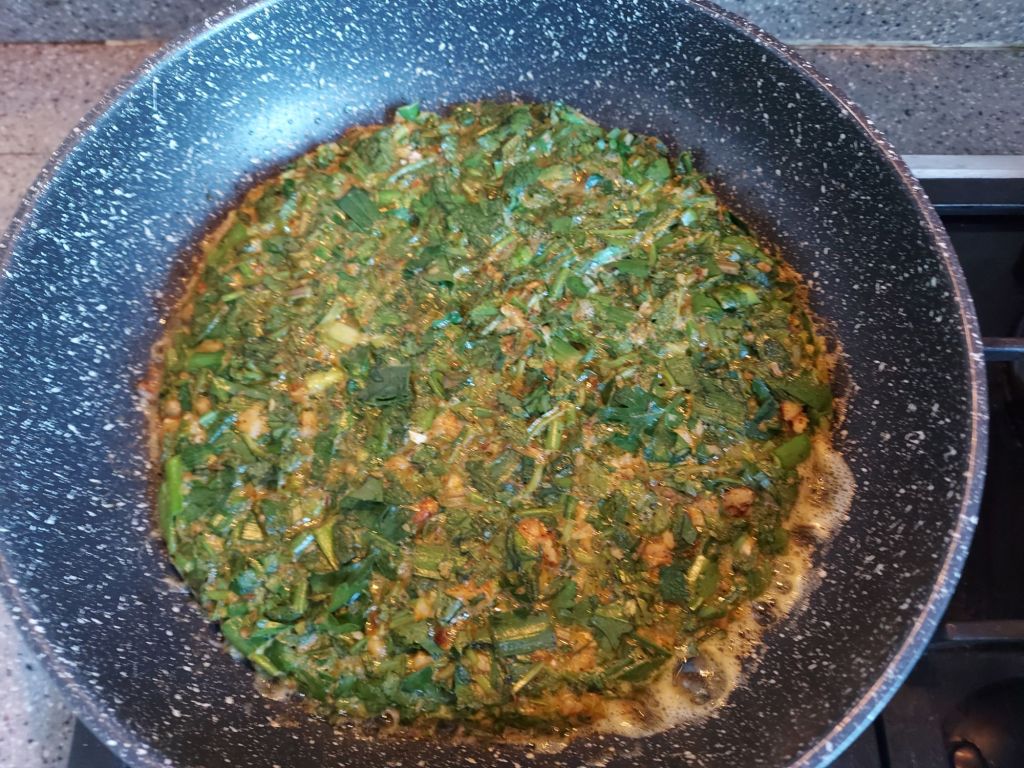
This Kookoo Sabzi’s ready to flip

Kookoo Sabzi is usually a combination of garlic chives, corainder (cilantro) and dill, but seeing as we’re not fans of dill, we’ve opted to replace it with parsley and mint. You can also omit the coriander if that’s not your thing (feel free to add some dill if you must). We’ve added parsley and mint, along with toasted walnuts, for some protien, and barberries (if you can find them – we couldn’t), to add a tart edge to the dish. Cranberries are a good replacement if barberries are proving hard to track down.
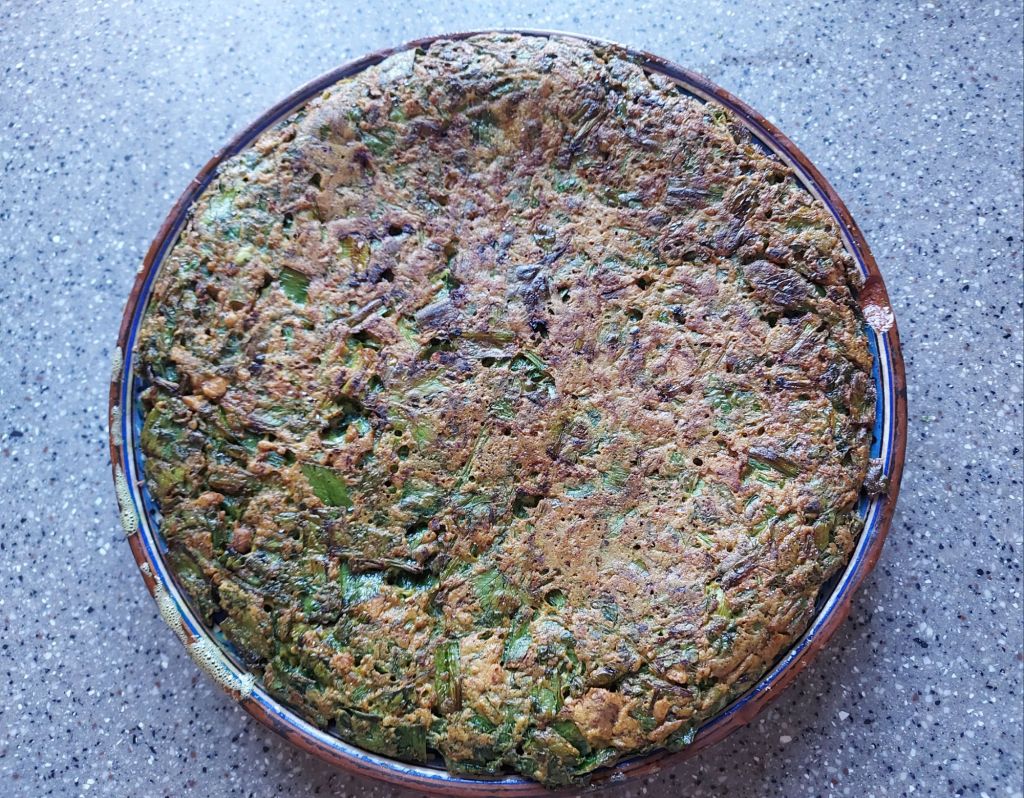
Turn it onto a plate and slide it back into the pan

Ingredients (makes four servings)

  • 50 g fresh parsley
  • 50 g fresh coriander
  • 50 g garlic chives (jusai)
  • 25 g fresh mint leaves
  • 50 g walnuts
  • 10 g dried barberries (or cranberries)
  • 4 eggs
  • 20 g chickpea flour
  • One teaspoon each of: cumin seeds, sumac and turmeric
  • 25 ml olive oil

Method

  • Wash the garlic chives and cut into 0.5 cm pieces. Leave to dry on a tea towel or kitchen paper. Wash and finely chop the parsley, coriander (including stems) and mint leaves. Combine all these ingredients with the chickpea flour, spices, berries and the eggs.
  • Crush and then toast the walnuts (without oil) for 10 minutes in a 12 cm frying pan. Remove the walnuts and mix them in with the herbs and eggs. Put half the olive oil in the frying pan and heat it up and then add the herb mixture, flattening it with a spatula.
  • Cook over a medium heat for 10 minutes. Put a plate on top of the kookoo and turn the frying pan over. Add the rest of the oil to the empty pan and heat it up. Slide the kookoo back into the frying pan and cook for another 10 minutes.
  • Cut the kookoo into four slices and serve with a dollop of natural yogurt and some olives.
Getting Back to our Roots

25 April 2024

Recently, Knidos Cookery Club was back in its spiritual home on the Datça peninsula in Turkey, getting back to its roots in the place where its culinary journey began eight years ago.

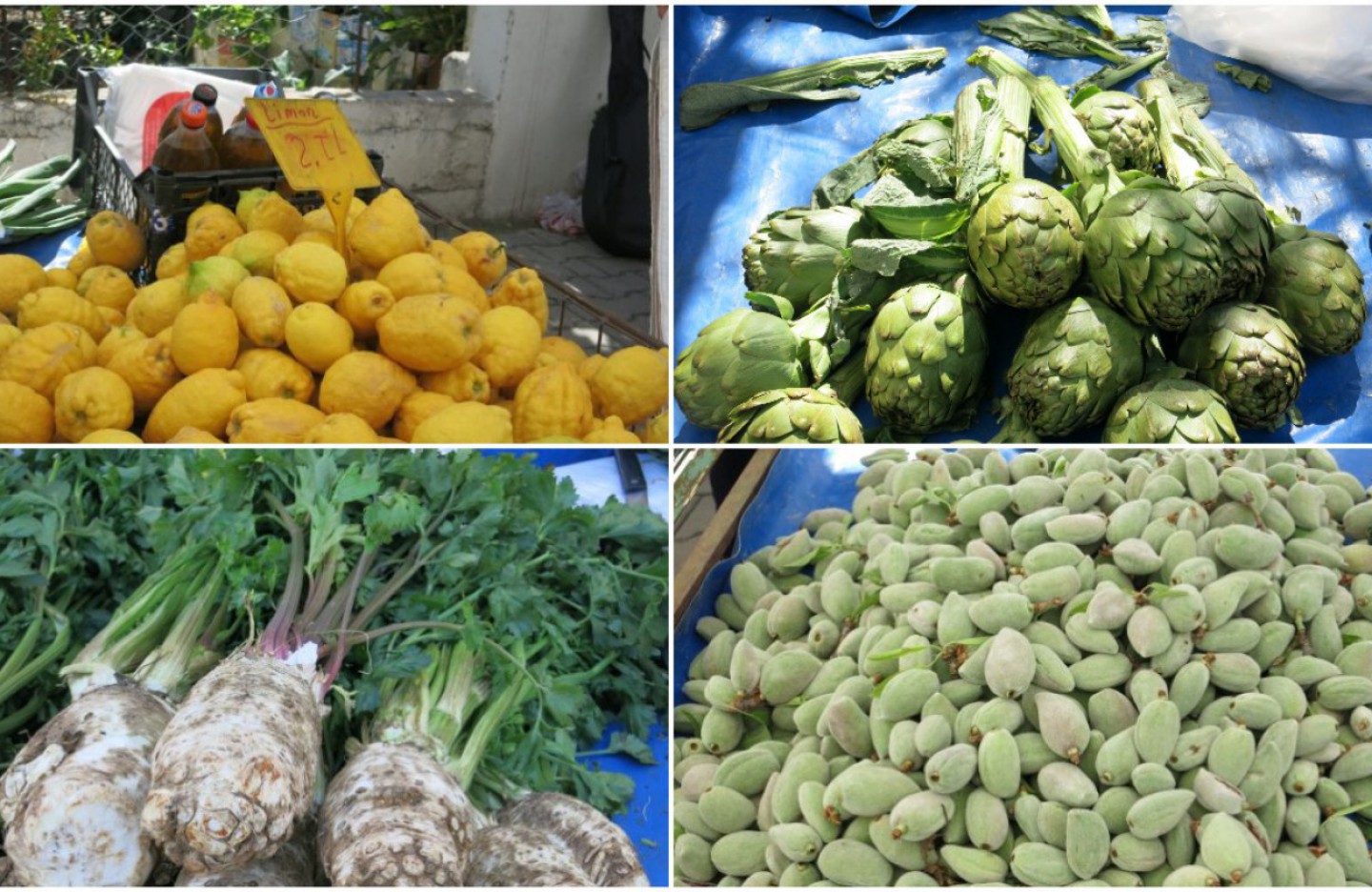
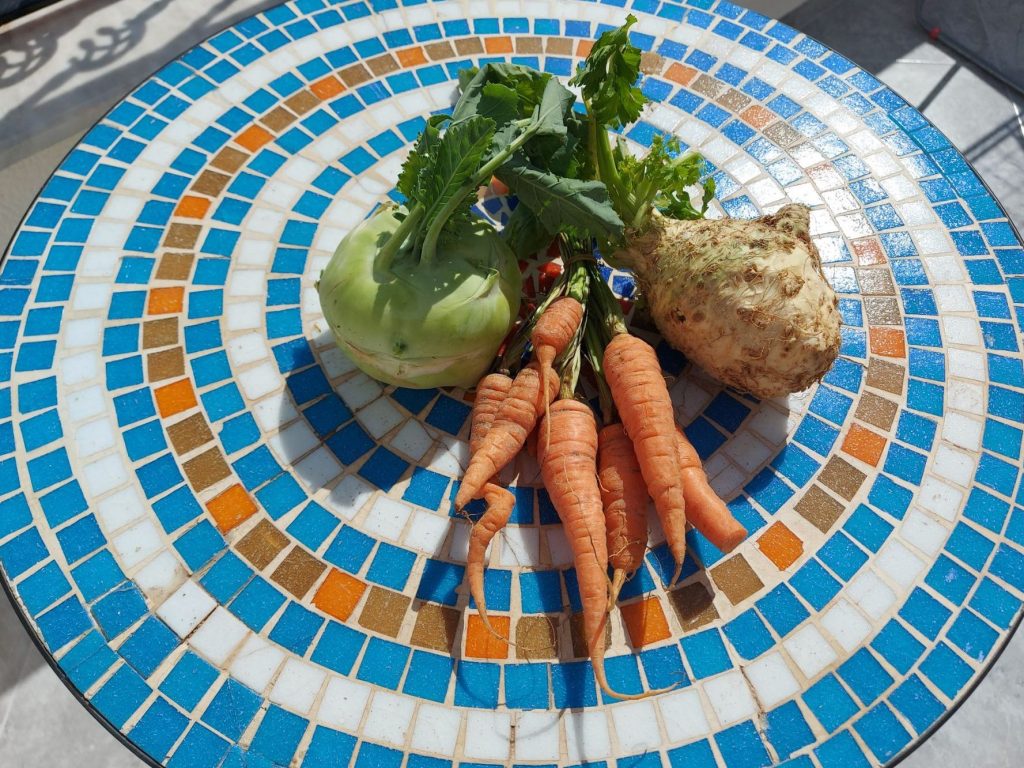
Getting back to our roots… carrots, celeriac and kohlrabi

This blog was named after the ancient Greek city of Knidos, the ruins of which are located on the tip of the peninsula. KCC started out exploring the veggie and vegan dishes eaten around this point where the Aegean Sea meets the Mediterranean Sea.

Since 2016, it has expanded its exploration to Central Asia and many other corners of the globe, seeking out new dishes to tickle your tastebuds!

Now, in addition to its WordPress blog, KCC is making its debut on Substack, where a regular newsletter will keep you up to speed with KCC’s latest culinary adventures, along with updated posts from the archive.

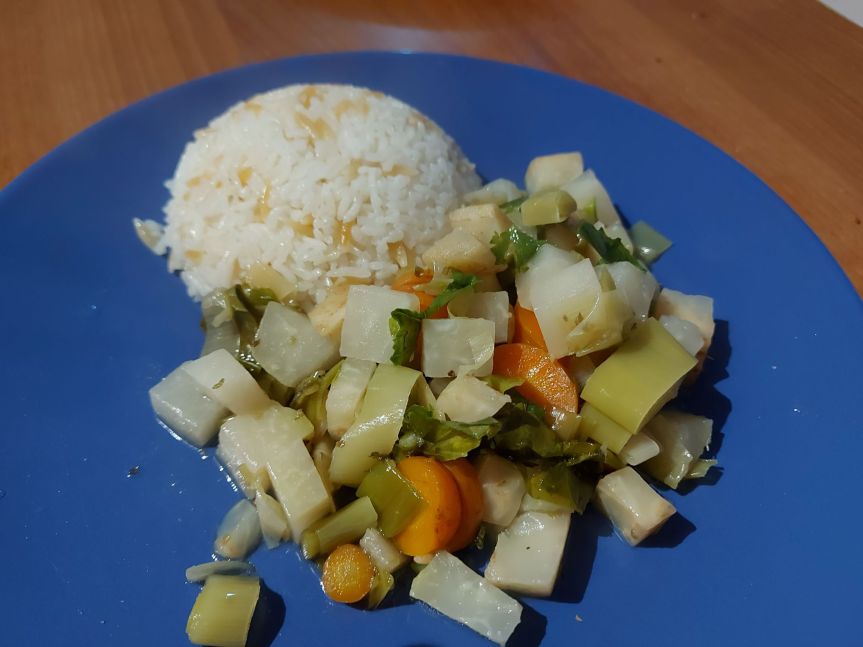
Zeytinyağlı carrot, celeriac, kohlrabi and leek with rice

After spending the winter in Kazakhstan, it was a treat to get back to Turkey with its wider choice of ingredients – it was time to move on from the winter staples, such as pumpkin and potatoes, and dig up some root vegetables that are less seen in Central Asia.

The local market turned up trumps with celeriac, kohlrabi and leeks on sale, perfect for making a zeytinyağlı (with olive oil) dish, so-called as these dishes are prepared with lashings of olive oil.

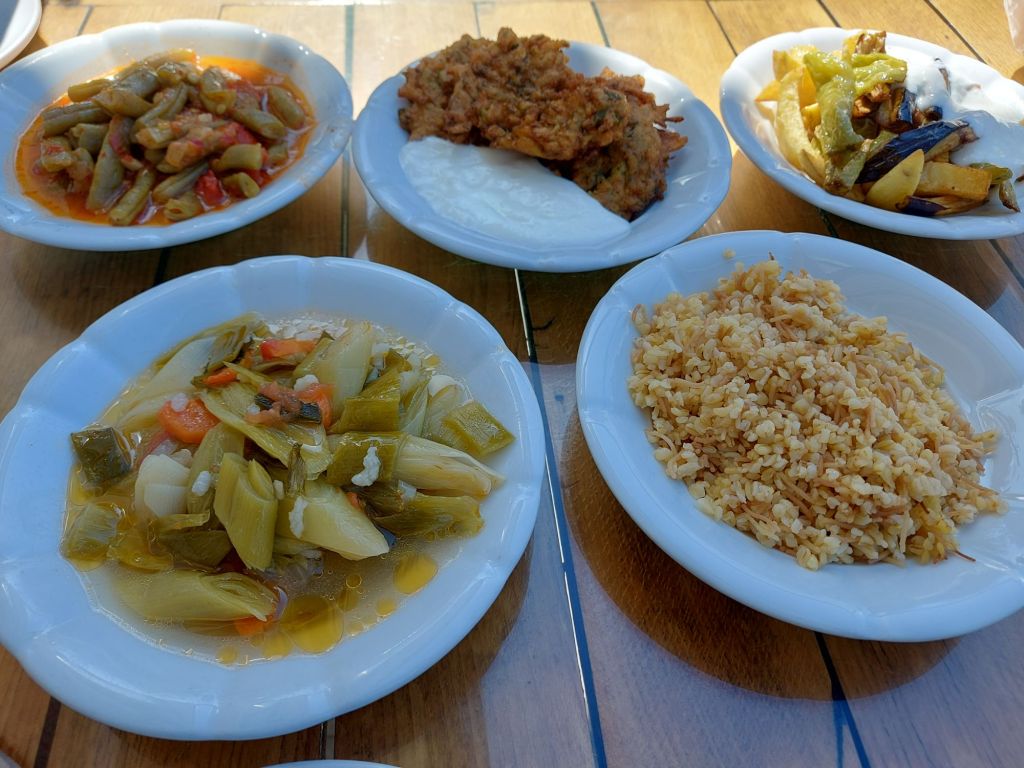
Standards include green beans (taze fasulye), artichoke (enginar) and leek (pırası). They are a staple of ev yemekleri (home-cooked food) restaurants, lokanta in Turkish, cheap and cheerful canteen-style eateries.

A selection of zeytinyağlı dishes – green beans, leeks and aubergines, green peppers and potatoes – from Datça’s Korsar/Erkin’nin yeri restaurant, located by the harbour

The last few years have seen the price of the key ingredient, olive oil, soar. This is due to numerous factors, including unexpectedly cold and wet conditions at the start of the growing season and drought and forest fires in the summer, that have led to poor harvests in the main olive-producing regions.

Global olive oil production has dropped by a third in just two years, which in turn has led to higher prices for consumers. However, we think it’s still worth shelling out that bit more for a bottle of extra virgin olive oil, as its fruity, peppery flavour adds so much to a cornucopia of delicious dishes, such as this carrot, celeriac, kohlrabi and leek zeytinyağlı  one:

Ingredients (makes 3-4 servings)

  • One medium-sized kohlrabi (approx 200 g)
  • One medium-sized celeriac (approx 200 g)
  • One bunch of baby carrots (approx 200 g)
  • One leek (approx 200 g)
  • One small lemon
  • 75 ml extra virgin olive oil
  • 100 ml vegetable stock
  • Two teaspoons dried oregano
  • One teaspoon sumac

Method

  • Wash the leek well and then cut it into 2 cm slices. Top and tail the carrots, kohlrabi and celeriac, put the leaves and stems to one side, and then peel off the hard outer skin of the kohlrabi and celeriac and chop both into 1 cm cubes. Slice the washed carrots into 2 mm rounds. Roughly chop the leaves and stems from the carrots, kohlrabi and celeriac.
  • Heat 50 ml of olive oil in a heavy-based pan over a low heat and then add the leeks. Stir fry for five minutes and then add the carrots, kohlrabi and celeriac and cook for another five minutes, stirring occasionally. Add the chopped leaves and stems and cook for another five minutes, continuing to stir every now and then.
  • Add the vegetable stock, the juice of the lemon and oregano and cook over a low heat for 15 minutes until all the vegetables are soft but still holding their shape. Stir in 25 ml of olive oil, garnish with sumac and serve with rice and some crusty bread to mop up the juices.

Spicy Spinach and Pumpkin Fritters

30 November 2023

With Halloween and Thanksgiving, the two times in the year when pumpkins take centre stage, now behind us, we’ve got a simple idea to use up any leftover pumpkin you may have with this quick and easy spinach and pumpkin fritter recipe.

Spicy Spinach and Pumpkin Fritters

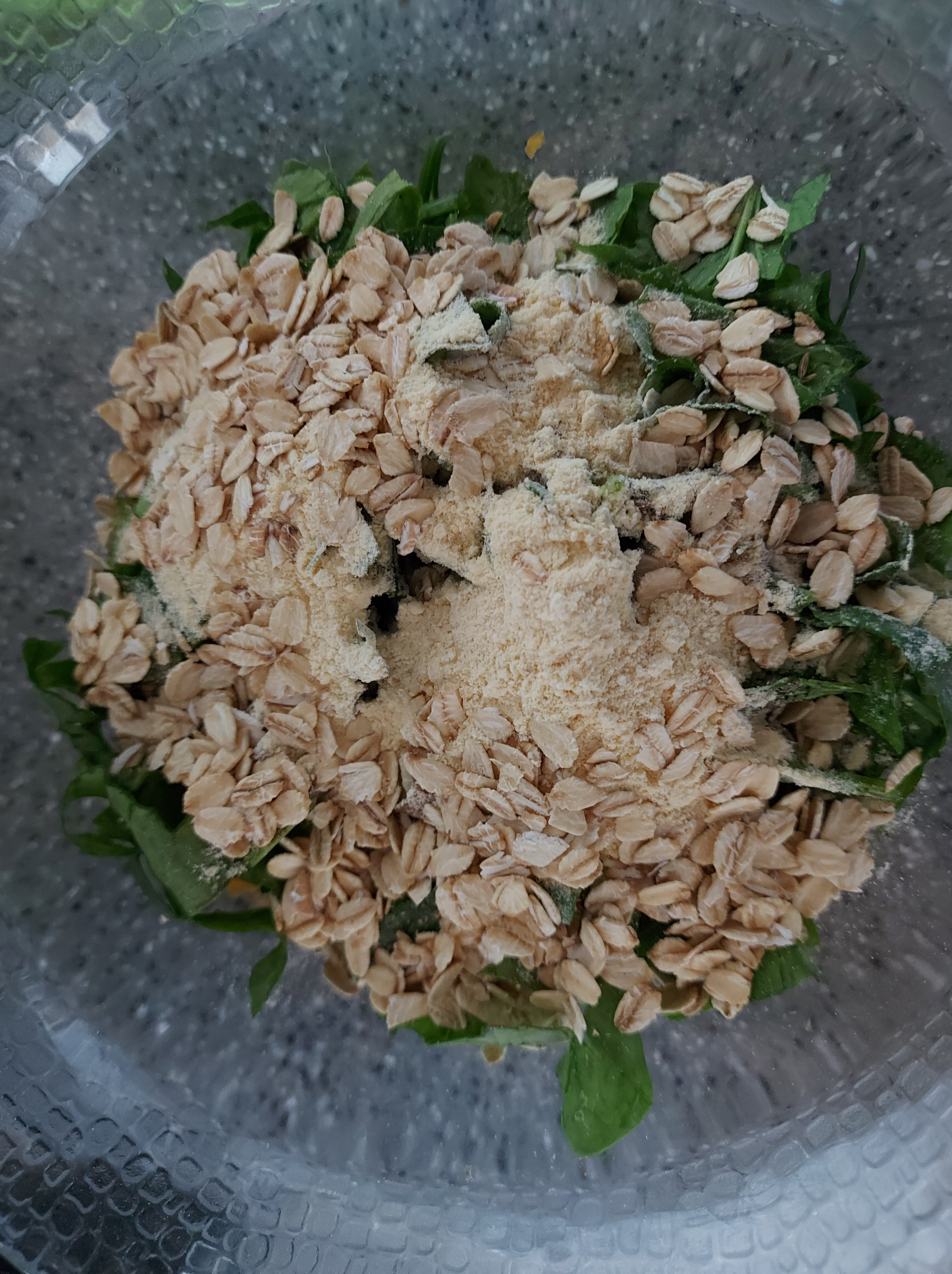
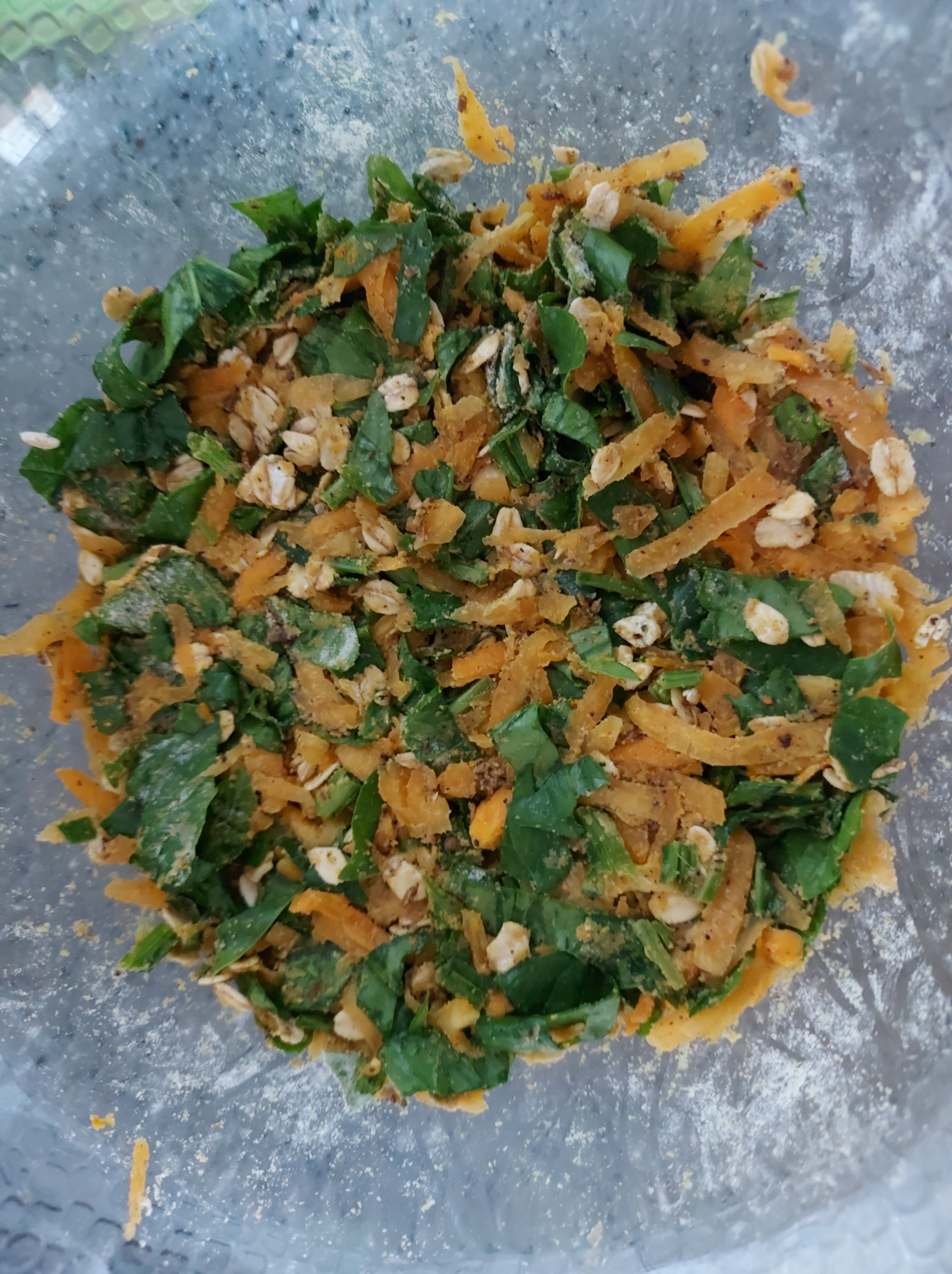
These fritters are totally vegan – there’s no need to add an egg to bind them together as chickpea flour and rolled oats do a great job of soaking up any extra moisture from the spinach and pumpkin and help the fritters hold their shape. They can be shallow fried on both sides in a little oil or baked in the oven for 30 minutes at 180 c. These spicy fritters taste good served with a side salad and chips or in a burger bun or pita with your choice of toppings.

Ingredients (Makes 6-8 fritters)

  • 175 g grated pumpkin
  • 50 g chopped spinach
  • 50 g chickpea flour
  • 25 g rolled oats
  • One teaspoon each of cumin seeds, coriander seeds, oregano, sumac and turmeric.
  • Half a teaspoon cinnamon
  • 25 ml oil for frying

Method

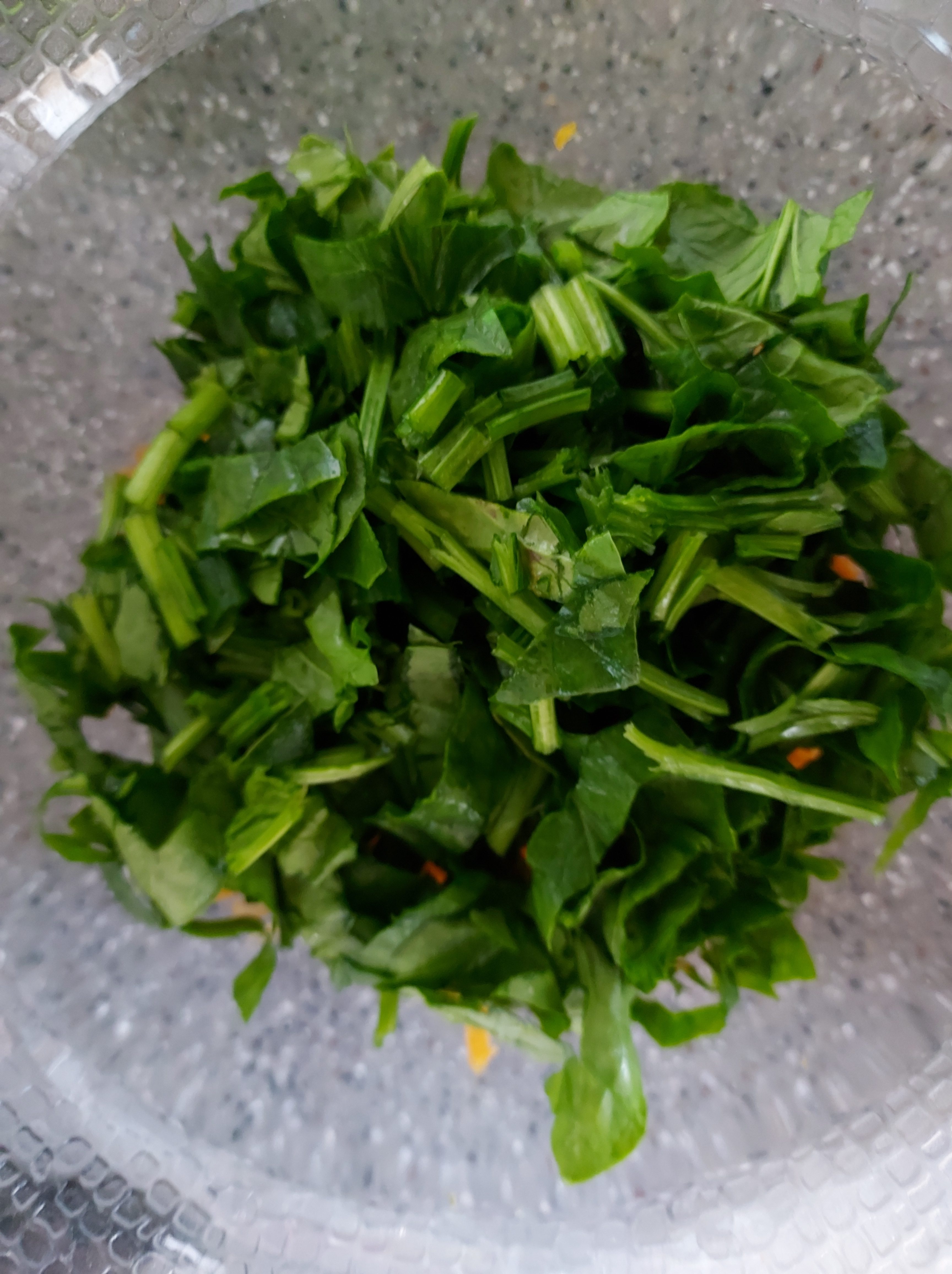
  • Grate the pumpkin into a large bowl, add the chopped spinach and herbs and spices and combine all the ingredients. Now add the rolled oats and chickpea flour and mix well. Leave the mixture to rest for two hours in the fridge, so that any excess moisture is absorbed.
  • Form the mixture into small balls (about the size of a golf ball) in your hands. Heat the oil in a frying pan then turn the heat down low and add as many of the balls as will fit in the pan. Flatten them with a fish slice and after a few minutes turn them over. Cook until golden brown on both sides and then serve straight away.

The HummusVariations: Beetroot and Walnut Hummus

02 November 2023

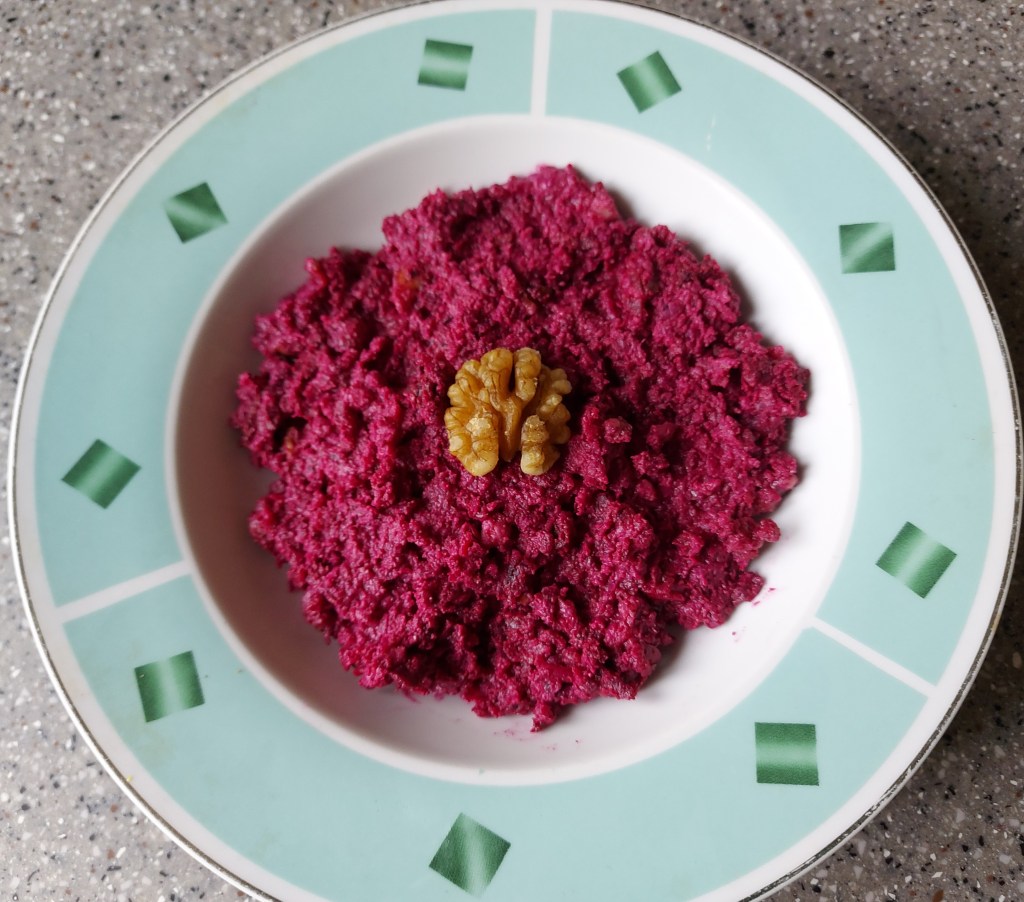
Hummus is one of those dips that we come back to time after time here on KCC. Beyond the classic basic dip of chickpeas, tahini, garlic, lemon juice and olive oil, the possibilities are endless. Our latest version is inspired by a recent trip to Myrtos, Crete where we tasted a beetroot-driven hummus at the excellent O Platanos restaurant.

In the past, we’ve made a turmeric-infused hummus and one from red beans, now here’s our latest variation. Beetroot is one of our favourite root vegetables, and it’s really good for you to boot. Taking some tips from Georgia, where a similar dip called pkhali is a regular feature on the dinner table, we’ve added some walnuts to give this hummus an extra protein boost.

Ingredients

  • 125 g baked beetroot – grated
  • 125 g crushed chickpeas
  • 50 g tahini – mixed with up to 50 ml of hot water
  • 25 g toasted walnuts
  • One garlic clove
  • 100 ml aquafaba (chickpea water)
  • a few dashes of olive oil
  • Two teaspoons of sumac 
  • pinches of ground cumin and coriander

Method

  • Grate the beetroot and then put in a large bowl and crush with a fork (you can also put it in the blender, if you have one). Add the mashed up chickpeas and stir well. Combine  the tahini with hot water until you have a creamy paste and then add to the mix.
  • Add the crushed, toasted walnuts, finely chopped garlic and sumac (this replaces lemon juice to give the hummus a citrusy kick without the acid) and stir together. Add some aquafaba and some splashes of olive oil and blend until the dip achieves your favoured consistency. Season with cumin and coriander and serve with warm pita bread. 

Lockdown Lunch: Red-hot Hummus

16 April 2020

We’re now nearing the end of the third week of Almaty’s lockdown. Life has settled into a pattern of venturing out as little as possible and relying more on what we have stored away. After a delve in the cupboards, we came up with one of the stalwarts of the staple food world – a pack of dried beans.

SAMSUNG CSC
KCC’s Red-hot, red bean hummus

After soaking in cold water overnight, these red beans can be used in endless ways – from soups, stews and curries to burgers, salads and dips. We’ve gone for a easy-to-make red bean hummus; you’ll just need to add tahini, lemon juice, olive oil and some spices. Serve with flat bread and salad for a tasty lunch.

Don’t worry if you haven’t got any tahini on hand, you can make your own by toasting some sesame seeds and mixing them with olive oil – here’s a link to last year’s post on DIY tahini.

Ingredients (makes around 300 g)

  • 250 g cooked red beans (reserve 50 ml of the cooking water)
  • Two tablespoons tahini
  • 25 ml olive oil
  • One lemon
  • One garlic clove
  • One teaspoon cumin seeds
  • One teaspoon sumac
  • Two teaspoons red chilli flakes
  • A few sprigs of coriander

Method

  • Mash the beans with a potato masher or a fork and add the tahini. Mix well then add olive oil and lemon juice and blend until you get a smooth consistency. If the hummus is too thick, use some of the cooking water, Add the minced garlic and spices and mix a bit more with the fork. Garnish with a few beans, a drizzle of oil, a sprinkling of chilli flakes and a sprig of coriander.


Lockdown Lunch: Kicking off with Kısır

9 April 2020

We’re heading towards the end of the second week of serious lockdown here in Almaty. Our local shops remain well-stocked with basics (we’re not supposed to go further than 500 metres form home) and the greengrocer’s reopened after closing for a week, so fresh vegetables are readily available.

SAMSUNG CSC
Basic kısır with radish

For this week’s Lockdown Lunch we’re making kısır, Turkey’s bulgur wheat salad answer to the Middle East’s tabbouleh salad. Kısır is one of those dishes that everyone has their own recipe for, but the basic ingredients are fine bulgur wheat, onion, chilli pepper, tomato paste, olive oil, lemon juice, parsley and pomegranate sauce.

SAMSUNG CSC
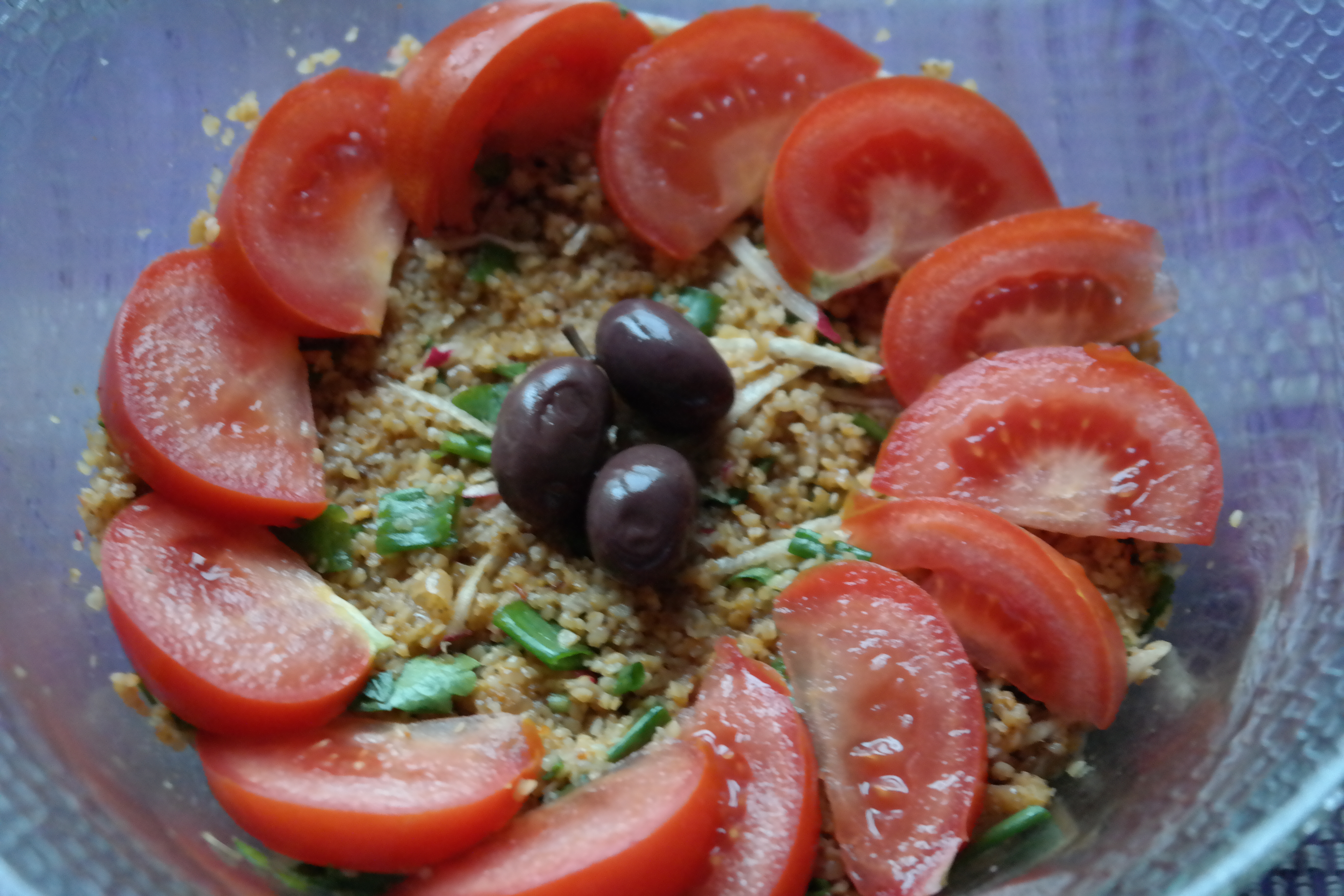
Kısır with olives and tomatoes

We’ve added some radishes, tomatoes, spring onion and black olives to the standard package above that can be eaten as a main meal (you might want to add some nuts or beans for a protein punch) or as a side salad. If you are on a gluten-free diet, then you can use millet in place of bulgur wheat.

SAMSUNG CSC
A fresh kick for your kısır

Kısır is easy to prepare and it benefits from sitting in the fridge overnight – leaving more time for all those Zoom parties and, of course, the Tajik football season, which kicked off last weekend.

Ingredients (for 3-4 servings)

  • 100g fine bulgur wheat
  • 200 ml vegetable stock or water
  • One medium onion
  • One medium tomato
  • One medium radish
  • One spring onion
  • One garlic clove
  • Ten black olives
  • Two tablespoons tomato paste
  • 25 ml olive oil
  • One lemon
  • 25 ml pomegranate sauce
  • Few sprigs of parsley
  • One teaspoon chilli pepper flakes
  • One teaspoon cumin seeds
  • One teaspoon sumac

Method

  • Heat the oil in a frying pan and add the cumin seeds and fry until they start to sizzle. Add the finely chopped onion and mashed garlic and cook for a few minutes over a low heat, stirring occasionally. Add the chilli pepper and sumac and stir.
  • Add the fine bulgur wheat and stir to cover the grains then add the stock or water, Add the tomato paste, pomegranate sauce and the juice of half the lemon. Stir and bring to the boil. When boiling, turn off the heat, cover the pan and leave to stand for 30 minutes or so until most of the liquid is absorbed.
  • Fluff up the grains with a fork and add the grated radish, sliced spring onion and chopped parsley. Mix together and put in a salad bowl. Before serving, garnish with lemon and/or tomato slices and black olives.

KCC’s Buckwheat Cottage Pie

31 October 2019

This time round on Knidos Cookery Club we’re using buckwheat, a cereal (or rather a pseudocereal) that has thus far been neglected on our site.  Buckwheat’s name is misleading as it’s not really wheat, but rather a plant that is more closely related to sorrel, knotweed and rhubarb, which makes it suitable for those of you on a gluten-free diet.

20191011_222708.jpg
KCC’s Buckwheat Cottage Pie

Buckwheat, or grechka, is wildly popular across the countries of the former Soviet Union and eastern Europe – you can find whole aisles in supermarkets dedicated to it. The groats are used to make porridge and the flour to make pancakes. In Japan, the flour is  used to make soba noodles.

20191015_113946.jpg
Row upon row of buckwheat groats in a supermarket in Almaty, Kazakhstan

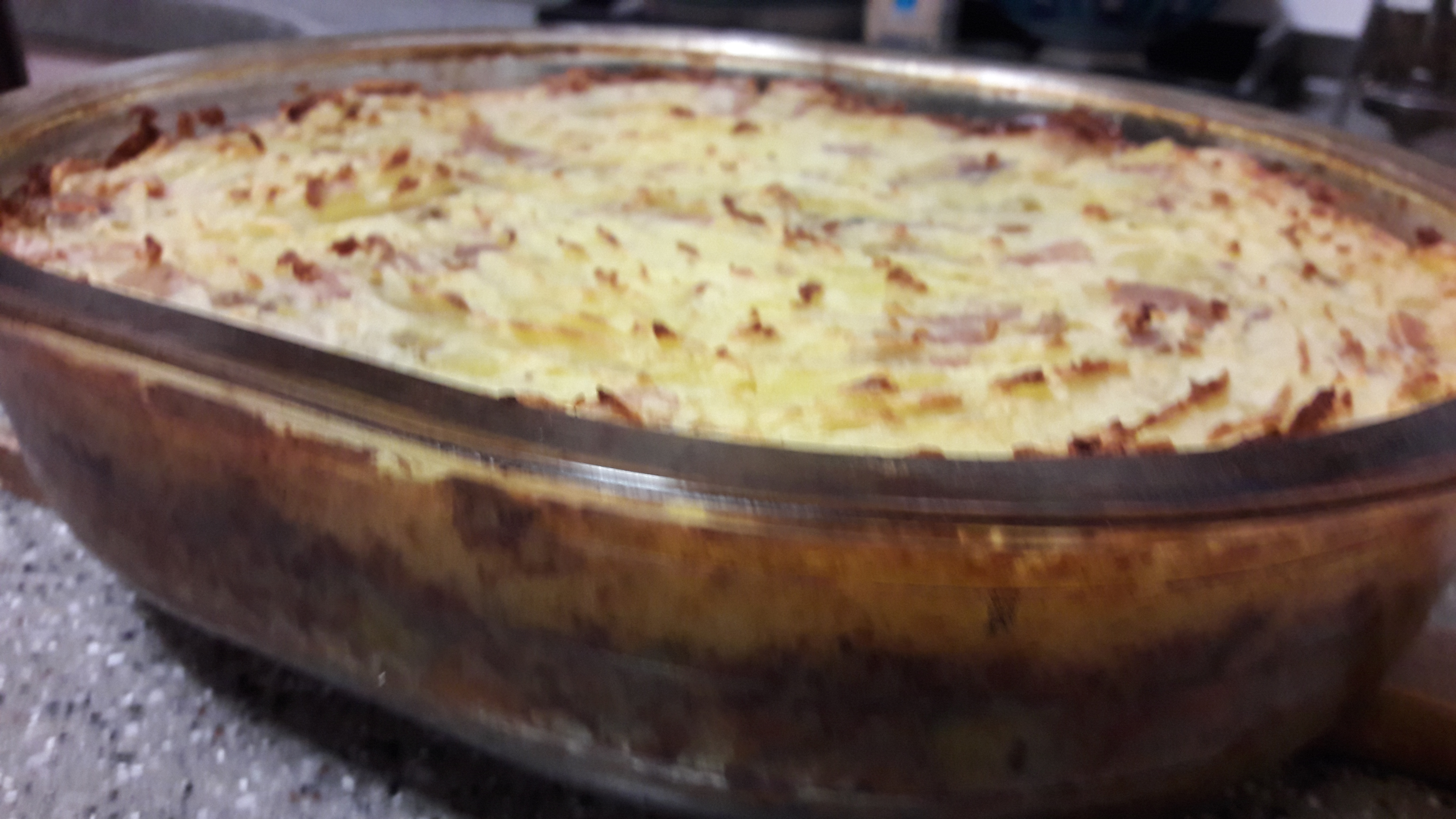
We’ve taken that classic British comfort food, Cottage Pie, and replaced the meat with a mix of the nutty-tasting buckwheat and vegetables all topped with a thick slab of mashed potato – perfect fodder for the colder autumn and winter evenings and ready to eat in around an hour.

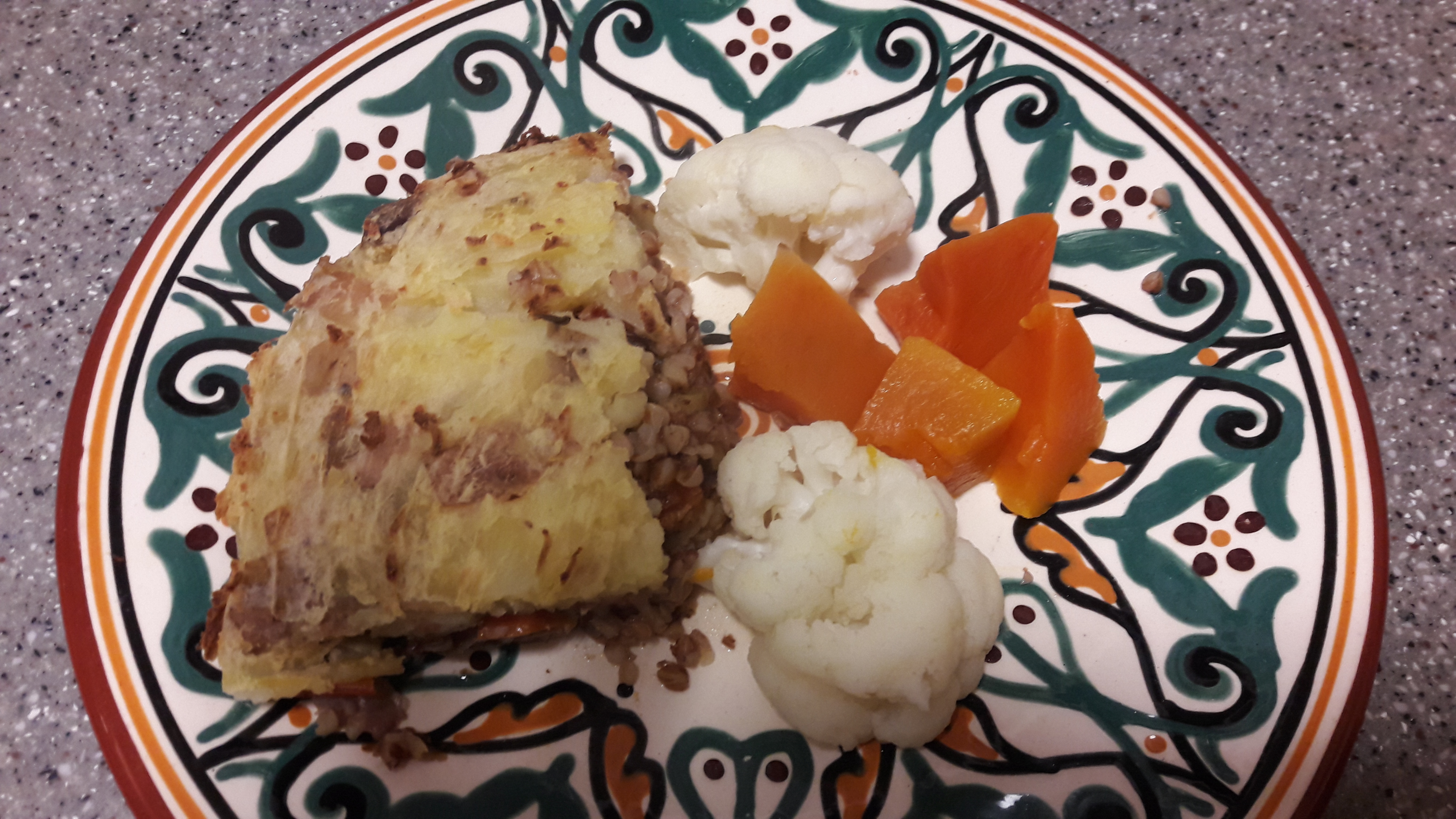
Cottage pie and two veg

Ingredients (makes 4 servings)

  • 150 g buckwheat groats
  • One carrot
  • One medium-sized onion
  • One green pepper
  • Three medium-sized tomatoes
  • Three medium-sized potatoes
  • Six small dried mushrooms
  • 25 ml olive oil
  • 500 ml vegetable stock
  • One teaspoon sumac
  • One teaspoon chilli flakes
  • Two teaspoons dried thyme
  • One bay leaf

Method

  • Heat the olive oil in a heavy-based pan and add the minced onion. Cook for five minutes over a medium heat and then add the diced carrot and green pepper and cook for another five minutes, stirring occasionally. Add the sumac, chilli flakes and thyme and the chopped tomatoes and diced mushrooms.
  • Reduce the heat and cook for another 10 minutes then add the buckwheat and stir well. Pour the stock over the mixture, add the bay leaf and simmer for 20 minutes or so or until the moisture has been absorbed. While this is bubbling away, cook the potatoes, drain and then mash them.
  • Put the buckwheat mixture in the bottom half of a baking dish and then cover the mix with a layer of mashed potato. Run a fork across the top of the potato to get a ridged finish and than bake at 180 c for 30 minutes. Serve hot with roasted or  steamed, seasonal vegetables such as  cauliflower and pumpkin.


Grassy Green Samosas

19 September 2019

This time round we’ve filled some filo pastry triangles with some fresh leafy greens. Inspired by Central Asia’s kok samsa, a small, deep-fried pie filled stuffed with chopped up greens, our take on this popular street snack mixes some peppery radish leaves with some tart sorrel-like leaves, leek and carrot.

20190917_121523.jpg
A grassy, leafy green samosa

A few weeks ago, we left Datça’s weekly market laden down with a selection of leafy greens – called ot (grass) in Turkish, including a bunch of radishes complete with leaves and an unidentified bunch of greens with a tart, lemony taste.

Further inspired by Turkey’s otlu pide and otlu börek, we chopped up a leek and fried it in olive oil and then mixed in some grated carrot before adding the leafy greens and spices. To make these pies you can use any leafy greens – Swiss chard and spinach also work well here.

Then we wrapped the filling in filo pastry, which can be bought from your local supermarket or Middle Eastern grocery shop – or you can try and make your own – here’s some tips on how to do it.

Ingredients (makes 6-8 samosas)

  • 12 sheets of filo pastry (approx 15 cm x 15 cm)
  • One leek
  • One carrot
  • One bunch each of sorrel and  radish leaves (use spinach and/or Swiss chard if you can’t find these)
  • 50 ml olive oil
  • One teaspoon dried thyme
  • One teaspoon sumac
  • One teaspoon cumin
  • Sprinkling of nigella seeds

Method 

  1. To make the filling, heat 25 ml olive oil in a heavy-based pan and cook the chopped leek over a medium heat until translucent. Add the grated carrot and cook for five minutes, stirring regularly. Add the herbs and spices and the roughly chopped greens and cook until the leaves are wilting.
  2. Place a layer of filo pastry on a flat surface dusted with flour. Brush with olive oil and add another sheet, brush with oil and then add one more layer. Cut the layers of filo into two triangles along the diagonal.
  3. Place a generous dollop of the filling in the middle of each triangle. Fold the edges of pastry over, brushing with more oil, to create a triangle-shaped pie like a samosa. Repeat the process until all the filling is used up.
  4. Place the pies on a greased baking tray and brush with more oil and sprinkle nigella seeds over them. Place the tray into a pre-heated oven and bake at 200 °C  (gas mark 6) for 30 minutes or until the pies are golden brown in colour. Serve straight away with a salad of your choice.

The Turk-Mex Chronicles: A Crazy Cactus Salad

5 September 2019

This week we’re cooking up a cactus salad with the main ingredient foraged from some wild prickly pear bushes in Turkey. In an earlier post we reported on some of the similarities between Turkish and Mexican cooking – they both love hot chilli peppers in their food, there’s plenty of beans used, fresh white cheese is a key ingredient and wrapping food in flat bread is popular.

20190827_165824.jpg
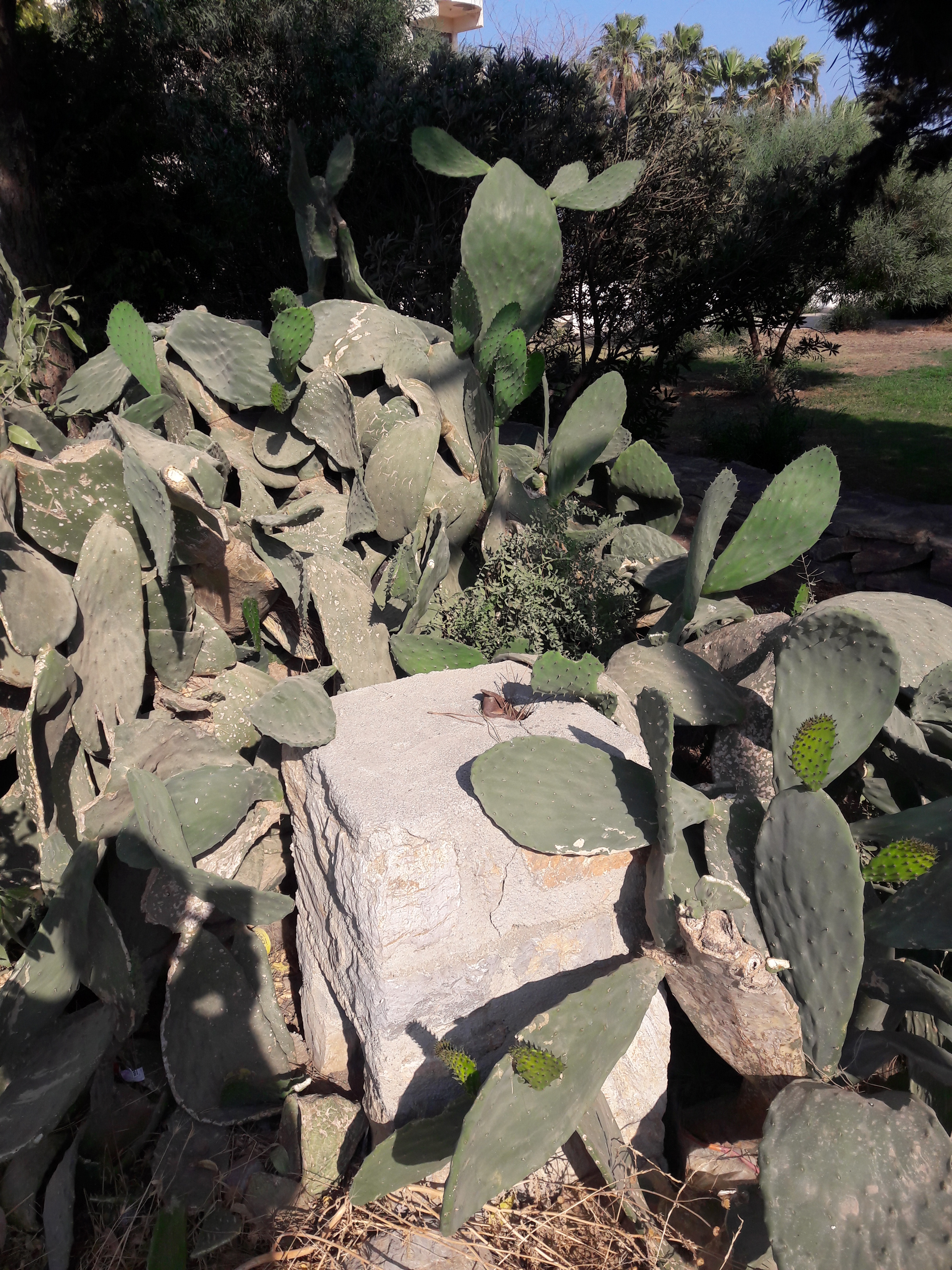
A prickly pear cactus growing wild in Datça, Turkey

A key area of difference is the use of cacti, a staple of Mexican cuisine. In Mexico the prickly pear paddles, known as nopales or napolitoes (from the Spanish for cactus), are used in a variety of dishes. They can be found in salads, as a taco or tortilla filling, simply grilled or scrambled up with eggs. They have a crunchy taste similar to green beans.

20190829_210243.jpg
Kaktuslu acili ezme

Whilst the prickly pear cactus grows all over southern Turkey, only the fruit – the prickly pears, are usually eaten and sometimes used in cocktails! We’re about to change all that with the first of one of our irregular ventures into the world of Turk-Mex cuisine…

How to deal with a thorny problem…

This slideshow requires JavaScript.

We harvested a few cactus paddles from a secret location in Datça, Turkey. After harvesting, we put on our marigolds and removed the thorns with a sharp knife, sliced the pads up and then boiled them. Next we mixed then in with a spicy tomato sauce, aka acili ezme, to create this Crazy Cactus Salad.

Ingredients (serves 3-4)

Four prickly pear cactus paddles (roughly hand-sized)

For the sauce:

  • One medium-sized onion
  • Three medium-sized plum tomatoes
  • One medium-sized green pepper
  • One garlic clove
  • One teaspoon capers
  • One bunch of parsley
  • One teaspoon dried mint
  • Three teaspoons red chilli flakes
  • Two teaspoons sumac
  • One teaspoon flavoured vinegar (such as apple or fig)
  • Three teaspoons pomegranate sauce

Method

Remove all the thorns from the pads with a sharp knife. Slice into 1 cm strips and then cut into 2 cm pieces. Boil in salted water for 8-10 minutes until cooked but still crunchy – cook them too long and they can go a bit slimy. Drain and rinse in cold water and then mix with the acili ezme salad (instructions below).

For the sauce:

  • Peel the tomatoes and de-seed (to peel: plunge the tomatoes into boiling water for 30 seconds then place in cold water – the skin should now come off easily). Chop the tomatoes, green pepper, onion, garlic and parsley as finely as you can.
  • Put all the ingredients into a bowl, add the herbs and spices, vinegar and pomegranate sauce and mix well. Leave to chill in the fridge for at least two hours before serving.


No Beef with the Beetburger

19 October 2017

The beet is back on Knidos Cookery Club and this time round we’ll be using our burgundy-coloured friend to tap into another zeitgeist treat in the form of the tasty beetburger.

20171013_210527

The stalls in Datça market last Saturday were overflowing with bunches of beetroots so we picked up a bunch, chopped off the leaves and stems for sautéing, and wrapped the beets in foil and roasted them in the oven for an hour or so.

Beetroot burgers have been a bit of a barbecue craze in the UK over the summer, with supermarkets reporting soaring sales as people turn towards healthier options to meat.

20171013_175647
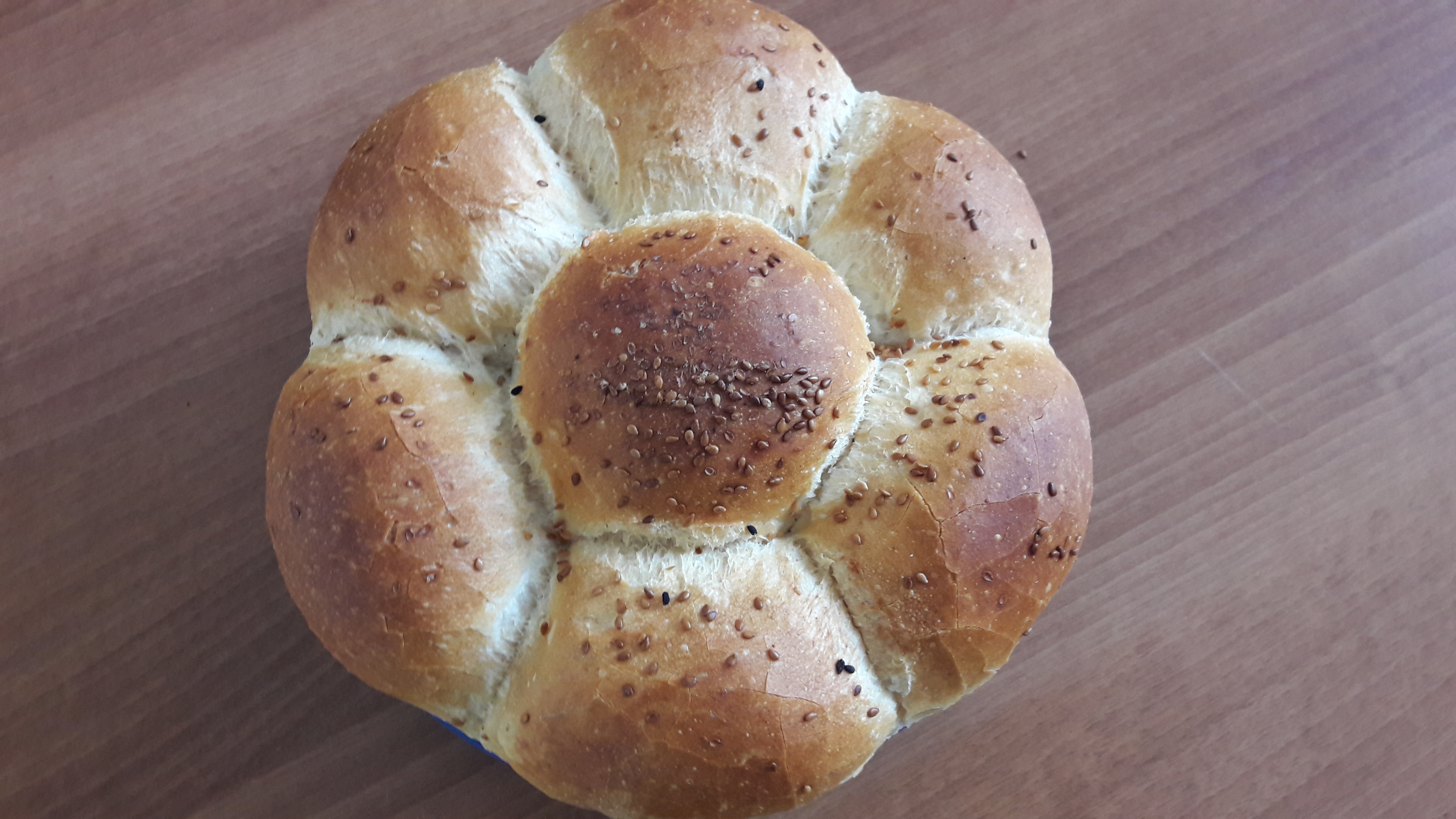
Turkey’s papatya, or daisy, loaf of bread

We’ve done some experimentation and come up with a patty that will hold together under the grill, on the barbie, in the oven or can be shallow-fried. Stuff it in a bun – we’ve used the papatya loaf as pictured above, and serve with chips and salad for a delicious yet healthy meal (the chips were roasted in the oven, not fried).

Ingredients (makes 6-8 burgers)

100 g red lentils

50 g fine bulgur wheat

150 g roasted beetroot, grated

One medium onion

One garlic clove

50 ml olive oil

Two teaspoons dried thyme

One teaspoon each of sumac, cumin and chilli flakes

Dash of soy sauce

Method

Heat 25 ml of the olive oil in a heavy-based pan, add the herbs and spices and the chopped onion and garlic and fry for five minutes until the onion starts to soften. Add the lentils and water, bring to the boil and then simmer until the liquid is absorbed.

Add the bulgur wheat to the mix and allow to cool for 30 minutes – this should thicken the mixture. Then add the grated beetroot and stir to combine all the ingredients. Form into burger shapes (take a dollop of walnut-sized mix and flatten with a spatula and shallow fry in the rest of the olive oil on both sides until going crispy on the outside.

Alternatively, these burgers can be baked in the oven for 30-40 minutes at 200 c or grilled or cooked on the barbecue until crispy on both sides. Serve in a burger bun with salad and chips.