This week were honing in on a favourite Italian starter, bruschetta – slices of toasted bread served with a range of different toppings. We’ve opted for a heartier version using chunky slices of bread that can double up as a main meal when you add a salad of your choice.
In Italy the slices of bread are toasted on abrustolina, a device made from sheet metal with holes on the bottom and a wire rack on the top (see pictures below taken from the Grand Voyage Italy website). This is placed over the heat source on your stove top and can be used to make toast, grill polenta and roast peppers, courgettes or aubergines.
Put the brustolina over the flame
A brustolina in action
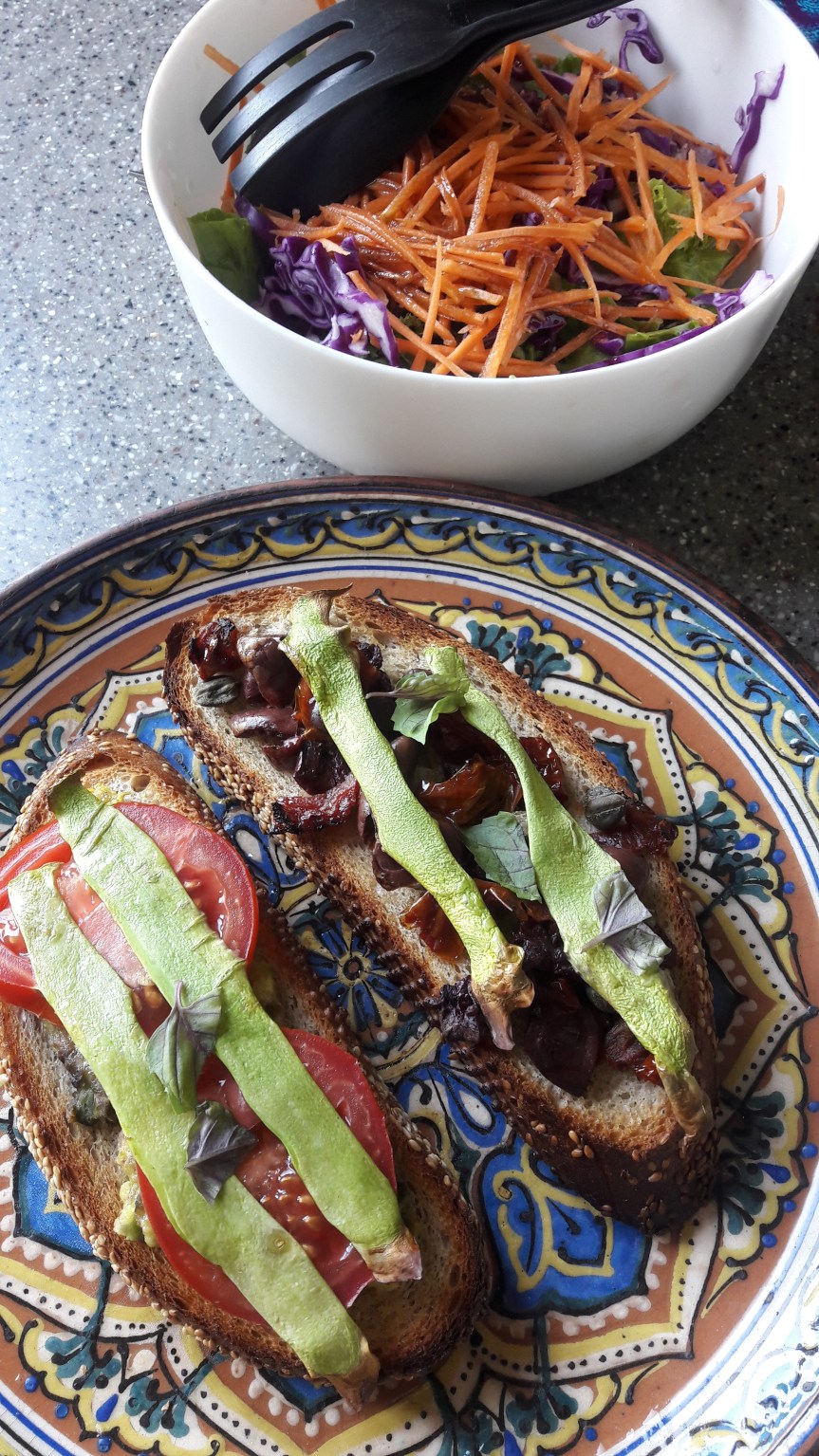
Being unable to make it to Italy to pick up a brustolina at this point in time due to the pandemic, we’ve had to make do with our oven to toast the bread. Brush your thickly cut slices with olive oil and a rub of garlic and cover one side with a topping of your choice.
We went for capers, sun-dried tomatoes and black olives with thin slices of courgette and basil leaves for the first option and home-made guacamole, topped once again with thin slices of courgette and basil leaves, for option two. Simply leave in a hot oven (200 c) for ten minutes or so until the bread just begins to burn at the edges. Serve immediately with your favourite salad.
There were signs this week of life slowly beginning to return to some sort of normal. Cafes and terraces are set to open once again in Almaty from next week and the streets are busier. We’re not planning on changing too much at the moment and, in the meantime, we’re content to continue our armchair culinary travels.
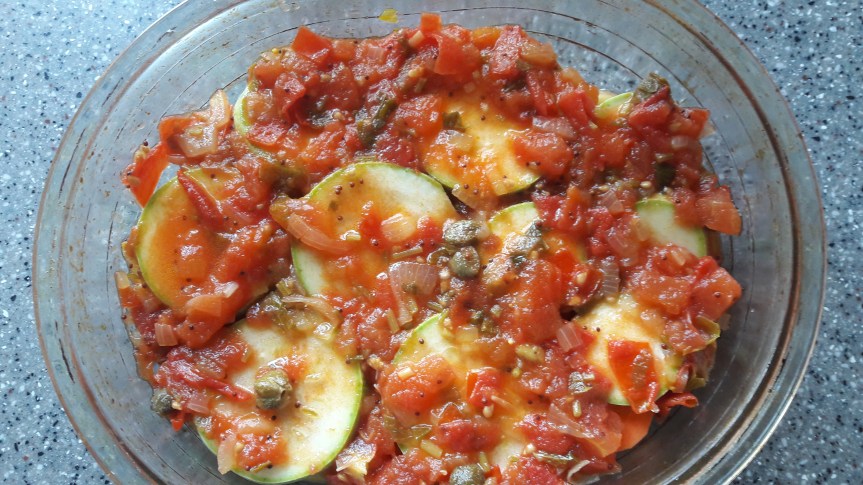
Half-way there – assembling the briam…
Greece has been in the headlines this week with the news that its beaches are reopening and it’s preparing to open its borders to tourists next month. This news brought back memories of holidays in the Greek islands and the great food in the tavernas. One of our favourite dishes is briam (pronounced bree-AM) – a delicious stew of oven-roasted seasonal vegetables.
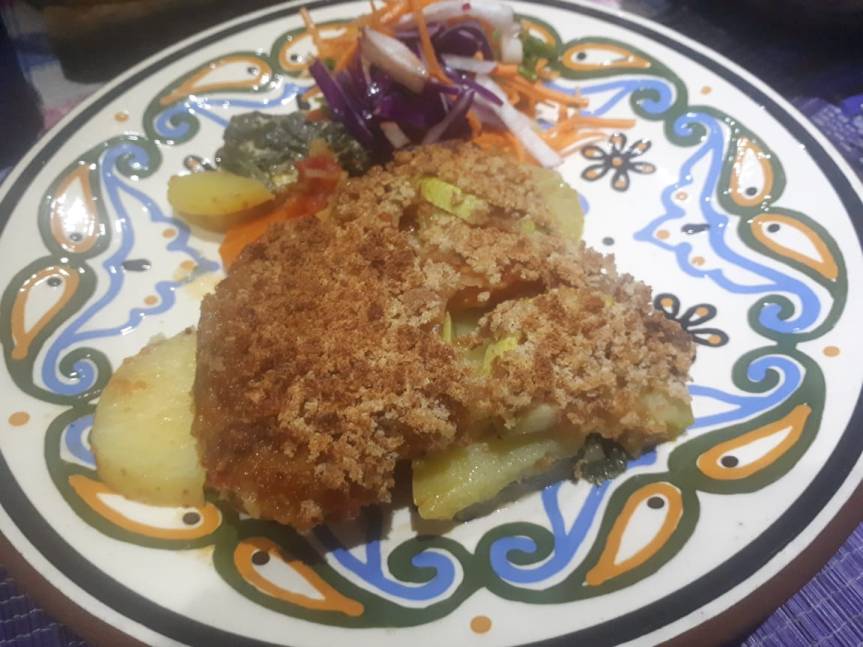
Briam – good enough to eat
As usual, we’ve taken a few liberties with the recipe, omitting aubergines (usually a key ingredient) as they are not quite in season in Almaty yet, so foodie purists please look away. We’ve added carrot and spinach to the usual potatoes and courgettes and then cooked it slowly in a tomato sauce. We’ve also topped it with some breadcrumbs to enclose our briam.
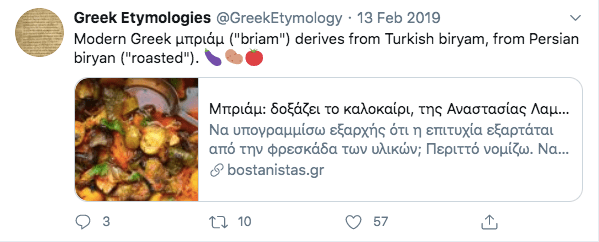
The name briam has an interesting history – it is a borrowed word – there is no letter ‘b’ in the Greek alphabet, instead this sound is represented by combining the letters ‘μ’ (m) and ‘π’ (p) – ‘μπ’. Many Greeks call this casserole tourlou tourlou (all mixed-up), so briam could have come from Greeks who lived in Anatolia until the mass population exchanges in the early 20th century.
Briam and salad
In the Ottoman era, there was a word biryan, spelt büryan in modern Turkish, which refers to a side of lamb cooked slowly over charcoal in a pit in the ground – a speciality of Siirt in the Kurdish area on the borders with Iraq and Syria. This in turn could come from Persian, where biryan means roasted (notice the similarity with India’s biriyani). Whatever the name’s origin, it tastes great!
Ingredients (serves 4)
For the bake:
Two courgettes (approx 300 g)
Four potatoes (approx 300 g)
One carrot (approx 100 g)
200 g spinach
75 g breadcrumbs
For the tomato sauce:
One red onion
250 g tomatoes
One bunch of parsley
20 capers
25 ml olive oil
One teaspoon mustard seeds
250 ml vegetable stock or water
Method
Make the tomato sauce first. Heat the oil in a heavy based pan, add the mustard seeds and when they start to pop add the chopped onions and cook over a medium heat, stirring occasionally. After five minutes reduce the heat and add the chopped tomatoes. Stir and simmer for ten minutes then add the stock, chopped parsley and capers. Cook until the liquid has reduced by half.
Cook the spinach for a few minutes until it is beginning to wilt and then set aside. Cut the potato, courgette and carrot into 1 mm slices and put a layer of potatoes, then courgettes and then carrots into a greased baking dish. Add the spinach and pour half the tomato sauce over the vegetables. Add another layer of potatoes and courgettes and then pour the remainder of the tomato sauce over the layers. Spread the breadcrumbs over the top.
Cover with tin foil and bake in an oven at 180 c for around 1.5 hours. After an hour, remove the foil and cook for another 20-30 minutes until the breadcrumbs go start to go a golden brown colour. Keep an eye on it to make sure the breadcrumbs aren’t burning. Serve immediately with a fresh salad – it’s also great when it’s cooled down a bit.
After a couple of months of lockdown, a bit of garden envy is setting in as we hear about people getting outside and having barbecues. With no open space in the flat other than an enclosed balcony, it was time to get inventive in order to get some char-grilled food.
It’s barbecue time!
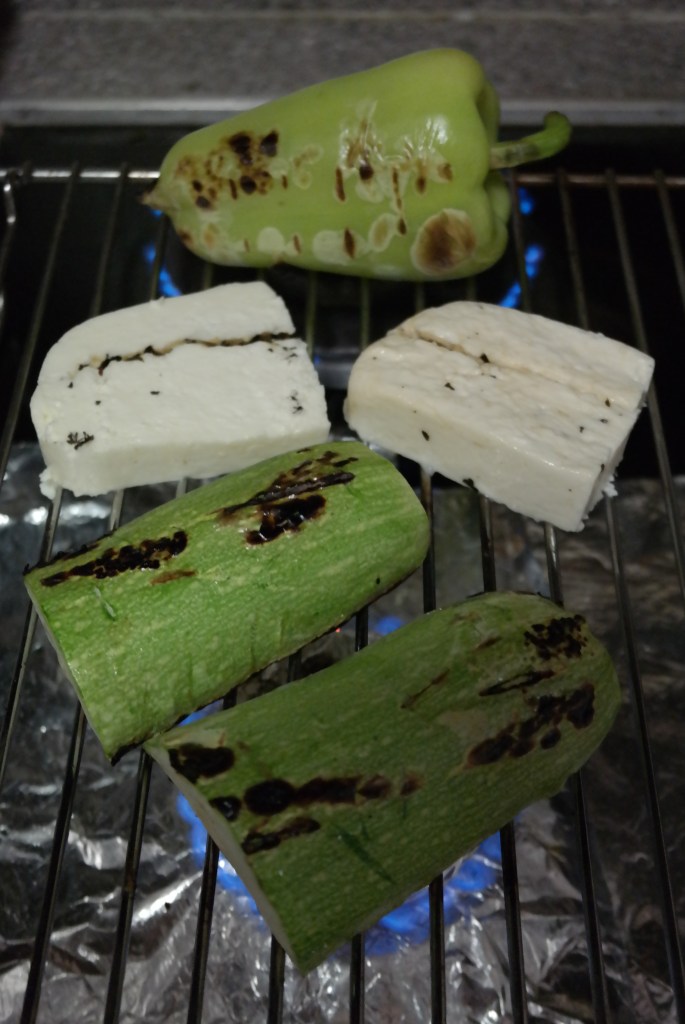
We’re fortunate to have a gas hob, so with some creative use of tin foil (some of it salvaged from last week’s chocolate fest!) and a rack from the oven, KCC came up with an improvised BBQ grill.
A char-grilled platter
Use whatever vegetables are available – we had courgettes and green peppers, and cook them over the open flame, turning regularly. We grilled some halloumi as well. We cooked the jacket potato in the oven and made our own chapati, a flatbread from the Indian sub-continent, to serve with the indoor barbecue.
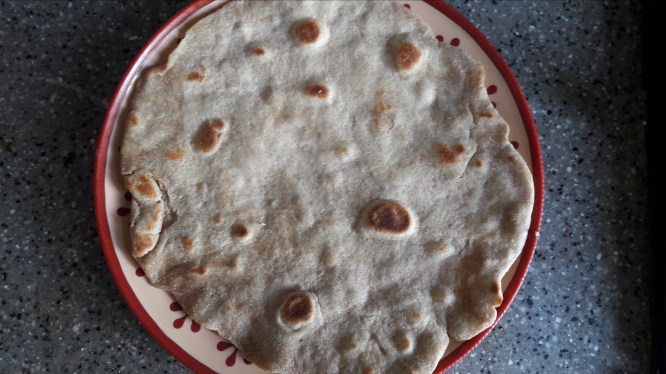
KCC’s chapati: ideal for a BBQ
Chapati recipe (makes 4):
150 g wholemeal flour
75 ml water
50 ml oil ( we used olive oil, but you can use whatever you have handy)
A pinch of bicarbonate of soda
Method
Sieve the flour into a large, ceramic mixing bowl and add the oil and bicarbonate of soda. Combine with a wooden spoon or your fingers until the mixture resembles bread crumbs. Slowly add the water until you have a fairly elastic dough – not too wet and not too dry. Knead for ten minutes and then leave covered with a tea towel for an hour or so.
Heat up a non-stick frying pan or a cast iron pan. Divide the mixture into four and form into balls. Flatten with your hands and then use a rolling pin to roll the dough into 1 mm thick rounds. Cook over a high heat on both sides until the chapatis take on a leopard-spotted look as in the picture above.
With another Nauryz, the spring equinox, just around the corner, we’re looking at this turning point of the year as a good place to start some spring cleaning for the body.
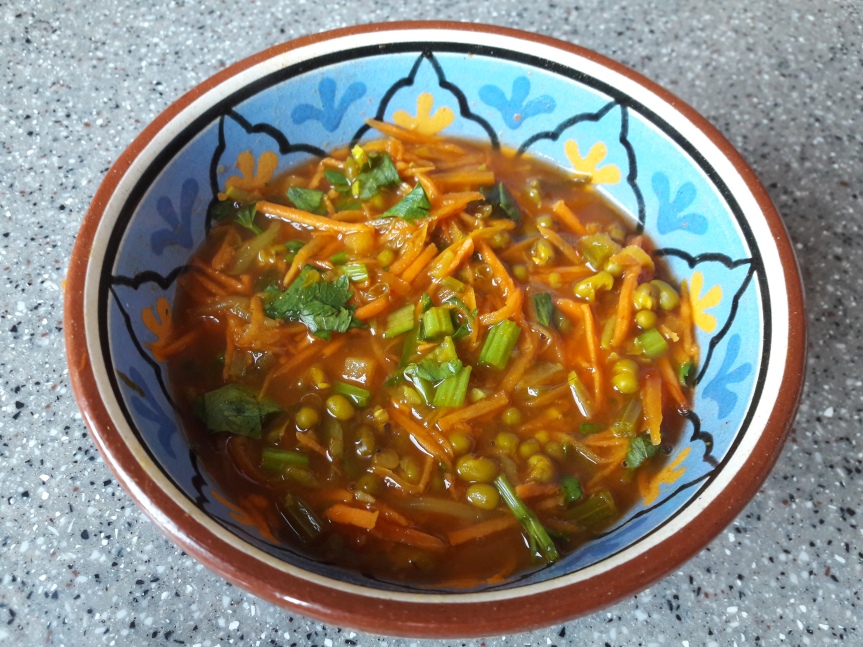
The Mighty Mung Bean
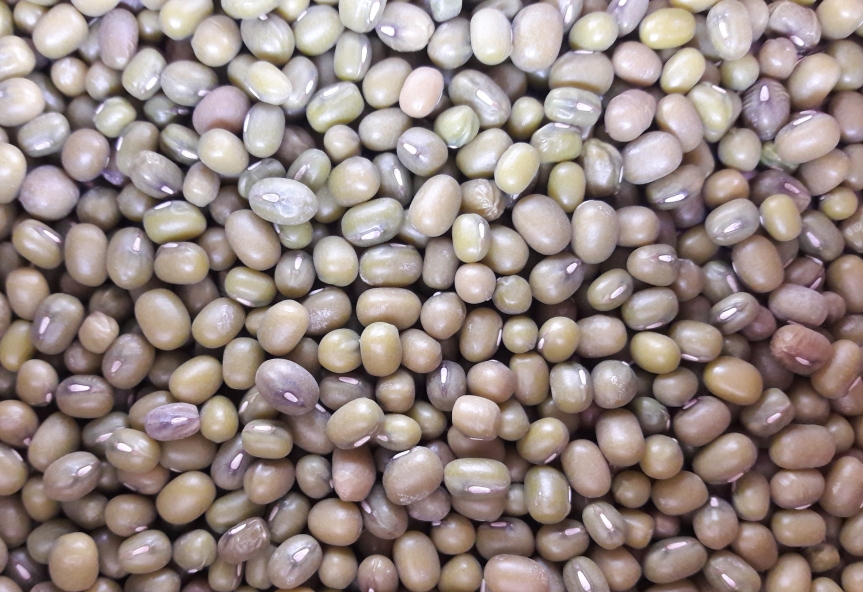
You can detox your digestive system by utilising the mighty mung bean, considered by both traditional Chinese medicine and India’s Ayurvedic medicine as an effective aid to remove toxins from the body.
Knidos Cookery Club’s Mung Bean Detox Soup
When combined with spices such as turmeric, cumin, ginger and black pepper, the mung bean can do a lot to help flush out unwanted material from your body. While some practitioners recommend following a detox diet based on mung bean soup for 7-10 days to really cleanse yourself, it’s quite a powerful process so we’d recommend a bowl or two every week as being beneficial to your general well-being.
Ingredients (Makes 3-4 servings)
200 g mung beans
One carrot
One courgette
One stick of celery
1 litre water
Four tablespoons tomato paste
One teaspoon turmeric
One teaspoon cumin
One teaspoon chilli powder
1cm fresh ginger
Black pepper
Method
Wash and then soak the mung beans for at least four hours (the longer you soak them, the quicker they’ll cook). Then put them in a pan, cover with the water and add the turmeric, cinnamon, cumin and chilli powder.
Bring to a boil and then simmer for 30 minutes, add the tomato paste, grated carrot and courgette, the thinly-sliced celery and the minced ginger, stir well and simmer for another ten minutes or so. The mung beans should just be beginning to go soft. Pour into bowls and serve with a generous grind of black pepper.
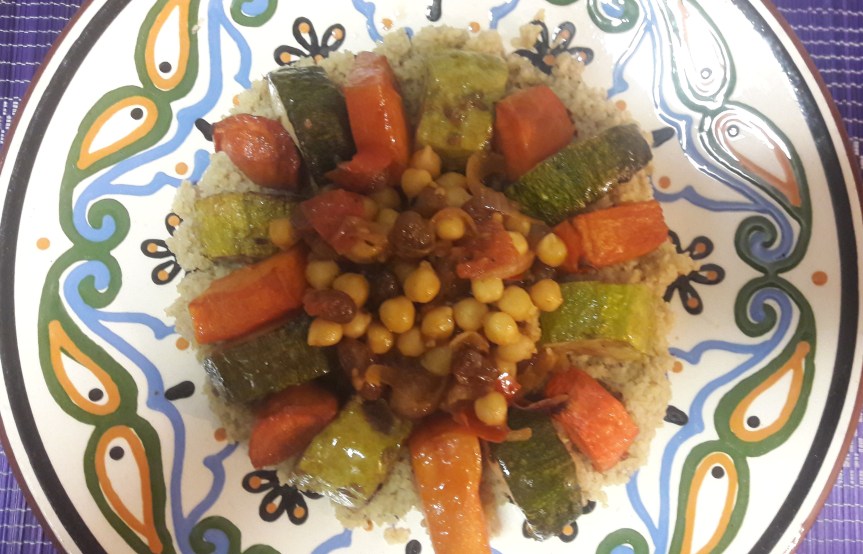
This week we’ll be making our take on couscous, that staple of North African cooking. Our version uses fine bulgur wheat in place of the more usual durum wheat semolina base as bulgur wheat is easier to find on the supermarket shelves where we are based.
KCC’s couscous with chickpea chutney and roasted vegetables
In our opinion, bulgur works just as well as semolina as a base to soak up the juices from the roasted vegetables and our chickpea chutney. Purists may disagree, but our philosophy is more about adapting recipes by using the ingredients you have at hand.
Ingredients (serves 2)
Roasted vegetables:
300 g pumpkin
2 medium carrots
2 medium courgettes
25 ml olive oil
1 teaspoon cumin seeds
1 cinnamon stick
Chickpea chutney:
25 ml olive oil
1 teaspoon mustard seeds
1 small red onion
2 small tomatoes
50 g currants
250 g chickpeas
1 teaspoon red chilli flakes
1 teaspoon black pepper
Couscous:
100 g fine bulgur wheat
200 ml vegetable stock
Method
Pre-heat the oven to 200c, cut the vegetables into large chunks and put into a baking dish, drizzle with olive oil and add the cumin seeds and cinnamon stick and stir to coat the vegetable chunks. Roast for 30-40 minutes until the vegetables are cooked.
While the vegetables are roasting, prepare the chickpea chutney. Heat the olive oil in a frying pan and add the mustard seeds. When they start to pop, add the finely chopped onion and cook over a low heat for five minutes. Add the spices and the chopped tomato and cook for five more minutes. Then add the currants and chickpeas and cook for fifteen minutes or so.
Bring the vegetable stock to the boil and then cover the bulgur wheat with it and leave it to soak up the liquid for 30 minutes or so, drain off the excess liquid (if there’s any) and than add a dash of olive oil and fluff up with a fork.
Put a layer of couscous on a warmed plate, arrange the roasted vegetables in a circular, wheel-spoke pattern and put a generous dollop of chickpea chutney in the centre and serve immediately.
This week we’ll be cooking something for the chillier autumnal evenings, a tasty bake that combines chickpeas, tomatoes and courgettes with a breadcrumb topping.
Chickpea and Courgette au Gratin
The autumn months are always a busy time in the KCC kitchen with not much time for shopping so we dug deep into the kitchen cupboard and found some dried chickpeas and then located a bag of breadcrumbs in the freezer. After some googling, we came up with a recipe for this gratin.
Ready,
Steady,
Bake!
If you’re using dried chickpeas, then we suggest soaking overnight in cold water and then simmering for an hour or so in fresh water until they are beginning to soften. You can even try this method that was featured in the Guardian recently, which soaks the chickpeas for 48 hours to make them ultra soft.
Ingredients (serves 3-4)
75 ml olive oil
1 teaspoon cumin
One medium-sized onion
250 g tomatoes
250 g chickpeas (cooked)
100 ml chickpea cooking liquid (or vegetable stock)
200 g courgettes
For the topping:
125 g breadcrumbs
15 g parsley
2 teaspoons red chilli flakes
Black pepper
Method
Heat 25ml of olive oil in a frying pan and add the cumin seeds and finely chopped onion. Fry for 10 minutes or so over a medium heat until the onions are translucent. Add the peeled, chopped tomatoes and cook for another 10 minutes and then add the chickpeas and stock and simmer over a low heat for 10 more minutes.
While this is cooking, heat another 25ml of olive oil in a frying pan and fry the courgette (cut it into 0.5 cm rounds) over a medium heat, turn the courgette rounds over after five minutes so both sides are charred.
Pour the chickpea and tomato mix into a greased oven dish, cover this with fried courgettes. Mix the breadcrumbs, the remaining oil and the herbs and spices together well and then cover the bake with this mixture.
Bake in a pre-heated oven at 180 c for 30 minutes or so, until the mix is bubbling and the topping has gone a nice golden brown. Serve with a green salad and boiled or fried potatoes
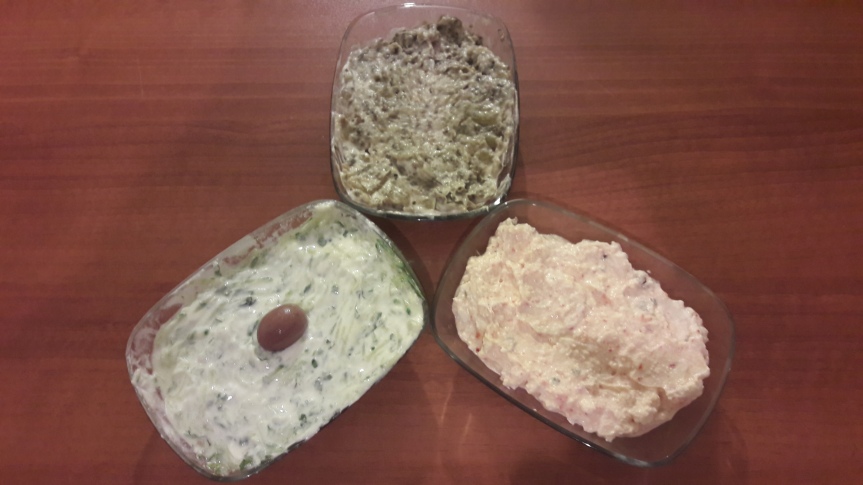
Amorgoan Delight: smoky aubergine dip, Psimeni Raki and feta dip and tsatsiki
You can serve this simple to prepare red Lentil Pâté alongside these other dishes for a great spread of mezeler for a light feast that’s perfect for sharing with friends on a balmy summer’s night.
Ingredients (makes around 200g)
125 g red lentils
One bayleaf
300 ml cold water
Two tablespoons fine bulgur wheat
4 or 5 spring onions
10 g fresh parsley
25 ml olive oil
One teaspoon mustard seeds
One teaspoon cumin seeds
Two teaspoons paprika
One teaspoon ground coriander seeds
One teaspoon black pepper
Half a teaspoon turmeric
Method
Clean the lentils in cold water and then put them in a pan with the bayleaf. Pour 300 ml of water over the lentils and bring to a boil. Reduce the heat and simmer until the lentils are beginning to go mushy and most of the water has been absorbed.
Remove the bayleaf and add the fine bulgur wheat to the lentils and mix well. Leave covered for 30 minutes. heat the oil in a heavy-based pan and add the mustard and cumin seeds. Fry for a few minutes and then add the paprika, coriander, black pepper and turmeric, cook for a minute stirring constantly and then add the finely chopped spring onion and parsley and cook for five more minutes over a medium heat.
Stir this into the lentil and bulgur mix and leave to stand for a few hours in the fridge. Garnish with a sprig of fresh mint and serve with crusty bread.
This time round on Knidos Cookery Club we’re revisiting an old favourite – mücver, Turkey’s tasty courgette fritter.
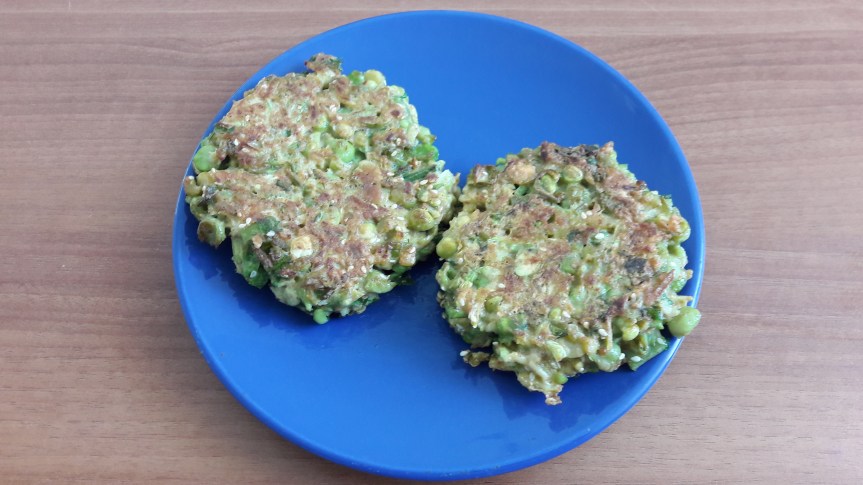
Could this be called a pea fritter?
The mücver usually served up in Turkish eateries are made from grated courgettes, so we’ve decided to spice up this old favourite by adding some other ingredients. Why not try them with fresh peas or grated carrot? Mushrooms work well, as do green beans.
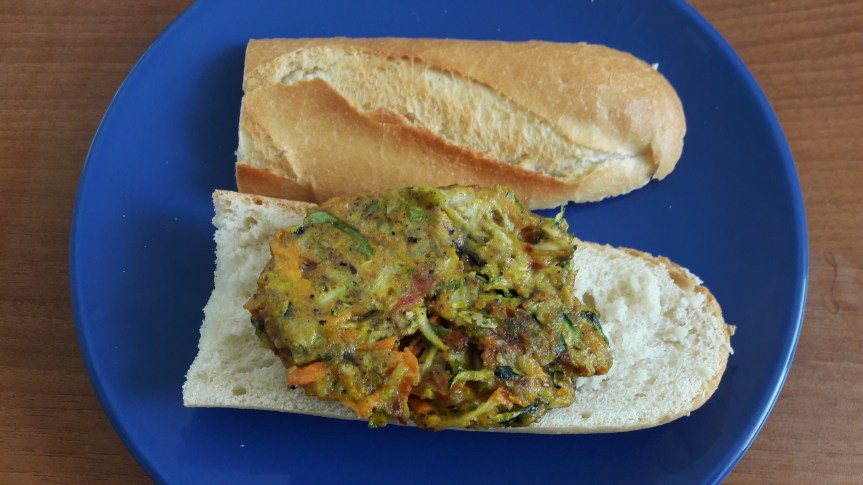
Putting some carrots in the mix
You can even add all these ingredients to the basic mix, chuck in a few chopped almonds or walnuts and, hey presto, you have a chunky veggie nut burger!
Serve the fritters in a pita, on a baguette, in a burger bun, rolled up in flat lavaş bread or just plain with a salad and condiments of your choice.
Ingredients (for around 8 fritters)
Two medium-sized courgettes
One small onion
One egg (or 15 ml of olive oil for vegan version)
Choose one or more from: 100 g chopped mushroom / grated carrot / peas (fresh if you have them, otherwise frozen or tinned) / sliced green beans (use 50 g of each if using more ingredients)
50 g of plain flour
Bunch of parsley, mint and/or dill (if you like that sort of thing)
Dried herbs to taste
A generous sprinkle of sesame seeds
An optional dusting of chili flakes and grated cinnamon
Salt and pepper
A dash of olive oil for frying
Plain yogurt for serving
Method
Grate or chop up the courgettes and the extra of your choice (mushroom, carrot peas, green beans or even all three) finely and mix with the chopped onion. Add fresh parsley, mint and/or dill, dried herbs, chili flakes, cinnamon, sesame seeds salt and pepper and blend well.
Make a well in the centre of the mix and break the egg into it. Sprinkle in the crumbled white cheese. Mix well. (Vegan readers should skip the egg and add 25 ml of olive oil instead)
Gradually add the plain flour and blend until the mixture has quite a thick consistency – you don’t want it to be too wet and sloppy.
Drizzle some olive oil in a frying pan and put over a medium heat.
Place golf ball-sized scoops of the courgette mixture into the pan and flatten with a spatula or fork.
After a few minutes turn the fritter. Keep cooking until both sided are a golden-brown colour.
Next week should see the start of negotiations on the UK’s future relationship with the European Union as talks are scheduled to get underway on 19 June to hammer out the ultimate shape of Brexit.
In the lead up to this momentous day, this weekend also marks another seminal event in Britain’s troubled relationship with continental Europe – 18 June is the anniversary of the Battle of Waterloo, a battle which saw forces under the command of the Duke of Wellington deliver a fatal blow to Napoleon Bonaparte’s ambitions in 1815.
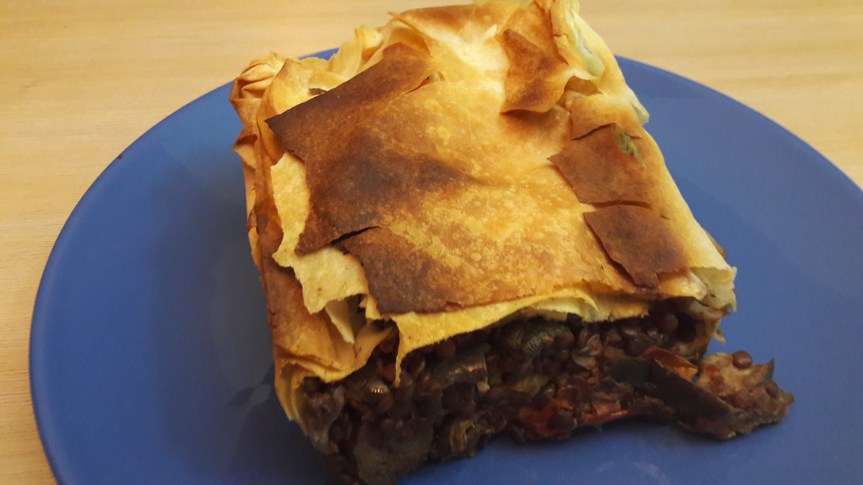
KCC’s Lentil Wellington ready for action
Only time will tell if the Maybot, in cahoots with the Rev Ian Paisely’s successors in the DUP, can produce a victory as decisive as Wellington’s – one thing is clear, some major sustenance is called for and what better than a hearty Lentil Wellington, our veggie take on Beef Wellington, a dish supposedly named after the duke.
Yes, besides giving his name to the wellington boot, the duke is also linked with this dish, which has a rich filling encased in pastry. Leah Hyslop suggests that the name was a patriotic makeover for a popular French dish:
The dish’s clear resemblance to that French specialty, filet de bœuf en croûte, could suggest the name was a timely patriotic rebranding of a trendy continental dish.
In our own era, food-patriotism was to the fore in 2003 when France refused to go along with the invasion of Saddam Hussein’s Iraq, causing some in the USA to call for ‘french fries’ to be rebranded ‘freedom fries’.
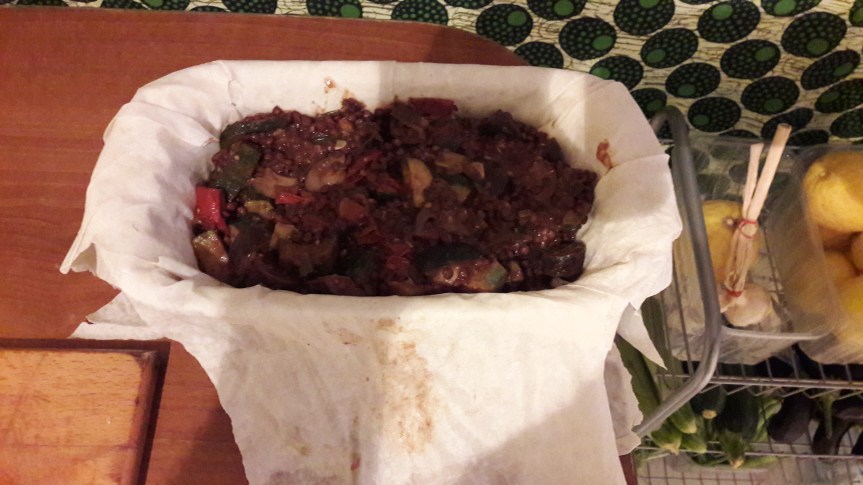
KCC’s Lentil Wellington ready for final assembly before baking
For a Turkish twist, we’ve used layers of yufka, the local version of filo pastry, to cover our rich lentil and vegetable sauce. Make sure you leave on overlap of pastry of about 8-10 cm around the edges of your dish in order to create a top to encase the filling.
Ingredients (serves 4)
250 g aubergines
250 g courgettes
250 g tomatoes
75 g black lentils
2 spring onions
1 garlic clove
1 bayleaf
1 teaspoon cinnamon, cumin, red chili flakes and coriander seeds
Pinches of black pepper and salt
250 ml vegetable stock
100 ml red wine
100 ml olive oil
Filo pastry (around 300 g)
Method
Wash the lentils until the water runs clear, and then cook in a heavy-based pan with the vegetable stock and bayleaf. Bring to the boil and then simmer over a low heat for 20 minutes or so until the liquid is absorbed.
While the lentils are cooking, prepare the vegetables: finely chop the spring onions and garlic, cut the aubergine and courgette into one cm thick slices and then cut into four. Place the vegetables into a heavy-based pan, add the herbs and spices and pour 50 ml olive oil over the veg and then cook over a medium heat for ten minutes, stirring occasionally.
Chop the tomatoes and add to the vegetables and cook for another five minutes, continue stirring every now and then. Now add the cooked lentils and the red wine and cook for another ten minutes or so until the liquid is absorbed.
While this is cooking, prepare the pie case. Grease a large pie dish with olive oil and layer leaves of filo pastry, brushing each layer with olive oil. Make sure you leave a pastry overlap of around 8-10 cm around the edges of the pie dish.
Pour the filling into the pie case and fold over the overlapping filo pastry, brushing with more olive oil to help seal the top of the case. Bake in an oven pre-heated to 180 c /gas mark 5 for 30 minutes or so until the top of the pie begins to turn a golden-brown colour.
Allow to cool for ten minutes and then serve slices of the pie with a crisp green salad and roasted new potatoes.
The courgette is one of the most versatile vegetables in the Knidos Cookery Club kitchen. Earlier it featured in a stuffed platter and as a fritter. We also like it in an omelette, in a börek or just sliced and grilled on the barbecue.
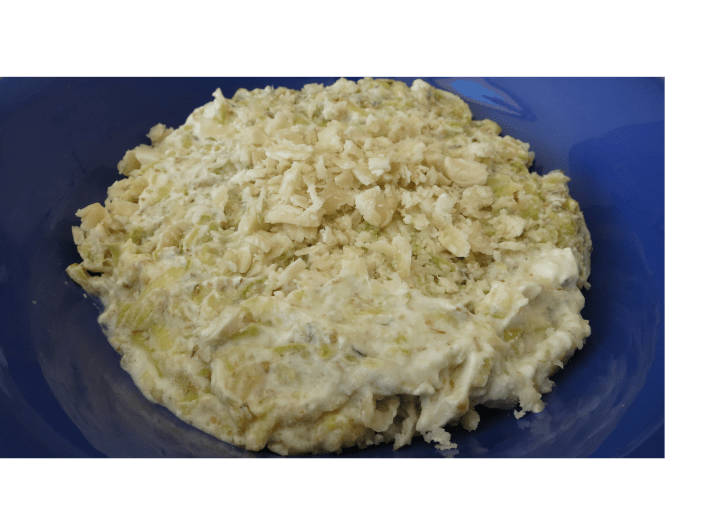
Creamy Almond and Courgette Dip
This week we’ve incorporated this key ingredient into a creamy almond and courgette dip that can be used as part of a starter, or meze, combo with other dips such as our Carrot and Walnut Tarator.
Yogurt and chopped almonds were added to the grated courgette to make it creamy and some wholemeal flour was used to hold it all together.
Ingredients (Serves 3-4)
250 g grated courgette
100 ml plain, natural yogurt
50 g wholemeal flour
50 g chopped almonds
One garlic clove
25 ml olive oil
Method
Heat the olive oil in a frying pan over a medium heat then add the grated courgette and garlic and stir fry for five minutes. Add the flour and stir fry for two more minutes. Take the frying pan off the heat, mix in the yogurt and almonds, reserving a few nuts to sprinkle over the top.








 Knidos Cookery Club