Kookoo Sabzi – Welcoming Nowruz with a Herby Frittata

19 March 2025

This weekend is Nowruz, a spring festival which originated in Persia some 3,000 years ago. Nowruz, or New Day, is a celebration of the end of winter and the start of a new year on the date when day and night are equal in the Northern Hemisphere – usually on or around the 20 – 21 March. The holiday is celebrated in Iran, Afghanistan, Azerbaijan and Central Asia, and in parts of Turkey, Syria, India, Iraq, Pakistan, Russia and China.

Preparing for Nowruz (Nauryz) in Almaty, Kazakhstan

There are many traditional foods associated with the holiday – Uzbekistan has sumalak, a paste made from what flour, sprouted wheat and oil. Kazakhstan has Nauryz Kozhe, a soup made from seven ingredients: barley, meat, kumis (fermented horse milk), onion, garlic, water and salt.

Iran’s Kookoo Sabzi – a herby frittata

Iran’s Nowruz table features the wonderfully named Kookoo Sabzi, sometimes written as Kuku – a herb-filled cousin of Italy’s frittata. The fresh herbs represent rebirth, while the eggs stand for fertility.
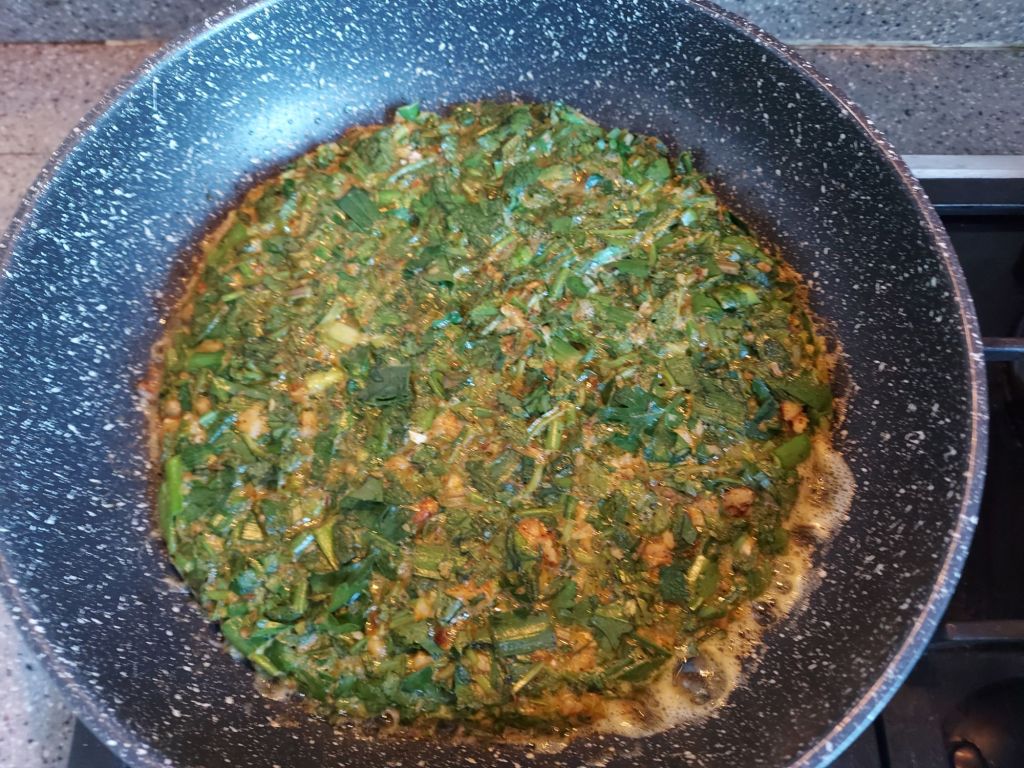
This Kookoo Sabzi’s ready to flip

Kookoo Sabzi is usually a combination of garlic chives, corainder (cilantro) and dill, but seeing as we’re not fans of dill, we’ve opted to replace it with parsley and mint. You can also omit the coriander if that’s not your thing (feel free to add some dill if you must). We’ve added parsley and mint, along with toasted walnuts, for some protien, and barberries (if you can find them – we couldn’t), to add a tart edge to the dish. Cranberries are a good replacement if barberries are proving hard to track down.
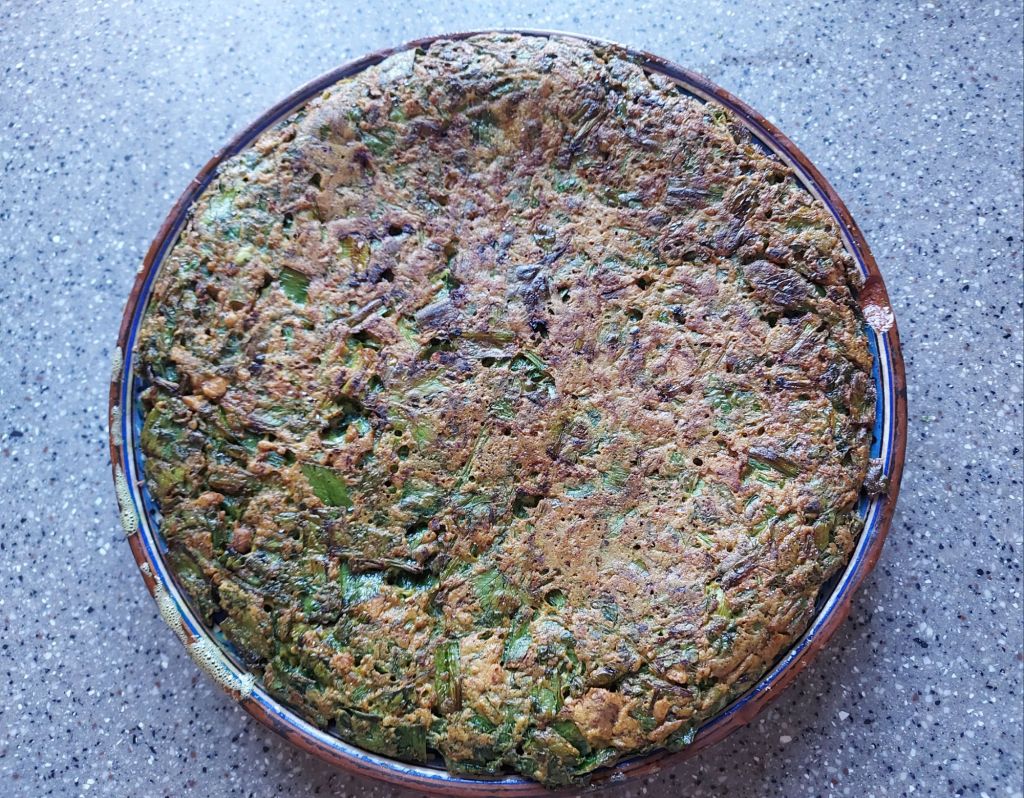
Turn it onto a plate and slide it back into the pan

Ingredients (makes four servings)

  • 50 g fresh parsley
  • 50 g fresh coriander
  • 50 g garlic chives (jusai)
  • 25 g fresh mint leaves
  • 50 g walnuts
  • 10 g dried barberries (or cranberries)
  • 4 eggs
  • 20 g chickpea flour
  • One teaspoon each of: cumin seeds, sumac and turmeric
  • 25 ml olive oil

Method

  • Wash the garlic chives and cut into 0.5 cm pieces. Leave to dry on a tea towel or kitchen paper. Wash and finely chop the parsley, coriander (including stems) and mint leaves. Combine all these ingredients with the chickpea flour, spices, berries and the eggs.
  • Crush and then toast the walnuts (without oil) for 10 minutes in a 12 cm frying pan. Remove the walnuts and mix them in with the herbs and eggs. Put half the olive oil in the frying pan and heat it up and then add the herb mixture, flattening it with a spatula.
  • Cook over a medium heat for 10 minutes. Put a plate on top of the kookoo and turn the frying pan over. Add the rest of the oil to the empty pan and heat it up. Slide the kookoo back into the frying pan and cook for another 10 minutes.
  • Cut the kookoo into four slices and serve with a dollop of natural yogurt and some olives.

Bulgur Biryani

15 November 2024

Turkey meets India this time round on KCC as we cook Turkey’s beloved bulgur wheat in in Indian biryani style. Bulgur, parboiled, dried and cracked wheat, is a quick-cooking alternative to rice that works really when combined with spicy vegetables.

Bulgur biryani

Biryani belongs to the family of layered rice dishes that includes Uzbekistan’s plov and other pilafs. The name is from the Persian barian, which translates as ‘roasted’.

The dish was originally brought to the Indian sub-continent by travellers from Iran and has developed into a number of regional variations, with the Hyderabadi one, served with a yoghurty raitha, being the most famous.

As bulgur is parboiled, it cooks really quickly. It takes around 15 – 20 minutes to cook – the total prep time for this dish is less than an hour from start to finish and it is cooked in one-pan, so less washing up to worry about.

Ingredients (for two servings)

  • 100g coarse bulgur
  • 100g diced carrot
  • 100 g courgette
  • 150 g cooked chickpeas
  • 25 g tomato paste
  • 25 g pepper paste (we used tatli (sweet), if you want it hot, use acili)
  • 20 ml olive oil
  • 1 stick of celery (approx 25 g)
  • 2 spring onions (approx 10 g)
  • 1 green pepper (approx 30 g)
  • 250 ml vegetable stock
  • 1 cinnamon stick
  • 1 teaspoon each of mustard seeds, cumin seeds, turmeric, fenugreek, chilli powder
  • 25 g fresh coriander

Method

  • Heat the oil in a large frying pan and add the mustard seeds. When they start to pop, add the chopped spring onion and celery and cook for two minutes. Then add the chopped green pepper and diced carrot and cook for two more minutes. Add the courgettes and cook for another two minutes.
  • Add the spices and stir well and then add the cooked chick peas and the vegetable stock. Stir in the tomato and pepper paste, bring to a boil and then reduce the heat to a gentle simmer. Add the bulgur in a layer over the veggies. Put a lid on the pan and cook over a low heat for 15 – 20 minutes until all the liquid is absorbed.
  • Turn off the heat and allow the mix to rest for ten minutes or so. Stir well and then serve. Garnish with chopped coriander.

Winter Warmer: Cauliflower, Spinach and Tahini Soup

15 February 2024

It’s been a crazy winter here in Almaty, Kazakhstan. It didn’t really get going until after New Year and has seen short cold snaps interspersed with rapid thaws as the temperature creeps into positive territory. This has made it particularly dicey when walking by buildings, as chunks of ice have a tendency to fall from roofs as the temperature rises. Usually, this is a once in a winter event, but this year it seems to be every few days.

A tahini-infused cauliflower and spinach soup

We’ve been getting through a lot of tahini recently, using it as a salad dressing, a pasta/noodle sauce, in variations on hummus, and, in this case, as an earthy, nutty base for a thick soup – he intermittent cold snaps call for a comforting bowl of hearty, seasonal goodness.

Crazy Almaty weather for 15 Feb 2024 onwards

Tahini is easy to make if you can’t find it in your local Middle eastern store – you just need some white sesame seeds, some olive oil and a good blender. Here’s a link to our tahini recipe from a few years ago.

Ingredients (serves 3-4)

  • 500 g cauliflower
  • 150 g spinach
  • 100 g celery
  • 5 g fresh coriander
  • 500 ml vegetable stock
  • 50 ml tahini
  • 25 ml olive oil
  • one teaspoon soy sauce
  • one teaspoon caraway seeds
  • one teaspoon dried oregano

Method

  • Heat the olive oil and then fry the chopped celery and caraway seeds in a large pan. Cook over a medium heat for five minutes and then add the cauliflower, broken into small florets, and the oregano. Stir fry over a medium heat for five minutes and then add the vegetable stock. Bring to a boil and simmer for ten minutes.
  • Put half the soup in a blender, add the soy sauce and tahini and blend until smooth. Add to the other soup in the pan, stir well and add the spinach leaves and cook until the spinach wilts. Garnish with chopped coriander and serve piping hot.

Spicy Spinach and Pumpkin Fritters

30 November 2023

With Halloween and Thanksgiving, the two times in the year when pumpkins take centre stage, now behind us, we’ve got a simple idea to use up any leftover pumpkin you may have with this quick and easy spinach and pumpkin fritter recipe.

Spicy Spinach and Pumpkin Fritters

These fritters are totally vegan – there’s no need to add an egg to bind them together as chickpea flour and rolled oats do a great job of soaking up any extra moisture from the spinach and pumpkin and help the fritters hold their shape. They can be shallow fried on both sides in a little oil or baked in the oven for 30 minutes at 180 c. These spicy fritters taste good served with a side salad and chips or in a burger bun or pita with your choice of toppings.

Ingredients (Makes 6-8 fritters)

  • 175 g grated pumpkin
  • 50 g chopped spinach
  • 50 g chickpea flour
  • 25 g rolled oats
  • One teaspoon each of cumin seeds, coriander seeds, oregano, sumac and turmeric.
  • Half a teaspoon cinnamon
  • 25 ml oil for frying

Method

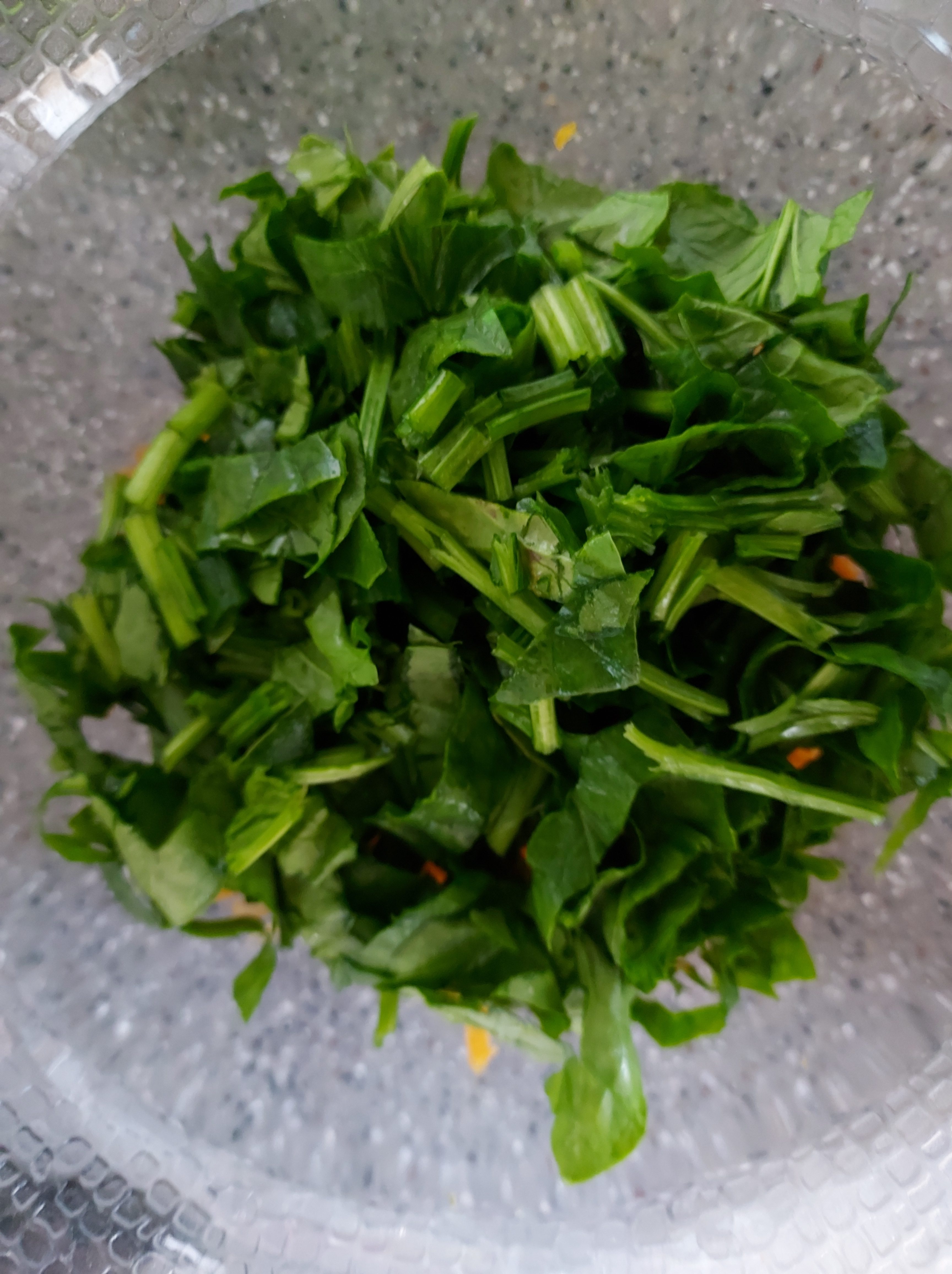
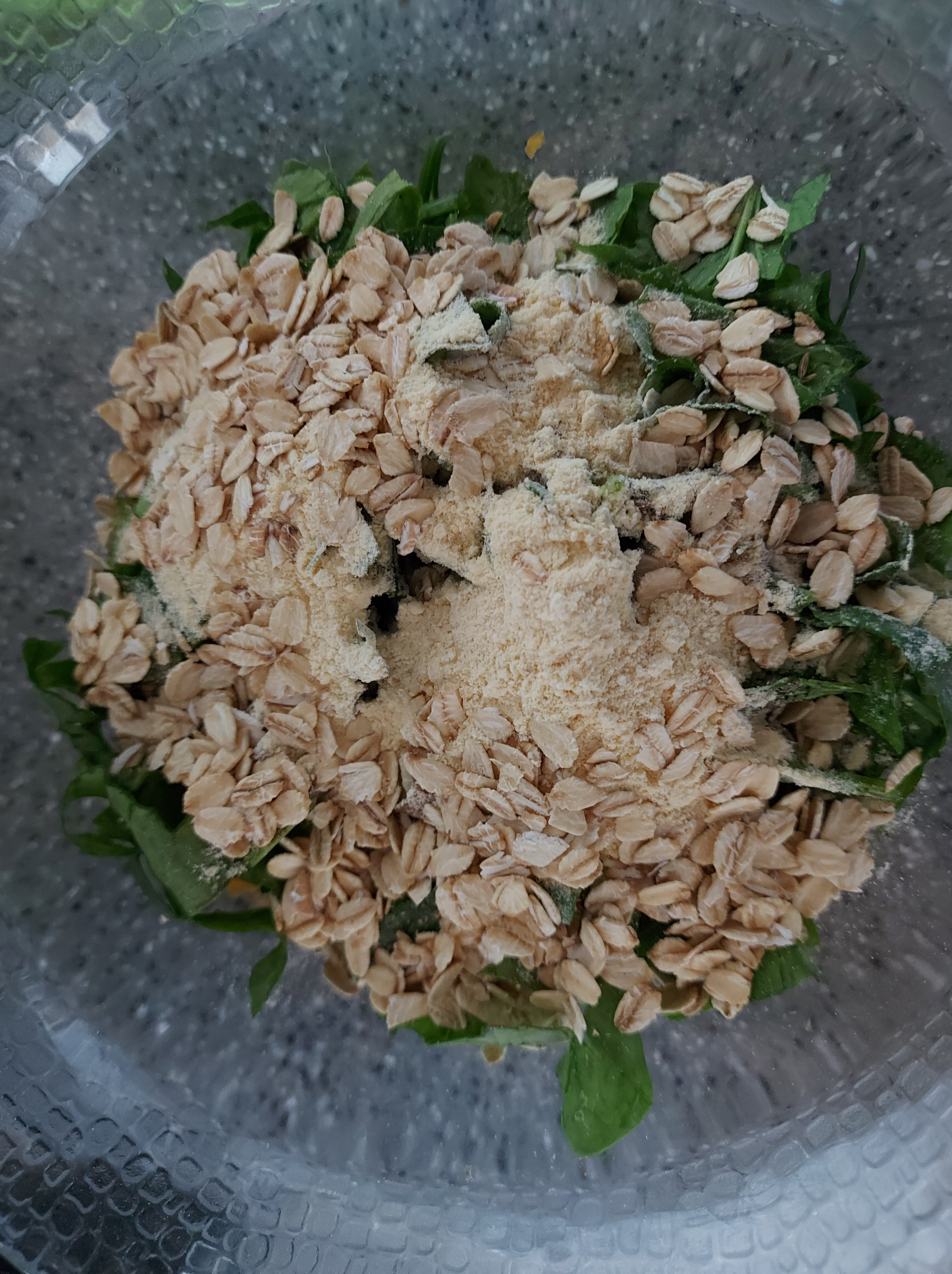
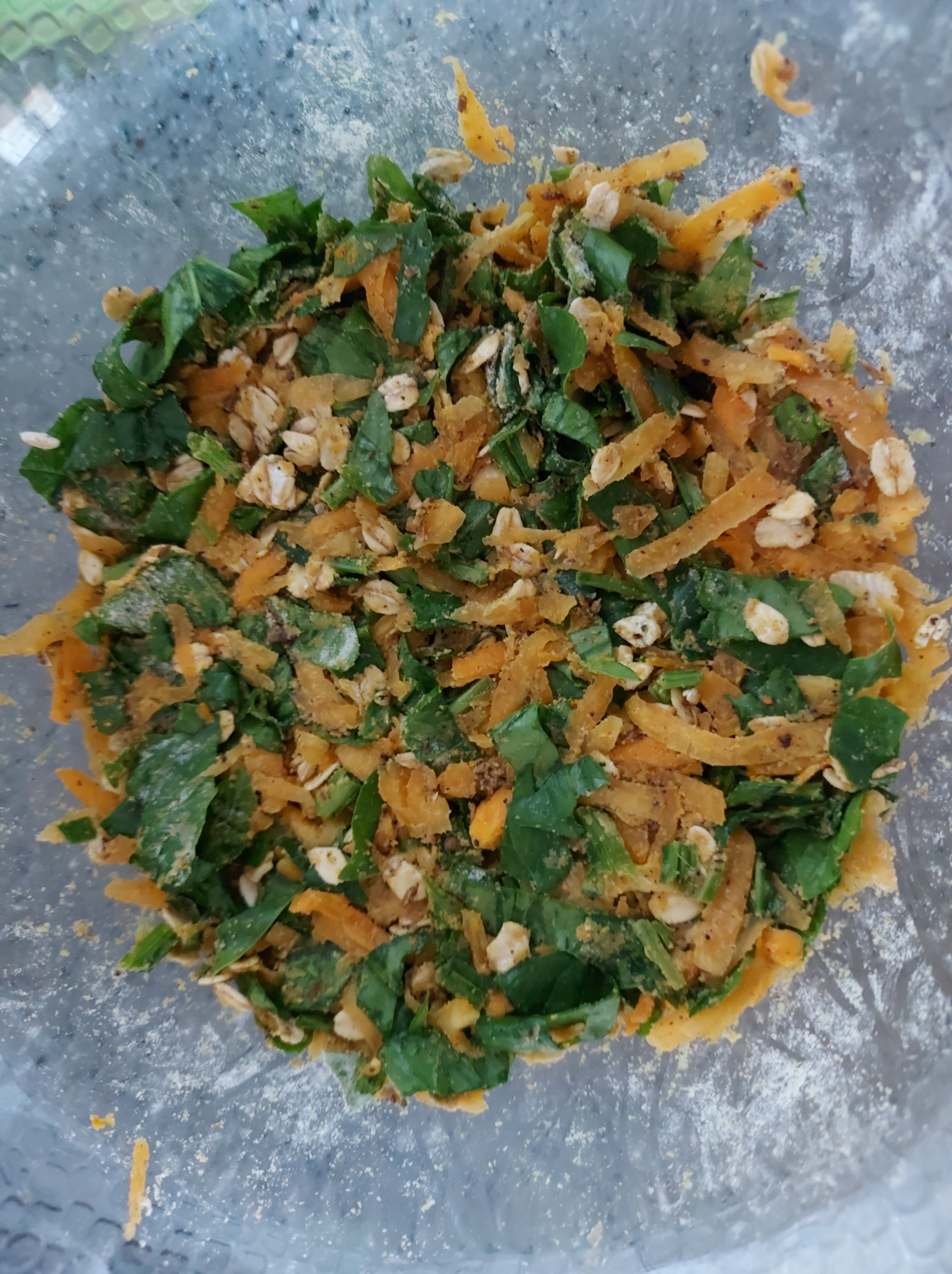
  • Grate the pumpkin into a large bowl, add the chopped spinach and herbs and spices and combine all the ingredients. Now add the rolled oats and chickpea flour and mix well. Leave the mixture to rest for two hours in the fridge, so that any excess moisture is absorbed.
  • Form the mixture into small balls (about the size of a golf ball) in your hands. Heat the oil in a frying pan then turn the heat down low and add as many of the balls as will fit in the pan. Flatten them with a fish slice and after a few minutes turn them over. Cook until golden brown on both sides and then serve straight away.

The HummusVariations: Beetroot and Walnut Hummus

02 November 2023

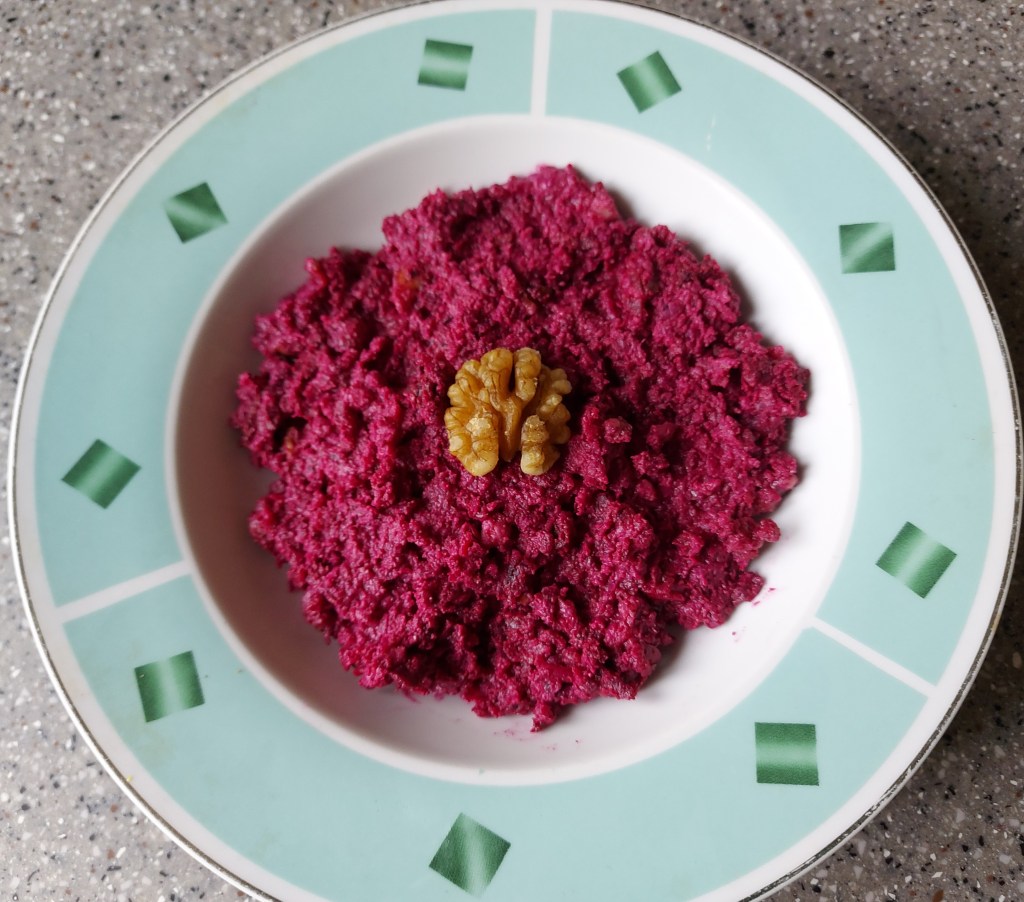
Hummus is one of those dips that we come back to time after time here on KCC. Beyond the classic basic dip of chickpeas, tahini, garlic, lemon juice and olive oil, the possibilities are endless. Our latest version is inspired by a recent trip to Myrtos, Crete where we tasted a beetroot-driven hummus at the excellent O Platanos restaurant.

In the past, we’ve made a turmeric-infused hummus and one from red beans, now here’s our latest variation. Beetroot is one of our favourite root vegetables, and it’s really good for you to boot. Taking some tips from Georgia, where a similar dip called pkhali is a regular feature on the dinner table, we’ve added some walnuts to give this hummus an extra protein boost.

Ingredients

  • 125 g baked beetroot – grated
  • 125 g crushed chickpeas
  • 50 g tahini – mixed with up to 50 ml of hot water
  • 25 g toasted walnuts
  • One garlic clove
  • 100 ml aquafaba (chickpea water)
  • a few dashes of olive oil
  • Two teaspoons of sumac 
  • pinches of ground cumin and coriander

Method

  • Grate the beetroot and then put in a large bowl and crush with a fork (you can also put it in the blender, if you have one). Add the mashed up chickpeas and stir well. Combine  the tahini with hot water until you have a creamy paste and then add to the mix.
  • Add the crushed, toasted walnuts, finely chopped garlic and sumac (this replaces lemon juice to give the hummus a citrusy kick without the acid) and stir together. Add some aquafaba and some splashes of olive oil and blend until the dip achieves your favoured consistency. Season with cumin and coriander and serve with warm pita bread. 

Chocolate Chilli Chana

3 February 2022

This time round on KCC we’re going for a chickpea, aka chana, chilli that includes a slab of dark chocolate to balance out the acidity of the tomato sauce – a combination that works surprisingly well.

Chocolate chilli chana

We first came across the dark chocolate infused mole sauce many years ago in a Mexican restaurant in Barcelona. It’s been on the list of things to cook for a while and having received a selection of Green and Black’s chocolate that included an 85% cocoa bean bar there were no longer any excuses not to try it out.

We served our chickpea chilli with some pearl barley – it’s also good with brown rice, couscous, bulgur wheat or some flatbread to mop up the chocolate rich sauce. We also recommend washing it down with a margarita or two.

Ingredients (makes 3-4 servings)

  • 300 g chickpeas (cooked)
  • 150 g carrot
  • 150 g onion
  • 50 g red lentils
  • 250 g tomatoes
  • 20 g dark chocolate
  • 25 ml olive oil
  • 150 ml aquafaba (chick pea cooking water)
  • 1 teaspoon cumin seeds 
  • 1 teaspoon coriander seeds
  • 1 teaspoon paprika (smoked if you can get it)
  • 1 teaspoon chilli powder (or chilli flakes)
  • 2 cm cinnamon stick
  • 5 cloves
  • 1 bunch fresh coriander

Method (Cooking time approx 45 minutes)

  • Heat the olive oil in a heavy-based pan and add the cumin seeds. When the seeds start to pop add the diced onion. Stir fry for five minutes over a medium heat and then add the diced carrots. Cook for five more minutes and then reduce to a low heat. Add the chopped tomatoes and cook for another five minutes.
  • Add the aquafaba, ground coriander seeds,  cinnamon, cloves, paprika and chilli powder and stir well. When the mix starts to bubble, stir in the red lentils. Simmer the mixture and after 15 minutes add the cooked chick peas. Cook for another 10 minutes over a low heat and then add the dark chocolate. 
  • Serve with pearl barley or a grain of your choice and garnish the Chocolate Chilli Chana with fresh coriander. Take a slug of margarita and enjoy! 

Spicy Peas ‘n’ Cheese

30 November 2021

This time round on KCC we’ve been inspired to take on a curry house favourite of ours, matar paneer, cubes of fresh white cheese cooked with peas in a spicy tomato-rich gravy.

Spicy peas ‘n’ cheese aka matar paneer

We’ve been in Bishkek, Kyrgyzstan for the last two weeks to polish off the final chapter in a gruelling two-year run of Central Asian elections. While browsing around the supermarket, we came across a pack of locally made Ricotta cheese. Its dry, crumbly texture immediately reminded us of fresh paneer cheese from the Indian sub-continent, bringing to mind matar paneer.

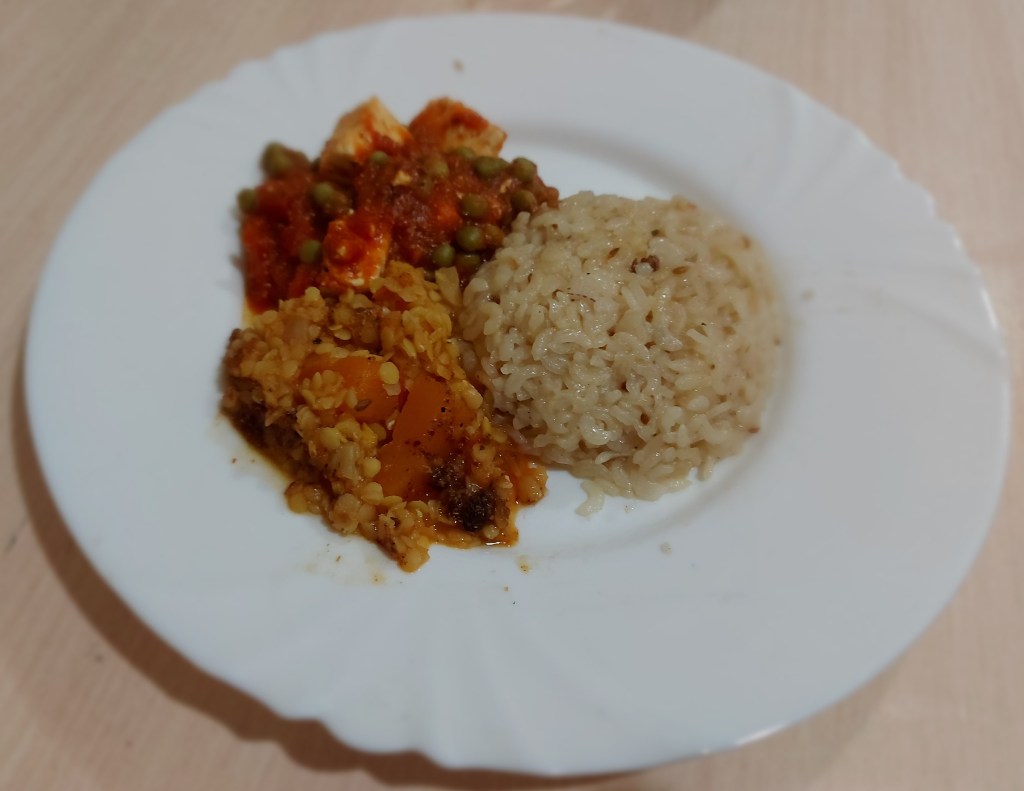
Spicy peas and cheese with pumpkin dhal and rice

This white cheese does not taste of much on its own so it needs to soak up some flavour. We prepared a tomato gravy and then marinated the cubes of cheese and the peas in the sauce overnight before heating it through just before serving. For any vegans reading, substitute chunks of plain tofu for the paneer cheese – tofu is another ingredient that benefits from being marinated for a while. Serve with our pumpkin dhal and rice or flat bread.

Ingredients (makes 4 servings)

  • 3 medium tomatoes (approx 250 g)
  • 1 medium onion
  • 1 clove of garlic
  • 200 g paneer cheese or tofu
  • 250 g peas (tinned, frozen or fresh if you can get them) 
  • 25 ml olive oil or other vegetable oil
  • 1 teaspoon cumin seeds
  • 1 teaspoon chilli powder
  • 1 teaspoon cinnamon
  • 1 teaspoon black pepper
  • 1 cm knob of chopped ginger
  • 1 small bunch fresh coriander

Method

  1. Finely chop the onion and cook for five minutes in the oil over a medium heat in a heavy-based pan. Turn down to a low heat and add the spices and the minced garlic and stir well. Cook for another two minutes and then add the chopped, peeled tomatoes. Cook for 20-30 minutes over a low heat until the tomatoes have formed a smooth gravy with the onions.
  2. Allow the sauce to cool and then add the white cheese (paneer) or tofu, cut into 1 cm cubes, and the peas and mix well. Leave to marinate for an hour or two at least – overnight in the fridge is better, and then heat through. Sprinkle with fresh coriander before serving with our pumpkin dhal and rice. Also goes well with a flat bread of your choice.

Making a Substantial Meal out of a Falafel Egg

17 December 2020

There has been heated debate in the UK recently over whether or not a Scotch egg (a boiled egg covered with sausage meat and breadcrumbs) could be considered to be a “substantial meal”, a status that would allow pubs in parts of the country affected by COVID-19 restrictions to serve alcohol alongside this hearty snack.

This has inspired Knidos Cookery Club to try out its own test to see if the Scotch egg’s vegetarian cousin, the falalfel egg, makes for a substantial meal or a light snack. We first came across this combination in Harissa, a Middle Eastern restaurant in Almaty, Kazakhstan. Unfortunately, the falafel covered egg arrived after many other courses had been served and it did prove to be too substantial for dessert.

To test the theory again, we knocked up a batch of millet falafel mix, boiled some eggs and then combined the two and baked them in the oven. The result was indeed quite a substantial feast, so feel free to accompany your falafel egg with a glass or two of your favourite tipple!

Ingredients (makes 4 falafel eggs)

  • four eggs
  • 150 g millet
  • 300 ml water or vegetable stock
  • 25 ml olive oil
  • one small onion
  • one garlic clove
  • one bunch of parsley
  • one teaspoon cumin
  • one teaspoon coriander
  • one teaspoon chilli powder

Method

  • Rinse and then soak the millet in a pan for four hours. Drain the millet and put to one side.
  • Boil the eggs for five minutes and then allow to cool completely.
  • Fry the finely chopped onion, minced garlic and spices in the olive oil for 10 minutes over a medium heat. Reduce the heat to low and stir in the millet. cover with water or stock and bring to a boil. Simmer until the liquid is absorbed. Stir regularly as the millet will stick to the bottom of the pan if not watched carefully.
  • Finely chop the parsley, both leaves and stalks and mix into the cooked millet.  When the millet has cooled, peel the eggs and then form the falafel mix evenly around the egg. Place on a baking tray and oven bake for 20 minutes at 200 c or until the falafel case turns a golden-brown colour.
  • Serve with salad and sauces of your choice. These falafel eggs will keep in the fridge for a few days. 

Farinata Fiesta

12 November 2020

It’s time for a bit more armchair culinary tourism and we’re off to Genoa in northern Italy, birthplace of the farinata, a chickpea flour pancake that is a popular snack along the coast of the Ligurian Sea, where it’s known as fainâ, and down into France’s Côte d’Azur, where it’s known as socca.

With Diwali, the Festival of Lights celebrated by Hindus, coming up on 14 November this year, we decided to mark the occasion by topping our chickpea pancake with a dry, spicy Indian inspired combination of spinach, potato and roasted cauliflower.

These chickpea pancakes are usually baked in the oven but we didn’t have a suitable baking dish so we tracked down a recipe at Electric Blue Food for a pan–fried version. We replaced the water with aquafaba – the leftover liquid from cooking beans – to give the pancake a bit more oomph. This pancake proved really easy to cook compared with traditional ones made from flour, milk and eggs.

Farinata is often eaten plain with just a sprinkling of black pepper and rosemary, but it can also be served with other, more substantial, toppings. The taste of this chickpea pancake reminded us of a thicker version of southern India’s dosa, a much missed treat since the start of the pandemic. So we decided to top it with spicy vegetables to attempt an approximation of our favourite pancake.

Ingredients (serves 4)

For the farinata:

  • 200 g chickpea flour
  • 100 ml olive oil
  • 300 ml aquafaba

For the Saag Aloo Gobi topping:

  • 250 g spinach
  • 250 g cauliflower
  • 250 g potato
  • One onion 
  • One teaspoon cumin seeds
  • One teaspoon coriander seeds
  • One teaspoon chilli powder
  • One teaspoon cinnamon
  • One teaspoon turmeric
  • 50 ml olive oil

Method

For the farinata:

  • Use a wooden spoon to mix the chickpea flour with the oil in a large bowl and then slowly add the aquafaba and switch to a hand whisk and blend until smooth (you can use a blender or a stick blender for this).
  • Leave to stand for 30 minutes. Heat a few drops of oil in a large frying pan (around 30 cm in diameter) and then pour in a quarter of the pancake batter. Swirl it around to distribute the batter evenly. 
  • The pancake will start to puff up – when this happens, slide a spatula underneath and turn it over and cook on the other side until it slides off the pan easily. Put on a plate and keep in a pre-heated oven (100 c) until ready to serve.

For the Saag Aloo Gobi:

  • Break the cauliflower into florets, drizzle with olive oil and bake in the oven at 180 c for 30 minutes or until they start to char slightly.
  • Slice the potatoes into four or eight pieces depending on how big they are. Put in boiling, salted water and cook for five minutes.  Drain and put in cold water.
  • Heat the oil in a heavy based pan and then add the cumin seeds. When they start to sizzle, add the chopped onion. Add the rest of the spices and stir well. After five minutes or so, add the potato and stir fry for five minutes. 
  • Now put the chopped spinach on top of the potatoes and add a few of teaspoons water. Cook until the spinach begins to wilt. Stir in the baked cauliflower and serve immediately on top of a farinata.

Hash Greens: More Mücver Variations

17 September 2020

This time round on KCC we’re returning to mücver, Turkey’s versatile courgette fritter, with our take on that brunch staple Hash Browns. This mücver variation adds potato and garlic scapes to the mix to give us a fritter we’ve dubbed Hash Greens.

These fritters are super-easy to prepare and cook and are great as part of a breakfast or brunch. They can also be served in a roll to make it closer to a veggie burger.

We came across garlic scapes, the edible stem that grows from the bulb, on a recent visit to the local greengrocer while looking for green beans. This flavoursome peduncle gives a milder garlicky kick to soups, pestos and stir fries. It’s not an overpowering flavour as it adds a subtler, roasted garlic undernote to these dishes.

Ingredients (Makes 6-8 fritters)

  • One medium courgette (zucchini) (approx 200 g)
  • One medium potato (approx 200 g)
  • One small onion (approx 100 g)
  • 50 g garlic scapes
  • 100 g chickpea flour
  • 25 g mixed fresh herbs
  • One teaspoon cumin seeds
  • One teaspoon chilli flakes
  • One teaspoon turmeric
  • One teaspoon black pepper
  • 50 ml olive oil

Method

  • Grate the potato and courgette and mix together in a large bowl. Finely chop the garlic scapes and add to the bowl. Stir in the chickpea flour and add the herbs (use and fresh herbs you have e.g. parsley, coriander, mint) and spices and mix well so you have a smooth that’s neither too dry and crumbly nor too wet and sloppy.
  • Heat the oil in a frying pan. Form the mix into golf-ball sized patties and then put in the pan and flatten with a fish slice or spatula. Fry until golden-brown on both sides. Serve as part of a breakfast or brunch or in a bun as a burger with toppings of your choice.