Julienne Funchoza’s Noodle Extravaganza

18 July 2019

This time round on Knidos Cookery Club we’re looking at some ways to beat the heatwave with a noodle-based salad that can be whipped up with the minimum of fuss.

20190711_203617

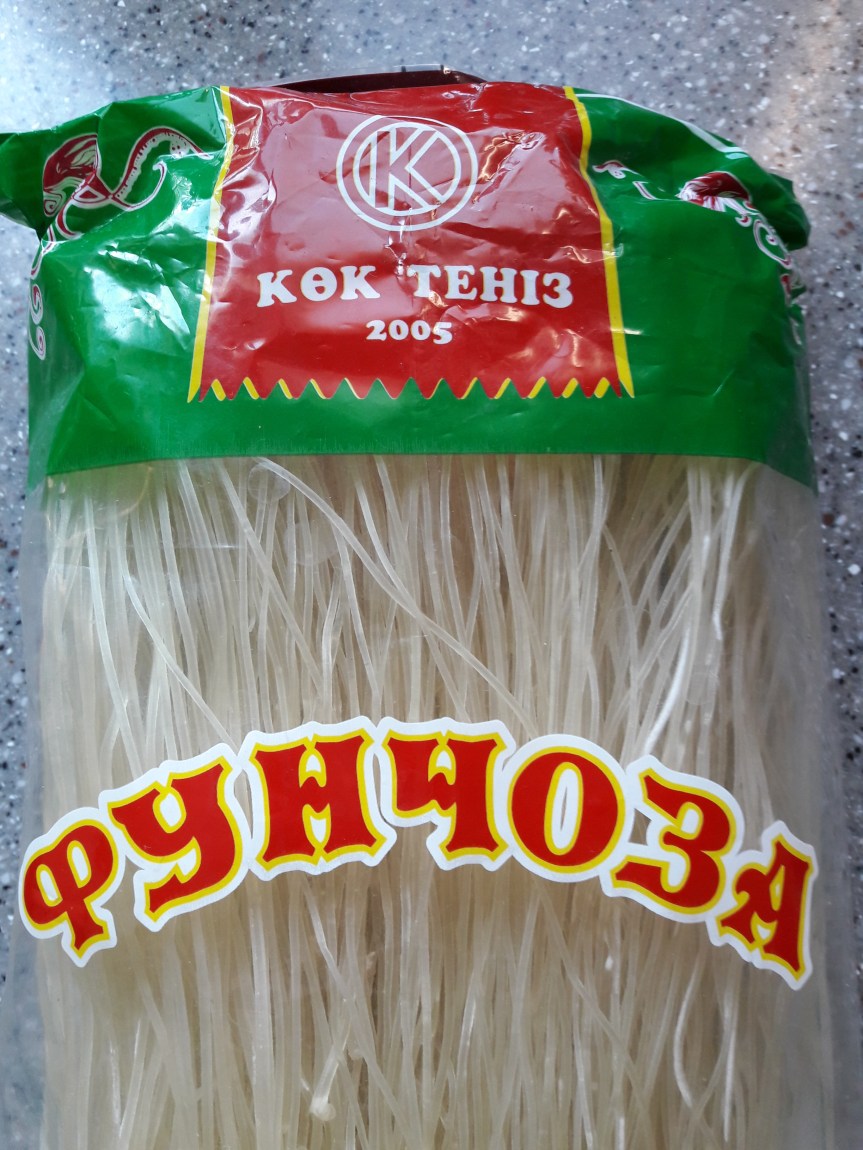
Funchoza is a popular salad across Central Asia that combines glass noodles, which can be produced from various forms of starch such as rice or mung bean, with julienned raw vegetables and a spicy dressing. The noodles just need to be cooked in boiling water for a few minutes so it’s a cinch to prepare on a hot summer’s day.

20190711_182826

These noodles are a staple of Uighur cuisine, but have been adopted by the Central Asia’s Korean community who have made funchoza famous to a wider audience across the former Soviet Union and beyond.

The Uighurs are Turkic-speaking  muslims living mainly in Xinjiang, an autonomous territory in northwest China, where they face increasing persecution by the Chinese authorities, under the pretext of a crackdown on terrorism.

To this end, thousands of Uighurs, Kazakhs, Kyrgyz and Chinese muslims have been interred in ‘re-education’ camps and, as the Guardian put it in a recent editorial, “Those who are nominally free in fact exist in a digital gulag of constant surveillance.”

Earlier this month, 22 states – including Britain, Canada, France, Germany, Australia and Japan – signed a letter to UN human rights officials in condemnation of China’s treatment of Uighur and other minorities there.

Ingredients (makes 3-4 servings)

  • 150 g dried glass noodles
  • 10 g dried seaweed
  • 2 small cucumbers
  • 2 radishes
  • 8 spring onions
  • 2 red peppers
  • 2 carrots
  • Coriander seeds

For the dressing:

  • 4 teaspoons tahini
  • 2 tablespoons apple vinegar
  • 2 tablespoons soy sauce
  • 2 tablespoons pomegranate sauce (Nar Eksisi)
  • 2 teaspoons chilli powder

Method

  • Bring a large pan of water to the boil and cook the noodles in the water according to the pack instructions. Remove and put in a pan of cold water until needed.
  • Soak the dried seaweed in cold water for 15 minutes, drain the water. While the seaweed is soaking,  cut the spring onions into 1 cm slices, remove the seeds for the cucumber and then julienne along with the other vegetables into long, thin slices (use a grater  or chop finely if you don’t have a julienne peeler). Chop the seaweed into 5 cm strips.
  • Remove the noodles from the cold water and cut into 10 cm strips and put in a large bowl. Add the julienned vegetables and mix all the ingredients together. Put all the dressing ingredients into a glass jar with a screw top and shake well, then pour over the salad and mix well. Grind some coriander seeds over the salad.
  • Serve cold – let the flavours mingle by keeping the salad in the fridge for a couple of hours.


Lemony Artichoke and Avocado Pasta

4 July 2019

This time round on Knidos Cookery Club we’re serving up a lemony pasta that combines artichoke hearts with avocado slices in a tomato sauce.

20190703_221559

The earthy flavour of the artichoke goes well with the zingy lemon zest in this healthy and easy-to-prepare pasta dish.  We hadn’t tried artichoke and avocado in the same recipe before, but, on this evidence, we can assure you that it works perfectly!

Ingredients (serves 3-4)

  • Two green peppers
  • Six small tomatoes
  • 25 ml olive oil
  • One lemon
  • Four artichoke hearts
  • One avocado
  • 150 g dried pasta
  • 50 ml water

Method

  • Heat the olive oil over in a heavy-based pan a medium heat and fry the sliced green peppers for five minutes. Add the diced tomatoes and cook for five more minutes. Add the water and reduce the heat so the sauce is simmering. Place the artichoke hearts on top of the sauce, cover the pan and steam for 30 minutes.
  • While the artichokes are steaming, cook the pasta according to instructions. Prepare the zest of one lemon by grating the skin. Squeeze the lemon into the pasta sauce. Remove the artichoke hearts when cooked. When the pasta is ready, drain it and mix with the sauce.
  • Put a layer of pasta and sauce in a bowl, place an artichoke heart in the middle, arrange avocado slices around the artichoke and sprinkle lemon zest over the dish before serving.

Hummus to the Power of Turmeric

30th May 2019

Welcome back to Knidos Cookery Club, or KCC to those in the know. This time we’ll be whipping up some hummus spiked with the super-spice turmeric – it’s easier than you think and once you’ve tasted homemade hummus we’ll be surprised if you settle for a shop bought one again.

20190524_172344(0)
Turmeric-infused hummus all ready to go with carrot and cucumber slices

There are a lot of claims around the eastern end of the  Mediterranean Sea as to where hummus originated, but  ownership of this dip has now become truly international – we first came across this turmeric-infused version in Mexico earlier this year.

You’ll need some tahini (sesame seed paste) to make this recipe, but don’t worry if you can’t track any down – it’s simple to prepare your own batch of this nutty-tasting spread. Toast 50 g of sesame seeds in a frying pan (without oil) over a low heat and shake continuously until they turn from white to a golden colour. Then mix with 50 ml of olive oil in a blender and, hey presto, you have tahini. Add more oil for a runnier consistency.

Ingredients (makes around 300 g)

  • 250 g cooked chickpeas
  • 1 garlic clove
  • 2 teaspoons tahini
  • 1 tablespoon olive oil
  • Juice of a lemon
  • 25 ml chickpea water
  • 1 teaspoon turmeric
  • 0.5 teaspoon cumin or caraway seeds
  • 1 teaspoon paprika or chilli powder

Method 

  • Place all the ingredients into a bowl, except for the paprika and cumin (or caraway) seeds. Mix with the blender setting or with a hand blender. Keep mixing until you have a creamy, smooth paste. If needed, add  more of the reserved chickpea water or lemon juice to achieve a smoother consistency.
  • Allow to chill in the fridge for a few hours then mix in the cumin (or caraway) seeds. Sprinkle the paprika over the top and serve with slices of cucumber and carrot.


Welcoming Uzbekistan with a Royal Feast of Oyster Mushrooms with Buckwheat Noodles

16 May 2019

This time round on Knidos Cookery Club were welcoming cookery fans in Uzbekistan who can finally enjoy unfettered access to our superior vegan and vegetarian recipes after the government unblocked a host of websites, including WordPress, last week.

To celebrate this unprecedentedly momentous occasion, we’ll be riffing on laghman, a classic noodle dish from Uzbekistan. A friend recently turned up at KCC’s Almaty HQ with a proliferation of King Oyster Mushrooms (see the photo below), providing us with a challenge to come up with something tasty.

A quick root around the kitchen cupboards produced a pack of soba (buckwheat) noodles and some sesame seeds so we put a pan of water on to boil and chopped up some leek, celery and tomatoes and added a dash of wine for a rapid-fire stir fry involving the funky-looking mushrooms.

Ingredients (serves 4)

  • 50 ml olive oil
  • two teaspoons cumin seeds
  • 100 g celery
  • 100 g leek
  • 600 g king oyster mushrooms
  • 400 g tomatoes
  • 25 ml soy sauce
  • 100 ml dry white wine
  • Sesame seeds
  • 300 g Soba (buckwheat) noodles

Method

  • Heat the olive oil in a frying pan and add the cumin seeds. Cook over a medium heat for a minute and then add the diced leek. After a few minutes add the chopped celery and cook for five minutes, stirring occasionally.
  • Put the leek and celery mixture to one side and put the diced king oyster mushrooms into the frying pan, add the soy sauce and cook over a low heat for ten minutes or so. If the mushrooms start to go dry, add a dash of water and stir.
  • Add the chopped tomatoes to the mushrooms and cook for five minutes, stirring occasionally. Add the leek and celery mixture and the wine and stir well. Braise everything for ten minutes or so until most of the liquid is absorbed.
  • While the mushroom mix is braising, put the soba noodles in a pan of boiling, salted water and simmer for four to five minutes. Drain the noodles and arrange on a bowl with the mushroom mix on top. Add a sprinkle of sesame seeds before serving.

Make Time for Tabbouleh

2 May 2019

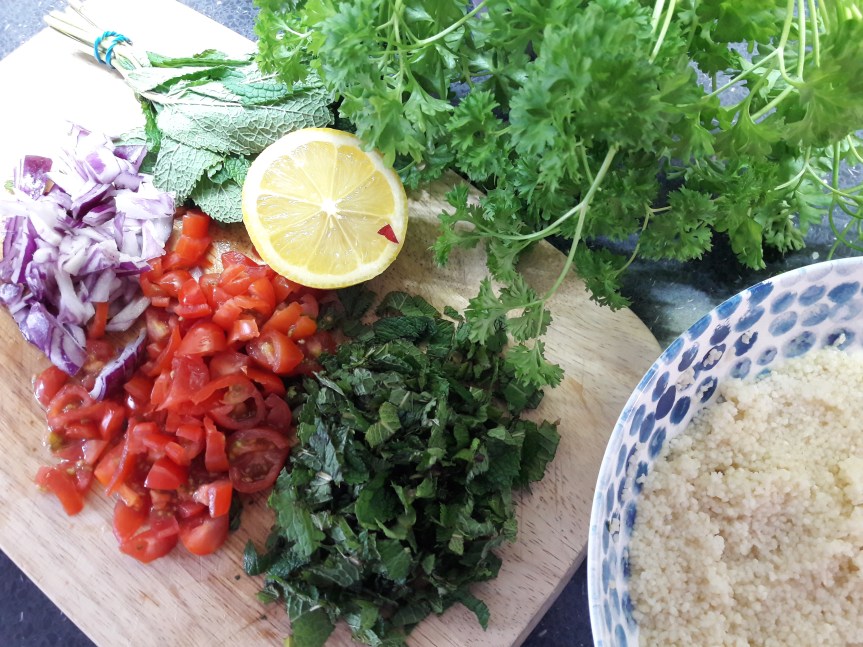
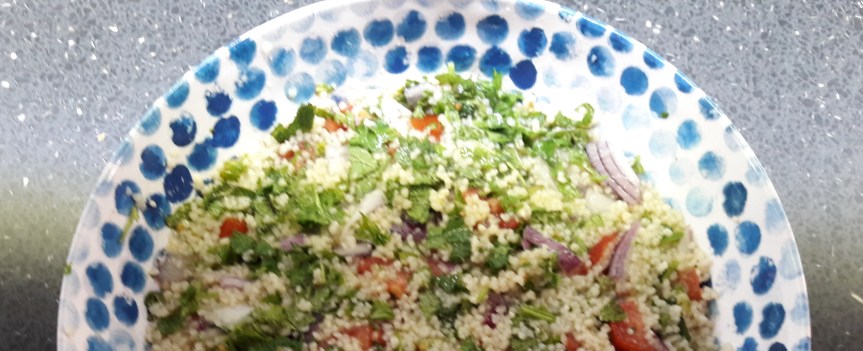
This time round on Knidos Cookery Club we’re taking advantage of some fresh, seasonal ingredients to make one of our favourite springtime salads, tabbouleh.

This winning combination of freshly-picked herbs, vegetables, lemon and olive oil with a grain such as couscous or bulgur wheat, that origianets on the eastern shores of the Mediterranean Sea, makes for a light, fresh-tasting dish that works well as part of a meze platter or alongside a selection of barbecued food.

20190419_185838-1.jpg

It’s easy to prepare, giving you more time to lounge in the sun with a glass of chilled wine while making the most of the long evenings.

Ingredients (serves 3-4)

  • 100g grain – couscous or bulgur wheat (coarse or fine both work well here)
  • 200 ml vegetable stock
  • One medium red onion
  • 12 cherry tomatoes
  • One bunch of fresh parsley
  • One bunch of fresh mint
  • Juice of one lemon
  • 25 ml olive oil

Method

  • Heat the vegetable stock until it’s boiling and then pour it over the couscous or bulgur wheat. Cover and leave to stand for 30 minutes or until all the liquid is absorbed.
  • While the couscous or bulgur wheat is soaking, prepare the rest of the ingredients. Dice the onion, quarter the tomatoes, finely chop the mint and parsley and squeeze the lemon.
  • Mix all the ingredients together and then add the olive oil and stir well. Leave to stand in the fridge for 30 minutes and then serve.


A Leek-Fuelled Lentil Pilaf

11 April 2019

This time round on Knidos Cookery Club we’re combining some of our favourite seasonal ingredients to mark the transition from the hearty stews and soups of winter to some lighter, spring eating.

20190228_215304-e1552317614615.jpg

We’ve paired leeks, the mild-tasting cousin of the onion, with green lentils, coarse bulgur wheat and some spices to make a scrumptious pilaf that’s both cheap and easy to prepare.

Using bulgur wheat in the place of rice means that it can be on the table in less than an hour, which also allows enough time to roast some of our winter faves, pumpkin and beetroot, to add a splash of colour to the plate. Keep any leftovers in the fridge – they can be moulded into patties and fried in oil or baked in the oven to make a tasty brunch or supper.

Ingredients (serves 4)

  • 50 ml olive oil
  • One leek
  • 250g pumpkin
  • 250g beetroot
  • 125g bulgur wheat (coarse not fine)
  • 125g green lentils
  • 600ml vegetable stock
  • Two teaspoons cumin seeds
  • One cinnamon stick
  • One teaspoon chilli powder
  • One bayleaf

Method

  • Pour 25 ml olive oil and one teaspoon of cumin seeds into an oven-proof dish and leave in the oven for 10 minutes at 200c. Cube the pumpkin and beetroot and put into the dish and stir well to coat with oil. Bake for 40 minutes at 200c.
  • Heat the other 25 ml of oil in a heavy-based pan, add the cumin seeds and then add the diced leek and sauté over a low to medium heat for about ten minutes. Add the cinnamon stick, chilli powder and bayleaf and stir well.
  • Now add the bulgur wheat and lentils and the vegetable stock and mix it all together. Cook for 30 minutes or so over a low heat, stirring occasionally, until all the liquid has been absorbed. Serve with the roasted beetroot and pumpkin.

Green Cheburekifest as KCC turns 3

28 March 2019

Wow, we can hardly believe it, but Knidos Cookery Club turns 3 this week! Our first post was published from Turkey on 31 March 2016, and since then we’ve brought you 94 editions of KCC, stuffed with veggie food from all over the world. We’d love to hear your feedback – what’s been your favourite post so far? Let us know in the comments section below.

20190322_231111
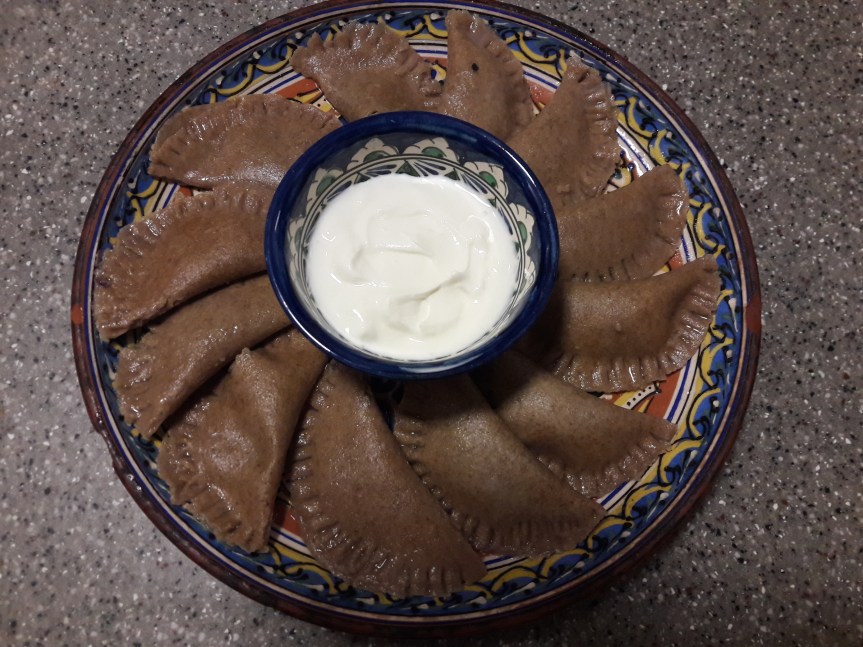
KCC’s spinach and celery pelmeni with sour cream


To mark this momentous occasion, we’ve prepared some mini chebureki filled with spring greens. We’re using chebureki in this context to refer to a crescent-shaped pie. Usually they’re deep-fried but we decided to turn them into more of a pelmeni by boiling them. It’s both healthier and quicker.

IMG-20190322-WA0027
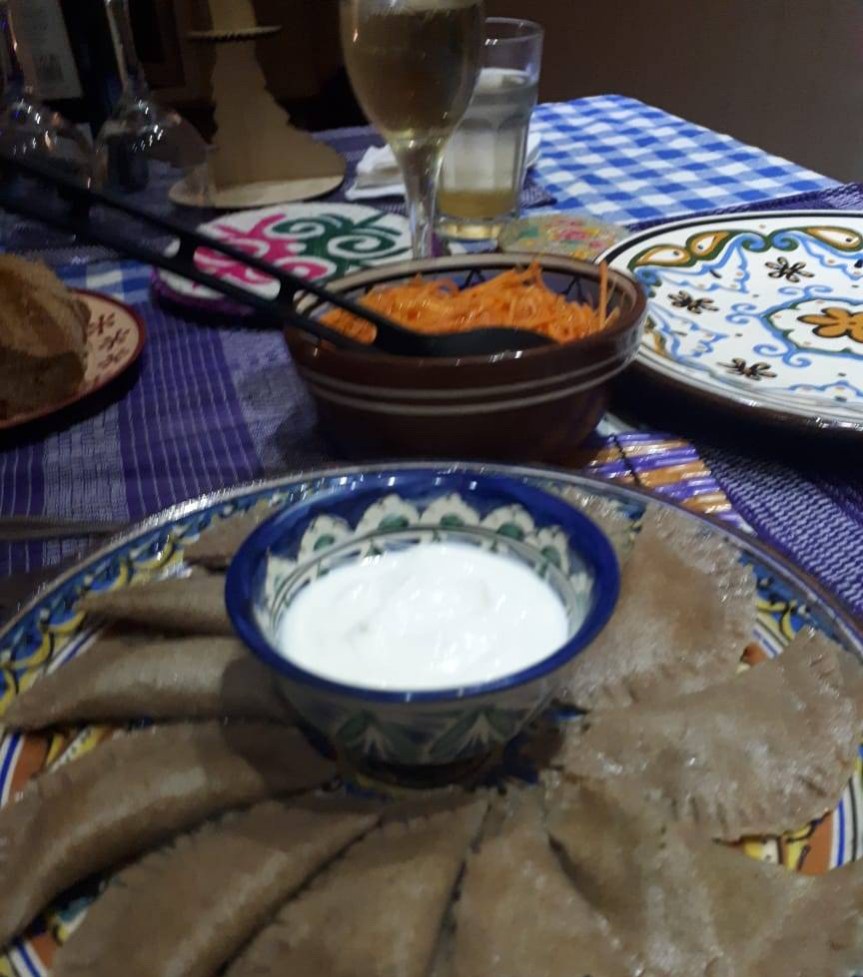
KCC’s spinach and celery pelmeni – the full table


Chebureki and pelmeni are from the family of little pies that are made from an unleavened dough – their cousins are Italy’s ravioli,  Turkey’s manti, China’s wonton, Uzbekistan’s chuchvara and Kazakhstan’s tushpara, Ukraine’s varenyky and Poland’s pierogi – the list is endless.

Ingredients (makes up to 24)

For the pasta:

  • 200 g wholewheat flour
  • 4 teaspoons olive oil
  • 100 ml water
  • pinch of salt

For the filling:

  • One small onion
  • 150g spinach
  • 2 sticks of celery
  • 25 ml olive oil
  • One teaspoon cumin seeds

Method

  • Make the pasta by sifting the flour into a large mixing bowl and then add the oil, a pinch of salt and half of the water in a well in the middle of the flour. Mix inwards from the outside with a wooden spoon and then add the rest of the water until the dough has absorbed all the flour.
  • Knead for ten minutes or so and then leave the pasta dough to rest in the fridge for at least one hour. While the dough is in the fridge, prepare the filling. Heat the oil in a frying pan, add the cumin seeds and then add the finely chopped onion. After cooking for five minutes, add thin slices of celery stick and the leaves and cook for three minutes. Now add the chopped up spinach and cook for another five minutes stirring frequently. Allow to cool before making the mini pies.
  • Roll the pasta out onto a lightly-floured surface to a thickness between 0.5 and 1.0 mm.Use a glass or a mug to cut out round shapes from the dough, add a teaspoon of cooled spring greens in the bottom half of the circle and moisten the inside edge around the filling with a little water and then fold the top over. Use a fork to seal the pasta pocket.
  • Bring a large pan of water to the boil and then add the little pies to the water and keep boiling over a low heat until they float to the surface. Remove  with a slotted spoon and serve hot – they’re good served with sour cream or melted butter or just plain.

Nauryz Spring Cleaning: Mung Bean Detox

14 March 2019

With another Nauryz, the spring equinox, just around the corner, we’re looking at this turning point of the year as a good place to start some spring cleaning for the body.

20190313_150439
The Mighty Mung Bean

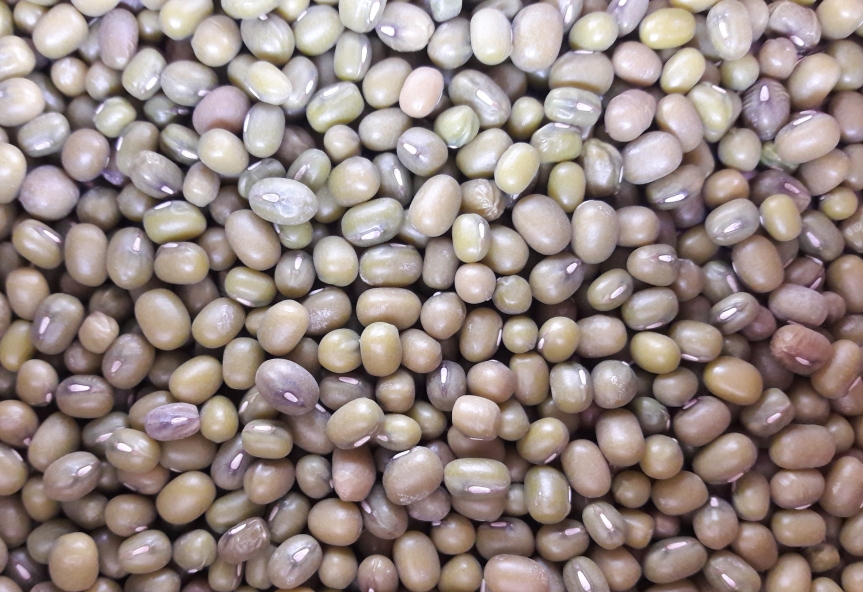
You can detox your digestive system by utilising the mighty mung bean, considered by both traditional Chinese medicine and India’s Ayurvedic medicine as an effective aid to remove toxins from the body.

20190313_133931
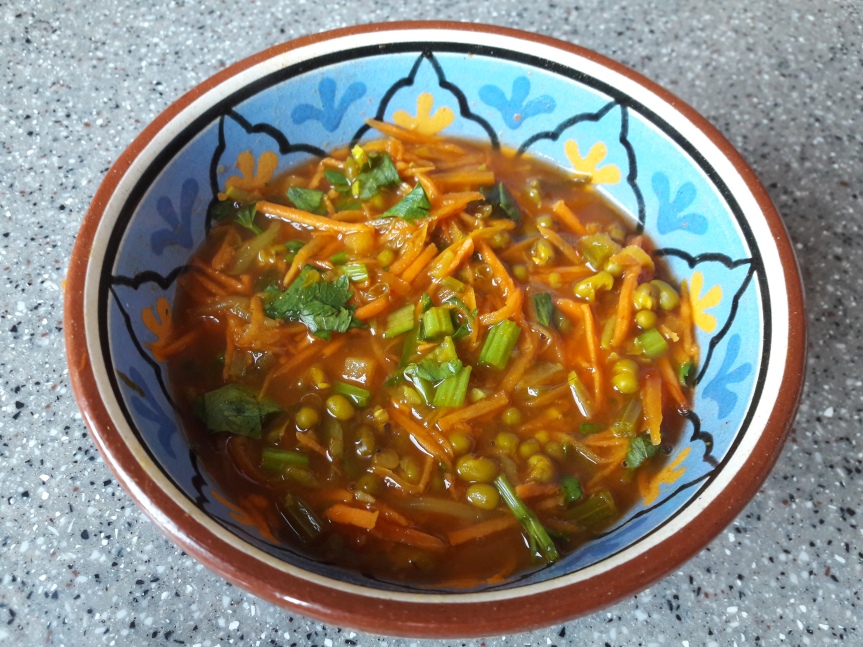
Knidos Cookery Club’s Mung Bean Detox Soup

When combined with spices such as turmeric, cumin, ginger and black pepper, the mung bean can do a lot to help flush out unwanted material from your body.  While some practitioners recommend following a detox diet based on mung bean soup for 7-10 days to really cleanse yourself, it’s quite a powerful process so we’d recommend a bowl or two every week as being beneficial to your general well-being.

Ingredients (Makes 3-4 servings)

  • 200 g mung beans
  • One carrot
  • One courgette
  • One stick of celery
  • 1 litre water
  • Four tablespoons tomato paste
  • One teaspoon turmeric
  • One teaspoon cumin
  • One teaspoon chilli powder
  • 1cm fresh ginger
  • Black pepper

Method

  • Wash and then soak the mung beans for at least four hours (the longer you soak them, the quicker they’ll cook). Then put them in a pan, cover with the water and add the turmeric, cinnamon, cumin and chilli powder.
  • Bring to a boil and then simmer for 30 minutes, add the tomato paste, grated carrot and courgette, the thinly-sliced celery and the minced ginger, stir well and simmer for another ten minutes or so. The mung beans should just be beginning to go soft. Pour into bowls and serve with a generous grind of black pepper.


Say Aloo to Broccoli

28 February 2019

After touring through North America and Mexico, we’re finally back at KCC’s winter HQ in Almaty, Kazakhstan. We’ve been craving for something spicy and Asian and, with broccoli in season, decided on this take on the Indian classic aloo gobi.

20190223_215808.jpg
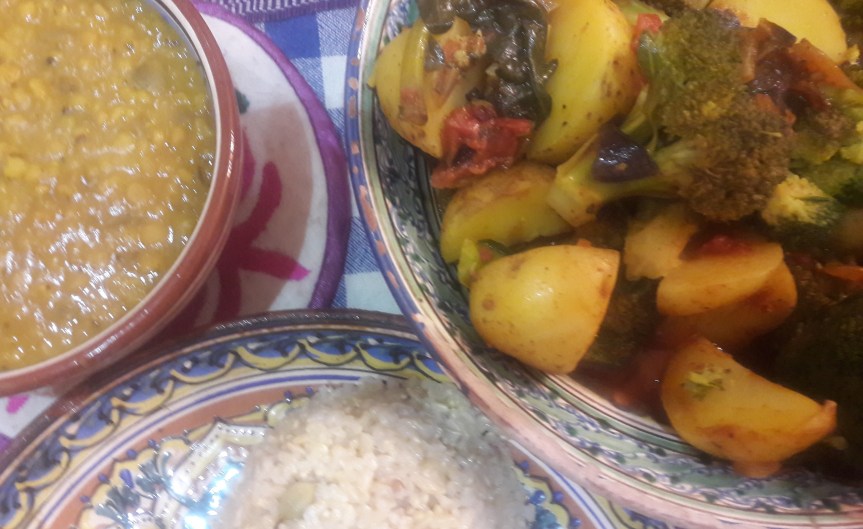
Aloo broccoli, rice and dal

You’ll probably be familiar with aloo gobi, which combines potato and cauliflower in a spicy sauce, if you’re a fan of food from the Indian sub-continent. Having eaten the cauliflower version numerous times, we started to wonder why we’d never come across the dish made with broccoli instead.

It turns out that broccoli is a fairly recent arrival to the tables of India – it was first brought to the country in the early 1990s by a farmer called Jitendra Ladkat, according to this article. So, therefore, there’s no great surprise that it does not feature as a mainstay of Indian cooking.

We served up our aloo broccoli with a split pea dal, brown rice and some flat bread and can thoroughly recommend it as an alternative to the tried and tested aloo gobi.

Ingredients (for 3-4 servings)

  • 400 g small potatoes
  • 400 g broccoli florets
  • One small red onion
  • 200 g tomatoes
  • 50 ml cooking oil
  • Spices: one teaspoon each of cumin seeds, coriander, chilli powder, turmeric, six cloves, one star anise.

Method

  • Cut the potatoes into quarters and put into a pan of boiling water and simmer over a low heat for five minutes, then add the broccoli, cover the pan and cook for another five minutes.
  • Heat the oil in a heavy-based pan and add the cumin seeds, cloves, star anise and cinnamon stick. After five minutes add the chopped onion and cook over a medium heat. Add the coriander, chilli powder and turmeric and mix well.
  • Add the tomatoes and cook for a few minutes over a low heat and then add the cooked broccoli and potatoes. Mix well and cook for ten minutes, stirring occasionally.
  • Serve with rice, dal and flat bread. The dish tastes even better if left overnight and reheated as this allows time for the flavours to blend.

Down Home Arizona Kızartma

14 February 2019

This time round on Knidos Cookery Club we’re swinging through Tucson, Arizona on the way back home. Whilst in Tucson, we met up with some old friends from Kazakhstan (via Turkey and the USA) and were treated to Tolga’s kızartma –  grilled peppers mixed in with fried aubergines and potatoes served in a garlic-infused tomato sauce and garnished with dollops of natural yogurt.

20190204_191319
Tolga’s classic down home Arizona kızartma

Tucson is located on the edge of the Sonora Desert which stretches up into Arizona from northern Mexico. It’s a surreal landscape of towering cacti called saguaro (Carnegiea gigantea), which can grow to be more than 12 m tall.

20190203_163203
There’s a lot of cactus….

The desert is a fascinating place populated with bobcats, coyotes, a variety of snakes and scorpions along with hallucinogenic Sonoran Desert toads (if you’re brave enough to lick them… ).

Having observed the master chef at work closely, here’s KCC’s take on the Turkish classic kızartma.

Ingredients (serves 3-4)

  • Two large potatoes
  • Three medium-sized tomatoes
  • Three garlic cloves
  • one small onion
  • One large aubergine
  • One avocado
  • Four peppers – a mix of green and red
  • Four jalapeño peppers
  • 75 ml olive oil
  • 100 ml natural yogurt

Method

  • Heat 25 ml of oil in a heavy-bottomed pan. Cut the potato into 1mm slices and fry in the oil, turning occasionally, until they are a golden-brown colour on both sides. Remove with a slotted spoon and put on a plate lined with kitchen towel.
  • Prick the peppers a couple of times with a fork and then roast them on a barbecue or over an open flame (here’s some tips on how to do this) until the skin is blackened all over. While the peppers are roasting, put 25ml oil in the pan and cut the aubergine into 1cm cubes and fry until golden brown. Remove with a slotted spoon and put on a plate lined with kitchen towel.
  • Add the rest of the oil to the pan, heat it up and then fry the finely chopped onion and garlic for five minutes over a medium heat and then grate the tomatoes into the pan and cook for 15-20 minutes. Peel the peppers, remove the seeds and chop the roasted peppers roughly.
  • In a large bowl put a layer potatoes, aubergine and peppers alternately. Pour the tomato sauce over the top and garnish with dollops of yogurt. Serve with slices of avocado.