KCC’s October Squashfest

1 October 2020

With the temperatures tumbling in the second half of September, thoughts turned to the opening of the pumpkin season, which traditionally starts on 1 October in the world of Knidos Cookery Club.
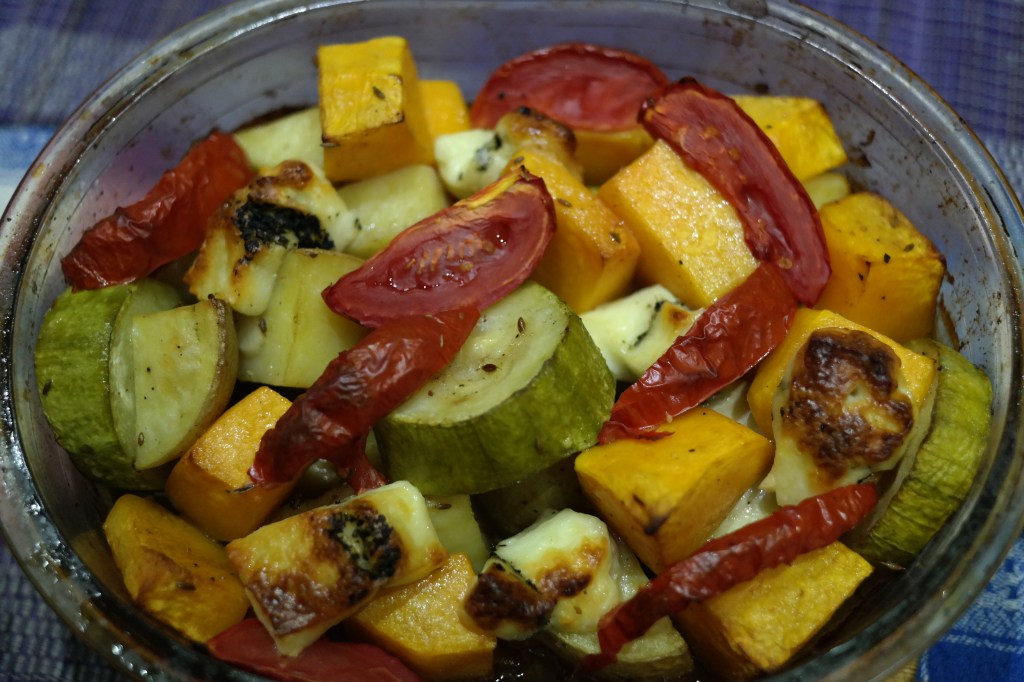
There’s a definite chill in the air and we’ve even got the heating coming on two weeks ahead of schedule here in Almaty, Kazakhstan. So, it’s certainly time for some autumn comfort food.

We’ve combined the first butternut squash of the season with the summer’s last stand of courgettes and tomatoes and some minty halloumi cheese to come up with a roast that conjures up the pale green, orange and red hues of the falling leaves synonymous with this time of year.

Ingredients (serves 3-4 people)

  • 300 g Butternut squash 
  • 300 g Courgettes (Zuchinni)
  • Three plum (Roma) tomatoes
  • 200 g halloumi
  • One teaspoon cumin seeds
  • 50 ml olive oil

Method

  • Cut the butternut squash into 2 cm cubes – you can peel the butternut or leave the skin on if you wish. Cut the courgette into 1 cm slices and cut in half to make semi-circles.
  • Put them in an ovenproof dish, sprinkle the cumin seeds and pour the olive oil over the vegetables and mix well. Cover the dish with tin foil and cook in the oven at 150 c for one hour. Give the veggies a stir after 30 minutes
  • Remove the foil and stir well. Add the tomatoes, sliced into six wedges and the halloumi, cut into 2 cm cubes. Place these on top of the squash and courgettes and bake at 150 c for another 30 minutes or until the cheese starts to look charred.
  • Serve with a flat bread such as pita or chapati. You can bake some jacket potatoes in the oven with the roast veggies to make the meal more substantial or serve with pasta, rice, bulgur wheat or pearl barley.

Hash Greens: More Mücver Variations

17 September 2020

This time round on KCC we’re returning to mücver, Turkey’s versatile courgette fritter, with our take on that brunch staple Hash Browns. This mücver variation adds potato and garlic scapes to the mix to give us a fritter we’ve dubbed Hash Greens.

These fritters are super-easy to prepare and cook and are great as part of a breakfast or brunch. They can also be served in a roll to make it closer to a veggie burger.

We came across garlic scapes, the edible stem that grows from the bulb, on a recent visit to the local greengrocer while looking for green beans. This flavoursome peduncle gives a milder garlicky kick to soups, pestos and stir fries. It’s not an overpowering flavour as it adds a subtler, roasted garlic undernote to these dishes.

Ingredients (Makes 6-8 fritters)

  • One medium courgette (zucchini) (approx 200 g)
  • One medium potato (approx 200 g)
  • One small onion (approx 100 g)
  • 50 g garlic scapes
  • 100 g chickpea flour
  • 25 g mixed fresh herbs
  • One teaspoon cumin seeds
  • One teaspoon chilli flakes
  • One teaspoon turmeric
  • One teaspoon black pepper
  • 50 ml olive oil

Method

  • Grate the potato and courgette and mix together in a large bowl. Finely chop the garlic scapes and add to the bowl. Stir in the chickpea flour and add the herbs (use and fresh herbs you have e.g. parsley, coriander, mint) and spices and mix well so you have a smooth that’s neither too dry and crumbly nor too wet and sloppy.
  • Heat the oil in a frying pan. Form the mix into golf-ball sized patties and then put in the pan and flatten with a fish slice or spatula. Fry until golden-brown on both sides. Serve as part of a breakfast or brunch or in a bun as a burger with toppings of your choice.

Bring on the Bazhe – Georgia’s Versatile Walnut Sauce

6 August 2020

We’re turning our attention back to Georgia to take a look at how walnuts form the backbone of the nation’s cuisine. This versatile nut can be made into a sauce, bazhe, and slathered on slices of fried aubergine or poured over a cucumber and tomato salad. It’s also used liberally in the vegetable dip, pkhali, in the thicker satsivi paste and in the red bean dish, lobio.

SAMSUNG CSC
Aubergine slices stuffed with bazhe, Georgia’s versatile walnut sauce

We made some bazhe to roll up in slices of fried aubergine, a favourite from the days of visiting Georgian restaurants. These aubergine rolls, nigvziani badrijani in Georgian, are usually served at the start of the meal, especially at lengthy wine and chacha (a grape-based spirit akin to Italy’s grappa or Greece’s tsipouro) fuelled banquets, but we think they’re great to eat at anytime and they’re particularly handy for picnics or barbecues.

SAMSUNG CSC
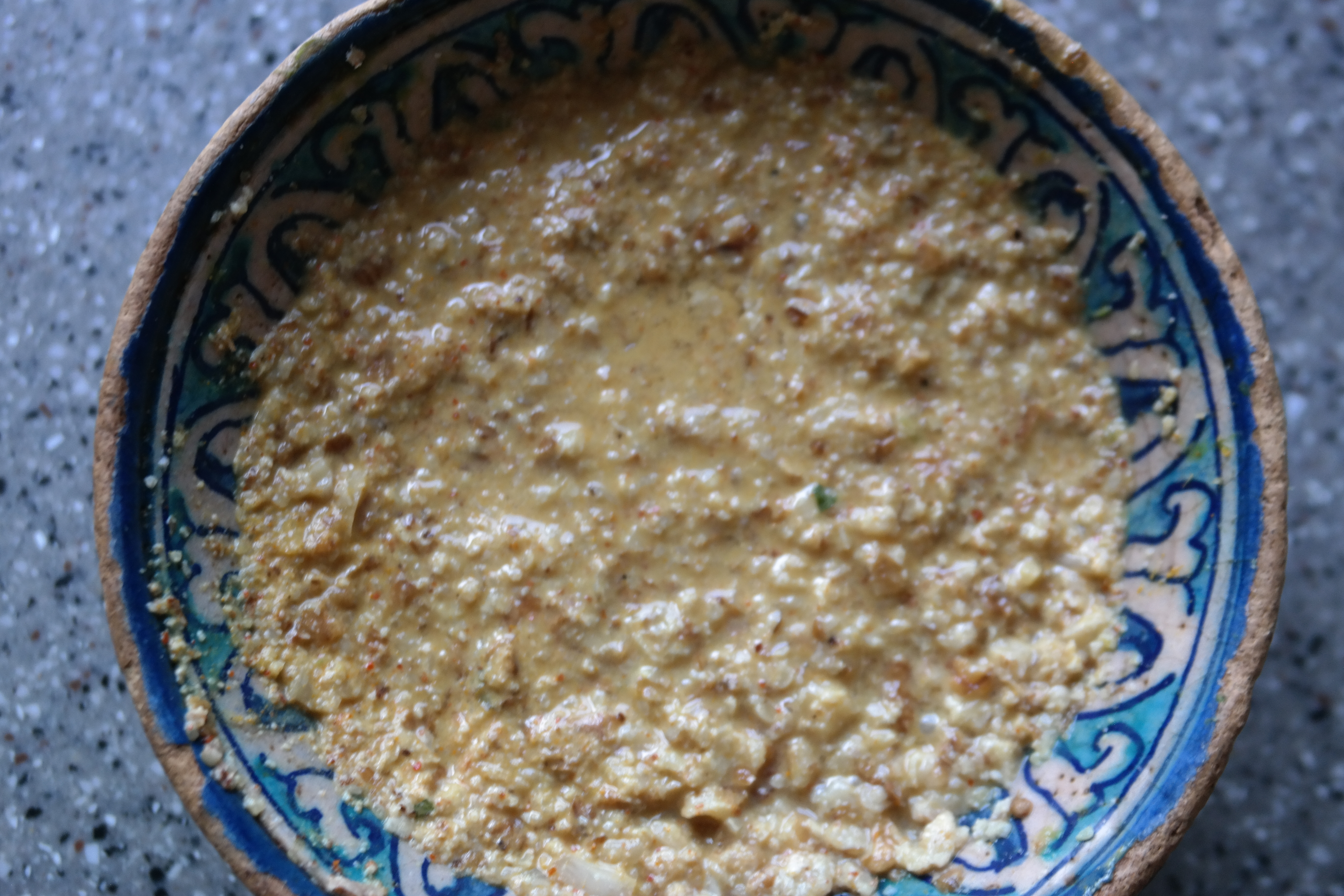
Bazhe – Georgia’s versatile walnut sauce

To remove the bitter taste of the aubergine, sprinkle with salt and leave for 30 minutes. Rinse in cold water and pat dry with kitchen roll. Make sure the oil is very hot when frying the slices – this will help them not to soak up too much fat while cooking.,

SAMSUNG CSC
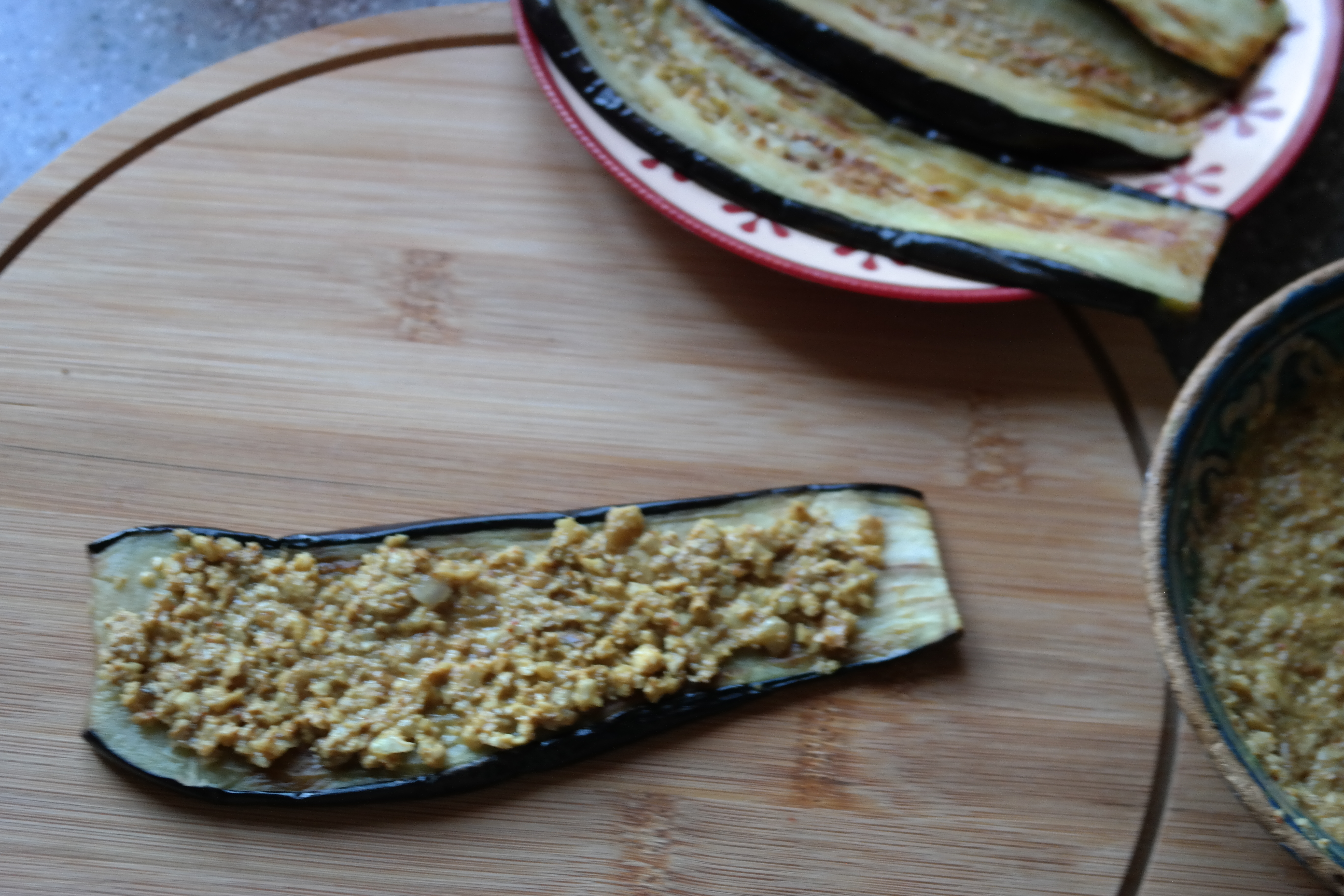
Spread the sauce on the fried aubergine slice and then roll it up

Ingredients (for 16-20 aubergine rolls)

  • 3 or 4 large aubergines
  • 100 ml cooking oil
  • 100 g walnuts
  • 2 garlic cloves
  • 1 tablespoon vinegar (red or white wine or apple)
  • 1 tablespoon pomegranate sauce
  • 1 teaspoon blue fenugreek (use cumin seeds if you can’t find this)
  • 1 teaspoon marigold flower (use turmeric if you can’t find this)
  • 1 teaspoon coriander seeds
  • 1 teaspoon paprika
  • 50 ml cold water
  • Salt to sprinkle over the aubergine slices
  • Fresh basil and coriander leaves to garnish

Method

  • Make the walnut sauce first. Crush the nuts using the back of a wooden spoon on a wooden chopping board. This method gives the sauce a more crunchy texture. Mince the garlic and mix with the nuts in a bowl. Add the spices, vinegar and pomegranate sauce and combine all the ingredients into a smooth paste. Add water until the sauce has a more runny consistency but is still quite thick.
  • While the sauce is chilling in the fridge, fry the aubergine. Heat 50 ml of oil in a heavy based pan. Top and tail the aubergine and slice off a thin layer of skin on both sides. Cut the aubergine into 0.5 cm slices lengthways and then fry on both sides until golden brown. Drain on kitchen paper.
  • When the slices have cooled down, spread the walnut sauce onto the slice and then roll it up. Garnish with fresh herbs such as coriander and basil, and pomegranate seeds (if you have any – we’re not expecting any until autumn) and serve cold with other Georgian starters such as pkhali and crusty bread.

Double Radish Courgette Quiche

23 July 2020

With reports coming in from allotment owners in the UK of a bumper post-lockdown vegetable crop, we’re revisiting an old favourite — a quiche made with courgettes, peppery radish leaves and a healthy dash of horseradish.

SAMSUNG CSC
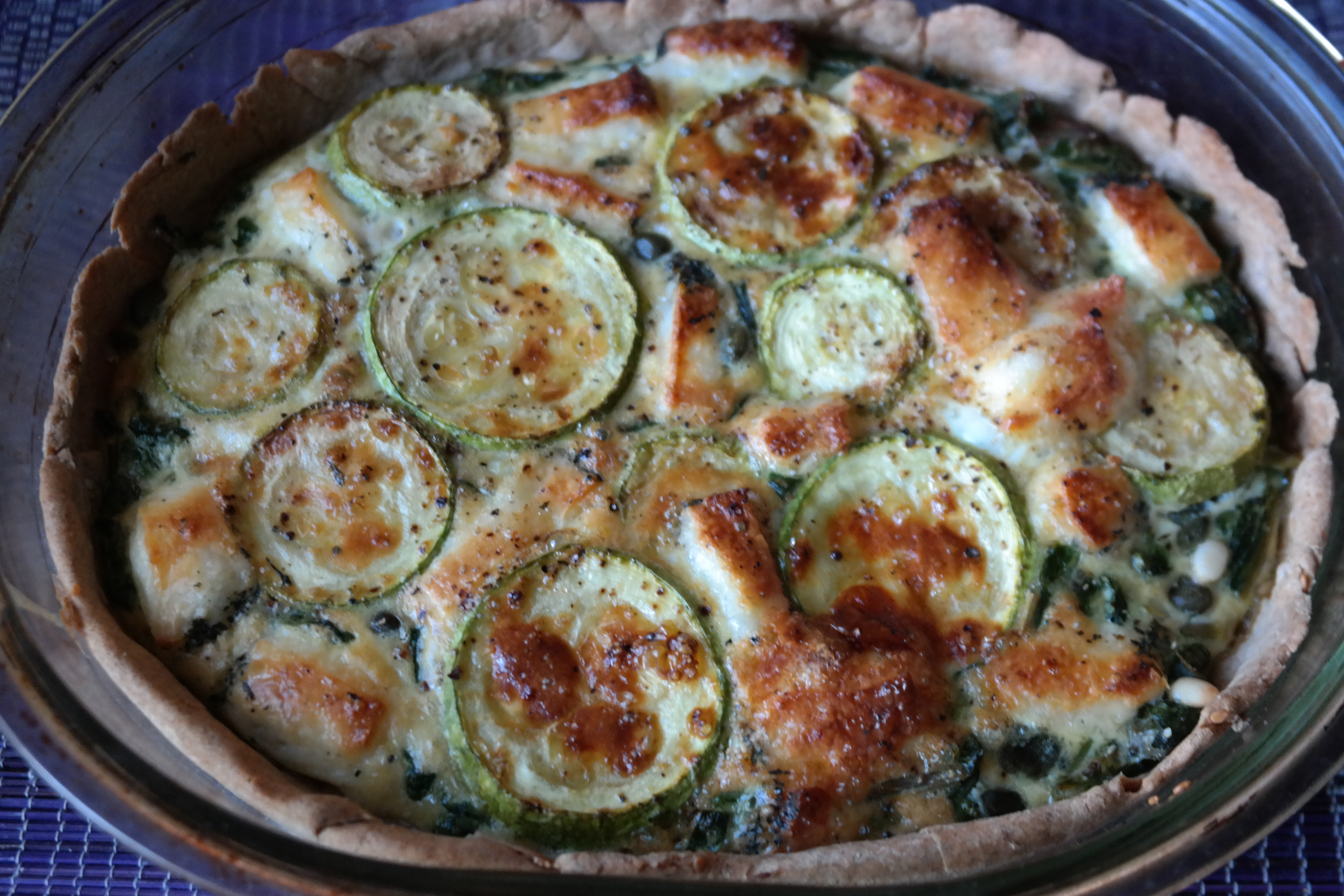
Courgette, radish leaf and halloumi quiche

In a topical touch, we’ve added a dash of horseradish (хрен in Russian), the latest plant to be touted as a defence against coronavirus in Central Asia, following hard on the heels of garlic.

20200722_162910
Horseradish sauce with beetroot


Demand for horseradish, a root vegetable which is traditionally mixed with honey to fight colds and coughs, has soared in in Kazakhstan and Uzbekistan in recent weeks, along with the price. We bought a jar of horseradish sauce, flavoured with beetroot, as the fresh roots are in short supply.

SAMSUNG CSC
Going a bit crackers in lockdown

Crackers have also been hard to find in Almaty in recent weeks, so we used up the leftover pastry from making the quiche to prepare our own. Simply roll the pastry out to a thickness of 1 mm and then use a glass or mug to cut out a round shape. Bake in a hot oven (200 c) on a baking tray for 8-10 minutes until they start to brown.

Ingredients (3-4 portions)

For the pastry:

  • 250 g  flour (we used a 50/50 mix of rye and wheat flour)
  • 60 ml olive oil
  • 120 ml cold water
  • One teaspoon cumin seeds
  • One teaspoon sesame seeds
  • Healthy sprinkling of black pepper

For the filling:

  • One medium courgette
  • Bunch of radish leaves
  • One teaspoon horseradish sauce (or freshly grated if you can find it)
  • One small onion
  • One egg
  • 100 g halloumi
  • 50 ml olive oil

Method

  • Put the flour in a large bowl with the cumin and sesame seeds and a sprinkling of black pepper. Mix the flour and oil together with a fork and then slowly add the water and keep mixing until it starts to come together. Knead with your hands for 5-10 minutes until you have a stretchy ball of pastry. Leave in the fridge covered in clingfilm for an hour or so.
  • Heat the oven to 200 c. Roll the pastry on a lightly floured surface until it is about 2 mm thick. Grease a baking dish and then put the pastry in the dish to form a pie crust. Prick all over with a fork and bake in the oven for 10-15 minutes. You can use any leftover pastry to make crackers – put them on the top shelf of the oven at the same time as you’re baking the pie base.
  • Heat 25 ml of oil in a heavy based pan and chop the courgette into 5 mm slices. Cook the courgettes on both sides until browning. Put the courgettes to one side and add the rest of the oil to the pan.  While the pie base is baking, cook the sliced onion and chopped radish leaves in the hot oil.
  • Add the horseradish sauce and the egg to the mixture when the radish leaves are wilting. Stir well and then pour this into the pie crust. Place the fried courgette slices on top and put strips of halloumi around the courgettes. Bake for another 20-30 minutes at 180 c until the pastry is starting to go brown and the cheese has started to melt.

Brush up your Bruschetta Skills

2 July 2020

This week were honing in on a favourite Italian starter, bruschetta – slices of toasted bread served with a range of different toppings. We’ve opted for a heartier version using chunky slices of bread that can double up as a main meal when you add a salad of your choice.

20200528_133608

In Italy the slices of bread are toasted on a brustolinaa device made from sheet metal with holes on the bottom and a wire rack on the top (see pictures below taken from the Grand Voyage Italy website). This is placed over the heat source on your stove top and can be used to make toast, grill polenta and roast peppers, courgettes or aubergines.

Being unable to make it to Italy to pick up a brustolina at this point in time due to the pandemic, we’ve had to make do with our oven to toast the bread. Brush your thickly cut  slices with olive oil and a rub of garlic and cover one side with a topping of your choice.

20200528_133222

We went for capers, sun-dried tomatoes and black olives with thin slices of courgette and basil leaves for the first option and home-made guacamole, topped once again with thin slices of courgette and basil leaves, for option two. Simply leave in a hot oven (200 c) for ten minutes or so until the bread just begins to burn at the edges. Serve immediately with your favourite salad.

The Life of Briam

21 May 2020

There were signs this week of life slowly beginning to return to some sort of normal.  Cafes and terraces are set to open once again in Almaty from next week and the streets are busier. We’re not planning on changing too much at the moment and, in the meantime, we’re content to continue our armchair culinary travels.

20200520_184214
Half-way there – assembling the briam…

Greece has been in the headlines this week with the news that its beaches are reopening and it’s preparing to open its borders to tourists next month. This news brought back memories of holidays in the Greek islands and the great food in the tavernas. One of our favourite dishes is briam (pronounced bree-AM) – a delicious stew of oven-roasted seasonal vegetables.

IMG-20200521-WA0012
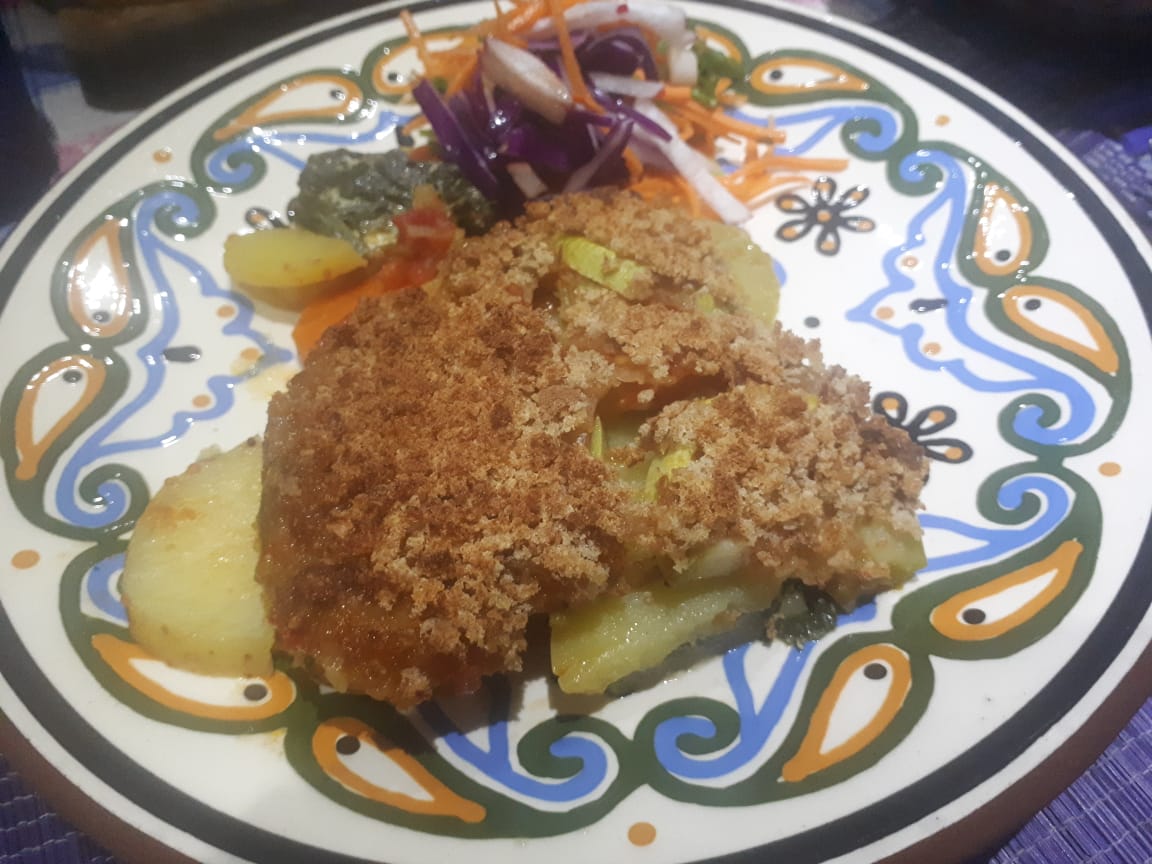
Briam – good enough to eat

As usual, we’ve taken a few liberties with the recipe, omitting aubergines (usually a key ingredient) as they are not quite in season in Almaty yet, so foodie purists please look away. We’ve added carrot and spinach to the usual potatoes and courgettes and then cooked it slowly in a tomato sauce. We’ve also topped it with some breadcrumbs to enclose our briam.

Screen Shot 2020-05-21 at 12.15.00

The name briam has an interesting history – it is a borrowed word – there is no letter ‘b’ in the Greek alphabet, instead this sound is represented by combining the letters ‘μ’ (m) and ‘π’ (p) – ‘μπ’. Many Greeks call this casserole tourlou tourlou (all mixed-up), so briam could have come from Greeks who lived in Anatolia until the mass population exchanges in the early 20th century.

20200520_211656
Briam and salad


In the Ottoman era, there was a word biryan, spelt büryan in modern Turkish, which refers to a side of lamb cooked slowly over charcoal in a pit in the ground – a speciality of Siirt in the Kurdish area on the borders with Iraq and Syria. This in turn could come from Persian, where biryan means roasted (notice the similarity with India’s biriyani). Whatever the name’s origin, it tastes great!

Ingredients (serves 4)

For the bake:

  • Two courgettes (approx 300 g)
  • Four potatoes (approx 300 g)
  • One carrot (approx 100 g)
  • 200 g spinach
  • 75 g breadcrumbs

For the tomato sauce:

  • One red onion
  • 250 g tomatoes
  • One bunch of parsley
  • 20 capers
  • 25 ml olive oil
  • One teaspoon mustard seeds
  • 250 ml vegetable stock or water

Method

  1. Make the tomato sauce first. Heat the oil in a heavy based pan, add the mustard seeds and when they start to pop add the chopped onions and cook over a medium heat, stirring occasionally. After five minutes reduce the heat and add the chopped tomatoes. Stir and simmer for ten minutes then add the stock, chopped parsley and capers. Cook until the liquid has reduced by half.
  2. Cook the spinach for a few minutes until it is beginning to wilt and then set aside. Cut the potato, courgette and carrot into 1 mm slices and put a layer of potatoes, then courgettes and then carrots into a greased baking dish. Add the spinach and pour half the tomato sauce over the vegetables. Add another layer of potatoes and courgettes and then pour the remainder of the tomato sauce over the layers. Spread the breadcrumbs over the top.
  3. Cover with tin foil and bake in an oven at 180 c for around 1.5 hours. After an hour, remove the foil and cook for another 20-30 minutes until the breadcrumbs go start to go a golden brown colour. Keep an eye on it to make sure the breadcrumbs aren’t burning. Serve immediately with a fresh salad – it’s also great when it’s cooled down a bit.


Lockdown Lunch: Red-hot Hummus

16 April 2020

We’re now nearing the end of the third week of Almaty’s lockdown. Life has settled into a pattern of venturing out as little as possible and relying more on what we have stored away. After a delve in the cupboards, we came up with one of the stalwarts of the staple food world – a pack of dried beans.

SAMSUNG CSC
KCC’s Red-hot, red bean hummus

After soaking in cold water overnight, these red beans can be used in endless ways – from soups, stews and curries to burgers, salads and dips. We’ve gone for a easy-to-make red bean hummus; you’ll just need to add tahini, lemon juice, olive oil and some spices. Serve with flat bread and salad for a tasty lunch.

Don’t worry if you haven’t got any tahini on hand, you can make your own by toasting some sesame seeds and mixing them with olive oil – here’s a link to last year’s post on DIY tahini.

Ingredients (makes around 300 g)

  • 250 g cooked red beans (reserve 50 ml of the cooking water)
  • Two tablespoons tahini
  • 25 ml olive oil
  • One lemon
  • One garlic clove
  • One teaspoon cumin seeds
  • One teaspoon sumac
  • Two teaspoons red chilli flakes
  • A few sprigs of coriander

Method

  • Mash the beans with a potato masher or a fork and add the tahini. Mix well then add olive oil and lemon juice and blend until you get a smooth consistency. If the hummus is too thick, use some of the cooking water, Add the minced garlic and spices and mix a bit more with the fork. Garnish with a few beans, a drizzle of oil, a sprinkling of chilli flakes and a sprig of coriander.


Lockdown Lunch: Kicking off with Kısır

9 April 2020

We’re heading towards the end of the second week of serious lockdown here in Almaty. Our local shops remain well-stocked with basics (we’re not supposed to go further than 500 metres form home) and the greengrocer’s reopened after closing for a week, so fresh vegetables are readily available.

SAMSUNG CSC
Basic kısır with radish

For this week’s Lockdown Lunch we’re making kısır, Turkey’s bulgur wheat salad answer to the Middle East’s tabbouleh salad. Kısır is one of those dishes that everyone has their own recipe for, but the basic ingredients are fine bulgur wheat, onion, chilli pepper, tomato paste, olive oil, lemon juice, parsley and pomegranate sauce.

SAMSUNG CSC
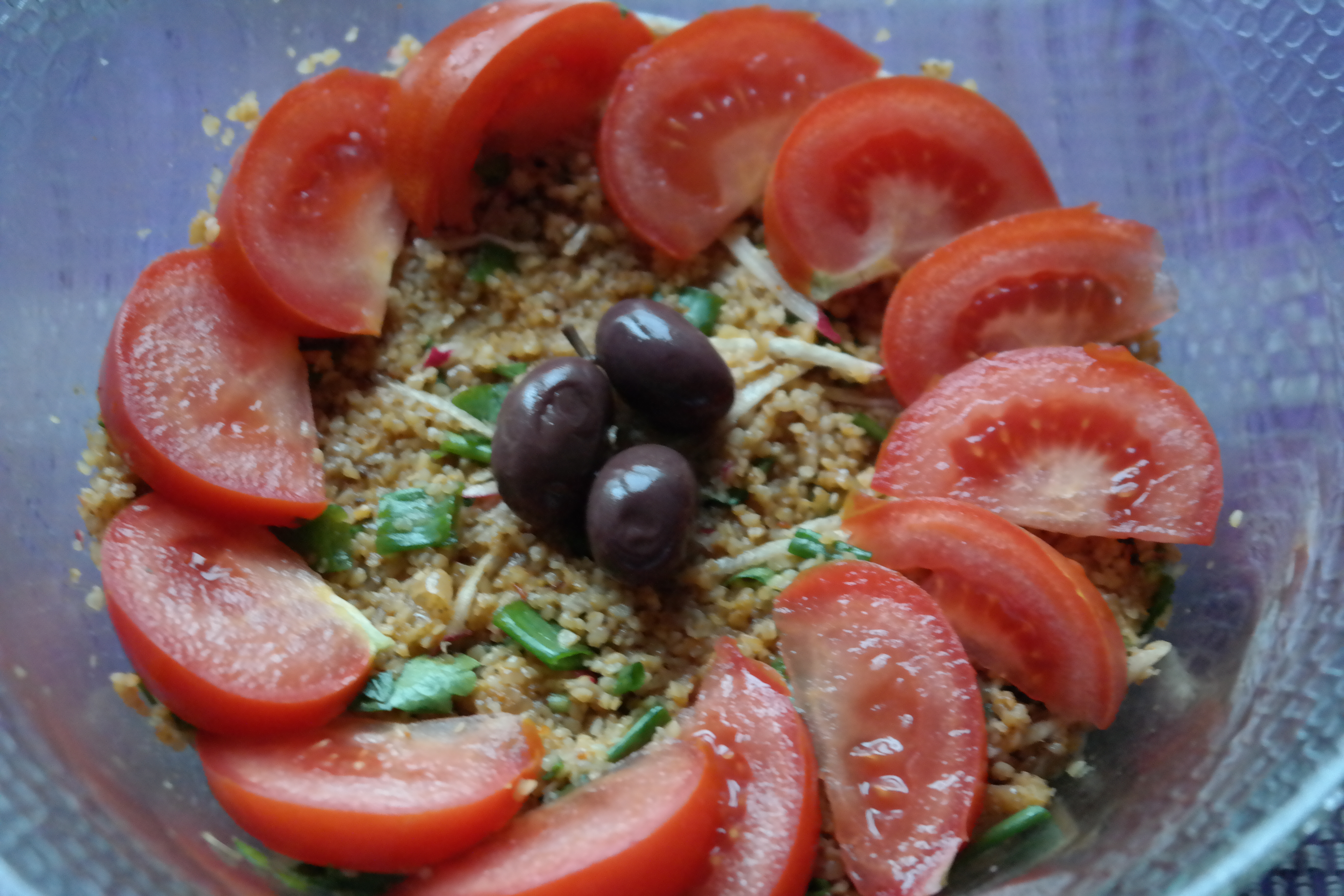
Kısır with olives and tomatoes

We’ve added some radishes, tomatoes, spring onion and black olives to the standard package above that can be eaten as a main meal (you might want to add some nuts or beans for a protein punch) or as a side salad. If you are on a gluten-free diet, then you can use millet in place of bulgur wheat.

SAMSUNG CSC
A fresh kick for your kısır

Kısır is easy to prepare and it benefits from sitting in the fridge overnight – leaving more time for all those Zoom parties and, of course, the Tajik football season, which kicked off last weekend.

Ingredients (for 3-4 servings)

  • 100g fine bulgur wheat
  • 200 ml vegetable stock or water
  • One medium onion
  • One medium tomato
  • One medium radish
  • One spring onion
  • One garlic clove
  • Ten black olives
  • Two tablespoons tomato paste
  • 25 ml olive oil
  • One lemon
  • 25 ml pomegranate sauce
  • Few sprigs of parsley
  • One teaspoon chilli pepper flakes
  • One teaspoon cumin seeds
  • One teaspoon sumac

Method

  • Heat the oil in a frying pan and add the cumin seeds and fry until they start to sizzle. Add the finely chopped onion and mashed garlic and cook for a few minutes over a low heat, stirring occasionally. Add the chilli pepper and sumac and stir.
  • Add the fine bulgur wheat and stir to cover the grains then add the stock or water, Add the tomato paste, pomegranate sauce and the juice of half the lemon. Stir and bring to the boil. When boiling, turn off the heat, cover the pan and leave to stand for 30 minutes or so until most of the liquid is absorbed.
  • Fluff up the grains with a fork and add the grated radish, sliced spring onion and chopped parsley. Mix together and put in a salad bowl. Before serving, garnish with lemon and/or tomato slices and black olives.

Lockdown Lunch: Tbilisi Calling

26 March 2020

For this week’s lockdown lunch we had a root around the cupboards and came up with some dried red beans, last autumn’s walnuts and a bottle of Turkish pomegranate sauce (Nar Ekşili Sos) – perfect ingredients for taking us on a culinary away day to Tbilisi for a bowl of lobio, Georgia’s signature bean dish.

SAMSUNG CSC
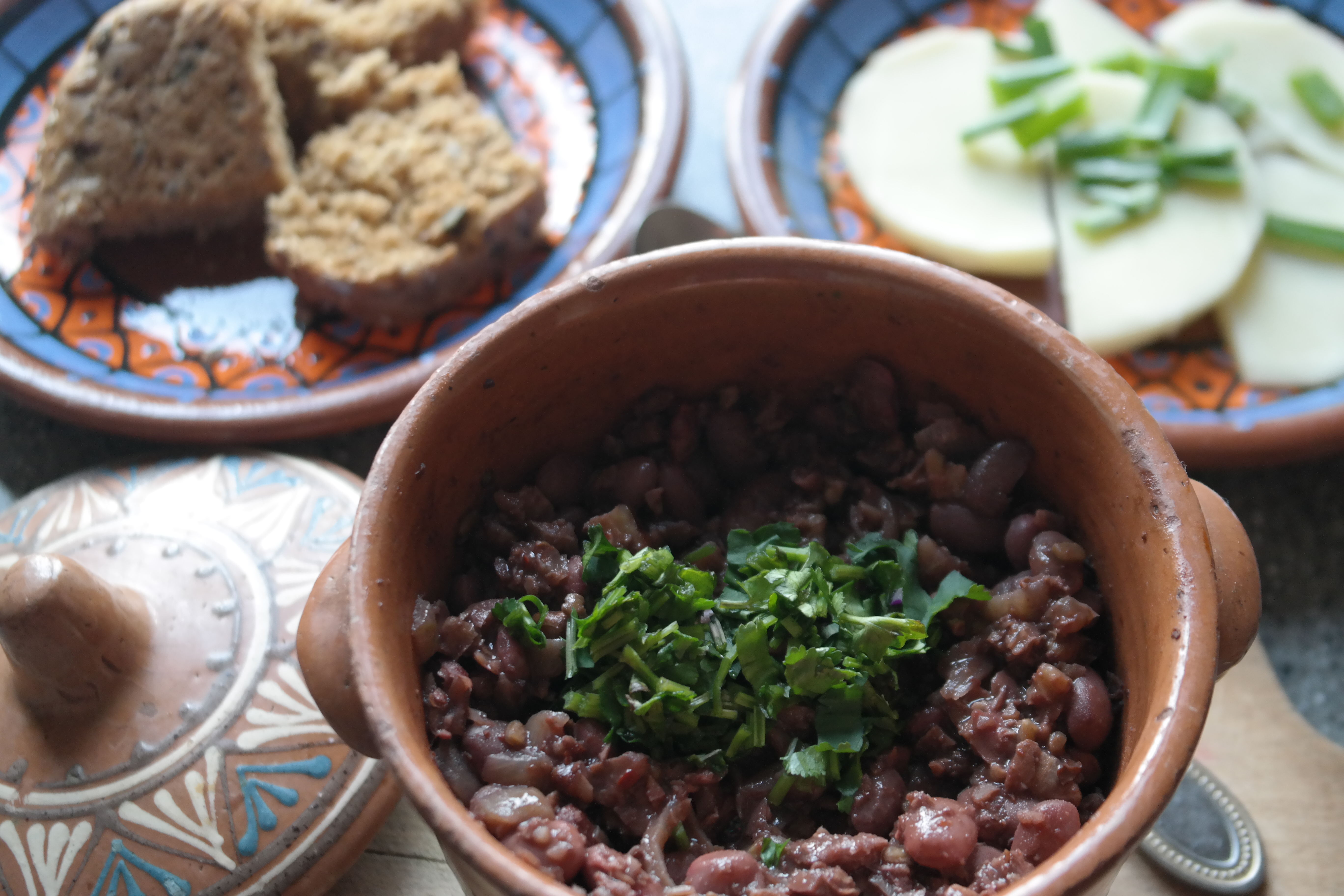
Take a trip to Georgia with KCC’s Lobio lockdown lunch

Lobio can be more like a soup, a stew, a salad or even re-fried beans depending on which region of Georgia it’s prepared in – we’ve gone for lobio nigvzit which is somewhere between a soup and a stew. Serve the lobio in a clay pot with white cheese and a hunk of fresh mchadi (corn bread – recipe link here) or any other bread for an authentic taste of Georgia.

To help pass the time during lockdown, here’s something on the etymology of lobio from @thomas_wier on twitter:

Ingredients (makes four servings)

  • 500 g cooked red beans
  • 50 g walnuts
  • One medium onion
  • Two garlic cloves
  • One teaspoon coriander seeds
  • One teaspoon blue fenugreek (use fenugreek or cumin seeds if you can’t find this)
  • One teaspoon red chilli flakes
  • One small bunch fresh coriander
  • Three bay leaves
  • 50 ml cooking oil
  • 50 ml pomegranate sauce
  • 250 ml water the beans were cooked in or vegetable stock

Method 

  • If cooking dried beans, then soak 250 g of beans overnight. Change water and cook for one hour or so until the beans are just cooked but not yet falling apart. Remove from the heat and allow to cool.
  • Heat the oil in a heavy-based pan and add the coriander seeds and blue fenugreek. Cook for a few minutes and then add the diced onions, mashed garlic and chilli flakes. Cook for ten minutes over a low heat and then add the crushed walnuts and the pomegranate sauce. Cook for another five minutes.
  • Now add the drained beans, bay leaves and reserved cooking water. Leave to simmer until most of the liquid is absorbed. Stir frequently with a wooden spoon – don’t worry if the beans start to fall apart – they taste better like this and absorb more sauce.
  • Add the chopped fresh coriander and serve hot with bread and white cheese. It tastes even better if left overnight and reheated, but only add the fresh coriander after re-heating the mix.


Lunching in a Time of Lockdown – A Simple Bean Salad

19 March 2020

Lockdown has arrived in KCC’s current base of Almaty, Kazakhstan as the battle against the spread of COVID-19 rages on. Entry to the city is being restricted, cinemas, bars, restaurants and many shops have been shuttered and food shops are only allowed to operate between 10.00 and 18.00.

While we haven’t seen much of the panic buying, except for runs on buckwheat, reported in other parts of the world ourselves, with city-wide quarantine looming it was a good opportunity to make sure our cupboards were well stocked up.

SAMSUNG CSC
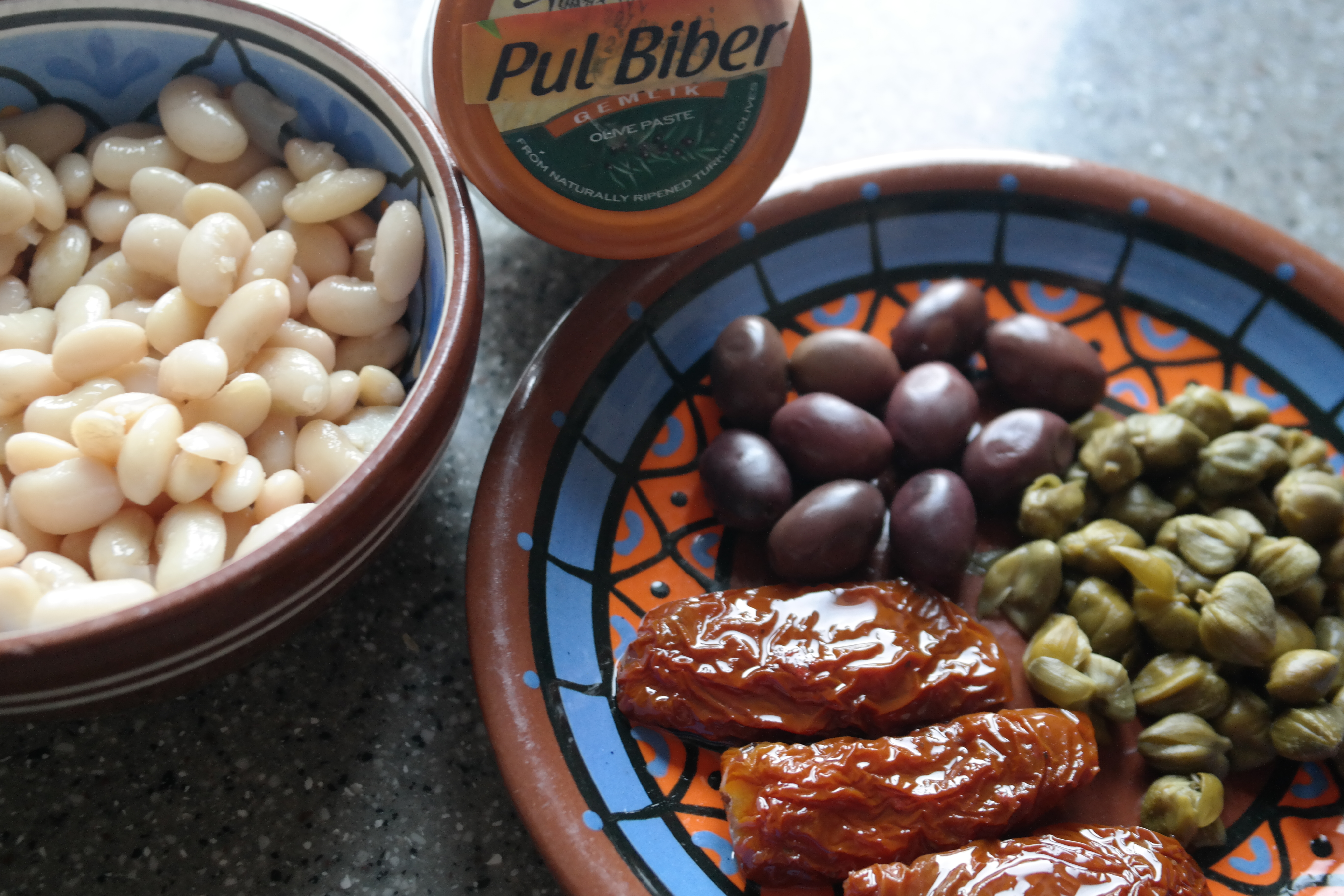
The basic ingredients for KCC’s store cupboard bean salad – white beans, sun-dried tomatoes, olives, capers and red chilli flakes

Besides the usual bags of pasta, pulses, bulgur and rice and tins of tomatoes, beans and peas and packs of dried crackers, we’ve found the following items useful to have in supply: jars of olives, capers, sun-dried tomatoes and artichokes, olive oil, soy sauce, herbs, spices, mung beans, nuts, dried fruit and seeds.

Here’s a simple store cupboard bean salad to get us started. You’ll need a tin of beans, some sun-dried tomatoes, capers and olives. Add any fresh ingredients that you can get your hands on and dress with olive oil and vinegar or soy sauce.

SAMSUNG CSC
Voila – KCC’s store cupboard bean salad

With the staples listed above you can produce a healthy meal even if you have no way of cooking food as all the ingredients are ready to eat straight away (although the mung beans will of course need a few days to be sprouted into an edible form).

Zero Waste Tip: Don’t throw your spring onion roots away, instead use them to produce more leafy stems by following this tip from The Micro Gardener so you’ll have a ready-to-pick supply on your window sill to add to salads and soups:

Screen Shot 2020-03-17 at 15.41.43

Ingredients (serves 2)

  • 250 g cooked white beans
  • 50 g capers
  • 10 black olives
  • 3 sun-dried tomatoes
  • 2 teaspoons olive oil
  • 1 teaspoon soy sauce
  • 1 teaspoon red chilli flakes (pul biber)

Method

  • Drain and rinse the beans, if using canned ones, and put in a salad bowl. Chop the sun-dried tomatoes and olives into small chunks and then add to the beans with the capers. Dress the salad with olive oil and soy sauce and sprinkle with red chilli flakes. Serve with bread or crackers.