With autumn upon us once again, it’s time for pumpkin to make a return to the table. This versatile memeber of the squash family makes for perfect comfort food for the longer, chillier nights. KCC’s back catalogue features a number of pumpkin dishes – try this cousin of lasagne made with chickpeas and mixed greens and this roasted pumpkin with halloumi for starters.
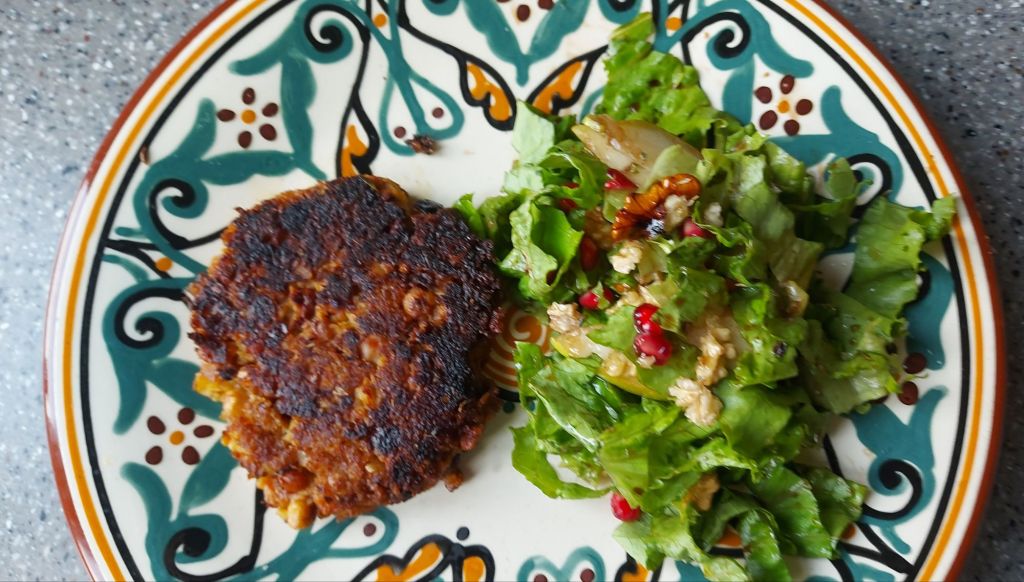
A nutty chickpea and pumpkin fritter served with a lettuce, pear, pomegranate and walnut salad
This time, we’re using the pumpkin in a fritter made with chickpeas and fine bulgur wheat. Recently, we recieved some walnuts from a friend of a friend’s dacha outside Almaty, here in Kazakhstan, which are ideal for adding a nutty edge to these chickpea and pumpkin fritters. We also added some walnuts to a fruity salad made with lettuce, pear and pomegranate seeds to accompany the fritters. Dress it with equal parts of balsamic vinegar and extra virgin olive oil.
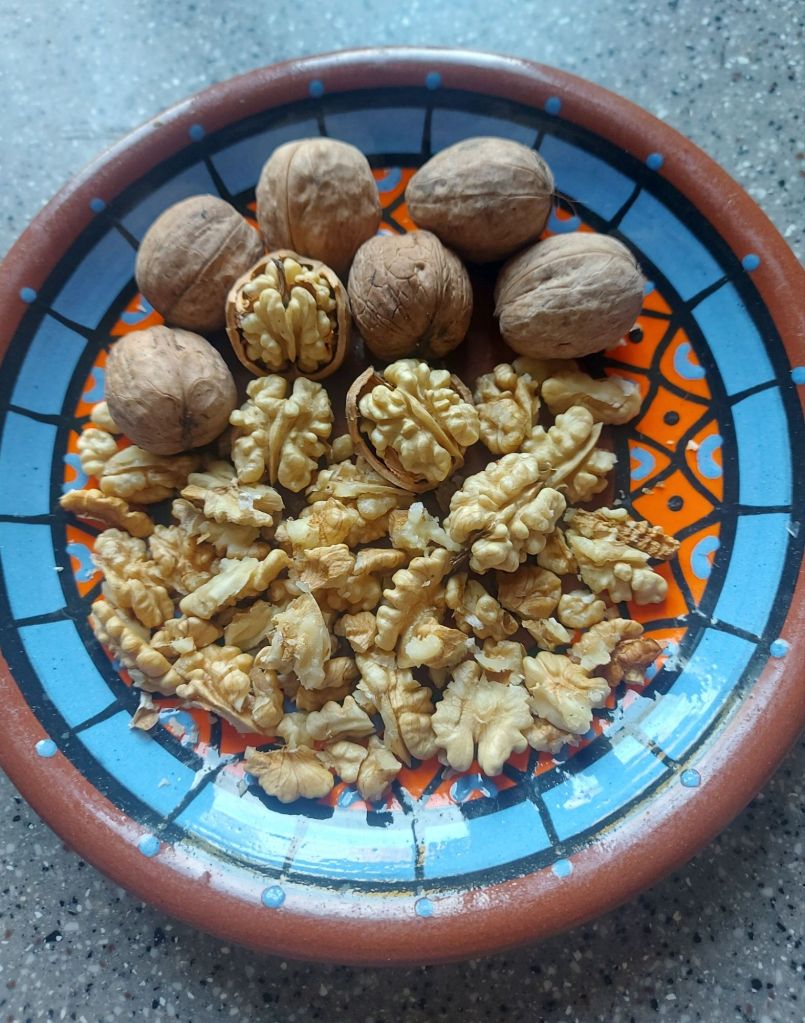
This year’s walnuts fresh from the dacha in Almaty, Kazakhstan
This year is flying by, I can’t believe it’s already Halloween and the time for Diwali, the Hindu festival of lights. The transition into winter is gaining pace with the leaves falling and the nights closing in. The summer veg has given way to pumpkins and squash – an ideal base for comfort food as the colder months approach in the northern hemisphere.
Pumpkin and white cheese pasta
Over the last month, my Insta feed has been full of variations on baked pumpkin and white cheese dishes. Many of these dishes use sprigs of rosemary but I think that the more woodsy flavour of sage makes a better partner for pumpkin.
Oven-baked pumpkin goodness
For this recipe, I used a cheese called adygeisky, a white cheese with a slightly sour taste, that originates in the mountains of the Caucasus between the Caspian and Black Seas. Feta or any other crumbly white cheese that is available in your area that holds itself together under heat will work just as well.
Ingredients (serves two)
300 g pumpkin or butternut squash
100 g white cheese (Feta, halloumi or similar)
140 g dried pasta (of your choice)
25 ml pasta cooking water
Dried sage
Drizzle of olive oil
two teaspoons pumpkin seeds
Method
Line a baking dish with baking paper. Cut the pumpkin into 1 cm cubes. Place the cheese in the middle of the dish and arrange the pumpkin cubes around it. Sprinkle with crumbled sage leaves and drizzle with olive oil.
Bake in a pre-heated oven at 200 c for 30 minutes covered with tin foil and then bake for another 10 minutes uncovered. While it’s baking, prepare the pasta (according to the packet instructions).
Mash the pumpkin with a potato masher and mix with the cheese. Add the drained pasta and 25 ml of cooking water. Stir well and serve straight away with a garnish of pumpkin seeds.
With Halloween and Thanksgiving, the two times in the year when pumpkins take centre stage, now behind us, we’ve got a simple idea to use up any leftover pumpkin you may have with this quick and easy spinach and pumpkin fritter recipe.
Spicy Spinach and Pumpkin Fritters
These fritters are totally vegan – there’s no need to add an egg to bind them together as chickpea flour and rolled oats do a great job of soaking up any extra moisture from the spinach and pumpkin and help the fritters hold their shape. They can be shallow fried on both sides in a little oil or baked in the oven for 30 minutes at 180 c. These spicy fritters taste good served with a side salad and chips or in a burger bun or pita with your choice of toppings.
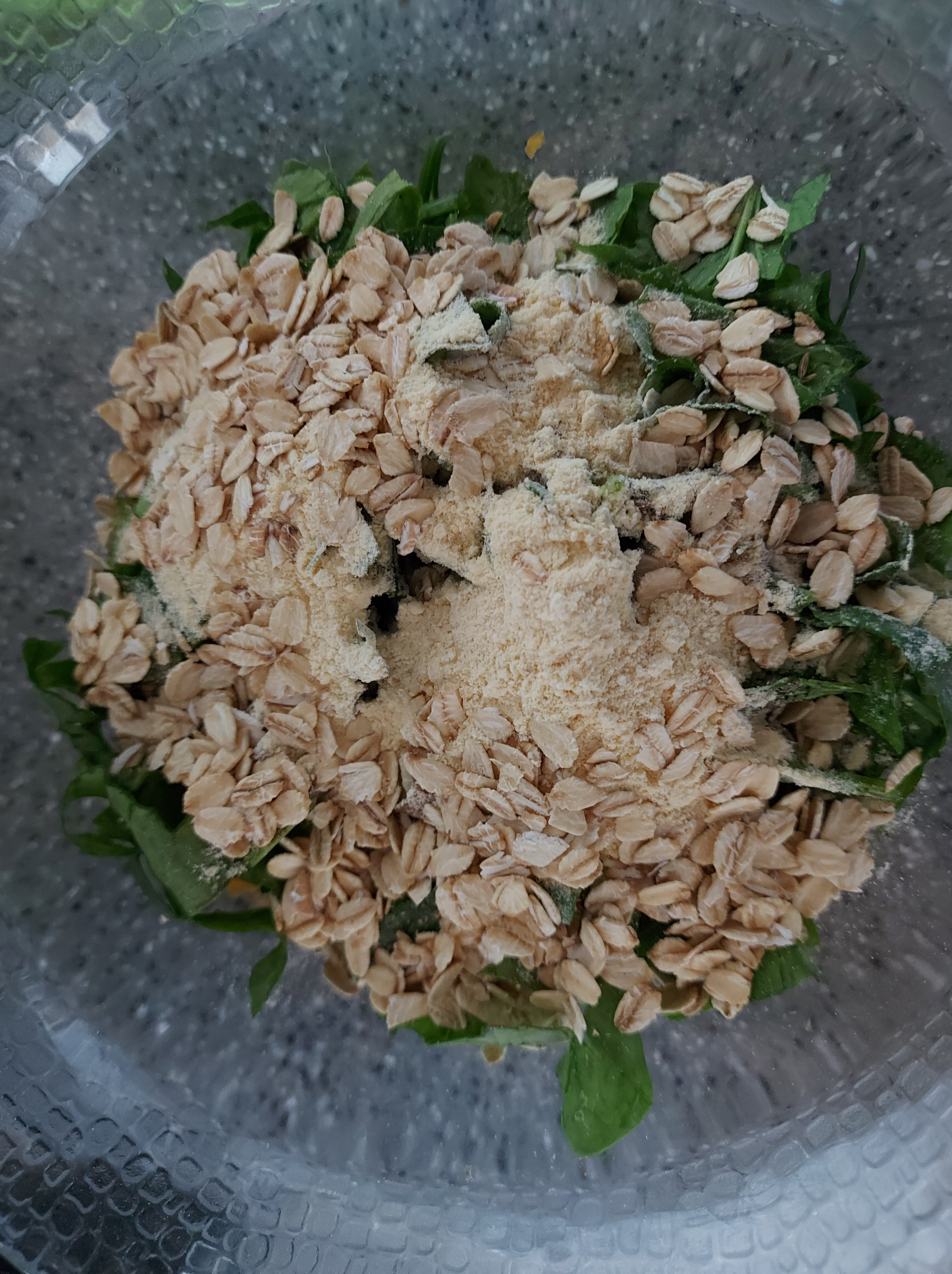
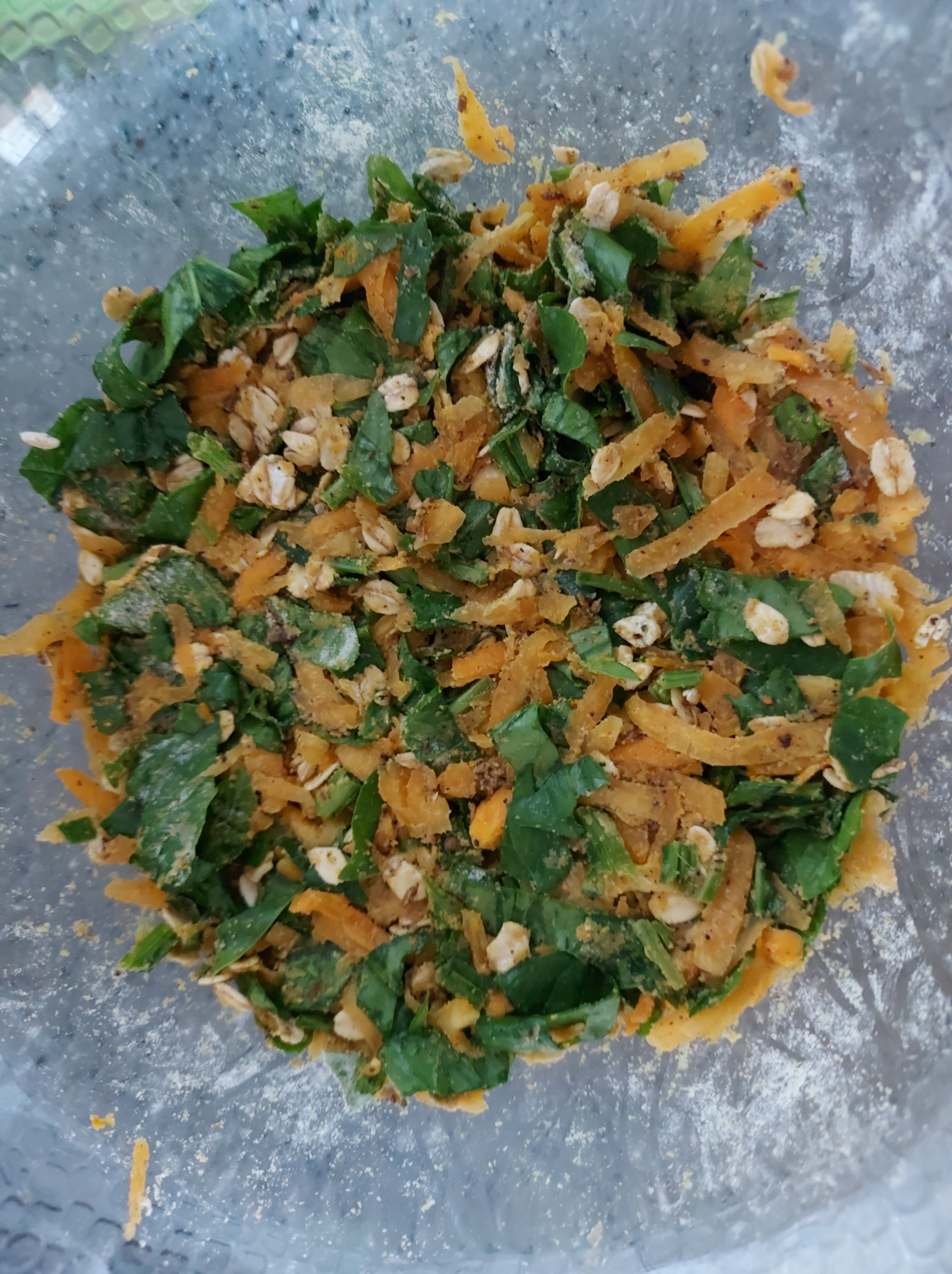
Grate the pumpkinAdd the chopped spinachAdd the herbs and spices then mix Add the rolled oats and chickpea flour Mix it all together, then put it in the fridge for two hoursForm into balls, fry on both sides, then eat!
Ingredients (Makes 6-8 fritters)
175 g grated pumpkin
50 g chopped spinach
50 g chickpea flour
25 g rolled oats
One teaspoon each of cumin seeds, coriander seeds, oregano, sumac and turmeric.
Half a teaspoon cinnamon
25 ml oil for frying
Method
Grate the pumpkin into a large bowl, add the chopped spinach and herbs and spices and combine all the ingredients. Now add the rolled oats and chickpea flour and mix well. Leave the mixture to rest for two hours in the fridge, so that any excess moisture is absorbed.
Form the mixture into small balls (about the size of a golf ball) in your hands. Heat the oil in a frying pan then turn the heat down low and add as many of the balls as will fit in the pan. Flatten them with a fish slice and after a few minutes turn them over. Cook until golden brown on both sides and then serve straight away.
Here in the northern hemisphere we’re moving into the “darker half” of the year with the nights growing longer and the mercury dropping rapidly. Halloween is just around the corner so it’s that pumpkin time once again. Here at KCC we’re always looking cut down food waste so this year we’ve got another idea of how to use up your excess squash – a vegan variant on Shepherd’s pie.
Pumpkin-topped Beany Bake a.k.a. Halloweenish Shepherd’s Pie
Halloween has its origins in the Celtic pagan festival of Samhain that marked the end of the harvest period and the onset on the dark months of winter. It was an excuse for a wild party with feasting and drinking at a time when the boundary between our world and the spiritual world was held to be at its thinnest.
Halloween, which is the evening before All Saints’ Day, 1 November, in the Christian calendar, is still the time when many remember the souls of the dead. Many Halloween traditions in North America were influenced by Irish and Scottish immigrants, harking back to the festival’s pagan roots.
The pumpkin, the round, oversized orange vegetable, native to the New World, has become a symbol of the festival. This has led to millions of pumpkins going to waste so here’s a reminder of some more of our pumpkin recipes to try and reduce the scale of this problem.
Ingredients (serves four)
500 g pumpkin
One medium onion
One stick of celery
One medium carrot
One medium green pepper
One medium courgette
Two medium tomatoes
One tablespoon tomato paste (or Turkish hot pepper paste if you can find it)
300 g cooked beans (cannellini or kidney beans 0r a mix of the two)
75 g red lentils
200 ml vegetable stock
50 ml olive oil
One teaspoon chilli flakes
One teaspoon turmeric
Method
Clean the pumpkin by removing the hard outer skin and the seeds (if there are any) and then chop into small cubes, put into a baking dish and drizzle with olive oil and mix well. Roast in a pre-heated oven at 180 c for 30 minutes, stirring occasionally.
While the pumpkin is roasting, heat the oil in a heavy-based pan and then cook the finely chopped onion over a medium heat for five minutes. Add the diced celery, green pepper and carrots and cook for another five minutes.
Mix in the cooked beans, vegetable stock and tomato paste, chilli flakes and turmeric and stir well. When it boils, add the lentils, stir and then cook for 20 minutes or so until all the liquid is absorbed. While this is cooking, top and tail the courgettes and cut into 1cm thick rounds. Thinly slice the tomato.
Remove the pumpkin and mash with a fork or a potato masher. Put the bean mixture into the bottom of the baking dish and cover with courgette rounds. Cover the courgette with tomato slices and then pack the mashed pumpkin on top of the tomatoes. Decorate with pumpkin seeds and bake at 180 c for 30 minutes or until the top of the pie begins to char.
It’s that time of year again when millions of pumpkins will be turned into jack o’ lanterns for Halloween — in the UK alone the environmental charity Hubbub estimates that some 24 million pumpkins will be carved this year but more than half, around 12.8 million, will go uneaten.
A scary 58% of the people surveyed by Hubbub were unaware that you can eat pumpkins. This October, we’ve been highlighting squash recipes on Knidos Cookery Club in the hope that more pumpkin ends up on our plates rather than on the rubbish tip.
Mix the flour and oil together and then slowly add the cold water and knead until you have a smooth, elastic dough. Wrap in clingfilm and leave in the fridge while preparing the filling.
Heat the oil in a frying pan and add the cumin seeds. When they start to sizzle add the finely chopped onion. Peel the pumpkin, remove the seeds (save these to put on the samsa) and cut into 1 cm cubes.
Fry the onion for five minutes and then add the pumpkin cubes. Stir fry for five more minutes and then add the stock and simmer for 20 minutes until the pumpkin is cooked. Allow to cool and then mash to a smooth paste with a fork or a potato masher.
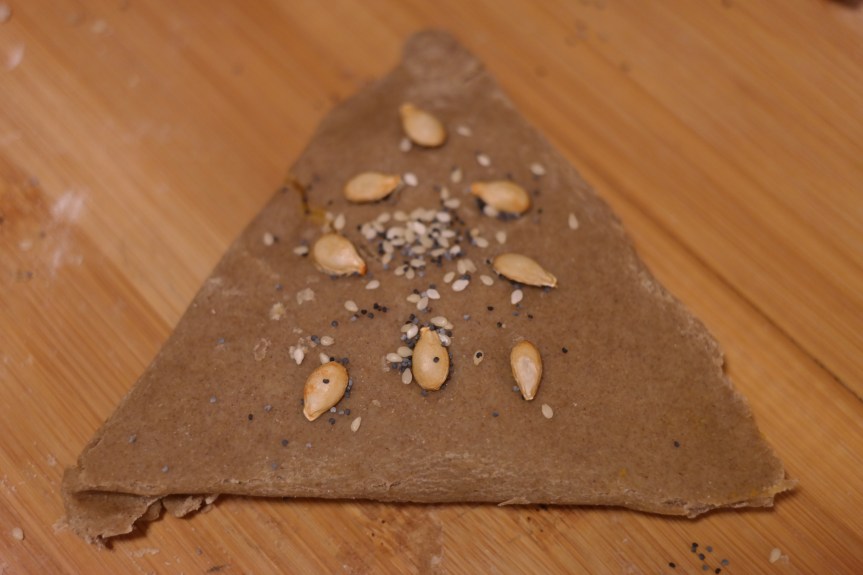
Roll the dough to a 2 mm thickness and then fold it over to produce a cylinder of dough. Break this dough into six pieces. Flatten the dough ball into a disc with the palm of your hand until you have a 1 mm thick circle.
Put a triangle of filling in the middle of the circle and then fold over the edges to make a triangle shape. Brush with olive oil and arrange the pumpkin, sesame and poppy seeds on top of the samsa. Bake in the oven at 200 c for 25 -30 minute until the samsa turns a darker brown colour.
The Knidos Cookery Club kitchen was forced to decamp to Bishkek, Kyrgyzstan this week as an unfolding political crisis rocked this Central Asian state that neighbours Kazakhstan.
Making a meal out of it…
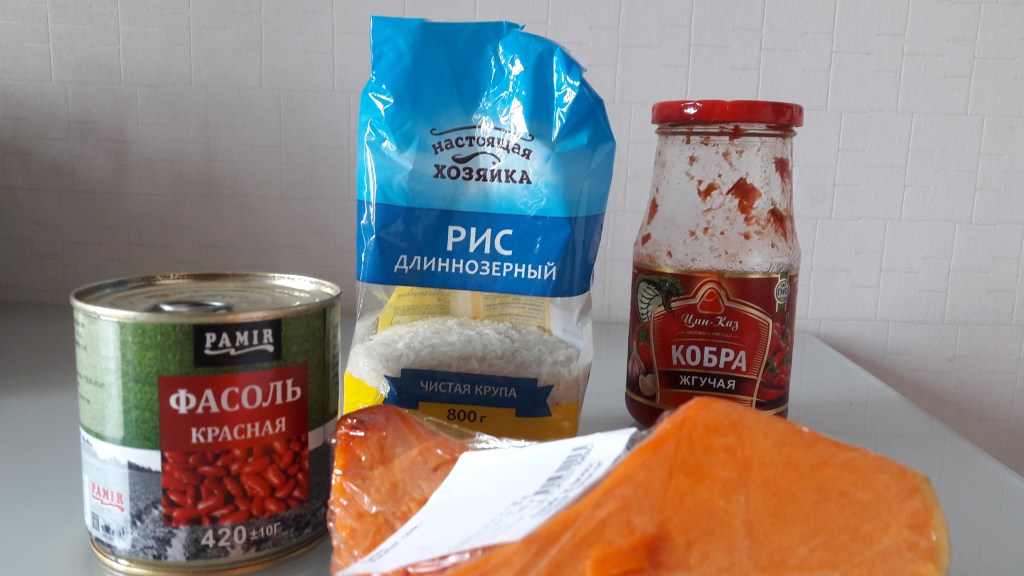
In the spirit of the recently revived 90s TV cookery show, Ready Steady Cook, we grabbed a selection of items after a quick dash around the nearest supermarket and came up with a red bean and pumpkin chilli, continuing our October Squashfest theme.
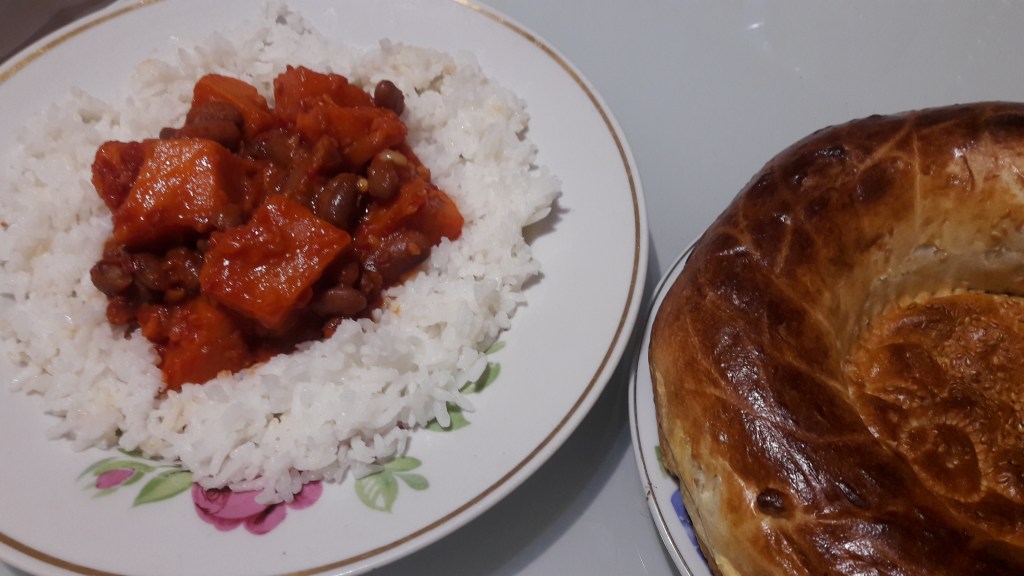
Hasty tasty pumpkin chilli with Kyrgyz naan
We had to opt for a bit of convenience this time as it’s hard cooking in a strange kitchen, so we bought a jar of a spicy tomato sauce called Cobra, and used ready cooked red beans. If you have more time on your hands, then substitute the Cobra with KCC’s very own spicy tomato sauce and soak some dried beans overnight.
Ingredients (Makes 3-4 servings)
500 g pumpkin
250 g spicy tomato sauce
250 g cooked red beans
50 ml olive oil
Method
Heat the olive oil in a frying pan and then add the pumpkin, chopped into 2 cm x 1 cm cubes, and stir fry for five minutes over a medium heat.
Add the spicy tomato sauce, stir well and simmer for 20 minutes or so until the pumpkin is cooked but firm.
Add the red beans and stir well and heat through. Serve with boiled rice and some crusty bread.
With the temperatures tumbling in the second half of September, thoughts turned to the opening of the pumpkin season, which traditionally starts on 1 October in the world of Knidos Cookery Club.
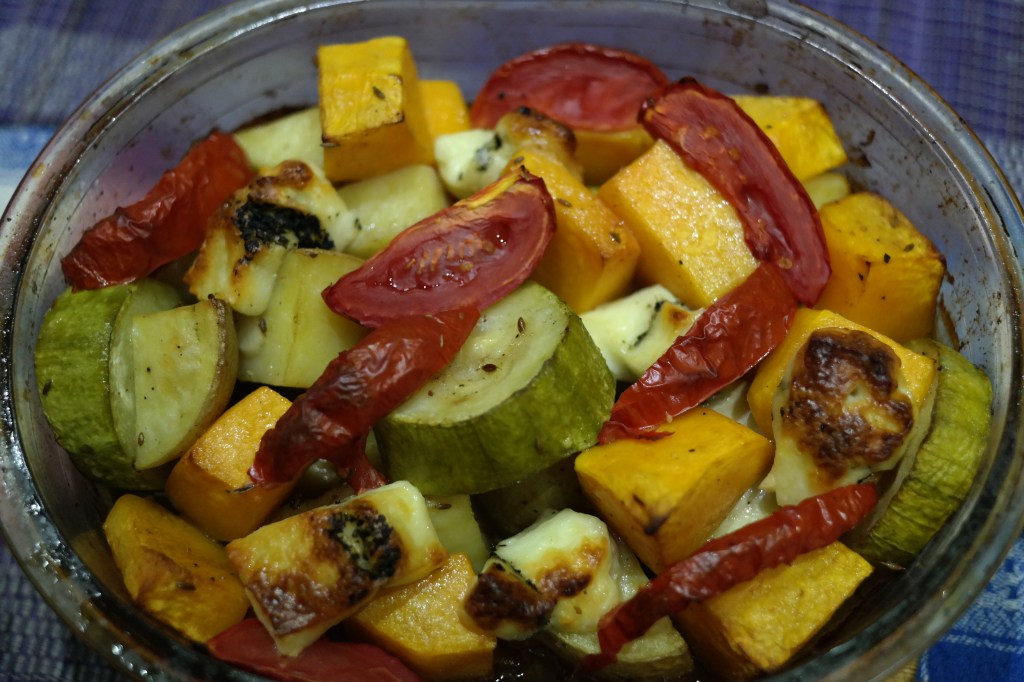
Those autumn hues – Roast butternut squash with courgette, halloumi and tomato
There’s a definite chill in the air and we’ve even got the heating coming on two weeks ahead of schedule here in Almaty, Kazakhstan. So, it’s certainly time for some autumn comfort food.
Almaty in all its autumnal splendour, Kazakhstan
We’ve combined the first butternut squash of the season with the summer’s last stand of courgettes and tomatoes and some minty halloumi cheese to come up with a roast that conjures up the pale green, orange and red hues of the falling leaves synonymous with this time of year.
Ingredients (serves 3-4 people)
300 g Butternut squash
300 g Courgettes (Zuchinni)
Three plum (Roma) tomatoes
200 g halloumi
One teaspoon cumin seeds
50 ml olive oil
Method
Cut the butternut squash into 2 cm cubes – you can peel the butternut or leave the skin on if you wish. Cut the courgette into 1 cm slices and cut in half to make semi-circles.
Put them in an ovenproof dish, sprinkle the cumin seeds and pour the olive oil over the vegetables and mix well. Cover the dish with tin foil and cook in the oven at 150 c for one hour. Give the veggies a stir after 30 minutes
Remove the foil and stir well. Add the tomatoes, sliced into six wedges and the halloumi, cut into 2 cm cubes. Place these on top of the squash and courgettes and bake at 150 c for another 30 minutes or until the cheese starts to look charred.
Serve with a flat bread such as pita or chapati. You can bake some jacket potatoes in the oven with the roast veggies to make the meal more substantial or serve with pasta, rice, bulgur wheat or pearl barley.
On these chilly, wintry nights there’s nothing better than a bowl of dhal, the Indian subcontinent’s beloved lentil-based comfort food, to warm you up. We’ve added some chunks of roasted pumpkin that blend perfectly with the red lentils, whilst adding a hint of sweetness to the rich, spicy blend.
KCC’s pumpkin enriched red lentil dhal
In Sri Lanka, where Knidos Cookery Club has just been on a foodie fact-finding mission, dhal (also spelt dal or daal) is a mainstay of the island’s signature curry and rice dish. It’s served any time of the day – it was particularly good served with string hoppers, little nests of steamed rice noodles, and coconut sambol (grated coconut with chillies and lime juice) – a popular breakfast on the island.
Breakfast Sri Lankan style – string hoppers with coconut sambol and red lentil dhal in the background
Dhal can be a meal on its own when served with rice or flatbreads, or try it alongside a selection of your favourite vegetable curries. It’s a dish that tastes even better the next day when the spices have been left over night, allowing the different flavours to mix and mingle.
Ingredients (makes 4-6 servings)
125 g red lentils
200 g roasted pumpkin
250 ml water or vegetable stock
50 ml coconut milk
200 g tomatoes
One medium onion
One teaspoon each of mustard seeds, cumin seeds, coriander seeds, cloves and chilli flakes
Two teaspoons turmeric
1 cm knob of ginger
One garlic clove
One cinnamon stick
One star anise
One bunch fresh coriander
50 ml olive oil
Method
Roast the chunks of pumpkin in a hot oven at 200 c for 20 minutes. While the pumpkin is cooking, heat the oil in a heavy based pan and add the mustard seeds. When the seeds begin to pop, turn the heat down and add the chopped onions, ginger and garlic and the other spices and stir well. Cook for 10 minutes over a medium heat.
Wash the lentils until the water runs clear and then add them to the onion mix with the vegetable stock and chopped tomatoes, stir and cook until all the liquid is absorbed. Add the pumpkin chunks and coconut milk. Cook over a low heat until it starts to bubble. When cooked, remove the cinnamon stick and star anise. Garnish with the chopped coriander and serve with rice and/or a flat bread such as chapati or pita.
Seasoned greetings from Knidos Cookery Club – we’d just like to take this opportunity to thank all our readers, old and new, in 2019 and wish you a great holiday season and all the best for the New Year.
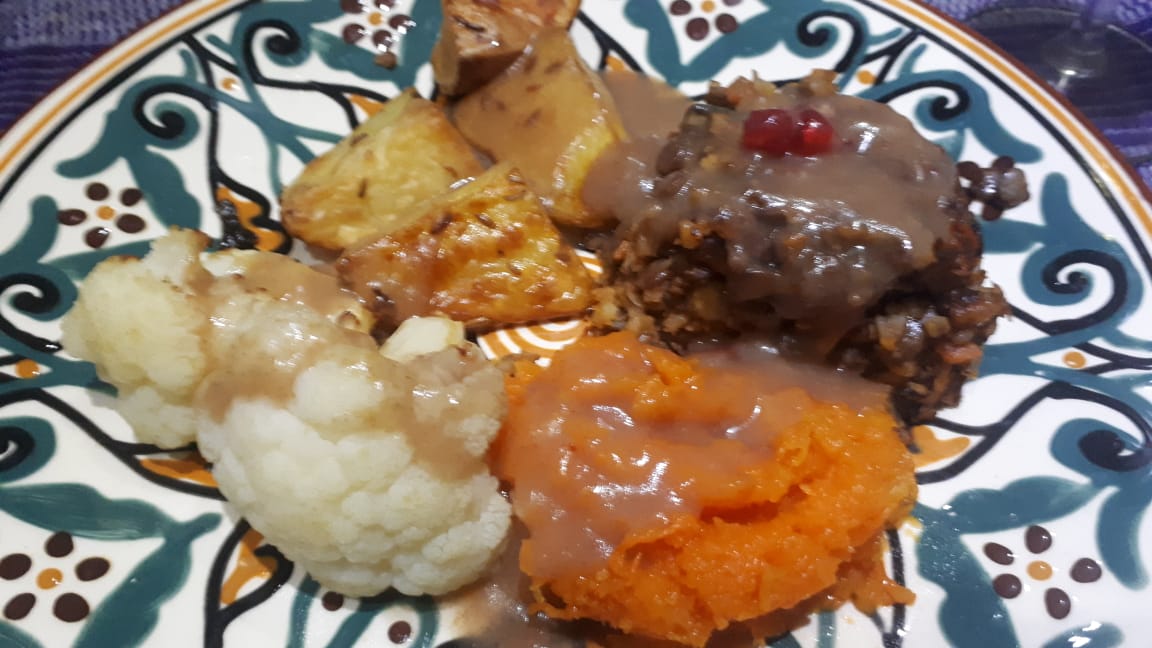
With the winter solstice, Hanukkah, Christmas and New Year all upon us, we’d like to share this nutty lentil bake recipe with you. It makes a great centrepiece for a festive feast.
We served it with roast potatoes, charred cauliflower and smashed pumpkin and then poured a rich pomegranate sauce over everything.
Ingredients (for 6 servings)
150 g green lentils
One carrot
One medium-sized onion
One stick of celery
75 g walnuts
75 g coarse bulgur
Two tablespoons tomato paste
Two teaspoons cumin seeds
One teaspoon coriander seeds
One teaspoon chilli powder
Half a teaspoon cloves
50 ml olive oil
250 ml vegetable stock
25 g chickpea flour
Pomegranate seeds
Method
Cook the lentils in the vegetable stock until most of the liquid has been soaked up. The lentils should still be firm, not mushy. Stir in the bulgur and leave to stand for 30 minutes.
Heat the olive oil in a heavy based pan and add the spices. Cook for a few minutes and then add the chopped onions, grated carrot and thin slices of celery and cook for 10 minutes, stirring regularly.
Combine the vegetable mix with the lentils. Stir in the tomaro paste. Toast the chopped walnuts for 5 minutes then add to the lentil mix. Finally add the chickpea flour to thicken the mix.
Pack the mix into a greased baking dish and cook for 30 minutes in an oven pre-heated to 180 c. Garnish with pomegranate seeds and then cut the loaf into 6 slices and serve.
On a recent flying visit to Glasgow, KCC dropped into Ox and Finchin the city’s West End for a bite to eat. This Sauchiehall Street eatery offers a range of tapas-style sharing plates – we opted for the giant couscous with grilled halloumi, a plate of braised leeks, beetroot hummus, grilled baby gem lettuce and, with this being Glasgow, chips of course.
A spicy bowl of zhug sauce
This time round, we’ll be recreating the giant couscous dish, made with ptitim, toasted pearls of wheat and semolina, first cooked up in Israel in the 1950’s when rice was in short supply in the early days of the Israeli state. This couscous relative was dubbed Ben-Gurion rice after Israel’s first prime minister. After scouring our local supermarkets, ptitim proved to be in short supply so we’ve replaced them with mung beans!
Mung beans, zhug, halloumi, pomegranate and pumpkin seeds
Key to this salad is the dressing, a piquant sauce called zhug, which was brought to Israel by emigrées fleeing persecution in Yemen in the late 1940s. This spicy cousin of Italy’s milder pesto and Mexico’s equally fiery salsa verde, is served often alongside falafel and hummus. The name is said to be derived from mas-chag, the name of the grinding stone traditionally used to crush the spices and herbs into a paste.
Ingredients (serves 2-4)
100 g mung beans
125 g halloumi
Sprinkling of pomegranate seeds
Sprinkling of roasted pumpkin seeds
For the zhug sauce:
One bunch fresh coriander
One bunch fresh parsley
One garlic clove
Two teaspoons red chilli flakes
One teaspoon black peppercorns
One teaspoon cumin seeds
One teaspoon coriander seeds
One teaspoon cardamom seeds
Juice of half a lemon
25 ml olive oil
Method
To make the zhug sauce, put all the ingredients except for the olive oil in a blender and give it quick blitz. Don’t overdo the blending as you want a slightly chunky texture. Now slowly add the olive oil, blitzing until it is mixed in with the other ingredients. Put in a glass jar – it should keep for a couple of weeks in the fridge.
Cook the mung beans until tender. While the mung beans are cooling, grill the halloumi until a golden-brown colour. Then mix the cooled mung beans with a tablespoon of zhug, arrange the grilled halloumi on top, sprinkle with pumpkin and pomegranate seeds and serve with a selection of your favourite meze dishes.











 Knidos Cookery Club