Can the 3 Cs, Carrot, Coconut and Coriander, help combat Coronavirus?

12 March 2020

With the novel coronavirus (COVID-19) pandemic showing no sign of abating, we’ve come up with a soup that is full of nutritious ingredients that can boost your immune system. A healthy diet combined with regular exercise is recommended to help strength your body’s ability to fight off infection.

SAMSUNG CSC
KCC’s 3 Cs soup – Carrot, Coconut and Coriander

While our 3 Cs soup may not offer you guaranteed protection from coronavirus, it can certainly enhance your health. Its combination of anti-oxidant-packed carrots, garlic and onions, fibre-rich coconut and coriander and the anti-inflammatory properties of turmeric and ginger, should leave you feeling bolstered up and ready to face the crisis with renewed vigour.
SAMSUNG CSC
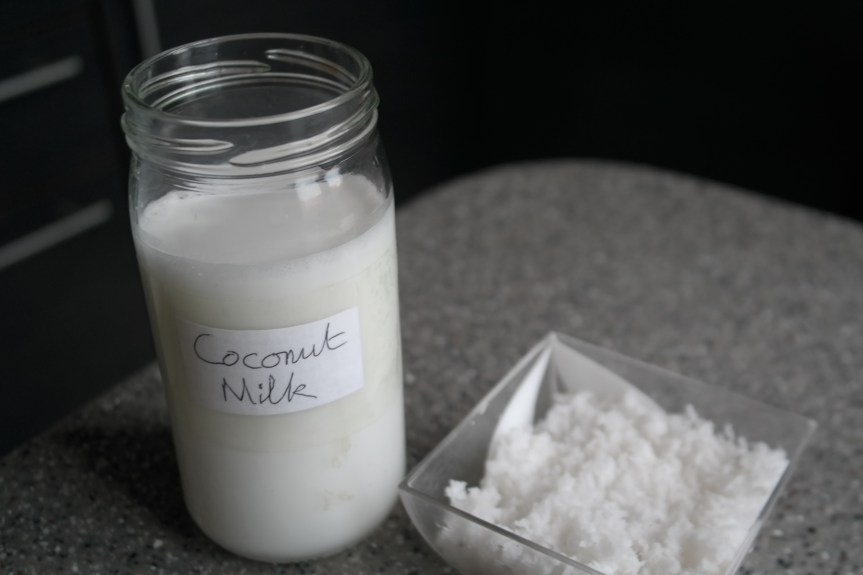
KCC’s homemade coconut milk

Zero Waste Tip: Coconut milk is easy to make at home – you don’t need to buy it in tins. Take 50 g of dried (desiccated) coconut  and cover with 200 ml of hot water. Leave to stand for an hour or so. Liquidise with a hand blender or in a liquidiser on a low setting.

Pour the resulting mix through a fine sieve, pressing the coconut to produce more liquid – you should end up with about 200 ml of milk. Use the leftover coconut mass in soups, burgers, dhals, cakes, or smoothies. The coconut milk will keep for three to four days in the fridge – shake well before use as the cream will settle on the top.

Ingredients (for 4 servings)

  • 500 g carrots
  • 250 ml coconut milk
  • 50 g dried coconut
  • 2 medium onions
  • 2 garlic cloves
  • 1 cm knob of ginger
  • 2 teaspoons coriander seeds
  • 1 teaspoon ground turmeric
  • 50 ml olive oil
  • 500 ml vegetable stock
  • Fresh coriander to garnish

Method

  • Heat the oil in a heavy-based pan and then add chopped onion, garlic ginger, turmeric and ground coriander seeds. Stir and cook for five minutes over a medium heat and then add the finely grated carrots. Reduce the heat and cook for 5 more minute, stirring frequently.
  • Stir in the coconut milk and bring to a simmer, stirring occasionally. Now add the dried coconut and the rest of the stock. Allow the soup to simmer over a low heat for 20 minutes and then blend to a smooth consistency in a liquidiser or with a hand blender. Garnish with fresh coriander leaves before serving.
  • Don’t forget to wash your hands thoroughly before preparing and eating food.
 

Red Bean Hotpot

6 February 2020

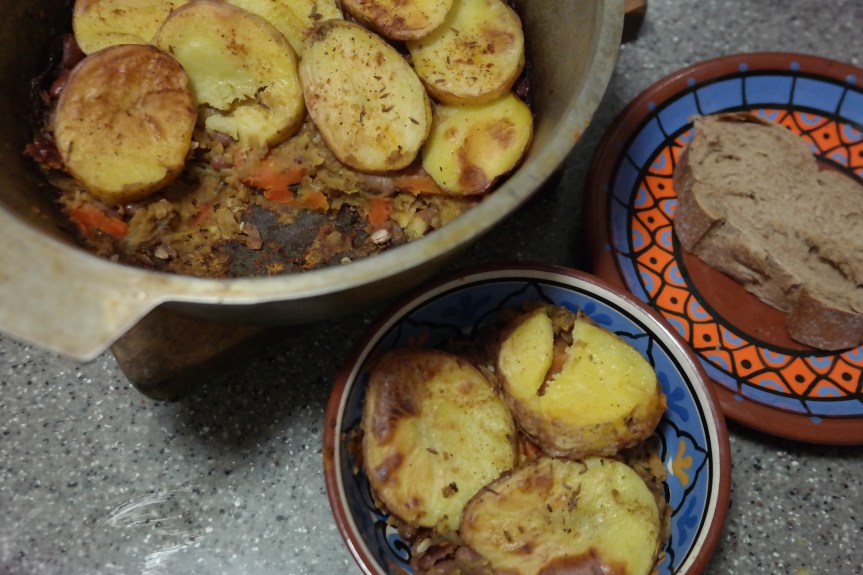
This time round on Knidos Cookery Club, we’re turning our attention to a winter classic from the UK – the Lancashire Hotpot. Our spiced up, veggie-friendly version replaces the meat traditionally used with red beans and red lentils and is topped off with sliced potatoes, helping to retain the hearty, comforting hit of the original.

SAMSUNG CSC

This casserole originated in the north-west of England as a dish that could be left  cooking slowly in the oven over a low heat while families worked from home spinning thread.

The term hotpot is thought to derive from the mixture of ingredients used, although it’s also claimed to be named after the clay pot originally used to cook the dish.  It’s not to be confused with the Chinese Hotpot that uses a steaming pot of stock placed in the centre of the table to cook ingredients.

Ingredients (serves 2)

  • 125 g red lentils
  • 250 g cooked red beans
  • 3 medium potatoes
  • 2 medium carrots
  • 1 medium onion
  • 1 stick of celery
  • 1 garlic clove
  • 50 ml olive oil
  • 600 ml vegetable stock
  • 1 teaspoon each of mustard seeds, coriander seeds, fenugreek seeds, cumin seeds, chilli flakes, turmeric
  • 1 cinnamon stick
  • 1 bay leaf

Method

  • Heat the olive oil in a casserole dish or an ovenproof pan. Fry the onions, garlic, ginger and spices all together for five minutes or so over a medium heat. Add the diced carrot and celery and cook for five more minutes. Add the lentils and 300 ml of stock and cook over a low heat until the water is absorbed and the lentils are cooked but not mushy.
  • While this is cooking, boil the potatoes (cut into 1/2 cm thick slices) for 10 minutes, pour off the water and cover with cold water. Add the cooked beans and the rest of the stock to the lentils and stir well. Place the potato slices in layers over the top of the stew and pour some olive oil over them.
  • Put the casserole dish or pan into an oven heated to  200 c and cook for 30 minutes at this temperature until the potato slices are starting to go a golden brown colour. Serve immediately in individual bowls with a hunk of bread.

Pump up the Dhal

20 February 2020

On these chilly, wintry nights there’s nothing better than a bowl of dhal, the Indian subcontinent’s beloved lentil-based comfort food, to warm you up. We’ve added some chunks of roasted pumpkin that blend perfectly with the red lentils, whilst adding a hint of sweetness to the rich, spicy blend.

20191203_221509
KCC’s pumpkin enriched red lentil dhal

In Sri Lanka, where Knidos Cookery Club has just been on a foodie fact-finding mission, dhal (also spelt dal or daal) is a mainstay of the island’s signature curry and rice dish. It’s served any time of the day – it was particularly good served with string hoppers, little nests of steamed rice noodles, and coconut sambol (grated coconut with chillies and lime juice) – a popular breakfast on the island.

SAMSUNG CSC
Breakfast Sri Lankan style – string hoppers with coconut sambol and red lentil dhal in the background

Dhal can be a meal on its own when served with rice or flatbreads, or try it alongside a selection of your favourite vegetable curries. It’s a dish that tastes even better the next day when the spices have been left over night, allowing the different flavours to mix and mingle.

Ingredients (makes 4-6 servings)

  • 125 g red lentils
  • 200 g roasted pumpkin
  • 250 ml water or vegetable stock
  • 50 ml coconut milk
  • 200 g tomatoes
  • One medium onion
  • One teaspoon each of mustard seeds, cumin seeds, coriander seeds, cloves and chilli flakes
  • Two teaspoons turmeric
  • 1 cm knob of ginger
  • One garlic clove
  • One cinnamon stick
  • One star anise
  • One bunch fresh coriander
  • 50 ml olive oil

Method

  • Roast the chunks of pumpkin in a hot oven at 200 c for 20 minutes. While the pumpkin is cooking, heat the oil in a heavy based pan and add the mustard seeds. When the seeds begin to pop, turn the heat down and add the chopped onions, ginger and garlic and the other spices and stir well. Cook for 10 minutes over a medium heat.
  • Wash the lentils until the water runs clear and then add them to the onion mix with the vegetable stock and chopped tomatoes, stir and cook until all the liquid is absorbed. Add the pumpkin chunks and coconut milk. Cook over a low heat until it starts to bubble. When cooked, remove the cinnamon stick and star anise. Garnish with the chopped coriander and serve with rice and/or a flat bread such as chapati or pita.

KCC’s Nutty Festive Fare

22 December 2019

Seasoned greetings from Knidos Cookery Club – we’d just like to take this opportunity to thank all our readers, old and new, in 2019 and wish you a great holiday season and all the best for the New Year.

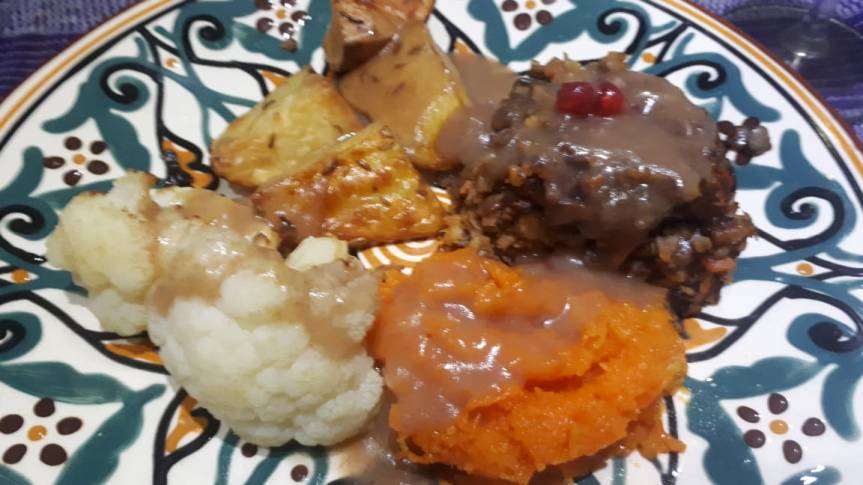
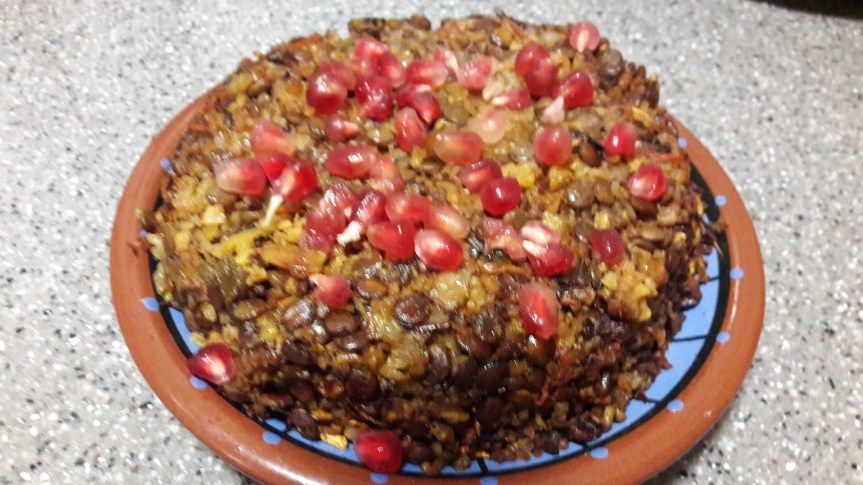
With the winter solstice, Hanukkah, Christmas and New Year all upon us, we’d like to share this nutty lentil bake recipe with you. It makes a great centrepiece for a festive feast.

We served it with roast potatoes, charred cauliflower and smashed pumpkin and then poured a rich pomegranate sauce over everything.

Ingredients (for 6 servings)

  • 150 g green lentils
  • One carrot
  • One medium-sized onion
  • One stick of celery
  • 75 g walnuts
  • 75 g coarse bulgur
  • Two tablespoons tomato paste
  • Two teaspoons cumin seeds
  • One teaspoon coriander seeds
  • One teaspoon chilli powder
  • Half a teaspoon cloves
  • 50 ml olive oil
  • 250 ml vegetable stock
  • 25 g chickpea flour
  • Pomegranate seeds

Method

  • Cook the lentils in the vegetable stock until most of the liquid has been soaked up. The lentils should still be firm, not mushy. Stir in the bulgur and leave to stand for 30 minutes.
  • Heat the olive oil in a heavy based pan and add the spices. Cook for a few minutes and then add the chopped onions, grated carrot and thin slices of celery and cook for 10 minutes, stirring regularly.
  • Combine the vegetable mix with the lentils. Stir in the tomaro paste. Toast the chopped walnuts for 5 minutes then add to the lentil mix. Finally add the chickpea flour to thicken the mix.
  • Pack the mix into a greased baking dish and cook for 30 minutes in an oven pre-heated to 180 c. Garnish with pomegranate seeds and then cut the loaf into 6 slices and serve.

KCC’s Corn and Coconut Chowder


17 October 2019

This time round on Knidos Cookery Club we’re cooking up a chowder, a creamy soup crammed with fresh, seasonal vegetables that’s ideal for the chillier nights of autumn.

20191015_221900.jpg
A warming bowl of KCC’s Corn and Coconut Chowder

These days chowder is a name given to any creamy soup that has been thickened with the addition of flour or crumbled crackers. The name of this soup is thought to come from chaudron, an old French word for a cauldron – it was originally brought to north America by sailors who made it as a fish soup thickened with ship’s biscuit and cream.

20191015_204118.jpg
The Holy Trinity of autumn soup veg

Some versions use a tomato base, but our version is based on the creamy base and uses coconut milk and chickpea flour to make the sauce. We’ve added some of the last of this year’s corn on the cob and some new season pumpkin, that vegetable that is a harbinger of the colder months of the year. Combined with the holy trinity of soup bases – onion, celery and carrot and a potato, this chowder, garnished with lemon zest and celery leaves, is a soup to savour.

Ingredients (for 3-4 servings)

  • One large potato
  • Two large carrots
  • Three sticks of celery
  • One medium-sized onion
  • One corn-on-the cob
  • 200 g pumpkin
  • One lemon
  • One bay leaf
  • Two teaspoons dried thyme
  • 50 ml olive oil
  • Three tablespoons chickpea flour
  • One litre coconut milk (50 g desiccated coconut + one litre of water).

Method

  • Make the coconut milk first by blending the dried coconut with the water using a hand-held blender for two minutes. Strain through a sieve separate the liquid  from the leftover coconut, the latter can be saved and used to make energy balls, biscuits, cakes or added to your breakfast muesli.
  • Heat the olive oil in a heavy-based pan and then add the sliced onion and fry for five minutes over a medium heat. Add the diced carrot and celery and cook for another five minutes. Now add the chickpea flour and dried thyme and mix well. Now add the pumpkin, potatoes and coconut milk and a bay leaf.
  • Cook over a low heat, stirring occasionally, until the potato is just cooked. Add the juice of the lemon and half the lemon zest and stir well. Cook for a few more minutes and then remove the bay leaf and serve in bowls and garnish with the rest of the lemon zest and chopped celery leaves.


KCC’s Buckwheat Cottage Pie

31 October 2019

This time round on Knidos Cookery Club we’re using buckwheat, a cereal (or rather a pseudocereal) that has thus far been neglected on our site.  Buckwheat’s name is misleading as it’s not really wheat, but rather a plant that is more closely related to sorrel, knotweed and rhubarb, which makes it suitable for those of you on a gluten-free diet.

20191011_222708.jpg
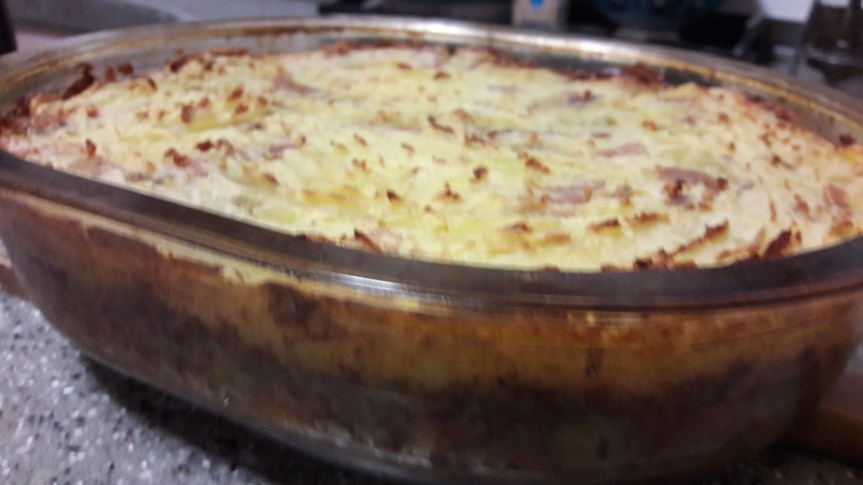
KCC’s Buckwheat Cottage Pie

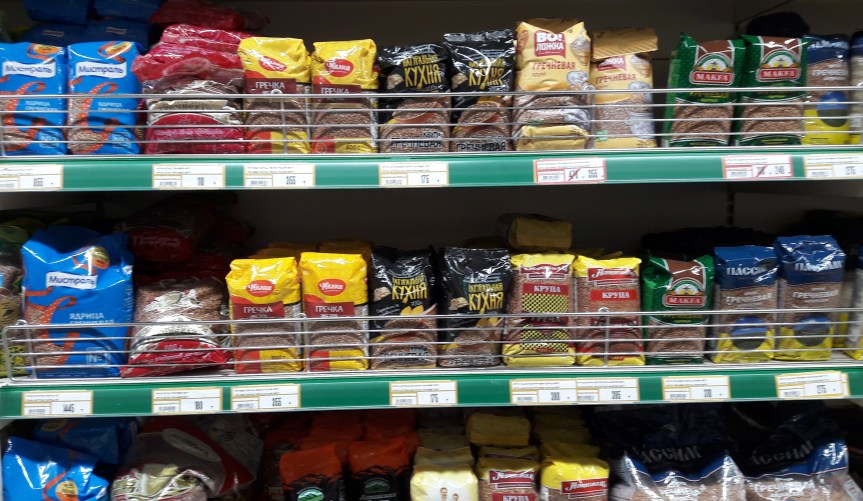
Buckwheat, or grechka, is wildly popular across the countries of the former Soviet Union and eastern Europe – you can find whole aisles in supermarkets dedicated to it. The groats are used to make porridge and the flour to make pancakes. In Japan, the flour is  used to make soba noodles.

20191015_113946.jpg
Row upon row of buckwheat groats in a supermarket in Almaty, Kazakhstan

We’ve taken that classic British comfort food, Cottage Pie, and replaced the meat with a mix of the nutty-tasting buckwheat and vegetables all topped with a thick slab of mashed potato – perfect fodder for the colder autumn and winter evenings and ready to eat in around an hour.

Cottage pie and two veg

Ingredients (makes 4 servings)

  • 150 g buckwheat groats
  • One carrot
  • One medium-sized onion
  • One green pepper
  • Three medium-sized tomatoes
  • Three medium-sized potatoes
  • Six small dried mushrooms
  • 25 ml olive oil
  • 500 ml vegetable stock
  • One teaspoon sumac
  • One teaspoon chilli flakes
  • Two teaspoons dried thyme
  • One bay leaf

Method

  • Heat the olive oil in a heavy-based pan and add the minced onion. Cook for five minutes over a medium heat and then add the diced carrot and green pepper and cook for another five minutes, stirring occasionally. Add the sumac, chilli flakes and thyme and the chopped tomatoes and diced mushrooms.
  • Reduce the heat and cook for another 10 minutes then add the buckwheat and stir well. Pour the stock over the mixture, add the bay leaf and simmer for 20 minutes or so or until the moisture has been absorbed. While this is bubbling away, cook the potatoes, drain and then mash them.
  • Put the buckwheat mixture in the bottom half of a baking dish and then cover the mix with a layer of mashed potato. Run a fork across the top of the potato to get a ridged finish and than bake at 180 c for 30 minutes. Serve hot with roasted or  steamed, seasonal vegetables such as  cauliflower and pumpkin.


Putting on the Piyaz: Turkey’s Versatile White Bean Salad

2 August 2019

Knidos Cookery Club has just arrived back at its home base on the Datça Peninsula in Turkey. We’re going to soak up some more culinary inspiration from the place where the Mediterranean and Aegean Seas meet around the ancient Greek settlement of Knidos.

20190802_125534-e1564740306182.jpg
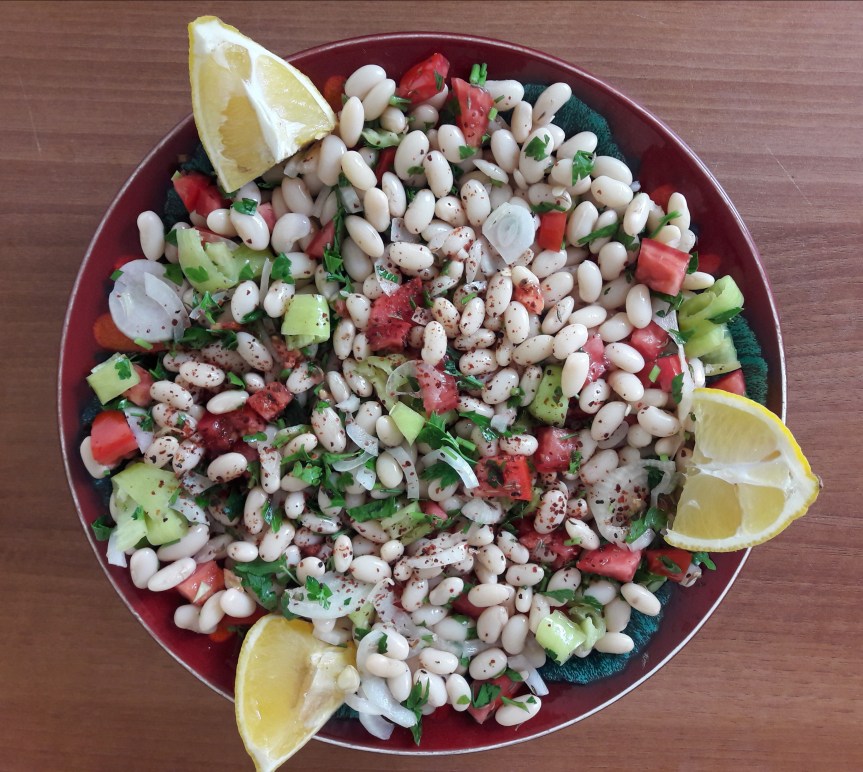
Piyaz – Turkish White Bean salad

To celebrate being back in Turkey, we’ve prepared a piyaz salad, one of the classic dishes of Turkish cooking, that combines small white beans with some readily available staples of the local kitchen; namely tomatoes, onions, green peppers, parsley and lemons.

20190801_160820.jpgTurkey’s çarliston peppers aka banana peppers
The secret of this dish is in getting the beans just right – not too mushy but not too firm either. They need a good, long overnight soak and some slow cooking to achieve the required consistency.

The dressing used varies across Turkey from the basic lemon, olive oil and apple vinegar one favoured in Istanbul to the tahini-infused one from Antalya, paying tribute to the Arabian influence from the Middle East on the city’s cuisine. We have opted for the creamy, nutty taste of the latter.

Ingredients (makes 3-4 servings)

  • 200 g dried haricot beans or other small white beans soaked overnight
  • 1 medium-sized plum tomato
  • 1 long, green pepper (e.g. çarliston pepper – see photo above)
  • 1 small onion
  • 2 lemons
  • Small bunch of parsley
  • 50 ml olive oil
  • 50 ml apple vinegar
  • 25 ml tahini
  • 2 teaspoon dried thyme
  • 1 teaspoon red chilli flakes
  • Optional: Two boiled eggs or one avocado

Method

  • Cook the beans over a low heat until tender but not starting to go mushy. When cooked, drain off the cooking water, reserving 100 ml to make the dressing. Pour the vinegar and sprinkle the thyme over the beans and leave to cool.
  • After leaving for a few hours, add the vinegar the beans were soaking in to the reserved bean juice and then blend with the olive oil, tahini and the juice of one lemon to make a smooth sauce.
  • Finely dice the tomato, slice the pepper and onions into rings and chop the parsley finely. Add these to the beans.
  • Cover the salad and put it in the fridge for a few hours. Serve with wedges of the second lemon and sprinkle the red chilli flakes over the salad.
  • Just before serving, pour the dressing over the bean salad and season with black pepper and gently mix all the ingredients together with a wooden spoon.
  • You can garnish with quarters of boiled egg if you wish or, for a vegan twist, you can garnish the salad with slices of avocado.

Make Time for Tabbouleh

2 May 2019

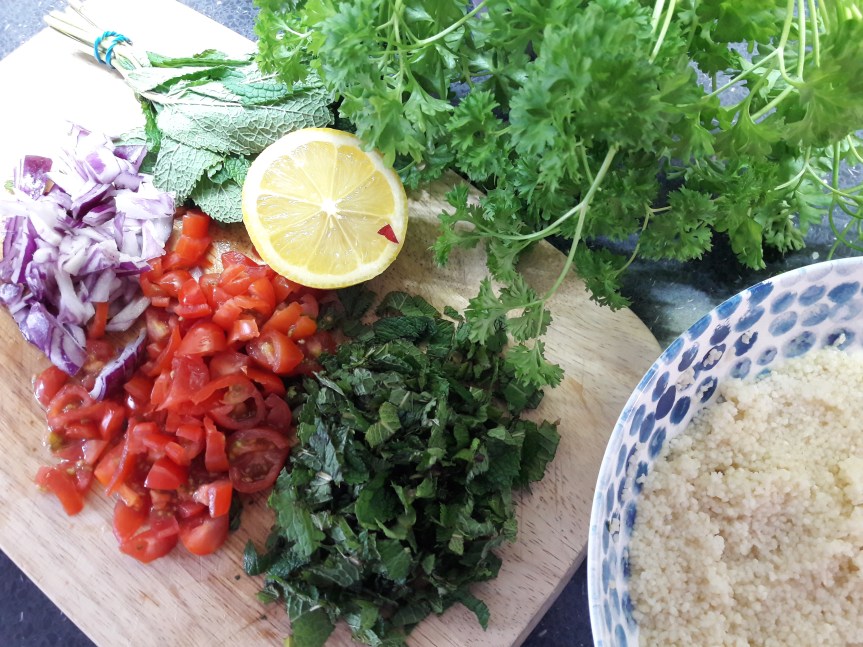
This time round on Knidos Cookery Club we’re taking advantage of some fresh, seasonal ingredients to make one of our favourite springtime salads, tabbouleh.

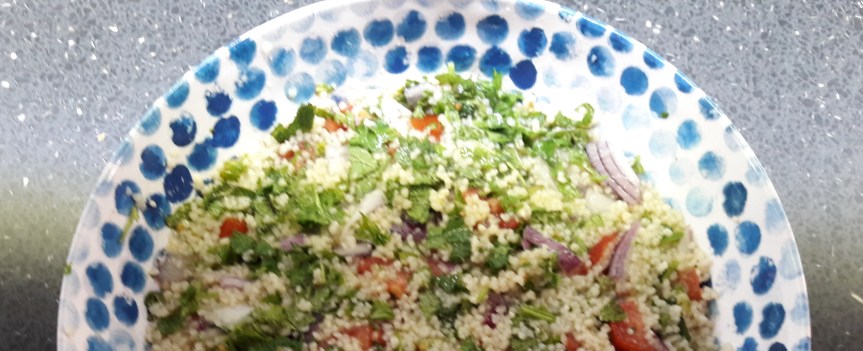
This winning combination of freshly-picked herbs, vegetables, lemon and olive oil with a grain such as couscous or bulgur wheat, that origianets on the eastern shores of the Mediterranean Sea, makes for a light, fresh-tasting dish that works well as part of a meze platter or alongside a selection of barbecued food.

20190419_185838-1.jpg

It’s easy to prepare, giving you more time to lounge in the sun with a glass of chilled wine while making the most of the long evenings.

Ingredients (serves 3-4)

  • 100g grain – couscous or bulgur wheat (coarse or fine both work well here)
  • 200 ml vegetable stock
  • One medium red onion
  • 12 cherry tomatoes
  • One bunch of fresh parsley
  • One bunch of fresh mint
  • Juice of one lemon
  • 25 ml olive oil

Method

  • Heat the vegetable stock until it’s boiling and then pour it over the couscous or bulgur wheat. Cover and leave to stand for 30 minutes or until all the liquid is absorbed.
  • While the couscous or bulgur wheat is soaking, prepare the rest of the ingredients. Dice the onion, quarter the tomatoes, finely chop the mint and parsley and squeeze the lemon.
  • Mix all the ingredients together and then add the olive oil and stir well. Leave to stand in the fridge for 30 minutes and then serve.


Green Cheburekifest as KCC turns 3

28 March 2019

Wow, we can hardly believe it, but Knidos Cookery Club turns 3 this week! Our first post was published from Turkey on 31 March 2016, and since then we’ve brought you 94 editions of KCC, stuffed with veggie food from all over the world. We’d love to hear your feedback – what’s been your favourite post so far? Let us know in the comments section below.

20190322_231111
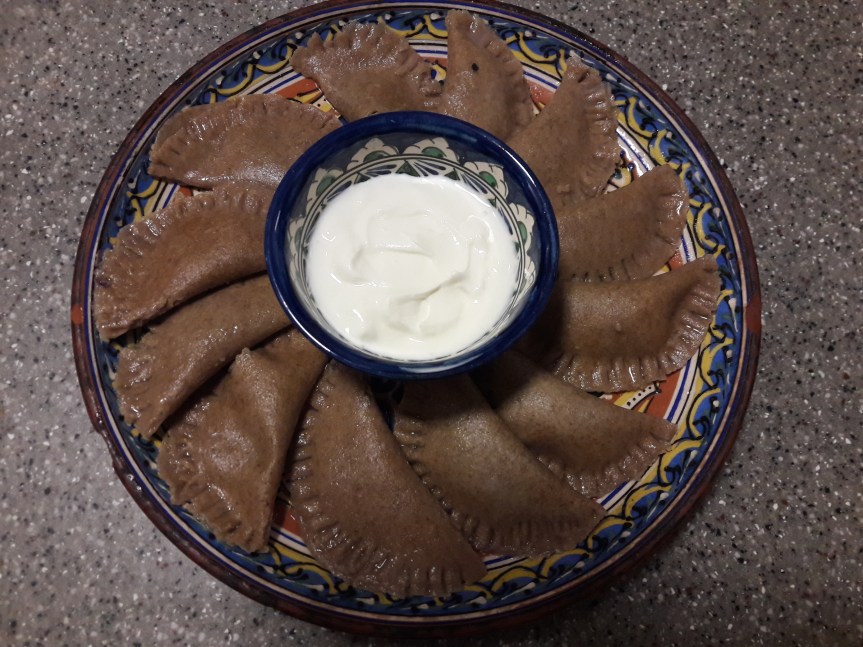
KCC’s spinach and celery pelmeni with sour cream


To mark this momentous occasion, we’ve prepared some mini chebureki filled with spring greens. We’re using chebureki in this context to refer to a crescent-shaped pie. Usually they’re deep-fried but we decided to turn them into more of a pelmeni by boiling them. It’s both healthier and quicker.

IMG-20190322-WA0027
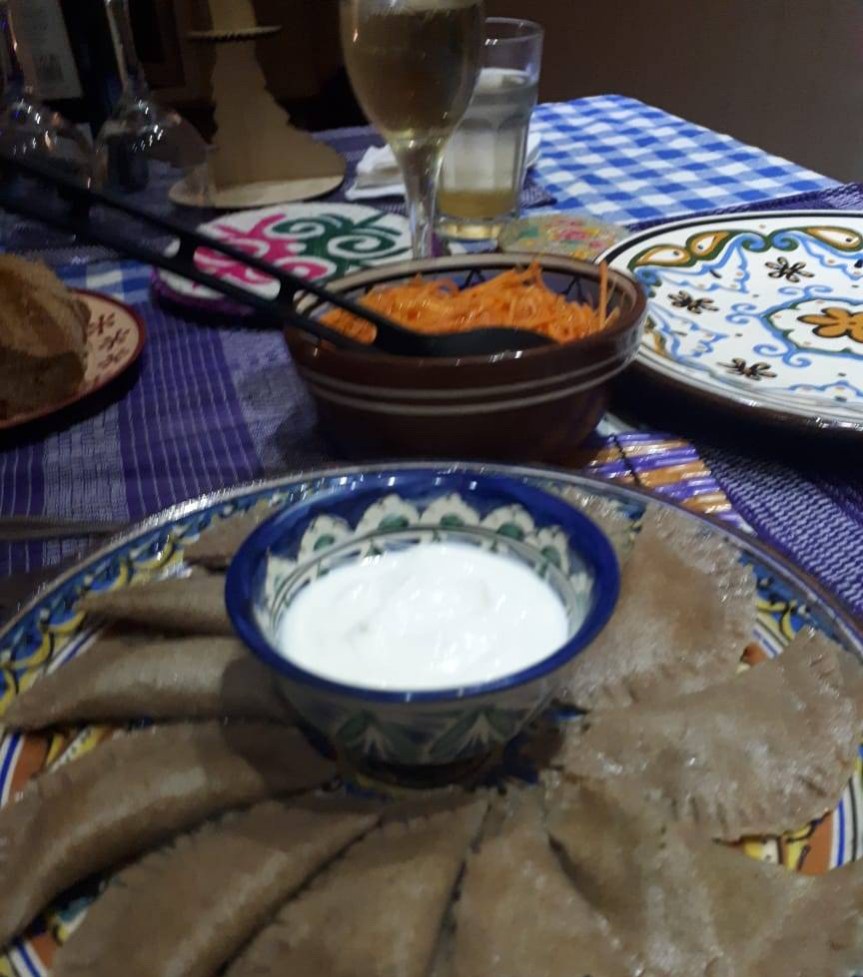
KCC’s spinach and celery pelmeni – the full table


Chebureki and pelmeni are from the family of little pies that are made from an unleavened dough – their cousins are Italy’s ravioli,  Turkey’s manti, China’s wonton, Uzbekistan’s chuchvara and Kazakhstan’s tushpara, Ukraine’s varenyky and Poland’s pierogi – the list is endless.

Ingredients (makes up to 24)

For the pasta:

  • 200 g wholewheat flour
  • 4 teaspoons olive oil
  • 100 ml water
  • pinch of salt

For the filling:

  • One small onion
  • 150g spinach
  • 2 sticks of celery
  • 25 ml olive oil
  • One teaspoon cumin seeds

Method

  • Make the pasta by sifting the flour into a large mixing bowl and then add the oil, a pinch of salt and half of the water in a well in the middle of the flour. Mix inwards from the outside with a wooden spoon and then add the rest of the water until the dough has absorbed all the flour.
  • Knead for ten minutes or so and then leave the pasta dough to rest in the fridge for at least one hour. While the dough is in the fridge, prepare the filling. Heat the oil in a frying pan, add the cumin seeds and then add the finely chopped onion. After cooking for five minutes, add thin slices of celery stick and the leaves and cook for three minutes. Now add the chopped up spinach and cook for another five minutes stirring frequently. Allow to cool before making the mini pies.
  • Roll the pasta out onto a lightly-floured surface to a thickness between 0.5 and 1.0 mm.Use a glass or a mug to cut out round shapes from the dough, add a teaspoon of cooled spring greens in the bottom half of the circle and moisten the inside edge around the filling with a little water and then fold the top over. Use a fork to seal the pasta pocket.
  • Bring a large pan of water to the boil and then add the little pies to the water and keep boiling over a low heat until they float to the surface. Remove  with a slotted spoon and serve hot – they’re good served with sour cream or melted butter or just plain.

Down Home Arizona Kızartma

14 February 2019

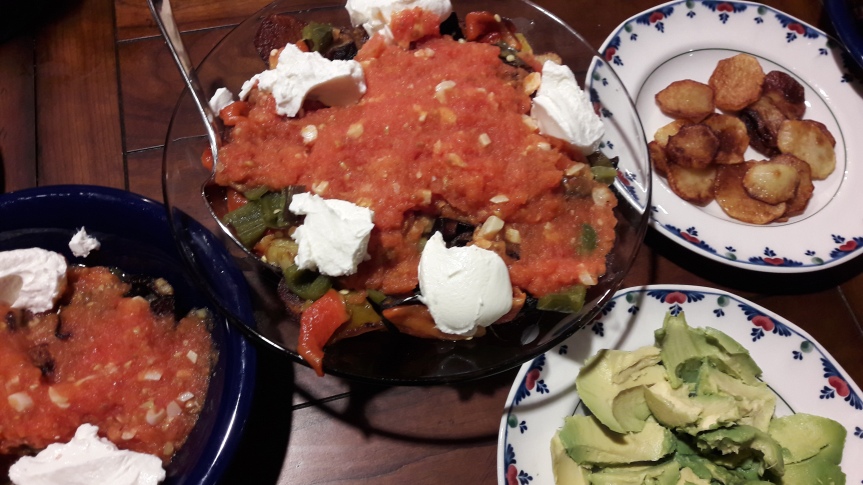
This time round on Knidos Cookery Club we’re swinging through Tucson, Arizona on the way back home. Whilst in Tucson, we met up with some old friends from Kazakhstan (via Turkey and the USA) and were treated to Tolga’s kızartma –  grilled peppers mixed in with fried aubergines and potatoes served in a garlic-infused tomato sauce and garnished with dollops of natural yogurt.

20190204_191319
Tolga’s classic down home Arizona kızartma

Tucson is located on the edge of the Sonora Desert which stretches up into Arizona from northern Mexico. It’s a surreal landscape of towering cacti called saguaro (Carnegiea gigantea), which can grow to be more than 12 m tall.

20190203_163203
There’s a lot of cactus….

The desert is a fascinating place populated with bobcats, coyotes, a variety of snakes and scorpions along with hallucinogenic Sonoran Desert toads (if you’re brave enough to lick them… ).

Having observed the master chef at work closely, here’s KCC’s take on the Turkish classic kızartma.

Ingredients (serves 3-4)

  • Two large potatoes
  • Three medium-sized tomatoes
  • Three garlic cloves
  • one small onion
  • One large aubergine
  • One avocado
  • Four peppers – a mix of green and red
  • Four jalapeño peppers
  • 75 ml olive oil
  • 100 ml natural yogurt

Method

  • Heat 25 ml of oil in a heavy-bottomed pan. Cut the potato into 1mm slices and fry in the oil, turning occasionally, until they are a golden-brown colour on both sides. Remove with a slotted spoon and put on a plate lined with kitchen towel.
  • Prick the peppers a couple of times with a fork and then roast them on a barbecue or over an open flame (here’s some tips on how to do this) until the skin is blackened all over. While the peppers are roasting, put 25ml oil in the pan and cut the aubergine into 1cm cubes and fry until golden brown. Remove with a slotted spoon and put on a plate lined with kitchen towel.
  • Add the rest of the oil to the pan, heat it up and then fry the finely chopped onion and garlic for five minutes over a medium heat and then grate the tomatoes into the pan and cook for 15-20 minutes. Peel the peppers, remove the seeds and chop the roasted peppers roughly.
  • In a large bowl put a layer potatoes, aubergine and peppers alternately. Pour the tomato sauce over the top and garnish with dollops of yogurt. Serve with slices of avocado.