When Veg Barmak met Su Böregi

20 March 2024

To celebrate Navruz this year, KCC has gone for a Kazakh mashup with a loose variation on Kazakhstan’s national dish, Beshbarmak. Lurking at the back of the cupboard was a pack of zhaima, the pasta sheets used in the dish.
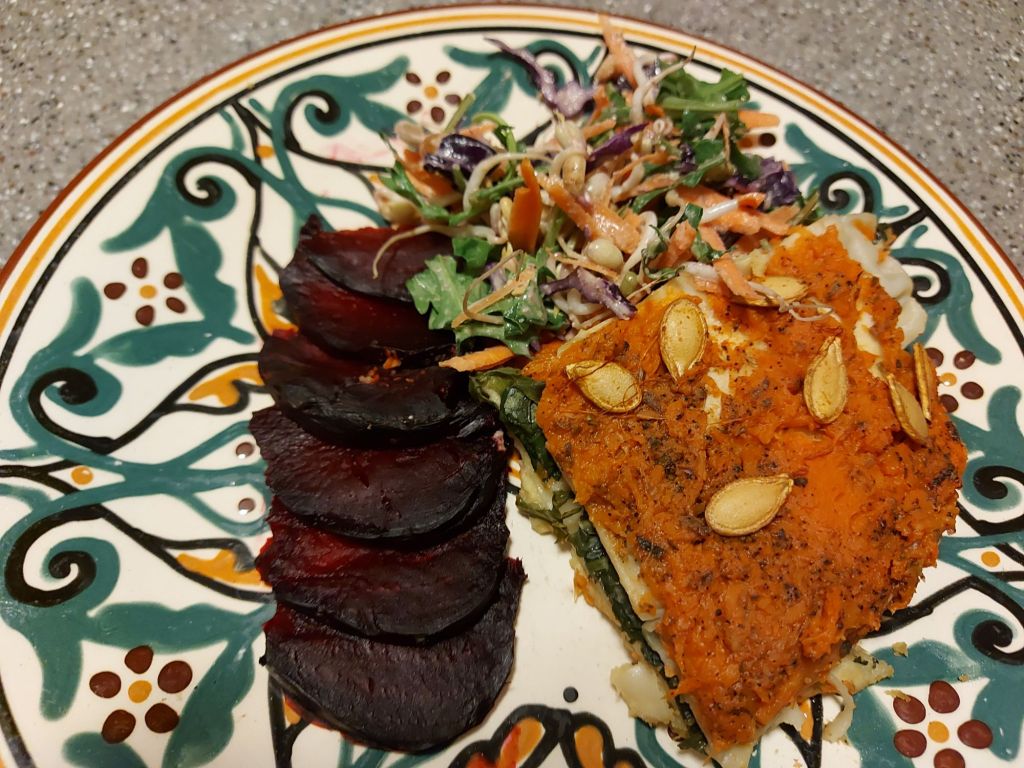
Beshbarmak refers to the method of eating this meat and pasta dish, using your hand, or “five fingers.” There are iterations such as “Fishbarmak,” so we decided it was time for a variation on the theme of “Vegbarmak.”

Pasta sheets (zhaima) for Beshbarmak from Kazakhstan

On closer inspection, the pasta sheets looked good for a lasagne-style dish, but the dish that eventually emerged was closer to Turkey’s su böreği. This consists of layers of boiled pastry sheets with a cheesy filling. We used different layers of vegetables and pulses to achieve something between a veg barmak and a su böreği. 

Ingredients (serves 3-4)

  • 300 g cooked chickpeas
  • 400 g roasted pumpkin
  • 50 g spinach
  • 50 g rocket
  • 50 g tahini
  • 50 ml chickpea water (aquafaba)
  • 16 pasta sheets (the ones used were 6 cm x 11cm)
  • Sprinkling of pumpkin seeds
  • Three teaspoons dried oregano
  • One teaspoon dried sage
  • One teaspoon cumin seeds

Method

  • Pre-heat the oven to 180 c. Put 150 g of chickpeas in a blender with the tahini, aquafaba and one teaspoon of oregano and blend until smooth. Mix with the remaining chickpeas and then put this mixture into the bottom of an ovenproof dish. Place the pasta sheets in hot water for a minute and then arrange over the chickpea mixture.
  • Put the washed greens on top of the pasta, sprinkle another teaspoon of oregano over the greens and then put another layer of sheets on top of the greens. Mash the pumpkin and mix with the sage and cumin seeds and oregano. Smooth this over the pasta sheets and decorate with pumpkin seeds.
  • Bake in the oven for one hour at 180 c – cover with tinfoil for the first 40 minutes and then cook uncovered for the last 20 minutes. Cut into four slices – it can be served either hot or cold.

Winter Warmer: Cauliflower, Spinach and Tahini Soup

15 February 2024

It’s been a crazy winter here in Almaty, Kazakhstan. It didn’t really get going until after New Year and has seen short cold snaps interspersed with rapid thaws as the temperature creeps into positive territory. This has made it particularly dicey when walking by buildings, as chunks of ice have a tendency to fall from roofs as the temperature rises. Usually, this is a once in a winter event, but this year it seems to be every few days.

A tahini-infused cauliflower and spinach soup

We’ve been getting through a lot of tahini recently, using it as a salad dressing, a pasta/noodle sauce, in variations on hummus, and, in this case, as an earthy, nutty base for a thick soup – he intermittent cold snaps call for a comforting bowl of hearty, seasonal goodness.

Crazy Almaty weather for 15 Feb 2024 onwards

Tahini is easy to make if you can’t find it in your local Middle eastern store – you just need some white sesame seeds, some olive oil and a good blender. Here’s a link to our tahini recipe from a few years ago.

Ingredients (serves 3-4)

  • 500 g cauliflower
  • 150 g spinach
  • 100 g celery
  • 5 g fresh coriander
  • 500 ml vegetable stock
  • 50 ml tahini
  • 25 ml olive oil
  • one teaspoon soy sauce
  • one teaspoon caraway seeds
  • one teaspoon dried oregano

Method

  • Heat the olive oil and then fry the chopped celery and caraway seeds in a large pan. Cook over a medium heat for five minutes and then add the cauliflower, broken into small florets, and the oregano. Stir fry over a medium heat for five minutes and then add the vegetable stock. Bring to a boil and simmer for ten minutes.
  • Put half the soup in a blender, add the soy sauce and tahini and blend until smooth. Add to the other soup in the pan, stir well and add the spinach leaves and cook until the spinach wilts. Garnish with chopped coriander and serve piping hot.

Some Striking Salads for the (not so)Bleak Midwinter

29 December 2023

As 2023 draws to a close, let’s take a look at some striking winter salads to liven up the end-of-year table. To complement our perennial favourite, our Olivier (with an Edge) salad, we’re looking to a coleslaw variation to add some colour to the New Year’s Eve spread. With the new year just around the corner, KCC wishes all its readers a prosperous and peaceful 2024, full with culinary adventures and many more mouth-watering meals!

KCC’s take on Olivier salad uses olives instead of meat

This winter has been a strange one here in Kazakhstan. We should be in the depths of winter now, but the snow didn’t arrive until the first week of December. Then there was a week or so of freezing weather with the temperature dipping to -28c, but now, as we approach the end of December, there’s very little snow on the ground in Almaty – it’s even been raining, which is really unusual at this time of the year.

KCC’s coleslaw variation with pear and rocket

The purple hues of red cabbage pair so well with the orange of carrots and the green of rocket. For a bit of bite, we’ve added some grated radish (we used green radishes, but you can use red radishes or mouli if you can’t find green ones), along with some grated pear and pomegranate seeds for a sweet and tart note. Add in some pumpkin and sunflower seeds and raisins before dressing with tahini and pomegranate sauce.

Ingredients (serves  3-4)

  • 100 g shredded red cabbage
  • 100 g grated carrot 
  • 50 g chopped rocket
  • 50 g grated green radish
  • 50 g grated pear
  • 25 g pomegranate seeds
  • 25 g raisins
  • 1 teaspoon dried oregano
  • 2 teaspoons pumpkin seeds
  • 2 teaspoons sunflower seeds 
  • 1 tablespoon tahini
  • 1 tablespoon pomegranate sauce
  • a slice of fresh lime

Method

  • In a large bowl mix the red cabbage, carrot, rocket, green radish, pear and pomegranate seeds together. Add the raisins, oregano, pumpkin seeds and sunflower seeds. Make a dressing with equal parts pf tahini and pomegranate sauce and thin with a bit of hot water to obtain a smooth consistency. Pour over the salad, stir well, give it a squeeze of lime and serve.

The HummusVariations: Beetroot and Walnut Hummus

02 November 2023

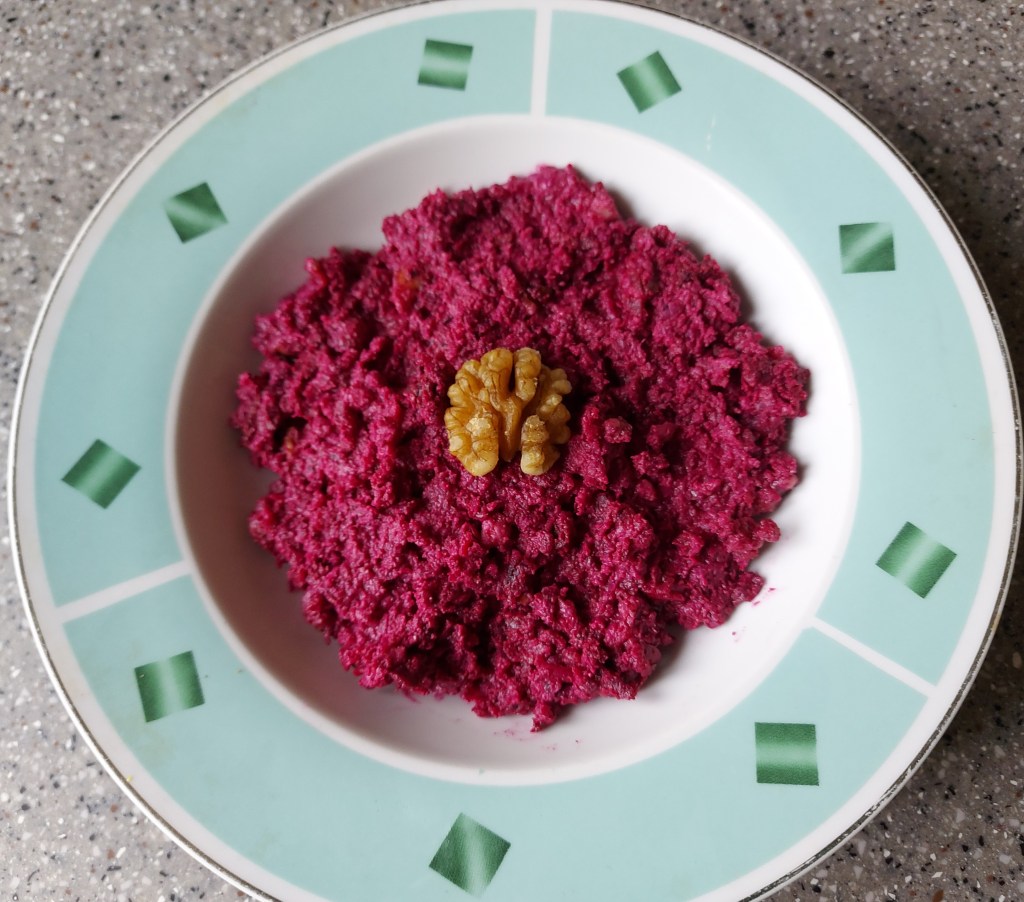
Hummus is one of those dips that we come back to time after time here on KCC. Beyond the classic basic dip of chickpeas, tahini, garlic, lemon juice and olive oil, the possibilities are endless. Our latest version is inspired by a recent trip to Myrtos, Crete where we tasted a beetroot-driven hummus at the excellent O Platanos restaurant.

In the past, we’ve made a turmeric-infused hummus and one from red beans, now here’s our latest variation. Beetroot is one of our favourite root vegetables, and it’s really good for you to boot. Taking some tips from Georgia, where a similar dip called pkhali is a regular feature on the dinner table, we’ve added some walnuts to give this hummus an extra protein boost.

Ingredients

  • 125 g baked beetroot – grated
  • 125 g crushed chickpeas
  • 50 g tahini – mixed with up to 50 ml of hot water
  • 25 g toasted walnuts
  • One garlic clove
  • 100 ml aquafaba (chickpea water)
  • a few dashes of olive oil
  • Two teaspoons of sumac 
  • pinches of ground cumin and coriander

Method

  • Grate the beetroot and then put in a large bowl and crush with a fork (you can also put it in the blender, if you have one). Add the mashed up chickpeas and stir well. Combine  the tahini with hot water until you have a creamy paste and then add to the mix.
  • Add the crushed, toasted walnuts, finely chopped garlic and sumac (this replaces lemon juice to give the hummus a citrusy kick without the acid) and stir together. Add some aquafaba and some splashes of olive oil and blend until the dip achieves your favoured consistency. Season with cumin and coriander and serve with warm pita bread. 

Roasted Red meets Baby Romaine

9 March 2023

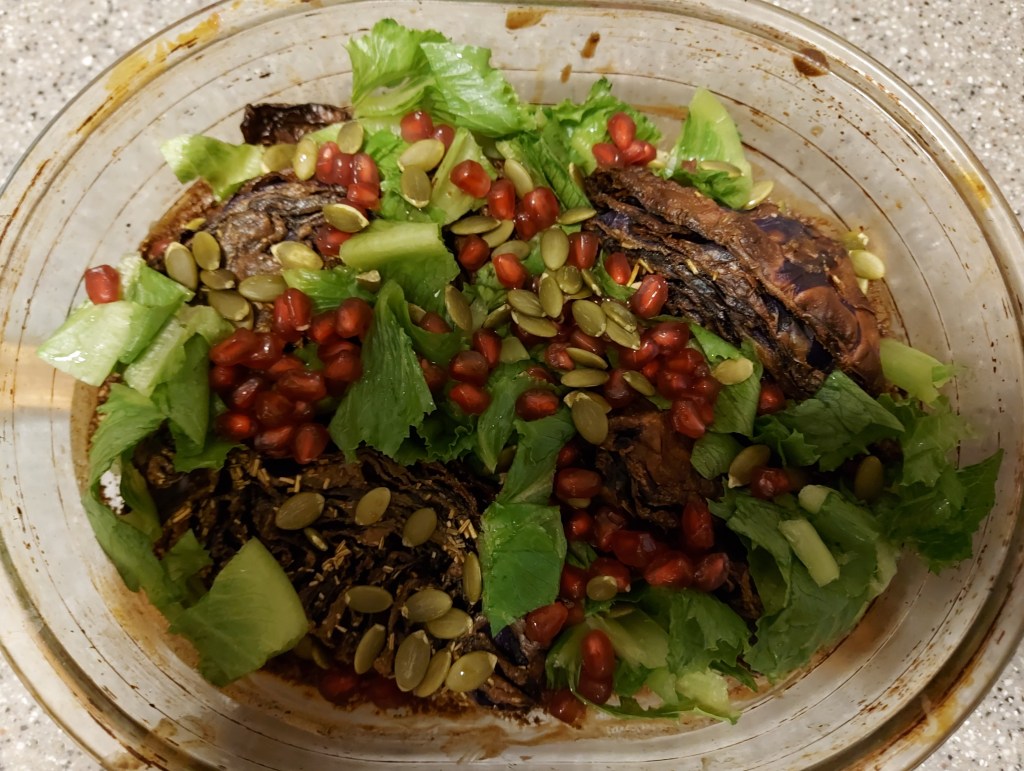
A recent visit to Barcelona serves as the inspiration for this roasted red cabbage dish that KCC tried as part of the veggie restaurant Sésamo‘s 30 euro tasting menu. The great value menu includes seven tapas plates (that can be served as vegan or veggie), a dessert and a glass of local wine.

Sésamo’s baked cabbage was cooked with pesto, mint and dukkah – from the ingredients we had at hand we decided to cook ours with tahini, soy sauce and a sprinkling of sesame seeds. It can be served on its own as a main dish or as a salad – we added some shredded baby romaine lettuce and some pomegranate and pumpkin seeds to add some more colour to the dish.

If you’re in Barcelona, then we fully recommend you head for Sésamo which is located near Sant Antoni market. Unlike in most other tapas joints, you can be sure of a meat-free experience at this little gem of a restaurant. It’s closed on Tuesdays and Wednesdays but otherwise works from 19.00 to midnight. If you’re not planning on being in Catalonia, then follow the recipe below to recreate a taste of one of Sésamo’s signature dishes.

Ingredients (serves 4)

  • Half a red cabbage
  • 50 g baby romaine lettuce
  • 25 ml olive oil
  • 50 ml tahini
  • 10 ml soy sauce
  • One teaspoon sesame seeds
  • One tablespoon pumpkin seeds
  • One tablespoon pomegranate seeds

Method

  • Remove the tough outer leaves from the cabbage. Cut off the top half of the cabbage (not the stalk end) and then cut this into four slices. Mix the olive oil, tahini, rosemary and soy sauce together in a glass or ceramic baking dish with a fork. Coat the cabbage slices in the dressing. Bake for 30 minutes at 180 c.
  • Sprinkle with sesame seeds and serve hot immediately or let the cabbage cool down and then mix it with the baby romaine lettuce, add the pumpkin and pomegranate seeds and serve as a salad.


Lockdown Lunch: Red-hot Hummus

16 April 2020

We’re now nearing the end of the third week of Almaty’s lockdown. Life has settled into a pattern of venturing out as little as possible and relying more on what we have stored away. After a delve in the cupboards, we came up with one of the stalwarts of the staple food world – a pack of dried beans.

SAMSUNG CSC
KCC’s Red-hot, red bean hummus

After soaking in cold water overnight, these red beans can be used in endless ways – from soups, stews and curries to burgers, salads and dips. We’ve gone for a easy-to-make red bean hummus; you’ll just need to add tahini, lemon juice, olive oil and some spices. Serve with flat bread and salad for a tasty lunch.

Don’t worry if you haven’t got any tahini on hand, you can make your own by toasting some sesame seeds and mixing them with olive oil – here’s a link to last year’s post on DIY tahini.

Ingredients (makes around 300 g)

  • 250 g cooked red beans (reserve 50 ml of the cooking water)
  • Two tablespoons tahini
  • 25 ml olive oil
  • One lemon
  • One garlic clove
  • One teaspoon cumin seeds
  • One teaspoon sumac
  • Two teaspoons red chilli flakes
  • A few sprigs of coriander

Method

  • Mash the beans with a potato masher or a fork and add the tahini. Mix well then add olive oil and lemon juice and blend until you get a smooth consistency. If the hummus is too thick, use some of the cooking water, Add the minced garlic and spices and mix a bit more with the fork. Garnish with a few beans, a drizzle of oil, a sprinkling of chilli flakes and a sprig of coriander.


Putting on the Piyaz: Turkey’s Versatile White Bean Salad

2 August 2019

Knidos Cookery Club has just arrived back at its home base on the Datça Peninsula in Turkey. We’re going to soak up some more culinary inspiration from the place where the Mediterranean and Aegean Seas meet around the ancient Greek settlement of Knidos.

20190802_125534-e1564740306182.jpg
Piyaz – Turkish White Bean salad

To celebrate being back in Turkey, we’ve prepared a piyaz salad, one of the classic dishes of Turkish cooking, that combines small white beans with some readily available staples of the local kitchen; namely tomatoes, onions, green peppers, parsley and lemons.

20190801_160820.jpgTurkey’s çarliston peppers aka banana peppers
The secret of this dish is in getting the beans just right – not too mushy but not too firm either. They need a good, long overnight soak and some slow cooking to achieve the required consistency.

The dressing used varies across Turkey from the basic lemon, olive oil and apple vinegar one favoured in Istanbul to the tahini-infused one from Antalya, paying tribute to the Arabian influence from the Middle East on the city’s cuisine. We have opted for the creamy, nutty taste of the latter.

Ingredients (makes 3-4 servings)

  • 200 g dried haricot beans or other small white beans soaked overnight
  • 1 medium-sized plum tomato
  • 1 long, green pepper (e.g. çarliston pepper – see photo above)
  • 1 small onion
  • 2 lemons
  • Small bunch of parsley
  • 50 ml olive oil
  • 50 ml apple vinegar
  • 25 ml tahini
  • 2 teaspoon dried thyme
  • 1 teaspoon red chilli flakes
  • Optional: Two boiled eggs or one avocado

Method

  • Cook the beans over a low heat until tender but not starting to go mushy. When cooked, drain off the cooking water, reserving 100 ml to make the dressing. Pour the vinegar and sprinkle the thyme over the beans and leave to cool.
  • After leaving for a few hours, add the vinegar the beans were soaking in to the reserved bean juice and then blend with the olive oil, tahini and the juice of one lemon to make a smooth sauce.
  • Finely dice the tomato, slice the pepper and onions into rings and chop the parsley finely. Add these to the beans.
  • Cover the salad and put it in the fridge for a few hours. Serve with wedges of the second lemon and sprinkle the red chilli flakes over the salad.
  • Just before serving, pour the dressing over the bean salad and season with black pepper and gently mix all the ingredients together with a wooden spoon.
  • You can garnish with quarters of boiled egg if you wish or, for a vegan twist, you can garnish the salad with slices of avocado.

Julienne Funchoza’s Noodle Extravaganza

18 July 2019

This time round on Knidos Cookery Club we’re looking at some ways to beat the heatwave with a noodle-based salad that can be whipped up with the minimum of fuss.

20190711_203617

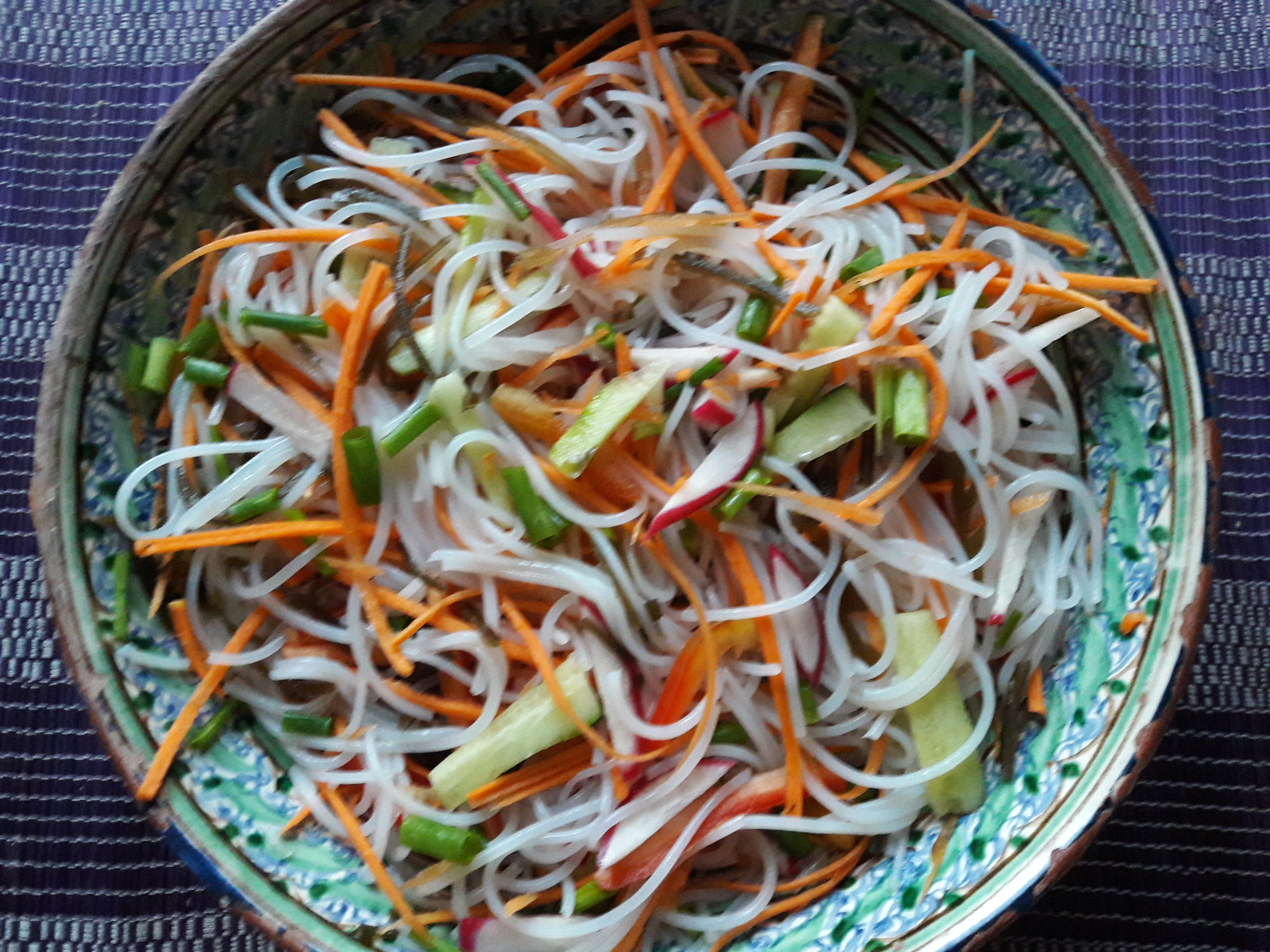
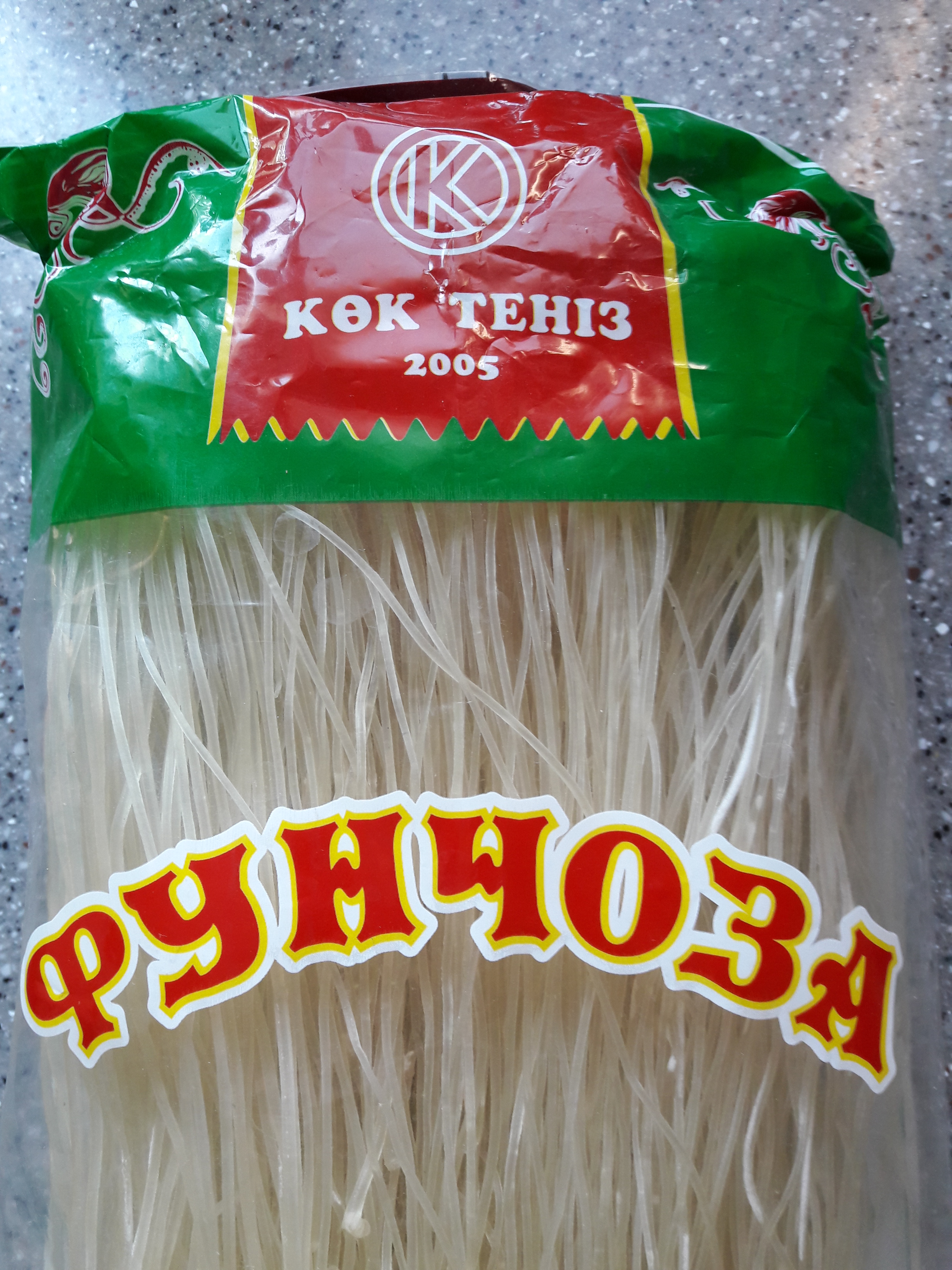
Funchoza is a popular salad across Central Asia that combines glass noodles, which can be produced from various forms of starch such as rice or mung bean, with julienned raw vegetables and a spicy dressing. The noodles just need to be cooked in boiling water for a few minutes so it’s a cinch to prepare on a hot summer’s day.

20190711_182826

These noodles are a staple of Uighur cuisine, but have been adopted by the Central Asia’s Korean community who have made funchoza famous to a wider audience across the former Soviet Union and beyond.

The Uighurs are Turkic-speaking  muslims living mainly in Xinjiang, an autonomous territory in northwest China, where they face increasing persecution by the Chinese authorities, under the pretext of a crackdown on terrorism.

To this end, thousands of Uighurs, Kazakhs, Kyrgyz and Chinese muslims have been interred in ‘re-education’ camps and, as the Guardian put it in a recent editorial, “Those who are nominally free in fact exist in a digital gulag of constant surveillance.”

Earlier this month, 22 states – including Britain, Canada, France, Germany, Australia and Japan – signed a letter to UN human rights officials in condemnation of China’s treatment of Uighur and other minorities there.

Ingredients (makes 3-4 servings)

  • 150 g dried glass noodles
  • 10 g dried seaweed
  • 2 small cucumbers
  • 2 radishes
  • 8 spring onions
  • 2 red peppers
  • 2 carrots
  • Coriander seeds

For the dressing:

  • 4 teaspoons tahini
  • 2 tablespoons apple vinegar
  • 2 tablespoons soy sauce
  • 2 tablespoons pomegranate sauce (Nar Eksisi)
  • 2 teaspoons chilli powder

Method

  • Bring a large pan of water to the boil and cook the noodles in the water according to the pack instructions. Remove and put in a pan of cold water until needed.
  • Soak the dried seaweed in cold water for 15 minutes, drain the water. While the seaweed is soaking,  cut the spring onions into 1 cm slices, remove the seeds for the cucumber and then julienne along with the other vegetables into long, thin slices (use a grater  or chop finely if you don’t have a julienne peeler). Chop the seaweed into 5 cm strips.
  • Remove the noodles from the cold water and cut into 10 cm strips and put in a large bowl. Add the julienned vegetables and mix all the ingredients together. Put all the dressing ingredients into a glass jar with a screw top and shake well, then pour over the salad and mix well. Grind some coriander seeds over the salad.
  • Serve cold – let the flavours mingle by keeping the salad in the fridge for a couple of hours.


Hummus to the Power of Turmeric

30th May 2019

Welcome back to Knidos Cookery Club, or KCC to those in the know. This time we’ll be whipping up some hummus spiked with the super-spice turmeric – it’s easier than you think and once you’ve tasted homemade hummus we’ll be surprised if you settle for a shop bought one again.

20190524_172344(0)
Turmeric-infused hummus all ready to go with carrot and cucumber slices

There are a lot of claims around the eastern end of the  Mediterranean Sea as to where hummus originated, but  ownership of this dip has now become truly international – we first came across this turmeric-infused version in Mexico earlier this year.

You’ll need some tahini (sesame seed paste) to make this recipe, but don’t worry if you can’t track any down – it’s simple to prepare your own batch of this nutty-tasting spread. Toast 50 g of sesame seeds in a frying pan (without oil) over a low heat and shake continuously until they turn from white to a golden colour. Then mix with 50 ml of olive oil in a blender and, hey presto, you have tahini. Add more oil for a runnier consistency.

Ingredients (makes around 300 g)

  • 250 g cooked chickpeas
  • 1 garlic clove
  • 2 teaspoons tahini
  • 1 tablespoon olive oil
  • Juice of a lemon
  • 25 ml chickpea water
  • 1 teaspoon turmeric
  • 0.5 teaspoon cumin or caraway seeds
  • 1 teaspoon paprika or chilli powder

Method 

  • Place all the ingredients into a bowl, except for the paprika and cumin (or caraway) seeds. Mix with the blender setting or with a hand blender. Keep mixing until you have a creamy, smooth paste. If needed, add  more of the reserved chickpea water or lemon juice to achieve a smoother consistency.
  • Allow to chill in the fridge for a few hours then mix in the cumin (or caraway) seeds. Sprinkle the paprika over the top and serve with slices of cucumber and carrot.