Putting on the Piyaz: Turkey’s Versatile White Bean Salad

2 August 2019

Knidos Cookery Club has just arrived back at its home base on the Datça Peninsula in Turkey. We’re going to soak up some more culinary inspiration from the place where the Mediterranean and Aegean Seas meet around the ancient Greek settlement of Knidos.
20190802_125534-e1564740306182.jpg
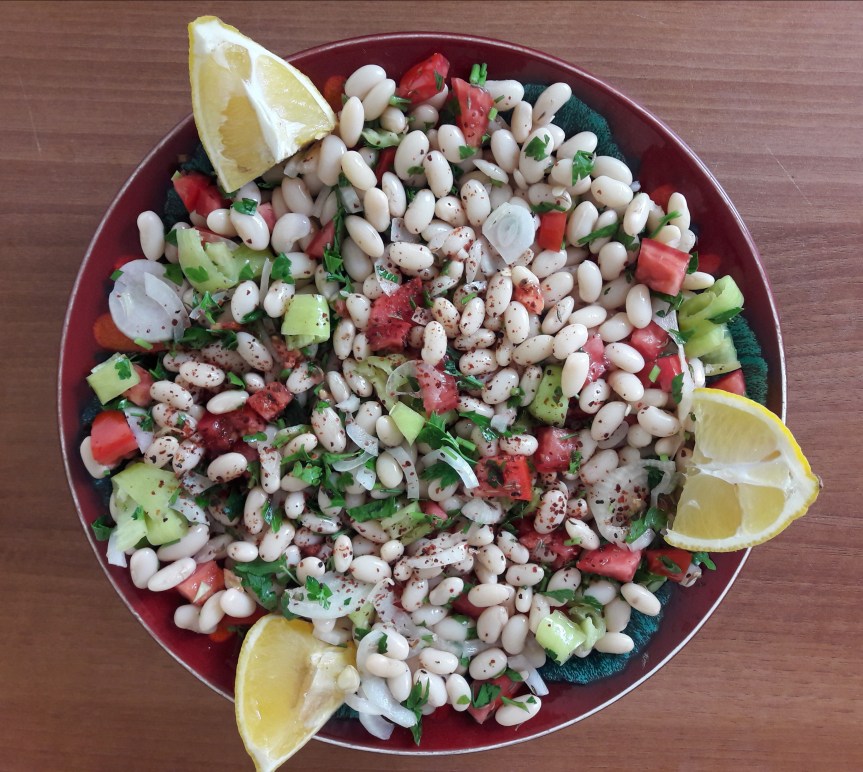
Piyaz – Turkish White Bean salad

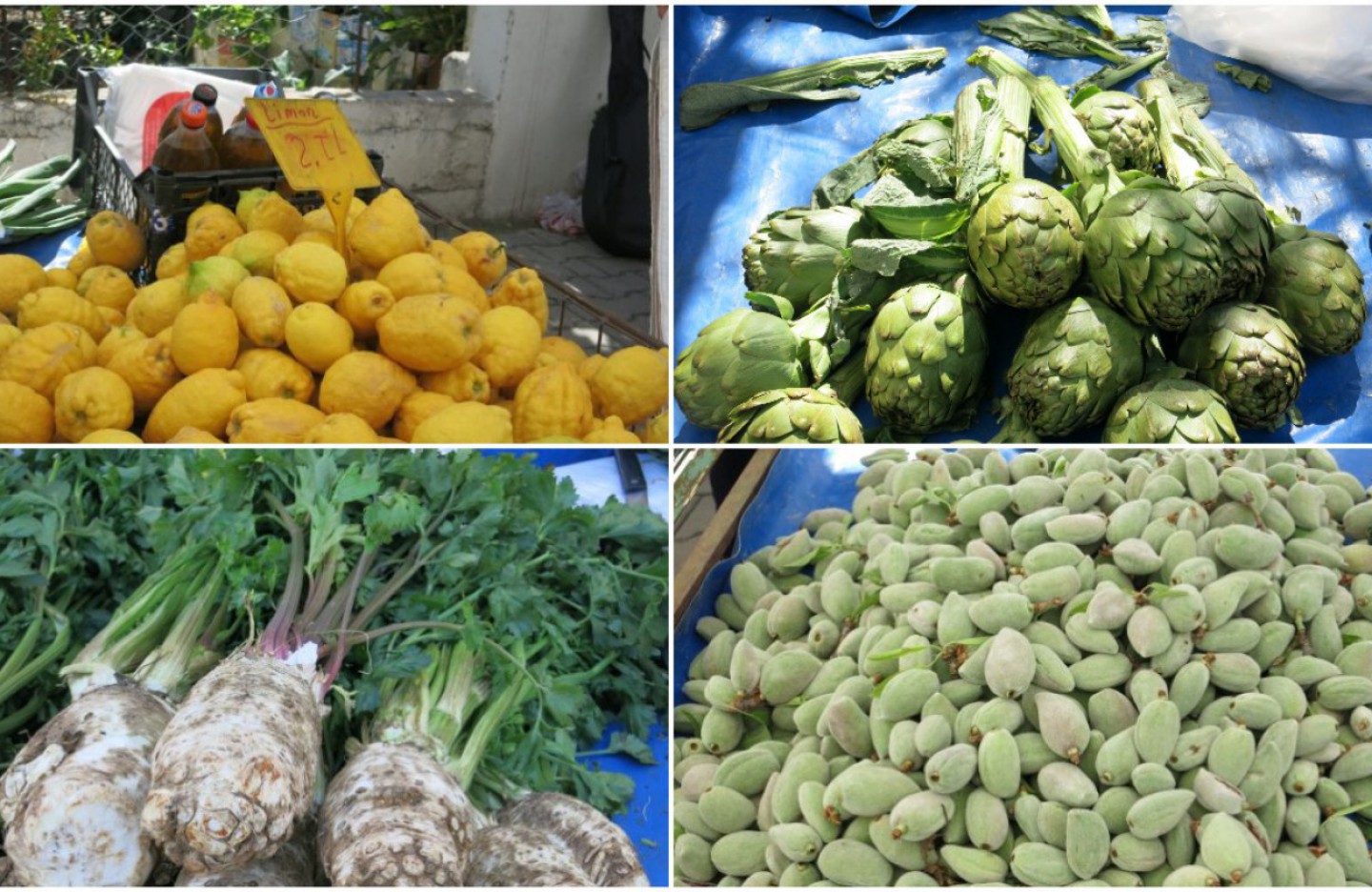
To celebrate being back in Turkey, we’ve prepared a piyaz salad, one of the classic dishes of Turkish cooking, that combines small white beans with some readily available staples of the local kitchen; namely tomatoes, onions, green peppers, parsley and lemons.

20190801_160820.jpgTurkey’s çarliston peppers aka banana peppers

The secret of this dish is in getting the beans just right – not too mushy but not too firm either. They need a good, long overnight soak and some slow cooking to achieve the required consistency.

The dressing used varies across Turkey from the basic lemon, olive oil and apple vinegar one favoured in Istanbul to the tahini-infused one from Antalya, paying tribute to the Arabian influence from the Middle East on the city’s cuisine. We have opted for the creamy, nutty taste of the latter.

Ingredients (makes 3-4 servings)

  • 200 g dried haricot beans or other small white beans soaked overnight
  • 1 medium-sized plum tomato
  • 1 long, green pepper (e.g. çarliston pepper – see photo above)
  • 1 small onion
  • 2 lemons
  • Small bunch of parsley
  • 50 ml olive oil
  • 50 ml apple vinegar
  • 25 ml tahini
  • 2 teaspoon dried thyme
  • 1 teaspoon red chilli flakes
  • Optional: Two boiled eggs or one avocado

Method

  • Cook the beans over a low heat until tender but not starting to go mushy. When cooked, drain off the cooking water, reserving 100 ml to make the dressing. Pour the vinegar and sprinkle the thyme over the beans and leave to cool.
  • After leaving for a few hours, add the vinegar the beans were soaking in to the reserved bean juice and then blend with the olive oil, tahini and the juice of one lemon to make a smooth sauce.
  • Finely dice the tomato, slice the pepper and onions into rings and chop the parsley finely. Add these to the beans.
  • Cover the salad and put it in the fridge for a few hours. Serve with wedges of the second lemon and sprinkle the red chilli flakes over the salad.
  • Just before serving, pour the dressing over the bean salad and season with black pepper and gently mix all the ingredients together with a wooden spoon.
  • You can garnish with quarters of boiled egg if you wish or, for a vegan twist, you can garnish the salad with slices of avocado.

Julienne Funchoza’s Noodle Extravaganza

18 July 2019

This time round on Knidos Cookery Club we’re looking at some ways to beat the heatwave with a noodle-based salad that can be whipped up with the minimum of fuss.

20190711_203617

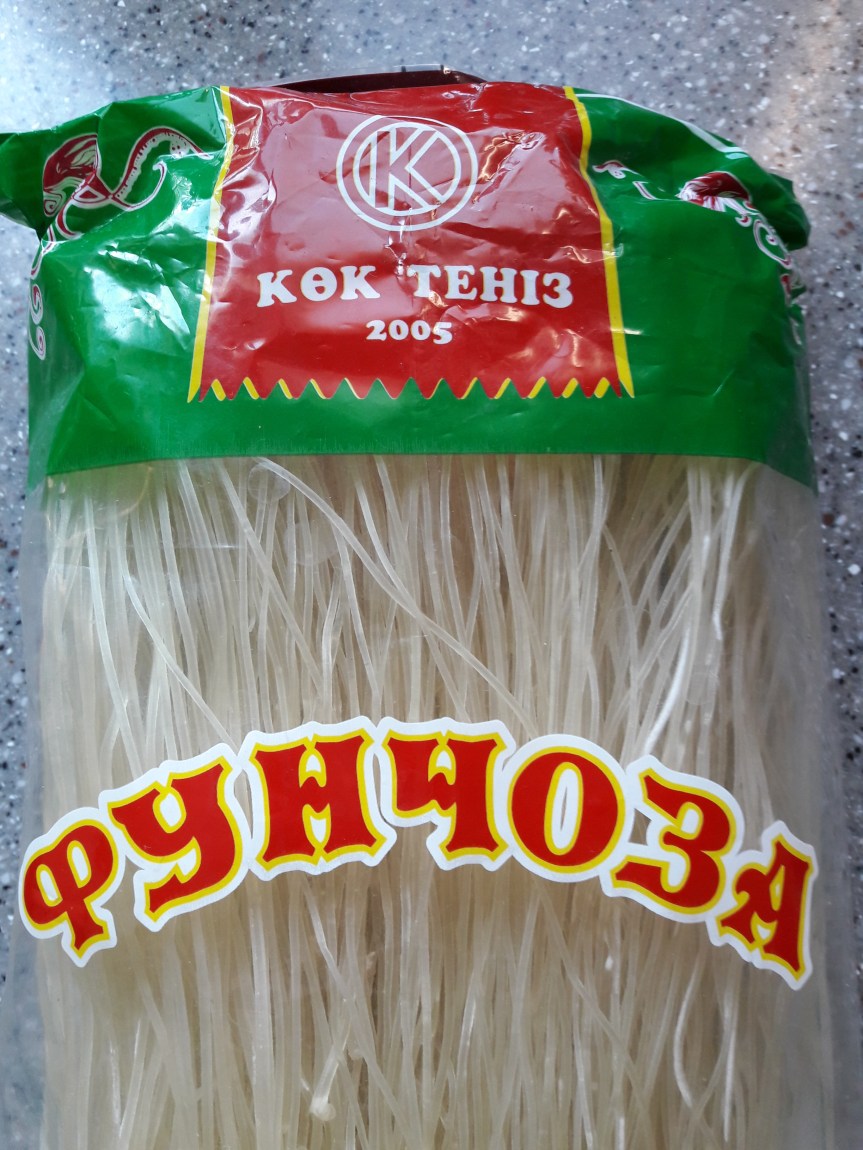
Funchoza is a popular salad across Central Asia that combines glass noodles, which can be produced from various forms of starch such as rice or mung bean, with julienned raw vegetables and a spicy dressing. The noodles just need to be cooked in boiling water for a few minutes so it’s a cinch to prepare on a hot summer’s day.

20190711_182826

These noodles are a staple of Uighur cuisine, but have been adopted by the Central Asia’s Korean community who have made funchoza famous to a wider audience across the former Soviet Union and beyond.

The Uighurs are Turkic-speaking  muslims living mainly in Xinjiang, an autonomous territory in northwest China, where they face increasing persecution by the Chinese authorities, under the pretext of a crackdown on terrorism.

To this end, thousands of Uighurs, Kazakhs, Kyrgyz and Chinese muslims have been interred in ‘re-education’ camps and, as the Guardian put it in a recent editorial, “Those who are nominally free in fact exist in a digital gulag of constant surveillance.”

Earlier this month, 22 states – including Britain, Canada, France, Germany, Australia and Japan – signed a letter to UN human rights officials in condemnation of China’s treatment of Uighur and other minorities there.

Ingredients (makes 3-4 servings)

  • 150 g dried glass noodles
  • 10 g dried seaweed
  • 2 small cucumbers
  • 2 radishes
  • 8 spring onions
  • 2 red peppers
  • 2 carrots
  • Coriander seeds

For the dressing:

  • 4 teaspoons tahini
  • 2 tablespoons apple vinegar
  • 2 tablespoons soy sauce
  • 2 tablespoons pomegranate sauce (Nar Eksisi)
  • 2 teaspoons chilli powder

Method

  • Bring a large pan of water to the boil and cook the noodles in the water according to the pack instructions. Remove and put in a pan of cold water until needed.
  • Soak the dried seaweed in cold water for 15 minutes, drain the water. While the seaweed is soaking,  cut the spring onions into 1 cm slices, remove the seeds for the cucumber and then julienne along with the other vegetables into long, thin slices (use a grater  or chop finely if you don’t have a julienne peeler). Chop the seaweed into 5 cm strips.
  • Remove the noodles from the cold water and cut into 10 cm strips and put in a large bowl. Add the julienned vegetables and mix all the ingredients together. Put all the dressing ingredients into a glass jar with a screw top and shake well, then pour over the salad and mix well. Grind some coriander seeds over the salad.
  • Serve cold – let the flavours mingle by keeping the salad in the fridge for a couple of hours.


Make Time for Tabbouleh

2 May 2019

This time round on Knidos Cookery Club we’re taking advantage of some fresh, seasonal ingredients to make one of our favourite springtime salads, tabbouleh.

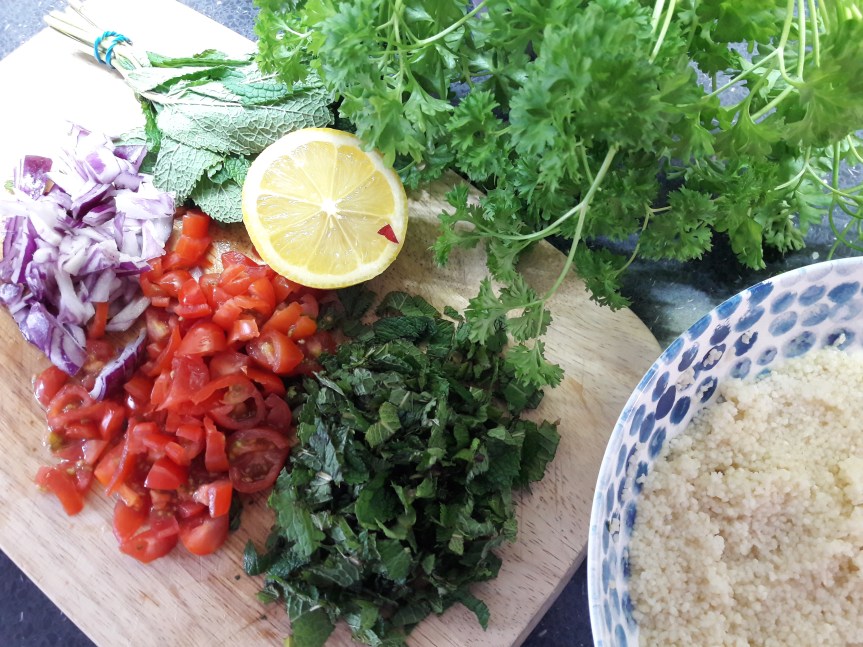
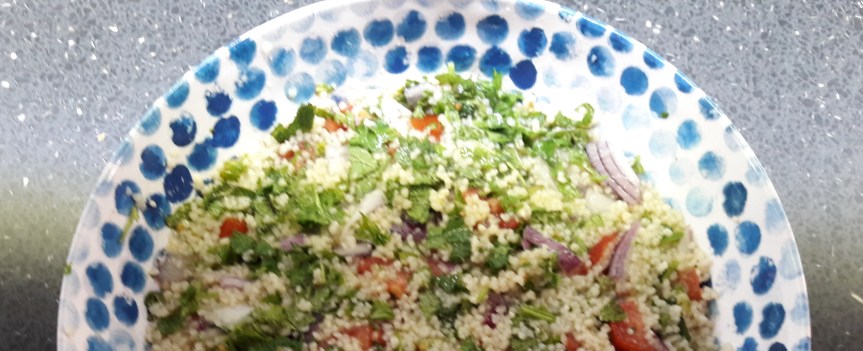
This winning combination of freshly-picked herbs, vegetables, lemon and olive oil with a grain such as couscous or bulgur wheat, that origianets on the eastern shores of the Mediterranean Sea, makes for a light, fresh-tasting dish that works well as part of a meze platter or alongside a selection of barbecued food.

20190419_185838-1.jpg

It’s easy to prepare, giving you more time to lounge in the sun with a glass of chilled wine while making the most of the long evenings.

Ingredients (serves 3-4)

  • 100g grain – couscous or bulgur wheat (coarse or fine both work well here)
  • 200 ml vegetable stock
  • One medium red onion
  • 12 cherry tomatoes
  • One bunch of fresh parsley
  • One bunch of fresh mint
  • Juice of one lemon
  • 25 ml olive oil

Method

  • Heat the vegetable stock until it’s boiling and then pour it over the couscous or bulgur wheat. Cover and leave to stand for 30 minutes or until all the liquid is absorbed.
  • While the couscous or bulgur wheat is soaking, prepare the rest of the ingredients. Dice the onion, quarter the tomatoes, finely chop the mint and parsley and squeeze the lemon.
  • Mix all the ingredients together and then add the olive oil and stir well. Leave to stand in the fridge for 30 minutes and then serve.


Hasty Tasty Stuffed Peppers

12 July 2018

This time round on Knidos Cookery Club we’re taking inspiration again from our recent Balkan odyssey. While on our mission to Albania, we tasted the local take on stuffed peppers and on returning to KCC H.Q. we decided to recreate this delicious dish with a few time saving tricks of our own devising.

20180710_214345 copy2
Hasty tasty stuffed peppers with baked cauliflower and tomato

Rice is the usual go-to base for stuffing peppers, but it can be a bit time-consuming to prepare properly. With the World Cup reaching its conclusion, we didn’t fancy spending too much time slaving away in the kitchen so we’ve used some coarse bulgur wheat, which just needs soaking in hot water for a short while before it’s ready to use.

We cooked the peppers alongside some cauliflower, broken up into large  florets, and some quartered tomatoes to make a ready made meal for two with only a green salad needed to complete the show, allowing plenty of time to sit down and enjoy what’s left of the football!

Ingredients (for two people)

Two medium-sized green peppers

Two medium-sized tomatoes

Half a cauliflower

50 g cooked green lentils

50 g coarse bulgur wheat

200 ml hot water

25 ml olive oil

One teaspoon cumin seeds

One teaspoon dried thyme

25 g  raisins or currants

Black pepper (a generous twist)

Method

Cook the green lentils in twice the amount of water (put the lentils in a cup and then measure out twice as much water) until they start to go mushy. Put the bulgur wheat in a bowl and add the lentils and 200 ml hot water, stir and leave until the water is absorbed (20-30 minutes). Add the cumin, thyme, raisins and black pepper to the bulgur wheat and stir in well.

Pre-heat the oven to 180 c and prepare the peppers by slicing the top off and scooping out the seeds. Fill the hollowed-out peppers with the bulgur lentil mix, place the top back on and place in an oven dish. Arrange the cauliflower florets and quartered tomatoes around the pepper.

Drizzle the olive oil over the vegetables, add 50 ml water and bake in the oven for      40-50 minutes until the pepper skins start to burn and the florets are turning golden brown. Serve with a green salad.


Leeky Pastitsio

5 April 2018

We’re back and, with Orthodox Easter just around the corner, this time round on Knidos Cookery Club we’ll be making our own version of pastitsio, a Greek take on Italy’s lasagne. Our version comes with a red wine, tomato and lentil ragu and a leek infused béchamel sauce.

leeky pastitsio
KCC’s Leeky Pastitsio

A few weeks ago, I left some beans soaking overnight and when I checked them in morning the pan was mysteriously filled with soaked penne rigate pasta! A quick look online to determine if the pasta was usable led me to this post on the Ideas in Food blog, and this confirmed pre-soaking in cold water as an effective way of preparing dried pasta.

20180402_204515
Leeky pastitsio and salad

Pastitsio is one of those dishes that tastes great straight from the oven but improves with age as the cinnamon, nutmeg and other flavours have time to blend properly. It works well heated up the next day or even tastes good cold. We served ours with a crisp salad of rocket leaves, carrot. radish and tomato.

Ingredients (For 3-4 hearty servings)

200 g penne rigate pasta

For the ragu:

25 ml olive oil

4 spring onions

200 g cherry tomatoes

2 tablespoons tomato paste

100 g red lentils

175 ml red wine

1 teaspoon of cinnamon, cumin, black pepper and red chilli flakes

For the Béchamel sauce:

50 ml olive oil

250 g leek

3 tablespoons flour

400 ml milk (dairy or non-dairy)

60 g cheese (dairy or non-dairy)

One teaspoon of nutmeg

Method

Soak the pasta in a pan of cold water for two hours and while it’s soaking cook the red lentils in 200 ml water until mushy and all the liquid is absorbed. Then prepare the ragu and after that the béchamel sauce.

For the ragu, heat the oil in a heavy-based pan and then fry the chopped spring onions for a few minutes. Add the quartered cherry tomatoes, tomato paste and spices and mix well. Add the wine and when it starts to bubble add the cooked and drained lentils. Cook for ten minutes over a low heat.

For the béchamel sauce, heat the oil in a heavy-based pan and then add the sliced leeks and cook for five minutes over a medium heat. Add the flour and mix well and then ad  the milk slowly, stirring continuously with a wooden spoon. Add half the grated cheese and nutmeg and cook until the sauce is just starting to boil, stirring all the while.

Layer half the soaked penne in the bottom of an oven proof dish and pour the ragu over. then layer the rest of the pasta on top of this and pout the béchamel sauce over. Add the remainder of the grated cheese and bake in a pre-heated oven at 200c for thirty minutes.

Serve straight away with a green salad or let it sit overnight in the fridge for a tastier pastitsio that can be served hot or cold.

Korea’s All-Conquering Carrots

15 February 2018

Happy Lunar New Year to all our readers – wishing you all many culinary adventures in the Year of the Dog!

With both South and North Korea back in the headlines with the Winter Olympics in full swing in Pyeongchang and the ongoing tensions on the Korean peninsula, this week Knidos Cookery Club will be making a dish that has become a hit in the former Soviet Union and beyond – spicy Korean carrots.

20180209_122129
Spicy Korean Carrots

It’s a dish that’s not really from Korea, north or south – largely unknown outside of the countries of the former Soviet Union until recently, this simple dish has now gone full circle and can now be found on tables in South Korea.

It originated with the Koryo-saram, Korean people, who were deported en masse from the borderlands of Russia’s far east to Central Asia in the late 1930s. Fearing a Japanese fifth column in the Soviet Union via this Korean community, Stalin ordered the mass deportations in 1937.

20171117_170001
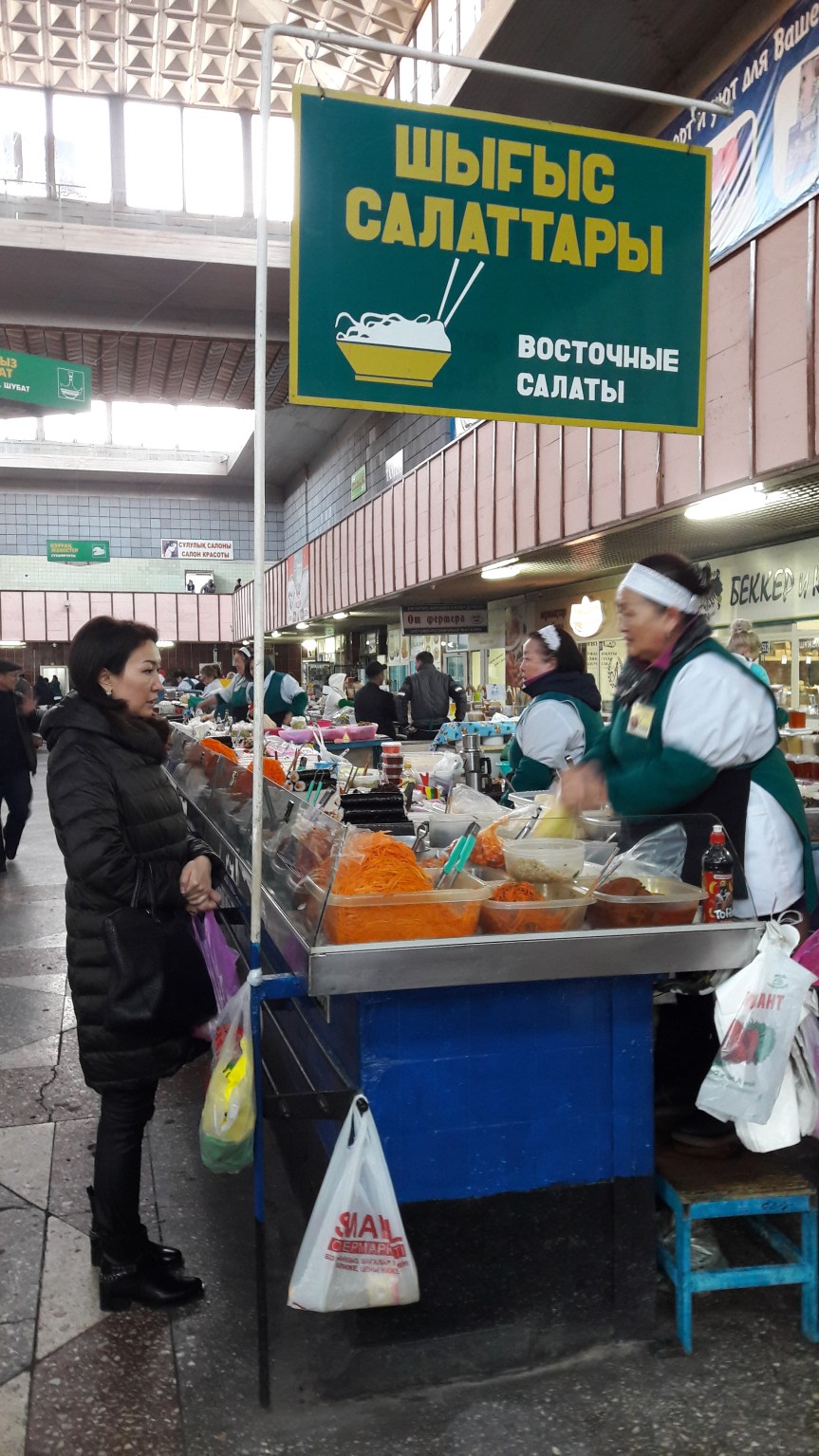
Korean carrots and other salads on sale in Almaty’s Green Bazaar, Kazakhstan

The deportees adapted their cuisine to local conditions and replaced traditional ingredients with carrots to create a spicy, coriander-rich side dish and it remains a popular choice on dinner tables in Central Asian countries such as Uzbekistan, Kazakhstan and Kyrgyzstan, which are still home to around 300,000 ethnic Koreans, descendants of the deportees from the 1930s.

There’s a Turkish connection with the Koreas as well. With Turkey on a war footing once again, wading into battle against the Kurds in northern Syria, a recent film has brought a mostly forgotten war involving Turkey from the 1950s back into the spotlight. Can Ulkay’s “Ayla: The Daughter of War” tells the story of a Turkish soldier who saves a young Korean girl during the Korean War of 1950-53.

Turkey sent troops as part of a United Nations led brigade to defend South Korea against North Korea in the war. The soldier finds himself unable to take the orphan back to Turkey so the pair lose touch after the war, but in a fairytale ending are reunited 60 years later. Put your feet up and enjoy the movie with a bowl of spicy Korean carrots!

Ingredients (serves around 4)

200 g carrots peeled into thin slices – use a julienne peeler or a sharp knife

One garlic clove minced

One small onion minced

One teaspoon crushed coriander seeds

Half teaspoon red chilli flakes

Dash of olive oil

Two teaspoons cider vinegar

Half teaspoon honey

Pinch of salt

One teaspoon sesame seeds

Method

Mix the julienned carrots with the garlic and leave to marinate in a container with a tight-fitting lid (this carrot salad can get quite pungent, so this is important!).

Heat the olive oil and fry the onion until just beginning to brown. Mix the vinegar with the honey and salt and then pour over the carrots, add the coriander and chilli and the fried onions and mix well.

Leave the carrots to marinate in the air tight container in the fridge for at least four hours, the longer the better, to allow the flavours to blend fully.

Sprinkle with sesame seeds and serve as a side dish with fritters such as our mücver.

Fesenjan for Beginners

18 January 2018

This week on Knidos Cookery Club we’re going to be bucking the January detox trend with this super-rich, calorie-laden Iranian stew, Fesenjan (pronounced fesenjoon), that combines three of our favourite go-to ingredients – pomegranate, walnut and pumpkin.

20180112_221142
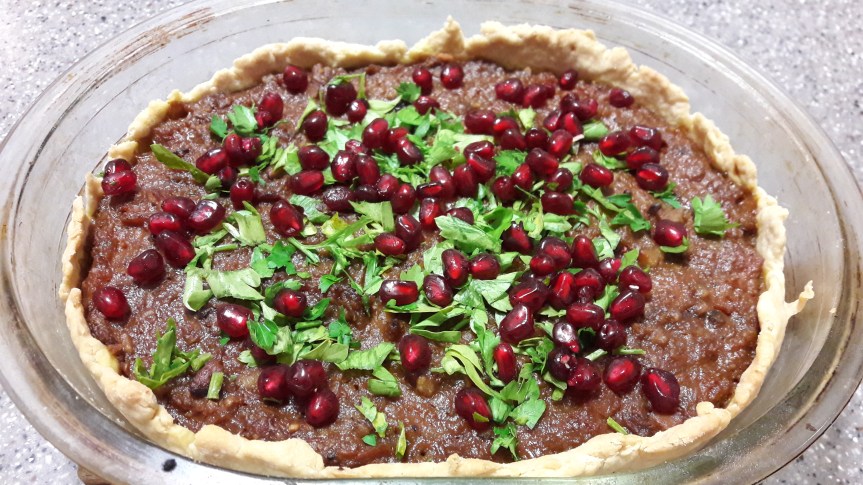
KCC’s Fesenjan Tart

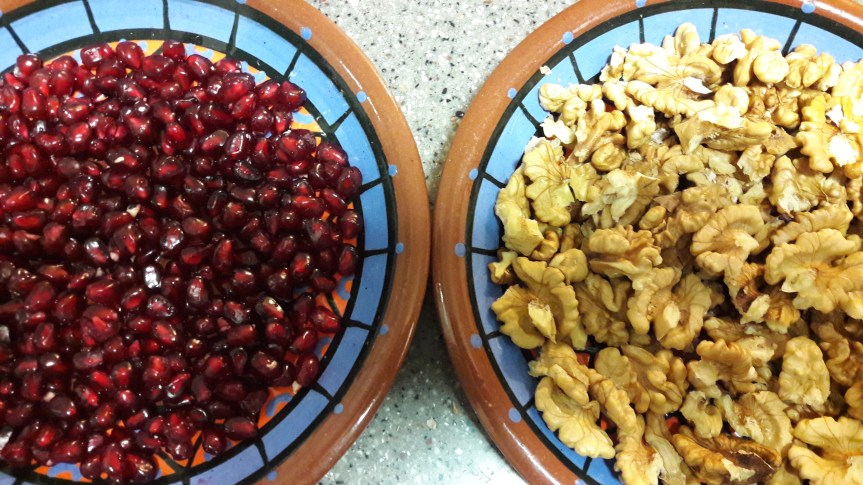
Usually served as a thick stew with rice, we’ve decided to put it in a pie case to make a tasty walnut and pomegranate infused tart. Making this stew can be quite labour-intensive – shelling the walnuts, toasting them, crushing them, extracting the pomegranate seeds and so on, but the end result makes it well worth all the effort.

20180112_185716
Can’t get much fresher than this!

Look out for Nar Ekşisi (pomegranate syrup) or the sweeter Nar Ekşili Sos (pomegranate sauce) in your local Middle-Eastern shop or make your own. If using Nar Ekşisi, add a teaspoon or two of honey to the stew to make it a bit sweeter.

To save time you can use shop-bought pastry, but we think it tastes better with a homemade pie crust. To keep it vegan, we’ve used olive oil instead of butter to make our shortcrust pastry.

Ingredients (serves 4)

125 g shelled walnuts

one medium onion

500 g pumpkin or butternut squash

300 ml vegetable stock

30 ml olive oil

2-3 tablespoons pomegranate syrup or sauce (Nar Ekşisi or Nar Ekşili Sos in Turkish)

0.5 teaspoon cumin seeds

0.25 teaspoon cinnamon and turmeric

Black pepper

Handful of pomegranate seeds

Bunch of fresh parsley

200 g shortcrust pastry

Method

Toast the walnuts for 10 minutes over a low heat and then mince in a blender. Heat the olive oil and fry the onion in a heavy-based pan over a medium heat for ten minutes. Add the spices and then add the cubed pumpkin and stir to cover.

Pour over the vegetable stock, add the pomegranate molasses and the minced walnuts and cook over a medium heat for 30 minutes until the pumpkin is cooked. Make sure the sauce is quite thick – if it’s runny, boil it until it starts to thicken.

Roll out the pastry and place it in a greased baking tray. Bake blind for ten minutes at 180c and then put the filling into the pie case. Cook for 40 minutes or so until the pastry starts to go golden brown.

Garnish the tart with chopped parsley and pomegranate seeds and serve with saffron rice and a green salad.

No Beef with the Beetburger

19 October 2017

The beet is back on Knidos Cookery Club and this time round we’ll be using our burgundy-coloured friend to tap into another zeitgeist treat in the form of the tasty beetburger.

20171013_210527

The stalls in Datça market last Saturday were overflowing with bunches of beetroots so we picked up a bunch, chopped off the leaves and stems for sautéing, and wrapped the beets in foil and roasted them in the oven for an hour or so.

Beetroot burgers have been a bit of a barbecue craze in the UK over the summer, with supermarkets reporting soaring sales as people turn towards healthier options to meat.

20171013_175647
Turkey’s papatya, or daisy, loaf of bread

We’ve done some experimentation and come up with a patty that will hold together under the grill, on the barbie, in the oven or can be shallow-fried. Stuff it in a bun – we’ve used the papatya loaf as pictured above, and serve with chips and salad for a delicious yet healthy meal (the chips were roasted in the oven, not fried).

Ingredients (makes 6-8 burgers)

100 g red lentils

50 g fine bulgur wheat

150 g roasted beetroot, grated

One medium onion

One garlic clove

50 ml olive oil

Two teaspoons dried thyme

One teaspoon each of sumac, cumin and chilli flakes

Dash of soy sauce

Method

Heat 25 ml of the olive oil in a heavy-based pan, add the herbs and spices and the chopped onion and garlic and fry for five minutes until the onion starts to soften. Add the lentils and water, bring to the boil and then simmer until the liquid is absorbed.

Add the bulgur wheat to the mix and allow to cool for 30 minutes – this should thicken the mixture. Then add the grated beetroot and stir to combine all the ingredients. Form into burger shapes (take a dollop of walnut-sized mix and flatten with a spatula and shallow fry in the rest of the olive oil on both sides until going crispy on the outside.

Alternatively, these burgers can be baked in the oven for 30-40 minutes at 200 c or grilled or cooked on the barbecue until crispy on both sides. Serve in a burger bun with salad and chips.

Olivier with an Edge

12 January 2017

Welcome to the first Knidos Cookery Club of the new year. While many of us have returned to the daily grind, it’s still party-time in some parts of the world.

in Russia, people are preparing to celebrate New Year’s Eve on 13 January – the Orthodox Church still follows the Julian calendar rather than the Gregorian calendar, which Russia adopted after 1917’s October Revolution. This switch created a 13-day lag between the calendars so, for followers of the Orthodox faith, Christmas Eve falls on 6 January and 13 January marks the end of the old year.

20170107_183144
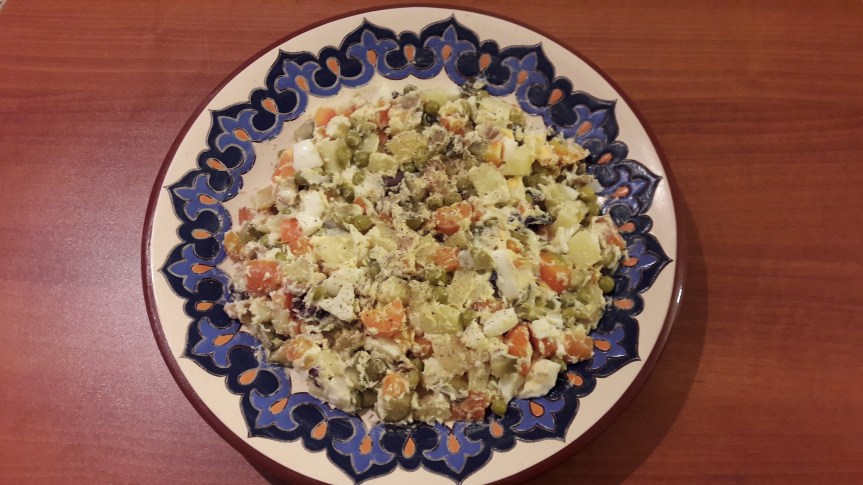
KCC’s take on Russia’s classic Olivier salad

A centre-piece of Russian tables on this day, as people prepare to welcome in novy god, is the Olivier salad – a concoction of boiled potatoes, pickled cucumbers, peas, eggs, carrots and boiled beef or chicken in a mayonnaise dressing. This version dates from Soviet times as all the ingredients could usually be procured even in the depths of winter and despite chronic shortages.

A version of the salad, omitting the meat and eggs, is made in Turkey where it’s known as Rus Salatası – we’ve made our own veggie version that replaces the meat (Olivier purists look aside now, please) with black and green olives and uses sour cream in place of mayonnaise.

When I lived in Moscow in the 1990s I got it into my head that Olivier salad should include olives (mistakenly thinking that Olivier referred to olives rather than the salad’s originator!) and I was disappointed when it came minus olives – so now I finally have a chance to put this right!

Ingredients (serves 3-4)

  • 150 g potatoes
  • 150 g carrots
  • 150 g peas
  • 150 g pickled cucumbers
  • 150 g black and green olives
  • two hard boiled eggs
  • 150 ml sour cream or natural yogurt
  • pinches of salt and black pepper

Method

  • Boil the whole carrots and potatoes until cooked but not going mushy and boil the eggs for 5 minutes or so. While they’re all cooking, chop the pickled cucumbers and olives into small cubes.
  • Drain the potatoes and carrots and cover with cold water to stop them cooking. Do the same with the eggs. Chop the potatoes, carrots and eggs into small cubes and arrange around the side of a large serving dish in separate sections with the olives, peas and cucumbers.
  • Pour the sour cream or yogurt into the middle of the bowl and season with salt and pepper. Now mix all the ingredients thoroughly, making sure they all get a good coating of sour cream or yogurt.
  • Leave in the fridge before serving alongside other Russian-themed salads, such as this veggie take on caviar made from beluga lentils, and wish a hearty S Novym Godom with shots of vodka and/or a glass of chilled Sovyetskoye Shampankskoye (if you can get hold of it in your local offie!) as you prepare to welcome Old New Year in true Russian-style!

Pass the Glasswort

30 June 2016

This week on Knidos Cookery Club we’re back in Turkey and we’ll be looking at a plant that grows in abundance on the salty shores of the Mediterranean and Aegean Seas – glasswort, or marsh samphire (salicornia europa). It’s known as glasswort because it used to be used as a source of sodium sulphate in the glass-making process until the nineteenth century.

IMG_0951
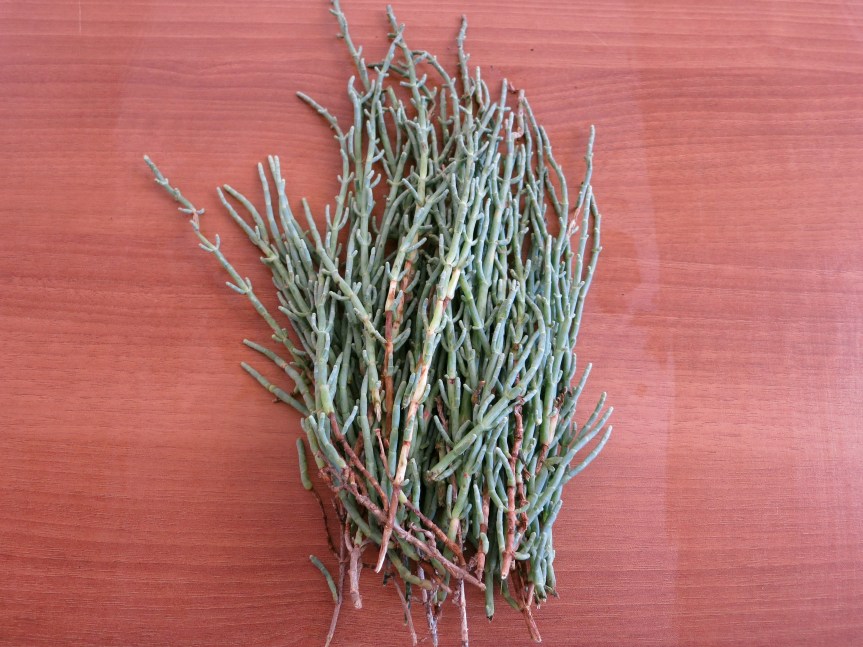
Freshly-picked samphire/glasswort

This bright green plant thrives in salty conditions and grows wild along seashores, estuaries and salt marshes all over Europe. It used to be widely eaten in the UK, it’s rich in minerals and has a pleasing flavour of the sea, but has only recently started re-appearing on menus as a much sought after ‘designer vegetable’- you might see it referred to as ‘sea asparagus’.

It’s called deniz börülcesi in Turkey, which translates as sea beans, and is served as a side dish dressed with olive oil, lemon and garlic alongside an array of other starters.

IMG_0954
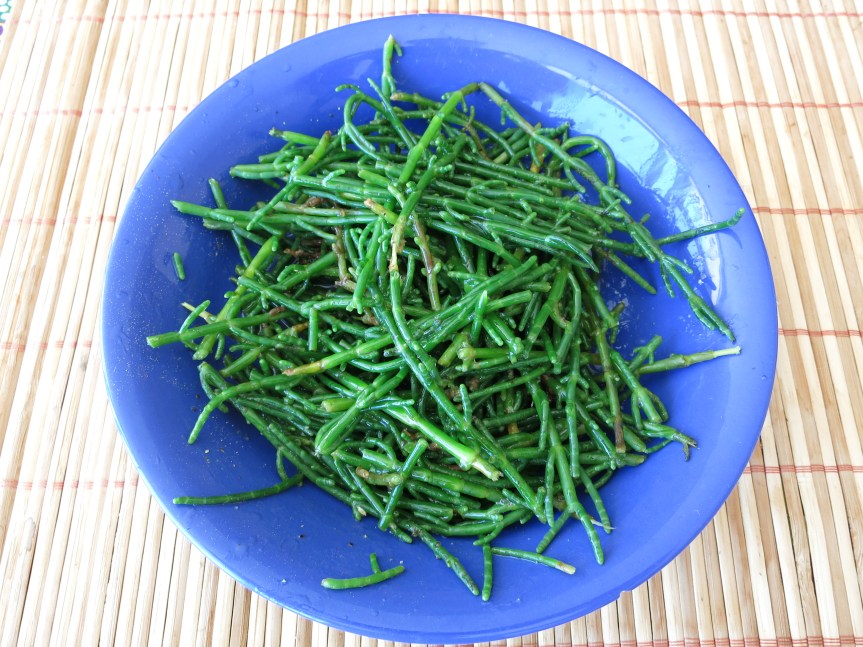
Blanched glasswort dressed with olive oil, lemon juice and black pepper

For this simple dish, you’ll need around 50-75 g of glasswort for each person. When preparing the glasswort, take care to wash it thoroughly and clean any sand and grit away. Cut off any tough stalks and roots and then blanch it in unsalted, boiling water for three minutes.

Drain the water away and then dress the stems with olive oil, a squeeze of fresh lemon juice and a sprinkling of black pepper – you won’t need to add any extra salt as it will already be salty enough. Serve warm alongside a salad of rocket, tomato, olives and onion and some fresh, crunchy bread for a light but tasty lunch.