Fill Yer Lentil Welly Boots!

15 June 2017

Next week should see the start of negotiations on the UK’s future relationship with the European Union as talks are scheduled to get underway on 19 June to hammer out the ultimate shape of Brexit.

In the lead up to this momentous day, this weekend also marks another seminal event in Britain’s troubled relationship with continental Europe – 18 June is the anniversary of the Battle of Waterloo, a battle which saw forces under the command of the Duke of Wellington deliver a fatal blow to Napoleon Bonaparte’s ambitions in 1815.
20170610_214951
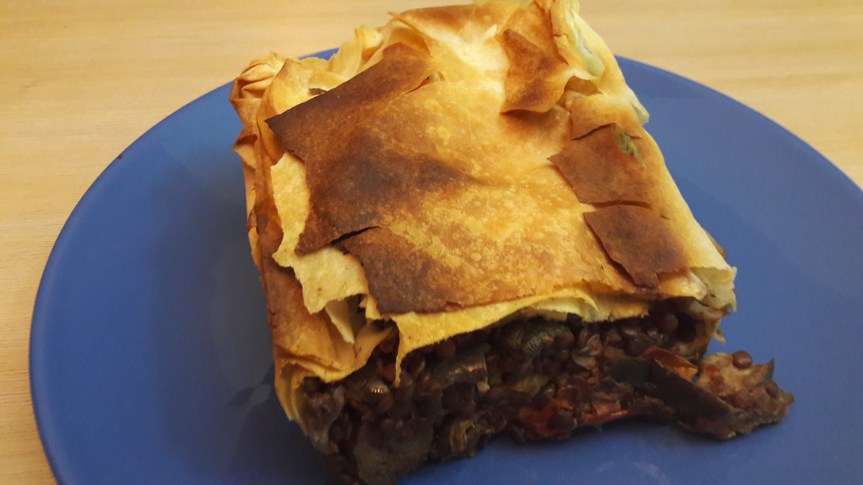
KCC’s Lentil Wellington ready for action

Only time will tell if the Maybot, in cahoots with the Rev Ian Paisely’s successors in the DUP, can produce a victory as decisive as Wellington’s – one thing is clear, some major sustenance is called for and what better than a hearty Lentil Wellington, our veggie take on Beef Wellington, a dish supposedly named after the duke.

Yes, besides giving his name to the wellington boot, the duke is also linked with this dish, which has a rich filling encased in pastry. Leah Hyslop suggests that the name was a patriotic makeover for a popular French dish:

The dish’s clear resemblance to that French specialty, filet de bœuf en croûte, could suggest the name was a timely patriotic rebranding of a trendy continental dish.

In our own era, food-patriotism was to the fore in 2003 when France refused to go along with the invasion of Saddam Hussein’s Iraq, causing some in the USA to call for ‘french fries’ to be rebranded ‘freedom fries’.
20170609_205035
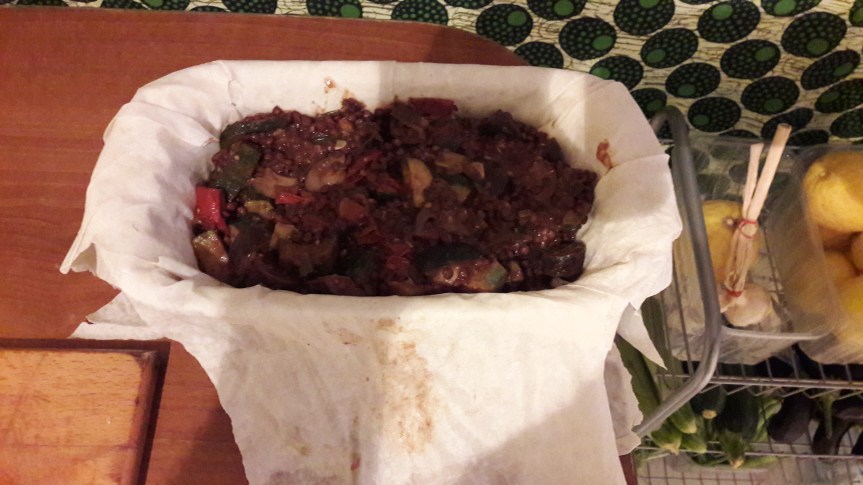
KCC’s Lentil Wellington ready for final assembly before baking

For a Turkish twist, we’ve used layers of yufka, the local version of filo pastry, to cover our rich lentil and vegetable sauce. Make sure you leave on overlap of pastry of about 8-10 cm around the edges of your dish in order to create a top to encase the filling.

Ingredients (serves 4)

250 g aubergines

250 g courgettes

250 g tomatoes

75 g black lentils

2 spring onions

1 garlic clove

1 bayleaf

1 teaspoon cinnamon, cumin, red chili flakes and coriander seeds

Pinches of black pepper and salt

250 ml vegetable stock

100 ml red wine

100 ml olive oil

Filo pastry (around 300 g)

Method

Wash the lentils until the water runs clear, and then cook in a heavy-based pan with the vegetable stock and bayleaf. Bring to the boil and then simmer over a low heat for 20 minutes or so until the liquid is absorbed.

While the lentils are cooking, prepare the vegetables: finely chop the spring onions and garlic, cut the aubergine and courgette into one cm thick slices and then cut into four. Place the vegetables into a heavy-based pan, add the herbs and spices and pour 50 ml olive oil over the veg and then cook over a medium heat for ten minutes, stirring occasionally.

Chop the tomatoes and add to the vegetables and cook for another five minutes, continue stirring every now and then. Now add the cooked lentils and the red wine and cook for another ten minutes or so until the liquid is absorbed.

While this is cooking, prepare the pie case. Grease a large pie dish with olive oil and layer leaves of filo pastry, brushing each layer with olive oil. Make sure you leave a pastry overlap of around 8-10 cm around the edges of the pie dish.

Pour the filling into the pie case and fold over the overlapping filo pastry, brushing with more olive oil to help seal the top of the case. Bake in an oven pre-heated to 180 c /gas mark 5 for 30 minutes or so until the top of the pie begins to turn a golden-brown colour.

Allow to cool for ten minutes and then serve slices of the pie with a crisp green salad and roasted new potatoes.
 

Moussaka Mania

8 June 2017

As the UK continues its downward plunge to become the latest contender for the mantle of Europe’s most basket case economy, we’re turning our attention to the current holder of that title, Greece, for culinary inspiration this week in the form of moussaka, a great comfort food. We’ll be needing lots of comfort in the coming months as the lucky winner of today’s UK election navigates a course through the choppy waters of Brexit.

20170531_131610

Summer is here, and with Datça market overflowing with an array of fresh produce, Knidos Cookery Club is moving back to weekly posts for the foreseeable future. The aubergine is a vegetable that has had surprisingly little coverage in these pages, so it’s high time that was rectified.

20170530_221006

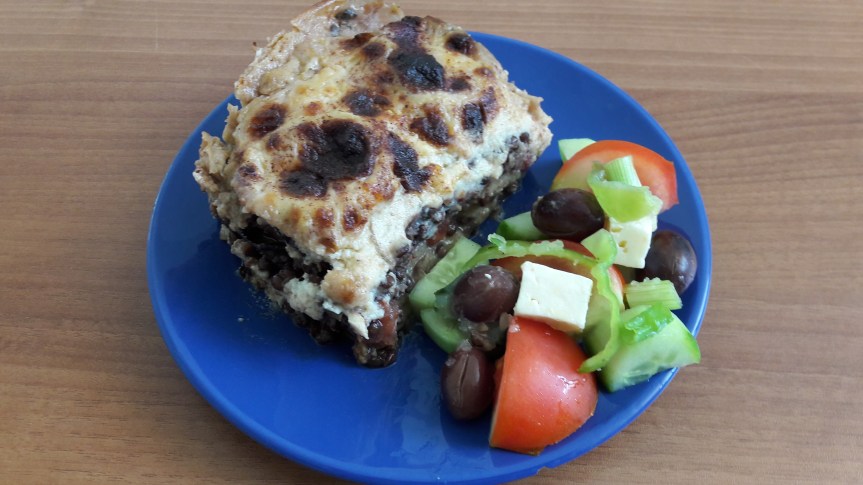
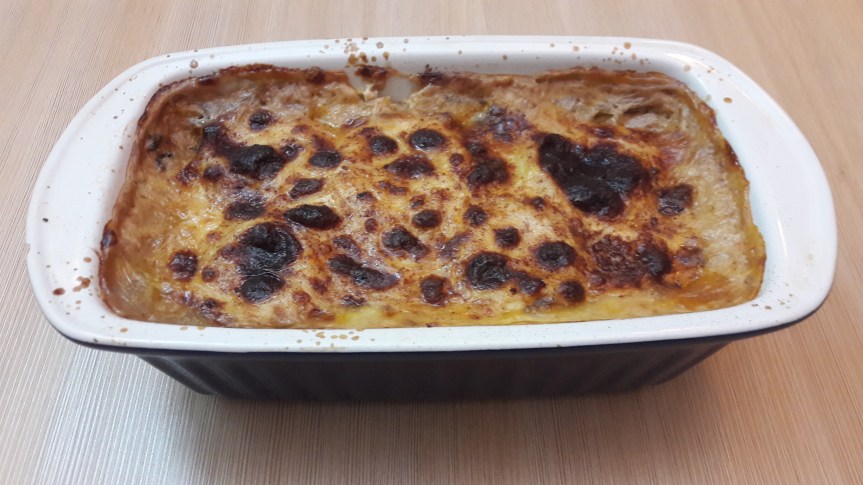
Moussaka is a perennial Greek favourite that is great fresh from the oven or eaten cooled down, allowing the flavours some time to collide. It combines layers of fluffy  potato and silky aubergine covered with a tomato-rich ragù, all topped with a creamy white béchamel sauce.

We’ve used black lentils in place of minced lamb to make our veggie take on moussaka, although any lentils should work well in this dish. It pairs excellently with a classic Greek salad of tomato, cucumber, onion, green pepper, olives and white cheese.

Ingredients (for 3-4 servings)

300 g aubergines

300 g potatoes

250 g tomatoes

100 g black lentils (or any other lentil)

3 spring onions

1 garlic clove

400 ml vegetable stock

100 ml red wine

1 teaspoon of cinnamon

1 teaspoon of dried sage

1 bayleaf

Pinch of black pepper

Pinch of red chili flakes

50 ml olive oil

For the white sauce:

50 ml olive oil

50 g flour

500 ml milk

5 peppercorns

1 bayleaf

75 g cheese (feta or  any crumbly white cheese)

Method

Heat 20 ml of olive oil in a heavy-based pan, chop the spring onions and garlic clove and add to the pan. Cook for five minutes then add the washed lentils and stir. Add the stock, bring to the boil then simmer for 20 minutes or so until most of the liquid is absorbed.

Pre-heat the oven to 200 c / gas mark 6. Cut the potatoes into one cm slices and boil for five minutes in a pan of water. Drain immediately and allow to cool. While the potatoes are boiling, chop the aubergine into 1 cm slices. If you like, you can coat the aubergine slices with a little salt, leave to stand for 10 minutes and then rinse. This should make them less bitter and remove excess moisture.

Place the potato slices in an oven dish and coat with 15 ml olive oil and stir to coat thoroughly. Place the aubergine slices into a separate oven dish and pour 15 ml of olive oil over them. Put both the dishes into the oven and bake for 30-40 minutes or until the potatoes are a golden brown colour and the aubergine slices beginning to char.

Add the peeled, chopped tomatoes, 100 ml red wine, bayleaf, cinnamon, sage and pepper to the lentils and cook over a low heat for 45 minutes until the sauce has reduced by about half.

While this is cooking, make the white sauce. Heat the oil in a heavy-based pan and stir in the flour to make a roux of a runny consistency. Slowly stir in the milk and add the peppercorns and bayleaf, stirring constantly with a wooden spatula or spoon or a whisk over a low heat. When the sauce begins to thicken, add the grated cheese and continue stirring until the sauce sets.

Now it’s time to assemble the moussaka. Pour half the lentil ragù over the potatoes to coat, add a layer of aubergines and pour over the rest of the ragù. Place the remaining aubergine slices over this and then pour the white sauce over these.

Sprinkle with red chili flakes and place in the oven and bake at 180 c /gas mark 5 for an hour or so – the top should be going a nice spotted brown colour as in the photo above.

Allow to cool and serve with a classic Greek salad made from tomato, cucumber, onion, green pepper, olives and white cheese, liberally dressed with olive oil and thyme.

Mr Alan’s Top Tips

18 May 2017

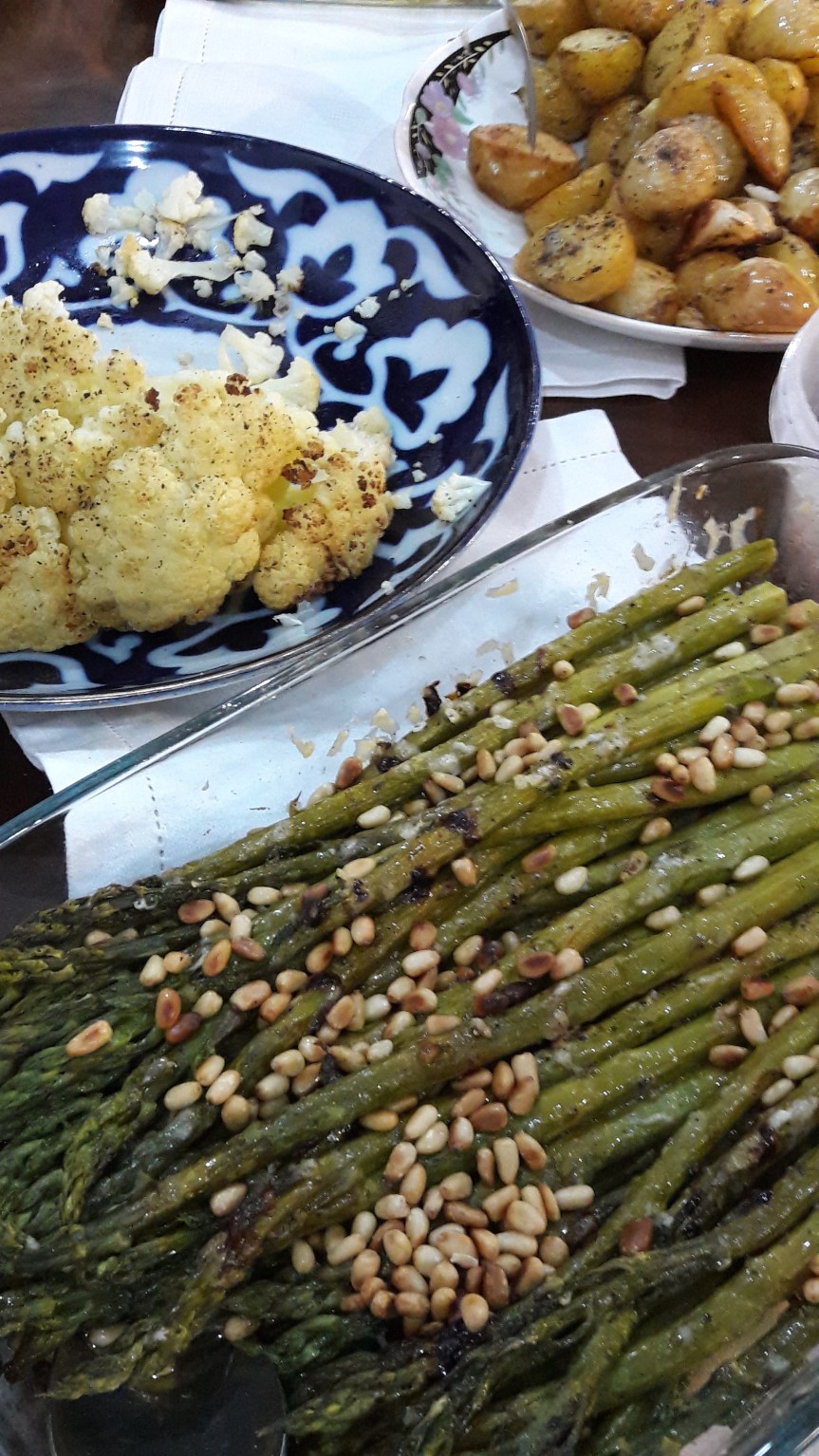
Knidos Cookery Club is just back from a flying visit to Uzbekistan where we met up with dilettante chef Mr Alan, who invited us round to sample his take on asparagus tips.

He’d tracked down some sizeable spears in Tashkent’s Alay, or Alaysky, bazaar and we added some first cold press Datça olive oil and some sun-dried tomatoes from the peninsula, which, with the addition of some toasted pine nuts and a smattering of grated pecorino cheese, made for quite a feast.

20170512_213305
Mr Alan’s way with asparagus


The asparagus tips, which are easy to bake and go well with potatoes, rice or pasta, were served up with a head of roasted cauliflower drizzled with truffle oil and roast new potatoes. Oh, and there was a duck and some fish for the carnivores, along with lashings of wine from Mr Alan’s cellar!

Ingredients (easily serves 6-8)

1 kg asparagus spears

200 g sun-dried tomatoes

50 ml olive oil

100 g pine nuts

50 g pecorino or similar hard cheese

One cauliflower, leaves removed

Truffle oil

Mixed dried herbs such as thyme or oregano

Method

Place a layer of sun-dried tomatoes on the bottom of a large baking dish. Arrange the spears over the top of the tomatoes, pour the olive oil on top, sprinkle some mixed herbs over the spears and grate the cheese over everything.

Bake in a hot, pre-heated oven at 200 c /gas mark 6 for twenty minutes or so until the spears are just beginning to char. Sprinkle the cauliflower with truffle oil and olive oil and cook for 30 minutes for so in the hot oven along with the asparagus tips. While the tips are baking, toast the pine nuts over a medium heat.

Serve the asparagus tips with the pine nuts alongside the cauliflower and potatoes and a bottle or two of your favourite wine.


Courgette Flower Power

4 May 2017

This time round on Knidos Cookery Club we’ve been busy stuffing courgette flowers, a popular starter all around the Aegean Sea. In Turkey, these delicate taste-bud ticklers, known as kabak çiçeği dolması, are stuffed with a rice mixture and baked, unlike their Italian cousins which are filled with ricotta cheese and deep fried.

IMG_1295
Succulent stuffed courgette flower power

The courgette, zucchini to our north American readers, is a really versatile vegetable – in the past we’ve used it in a tasty fritter mücverstuffed courgettes and in a creamy almond dip, and it’s great that we’ve found a use for its flowers as well.

If you’re growing your own courgettes, then you should have a ready supply of flowers, otherwise you may need to scour your local farmers’ market for these vivid orange blossoms.

Ingredients 

20-25 courgette flowers

One cup (approx. 100g) of short or long grain rice (We recommend brown rice for its earthier flavour)

250 ml vegetable stock

One medium-sized onion

One medium-sized tomato

One garlic clove

Pinches of dried thyme, oregano, black pepper, chili pepper flakes, cinnamon and salt

5 g fresh parsley

5 g fresh mint

25 g raisins

25 g  pine nuts

25 ml olive oil for frying

Juice of one lemon

One sliced lemon

100 ml natural yogurt

Method

Pour the olive oil into a heavy-based pan and add the chopped onion and garlic. Cook over a medium heat until the onion becomes translucent. Add the chopped tomato, dried and fresh herbs, seasoning, dried fruit and pine nuts and cook for five minutes over a high heat.

Turn the heat down and add the washed and soaked rice to the onion mix and stir to cover the grains with oil. Add the stock and cook over a low heat until the liquid is absorbed.

Make sure that the courgette flowers are free from any green, leafy bits or stem and remove the stamen from the inside of the flower. Allow the rice mixture to cool and then fill each flower with a teaspoon of rice mix – don’t overfill them as the rice will continue to expand as it cooks.

Fold the end of the blossom together to seal the rice mix in and place the filled flowers into a heavy based frying pan or casserole dish. Pour water over the flowers to just cover them, add a generous glug of olive oil and the lemon juice, put a lid on the pan and cook over a low heat until all the water is absorbed.

Leaving the pan covered, let the cooked courgette flowers rest for 30 minutes or so with the heat turned off and then serve with lemon slices and a dollop of natural yogurt.


A Passion for Pkhali

20 April 2017

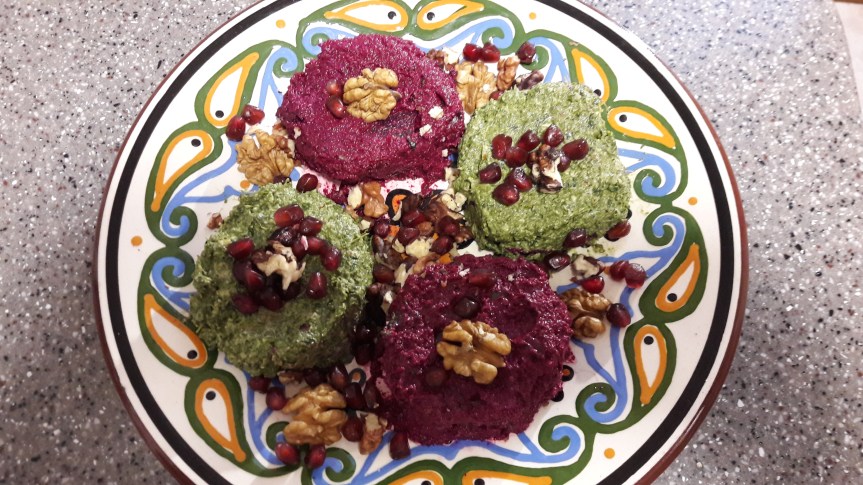
This time round on Knidos Cookery Club we’re returning to Georgia for some culinary inspiration in the form of pkhali, a type of starter made from walnuts, herbs, spices and whatever vegetable happens to be in season, such as spinach, beetroot, aubergine, cabbage or carrot.

20170415_200229

Walnuts are widely used in Georgian cooking – besides pkhali, they can be turned into  satsivi, a thick paste similar to hummus, and  bazhe, a sauce made with the holy trinity of Georgian herbs – blue fenugreek, ground coriander (cilantro) and crushed marigold flowers. These combos can be mixed with fresh cucumbers and tomatoes as a salad dressing or stuffed into tongues of fried aubergine (eggplant).

IMG-20170415-WA0000

Staying on the walnut theme, on a recent visit to the former home of famous Kazakh writer Mukhtar Auezov in Almaty, Kazakhstan, the guide gave me a handful of walnuts from the gnarled old tree in the garden of the writer’s house. These nuts were used in the making  of today’s pkhali recipe.

Auezov was famous in Soviet times for writing The Path of Abai, an epic historical novel based on the life and teachings of Kazakhstan’s most famous poet and composer Abai Qunanbayuli, who had been a neighbour and friend of Auezov’s grandfather.

It was said in the Soviet era that all were equal, but some were more equal than others – and this was certainly the case for Auezov after he won the Lenin Prize in 1959 for his four-volume epic novel about Abai.

The prize came with a sackful of roubles which he invested in a two-storey house, which is now a museum dedicated to his life and work. The house was lavish by the standards of the time and was designed by the architect who designed Almaty’s Abai Opera Theatre.

Ingredients (Makes around four generous servings of each pkhali – see photo above)

For the beetroot pkhali

  • 300 g cooked beetroot
  • 100 g walnuts
  • One garlic clove
  • 5 g fresh parsley
  • 5 g fresh coriander
  • One teaspoon blue fenugreek powder
  • One teaspoon black pepper
  • 20 ml wine vinegar
  • A scattering of pomegranate seeds and walnuts


For the spinach pkhali

  • 250 g fresh spinach
  • 100 g walnuts
  • One small onion (around 75 g)
  • One garlic clove
  • 5 g fresh parsley
  • 5 g fresh coriander
  • One teaspoon blue fenugreek powder
  • One teaspoon black pepper
  • 20 ml wine vinegar
  • A scattering of pomegranate seeds and walnuts


Method

  • For the beetroot pkhali:
  • Boil the beetroot for 30 minutes or so until you can pierce it with a knife easily.
  • Leave to cool and then peel and chop into small chunks.
  • Toast the walnuts over a low heat for 5-10 minutes and then add to the garlic and herbs and spices in a bowl. Add the vinegar and use a blender to make a smooth paste. Add the beetroot chunks and keep blending until you have a gloopy mixture.
  • Leave overnight in the fridge and then serve with a scattering of pomegranate seeds and walnuts.

Method

  • For the spinach pkhali:
  • Cook the spinach in boiling water for 5 minutes until it begins to wilt. Remove and place in cold water and then drain.
  • Finely chop the onion and put it in a mixing bowl with the garlic, herbs and spices. Toast the walnuts over a low heat for 5-10 minutes and then add to the bowl. Add the vinegar and use a blender to make a smooth paste. Add the spinach and keep blending until you have a gloopy mixture.
  • Leave overnight in the fridge and then serve with a scattering of pomegranate seeds and walnuts.


Seventh Heaven Samsas


23 March 2017

Happy Nowruz from Knidos Cookery Club!

20170317_163343
Nauryz (Nowruz) greetings from Almaty, Kazakhstan

To celebrate this spring equinox festival, we’ll be serving up kok samsa, deep-fried pies filled with a selection of spring greens.

20170317_181312
Seven tastes of spring: parsley, spinach, coriander, celeriac leaves, spring onion, garlic and mint

Originating in Persia some 3,000 years ago, Nowruz, or New Day, is a celebration of the end of winter and the start of a new year on the date when day and night are equal in the Northern Hemisphere. This date usually falls on or around 21 March.

The holiday is still widely celebrated in Iran and Iraq, across Central Asia, Russia, Afghanistan, Albania, Azerbaijan, in eastern Turkey and in parts of Syria, India, Pakistan and China. Food plays an important role in these celebrations – in Iran the table is set with seven items, as explained in this article from Iran Wire:

A few weeks before Nowruz, Iranians begin setting up their haft sin, or “seven Ss,” a ceremonial display of symbolic items whose names begin with the Persian letter “sin” or “s.” They include “sabzeh,” or green sprouts grown from lentils, which symbolize rebirth; “samanu,” a sweet pudding that represents affluence, “senjed,” or dried wild olives, which symbolize love; “seer,” or garlic, which symbolizes medicine; “seeb,” an apple, which represents health; “somaq” or sumac fruit, which symbolizes the color of sunrise, and “serkeh,” or vinegar, which symbolises maturity.

Kok samsa, a close relative of India’s samosa, are prepared in Uzbekistan, where the holiday is called Navruz. These tasty pies are filled with fresh spring greens.

We’ve developed our own take on the kok samsa using the Iranian magic number of seven ingredients: parsley, spinach, coriander, celeriac leaves, spring onion, garlic and mint. As fully signed-up members of Dillwatch, we omitted that scurrilous weed, dill, from this recipe.

20170317_230319.jpg
KCC’s Kok samsa with seven spring herbs inside

Ingredients (makes 8-10 pies)

  1. For the Pastry
  • 300 g plain flour
  • 75 ml olive oil
  • Pinch of salt
  • Up to 75 ml cold water
  • Two – three teaspoons of  sesame seeds

       2. For the Filling

150 g spring onions

  • 2 garlic cloves
  • 50 g fresh coriander
  • 50 g fresh parsley
  • 150 g spinach
  • 25 g the leafy bits from the top of a celeriac
  • 15 g fresh mint
  • Two teaspoons of cumin seeds
  • 25 ml olive oil

      3. For Deep Frying

  • 1 litre sunflower oil (for deep frying)

Method

      1.For the Pastry

Pour the flour into a large mixing bowl and add the salt. Pour in the olive oil and stir with a fork. The mixture should form into small clumps of flour and oil. Pour some of the cold water and continue mixing. Continue adding water until the mixture forms into a large ball shape. Cover with cling film and leave in the fridge until you’re ready to use it.

      2. For the Filling

Heat the olive oil in a heavy-based pan and add the chopped spring onions and minced garlic. Fry for five minutes over a medium heat, stirring occasionally. Add the coriander and parsley and cumin and fry for two to three minutes. Add the torn up spinach leaves, chopped celeriac leaves and mint and continue cooking until the spinach has wilted, about 10 more minutes or so, stirring every now and then.

      3. For Deep Frying

Heat the sunflower oil in a heavy-based pan. For deep frying you need to get the oil to around 180 c – to check the temperature use this tip from Delishably:

When the oil has preheated, dip the handle of a wooden spoon or a chopstick into the oil. If the oil starts steadily bubbling, then the oil is hot enough for frying. If the oil bubbles very very vigorously, then the oil is too hot and needs to cool off a touch. If no or very few bubbles pop up, then it’s not hot enough.

While the oil is heating, prepare the pies. Form the pastry into 8-10 walnut-sized balls. Put the pastry ball onto a lightly floured surface and roll out into a 1 mm thick circle. Sprinkle with sesame seeds and turn the circle over.

Place three teaspoons of filling on half of the pastry round and then close the other half over the top of the filling. Use a fork to mould the edges of the pie together. Prick the pie’s top to allow air to escape.

Place two or three pies at a time in the hot oil and fry for around 8 minutes or until the pie is golden brown in colour. Remove with a slotted spoon and drain on kitchen roll. Serve the kok samsa either hot or cold.


Operation Lentil

23 February 2017

It was on this day back in 1944  that the Chechen and Ingush  people of the North Caucusus had one of the darkest moments in their troubled history. Accused by the Soviets of siding with the Nazi forces, the entire population was herded onto cattle trucks and deported by force to Central Asia.

The mission was codenamed ‘Operation Lentil’ – after chechevitsa, the Russian word for lentil, which shares its first two syllables with Chechen. By way of commemoration of this tragedy that befell the Chechen and Ingush communities, who refer to the deportations as Aardakh, the exodus, this time around we’ll be sharing a recipe for the Turkish dish mercimek köftesi – a versatile red lentil patty.

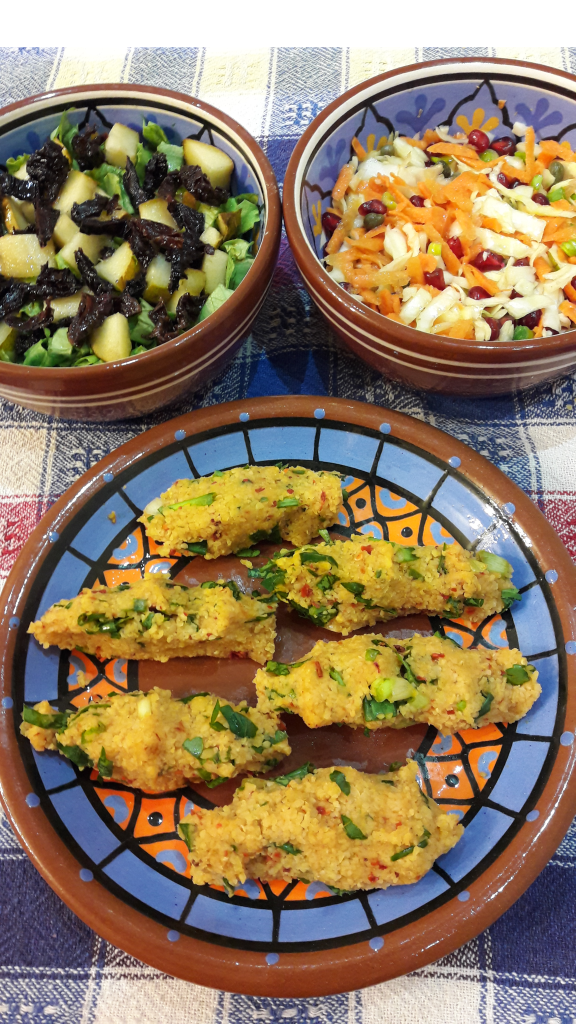
lentil-patties
Mercimek köftesi – red lentil patties, served with green salad and cole slaw

These spicy, lentil patties are easy to prepare and are delicious when rolled up in flatbread, like lavash, with fresh cole slaw and a green salad. We used ajika sauce from Georgia on the other side of the Caucasus mountains, a fiery blend of red chili peppers and tomatoes, to flavour the patties – but if you can’t find this locally, then a mix of tomato paste with chili flakes will do nicely.

Ingredients (Makes around 20-24 lentil patties)

100 g red lentils (one cup)

150 g fine bulgur wheat (1.5 cups)

500 ml water

6-8 teaspoons of ajika sauce (see above)

5 spring (green) onions – chopped

A handful of fresh flat leaf parsley, roughly chopped

One teaspoon of cumin seeds

One teaspoon red chili flakes

Black pepper

25 ml olive oil

Juice of one lemon

Method

Wash the lentils until the water goes clear and then place in a pan with the water. Bring to the boil and simmer over a low heat for 20 minutes or so. The lentils should be going mushy and there should be about 1 cm of water covering the lentils – add more water if necessary.

Add the washed bulgur wheat to the cooked lentils and the ajika sauce and blend well. Allow to stand for 30 minutes or so and then add the olive oil, lemon juice, spring onions, parsley, cumin, red chili flakes and black pepper and mix well.

Allow to stand for a few hours to let the flavours combine and then mould a walnut-sized piece of the mix in the palm of your hand and use your fingers to form a  sausage-shape (see picture above).

Serve rolled in flatbread or stuffed into a pita with a cole slaw made from shredded cabbage, grated carrot, pomegranate seeds, spring onion and capers and  a salad of lettuce, sun dried tomatoes, pear and spring onion.


Rip-Red Risotto

17 November 2016

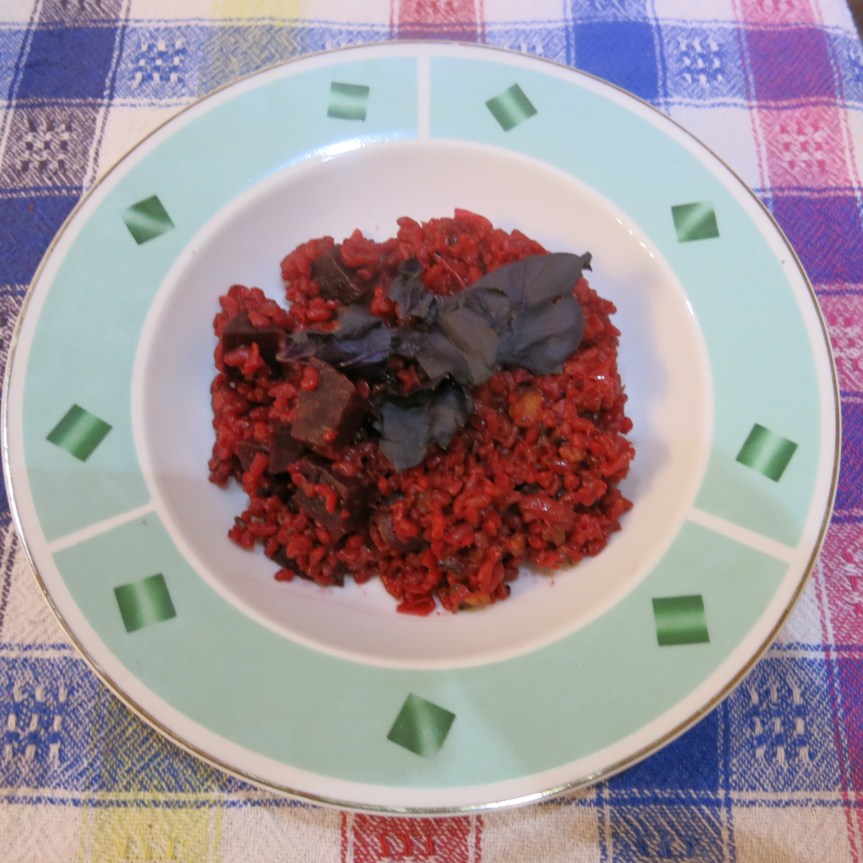
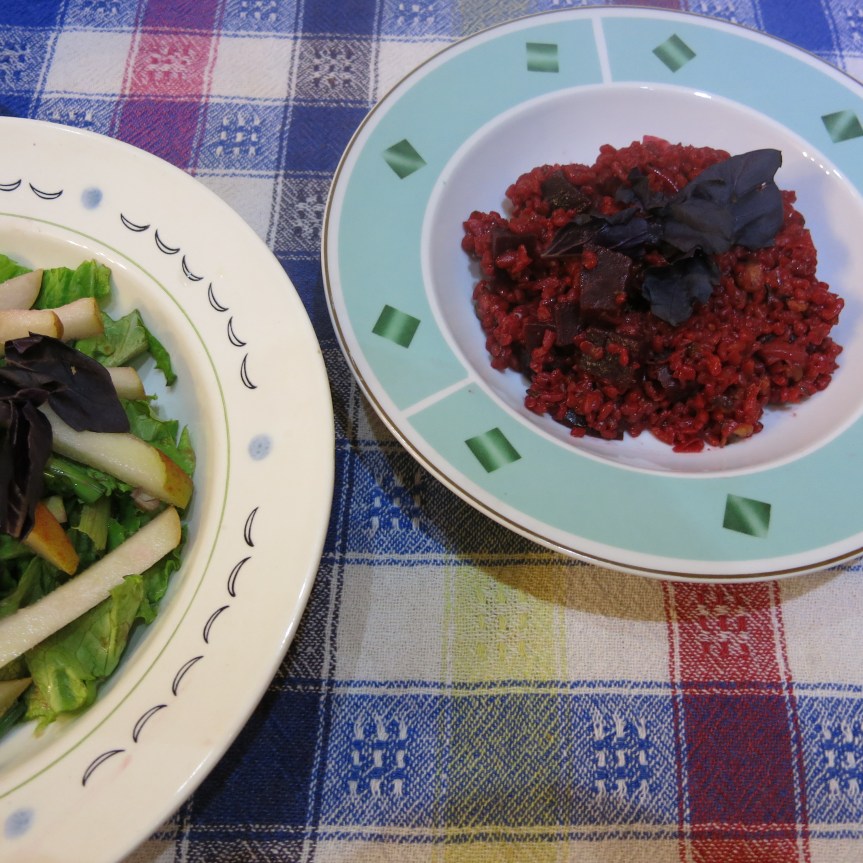
This week on Knidos Cookery Club, we’re featuring beetroot as the basis for a rip-roaringly red risotto.

In Turkish, if you want to say something is, for instance, very blue, then you add a prefix. By adding mas to mavi (blue) you end up with masmavi.  As an example, to talk about the deep blue sea you could say masmavi engin deniz.

img_2365

A rich red colour, such as that imparted by beetroot, would come out as kıpkırmızı, or, in English, rip-red, which seems a perfect way to describe out beetroot risotto. To add a Turkish-edge to the dish, we used coarse bulgur wheat, but you can use arborio rice if you prefer.

img_2363

We added some walnuts to the mix, as they combine so well with the sweet edge of beetroot. This is quite a common combination – in Georgia walnuts are blended with grated beetroot to make pkhali.

Ingredients (serves 3-4)

  • 250 g  whole, uncooked beetroot
  • 50 g walnuts
  • 100 g coarse bulgur wheat
  • 150 ml red wine
  • 500 ml beetroot cooking water
  • 25 ml olive oil
  • one medium-sized onion
  • one garlic clove
  • one teaspoon dried thyme
  • one teaspoon dried rosemary
  • one teaspoon cumin seeds
  • black pepper and salt to taste
  • sprig of fresh basil leaves

Method

  • Boil the washed but unpeeled beetroot in a saucepan for 30 minutes. Put the beetroot in cold water, keeping the water you used to cook the beetroot separate, and then peel and top and tail the beetroot when cool. Put to one side.
  • Heat the olive oil in a heavy-based pan and add the cumin seeds. Cook until the seeds are beginning to burn and then add the diced onion and garlic, dried thyme and rosemary and season with salt and pepper. Cook until the onion is going translucent.
  • Add the washed bulgur wheat and stir to coat the grains. Add the glass of wine and stir occasionally until the liquid is absorbed. Add a third of the vegetable stock and keep cooking and stirring until the liquid is absorbed. Add more stock until the bulgur wheat is cooked and the risotto has a creamy consistency and then turn off the heat.
  • Meanwhile, gently toast the walnut pieces in a small frying pan and chop the beetroot into small, 1 cm cubes. Mix the beetroot and toasted walnut into the bulgur wheat risotto.
  • Garnish with fresh basil leaves -green ones make a better contrast to the red of the risotto, but we could only find the mauve coloured variety. Serve with a green salad.


Riding the Bread Bowl Zeitgeist

3 November 2016

Ok, so we’ve all heard of dunking bread into a wholesome bowl of soup, but, until last week, Knidos Cookery Club had not come across soup being served in a bread bowl. It’s a craze that had seemed to pass us by.

On a chilly night during a recent trip to Reykjavik, Iceland, we found a restaurant that was serving just two dishes – asparagus soup or a thick, meaty broth, both served in a bread bowl. We were instant converts.

20161030_160310A few days after this, a restaurant was spotted in Pendik, a district of Istanbul in Turkey, that had a poster for Ekmekte Çorba, yes, that’s right, soup in a bread bowl. Looks like there could be a craze starting here so let’s chase the zeitgeist and try and recreate this in the Knidos Cookery Club kitchen.

Wondering what to do with all that pumpkin left over from Halloween? Why not turn it into a hearty soup that should pass the bread bowl test – you don’t want your soup to be too liquid as there’s a danger of ending up with a soggy mess of soup and bread. We’ve thickened ours with red lentils and bulgur wheat, so combined with the bread, this one’s going to be a real winter warmer.

Ingredients: (serves 3-4)

four medium-sized round brown loaves

300 g pumpkin (save the seeds for roasting)

50 g red lentils

50 g coarse bulgur wheat

one medium-sized pear

one medium-sized onion

one garlic clove

750 ml vegetable stock

sprinkle of dried sage

one teaspoon of dried thyme

two bay leaves

one teaspoon of cumin seeds

one cinnamon stick

half a teaspoon of turmeric

Method:

Cut the pumpkin in half and remove the seeds, retain them to use later. Peel the pumpkin and dice into 1 cm cubes. Place the pumpkin cubes in a baking dish, pour in 50 ml of olive oil and sprinkle the sage and thyme over the pumpkin and mix well.

Bake in a pre-heated oven (220 c /gas mark 7) for 45 minutes or until the pumpkin mashes easily with a fork. While the pumpkin mix is cooking, put the seeds on some tin foil and roast in the oven until starting to char a little bit.

Finely chop the onion and garlic and fry in 50 ml olive oil over a medium heat. As they’re cooking add the cumin seeds, turmeric and cinnamon stick and bay leaves. Cook until the onions are starting to brown.

Chop up the pear finely and add with the roasted, mashed pumpkin to the onion mix and pour the stock over the top. Bring to the boil and then reduce the heat and add the bulgur wheat and red lentils. Cook over a medium heat for thirty minutes or so until the bulgur and lentils are beginning to go a bit mushy.

Slice the top off the loaf and scoop out the contents, leaving around 1 cm of bread as a lining for the bowl. Pour the soup into the bread bowl, garnish with roasted pumpkin seeds and serve immediately. Use the top of the bread to dip in the soup and eat the bowl as you go, depending on how hungry you are!


Mungo Pumpkin Patties

6 October 2016

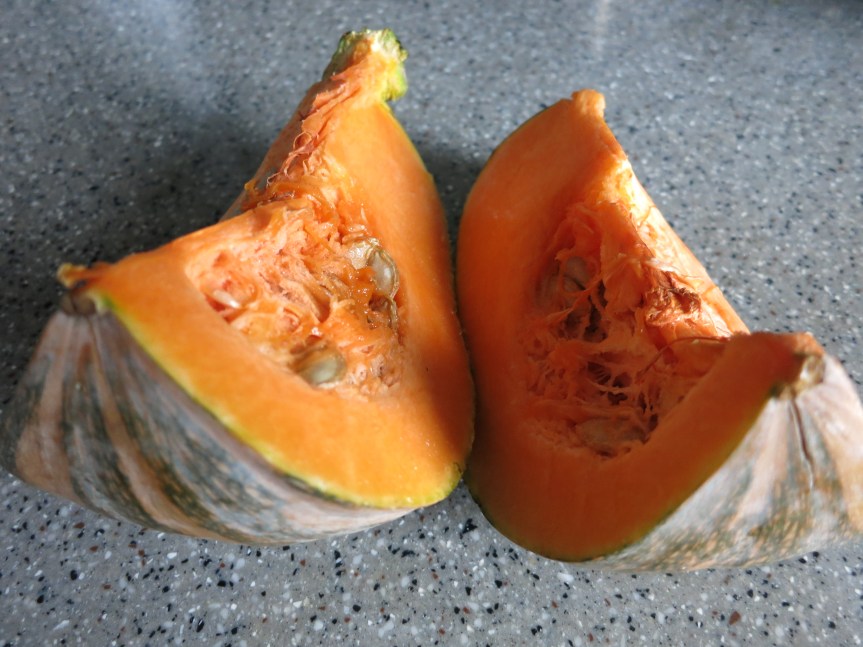
Knidos Cookery Club’s autumnal vibe continues apace with the re-appearance of pumpkins of all shapes and sizes in the market. This is one vegetable that acts as a surefire marker of the onset of longer and chillier nights, with thoughts turning towards the comforting pumpkin-rich soups and stews of winter.

img_2044

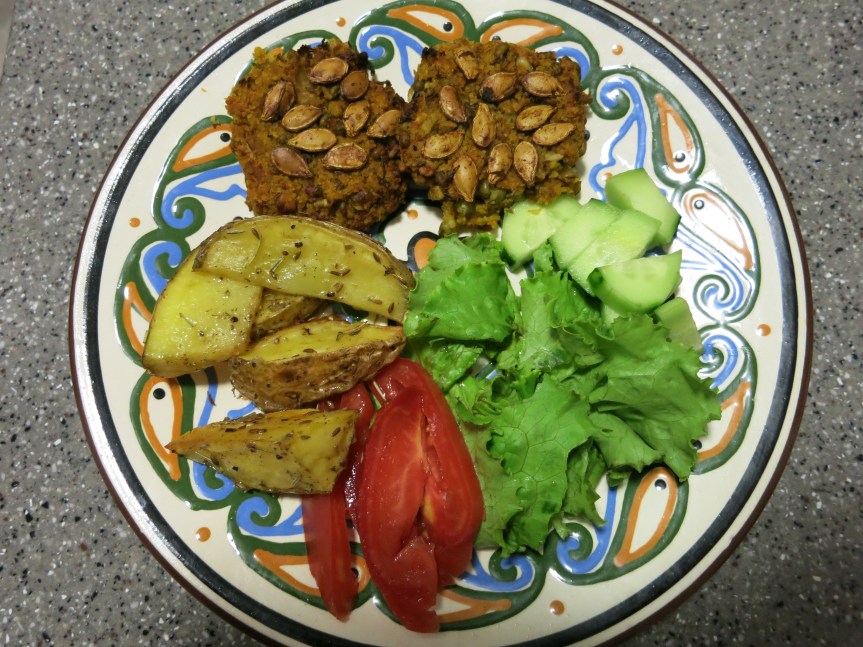
In Turkey, pumpkin is often served as a desert – kabak tatlısı , that coats the orange-coloured slices in sugar syrup. Here at Knidos Cookery Club we prefer the savoury approach to pumpkin and have come up with some mung bean, bulgur wheat and mashed pumpkin patties.

pumpkin-patties

The mung beans add a nutty, earthy flavour that compliments the natural sweetness of pumpkin, while the bulgur wheat helps to hold it all together so the patty can be fried or oven-baked. Roast the seeds and use them to decorate the patties and give tham a bit of crunch.

Ingredients (makes 6-8 patties)

300 g pumpkin

75 g mung beans

50 g fine bulgur wheat

one medium-sized onion

one garlic clove

one teaspoon cumin seeds

one teaspoon dried thyme

black pepper

one teaspoon turmeric powder

25 ml olive oil

250 ml water

Method

Wash and soak the mung beans in cold water for two hours. Then cook in 250 ml water for 45 minutes or until the beans are just starting to go mushy – add more water if necessary.

Cut the pumpkin in half and remove the seeds, retain them to use later. Peel the pumpkin and dice into 1 cm cubes. Finely chop the onion and garlic. Place the pumpkin cubes, onion and garlic in a baking dish and pour 25 ml of olive oil over them. Add the cumin seeds, dried thyme and black pepper and mix well to coat the cubes.

Bake in a pre-heated oven (220 c /gas mark 7) for 45 minutes or until the pumpkin mashes easily with a fork. While the pumpkin mix is cooking, put the seeds on some tin foil and roast in the oven until starting to char a little bit.

Mash the pumpkin mix with a fork or a potato masher and then add the cooked mung beans and blend well. Stir in the turmeric powder and then add the bulgur wheat. Mix well and allow to stand for 30 minutes.

Tak a golf-ball sized portion of the mix and flatten to a round shape. Decorate with pumpkin seeds and shallow fry in oil or oven-bake for 30 minutes at 220 c (gas mark 7).

Serve with roast potatoes or chips and a mixed salad or in a burger bun with toppings of your choice.