The HummusVariations: Beetroot and Walnut Hummus

02 November 2023

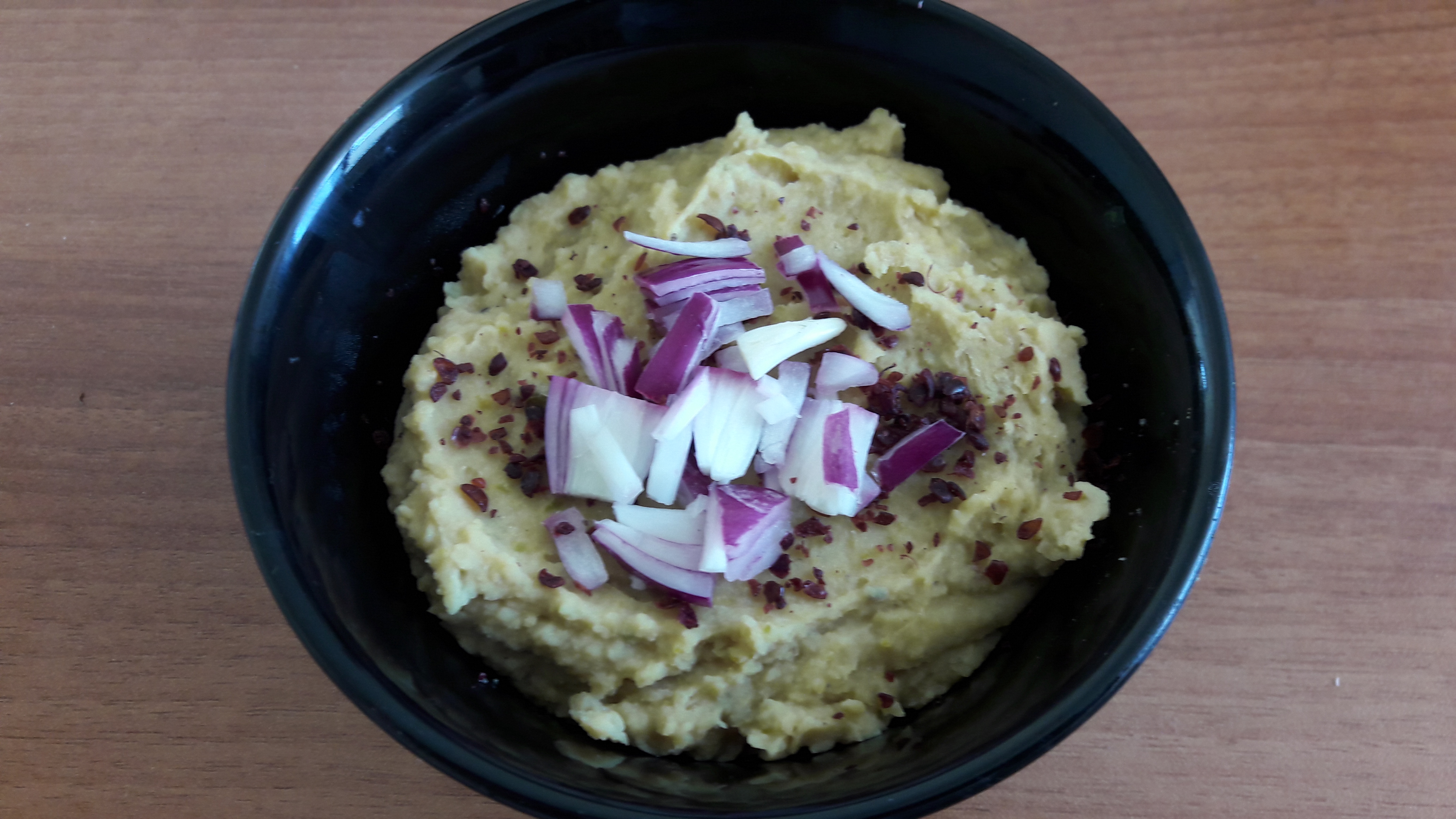
Hummus is one of those dips that we come back to time after time here on KCC. Beyond the classic basic dip of chickpeas, tahini, garlic, lemon juice and olive oil, the possibilities are endless. Our latest version is inspired by a recent trip to Myrtos, Crete where we tasted a beetroot-driven hummus at the excellent O Platanos restaurant.
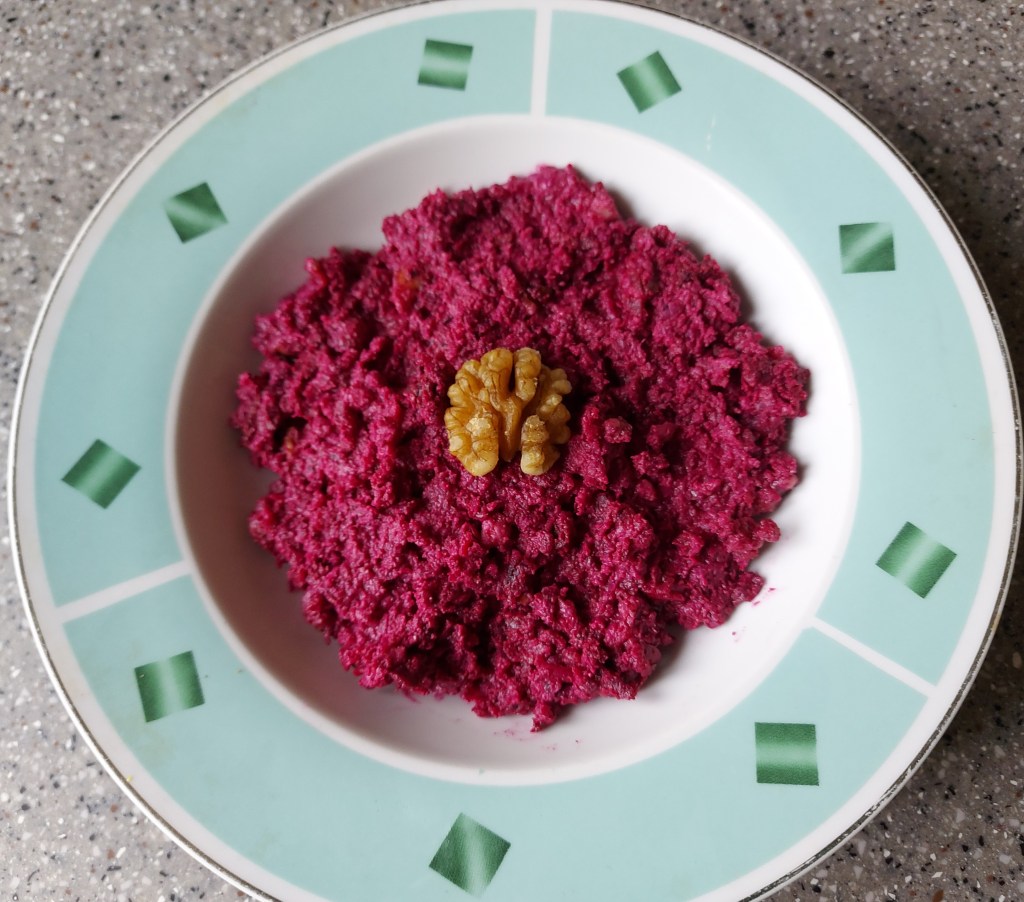
In the past, we’ve made a turmeric-infused hummus and one from red beans, now here’s our latest variation. Beetroot is one of our favourite root vegetables, and it’s really good for you to boot. Taking some tips from Georgia, where a similar dip called pkhali is a regular feature on the dinner table, we’ve added some walnuts to give this hummus an extra protein boost.

Ingredients

  • 125 g baked beetroot – grated
  • 125 g crushed chickpeas
  • 50 g tahini – mixed with up to 50 ml of hot water
  • 25 g toasted walnuts
  • One garlic clove
  • 100 ml aquafaba (chickpea water)
  • a few dashes of olive oil
  • Two teaspoons of sumac 
  • pinches of ground cumin and coriander

Method

  • Grate the beetroot and then put in a large bowl and crush with a fork (you can also put it in the blender, if you have one). Add the mashed up chickpeas and stir well. Combine  the tahini with hot water until you have a creamy paste and then add to the mix.
  • Add the crushed, toasted walnuts, finely chopped garlic and sumac (this replaces lemon juice to give the hummus a citrusy kick without the acid) and stir together. Add some aquafaba and some splashes of olive oil and blend until the dip achieves your favoured consistency. Season with cumin and coriander and serve with warm pita bread. 

Hasty Tasty Avocado Tzatziki

12 October 2023

Over the next few weeks on KCC, we’ll be looking at some dishes inspired by a recent visit to Crete, Greece’s largest island.

Avocado Tzatziki – with love from Crete!

Crete has dishes not commonly found in other parts of Greece, including hortapitakia, small pies filled with leafy greens and fresh herbs picked from the slopes of the island’s plentiful mountains and a tzatziki made with avocado – check the recipe for this dish below.

KCC spent some time this summer in Myrtos on the south-east coast of Crete. A favourite taverna was O Platanos, which had some imaginative takes on some Greek classics, such as avocado tzatzikl, beetroot hummus, fried manouri cheese with honey and sesame seeds and a moussaka made with sweet potato.

Avocado Tzatziki à la Platanos, Myrtos, Crete

Ingredients (makes four servings)

  • 200 ml Greek yogurt
  • 75 g avocado
  • 75 g cucumber 
  • One garlic clove
  • Add fresh basil, oregano or dill (to your taste)

Simply smash the avocado, grate the cucumber and mix with the yogurt and then add crushed garlic if using and the herbs of your choice. Hey presto, your tzatziki is ready! Serve with warm pita bread.

The Life of Briam

21 May 2020

There were signs this week of life slowly beginning to return to some sort of normal.  Cafes and terraces are set to open once again in Almaty from next week and the streets are busier. We’re not planning on changing too much at the moment and, in the meantime, we’re content to continue our armchair culinary travels.

20200520_184214
Half-way there – assembling the briam…

Greece has been in the headlines this week with the news that its beaches are reopening and it’s preparing to open its borders to tourists next month. This news brought back memories of holidays in the Greek islands and the great food in the tavernas. One of our favourite dishes is briam (pronounced bree-AM) – a delicious stew of oven-roasted seasonal vegetables.

IMG-20200521-WA0012
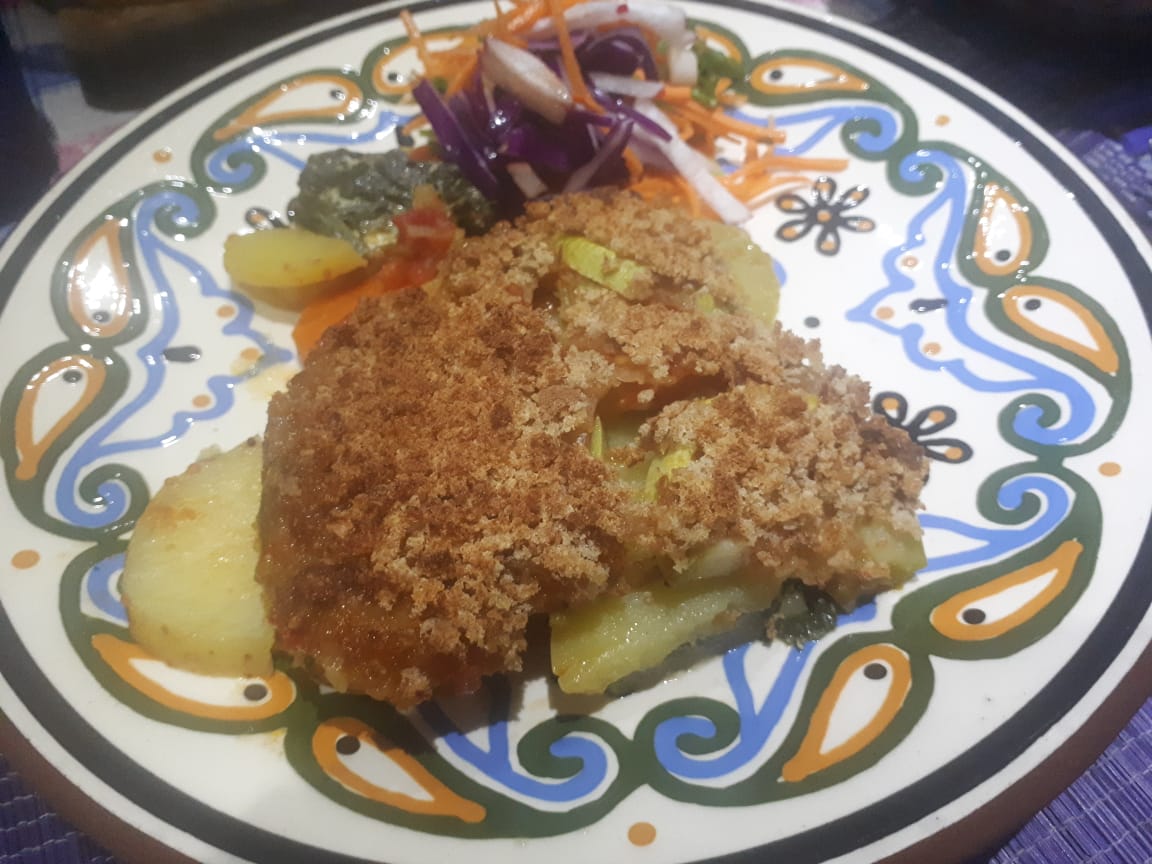
Briam – good enough to eat

As usual, we’ve taken a few liberties with the recipe, omitting aubergines (usually a key ingredient) as they are not quite in season in Almaty yet, so foodie purists please look away. We’ve added carrot and spinach to the usual potatoes and courgettes and then cooked it slowly in a tomato sauce. We’ve also topped it with some breadcrumbs to enclose our briam.

Screen Shot 2020-05-21 at 12.15.00

The name briam has an interesting history – it is a borrowed word – there is no letter ‘b’ in the Greek alphabet, instead this sound is represented by combining the letters ‘μ’ (m) and ‘π’ (p) – ‘μπ’. Many Greeks call this casserole tourlou tourlou (all mixed-up), so briam could have come from Greeks who lived in Anatolia until the mass population exchanges in the early 20th century.

20200520_211656
Briam and salad


In the Ottoman era, there was a word biryan, spelt büryan in modern Turkish, which refers to a side of lamb cooked slowly over charcoal in a pit in the ground – a speciality of Siirt in the Kurdish area on the borders with Iraq and Syria. This in turn could come from Persian, where biryan means roasted (notice the similarity with India’s biriyani). Whatever the name’s origin, it tastes great!

Ingredients (serves 4)

For the bake:

  • Two courgettes (approx 300 g)
  • Four potatoes (approx 300 g)
  • One carrot (approx 100 g)
  • 200 g spinach
  • 75 g breadcrumbs

For the tomato sauce:

  • One red onion
  • 250 g tomatoes
  • One bunch of parsley
  • 20 capers
  • 25 ml olive oil
  • One teaspoon mustard seeds
  • 250 ml vegetable stock or water

Method

  1. Make the tomato sauce first. Heat the oil in a heavy based pan, add the mustard seeds and when they start to pop add the chopped onions and cook over a medium heat, stirring occasionally. After five minutes reduce the heat and add the chopped tomatoes. Stir and simmer for ten minutes then add the stock, chopped parsley and capers. Cook until the liquid has reduced by half.
  2. Cook the spinach for a few minutes until it is beginning to wilt and then set aside. Cut the potato, courgette and carrot into 1 mm slices and put a layer of potatoes, then courgettes and then carrots into a greased baking dish. Add the spinach and pour half the tomato sauce over the vegetables. Add another layer of potatoes and courgettes and then pour the remainder of the tomato sauce over the layers. Spread the breadcrumbs over the top.
  3. Cover with tin foil and bake in an oven at 180 c for around 1.5 hours. After an hour, remove the foil and cook for another 20-30 minutes until the breadcrumbs go start to go a golden brown colour. Keep an eye on it to make sure the breadcrumbs aren’t burning. Serve immediately with a fresh salad – it’s also great when it’s cooled down a bit.


Vine Leaves Stuffed to Perfection

16 August 2018

This time round on Knidos Cookery Club we’re stuffing again to make one of favourite summertime snacks – dolma (stuffed vine leaves).

20180801_153038

These stuffed vine leaves are great as part of a barbecue spread or to add some rice oomph to a selection of dips and mezes.

20180801_113236.jpg
Ready to roll…

Rolling the leaves can be a bit fiddly at first, but you’ll soon find yourself getting into the rhythm. it’s best to make a big batch of these little stuffed marvels so you’ve got some ready-made snacks giving your more time at the beach.

20180801_114836.jpg
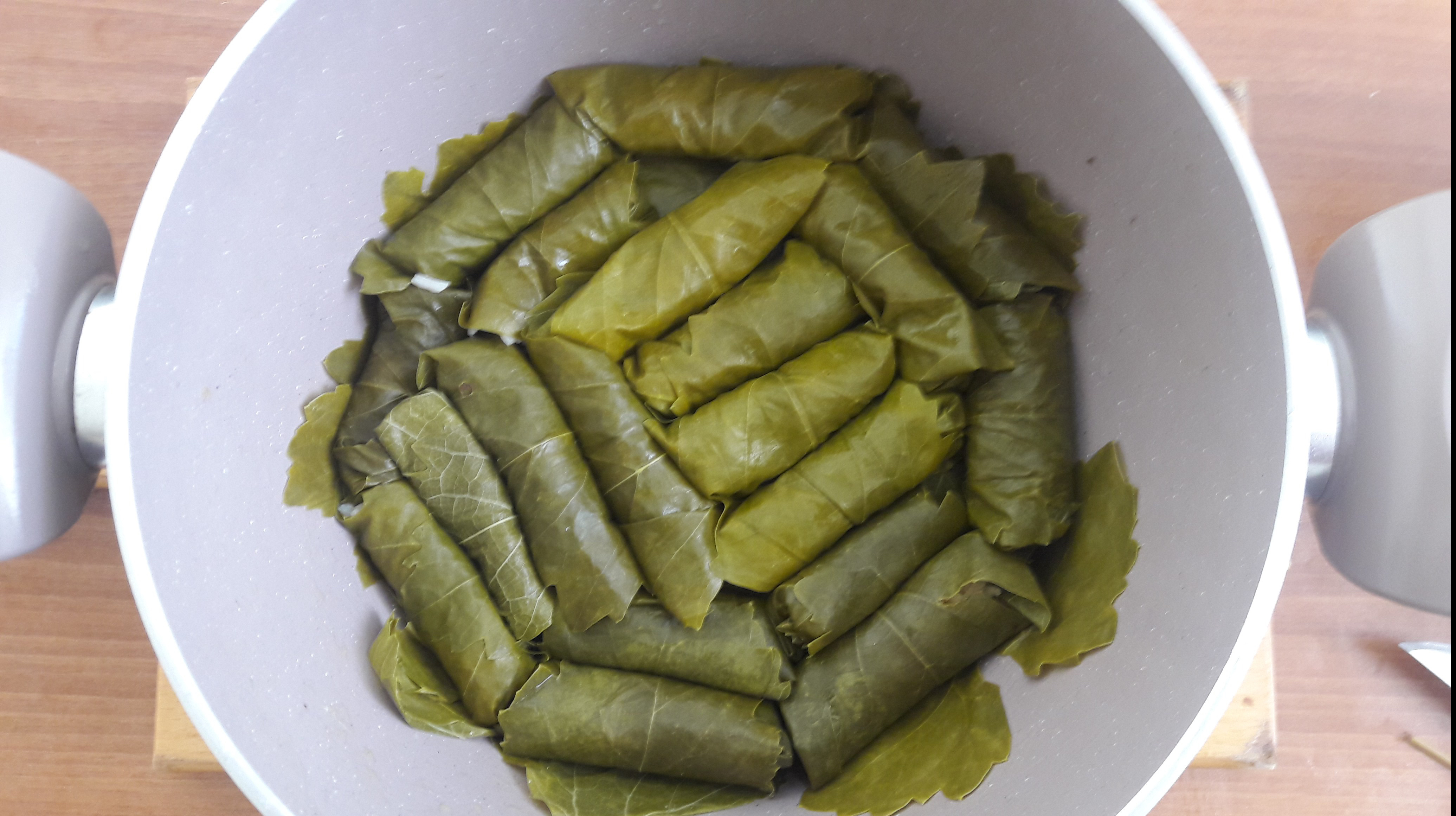
Layer the cylinders tightly in the pan

If you have any vine leaves left over, then hang on to them as we’ll be featuring another vine leaf recipe next time round on KCC.

Ingredients (makes 48 dolmas)

One onion

200 g long grain rice

50 ml olive oil

750 ml water

One lemon (zested and juiced)

50 g chopped almonds

two teaspoons dried thyme

one teaspoon cinnamon

one teaspoon cumin

10 g fresh mint

Pack of preserved vine leaves (or fresh leaves if you can get them)

Method

Fry the finely chopped onion in 25 ml of oil for five minute over a medium heat. While this is cooking, wash the rice until the water runs clear. Now soak the vine leaves for 30 minutes and then rinse well to remove any taste of brine or other preserving agents.

Add the thyme, cinnamon and cumin to the onion and stir. Now add the rice, mixing well to coat the grains. Cover with 375 ml of water and cook until the water is absorbed. The rice does not need to be fully cooked at this stage. When ready, add the chopped almonds, lemon zest and mint and mix well.

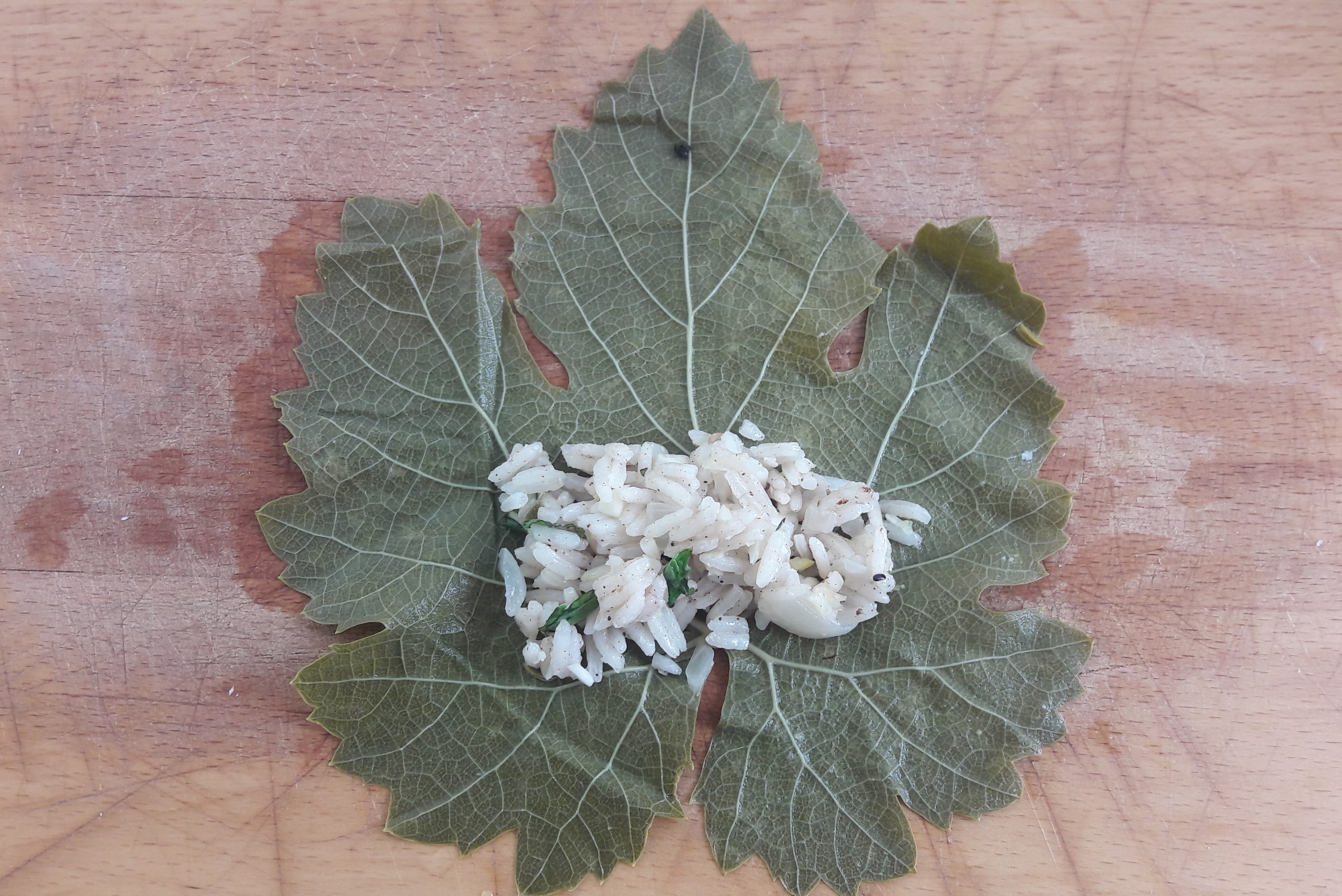
Now it’s time to stuff. Take a vine leaf, cut off the stalk and place a teaspoonful of rice mix on the leaf (see picture above). Tuck in the sides of the leaf and roll into a tight cylinder.

Put a layer of unstuffed vine leaves on the bottom of the pan to stop the stuffed ones sticking to the bottom. Layer the dolmas tightly in a heavy-based pan, putting another layer on top if you run out of space. Pour 25 ml of olive oil, the juice of the lemon and 375 ml of water over the vine leaf parcels.

Put a plate on top of the vine leaves and then put the lid on the pan and cook over a low heat for 45 minutes or until all the liquid is absorbed. Allow to cool before serving. If left in the fridge for a few hours, the stiffed vine leaves will firm up nicely.

Mezemania: Funky Lentil Pâté

26 July 2018

In our ongoing series on mezeler, or starters, we’ve come up with a funky little lentil spread to add to the collection.

20180712_135704
Funky Lentil Pâté

In the past on Knidos Cookery Club we’ve featured the following mezes: two types of fava (Turkish and Greek),  these little numbers (smoky aubergine dip, Psimeni Raki and feta dip and tsatsiki) inspired by the Greek island of Amorgos, fiery red pepper-fuelled muhammara and acili ezme and a creamy almond and courgette dip as part of our esteemed meze collection.

20170819_212721
Amorgoan Delight: smoky aubergine dip, Psimeni Raki and feta dip and tsatsiki

You can serve this simple to prepare red Lentil Pâté alongside these other dishes for a great spread of mezeler for a light feast that’s perfect for sharing with friends  on a balmy summer’s night.

Ingredients (makes around 200g)

125 g red lentils

One bayleaf

300 ml cold water

Two tablespoons fine bulgur wheat

4 or 5 spring onions

10 g fresh parsley

25 ml olive oil

One teaspoon mustard seeds

One teaspoon cumin seeds

Two teaspoons paprika

One teaspoon ground coriander seeds

One teaspoon black pepper

Half a teaspoon turmeric

Method

Clean the lentils in cold water and then put them in a pan with the bayleaf. Pour 300 ml of water over the lentils and bring to a boil. Reduce the heat and simmer until the lentils are beginning to go mushy and most of the water has been absorbed.

Remove the bayleaf and add the fine bulgur wheat to the lentils and mix well. Leave covered for 30 minutes. heat the oil in a heavy-based pan and add the mustard and cumin seeds. Fry for a few minutes and then add the paprika, coriander, black pepper and turmeric, cook for a minute stirring constantly and then add the finely chopped spring onion and parsley and cook for five more minutes over a medium heat.

Stir this into the lentil and bulgur mix and leave to stand for a few hours in the fridge. Garnish with a sprig of fresh mint and serve with crusty bread.

Leeky Pastitsio

5 April 2018

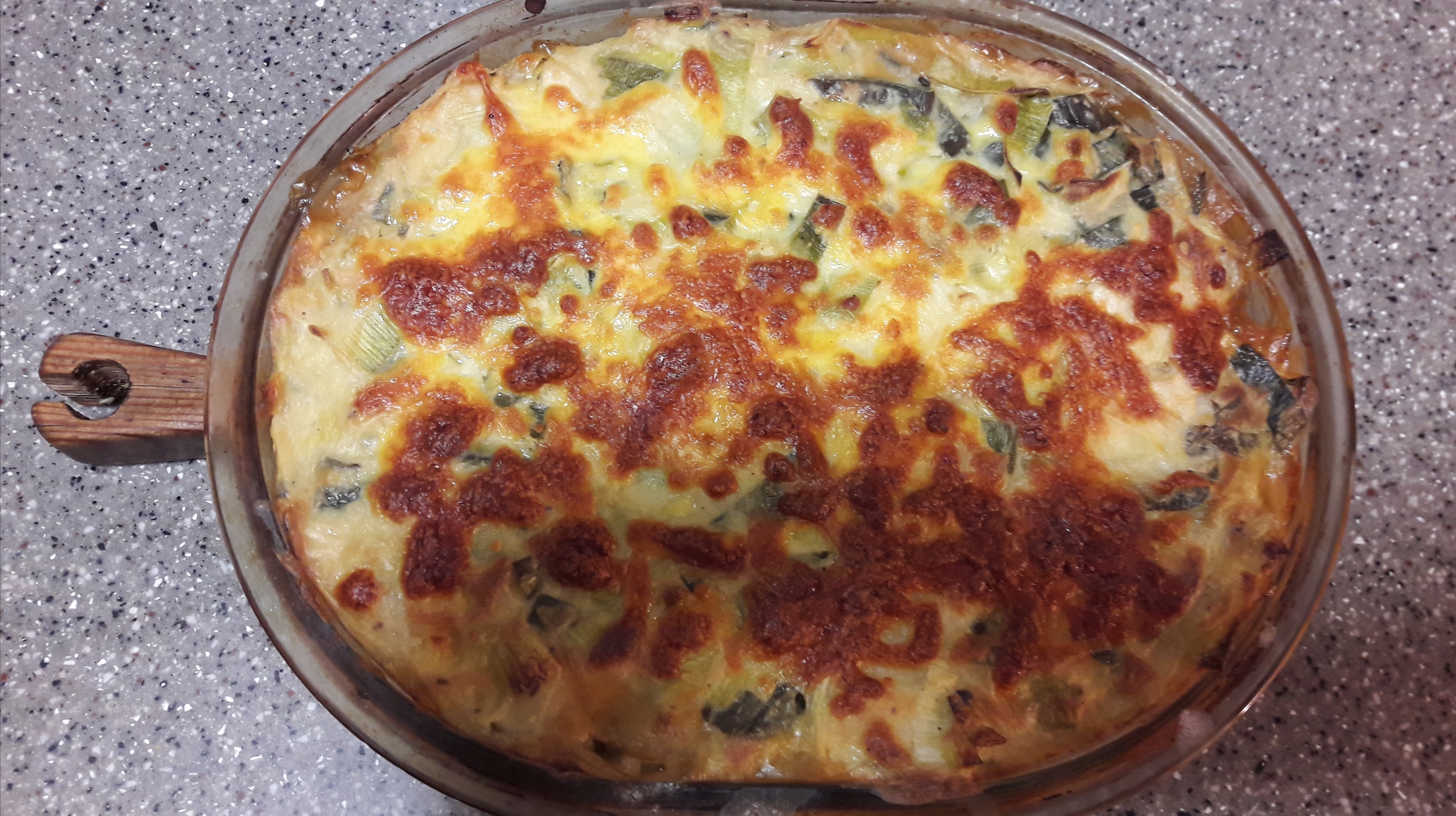
We’re back and, with Orthodox Easter just around the corner, this time round on Knidos Cookery Club we’ll be making our own version of pastitsio, a Greek take on Italy’s lasagne. Our version comes with a red wine, tomato and lentil ragu and a leek infused béchamel sauce.

leeky pastitsio
KCC’s Leeky Pastitsio

A few weeks ago, I left some beans soaking overnight and when I checked them in morning the pan was mysteriously filled with soaked penne rigate pasta! A quick look online to determine if the pasta was usable led me to this post on the Ideas in Food blog, and this confirmed pre-soaking in cold water as an effective way of preparing dried pasta.

20180402_204515
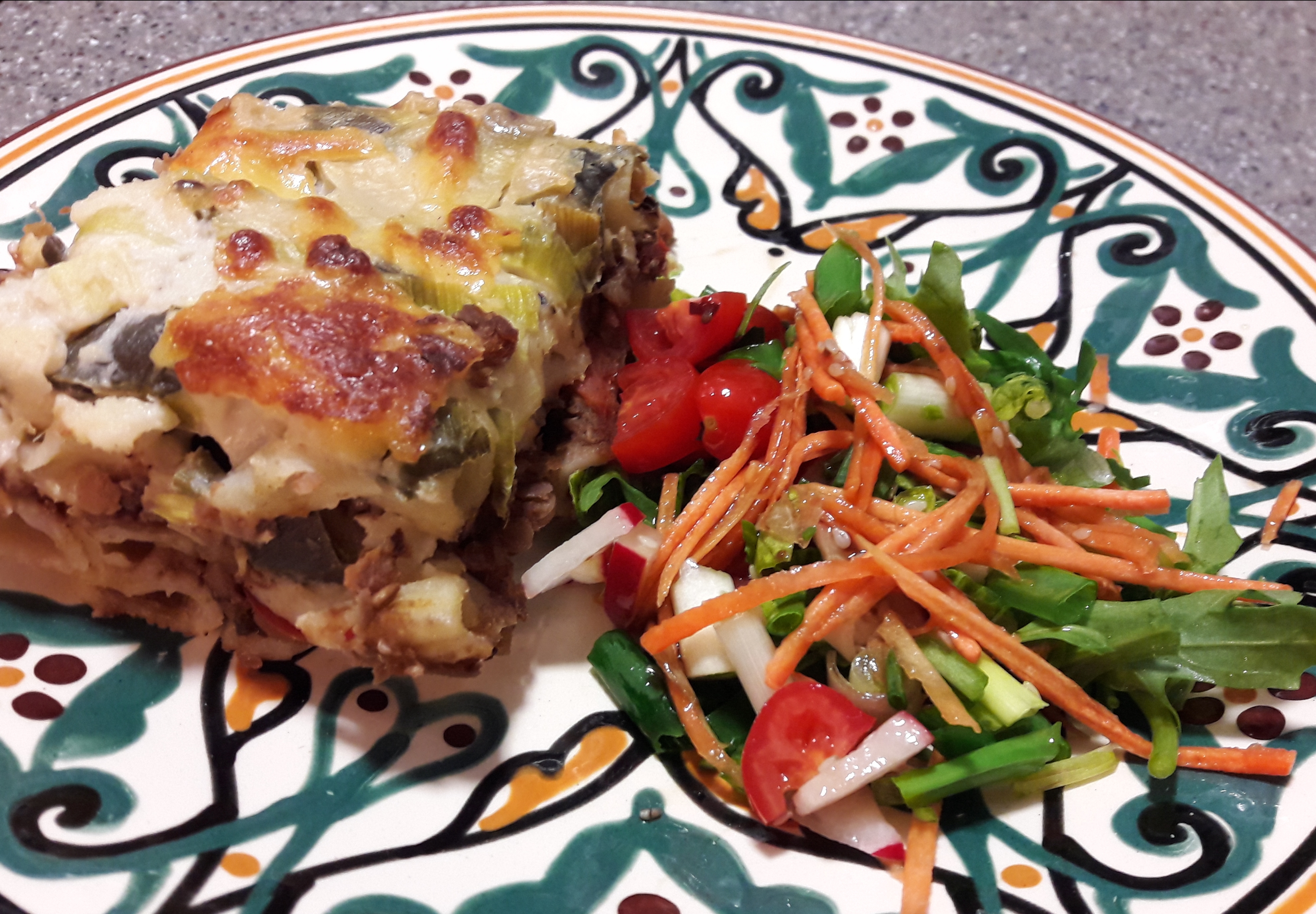
Leeky pastitsio and salad

Pastitsio is one of those dishes that tastes great straight from the oven but improves with age as the cinnamon, nutmeg and other flavours have time to blend properly. It works well heated up the next day or even tastes good cold. We served ours with a crisp salad of rocket leaves, carrot. radish and tomato.

Ingredients (For 3-4 hearty servings)

200 g penne rigate pasta

For the ragu:

25 ml olive oil

4 spring onions

200 g cherry tomatoes

2 tablespoons tomato paste

100 g red lentils

175 ml red wine

1 teaspoon of cinnamon, cumin, black pepper and red chilli flakes

For the Béchamel sauce:

50 ml olive oil

250 g leek

3 tablespoons flour

400 ml milk (dairy or non-dairy)

60 g cheese (dairy or non-dairy)

One teaspoon of nutmeg

Method

Soak the pasta in a pan of cold water for two hours and while it’s soaking cook the red lentils in 200 ml water until mushy and all the liquid is absorbed. Then prepare the ragu and after that the béchamel sauce.

For the ragu, heat the oil in a heavy-based pan and then fry the chopped spring onions for a few minutes. Add the quartered cherry tomatoes, tomato paste and spices and mix well. Add the wine and when it starts to bubble add the cooked and drained lentils. Cook for ten minutes over a low heat.

For the béchamel sauce, heat the oil in a heavy-based pan and then add the sliced leeks and cook for five minutes over a medium heat. Add the flour and mix well and then ad  the milk slowly, stirring continuously with a wooden spoon. Add half the grated cheese and nutmeg and cook until the sauce is just starting to boil, stirring all the while.

Layer half the soaked penne in the bottom of an oven proof dish and pour the ragu over. then layer the rest of the pasta on top of this and pout the béchamel sauce over. Add the remainder of the grated cheese and bake in a pre-heated oven at 200c for thirty minutes.

Serve straight away with a green salad or let it sit overnight in the fridge for a tastier pastitsio that can be served hot or cold.

One Pot Wonder: A Trip to Knidos

23 November 2017

Knidos Cookery Club recently entertained Professor Fox, that doyen of the Christchurch Antiquarians, who came over to Turkey to check out the ruins of Knidos and some archaeological sites in the Datça area such as Burgaz (Old Knidos).

Here’s a slideshow of our visit to Knidos:

This slideshow requires JavaScript.

After the trip we needed something quick and filling so this time round on Knidos Cookery Club we’ll be cooking pasta in a tasty sauce using only one pan.

20171025_214236
KCC’s one pot wonder in progress

This one pot wonder saves time, energy and washing up, both important  considerations in the world of KCC after a busy day on the archaeological trail.

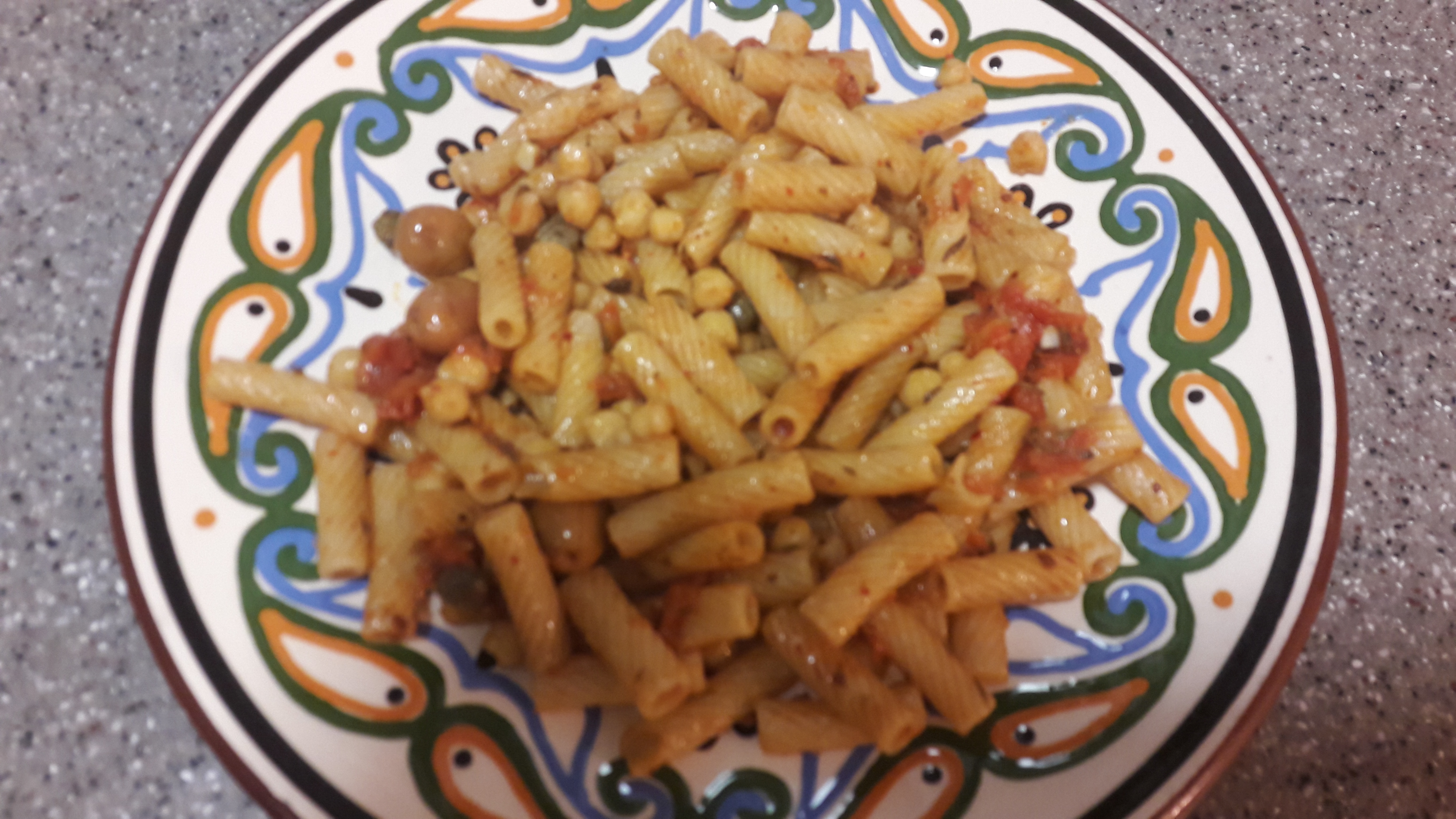
20171025_222310
KCC’s one pot wonder – the finished product

Ingredients (serves 2-3)

Three medium-sized tomatoes (approx 150 g)

50 g olives (any you have handy will do, we used some green ones)

150 g cooked chick peas

200 g pasta (penne, fusilli or spaghetti works well)

500 ml hot water

15 g capers

One garlic clove

25 ml olive oil

One teaspoon dried thyme

One teaspoon sumac

One teaspoon chilli flakes

Method 

Chop the tomatoes into quarters and add to a large, heavy-based pan with the olives, chick peas, minced garlic, olive oil, thyme, sumac and chilli flakes. Pour the water over the top, add the pasta, stir and bring to a boil.

Cook the pasta as per the instructions on the pack over a medium to high heat – you need to keep it bubbling away and stir occasionally. Keep cooking until the most of the liquid is boiled off, leaving the cooked pasta in the sauce.

The type of pasta we used took around 15 minutes to cook – try it as you go to get the type of taste you prefer. Don’t forget to stir in the washed capers to the pasta and sauce when it is cooked.

Serve straight from the pan and garnish, if you want, with shavings of Parmigiano-Reggiano (Parmesan) cheese.

Fava à la Grecque

12 October 2017

There are a lot of similarities between Turkish and Greek cuisine with both claiming baklava as their own and many other shared dishes, but there are also some striking differences. One variation we’ve noticed on our travels around Turkey and Greece has been with the dish known as fava in both countries.

20171006_134319
Fava à la Grecque

Last week we featured Turkey’s take on fava, made with broad beans, so this week we’re going to balance things up and have a look at Greece’s take on this dish, which is made with yellow split peas.

20171006_131423
Ingredients for fava à la Grecque

These dried peas proved quite hard to track down in Turkey – most supermarkets don’t stock them, but we eventually found them on sale in Datça market, mixed in with a few lentils and whole grains for good measure!

Greece’s version of this dish is runnier than Turkey’s, more like a hummus consistency, so it’s more suitable to use as a dip or spread. We’ve added some sumac to bring together these two esteemed cuisines in a spirit of gastronomic entente cordiale!

Ingredients (makes 6-8 healthy servings)

250 g yellow split peas, soaked in cold water for 1-2 hours

One medium red onion

One garlic clove

One teaspoon dried thyme

25 ml olive oil

500 ml water

Juice of one lemon

Pinches of salt and black pepper

Use a pinch of sumac, slices of red onion and a squeeze of lemon juice to garnish the fava

Method

Fry the finely chopped onion and garlic in the olive oil over a medium to high heat until the onions start to caramelise. Add the split peas and thyme, season with salt and pepper and stir well. Pour in the water, bring to the boil and then reduce the heat and simmer for 30 minutes or so until all the liquid is absorbed.

Allow the cooked mixture to cool for ten minutes and then use a hand blender to make it into a smooth paste. As you’re blending the mix, add the lemon juice to give it a creamier consistency.

Use a pinch of sumac, slices of red onion and a squeeze of lemon juice to garnish the fava and then serve warm with crusty bread and a green salad.


Fava a la Turca

5 October 2017

This time on Knidos Cookery Club we’ll be looking at fava, a popular Turkish meze made from broad beans (we’ve used dried but use fresh if you have them). Greece also has a dish called fava, but its version uses split peas and is an all-together different beast to Turkey’s variant which is left in the fridge to firm up into a spread that can be sliced into chunks (more on the Greek variation next time round).

20170929_122236.jpg
Knidos Cookery Club’s take on fava served with mint

Our variation on the Turkish fava theme turned out a bit less smooth than the one served up in Turkish cafes but it still tasted great! Having cooked up the beans into a mush, we went for a swim while it cooled down. Apparently, it should have been pushed through a sieve while still warm, but no worries – it turned out all right on the night albeit a bit lumpier than expected!

20171005_114611
Fava served with … dill in a restaurant in Akyaka, Turkey’s slow food capital

In Turkey fava comes adorned with sprigs of dill (some recipes even put dill in the bean mix itself). Knidos Cookery Club is not a big fan of dill, so we’ve used some fresh mint leaves to adorn our take on this Turkish classic.

Ingredients (makes around 8-10 individual servings)

200 g dried broad beans (soaked overnight in cold water)

One small red onion

400 ml water

One teaspoon honey

25 ml olive oil

Pinch of salt

Mint leaves to garnish

Method

Put the drained beans into a heavy-based pan with the finely chopped onion, olive oil, honey and salt and pour the water over the top. Bring to the boil and simmer over a low heat for an hour or so until all the water is absorbed and the beans are breaking up to form a thick paste.

Allow the mix to cool and while still warm press through a metal sieve with a wooden spoon to remove any excess liquid. Oil a glass serving dish and pile the bean mix into the dish. Cover with clingfilm (clear plastic wrap) and leave overnight in the fridge.

Serve in cubes or diamond shapes, cutting the solid mass with a wet knife (to avoid it sticking). Garnish with mint leaves and a drizzle of lemon juice and olive oil and serve with crusty bread as part of a meze platter.


Amorgos, mon Amour!


31 August 2017

Knidos Cookery Club is just back from a fact-finding mission to the Greek Islands and is bursting with new recipe ideas. Our main port of call was the island of Amorgos, the most easterly of the Cyclades group – a six-hour ferry trip from Piraeus, near Athens.

Our visit coincided with the Psimeni Raki festival, held annually on 26 July, a wild night of drinking and dancing (click here for video) fuelled by a local grappa-like spirit tempered with sugar, honey and herbs from the island to produce a drink that is around 20% alcohol by volume.

IMG_3444
Dancing the night away in Amorgos

The drink is based on Rakomelo, which is served by monks to people visiting the amazing Panagia Hozoviotissa Monastery – a spectacular white building carved high onto the side of an imposing cliff face.

20170727_002930
Working hard to keep the Psimeni raki flowing at the festival in Amorgos

For a small island Amorgos produces a significant quantity of alcoholic beverages – check out the site of this local producer, Amorgion, to see what’s on offer. As well as Psimeni Raki and Rakomelo, they also make an interesting local version of tequila, known as Mekila, from prickly pears.

Another interesting place to visit on the island is the Amorgos Botanical Park, a great project that is reviving a traditional garden that had been left derelict for decades. Here’s a link to their Instagram page.

A group of volunteers are aiming to bring the garden, complete with its own cistern fed by a spring, back to life by cultivating herbs endemic to Amorgos. The project is funded by grants and by the proceeds from the sale of herbs such as their intensely-flavoured oregano, teas such as rockrose, and tinctures made from produce grown on the island and dried and processed by the volunteers.

20170819_212721
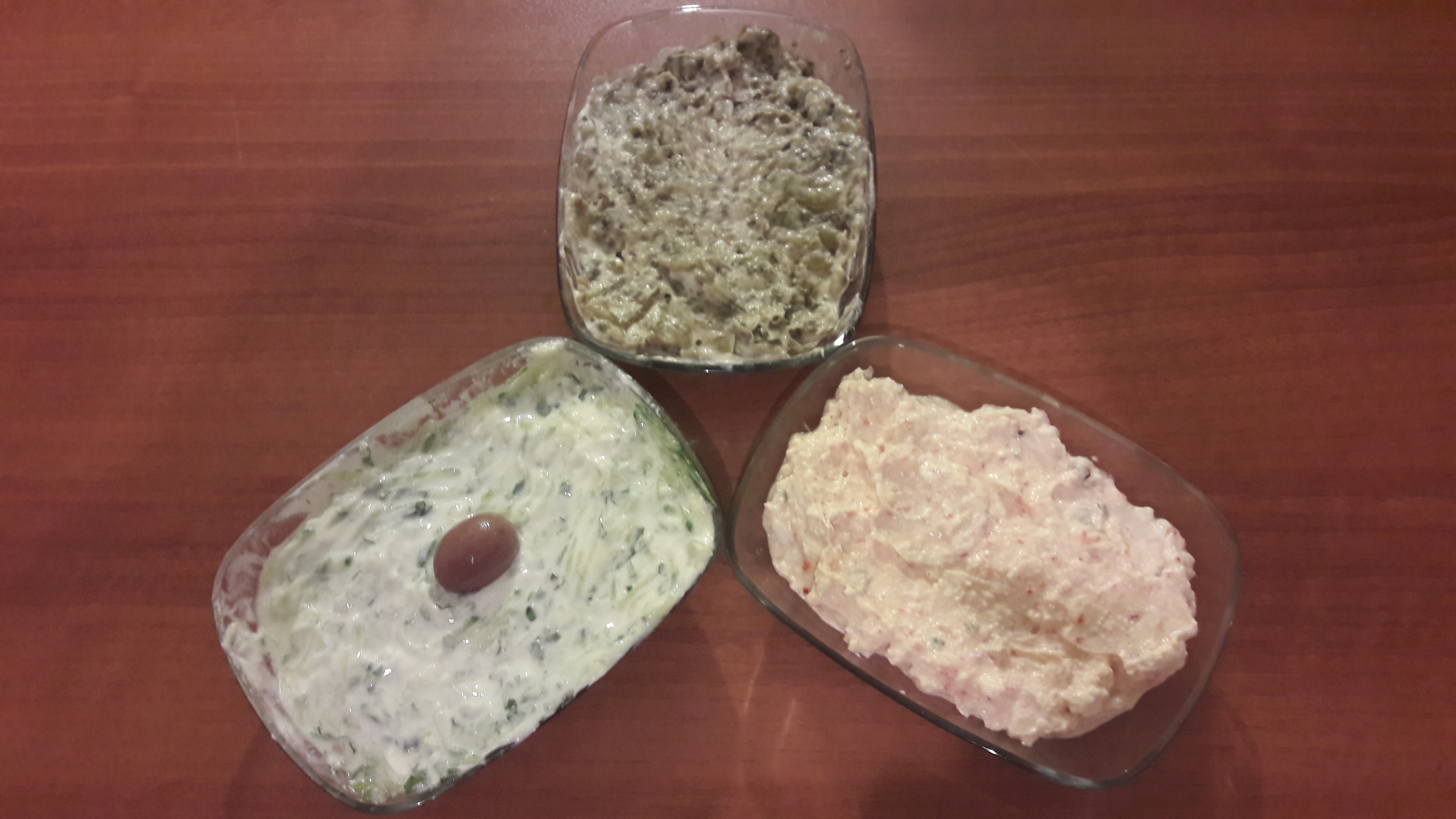
Knidos Cookery Club’s Greek trio with (clockwise from the top) smoky aubergine dip, Psimeni Raki and feta dip and tsatsiki, yogurt and cucumber.

One of the delicacies eaten during the Psimeni Raki festival to help soak up the booze are anevates, cheese pies baked with the aforementioned beverage. Unfortunately, Knidos Cookery Club couldn’t track down any of these pies but the use of Psimeni Raki has inspired us to make a boozy take on Greece’s spicy tirokefteri cheese dip.

Ingredients (serves 4-6 as part of a dip platter)

100 g feta cheese

100 ml Greek-style yogurt

25 ml Psimeni Raki

One teaspoon dried oregano

One teaspoon red chili flakes

Method

Crumble the feta with a fork, add the yogurt, psimeni raki (use sherry or vermouth if you don’t have access to psimeni raki!)and herbs and spices. Mix all the ingredients together thoroughly with the fork and chill for a couple of hours before serving with other dips such as tsatsiki (yogurt, cucumber and garlic) and a dip of roasted aubergines served with yogurt.