Nauryz Spring Cleaning: Mung Bean Detox

14 March 2019

With another Nauryz, the spring equinox, just around the corner, we’re looking at this turning point of the year as a good place to start some spring cleaning for the body.

20190313_150439
The Mighty Mung Bean

You can detox your digestive system by utilising the mighty mung bean, considered by both traditional Chinese medicine and India’s Ayurvedic medicine as an effective aid to remove toxins from the body.

20190313_133931
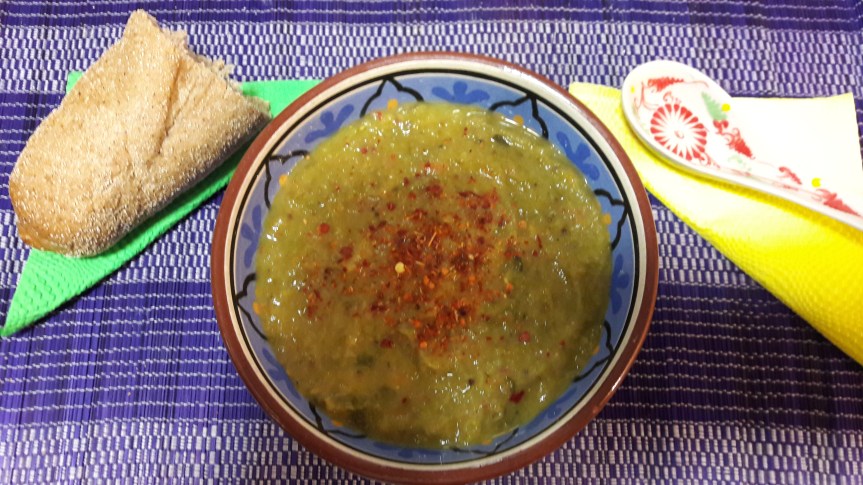
Knidos Cookery Club’s Mung Bean Detox Soup

When combined with spices such as turmeric, cumin, ginger and black pepper, the mung bean can do a lot to help flush out unwanted material from your body.  While some practitioners recommend following a detox diet based on mung bean soup for 7-10 days to really cleanse yourself, it’s quite a powerful process so we’d recommend a bowl or two every week as being beneficial to your general well-being.

Ingredients (Makes 3-4 servings)

  • 200 g mung beans
  • One carrot
  • One courgette
  • One stick of celery
  • 1 litre water
  • Four tablespoons tomato paste
  • One teaspoon turmeric
  • One teaspoon cumin
  • One teaspoon chilli powder
  • 1cm fresh ginger
  • Black pepper

Method

  • Wash and then soak the mung beans for at least four hours (the longer you soak them, the quicker they’ll cook). Then put them in a pan, cover with the water and add the turmeric, cinnamon, cumin and chilli powder.
  • Bring to a boil and then simmer for 30 minutes, add the tomato paste, grated carrot and courgette, the thinly-sliced celery and the minced ginger, stir well and simmer for another ten minutes or so. The mung beans should just be beginning to go soft. Pour into bowls and serve with a generous grind of black pepper.


 

Papa Jack’s Refried Avocado

31 January 2019

We’re continuing in our Mexican groove to make a vegetable take on the refried beans concept. It was meant to be a burger, but it didn’t hold together too well, so here is our refried avocado.

20190119_222556-e1548437819761.jpg

Refried beans are a Mexican staple and served on tortillas or as a side dish – the beans  are mashed up and fried with garlic and spices. We’ve combined mashed potato, with a smashed up avocado, a diced jalapeño pepper and some yaka, or jackfruit. Potatoes are called papas in Mexican Spanish, hence the name for this dish: Papa Jack’s Refried Avocado.

20190120_135003

Jackfruit, a giant tropical fruit with a hard green spiky shell, that can grow up to 40kg, is widely available in Mexico. The fruit is a strong tasting yellow fleshy bulb that is somewhere between pineapple and banana.

We served the refried avocado on toast with our own salsa made with tomatoes, courgettes, carrots and chilli peppers.

Ingredients (makes 3-4 servings)

For the refried avocado:

  • Three medium-sized potatoes
  • One avocado
  • One jalapeño pepper
  • One lime
  • One jackfruit bulb
  • 25ml olive oil

For the salsa:

  • Two medium-sized tomatoes
  • One carrot
  • One courgette
  • One jalapeño pepper

Method

  • Cook the potatoes until they can be mashed easily with a fork. Cut the avocado in half, remove the stone and add the flesh to the potato. finely dice the pepper and jackfruit (remove the stone first) and add to the mix, along with the lime juice. Mash everything together with a fork or potato masher.
  • Heat the oil in a heavy-based frying pan. Heat the mashed avocado through in the hot oil and serve on toast with a salsa made of tomato, carrot and courgette – simply dice the tomatoes and cook the chopped up carrot, courgette and jalapeño pepper in the tomato liquid over a low heat for 20 minutes or so.

Punked-Up Vichyssoise

14 June 2018

With football’s World Cup kicking off in Russia today, this time round on Knidos Cookery Club we’ve decided to take on that classic French soup – Vichyssoise, as we have a sneaking suspicion that after 20 years this could be France’s year to lift the FIFA World Cup Trophy.

20180404_205650

The usual flavouring of this soup can be a bit bland to our Asian influenced taste buds, so we’ve spiked it with some chilli powder and mustard seeds to give it a bit of oomph. We’ve called this punked-up creamy combo of leek and potato, that can be eaten hot or cold, Sid Vichyssoise, excuse the pun, after the late, great Sex Pistols bassist.

As we said, this soup can be served hot or cold, making it perfect for the long, balmy nights of mid-June when chilled or as hearty winter fare when served hot in colder times. Just make sure you clean those leeks properly. as you don’t want any grit in the end product.

Ingredients (for 4 servings)

  • 50 ml olive oil
  • 200 g leeks
  • 200 g baby carrots
  • 200 g new potatoes
  • 1/2 teaspoon mustard seeds
  • 1 teaspoon cumin seeds
  • 1 teaspoon black pepper
  • 2 teaspoons red chilli flakes
  • 300 ml vegetable stock
  • Dash of soy sauce

Method

  • Heat the olive oil and mustard seeds in a heavy-based pan until the seeds begin to pop. Next, add the leeks, sliced into 1 cm rounds, the cumin seeds, black pepper and red chilli flakes and cook for five minutes. Then add the finely diced carrots and potatoes and cook for five more minutes, stirring occasionally.
  • Now add the stock and the soy sauce, stir well and let it simmer over a low heat until the potatoes are beginning to fall apart. Remove from the heat and blend with an electric hand whisk to create a smooth, creamy soup and then leave to chill in the fridge before serving with another sprinkling of red chilli flakes.

Leeky Pastitsio

5 April 2018

We’re back and, with Orthodox Easter just around the corner, this time round on Knidos Cookery Club we’ll be making our own version of pastitsio, a Greek take on Italy’s lasagne. Our version comes with a red wine, tomato and lentil ragu and a leek infused béchamel sauce.

leeky pastitsio
KCC’s Leeky Pastitsio

A few weeks ago, I left some beans soaking overnight and when I checked them in morning the pan was mysteriously filled with soaked penne rigate pasta! A quick look online to determine if the pasta was usable led me to this post on the Ideas in Food blog, and this confirmed pre-soaking in cold water as an effective way of preparing dried pasta.

20180402_204515
Leeky pastitsio and salad

Pastitsio is one of those dishes that tastes great straight from the oven but improves with age as the cinnamon, nutmeg and other flavours have time to blend properly. It works well heated up the next day or even tastes good cold. We served ours with a crisp salad of rocket leaves, carrot. radish and tomato.

Ingredients (For 3-4 hearty servings)

200 g penne rigate pasta

For the ragu:

25 ml olive oil

4 spring onions

200 g cherry tomatoes

2 tablespoons tomato paste

100 g red lentils

175 ml red wine

1 teaspoon of cinnamon, cumin, black pepper and red chilli flakes

For the Béchamel sauce:

50 ml olive oil

250 g leek

3 tablespoons flour

400 ml milk (dairy or non-dairy)

60 g cheese (dairy or non-dairy)

One teaspoon of nutmeg

Method

Soak the pasta in a pan of cold water for two hours and while it’s soaking cook the red lentils in 200 ml water until mushy and all the liquid is absorbed. Then prepare the ragu and after that the béchamel sauce.

For the ragu, heat the oil in a heavy-based pan and then fry the chopped spring onions for a few minutes. Add the quartered cherry tomatoes, tomato paste and spices and mix well. Add the wine and when it starts to bubble add the cooked and drained lentils. Cook for ten minutes over a low heat.

For the béchamel sauce, heat the oil in a heavy-based pan and then add the sliced leeks and cook for five minutes over a medium heat. Add the flour and mix well and then ad  the milk slowly, stirring continuously with a wooden spoon. Add half the grated cheese and nutmeg and cook until the sauce is just starting to boil, stirring all the while.

Layer half the soaked penne in the bottom of an oven proof dish and pour the ragu over. then layer the rest of the pasta on top of this and pout the béchamel sauce over. Add the remainder of the grated cheese and bake in a pre-heated oven at 200c for thirty minutes.

Serve straight away with a green salad or let it sit overnight in the fridge for a tastier pastitsio that can be served hot or cold.

Korea’s All-Conquering Carrots

15 February 2018

Happy Lunar New Year to all our readers – wishing you all many culinary adventures in the Year of the Dog!

With both South and North Korea back in the headlines with the Winter Olympics in full swing in Pyeongchang and the ongoing tensions on the Korean peninsula, this week Knidos Cookery Club will be making a dish that has become a hit in the former Soviet Union and beyond – spicy Korean carrots.

20180209_122129
Spicy Korean Carrots

It’s a dish that’s not really from Korea, north or south – largely unknown outside of the countries of the former Soviet Union until recently, this simple dish has now gone full circle and can now be found on tables in South Korea.

It originated with the Koryo-saram, Korean people, who were deported en masse from the borderlands of Russia’s far east to Central Asia in the late 1930s. Fearing a Japanese fifth column in the Soviet Union via this Korean community, Stalin ordered the mass deportations in 1937.

20171117_170001
Korean carrots and other salads on sale in Almaty’s Green Bazaar, Kazakhstan

The deportees adapted their cuisine to local conditions and replaced traditional ingredients with carrots to create a spicy, coriander-rich side dish and it remains a popular choice on dinner tables in Central Asian countries such as Uzbekistan, Kazakhstan and Kyrgyzstan, which are still home to around 300,000 ethnic Koreans, descendants of the deportees from the 1930s.

There’s a Turkish connection with the Koreas as well. With Turkey on a war footing once again, wading into battle against the Kurds in northern Syria, a recent film has brought a mostly forgotten war involving Turkey from the 1950s back into the spotlight. Can Ulkay’s “Ayla: The Daughter of War” tells the story of a Turkish soldier who saves a young Korean girl during the Korean War of 1950-53.

Turkey sent troops as part of a United Nations led brigade to defend South Korea against North Korea in the war. The soldier finds himself unable to take the orphan back to Turkey so the pair lose touch after the war, but in a fairytale ending are reunited 60 years later. Put your feet up and enjoy the movie with a bowl of spicy Korean carrots!

Ingredients (serves around 4)

200 g carrots peeled into thin slices – use a julienne peeler or a sharp knife

One garlic clove minced

One small onion minced

One teaspoon crushed coriander seeds

Half teaspoon red chilli flakes

Dash of olive oil

Two teaspoons cider vinegar

Half teaspoon honey

Pinch of salt

One teaspoon sesame seeds

Method

Mix the julienned carrots with the garlic and leave to marinate in a container with a tight-fitting lid (this carrot salad can get quite pungent, so this is important!).

Heat the olive oil and fry the onion until just beginning to brown. Mix the vinegar with the honey and salt and then pour over the carrots, add the coriander and chilli and the fried onions and mix well.

Leave the carrots to marinate in the air tight container in the fridge for at least four hours, the longer the better, to allow the flavours to blend fully.

Sprinkle with sesame seeds and serve as a side dish with fritters such as our mücver.

Let them Eat Cabbage!

9 November 2017

This week saw the 100th anniversary of Russia’s October Revolution, which led to the creation of the Soviet Union. To mark this momentous occasion in world history, Knidos Cookery Club has turned to a soup made from the close relative of a vegetable that was at the heart of Soviet cuisine – the humble cabbage.

20171104_235653
KCC’s cabbage soup with brown bread

The cabbage, and soups such as shchi that were made from it, was a mainstay of the Soviet diet. I remember hearing jokes about it when I was a lad such as this gem:

Q. What’s three miles long and eats cabbage?

A. A Soviet meat queue.

We’ve used Chinese cabbage as a twist on the traditional recipe that uses the more familiar member of the Brassica family and spiced up the mix with a few Shiitake mushrooms and some chilli powder.

Screen Shot 2017-11-08 at 17.36.31

It makes a great accompaniment, along with a few shots of vodka, to October: Ten Days that Shook the World, the classic 1928 Soviet silent classic directed by Sergei M. Eisenstein and Grigori Aleksandrov (which is available on BBC iPlayer until the end of this November).

The film was based on John Reed’s book of the same name, which told the story of the revolution from the abdication of the last Czar to the Bolshevik seizure of power. Another good read on the same topic follows Lenin on the Train, an account by Catherine Merridale of Lenin’s trip back to Petrograd on the eve of the revolution.

Ingredients (serves 4)

300 g shredded Chinese cabbage

2 medium onions

1 green pepper

4 dried mushrooms (rehydrated)

2 garlic cloves

2 medium tomatoes

25 ml cooking oil (sunflower or another neutral, refined oil)

1 litre vegetable stock

1 bayleaf

Pinch of black pepper

One teaspoon red chilli flakes

Dash of soy sauce

Rye bread (or a similar hearty brown bread)

Method

You’ll need a good hearty stock for this soup, so prepare some in advance or use stock cubes. Heat the oil in a heavy-based pan and then add the chopped onions and garlic. Cook for 10 minutes or so over a medium heat – while it’s cooking chop up the mushrooms and green pepper and then add to the mix,

Stir and cook for five more minutes then add the chopped tomatoes, black pepper, chilli flakes and bayleaf and cook until the tomatoes start to collapse. Then add the vegetable stock and bring to the boil.

Next add the shredded cabbage and cook for ten minutes or so until the cabbage is tender. Add soy sauce, remove the bay leaf and serve with brown or black bread and a shot of vodka!

Viva la Revolution, comrades!


No Beef with the Beetburger

19 October 2017

The beet is back on Knidos Cookery Club and this time round we’ll be using our burgundy-coloured friend to tap into another zeitgeist treat in the form of the tasty beetburger.

20171013_210527

The stalls in Datça market last Saturday were overflowing with bunches of beetroots so we picked up a bunch, chopped off the leaves and stems for sautéing, and wrapped the beets in foil and roasted them in the oven for an hour or so.

Beetroot burgers have been a bit of a barbecue craze in the UK over the summer, with supermarkets reporting soaring sales as people turn towards healthier options to meat.

20171013_175647
Turkey’s papatya, or daisy, loaf of bread

We’ve done some experimentation and come up with a patty that will hold together under the grill, on the barbie, in the oven or can be shallow-fried. Stuff it in a bun – we’ve used the papatya loaf as pictured above, and serve with chips and salad for a delicious yet healthy meal (the chips were roasted in the oven, not fried).

Ingredients (makes 6-8 burgers)

100 g red lentils

50 g fine bulgur wheat

150 g roasted beetroot, grated

One medium onion

One garlic clove

50 ml olive oil

Two teaspoons dried thyme

One teaspoon each of sumac, cumin and chilli flakes

Dash of soy sauce

Method

Heat 25 ml of the olive oil in a heavy-based pan, add the herbs and spices and the chopped onion and garlic and fry for five minutes until the onion starts to soften. Add the lentils and water, bring to the boil and then simmer until the liquid is absorbed.

Add the bulgur wheat to the mix and allow to cool for 30 minutes – this should thicken the mixture. Then add the grated beetroot and stir to combine all the ingredients. Form into burger shapes (take a dollop of walnut-sized mix and flatten with a spatula and shallow fry in the rest of the olive oil on both sides until going crispy on the outside.

Alternatively, these burgers can be baked in the oven for 30-40 minutes at 200 c or grilled or cooked on the barbecue until crispy on both sides. Serve in a burger bun with salad and chips.

Spice it up with Sumac!

21 September 2017

This time round on Knidos Cookery Club we’ll be looking at a spice called sumac that is ubiquitous in Turkish cooking. Sumac comes from the flowering plants of the genus Rhus and its powdered purple-reddish berries give a tart but tangy boost to everything from soups and dips to grilled vegetables and kebabs. It also gives a rich dark burgundy hue to the dishes it flavours.

20170919_133053
Sumac

We’ve decided to use it in acili ezme, a fiery tomato, onion and pepper dip that is delicious eaten on it’s own with bread,  used as a sauce to accompany dishes such as pide, Turkey’s take on pizza, as part of a meze plate with our carrot and walnut tarator and our  creamy almond and courgette dip or with mücver, Turkey’s courgette fritter.

20170919_133855.jpg
A fearsome acili ezme

The secret to a successful acili ezme is to chop the ingredients as finely as you can with the sharpest knife you have and to chill it for a few hours before serving so the flavours have a chance to blend.

We’ve added red chilli flakes and sumac to give it a kick and used mint and parsley to balance out the flavours. If you like your dips hot, then use green chillies in place of green peppers in this recipe.

Ingredients (serves 3-4)

One medium-sized onion

Three medium-sized plum tomatoes

One medium-sized green pepper

One garlic clove

One bunch of parsley

One teaspoon dried mint

Three teaspoons red chilli flakes

Two teaspoons sumac

One teaspoon flavoured vinegar (such as apple or fig)

Three teaspoons pomegranate sauce

Method

Peel the tomatoes and de-seed (to peel: plunge the tomatoes into boiling water for 30 seconds then place in cold water – the skin should now come off easily). Chop the tomatoes, green pepper, onion, garlic and parsley as finely as you can.

Put all the ingredients into a bowl, add the herbs and spices, vinegar and pomegranate sauce and mix well. Leave to chill in the fridge for at least two hours before serving with flat bread.

Bitter Melon Menemen

7 September 2017

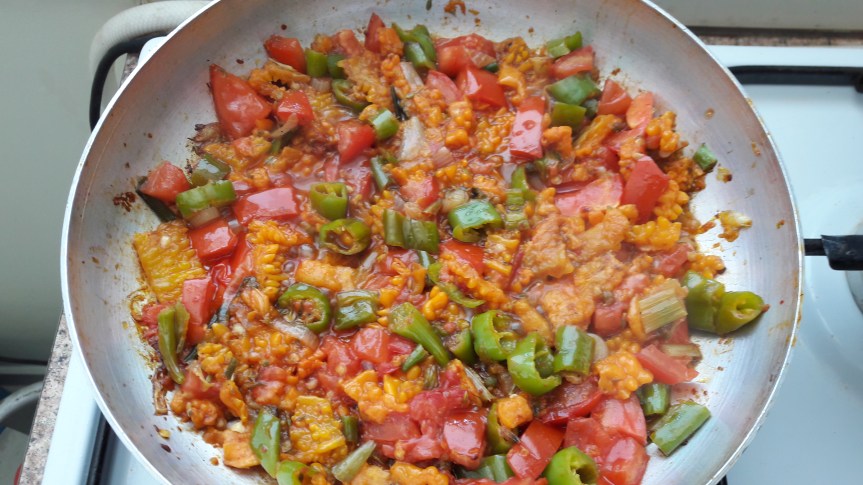
While shopping at Datça market recently, this spectacular-looking, knobbly, bright orange fruit grabbed our attention.

20170828_145746
What’s in the dragon today? Bitter melon, of course

Subsequent googling revealed it to be a bitter melon, or bitter gourd, kudret narı in Turkish. Despute being popular in pan-Asian cooking, we couldn’t find too many Turkish recipes using bitter melon so we decided to mix it in with menemen, that breakfast fave in Turkey.

WP_20170826_12_29_42_Pro

You’ll probably be able to track down bitter melons in your local Asian grocer’s. When picked they are yellow-green, resembling a bumpy cucumber, and when ripe they turn orange. Cooking helps remove some of the bitter taste of this curious-looking member of the squash family. Inside are bright red coloured seeds that can be removed and eaten.

20170829_134255
Step one: Fry the bitter melon
20170829_134858
Step two: Add the tomato
20170829_135537
Step three: add the eggs and scramble

Ingredients (serves 2-4)

100 g bitter melon

60 g green peppers

2 spring onions

1 medium-sized tomato

1 teaspoon each of dried thyme, oregano, black pepper and red chilli flakes

4 eggs

A dash of soy sauce

25 ml olive oil

Method

Heat the olive oil in a frying pan and when hot add the chopped spring onion. Cook for two minutes over a medium heat and then add the peppers and seeded bitter melon, cut into 1-2 mm strips.

Cook for another two minutes and then add the chopped tomato, herbs and spices and a dash of soy sauce. Fry for 5 minutes and then reduce the heat and break the eggs into the mix. Keep stirring until you achieve the desired consistency of scrambled egg to your taste.

Serve with lashing of  crusty bread.

Amorgos, mon Amour!


31 August 2017

Knidos Cookery Club is just back from a fact-finding mission to the Greek Islands and is bursting with new recipe ideas. Our main port of call was the island of Amorgos, the most easterly of the Cyclades group – a six-hour ferry trip from Piraeus, near Athens.

Our visit coincided with the Psimeni Raki festival, held annually on 26 July, a wild night of drinking and dancing (click here for video) fuelled by a local grappa-like spirit tempered with sugar, honey and herbs from the island to produce a drink that is around 20% alcohol by volume.

IMG_3444
Dancing the night away in Amorgos

The drink is based on Rakomelo, which is served by monks to people visiting the amazing Panagia Hozoviotissa Monastery – a spectacular white building carved high onto the side of an imposing cliff face.

20170727_002930
Working hard to keep the Psimeni raki flowing at the festival in Amorgos

For a small island Amorgos produces a significant quantity of alcoholic beverages – check out the site of this local producer, Amorgion, to see what’s on offer. As well as Psimeni Raki and Rakomelo, they also make an interesting local version of tequila, known as Mekila, from prickly pears.

Another interesting place to visit on the island is the Amorgos Botanical Park, a great project that is reviving a traditional garden that had been left derelict for decades. Here’s a link to their Instagram page.

A group of volunteers are aiming to bring the garden, complete with its own cistern fed by a spring, back to life by cultivating herbs endemic to Amorgos. The project is funded by grants and by the proceeds from the sale of herbs such as their intensely-flavoured oregano, teas such as rockrose, and tinctures made from produce grown on the island and dried and processed by the volunteers.

20170819_212721
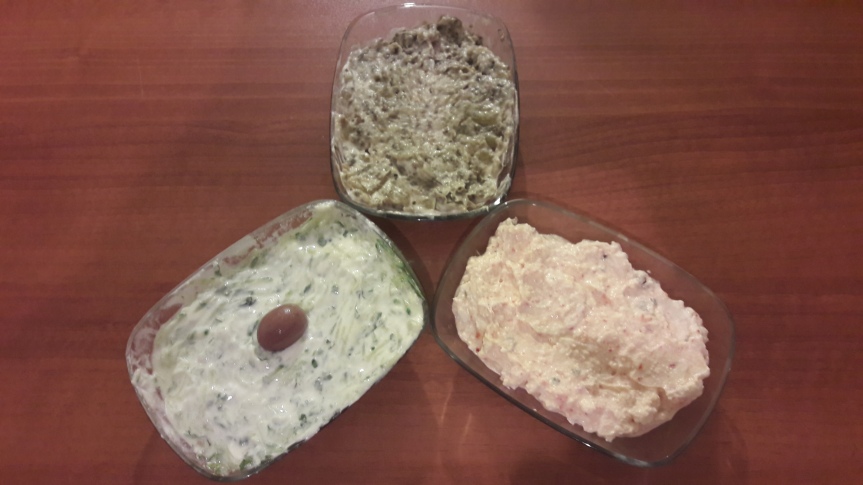
Knidos Cookery Club’s Greek trio with (clockwise from the top) smoky aubergine dip, Psimeni Raki and feta dip and tsatsiki, yogurt and cucumber.

One of the delicacies eaten during the Psimeni Raki festival to help soak up the booze are anevates, cheese pies baked with the aforementioned beverage. Unfortunately, Knidos Cookery Club couldn’t track down any of these pies but the use of Psimeni Raki has inspired us to make a boozy take on Greece’s spicy tirokefteri cheese dip.

Ingredients (serves 4-6 as part of a dip platter)

100 g feta cheese

100 ml Greek-style yogurt

25 ml Psimeni Raki

One teaspoon dried oregano

One teaspoon red chili flakes

Method

Crumble the feta with a fork, add the yogurt, psimeni raki (use sherry or vermouth if you don’t have access to psimeni raki!)and herbs and spices. Mix all the ingredients together thoroughly with the fork and chill for a couple of hours before serving with other dips such as tsatsiki (yogurt, cucumber and garlic) and a dip of roasted aubergines served with yogurt.