Fesenjan for Beginners

18 January 2018

This week on Knidos Cookery Club we’re going to be bucking the January detox trend with this super-rich, calorie-laden Iranian stew, Fesenjan (pronounced fesenjoon), that combines three of our favourite go-to ingredients – pomegranate, walnut and pumpkin.

20180112_221142
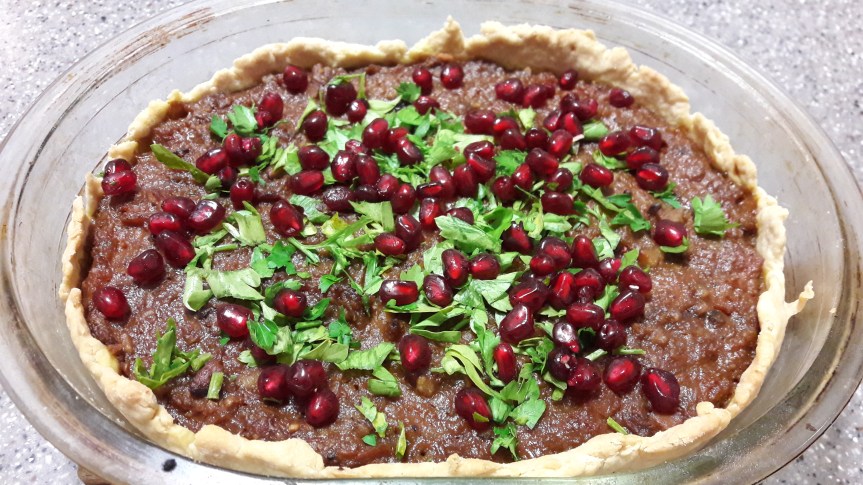
KCC’s Fesenjan Tart

Usually served as a thick stew with rice, we’ve decided to put it in a pie case to make a tasty walnut and pomegranate infused tart. Making this stew can be quite labour-intensive – shelling the walnuts, toasting them, crushing them, extracting the pomegranate seeds and so on, but the end result makes it well worth all the effort.

20180112_185716
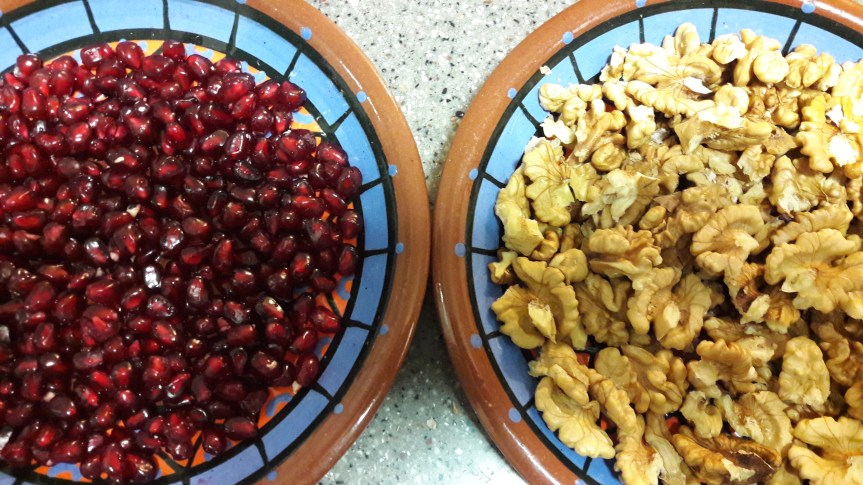
Can’t get much fresher than this!

Look out for Nar Ekşisi (pomegranate syrup) or the sweeter Nar Ekşili Sos (pomegranate sauce) in your local Middle-Eastern shop or make your own. If using Nar Ekşisi, add a teaspoon or two of honey to the stew to make it a bit sweeter.

To save time you can use shop-bought pastry, but we think it tastes better with a homemade pie crust. To keep it vegan, we’ve used olive oil instead of butter to make our shortcrust pastry.

Ingredients (serves 4)

125 g shelled walnuts

one medium onion

500 g pumpkin or butternut squash

300 ml vegetable stock

30 ml olive oil

2-3 tablespoons pomegranate syrup or sauce (Nar Ekşisi or Nar Ekşili Sos in Turkish)

0.5 teaspoon cumin seeds

0.25 teaspoon cinnamon and turmeric

Black pepper

Handful of pomegranate seeds

Bunch of fresh parsley

200 g shortcrust pastry

Method

Toast the walnuts for 10 minutes over a low heat and then mince in a blender. Heat the olive oil and fry the onion in a heavy-based pan over a medium heat for ten minutes. Add the spices and then add the cubed pumpkin and stir to cover.

Pour over the vegetable stock, add the pomegranate molasses and the minced walnuts and cook over a medium heat for 30 minutes until the pumpkin is cooked. Make sure the sauce is quite thick – if it’s runny, boil it until it starts to thicken.

Roll out the pastry and place it in a greased baking tray. Bake blind for ten minutes at 180c and then put the filling into the pie case. Cook for 40 minutes or so until the pastry starts to go golden brown.

Garnish the tart with chopped parsley and pomegranate seeds and serve with saffron rice and a green salad.

I Heard it through the Grapevine

26 October 2017

Welcome to the 60th post on Knidos Cookery Club – to celebrate we took a tour to Datça’s very own vineyard to check out some of the local vintages on offer.

The vineyard is located on a hilltop on the main road into Datça and has a reserve range of delicious reds, going under the name of Cnidus, an alternative spelling of Knidos, and some  excellent red and white blends along with a superb blush wine.

This slideshow requires JavaScript.

It has been in its present site since 2011 and has both south and north-facing rows of vines to take advantage of the sun’s rays from both sides. Look out for the round brick windmill on a hillside on the left as you drive into Datça – the vineyard’s on the main road just before the turn off to the town.

This boutique vineyard produces around 40 – 50,000 bottles of wine a year –  using Cabernet Sauvignon, Merlot, Syrah (Shiraz) and the indigenous Öküzgözü and Boğazkere grape varieties to produce red wines and a blush, and Chardonnay, Sauvignon Blanc and the local Sultaniye grape to make white wine.

You can taste the wines in the windmill or in the beautiful garden with its spectacular views over the Mediterranean Sea and Greek islands on the horizon. You can also take a tour of the vineyard and buy wine in the shop at competitive prices.

Datça Vineyard’s wines are on sale in some restaurants in town and in two supermarkets – Erdi on the harbour front, and Dilge on the road to the town’s Saturday market.

20170516_102107
Green beans roasted with walnuts

With all this wine tasting to do, something simple was called for so this week we’re going to make a a quick pasta dish with roasted green beans and walnuts. It’s really easy to cook and there’s not much washing up either, leaving more time to enjoy the fruits of Datça’s vineyard!

Ingredients (serves 2-3)

250 g green beans

50 g walnuts

200 g pasta (penne, fusilli or spaghetti works well here)

One garlic clove

25 ml olive oil

One teaspoon dried thyme

Method 

Top and tail the green beans and cut into 3-4 cm slices. Put the beans in an oven dish, crush the walnuts and mince the garlic and scatter over the beans and then add the thyme and olive oil. Stir well and then put the dish in a pre-heated oven and cook for 30 minutes at 180 c.

While the beans are roasting, cook your favourite pasta as per the instruction on the pack. When cooked to your taste, drain and mix with the roasted beans and walnut and serve immediately on warmed plates with shavings of Parmigiano-Reggiano (Parmesan), if you’re a cheese fan.

As for the wine pairing, we’d recommend either a Silenus Chardonnay or a Silenus Blush – in Greek mythology Silenus was the god of wine making and drunkenness and the foster-father of Dionysos, the god of wine, vegetation, pleasure, festivity, madness and wild frenzy – enjoy!


No Beef with the Beetburger

19 October 2017

The beet is back on Knidos Cookery Club and this time round we’ll be using our burgundy-coloured friend to tap into another zeitgeist treat in the form of the tasty beetburger.

20171013_210527

The stalls in Datça market last Saturday were overflowing with bunches of beetroots so we picked up a bunch, chopped off the leaves and stems for sautéing, and wrapped the beets in foil and roasted them in the oven for an hour or so.

Beetroot burgers have been a bit of a barbecue craze in the UK over the summer, with supermarkets reporting soaring sales as people turn towards healthier options to meat.

20171013_175647
Turkey’s papatya, or daisy, loaf of bread

We’ve done some experimentation and come up with a patty that will hold together under the grill, on the barbie, in the oven or can be shallow-fried. Stuff it in a bun – we’ve used the papatya loaf as pictured above, and serve with chips and salad for a delicious yet healthy meal (the chips were roasted in the oven, not fried).

Ingredients (makes 6-8 burgers)

100 g red lentils

50 g fine bulgur wheat

150 g roasted beetroot, grated

One medium onion

One garlic clove

50 ml olive oil

Two teaspoons dried thyme

One teaspoon each of sumac, cumin and chilli flakes

Dash of soy sauce

Method

Heat 25 ml of the olive oil in a heavy-based pan, add the herbs and spices and the chopped onion and garlic and fry for five minutes until the onion starts to soften. Add the lentils and water, bring to the boil and then simmer until the liquid is absorbed.

Add the bulgur wheat to the mix and allow to cool for 30 minutes – this should thicken the mixture. Then add the grated beetroot and stir to combine all the ingredients. Form into burger shapes (take a dollop of walnut-sized mix and flatten with a spatula and shallow fry in the rest of the olive oil on both sides until going crispy on the outside.

Alternatively, these burgers can be baked in the oven for 30-40 minutes at 200 c or grilled or cooked on the barbecue until crispy on both sides. Serve in a burger bun with salad and chips.

Bitter Melon Menemen

7 September 2017

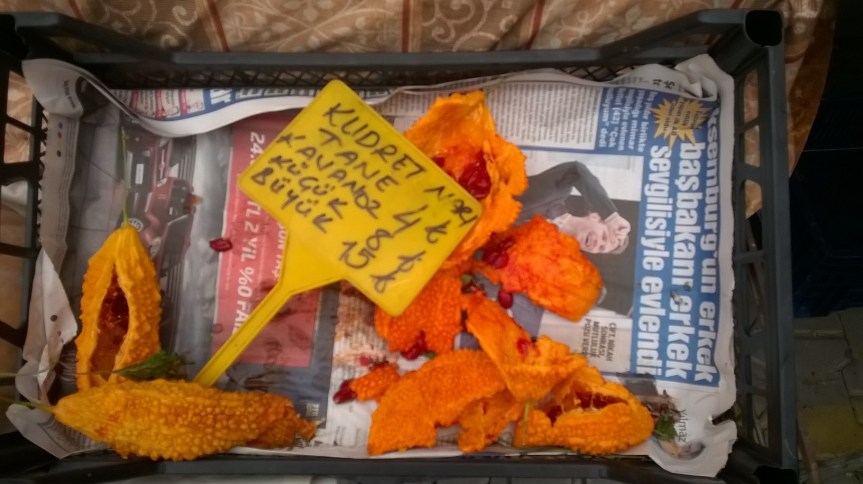
While shopping at Datça market recently, this spectacular-looking, knobbly, bright orange fruit grabbed our attention.

20170828_145746
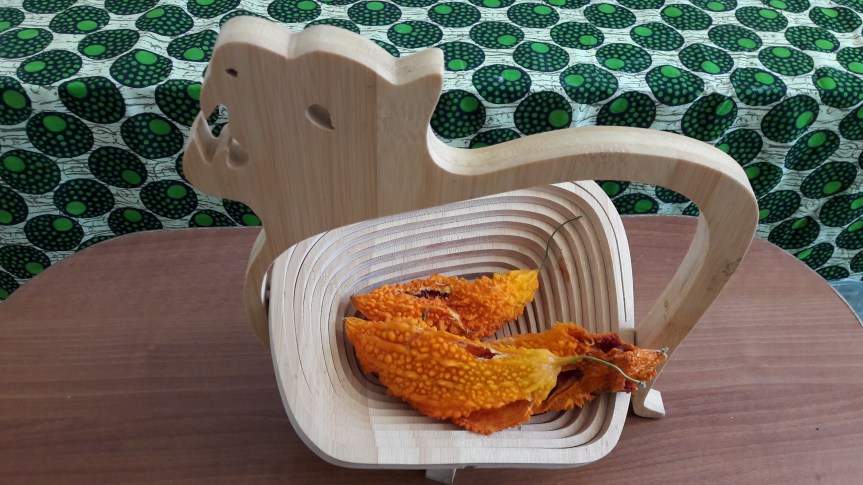
What’s in the dragon today? Bitter melon, of course

Subsequent googling revealed it to be a bitter melon, or bitter gourd, kudret narı in Turkish. Despute being popular in pan-Asian cooking, we couldn’t find too many Turkish recipes using bitter melon so we decided to mix it in with menemen, that breakfast fave in Turkey.

WP_20170826_12_29_42_Pro

You’ll probably be able to track down bitter melons in your local Asian grocer’s. When picked they are yellow-green, resembling a bumpy cucumber, and when ripe they turn orange. Cooking helps remove some of the bitter taste of this curious-looking member of the squash family. Inside are bright red coloured seeds that can be removed and eaten.

20170829_134255
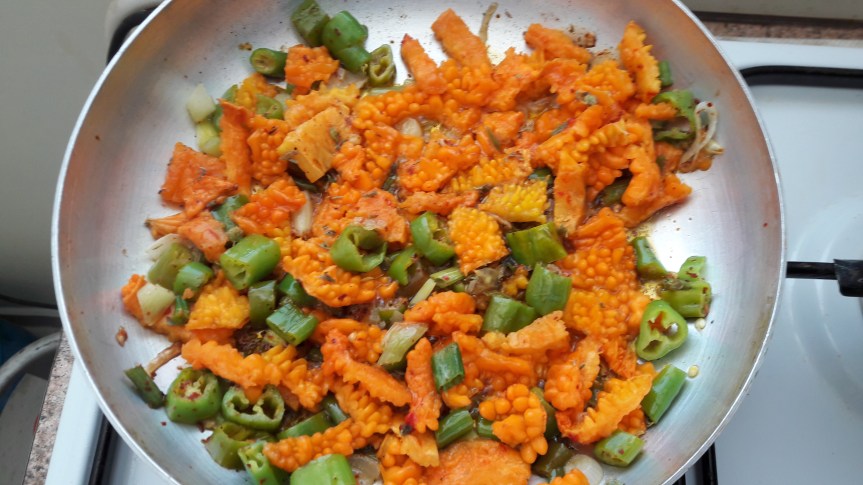
Step one: Fry the bitter melon
20170829_134858
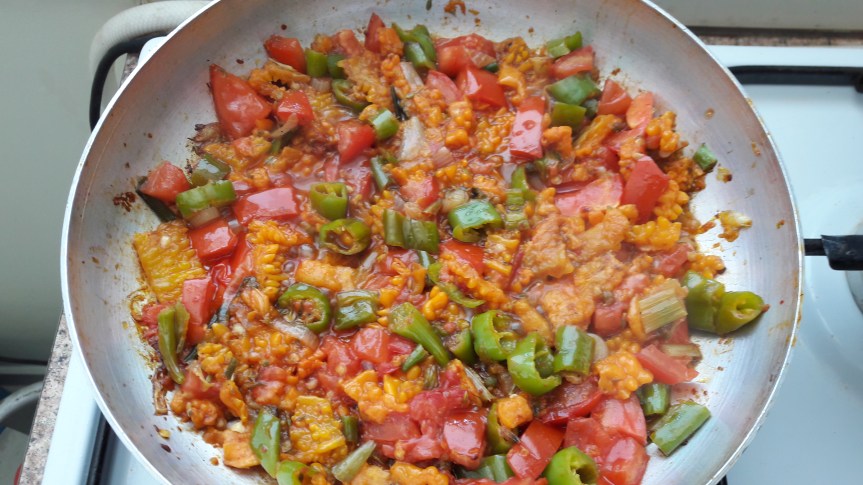
Step two: Add the tomato
20170829_135537
Step three: add the eggs and scramble

Ingredients (serves 2-4)

100 g bitter melon

60 g green peppers

2 spring onions

1 medium-sized tomato

1 teaspoon each of dried thyme, oregano, black pepper and red chilli flakes

4 eggs

A dash of soy sauce

25 ml olive oil

Method

Heat the olive oil in a frying pan and when hot add the chopped spring onion. Cook for two minutes over a medium heat and then add the peppers and seeded bitter melon, cut into 1-2 mm strips.

Cook for another two minutes and then add the chopped tomato, herbs and spices and a dash of soy sauce. Fry for 5 minutes and then reduce the heat and break the eggs into the mix. Keep stirring until you achieve the desired consistency of scrambled egg to your taste.

Serve with lashing of  crusty bread.

Fill Yer Lentil Welly Boots!

15 June 2017

Next week should see the start of negotiations on the UK’s future relationship with the European Union as talks are scheduled to get underway on 19 June to hammer out the ultimate shape of Brexit.

In the lead up to this momentous day, this weekend also marks another seminal event in Britain’s troubled relationship with continental Europe – 18 June is the anniversary of the Battle of Waterloo, a battle which saw forces under the command of the Duke of Wellington deliver a fatal blow to Napoleon Bonaparte’s ambitions in 1815.

20170610_214951
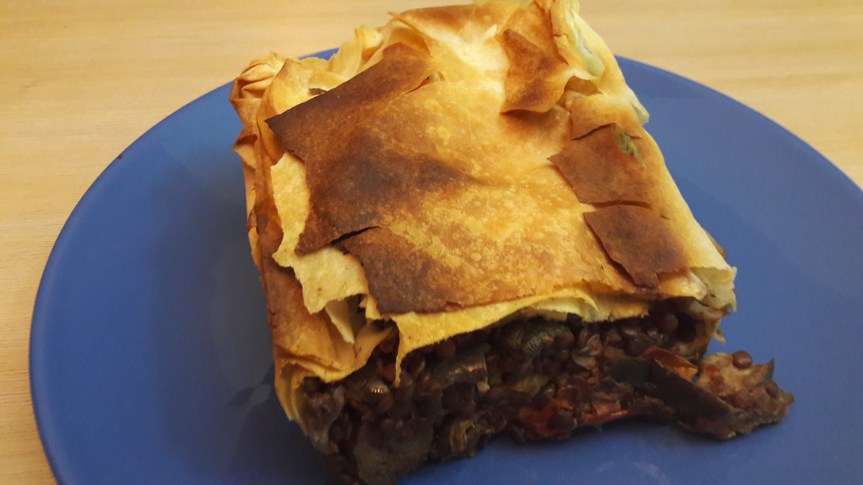
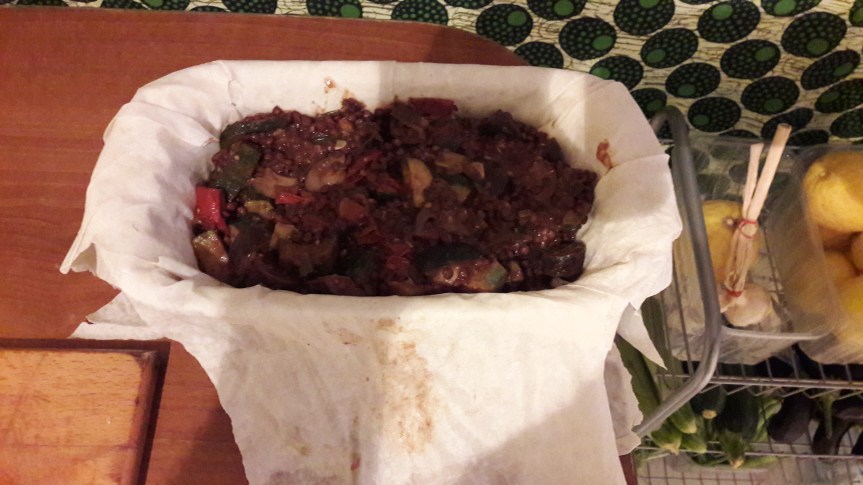
KCC’s Lentil Wellington ready for action

Only time will tell if the Maybot, in cahoots with the Rev Ian Paisely’s successors in the DUP, can produce a victory as decisive as Wellington’s – one thing is clear, some major sustenance is called for and what better than a hearty Lentil Wellington, our veggie take on Beef Wellington, a dish supposedly named after the duke.

Yes, besides giving his name to the wellington boot, the duke is also linked with this dish, which has a rich filling encased in pastry. Leah Hyslop suggests that the name was a patriotic makeover for a popular French dish:

The dish’s clear resemblance to that French specialty, filet de bœuf en croûte, could suggest the name was a timely patriotic rebranding of a trendy continental dish.

In our own era, food-patriotism was to the fore in 2003 when France refused to go along with the invasion of Saddam Hussein’s Iraq, causing some in the USA to call for ‘french fries’ to be rebranded ‘freedom fries’.

20170609_205035
KCC’s Lentil Wellington ready for final assembly before baking

For a Turkish twist, we’ve used layers of yufka, the local version of filo pastry, to cover our rich lentil and vegetable sauce. Make sure you leave on overlap of pastry of about 8-10 cm around the edges of your dish in order to create a top to encase the filling.

Ingredients (serves 4)

250 g aubergines

250 g courgettes

250 g tomatoes

75 g black lentils

2 spring onions

1 garlic clove

1 bayleaf

1 teaspoon cinnamon, cumin, red chili flakes and coriander seeds

Pinches of black pepper and salt

250 ml vegetable stock

100 ml red wine

100 ml olive oil

Filo pastry (around 300 g)

Method

Wash the lentils until the water runs clear, and then cook in a heavy-based pan with the vegetable stock and bayleaf. Bring to the boil and then simmer over a low heat for 20 minutes or so until the liquid is absorbed.

While the lentils are cooking, prepare the vegetables: finely chop the spring onions and garlic, cut the aubergine and courgette into one cm thick slices and then cut into four. Place the vegetables into a heavy-based pan, add the herbs and spices and pour 50 ml olive oil over the veg and then cook over a medium heat for ten minutes, stirring occasionally.

Chop the tomatoes and add to the vegetables and cook for another five minutes, continue stirring every now and then. Now add the cooked lentils and the red wine and cook for another ten minutes or so until the liquid is absorbed.

While this is cooking, prepare the pie case. Grease a large pie dish with olive oil and layer leaves of filo pastry, brushing each layer with olive oil. Make sure you leave a pastry overlap of around 8-10 cm around the edges of the pie dish.

Pour the filling into the pie case and fold over the overlapping filo pastry, brushing with more olive oil to help seal the top of the case. Bake in an oven pre-heated to 180 c /gas mark 5 for 30 minutes or so until the top of the pie begins to turn a golden-brown colour.

Allow to cool for ten minutes and then serve slices of the pie with a crisp green salad and roasted new potatoes.


A Passion for Pkhali

20 April 2017

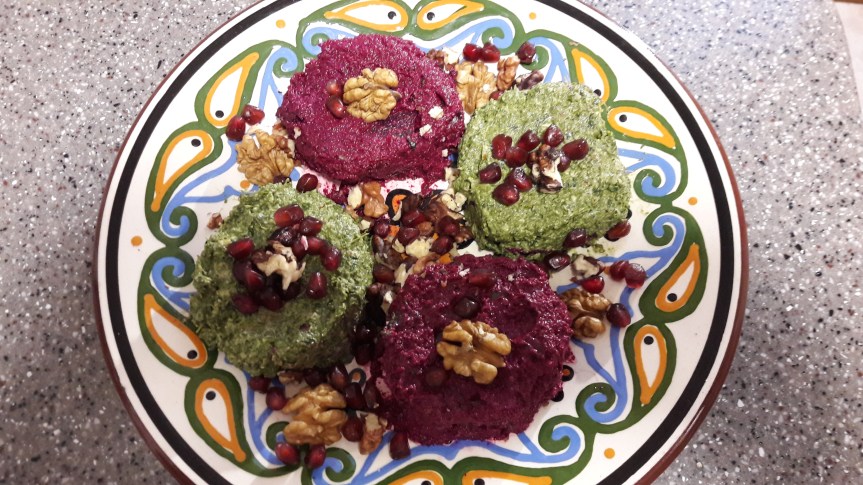
This time round on Knidos Cookery Club we’re returning to Georgia for some culinary inspiration in the form of pkhali, a type of starter made from walnuts, herbs, spices and whatever vegetable happens to be in season, such as spinach, beetroot, aubergine, cabbage or carrot.

20170415_200229

Walnuts are widely used in Georgian cooking – besides pkhali, they can be turned into  satsivi, a thick paste similar to hummus, and  bazhe, a sauce made with the holy trinity of Georgian herbs – blue fenugreek, ground coriander (cilantro) and crushed marigold flowers. These combos can be mixed with fresh cucumbers and tomatoes as a salad dressing or stuffed into tongues of fried aubergine (eggplant).

IMG-20170415-WA0000

Staying on the walnut theme, on a recent visit to the former home of famous Kazakh writer Mukhtar Auezov in Almaty, Kazakhstan, the guide gave me a handful of walnuts from the gnarled old tree in the garden of the writer’s house. These nuts were used in the making  of today’s pkhali recipe.

Auezov was famous in Soviet times for writing The Path of Abai, an epic historical novel based on the life and teachings of Kazakhstan’s most famous poet and composer Abai Qunanbayuli, who had been a neighbour and friend of Auezov’s grandfather.

It was said in the Soviet era that all were equal, but some were more equal than others – and this was certainly the case for Auezov after he won the Lenin Prize in 1959 for his four-volume epic novel about Abai.

The prize came with a sackful of roubles which he invested in a two-storey house, which is now a museum dedicated to his life and work. The house was lavish by the standards of the time and was designed by the architect who designed Almaty’s Abai Opera Theatre.

Ingredients (Makes around four generous servings of each pkhali – see photo above)

For the beetroot pkhali

  • 300 g cooked beetroot
  • 100 g walnuts
  • One garlic clove
  • 5 g fresh parsley
  • 5 g fresh coriander
  • One teaspoon blue fenugreek powder
  • One teaspoon black pepper
  • 20 ml wine vinegar
  • A scattering of pomegranate seeds and walnuts


For the spinach pkhali

  • 250 g fresh spinach
  • 100 g walnuts
  • One small onion (around 75 g)
  • One garlic clove
  • 5 g fresh parsley
  • 5 g fresh coriander
  • One teaspoon blue fenugreek powder
  • One teaspoon black pepper
  • 20 ml wine vinegar
  • A scattering of pomegranate seeds and walnuts


Method

  • For the beetroot pkhali:
  • Boil the beetroot for 30 minutes or so until you can pierce it with a knife easily.
  • Leave to cool and then peel and chop into small chunks.
  • Toast the walnuts over a low heat for 5-10 minutes and then add to the garlic and herbs and spices in a bowl. Add the vinegar and use a blender to make a smooth paste. Add the beetroot chunks and keep blending until you have a gloopy mixture.
  • Leave overnight in the fridge and then serve with a scattering of pomegranate seeds and walnuts.

Method

  • For the spinach pkhali:
  • Cook the spinach in boiling water for 5 minutes until it begins to wilt. Remove and place in cold water and then drain.
  • Finely chop the onion and put it in a mixing bowl with the garlic, herbs and spices. Toast the walnuts over a low heat for 5-10 minutes and then add to the bowl. Add the vinegar and use a blender to make a smooth paste. Add the spinach and keep blending until you have a gloopy mixture.
  • Leave overnight in the fridge and then serve with a scattering of pomegranate seeds and walnuts.


Seventh Heaven Samsas


23 March 2017

Happy Nowruz from Knidos Cookery Club!

20170317_163343
Nauryz (Nowruz) greetings from Almaty, Kazakhstan

To celebrate this spring equinox festival, we’ll be serving up kok samsa, deep-fried pies filled with a selection of spring greens.

20170317_181312
Seven tastes of spring: parsley, spinach, coriander, celeriac leaves, spring onion, garlic and mint

Originating in Persia some 3,000 years ago, Nowruz, or New Day, is a celebration of the end of winter and the start of a new year on the date when day and night are equal in the Northern Hemisphere. This date usually falls on or around 21 March.

The holiday is still widely celebrated in Iran and Iraq, across Central Asia, Russia, Afghanistan, Albania, Azerbaijan, in eastern Turkey and in parts of Syria, India, Pakistan and China. Food plays an important role in these celebrations – in Iran the table is set with seven items, as explained in this article from Iran Wire:

A few weeks before Nowruz, Iranians begin setting up their haft sin, or “seven Ss,” a ceremonial display of symbolic items whose names begin with the Persian letter “sin” or “s.” They include “sabzeh,” or green sprouts grown from lentils, which symbolize rebirth; “samanu,” a sweet pudding that represents affluence, “senjed,” or dried wild olives, which symbolize love; “seer,” or garlic, which symbolizes medicine; “seeb,” an apple, which represents health; “somaq” or sumac fruit, which symbolizes the color of sunrise, and “serkeh,” or vinegar, which symbolises maturity.

Kok samsa, a close relative of India’s samosa, are prepared in Uzbekistan, where the holiday is called Navruz. These tasty pies are filled with fresh spring greens.

We’ve developed our own take on the kok samsa using the Iranian magic number of seven ingredients: parsley, spinach, coriander, celeriac leaves, spring onion, garlic and mint. As fully signed-up members of Dillwatch, we omitted that scurrilous weed, dill, from this recipe.

20170317_230319.jpg
KCC’s Kok samsa with seven spring herbs inside

Ingredients (makes 8-10 pies)

  1. For the Pastry
  • 300 g plain flour
  • 75 ml olive oil
  • Pinch of salt
  • Up to 75 ml cold water
  • Two – three teaspoons of  sesame seeds

       2. For the Filling

150 g spring onions

  • 2 garlic cloves
  • 50 g fresh coriander
  • 50 g fresh parsley
  • 150 g spinach
  • 25 g the leafy bits from the top of a celeriac
  • 15 g fresh mint
  • Two teaspoons of cumin seeds
  • 25 ml olive oil

      3. For Deep Frying

  • 1 litre sunflower oil (for deep frying)

Method

      1.For the Pastry

Pour the flour into a large mixing bowl and add the salt. Pour in the olive oil and stir with a fork. The mixture should form into small clumps of flour and oil. Pour some of the cold water and continue mixing. Continue adding water until the mixture forms into a large ball shape. Cover with cling film and leave in the fridge until you’re ready to use it.

      2. For the Filling

Heat the olive oil in a heavy-based pan and add the chopped spring onions and minced garlic. Fry for five minutes over a medium heat, stirring occasionally. Add the coriander and parsley and cumin and fry for two to three minutes. Add the torn up spinach leaves, chopped celeriac leaves and mint and continue cooking until the spinach has wilted, about 10 more minutes or so, stirring every now and then.

      3. For Deep Frying

Heat the sunflower oil in a heavy-based pan. For deep frying you need to get the oil to around 180 c – to check the temperature use this tip from Delishably:

When the oil has preheated, dip the handle of a wooden spoon or a chopstick into the oil. If the oil starts steadily bubbling, then the oil is hot enough for frying. If the oil bubbles very very vigorously, then the oil is too hot and needs to cool off a touch. If no or very few bubbles pop up, then it’s not hot enough.

While the oil is heating, prepare the pies. Form the pastry into 8-10 walnut-sized balls. Put the pastry ball onto a lightly floured surface and roll out into a 1 mm thick circle. Sprinkle with sesame seeds and turn the circle over.

Place three teaspoons of filling on half of the pastry round and then close the other half over the top of the filling. Use a fork to mould the edges of the pie together. Prick the pie’s top to allow air to escape.

Place two or three pies at a time in the hot oil and fry for around 8 minutes or until the pie is golden brown in colour. Remove with a slotted spoon and drain on kitchen roll. Serve the kok samsa either hot or cold.


Avocado + Egg = Brunch Heaven

9 February 2017

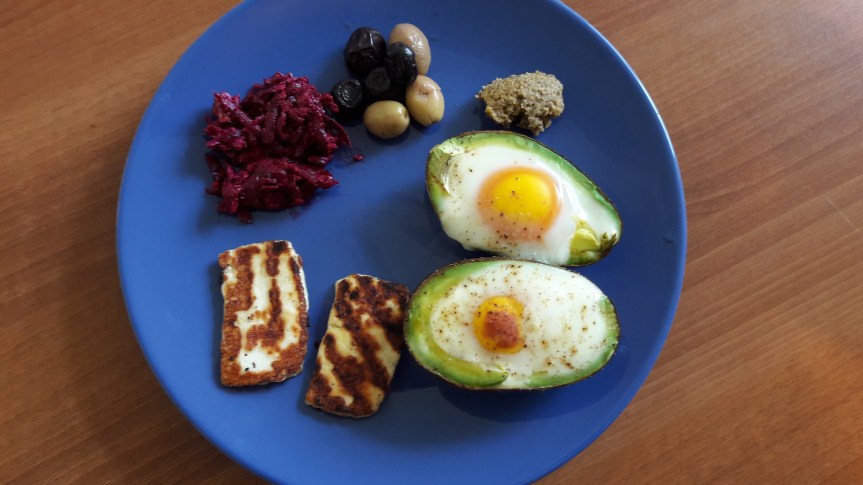
This week at Knidos Cookery Club we have a guest post that combines two of our all-time fave foods: avocado and egg, dished up with olives, beetroot with walnuts and halloumi cheese.

20170115_143020

Avocados love the mild winters of the Knidos region as the shores of the Mediterranean Sea provide ideal growing conditions for this large green fruit that’s packed with nutritious vitamins and healthy fats.

Our guest chef Jasha, who has worked in the hospitality industry in the UK, has kindly agreed to share her favourite way of combining eggs with avocado. Served up with pan-seared halloumi, olives and grated beetroot with walnut, this great dish sent us into brunch heaven!

Ingredients 

One avocado per person

Two eggs per person

250 g pack halloumi cheese cut into four slices (enough for two people)

Black and green olives

A few scoops of olive paste

One grated large beetroot (raw or cooked) mixed with 50 g crushed walnuts and two teaspoons of sour cream or natural yogurt

Black pepper and red chili flakes

Method

Slice the avocados in half and remove the stone. Be careful not to stab yourself in the hand as I once did – it’s apparently quite a common kitchen injury. Scoop out some of the flesh to leave a hollow space for the egg.

Place the avocado halves in a baking dish, round side down, and pour an egg into the scooped out shell. Grind some black pepper over each egg and bake the avocados in an oven pre-heated to to 200 c /gas mark 6 for 20 minutes or until the underside of the eggs are cooked. Finish the eggs off under a grill and then season with some red chili flakes and a grind of black pepper.

While the eggs are cooking, fry the halloumi slices in a non-stick or heavy-based frying pan until browned on both sides.

Serve the avocados immediately with the pan-seared halloumi, beetroot and walnuts, olive paste and olives and some doorsteps of fresh bread.


Getting Down to the Nuts and Roots

26 January 2017

This time round on Knidos Cookery Club we’re getting back to the roots with a comforting winter soup made from some of our favourite root vegetables, a leek or two and some roasted chestnuts.

20170124_204349
Roasted chestnuts – a winter treat

One of the big events in the world of Knidos Cookery Club so far in 2017 has been the relocation of Datça’s weekly market to a new, purpose-built site. Previously, when the market came to town on Friday and Saturday, it would spill down the hill in the centre of town, causing considerable congestion with the stallholders looking for parking spots and the customers squeezed in-between.

The new site has a covered area for the local fruit and vegetable growers with the other stalls – spices and nuts, clothes, household goods etc., setting up around the covered market. It’s a lot more user-friendly, with plenty of space for shoppers and stall holders.

The last few visits to the market have entailed searching for some of our regular suppliers in the new layout, and we’re pleased to report that most of them have been accounted for!

20170108_222106
A warming bowl of rooty, chestnut pureed soup

In season at the moment are chestnuts – anyone who’s visited Istanbul in winter will probably remember trying fresh roasted chestnuts while on the move around the centre, a delicious snack that epitomises the city in the colder months of the year to me.

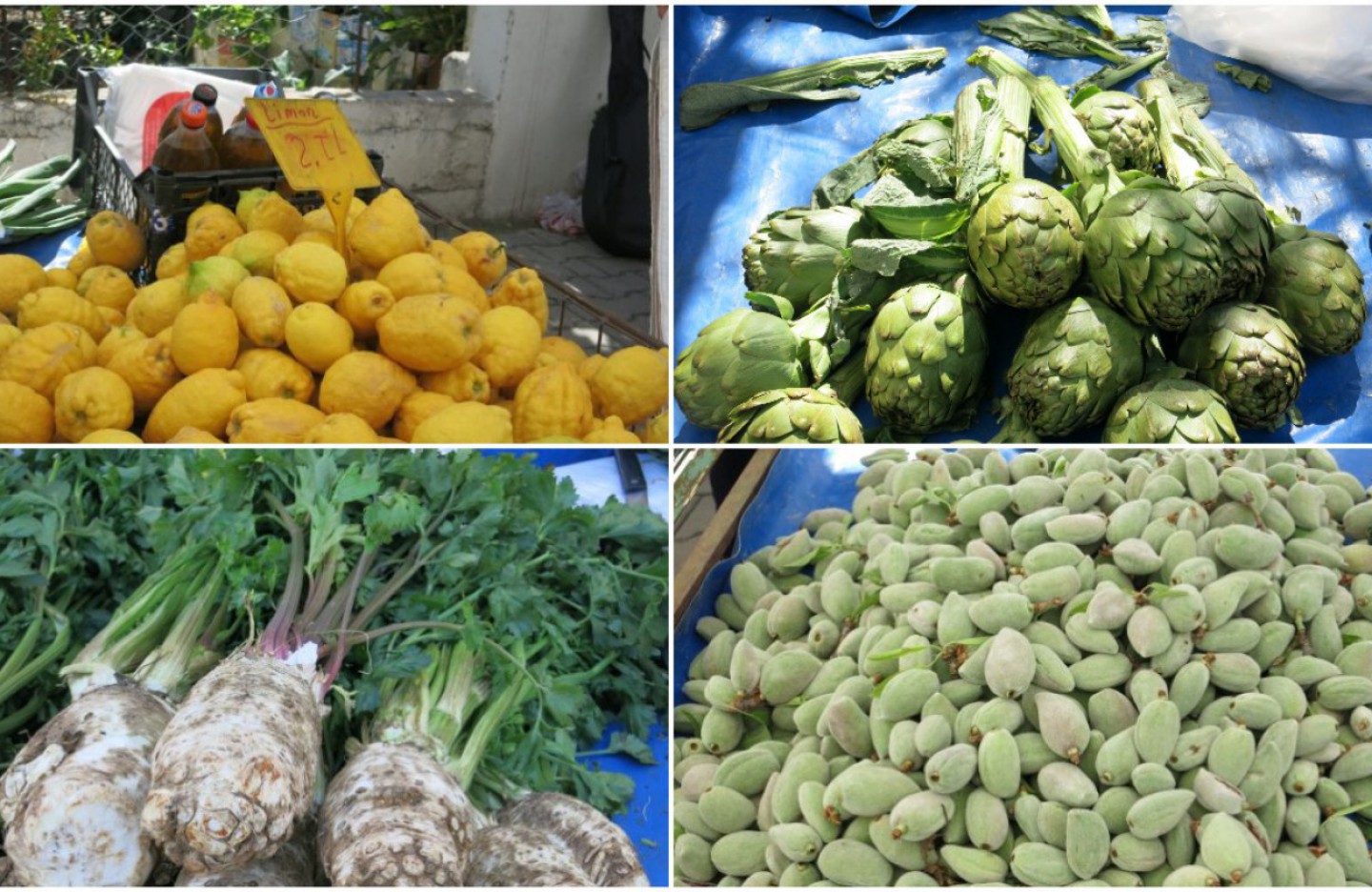
There were also root vegetables aplenty – including black carrots (these root vegetables were first cultivated in Afghanistan and were yellow and purple in colour) and celeriac, lengthy leeks and lashings of oranges and lemons. So this week we’ll be making a rooty nutty soup containing celeriac, potato, carrot, leek, shallots and chestnuts.

Ingredients (serves 3-4)

75 g shallots

250 g leeks

250 g celeriac

one medium-sized potato

100 g carrot (black if you can find them!)

500 ml vegetable stock

25 ml olive oil

150 g chestnuts

one teaspoon dried thyme

salt and pepper for seasoning

juice of one lemon

Method 

Fry the finely sliced leeks and chopped shallots in the olive oil, which has been seasoned with dried thyme, over a medium-high heat until just beginning to brown. Peel and dice the celeriac, potato and carrot into 1 cm cubes  and add to the pan of leeks and shallots.

Stir in well to coat the cubed root vegetables with oil and thyme and then add the stock and the juice of the lemon and simmer for 20 minutes over a low-medium heat. While this is bubbling away, score the outside of each chestnut with a cross shape (on one side) and roast the chestnuts in an oven pre-heated to 220 c /gas mark 7.

Check the chestnuts after 20 minutes or so – if they are easy to peel and are roasted sufficiently, then they are ready for use. If not, check every 5 minutes until the shell comes off easily.

Add the peeled chestnuts to the soup pan, stir well and season with salt and pepper to taste. Then use a hand blender to make a smooth, thick soup and serve straight away with hunks of wholemeal bread.

Olivier with an Edge

12 January 2017

Welcome to the first Knidos Cookery Club of the new year. While many of us have returned to the daily grind, it’s still party-time in some parts of the world.

in Russia, people are preparing to celebrate New Year’s Eve on 13 January – the Orthodox Church still follows the Julian calendar rather than the Gregorian calendar, which Russia adopted after 1917’s October Revolution. This switch created a 13-day lag between the calendars so, for followers of the Orthodox faith, Christmas Eve falls on 6 January and 13 January marks the end of the old year.

20170107_183144
KCC’s take on Russia’s classic Olivier salad

A centre-piece of Russian tables on this day, as people prepare to welcome in novy god, is the Olivier salad – a concoction of boiled potatoes, pickled cucumbers, peas, eggs, carrots and boiled beef or chicken in a mayonnaise dressing. This version dates from Soviet times as all the ingredients could usually be procured even in the depths of winter and despite chronic shortages.

A version of the salad, omitting the meat and eggs, is made in Turkey where it’s known as Rus Salatası – we’ve made our own veggie version that replaces the meat (Olivier purists look aside now, please) with black and green olives and uses sour cream in place of mayonnaise.

When I lived in Moscow in the 1990s I got it into my head that Olivier salad should include olives (mistakenly thinking that Olivier referred to olives rather than the salad’s originator!) and I was disappointed when it came minus olives – so now I finally have a chance to put this right!

Ingredients (serves 3-4)

  • 150 g potatoes
  • 150 g carrots
  • 150 g peas
  • 150 g pickled cucumbers
  • 150 g black and green olives
  • two hard boiled eggs
  • 150 ml sour cream or natural yogurt
  • pinches of salt and black pepper

Method

  • Boil the whole carrots and potatoes until cooked but not going mushy and boil the eggs for 5 minutes or so. While they’re all cooking, chop the pickled cucumbers and olives into small cubes.
  • Drain the potatoes and carrots and cover with cold water to stop them cooking. Do the same with the eggs. Chop the potatoes, carrots and eggs into small cubes and arrange around the side of a large serving dish in separate sections with the olives, peas and cucumbers.
  • Pour the sour cream or yogurt into the middle of the bowl and season with salt and pepper. Now mix all the ingredients thoroughly, making sure they all get a good coating of sour cream or yogurt.
  • Leave in the fridge before serving alongside other Russian-themed salads, such as this veggie take on caviar made from beluga lentils, and wish a hearty S Novym Godom with shots of vodka and/or a glass of chilled Sovyetskoye Shampankskoye (if you can get hold of it in your local offie!) as you prepare to welcome Old New Year in true Russian-style!