Spice it up with Sumac!

21 September 2017

This time round on Knidos Cookery Club we’ll be looking at a spice called sumac that is ubiquitous in Turkish cooking. Sumac comes from the flowering plants of the genus Rhus and its powdered purple-reddish berries give a tart but tangy boost to everything from soups and dips to grilled vegetables and kebabs. It also gives a rich dark burgundy hue to the dishes it flavours.

20170919_133053
Sumac

We’ve decided to use it in acili ezme, a fiery tomato, onion and pepper dip that is delicious eaten on it’s own with bread,  used as a sauce to accompany dishes such as pide, Turkey’s take on pizza, as part of a meze plate with our carrot and walnut tarator and our  creamy almond and courgette dip or with mücver, Turkey’s courgette fritter.

20170919_133855.jpg
A fearsome acili ezme

The secret to a successful acili ezme is to chop the ingredients as finely as you can with the sharpest knife you have and to chill it for a few hours before serving so the flavours have a chance to blend.

We’ve added red chilli flakes and sumac to give it a kick and used mint and parsley to balance out the flavours. If you like your dips hot, then use green chillies in place of green peppers in this recipe.

Ingredients (serves 3-4)

One medium-sized onion

Three medium-sized plum tomatoes

One medium-sized green pepper

One garlic clove

One bunch of parsley

One teaspoon dried mint

Three teaspoons red chilli flakes

Two teaspoons sumac

One teaspoon flavoured vinegar (such as apple or fig)

Three teaspoons pomegranate sauce

Method

Peel the tomatoes and de-seed (to peel: plunge the tomatoes into boiling water for 30 seconds then place in cold water – the skin should now come off easily). Chop the tomatoes, green pepper, onion, garlic and parsley as finely as you can.

Put all the ingredients into a bowl, add the herbs and spices, vinegar and pomegranate sauce and mix well. Leave to chill in the fridge for at least two hours before serving with flat bread.
Bitter Melon Menemen

7 September 2017

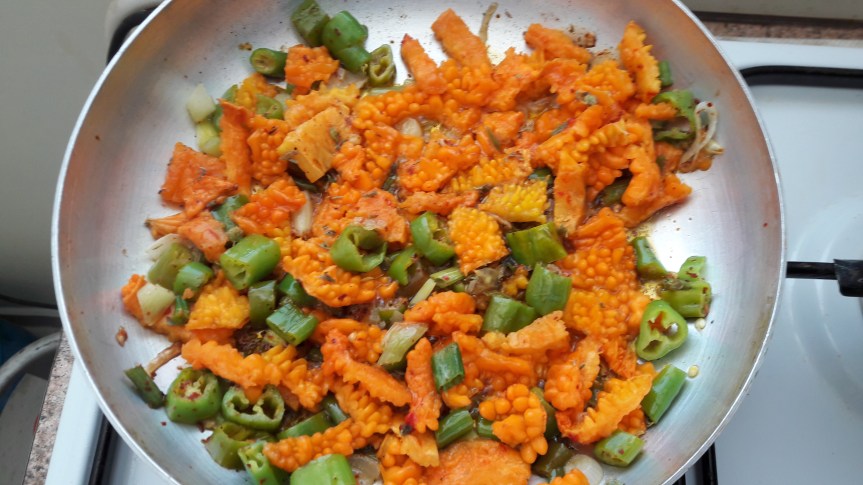
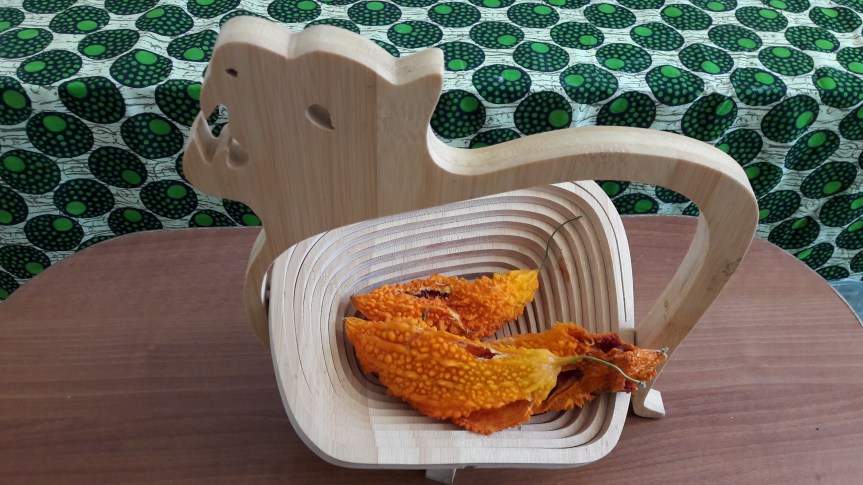
While shopping at Datça market recently, this spectacular-looking, knobbly, bright orange fruit grabbed our attention.

20170828_145746
What’s in the dragon today? Bitter melon, of course

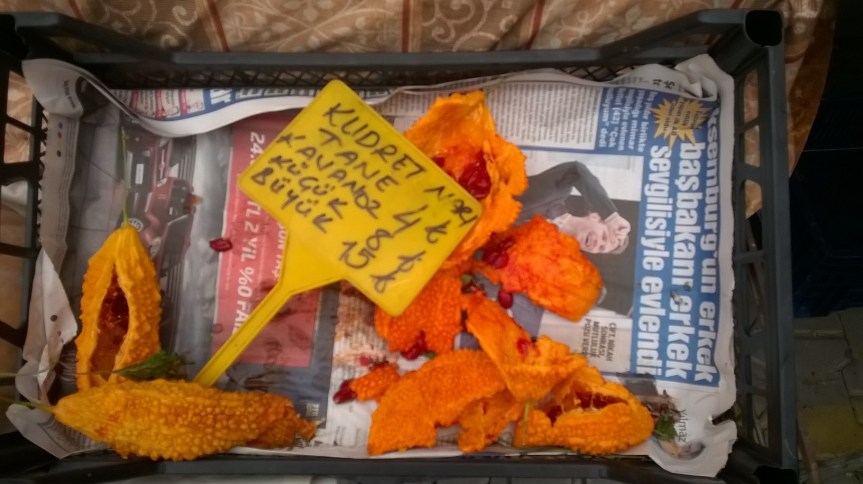
Subsequent googling revealed it to be a bitter melon, or bitter gourd, kudret narı in Turkish. Despute being popular in pan-Asian cooking, we couldn’t find too many Turkish recipes using bitter melon so we decided to mix it in with menemen, that breakfast fave in Turkey.

WP_20170826_12_29_42_Pro

You’ll probably be able to track down bitter melons in your local Asian grocer’s. When picked they are yellow-green, resembling a bumpy cucumber, and when ripe they turn orange. Cooking helps remove some of the bitter taste of this curious-looking member of the squash family. Inside are bright red coloured seeds that can be removed and eaten.

20170829_134255
Step one: Fry the bitter melon
20170829_134858
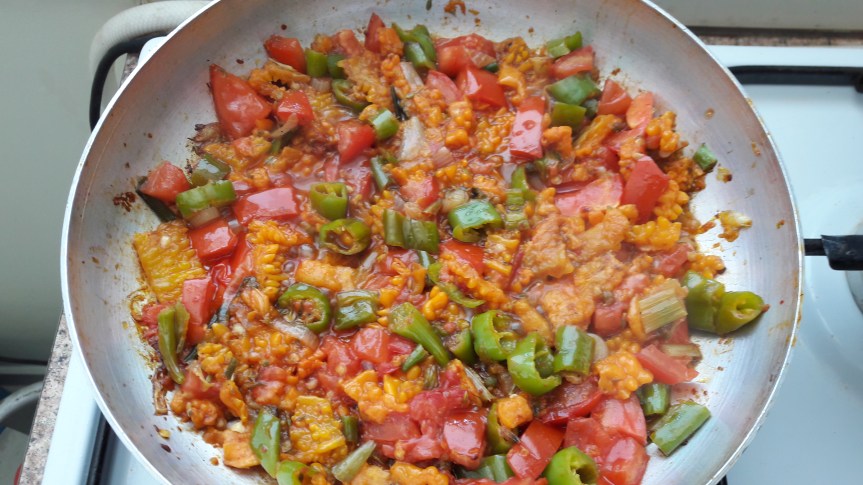
Step two: Add the tomato
20170829_135537
Step three: add the eggs and scramble

Ingredients (serves 2-4)

100 g bitter melon

60 g green peppers

2 spring onions

1 medium-sized tomato

1 teaspoon each of dried thyme, oregano, black pepper and red chilli flakes

4 eggs

A dash of soy sauce

25 ml olive oil

Method

Heat the olive oil in a frying pan and when hot add the chopped spring onion. Cook for two minutes over a medium heat and then add the peppers and seeded bitter melon, cut into 1-2 mm strips.

Cook for another two minutes and then add the chopped tomato, herbs and spices and a dash of soy sauce. Fry for 5 minutes and then reduce the heat and break the eggs into the mix. Keep stirring until you achieve the desired consistency of scrambled egg to your taste.

Serve with lashing of  crusty bread.

Haydari Stuffed Potato Balls

6 July 2017

Welcome to Knidos Cookery Club’s 50th post! To mark this momentous milestone, we’ve recreated a dish we discovered while visiting Ovabükü, a quiet beach on the Knidos peninsula – stuffed potato balls.

20170627_205032
Spicy potato balls stuffed with haydari

If you’ve enjoyed reading Knidos Cookery Club as much as we’ve enjoyed producing it, then could we ask a favour – please nominate us in the Saveur Blog Awards for 2017. This is a special award for food blogs and if you could spare a couple of minutes to nominate then enter our URL – https://knidoscookeryclub.wordpress.com – and choose the Best New Voice category. Your support would be much appreciated – thanks in advance!

20170627_132117
Haydari with walnuts

For Knidos Cookery Club one of the most enjoyable things about the local food scene is finding a new restaurant and checking out the dishes in the vitrine. There are always some surprise dishes lurking in the glass display cabinets that are made from fresh, seasonal ingredients.

In Ovabükü one of the dishes on the mixed meze plate was the aforementioned potato ball stuffed with cream cheese. We’ve put some delicious haydari, made from mint and strained yogurt, in our version, and spiced up the potato balls with some chilli flakes. Strained yogurt is thicker than normal yogurt as the liquid whey and lactose has been strained off – it’s also known as Greek style yogurt in the UK.

Haydari

  • 200 ml strained yogurt
  • 20 g crumbly white cheese
  • 1 garlic clove
  • 3 teaspoons dried mint
  • 1 teaspoon red chili flakes
  • 2 walnuts

Mix the yogurt, cheese, garlic and mint together and leave in the fridge for a couple of hours. Decorate the haydari with walnut pieces and dust with chilli flakes before serving.

Spicy Potato Balls

  • 500 g baked or boiled potatoes
  • Handful of fresh parsley
  • 1 teaspoon red chili flakes
  • Black pepper
  • 50 ml unstrained yogurt

Mash the potato and mix in the other ingredients. Form into round, golf ball-sized shapes, make an indentation in the top with a teaspoon and fill the gap with haydari and top with a walnut half.

The Mücver Variations

29 June 2017

This time round on Knidos Cookery Club we’re revisiting an old favourite – mücver, Turkey’s tasty courgette fritter.

20170531_132309
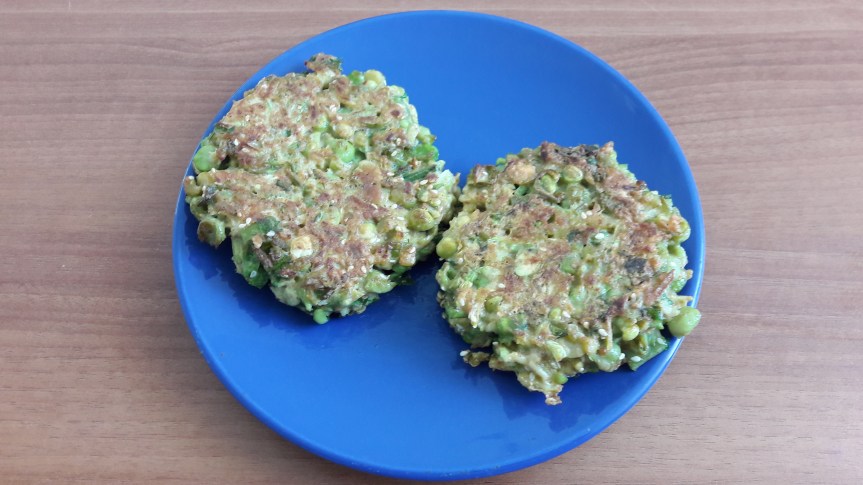
Could this be called a pea fritter?

The mücver usually served up in Turkish eateries are made from grated courgettes, so we’ve decided to spice up this old favourite by adding some other ingredients. Why not try them with fresh peas or grated carrot? Mushrooms work well, as do green beans.

20170609_133418
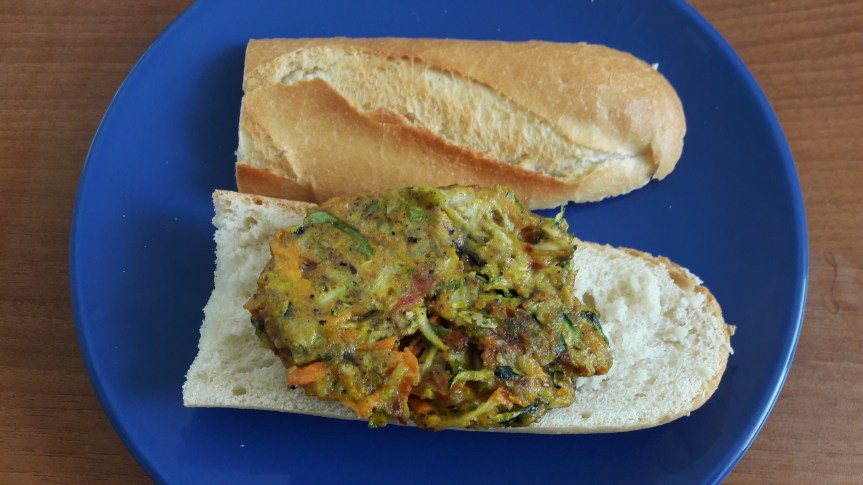
Putting some carrots in the mix

You can even add all these ingredients to the basic mix, chuck in a few chopped almonds or walnuts and, hey presto, you have a chunky veggie nut burger!

Serve the fritters in a pita, on a baguette, in a burger bun, rolled up in flat lavaş bread or just plain with a salad and condiments of your choice.

Ingredients (for around 8 fritters)

Two medium-sized courgettes

One small onion

One egg (or 15 ml of olive oil for vegan version)

Choose one or more from: 100 g chopped mushroom / grated carrot / peas (fresh if you have them, otherwise frozen or tinned) / sliced green beans (use 50 g of each if using more ingredients)

50 g of plain flour

Bunch of parsley, mint and/or dill (if you like that sort of thing)

Dried herbs to taste

A generous sprinkle of sesame seeds

An  optional dusting of chili flakes and grated cinnamon

Salt and pepper

A dash of olive oil for frying

Plain yogurt for serving

Method

Grate or chop up the courgettes and the extra of your choice (mushroom, carrot  peas, green beans or even all three) finely and mix with the chopped onion. Add fresh parsley, mint and/or dill, dried herbs, chili flakes, cinnamon, sesame seeds salt and pepper and blend well.

Make a well in the centre of the mix and break the egg into it. Sprinkle in the crumbled white cheese. Mix well. (Vegan readers should skip the egg and add 25 ml of olive oil instead)

Gradually add the plain flour and blend  until the mixture has quite a thick consistency – you don’t want it to be too wet and sloppy.

Drizzle some olive oil in a frying pan and put over a medium heat.

Place golf ball-sized scoops of the courgette mixture into the pan and flatten with a spatula or fork.

After a few minutes turn the fritter. Keep cooking until both sided are a golden-brown colour.

Serve hot with a dollop of yogurt on top.

Barbunya Bean Therapy

22 June 2017

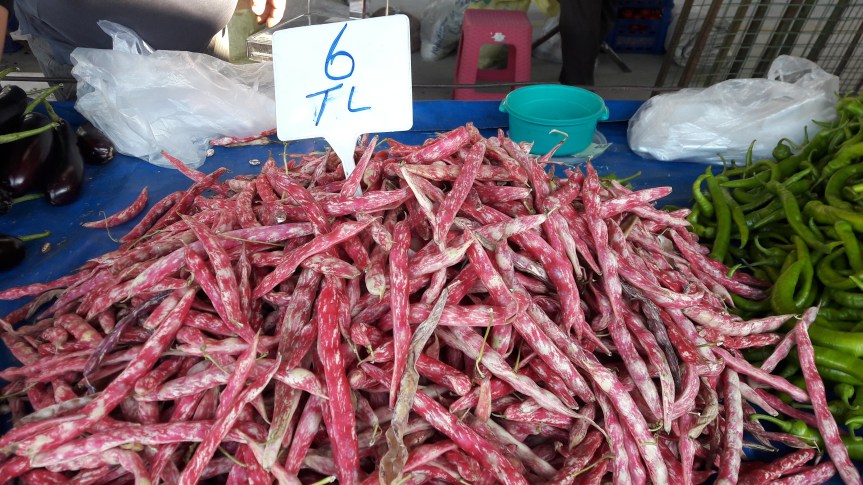
Last week in Datça market piles of psychedelic pink-podded barbunya beans arrayed against their green-podded cousins caught our eye. In Turkey these distinctive beans, also known as borlotti or cranberry beans, are made into a starter called barbunya pilaki, which is always high on our list when ordering a spread of mezeler.

20170616_183758
Psychedelic pink barbunya beans piled high in Datça market

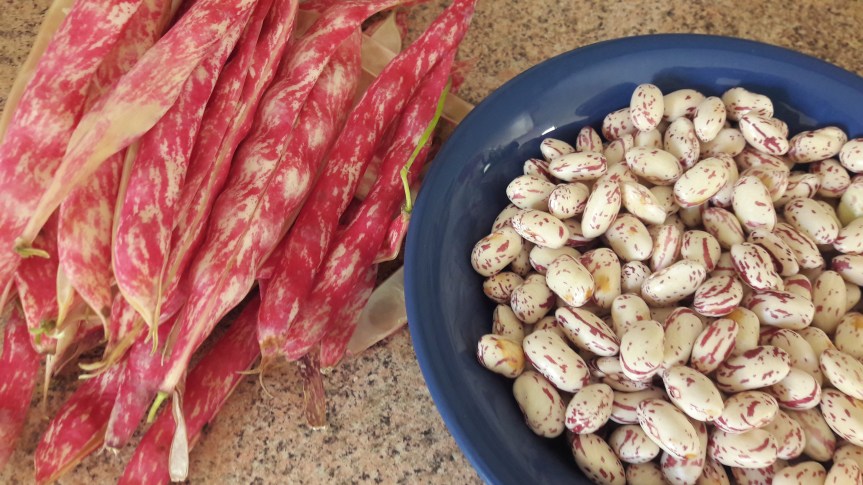
There’s something very therapeutic about podding these beans, like a beanish mindfulness moment!  Our kilo of beans in their pods yielded around 600 g of pink-marbled white beans.

20170616_194034
Bean therapy!

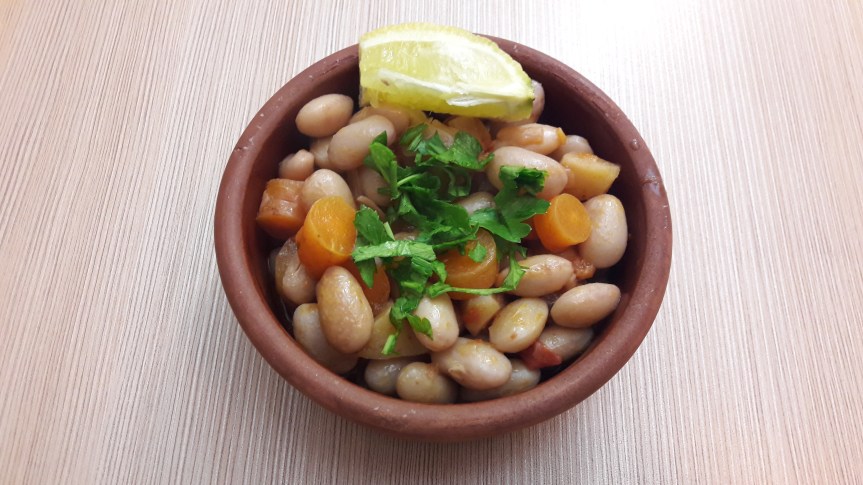
When cooked and allowed to cool, the pink colour leaches out and the beans take on a delicate brown hue. They’re delicious stewed with olive oil, onion, carrot, potato and lemon juice, served with a sprinkling of fresh parsley and a chunk of lemon. Some recipes omit the potato, but we think this gives the dish more oomph and means you don’t need to cook up any additional carbs.

20170616_220421
Barbunya pilaki all ready to go

They can be served hot as a less sugary take on baked beans, or served cold as part of the aforementioned selection of starters – Knidos Cookery Club recommends its carrot and walnut tarator, creamy almond and courgette dip, peppery muhammara and stuffed courgette flowers for a scrumptious feast of Turkish mezeler.

Ingredients (for 4-6 servings)

600 g shelled barbunya beans (or dried borlotti beans soaked overnight)

1 onion (around 100 g)

100 g carrot

100 g potato

100 g tomato

1 garlic clove

1 lemon

1 teaspoon honey

1 teaspoon red chili flakes

Fresh parsley to garnish

50 g olive oil

400 ml hot water

Method

Heat the olive oil into a heavy-based pan, chop the onion and garlic finely and fry over a medium heat for five minutes or so. Add the chopped tomatoes, lower the heat and cook for another five minutes.

Dice the carrot and potato into small cubes and then add these along with the beans, the juice of half a lemon, the honey, chili flakes and hot water to the pan and bring to a boil. Simmer for 30-45 minutes, stirring occasionally, until the beans are cooked but not going mushy.

Serve hot or allow to cool and garnish with fresh parsley and lemon slices.

Courgette Flower Power

4 May 2017

This time round on Knidos Cookery Club we’ve been busy stuffing courgette flowers, a popular starter all around the Aegean Sea. In Turkey, these delicate taste-bud ticklers, known as kabak çiçeği dolması, are stuffed with a rice mixture and baked, unlike their Italian cousins which are filled with ricotta cheese and deep fried.

IMG_1295
Succulent stuffed courgette flower power

The courgette, zucchini to our north American readers, is a really versatile vegetable – in the past we’ve used it in a tasty fritter mücverstuffed courgettes and in a creamy almond dip, and it’s great that we’ve found a use for its flowers as well.

If you’re growing your own courgettes, then you should have a ready supply of flowers, otherwise you may need to scour your local farmers’ market for these vivid orange blossoms.

Ingredients 

20-25 courgette flowers

One cup (approx. 100g) of short or long grain rice (We recommend brown rice for its earthier flavour)

250 ml vegetable stock

One medium-sized onion

One medium-sized tomato

One garlic clove

Pinches of dried thyme, oregano, black pepper, chili pepper flakes, cinnamon and salt

5 g fresh parsley

5 g fresh mint

25 g raisins

25 g  pine nuts

25 ml olive oil for frying

Juice of one lemon

One sliced lemon

100 ml natural yogurt

Method

Pour the olive oil into a heavy-based pan and add the chopped onion and garlic. Cook over a medium heat until the onion becomes translucent. Add the chopped tomato, dried and fresh herbs, seasoning, dried fruit and pine nuts and cook for five minutes over a high heat.

Turn the heat down and add the washed and soaked rice to the onion mix and stir to cover the grains with oil. Add the stock and cook over a low heat until the liquid is absorbed.

Make sure that the courgette flowers are free from any green, leafy bits or stem and remove the stamen from the inside of the flower. Allow the rice mixture to cool and then fill each flower with a teaspoon of rice mix – don’t overfill them as the rice will continue to expand as it cooks.

Fold the end of the blossom together to seal the rice mix in and place the filled flowers into a heavy based frying pan or casserole dish. Pour water over the flowers to just cover them, add a generous glug of olive oil and the lemon juice, put a lid on the pan and cook over a low heat until all the water is absorbed.

Leaving the pan covered, let the cooked courgette flowers rest for 30 minutes or so with the heat turned off and then serve with lemon slices and a dollop of natural yogurt.


Operation Lentil

23 February 2017

It was on this day back in 1944  that the Chechen and Ingush  people of the North Caucusus had one of the darkest moments in their troubled history. Accused by the Soviets of siding with the Nazi forces, the entire population was herded onto cattle trucks and deported by force to Central Asia.

The mission was codenamed ‘Operation Lentil’ – after chechevitsa, the Russian word for lentil, which shares its first two syllables with Chechen. By way of commemoration of this tragedy that befell the Chechen and Ingush communities, who refer to the deportations as Aardakh, the exodus, this time around we’ll be sharing a recipe for the Turkish dish mercimek köftesi – a versatile red lentil patty.

lentil-patties
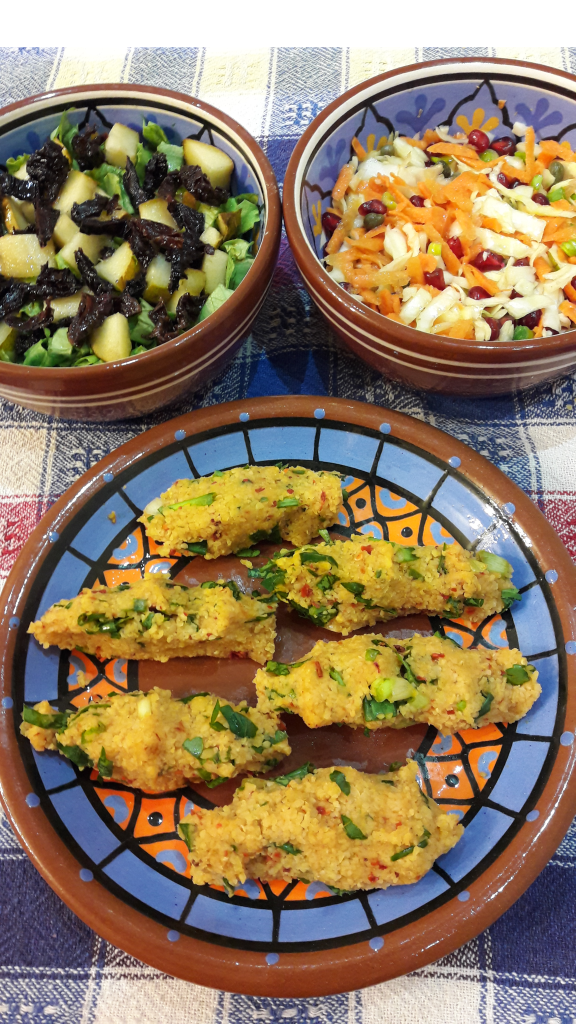
Mercimek köftesi – red lentil patties, served with green salad and cole slaw

These spicy, lentil patties are easy to prepare and are delicious when rolled up in flatbread, like lavash, with fresh cole slaw and a green salad. We used ajika sauce from Georgia on the other side of the Caucasus mountains, a fiery blend of red chili peppers and tomatoes, to flavour the patties – but if you can’t find this locally, then a mix of tomato paste with chili flakes will do nicely.

Ingredients (Makes around 20-24 lentil patties)

100 g red lentils (one cup)

150 g fine bulgur wheat (1.5 cups)

500 ml water

6-8 teaspoons of ajika sauce (see above)

5 spring (green) onions – chopped

A handful of fresh flat leaf parsley, roughly chopped

One teaspoon of cumin seeds

One teaspoon red chili flakes

Black pepper

25 ml olive oil

Juice of one lemon

Method

Wash the lentils until the water goes clear and then place in a pan with the water. Bring to the boil and simmer over a low heat for 20 minutes or so. The lentils should be going mushy and there should be about 1 cm of water covering the lentils – add more water if necessary.

Add the washed bulgur wheat to the cooked lentils and the ajika sauce and blend well. Allow to stand for 30 minutes or so and then add the olive oil, lemon juice, spring onions, parsley, cumin, red chili flakes and black pepper and mix well.

Allow to stand for a few hours to let the flavours combine and then mould a walnut-sized piece of the mix in the palm of your hand and use your fingers to form a  sausage-shape (see picture above).

Serve rolled in flatbread or stuffed into a pita with a cole slaw made from shredded cabbage, grated carrot, pomegranate seeds, spring onion and capers and  a salad of lettuce, sun dried tomatoes, pear and spring onion.


Avocado + Egg = Brunch Heaven

9 February 2017

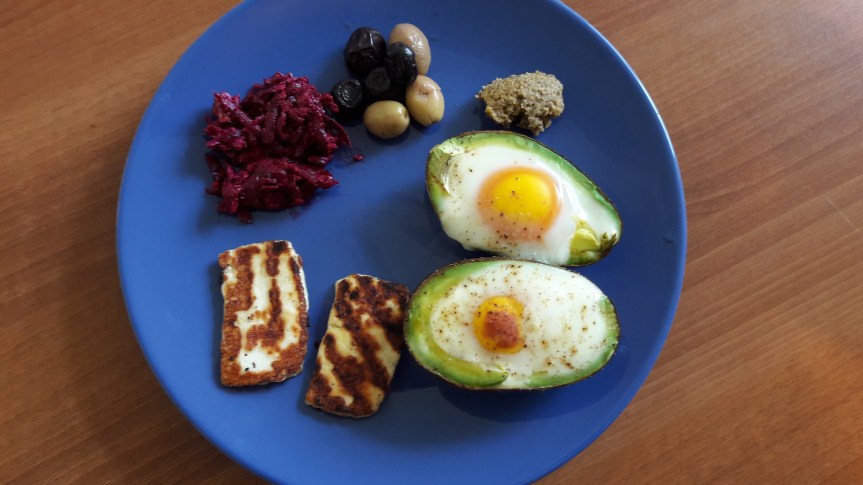
This week at Knidos Cookery Club we have a guest post that combines two of our all-time fave foods: avocado and egg, dished up with olives, beetroot with walnuts and halloumi cheese.

20170115_143020

Avocados love the mild winters of the Knidos region as the shores of the Mediterranean Sea provide ideal growing conditions for this large green fruit that’s packed with nutritious vitamins and healthy fats.

Our guest chef Jasha, who has worked in the hospitality industry in the UK, has kindly agreed to share her favourite way of combining eggs with avocado. Served up with pan-seared halloumi, olives and grated beetroot with walnut, this great dish sent us into brunch heaven!

Ingredients 

One avocado per person

Two eggs per person

250 g pack halloumi cheese cut into four slices (enough for two people)

Black and green olives

A few scoops of olive paste

One grated large beetroot (raw or cooked) mixed with 50 g crushed walnuts and two teaspoons of sour cream or natural yogurt

Black pepper and red chili flakes

Method

Slice the avocados in half and remove the stone. Be careful not to stab yourself in the hand as I once did – it’s apparently quite a common kitchen injury. Scoop out some of the flesh to leave a hollow space for the egg.

Place the avocado halves in a baking dish, round side down, and pour an egg into the scooped out shell. Grind some black pepper over each egg and bake the avocados in an oven pre-heated to to 200 c /gas mark 6 for 20 minutes or until the underside of the eggs are cooked. Finish the eggs off under a grill and then season with some red chili flakes and a grind of black pepper.

While the eggs are cooking, fry the halloumi slices in a non-stick or heavy-based frying pan until browned on both sides.

Serve the avocados immediately with the pan-seared halloumi, beetroot and walnuts, olive paste and olives and some doorsteps of fresh bread.


Olivier with an Edge

12 January 2017

Welcome to the first Knidos Cookery Club of the new year. While many of us have returned to the daily grind, it’s still party-time in some parts of the world.

in Russia, people are preparing to celebrate New Year’s Eve on 13 January – the Orthodox Church still follows the Julian calendar rather than the Gregorian calendar, which Russia adopted after 1917’s October Revolution. This switch created a 13-day lag between the calendars so, for followers of the Orthodox faith, Christmas Eve falls on 6 January and 13 January marks the end of the old year.

20170107_183144
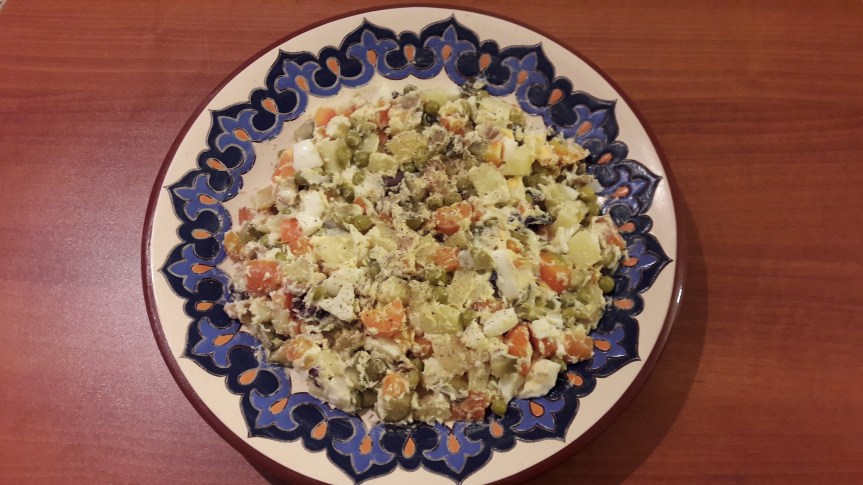
KCC’s take on Russia’s classic Olivier salad

A centre-piece of Russian tables on this day, as people prepare to welcome in novy god, is the Olivier salad – a concoction of boiled potatoes, pickled cucumbers, peas, eggs, carrots and boiled beef or chicken in a mayonnaise dressing. This version dates from Soviet times as all the ingredients could usually be procured even in the depths of winter and despite chronic shortages.

A version of the salad, omitting the meat and eggs, is made in Turkey where it’s known as Rus Salatası – we’ve made our own veggie version that replaces the meat (Olivier purists look aside now, please) with black and green olives and uses sour cream in place of mayonnaise.

When I lived in Moscow in the 1990s I got it into my head that Olivier salad should include olives (mistakenly thinking that Olivier referred to olives rather than the salad’s originator!) and I was disappointed when it came minus olives – so now I finally have a chance to put this right!

Ingredients (serves 3-4)

  • 150 g potatoes
  • 150 g carrots
  • 150 g peas
  • 150 g pickled cucumbers
  • 150 g black and green olives
  • two hard boiled eggs
  • 150 ml sour cream or natural yogurt
  • pinches of salt and black pepper

Method

  • Boil the whole carrots and potatoes until cooked but not going mushy and boil the eggs for 5 minutes or so. While they’re all cooking, chop the pickled cucumbers and olives into small cubes.
  • Drain the potatoes and carrots and cover with cold water to stop them cooking. Do the same with the eggs. Chop the potatoes, carrots and eggs into small cubes and arrange around the side of a large serving dish in separate sections with the olives, peas and cucumbers.
  • Pour the sour cream or yogurt into the middle of the bowl and season with salt and pepper. Now mix all the ingredients thoroughly, making sure they all get a good coating of sour cream or yogurt.
  • Leave in the fridge before serving alongside other Russian-themed salads, such as this veggie take on caviar made from beluga lentils, and wish a hearty S Novym Godom with shots of vodka and/or a glass of chilled Sovyetskoye Shampankskoye (if you can get hold of it in your local offie!) as you prepare to welcome Old New Year in true Russian-style!

KCC’s Festive Feast

22 December 2016

Season’s greetings from Knidos Cookery Club! Whether the Winter Solstice, Christmas or New Year tickles your fancy, celebrate in style with our festive feast.

When preparing this meal, a minor disaster struck – the knob that controls our oven broke. So, Plan B had to be enacted, with all the food prepared on the stove top.

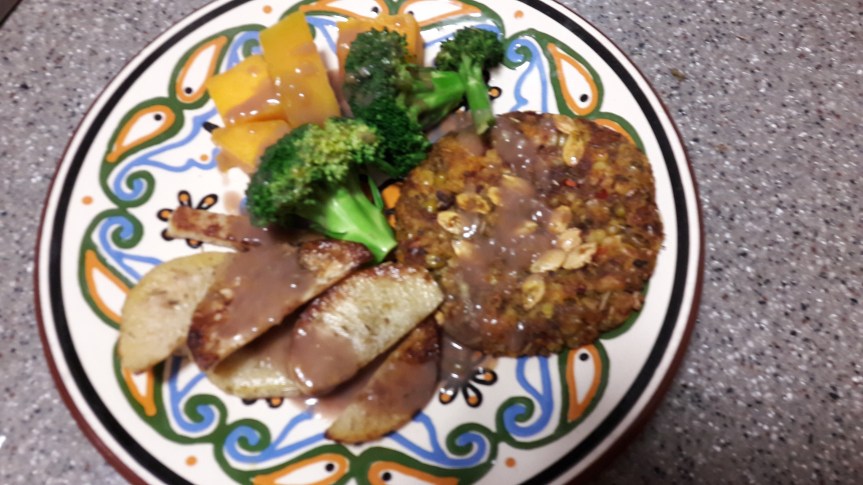
For the feast, we’ve adapted our mungo pumpkin patty recipe by replacing the bulgur wheat with 50 g of crushed walnuts and 100 g of breadcrumbs, otherwise prepare as instructed.

20161221_111346
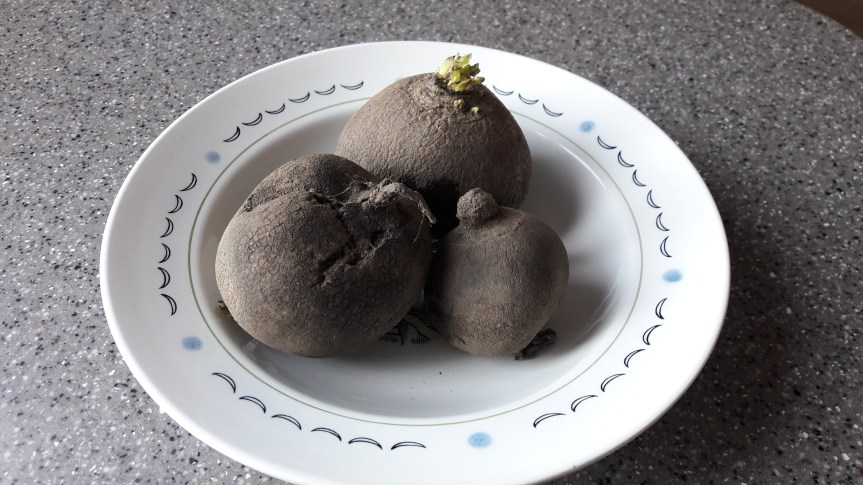
Is it a beetroot? Is it a radish? No, it’s a red turnip!

We came across what we thought to be some beetroot in the market, but on closer inspection they turned out to be, so the seller said, red turnips. Intrigued, we bought them and, on peeling the reddish skin off, discovered a white turnip lurking underneath.

The original plan was to oven bake the turnips, but after the knob malfunction we had to fry them instead  and, in the process, created the turnchip.

20161222_174628
Meet the turnchip!

Peel and slice the turnip into wedges and boil for 30 minutes. Then fry in olive oil sprinkled with rosemary until the outsides are golden brown.

We steamed some pumpkin and broccoli, and then made a sauce from red wine and vegetable stock to pour over the top and, voilà, Knidos Cookery Club’s Festive Feast was born!

20161221_220617