Farinata Fiesta

12 November 2020

It’s time for a bit more armchair culinary tourism and we’re off to Genoa in northern Italy, birthplace of the farinata, a chickpea flour pancake that is a popular snack along the coast of the Ligurian Sea, where it’s known as fainâ, and down into France’s Côte d’Azur, where it’s known as socca.

With Diwali, the Festival of Lights celebrated by Hindus, coming up on 14 November this year, we decided to mark the occasion by topping our chickpea pancake with a dry, spicy Indian inspired combination of spinach, potato and roasted cauliflower.

These chickpea pancakes are usually baked in the oven but we didn’t have a suitable baking dish so we tracked down a recipe at Electric Blue Food for a pan–fried version. We replaced the water with aquafaba – the leftover liquid from cooking beans – to give the pancake a bit more oomph. This pancake proved really easy to cook compared with traditional ones made from flour, milk and eggs.

Farinata is often eaten plain with just a sprinkling of black pepper and rosemary, but it can also be served with other, more substantial, toppings. The taste of this chickpea pancake reminded us of a thicker version of southern India’s dosa, a much missed treat since the start of the pandemic. So we decided to top it with spicy vegetables to attempt an approximation of our favourite pancake.

Ingredients (serves 4)

For the farinata:

  • 200 g chickpea flour
  • 100 ml olive oil
  • 300 ml aquafaba

For the Saag Aloo Gobi topping:

  • 250 g spinach
  • 250 g cauliflower
  • 250 g potato
  • One onion 
  • One teaspoon cumin seeds
  • One teaspoon coriander seeds
  • One teaspoon chilli powder
  • One teaspoon cinnamon
  • One teaspoon turmeric
  • 50 ml olive oil

Method

For the farinata:

  • Use a wooden spoon to mix the chickpea flour with the oil in a large bowl and then slowly add the aquafaba and switch to a hand whisk and blend until smooth (you can use a blender or a stick blender for this).
  • Leave to stand for 30 minutes. Heat a few drops of oil in a large frying pan (around 30 cm in diameter) and then pour in a quarter of the pancake batter. Swirl it around to distribute the batter evenly. 
  • The pancake will start to puff up – when this happens, slide a spatula underneath and turn it over and cook on the other side until it slides off the pan easily. Put on a plate and keep in a pre-heated oven (100 c) until ready to serve.

For the Saag Aloo Gobi:

  • Break the cauliflower into florets, drizzle with olive oil and bake in the oven at 180 c for 30 minutes or until they start to char slightly.
  • Slice the potatoes into four or eight pieces depending on how big they are. Put in boiling, salted water and cook for five minutes.  Drain and put in cold water.
  • Heat the oil in a heavy based pan and then add the cumin seeds. When they start to sizzle, add the chopped onion. Add the rest of the spices and stir well. After five minutes or so, add the potato and stir fry for five minutes. 
  • Now put the chopped spinach on top of the potatoes and add a few of teaspoons water. Cook until the spinach begins to wilt. Stir in the baked cauliflower and serve immediately on top of a farinata.

A Pumpkin’s for Eating, not just for Carving!

29 October 2020

It’s that time of year again when millions of pumpkins will be turned into jack o’ lanterns for Halloween — in the UK alone the environmental charity Hubbub estimates that some 24 million pumpkins will be carved this year but more than half, around 12.8 million, will go uneaten.

A scary 58% of the people surveyed by Hubbub were unaware that you can eat pumpkins. This October, we’ve been highlighting squash recipes on Knidos Cookery Club in the hope that more pumpkin ends up on our plates rather than on the rubbish tip.

We featured roasted butternut squash with courgettes and halloumi and a pumpkin chilli. This time we’re looking at pumpkin samsas, a classic Uzbek snack which are great as a Halloween treat!

Ingredients (makes 6)

For the filling:

  • 500 g pumpkin
  • One medium onion
  • One teaspoon cumin seeds
  • 100 ml vegetable stock
  • 50 ml olive oil
  • Sprinkling of sesame seeds and poppy seeds

For the samsa dough:

  • 200 g flour
  • 50 ml olive oil
  • 75 ml cold water

Method

  • Mix the flour and oil together and then slowly add the cold water and knead until you have a smooth, elastic dough. Wrap in clingfilm and leave in the fridge while preparing the filling.
  • Heat the oil in a frying pan and add the cumin seeds. When they start to sizzle add the finely chopped onion. Peel the pumpkin, remove the seeds (save these to put on the samsa) and cut into 1 cm cubes.
  • Fry the onion for five minutes and then add the pumpkin cubes. Stir fry for five more minutes and then add the stock and simmer for 20 minutes until the pumpkin is cooked. Allow to cool and then mash to a smooth paste with a fork or a potato masher.
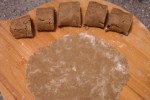
  • Roll the dough to a 2 mm thickness and then fold it over to produce a cylinder of dough. Break this dough into six pieces. Flatten the dough ball into a disc with the palm of your hand until you have a 1 mm thick circle.
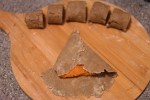
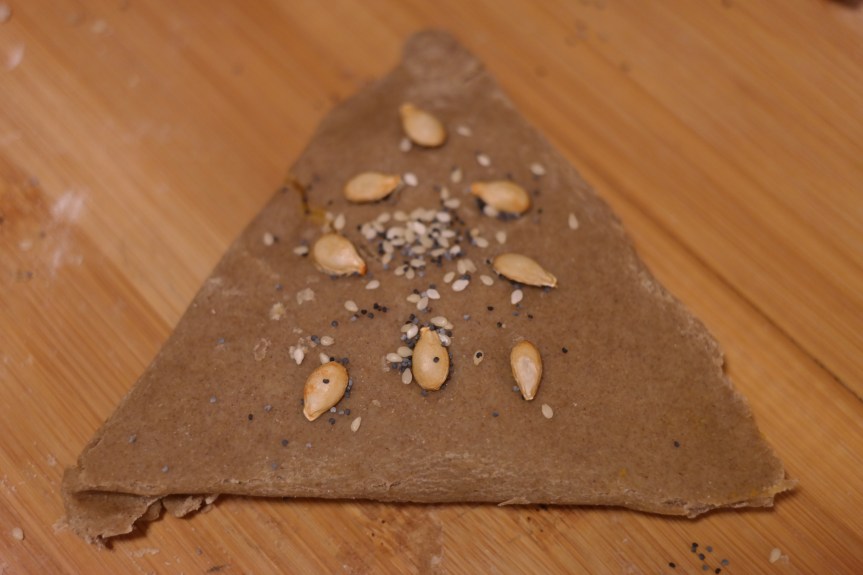
  • Put a triangle of filling in the middle of the circle and then fold over the edges to make a triangle shape. Brush with olive oil and arrange the pumpkin, sesame and poppy seeds on top of the samsa. Bake in the oven at 200 c for 25 -30 minute until the samsa turns a darker brown colour.

Ready Steady Pumpkin Chilli

15 October 2020

The Knidos Cookery Club kitchen was forced to decamp to Bishkek, Kyrgyzstan this week as an unfolding political crisis rocked this Central Asian state that neighbours Kazakhstan.

Making a meal out of it…

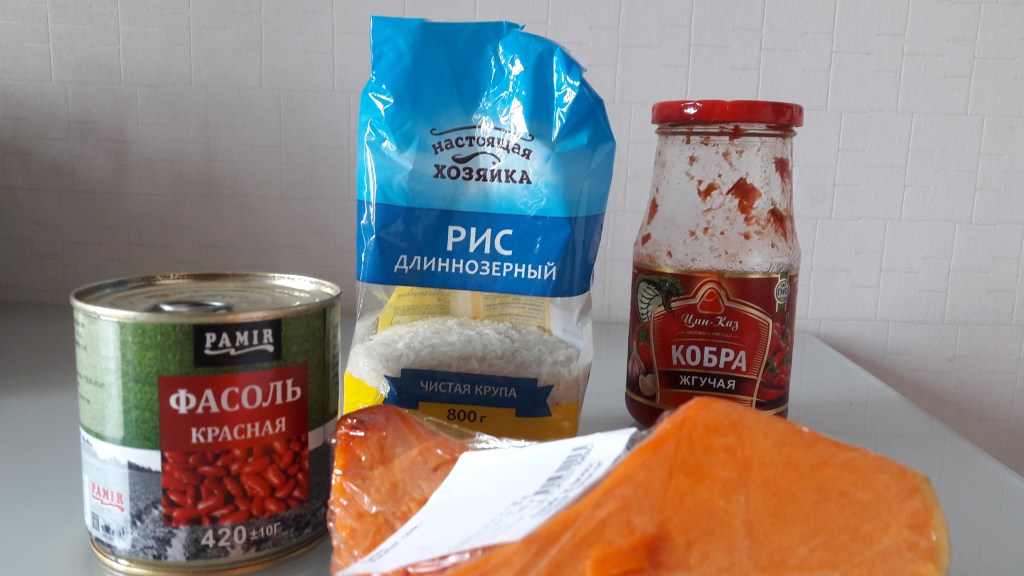
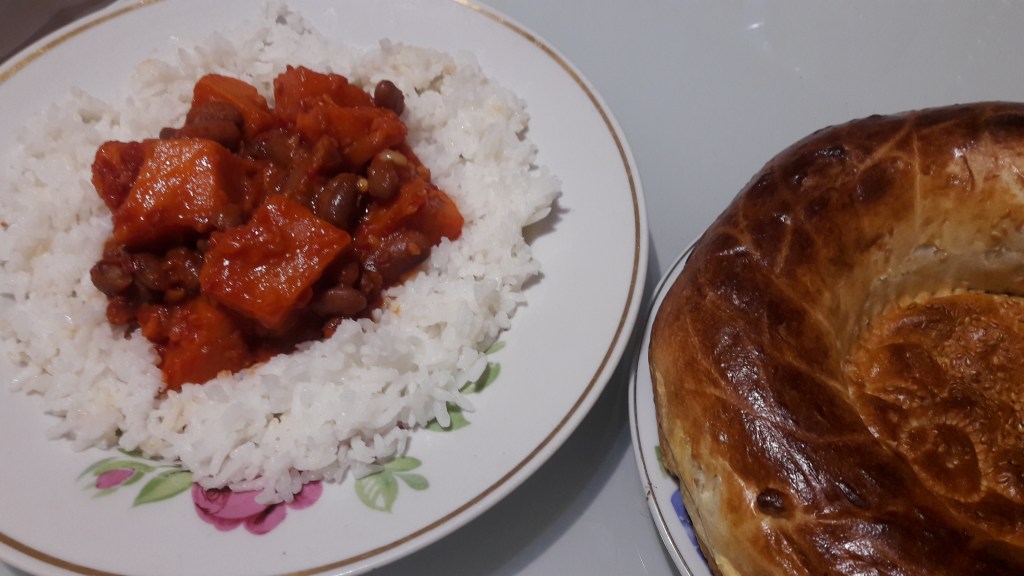
In the spirit of the recently revived 90s TV cookery show, Ready Steady Cook, we grabbed a selection of items after a quick dash around the nearest supermarket and came up with a red bean and pumpkin chilli, continuing our October Squashfest theme.

We had to opt for a bit of convenience this time as it’s hard cooking in a strange kitchen, so we bought a jar of a spicy tomato sauce called Cobra, and used ready cooked red beans. If you have more time on your hands, then substitute the Cobra with KCC’s very own spicy tomato sauce and soak some dried beans overnight.

Ingredients (Makes 3-4 servings)

  • 500 g pumpkin
  • 250 g spicy tomato sauce
  • 250 g cooked red beans
  • 50 ml olive oil

Method

  • Heat the olive oil in a frying pan and then add the pumpkin, chopped into 2 cm x 1 cm cubes, and stir fry for five minutes over  a medium heat.
  • Add the spicy tomato sauce, stir well and simmer for 20 minutes or so until the pumpkin is cooked but firm.
  • Add the red beans and stir well and heat through. Serve with boiled rice and some crusty bread.

Under the Kosh of Egypt’s Street Food Star

3 September 2020

This time round on Knidos Cookery Club we’re taking an armchair culinary trip to Egypt to sample koshari, the country’s tasty street food staple – a hearty combo of lentils, rice and pasta, all topped off with a spicy tomato sauce and crispy, caramelised onions.

SAMSUNG CSC
KCC’s flavour-packed koshari

Koshari was brought to Egypt in the late 19th during the period when the country was part of the British Empire. Previously rice and pasta were not widely used in Egyptian cooking, but this combination caught on locally after occupying soldiers brought the dish with them from another part of the empire, the Indian sub-continent.

SAMSUNG CSC
Lemon, barley and ginger

Our version uses pearl barley in place of the rice as we have been using a lot of barley to make a lemon, ginger and barley tonic drink to mix with fizzy water or put in cocktails. The barley cooks at the same rate as the green lentils so they can be cooked together in the same pan.

SAMSUNG CSC
KCC’s multi-purpose spicy tomato sauce

With tomatoes cheap and in abundance at the moment, we’ve been making large amounts of a spicy sauce that goes well with this dish. It can be used with pasta or potatoes – we’ve been freezing any leftover sauce to use in the winter when tomatoes are much more pricey and not half as tasty, to spice up the staples.

Ingredients (for 3-4 servings)

  • 150 g pearl barley
  • 150 g green lentils
  • 300 ml vegetable stock
  • One large onion
  • 50 g vermicelli pasta
  • 50 ml olive oil

For the spicy tomato sauce:

  • 500 g plum (Roma) tomatoes
  • 100 g onion
  • One garlic clove
  • One stick of celery
  • One teaspoon mustard seeds
  • One teaspoon cumin seeds
  • One teaspoon chilli powder
  • 2.5 cm knob of ginger
  • Two bay leaves
  • 50 ml olive oil

Method (Spicy tomato sauce)

  • Heat the oil in a heavy-based pan and add the spices. When the oil is sizzling, add the finely chopped onion, diced garlic and sliced celery and stir fry until the onions go translucent. Turn down the heat.
  • Cut the tomatoes in half and grate into the onion and celery mix. Throw the tomato skins into a pot with the onion skins and 500 ml water to make vegetable stock. Add the bay leaves and cook over a low heat until the amount of liquid has halved and then pour over the barley and lentils. You can store any leftover sauce in a glass jar in the freezer.

Method (Lentils and barley)

  • Fry the onion in the olive oil over a low heat until crispy and caramalised and put aside – this can take up to an hour. Cook the barley and lentils in the same pot with the vegetable stock for 20-30 minutes over a low heat until all the liquid is absorbed.
  • Fry the pasta in a little oil until golden brown and then scatter on top of a bowl of lentils and barley. Pour a generous glug of spicy tomato sauce over the barley and lentil base top with caramalised onions before serving.

Bring on the Bazhe – Georgia’s Versatile Walnut Sauce

6 August 2020

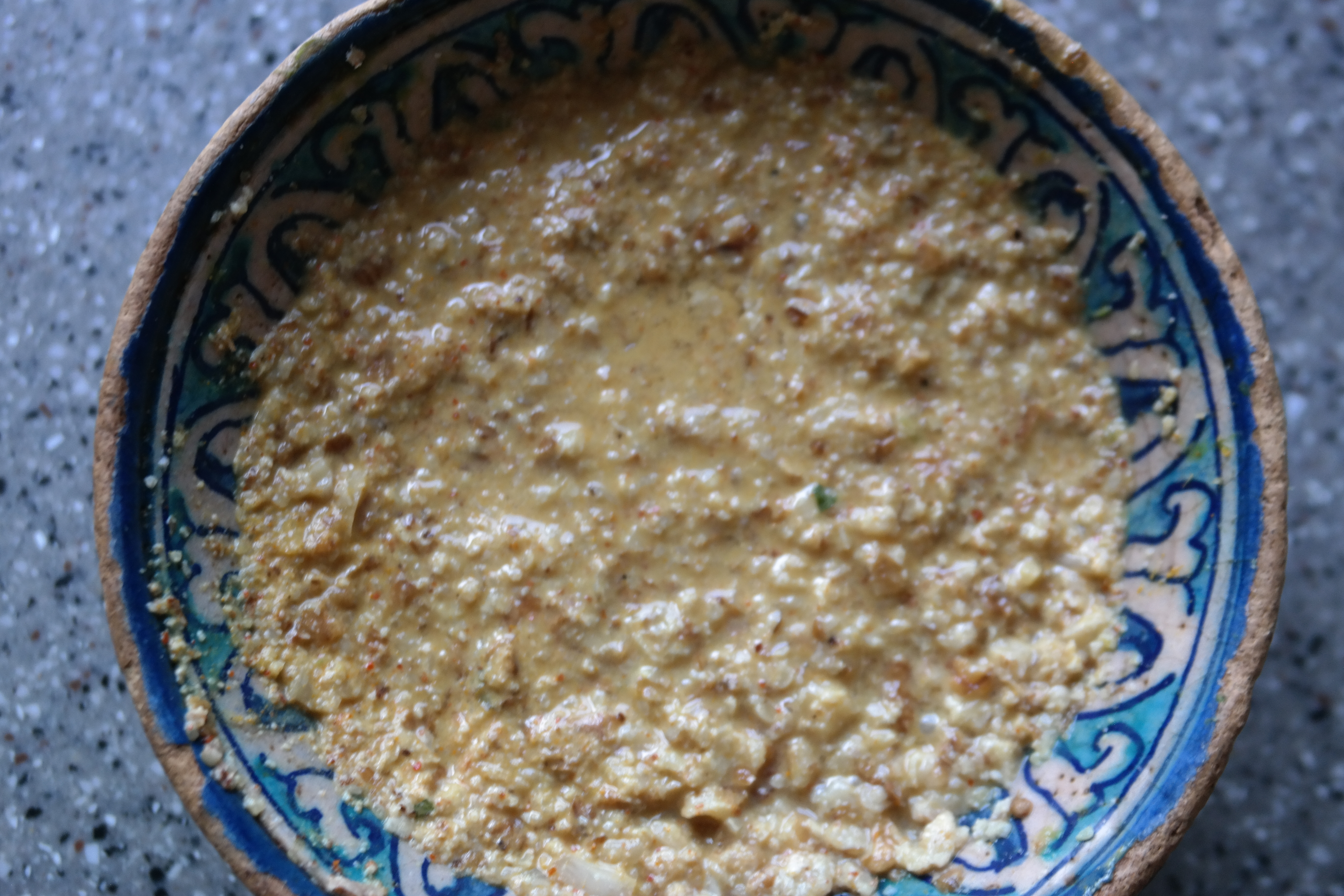
We’re turning our attention back to Georgia to take a look at how walnuts form the backbone of the nation’s cuisine. This versatile nut can be made into a sauce, bazhe, and slathered on slices of fried aubergine or poured over a cucumber and tomato salad. It’s also used liberally in the vegetable dip, pkhali, in the thicker satsivi paste and in the red bean dish, lobio.

SAMSUNG CSC
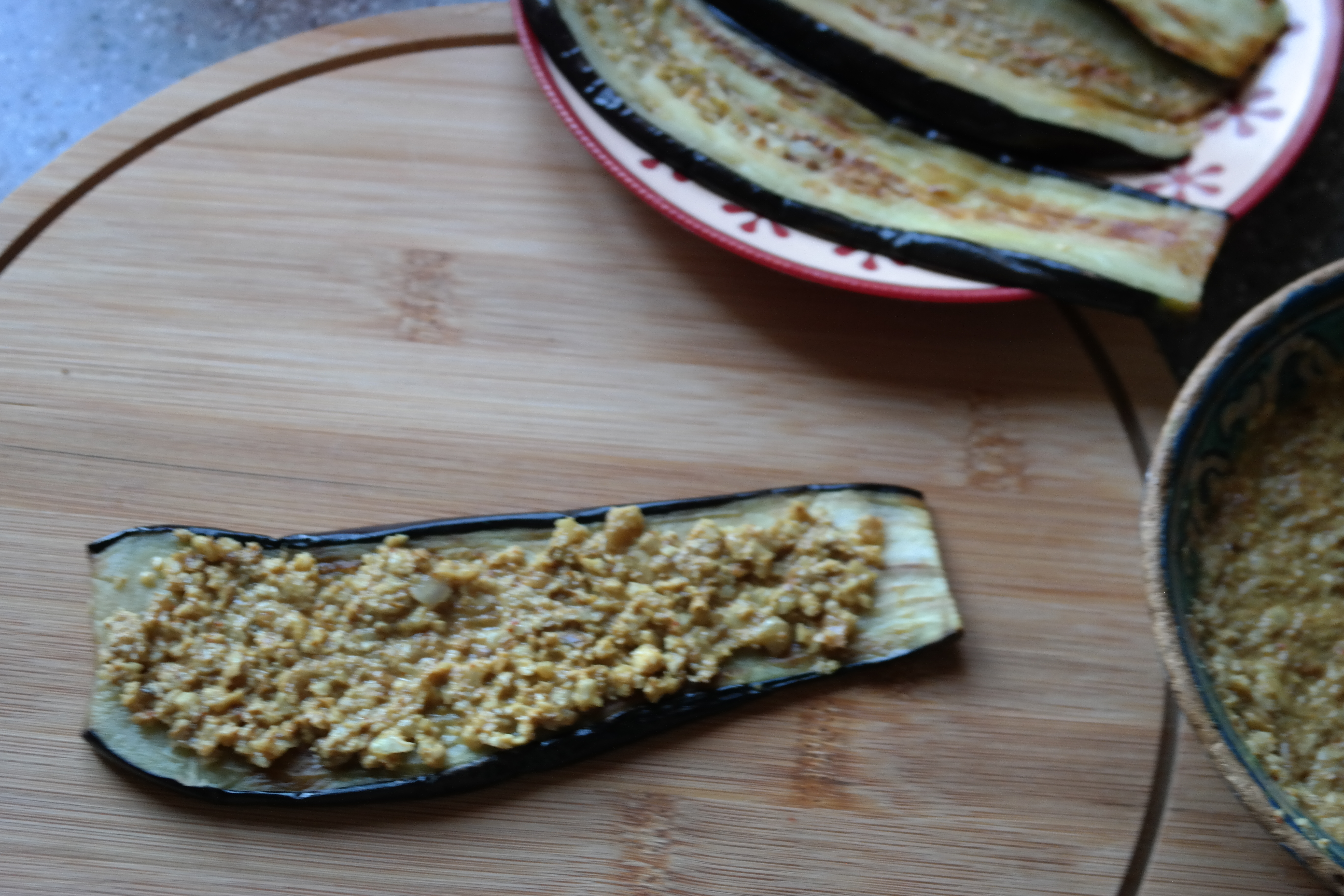
Aubergine slices stuffed with bazhe, Georgia’s versatile walnut sauce

We made some bazhe to roll up in slices of fried aubergine, a favourite from the days of visiting Georgian restaurants. These aubergine rolls, nigvziani badrijani in Georgian, are usually served at the start of the meal, especially at lengthy wine and chacha (a grape-based spirit akin to Italy’s grappa or Greece’s tsipouro) fuelled banquets, but we think they’re great to eat at anytime and they’re particularly handy for picnics or barbecues.

SAMSUNG CSC
Bazhe – Georgia’s versatile walnut sauce

To remove the bitter taste of the aubergine, sprinkle with salt and leave for 30 minutes. Rinse in cold water and pat dry with kitchen roll. Make sure the oil is very hot when frying the slices – this will help them not to soak up too much fat while cooking.,

SAMSUNG CSC
Spread the sauce on the fried aubergine slice and then roll it up

Ingredients (for 16-20 aubergine rolls)

  • 3 or 4 large aubergines
  • 100 ml cooking oil
  • 100 g walnuts
  • 2 garlic cloves
  • 1 tablespoon vinegar (red or white wine or apple)
  • 1 tablespoon pomegranate sauce
  • 1 teaspoon blue fenugreek (use cumin seeds if you can’t find this)
  • 1 teaspoon marigold flower (use turmeric if you can’t find this)
  • 1 teaspoon coriander seeds
  • 1 teaspoon paprika
  • 50 ml cold water
  • Salt to sprinkle over the aubergine slices
  • Fresh basil and coriander leaves to garnish

Method

  • Make the walnut sauce first. Crush the nuts using the back of a wooden spoon on a wooden chopping board. This method gives the sauce a more crunchy texture. Mince the garlic and mix with the nuts in a bowl. Add the spices, vinegar and pomegranate sauce and combine all the ingredients into a smooth paste. Add water until the sauce has a more runny consistency but is still quite thick.
  • While the sauce is chilling in the fridge, fry the aubergine. Heat 50 ml of oil in a heavy based pan. Top and tail the aubergine and slice off a thin layer of skin on both sides. Cut the aubergine into 0.5 cm slices lengthways and then fry on both sides until golden brown. Drain on kitchen paper.
  • When the slices have cooled down, spread the walnut sauce onto the slice and then roll it up. Garnish with fresh herbs such as coriander and basil, and pomegranate seeds (if you have any – we’re not expecting any until autumn) and serve cold with other Georgian starters such as pkhali and crusty bread.

Lockdown Lunch: Tbilisi Calling

26 March 2020

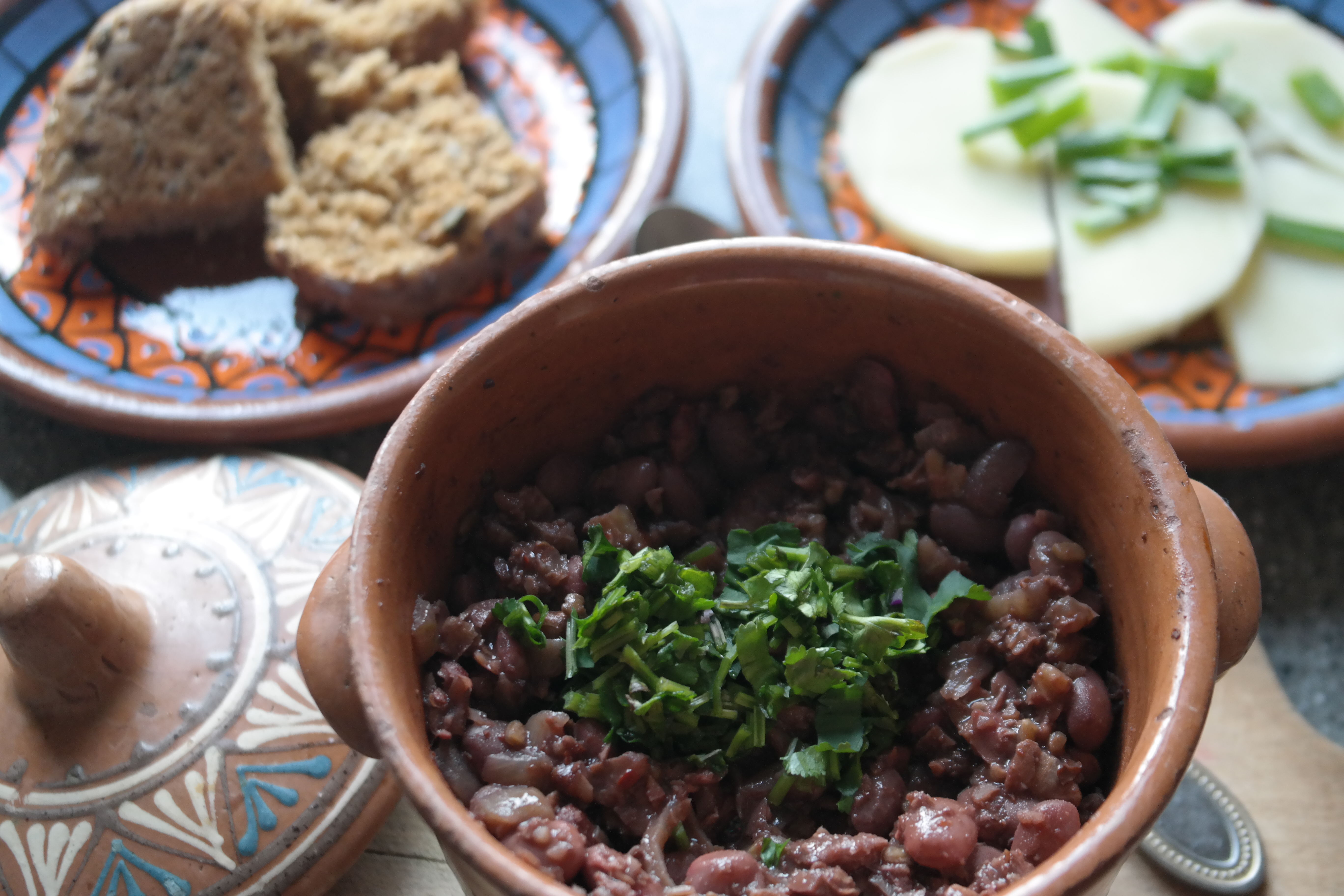
For this week’s lockdown lunch we had a root around the cupboards and came up with some dried red beans, last autumn’s walnuts and a bottle of Turkish pomegranate sauce (Nar Ekşili Sos) – perfect ingredients for taking us on a culinary away day to Tbilisi for a bowl of lobio, Georgia’s signature bean dish.

SAMSUNG CSC
Take a trip to Georgia with KCC’s Lobio lockdown lunch

Lobio can be more like a soup, a stew, a salad or even re-fried beans depending on which region of Georgia it’s prepared in – we’ve gone for lobio nigvzit which is somewhere between a soup and a stew. Serve the lobio in a clay pot with white cheese and a hunk of fresh mchadi (corn bread – recipe link here) or any other bread for an authentic taste of Georgia.

To help pass the time during lockdown, here’s something on the etymology of lobio from @thomas_wier on twitter:

Ingredients (makes four servings)

  • 500 g cooked red beans
  • 50 g walnuts
  • One medium onion
  • Two garlic cloves
  • One teaspoon coriander seeds
  • One teaspoon blue fenugreek (use fenugreek or cumin seeds if you can’t find this)
  • One teaspoon red chilli flakes
  • One small bunch fresh coriander
  • Three bay leaves
  • 50 ml cooking oil
  • 50 ml pomegranate sauce
  • 250 ml water the beans were cooked in or vegetable stock

Method 

  • If cooking dried beans, then soak 250 g of beans overnight. Change water and cook for one hour or so until the beans are just cooked but not yet falling apart. Remove from the heat and allow to cool.
  • Heat the oil in a heavy-based pan and add the coriander seeds and blue fenugreek. Cook for a few minutes and then add the diced onions, mashed garlic and chilli flakes. Cook for ten minutes over a low heat and then add the crushed walnuts and the pomegranate sauce. Cook for another five minutes.
  • Now add the drained beans, bay leaves and reserved cooking water. Leave to simmer until most of the liquid is absorbed. Stir frequently with a wooden spoon – don’t worry if the beans start to fall apart – they taste better like this and absorb more sauce.
  • Add the chopped fresh coriander and serve hot with bread and white cheese. It tastes even better if left overnight and reheated, but only add the fresh coriander after re-heating the mix.


The Golden Soup of Samarkand

23 January 2020

This week’s offering – a soup made from chickpeas and carrots, was inspired by a recent visit to a funky Central Asian restaurant called Saksaul in Nur-Sultan, Kazakhstan. This soup appeared on the menu, but unfortunately there wasn’t any left that day. Spotting yellow carrots on sale in the market after returning home, we decided to cook up our own version.

KCC’s Golden Soup of Samarkand featuring yellow carrots and chickpeas

Our soup contains two ingredients that are common in the cookery of Samarkand in Uzbekistan – chickpeas and yellow carrots. Not all carrots are orange in Central Asia, you can even find black ones on occasion, but we find these yellow ones particularly sweet and tasty.

Yellow (and a bit green!) carrots on sale in Kazakhstan

This famed Silk Road city of Samarkand provided further inspiration for our golden potage with spices such as cumin, coriander and turmeric that are still bought and sold along this ancient trade route.

Ingredients (makes 4 portions)

  • 500 g yellow carrots
  • 500 g chickpeas
  • Two yellow onions
  • Two garlic cloves
  • Two teaspoons mustard seeds
  • Two teaspoons chilli powder
  • Two teaspoons cumin seeds
  • Two teaspoons coriander seeds
  • Two teaspoons turmeric
  • 50 ml vegetable oil
  • One litre vegetable stock

Method

  • Heat the oil in a heavy-based pan and add the mustard seeds. When the seeds begin to pop, add the chopped onion and garlic and cook over a medium heat for five minutes. Add the other spices and mix well.
  • Next add the diced carrot and stir to coat the carrot with the mix. Cook for five more minutes, stirring occasionally. Add the chickpeas and stir well, then add the stock and reduce to a low heat and simmer the soup for 30 minutes or so.
  • Using a stick blender, liquidise the soup. Pour into bowls and garnish with chickpeas and a sprinkling of cumin seeds. Serve with bread – we used a flatbread but any crusty bread will work just as well.

Battered Halloumi = Pakora Paradise

5 December 2019

Over the last few days, we’ve been experimenting with perfecting a batter to make pakora – a deep-fried snack from the Indian sub-continent. After testing a few recipes we’ve hit on a formula that can be used to coat a variety of vegetables from cauliflowers to carrots, parsnips to peas, and also cheese!

20191101_234037
Halloumi pakora with potato wedges and peas

While on a recent visit to the UK, we came across battered halloumi on many menus – the squeaky cheese from Cyprus that stays firm when cooked. We’ve discovered that it makes a perfect partner for our pakora batter when deep-fried.  We recommend you try it with this spicy Yemini sauce, zhug.

But you’ll need to be quick, as halloumi has been a victim of its own success. Severe global shortages of this versatile cheese are predicted as demand far outstrips supply. Luckily for us here in Kazakhstan, a local producer has started making a version of this cheese. We’re pleased to report that it tastes pretty good, so for now the crisis has been averted in our winter base.

Ingredients (makes enough batter for a  sliced up 250 g block of halloumi)

  • 100 g chickpea flour (also known as gram flour or besan)
  • One small onion
  • 1 cm knob of ginger
  • One garlic clove
  • One teaspoon red chilli flakes
  • One tablespoon of fresh coriander
  • 50-100 ml cold water

Method  

  • Mix all the ingredients together with a fork or a whisk, adding water until you get a smooth consistency that is neither too runny not too thick with no lumps. Cover the batter with clingfilm and let it stand for an hour or so before using.
  • Heat a litre of cooking oil, we used sunflower oil but any will do, in a heavy-based pan over a medium heat until it reaches 180 c. To test the temperature, dip a chopstick or the handle of a wooden spoon in the oil – if the oil starts to bubble vigorously,  then it is at the right temperature.
  • Slice a 250 g block of halloumi into eight pieces. Coat the halloumi slices in the pakora batter and drop into the oil. When the pakora rise to the surface and are a golden-brown colour, remove with a slotted metal spoon and drain on kitchen towel.
  • Serve hot with potato wedges or roast potatoes and minted peas. The pakora goes well with a coriander and coconut chutney – this site has a good recipe for this sauce, or with our zhug sauce.


Put a Bit of Zhug in your Life

14 November 2019

On a recent flying visit to Glasgow, KCC dropped into Ox and Finch in the city’s West End for a bite to eat. This Sauchiehall Street eatery offers a range of tapas-style sharing plates – we opted for the giant couscous with grilled halloumi, a plate of braised leeks, beetroot hummus, grilled baby gem lettuce and, with this being Glasgow, chips of course. 

20191114_140452
A spicy bowl of zhug sauce

This time round, we’ll be recreating the giant couscous dish, made with ptitim, toasted pearls of wheat and semolina, first cooked up in Israel in the 1950’s when rice was in short supply in the early days of the Israeli state. This couscous relative was dubbed Ben-Gurion rice after Israel’s first prime minister. After scouring our local supermarkets, ptitim proved to be in short supply so we’ve replaced them with mung beans!

20191108_222230
Mung beans, zhug, halloumi, pomegranate and pumpkin seeds

Key to this salad is the dressing, a piquant sauce called zhug,  which was brought to Israel by emigrées fleeing persecution in Yemen in the late 1940s. This spicy cousin of Italy’s milder pesto and Mexico’s equally fiery salsa verde, is served often alongside falafel and hummus. The name is said to be derived from mas-chag, the name of the grinding stone traditionally used to crush the spices and herbs into a paste.

Ingredients (serves 2-4)

  • 100 g mung beans
  • 125 g halloumi
  • Sprinkling of pomegranate seeds
  • Sprinkling of roasted pumpkin seeds

For the zhug sauce:

  • One bunch fresh coriander
  • One bunch fresh parsley
  • One garlic clove
  • Two teaspoons red chilli flakes
  • One teaspoon black peppercorns
  • One teaspoon cumin seeds
  • One teaspoon coriander seeds
  • One teaspoon cardamom seeds
  • Juice of half a lemon
  • 25 ml olive oil

Method 

  • To make the zhug sauce, put all the ingredients except for the olive oil in a blender and give it quick blitz. Don’t overdo the blending as you want a slightly chunky texture. Now slowly add the olive oil, blitzing until it is mixed in with the other ingredients. Put in a glass jar – it should keep for a couple of weeks in the fridge.
  • Cook the mung beans until tender. While the mung beans are cooling, grill the halloumi until a golden-brown colour. Then mix the cooled mung beans with a tablespoon of zhug, arrange the grilled halloumi on top, sprinkle with pumpkin and pomegranate seeds and serve with a selection of your favourite meze dishes.


KCC’s Corn and Coconut Chowder


17 October 2019

This time round on Knidos Cookery Club we’re cooking up a chowder, a creamy soup crammed with fresh, seasonal vegetables that’s ideal for the chillier nights of autumn.

20191015_221900.jpg
A warming bowl of KCC’s Corn and Coconut Chowder

These days chowder is a name given to any creamy soup that has been thickened with the addition of flour or crumbled crackers. The name of this soup is thought to come from chaudron, an old French word for a cauldron – it was originally brought to north America by sailors who made it as a fish soup thickened with ship’s biscuit and cream.

20191015_204118.jpg
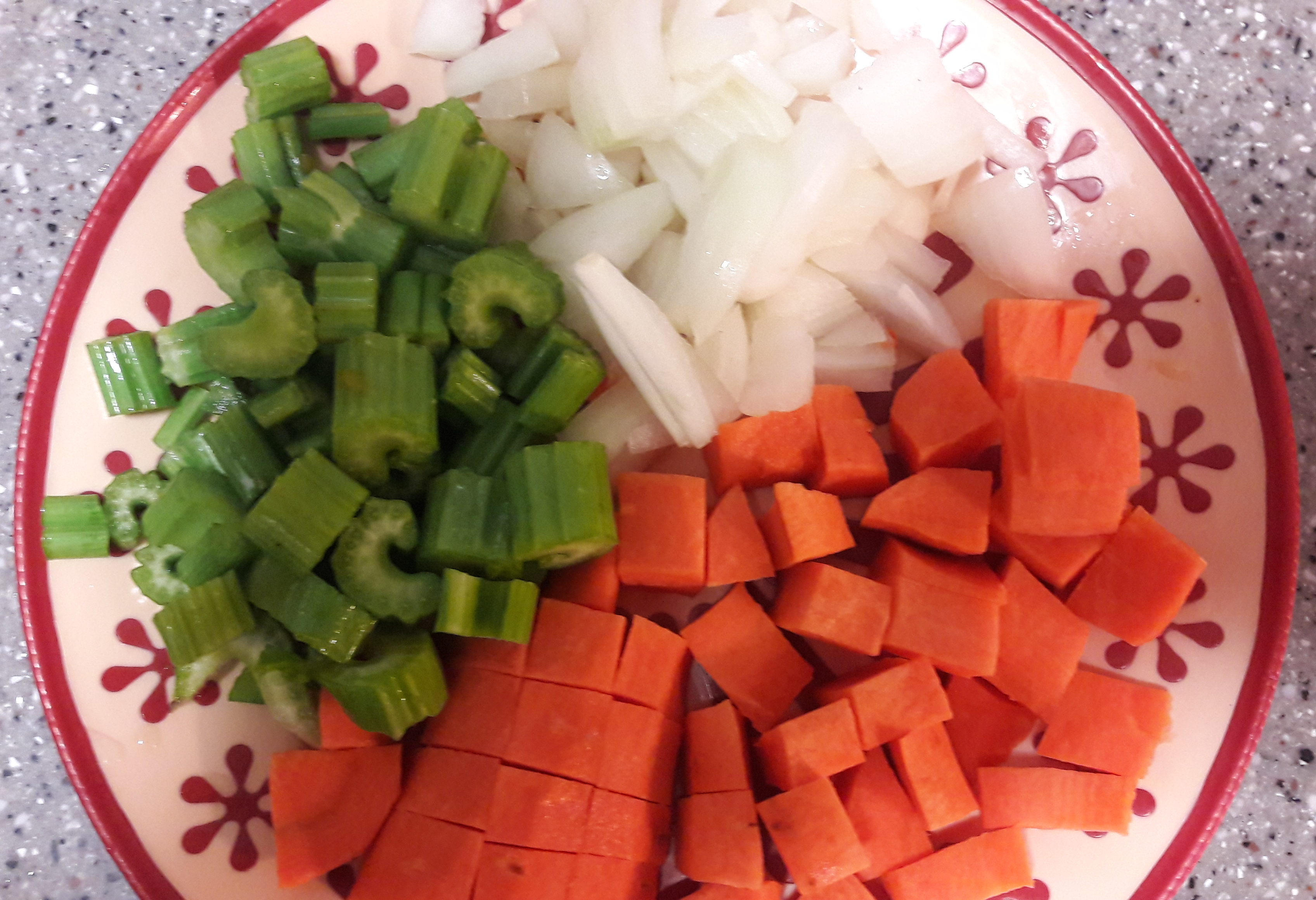
The Holy Trinity of autumn soup veg

Some versions use a tomato base, but our version is based on the creamy base and uses coconut milk and chickpea flour to make the sauce. We’ve added some of the last of this year’s corn on the cob and some new season pumpkin, that vegetable that is a harbinger of the colder months of the year. Combined with the holy trinity of soup bases – onion, celery and carrot and a potato, this chowder, garnished with lemon zest and celery leaves, is a soup to savour.

Ingredients (for 3-4 servings)

  • One large potato
  • Two large carrots
  • Three sticks of celery
  • One medium-sized onion
  • One corn-on-the cob
  • 200 g pumpkin
  • One lemon
  • One bay leaf
  • Two teaspoons dried thyme
  • 50 ml olive oil
  • Three tablespoons chickpea flour
  • One litre coconut milk (50 g desiccated coconut + one litre of water).

Method

  • Make the coconut milk first by blending the dried coconut with the water using a hand-held blender for two minutes. Strain through a sieve separate the liquid  from the leftover coconut, the latter can be saved and used to make energy balls, biscuits, cakes or added to your breakfast muesli.
  • Heat the olive oil in a heavy-based pan and then add the sliced onion and fry for five minutes over a medium heat. Add the diced carrot and celery and cook for another five minutes. Now add the chickpea flour and dried thyme and mix well. Now add the pumpkin, potatoes and coconut milk and a bay leaf.
  • Cook over a low heat, stirring occasionally, until the potato is just cooked. Add the juice of the lemon and half the lemon zest and stir well. Cook for a few more minutes and then remove the bay leaf and serve in bowls and garnish with the rest of the lemon zest and chopped celery leaves.