Pumpkin Pasta

31 October 2024

This year is flying by, I can’t believe it’s already Halloween and the time for Diwali, the Hindu festival of lights. The transition into winter is gaining pace with the leaves falling and the nights closing in. The summer veg has given way to pumpkins and squash – an ideal base for comfort food as the colder months approach in the northern hemisphere.

Pumpkin and white cheese pasta

Over the last month, my Insta feed has been full of variations on baked pumpkin and white cheese dishes. Many of these dishes use sprigs of rosemary but I think that the more woodsy flavour of sage makes a better partner for pumpkin.

Oven-baked pumpkin goodness

For this recipe, I used a cheese called adygeisky, a white cheese with a slightly sour taste, that originates in the mountains of the Caucasus between the Caspian and Black Seas. Feta or any other crumbly white cheese that is available in your area that holds itself together under heat will work just as well.

Ingredients (serves two)

  • 300 g pumpkin or butternut squash
  • 100 g white cheese (Feta, halloumi or similar)
  • 140 g dried pasta (of your choice)
  • 25 ml pasta cooking water
  • Dried sage 
  • Drizzle of olive oil
  • two teaspoons pumpkin seeds

Method

  • Line a baking dish with baking paper. Cut the pumpkin into 1 cm cubes. Place the cheese in the middle of the dish and arrange the pumpkin cubes around it. Sprinkle with crumbled sage leaves and drizzle with olive oil.
  • Bake in a pre-heated oven at 200 c for 30 minutes covered with tin foil and then bake for another 10 minutes uncovered. While it’s baking, prepare the pasta (according to the packet instructions).
  • Mash the pumpkin with a potato masher and mix with the cheese. Add the drained pasta and 25 ml of cooking water. Stir well and serve straight away with a garnish of pumpkin seeds.

More Adventures with Asparagus

24 May 2024

It’s that asparagus time of year once again. These tasty green spears are a harbinger of the warmer months of Spring and Summer – the first tips are ready for harvest shortly after the ground temperature hits 10°C.

Asparagus and chickpea pasta

Here in Almaty, Kazakhstan, locally-grown asparagus is currently having its moment in the sun, with many restaurants offering seasonal dishes featuring these flavour-packed spears of goodness.

Asparagus from Kazakhstan

Over the years, KCC has featured a number of asparagus dishes, such as a bulgur pilaf with asparagus (KCC’s first ever recipe), Mr Alan’s Top Tips, and in a stir-fry. This time round, after tracking down some locally-grown asparagus in Almaty, we’ve cooked it with chickpeas, capers, walnuts and tagliatelle:

Ingredients (for 2 servings)

  • 150 g asparagus
  • 175 g chickpeas 
  • 30 g walnuts
  • 20 g capers 
  • 50 – 100 ml aquafaba (chickpea cooking liquid)
  • 25 ml olive oil
  • 150 g dried taglaitelle
  • One teaspoon fresh or dried rosemary

Method

  • To make the green sauce, blitz 50 g of chopped, raw asparagus in a blender with 75 g chickpeas, the chopped walnuts and capers and olive oil. Keep adding aquafaba slowly until the sauce had a creamy consistency, 
  • Cook the pasta according to the packet instructions in a pan of boiling, salty water. Slice the remaining asparagus into 3 mm slices and cook with the pasta for the last five minutes. While the pasta is cooking, add the remaining chickpeas to the green sauce in a heavy-based pan, warm over a low heat and stir in the rosemary. 
  • Drain the pasta and asparagus, reserving some of the cooking Waterloo to loosen the sauce, if needed, and add to the green sauce and chickpeas, combine well and serve.

Lentily Lecho Laghman

21 October 2021

Greetings from Tashkent, Uzbekistan where KCC has been based for the last three weeks on a foodie fact finding mission. Uzbekistan is the land of plov, but is also home to a wide range of pasta dishes such as manti (dumplings), laghman noodles and many cousins of ravioli.

The autumn pickling and preserving season is in full swing with vegetables such as peppers, tomatoes and aubergines cheap and abundant. Our friend gave us a jar of her homemade lecho, a pepper, tomato and onion stew, with herbs and spices added according to your taste. Lecho originated in eastern Europe, so you should be able to track down a jar in your local Polish shop.

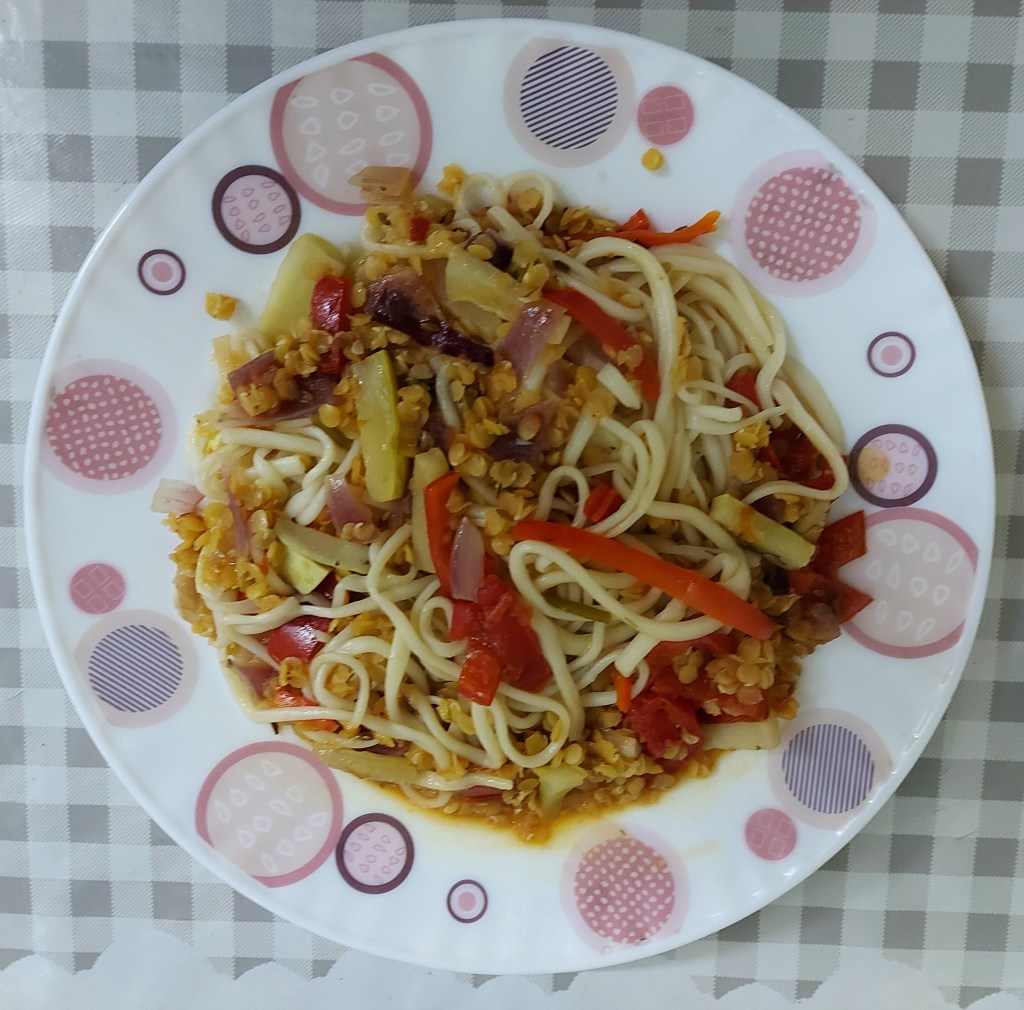
We decided to cook up this lecho with some courgettes and protein-rich red lentils to make a tasty laghman noodle sauce. One of the advantages of being in Central Asia is the ready availability of fresh, hand-pulled noodles in the shops, but if you don’t have access to laghman noodles where you are, then try making your own. Check out this laghman recipe here – it’s a bit time consuming but rewarding!

Ingredients (makes 3-4 servings)

  • 125 g fresh noodles per person
  • 2 small courgettes
  • 1 large red onion
  • 100 g red lentils
  • 250 g lecho
  • 50 ml olive oil
  • One teaspoon cumin seeds
  • One teaspoon red chilli flakes

Method

  • Wash the lentils until the water goes clear and then soak for around 30 minutes. While the lentils are soaking, fry the thinly sliced onion in the olive oil and add the cumin seeds. Cook over a medium heat for ten minutes and then add the courgette that has been grated or cut into 1 mm thick,  5 mm long slices. Cook for ten more minutes over a low heat.
  • Take the red peppers from the lecho and cut into thin slices and add to the pan with the onion and courgette mix. Cook for another ten minutes over a low heat and then drain the lentils and add to the pan along with the red chilli flakes and the liquid from the lecho. Cook until the liquid has been absorbed and the lentils are chewy not mushy.
  • Bring a pan of salted water to the boil and then turn off the heat and put the noodles in for a few minutes, Drain and then add the noodles to the sauce and stir well. Serve straight away with a flat bread of your choice.

Lashings of Laghman as KCC Turns 5

31 March 2021

Today we’re celebrating KCC’s 5th anniversary with a hearty plate of laghman, hand-pulled wheat noodles, one of Central Asia’s favourite dishes. These thick, chewy noodles are often served with a rich, spicy sauce but we decided to make a drier version with spring greens and chickpeas.

We can’t believe that it’s been five years since we started our culinary journey in Datça, Turkey. KCC’s first recipe was this asparagus risotto, inspired by the fresh produce on sale in the town’s weekly market.

Over the last five years, we’ve branched out from Turkey and sought out dishes from around the globe with gastronomic excursions to Greece, Georgia, Russia, Albania, Italy, India, Sri Lanka, Central Asia and Mexico among others.

Since the start of the pandemic KCC has been confined to Almaty, Kazakhstan, so we’ve been trying out new recipes based on locally sourced ingredients which brought us to laghman.

When it came to making this dish we cheated a bit – Gulzada, our local greengrocer, now offers home made noodles along with whatever fruit and vegetables are in season.

If your local grocer doesn’t stock noodles and you have the time to pull your own noodles, then check out this recipe to make the key ingredient for your laghman.

Ingredients (for 3-4 servings)

  • 150 g noodles per person
  • 200 g mixed greens – we used cauliflower and radish leaves but you can use anything you have handy
  • 200 g leek
  • 50 g garlic chives (jusai)
  • 50 g celery
  • 350 g cooked chickpeas
  • 100 ml chickpea cooking water (aquafaba)
  • One teaspoon cumin seeds
  • One teaspoon red chilli flakes
  • 50 ml olive oil

Method

  • Heat the olive oil in a heavy-based pan and add the cumin seeds. Wash the leek thoroughly and then chop in half lengthways and then cut into 1 cm slices. Use as much of the leek as you can including the leafy green bits. When the cumin seeds begin to pop, reduce the heat to a low setting and add the leek to the pan and stir fry for five minutes.
  • Add the red chilli flakes, celery, garlic chives and chopped radish and cauliflower leaves to the leek and cook until the the leaves start to wilt. Stir in the chickpeas and the aquafaba and cook until most of the liquid is absorbed and you have a fairly thick sauce.
  • Bring a large pan of water to the boil. Put the noodles in the pan and leave for 2-3 minutes to warm them through. Arrange on a plate and pour the sauce on top and serve.

Memories of Maiori: Zesty, Lemony Chickpea Pasta

11 March 2021

March is always an unpredictable month in Almaty. One day the temperature dips below freezing and snow falls. The next day brings bright sunshine and blue skies carrying a promise of the warmer days to come. Then on the next day a leaden sky gives the city a gloomy aspect as the rain pours down.

SAMSUNG CSC
Zesty, lemony chickpea pasta

With the days settling into a grey, rainy pattern, something light and zesty is called for – such as the simple pasta dish made with chickpeas and lemons we ate back in 2015 when KCC visited Maiori on Italy’s Amalfi coast for a spring break. What a different world it was then – no COVID-19, no Brexit and travel was easy. 

Back in 2021 in Almaty the choice of vegetables is gradually expanding with spring onions and jusai, a cross between a spring onion and garlicky chives, making a welcome seasonal reappearance, which along with that magic ingredient, the lemon, can give a lift to any dish. This light pasta dish is perfect for focusing our thoughts on the brighter days ahead. We added some capers, chilli and ginger to spice it up a bit and fast forward our taste buds into spring.

Ingredients (serves 4)

  • 300 g dried pasta of your choice 
  • 300 g cooked chickpeas (reserve 100 ml cooking water)
  • 50 g garlic chives (jusai)
  • Four spring onions
  • 20 capers
  • 1 cm cube of grated fresh ginger
  • Two teaspoons chilli flakes
  • One lemon
  • 25 ml olive oil

Method

Cook the pasta according to the pack instructions. While it’s cooking, combine the olive oil, chickpeas, capers and the cooking water in a heavy-based pan and heat gently until it starts to boil. Add the grated ginger, the zest and juice of the lemon and the chilli flakes and stir well. Finely dice the jusai and spring onions and add to the chickpea mix. Turn off the heat, drain the pasta and combine it with the chickpea sauce and serve.

Lemony Artichoke and Avocado Pasta

4 July 2019

This time round on Knidos Cookery Club we’re serving up a lemony pasta that combines artichoke hearts with avocado slices in a tomato sauce.

20190703_221559

The earthy flavour of the artichoke goes well with the zingy lemon zest in this healthy and easy-to-prepare pasta dish.  We hadn’t tried artichoke and avocado in the same recipe before, but, on this evidence, we can assure you that it works perfectly!

Ingredients (serves 3-4)

  • Two green peppers
  • Six small tomatoes
  • 25 ml olive oil
  • One lemon
  • Four artichoke hearts
  • One avocado
  • 150 g dried pasta
  • 50 ml water

Method

  • Heat the olive oil over in a heavy-based pan a medium heat and fry the sliced green peppers for five minutes. Add the diced tomatoes and cook for five more minutes. Add the water and reduce the heat so the sauce is simmering. Place the artichoke hearts on top of the sauce, cover the pan and steam for 30 minutes.
  • While the artichokes are steaming, cook the pasta according to instructions. Prepare the zest of one lemon by grating the skin. Squeeze the lemon into the pasta sauce. Remove the artichoke hearts when cooked. When the pasta is ready, drain it and mix with the sauce.
  • Put a layer of pasta and sauce in a bowl, place an artichoke heart in the middle, arrange avocado slices around the artichoke and sprinkle lemon zest over the dish before serving.

Green Cheburekifest as KCC turns 3

28 March 2019

Wow, we can hardly believe it, but Knidos Cookery Club turns 3 this week! Our first post was published from Turkey on 31 March 2016, and since then we’ve brought you 94 editions of KCC, stuffed with veggie food from all over the world. We’d love to hear your feedback – what’s been your favourite post so far? Let us know in the comments section below.

20190322_231111
KCC’s spinach and celery pelmeni with sour cream


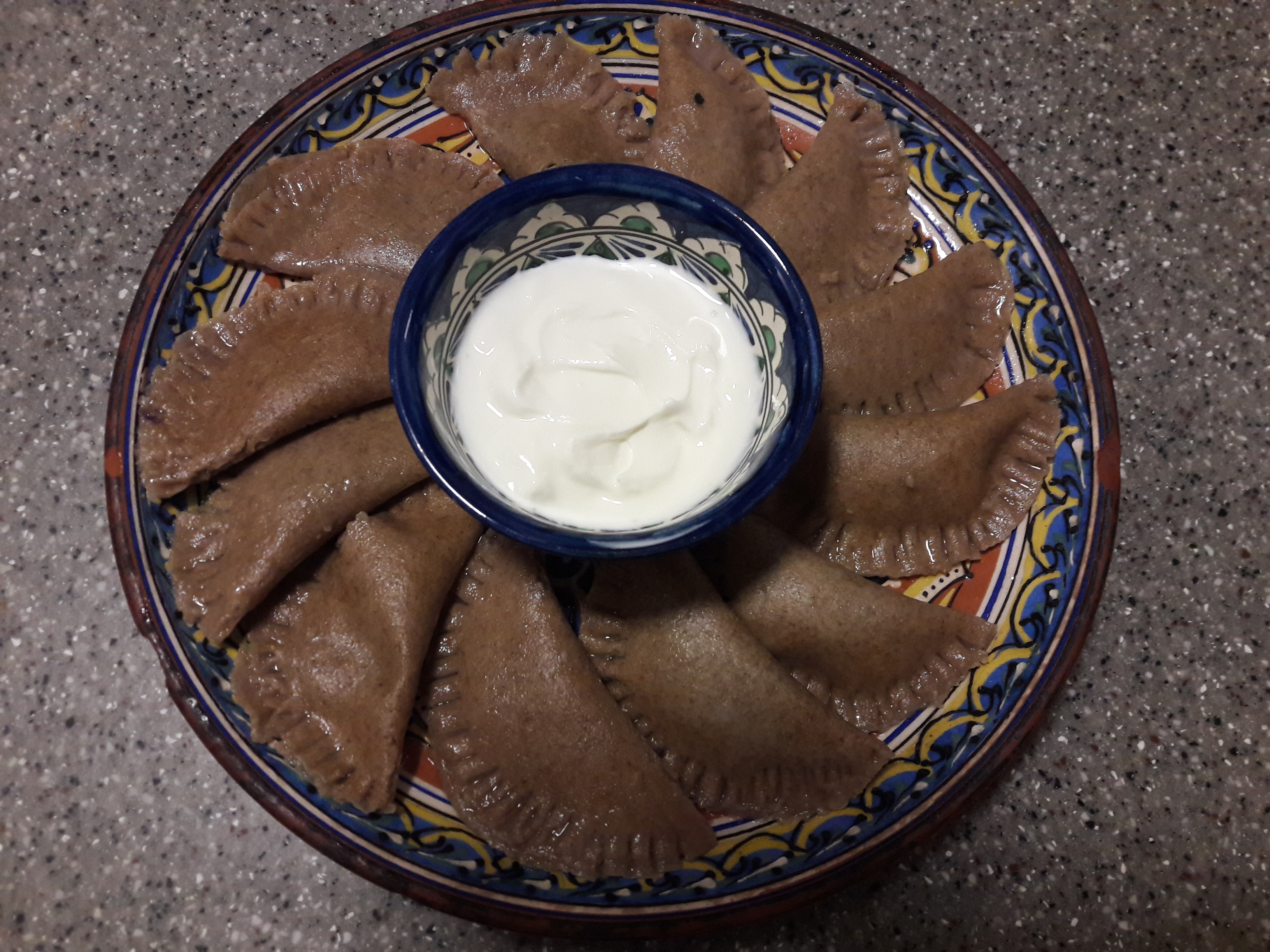
To mark this momentous occasion, we’ve prepared some mini chebureki filled with spring greens. We’re using chebureki in this context to refer to a crescent-shaped pie. Usually they’re deep-fried but we decided to turn them into more of a pelmeni by boiling them. It’s both healthier and quicker.

IMG-20190322-WA0027
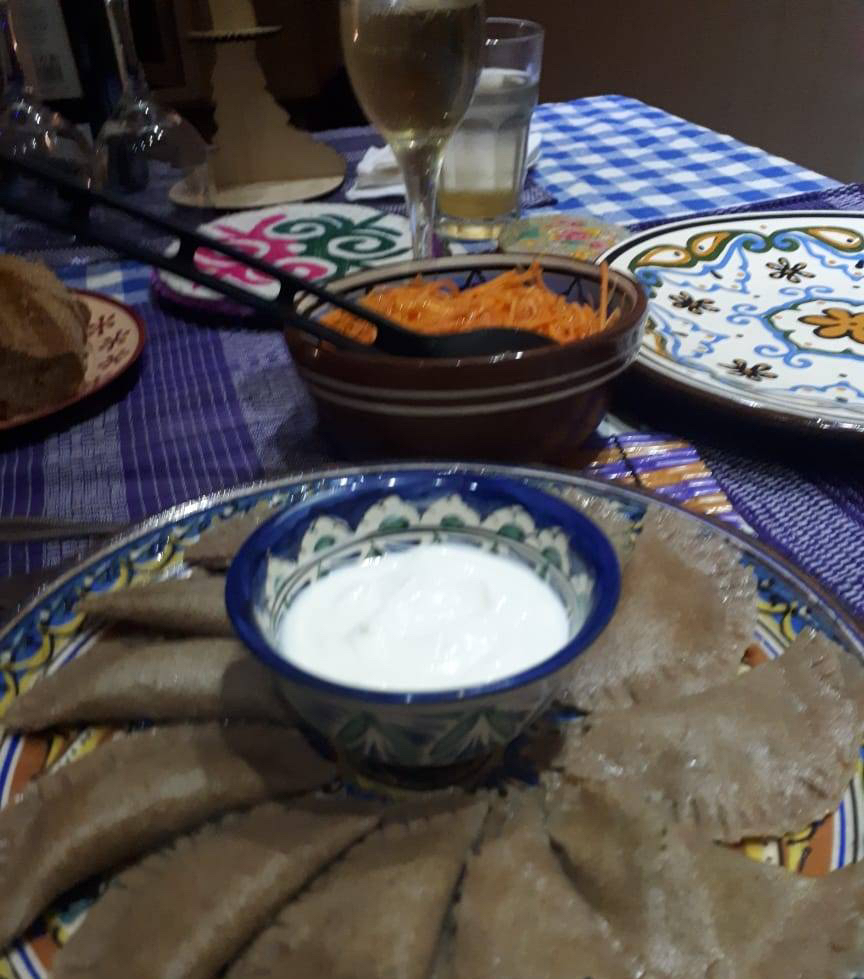
KCC’s spinach and celery pelmeni – the full table


Chebureki and pelmeni are from the family of little pies that are made from an unleavened dough – their cousins are Italy’s ravioli,  Turkey’s manti, China’s wonton, Uzbekistan’s chuchvara and Kazakhstan’s tushpara, Ukraine’s varenyky and Poland’s pierogi – the list is endless.

Ingredients (makes up to 24)

For the pasta:

  • 200 g wholewheat flour
  • 4 teaspoons olive oil
  • 100 ml water
  • pinch of salt

For the filling:

  • One small onion
  • 150g spinach
  • 2 sticks of celery
  • 25 ml olive oil
  • One teaspoon cumin seeds

Method

  • Make the pasta by sifting the flour into a large mixing bowl and then add the oil, a pinch of salt and half of the water in a well in the middle of the flour. Mix inwards from the outside with a wooden spoon and then add the rest of the water until the dough has absorbed all the flour.
  • Knead for ten minutes or so and then leave the pasta dough to rest in the fridge for at least one hour. While the dough is in the fridge, prepare the filling. Heat the oil in a frying pan, add the cumin seeds and then add the finely chopped onion. After cooking for five minutes, add thin slices of celery stick and the leaves and cook for three minutes. Now add the chopped up spinach and cook for another five minutes stirring frequently. Allow to cool before making the mini pies.
  • Roll the pasta out onto a lightly-floured surface to a thickness between 0.5 and 1.0 mm.Use a glass or a mug to cut out round shapes from the dough, add a teaspoon of cooled spring greens in the bottom half of the circle and moisten the inside edge around the filling with a little water and then fold the top over. Use a fork to seal the pasta pocket.
  • Bring a large pan of water to the boil and then add the little pies to the water and keep boiling over a low heat until they float to the surface. Remove  with a slotted spoon and serve hot – they’re good served with sour cream or melted butter or just plain.

Piccata: a Zingy Sauce to Pique your Interest

31 May 2018

As the market stalls overflow with fresh spring produce, this time round on Knidos Cookery Club we’ve selected some zingy greens to make a zesty, lemony piccata sauce to go with pasta and some other leafy greens.

20180524_181759
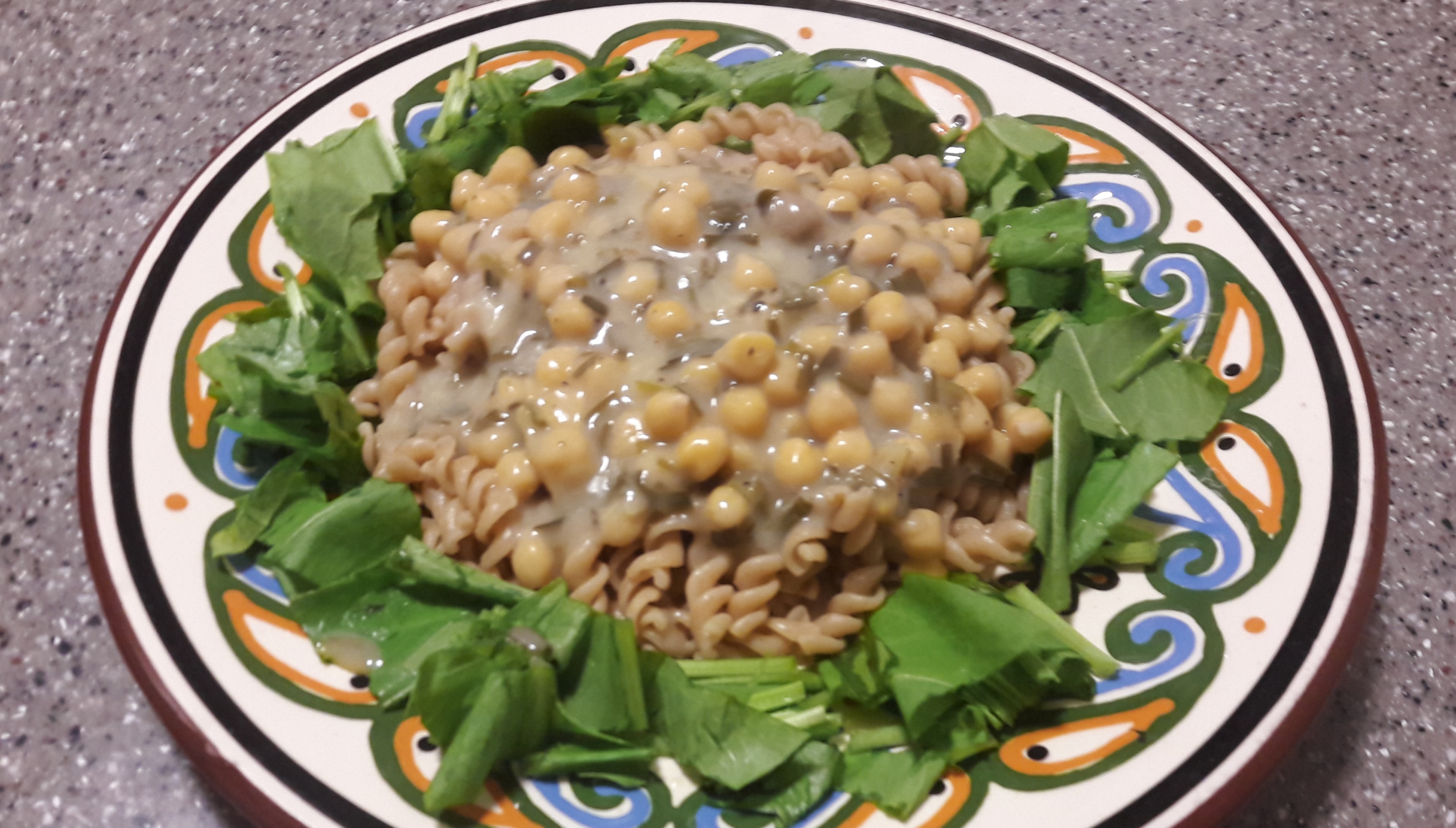
KCC’s Chick Pea Picatta on a bed of sorrel

The piccata sauce comes from Italy and is a lemon-fuelled accompaniment to a variety of dishes. The name derives form the Italian word for ‘annoyed’, piccato, and it is from the same root as the word used in English expressions such as ‘a fit of pique’ or ‘to pique your interest’.

We’ve used jusai, garlic chives, to add more flavour to the sauce, along with white wine, capers and lemon zest and juice to give it a picquant bite. Add some chick peas and serve on a mound of pasta placed on top of a bed of fresh sorrel leaves for a tangy treat.

Ingredients (serves 3-4)

250 g cooked chick peas

25 ml olive oil

50 g garlic chives

2 tablespoons flour

100 ml white wine

500 ml vegetable stock

12 capers

Zest and juice of one lemon

1 teaspoon dried thyme

black pepper

250g dried pasta (we used spirals) cooked according to instructions on pack

Bunch of fresh sorrel

Method

Heat the olive oil in a heavy-bottomed pan over a medium heat and then add the chopped garlic chives. Cook for five minutes and then add the flour and stir well. Pour in the wine and mix to a paste and then slowly add the stock, stirring all the while.

Simmer over a low heat until the sauce starts to thicken, then add the chick peas, capers and thyme and cook for three minutes. While the sauce is simmering, cook the pasta. Grind a generous amount of black pepper into the sauce along with the lemon juice and zest.

Tear up the sorrel leaves and scatter over a plate. Place a pile of pasta in the middle of the plate on the leaves, and then pour the piccata sauce over the pasta and serve immediately.


Leeky Pastitsio

5 April 2018

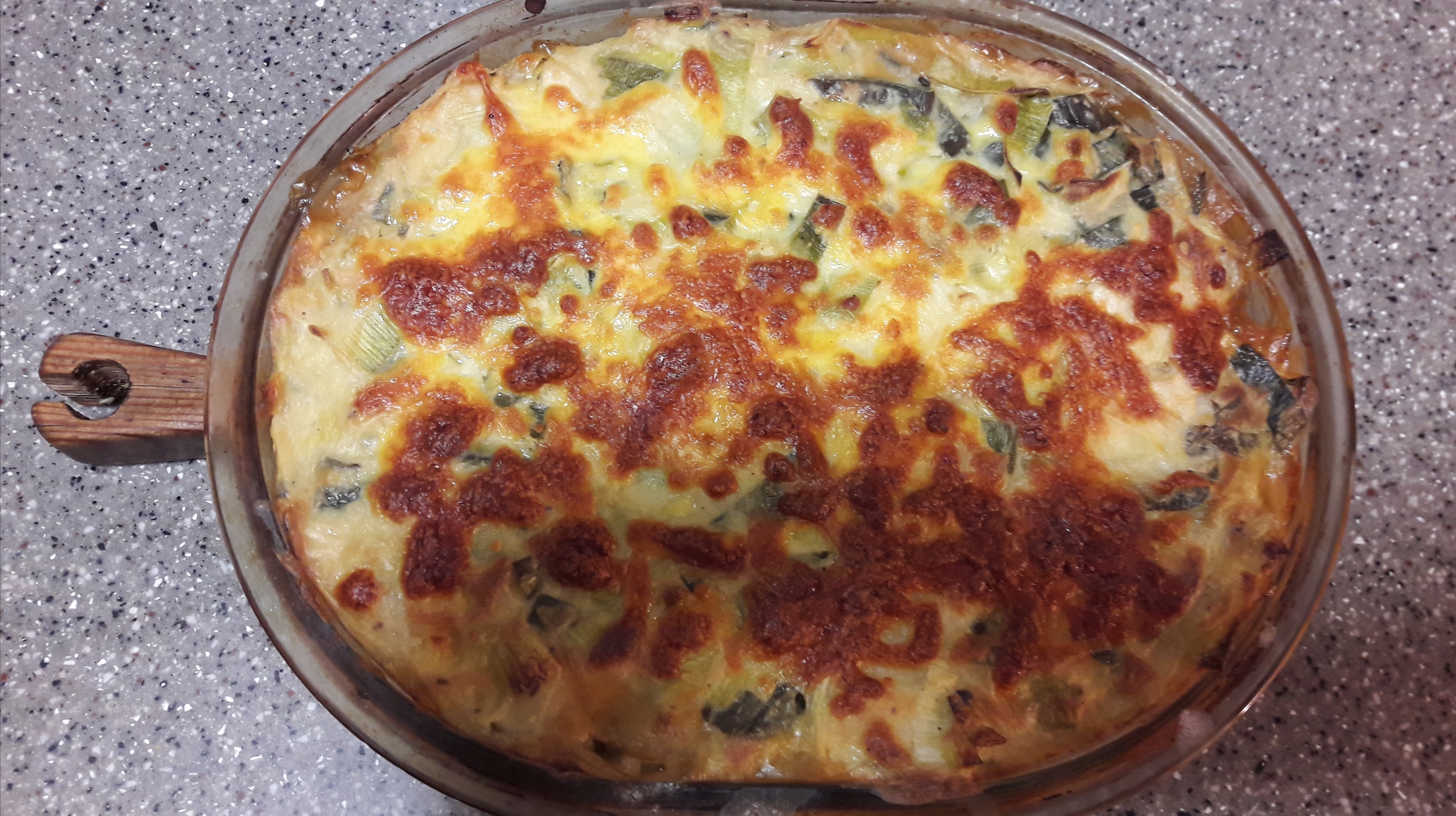
We’re back and, with Orthodox Easter just around the corner, this time round on Knidos Cookery Club we’ll be making our own version of pastitsio, a Greek take on Italy’s lasagne. Our version comes with a red wine, tomato and lentil ragu and a leek infused béchamel sauce.

leeky pastitsio
KCC’s Leeky Pastitsio

A few weeks ago, I left some beans soaking overnight and when I checked them in morning the pan was mysteriously filled with soaked penne rigate pasta! A quick look online to determine if the pasta was usable led me to this post on the Ideas in Food blog, and this confirmed pre-soaking in cold water as an effective way of preparing dried pasta.

20180402_204515
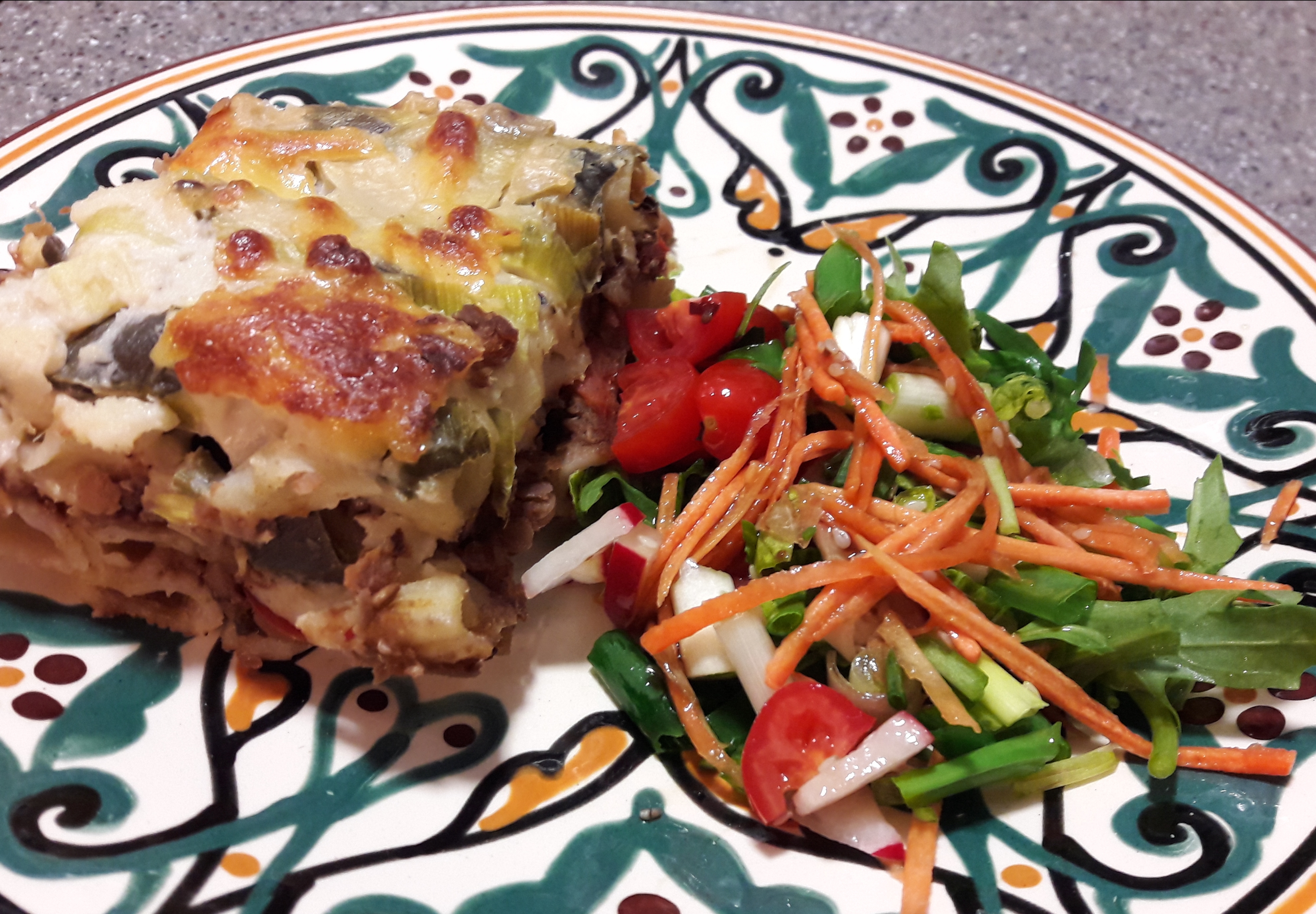
Leeky pastitsio and salad

Pastitsio is one of those dishes that tastes great straight from the oven but improves with age as the cinnamon, nutmeg and other flavours have time to blend properly. It works well heated up the next day or even tastes good cold. We served ours with a crisp salad of rocket leaves, carrot. radish and tomato.

Ingredients (For 3-4 hearty servings)

200 g penne rigate pasta

For the ragu:

25 ml olive oil

4 spring onions

200 g cherry tomatoes

2 tablespoons tomato paste

100 g red lentils

175 ml red wine

1 teaspoon of cinnamon, cumin, black pepper and red chilli flakes

For the Béchamel sauce:

50 ml olive oil

250 g leek

3 tablespoons flour

400 ml milk (dairy or non-dairy)

60 g cheese (dairy or non-dairy)

One teaspoon of nutmeg

Method

Soak the pasta in a pan of cold water for two hours and while it’s soaking cook the red lentils in 200 ml water until mushy and all the liquid is absorbed. Then prepare the ragu and after that the béchamel sauce.

For the ragu, heat the oil in a heavy-based pan and then fry the chopped spring onions for a few minutes. Add the quartered cherry tomatoes, tomato paste and spices and mix well. Add the wine and when it starts to bubble add the cooked and drained lentils. Cook for ten minutes over a low heat.

For the béchamel sauce, heat the oil in a heavy-based pan and then add the sliced leeks and cook for five minutes over a medium heat. Add the flour and mix well and then ad  the milk slowly, stirring continuously with a wooden spoon. Add half the grated cheese and nutmeg and cook until the sauce is just starting to boil, stirring all the while.

Layer half the soaked penne in the bottom of an oven proof dish and pour the ragu over. then layer the rest of the pasta on top of this and pout the béchamel sauce over. Add the remainder of the grated cheese and bake in a pre-heated oven at 200c for thirty minutes.

Serve straight away with a green salad or let it sit overnight in the fridge for a tastier pastitsio that can be served hot or cold.

Unravelling Ravioli on the Path to Pkhali Pierogi

1 March 2018

This time round on Knidos Cookery Club we’ll be unravelling ravioli, one of the many forms of filled pasta pockets found around the world – from Turkey’s manti, Uzbekistan’s chuchvara and Kazakhstan’s tushpara to Russia’s pelmeni, Ukraine’s varenyky and Poland’s pierogi – the list is endless.

20180223_232604
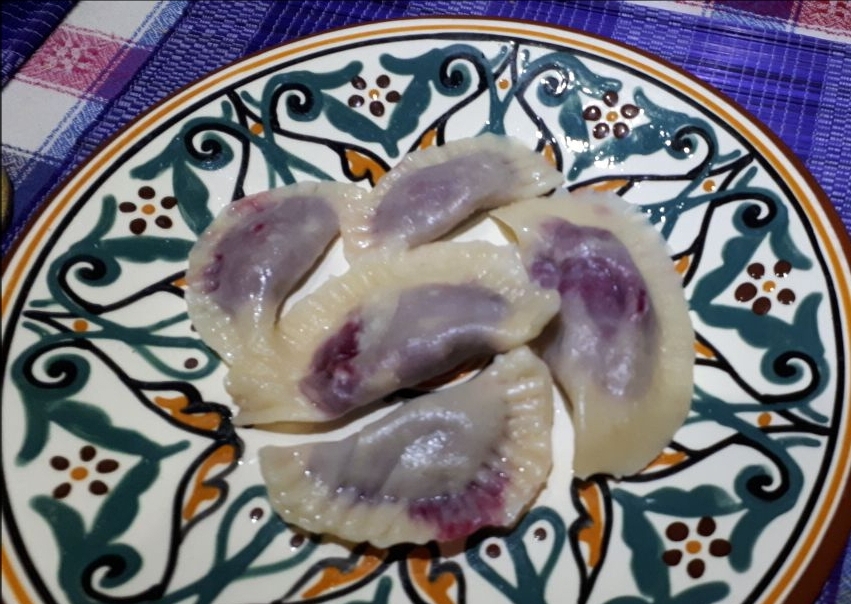
KCC’s beetroot-filled pkhali pierogi

These pasta pockets, which are boiled rather than steamed, can come in a variety of shapes and sizes with a wide range of fillings such as pumpkin, potato, spinach and ricotta cheese, or different types of fruit.

We’ve opted for a semi-circular shaped pierogi which we’ve filled with beetroot and walnut pkhaliclick here for our feature on this classic Georgian dish from last year.

20180225_181745
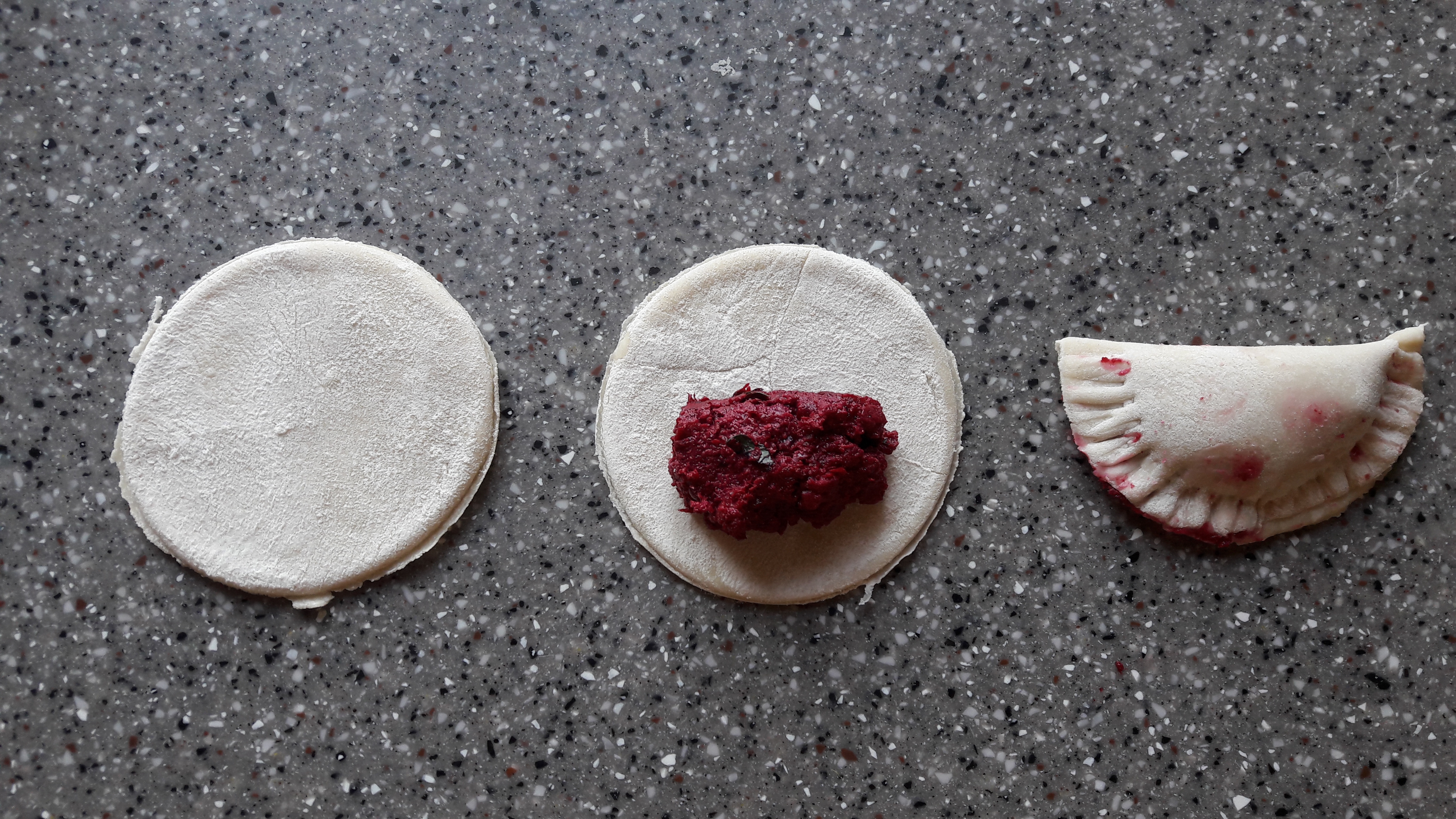
Three steps to a perfect pierogi!

Ingredients (Makes 16-24 depending on how big you make the pierogi)

For the pasta:

200 g flour

3 teaspoons olive oil

100 ml water

pinch of salt

Method

Make the pasta by sifting the flour into a large mixing bowl and then add the oil, a pinch of salt and half of the water in a well in the middle of the flour. Mix inwards from the outside with a wooden spoon and then add the rest of the water until the dough has absorbed all the flour.

Knead for ten minutes or so and then leave the pasta dough to rest in the fridge for at least one hour. After resting, roll the pasta out onto a lightly-floured surface to a thickness between 0.5 and 1.0 mm.

Use a glass to cut out round shapes from the dough, add a teaspoon of cooled beetroot pkhali in the bottom half of the circle and moisten the inside edge around the filling with a little water and then fold the top over. Use a fork to seal the pasta pocket.

Bring a large pan of water to the boil and then add the pierogi to the water and keep boiling over a low heat until the pierogi float to the surface. Remove the pierogi with a slotted spoon and serve hot – they’re good served with sour cream or melted butter or just plain.