Christmas Redux – the Party Continues…

4 January 2018

Happy 2018 to all our readers! Just when you thought the festive season was over, here’s a quick reminder that in some parts of the world Christmas is still to come. In Russia and parts of eastern Europe, the Orthodox church uses the Julian calendar, leaving a 13-day lag between the two Christmases.

To mark the big day we’re making our version of borsch – a dish that varies considerably across eastern Europe and the former Soviet Union. The spelling also varies with both borshch and borscht in use.

In Ukraine, borsch forms an integral part of the Christmas Eve table, and it’s often veggie-friendly as this day is also the end of a period of fasting – meat and dairy products are not consumed in the run up to Christmas.

We’ve added some dried mushrooms to the beetrooty mix to give the stock more depth and put a bread topping over the pot to have something handy to tear up and dip into the borsch.

Ingredients (makes 3-4 servings)

500 g beetroot

1 medium- sized onion

1 garlic clove

200 g potato

200 g carrot

250 g red or white cabbage

50 ml olive oil

50 ml tomato puree

5 dried mushrooms

1 litre vegetable stock

2 bay leaves

Juice of one lemon

1 teaspoon red chilli flakes

50 g fresh parsley

For the bread top:

150 g flour

100 ml warm water

15 ml olive oil

Pinch of salt

Method

Clean the beetroot, wrap in tin foil and bake in an oven pre-heated to 180 c for one hour. Pour boiling water over the mushrooms and allow to stand for 30 minutes.

While the beetroot is cooking, heat the olive oil in a heavy-based pan and fry the chopped onion and garlic on a medium heat for ten minutes. Add the bay leaves and chilli flakes and then add the sliced mushrooms. Cook for five more minutes then add the tomato puree and the vegetable stock.

Bring to the boil and then add the diced potato and carrot and cook for 15 – 20 minutes over a low heat. After the beetroot has cooled, peel it and then dice it and add to the soup. Add the finely sliced cabbage, chopped parsley and lemon juice and cook for another 15 minutes.

Prepare the bread topping by combining the flour, water and oil and knead until you have an elastic mixture. Cover with cling film and leave to stand for 30 minutes.

Pour the borsch into individual serving bowls, place a disc of rolled out bread over the top of the bowl and cook in an oven pre-heated to 200 c until the bread is cooked and starting to go brown on top.

For non-vegans, add a dollop of sour cream after breaking through the bread cover. Use the bread to mop up the borsch.

Fava à la Grecque

12 October 2017

There are a lot of similarities between Turkish and Greek cuisine with both claiming baklava as their own and many other shared dishes, but there are also some striking differences. One variation we’ve noticed on our travels around Turkey and Greece has been with the dish known as fava in both countries.

20171006_134319
Fava à la Grecque

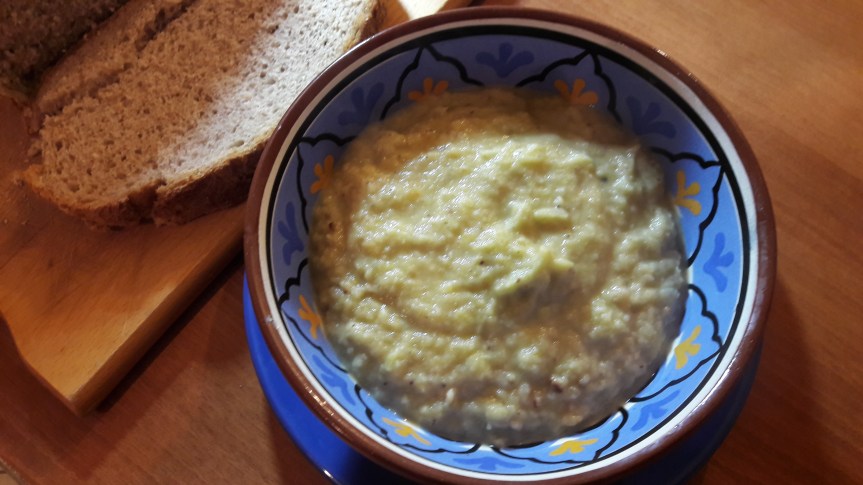
Last week we featured Turkey’s take on fava, made with broad beans, so this week we’re going to balance things up and have a look at Greece’s take on this dish, which is made with yellow split peas.

20171006_131423
Ingredients for fava à la Grecque

These dried peas proved quite hard to track down in Turkey – most supermarkets don’t stock them, but we eventually found them on sale in Datça market, mixed in with a few lentils and whole grains for good measure!

Greece’s version of this dish is runnier than Turkey’s, more like a hummus consistency, so it’s more suitable to use as a dip or spread. We’ve added some sumac to bring together these two esteemed cuisines in a spirit of gastronomic entente cordiale!

Ingredients (makes 6-8 healthy servings)

250 g yellow split peas, soaked in cold water for 1-2 hours

One medium red onion

One garlic clove

One teaspoon dried thyme

25 ml olive oil

500 ml water

Juice of one lemon

Pinches of salt and black pepper

Use a pinch of sumac, slices of red onion and a squeeze of lemon juice to garnish the fava

Method

Fry the finely chopped onion and garlic in the olive oil over a medium to high heat until the onions start to caramelise. Add the split peas and thyme, season with salt and pepper and stir well. Pour in the water, bring to the boil and then reduce the heat and simmer for 30 minutes or so until all the liquid is absorbed.

Allow the cooked mixture to cool for ten minutes and then use a hand blender to make it into a smooth paste. As you’re blending the mix, add the lemon juice to give it a creamier consistency.

Use a pinch of sumac, slices of red onion and a squeeze of lemon juice to garnish the fava and then serve warm with crusty bread and a green salad.


Fava a la Turca

5 October 2017

This time on Knidos Cookery Club we’ll be looking at fava, a popular Turkish meze made from broad beans (we’ve used dried but use fresh if you have them). Greece also has a dish called fava, but its version uses split peas and is an all-together different beast to Turkey’s variant which is left in the fridge to firm up into a spread that can be sliced into chunks (more on the Greek variation next time round).

20170929_122236.jpg
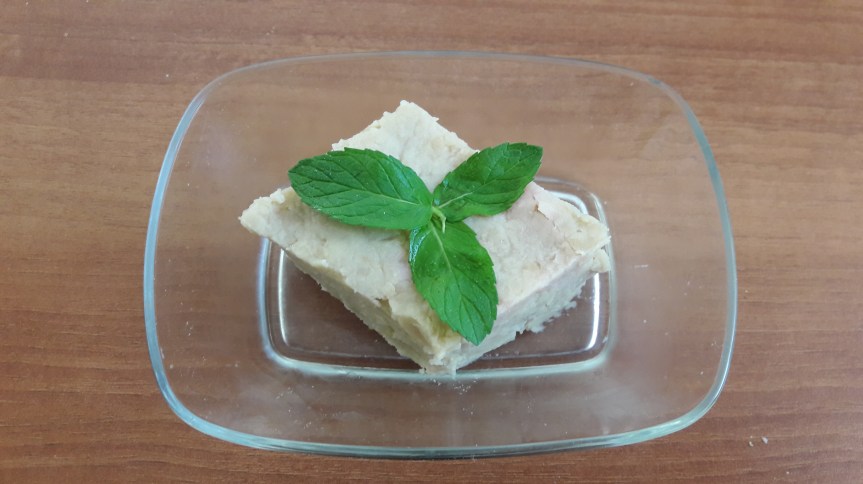
Knidos Cookery Club’s take on fava served with mint

Our variation on the Turkish fava theme turned out a bit less smooth than the one served up in Turkish cafes but it still tasted great! Having cooked up the beans into a mush, we went for a swim while it cooled down. Apparently, it should have been pushed through a sieve while still warm, but no worries – it turned out all right on the night albeit a bit lumpier than expected!

20171005_114611
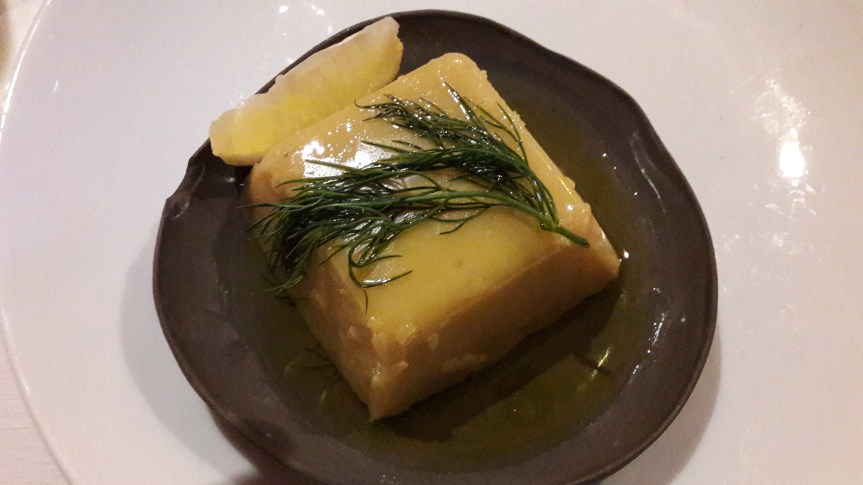
Fava served with … dill in a restaurant in Akyaka, Turkey’s slow food capital

In Turkey fava comes adorned with sprigs of dill (some recipes even put dill in the bean mix itself). Knidos Cookery Club is not a big fan of dill, so we’ve used some fresh mint leaves to adorn our take on this Turkish classic.

Ingredients (makes around 8-10 individual servings)

200 g dried broad beans (soaked overnight in cold water)

One small red onion

400 ml water

One teaspoon honey

25 ml olive oil

Pinch of salt

Mint leaves to garnish

Method

Put the drained beans into a heavy-based pan with the finely chopped onion, olive oil, honey and salt and pour the water over the top. Bring to the boil and simmer over a low heat for an hour or so until all the water is absorbed and the beans are breaking up to form a thick paste.

Allow the mix to cool and while still warm press through a metal sieve with a wooden spoon to remove any excess liquid. Oil a glass serving dish and pile the bean mix into the dish. Cover with clingfilm (clear plastic wrap) and leave overnight in the fridge.

Serve in cubes or diamond shapes, cutting the solid mass with a wet knife (to avoid it sticking). Garnish with mint leaves and a drizzle of lemon juice and olive oil and serve with crusty bread as part of a meze platter.


Figito Fiesta

17 August 2017

The year’s first succulent figs, in delicate green shades or striking mauve hues, are making their annual debut in Datça and to mark this moment we’ve come up with the figito, a cocktail that combines new season figs with white rum, mint and  lemon  – our spin on the classic mojito.

20170816_201256
Who’s for a figito?

One of the pleasures of walking round town at this time of year is stopping off to pick a juicy fig or two from the trees that abound in this area. Here’s a tree near the Knidos Cookery Club HQ with some prime fruits drying in the August heat.

20170817_130245
Figs drying in a garden in Datça, Turkey 

If you’ve got a glut of figs, then why not try this old favourite from last summer: Lord Venal’s Fiendishly Figgish Chutney, and enjoy a figito or two while you’re making it! Cheers, or Şerefe as they say in Turkey!

Ingredients (makes one litre)

6 ripe, fresh figs

4 sprigs of mint

2 lemons

100 ml White Rum (Bacardi or Havana Club)

600 ml soda water

200 ml Schweppes Bitter Lemon

Method

Peel and dice four of the figs and muddle with the mint and the juice from the lemons with a wooden spoon in a glass serving jug. Add the rum and mix well and then top up with bitter lemon and soda water. Serve over ice with a slice of lemon, a mint sprig and half a fig.


Barbunya Bean Therapy

22 June 2017

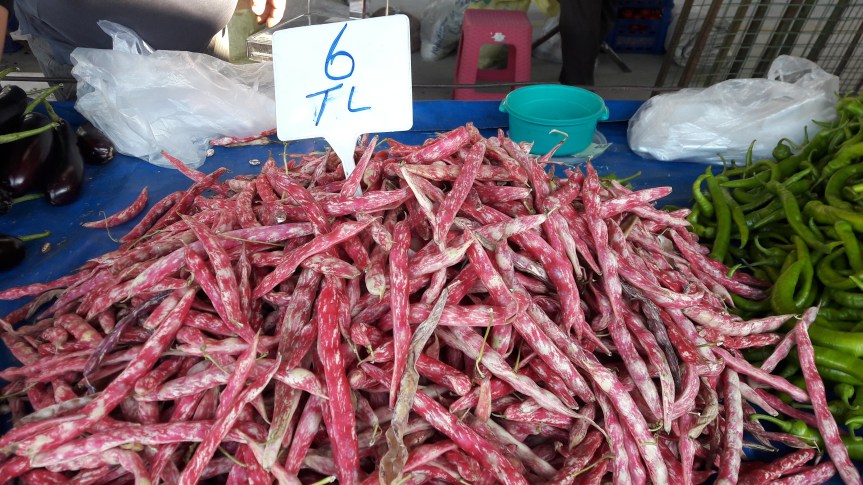
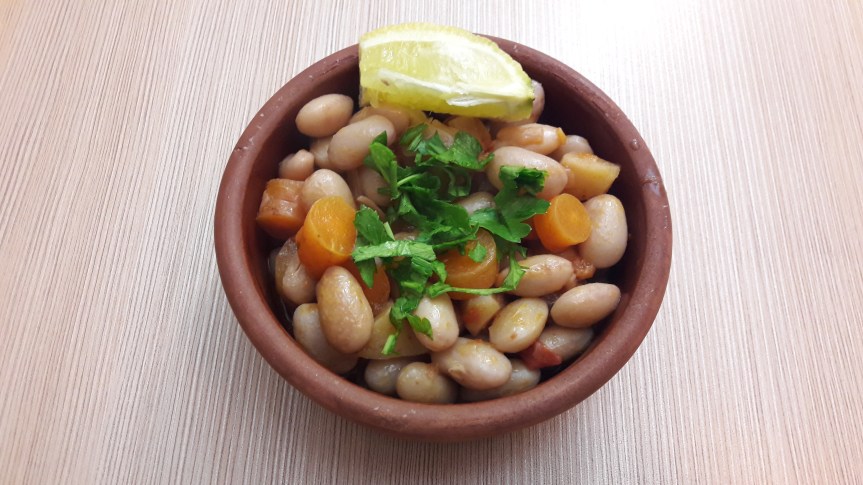
Last week in Datça market piles of psychedelic pink-podded barbunya beans arrayed against their green-podded cousins caught our eye. In Turkey these distinctive beans, also known as borlotti or cranberry beans, are made into a starter called barbunya pilaki, which is always high on our list when ordering a spread of mezeler.

20170616_183758
Psychedelic pink barbunya beans piled high in Datça market

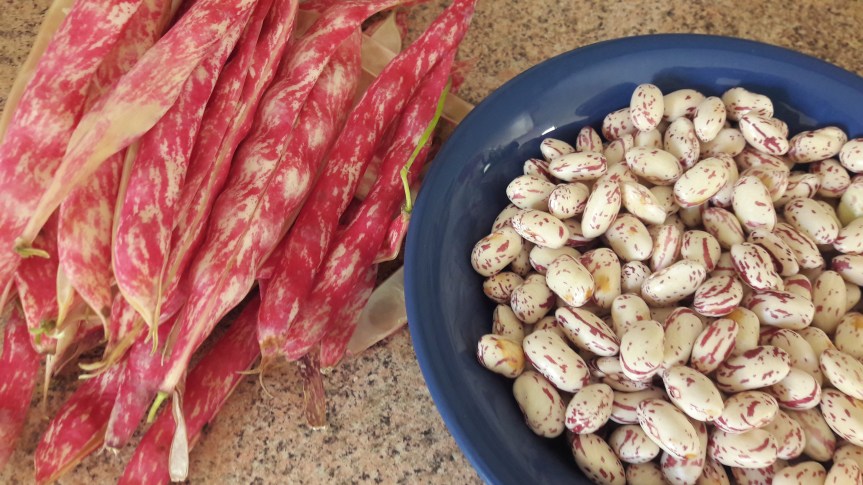
There’s something very therapeutic about podding these beans, like a beanish mindfulness moment!  Our kilo of beans in their pods yielded around 600 g of pink-marbled white beans.

20170616_194034
Bean therapy!

When cooked and allowed to cool, the pink colour leaches out and the beans take on a delicate brown hue. They’re delicious stewed with olive oil, onion, carrot, potato and lemon juice, served with a sprinkling of fresh parsley and a chunk of lemon. Some recipes omit the potato, but we think this gives the dish more oomph and means you don’t need to cook up any additional carbs.

20170616_220421
Barbunya pilaki all ready to go

They can be served hot as a less sugary take on baked beans, or served cold as part of the aforementioned selection of starters – Knidos Cookery Club recommends its carrot and walnut tarator, creamy almond and courgette dip, peppery muhammara and stuffed courgette flowers for a scrumptious feast of Turkish mezeler.

Ingredients (for 4-6 servings)

600 g shelled barbunya beans (or dried borlotti beans soaked overnight)

1 onion (around 100 g)

100 g carrot

100 g potato

100 g tomato

1 garlic clove

1 lemon

1 teaspoon honey

1 teaspoon red chili flakes

Fresh parsley to garnish

50 g olive oil

400 ml hot water

Method

Heat the olive oil into a heavy-based pan, chop the onion and garlic finely and fry over a medium heat for five minutes or so. Add the chopped tomatoes, lower the heat and cook for another five minutes.

Dice the carrot and potato into small cubes and then add these along with the beans, the juice of half a lemon, the honey, chili flakes and hot water to the pan and bring to a boil. Simmer for 30-45 minutes, stirring occasionally, until the beans are cooked but not going mushy.

Serve hot or allow to cool and garnish with fresh parsley and lemon slices.

Courgette Flower Power

4 May 2017

This time round on Knidos Cookery Club we’ve been busy stuffing courgette flowers, a popular starter all around the Aegean Sea. In Turkey, these delicate taste-bud ticklers, known as kabak çiçeği dolması, are stuffed with a rice mixture and baked, unlike their Italian cousins which are filled with ricotta cheese and deep fried.

IMG_1295
Succulent stuffed courgette flower power

The courgette, zucchini to our north American readers, is a really versatile vegetable – in the past we’ve used it in a tasty fritter mücverstuffed courgettes and in a creamy almond dip, and it’s great that we’ve found a use for its flowers as well.

If you’re growing your own courgettes, then you should have a ready supply of flowers, otherwise you may need to scour your local farmers’ market for these vivid orange blossoms.

Ingredients 

20-25 courgette flowers

One cup (approx. 100g) of short or long grain rice (We recommend brown rice for its earthier flavour)

250 ml vegetable stock

One medium-sized onion

One medium-sized tomato

One garlic clove

Pinches of dried thyme, oregano, black pepper, chili pepper flakes, cinnamon and salt

5 g fresh parsley

5 g fresh mint

25 g raisins

25 g  pine nuts

25 ml olive oil for frying

Juice of one lemon

One sliced lemon

100 ml natural yogurt

Method

Pour the olive oil into a heavy-based pan and add the chopped onion and garlic. Cook over a medium heat until the onion becomes translucent. Add the chopped tomato, dried and fresh herbs, seasoning, dried fruit and pine nuts and cook for five minutes over a high heat.

Turn the heat down and add the washed and soaked rice to the onion mix and stir to cover the grains with oil. Add the stock and cook over a low heat until the liquid is absorbed.

Make sure that the courgette flowers are free from any green, leafy bits or stem and remove the stamen from the inside of the flower. Allow the rice mixture to cool and then fill each flower with a teaspoon of rice mix – don’t overfill them as the rice will continue to expand as it cooks.

Fold the end of the blossom together to seal the rice mix in and place the filled flowers into a heavy based frying pan or casserole dish. Pour water over the flowers to just cover them, add a generous glug of olive oil and the lemon juice, put a lid on the pan and cook over a low heat until all the water is absorbed.

Leaving the pan covered, let the cooked courgette flowers rest for 30 minutes or so with the heat turned off and then serve with lemon slices and a dollop of natural yogurt.


Operation Lentil

23 February 2017

It was on this day back in 1944  that the Chechen and Ingush  people of the North Caucusus had one of the darkest moments in their troubled history. Accused by the Soviets of siding with the Nazi forces, the entire population was herded onto cattle trucks and deported by force to Central Asia.

The mission was codenamed ‘Operation Lentil’ – after chechevitsa, the Russian word for lentil, which shares its first two syllables with Chechen. By way of commemoration of this tragedy that befell the Chechen and Ingush communities, who refer to the deportations as Aardakh, the exodus, this time around we’ll be sharing a recipe for the Turkish dish mercimek köftesi – a versatile red lentil patty.

lentil-patties
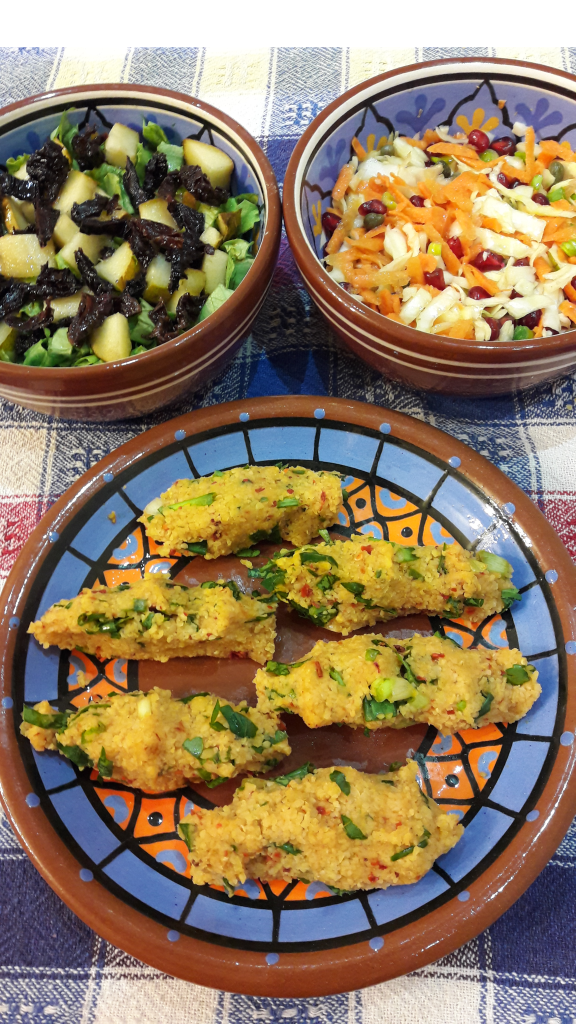
Mercimek köftesi – red lentil patties, served with green salad and cole slaw

These spicy, lentil patties are easy to prepare and are delicious when rolled up in flatbread, like lavash, with fresh cole slaw and a green salad. We used ajika sauce from Georgia on the other side of the Caucasus mountains, a fiery blend of red chili peppers and tomatoes, to flavour the patties – but if you can’t find this locally, then a mix of tomato paste with chili flakes will do nicely.

Ingredients (Makes around 20-24 lentil patties)

100 g red lentils (one cup)

150 g fine bulgur wheat (1.5 cups)

500 ml water

6-8 teaspoons of ajika sauce (see above)

5 spring (green) onions – chopped

A handful of fresh flat leaf parsley, roughly chopped

One teaspoon of cumin seeds

One teaspoon red chili flakes

Black pepper

25 ml olive oil

Juice of one lemon

Method

Wash the lentils until the water goes clear and then place in a pan with the water. Bring to the boil and simmer over a low heat for 20 minutes or so. The lentils should be going mushy and there should be about 1 cm of water covering the lentils – add more water if necessary.

Add the washed bulgur wheat to the cooked lentils and the ajika sauce and blend well. Allow to stand for 30 minutes or so and then add the olive oil, lemon juice, spring onions, parsley, cumin, red chili flakes and black pepper and mix well.

Allow to stand for a few hours to let the flavours combine and then mould a walnut-sized piece of the mix in the palm of your hand and use your fingers to form a  sausage-shape (see picture above).

Serve rolled in flatbread or stuffed into a pita with a cole slaw made from shredded cabbage, grated carrot, pomegranate seeds, spring onion and capers and  a salad of lettuce, sun dried tomatoes, pear and spring onion.


Getting Down to the Nuts and Roots

26 January 2017

This time round on Knidos Cookery Club we’re getting back to the roots with a comforting winter soup made from some of our favourite root vegetables, a leek or two and some roasted chestnuts.

20170124_204349
Roasted chestnuts – a winter treat

One of the big events in the world of Knidos Cookery Club so far in 2017 has been the relocation of Datça’s weekly market to a new, purpose-built site. Previously, when the market came to town on Friday and Saturday, it would spill down the hill in the centre of town, causing considerable congestion with the stallholders looking for parking spots and the customers squeezed in-between.

The new site has a covered area for the local fruit and vegetable growers with the other stalls – spices and nuts, clothes, household goods etc., setting up around the covered market. It’s a lot more user-friendly, with plenty of space for shoppers and stall holders.

The last few visits to the market have entailed searching for some of our regular suppliers in the new layout, and we’re pleased to report that most of them have been accounted for!

20170108_222106
A warming bowl of rooty, chestnut pureed soup

In season at the moment are chestnuts – anyone who’s visited Istanbul in winter will probably remember trying fresh roasted chestnuts while on the move around the centre, a delicious snack that epitomises the city in the colder months of the year to me.

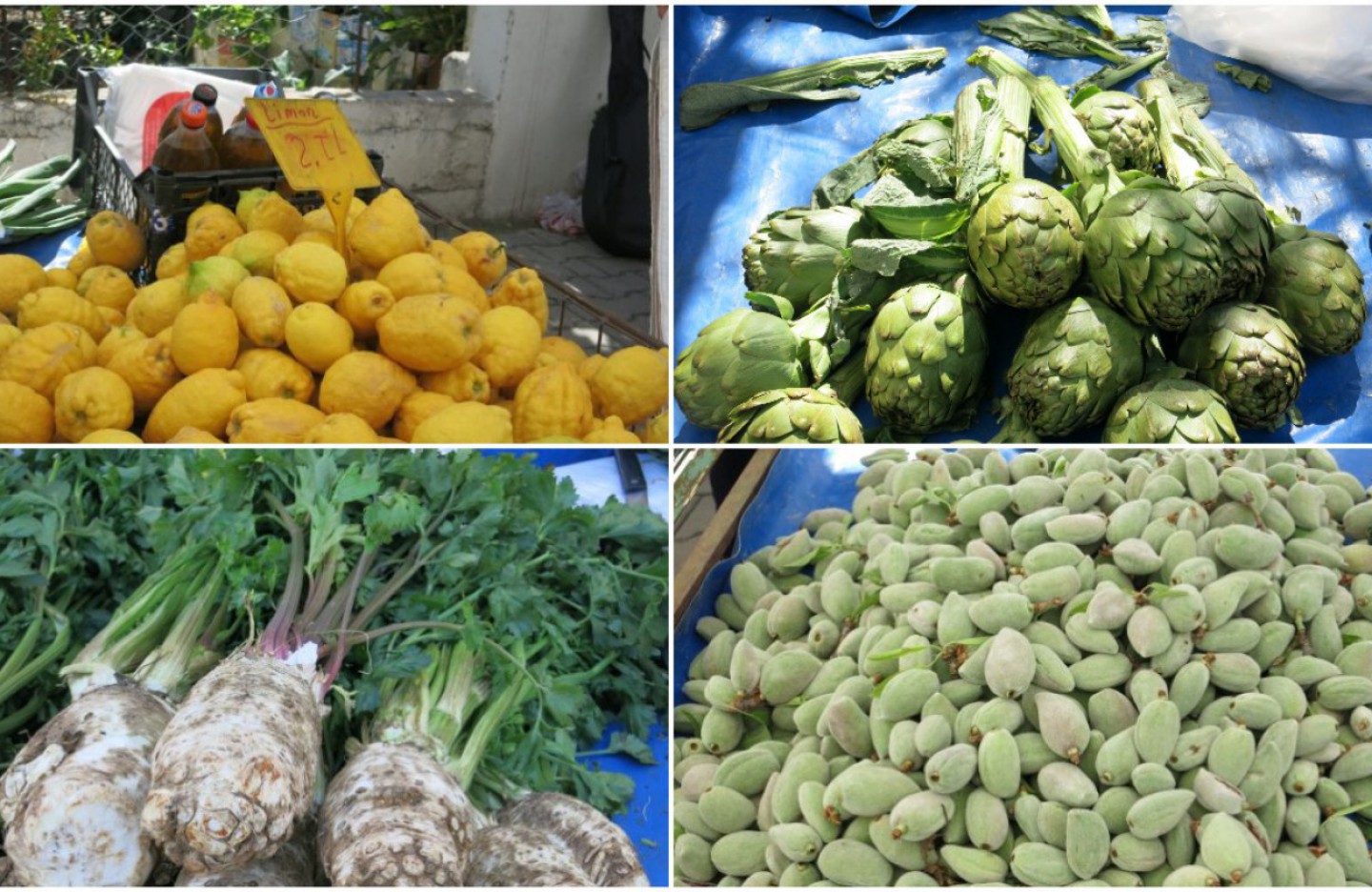
There were also root vegetables aplenty – including black carrots (these root vegetables were first cultivated in Afghanistan and were yellow and purple in colour) and celeriac, lengthy leeks and lashings of oranges and lemons. So this week we’ll be making a rooty nutty soup containing celeriac, potato, carrot, leek, shallots and chestnuts.

Ingredients (serves 3-4)

75 g shallots

250 g leeks

250 g celeriac

one medium-sized potato

100 g carrot (black if you can find them!)

500 ml vegetable stock

25 ml olive oil

150 g chestnuts

one teaspoon dried thyme

salt and pepper for seasoning

juice of one lemon

Method 

Fry the finely sliced leeks and chopped shallots in the olive oil, which has been seasoned with dried thyme, over a medium-high heat until just beginning to brown. Peel and dice the celeriac, potato and carrot into 1 cm cubes  and add to the pan of leeks and shallots.

Stir in well to coat the cubed root vegetables with oil and thyme and then add the stock and the juice of the lemon and simmer for 20 minutes over a low-medium heat. While this is bubbling away, score the outside of each chestnut with a cross shape (on one side) and roast the chestnuts in an oven pre-heated to 220 c /gas mark 7.

Check the chestnuts after 20 minutes or so – if they are easy to peel and are roasted sufficiently, then they are ready for use. If not, check every 5 minutes until the shell comes off easily.

Add the peeled chestnuts to the soup pan, stir well and season with salt and pepper to taste. Then use a hand blender to make a smooth, thick soup and serve straight away with hunks of wholemeal bread.

Muhammara: Spread the Word

15 December 2016

This time out on Knidos Cookery Club we’re going to make muhammara, a spicy roasted red pepper and toasted walnut dip. Originally from Syria, this spread made its way onto Turkish tables via Antakya, which is located at the easterly end of Turkey’s Mediterranean coast.

img_2503This delicious dip was brought to Knidos Cookery Club’s attention by our good friend Tolga, who introduced us to the method of roasting the peppers over an open flame on our gas hob.

img_2496Put some tin foil under the burner to stop your hob getting all messed up and cook the peppers over a medium-high flame. Using a chopstick or a wooden skewer can make the peppers easier to manoeuvre on the flame.

You can also grill the peppers or roast them in the oven, but the open-flame method gives them a smoky flavour that combines excellently with the toasted walnuts and chili flakes.

Muhammara works well when teamed with our courgette and almond dip and our carrot and walnut tarator as part of a scrumptious meze platter.

Ingredients 

two medium-sized red (bell) peppers

100 g walnuts (shelled and chopped)

one clove of minced garlic

one lemon – use the juice of half the lemon for the dip and use the rest as a garnish

two teaspoons chili flakes

two teaspoons pomegranate sauce or molasses

25 ml olive oil

Method

Roast the peppers over an open flame, under a grill or in a hot oven until all the skin is blackened. Turn them round regularly to ensure they are cooked evenly.

While the peppers are roasting, toast the walnut pieces in a frying pan over a medium heat for 5 minutes, stirring or shaking the pan regularly. Don’t overcook them as they can taste bitter if you do.

Place the peppers in brown paper bag and allow to cool – this will make it easier to peel the peppers. Now remove the outer skin from the peppers then halve  and de-seed them. Be careful when cutting the peppers as some hot liquid may spurt out if they’re not cooled down enough.

Cut up the peppers and put them with half the walnuts and other ingredients into a blender and mix until you have a smooth paste. Add the rest of the walnuts and give the dip another blast – but not for too long as you want some of the walnuts to still be crunchy.

Garnish with slices of lemon and fresh mint (if you have it) and serve alongside other dips with pita bread and/or slices of raw carrot, cucumbers and green peppers.


Ezo the Bride’s Soup

20 October 2016

Knidos Cookery Club is off to a wedding soon so we did a quick google to see what Turkey has in the way of wedding-related foodstuffs and chanced upon this soup with a great backstory.

One wedding day tradition in Turkey is to the feed up the bride-to-be with a hearty soup, Ezogelin Çorbası, to help her prepare for the rigours of her wedding day and the subsequent move into the groom’s household.

img_2061

The name translates as ‘Ezo the Bride’s Soup’ and the recipe comes from the tale of a woman, Ezo, short for Zöhre, who was born in 1909 in a village near Gaziantep, now in south-eastern Turkey on the border with Syria.

She became famed in the region for her her looks and was highly sought after as a bride. Eventually, she married a man from a neighbouring village but unfortunately the marriage didn’t work out. One version of the tale, that has inspired short stories, folk songs, a film and a TV series in Turkey, as well as the soup, has it that her husband loved another so Ezo left him.

In 1936, Ezo married again and moved with her husband over the border to the town of Jarabulus in Syria. She pined for her homeland and to quell her homesickness she would cook a soup that reminded her of Turkey – a filling combination of red lentils, bulgur wheat, rice, tomato paste, herbs and spices. She also used the soup to win over her mother-in-law, a move crucial to finding happiness in her new home.

Ezo had nine children with her second husband, but she only lived to her mid-40s, dying in 1956 in Jarabulus. Her last wish was to be buried on a hillside overlooking her beloved homeland. Her memory lives on in this soup and in the legends that have grown up around her life story.

Ingredients (Makes four servings)

150 g red lentils

50 g coarse bulgur wheat

25 g rice

one medium-sized onion

one or two cloves of garlic

one lemon

25 ml olive oil

1.2 l warm water

3-4 tablespoons of tomato paste (a more liquid form of tomato purée – if using purée then two tablespoons should suffice)

two teaspoons of dried mint

black pepper

two teaspoons of chili flakes

sprig of fresh mint

Method

Wash the red lentils, bulgur wheat and rice and soak for two hours in cold water.

Finely chop the onion and garlic and fry for five minutes in the olive oil in a heavy-based pan. Add the red lentils, bulgur wheat and rice, pour in one litre of water and simmer over a low to medium heat for 30 minutes or until everything is cooked.

Add the tomato paste, the dried mint, chili flakes and some black pepper and 200 ml of water and the juice of one lemon and stir well. Simmer for ten or fifteen minutes until the soup is taking on a creamy texture.

Ladle the soup into bowls and garnish with a sprig of fresh mint and sprinkle more chili flakes over the top. Serve with a slice of lemon and some crusty bread.