Summertime Veggies with Yogurt and Mint

26 June 2025

Summer is in full flow so it’s time for some lighter dishes that bring to the fore fresh seasonal ingredients at their best. I found this on-trend recipe that uses fresh peas, broad beans and runner beans while going through some old stuff in the UK recently.
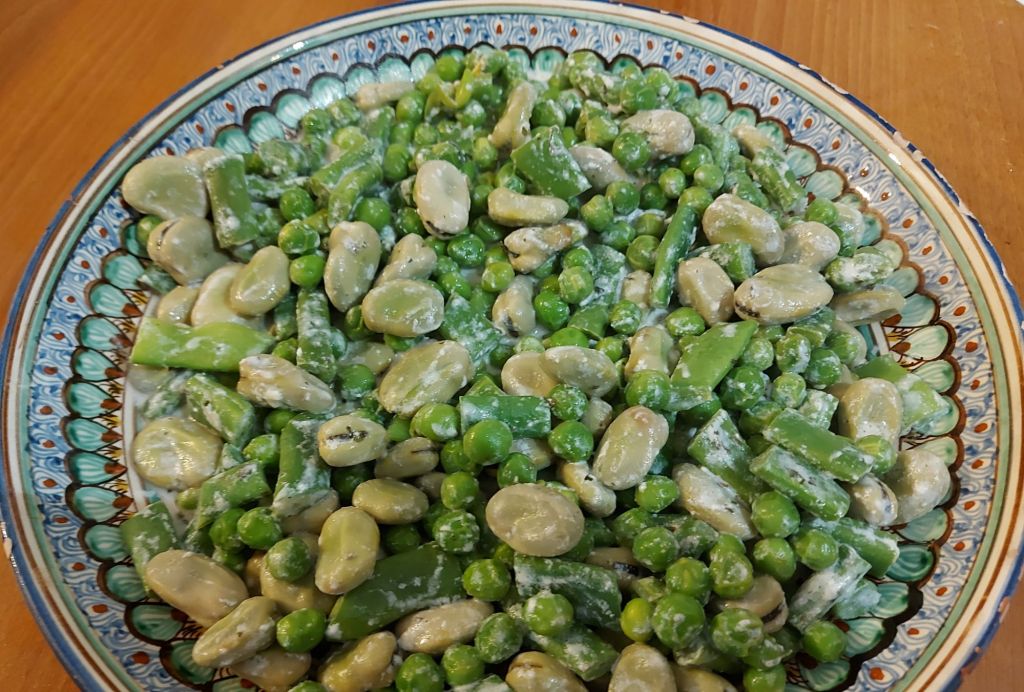
A taste of summer

I was at my late parents’ old place and during the archaeological dig I found a copy of the first vegetarian cookbook that I owned – Elaine Bastable’s Vegetarian Feast, a Christmas present from way back in 1985. It was sold by Marks & Spencer under its StMichael guise.

Vegetarian Feast was quite advanced for its time with a recipe for Avocado (and Stilton) on Toast, a Felafel recipe and other dishes that were very exotic for Margaret Thatcher’s meat-heavy Britain of the 80s. The cookbook’s over-reliance on butter comes across in the 2025 filter as a bit dated, but it still stands the test of time in many respects.

A blast from the past

1985 was the year I finally took the plunge and went vegetarian. It had been coming for a while. As an impoverished student the meat that I could afford was of the type that had featured in documentaries of the time looking at the meat industry.

Affordable processed products such as burgers and sausages were shown to contain all parts of an animal – mashed up eyelids, lips, bollocks and toes, to be precise.

Although there are now many more vegans and vegetarians, not much has changed in the meat industry – as I write the Guardian is carrying this article on the shocking rise of factory farms across Europe and the UK.
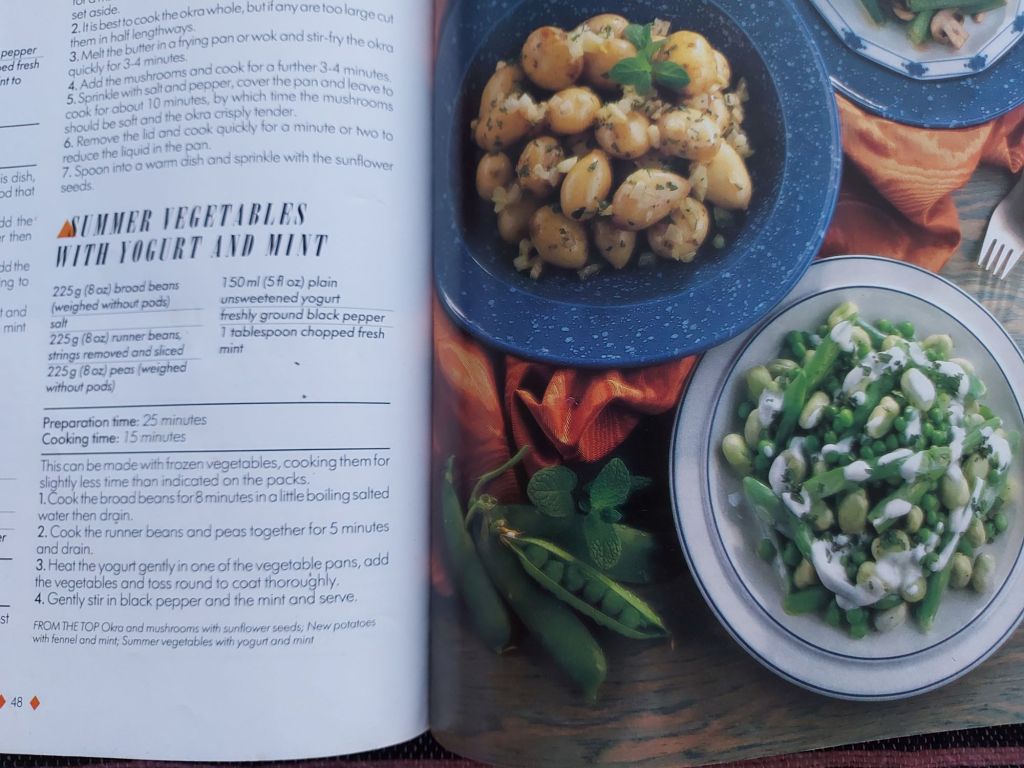
Here’s the recipe

In the summer of 1985 I had just finished uni and I was travelling through Yugoslavia, as was, to Greece via Bulgaria and Turkey. Bulgaria was a veggie turning point. Cafe menus featured a wide selection but when asking for a particular dish a frosty niama (approx: We don’t have it) was the usual responseBaked meat (of dodgy provenance) was the only option other than abundant salads. Who needed meat, especially baked meat of unknown origin, with all those veggies on offer?

Moving on into Greece, after the vegetarian heaven of Turkey’s ev yemekleri cafes, I finally started eating tomatoes, which I’d hated with a vengeance since my childhood. The tomato breakthrough opened up many new veggie avenues. From that point on I stopped eating meat and haven’t looked back since.

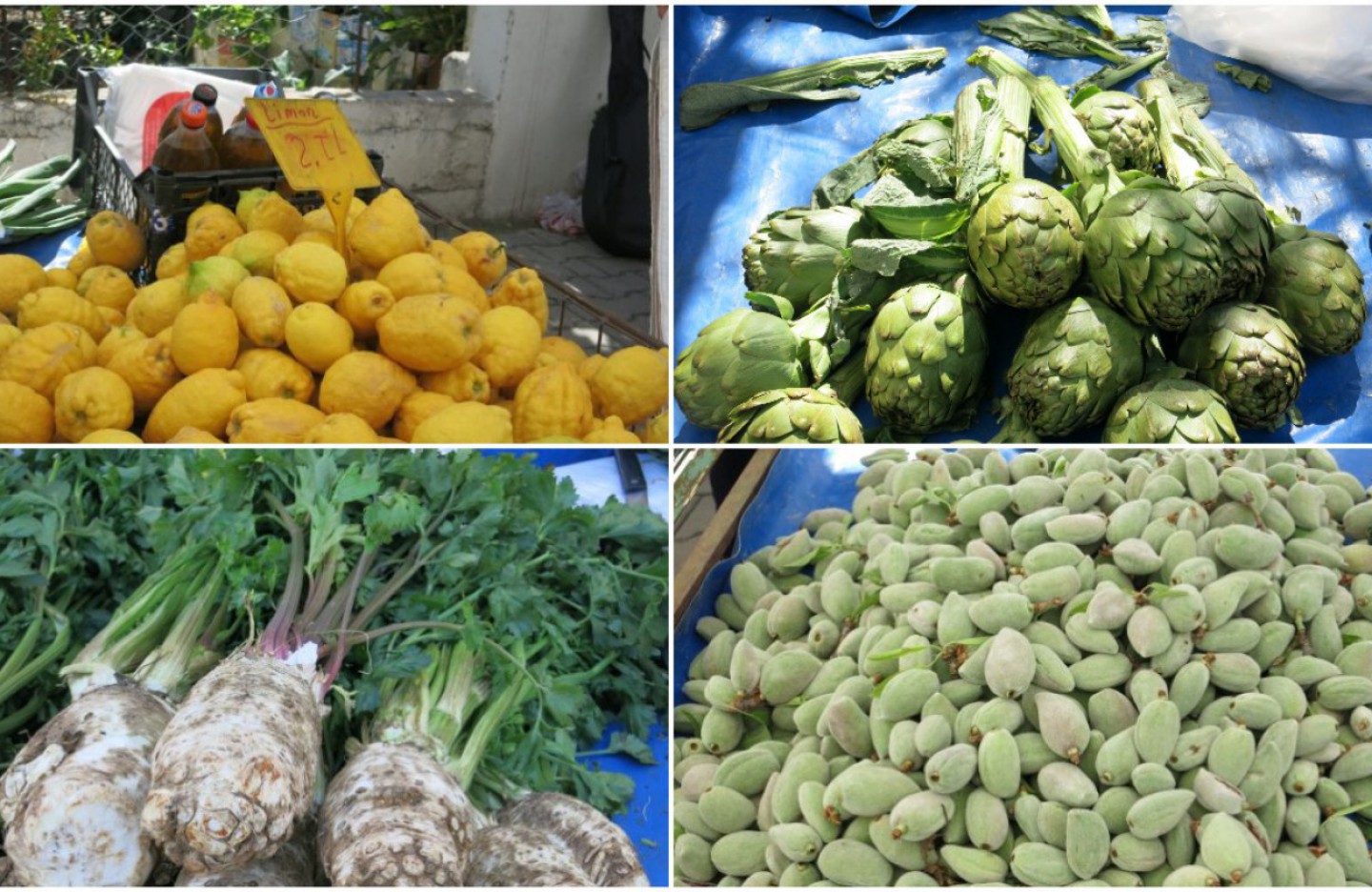
So, turning back to Vegetarian Feast, I found the recipe for this side dish of summer vegetables and Datça market came up trumps with fresh peas, broad beans and runner beans. Check out the recipe in the picture above.
Green Bean Amandine

22 September 2022

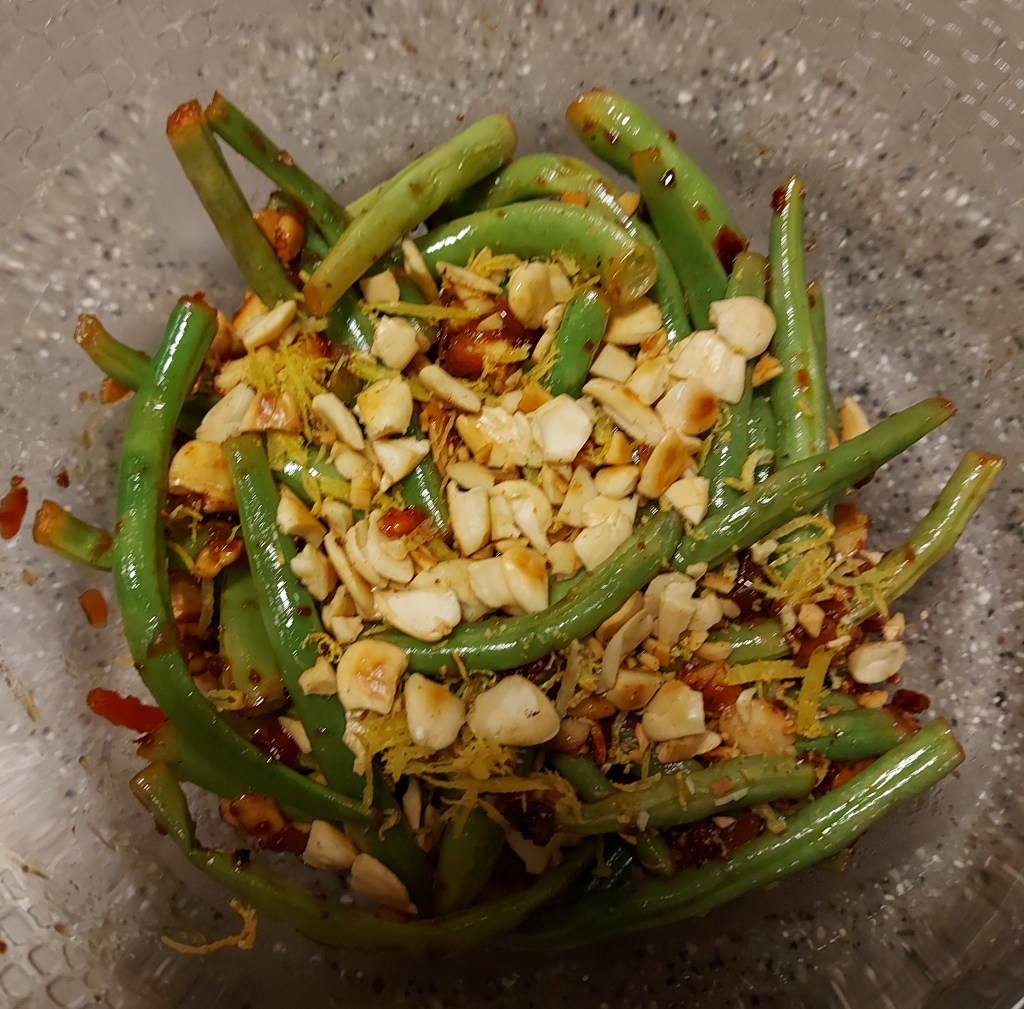
This time round on KCC, we’ve brought a recipe back from our heartland of the Datça peninsula that uses fresh almonds, lemons and olive oil to make an amandine dressing for green beans based on France’s classic almond sauce.

We had some great meze dishes on our travels around the peninsula including one made with fresh black-eyed beans – börülce in Turkish – and almonds at Ada Pansiyon on Ovabükü beach. Having failed to track down fresh black-eyed beans back in Almaty, we opted for green beans as they were available.

This dish can be served along other meze dishes – check out some of our other meze ideas here, or with bulgur, rice or pasta as more of a main course. The amandine dressing also works well with other vegetables such as broccoli and cauliflower.

Ingredients 

  • 500 g green beans
  • 100 g red onion
  • 100 g almonds
  • 50 ml olive oil
  • One lemon
  • One teaspoon chilli flakes

Method

  • Peel the almonds – put them in hot water for 30 seconds and then into cold water, the skins should now be easy to remove. Break the almonds into small chunks and toast in a frying pan over a low heat until they go a golden brown colour. Remove from the pan and set aside.
  • Top and tail the green beans and slice into 5 cm lengths. Heat the oil in the frying pan and then fry the chopped onion for five minutes and then add the beans and stir fry over a medium heat for five minutes or so – they should retain a little bit of crunch. While the beans are cooking, zest the lemon and then squeeze the juice.
  • Combine all the ingredients in a large bowl, including the lemon juice and chilli flakes and serve straight away or allow to cool if you prefer.

Green Bean Funchoza Supreme

17 June 2022

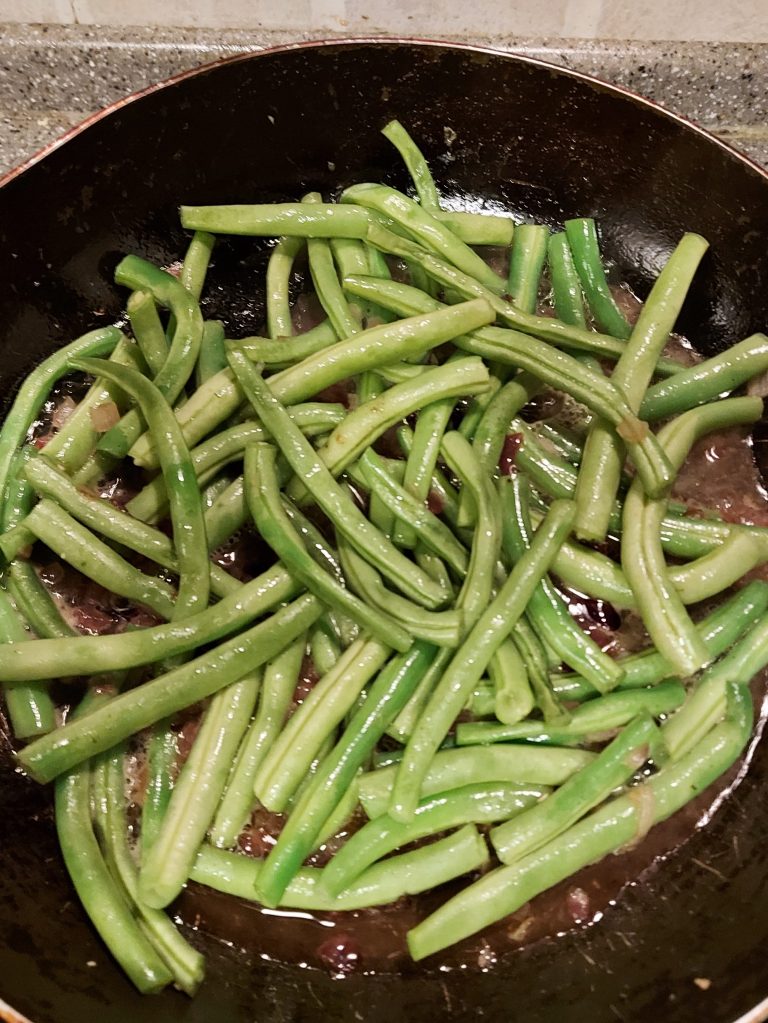
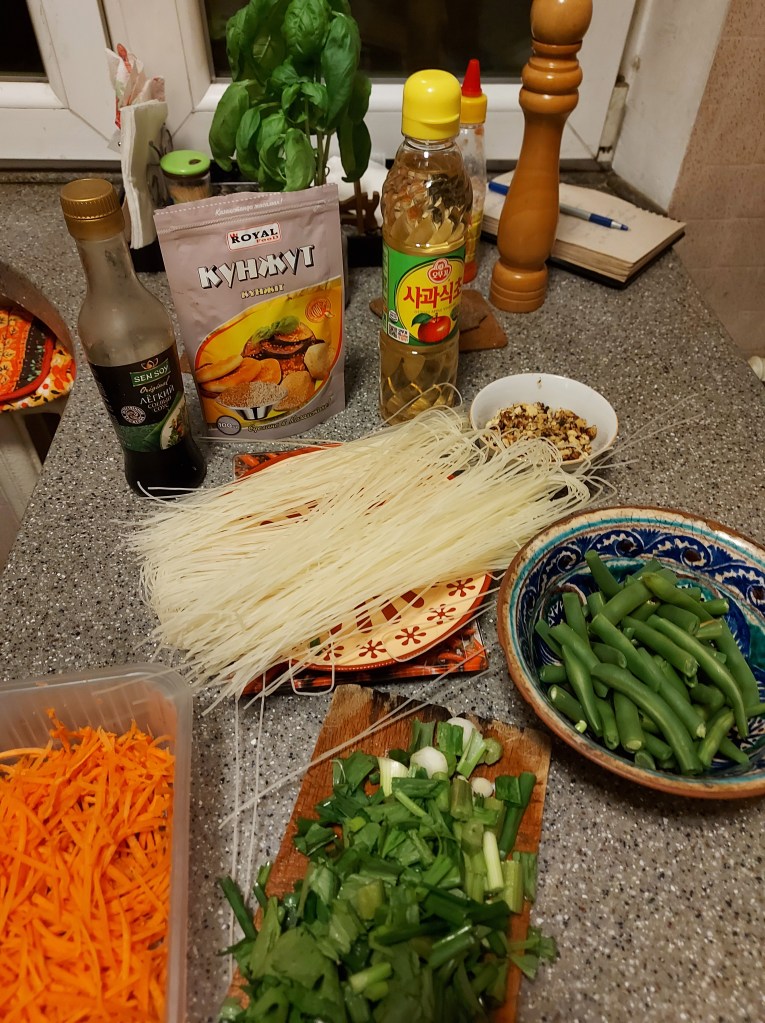
Continuing with our summery vibe, the year’s first green bean crops are appearing. Green beans are great for adding a bit of crunch to a stir fry or a salad, we’ve gone for the best of both worlds by mixing our green beans in with celery, carrots, spring onions and walnuts on a bed of funchoza (vermicelli) noodles, liberally dressed with soy sauce, apple vinegar and sesame seeds.

This recipe lends itself to the pictorial treatment – see below for the steps needed to assemble this summery salad. Also check out our reel on Instagram as well with an orangey red, green and gold inspired Black Uhuru backing track.

Putting on the Piyaz: Turkey’s Versatile White Bean Salad

2 August 2019

Knidos Cookery Club has just arrived back at its home base on the Datça Peninsula in Turkey. We’re going to soak up some more culinary inspiration from the place where the Mediterranean and Aegean Seas meet around the ancient Greek settlement of Knidos.

20190802_125534-e1564740306182.jpg
Piyaz – Turkish White Bean salad

To celebrate being back in Turkey, we’ve prepared a piyaz salad, one of the classic dishes of Turkish cooking, that combines small white beans with some readily available staples of the local kitchen; namely tomatoes, onions, green peppers, parsley and lemons.

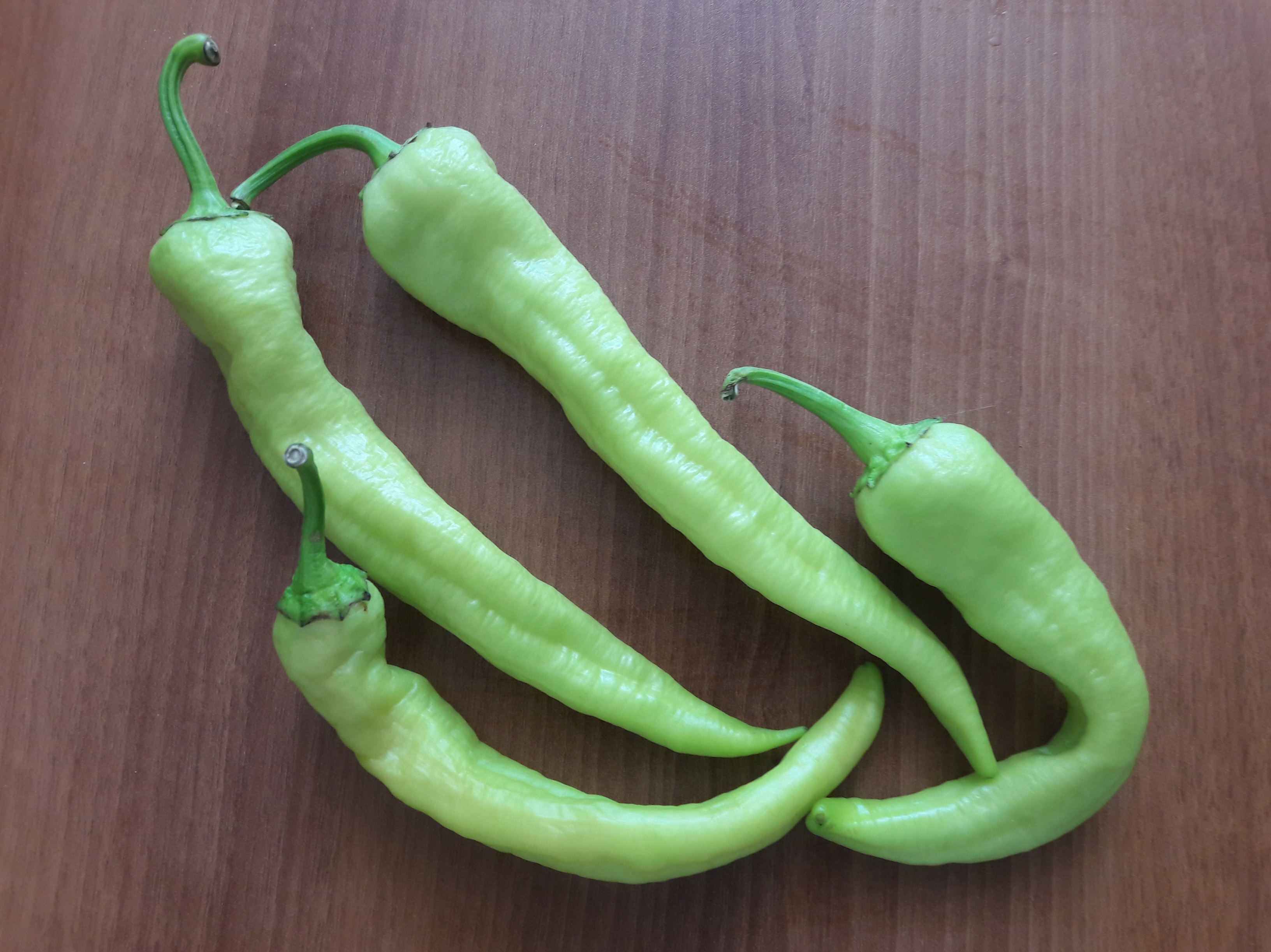
20190801_160820.jpgTurkey’s çarliston peppers aka banana peppers
The secret of this dish is in getting the beans just right – not too mushy but not too firm either. They need a good, long overnight soak and some slow cooking to achieve the required consistency.

The dressing used varies across Turkey from the basic lemon, olive oil and apple vinegar one favoured in Istanbul to the tahini-infused one from Antalya, paying tribute to the Arabian influence from the Middle East on the city’s cuisine. We have opted for the creamy, nutty taste of the latter.

Ingredients (makes 3-4 servings)

  • 200 g dried haricot beans or other small white beans soaked overnight
  • 1 medium-sized plum tomato
  • 1 long, green pepper (e.g. çarliston pepper – see photo above)
  • 1 small onion
  • 2 lemons
  • Small bunch of parsley
  • 50 ml olive oil
  • 50 ml apple vinegar
  • 25 ml tahini
  • 2 teaspoon dried thyme
  • 1 teaspoon red chilli flakes
  • Optional: Two boiled eggs or one avocado

Method

  • Cook the beans over a low heat until tender but not starting to go mushy. When cooked, drain off the cooking water, reserving 100 ml to make the dressing. Pour the vinegar and sprinkle the thyme over the beans and leave to cool.
  • After leaving for a few hours, add the vinegar the beans were soaking in to the reserved bean juice and then blend with the olive oil, tahini and the juice of one lemon to make a smooth sauce.
  • Finely dice the tomato, slice the pepper and onions into rings and chop the parsley finely. Add these to the beans.
  • Cover the salad and put it in the fridge for a few hours. Serve with wedges of the second lemon and sprinkle the red chilli flakes over the salad.
  • Just before serving, pour the dressing over the bean salad and season with black pepper and gently mix all the ingredients together with a wooden spoon.
  • You can garnish with quarters of boiled egg if you wish or, for a vegan twist, you can garnish the salad with slices of avocado.

Adjapsandali Adventures

20 July 2017

Knidos Cookery Club would like to say a big thank you to all its readers who voted for the site in the 2017 Saveur Food Blog awards!

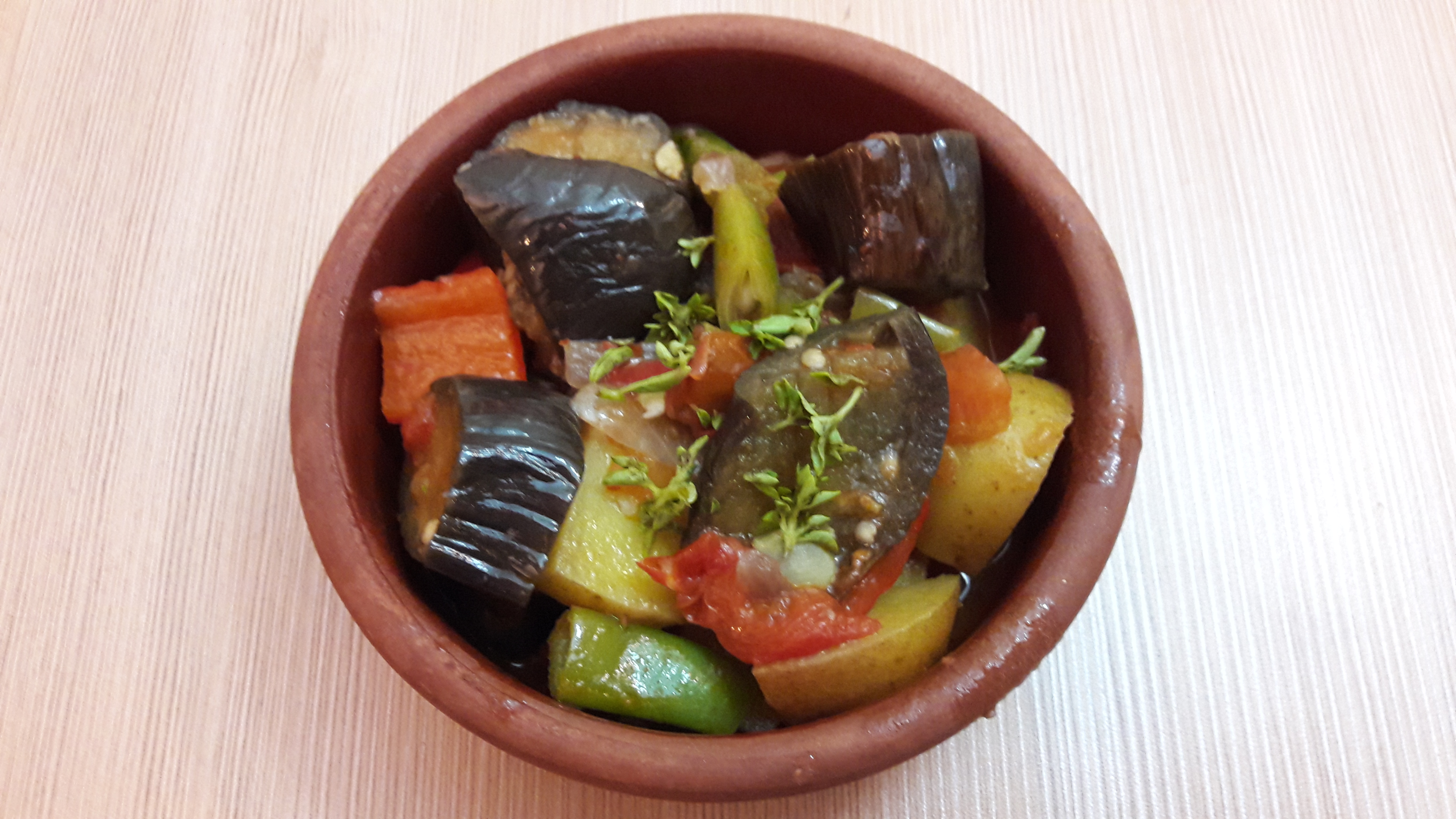
This time round we’re looking once again to Turkey’s north-eastern neighbour Georgia for some culinary inspiration. Adjapsandali, a popular  dish in this mountainous former Soviet country, is Georgia’s spicier take on ratatouille.

20170613_220905
Adjapsandali with green beans and potato

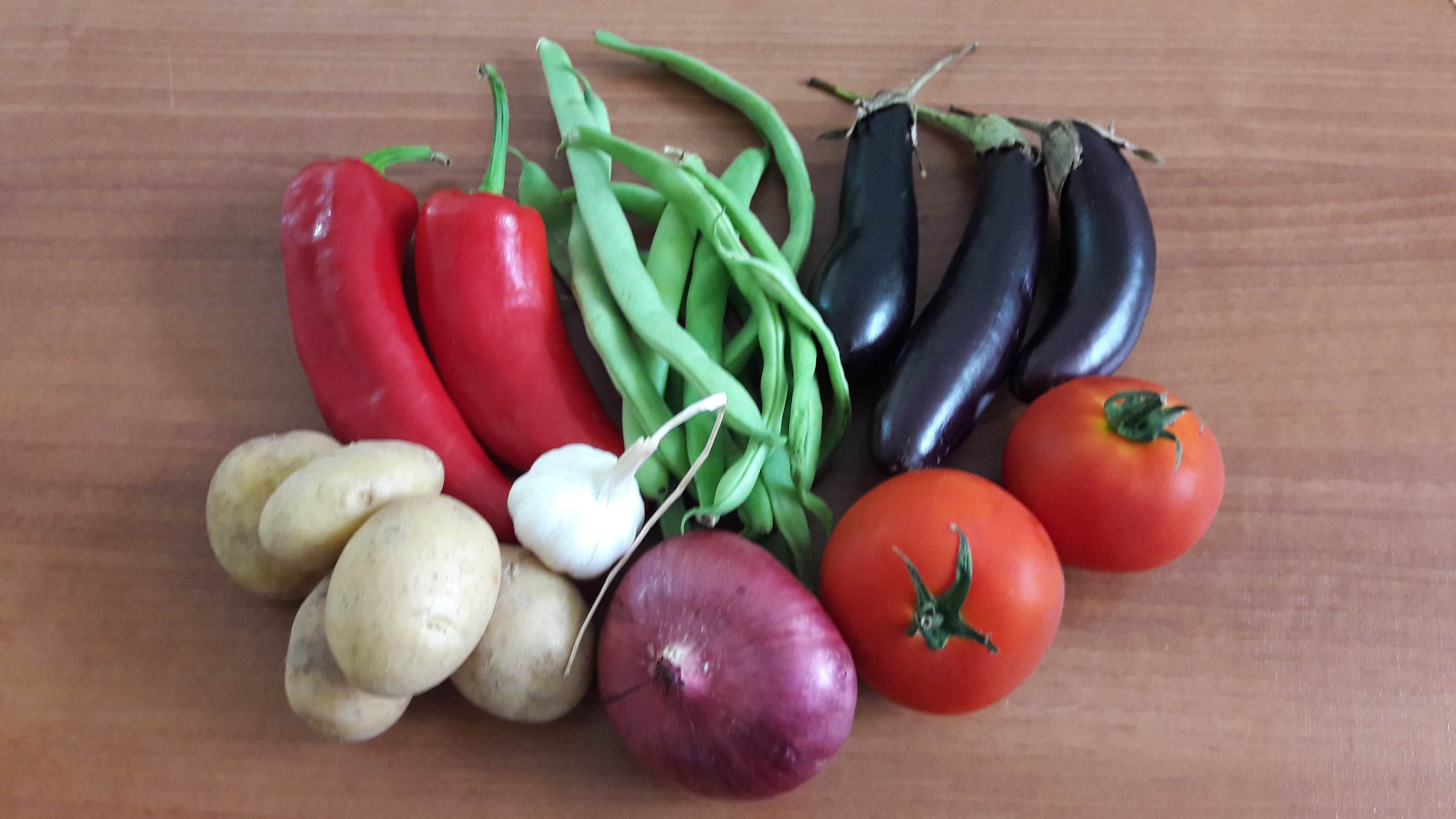
This summer stew relies on a holy trinity of aubergine, tomato and peppers with whatever else is in season thrown into the mix.  We’ve added some green beans and some potato to give the dish a heartier edge, but these can be omitted and other seasonal veggies like courgettes and carrots can be used – there’s no hard and fast rules, it’s up to you!

20170613_185152
The adjapsandali ingredients in the raw

It can be served up  with all the veggies collapsing into a sublime sauce-rich stew or the veggies can be left on the firmer side, as in our example. Served with rice, it makes a meal on its own, but it is also great with salads and other Georgian staples such as pkhali.

Ingredients (makes 4 generous servings)

300 g potatoes

300 g aubergines

250 g tomatoes

2 red peppers

200 g green beans

1 onion

2 garlic cloves

50 ml olive oil

1 teaspoon coriander

1 teaspoon red chili flakes

2 teaspoons fresh basil

3 bayleaves

Method

Roughly chop up all the vegetables and throw them into a large, heavy-based pan. Pour the olive oil over the vegetables, add the herbs and spices and cook over a medium heat for 10 minutes or so stirring occasionally. Turn the heat down to low and cook for another 20-30 minutes until all the vegetables are cooked and beginning to break up.

Sprinkle with fresh basil and serve with crusty bread or rice and a selection of salads such as tomato, cucumber and onion with a walnut dressing and starters such as pkhali.

The Mücver Variations

29 June 2017

This time round on Knidos Cookery Club we’re revisiting an old favourite – mücver, Turkey’s tasty courgette fritter.

20170531_132309
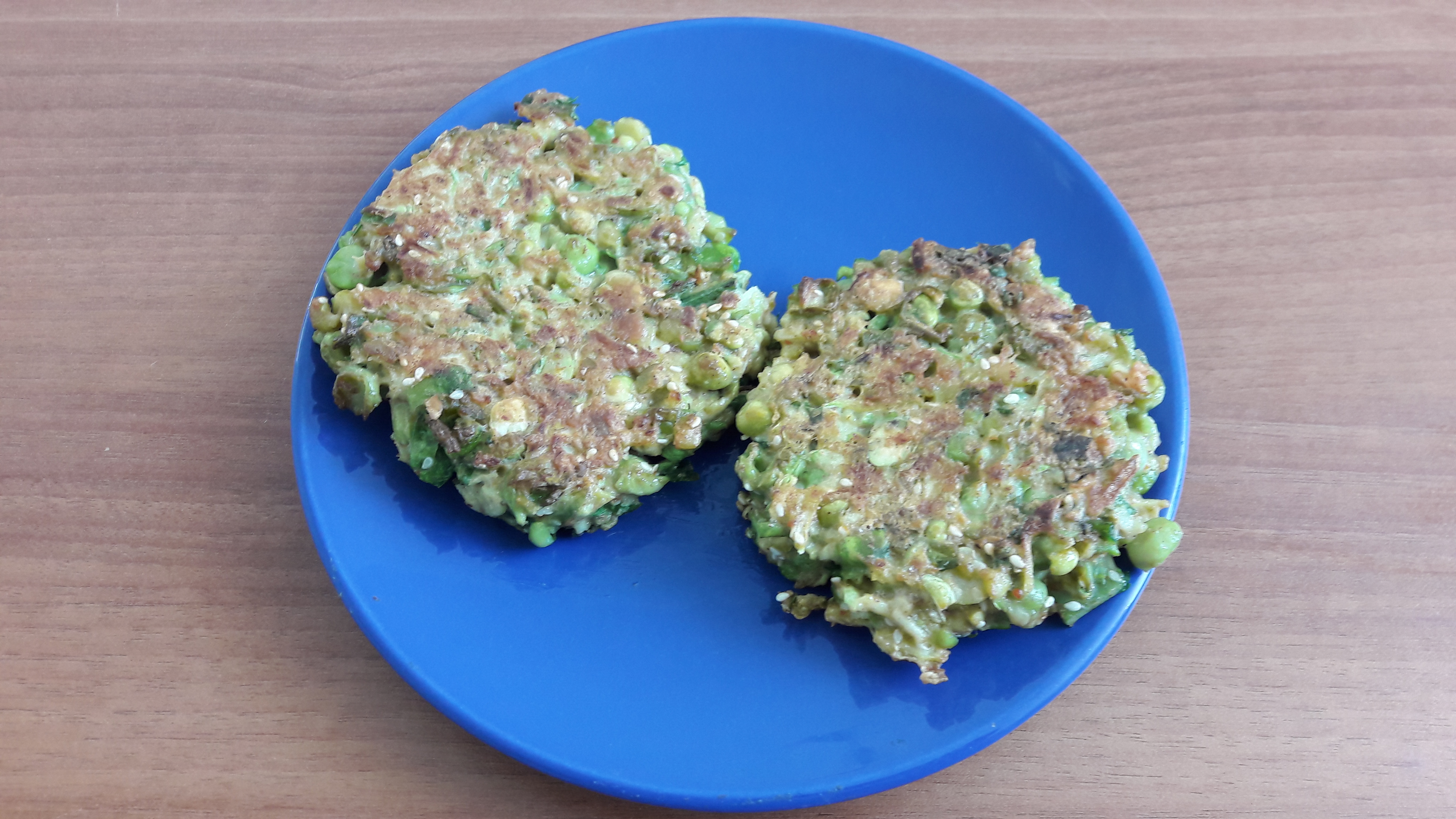
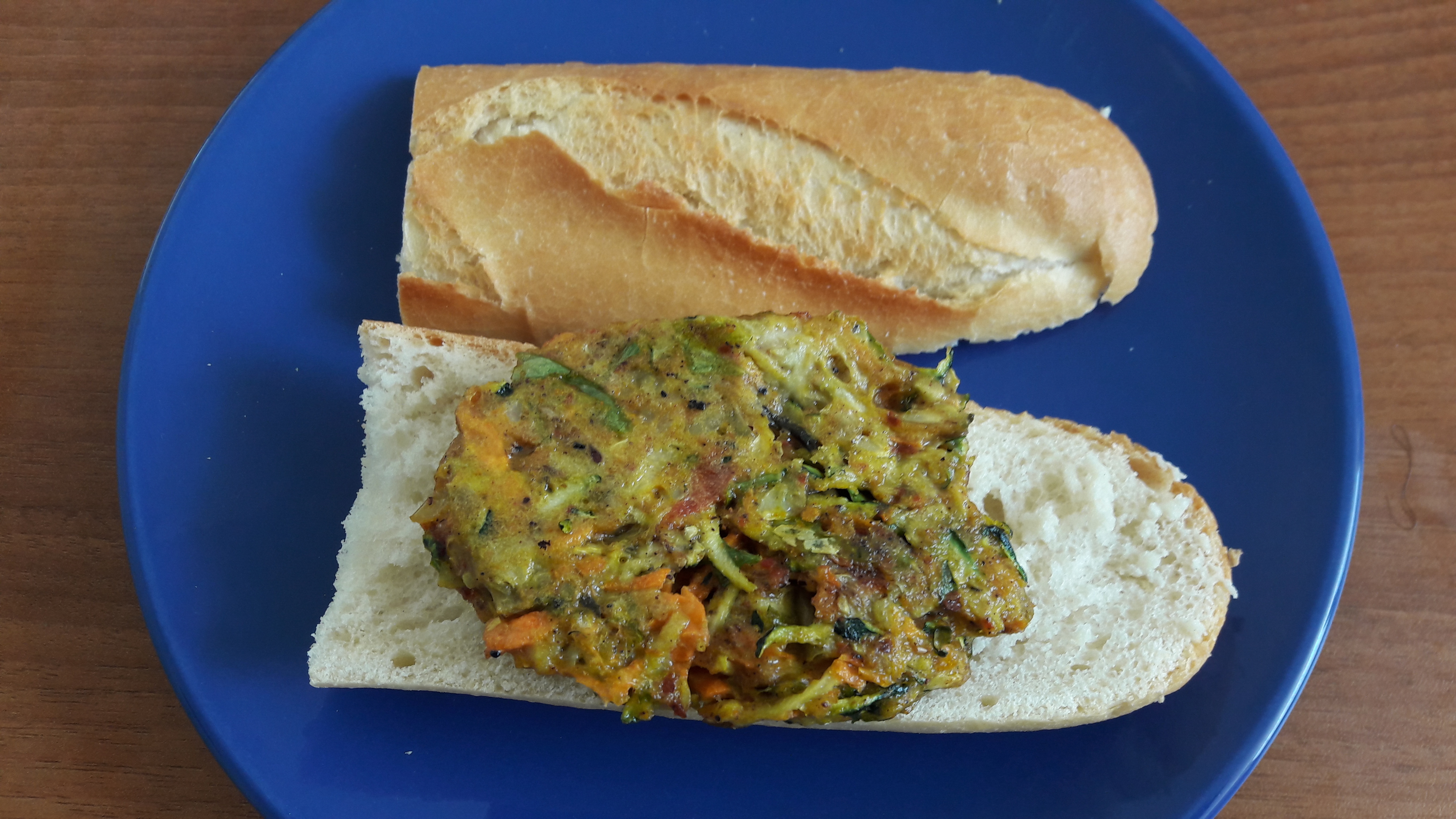
Could this be called a pea fritter?

The mücver usually served up in Turkish eateries are made from grated courgettes, so we’ve decided to spice up this old favourite by adding some other ingredients. Why not try them with fresh peas or grated carrot? Mushrooms work well, as do green beans.

20170609_133418
Putting some carrots in the mix

You can even add all these ingredients to the basic mix, chuck in a few chopped almonds or walnuts and, hey presto, you have a chunky veggie nut burger!

Serve the fritters in a pita, on a baguette, in a burger bun, rolled up in flat lavaş bread or just plain with a salad and condiments of your choice.

Ingredients (for around 8 fritters)

Two medium-sized courgettes

One small onion

One egg (or 15 ml of olive oil for vegan version)

Choose one or more from: 100 g chopped mushroom / grated carrot / peas (fresh if you have them, otherwise frozen or tinned) / sliced green beans (use 50 g of each if using more ingredients)

50 g of plain flour

Bunch of parsley, mint and/or dill (if you like that sort of thing)

Dried herbs to taste

A generous sprinkle of sesame seeds

An  optional dusting of chili flakes and grated cinnamon

Salt and pepper

A dash of olive oil for frying

Plain yogurt for serving

Method

Grate or chop up the courgettes and the extra of your choice (mushroom, carrot  peas, green beans or even all three) finely and mix with the chopped onion. Add fresh parsley, mint and/or dill, dried herbs, chili flakes, cinnamon, sesame seeds salt and pepper and blend well.

Make a well in the centre of the mix and break the egg into it. Sprinkle in the crumbled white cheese. Mix well. (Vegan readers should skip the egg and add 25 ml of olive oil instead)

Gradually add the plain flour and blend  until the mixture has quite a thick consistency – you don’t want it to be too wet and sloppy.

Drizzle some olive oil in a frying pan and put over a medium heat.

Place golf ball-sized scoops of the courgette mixture into the pan and flatten with a spatula or fork.

After a few minutes turn the fritter. Keep cooking until both sided are a golden-brown colour.

Serve hot with a dollop of yogurt on top.

Capering around Knidos

4 August 2016

This week in Knidos Cookery Club the focus is on capers,  the unripened flower buds of Capparis spinosa, a thorny evergreen shrub that is native to the Mediterranean region.

This wonder bud can be used to add taste to a variety of dishes from pastas and pizzas to salads and stews. They can be preserved in brine, sun-dried or salted to allow their complex lemony flavours to come to the fore.

thumb_IMG_1061_1024
Capers preserved in brine

A few weeks ago, Knidos Cookery Club was treated to a tasty lasagne topped with salted capers from the kitchen of Mr Alan in Tashkent, Uzbekistan. On returning to Knidos, our tastebuds awakened, the Saturday market and the local shops were scoured and a jar of capers in brine was tracked down.

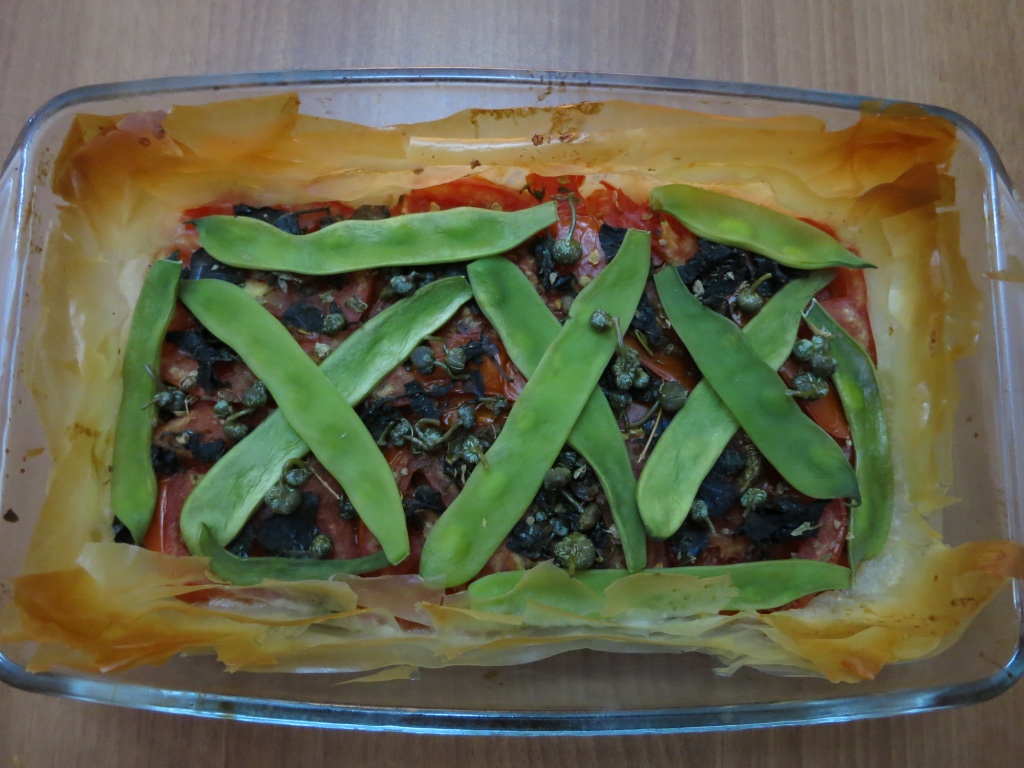
We spotted a Nigel Slater recipe in The Guardian recently for a tomato, olive and French bean tart – we decided to give it a go with some modifications, using some Datça capers in place of the olives. Here’s what the finished product should look like:

thumb_IMG_1082_1024


Ingredients (serves 3-4)

100 g filo pastry (yufka)

500 g tomatoes (any sort or a mix)

25 capers

20 green beans

25 ml olive oil infused with dried thyme

Seasoning: pinches of salt, black pepper, cumin, dried thyme

Method

Grease a large baking dish with some olive infused with dried thyme and place a sheet of filo pastry in the dish. Brush with more oil and put another layer of filo pastry – continue oiling and layering until pastry is used up.

Thinly slice the tomatoes and layer on the pastry base. Dot with capers and season with pinches of salt, black pepper, cumin and dried thyme.

Put the dish in a pre-heated oven (200 °C/gas mark 6) and bake for 30 minutes or until the pastry starts to go a deep golden colour. Keep an eye on it to make sure the pastry doesn’t burn.

While the tart is baking, cook the beans in boiling water for 4 minutes.

When the tart is cooked, arrange the beans in a criss-cross pattern on top of the tomato and caper base. Serve with a green salad – we had a  purslane, rocket, sorrel, cucumber and onion salad dressed with lemon, olive oil and pomegranate sauce.


Red Green Bean Feast

12 May 2016

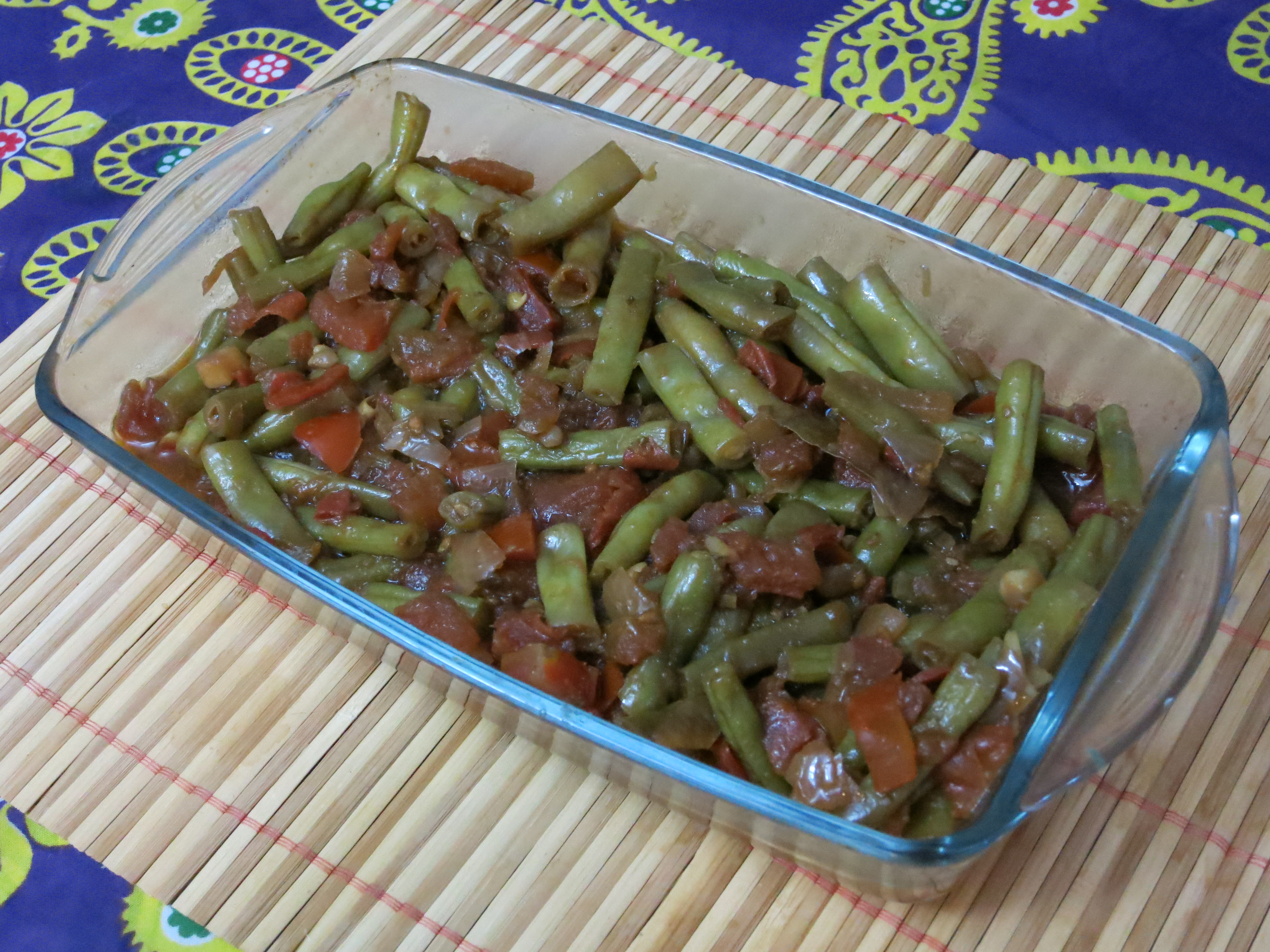
This week, Knidos Cookery Club is returning to the zeytinyağlı style of cooking to cook up a real bean feast with freshly-picked, tender green beans and juicy tomatoes.

Around this time of year, markets in Turkey are teeming with fresh beans in a variety of shapes and sizes. For a quick and easy meal, Knidos Cookery Club likes to chop the beans up and chuck them into a boiling pan of pasta and serve it all up with some generous dollops of pesto and shavings of parmesan.

For a traditional Turkish twist, combine your green beans with tomatoes to make zeytinyağlı taze fasulye and serve it as a side-dish alongside other seasonal, vegetable dishes. Serving this dish on top of a bowl of steamed rice makes for a more substantial main meal.

IMG_0500

Recipes for this bean feast often call for the addition of some sugar, but you can replace this with honey. For a richer sauce, I found some pekmez, molasses (usually made from crushed grapes), in the store cupboard and poured a bountiful slug of this into the mix, giving the onions in the finished dish a deep burgundy hue.

Another use for pekmez is to mix it with tahini, sesame seed paste, and this fabulous combination frequently features in a full-on Turkish breakfast; more on this in a later edition of Knidos Cookery Club.

Ingredients (Serves 3-4)

500 g fresh green beans

One medium-sized onion

One or two garlic cloves

Four medium-sized tomatoes

50 ml Olive oil

One teaspoon of honey or pekmez

 Juice of one lemon

Pinches of salt, pepper and cumin

One bay leaf

250 ml warm water

Method

 Heat the oil in a heavy-based pan and add the finely chopped onion and garlic when the oil’s sizzling.

When the onions are looking translucent, add the green beans,  topped and tailed and sliced into 3-5 cm lengths, the chopped tomatoes and the bay leaf, salt, pepper and cumin and mix well.

Pour in the lemon juice, water and a dollop of pekmez or honey. Bring to the boil and then put the lid on the pan and cook over a low heat for 30 minutes or so until the beans are tender.

Serve with other vegetable dishes, bread and/or steamed rice.