Bitter Melon Menemen

7 September 2017

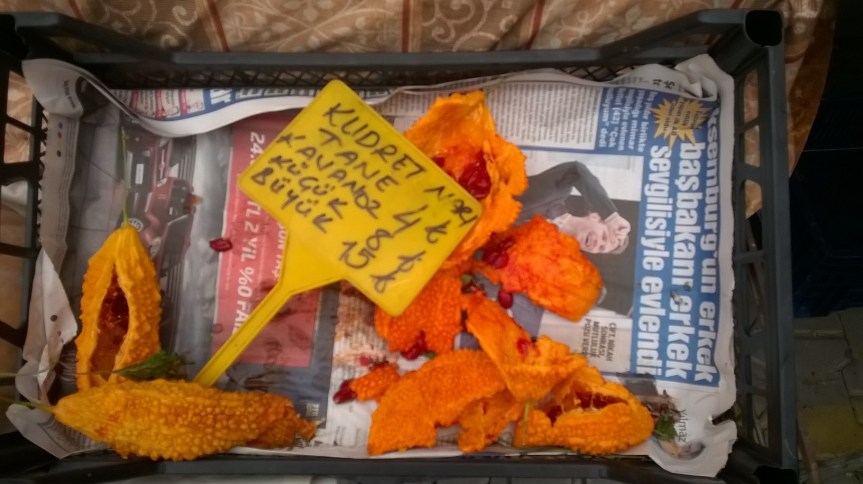
While shopping at Datça market recently, this spectacular-looking, knobbly, bright orange fruit grabbed our attention.

20170828_145746
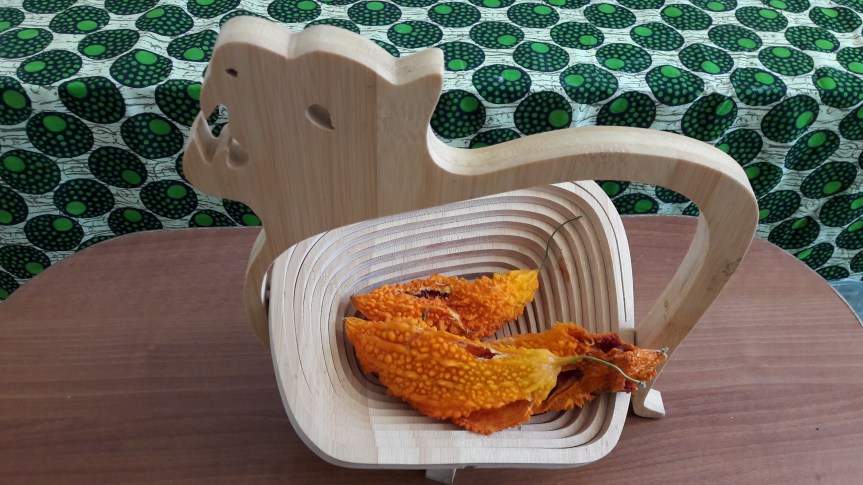
What’s in the dragon today? Bitter melon, of course

Subsequent googling revealed it to be a bitter melon, or bitter gourd, kudret narı in Turkish. Despute being popular in pan-Asian cooking, we couldn’t find too many Turkish recipes using bitter melon so we decided to mix it in with menemen, that breakfast fave in Turkey.

WP_20170826_12_29_42_Pro

You’ll probably be able to track down bitter melons in your local Asian grocer’s. When picked they are yellow-green, resembling a bumpy cucumber, and when ripe they turn orange. Cooking helps remove some of the bitter taste of this curious-looking member of the squash family. Inside are bright red coloured seeds that can be removed and eaten.

20170829_134255
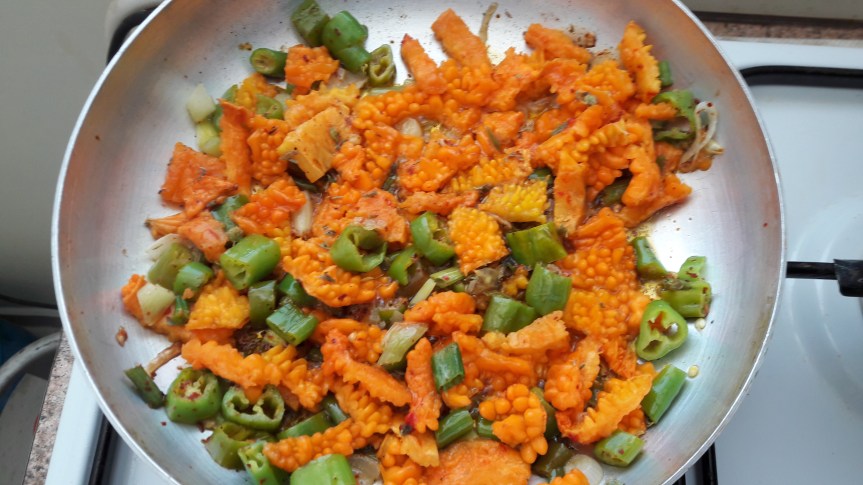
Step one: Fry the bitter melon
20170829_134858
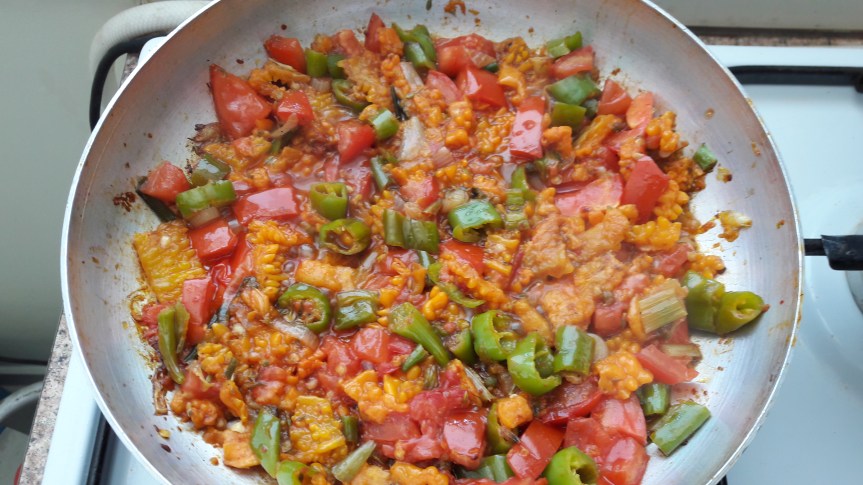
Step two: Add the tomato
20170829_135537
Step three: add the eggs and scramble

Ingredients (serves 2-4)

100 g bitter melon

60 g green peppers

2 spring onions

1 medium-sized tomato

1 teaspoon each of dried thyme, oregano, black pepper and red chilli flakes

4 eggs

A dash of soy sauce

25 ml olive oil

Method

Heat the olive oil in a frying pan and when hot add the chopped spring onion. Cook for two minutes over a medium heat and then add the peppers and seeded bitter melon, cut into 1-2 mm strips.

Cook for another two minutes and then add the chopped tomato, herbs and spices and a dash of soy sauce. Fry for 5 minutes and then reduce the heat and break the eggs into the mix. Keep stirring until you achieve the desired consistency of scrambled egg to your taste.

Serve with lashing of  crusty bread.

Amorgos, mon Amour!


31 August 2017

Knidos Cookery Club is just back from a fact-finding mission to the Greek Islands and is bursting with new recipe ideas. Our main port of call was the island of Amorgos, the most easterly of the Cyclades group – a six-hour ferry trip from Piraeus, near Athens.

Our visit coincided with the Psimeni Raki festival, held annually on 26 July, a wild night of drinking and dancing (click here for video) fuelled by a local grappa-like spirit tempered with sugar, honey and herbs from the island to produce a drink that is around 20% alcohol by volume.

IMG_3444
Dancing the night away in Amorgos

The drink is based on Rakomelo, which is served by monks to people visiting the amazing Panagia Hozoviotissa Monastery – a spectacular white building carved high onto the side of an imposing cliff face.

20170727_002930
Working hard to keep the Psimeni raki flowing at the festival in Amorgos

For a small island Amorgos produces a significant quantity of alcoholic beverages – check out the site of this local producer, Amorgion, to see what’s on offer. As well as Psimeni Raki and Rakomelo, they also make an interesting local version of tequila, known as Mekila, from prickly pears.

Another interesting place to visit on the island is the Amorgos Botanical Park, a great project that is reviving a traditional garden that had been left derelict for decades. Here’s a link to their Instagram page.

A group of volunteers are aiming to bring the garden, complete with its own cistern fed by a spring, back to life by cultivating herbs endemic to Amorgos. The project is funded by grants and by the proceeds from the sale of herbs such as their intensely-flavoured oregano, teas such as rockrose, and tinctures made from produce grown on the island and dried and processed by the volunteers.

20170819_212721
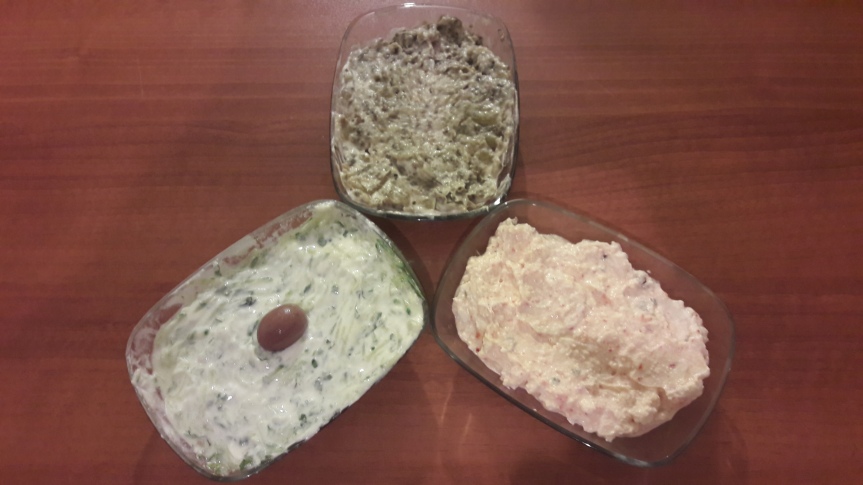
Knidos Cookery Club’s Greek trio with (clockwise from the top) smoky aubergine dip, Psimeni Raki and feta dip and tsatsiki, yogurt and cucumber.

One of the delicacies eaten during the Psimeni Raki festival to help soak up the booze are anevates, cheese pies baked with the aforementioned beverage. Unfortunately, Knidos Cookery Club couldn’t track down any of these pies but the use of Psimeni Raki has inspired us to make a boozy take on Greece’s spicy tirokefteri cheese dip.

Ingredients (serves 4-6 as part of a dip platter)

100 g feta cheese

100 ml Greek-style yogurt

25 ml Psimeni Raki

One teaspoon dried oregano

One teaspoon red chili flakes

Method

Crumble the feta with a fork, add the yogurt, psimeni raki (use sherry or vermouth if you don’t have access to psimeni raki!)and herbs and spices. Mix all the ingredients together thoroughly with the fork and chill for a couple of hours before serving with other dips such as tsatsiki (yogurt, cucumber and garlic) and a dip of roasted aubergines served with yogurt.

Figito Fiesta

17 August 2017

The year’s first succulent figs, in delicate green shades or striking mauve hues, are making their annual debut in Datça and to mark this moment we’ve come up with the figito, a cocktail that combines new season figs with white rum, mint and  lemon  – our spin on the classic mojito.

20170816_201256
Who’s for a figito?

One of the pleasures of walking round town at this time of year is stopping off to pick a juicy fig or two from the trees that abound in this area. Here’s a tree near the Knidos Cookery Club HQ with some prime fruits drying in the August heat.

20170817_130245
Figs drying in a garden in Datça, Turkey 

If you’ve got a glut of figs, then why not try this old favourite from last summer: Lord Venal’s Fiendishly Figgish Chutney, and enjoy a figito or two while you’re making it! Cheers, or Şerefe as they say in Turkey!

Ingredients (makes one litre)

6 ripe, fresh figs

4 sprigs of mint

2 lemons

100 ml White Rum (Bacardi or Havana Club)

600 ml soda water

200 ml Schweppes Bitter Lemon

Method

Peel and dice four of the figs and muddle with the mint and the juice from the lemons with a wooden spoon in a glass serving jug. Add the rum and mix well and then top up with bitter lemon and soda water. Serve over ice with a slice of lemon, a mint sprig and half a fig.


Relish the Radish

3 August 2017

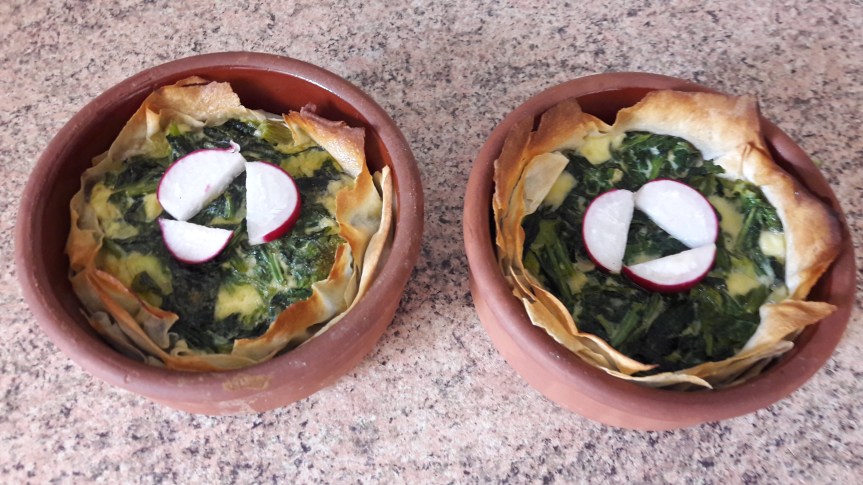
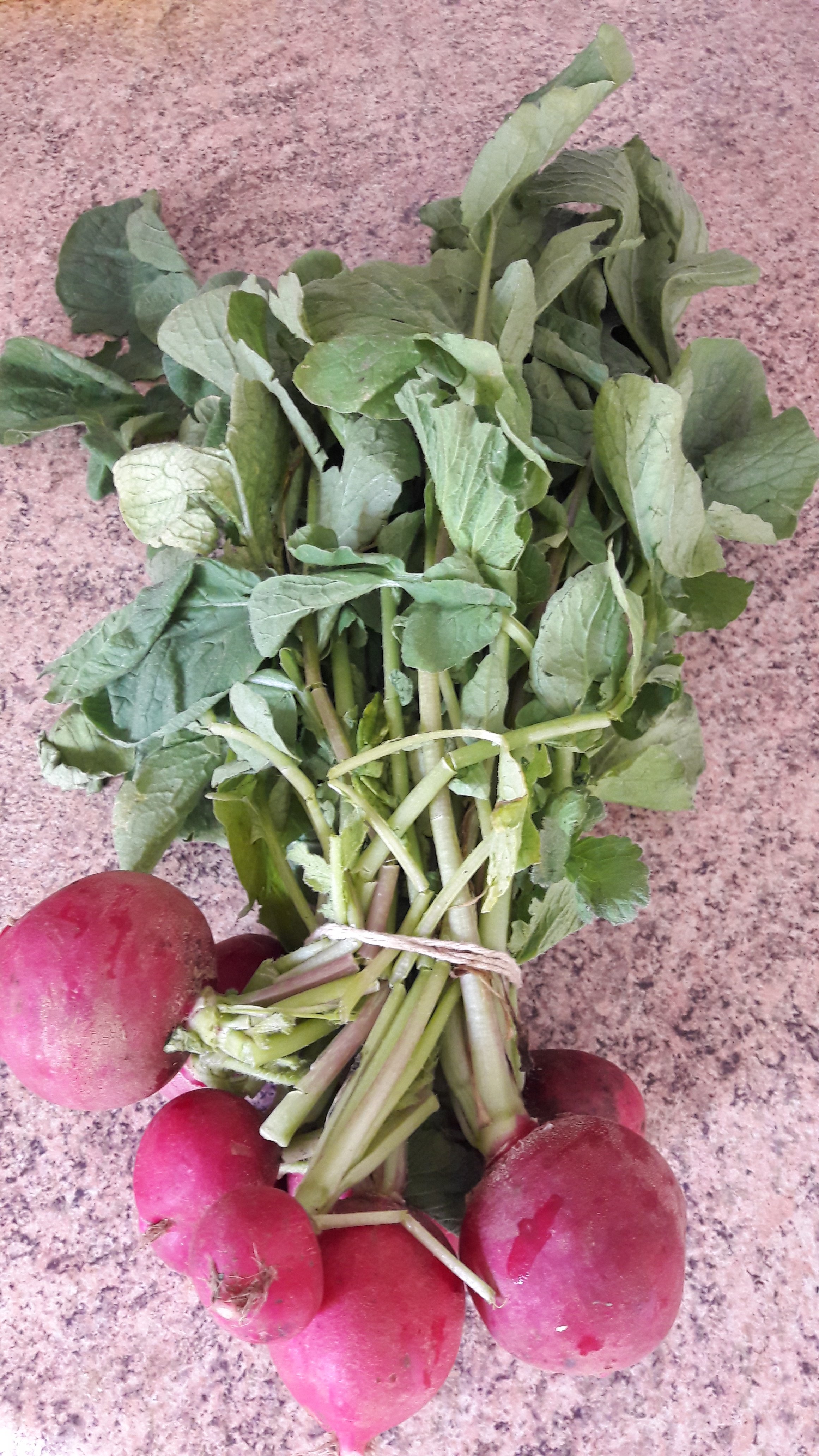
In keeping with the ‘Waste not, want not‘ mantra, this week we’ll be using some radish greens in a mini quiche.

20170624_144252

Often discarded, these peppery leaves taste great when fried up with some spring onion, garlic and a dash of soy sauce.

Ingredients ( makes four mini-quiches)

150 g radish leaves

1 radish (for decoration)

2 spring onions

1 garlic clove

Dash of soy sauce

60 g crumbly white cheese

2 eggs

25 ml olive oil

150 g filo pastry or shortcrust pastry

Method

Saute the chopped onions and garlic in a little olive oil in a heavy-based pan for 2-3 minutes, add a dash of soy sauce and then add the radish leaves and cook for another 2-3 minutes until the leaves start to wilt.

Allow the mix to cool for ten minutes then mix in the eggs and cheese. Prepare cases in small baking dishes with the filo pastry, brushing each filo leaf with olive oil.

Pour the mix into each pastry case to half way and then bake for 20 minutes in an oven pre-heated to 180 c.

Garnish with radish slices and serve with a green salad laced with more sliced radish!

Adjapsandali Adventures

20 July 2017

Knidos Cookery Club would like to say a big thank you to all its readers who voted for the site in the 2017 Saveur Food Blog awards!

This time round we’re looking once again to Turkey’s north-eastern neighbour Georgia for some culinary inspiration. Adjapsandali, a popular  dish in this mountainous former Soviet country, is Georgia’s spicier take on ratatouille.

20170613_220905
Adjapsandali with green beans and potato

This summer stew relies on a holy trinity of aubergine, tomato and peppers with whatever else is in season thrown into the mix.  We’ve added some green beans and some potato to give the dish a heartier edge, but these can be omitted and other seasonal veggies like courgettes and carrots can be used – there’s no hard and fast rules, it’s up to you!

20170613_185152
The adjapsandali ingredients in the raw

It can be served up  with all the veggies collapsing into a sublime sauce-rich stew or the veggies can be left on the firmer side, as in our example. Served with rice, it makes a meal on its own, but it is also great with salads and other Georgian staples such as pkhali.

Ingredients (makes 4 generous servings)

300 g potatoes

300 g aubergines

250 g tomatoes

2 red peppers

200 g green beans

1 onion

2 garlic cloves

50 ml olive oil

1 teaspoon coriander

1 teaspoon red chili flakes

2 teaspoons fresh basil

3 bayleaves

Method

Roughly chop up all the vegetables and throw them into a large, heavy-based pan. Pour the olive oil over the vegetables, add the herbs and spices and cook over a medium heat for 10 minutes or so stirring occasionally. Turn the heat down to low and cook for another 20-30 minutes until all the vegetables are cooked and beginning to break up.

Sprinkle with fresh basil and serve with crusty bread or rice and a selection of salads such as tomato, cucumber and onion with a walnut dressing and starters such as pkhali.

Haydari Stuffed Potato Balls

6 July 2017

Welcome to Knidos Cookery Club’s 50th post! To mark this momentous milestone, we’ve recreated a dish we discovered while visiting Ovabükü, a quiet beach on the Knidos peninsula – stuffed potato balls.

20170627_205032
Spicy potato balls stuffed with haydari

If you’ve enjoyed reading Knidos Cookery Club as much as we’ve enjoyed producing it, then could we ask a favour – please nominate us in the Saveur Blog Awards for 2017. This is a special award for food blogs and if you could spare a couple of minutes to nominate then enter our URL – https://knidoscookeryclub.wordpress.com – and choose the Best New Voice category. Your support would be much appreciated – thanks in advance!

20170627_132117
Haydari with walnuts

For Knidos Cookery Club one of the most enjoyable things about the local food scene is finding a new restaurant and checking out the dishes in the vitrine. There are always some surprise dishes lurking in the glass display cabinets that are made from fresh, seasonal ingredients.

In Ovabükü one of the dishes on the mixed meze plate was the aforementioned potato ball stuffed with cream cheese. We’ve put some delicious haydari, made from mint and strained yogurt, in our version, and spiced up the potato balls with some chilli flakes. Strained yogurt is thicker than normal yogurt as the liquid whey and lactose has been strained off – it’s also known as Greek style yogurt in the UK.

Haydari

  • 200 ml strained yogurt
  • 20 g crumbly white cheese
  • 1 garlic clove
  • 3 teaspoons dried mint
  • 1 teaspoon red chili flakes
  • 2 walnuts

Mix the yogurt, cheese, garlic and mint together and leave in the fridge for a couple of hours. Decorate the haydari with walnut pieces and dust with chilli flakes before serving.

Spicy Potato Balls

  • 500 g baked or boiled potatoes
  • Handful of fresh parsley
  • 1 teaspoon red chili flakes
  • Black pepper
  • 50 ml unstrained yogurt

Mash the potato and mix in the other ingredients. Form into round, golf ball-sized shapes, make an indentation in the top with a teaspoon and fill the gap with haydari and top with a walnut half.

The Mücver Variations

29 June 2017

This time round on Knidos Cookery Club we’re revisiting an old favourite – mücver, Turkey’s tasty courgette fritter.

20170531_132309
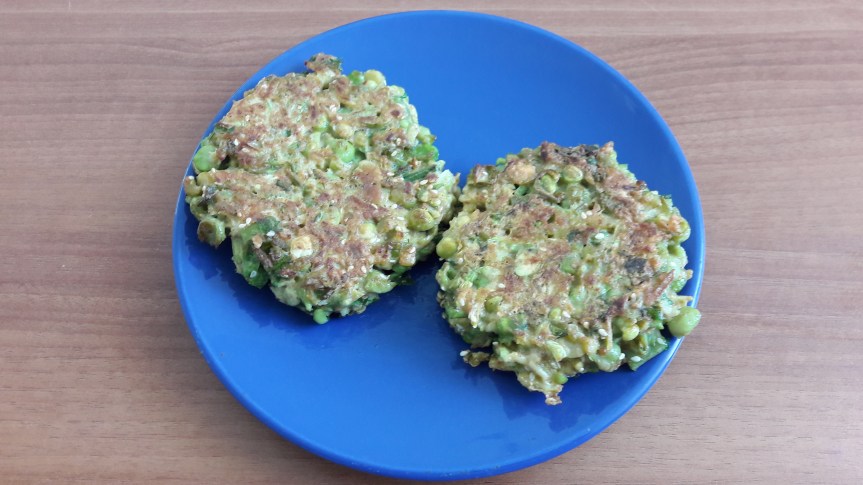
Could this be called a pea fritter?

The mücver usually served up in Turkish eateries are made from grated courgettes, so we’ve decided to spice up this old favourite by adding some other ingredients. Why not try them with fresh peas or grated carrot? Mushrooms work well, as do green beans.

20170609_133418
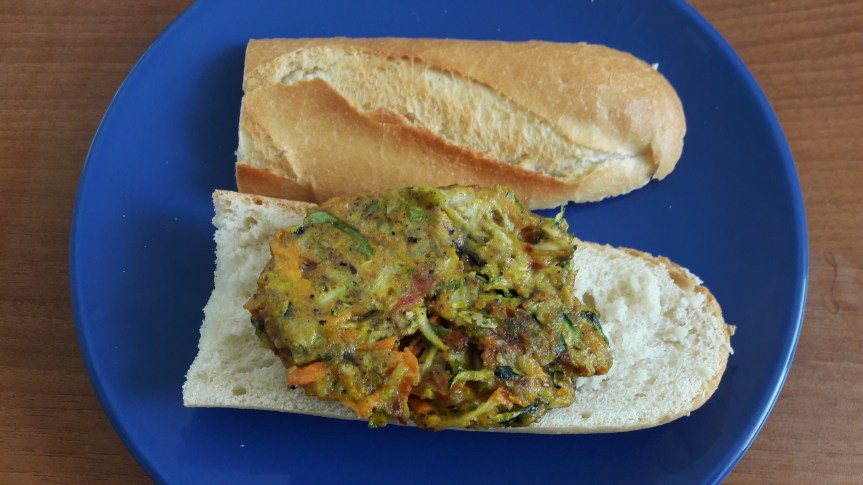
Putting some carrots in the mix

You can even add all these ingredients to the basic mix, chuck in a few chopped almonds or walnuts and, hey presto, you have a chunky veggie nut burger!

Serve the fritters in a pita, on a baguette, in a burger bun, rolled up in flat lavaş bread or just plain with a salad and condiments of your choice.

Ingredients (for around 8 fritters)

Two medium-sized courgettes

One small onion

One egg (or 15 ml of olive oil for vegan version)

Choose one or more from: 100 g chopped mushroom / grated carrot / peas (fresh if you have them, otherwise frozen or tinned) / sliced green beans (use 50 g of each if using more ingredients)

50 g of plain flour

Bunch of parsley, mint and/or dill (if you like that sort of thing)

Dried herbs to taste

A generous sprinkle of sesame seeds

An  optional dusting of chili flakes and grated cinnamon

Salt and pepper

A dash of olive oil for frying

Plain yogurt for serving

Method

Grate or chop up the courgettes and the extra of your choice (mushroom, carrot  peas, green beans or even all three) finely and mix with the chopped onion. Add fresh parsley, mint and/or dill, dried herbs, chili flakes, cinnamon, sesame seeds salt and pepper and blend well.

Make a well in the centre of the mix and break the egg into it. Sprinkle in the crumbled white cheese. Mix well. (Vegan readers should skip the egg and add 25 ml of olive oil instead)

Gradually add the plain flour and blend  until the mixture has quite a thick consistency – you don’t want it to be too wet and sloppy.

Drizzle some olive oil in a frying pan and put over a medium heat.

Place golf ball-sized scoops of the courgette mixture into the pan and flatten with a spatula or fork.

After a few minutes turn the fritter. Keep cooking until both sided are a golden-brown colour.

Serve hot with a dollop of yogurt on top.

Barbunya Bean Therapy

22 June 2017

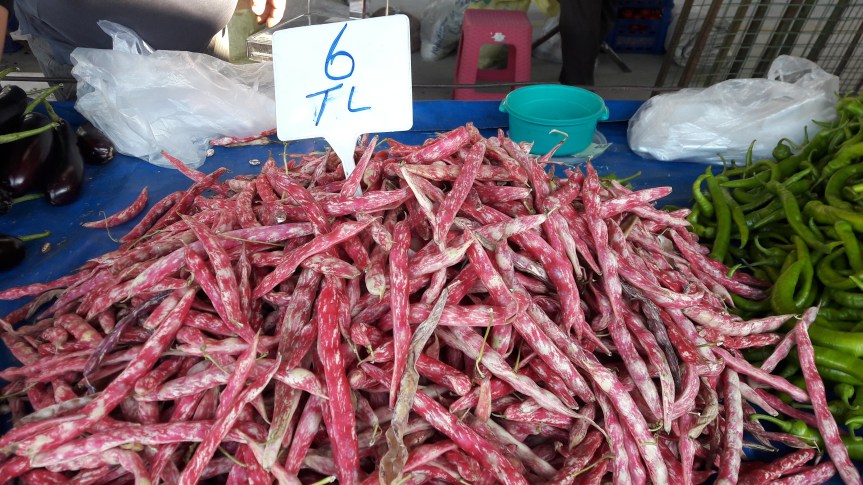
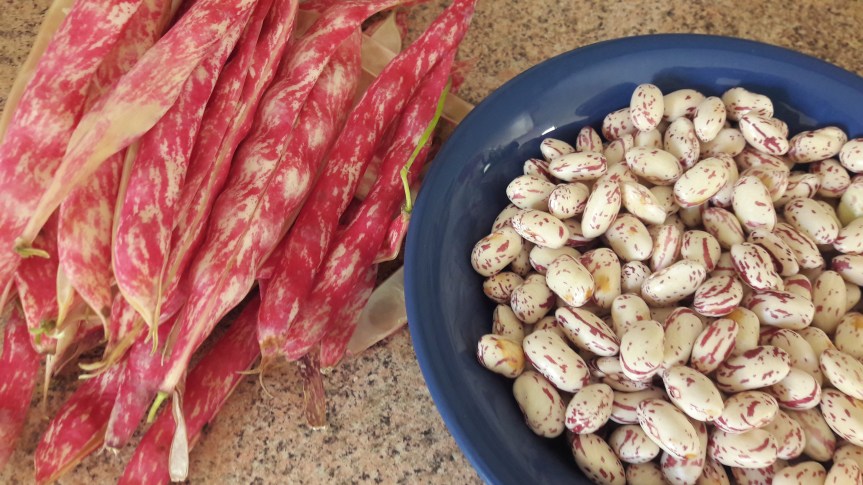
Last week in Datça market piles of psychedelic pink-podded barbunya beans arrayed against their green-podded cousins caught our eye. In Turkey these distinctive beans, also known as borlotti or cranberry beans, are made into a starter called barbunya pilaki, which is always high on our list when ordering a spread of mezeler.

20170616_183758
Psychedelic pink barbunya beans piled high in Datça market

There’s something very therapeutic about podding these beans, like a beanish mindfulness moment!  Our kilo of beans in their pods yielded around 600 g of pink-marbled white beans.

20170616_194034
Bean therapy!

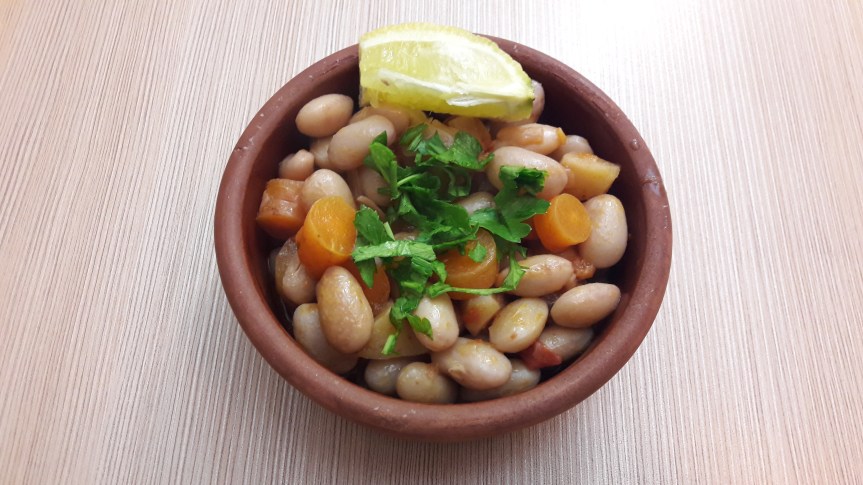
When cooked and allowed to cool, the pink colour leaches out and the beans take on a delicate brown hue. They’re delicious stewed with olive oil, onion, carrot, potato and lemon juice, served with a sprinkling of fresh parsley and a chunk of lemon. Some recipes omit the potato, but we think this gives the dish more oomph and means you don’t need to cook up any additional carbs.

20170616_220421
Barbunya pilaki all ready to go

They can be served hot as a less sugary take on baked beans, or served cold as part of the aforementioned selection of starters – Knidos Cookery Club recommends its carrot and walnut tarator, creamy almond and courgette dip, peppery muhammara and stuffed courgette flowers for a scrumptious feast of Turkish mezeler.

Ingredients (for 4-6 servings)

600 g shelled barbunya beans (or dried borlotti beans soaked overnight)

1 onion (around 100 g)

100 g carrot

100 g potato

100 g tomato

1 garlic clove

1 lemon

1 teaspoon honey

1 teaspoon red chili flakes

Fresh parsley to garnish

50 g olive oil

400 ml hot water

Method

Heat the olive oil into a heavy-based pan, chop the onion and garlic finely and fry over a medium heat for five minutes or so. Add the chopped tomatoes, lower the heat and cook for another five minutes.

Dice the carrot and potato into small cubes and then add these along with the beans, the juice of half a lemon, the honey, chili flakes and hot water to the pan and bring to a boil. Simmer for 30-45 minutes, stirring occasionally, until the beans are cooked but not going mushy.

Serve hot or allow to cool and garnish with fresh parsley and lemon slices.

Fill Yer Lentil Welly Boots!

15 June 2017

Next week should see the start of negotiations on the UK’s future relationship with the European Union as talks are scheduled to get underway on 19 June to hammer out the ultimate shape of Brexit.

In the lead up to this momentous day, this weekend also marks another seminal event in Britain’s troubled relationship with continental Europe – 18 June is the anniversary of the Battle of Waterloo, a battle which saw forces under the command of the Duke of Wellington deliver a fatal blow to Napoleon Bonaparte’s ambitions in 1815.

20170610_214951
KCC’s Lentil Wellington ready for action

Only time will tell if the Maybot, in cahoots with the Rev Ian Paisely’s successors in the DUP, can produce a victory as decisive as Wellington’s – one thing is clear, some major sustenance is called for and what better than a hearty Lentil Wellington, our veggie take on Beef Wellington, a dish supposedly named after the duke.

Yes, besides giving his name to the wellington boot, the duke is also linked with this dish, which has a rich filling encased in pastry. Leah Hyslop suggests that the name was a patriotic makeover for a popular French dish:

The dish’s clear resemblance to that French specialty, filet de bœuf en croûte, could suggest the name was a timely patriotic rebranding of a trendy continental dish.

In our own era, food-patriotism was to the fore in 2003 when France refused to go along with the invasion of Saddam Hussein’s Iraq, causing some in the USA to call for ‘french fries’ to be rebranded ‘freedom fries’.

20170609_205035
KCC’s Lentil Wellington ready for final assembly before baking

For a Turkish twist, we’ve used layers of yufka, the local version of filo pastry, to cover our rich lentil and vegetable sauce. Make sure you leave on overlap of pastry of about 8-10 cm around the edges of your dish in order to create a top to encase the filling.

Ingredients (serves 4)

250 g aubergines

250 g courgettes

250 g tomatoes

75 g black lentils

2 spring onions

1 garlic clove

1 bayleaf

1 teaspoon cinnamon, cumin, red chili flakes and coriander seeds

Pinches of black pepper and salt

250 ml vegetable stock

100 ml red wine

100 ml olive oil

Filo pastry (around 300 g)

Method

Wash the lentils until the water runs clear, and then cook in a heavy-based pan with the vegetable stock and bayleaf. Bring to the boil and then simmer over a low heat for 20 minutes or so until the liquid is absorbed.

While the lentils are cooking, prepare the vegetables: finely chop the spring onions and garlic, cut the aubergine and courgette into one cm thick slices and then cut into four. Place the vegetables into a heavy-based pan, add the herbs and spices and pour 50 ml olive oil over the veg and then cook over a medium heat for ten minutes, stirring occasionally.

Chop the tomatoes and add to the vegetables and cook for another five minutes, continue stirring every now and then. Now add the cooked lentils and the red wine and cook for another ten minutes or so until the liquid is absorbed.

While this is cooking, prepare the pie case. Grease a large pie dish with olive oil and layer leaves of filo pastry, brushing each layer with olive oil. Make sure you leave a pastry overlap of around 8-10 cm around the edges of the pie dish.

Pour the filling into the pie case and fold over the overlapping filo pastry, brushing with more olive oil to help seal the top of the case. Bake in an oven pre-heated to 180 c /gas mark 5 for 30 minutes or so until the top of the pie begins to turn a golden-brown colour.

Allow to cool for ten minutes and then serve slices of the pie with a crisp green salad and roasted new potatoes.


Moussaka Mania

8 June 2017

As the UK continues its downward plunge to become the latest contender for the mantle of Europe’s most basket case economy, we’re turning our attention to the current holder of that title, Greece, for culinary inspiration this week in the form of moussaka, a great comfort food. We’ll be needing lots of comfort in the coming months as the lucky winner of today’s UK election navigates a course through the choppy waters of Brexit.

20170531_131610

Summer is here, and with Datça market overflowing with an array of fresh produce, Knidos Cookery Club is moving back to weekly posts for the foreseeable future. The aubergine is a vegetable that has had surprisingly little coverage in these pages, so it’s high time that was rectified.

20170530_221006

Moussaka is a perennial Greek favourite that is great fresh from the oven or eaten cooled down, allowing the flavours some time to collide. It combines layers of fluffy  potato and silky aubergine covered with a tomato-rich ragù, all topped with a creamy white béchamel sauce.

We’ve used black lentils in place of minced lamb to make our veggie take on moussaka, although any lentils should work well in this dish. It pairs excellently with a classic Greek salad of tomato, cucumber, onion, green pepper, olives and white cheese.

Ingredients (for 3-4 servings)

300 g aubergines

300 g potatoes

250 g tomatoes

100 g black lentils (or any other lentil)

3 spring onions

1 garlic clove

400 ml vegetable stock

100 ml red wine

1 teaspoon of cinnamon

1 teaspoon of dried sage

1 bayleaf

Pinch of black pepper

Pinch of red chili flakes

50 ml olive oil

For the white sauce:

50 ml olive oil

50 g flour

500 ml milk

5 peppercorns

1 bayleaf

75 g cheese (feta or  any crumbly white cheese)

Method

Heat 20 ml of olive oil in a heavy-based pan, chop the spring onions and garlic clove and add to the pan. Cook for five minutes then add the washed lentils and stir. Add the stock, bring to the boil then simmer for 20 minutes or so until most of the liquid is absorbed.

Pre-heat the oven to 200 c / gas mark 6. Cut the potatoes into one cm slices and boil for five minutes in a pan of water. Drain immediately and allow to cool. While the potatoes are boiling, chop the aubergine into 1 cm slices. If you like, you can coat the aubergine slices with a little salt, leave to stand for 10 minutes and then rinse. This should make them less bitter and remove excess moisture.

Place the potato slices in an oven dish and coat with 15 ml olive oil and stir to coat thoroughly. Place the aubergine slices into a separate oven dish and pour 15 ml of olive oil over them. Put both the dishes into the oven and bake for 30-40 minutes or until the potatoes are a golden brown colour and the aubergine slices beginning to char.

Add the peeled, chopped tomatoes, 100 ml red wine, bayleaf, cinnamon, sage and pepper to the lentils and cook over a low heat for 45 minutes until the sauce has reduced by about half.

While this is cooking, make the white sauce. Heat the oil in a heavy-based pan and stir in the flour to make a roux of a runny consistency. Slowly stir in the milk and add the peppercorns and bayleaf, stirring constantly with a wooden spatula or spoon or a whisk over a low heat. When the sauce begins to thicken, add the grated cheese and continue stirring until the sauce sets.

Now it’s time to assemble the moussaka. Pour half the lentil ragù over the potatoes to coat, add a layer of aubergines and pour over the rest of the ragù. Place the remaining aubergine slices over this and then pour the white sauce over these.

Sprinkle with red chili flakes and place in the oven and bake at 180 c /gas mark 5 for an hour or so – the top should be going a nice spotted brown colour as in the photo above.

Allow to cool and serve with a classic Greek salad made from tomato, cucumber, onion, green pepper, olives and white cheese, liberally dressed with olive oil and thyme.