Over the next few weeks on KCC, we’ll be looking at some dishes inspired by a recent visit to Crete, Greece’s largest island.
Avocado Tzatziki – with love from Crete!
Crete has dishes not commonly found in other parts of Greece, including hortapitakia, small pies filled with leafy greens and fresh herbs picked from the slopes of the island’s plentiful mountains and a tzatziki made with avocado – check the recipe for this dish below.
KCC spent some time this summer in Myrtos on the south-east coast of Crete. A favourite taverna was O Platanos, which had some imaginative takes on some Greek classics, such as avocado tzatzikl, beetroot hummus, fried manouri cheese with honey and sesame seeds and a moussaka made with sweet potato.
Avocado Tzatziki à la Platanos, Myrtos, Crete
Ingredients (makes four servings)
200 ml Greek yogurt
75 g avocado
75 g cucumber
One garlic clove
Add fresh basil, oregano or dill (to your taste)
Simply smash the avocado, grate the cucumber and mix with the yogurt and then add crushed garlic if using and the herbs of your choice. Hey presto, your tzatziki is ready! Serve with warm pita bread.
This time round on Knidos Cookery Club we’ll be taking an armchair culinary tour to the Middle East and looking at the origins of the humble falafel. Arguments abound as to where this street snack par excellence originated, but most likely it was Egypt according to the evidence.
Millet falafel, anyone?
The Egyptian version of this tasty bite is usually made with fava beans, known as fūl in Arabic, which is thought to be the base for the name falafel , whilst in other parts of the Mediterranean region chickpeas are preferred.
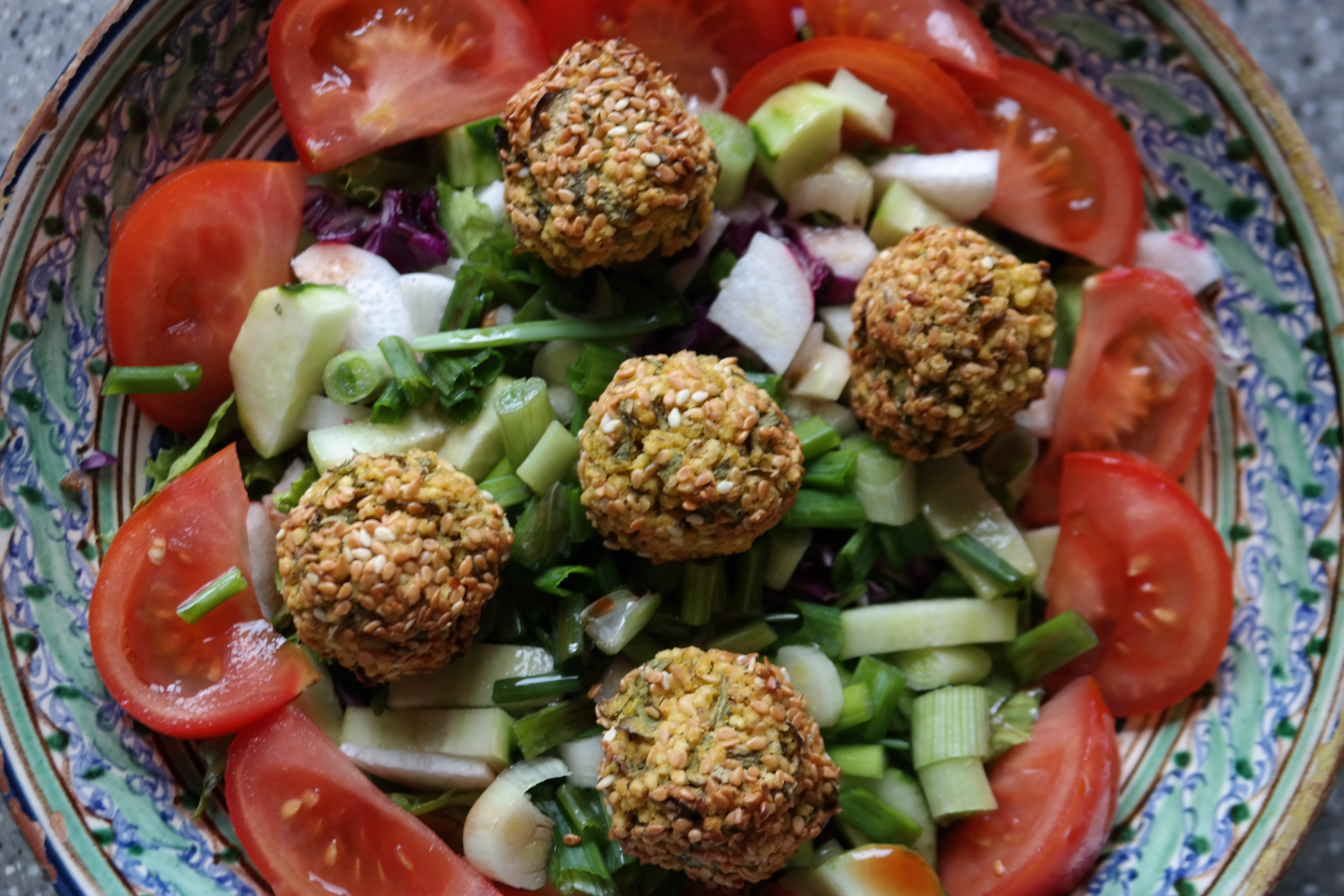
Falafel salad
With both chickpeas and fava beans in short supply in Almaty at the moment, it was back to the drawing board to look for an alternative base for our falafel. While stocking up during lockdown in our local shop we came across a pack of millet and a spot of googling revealed that this would work just fine as the base for our take on the falafel.
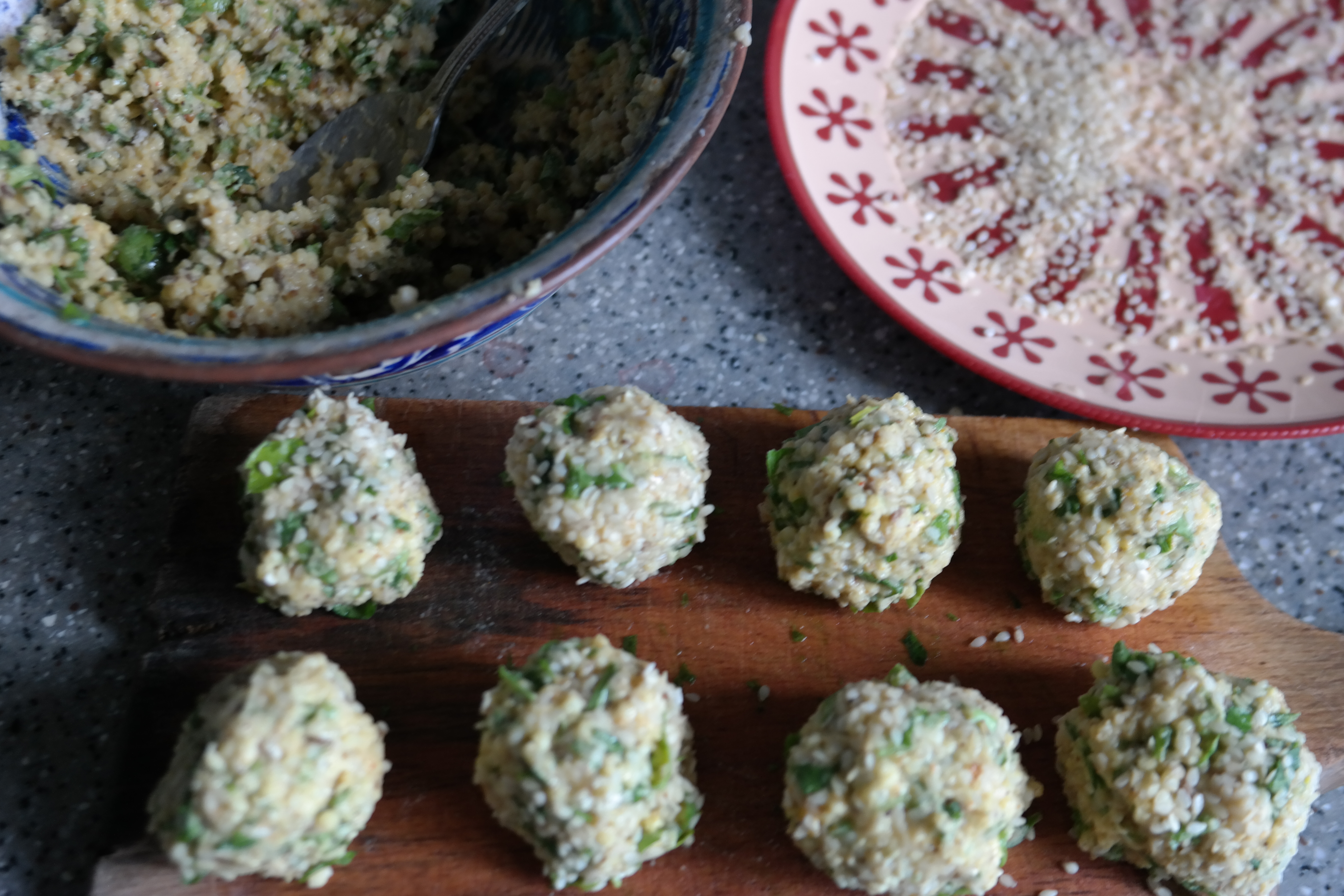
Forming the falafel
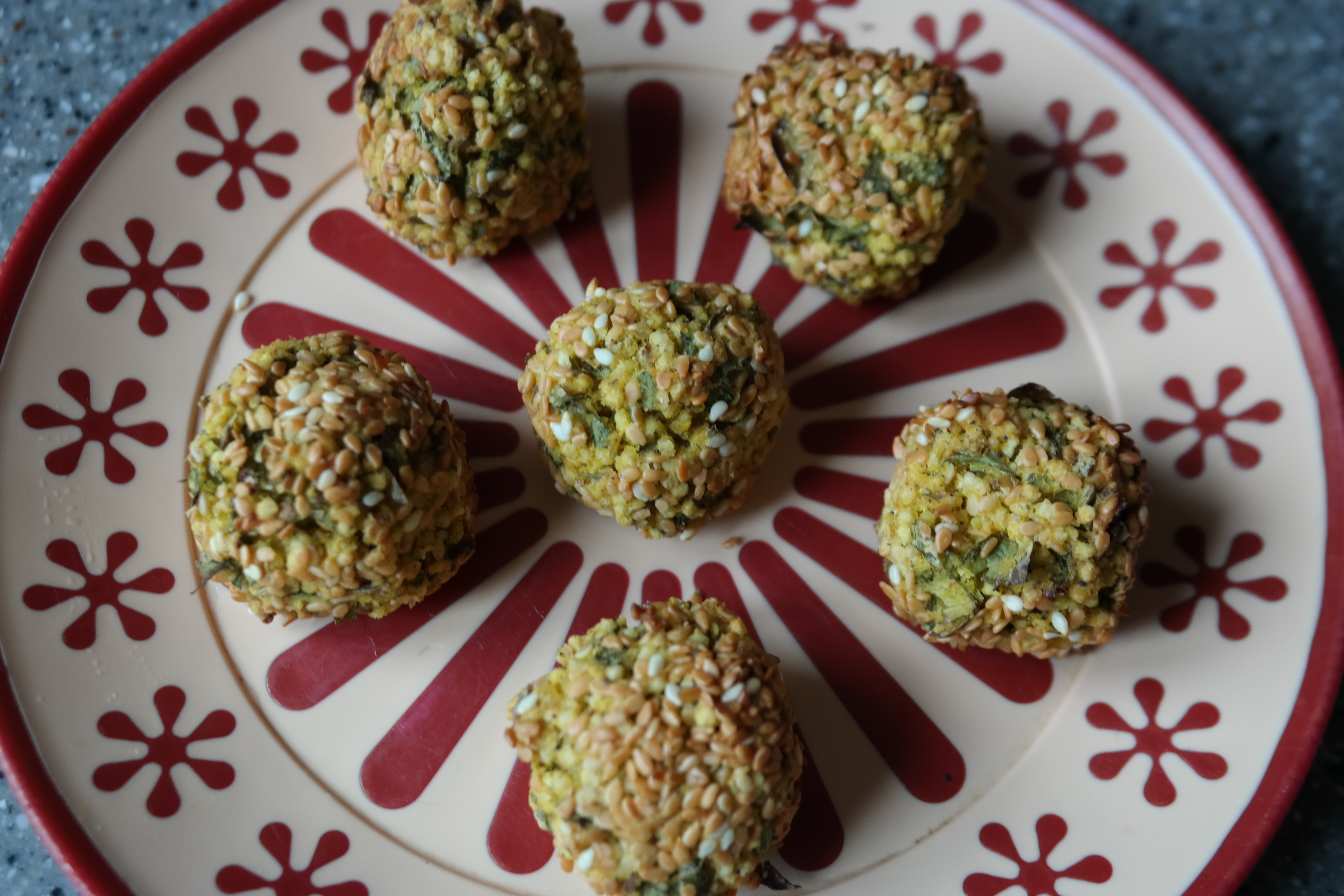
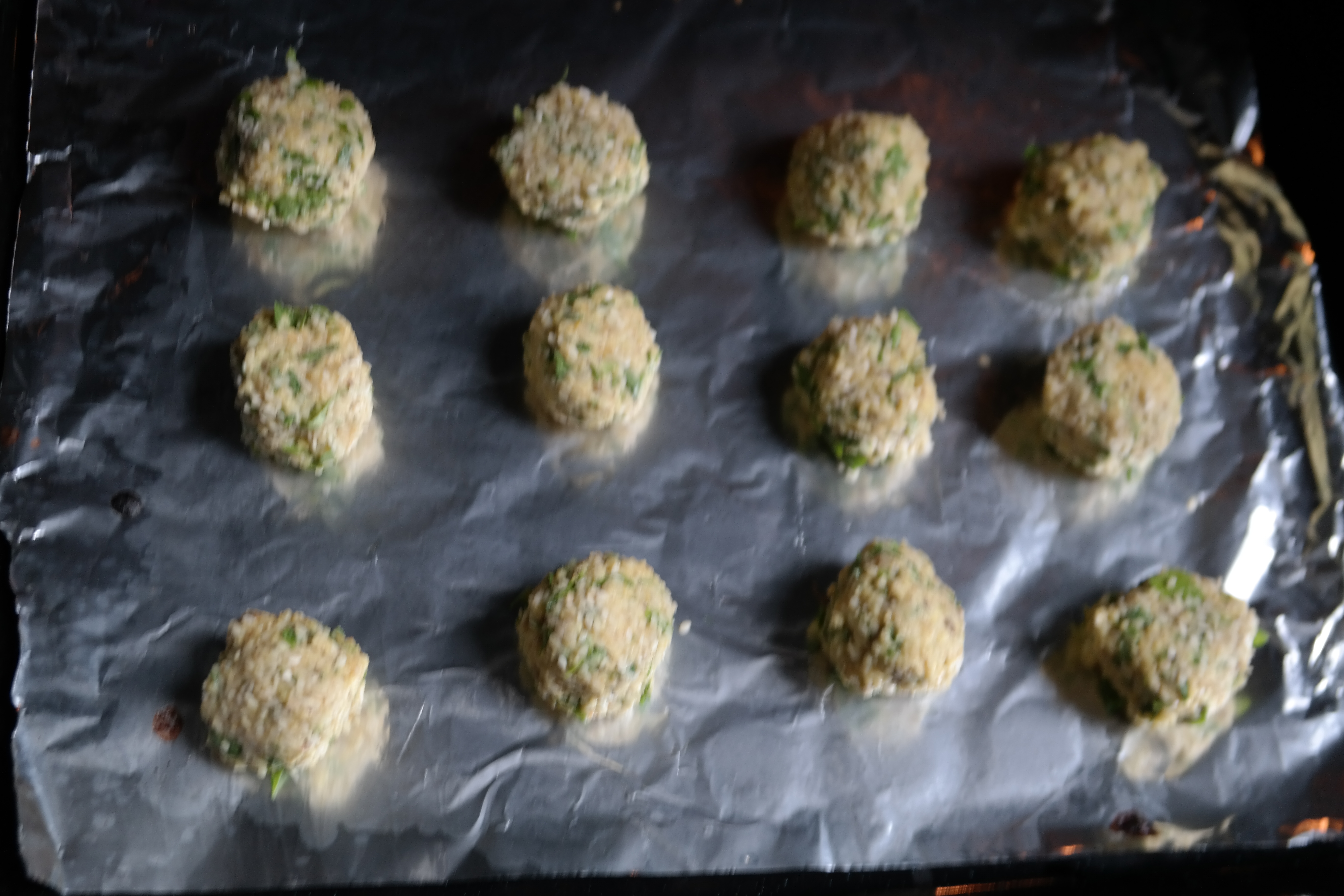
We baked them in the oven rather than deep-fried them as it’s a lot less hassle. Be sure to use plenty of parsley, cumin, coriander and chilli powder to spice up the millet. The resulting falafel were crisp on the outside but soft and fluffy in the centre, just as they should be.
Bake the falafel in the oven
Be careful when cooking millet as it has a tendency to stick to the pan if you don’t keep an eye on it and stir regularly. We found it best to rinse and soak it for a few hours before cooking as this reduces the time needed to cook it.
Ingredients (makes 12-16 falafel)
150 g millet
300 ml water or vegetable stock
one garlic clove
one bunch of parsley
one teaspoon cumin
one teaspoon coriander
one teaspoon chilli powder
Sesame seeds to coat the falafel
Method
Rinse and then soak the millet in a pan for four hours. Drain the millet and cover with water or vegetable stock. Bring to a boil and then simmer until the liquid is absorbed. Stir regularly as the millet will stick to the bottom of the pan if not watched carefully.
Finely chop the parsley, both leaves and stalks, mince the garlic clove and add to the cooked millet. Add the spices – if you want to give your falafel more oomph, double the amount. Mix well and then form into balls. Roll the balls in the sesame seeds and then place on a tray and oven bake for 20 minutes at 200 c, or until the falafel turn a golden-brown colour.
Serve in pita bread with salad and sauces of your choice or as part of a salad – we made one from cucumber, tomato, spring onion, celery, red cabbage and radish. These falafel will keep in the fridge for a few days so you can cook a large batch at the same time.


 Knidos Cookery Club