The year’s first succulent figs, in delicate green shades or striking mauve hues, are making their annual debut in Datça and to mark this moment we’ve come up with the figito, a cocktail that combines new season figs with white rum, mint and lemon – our spin on the classic mojito.
Who’s for a figito?
One of the pleasures of walking round town at this time of year is stopping off to pick a juicy fig or two from the trees that abound in this area. Here’s a tree near the Knidos Cookery Club HQ with some prime fruits drying in the August heat.
Figs drying in a garden in Datça, Turkey
If you’ve got a glut of figs, then why not try this old favourite from last summer: Lord Venal’s Fiendishly Figgish Chutney, and enjoy a figito or two while you’re making it! Cheers, or Şerefe as they say in Turkey!
Ingredients (makes one litre)
6 ripe, fresh figs
4 sprigs of mint
2 lemons
100 ml White Rum (Bacardi or Havana Club)
600 ml soda water
200 ml Schweppes Bitter Lemon
Method
Peel and dice four of the figs and muddle with the mint and the juice from the lemons with a wooden spoon in a glass serving jug. Add the rum and mix well and then top up with bitter lemon and soda water. Serve over ice with a slice of lemon, a mint sprig and half a fig.
Welcome to Knidos Cookery Club’s 50th post! To mark this momentous milestone, we’ve recreated a dish we discovered while visiting Ovabükü, a quiet beach on the Knidos peninsula – stuffed potato balls.
Spicy potato balls stuffed with haydari
If you’ve enjoyed reading Knidos Cookery Club as much as we’ve enjoyed producing it, then could we ask a favour – please nominate us in the Saveur Blog Awards for 2017. This is a special award for food blogs and if you could spare a couple of minutes to nominate then enter our URL – https://knidoscookeryclub.wordpress.com – and choose the Best New Voice category. Your support would be much appreciated – thanks in advance!
Haydari with walnuts
For Knidos Cookery Club one of the most enjoyable things about the local food scene is finding a new restaurant and checking out the dishes in the vitrine. There are always some surprise dishes lurking in the glass display cabinets that are made from fresh, seasonal ingredients.
In Ovabükü one of the dishes on the mixed meze plate was the aforementioned potato ball stuffed with cream cheese. We’ve put some delicious haydari, made from mint and strained yogurt, in our version, and spiced up the potato balls with some chilli flakes. Strained yogurt is thicker than normal yogurt as the liquid whey and lactose has been strained off – it’s also known as Greek style yogurt in the UK.
Haydari
200 ml strained yogurt
20 g crumbly white cheese
1 garlic clove
3 teaspoons dried mint
1 teaspoon red chili flakes
2 walnuts
Mix the yogurt, cheese, garlic and mint together and leave in the fridge for a couple of hours. Decorate the haydari with walnut pieces and dust with chilli flakes before serving.
Spicy Potato Balls
500 g baked or boiled potatoes
Handful of fresh parsley
1 teaspoon red chili flakes
Black pepper
50 ml unstrained yogurt
Mash the potato and mix in the other ingredients. Form into round, golf ball-sized shapes, make an indentation in the top with a teaspoon and fill the gap with haydari and top with a walnut half.
This time round on Knidos Cookery Club we’re revisiting an old favourite – mücver, Turkey’s tasty courgette fritter.
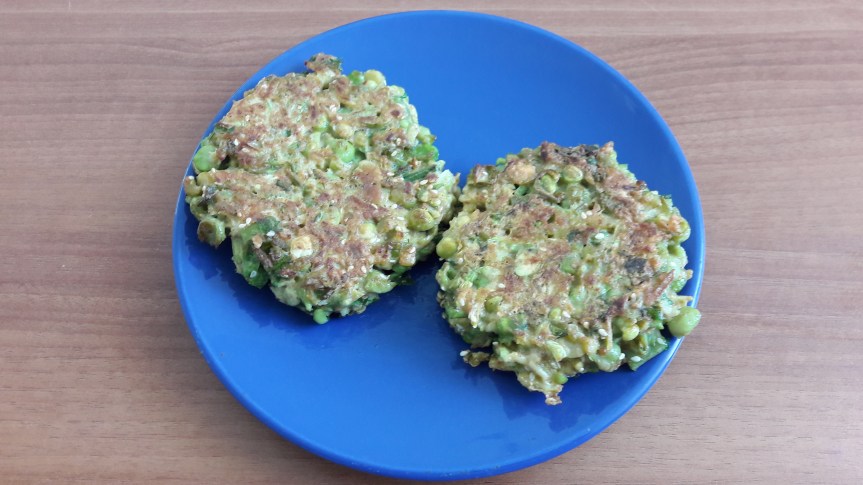
Could this be called a pea fritter?
The mücver usually served up in Turkish eateries are made from grated courgettes, so we’ve decided to spice up this old favourite by adding some other ingredients. Why not try them with fresh peas or grated carrot? Mushrooms work well, as do green beans.
Putting some carrots in the mix
You can even add all these ingredients to the basic mix, chuck in a few chopped almonds or walnuts and, hey presto, you have a chunky veggie nut burger!
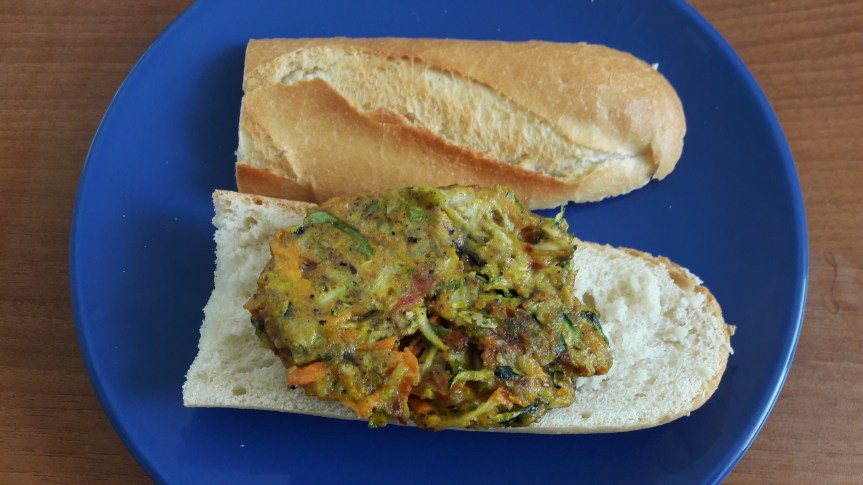
Serve the fritters in a pita, on a baguette, in a burger bun, rolled up in flat lavaş bread or just plain with a salad and condiments of your choice.
Ingredients (for around 8 fritters)
Two medium-sized courgettes
One small onion
One egg (or 15 ml of olive oil for vegan version)
Choose one or more from: 100 g chopped mushroom / grated carrot / peas (fresh if you have them, otherwise frozen or tinned) / sliced green beans (use 50 g of each if using more ingredients)
50 g of plain flour
Bunch of parsley, mint and/or dill (if you like that sort of thing)
Dried herbs to taste
A generous sprinkle of sesame seeds
An optional dusting of chili flakes and grated cinnamon
Salt and pepper
A dash of olive oil for frying
Plain yogurt for serving
Method
Grate or chop up the courgettes and the extra of your choice (mushroom, carrot peas, green beans or even all three) finely and mix with the chopped onion. Add fresh parsley, mint and/or dill, dried herbs, chili flakes, cinnamon, sesame seeds salt and pepper and blend well.
Make a well in the centre of the mix and break the egg into it. Sprinkle in the crumbled white cheese. Mix well. (Vegan readers should skip the egg and add 25 ml of olive oil instead)
Gradually add the plain flour and blend until the mixture has quite a thick consistency – you don’t want it to be too wet and sloppy.
Drizzle some olive oil in a frying pan and put over a medium heat.
Place golf ball-sized scoops of the courgette mixture into the pan and flatten with a spatula or fork.
After a few minutes turn the fritter. Keep cooking until both sided are a golden-brown colour.
This time round on Knidos Cookery Club we’ve been busy stuffing courgette flowers, a popular starter all around the Aegean Sea. In Turkey, these delicate taste-bud ticklers, known as kabak çiçeği dolması, are stuffed with a rice mixture and baked, unlike their Italian cousins which are filled with ricotta cheese and deep fried.
Succulent stuffed courgette flower power
The courgette, zucchini to our north American readers, is a really versatile vegetable – in the past we’ve used it in a tasty fritter mücver, stuffed courgettes and in a creamy almond dip, and it’s great that we’ve found a use for its flowers as well.
If you’re growing your own courgettes, then you should have a ready supply of flowers, otherwise you may need to scour your local farmers’ market for these vivid orange blossoms.
Ingredients
20-25 courgette flowers
One cup (approx. 100g) of short or long grain rice (We recommend brown rice for its earthier flavour)
250 ml vegetable stock
One medium-sized onion
One medium-sized tomato
One garlic clove
Pinches of dried thyme, oregano, black pepper, chili pepper flakes, cinnamon and salt
5 g fresh parsley
5 g fresh mint
25 g raisins
25 g pine nuts
25 ml olive oil for frying
Juice of one lemon
One sliced lemon
100 ml natural yogurt
Method
Pour the olive oil into a heavy-based pan and add the chopped onion and garlic. Cook over a medium heat until the onion becomes translucent. Add the chopped tomato, dried and fresh herbs, seasoning, dried fruit and pine nuts and cook for five minutes over a high heat.
Turn the heat down and add the washed and soaked rice to the onion mix and stir to cover the grains with oil. Add the stock and cook over a low heat until the liquid is absorbed.
Make sure that the courgette flowers are free from any green, leafy bits or stem and remove the stamen from the inside of the flower. Allow the rice mixture to cool and then fill each flower with a teaspoon of rice mix – don’t overfill them as the rice will continue to expand as it cooks.
Fold the end of the blossom together to seal the rice mix in and place the filled flowers into a heavy based frying pan or casserole dish. Pour water over the flowers to just cover them, add a generous glug of olive oil and the lemon juice, put a lid on the pan and cook over a low heat until all the water is absorbed.
Leaving the pan covered, let the cooked courgette flowers rest for 30 minutes or so with the heat turned off and then serve with lemon slices and a dollop of natural yogurt.
To celebrate this spring equinox festival, we’ll be serving up kok samsa, deep-fried pies filled with a selection of spring greens.
Seven tastes of spring: parsley, spinach, coriander, celeriac leaves, spring onion, garlic and mint
Originating in Persia some 3,000 years ago, Nowruz, or New Day, is a celebration of the end of winter and the start of a new year on the date when day and night are equal in the Northern Hemisphere. This date usually falls on or around 21 March.
The holiday is still widely celebrated in Iran and Iraq, across Central Asia, Russia, Afghanistan, Albania, Azerbaijan, in eastern Turkey and in parts of Syria, India, Pakistan and China. Food plays an important role in these celebrations – in Iran the table is set with seven items, as explained in this article from Iran Wire:
A few weeks before Nowruz, Iranians begin setting up their haft sin, or “seven Ss,” a ceremonial display of symbolic items whose names begin with the Persian letter “sin” or “s.” They include “sabzeh,” or green sprouts grown from lentils, which symbolize rebirth; “samanu,” a sweet pudding that represents affluence, “senjed,” or dried wild olives, which symbolize love; “seer,” or garlic, which symbolizes medicine; “seeb,” an apple, which represents health; “somaq” or sumac fruit, which symbolizes the color of sunrise, and “serkeh,” or vinegar, which symbolises maturity.
Kok samsa, a close relative of India’s samosa, are prepared in Uzbekistan, where the holiday is called Navruz. These tasty pies are filled with fresh spring greens.
We’ve developed our own take on the kok samsa using the Iranian magic number of seven ingredients: parsley, spinach, coriander, celeriac leaves, spring onion, garlic and mint. As fully signed-up members of Dillwatch, we omitted that scurrilous weed, dill, from this recipe.
KCC’s Kok samsa with seven spring herbs inside
Ingredients (makes 8-10 pies)
For the Pastry
300 g plain flour
75 ml olive oil
Pinch of salt
Up to 75 ml cold water
Two – three teaspoons of sesame seeds
2. For the Filling
150 g spring onions
2 garlic cloves
50 g fresh coriander
50 g fresh parsley
150 g spinach
25 g the leafy bits from the top of a celeriac
15 g fresh mint
Two teaspoons of cumin seeds
25 ml olive oil
3. For Deep Frying
1 litre sunflower oil (for deep frying)
Method
1.For the Pastry
Pour the flour into a large mixing bowl and add the salt. Pour in the olive oil and stir with a fork. The mixture should form into small clumps of flour and oil. Pour some of the cold water and continue mixing. Continue adding water until the mixture forms into a large ball shape. Cover with cling film and leave in the fridge until you’re ready to use it.
2. For the Filling
Heat the olive oil in a heavy-based pan and add the chopped spring onions and minced garlic. Fry for five minutes over a medium heat, stirring occasionally. Add the coriander and parsley and cumin and fry for two to three minutes. Add the torn up spinach leaves, chopped celeriac leaves and mint and continue cooking until the spinach has wilted, about 10 more minutes or so, stirring every now and then.
3. For Deep Frying
Heat the sunflower oil in a heavy-based pan. For deep frying you need to get the oil to around 180 c – to check the temperature use this tip from Delishably:
When the oil has preheated, dip the handle of a wooden spoon or a chopstick into the oil. If the oil starts steadily bubbling, then the oil is hot enough for frying. If the oil bubbles very very vigorously, then the oil is too hot and needs to cool off a touch. If no or very few bubbles pop up, then it’s not hot enough.
While the oil is heating, prepare the pies. Form the pastry into 8-10 walnut-sized balls. Put the pastry ball onto a lightly floured surface and roll out into a 1 mm thick circle. Sprinkle with sesame seeds and turn the circle over.
Place three teaspoons of filling on half of the pastry round and then close the other half over the top of the filling. Use a fork to mould the edges of the pie together. Prick the pie’s top to allow air to escape.
Place two or three pies at a time in the hot oil and fry for around 8 minutes or until the pie is golden brown in colour. Remove with a slotted spoon and drain on kitchen roll. Serve the kok samsa either hot or cold.
Knidos Cookery Club is off to a wedding soon so we did a quick google to see what Turkey has in the way of wedding-related foodstuffs and chanced upon this soup with a great backstory.
One wedding day tradition in Turkey is to the feed up the bride-to-be with a hearty soup, Ezogelin Çorbası, to help her prepare for the rigours of her wedding day and the subsequent move into the groom’s household.
The name translates as ‘Ezo the Bride’s Soup’ and the recipe comes from the tale of a woman, Ezo, short for Zöhre, who was born in 1909 in a village near Gaziantep, now in south-eastern Turkey on the border with Syria.
She became famed in the region for her her looks and was highly sought after as a bride. Eventually, she married a man from a neighbouring village but unfortunately the marriage didn’t work out. One version of the tale, that has inspired short stories, folk songs, a film and a TV series in Turkey, as well as the soup, has it that her husband loved another so Ezo left him.
In 1936, Ezo married again and moved with her husband over the border to the town of Jarabulus in Syria. She pined for her homeland and to quell her homesickness she would cook a soup that reminded her of Turkey – a filling combination of red lentils, bulgur wheat, rice, tomato paste, herbs and spices. She also used the soup to win over her mother-in-law, a move crucial to finding happiness in her new home.
Ezo had nine children with her second husband, but she only lived to her mid-40s, dying in 1956 in Jarabulus. Her last wish was to be buried on a hillside overlooking her beloved homeland. Her memory lives on in this soup and in the legends that have grown up around her life story.
Ingredients (Makes four servings)
150 g red lentils
50 g coarse bulgur wheat
25 g rice
one medium-sized onion
one or two cloves of garlic
one lemon
25 ml olive oil
1.2 l warm water
3-4 tablespoons of tomato paste (a more liquid form of tomato purée – if using purée then two tablespoons should suffice)
two teaspoons of dried mint
black pepper
two teaspoons of chili flakes
sprig of fresh mint
Method
Wash the red lentils, bulgur wheat and rice and soak for two hours in cold water.
Finely chop the onion and garlic and fry for five minutes in the olive oil in a heavy-based pan. Add the red lentils, bulgur wheat and rice, pour in one litre of water and simmer over a low to medium heat for 30 minutes or until everything is cooked.
Add the tomato paste, the dried mint, chili flakes and some black pepper and 200 ml of water and the juice of one lemon and stir well. Simmer for ten or fifteen minutes until the soup is taking on a creamy texture.
Ladle the soup into bowls and garnish with a sprig of fresh mint and sprinkle more chili flakes over the top. Serve with a slice of lemon and some crusty bread.
This week Knidos Cookery Club is on location in Greece, on the island of Kos, which is a short hop by boat from the ruins of the ancient Carian port city of Knidos.
Turkey and Greece have a lot of similarities when it comes to food with both cuisines drawing on herbs and vegetables common to the areas around the Mediterranean and Aegean Seas. Much of Greek cooking tends towards heartier fare, whereas the Ottoman influence on Turkish cooking lends it a more regal and refined air.
Historically, Greece’s islands have depended on what was grown and produced on the island. This sees the use of dried beans and pulses, olives, cheeses preserved in red wine and bread dried into rusks.
Aegli restaurant, Kos Town
Knidos Cookery Club’s favourite restaurant in Kos Town is Aegli, glamour in Greek, which is a women’s cooperatve that employs single mothers and women over 50. It uses local recipes and serves dishes made from ingredients sourced only from the island.
Aegli’s mixed starter plate
The excellent mixed starter plate came with fava, a mashed broad bean paste, a dip made from fresh aubergenes, a cheese and chili pepper blend, giant beans in a tomato sauce and two types of fritters – one made with mashed potato and onion, and the other with mashed chick peas.
This week, Knidos Cookery Club will serve up some revithokeftedes (ρεβυθοκεφτεδες), a chick pea fritter that is a mintier version of falafel.
Ingredients (for 10-12 fritters)
One can of chick peas or 150 g dried chick peas soaked overnight and boiled for an hour or so
Two spring onions
A bunch of fresh mint, sprinkles of salt and pepper
100 g flour
25 g sesame seeds
100 ml olive oil for frying
Method
Mash the chick peas with a potato masher or blender. Add the chopped spring onion, mint and salt and pepper. Mix in the flour and then shape the mix into golf ball-sized fritters and roll them in sesame seeds.
Heat the olive oil in a frying pan then cook the fritters, flattening them with a spatula. Fry until a golden brown colour on both sides.




 Knidos Cookery Club