Fava a la Turca

5 October 2017

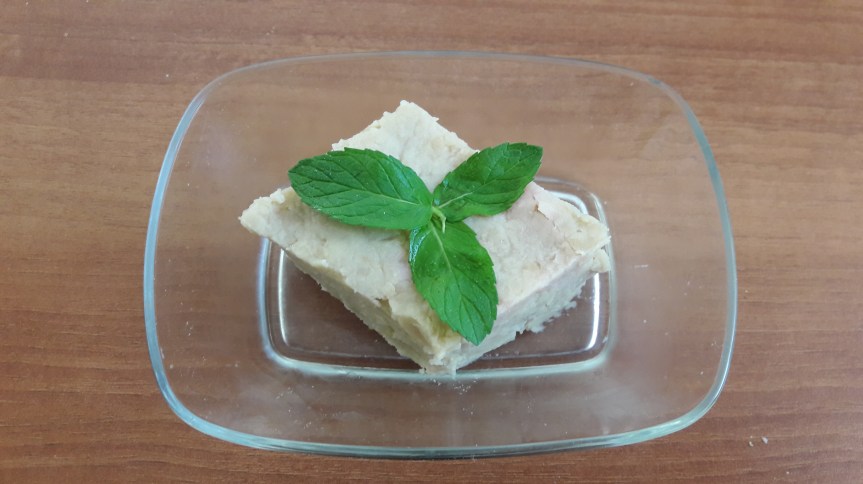
This time on Knidos Cookery Club we’ll be looking at fava, a popular Turkish meze made from broad beans (we’ve used dried but use fresh if you have them). Greece also has a dish called fava, but its version uses split peas and is an all-together different beast to Turkey’s variant which is left in the fridge to firm up into a spread that can be sliced into chunks (more on the Greek variation next time round).
20170929_122236.jpg
Knidos Cookery Club’s take on fava served with mint

Our variation on the Turkish fava theme turned out a bit less smooth than the one served up in Turkish cafes but it still tasted great! Having cooked up the beans into a mush, we went for a swim while it cooled down. Apparently, it should have been pushed through a sieve while still warm, but no worries – it turned out all right on the night albeit a bit lumpier than expected!
20171005_114611
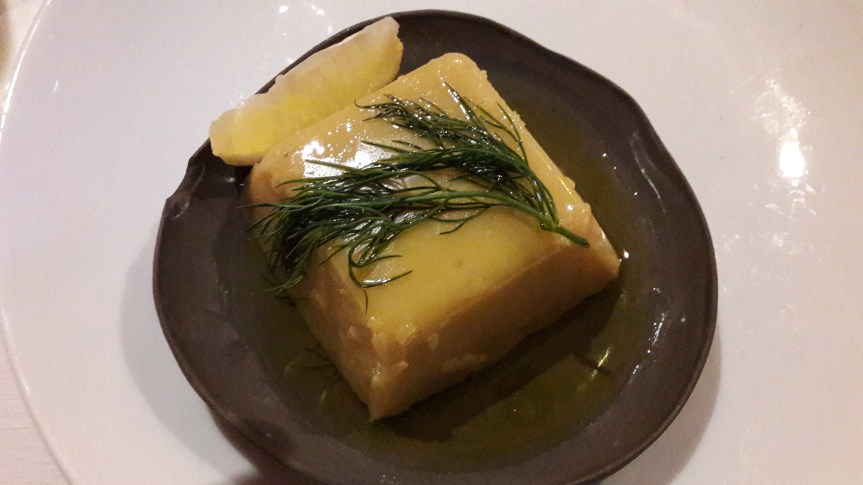
Fava served with … dill in a restaurant in Akyaka, Turkey’s slow food capital

In Turkey fava comes adorned with sprigs of dill (some recipes even put dill in the bean mix itself). Knidos Cookery Club is not a big fan of dill, so we’ve used some fresh mint leaves to adorn our take on this Turkish classic.

Ingredients (makes around 8-10 individual servings)

200 g dried broad beans (soaked overnight in cold water)

One small red onion

400 ml water

One teaspoon honey

25 ml olive oil

Pinch of salt

Mint leaves to garnish

Method

Put the drained beans into a heavy-based pan with the finely chopped onion, olive oil, honey and salt and pour the water over the top. Bring to the boil and simmer over a low heat for an hour or so until all the water is absorbed and the beans are breaking up to form a thick paste.

Allow the mix to cool and while still warm press through a metal sieve with a wooden spoon to remove any excess liquid. Oil a glass serving dish and pile the bean mix into the dish. Cover with clingfilm (clear plastic wrap) and leave overnight in the fridge.

Serve in cubes or diamond shapes, cutting the solid mass with a wet knife (to avoid it sticking). Garnish with mint leaves and a drizzle of lemon juice and olive oil and serve with crusty bread as part of a meze platter.


Bitter Melon Menemen

7 September 2017

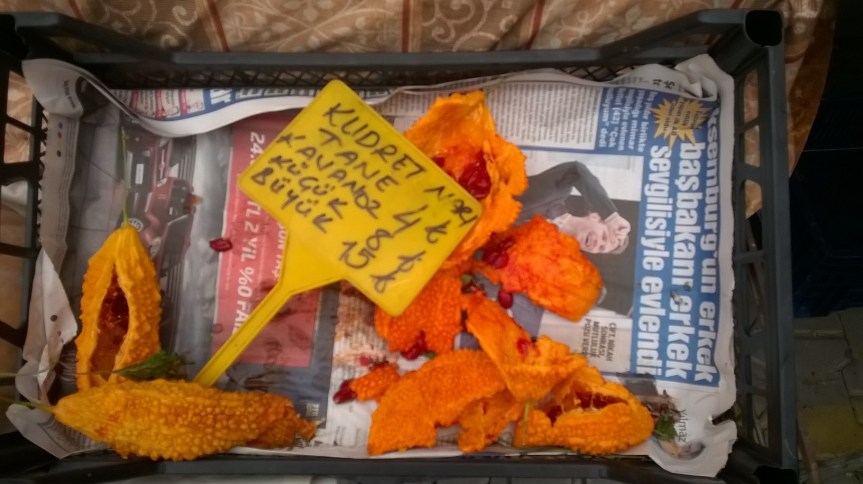
While shopping at Datça market recently, this spectacular-looking, knobbly, bright orange fruit grabbed our attention.

20170828_145746
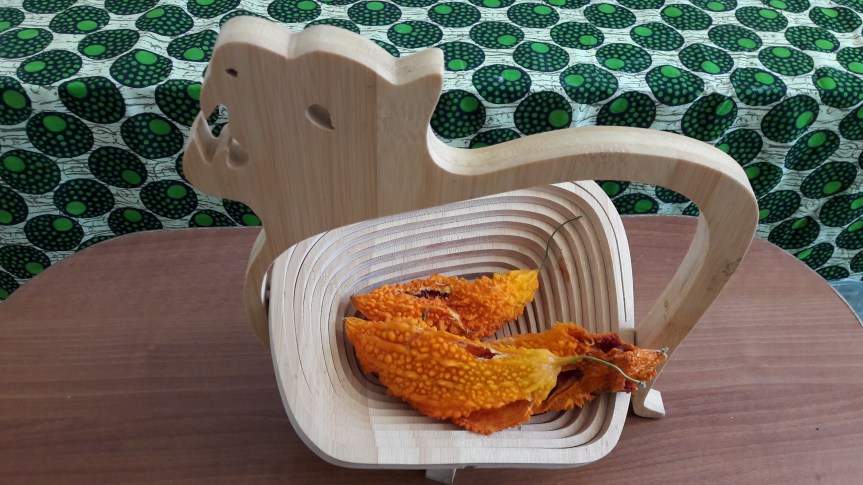
What’s in the dragon today? Bitter melon, of course

Subsequent googling revealed it to be a bitter melon, or bitter gourd, kudret narı in Turkish. Despute being popular in pan-Asian cooking, we couldn’t find too many Turkish recipes using bitter melon so we decided to mix it in with menemen, that breakfast fave in Turkey.

WP_20170826_12_29_42_Pro

You’ll probably be able to track down bitter melons in your local Asian grocer’s. When picked they are yellow-green, resembling a bumpy cucumber, and when ripe they turn orange. Cooking helps remove some of the bitter taste of this curious-looking member of the squash family. Inside are bright red coloured seeds that can be removed and eaten.

20170829_134255
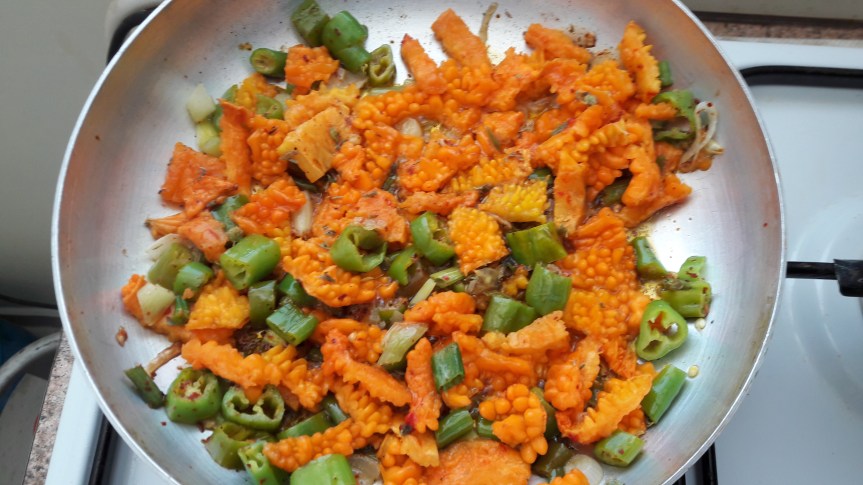
Step one: Fry the bitter melon
20170829_134858
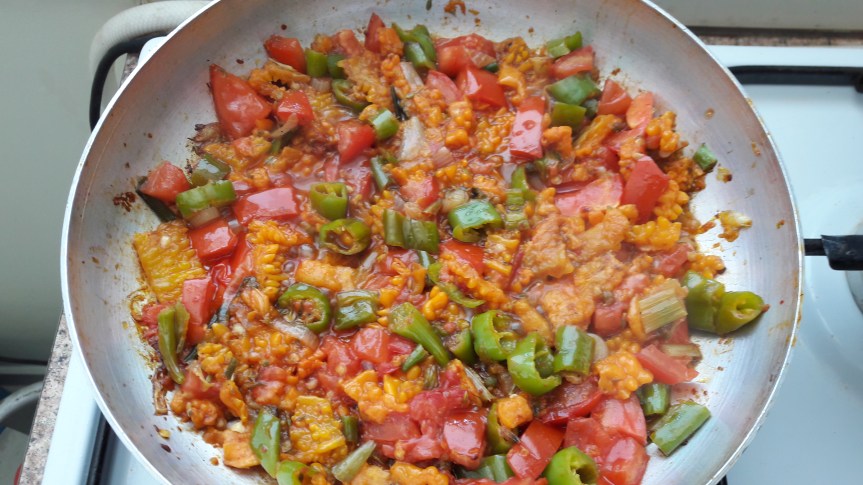
Step two: Add the tomato
20170829_135537
Step three: add the eggs and scramble

Ingredients (serves 2-4)

100 g bitter melon

60 g green peppers

2 spring onions

1 medium-sized tomato

1 teaspoon each of dried thyme, oregano, black pepper and red chilli flakes

4 eggs

A dash of soy sauce

25 ml olive oil

Method

Heat the olive oil in a frying pan and when hot add the chopped spring onion. Cook for two minutes over a medium heat and then add the peppers and seeded bitter melon, cut into 1-2 mm strips.

Cook for another two minutes and then add the chopped tomato, herbs and spices and a dash of soy sauce. Fry for 5 minutes and then reduce the heat and break the eggs into the mix. Keep stirring until you achieve the desired consistency of scrambled egg to your taste.

Serve with lashing of  crusty bread.

Relish the Radish

3 August 2017

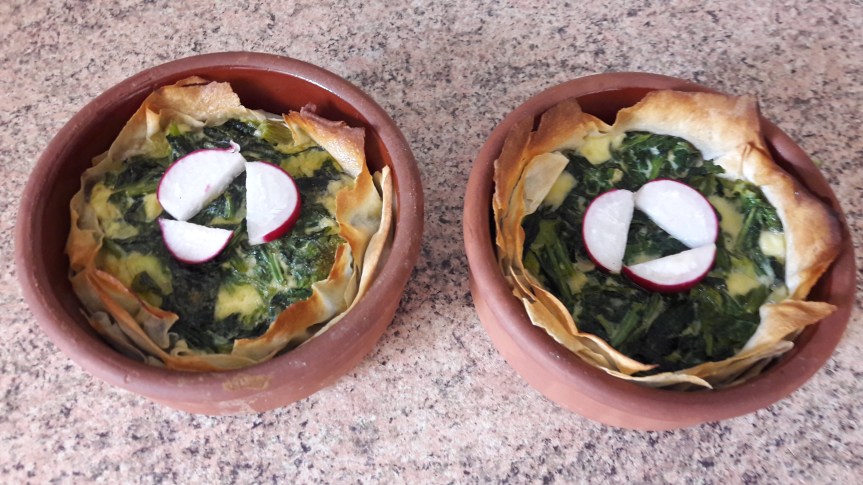
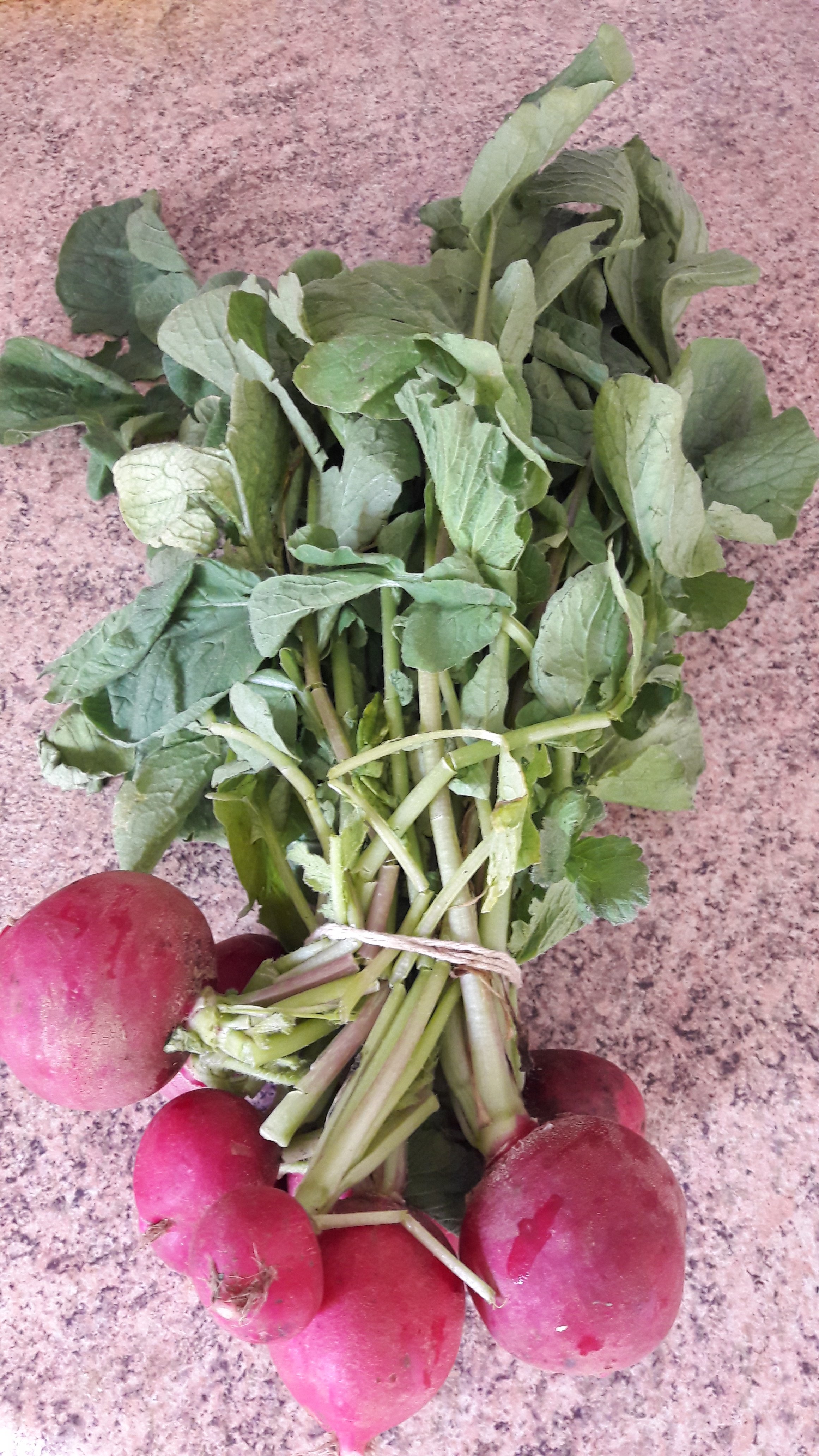
In keeping with the ‘Waste not, want not‘ mantra, this week we’ll be using some radish greens in a mini quiche.

20170624_144252

Often discarded, these peppery leaves taste great when fried up with some spring onion, garlic and a dash of soy sauce.

Ingredients ( makes four mini-quiches)

150 g radish leaves

1 radish (for decoration)

2 spring onions

1 garlic clove

Dash of soy sauce

60 g crumbly white cheese

2 eggs

25 ml olive oil

150 g filo pastry or shortcrust pastry

Method

Saute the chopped onions and garlic in a little olive oil in a heavy-based pan for 2-3 minutes, add a dash of soy sauce and then add the radish leaves and cook for another 2-3 minutes until the leaves start to wilt.

Allow the mix to cool for ten minutes then mix in the eggs and cheese. Prepare cases in small baking dishes with the filo pastry, brushing each filo leaf with olive oil.

Pour the mix into each pastry case to half way and then bake for 20 minutes in an oven pre-heated to 180 c.

Garnish with radish slices and serve with a green salad laced with more sliced radish!

Adjapsandali Adventures

20 July 2017

Knidos Cookery Club would like to say a big thank you to all its readers who voted for the site in the 2017 Saveur Food Blog awards!

This time round we’re looking once again to Turkey’s north-eastern neighbour Georgia for some culinary inspiration. Adjapsandali, a popular  dish in this mountainous former Soviet country, is Georgia’s spicier take on ratatouille.

20170613_220905
Adjapsandali with green beans and potato

This summer stew relies on a holy trinity of aubergine, tomato and peppers with whatever else is in season thrown into the mix.  We’ve added some green beans and some potato to give the dish a heartier edge, but these can be omitted and other seasonal veggies like courgettes and carrots can be used – there’s no hard and fast rules, it’s up to you!

20170613_185152
The adjapsandali ingredients in the raw

It can be served up  with all the veggies collapsing into a sublime sauce-rich stew or the veggies can be left on the firmer side, as in our example. Served with rice, it makes a meal on its own, but it is also great with salads and other Georgian staples such as pkhali.

Ingredients (makes 4 generous servings)

300 g potatoes

300 g aubergines

250 g tomatoes

2 red peppers

200 g green beans

1 onion

2 garlic cloves

50 ml olive oil

1 teaspoon coriander

1 teaspoon red chili flakes

2 teaspoons fresh basil

3 bayleaves

Method

Roughly chop up all the vegetables and throw them into a large, heavy-based pan. Pour the olive oil over the vegetables, add the herbs and spices and cook over a medium heat for 10 minutes or so stirring occasionally. Turn the heat down to low and cook for another 20-30 minutes until all the vegetables are cooked and beginning to break up.

Sprinkle with fresh basil and serve with crusty bread or rice and a selection of salads such as tomato, cucumber and onion with a walnut dressing and starters such as pkhali.

Barbunya Bean Therapy

22 June 2017

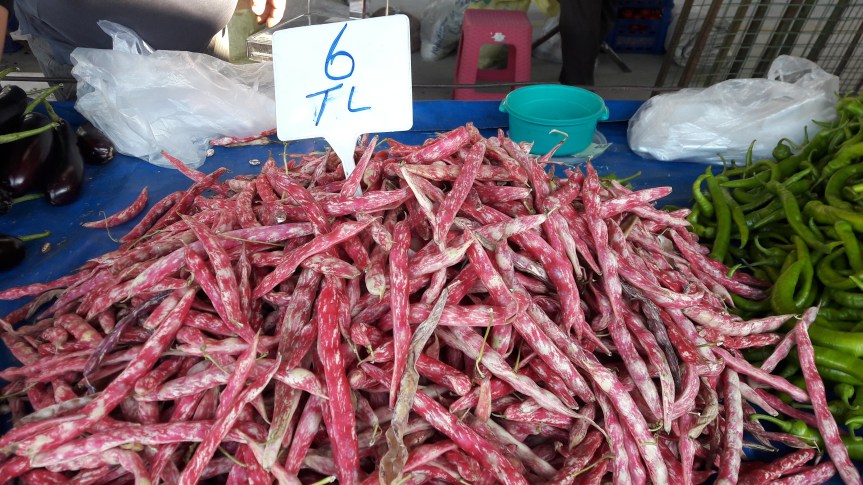
Last week in Datça market piles of psychedelic pink-podded barbunya beans arrayed against their green-podded cousins caught our eye. In Turkey these distinctive beans, also known as borlotti or cranberry beans, are made into a starter called barbunya pilaki, which is always high on our list when ordering a spread of mezeler.

20170616_183758
Psychedelic pink barbunya beans piled high in Datça market

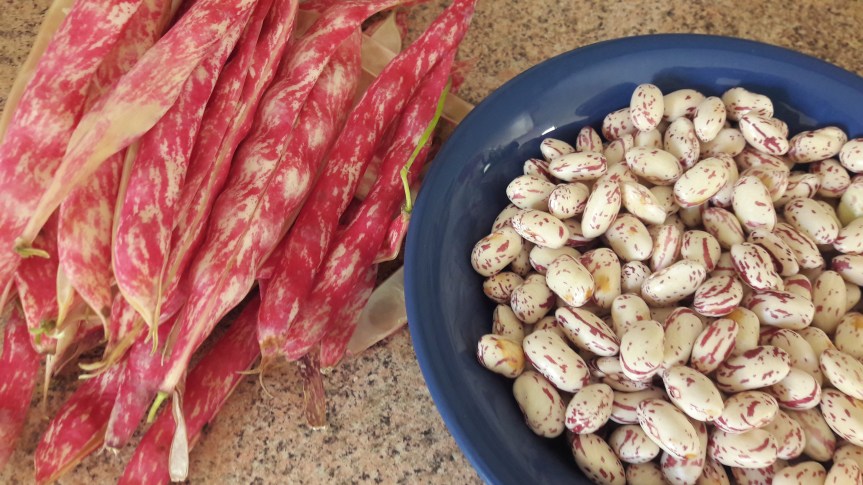
There’s something very therapeutic about podding these beans, like a beanish mindfulness moment!  Our kilo of beans in their pods yielded around 600 g of pink-marbled white beans.

20170616_194034
Bean therapy!

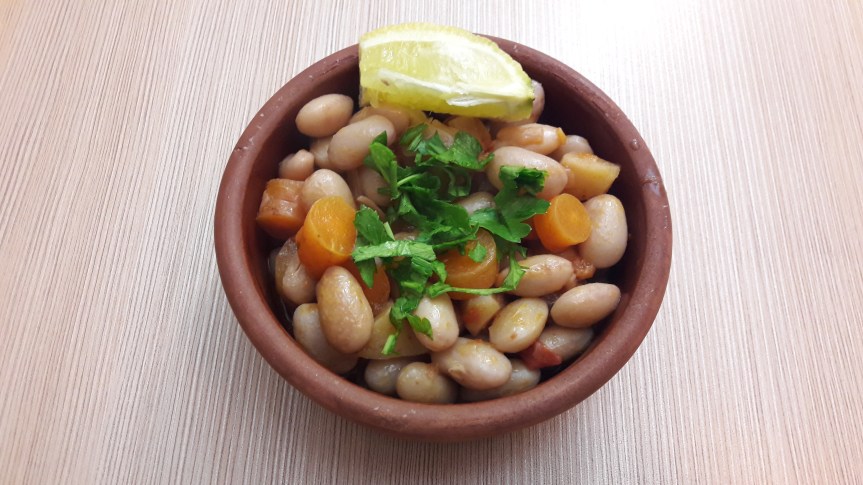
When cooked and allowed to cool, the pink colour leaches out and the beans take on a delicate brown hue. They’re delicious stewed with olive oil, onion, carrot, potato and lemon juice, served with a sprinkling of fresh parsley and a chunk of lemon. Some recipes omit the potato, but we think this gives the dish more oomph and means you don’t need to cook up any additional carbs.

20170616_220421
Barbunya pilaki all ready to go

They can be served hot as a less sugary take on baked beans, or served cold as part of the aforementioned selection of starters – Knidos Cookery Club recommends its carrot and walnut tarator, creamy almond and courgette dip, peppery muhammara and stuffed courgette flowers for a scrumptious feast of Turkish mezeler.

Ingredients (for 4-6 servings)

600 g shelled barbunya beans (or dried borlotti beans soaked overnight)

1 onion (around 100 g)

100 g carrot

100 g potato

100 g tomato

1 garlic clove

1 lemon

1 teaspoon honey

1 teaspoon red chili flakes

Fresh parsley to garnish

50 g olive oil

400 ml hot water

Method

Heat the olive oil into a heavy-based pan, chop the onion and garlic finely and fry over a medium heat for five minutes or so. Add the chopped tomatoes, lower the heat and cook for another five minutes.

Dice the carrot and potato into small cubes and then add these along with the beans, the juice of half a lemon, the honey, chili flakes and hot water to the pan and bring to a boil. Simmer for 30-45 minutes, stirring occasionally, until the beans are cooked but not going mushy.

Serve hot or allow to cool and garnish with fresh parsley and lemon slices.

Lobiani Sausagiani

9 March 2017

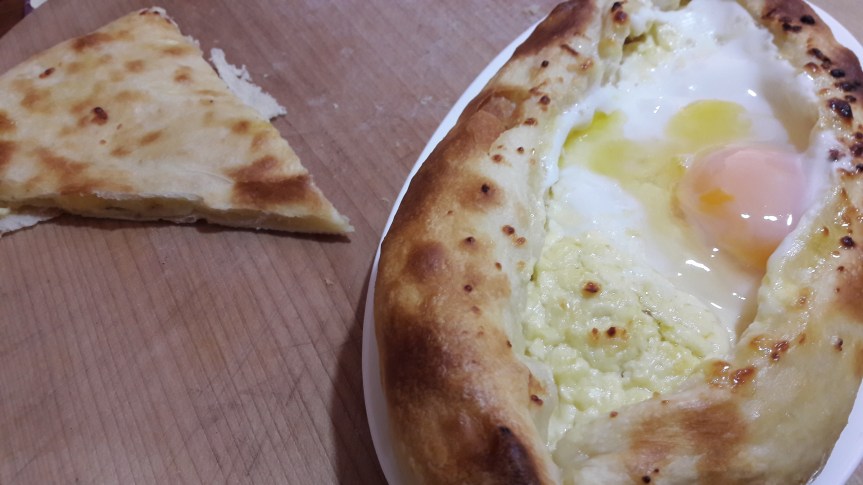
This time round on Knidos Cookery Club we’re off to Turkey’s far north-east corner and across the border into Georgia. This mountainous country shares some dishes in common with the people of Turkey’s Black Sea coast such as the bread and cheese concoction known as khachapuri in Georgia, pide in Turkey.

20170309_152546


Georgian dishes rely on both fresh and dried local ingredients. The diet is generally meat-heavy – this point was crudely pushed home last year when outraged sausage-wielding activists attacked Kiwi Café, a vegan café in Georgia’s capital Tbilisi, throwing chunks of meat and fish at diners, but there are lots of options for non-carnivores as its cuisine also features a wide range of veggie dishes.

Georgia’s location on a number of east-west trade routes heading through the Caucasus Mountains has seen different influences make their mark on its  eating culture over the years, with spices playing a key role.

20170218_135303
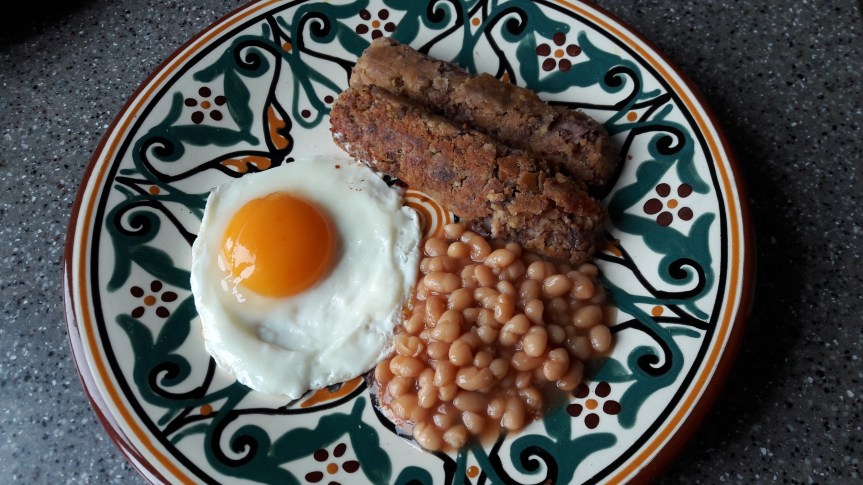
KCC’s new brunch treat –lobiani sausagiani

Dried beans, or lobio, walnuts, pomegranates and spices like coriander and blue fenugreek give a distinctive taste to the local fare. Cheese also features strongly on the Georgian table, from the versatile sulguni, an elastic, brined cheese akin to mozzarella, that can be deep fried to the fresh white imeruli cheese.

Georgia’s dried red beans are made into a dish called lobio, that, depending on the region of the country it’s prepared in, can be like a soup, a stew or re-fried beans. It is usually cooked in a clay pot and sometimes comes with a thin layer of bread as a cover on top. Mashed red beans are also cooked inside bread in a dish called lobiani.

We’ve decided to do our own take on a lobio dish, and to get our own back on those meat-wielding activists, by making a Georgian-influenced veggie sausage, to be served as part of a brunch or main meal.

Ingredients (makes 8-10 sausages)

200 g dried red beans, soaked overnight

100 g red lentils (one cup)

150 g fine bulgur wheat (1.5 cups)

50 g chopped walnuts

1 teaspoon dried coriander

1 teaspoon cumin

1 teaspoon black pepper

1 teaspoon red chili flakes

25 ml olive oil for frying the sausages

1 tablespoon plain flour

Method

Soak the beans overnight and then cook for an hour or so over a low heat until the beans are cooked and beginning to break up. Drain and reserve the cooking water , then mash the beans roughly.

Wash the lentils until the water goes clear and then place in a pan with the water from the cooked beans – add more water so the lentils are covered by 2 cm of liquid. Bring to the boil and simmer over a low heat for 20 minutes or so. The lentils should be going mushy and there should be about 1 cm of water covering the lentils – add more water if necessary.

Add the washed bulgur wheat to the cooked lentils and blend well. Allow to stand for 30 minutes or so and then add the toasted, chopped walnuts and the mashed beans. Then grind the spices together and add to the mix. Leave overnight in the fridge to allow the flavours to blend.

Sprinkle some flour on a chopping board and roll lemon-sized portions of the mix  into sausage shapes, coating evenly with flour. Fry the sausages in the oil until browned on the outside and then serve with baked beans and a fried egg for a top brunch.

Avocado + Egg = Brunch Heaven

9 February 2017

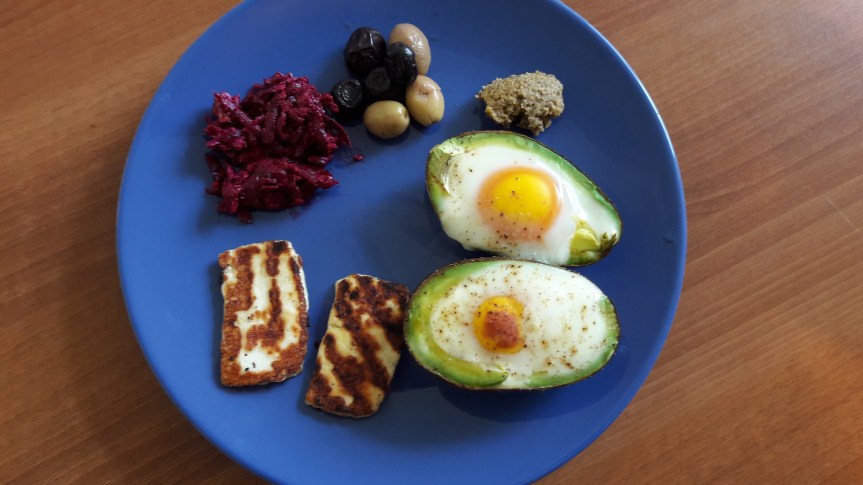
This week at Knidos Cookery Club we have a guest post that combines two of our all-time fave foods: avocado and egg, dished up with olives, beetroot with walnuts and halloumi cheese.

20170115_143020

Avocados love the mild winters of the Knidos region as the shores of the Mediterranean Sea provide ideal growing conditions for this large green fruit that’s packed with nutritious vitamins and healthy fats.

Our guest chef Jasha, who has worked in the hospitality industry in the UK, has kindly agreed to share her favourite way of combining eggs with avocado. Served up with pan-seared halloumi, olives and grated beetroot with walnut, this great dish sent us into brunch heaven!

Ingredients 

One avocado per person

Two eggs per person

250 g pack halloumi cheese cut into four slices (enough for two people)

Black and green olives

A few scoops of olive paste

One grated large beetroot (raw or cooked) mixed with 50 g crushed walnuts and two teaspoons of sour cream or natural yogurt

Black pepper and red chili flakes

Method

Slice the avocados in half and remove the stone. Be careful not to stab yourself in the hand as I once did – it’s apparently quite a common kitchen injury. Scoop out some of the flesh to leave a hollow space for the egg.

Place the avocado halves in a baking dish, round side down, and pour an egg into the scooped out shell. Grind some black pepper over each egg and bake the avocados in an oven pre-heated to to 200 c /gas mark 6 for 20 minutes or until the underside of the eggs are cooked. Finish the eggs off under a grill and then season with some red chili flakes and a grind of black pepper.

While the eggs are cooking, fry the halloumi slices in a non-stick or heavy-based frying pan until browned on both sides.

Serve the avocados immediately with the pan-seared halloumi, beetroot and walnuts, olive paste and olives and some doorsteps of fresh bread.