With autumn upon us once again, it’s time for pumpkin to make a return to the table. This versatile memeber of the squash family makes for perfect comfort food for the longer, chillier nights. KCC’s back catalogue features a number of pumpkin dishes – try this cousin of lasagne made with chickpeas and mixed greens and this roasted pumpkin with halloumi for starters.
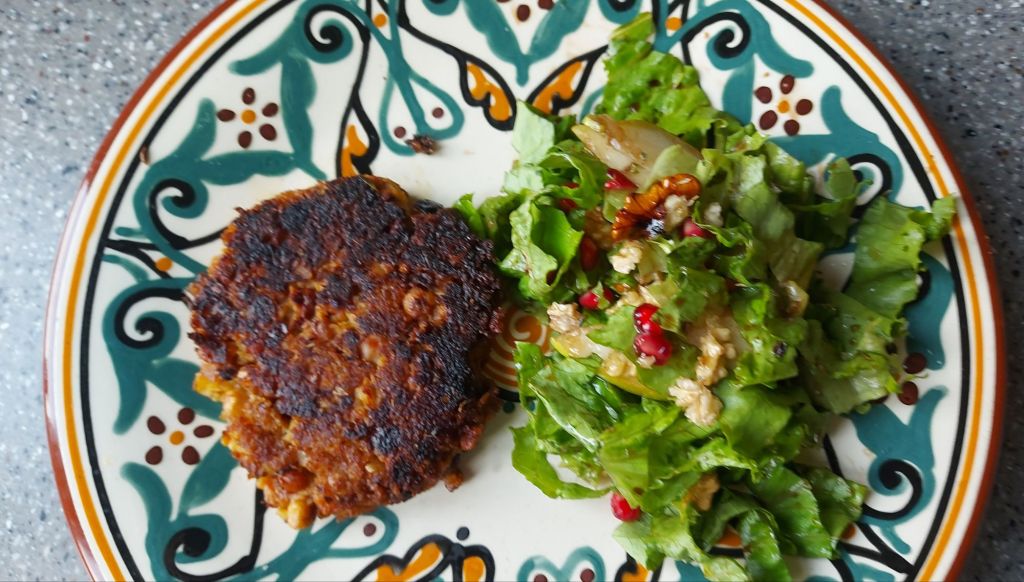
A nutty chickpea and pumpkin fritter served with a lettuce, pear, pomegranate and walnut salad
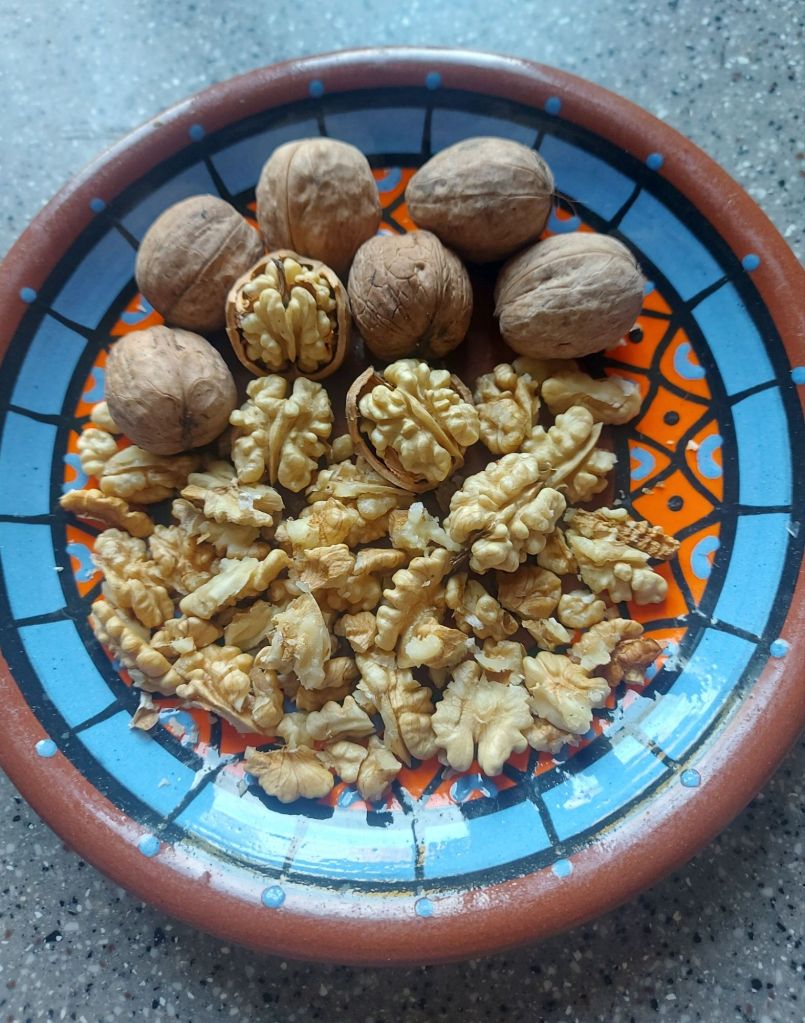
This time, we’re using the pumpkin in a fritter made with chickpeas and fine bulgur wheat. Recently, we recieved some walnuts from a friend of a friend’s dacha outside Almaty, here in Kazakhstan, which are ideal for adding a nutty edge to these chickpea and pumpkin fritters. We also added some walnuts to a fruity salad made with lettuce, pear and pomegranate seeds to accompany the fritters. Dress it with equal parts of balsamic vinegar and extra virgin olive oil.
This year’s walnuts fresh from the dacha in Almaty, Kazakhstan
Here at KKC we’re big fans of smashed avocado, but in Kazakhstan it can sometimes be difficult to find the ideal fruit when needed – they’re either underripe and too hard to use immediately or gone mushy with grey stringy bits. Another problem is that most of these fruit that make their way here are grown in Israel and Colombia. So, a less well-travelled alternative is needed – look no further than the humble garden pea.
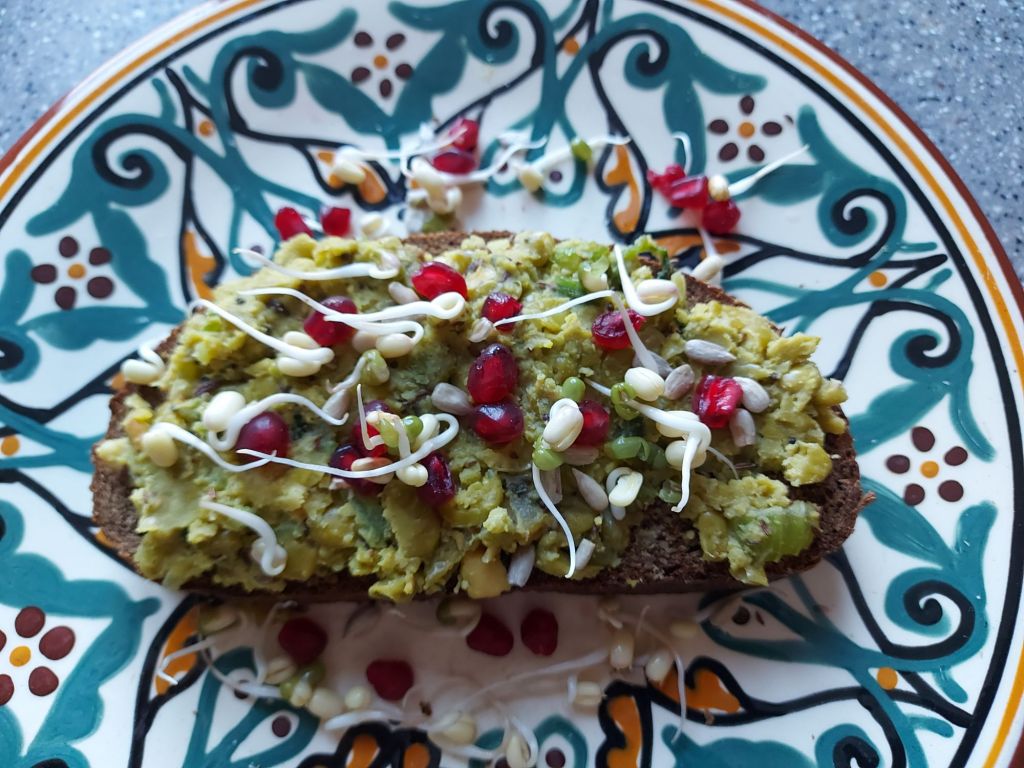
Move over avocado, here come the smashed peas!
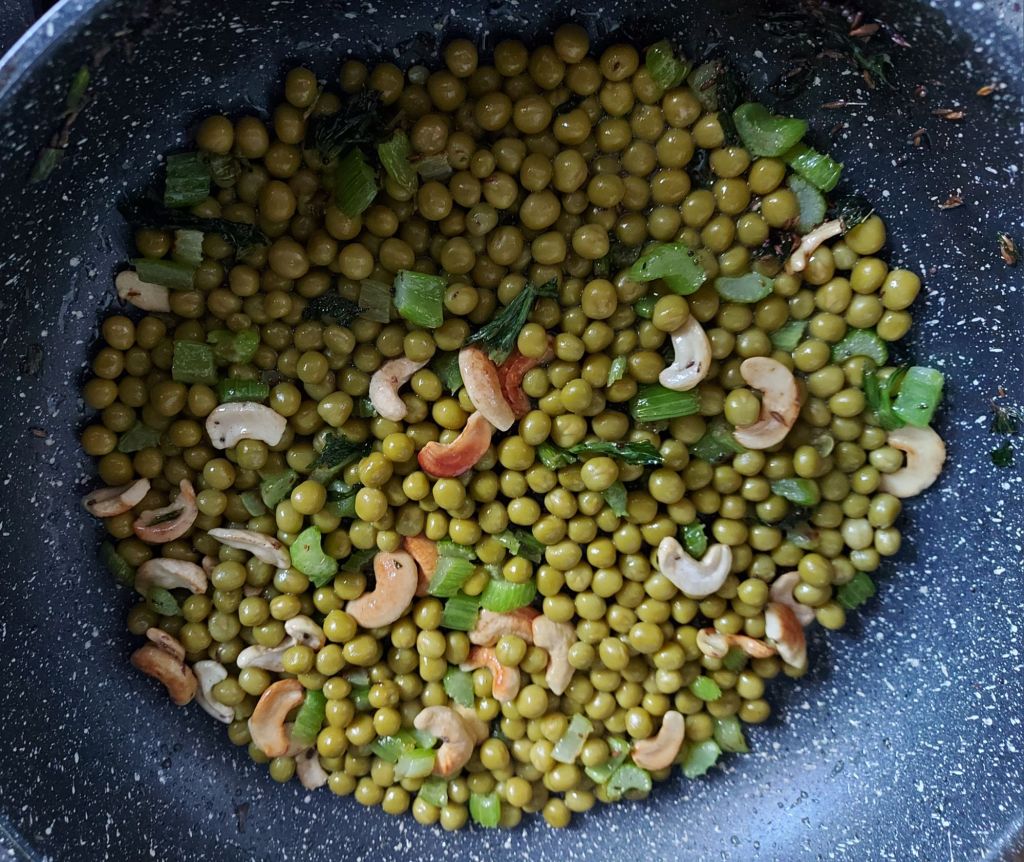
Smashed peas can be used replacement for avocado, and involve a lot less food miles. We combined our peas, from a tin as there were no frozen peas in our local supermarket, with some unsalted cashews and chopped celery to make a great substitute for the alligator pear.
There could be a solution in the offing to the problem of sourcing avocadoes in Kazakhstan. An enterprising farm in the south of the country, near Shymkent, has started growing bananas in greenhouses. This is quite a feat in a country with a sharp continental climate with hot summers and freezing winters.
Get ready to smash those peas…
This year’s banana crop will cover around 5% of demand in Shymkent and the commercial hub, Almaty. And in the coming years, GenGroup Qazaqstan hopes to add mangoes and avocadoes to the supply chain of locally grown fruits, significantly reducing the food miles clocked up for these treats.
Ingredients (makes four servings)
250 g peas
75 g celery
25 g cashew nuts
15 ml olive oil
One teaspoon cumin seeds
One teaspoon mustard seeds
To garnish: a handful of beansprouts
One teaspoon sunflower seeds (per serving)
One teaspoon pomegranate seeds (per serving)
Method
Heat the oil in a heavy-based frying pan and add the mustard and cumin seeds,. When they start popping, add the chopped celery and stir fry over a medium heat for two minutes and then add the cashews and continue to stir fry for another few minutes until the cashews start to brown.
Turn the heat down and add the peas. When the peas are warmed up, turn off the heat and use a potato masher to smash all the ingredients together. Spread the smashed peas on wholemeal bread or toast and garnish with pomegranate seeds, sunflower seeds and beansprouts.
As 2023 draws to a close, let’s take a look at some striking winter salads to liven up the end-of-year table. To complement our perennial favourite, our Olivier (with an Edge) salad, we’re looking to a coleslaw variation to add some colour to the New Year’s Eve spread. With the new year just around the corner, KCC wishes all its readers a prosperous and peaceful 2024, full with culinary adventures and many more mouth-watering meals!
This winter has been a strange one here in Kazakhstan. We should be in the depths of winter now, but the snow didn’t arrive until the first week of December. Then there was a week or so of freezing weather with the temperature dipping to -28c, but now, as we approach the end of December, there’s very little snow on the ground in Almaty – it’s even been raining, which is really unusual at this time of the year.
KCC’s coleslaw variation with pear and rocket
The purple hues of red cabbage pair so well with the orange of carrots and the green of rocket. For a bit of bite, we’ve added some grated radish (we used green radishes, but you can use red radishes or mouli if you can’t find green ones), along with some grated pear and pomegranate seeds for a sweet and tart note. Add in some pumpkin and sunflower seeds and raisins before dressing with tahini and pomegranate sauce.
Ingredients (serves 3-4)
100 g shredded red cabbage
100 g grated carrot
50 g chopped rocket
50 g grated green radish
50 g grated pear
25 g pomegranate seeds
25 g raisins
1 teaspoon dried oregano
2 teaspoons pumpkin seeds
2 teaspoons sunflower seeds
1 tablespoon tahini
1 tablespoon pomegranate sauce
a slice of fresh lime
Method
In a large bowl mix the red cabbage, carrot, rocket, green radish, pear and pomegranate seeds together. Add the raisins, oregano, pumpkin seeds and sunflower seeds. Make a dressing with equal parts pf tahini and pomegranate sauce and thin with a bit of hot water to obtain a smooth consistency. Pour over the salad, stir well, give it a squeeze of lime and serve.
A recent visit to Barcelona serves as the inspiration for this roasted red cabbage dish that KCC tried as part of the veggie restaurant Sésamo‘s 30 euro tasting menu. The great value menu includes seven tapas plates (that can be served as vegan or veggie), a dessert and a glass of local wine.
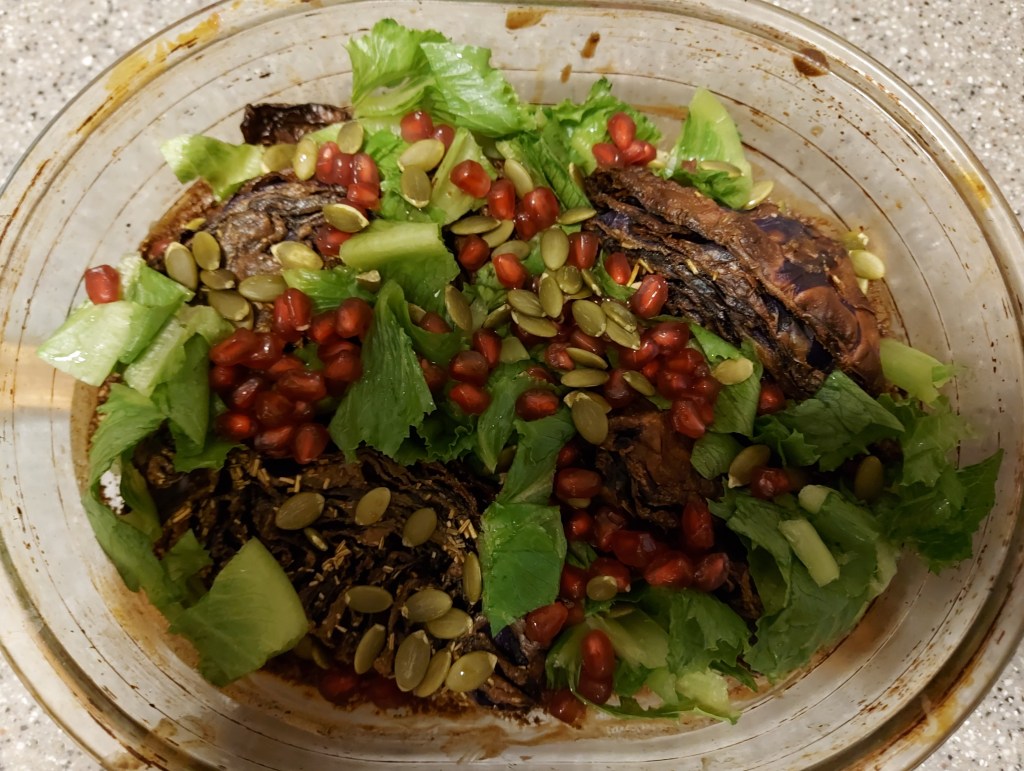
Sésamo’s baked cabbage was cooked with pesto, mint and dukkah – from the ingredients we had at hand we decided to cook ours with tahini, soy sauce and a sprinkling of sesame seeds. It can be served on its own as a main dish or as a salad – we added some shredded baby romaine lettuce and some pomegranate and pumpkin seeds to add some more colour to the dish.
If you’re in Barcelona, then we fully recommend you head for Sésamo which is located near Sant Antoni market. Unlike in most other tapas joints, you can be sure of a meat-free experience at this little gem of a restaurant. It’s closed on Tuesdays and Wednesdays but otherwise works from 19.00 to midnight. If you’re not planning on being in Catalonia, then follow the recipe below to recreate a taste of one of Sésamo’s signature dishes.
Ingredients (serves 4)
Half a red cabbage
50 g baby romaine lettuce
25 ml olive oil
50 ml tahini
10 ml soy sauce
One teaspoon sesame seeds
One tablespoon pumpkin seeds
One tablespoon pomegranate seeds
Method
Remove the tough outer leaves from the cabbage. Cut off the top half of the cabbage (not the stalk end) and then cut this into four slices. Mix the olive oil, tahini, rosemary and soy sauce together in a glass or ceramic baking dish with a fork. Coat the cabbage slices in the dressing. Bake for 30 minutes at 180 c.
Sprinkle with sesame seeds and serve hot immediately or let the cabbage cool down and then mix it with the baby romaine lettuce, add the pumpkin and pomegranate seeds and serve as a salad.
As the first snow falls here in Almaty, it’s time for some heartier fare. This recipe started out life as courgette soup, but the sudden drop in temperature called for something with a bit more oomph so we added some mung beans and dried coconut to give it a more stew-like consistency. To add a bit of colour, we sprinkled some pomegranate seeds on top and gave it a drizzle of pomegranate sauce before serving.
KCC’s Courgette, Coconut and Mung Bean Mash Up
The delicate, thin courgettes of the summer are giving way to the robust, denser marrows of autumn – perfect for making into a soup. Mung beans are a versatile store cupboard basic – they can be added to stews or grown into bean sprouts for stir fries and salads – check out more recipe ideas here. They’re a staple in home-cooked meals in Uzbekistan, where they’re known as mash, hence the “mash up” in the name of this dish.
Winter is coming to Almaty…
Ingredients (makes four servings)
1 kilo courgette
One celery stick
One medium onion
Bunch of radish leaves
200 g dried mung beans (soaked overnight)
50 g desiccated coconut
50 ml olive oil
Two teaspoons dried thyme
Two teaspoons cumin seeds
1.5 litres vegetable stock
Pomegranate seeds and Pomegranate sauce to garnish
Method
Heat the olive oil in a heavy-based pan and fry the cumin seeds until starting to crackle and then add the diced onion and cook for five minutes over a medium heat. Next add the diced celery, lower the heat and and cook for another five minutes, stirring occasionally. Cut the courgette into four pieces lengthwise and then slice into 1 cm thick chunks. Add to the pan along with the thyme and stir fry for ten minutes. Add one litre of vegetable stock and the chopped radish leaves and simmer over a low heat for twenty minutes.
While the soup is simmering, cook the mung beans in a separate pan with 500 ml vegetable stock and the coconut. Cook for twenty – thirty minutes or so until the beans are softening or until all the liquid is absorbed.
Remove around 25% of the courgette mix and blend the rest to a smooth consistency with a stick blender. Add these blended courgettes to the cooked mung beans and stir well. Bring to a boil and then add the reserved courgette mix. Pour into soup bowls, garnish with a few pomegranate seeds and a drizzle of pomegranate sauce and serve immediately.
If you’re feeling down after all the partying in December, then never fear as Russian Christmas is here! To help celebrate it in style we’ve opened up our Vodkatopf (a slavic cousin of the Rumtopf) and used the fruit that’s been stewing in the vodka since summer to make a booze-infused fruitcake.
KCC’s booze-fuelled festive fruitcake
In Russia, Christmas is celebrated on 7 January – the Orthodox Church still follows the Julian calendar rather than the Gregorian calendar whereas Russia switched to the latter in 1917. The switch created a 13-day lag between the calendars so, for followers of the Orthodox faith, Christmas Eve falls on 6 January and 13 January marks the end of the old year
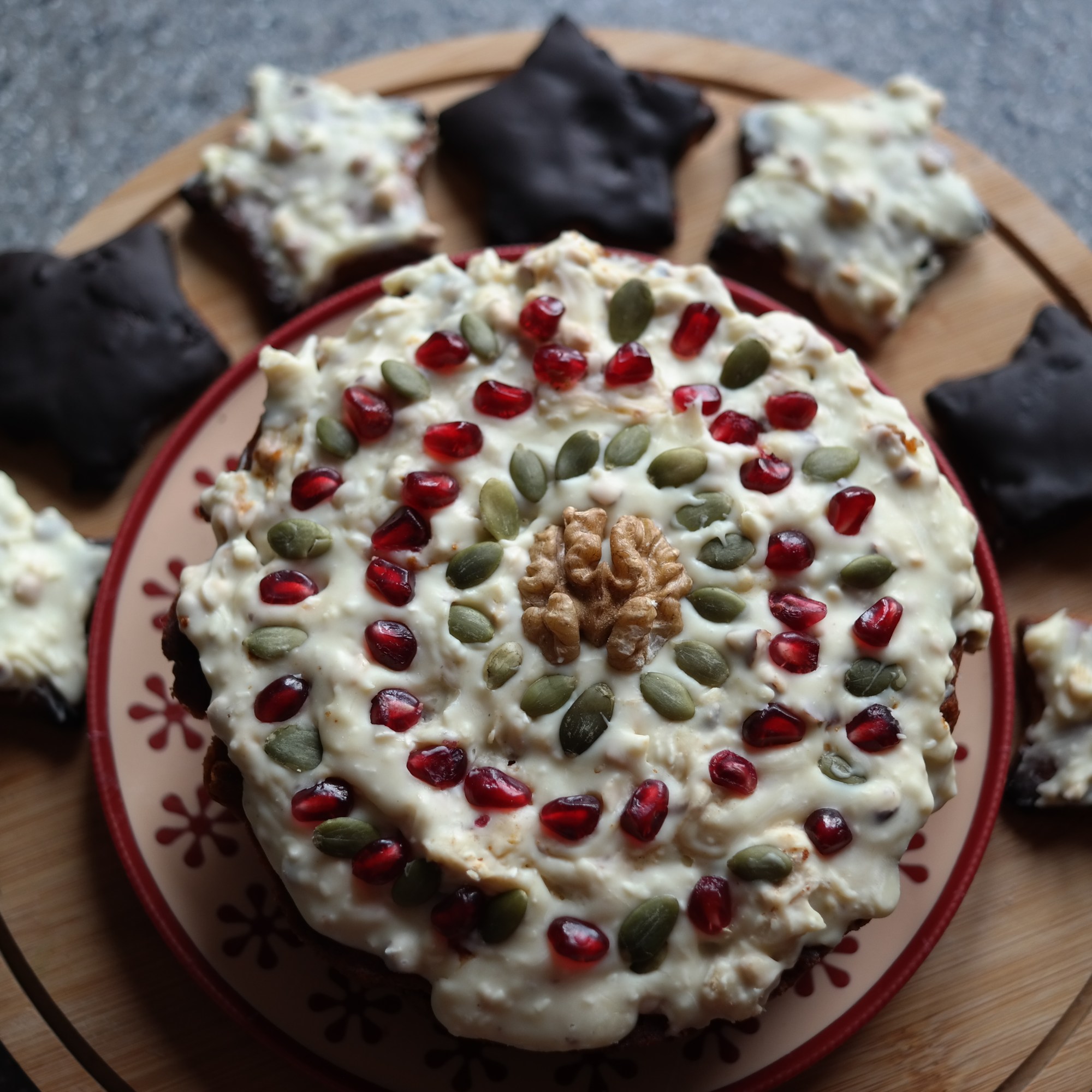
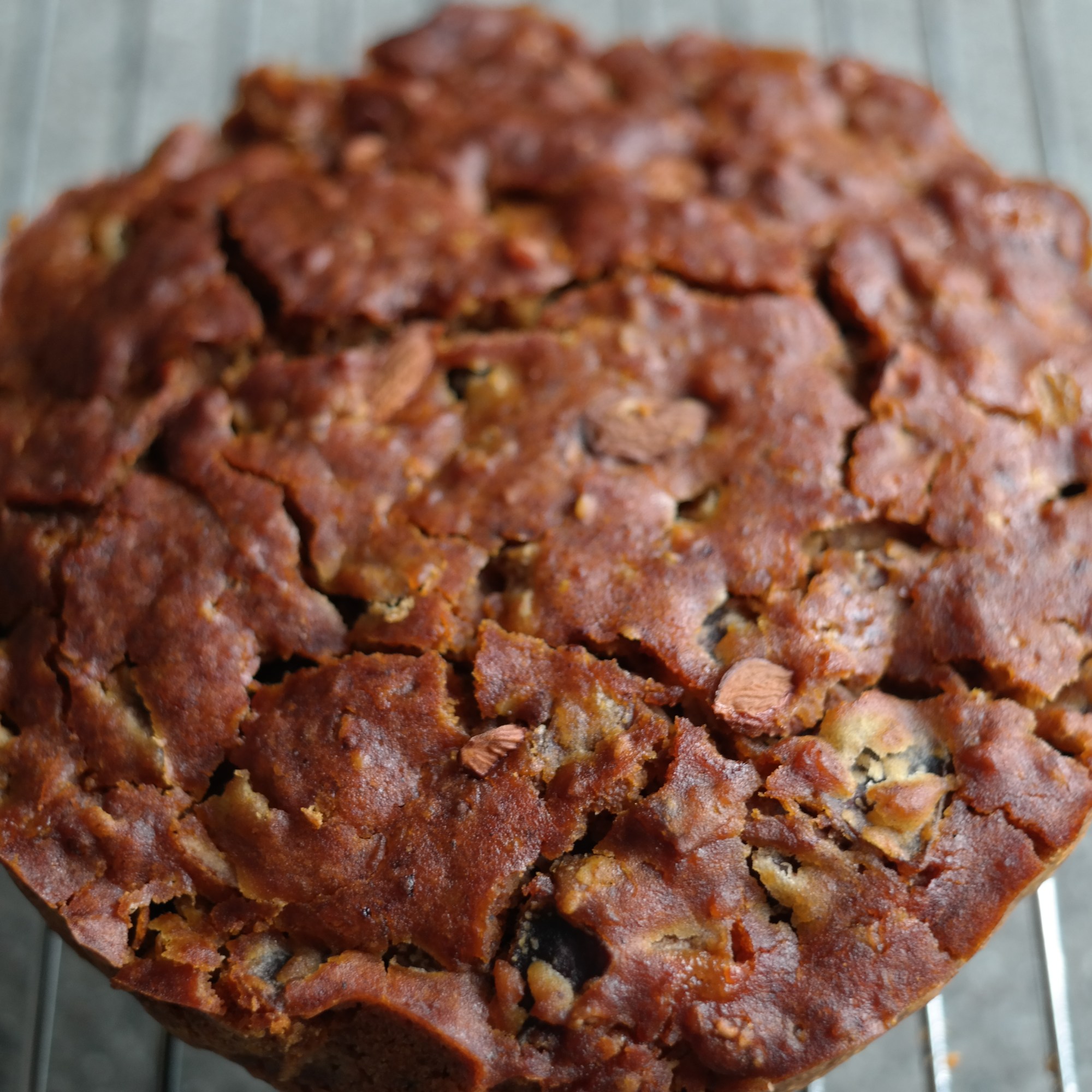
To make the vodkatopf we poured vodka over layers of different fruits as they appeared over the summer. The apricots, cherries and raspberries of early summer were followed by peaches and plums to make a great , fruity vodka for shooting or mixing. As an added bonus, the preserved fruit went into a the fruitcake mix. We decorated the cake with melted white chocolate and crushed almonds and used pumpkin and pomegranate seeds as the finishing touch.
Ingredients (for 6 – 8 servings)
325 g vodka-soaked mixed fruit (soak overnight in 250 ml vodka or other spirit if using dried fruit)
90 g olive oil
100 g honey (or golden syrup for a vegan cake)
175 g plain flour (we used rice flour for a gluten free cake)
50 g mixed nuts
100 ml coconut milk
25 g desiccated coconut
One teaspoon baking powder
One teaspoon each of cloves, ginger, nutmeg and cinnamon
25 ml vodka
100 g melted white chocolate
pumpkin and pomegranate seeds to decorate the cake
Method
Line a 15cm cake tin with a double layer of parchment paper, this will help stop the cake from burning
Sieve the flour and combine with the coconut milk, vodka, 30 g of chopped nuts, desiccated coconut, baking powder, cloves, ginger, nutmeg and cinnamon and stir together to make a thick batter
Melt the honey into the olive oil in a heavy-bottomed pan over a low heat and stir.
Combine the honey and oil mix with the batter.
Stir in the soaked fruits into the batter, along with any leftover liquid.
Layer the batter into the prepared tin and use a spatula to spread it level.
Melt the white chocolate in a glass or ceramic bowl over a pan of boiling water.
Spread the chocolate evenly over the top of the cake, sprinkle some mixed nuts over the icing and then decorate with pomegranate and pumpkin seeds.







 Knidos Cookery Club