This time round on Knidos Cookery Club we’ll be looking at a spice called sumac that is ubiquitous in Turkish cooking. Sumac comes from the flowering plants of the genus Rhus and its powdered purple-reddish berries give a tart but tangy boost to everything from soups and dips to grilled vegetables and kebabs. It also gives a rich dark burgundy hue to the dishes it flavours.
Sumac
We’ve decided to use it in acili ezme, a fiery tomato, onion and pepper dip that is delicious eaten on it’s own with bread, used as a sauce to accompany dishes such as pide, Turkey’s take on pizza, as part of a meze plate with our carrot and walnut tarator and our creamy almond and courgette dip or with mücver, Turkey’s courgette fritter.
A fearsome acili ezme
The secret to a successful acili ezme is to chop the ingredients as finely as you can with the sharpest knife you have and to chill it for a few hours before serving so the flavours have a chance to blend.
We’ve added red chilli flakes and sumac to give it a kick and used mint and parsley to balance out the flavours. If you like your dips hot, then use green chillies in place of green peppers in this recipe.
Ingredients (serves 3-4)
One medium-sized onion
Three medium-sized plum tomatoes
One medium-sized green pepper
One garlic clove
One bunch of parsley
One teaspoon dried mint
Three teaspoons red chilli flakes
Two teaspoons sumac
One teaspoon flavoured vinegar (such as apple or fig)
Three teaspoons pomegranate sauce
Method
Peel the tomatoes and de-seed (to peel: plunge the tomatoes into boiling water for 30 seconds then place in cold water – the skin should now come off easily). Chop the tomatoes, green pepper, onion, garlic and parsley as finely as you can.
Put all the ingredients into a bowl, add the herbs and spices, vinegar and pomegranate sauce and mix well. Leave to chill in the fridge for at least two hours before serving with flat bread.
Knidos Cookery Club would like to say a big thank you to all its readers who voted for the site in the 2017 Saveur Food Blog awards!
This time round we’re looking once again to Turkey’s north-eastern neighbour Georgia for some culinary inspiration. Adjapsandali, a popular dish in this mountainous former Soviet country, is Georgia’s spicier take on ratatouille.
Adjapsandali with green beans and potato
This summer stew relies on a holy trinity of aubergine, tomato and peppers with whatever else is in season thrown into the mix. We’ve added some green beans and some potato to give the dish a heartier edge, but these can be omitted and other seasonal veggies like courgettes and carrots can be used – there’s no hard and fast rules, it’s up to you!
The adjapsandali ingredients in the raw
It can be served up with all the veggies collapsing into a sublime sauce-rich stew or the veggies can be left on the firmer side, as in our example. Served with rice, it makes a meal on its own, but it is also great with salads and other Georgian staples such as pkhali.
Ingredients (makes 4 generous servings)
300 g potatoes
300 g aubergines
250 g tomatoes
2 red peppers
200 g green beans
1 onion
2 garlic cloves
50 ml olive oil
1 teaspoon coriander
1 teaspoon red chili flakes
2 teaspoons fresh basil
3 bayleaves
Method
Roughly chop up all the vegetables and throw them into a large, heavy-based pan. Pour the olive oil over the vegetables, add the herbs and spices and cook over a medium heat for 10 minutes or so stirring occasionally. Turn the heat down to low and cook for another 20-30 minutes until all the vegetables are cooked and beginning to break up.
Sprinkle with fresh basil and serve with crusty bread or rice and a selection of salads such as tomato, cucumber and onion with a walnut dressing and starters such as pkhali.
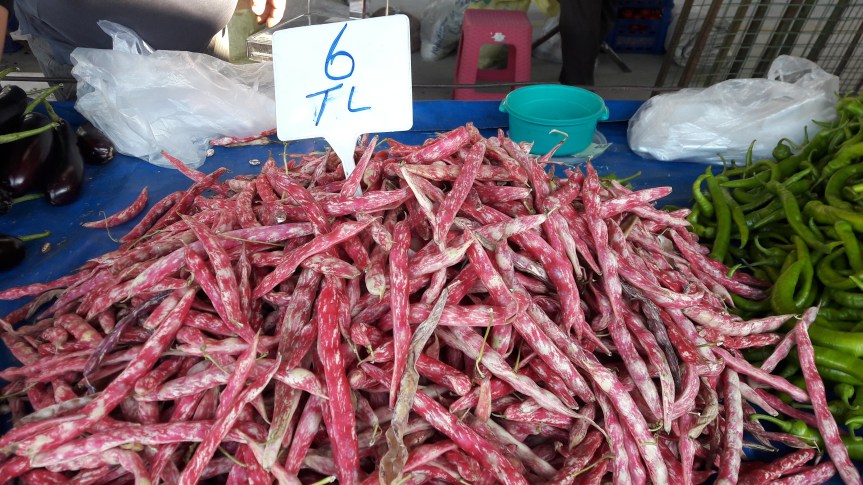
Last week in Datça market piles of psychedelic pink-podded barbunya beans arrayed against their green-podded cousins caught our eye. In Turkey these distinctive beans, also known as borlotti or cranberry beans, are made into a starter called barbunya pilaki, which is always high on our list when ordering a spread of mezeler.
Psychedelic pink barbunya beans piled high in Datça market
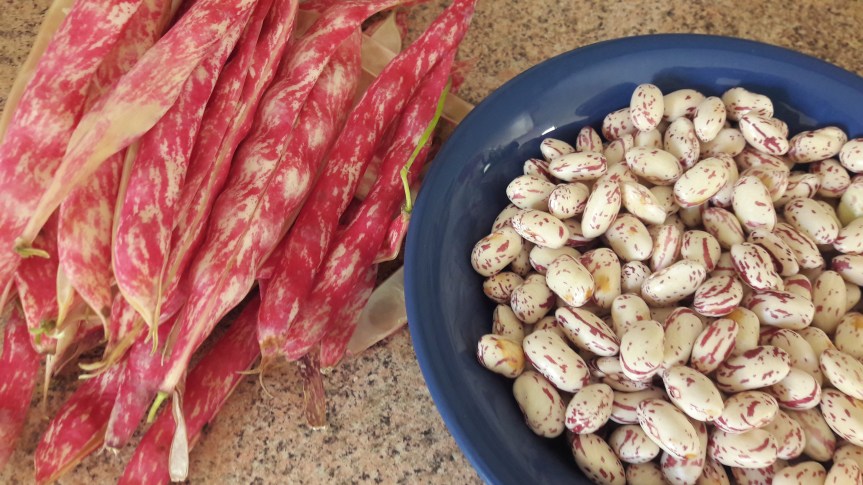
There’s something very therapeutic about podding these beans, like a beanish mindfulness moment! Our kilo of beans in their pods yielded around 600 g of pink-marbled white beans.
Bean therapy!
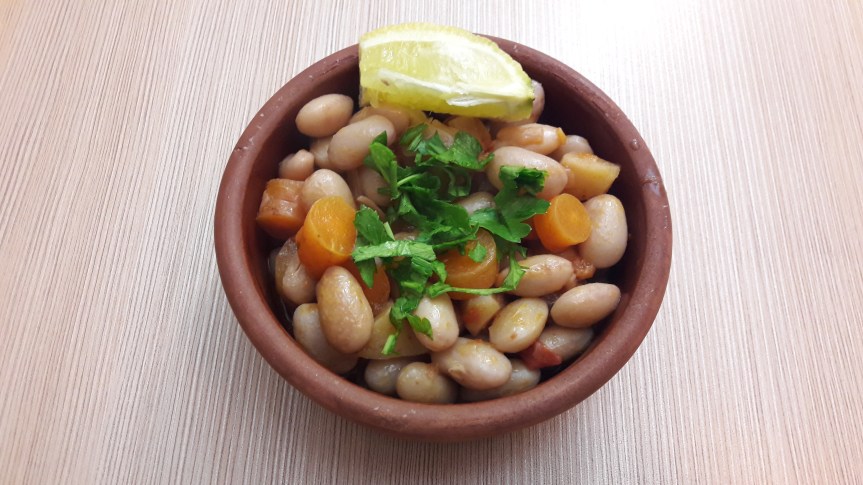
When cooked and allowed to cool, the pink colour leaches out and the beans take on a delicate brown hue. They’re delicious stewed with olive oil, onion, carrot, potato and lemon juice, served with a sprinkling of fresh parsley and a chunk of lemon. Some recipes omit the potato, but we think this gives the dish more oomph and means you don’t need to cook up any additional carbs.
Heat the olive oil into a heavy-based pan, chop the onion and garlic finely and fry over a medium heat for five minutes or so. Add the chopped tomatoes, lower the heat and cook for another five minutes.
Dice the carrot and potato into small cubes and then add these along with the beans, the juice of half a lemon, the honey, chili flakes and hot water to the pan and bring to a boil. Simmer for 30-45 minutes, stirring occasionally, until the beans are cooked but not going mushy.
Serve hot or allow to cool and garnish with fresh parsley and lemon slices.
Next week should see the start of negotiations on the UK’s future relationship with the European Union as talks are scheduled to get underway on 19 June to hammer out the ultimate shape of Brexit.
In the lead up to this momentous day, this weekend also marks another seminal event in Britain’s troubled relationship with continental Europe – 18 June is the anniversary of the Battle of Waterloo, a battle which saw forces under the command of the Duke of Wellington deliver a fatal blow to Napoleon Bonaparte’s ambitions in 1815.
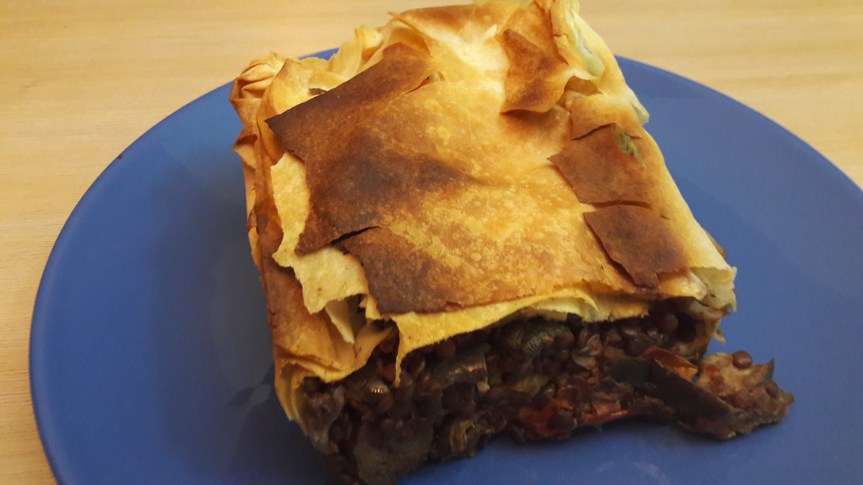
KCC’s Lentil Wellington ready for action
Only time will tell if the Maybot, in cahoots with the Rev Ian Paisely’s successors in the DUP, can produce a victory as decisive as Wellington’s – one thing is clear, some major sustenance is called for and what better than a hearty Lentil Wellington, our veggie take on Beef Wellington, a dish supposedly named after the duke.
Yes, besides giving his name to the wellington boot, the duke is also linked with this dish, which has a rich filling encased in pastry. Leah Hyslop suggests that the name was a patriotic makeover for a popular French dish:
The dish’s clear resemblance to that French specialty, filet de bœuf en croûte, could suggest the name was a timely patriotic rebranding of a trendy continental dish.
In our own era, food-patriotism was to the fore in 2003 when France refused to go along with the invasion of Saddam Hussein’s Iraq, causing some in the USA to call for ‘french fries’ to be rebranded ‘freedom fries’.
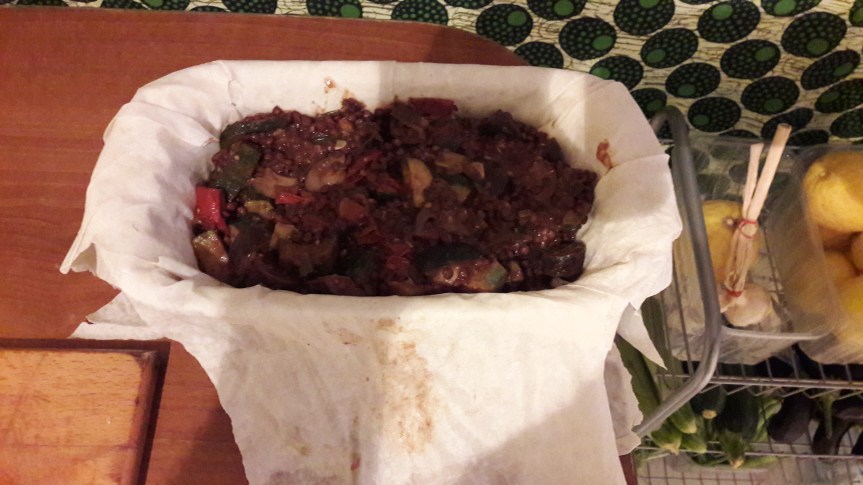
KCC’s Lentil Wellington ready for final assembly before baking
For a Turkish twist, we’ve used layers of yufka, the local version of filo pastry, to cover our rich lentil and vegetable sauce. Make sure you leave on overlap of pastry of about 8-10 cm around the edges of your dish in order to create a top to encase the filling.
Ingredients (serves 4)
250 g aubergines
250 g courgettes
250 g tomatoes
75 g black lentils
2 spring onions
1 garlic clove
1 bayleaf
1 teaspoon cinnamon, cumin, red chili flakes and coriander seeds
Pinches of black pepper and salt
250 ml vegetable stock
100 ml red wine
100 ml olive oil
Filo pastry (around 300 g)
Method
Wash the lentils until the water runs clear, and then cook in a heavy-based pan with the vegetable stock and bayleaf. Bring to the boil and then simmer over a low heat for 20 minutes or so until the liquid is absorbed.
While the lentils are cooking, prepare the vegetables: finely chop the spring onions and garlic, cut the aubergine and courgette into one cm thick slices and then cut into four. Place the vegetables into a heavy-based pan, add the herbs and spices and pour 50 ml olive oil over the veg and then cook over a medium heat for ten minutes, stirring occasionally.
Chop the tomatoes and add to the vegetables and cook for another five minutes, continue stirring every now and then. Now add the cooked lentils and the red wine and cook for another ten minutes or so until the liquid is absorbed.
While this is cooking, prepare the pie case. Grease a large pie dish with olive oil and layer leaves of filo pastry, brushing each layer with olive oil. Make sure you leave a pastry overlap of around 8-10 cm around the edges of the pie dish.
Pour the filling into the pie case and fold over the overlapping filo pastry, brushing with more olive oil to help seal the top of the case. Bake in an oven pre-heated to 180 c /gas mark 5 for 30 minutes or so until the top of the pie begins to turn a golden-brown colour.
Allow to cool for ten minutes and then serve slices of the pie with a crisp green salad and roasted new potatoes.
“Waste not, want not” was a familiar refrain at mealtimes when I was growing up. My parents had grown up with the rationing of World War II, and the lean years after it, and they were instilled with a mentality that saw nothing going to waste.
Here at Knidos Cookery Club, we’re big fans of this philosophy as an antidote to our throwaway culture. We couldn’t resist this beetroot on sale with it stem and leaves in place – bits that are more usually removed and discarded before the root hits the supermarket shelves.
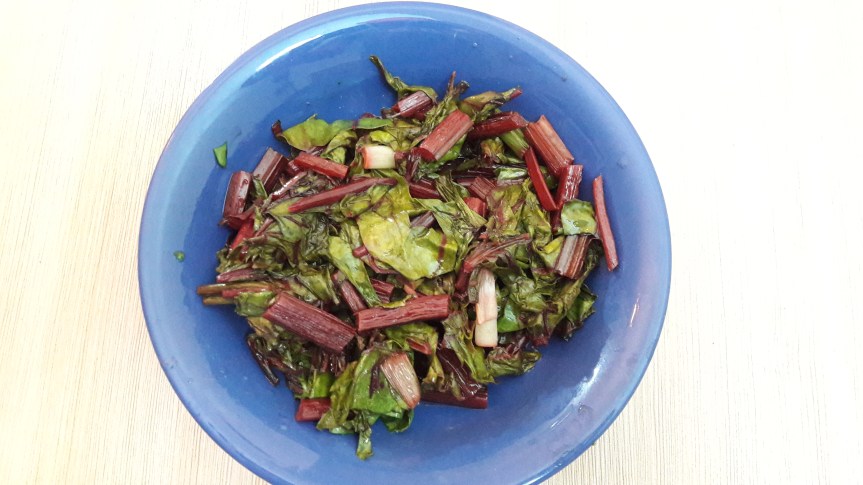
The stems and leaves contain loads of nutrients and taste delicious when simply sautéed with a spring onion, a clove of garlic and a dash of soy sauce and lemon juice to make a great side dish.
Having been brought up to believe that beetroot was something that came pickled in jars and ready sliced, it was a revelation when I first came across the leaves and stems cooked in a similar way in Greece many years ago.
Don’t forget that you can also use the main part of the root in a vivid Rip Red Risotto or in a tasty Georgian pkhali – the beet goes on!
Ingredients (serves 3-4 as a side dish)
the stems and leaves of a fresh beetroot
one garlic clove
one spring onion
soy sauce
olive oil for frying
juice of half a lemon
Method
Heat the olive oil in a wok or large frying pan over a medium heat and add the sliced spring onion and chopped garlic. Cut the stems from the beetroot (reserve the root for another dish). Separate the leaves from the stems.
Cut the stems into 2 cm slices and add to the onion and garlic and stir fry for five minutes. Shred the beetroot leaves and add to the pan, stirring constantly. Cook for two minutes, or until the leaves begin to wilt. Add a dash of soy sauce, stir and serve straight away, pouring the lemon juice over the beetroot sauté.
To celebrate this spring equinox festival, we’ll be serving up kok samsa, deep-fried pies filled with a selection of spring greens.
Seven tastes of spring: parsley, spinach, coriander, celeriac leaves, spring onion, garlic and mint
Originating in Persia some 3,000 years ago, Nowruz, or New Day, is a celebration of the end of winter and the start of a new year on the date when day and night are equal in the Northern Hemisphere. This date usually falls on or around 21 March.
The holiday is still widely celebrated in Iran and Iraq, across Central Asia, Russia, Afghanistan, Albania, Azerbaijan, in eastern Turkey and in parts of Syria, India, Pakistan and China. Food plays an important role in these celebrations – in Iran the table is set with seven items, as explained in this article from Iran Wire:
A few weeks before Nowruz, Iranians begin setting up their haft sin, or “seven Ss,” a ceremonial display of symbolic items whose names begin with the Persian letter “sin” or “s.” They include “sabzeh,” or green sprouts grown from lentils, which symbolize rebirth; “samanu,” a sweet pudding that represents affluence, “senjed,” or dried wild olives, which symbolize love; “seer,” or garlic, which symbolizes medicine; “seeb,” an apple, which represents health; “somaq” or sumac fruit, which symbolizes the color of sunrise, and “serkeh,” or vinegar, which symbolises maturity.
Kok samsa, a close relative of India’s samosa, are prepared in Uzbekistan, where the holiday is called Navruz. These tasty pies are filled with fresh spring greens.
We’ve developed our own take on the kok samsa using the Iranian magic number of seven ingredients: parsley, spinach, coriander, celeriac leaves, spring onion, garlic and mint. As fully signed-up members of Dillwatch, we omitted that scurrilous weed, dill, from this recipe.
KCC’s Kok samsa with seven spring herbs inside
Ingredients (makes 8-10 pies)
For the Pastry
300 g plain flour
75 ml olive oil
Pinch of salt
Up to 75 ml cold water
Two – three teaspoons of sesame seeds
2. For the Filling
150 g spring onions
2 garlic cloves
50 g fresh coriander
50 g fresh parsley
150 g spinach
25 g the leafy bits from the top of a celeriac
15 g fresh mint
Two teaspoons of cumin seeds
25 ml olive oil
3. For Deep Frying
1 litre sunflower oil (for deep frying)
Method
1.For the Pastry
Pour the flour into a large mixing bowl and add the salt. Pour in the olive oil and stir with a fork. The mixture should form into small clumps of flour and oil. Pour some of the cold water and continue mixing. Continue adding water until the mixture forms into a large ball shape. Cover with cling film and leave in the fridge until you’re ready to use it.
2. For the Filling
Heat the olive oil in a heavy-based pan and add the chopped spring onions and minced garlic. Fry for five minutes over a medium heat, stirring occasionally. Add the coriander and parsley and cumin and fry for two to three minutes. Add the torn up spinach leaves, chopped celeriac leaves and mint and continue cooking until the spinach has wilted, about 10 more minutes or so, stirring every now and then.
3. For Deep Frying
Heat the sunflower oil in a heavy-based pan. For deep frying you need to get the oil to around 180 c – to check the temperature use this tip from Delishably:
When the oil has preheated, dip the handle of a wooden spoon or a chopstick into the oil. If the oil starts steadily bubbling, then the oil is hot enough for frying. If the oil bubbles very very vigorously, then the oil is too hot and needs to cool off a touch. If no or very few bubbles pop up, then it’s not hot enough.
While the oil is heating, prepare the pies. Form the pastry into 8-10 walnut-sized balls. Put the pastry ball onto a lightly floured surface and roll out into a 1 mm thick circle. Sprinkle with sesame seeds and turn the circle over.
Place three teaspoons of filling on half of the pastry round and then close the other half over the top of the filling. Use a fork to mould the edges of the pie together. Prick the pie’s top to allow air to escape.
Place two or three pies at a time in the hot oil and fry for around 8 minutes or until the pie is golden brown in colour. Remove with a slotted spoon and drain on kitchen roll. Serve the kok samsa either hot or cold.
As another summer slips into the history books with the autumn equinox almost upon us, there’s a tang of vinegar in the air. The days are getting shorter and the nights cooler, and thoughts have started turning towards using the autumnal abundance of fruit and vegetables to make pickles and chutneys for the winter months.
In Turkey at this time of year people are busy preserving vegetables such as peppers, cucumbers, carrot, tomatoes, garlic, cauliflower and cabbage in vinegar and salt to make tursu, the ubiquitous pickle plate that adorns the dinner table.
When Lord Venal was visiting Knidos in August he was very taken with the local fig crop and was inspired to knock up a jar or two of his Fiendish Fig Chutney.
He helpfully explained the difference between a pickle and a chutney; a pickle involves raw vegetables preserved in a liquid such as brine, oil or vinegar, whilst chutney cooks vegetables or fruits in a sugary vinegar base.
Lord Venal hopes you’ll enjoy his spicy chutney with all types of cheeses and crackers.
Ingredients (Makes around 1.5 kg of chutney)
1 kg fresh figs
250 g raisins or currants
250 g onions
300 ml cider vinegar
200 g brown sugar
2 cloves of garlic
5 cm fresh ginger
one teaspoon coriander seeds
one cinnamon stick
one teaspoon cloves
one teaspoon turmeric
one teaspoon chili flakes
Assorted jam jars
Method
Chop the figs roughly and remove any stems. Throw them into a large stainless steel pan and add the vinegar, chopped onions, garlic and spices (remember to grind the coriander seeds, break up the cinnamon stick and peel and finely chop the ginger).
Bring to the boil and then allow the mix to simmer, stirring occasionally, for half an hour or so until the figs are softening. Now add the sugar and keep stirring until it’s dissolved. Cook for another 15 minutes or so until the mix starts to thicken. Unlike jam, as soon as you turn the chutney off it stops thickening, so turn the heat off when you reach your desired consistency.
While the chutney is bubbling away, sterilise the jam jars in the oven at 50°c for thirty minutes. Spoon the chutney into the jars while still hot and put a lid on when it’s cooled down a bit. It’s ready to eat straight away, but, like most things in life, it improves with age.
The courgette is one of the most versatile vegetables in the Knidos Cookery Club kitchen. Earlier it featured in a stuffed platter and as a fritter. We also like it in an omelette, in a börek or just sliced and grilled on the barbecue.
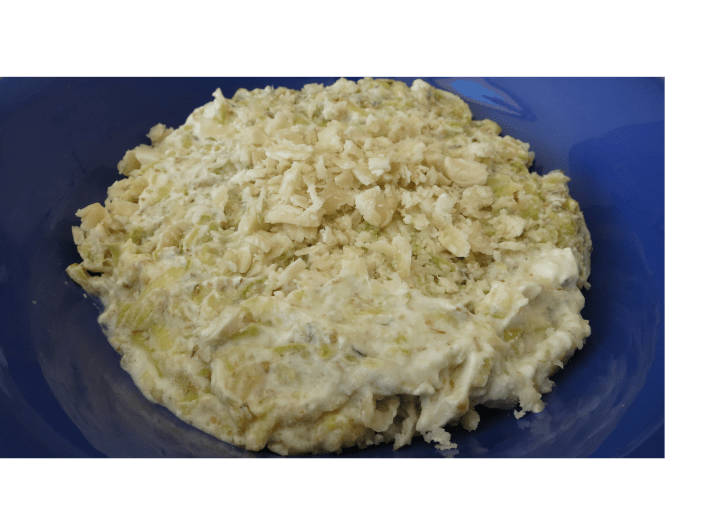
Creamy Almond and Courgette Dip
This week we’ve incorporated this key ingredient into a creamy almond and courgette dip that can be used as part of a starter, or meze, combo with other dips such as our Carrot and Walnut Tarator.
Yogurt and chopped almonds were added to the grated courgette to make it creamy and some wholemeal flour was used to hold it all together.
Ingredients (Serves 3-4)
250 g grated courgette
100 ml plain, natural yogurt
50 g wholemeal flour
50 g chopped almonds
One garlic clove
25 ml olive oil
Method
Heat the olive oil in a frying pan over a medium heat then add the grated courgette and garlic and stir fry for five minutes. Add the flour and stir fry for two more minutes. Take the frying pan off the heat, mix in the yogurt and almonds, reserving a few nuts to sprinkle over the top.
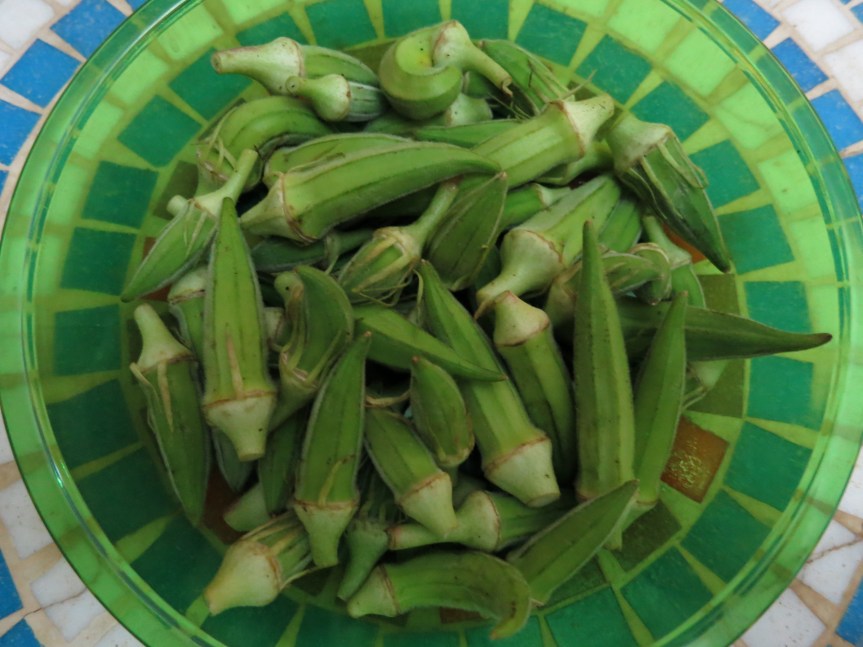
This week, Knidos Cookery Club is cooking with okra, another vegetable that arouses strong emotions in the love it or hate it camps.
Okra – washed, dried and ready for action
Many are put off this green pod, also known as lady’s fingers, for its tendency to taste a bit slimy at times. This sliminess can be avoided by making sure that after washing, the pods are thoroughly dried before being cooked. Stir frying can also help retain okra’s natural crunchiness.
The origins of okra are unclear – South Asia, West Africa and Ethiopia all make claims to be the home of this vegetable. Okra was brought to Turkey by Arab merchants and is known by its Arabic name, bamya. It’s often cooked with olive oil and tomatoes and served as a side dish in Turkey.
Bhindi bhaji – dry okra curry
Our favourite recipe for okra is to prepare it Indian-style, stir fried with spices to make a dry bhindi bhaji, which works as a standalone dish or can be accompanied with a lentil dhal and rice combo.
Ingredients (serves 3-4)
500 g okra washed and dried
250 g tomatoes
One medium-sized onion
One clove of garlic
1 cm fresh ginger
One teaspoon mustard seeds
One teaspoon cumin
One teaspoon dried coriander
One teaspoon cinnamon
One teaspoon turmeric
One teaspoon chili flakes
50 ml olive oil
Method
Heat the olive oil in a frying pan and tip in the mustard seeds. When the seeds begin to pop, add the diced onion and garlic and cook for five minutes or so until just starting to brown. Add the spices (ginger, cumin, coriander, cinnamon, turmeric and chili flakes) and stir well.
Throw the tomatoes into the spicy onion mix and cook for another five minutes or so until the tomatoes begin to break up. Now add the okra and stir fry for ten minutes, making sure the okra are well-coated with the curry sauce.
Serve immediately with a lentil dhal and basmati rice or chapatis, or both if you’re feeling famished.
Welcome to the tenth edition of Knidos Cookery Club! This calls for a celebration and this week we’ll be looking at some snacks and starters commonly associated with Turkey’s favourite alcoholic tipple, rakı.
A classic sundowner set with rakı, white cheese and cucumber
Rakı is a member of the family of anise-flavoured drinks common to many countries with coastlines on the Mediterranean Sea – ouzo in Greece, pastis in France, sambuca in Italy, arak in Lebanon and chinchón in Spain.
When rakı is diluted with water, it turns a milky white colour leading to its Turkish nickname, aslan sütü, or lion’s milk. It’s drunk as an aperitif and is accompanied by white cheese and cucumber. In spring and early summer, it’s often served with tart, sour green plums, known as can erik.
Sour plums
Rakı also accompanies a long, lazy lunch or evening meal with the drink served alongside a selection of mezeler, or appetizers that include, among many others, a spicy tomato and chili paste, acılı ezme, yogurt, grated cucumber and crushed garlic, cacık, and semizotu, purslane mixed with yogurt. These starters are usually followed by a grilled fish course and the meal is finished with slices of fresh melon.
The new season’s carrots have arrived!
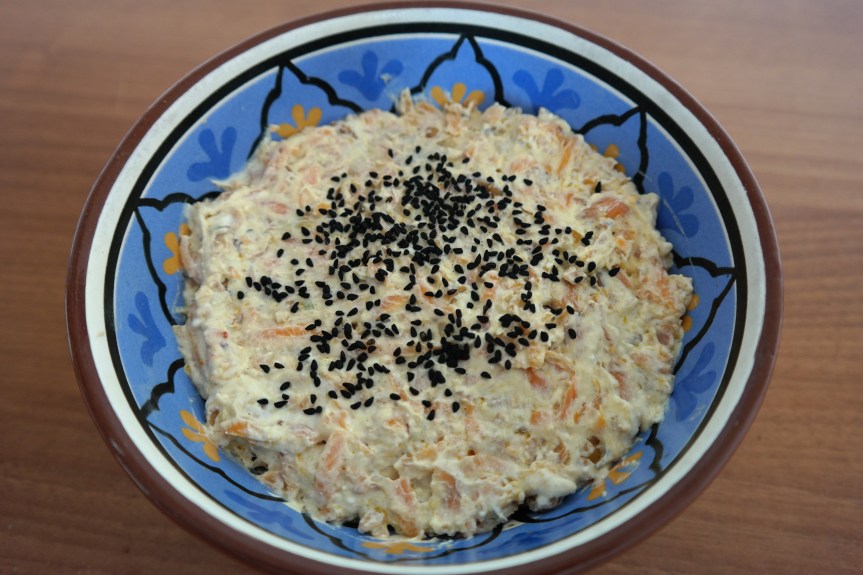
We couldn’t resist these great carrots in the market last week, and they’ve inspired this meze to go with a glass or two of lion’s milk. This week’s recipe is for cezizli havuç tarator, a combo of walnuts, carrots and yogurt.
Carrot and Walnut Tarator
Ingredients (serves 3-4)
200 g baby carrots
Eight walnuts
200 ml Greek (strained) yogurt
One or two garlic cloves
Splash of olive oil
Salt, black pepper, dried oregano, chili flakes, cumin and nigella seeds
Method
Heat the olive oil in a frying pan. Clean and grate the carrots (keep the carrot tops to make this pesto) then cook the grated carrot over a low heat for ten minutes or so to help release the natural sugars in the carrots. While it’s cooking, keep stirring and add pinches of salt, black pepper, dried oregano, chili flakes and cumin.
Allow the carrots to cool then add the crushed walnuts (use a blender or a rolling pin to crush them), as much garlic as you prefer and the yogurt. Blend together well and drizzle with nigella seeds.
Serve as a dip with crackers and slices of red pepper and cucumber along with a glass of rakı, water and ice.







 Knidos Cookery Club