I Heard it through the Grapevine

26 October 2017

Welcome to the 60th post on Knidos Cookery Club – to celebrate we took a tour to Datça’s very own vineyard to check out some of the local vintages on offer.

The vineyard is located on a hilltop on the main road into Datça and has a reserve range of delicious reds, going under the name of Cnidus, an alternative spelling of Knidos, and some  excellent red and white blends along with a superb blush wine.

This slideshow requires JavaScript.

It has been in its present site since 2011 and has both south and north-facing rows of vines to take advantage of the sun’s rays from both sides. Look out for the round brick windmill on a hillside on the left as you drive into Datça – the vineyard’s on the main road just before the turn off to the town.

This boutique vineyard produces around 40 – 50,000 bottles of wine a year –  using Cabernet Sauvignon, Merlot, Syrah (Shiraz) and the indigenous Öküzgözü and Boğazkere grape varieties to produce red wines and a blush, and Chardonnay, Sauvignon Blanc and the local Sultaniye grape to make white wine.

You can taste the wines in the windmill or in the beautiful garden with its spectacular views over the Mediterranean Sea and Greek islands on the horizon. You can also take a tour of the vineyard and buy wine in the shop at competitive prices.

Datça Vineyard’s wines are on sale in some restaurants in town and in two supermarkets – Erdi on the harbour front, and Dilge on the road to the town’s Saturday market.

20170516_102107
Green beans roasted with walnuts

With all this wine tasting to do, something simple was called for so this week we’re going to make a a quick pasta dish with roasted green beans and walnuts. It’s really easy to cook and there’s not much washing up either, leaving more time to enjoy the fruits of Datça’s vineyard!

Ingredients (serves 2-3)

250 g green beans

50 g walnuts

200 g pasta (penne, fusilli or spaghetti works well here)

One garlic clove

25 ml olive oil

One teaspoon dried thyme

Method 

Top and tail the green beans and cut into 3-4 cm slices. Put the beans in an oven dish, crush the walnuts and mince the garlic and scatter over the beans and then add the thyme and olive oil. Stir well and then put the dish in a pre-heated oven and cook for 30 minutes at 180 c.

While the beans are roasting, cook your favourite pasta as per the instruction on the pack. When cooked to your taste, drain and mix with the roasted beans and walnut and serve immediately on warmed plates with shavings of Parmigiano-Reggiano (Parmesan), if you’re a cheese fan.

As for the wine pairing, we’d recommend either a Silenus Chardonnay or a Silenus Blush – in Greek mythology Silenus was the god of wine making and drunkenness and the foster-father of Dionysos, the god of wine, vegetation, pleasure, festivity, madness and wild frenzy – enjoy!


No Beef with the Beetburger

19 October 2017

The beet is back on Knidos Cookery Club and this time round we’ll be using our burgundy-coloured friend to tap into another zeitgeist treat in the form of the tasty beetburger.

20171013_210527

The stalls in Datça market last Saturday were overflowing with bunches of beetroots so we picked up a bunch, chopped off the leaves and stems for sautéing, and wrapped the beets in foil and roasted them in the oven for an hour or so.

Beetroot burgers have been a bit of a barbecue craze in the UK over the summer, with supermarkets reporting soaring sales as people turn towards healthier options to meat.

20171013_175647
Turkey’s papatya, or daisy, loaf of bread

We’ve done some experimentation and come up with a patty that will hold together under the grill, on the barbie, in the oven or can be shallow-fried. Stuff it in a bun – we’ve used the papatya loaf as pictured above, and serve with chips and salad for a delicious yet healthy meal (the chips were roasted in the oven, not fried).

Ingredients (makes 6-8 burgers)

100 g red lentils

50 g fine bulgur wheat

150 g roasted beetroot, grated

One medium onion

One garlic clove

50 ml olive oil

Two teaspoons dried thyme

One teaspoon each of sumac, cumin and chilli flakes

Dash of soy sauce

Method

Heat 25 ml of the olive oil in a heavy-based pan, add the herbs and spices and the chopped onion and garlic and fry for five minutes until the onion starts to soften. Add the lentils and water, bring to the boil and then simmer until the liquid is absorbed.

Add the bulgur wheat to the mix and allow to cool for 30 minutes – this should thicken the mixture. Then add the grated beetroot and stir to combine all the ingredients. Form into burger shapes (take a dollop of walnut-sized mix and flatten with a spatula and shallow fry in the rest of the olive oil on both sides until going crispy on the outside.

Alternatively, these burgers can be baked in the oven for 30-40 minutes at 200 c or grilled or cooked on the barbecue until crispy on both sides. Serve in a burger bun with salad and chips.

Fava à la Grecque

12 October 2017

There are a lot of similarities between Turkish and Greek cuisine with both claiming baklava as their own and many other shared dishes, but there are also some striking differences. One variation we’ve noticed on our travels around Turkey and Greece has been with the dish known as fava in both countries.

20171006_134319
Fava à la Grecque

Last week we featured Turkey’s take on fava, made with broad beans, so this week we’re going to balance things up and have a look at Greece’s take on this dish, which is made with yellow split peas.

20171006_131423
Ingredients for fava à la Grecque

These dried peas proved quite hard to track down in Turkey – most supermarkets don’t stock them, but we eventually found them on sale in Datça market, mixed in with a few lentils and whole grains for good measure!

Greece’s version of this dish is runnier than Turkey’s, more like a hummus consistency, so it’s more suitable to use as a dip or spread. We’ve added some sumac to bring together these two esteemed cuisines in a spirit of gastronomic entente cordiale!

Ingredients (makes 6-8 healthy servings)

250 g yellow split peas, soaked in cold water for 1-2 hours

One medium red onion

One garlic clove

One teaspoon dried thyme

25 ml olive oil

500 ml water

Juice of one lemon

Pinches of salt and black pepper

Use a pinch of sumac, slices of red onion and a squeeze of lemon juice to garnish the fava

Method

Fry the finely chopped onion and garlic in the olive oil over a medium to high heat until the onions start to caramelise. Add the split peas and thyme, season with salt and pepper and stir well. Pour in the water, bring to the boil and then reduce the heat and simmer for 30 minutes or so until all the liquid is absorbed.

Allow the cooked mixture to cool for ten minutes and then use a hand blender to make it into a smooth paste. As you’re blending the mix, add the lemon juice to give it a creamier consistency.

Use a pinch of sumac, slices of red onion and a squeeze of lemon juice to garnish the fava and then serve warm with crusty bread and a green salad.


Bitter Melon Menemen

7 September 2017

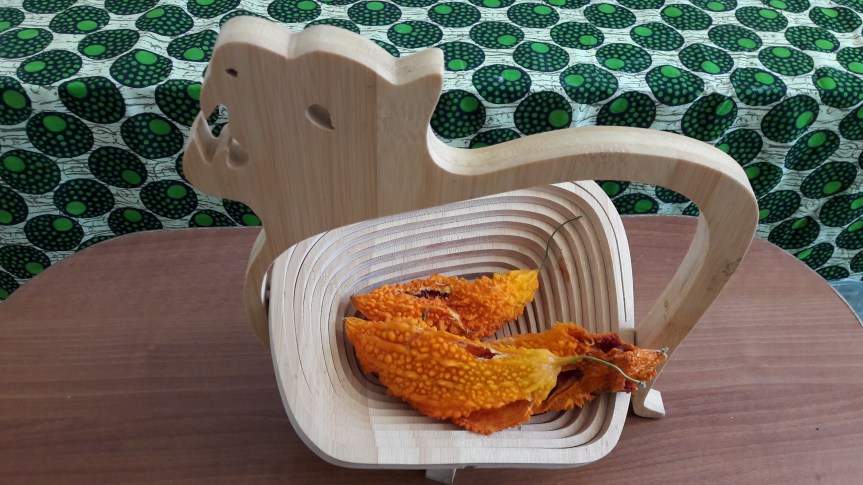
While shopping at Datça market recently, this spectacular-looking, knobbly, bright orange fruit grabbed our attention.

20170828_145746
What’s in the dragon today? Bitter melon, of course

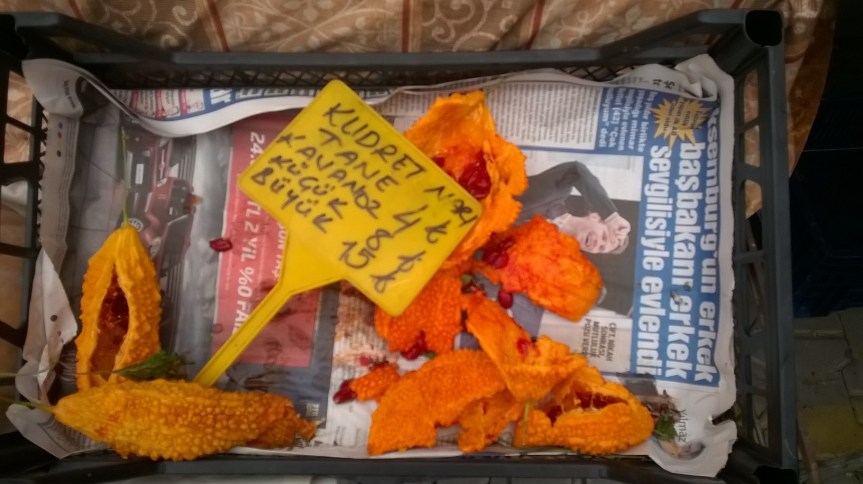
Subsequent googling revealed it to be a bitter melon, or bitter gourd, kudret narı in Turkish. Despute being popular in pan-Asian cooking, we couldn’t find too many Turkish recipes using bitter melon so we decided to mix it in with menemen, that breakfast fave in Turkey.

WP_20170826_12_29_42_Pro

You’ll probably be able to track down bitter melons in your local Asian grocer’s. When picked they are yellow-green, resembling a bumpy cucumber, and when ripe they turn orange. Cooking helps remove some of the bitter taste of this curious-looking member of the squash family. Inside are bright red coloured seeds that can be removed and eaten.

20170829_134255
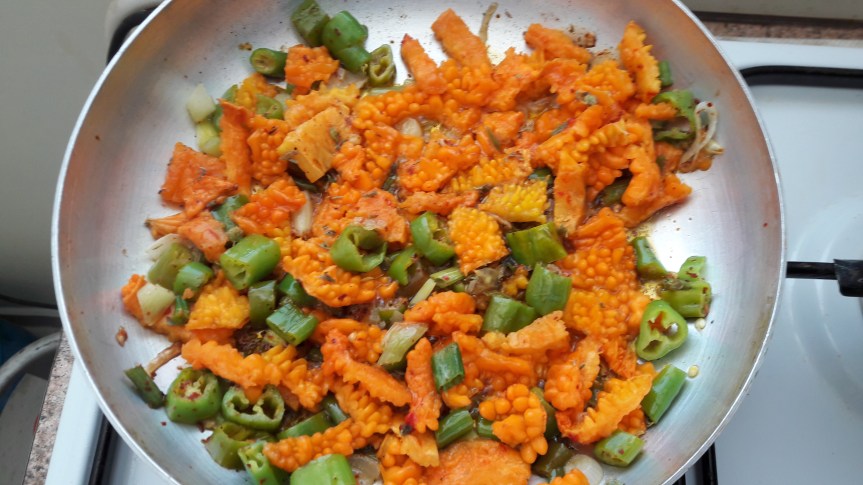
Step one: Fry the bitter melon
20170829_134858
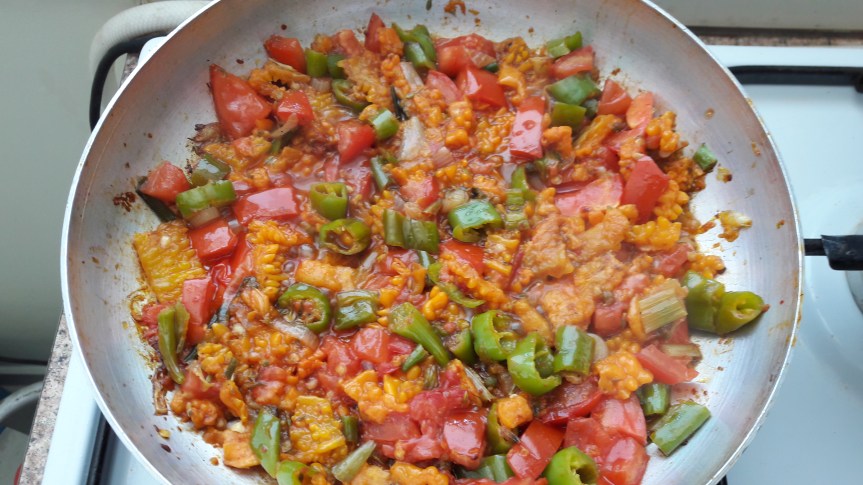
Step two: Add the tomato
20170829_135537
Step three: add the eggs and scramble

Ingredients (serves 2-4)

100 g bitter melon

60 g green peppers

2 spring onions

1 medium-sized tomato

1 teaspoon each of dried thyme, oregano, black pepper and red chilli flakes

4 eggs

A dash of soy sauce

25 ml olive oil

Method

Heat the olive oil in a frying pan and when hot add the chopped spring onion. Cook for two minutes over a medium heat and then add the peppers and seeded bitter melon, cut into 1-2 mm strips.

Cook for another two minutes and then add the chopped tomato, herbs and spices and a dash of soy sauce. Fry for 5 minutes and then reduce the heat and break the eggs into the mix. Keep stirring until you achieve the desired consistency of scrambled egg to your taste.

Serve with lashing of  crusty bread.

Figito Fiesta

17 August 2017

The year’s first succulent figs, in delicate green shades or striking mauve hues, are making their annual debut in Datça and to mark this moment we’ve come up with the figito, a cocktail that combines new season figs with white rum, mint and  lemon  – our spin on the classic mojito.

20170816_201256
Who’s for a figito?

One of the pleasures of walking round town at this time of year is stopping off to pick a juicy fig or two from the trees that abound in this area. Here’s a tree near the Knidos Cookery Club HQ with some prime fruits drying in the August heat.

20170817_130245
Figs drying in a garden in Datça, Turkey 

If you’ve got a glut of figs, then why not try this old favourite from last summer: Lord Venal’s Fiendishly Figgish Chutney, and enjoy a figito or two while you’re making it! Cheers, or Şerefe as they say in Turkey!

Ingredients (makes one litre)

6 ripe, fresh figs

4 sprigs of mint

2 lemons

100 ml White Rum (Bacardi or Havana Club)

600 ml soda water

200 ml Schweppes Bitter Lemon

Method

Peel and dice four of the figs and muddle with the mint and the juice from the lemons with a wooden spoon in a glass serving jug. Add the rum and mix well and then top up with bitter lemon and soda water. Serve over ice with a slice of lemon, a mint sprig and half a fig.


Barbunya Bean Therapy

22 June 2017

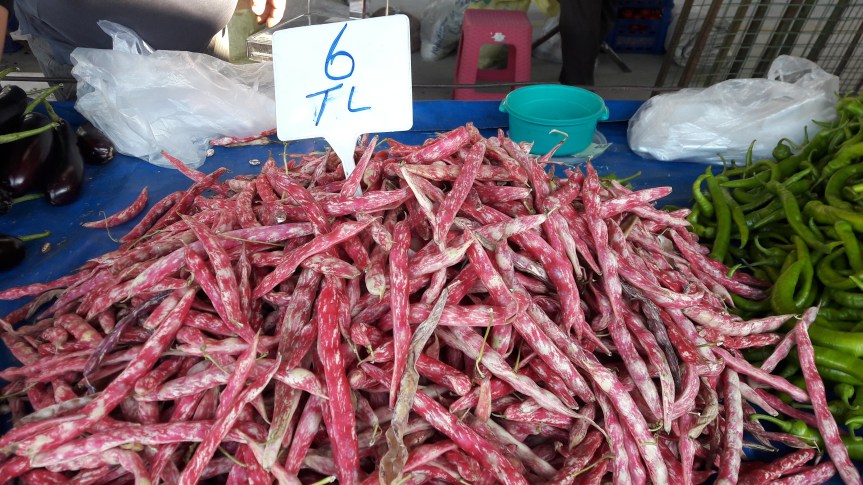
Last week in Datça market piles of psychedelic pink-podded barbunya beans arrayed against their green-podded cousins caught our eye. In Turkey these distinctive beans, also known as borlotti or cranberry beans, are made into a starter called barbunya pilaki, which is always high on our list when ordering a spread of mezeler.

20170616_183758
Psychedelic pink barbunya beans piled high in Datça market

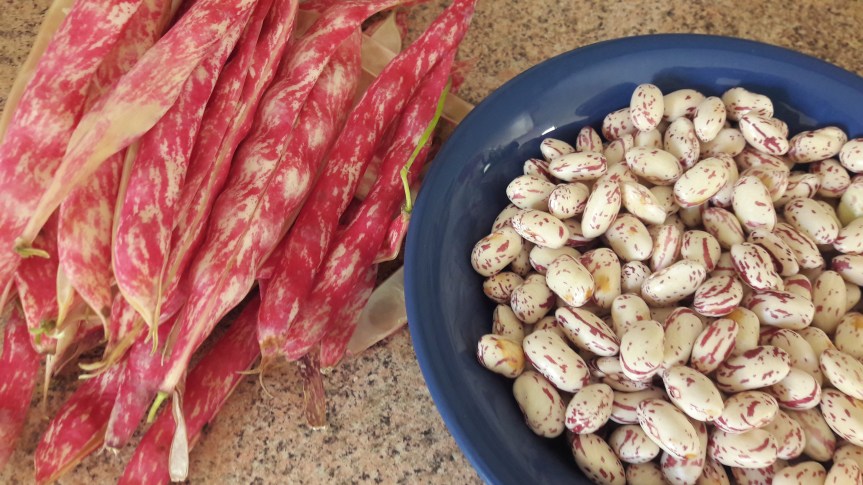
There’s something very therapeutic about podding these beans, like a beanish mindfulness moment!  Our kilo of beans in their pods yielded around 600 g of pink-marbled white beans.

20170616_194034
Bean therapy!

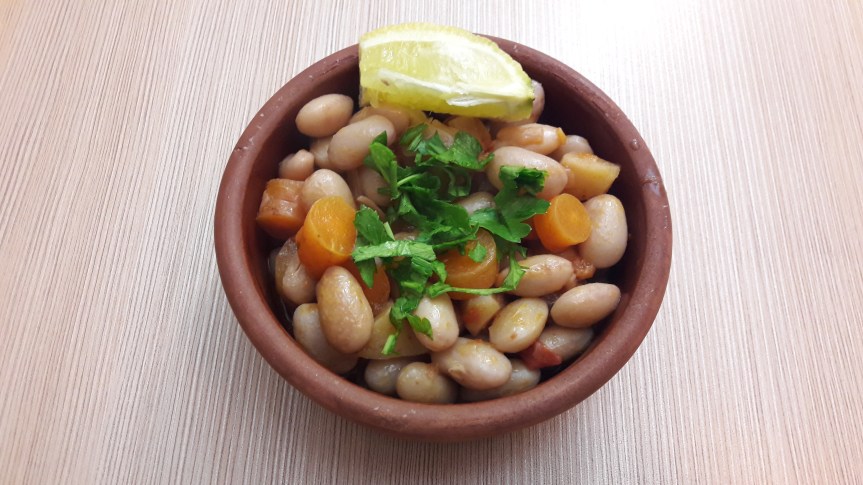
When cooked and allowed to cool, the pink colour leaches out and the beans take on a delicate brown hue. They’re delicious stewed with olive oil, onion, carrot, potato and lemon juice, served with a sprinkling of fresh parsley and a chunk of lemon. Some recipes omit the potato, but we think this gives the dish more oomph and means you don’t need to cook up any additional carbs.

20170616_220421
Barbunya pilaki all ready to go

They can be served hot as a less sugary take on baked beans, or served cold as part of the aforementioned selection of starters – Knidos Cookery Club recommends its carrot and walnut tarator, creamy almond and courgette dip, peppery muhammara and stuffed courgette flowers for a scrumptious feast of Turkish mezeler.

Ingredients (for 4-6 servings)

600 g shelled barbunya beans (or dried borlotti beans soaked overnight)

1 onion (around 100 g)

100 g carrot

100 g potato

100 g tomato

1 garlic clove

1 lemon

1 teaspoon honey

1 teaspoon red chili flakes

Fresh parsley to garnish

50 g olive oil

400 ml hot water

Method

Heat the olive oil into a heavy-based pan, chop the onion and garlic finely and fry over a medium heat for five minutes or so. Add the chopped tomatoes, lower the heat and cook for another five minutes.

Dice the carrot and potato into small cubes and then add these along with the beans, the juice of half a lemon, the honey, chili flakes and hot water to the pan and bring to a boil. Simmer for 30-45 minutes, stirring occasionally, until the beans are cooked but not going mushy.

Serve hot or allow to cool and garnish with fresh parsley and lemon slices.

Moussaka Mania

8 June 2017

As the UK continues its downward plunge to become the latest contender for the mantle of Europe’s most basket case economy, we’re turning our attention to the current holder of that title, Greece, for culinary inspiration this week in the form of moussaka, a great comfort food. We’ll be needing lots of comfort in the coming months as the lucky winner of today’s UK election navigates a course through the choppy waters of Brexit.

20170531_131610

Summer is here, and with Datça market overflowing with an array of fresh produce, Knidos Cookery Club is moving back to weekly posts for the foreseeable future. The aubergine is a vegetable that has had surprisingly little coverage in these pages, so it’s high time that was rectified.

20170530_221006

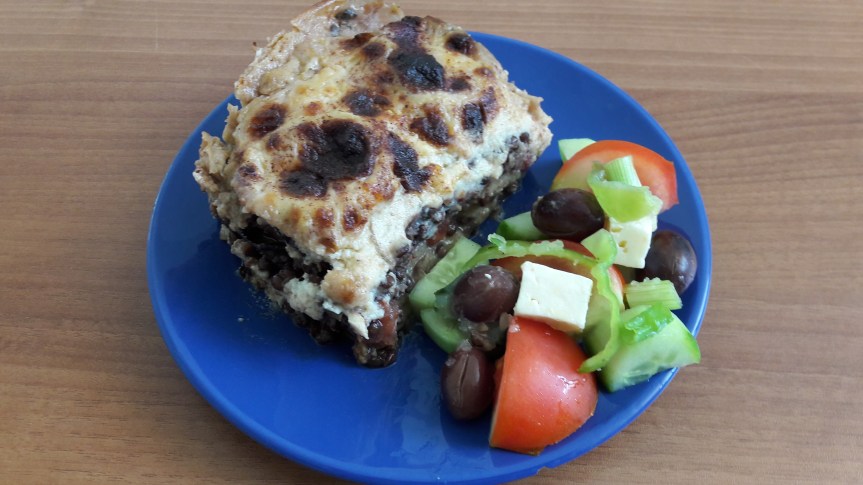
Moussaka is a perennial Greek favourite that is great fresh from the oven or eaten cooled down, allowing the flavours some time to collide. It combines layers of fluffy  potato and silky aubergine covered with a tomato-rich ragù, all topped with a creamy white béchamel sauce.

We’ve used black lentils in place of minced lamb to make our veggie take on moussaka, although any lentils should work well in this dish. It pairs excellently with a classic Greek salad of tomato, cucumber, onion, green pepper, olives and white cheese.

Ingredients (for 3-4 servings)

300 g aubergines

300 g potatoes

250 g tomatoes

100 g black lentils (or any other lentil)

3 spring onions

1 garlic clove

400 ml vegetable stock

100 ml red wine

1 teaspoon of cinnamon

1 teaspoon of dried sage

1 bayleaf

Pinch of black pepper

Pinch of red chili flakes

50 ml olive oil

For the white sauce:

50 ml olive oil

50 g flour

500 ml milk

5 peppercorns

1 bayleaf

75 g cheese (feta or  any crumbly white cheese)

Method

Heat 20 ml of olive oil in a heavy-based pan, chop the spring onions and garlic clove and add to the pan. Cook for five minutes then add the washed lentils and stir. Add the stock, bring to the boil then simmer for 20 minutes or so until most of the liquid is absorbed.

Pre-heat the oven to 200 c / gas mark 6. Cut the potatoes into one cm slices and boil for five minutes in a pan of water. Drain immediately and allow to cool. While the potatoes are boiling, chop the aubergine into 1 cm slices. If you like, you can coat the aubergine slices with a little salt, leave to stand for 10 minutes and then rinse. This should make them less bitter and remove excess moisture.

Place the potato slices in an oven dish and coat with 15 ml olive oil and stir to coat thoroughly. Place the aubergine slices into a separate oven dish and pour 15 ml of olive oil over them. Put both the dishes into the oven and bake for 30-40 minutes or until the potatoes are a golden brown colour and the aubergine slices beginning to char.

Add the peeled, chopped tomatoes, 100 ml red wine, bayleaf, cinnamon, sage and pepper to the lentils and cook over a low heat for 45 minutes until the sauce has reduced by about half.

While this is cooking, make the white sauce. Heat the oil in a heavy-based pan and stir in the flour to make a roux of a runny consistency. Slowly stir in the milk and add the peppercorns and bayleaf, stirring constantly with a wooden spatula or spoon or a whisk over a low heat. When the sauce begins to thicken, add the grated cheese and continue stirring until the sauce sets.

Now it’s time to assemble the moussaka. Pour half the lentil ragù over the potatoes to coat, add a layer of aubergines and pour over the rest of the ragù. Place the remaining aubergine slices over this and then pour the white sauce over these.

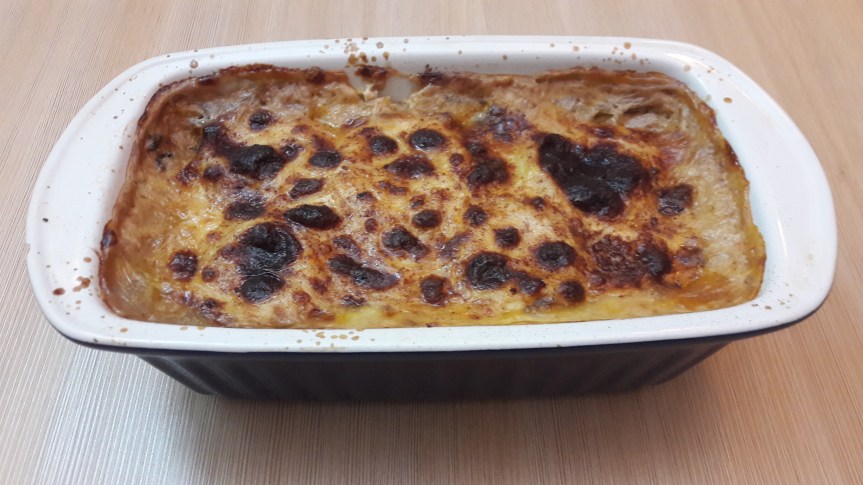
Sprinkle with red chili flakes and place in the oven and bake at 180 c /gas mark 5 for an hour or so – the top should be going a nice spotted brown colour as in the photo above.

Allow to cool and serve with a classic Greek salad made from tomato, cucumber, onion, green pepper, olives and white cheese, liberally dressed with olive oil and thyme.

Courgette Flower Power

4 May 2017

This time round on Knidos Cookery Club we’ve been busy stuffing courgette flowers, a popular starter all around the Aegean Sea. In Turkey, these delicate taste-bud ticklers, known as kabak çiçeği dolması, are stuffed with a rice mixture and baked, unlike their Italian cousins which are filled with ricotta cheese and deep fried.

IMG_1295
Succulent stuffed courgette flower power

The courgette, zucchini to our north American readers, is a really versatile vegetable – in the past we’ve used it in a tasty fritter mücverstuffed courgettes and in a creamy almond dip, and it’s great that we’ve found a use for its flowers as well.

If you’re growing your own courgettes, then you should have a ready supply of flowers, otherwise you may need to scour your local farmers’ market for these vivid orange blossoms.

Ingredients 

20-25 courgette flowers

One cup (approx. 100g) of short or long grain rice (We recommend brown rice for its earthier flavour)

250 ml vegetable stock

One medium-sized onion

One medium-sized tomato

One garlic clove

Pinches of dried thyme, oregano, black pepper, chili pepper flakes, cinnamon and salt

5 g fresh parsley

5 g fresh mint

25 g raisins

25 g  pine nuts

25 ml olive oil for frying

Juice of one lemon

One sliced lemon

100 ml natural yogurt

Method

Pour the olive oil into a heavy-based pan and add the chopped onion and garlic. Cook over a medium heat until the onion becomes translucent. Add the chopped tomato, dried and fresh herbs, seasoning, dried fruit and pine nuts and cook for five minutes over a high heat.

Turn the heat down and add the washed and soaked rice to the onion mix and stir to cover the grains with oil. Add the stock and cook over a low heat until the liquid is absorbed.

Make sure that the courgette flowers are free from any green, leafy bits or stem and remove the stamen from the inside of the flower. Allow the rice mixture to cool and then fill each flower with a teaspoon of rice mix – don’t overfill them as the rice will continue to expand as it cooks.

Fold the end of the blossom together to seal the rice mix in and place the filled flowers into a heavy based frying pan or casserole dish. Pour water over the flowers to just cover them, add a generous glug of olive oil and the lemon juice, put a lid on the pan and cook over a low heat until all the water is absorbed.

Leaving the pan covered, let the cooked courgette flowers rest for 30 minutes or so with the heat turned off and then serve with lemon slices and a dollop of natural yogurt.


Brandy Almonzandas All Round!

It’s time to kick back and enjoy a cocktail or two as this week we’re celebrating Knidos Cookery Club’s first anniversary.

20170331_210127

Our first post was made on 31 March 2016, and over the last year we’ve been on a journey that has taken in many seasonal dishes from Turkey and guest appearances inspired by travels to Greece, Georgia, Iceland, Kazakhstan and Uzbekistan.

To celebrate this momentous milestone, we’ve gone back to our roots in Datça, Turkey and come up with our second ever cocktail – the Brandy Almonzanda, a very close relative to the Brandy Alexander, a creamy combination of brandy, homemade almond milk and Dalkowski Chocotella (we couldn’t find Creme de Cacao) with a dusting of grated nutmeg on top.

20170331_153140
Dalkowski Chocotella – a chocolate liqueur from Poland

Datça’s tasty almonds, badem in Turkish, are rightly famous all over Turkey – I remember sitting on a terrace in Istanbul’s Beyoğlu district, back in the days when it still had tables on the street, when a guy came round selling ice-chilled Datça almonds.

IMG_20170107_164230_152
A cup of frothy almond coffee served up at Karia Cafe, Datça, Turkey

Not content with selling the raw nuts, adding them to rice in a stuffed melon or adding them to local mezes, many enterprising cafes along the town’s beachfront have started offering Datça almond coffee – a frothy concoction made from the peninsula’s staple product.

Almond coffee came about because of the isolated position of Datça and the Knidos Peninsula. Sometimes bad weather would mean that supplies of coffee beans could not make it onto the peninsula so the locals made do with something they had in abundance – almonds.

For our Brandy Almonzanda we’ve prepared our own almond milk – it’s pretty easy to do: just soak the raw (unsalted) nuts overnight (or up to 48 hours – the longer you leave them, the better the milk tastes), adding a pinch of salt, a cinnamon stick and a date (we didn’t have any dates so we used some dried apricots).

After soaking overnight, drain and rinse the nuts in fresh water and then put in a blender with 400 ml of cold water and blend to a smooth paste. Strain the almond milk to remove any remaining bits in a metal strainer, using a wooden spoon to press out all the liquid – this will produce around 450 ml – and, hey presto, your almond milk is ready!

To make the cocktail, pour one part of brandy, one part of Creme de Cacao (or similar) and two parts almond milk into a cocktail shaker filled with ice. Shake vigorously and pour into suitable glasses, sprinkle nutmeg over the top, add a straw and serve immediately.