Fesenjan for Beginners

18 January 2018

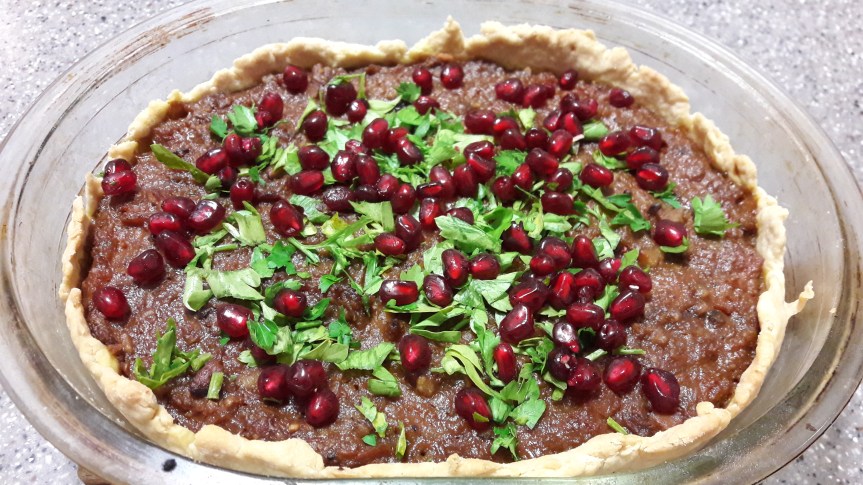
This week on Knidos Cookery Club we’re going to be bucking the January detox trend with this super-rich, calorie-laden Iranian stew, Fesenjan (pronounced fesenjoon), that combines three of our favourite go-to ingredients – pomegranate, walnut and pumpkin.

20180112_221142
KCC’s Fesenjan Tart

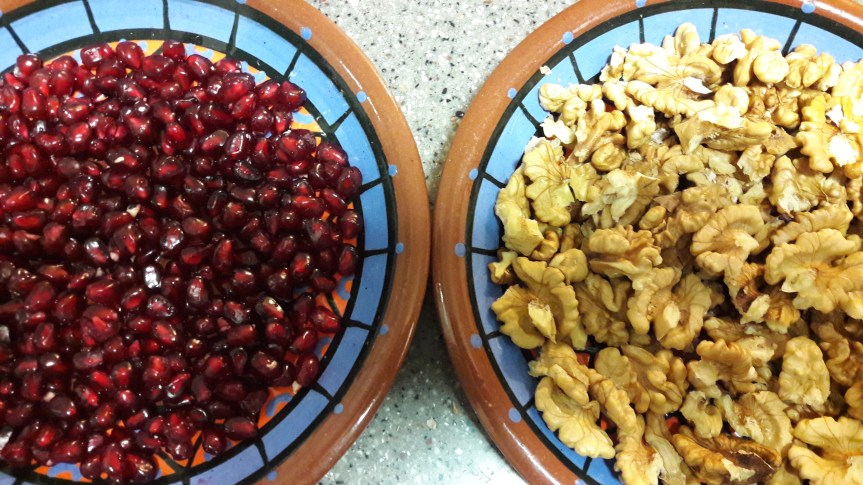
Usually served as a thick stew with rice, we’ve decided to put it in a pie case to make a tasty walnut and pomegranate infused tart. Making this stew can be quite labour-intensive – shelling the walnuts, toasting them, crushing them, extracting the pomegranate seeds and so on, but the end result makes it well worth all the effort.

20180112_185716
Can’t get much fresher than this!

Look out for Nar Ekşisi (pomegranate syrup) or the sweeter Nar Ekşili Sos (pomegranate sauce) in your local Middle-Eastern shop or make your own. If using Nar Ekşisi, add a teaspoon or two of honey to the stew to make it a bit sweeter.

To save time you can use shop-bought pastry, but we think it tastes better with a homemade pie crust. To keep it vegan, we’ve used olive oil instead of butter to make our shortcrust pastry.

Ingredients (serves 4)

125 g shelled walnuts

one medium onion

500 g pumpkin or butternut squash

300 ml vegetable stock

30 ml olive oil

2-3 tablespoons pomegranate syrup or sauce (Nar Ekşisi or Nar Ekşili Sos in Turkish)

0.5 teaspoon cumin seeds

0.25 teaspoon cinnamon and turmeric

Black pepper

Handful of pomegranate seeds

Bunch of fresh parsley

200 g shortcrust pastry

Method

Toast the walnuts for 10 minutes over a low heat and then mince in a blender. Heat the olive oil and fry the onion in a heavy-based pan over a medium heat for ten minutes. Add the spices and then add the cubed pumpkin and stir to cover.

Pour over the vegetable stock, add the pomegranate molasses and the minced walnuts and cook over a medium heat for 30 minutes until the pumpkin is cooked. Make sure the sauce is quite thick – if it’s runny, boil it until it starts to thicken.

Roll out the pastry and place it in a greased baking tray. Bake blind for ten minutes at 180c and then put the filling into the pie case. Cook for 40 minutes or so until the pastry starts to go golden brown.

Garnish the tart with chopped parsley and pomegranate seeds and serve with saffron rice and a green salad.

Christmas Redux – the Party Continues…

4 January 2018

Happy 2018 to all our readers! Just when you thought the festive season was over, here’s a quick reminder that in some parts of the world Christmas is still to come. In Russia and parts of eastern Europe, the Orthodox church uses the Julian calendar, leaving a 13-day lag between the two Christmases.

To mark the big day we’re making our version of borsch – a dish that varies considerably across eastern Europe and the former Soviet Union. The spelling also varies with both borshch and borscht in use.

In Ukraine, borsch forms an integral part of the Christmas Eve table, and it’s often veggie-friendly as this day is also the end of a period of fasting – meat and dairy products are not consumed in the run up to Christmas.

We’ve added some dried mushrooms to the beetrooty mix to give the stock more depth and put a bread topping over the pot to have something handy to tear up and dip into the borsch.

Ingredients (makes 3-4 servings)

500 g beetroot

1 medium- sized onion

1 garlic clove

200 g potato

200 g carrot

250 g red or white cabbage

50 ml olive oil

50 ml tomato puree

5 dried mushrooms

1 litre vegetable stock

2 bay leaves

Juice of one lemon

1 teaspoon red chilli flakes

50 g fresh parsley

For the bread top:

150 g flour

100 ml warm water

15 ml olive oil

Pinch of salt

Method

Clean the beetroot, wrap in tin foil and bake in an oven pre-heated to 180 c for one hour. Pour boiling water over the mushrooms and allow to stand for 30 minutes.

While the beetroot is cooking, heat the olive oil in a heavy-based pan and fry the chopped onion and garlic on a medium heat for ten minutes. Add the bay leaves and chilli flakes and then add the sliced mushrooms. Cook for five more minutes then add the tomato puree and the vegetable stock.

Bring to the boil and then add the diced potato and carrot and cook for 15 – 20 minutes over a low heat. After the beetroot has cooled, peel it and then dice it and add to the soup. Add the finely sliced cabbage, chopped parsley and lemon juice and cook for another 15 minutes.

Prepare the bread topping by combining the flour, water and oil and knead until you have an elastic mixture. Cover with cling film and leave to stand for 30 minutes.

Pour the borsch into individual serving bowls, place a disc of rolled out bread over the top of the bowl and cook in an oven pre-heated to 200 c until the bread is cooked and starting to go brown on top.

For non-vegans, add a dollop of sour cream after breaking through the bread cover. Use the bread to mop up the borsch.

Pumpkin, Pear and Pomegranate Potage

21 December 2017

Seasoned greetings to all our readers! To end the year on a high, we’ve come up with a thick and hearty pumpkin and pear soup sprinkled with pomegranate to add a colourful touch to your seasonal table.

Screen Shot 2017-11-16 at 15.56.41

Roasting pumpkin in the oven is a great way to prepare our favourite winter vegetable. After cubing the pumpkin, it’s just a matter of waiting about an hour or so for it all to cook leaving time to enjoy a few glasses of mulled wine or a snowball or 

Knidos Cookery Club would like to say a big thank you for all our readers who voted for us in the Saveur food blog awards – unfortunately we didn’t win this time round…

Wishing you all a creative and tasty 2018 in your kitchen. Have a great time with whatever tickles your festive fancy in what’s left of 2017. See you next year!

Ingredients (serves 3-4)

500 g pumpkin cubed

100 g pear

One small onion (around 75 g)

One teaspoon cumin seeds

Half teaspoon ground cinnamon

Pinch of black pepper

50 ml olive oil

250 ml vegetable stock

50 g pomegranate seeds

Method

Chop the pumpkin into 2 cm cubes, quarter and slice the pear into 1 cm cubes and put in a baking dish. Sprinkle the sliced onion, cumin seeds and cinnamon over the pumpkin and pear and then slosh the olive oil over the top. Bake for 40 minutes at 180 c in a pre-heated oven.

While this is baking, boil up some vegetable stock. Add the pumpkin and other ingredients to the stock, blend with a hand blender and serve immediately in a bowl with a smattering of pomegranate seeds over the soup.


No Beef with the Beetburger

19 October 2017

The beet is back on Knidos Cookery Club and this time round we’ll be using our burgundy-coloured friend to tap into another zeitgeist treat in the form of the tasty beetburger.

20171013_210527

The stalls in Datça market last Saturday were overflowing with bunches of beetroots so we picked up a bunch, chopped off the leaves and stems for sautéing, and wrapped the beets in foil and roasted them in the oven for an hour or so.

Beetroot burgers have been a bit of a barbecue craze in the UK over the summer, with supermarkets reporting soaring sales as people turn towards healthier options to meat.

20171013_175647
Turkey’s papatya, or daisy, loaf of bread

We’ve done some experimentation and come up with a patty that will hold together under the grill, on the barbie, in the oven or can be shallow-fried. Stuff it in a bun – we’ve used the papatya loaf as pictured above, and serve with chips and salad for a delicious yet healthy meal (the chips were roasted in the oven, not fried).

Ingredients (makes 6-8 burgers)

100 g red lentils

50 g fine bulgur wheat

150 g roasted beetroot, grated

One medium onion

One garlic clove

50 ml olive oil

Two teaspoons dried thyme

One teaspoon each of sumac, cumin and chilli flakes

Dash of soy sauce

Method

Heat 25 ml of the olive oil in a heavy-based pan, add the herbs and spices and the chopped onion and garlic and fry for five minutes until the onion starts to soften. Add the lentils and water, bring to the boil and then simmer until the liquid is absorbed.

Add the bulgur wheat to the mix and allow to cool for 30 minutes – this should thicken the mixture. Then add the grated beetroot and stir to combine all the ingredients. Form into burger shapes (take a dollop of walnut-sized mix and flatten with a spatula and shallow fry in the rest of the olive oil on both sides until going crispy on the outside.

Alternatively, these burgers can be baked in the oven for 30-40 minutes at 200 c or grilled or cooked on the barbecue until crispy on both sides. Serve in a burger bun with salad and chips.

Fava à la Grecque

12 October 2017

There are a lot of similarities between Turkish and Greek cuisine with both claiming baklava as their own and many other shared dishes, but there are also some striking differences. One variation we’ve noticed on our travels around Turkey and Greece has been with the dish known as fava in both countries.

20171006_134319
Fava à la Grecque

Last week we featured Turkey’s take on fava, made with broad beans, so this week we’re going to balance things up and have a look at Greece’s take on this dish, which is made with yellow split peas.

20171006_131423
Ingredients for fava à la Grecque

These dried peas proved quite hard to track down in Turkey – most supermarkets don’t stock them, but we eventually found them on sale in Datça market, mixed in with a few lentils and whole grains for good measure!

Greece’s version of this dish is runnier than Turkey’s, more like a hummus consistency, so it’s more suitable to use as a dip or spread. We’ve added some sumac to bring together these two esteemed cuisines in a spirit of gastronomic entente cordiale!

Ingredients (makes 6-8 healthy servings)

250 g yellow split peas, soaked in cold water for 1-2 hours

One medium red onion

One garlic clove

One teaspoon dried thyme

25 ml olive oil

500 ml water

Juice of one lemon

Pinches of salt and black pepper

Use a pinch of sumac, slices of red onion and a squeeze of lemon juice to garnish the fava

Method

Fry the finely chopped onion and garlic in the olive oil over a medium to high heat until the onions start to caramelise. Add the split peas and thyme, season with salt and pepper and stir well. Pour in the water, bring to the boil and then reduce the heat and simmer for 30 minutes or so until all the liquid is absorbed.

Allow the cooked mixture to cool for ten minutes and then use a hand blender to make it into a smooth paste. As you’re blending the mix, add the lemon juice to give it a creamier consistency.

Use a pinch of sumac, slices of red onion and a squeeze of lemon juice to garnish the fava and then serve warm with crusty bread and a green salad.


Courgette Flower Power

4 May 2017

This time round on Knidos Cookery Club we’ve been busy stuffing courgette flowers, a popular starter all around the Aegean Sea. In Turkey, these delicate taste-bud ticklers, known as kabak çiçeği dolması, are stuffed with a rice mixture and baked, unlike their Italian cousins which are filled with ricotta cheese and deep fried.

IMG_1295
Succulent stuffed courgette flower power

The courgette, zucchini to our north American readers, is a really versatile vegetable – in the past we’ve used it in a tasty fritter mücverstuffed courgettes and in a creamy almond dip, and it’s great that we’ve found a use for its flowers as well.

If you’re growing your own courgettes, then you should have a ready supply of flowers, otherwise you may need to scour your local farmers’ market for these vivid orange blossoms.

Ingredients 

20-25 courgette flowers

One cup (approx. 100g) of short or long grain rice (We recommend brown rice for its earthier flavour)

250 ml vegetable stock

One medium-sized onion

One medium-sized tomato

One garlic clove

Pinches of dried thyme, oregano, black pepper, chili pepper flakes, cinnamon and salt

5 g fresh parsley

5 g fresh mint

25 g raisins

25 g  pine nuts

25 ml olive oil for frying

Juice of one lemon

One sliced lemon

100 ml natural yogurt

Method

Pour the olive oil into a heavy-based pan and add the chopped onion and garlic. Cook over a medium heat until the onion becomes translucent. Add the chopped tomato, dried and fresh herbs, seasoning, dried fruit and pine nuts and cook for five minutes over a high heat.

Turn the heat down and add the washed and soaked rice to the onion mix and stir to cover the grains with oil. Add the stock and cook over a low heat until the liquid is absorbed.

Make sure that the courgette flowers are free from any green, leafy bits or stem and remove the stamen from the inside of the flower. Allow the rice mixture to cool and then fill each flower with a teaspoon of rice mix – don’t overfill them as the rice will continue to expand as it cooks.

Fold the end of the blossom together to seal the rice mix in and place the filled flowers into a heavy based frying pan or casserole dish. Pour water over the flowers to just cover them, add a generous glug of olive oil and the lemon juice, put a lid on the pan and cook over a low heat until all the water is absorbed.

Leaving the pan covered, let the cooked courgette flowers rest for 30 minutes or so with the heat turned off and then serve with lemon slices and a dollop of natural yogurt.


A Passion for Pkhali

20 April 2017

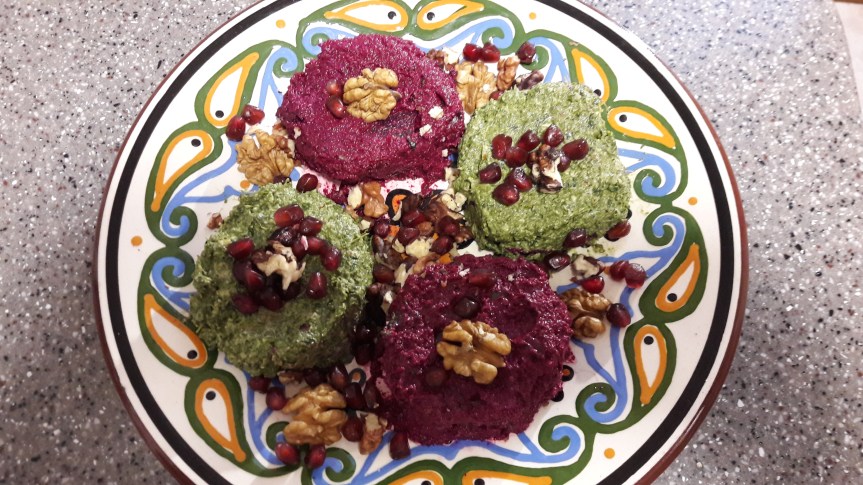
This time round on Knidos Cookery Club we’re returning to Georgia for some culinary inspiration in the form of pkhali, a type of starter made from walnuts, herbs, spices and whatever vegetable happens to be in season, such as spinach, beetroot, aubergine, cabbage or carrot.

20170415_200229

Walnuts are widely used in Georgian cooking – besides pkhali, they can be turned into  satsivi, a thick paste similar to hummus, and  bazhe, a sauce made with the holy trinity of Georgian herbs – blue fenugreek, ground coriander (cilantro) and crushed marigold flowers. These combos can be mixed with fresh cucumbers and tomatoes as a salad dressing or stuffed into tongues of fried aubergine (eggplant).

IMG-20170415-WA0000

Staying on the walnut theme, on a recent visit to the former home of famous Kazakh writer Mukhtar Auezov in Almaty, Kazakhstan, the guide gave me a handful of walnuts from the gnarled old tree in the garden of the writer’s house. These nuts were used in the making  of today’s pkhali recipe.

Auezov was famous in Soviet times for writing The Path of Abai, an epic historical novel based on the life and teachings of Kazakhstan’s most famous poet and composer Abai Qunanbayuli, who had been a neighbour and friend of Auezov’s grandfather.

It was said in the Soviet era that all were equal, but some were more equal than others – and this was certainly the case for Auezov after he won the Lenin Prize in 1959 for his four-volume epic novel about Abai.

The prize came with a sackful of roubles which he invested in a two-storey house, which is now a museum dedicated to his life and work. The house was lavish by the standards of the time and was designed by the architect who designed Almaty’s Abai Opera Theatre.

Ingredients (Makes around four generous servings of each pkhali – see photo above)

For the beetroot pkhali

  • 300 g cooked beetroot
  • 100 g walnuts
  • One garlic clove
  • 5 g fresh parsley
  • 5 g fresh coriander
  • One teaspoon blue fenugreek powder
  • One teaspoon black pepper
  • 20 ml wine vinegar
  • A scattering of pomegranate seeds and walnuts


For the spinach pkhali

  • 250 g fresh spinach
  • 100 g walnuts
  • One small onion (around 75 g)
  • One garlic clove
  • 5 g fresh parsley
  • 5 g fresh coriander
  • One teaspoon blue fenugreek powder
  • One teaspoon black pepper
  • 20 ml wine vinegar
  • A scattering of pomegranate seeds and walnuts


Method

  • For the beetroot pkhali:
  • Boil the beetroot for 30 minutes or so until you can pierce it with a knife easily.
  • Leave to cool and then peel and chop into small chunks.
  • Toast the walnuts over a low heat for 5-10 minutes and then add to the garlic and herbs and spices in a bowl. Add the vinegar and use a blender to make a smooth paste. Add the beetroot chunks and keep blending until you have a gloopy mixture.
  • Leave overnight in the fridge and then serve with a scattering of pomegranate seeds and walnuts.

Method

  • For the spinach pkhali:
  • Cook the spinach in boiling water for 5 minutes until it begins to wilt. Remove and place in cold water and then drain.
  • Finely chop the onion and put it in a mixing bowl with the garlic, herbs and spices. Toast the walnuts over a low heat for 5-10 minutes and then add to the bowl. Add the vinegar and use a blender to make a smooth paste. Add the spinach and keep blending until you have a gloopy mixture.
  • Leave overnight in the fridge and then serve with a scattering of pomegranate seeds and walnuts.


Lobiani Sausagiani

9 March 2017

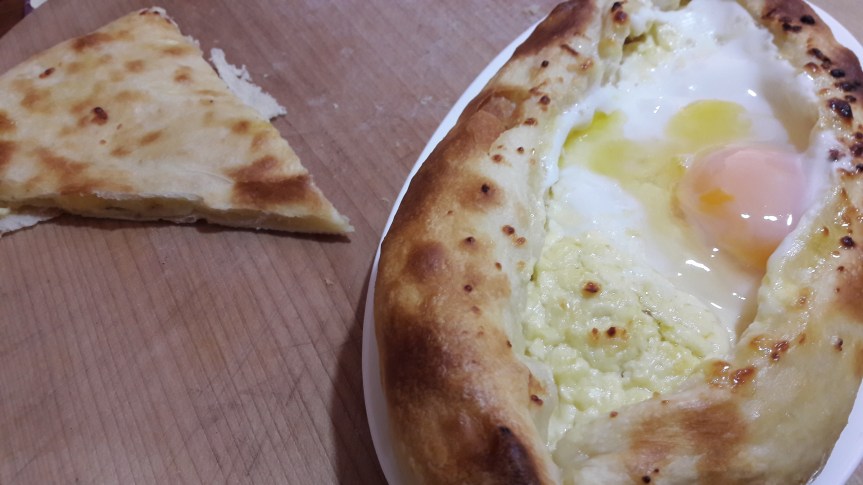
This time round on Knidos Cookery Club we’re off to Turkey’s far north-east corner and across the border into Georgia. This mountainous country shares some dishes in common with the people of Turkey’s Black Sea coast such as the bread and cheese concoction known as khachapuri in Georgia, pide in Turkey.

20170309_152546


Georgian dishes rely on both fresh and dried local ingredients. The diet is generally meat-heavy – this point was crudely pushed home last year when outraged sausage-wielding activists attacked Kiwi Café, a vegan café in Georgia’s capital Tbilisi, throwing chunks of meat and fish at diners, but there are lots of options for non-carnivores as its cuisine also features a wide range of veggie dishes.

Georgia’s location on a number of east-west trade routes heading through the Caucasus Mountains has seen different influences make their mark on its  eating culture over the years, with spices playing a key role.

20170218_135303
KCC’s new brunch treat –lobiani sausagiani

Dried beans, or lobio, walnuts, pomegranates and spices like coriander and blue fenugreek give a distinctive taste to the local fare. Cheese also features strongly on the Georgian table, from the versatile sulguni, an elastic, brined cheese akin to mozzarella, that can be deep fried to the fresh white imeruli cheese.

Georgia’s dried red beans are made into a dish called lobio, that, depending on the region of the country it’s prepared in, can be like a soup, a stew or re-fried beans. It is usually cooked in a clay pot and sometimes comes with a thin layer of bread as a cover on top. Mashed red beans are also cooked inside bread in a dish called lobiani.

We’ve decided to do our own take on a lobio dish, and to get our own back on those meat-wielding activists, by making a Georgian-influenced veggie sausage, to be served as part of a brunch or main meal.

Ingredients (makes 8-10 sausages)

200 g dried red beans, soaked overnight

100 g red lentils (one cup)

150 g fine bulgur wheat (1.5 cups)

50 g chopped walnuts

1 teaspoon dried coriander

1 teaspoon cumin

1 teaspoon black pepper

1 teaspoon red chili flakes

25 ml olive oil for frying the sausages

1 tablespoon plain flour

Method

Soak the beans overnight and then cook for an hour or so over a low heat until the beans are cooked and beginning to break up. Drain and reserve the cooking water , then mash the beans roughly.

Wash the lentils until the water goes clear and then place in a pan with the water from the cooked beans – add more water so the lentils are covered by 2 cm of liquid. Bring to the boil and simmer over a low heat for 20 minutes or so. The lentils should be going mushy and there should be about 1 cm of water covering the lentils – add more water if necessary.

Add the washed bulgur wheat to the cooked lentils and blend well. Allow to stand for 30 minutes or so and then add the toasted, chopped walnuts and the mashed beans. Then grind the spices together and add to the mix. Leave overnight in the fridge to allow the flavours to blend.

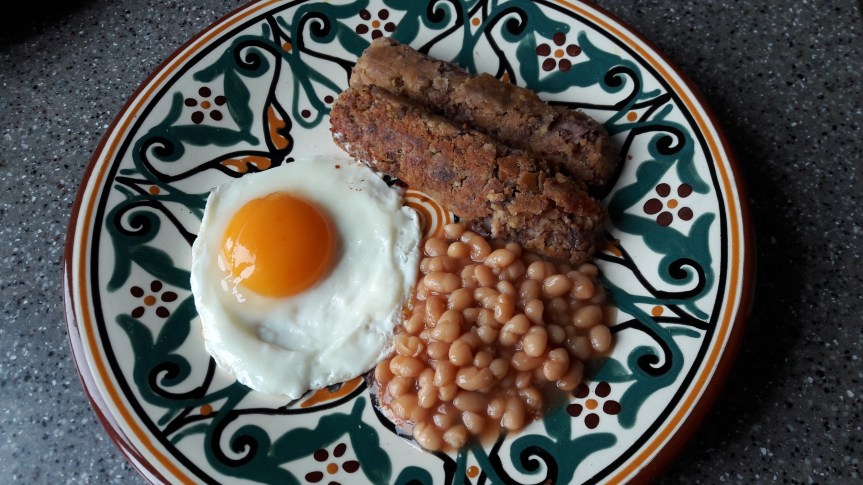
Sprinkle some flour on a chopping board and roll lemon-sized portions of the mix  into sausage shapes, coating evenly with flour. Fry the sausages in the oil until browned on the outside and then serve with baked beans and a fried egg for a top brunch.

Getting Down to the Nuts and Roots

26 January 2017

This time round on Knidos Cookery Club we’re getting back to the roots with a comforting winter soup made from some of our favourite root vegetables, a leek or two and some roasted chestnuts.

20170124_204349
Roasted chestnuts – a winter treat

One of the big events in the world of Knidos Cookery Club so far in 2017 has been the relocation of Datça’s weekly market to a new, purpose-built site. Previously, when the market came to town on Friday and Saturday, it would spill down the hill in the centre of town, causing considerable congestion with the stallholders looking for parking spots and the customers squeezed in-between.

The new site has a covered area for the local fruit and vegetable growers with the other stalls – spices and nuts, clothes, household goods etc., setting up around the covered market. It’s a lot more user-friendly, with plenty of space for shoppers and stall holders.

The last few visits to the market have entailed searching for some of our regular suppliers in the new layout, and we’re pleased to report that most of them have been accounted for!

20170108_222106
A warming bowl of rooty, chestnut pureed soup

In season at the moment are chestnuts – anyone who’s visited Istanbul in winter will probably remember trying fresh roasted chestnuts while on the move around the centre, a delicious snack that epitomises the city in the colder months of the year to me.

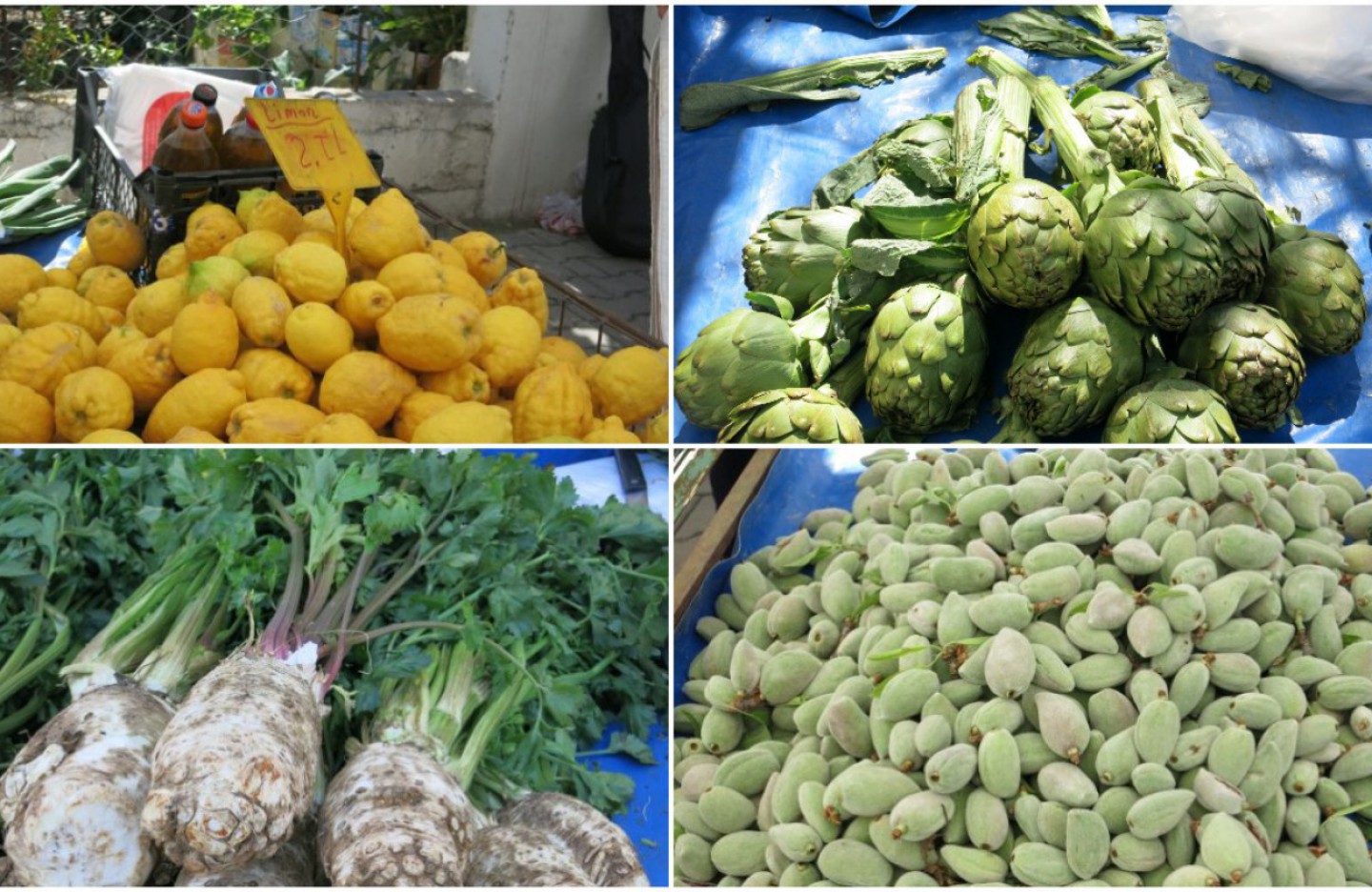
There were also root vegetables aplenty – including black carrots (these root vegetables were first cultivated in Afghanistan and were yellow and purple in colour) and celeriac, lengthy leeks and lashings of oranges and lemons. So this week we’ll be making a rooty nutty soup containing celeriac, potato, carrot, leek, shallots and chestnuts.

Ingredients (serves 3-4)

75 g shallots

250 g leeks

250 g celeriac

one medium-sized potato

100 g carrot (black if you can find them!)

500 ml vegetable stock

25 ml olive oil

150 g chestnuts

one teaspoon dried thyme

salt and pepper for seasoning

juice of one lemon

Method 

Fry the finely sliced leeks and chopped shallots in the olive oil, which has been seasoned with dried thyme, over a medium-high heat until just beginning to brown. Peel and dice the celeriac, potato and carrot into 1 cm cubes  and add to the pan of leeks and shallots.

Stir in well to coat the cubed root vegetables with oil and thyme and then add the stock and the juice of the lemon and simmer for 20 minutes over a low-medium heat. While this is bubbling away, score the outside of each chestnut with a cross shape (on one side) and roast the chestnuts in an oven pre-heated to 220 c /gas mark 7.

Check the chestnuts after 20 minutes or so – if they are easy to peel and are roasted sufficiently, then they are ready for use. If not, check every 5 minutes until the shell comes off easily.

Add the peeled chestnuts to the soup pan, stir well and season with salt and pepper to taste. Then use a hand blender to make a smooth, thick soup and serve straight away with hunks of wholemeal bread.

KCC’s Festive Feast

22 December 2016

Season’s greetings from Knidos Cookery Club! Whether the Winter Solstice, Christmas or New Year tickles your fancy, celebrate in style with our festive feast.

When preparing this meal, a minor disaster struck – the knob that controls our oven broke. So, Plan B had to be enacted, with all the food prepared on the stove top.

For the feast, we’ve adapted our mungo pumpkin patty recipe by replacing the bulgur wheat with 50 g of crushed walnuts and 100 g of breadcrumbs, otherwise prepare as instructed.

20161221_111346
Is it a beetroot? Is it a radish? No, it’s a red turnip!

We came across what we thought to be some beetroot in the market, but on closer inspection they turned out to be, so the seller said, red turnips. Intrigued, we bought them and, on peeling the reddish skin off, discovered a white turnip lurking underneath.

The original plan was to oven bake the turnips, but after the knob malfunction we had to fry them instead  and, in the process, created the turnchip.

20161222_174628
Meet the turnchip!

Peel and slice the turnip into wedges and boil for 30 minutes. Then fry in olive oil sprinkled with rosemary until the outsides are golden brown.

We steamed some pumpkin and broccoli, and then made a sauce from red wine and vegetable stock to pour over the top and, voilà, Knidos Cookery Club’s Festive Feast was born!

20161221_220617