Seventh Heaven Samsas


23 March 2017

Happy Nowruz from Knidos Cookery Club!

20170317_163343
Nauryz (Nowruz) greetings from Almaty, Kazakhstan

To celebrate this spring equinox festival, we’ll be serving up kok samsa, deep-fried pies filled with a selection of spring greens.

20170317_181312
Seven tastes of spring: parsley, spinach, coriander, celeriac leaves, spring onion, garlic and mint

Originating in Persia some 3,000 years ago, Nowruz, or New Day, is a celebration of the end of winter and the start of a new year on the date when day and night are equal in the Northern Hemisphere. This date usually falls on or around 21 March.

The holiday is still widely celebrated in Iran and Iraq, across Central Asia, Russia, Afghanistan, Albania, Azerbaijan, in eastern Turkey and in parts of Syria, India, Pakistan and China. Food plays an important role in these celebrations – in Iran the table is set with seven items, as explained in this article from Iran Wire:

A few weeks before Nowruz, Iranians begin setting up their haft sin, or “seven Ss,” a ceremonial display of symbolic items whose names begin with the Persian letter “sin” or “s.” They include “sabzeh,” or green sprouts grown from lentils, which symbolize rebirth; “samanu,” a sweet pudding that represents affluence, “senjed,” or dried wild olives, which symbolize love; “seer,” or garlic, which symbolizes medicine; “seeb,” an apple, which represents health; “somaq” or sumac fruit, which symbolizes the color of sunrise, and “serkeh,” or vinegar, which symbolises maturity.

Kok samsa, a close relative of India’s samosa, are prepared in Uzbekistan, where the holiday is called Navruz. These tasty pies are filled with fresh spring greens.

We’ve developed our own take on the kok samsa using the Iranian magic number of seven ingredients: parsley, spinach, coriander, celeriac leaves, spring onion, garlic and mint. As fully signed-up members of Dillwatch, we omitted that scurrilous weed, dill, from this recipe.

20170317_230319.jpg
KCC’s Kok samsa with seven spring herbs inside

Ingredients (makes 8-10 pies)

  1. For the Pastry
  • 300 g plain flour
  • 75 ml olive oil
  • Pinch of salt
  • Up to 75 ml cold water
  • Two – three teaspoons of  sesame seeds

       2. For the Filling

150 g spring onions

  • 2 garlic cloves
  • 50 g fresh coriander
  • 50 g fresh parsley
  • 150 g spinach
  • 25 g the leafy bits from the top of a celeriac
  • 15 g fresh mint
  • Two teaspoons of cumin seeds
  • 25 ml olive oil

      3. For Deep Frying

  • 1 litre sunflower oil (for deep frying)

Method

      1.For the Pastry

Pour the flour into a large mixing bowl and add the salt. Pour in the olive oil and stir with a fork. The mixture should form into small clumps of flour and oil. Pour some of the cold water and continue mixing. Continue adding water until the mixture forms into a large ball shape. Cover with cling film and leave in the fridge until you’re ready to use it.

      2. For the Filling

Heat the olive oil in a heavy-based pan and add the chopped spring onions and minced garlic. Fry for five minutes over a medium heat, stirring occasionally. Add the coriander and parsley and cumin and fry for two to three minutes. Add the torn up spinach leaves, chopped celeriac leaves and mint and continue cooking until the spinach has wilted, about 10 more minutes or so, stirring every now and then.

      3. For Deep Frying

Heat the sunflower oil in a heavy-based pan. For deep frying you need to get the oil to around 180 c – to check the temperature use this tip from Delishably:

When the oil has preheated, dip the handle of a wooden spoon or a chopstick into the oil. If the oil starts steadily bubbling, then the oil is hot enough for frying. If the oil bubbles very very vigorously, then the oil is too hot and needs to cool off a touch. If no or very few bubbles pop up, then it’s not hot enough.

While the oil is heating, prepare the pies. Form the pastry into 8-10 walnut-sized balls. Put the pastry ball onto a lightly floured surface and roll out into a 1 mm thick circle. Sprinkle with sesame seeds and turn the circle over.

Place three teaspoons of filling on half of the pastry round and then close the other half over the top of the filling. Use a fork to mould the edges of the pie together. Prick the pie’s top to allow air to escape.

Place two or three pies at a time in the hot oil and fry for around 8 minutes or until the pie is golden brown in colour. Remove with a slotted spoon and drain on kitchen roll. Serve the kok samsa either hot or cold.



Ezo the Bride’s Soup

20 October 2016

Knidos Cookery Club is off to a wedding soon so we did a quick google to see what Turkey has in the way of wedding-related foodstuffs and chanced upon this soup with a great backstory.

One wedding day tradition in Turkey is to the feed up the bride-to-be with a hearty soup, Ezogelin Çorbası, to help her prepare for the rigours of her wedding day and the subsequent move into the groom’s household.

img_2061

The name translates as ‘Ezo the Bride’s Soup’ and the recipe comes from the tale of a woman, Ezo, short for Zöhre, who was born in 1909 in a village near Gaziantep, now in south-eastern Turkey on the border with Syria.

She became famed in the region for her her looks and was highly sought after as a bride. Eventually, she married a man from a neighbouring village but unfortunately the marriage didn’t work out. One version of the tale, that has inspired short stories, folk songs, a film and a TV series in Turkey, as well as the soup, has it that her husband loved another so Ezo left him.

In 1936, Ezo married again and moved with her husband over the border to the town of Jarabulus in Syria. She pined for her homeland and to quell her homesickness she would cook a soup that reminded her of Turkey – a filling combination of red lentils, bulgur wheat, rice, tomato paste, herbs and spices. She also used the soup to win over her mother-in-law, a move crucial to finding happiness in her new home.

Ezo had nine children with her second husband, but she only lived to her mid-40s, dying in 1956 in Jarabulus. Her last wish was to be buried on a hillside overlooking her beloved homeland. Her memory lives on in this soup and in the legends that have grown up around her life story.

Ingredients (Makes four servings)

150 g red lentils

50 g coarse bulgur wheat

25 g rice

one medium-sized onion

one or two cloves of garlic

one lemon

25 ml olive oil

1.2 l warm water

3-4 tablespoons of tomato paste (a more liquid form of tomato purée – if using purée then two tablespoons should suffice)

two teaspoons of dried mint

black pepper

two teaspoons of chili flakes

sprig of fresh mint

Method

Wash the red lentils, bulgur wheat and rice and soak for two hours in cold water.

Finely chop the onion and garlic and fry for five minutes in the olive oil in a heavy-based pan. Add the red lentils, bulgur wheat and rice, pour in one litre of water and simmer over a low to medium heat for 30 minutes or until everything is cooked.

Add the tomato paste, the dried mint, chili flakes and some black pepper and 200 ml of water and the juice of one lemon and stir well. Simmer for ten or fifteen minutes until the soup is taking on a creamy texture.

Ladle the soup into bowls and garnish with a sprig of fresh mint and sprinkle more chili flakes over the top. Serve with a slice of lemon and some crusty bread.

Double Meloned Squeaky Cheese

1 September 2016

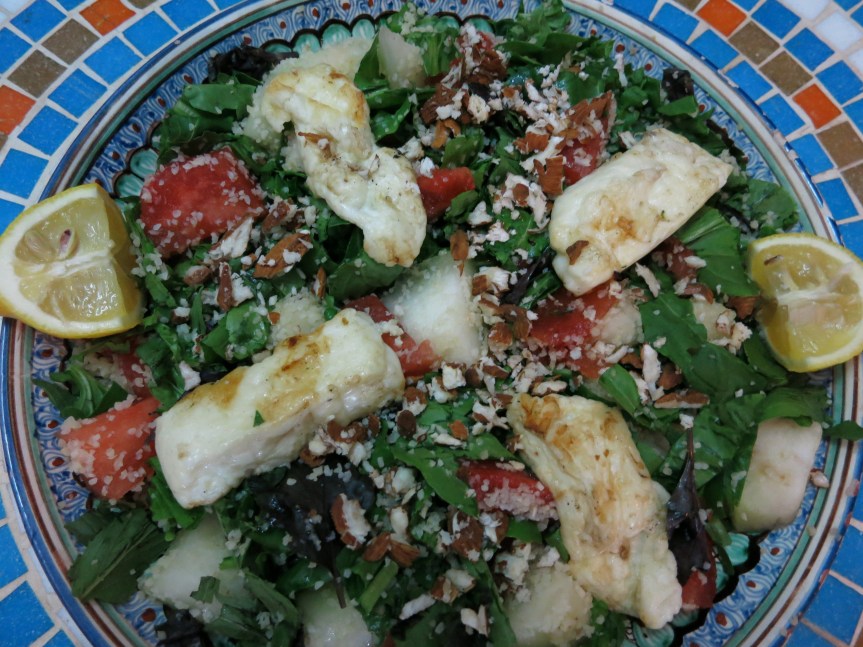
This summer has seen a rash of articles in the UK press about salads combining melon and white cheese and here at Knidos Cookery Club we love to tap into any zeitgeist that’s going – here’s our own take on this refreshing summery salad using watermelon, honeydew melon and halloumi cheese.

IMG_1324
Double Meloned Squeaky Cheese

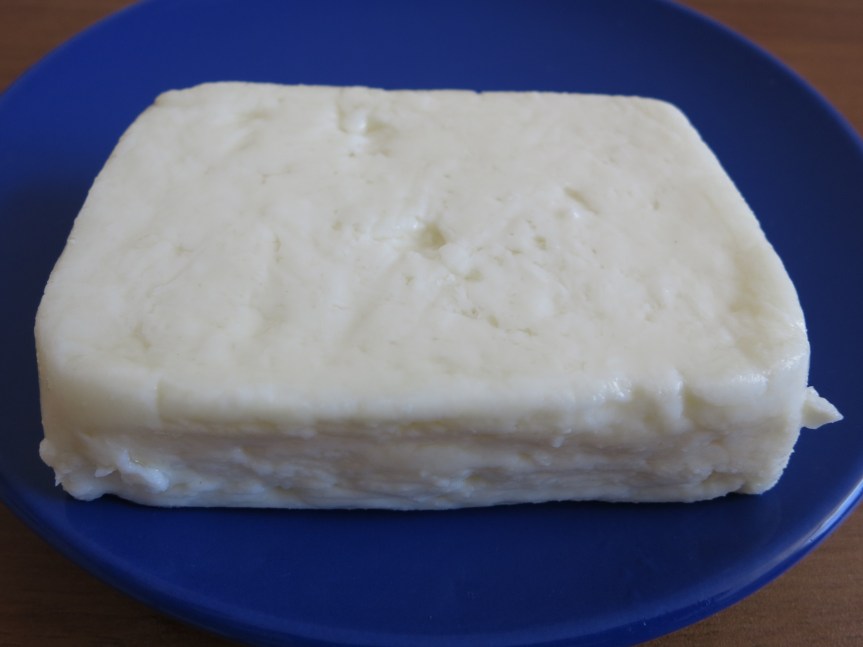
Halloumi, hellim in Turkish, is a salty white cheese with a high melting point that makes it perfect for grilling or frying. It originated in Cyprus – it’s a semi-hard cheese preserved in brine that can be stored for use in the winter months. It’s known in some quarters as ‘squeaky cheese’ because of its tendency to emit a mouse-like sound when you bite into it.

IMG_1337
A slab of halloumi – the cheese that squeaks!

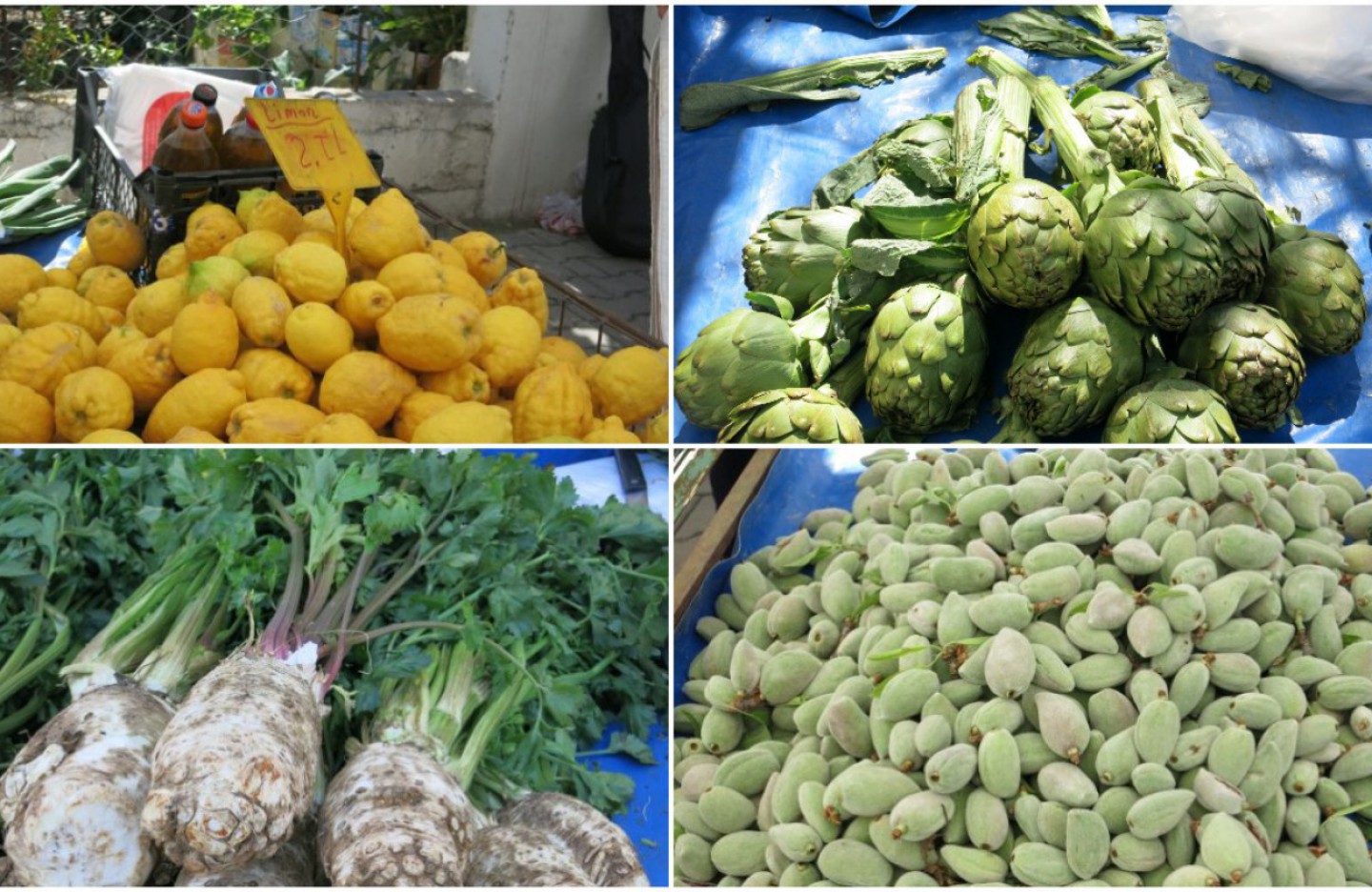
It’s peak season for melons at the moment in the Knidos area so the time was ripe to attempt our own melon cheese combo. With the addition of some halloumi, that had been grilled into submission on the barbecue, and some rocket leaves, fresh mint  and basil, along with bulgur wheat and crushed almonds to add some body, the salad was a winner and set to be a fixture on the Knidos Cookery Club menu.

Ingredients (serves 3-4)

300 g watermelon cut into wedges

300 g honeydew melon cut into wedges

250 g halloumi cheese

One bunch of rocket (approx 125 g)

A handful of fresh mint and basil leaves

100 g fine bulgur wheat

50 g chopped almonds

100 ml hot water

One small lemon, juiced

A glug of olive oil

Method

Soak the bulgur wheat in 100 ml hot water until all the water is absorbed

Tear the rocket, mint and basil leaves and scatter into a large bowl and then add the bulgur wheat. Add the melon wedges and mix well. Dress the salad with lemon juice and olive oil.

Cut the halloumi into slices and grill or fry until going golden-brown on the outside. Arrange the halloumi slices on top of the melon and leaves and sprinkle chopped almonds over the salad. Serve with crusty bread.


Dolma Dreaming

21 April 2016

This week, Knidos Cookery Club is turning its attention to stuffed vegetables – dolma in Turkish, from the verb dolmak which means to fill or stuff.

Any vegetable that can be hollowed out can be used to make dolma – aubergines, courgettes, peppers or tomatoes are great for this. The filling can consist of rice mixed with herbs and spices and sometimes dried fruit such as raisins or currants and pine nuts.

Knidos Cookery Club particularly likes the way tomatoes go all soft and mushy when baked and some perfect specimens were sourced from the market. Courgettes are beginning to re-appear after their winter break and a kilo were added to the shopping basket for subsequent stuffing. With spinach also in abundance, we picked up a few bunches to add to the rice for the dolma mix.

Here’s what the finished dish should look like …

IMG_0192 copy 2

Ingredients (serves 3-4)

Two medium-sized courgettes

Four medium-sized tomatoes

250 g fresh spinach

One cup (approx. 100g) of short or long grain rice (We recommend brown rice for its nuttier flavour)

250 ml vegetable stock

One medium-sized onion

Mixed herbs and spices (thyme, parsley, mint, oregano, black pepper, chili pepper, salt)

A handful of dried fruit (currants and/or raisins) and a few pine nuts

Olive oil for cooking

Juice of two medium-sized lemons

A knob of garlic

For the cucumber sauce: one small cucumber, fresh chopped mint, 100ml thick natural yogurt

Method

Pour a generous glug of olive oil into a heavy-based pan and add the chopped onion and garlic. Cook over a medium heat until the onion becomes translucent. Add mixed herbs, seasoning, dried fruit and pine nuts.

Add the washed and soaked rice to the onion mix and stir to cover the grains with oil. Next add the stock and cook over a low heat until the liquid is absorbed.

While the rice is cooking, pre-heat the oven to 200 °C (gas mark 6) and soften the washed spinach in a frying pan with a little splash of olive oil until it starts to wilt.

Slice the tops off the tomatoes and scoop out the liquid from the middle. Top and tail the courgettes and scoop out the contents with a teaspoon in a drilling motion. (Keep the tomato liquid and courgette middles to cook with later).

When the rice has absorbed all the liquid, add the wilted spinach to the mixture, stirring it thoroughly into the cooked rice.

Stuff the tomatoes and courgettes with the rice mixture and arrange in a baking dish. Pour the lemon juice and a healthy dash of olive oil over the vegetables. Put the tops back on the tomatoes.

Place in the pre-heated oven and bake at 200 °C (gas mark 6) for 30 minutes or so or until the skin of the vegetables starts to go brown and bubbly. Add a small amount of water if the lemon juice is all absorbed.

While they’re cooking, make the cucumber sauce. Combine the grated cucumber with the yogurt and fresh mint. Add garlic to taste.

Serve immediately or allow to cool – it’s up to you. Don’t forget to pour the cucumber sauce over the dolma before eating.