Piccata: a Zingy Sauce to Pique your Interest

31 May 2018

As the market stalls overflow with fresh spring produce, this time round on Knidos Cookery Club we’ve selected some zingy greens to make a zesty, lemony piccata sauce to go with pasta and some other leafy greens.

20180524_181759
KCC’s Chick Pea Picatta on a bed of sorrel

The piccata sauce comes from Italy and is a lemon-fuelled accompaniment to a variety of dishes. The name derives form the Italian word for ‘annoyed’, piccato, and it is from the same root as the word used in English expressions such as ‘a fit of pique’ or ‘to pique your interest’.

We’ve used jusai, garlic chives, to add more flavour to the sauce, along with white wine, capers and lemon zest and juice to give it a picquant bite. Add some chick peas and serve on a mound of pasta placed on top of a bed of fresh sorrel leaves for a tangy treat.

Ingredients (serves 3-4)

250 g cooked chick peas

25 ml olive oil

50 g garlic chives

2 tablespoons flour

100 ml white wine

500 ml vegetable stock

12 capers

Zest and juice of one lemon

1 teaspoon dried thyme

black pepper

250g dried pasta (we used spirals) cooked according to instructions on pack

Bunch of fresh sorrel

Method

Heat the olive oil in a heavy-bottomed pan over a medium heat and then add the chopped garlic chives. Cook for five minutes and then add the flour and stir well. Pour in the wine and mix to a paste and then slowly add the stock, stirring all the while.

Simmer over a low heat until the sauce starts to thicken, then add the chick peas, capers and thyme and cook for three minutes. While the sauce is simmering, cook the pasta. Grind a generous amount of black pepper into the sauce along with the lemon juice and zest.

Tear up the sorrel leaves and scatter over a plate. Place a pile of pasta in the middle of the plate on the leaves, and then pour the piccata sauce over the pasta and serve immediately.



One Pot Wonder: A Trip to Knidos

23 November 2017

Knidos Cookery Club recently entertained Professor Fox, that doyen of the Christchurch Antiquarians, who came over to Turkey to check out the ruins of Knidos and some archaeological sites in the Datça area such as Burgaz (Old Knidos).

Here’s a slideshow of our visit to Knidos:

This slideshow requires JavaScript.

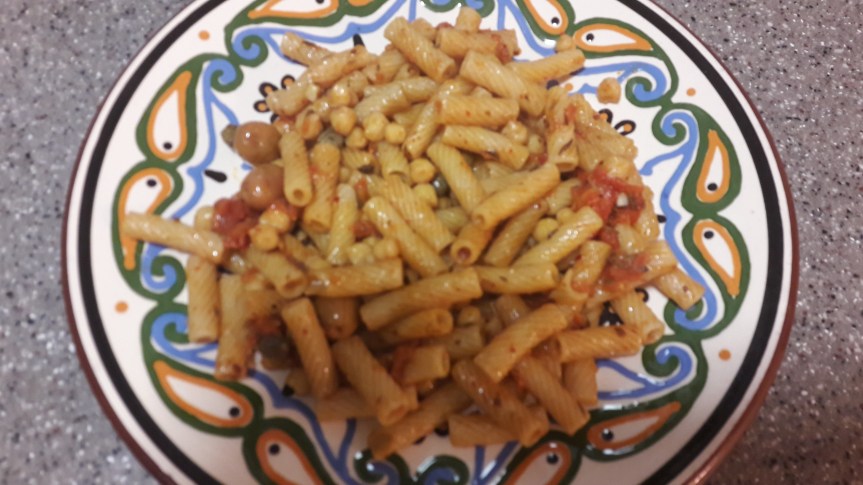
After the trip we needed something quick and filling so this time round on Knidos Cookery Club we’ll be cooking pasta in a tasty sauce using only one pan.

20171025_214236
KCC’s one pot wonder in progress

This one pot wonder saves time, energy and washing up, both important  considerations in the world of KCC after a busy day on the archaeological trail.

20171025_222310
KCC’s one pot wonder – the finished product

Ingredients (serves 2-3)

Three medium-sized tomatoes (approx 150 g)

50 g olives (any you have handy will do, we used some green ones)

150 g cooked chick peas

200 g pasta (penne, fusilli or spaghetti works well)

500 ml hot water

15 g capers

One garlic clove

25 ml olive oil

One teaspoon dried thyme

One teaspoon sumac

One teaspoon chilli flakes

Method 

Chop the tomatoes into quarters and add to a large, heavy-based pan with the olives, chick peas, minced garlic, olive oil, thyme, sumac and chilli flakes. Pour the water over the top, add the pasta, stir and bring to a boil.

Cook the pasta as per the instructions on the pack over a medium to high heat – you need to keep it bubbling away and stir occasionally. Keep cooking until the most of the liquid is boiled off, leaving the cooked pasta in the sauce.

The type of pasta we used took around 15 minutes to cook – try it as you go to get the type of taste you prefer. Don’t forget to stir in the washed capers to the pasta and sauce when it is cooked.

Serve straight from the pan and garnish, if you want, with shavings of Parmigiano-Reggiano (Parmesan) cheese.

Operation Lentil

23 February 2017

It was on this day back in 1944  that the Chechen and Ingush  people of the North Caucusus had one of the darkest moments in their troubled history. Accused by the Soviets of siding with the Nazi forces, the entire population was herded onto cattle trucks and deported by force to Central Asia.

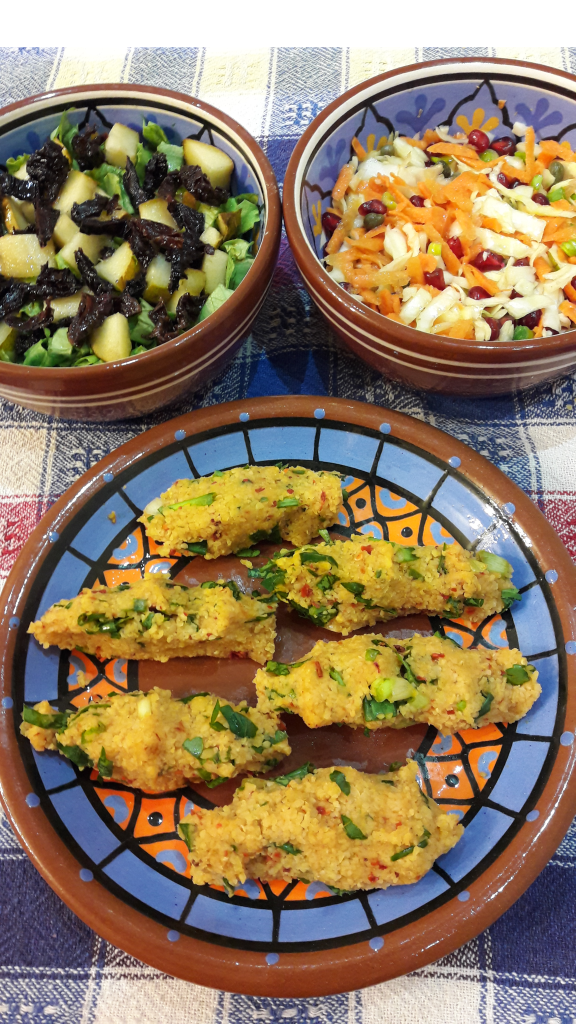
The mission was codenamed ‘Operation Lentil’ – after chechevitsa, the Russian word for lentil, which shares its first two syllables with Chechen. By way of commemoration of this tragedy that befell the Chechen and Ingush communities, who refer to the deportations as Aardakh, the exodus, this time around we’ll be sharing a recipe for the Turkish dish mercimek köftesi – a versatile red lentil patty.

lentil-patties
Mercimek köftesi – red lentil patties, served with green salad and cole slaw

These spicy, lentil patties are easy to prepare and are delicious when rolled up in flatbread, like lavash, with fresh cole slaw and a green salad. We used ajika sauce from Georgia on the other side of the Caucasus mountains, a fiery blend of red chili peppers and tomatoes, to flavour the patties – but if you can’t find this locally, then a mix of tomato paste with chili flakes will do nicely.

Ingredients (Makes around 20-24 lentil patties)

100 g red lentils (one cup)

150 g fine bulgur wheat (1.5 cups)

500 ml water

6-8 teaspoons of ajika sauce (see above)

5 spring (green) onions – chopped

A handful of fresh flat leaf parsley, roughly chopped

One teaspoon of cumin seeds

One teaspoon red chili flakes

Black pepper

25 ml olive oil

Juice of one lemon

Method

Wash the lentils until the water goes clear and then place in a pan with the water. Bring to the boil and simmer over a low heat for 20 minutes or so. The lentils should be going mushy and there should be about 1 cm of water covering the lentils – add more water if necessary.

Add the washed bulgur wheat to the cooked lentils and the ajika sauce and blend well. Allow to stand for 30 minutes or so and then add the olive oil, lemon juice, spring onions, parsley, cumin, red chili flakes and black pepper and mix well.

Allow to stand for a few hours to let the flavours combine and then mould a walnut-sized piece of the mix in the palm of your hand and use your fingers to form a  sausage-shape (see picture above).

Serve rolled in flatbread or stuffed into a pita with a cole slaw made from shredded cabbage, grated carrot, pomegranate seeds, spring onion and capers and  a salad of lettuce, sun dried tomatoes, pear and spring onion.


Capering around Knidos

4 August 2016

This week in Knidos Cookery Club the focus is on capers,  the unripened flower buds of Capparis spinosa, a thorny evergreen shrub that is native to the Mediterranean region.

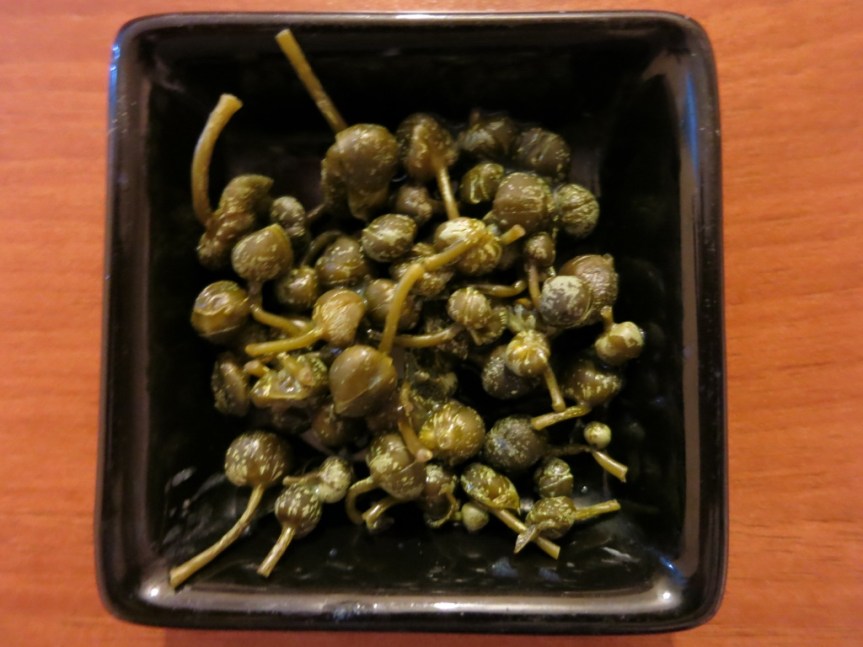
This wonder bud can be used to add taste to a variety of dishes from pastas and pizzas to salads and stews. They can be preserved in brine, sun-dried or salted to allow their complex lemony flavours to come to the fore.

thumb_IMG_1061_1024
Capers preserved in brine

A few weeks ago, Knidos Cookery Club was treated to a tasty lasagne topped with salted capers from the kitchen of Mr Alan in Tashkent, Uzbekistan. On returning to Knidos, our tastebuds awakened, the Saturday market and the local shops were scoured and a jar of capers in brine was tracked down.

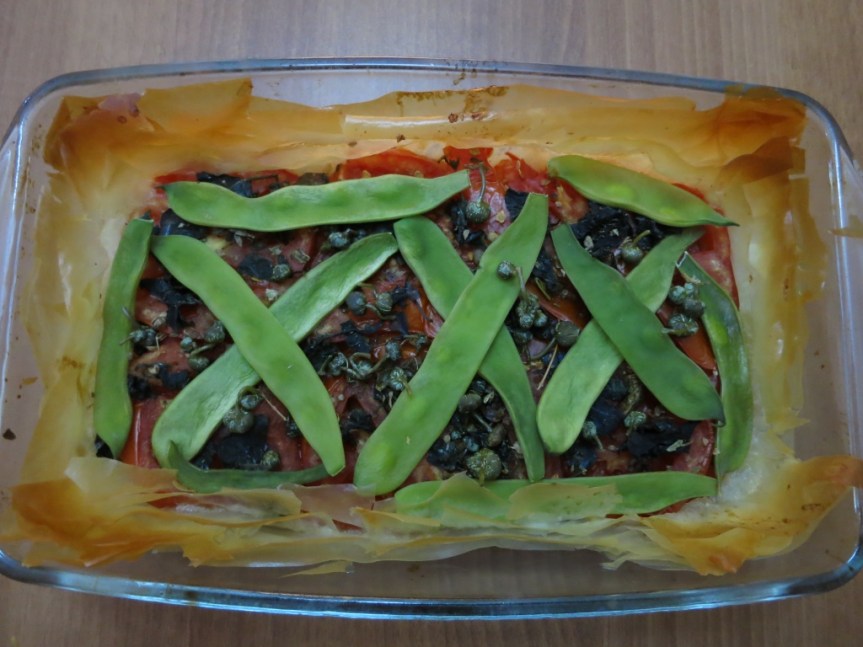
We spotted a Nigel Slater recipe in The Guardian recently for a tomato, olive and French bean tart – we decided to give it a go with some modifications, using some Datça capers in place of the olives. Here’s what the finished product should look like:

thumb_IMG_1082_1024


Ingredients (serves 3-4)

100 g filo pastry (yufka)

500 g tomatoes (any sort or a mix)

25 capers

20 green beans

25 ml olive oil infused with dried thyme

Seasoning: pinches of salt, black pepper, cumin, dried thyme

Method

Grease a large baking dish with some olive infused with dried thyme and place a sheet of filo pastry in the dish. Brush with more oil and put another layer of filo pastry – continue oiling and layering until pastry is used up.

Thinly slice the tomatoes and layer on the pastry base. Dot with capers and season with pinches of salt, black pepper, cumin and dried thyme.

Put the dish in a pre-heated oven (200 °C/gas mark 6) and bake for 30 minutes or until the pastry starts to go a deep golden colour. Keep an eye on it to make sure the pastry doesn’t burn.

While the tart is baking, cook the beans in boiling water for 4 minutes.

When the tart is cooked, arrange the beans in a criss-cross pattern on top of the tomato and caper base. Serve with a green salad – we had a  purslane, rocket, sorrel, cucumber and onion salad dressed with lemon, olive oil and pomegranate sauce.