KCC’s Corn and Coconut Chowder


17 October 2019

This time round on Knidos Cookery Club we’re cooking up a chowder, a creamy soup crammed with fresh, seasonal vegetables that’s ideal for the chillier nights of autumn.

20191015_221900.jpg
A warming bowl of KCC’s Corn and Coconut Chowder

These days chowder is a name given to any creamy soup that has been thickened with the addition of flour or crumbled crackers. The name of this soup is thought to come from chaudron, an old French word for a cauldron – it was originally brought to north America by sailors who made it as a fish soup thickened with ship’s biscuit and cream.

20191015_204118.jpg
The Holy Trinity of autumn soup veg

Some versions use a tomato base, but our version is based on the creamy base and uses coconut milk and chickpea flour to make the sauce. We’ve added some of the last of this year’s corn on the cob and some new season pumpkin, that vegetable that is a harbinger of the colder months of the year. Combined with the holy trinity of soup bases – onion, celery and carrot and a potato, this chowder, garnished with lemon zest and celery leaves, is a soup to savour.

Ingredients (for 3-4 servings)

  • One large potato
  • Two large carrots
  • Three sticks of celery
  • One medium-sized onion
  • One corn-on-the cob
  • 200 g pumpkin
  • One lemon
  • One bay leaf
  • Two teaspoons dried thyme
  • 50 ml olive oil
  • Three tablespoons chickpea flour
  • One litre coconut milk (50 g desiccated coconut + one litre of water).

Method

  • Make the coconut milk first by blending the dried coconut with the water using a hand-held blender for two minutes. Strain through a sieve separate the liquid  from the leftover coconut, the latter can be saved and used to make energy balls, biscuits, cakes or added to your breakfast muesli.
  • Heat the olive oil in a heavy-based pan and then add the sliced onion and fry for five minutes over a medium heat. Add the diced carrot and celery and cook for another five minutes. Now add the chickpea flour and dried thyme and mix well. Now add the pumpkin, potatoes and coconut milk and a bay leaf.
  • Cook over a low heat, stirring occasionally, until the potato is just cooked. Add the juice of the lemon and half the lemon zest and stir well. Cook for a few more minutes and then remove the bay leaf and serve in bowls and garnish with the rest of the lemon zest and chopped celery leaves.

 

A Leek-Fuelled Lentil Pilaf

11 April 2019

This time round on Knidos Cookery Club we’re combining some of our favourite seasonal ingredients to mark the transition from the hearty stews and soups of winter to some lighter, spring eating.

20190228_215304-e1552317614615.jpg

We’ve paired leeks, the mild-tasting cousin of the onion, with green lentils, coarse bulgur wheat and some spices to make a scrumptious pilaf that’s both cheap and easy to prepare.

Using bulgur wheat in the place of rice means that it can be on the table in less than an hour, which also allows enough time to roast some of our winter faves, pumpkin and beetroot, to add a splash of colour to the plate. Keep any leftovers in the fridge – they can be moulded into patties and fried in oil or baked in the oven to make a tasty brunch or supper.

Ingredients (serves 4)

  • 50 ml olive oil
  • One leek
  • 250g pumpkin
  • 250g beetroot
  • 125g bulgur wheat (coarse not fine)
  • 125g green lentils
  • 600ml vegetable stock
  • Two teaspoons cumin seeds
  • One cinnamon stick
  • One teaspoon chilli powder
  • One bayleaf

Method

  • Pour 25 ml olive oil and one teaspoon of cumin seeds into an oven-proof dish and leave in the oven for 10 minutes at 200c. Cube the pumpkin and beetroot and put into the dish and stir well to coat with oil. Bake for 40 minutes at 200c.
  • Heat the other 25 ml of oil in a heavy-based pan, add the cumin seeds and then add the diced leek and sauté over a low to medium heat for about ten minutes. Add the cinnamon stick, chilli powder and bayleaf and stir well.
  • Now add the bulgur wheat and lentils and the vegetable stock and mix it all together. Cook for 30 minutes or so over a low heat, stirring occasionally, until all the liquid has been absorbed. Serve with the roasted beetroot and pumpkin.

Couscous on the Loose

6 December 2018

This week we’ll be making our take on couscous, that staple of North African cooking. Our version uses fine bulgur wheat in place of the more usual durum wheat semolina base as bulgur wheat is easier to find on the supermarket shelves where we are based.

20181002_215336
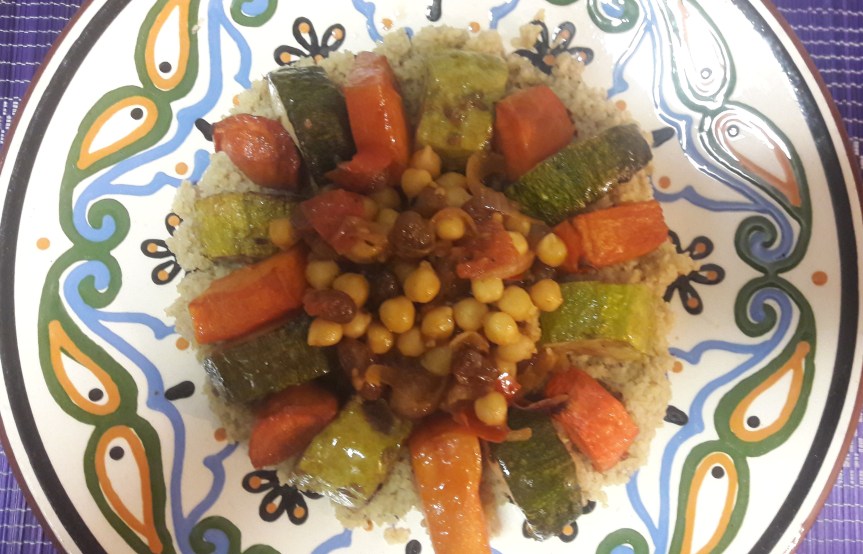
KCC’s couscous with chickpea chutney and roasted vegetables

In our opinion, bulgur works just as well as semolina as a base to soak up the juices from the roasted vegetables and our chickpea chutney. Purists may disagree, but our philosophy is more about adapting recipes by using the ingredients you have at hand.

Ingredients (serves 2)

Roasted vegetables:

  • 300 g pumpkin
  • 2 medium carrots
  • 2 medium courgettes
  • 25 ml olive oil
  • 1 teaspoon cumin seeds
  • 1 cinnamon stick

Chickpea chutney:

  • 25 ml olive oil
  • 1 teaspoon mustard seeds
  • 1 small red onion
  • 2 small tomatoes
  • 50 g currants
  • 250 g chickpeas
  • 1 teaspoon red chilli flakes
  • 1 teaspoon black pepper

Couscous:

  • 100 g fine bulgur wheat
  • 200 ml vegetable stock

Method

Pre-heat the oven to 200c, cut the vegetables into large chunks and put into a baking dish, drizzle with olive oil and add the cumin seeds and cinnamon stick and stir to coat the vegetable chunks. Roast for 30-40 minutes until the vegetables are cooked.

While the vegetables are roasting, prepare the chickpea chutney. Heat the olive oil in a frying pan and add the mustard seeds. When they start to pop, add the finely chopped onion and cook over a low heat for five minutes. Add the spices and the chopped tomato and cook for five more minutes. Then add the currants and chickpeas and cook for fifteen minutes or so.

Bring the vegetable stock to the boil and then cover the bulgur wheat with it and leave it to soak up the liquid for 30 minutes or so, drain off the excess liquid (if there’s any) and than add a dash of olive oil and fluff up with a fork.

Put a layer of couscous on a warmed plate, arrange the roasted vegetables in a circular, wheel-spoke pattern and put a generous dollop of chickpea chutney in the centre and serve immediately.

Unravelling Ravioli on the Path to Pkhali Pierogi

1 March 2018

This time round on Knidos Cookery Club we’ll be unravelling ravioli, one of the many forms of filled pasta pockets found around the world – from Turkey’s manti, Uzbekistan’s chuchvara and Kazakhstan’s tushpara to Russia’s pelmeni, Ukraine’s varenyky and Poland’s pierogi – the list is endless.

20180223_232604
KCC’s beetroot-filled pkhali pierogi

These pasta pockets, which are boiled rather than steamed, can come in a variety of shapes and sizes with a wide range of fillings such as pumpkin, potato, spinach and ricotta cheese, or different types of fruit.

We’ve opted for a semi-circular shaped pierogi which we’ve filled with beetroot and walnut pkhaliclick here for our feature on this classic Georgian dish from last year.

20180225_181745
Three steps to a perfect pierogi!

Ingredients (Makes 16-24 depending on how big you make the pierogi)

For the pasta:

200 g flour

3 teaspoons olive oil

100 ml water

pinch of salt

Method

Make the pasta by sifting the flour into a large mixing bowl and then add the oil, a pinch of salt and half of the water in a well in the middle of the flour. Mix inwards from the outside with a wooden spoon and then add the rest of the water until the dough has absorbed all the flour.

Knead for ten minutes or so and then leave the pasta dough to rest in the fridge for at least one hour. After resting, roll the pasta out onto a lightly-floured surface to a thickness between 0.5 and 1.0 mm.

Use a glass to cut out round shapes from the dough, add a teaspoon of cooled beetroot pkhali in the bottom half of the circle and moisten the inside edge around the filling with a little water and then fold the top over. Use a fork to seal the pasta pocket.

Bring a large pan of water to the boil and then add the pierogi to the water and keep boiling over a low heat until the pierogi float to the surface. Remove the pierogi with a slotted spoon and serve hot – they’re good served with sour cream or melted butter or just plain.

Fesenjan for Beginners

18 January 2018

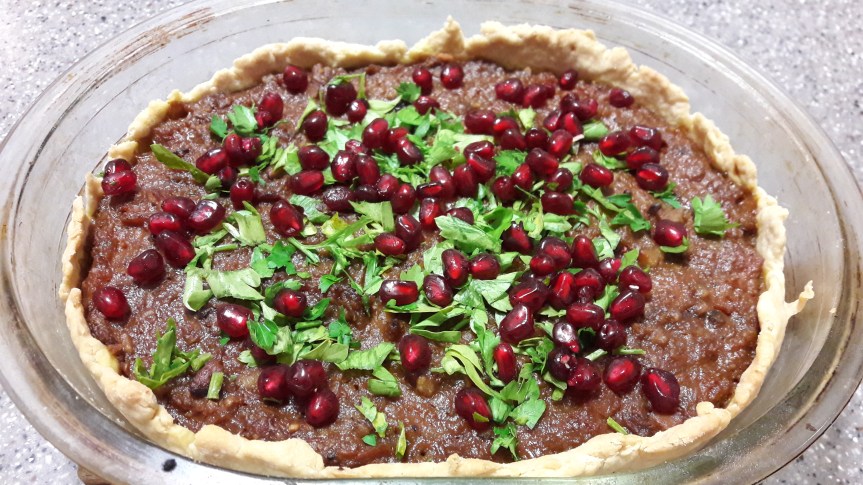
This week on Knidos Cookery Club we’re going to be bucking the January detox trend with this super-rich, calorie-laden Iranian stew, Fesenjan (pronounced fesenjoon), that combines three of our favourite go-to ingredients – pomegranate, walnut and pumpkin.

20180112_221142
KCC’s Fesenjan Tart

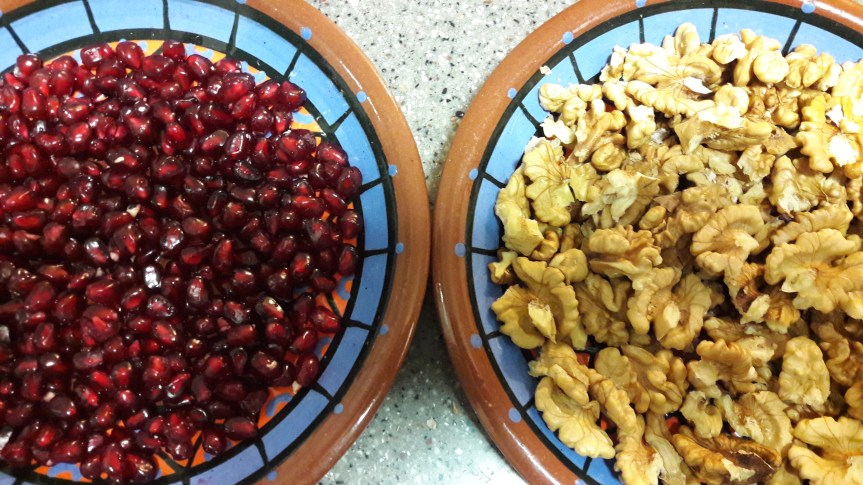
Usually served as a thick stew with rice, we’ve decided to put it in a pie case to make a tasty walnut and pomegranate infused tart. Making this stew can be quite labour-intensive – shelling the walnuts, toasting them, crushing them, extracting the pomegranate seeds and so on, but the end result makes it well worth all the effort.

20180112_185716
Can’t get much fresher than this!

Look out for Nar Ekşisi (pomegranate syrup) or the sweeter Nar Ekşili Sos (pomegranate sauce) in your local Middle-Eastern shop or make your own. If using Nar Ekşisi, add a teaspoon or two of honey to the stew to make it a bit sweeter.

To save time you can use shop-bought pastry, but we think it tastes better with a homemade pie crust. To keep it vegan, we’ve used olive oil instead of butter to make our shortcrust pastry.

Ingredients (serves 4)

125 g shelled walnuts

one medium onion

500 g pumpkin or butternut squash

300 ml vegetable stock

30 ml olive oil

2-3 tablespoons pomegranate syrup or sauce (Nar Ekşisi or Nar Ekşili Sos in Turkish)

0.5 teaspoon cumin seeds

0.25 teaspoon cinnamon and turmeric

Black pepper

Handful of pomegranate seeds

Bunch of fresh parsley

200 g shortcrust pastry

Method

Toast the walnuts for 10 minutes over a low heat and then mince in a blender. Heat the olive oil and fry the onion in a heavy-based pan over a medium heat for ten minutes. Add the spices and then add the cubed pumpkin and stir to cover.

Pour over the vegetable stock, add the pomegranate molasses and the minced walnuts and cook over a medium heat for 30 minutes until the pumpkin is cooked. Make sure the sauce is quite thick – if it’s runny, boil it until it starts to thicken.

Roll out the pastry and place it in a greased baking tray. Bake blind for ten minutes at 180c and then put the filling into the pie case. Cook for 40 minutes or so until the pastry starts to go golden brown.

Garnish the tart with chopped parsley and pomegranate seeds and serve with saffron rice and a green salad.

Pumpkin, Pear and Pomegranate Potage

21 December 2017

Seasoned greetings to all our readers! To end the year on a high, we’ve come up with a thick and hearty pumpkin and pear soup sprinkled with pomegranate to add a colourful touch to your seasonal table.

Screen Shot 2017-11-16 at 15.56.41

Roasting pumpkin in the oven is a great way to prepare our favourite winter vegetable. After cubing the pumpkin, it’s just a matter of waiting about an hour or so for it all to cook leaving time to enjoy a few glasses of mulled wine or a snowball or 

Knidos Cookery Club would like to say a big thank you for all our readers who voted for us in the Saveur food blog awards – unfortunately we didn’t win this time round…

Wishing you all a creative and tasty 2018 in your kitchen. Have a great time with whatever tickles your festive fancy in what’s left of 2017. See you next year!

Ingredients (serves 3-4)

500 g pumpkin cubed

100 g pear

One small onion (around 75 g)

One teaspoon cumin seeds

Half teaspoon ground cinnamon

Pinch of black pepper

50 ml olive oil

250 ml vegetable stock

50 g pomegranate seeds

Method

Chop the pumpkin into 2 cm cubes, quarter and slice the pear into 1 cm cubes and put in a baking dish. Sprinkle the sliced onion, cumin seeds and cinnamon over the pumpkin and pear and then slosh the olive oil over the top. Bake for 40 minutes at 180 c in a pre-heated oven.

While this is baking, boil up some vegetable stock. Add the pumpkin and other ingredients to the stock, blend with a hand blender and serve immediately in a bowl with a smattering of pomegranate seeds over the soup.


KCC’s Winter Warmer Bake

7 December 2017

The nights are getting longer and the mercury’s starting to drop – winter is well and truly here so it’s time for some filling, wholesome comfort food.

Winter comes to Almaty, Kazakhstan

One of our favourite go-to comfort foods here at Knidos Cookery Club is pumpkin as it’s so easy to cook and adds depth to a range of soups and bakes.

Screen Shot 2017-11-29 at 16.51.25
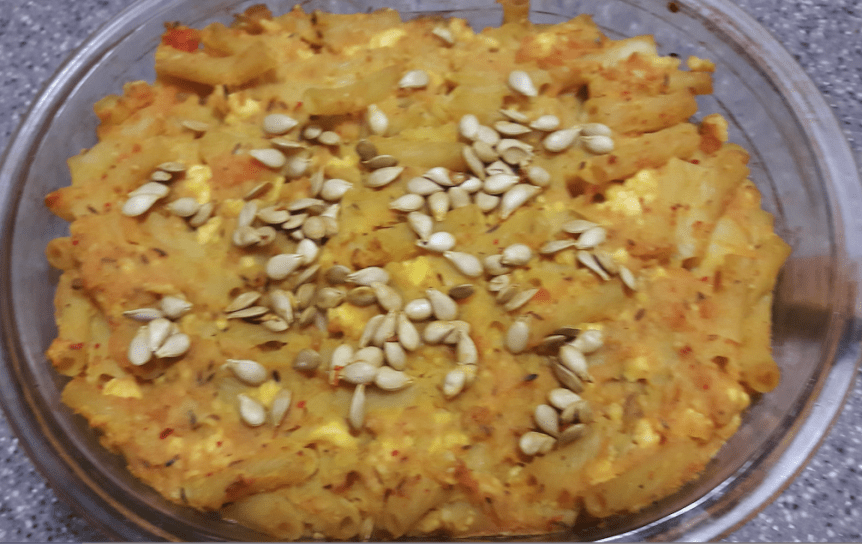
Knidos Cookery Club’s pumpkin and pasta bake

We’ve combined pumpkin with red lentils, pasta and ricotta cheese, along with some heady spices to create a filling bake to help you get through the long cold nights of winter.

Ingredients (serves 3-4)

75 g red lentils

150 g pumpkin

150 g  dried pasta (penne, macaroni or fusilli work well here)

100 g ricotta or similar cheese

375 ml vegetable stock

25 ml olive oil

25 g pumpkin seeds

1 cm fresh ginger peeled and minced

one small onion

one garlic clove

one teaspoon cumin

one teaspoon cider vinegar

one teaspoon turmeric

one teaspoon chilli flakes

Method

Cook the pasta according to instructions minus one minute. Drain and set aside. While the pasta is cooking, fry the finely chopped onion and garlic in the olive oil until transparent.

Add the ground cumin, turmeric, ginger and pumpkin, cut into 1 cm cubes, and stir while cooking over a medium heat for a few minutes. Then add the lentils, stir and pour on the vegetable stock. Bring to a boil and then simmer for 20 minutes or so over a low heat until the pumpkin and lentils are going mushy and most of the liquid has been absorbed.

Remove from the heat and stir in the ricotta cheese, apple vinegar and chilli flakes. Fold in the pasta, pour into an oven dish, sprinkle over the pumpkin seeds and bake in a pre=heated oven at 180 c for 30 minutes or so until the top starts to brown.

Allow to cool for ten minutes or so before serving with a green salad.


KCC’s Festive Feast

22 December 2016

Season’s greetings from Knidos Cookery Club! Whether the Winter Solstice, Christmas or New Year tickles your fancy, celebrate in style with our festive feast.

When preparing this meal, a minor disaster struck – the knob that controls our oven broke. So, Plan B had to be enacted, with all the food prepared on the stove top.

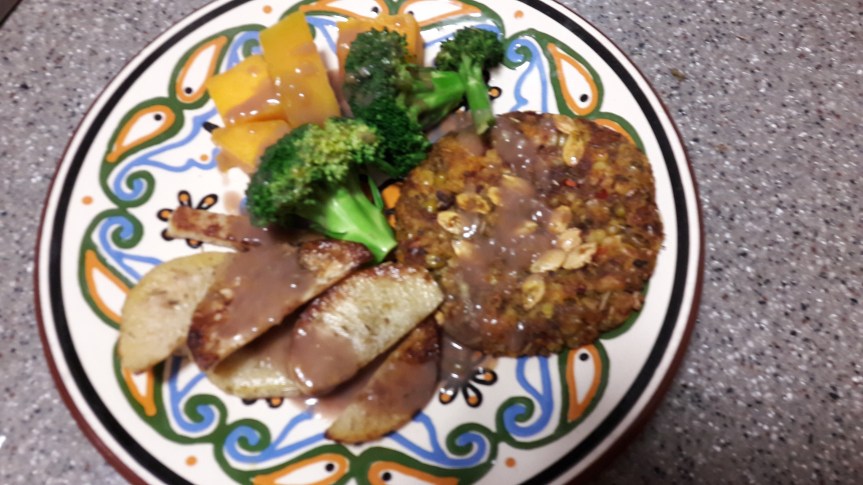
For the feast, we’ve adapted our mungo pumpkin patty recipe by replacing the bulgur wheat with 50 g of crushed walnuts and 100 g of breadcrumbs, otherwise prepare as instructed.

20161221_111346
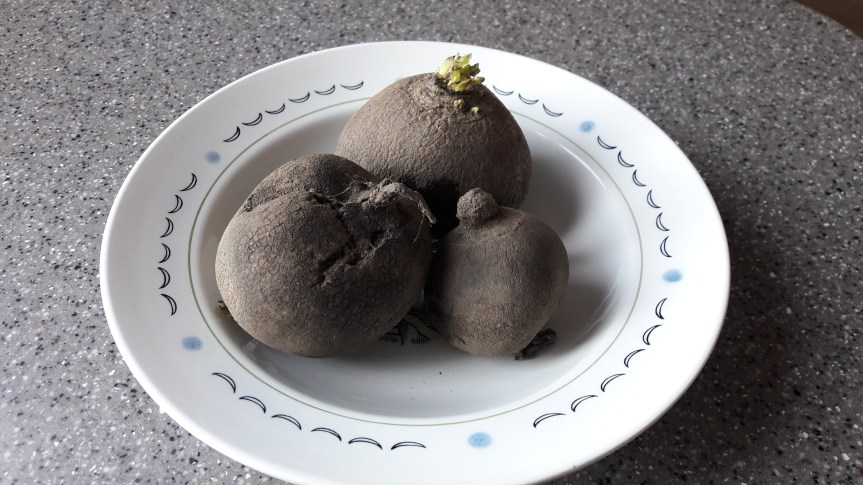
Is it a beetroot? Is it a radish? No, it’s a red turnip!

We came across what we thought to be some beetroot in the market, but on closer inspection they turned out to be, so the seller said, red turnips. Intrigued, we bought them and, on peeling the reddish skin off, discovered a white turnip lurking underneath.

The original plan was to oven bake the turnips, but after the knob malfunction we had to fry them instead  and, in the process, created the turnchip.

20161222_174628
Meet the turnchip!

Peel and slice the turnip into wedges and boil for 30 minutes. Then fry in olive oil sprinkled with rosemary until the outsides are golden brown.

We steamed some pumpkin and broccoli, and then made a sauce from red wine and vegetable stock to pour over the top and, voilà, Knidos Cookery Club’s Festive Feast was born!

20161221_220617

Cutting Edge Noodles

1 December 2016

This week on Knidos Cookery Club we’re looking to Central Asia for inspiration in the form of the noodle, which, Marco Polo legends aside, is thought by some to have originated in this part of the world.

While the question of who first came up with the idea of combining wheat flour, water, egg and salt to make pasta is still being debated, one thing is certain – the dish (most likely) came from somewhere in Asia!

img_2375
Noodles from Kazakhstan – where they’re called kespe

The noodle probably came into Turkey with the nomadic tribes who swept across the Eurasian steppe, located between China and Eastern Europe, in the wake the Mongol invasions of Anatolia from the 13th century onwards. Pasta dishes in Turkey include manti, small meat-filled dumplings and erişte, thin strips of pasta dressed with cream and walnuts or added to soups and stews to add body.

img_2380
Chick pea, pumpkin and noodle soup

Another name for erişte is kesme  – this caused some confusion when researching this article as kesme can be a negative (do not cut) or the ‘-me‘ ending can turn the word into a noun – in this case it’s the latter as the name refers to a large sheet of pasta cut into strips. Erişte, by the way, is from the Persian reshteh, which means string or thread.

We’ve decided to stick with the Persian vibe – a popular dish in Iran is ash reshteh, a vegetable and noodle soup, and make a version of this hearty soup cum stew with chickpeas, pumpkin, tomato and noodle strips.

Ingredients (serves 3-4)

For the noodles: 

If you have time and want to make your own  noodles, follow this link, otherwise use about 100 g of shop-bought dried egg noodles, broken up into 2 cm strips.

For the stew:

100 g egg noodles, broken into 2 cm strips

400 g pumpkin

200g dried chick peas, soaked overnight and cooked for an hour or so until tender but not mushy

25 ml olive oil

one medium-sized onion

three medium-sized tomatoes

500 ml vegetable stock or reserved cooking water form the chick peas

one clove of garlic

one teaspoon coriander seeds

one teaspoon red chili flakes

one teaspoon cumin seeds

salt and black pepper to taste

dollop of sour cream

Method

Cut the pumpkin into 2 cm chunks and roast in a baking dish in an oven pre-heated to  220 c /gas mark 7 for 30 minutes or so. If you have any seeds from the pumpkin, place these on tin foil and roast alongside the pumpkin until turning brown.

Chop up the onion and fry in the olive oil in a heavy-based pan with the garlic and spices on a medium heat until beginning to brown. Turn down the heat, add the chopped up tomatoes and stir.

Cook for five minutes and then add the chick peas and 200 ml of the stock. Bring to the boil and simmer for ten minutes. Add the roasted pumpkin and the rest of the stock and bring to the boil again. Add the broken-up noodles and cook for five minutes until the noodle pieces are cooked.

Serve in a bowl with a dollop of sour cream or yogurt and sprinkle some roasted pumpkin seeds over the top.


Riding the Bread Bowl Zeitgeist

3 November 2016

Ok, so we’ve all heard of dunking bread into a wholesome bowl of soup, but, until last week, Knidos Cookery Club had not come across soup being served in a bread bowl. It’s a craze that had seemed to pass us by.

On a chilly night during a recent trip to Reykjavik, Iceland, we found a restaurant that was serving just two dishes – asparagus soup or a thick, meaty broth, both served in a bread bowl. We were instant converts.

20161030_160310A few days after this, a restaurant was spotted in Pendik, a district of Istanbul in Turkey, that had a poster for Ekmekte Çorba, yes, that’s right, soup in a bread bowl. Looks like there could be a craze starting here so let’s chase the zeitgeist and try and recreate this in the Knidos Cookery Club kitchen.

Wondering what to do with all that pumpkin left over from Halloween? Why not turn it into a hearty soup that should pass the bread bowl test – you don’t want your soup to be too liquid as there’s a danger of ending up with a soggy mess of soup and bread. We’ve thickened ours with red lentils and bulgur wheat, so combined with the bread, this one’s going to be a real winter warmer.

Ingredients: (serves 3-4)

four medium-sized round brown loaves

300 g pumpkin (save the seeds for roasting)

50 g red lentils

50 g coarse bulgur wheat

one medium-sized pear

one medium-sized onion

one garlic clove

750 ml vegetable stock

sprinkle of dried sage

one teaspoon of dried thyme

two bay leaves

one teaspoon of cumin seeds

one cinnamon stick

half a teaspoon of turmeric

Method:

Cut the pumpkin in half and remove the seeds, retain them to use later. Peel the pumpkin and dice into 1 cm cubes. Place the pumpkin cubes in a baking dish, pour in 50 ml of olive oil and sprinkle the sage and thyme over the pumpkin and mix well.

Bake in a pre-heated oven (220 c /gas mark 7) for 45 minutes or until the pumpkin mashes easily with a fork. While the pumpkin mix is cooking, put the seeds on some tin foil and roast in the oven until starting to char a little bit.

Finely chop the onion and garlic and fry in 50 ml olive oil over a medium heat. As they’re cooking add the cumin seeds, turmeric and cinnamon stick and bay leaves. Cook until the onions are starting to brown.

Chop up the pear finely and add with the roasted, mashed pumpkin to the onion mix and pour the stock over the top. Bring to the boil and then reduce the heat and add the bulgur wheat and red lentils. Cook over a medium heat for thirty minutes or so until the bulgur and lentils are beginning to go a bit mushy.

Slice the top off the loaf and scoop out the contents, leaving around 1 cm of bread as a lining for the bowl. Pour the soup into the bread bowl, garnish with roasted pumpkin seeds and serve immediately. Use the top of the bread to dip in the soup and eat the bowl as you go, depending on how hungry you are!