A Passion for Pkhali

20 April 2017

This time round on Knidos Cookery Club we’re returning to Georgia for some culinary inspiration in the form of pkhali, a type of starter made from walnuts, herbs, spices and whatever vegetable happens to be in season, such as spinach, beetroot, aubergine, cabbage or carrot.
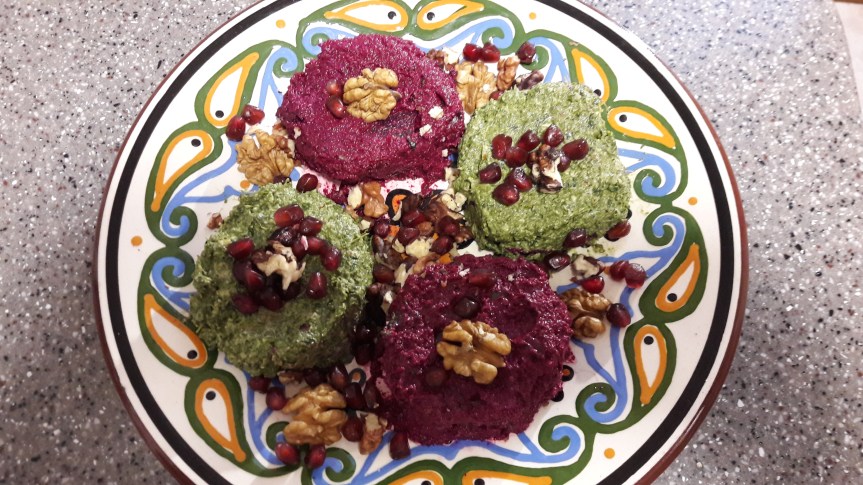
20170415_200229

Walnuts are widely used in Georgian cooking – besides pkhali, they can be turned into  satsivi, a thick paste similar to hummus, and  bazhe, a sauce made with the holy trinity of Georgian herbs – blue fenugreek, ground coriander (cilantro) and crushed marigold flowers. These combos can be mixed with fresh cucumbers and tomatoes as a salad dressing or stuffed into tongues of fried aubergine (eggplant).
IMG-20170415-WA0000

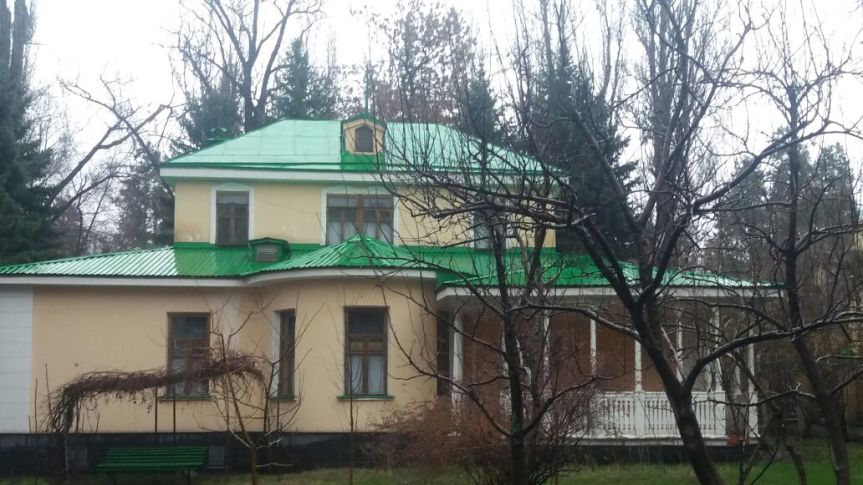
Staying on the walnut theme, on a recent visit to the former home of famous Kazakh writer Mukhtar Auezov in Almaty, Kazakhstan, the guide gave me a handful of walnuts from the gnarled old tree in the garden of the writer’s house. These nuts were used in the making  of today’s pkhali recipe.

Auezov was famous in Soviet times for writing The Path of Abai, an epic historical novel based on the life and teachings of Kazakhstan’s most famous poet and composer Abai Qunanbayuli, who had been a neighbour and friend of Auezov’s grandfather.

It was said in the Soviet era that all were equal, but some were more equal than others – and this was certainly the case for Auezov after he won the Lenin Prize in 1959 for his four-volume epic novel about Abai.

The prize came with a sackful of roubles which he invested in a two-storey house, which is now a museum dedicated to his life and work. The house was lavish by the standards of the time and was designed by the architect who designed Almaty’s Abai Opera Theatre.

Ingredients (Makes around four generous servings of each pkhali – see photo above)

For the beetroot pkhali

  • 300 g cooked beetroot
  • 100 g walnuts
  • One garlic clove
  • 5 g fresh parsley
  • 5 g fresh coriander
  • One teaspoon blue fenugreek powder
  • One teaspoon black pepper
  • 20 ml wine vinegar
  • A scattering of pomegranate seeds and walnuts


For the spinach pkhali

  • 250 g fresh spinach
  • 100 g walnuts
  • One small onion (around 75 g)
  • One garlic clove
  • 5 g fresh parsley
  • 5 g fresh coriander
  • One teaspoon blue fenugreek powder
  • One teaspoon black pepper
  • 20 ml wine vinegar
  • A scattering of pomegranate seeds and walnuts


Method

  • For the beetroot pkhali:
  • Boil the beetroot for 30 minutes or so until you can pierce it with a knife easily.
  • Leave to cool and then peel and chop into small chunks.
  • Toast the walnuts over a low heat for 5-10 minutes and then add to the garlic and herbs and spices in a bowl. Add the vinegar and use a blender to make a smooth paste. Add the beetroot chunks and keep blending until you have a gloopy mixture.
  • Leave overnight in the fridge and then serve with a scattering of pomegranate seeds and walnuts.

Method

  • For the spinach pkhali:
  • Cook the spinach in boiling water for 5 minutes until it begins to wilt. Remove and place in cold water and then drain.
  • Finely chop the onion and put it in a mixing bowl with the garlic, herbs and spices. Toast the walnuts over a low heat for 5-10 minutes and then add to the bowl. Add the vinegar and use a blender to make a smooth paste. Add the spinach and keep blending until you have a gloopy mixture.
  • Leave overnight in the fridge and then serve with a scattering of pomegranate seeds and walnuts.


Brandy Almonzandas All Round!

It’s time to kick back and enjoy a cocktail or two as this week we’re celebrating Knidos Cookery Club’s first anniversary.

20170331_210127

Our first post was made on 31 March 2016, and over the last year we’ve been on a journey that has taken in many seasonal dishes from Turkey and guest appearances inspired by travels to Greece, Georgia, Iceland, Kazakhstan and Uzbekistan.

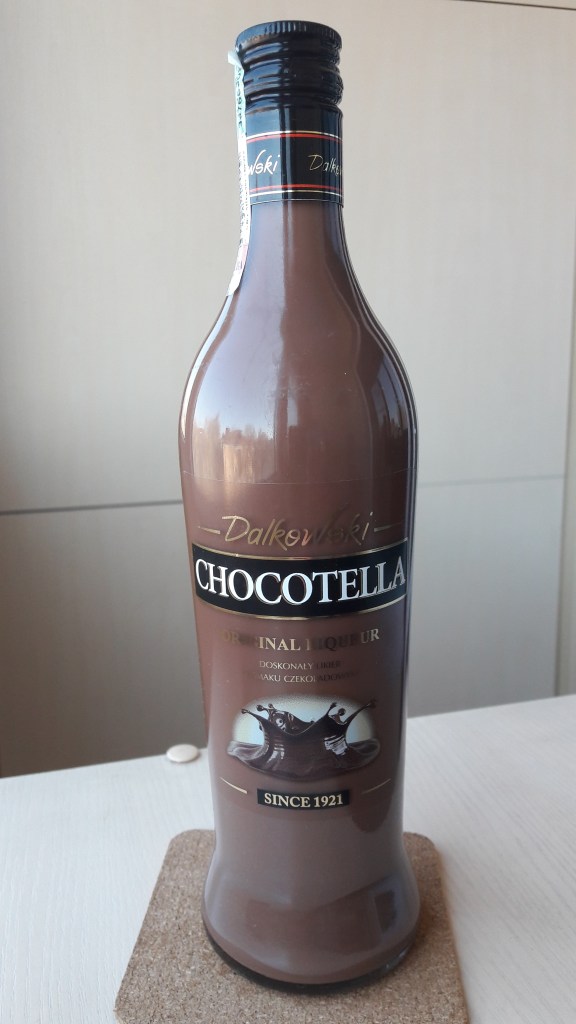
To celebrate this momentous milestone, we’ve gone back to our roots in Datça, Turkey and come up with our second ever cocktail – the Brandy Almonzanda, a very close relative to the Brandy Alexander, a creamy combination of brandy, homemade almond milk and Dalkowski Chocotella (we couldn’t find Creme de Cacao) with a dusting of grated nutmeg on top.

20170331_153140
Dalkowski Chocotella – a chocolate liqueur from Poland

Datça’s tasty almonds, badem in Turkish, are rightly famous all over Turkey – I remember sitting on a terrace in Istanbul’s Beyoğlu district, back in the days when it still had tables on the street, when a guy came round selling ice-chilled Datça almonds.

IMG_20170107_164230_152
A cup of frothy almond coffee served up at Karia Cafe, Datça, Turkey

Not content with selling the raw nuts, adding them to rice in a stuffed melon or adding them to local mezes, many enterprising cafes along the town’s beachfront have started offering Datça almond coffee – a frothy concoction made from the peninsula’s staple product.

Almond coffee came about because of the isolated position of Datça and the Knidos Peninsula. Sometimes bad weather would mean that supplies of coffee beans could not make it onto the peninsula so the locals made do with something they had in abundance – almonds.

For our Brandy Almonzanda we’ve prepared our own almond milk – it’s pretty easy to do: just soak the raw (unsalted) nuts overnight (or up to 48 hours – the longer you leave them, the better the milk tastes), adding a pinch of salt, a cinnamon stick and a date (we didn’t have any dates so we used some dried apricots).

After soaking overnight, drain and rinse the nuts in fresh water and then put in a blender with 400 ml of cold water and blend to a smooth paste. Strain the almond milk to remove any remaining bits in a metal strainer, using a wooden spoon to press out all the liquid – this will produce around 450 ml – and, hey presto, your almond milk is ready!

To make the cocktail, pour one part of brandy, one part of Creme de Cacao (or similar) and two parts almond milk into a cocktail shaker filled with ice. Shake vigorously and pour into suitable glasses, sprinkle nutmeg over the top, add a straw and serve immediately.

Avocado + Egg = Brunch Heaven

9 February 2017

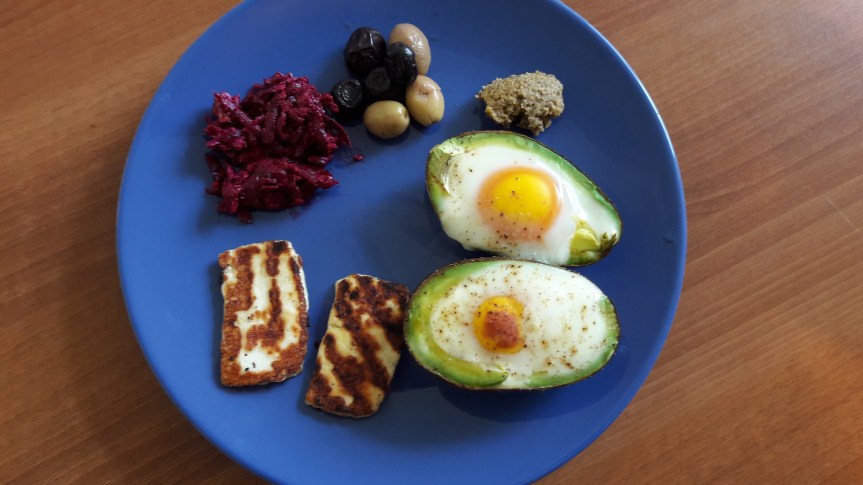
This week at Knidos Cookery Club we have a guest post that combines two of our all-time fave foods: avocado and egg, dished up with olives, beetroot with walnuts and halloumi cheese.

20170115_143020

Avocados love the mild winters of the Knidos region as the shores of the Mediterranean Sea provide ideal growing conditions for this large green fruit that’s packed with nutritious vitamins and healthy fats.

Our guest chef Jasha, who has worked in the hospitality industry in the UK, has kindly agreed to share her favourite way of combining eggs with avocado. Served up with pan-seared halloumi, olives and grated beetroot with walnut, this great dish sent us into brunch heaven!

Ingredients 

One avocado per person

Two eggs per person

250 g pack halloumi cheese cut into four slices (enough for two people)

Black and green olives

A few scoops of olive paste

One grated large beetroot (raw or cooked) mixed with 50 g crushed walnuts and two teaspoons of sour cream or natural yogurt

Black pepper and red chili flakes

Method

Slice the avocados in half and remove the stone. Be careful not to stab yourself in the hand as I once did – it’s apparently quite a common kitchen injury. Scoop out some of the flesh to leave a hollow space for the egg.

Place the avocado halves in a baking dish, round side down, and pour an egg into the scooped out shell. Grind some black pepper over each egg and bake the avocados in an oven pre-heated to to 200 c /gas mark 6 for 20 minutes or until the underside of the eggs are cooked. Finish the eggs off under a grill and then season with some red chili flakes and a grind of black pepper.

While the eggs are cooking, fry the halloumi slices in a non-stick or heavy-based frying pan until browned on both sides.

Serve the avocados immediately with the pan-seared halloumi, beetroot and walnuts, olive paste and olives and some doorsteps of fresh bread.


Muhammara: Spread the Word

15 December 2016

This time out on Knidos Cookery Club we’re going to make muhammara, a spicy roasted red pepper and toasted walnut dip. Originally from Syria, this spread made its way onto Turkish tables via Antakya, which is located at the easterly end of Turkey’s Mediterranean coast.

img_2503This delicious dip was brought to Knidos Cookery Club’s attention by our good friend Tolga, who introduced us to the method of roasting the peppers over an open flame on our gas hob.

img_2496Put some tin foil under the burner to stop your hob getting all messed up and cook the peppers over a medium-high flame. Using a chopstick or a wooden skewer can make the peppers easier to manoeuvre on the flame.
You can also grill the peppers or roast them in the oven, but the open-flame method gives them a smoky flavour that combines excellently with the toasted walnuts and chili flakes.

Muhammara works well when teamed with our courgette and almond dip and our carrot and walnut tarator as part of a scrumptious meze platter.

Ingredients 

two medium-sized red (bell) peppers

100 g walnuts (shelled and chopped)

one clove of minced garlic

one lemon – use the juice of half the lemon for the dip and use the rest as a garnish

two teaspoons chili flakes

two teaspoons pomegranate sauce or molasses

25 ml olive oil

Method

Roast the peppers over an open flame, under a grill or in a hot oven until all the skin is blackened. Turn them round regularly to ensure they are cooked evenly.

While the peppers are roasting, toast the walnut pieces in a frying pan over a medium heat for 5 minutes, stirring or shaking the pan regularly. Don’t overcook them as they can taste bitter if you do.

Place the peppers in brown paper bag and allow to cool – this will make it easier to peel the peppers. Now remove the outer skin from the peppers then halve  and de-seed them. Be careful when cutting the peppers as some hot liquid may spurt out if they’re not cooled down enough.

Cut up the peppers and put them with half the walnuts and other ingredients into a blender and mix until you have a smooth paste. Add the rest of the walnuts and give the dip another blast – but not for too long as you want some of the walnuts to still be crunchy.

Garnish with slices of lemon and fresh mint (if you have it) and serve alongside other dips with pita bread and/or slices of raw carrot, cucumbers and green peppers.


Rip-Red Risotto

17 November 2016

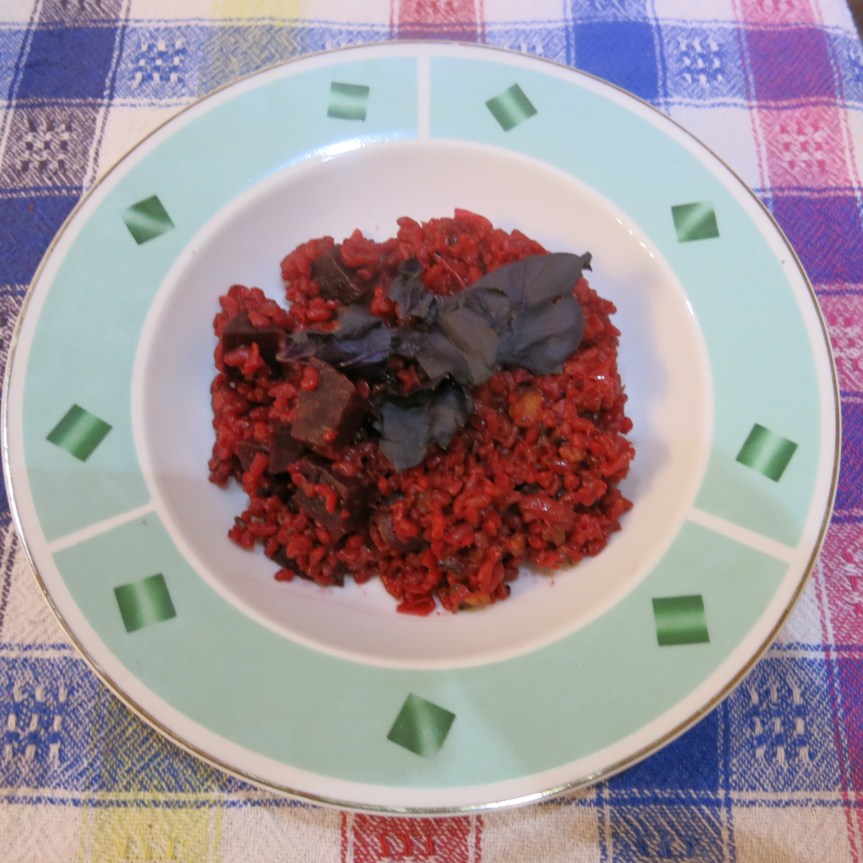
This week on Knidos Cookery Club, we’re featuring beetroot as the basis for a rip-roaringly red risotto.

In Turkish, if you want to say something is, for instance, very blue, then you add a prefix. By adding mas to mavi (blue) you end up with masmavi.  As an example, to talk about the deep blue sea you could say masmavi engin deniz.

img_2365

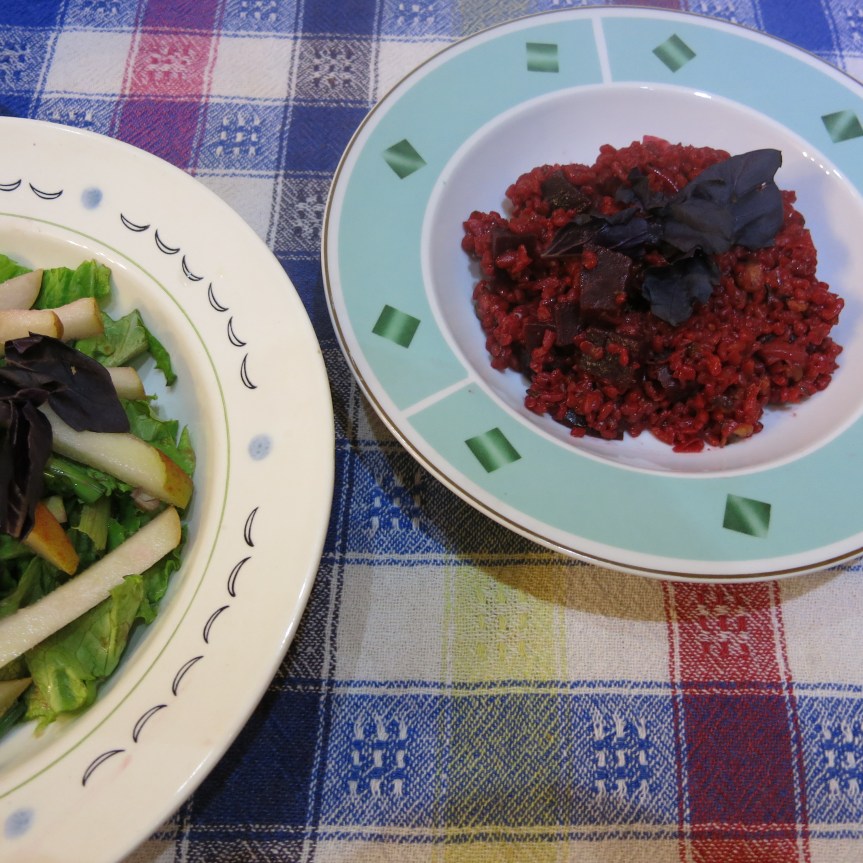
A rich red colour, such as that imparted by beetroot, would come out as kıpkırmızı, or, in English, rip-red, which seems a perfect way to describe out beetroot risotto. To add a Turkish-edge to the dish, we used coarse bulgur wheat, but you can use arborio rice if you prefer.

img_2363

We added some walnuts to the mix, as they combine so well with the sweet edge of beetroot. This is quite a common combination – in Georgia walnuts are blended with grated beetroot to make pkhali.

Ingredients (serves 3-4)

  • 250 g  whole, uncooked beetroot
  • 50 g walnuts
  • 100 g coarse bulgur wheat
  • 150 ml red wine
  • 500 ml beetroot cooking water
  • 25 ml olive oil
  • one medium-sized onion
  • one garlic clove
  • one teaspoon dried thyme
  • one teaspoon dried rosemary
  • one teaspoon cumin seeds
  • black pepper and salt to taste
  • sprig of fresh basil leaves

Method

  • Boil the washed but unpeeled beetroot in a saucepan for 30 minutes. Put the beetroot in cold water, keeping the water you used to cook the beetroot separate, and then peel and top and tail the beetroot when cool. Put to one side.
  • Heat the olive oil in a heavy-based pan and add the cumin seeds. Cook until the seeds are beginning to burn and then add the diced onion and garlic, dried thyme and rosemary and season with salt and pepper. Cook until the onion is going translucent.
  • Add the washed bulgur wheat and stir to coat the grains. Add the glass of wine and stir occasionally until the liquid is absorbed. Add a third of the vegetable stock and keep cooking and stirring until the liquid is absorbed. Add more stock until the bulgur wheat is cooked and the risotto has a creamy consistency and then turn off the heat.
  • Meanwhile, gently toast the walnut pieces in a small frying pan and chop the beetroot into small, 1 cm cubes. Mix the beetroot and toasted walnut into the bulgur wheat risotto.
  • Garnish with fresh basil leaves -green ones make a better contrast to the red of the risotto, but we could only find the mauve coloured variety. Serve with a green salad.


A Creamy Almond and Courgette Dipfest

8 September 2016

The courgette is one of the most versatile vegetables in the Knidos Cookery Club kitchen. Earlier it featured in a stuffed platter and as a fritter. We also like it in an omelette, in börek or just sliced and grilled on the barbecue.

IMG_1169
Creamy Almond and Courgette Dip

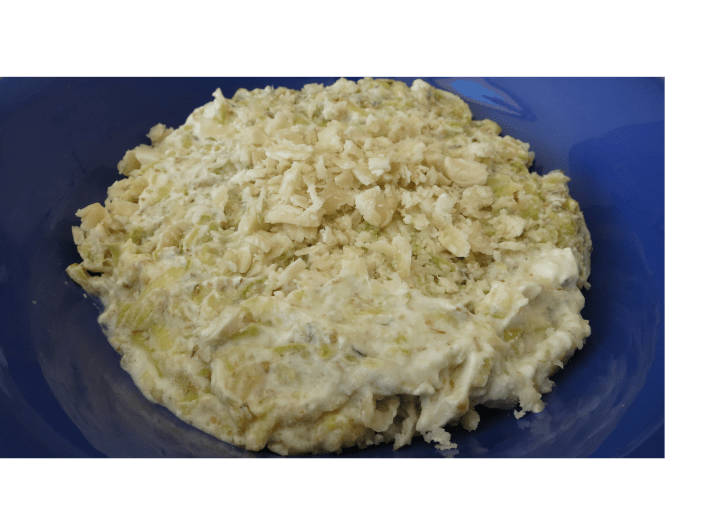
This week we’ve  incorporated this key ingredient into a creamy almond and courgette dip that can be used as part of a starter, or meze, combo with other dips such as our Carrot and Walnut Tarator.

Yogurt and chopped almonds were added to the grated courgette to make it creamy and some wholemeal flour was used to hold it all together.

Ingredients (Serves 3-4)

250 g  grated courgette

100 ml plain, natural yogurt

50 g wholemeal flour

50 g chopped almonds

One garlic clove

25 ml olive oil

Method

Heat the olive oil in a frying pan over a medium heat then add the grated courgette and garlic and stir fry for five minutes. Add the flour and stir fry for two more minutes. Take the frying pan off the heat, mix in the yogurt and almonds, reserving a few nuts to sprinkle over the top.


Double Meloned Squeaky Cheese

1 September 2016

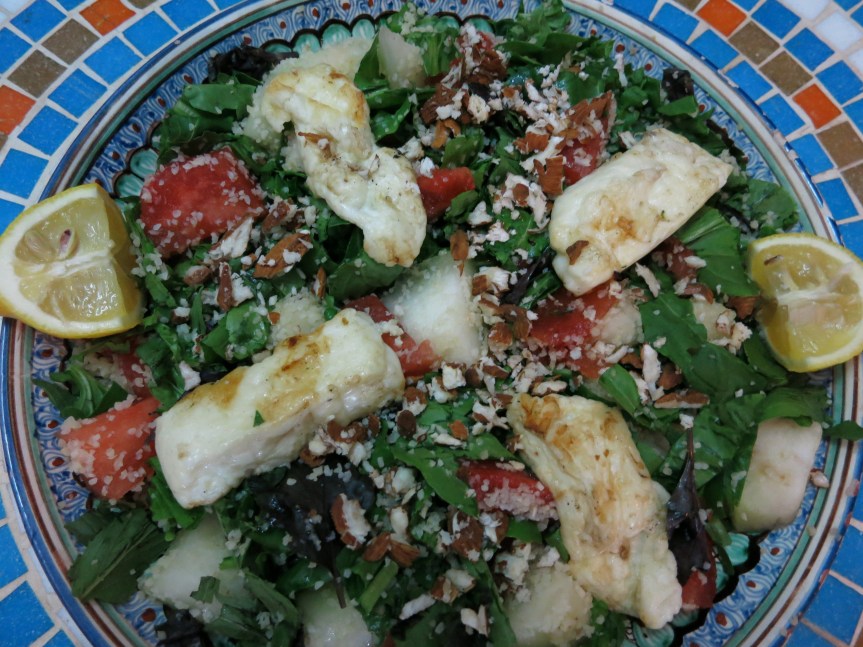
This summer has seen a rash of articles in the UK press about salads combining melon and white cheese and here at Knidos Cookery Club we love to tap into any zeitgeist that’s going – here’s our own take on this refreshing summery salad using watermelon, honeydew melon and halloumi cheese.

IMG_1324
Double Meloned Squeaky Cheese

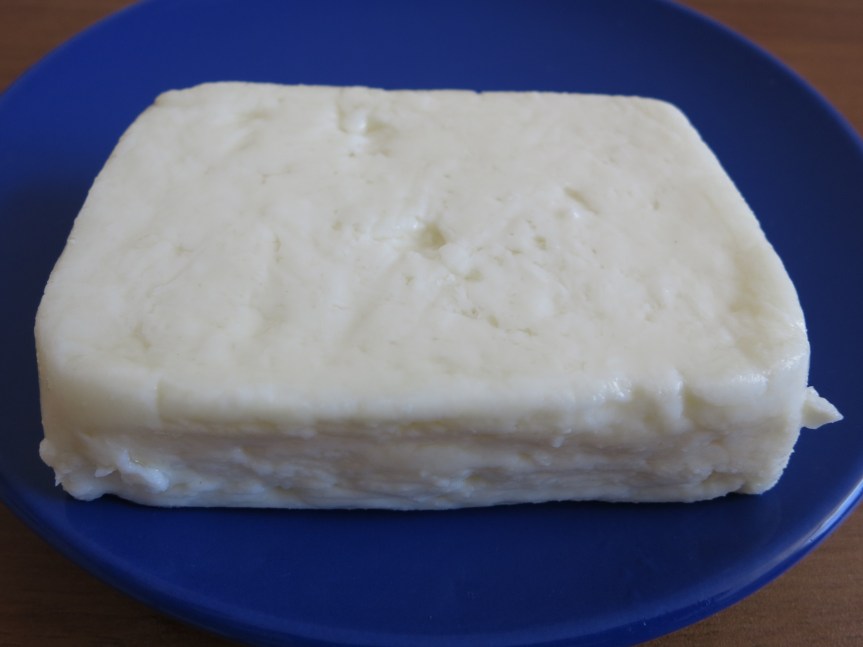
Halloumi, hellim in Turkish, is a salty white cheese with a high melting point that makes it perfect for grilling or frying. It originated in Cyprus – it’s a semi-hard cheese preserved in brine that can be stored for use in the winter months. It’s known in some quarters as ‘squeaky cheese’ because of its tendency to emit a mouse-like sound when you bite into it.

IMG_1337
A slab of halloumi – the cheese that squeaks!

It’s peak season for melons at the moment in the Knidos area so the time was ripe to attempt our own melon cheese combo. With the addition of some halloumi, that had been grilled into submission on the barbecue, and some rocket leaves, fresh mint  and basil, along with bulgur wheat and crushed almonds to add some body, the salad was a winner and set to be a fixture on the Knidos Cookery Club menu.

Ingredients (serves 3-4)

300 g watermelon cut into wedges

300 g honeydew melon cut into wedges

250 g halloumi cheese

One bunch of rocket (approx 125 g)

A handful of fresh mint and basil leaves

100 g fine bulgur wheat

50 g chopped almonds

100 ml hot water

One small lemon, juiced

A glug of olive oil

Method

Soak the bulgur wheat in 100 ml hot water until all the water is absorbed

Tear the rocket, mint and basil leaves and scatter into a large bowl and then add the bulgur wheat. Add the melon wedges and mix well. Dress the salad with lemon juice and olive oil.

Cut the halloumi into slices and grill or fry until going golden-brown on the outside. Arrange the halloumi slices on top of the melon and leaves and sprinkle chopped almonds over the salad. Serve with crusty bread.


Melon Almond a Go-Go

11 August 2016

As Knidos Cookery Club turns 20, we’re celebrating this week with a look at two of the mainstay crops of the Datça Peninsula – melons and almonds.

WP_20160810_13_03_46_Pro
This year’s almond crop has arrived!

This year’s new nut harvest is already arriving in the market. Datça’s almonds, badem in Turkish, are rightly famous in Turkey – I remember sitting at a terrace in Istanbul’s Beyoğlu district, back in the days when it still had street tables,  and a guy came round selling fresh Datça almonds, cooled on a bed of ice.

In the Knidos area, almonds are widely used in cooking, in making soaps and creams and in Datça many cafes offer a milky ‘almond coffee’. Last week we had some mezes at Kasapoğlu Pansiyon in Ovabükü which came liberally sprinkled with almonds – one green bean dish and another made from grated courgette and yogurt.

The area around Knidos is perfect for growing melons, kavun in Turkish. The market is full at the moment with a green and yellow striped variety – I’m not sure what it’s called, but it sure tastes good!

We’ve decided to attempt something unusual for the 20th edition of Knidos Cookery Club – stuffed melon. This dish was popular in the palaces of the Ottoman Empire, drawing on a Persian and Armenian-influenced fusion of sweet and savoury tastes.

IMG_1096
Plov in a melon

The Knidos Cookery Club version is fully veggie-friendly and uses mushrooms in place of meat, along with rice, dried fruit and fresh Datça almonds. The end result is basically plov in a melon, a most unusual taste sensation!

Ingredients (serves 4)

One melon (honeydew or similar – not watermelon!)

125 g rice

25 g orzu or pine nuts, if you’re feeling flush

One medium-sized onion

One garlic clove

100 g almonds

75 g mixed dried fruit (raisins, currants, chopped apricot, chopped fig)

250 g mushrooms

50 ml olive oil

One teaspoon of cumin, cinnamon and red pepper flakes

Salt and black pepper to season

Method

Wash the rice and soak for an hour or so. Heat 25 ml olive oil in a pan and cook the orzu or pine nuts until golden brown. Add the rice and stir to coat the grains with oil. Pour in 300 ml cold water, add a pinch of salt and cook until all the liquid is absorbed.

Heat the rest of the olive oil in a heavy-based pan and add the chopped onion and garlic. Cook until translucent and then add the peeled almonds. Keep stirring for five minutes and then add the mixed dried fruit and one teaspoon of cumin, cinnamon and red pepper flakes.

Chop the mushrooms up and then pour into the sizzling mix. Stir regularly – you don’t need to add any liquid as the mushrooms contain a lot of water. Cook for ten minutes or so and then turn off the heat. Mix in the rice, blending well.

Prepare the melon by cutting it in half and scooping out the seeds. Then scoop out the flesh, leaving about 1 cm inside the melon. Stuff with the rice mix, arranging some almonds on top.

Place the melon halves in a shallow dish, add 100 ml warm water and bake at 200°C or gas mark 6 for one hour.

Serve a quarter of the melon to each person with an Uzbek-style salad of sliced tomatoes, onions and chili pepper  – achik chuchuk.