Summertime Veggies with Yogurt and Mint

26 June 2025

Summer is in full flow so it’s time for some lighter dishes that bring to the fore fresh seasonal ingredients at their best. I found this on-trend recipe that uses fresh peas, broad beans and runner beans while going through some old stuff in the UK recently.
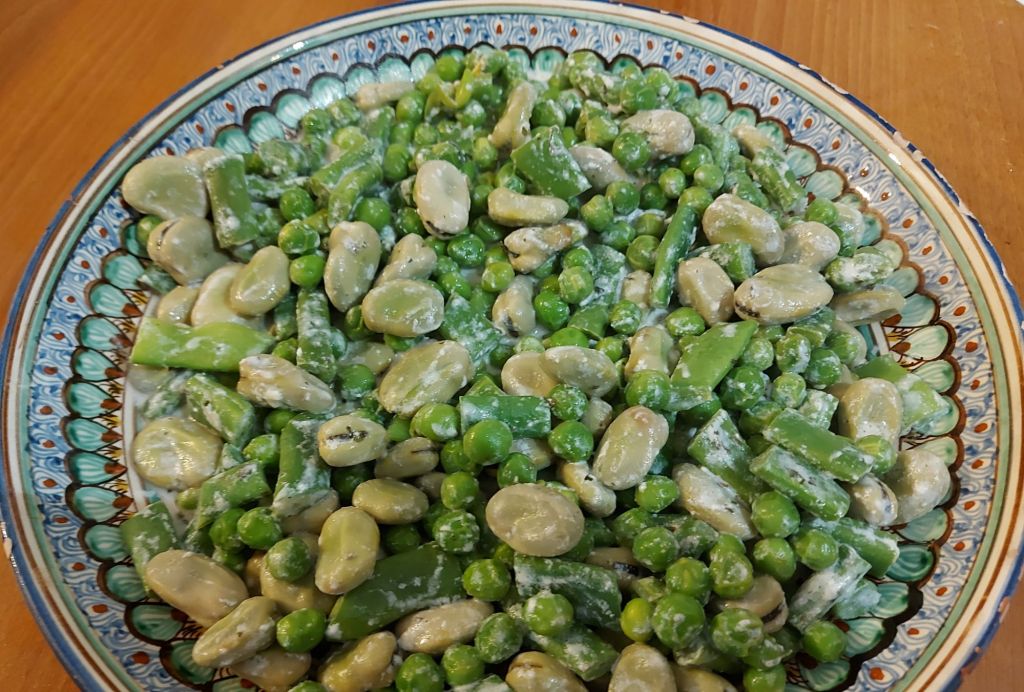
A taste of summer

I was at my late parents’ old place and during the archaeological dig I found a copy of the first vegetarian cookbook that I owned – Elaine Bastable’s Vegetarian Feast, a Christmas present from way back in 1985. It was sold by Marks & Spencer under its StMichael guise.

Vegetarian Feast was quite advanced for its time with a recipe for Avocado (and Stilton) on Toast, a Felafel recipe and other dishes that were very exotic for Margaret Thatcher’s meat-heavy Britain of the 80s. The cookbook’s over-reliance on butter comes across in the 2025 filter as a bit dated, but it still stands the test of time in many respects.
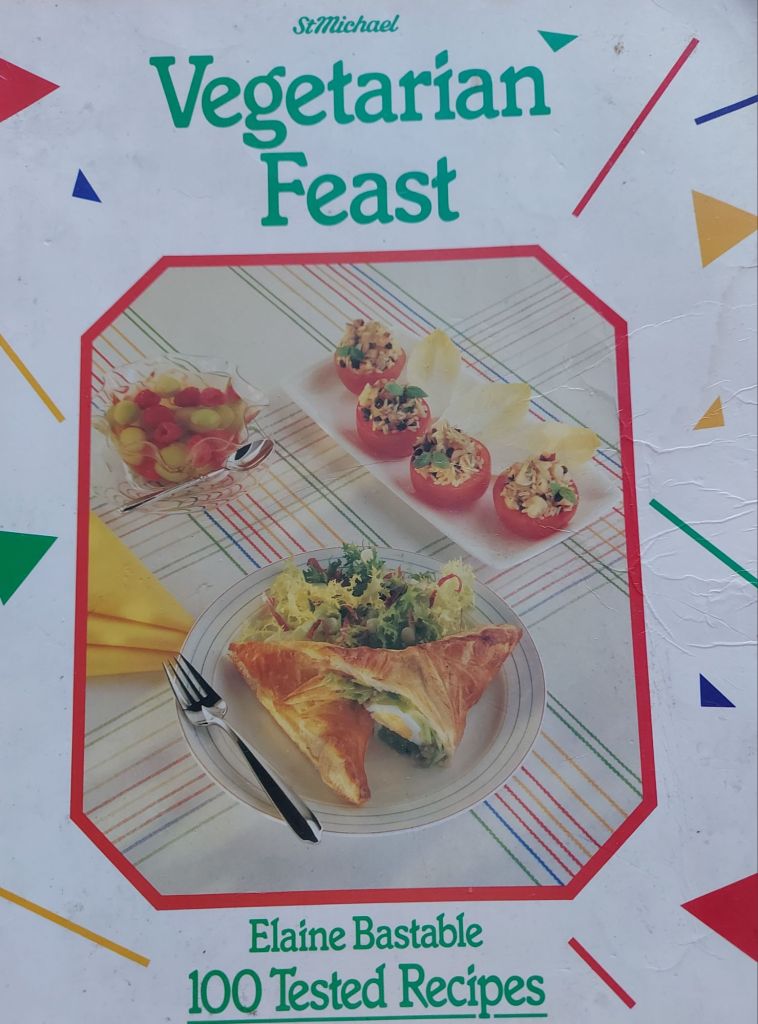
A blast from the past

1985 was the year I finally took the plunge and went vegetarian. It had been coming for a while. As an impoverished student the meat that I could afford was of the type that had featured in documentaries of the time looking at the meat industry.

Affordable processed products such as burgers and sausages were shown to contain all parts of an animal – mashed up eyelids, lips, bollocks and toes, to be precise.

Although there are now many more vegans and vegetarians, not much has changed in the meat industry – as I write the Guardian is carrying this article on the shocking rise of factory farms across Europe and the UK.
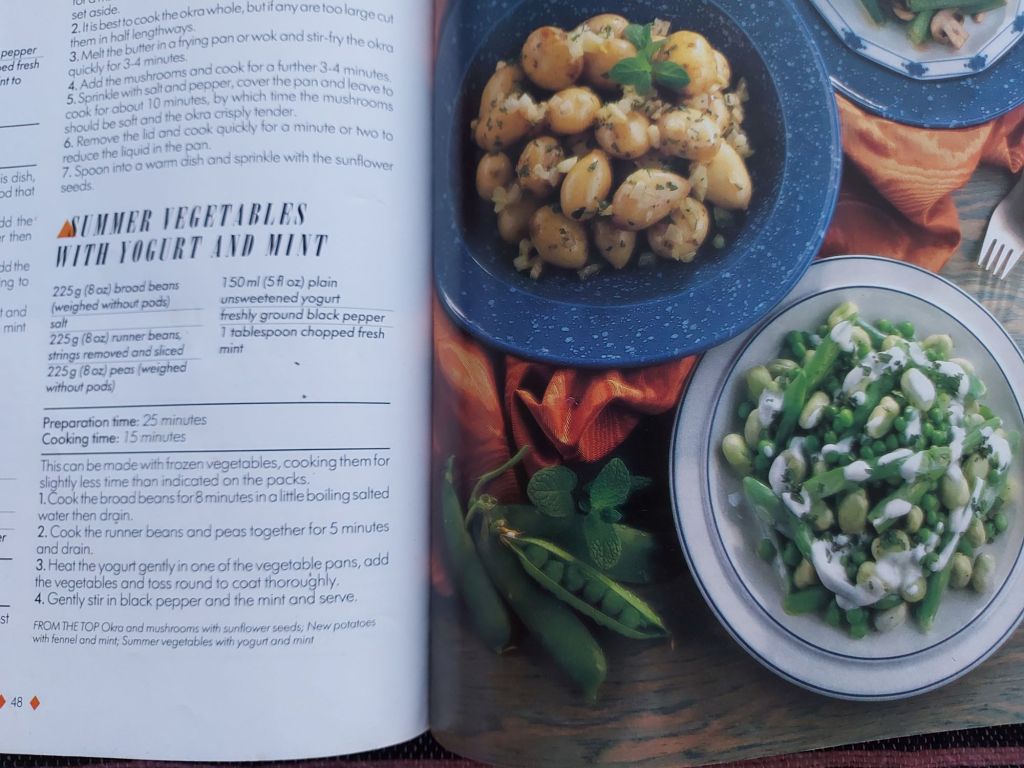
Here’s the recipe

In the summer of 1985 I had just finished uni and I was travelling through Yugoslavia, as was, to Greece via Bulgaria and Turkey. Bulgaria was a veggie turning point. Cafe menus featured a wide selection but when asking for a particular dish a frosty niama (approx: We don’t have it) was the usual responseBaked meat (of dodgy provenance) was the only option other than abundant salads. Who needed meat, especially baked meat of unknown origin, with all those veggies on offer?

Moving on into Greece, after the vegetarian heaven of Turkey’s ev yemekleri cafes, I finally started eating tomatoes, which I’d hated with a vengeance since my childhood. The tomato breakthrough opened up many new veggie avenues. From that point on I stopped eating meat and haven’t looked back since.

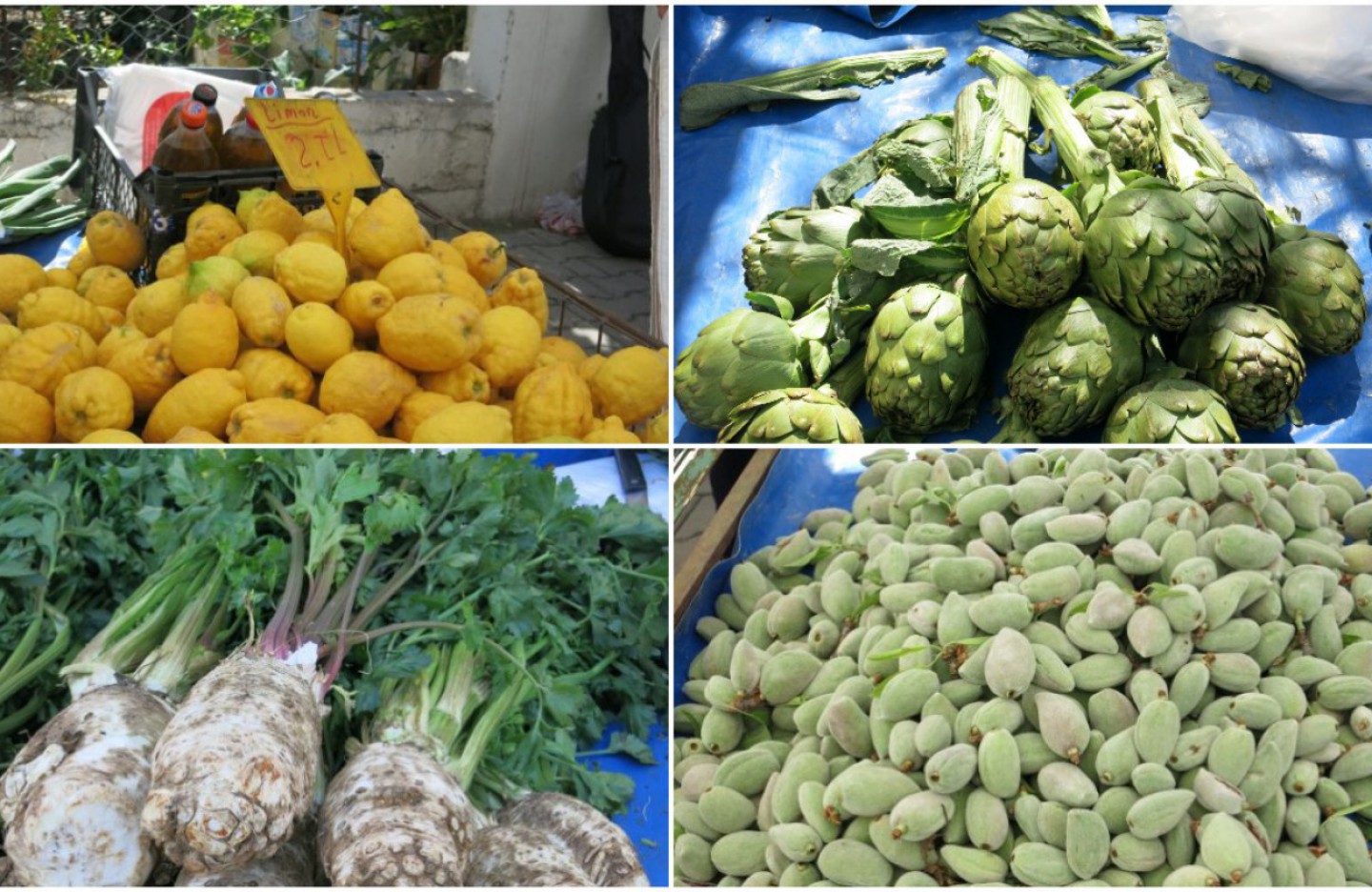
So, turning back to Vegetarian Feast, I found the recipe for this side dish of summer vegetables and Datça market came up trumps with fresh peas, broad beans and runner beans. Check out the recipe in the picture above.
A Smashing Alternative to Avocado

23 January 2025

Here at KKC we’re big fans of smashed avocado, but in Kazakhstan it can sometimes be difficult to find the ideal fruit when needed – they’re either underripe and too hard to use immediately or gone mushy with grey stringy bits. Another problem is that most of these fruit that make their way here are grown in Israel and Colombia. So, a less well-travelled alternative is needed – look no further than the humble garden pea.

Move over avocado, here come the smashed peas!

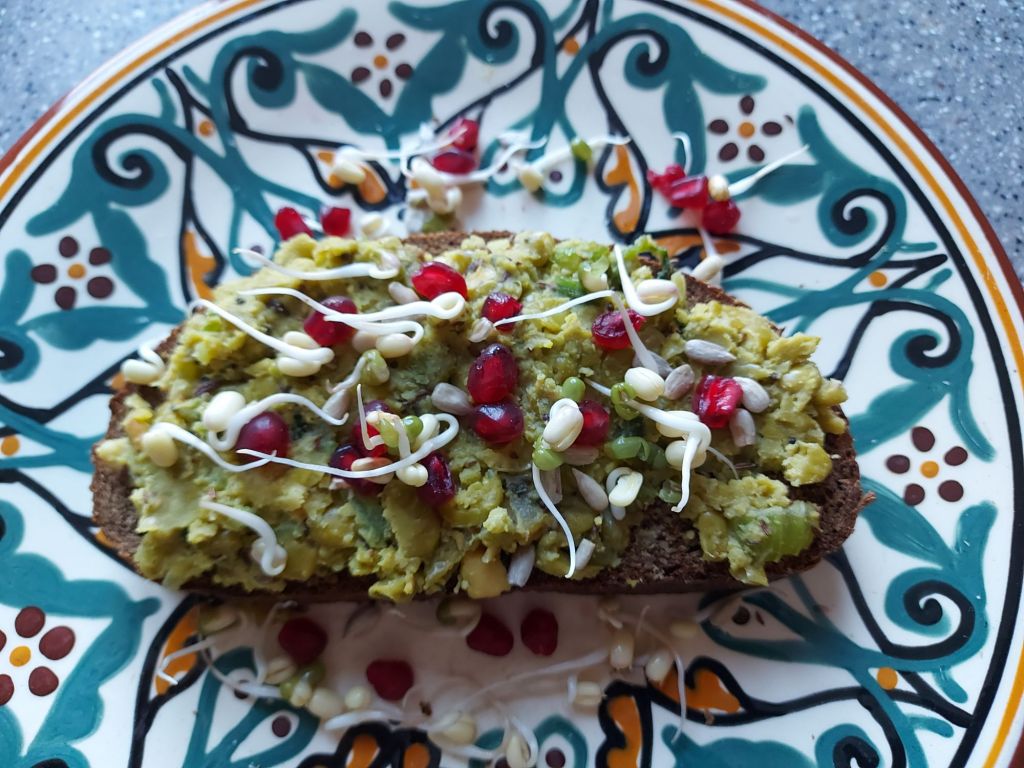
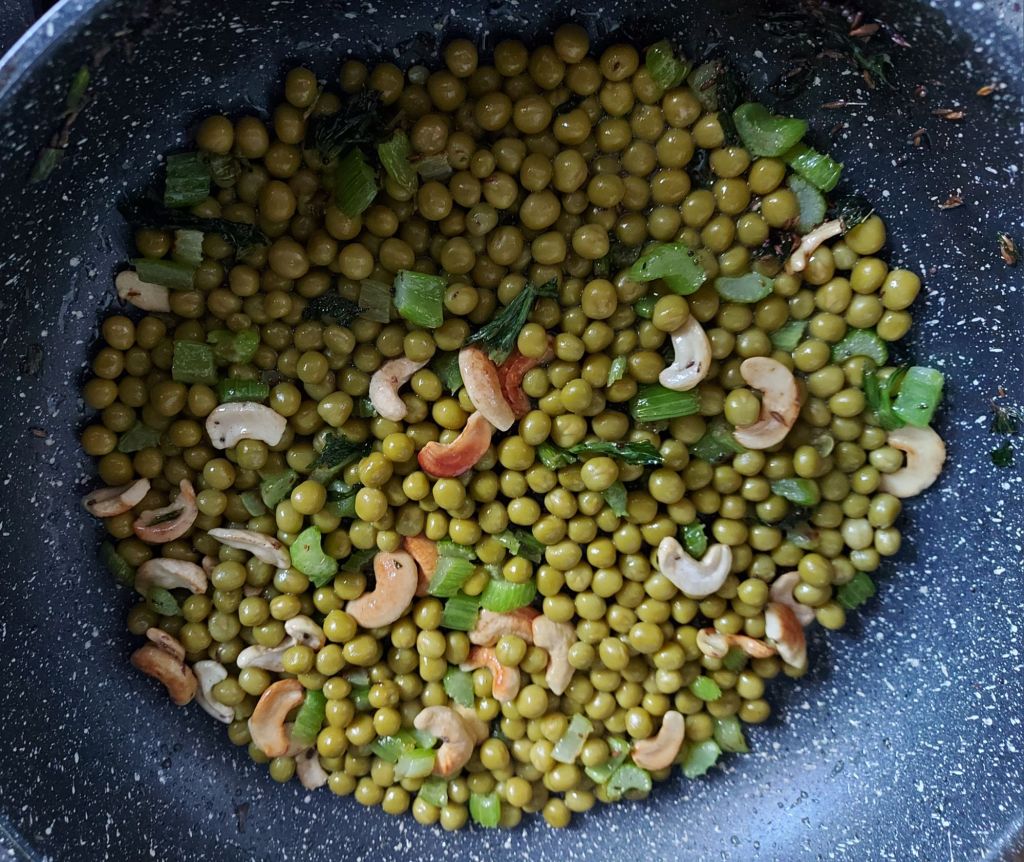
Smashed peas can be used replacement for avocado, and involve a lot less food miles. We combined our peas, from a tin as there were no frozen peas in our local supermarket, with some unsalted cashews and chopped celery to make a great substitute for the alligator pear.

There could be a solution in the offing to the problem of sourcing avocadoes in Kazakhstan. An enterprising farm in the south of the country, near Shymkent, has started growing bananas in greenhouses. This is quite a feat in a country with a sharp continental climate with hot summers and freezing winters.

Get ready to smash those peas…

This year’s banana crop will cover around 5% of demand in Shymkent and the commercial hub, Almaty. And in the coming years, GenGroup Qazaqstan hopes to add mangoes and avocadoes to the supply chain of locally grown fruits, significantly reducing the food miles clocked up for these treats.

Ingredients (makes four servings)

  • 250 g peas
  • 75 g celery
  • 25 g cashew nuts
  • 15 ml olive oil
  • One teaspoon cumin seeds
  • One teaspoon mustard seeds
  • To garnish: a handful of beansprouts
  • One teaspoon sunflower seeds (per serving)
  • One teaspoon pomegranate seeds (per serving)

    Method

    • Heat the oil in a heavy-based frying pan and add the mustard and cumin seeds,. When they start popping, add the chopped celery and stir fry over a medium heat for two minutes and then add the cashews and continue to stir fry for another few minutes until the cashews start to brown.
    • Turn the heat down and add the peas. When the peas are warmed up, turn off the heat and use a potato masher to smash all the ingredients together. Spread the smashed peas on wholemeal bread or toast and garnish with pomegranate seeds, sunflower seeds and beansprouts.

Spicy Peas ‘n’ Cheese

30 November 2021

This time round on KCC we’ve been inspired to take on a curry house favourite of ours, matar paneer, cubes of fresh white cheese cooked with peas in a spicy tomato-rich gravy.

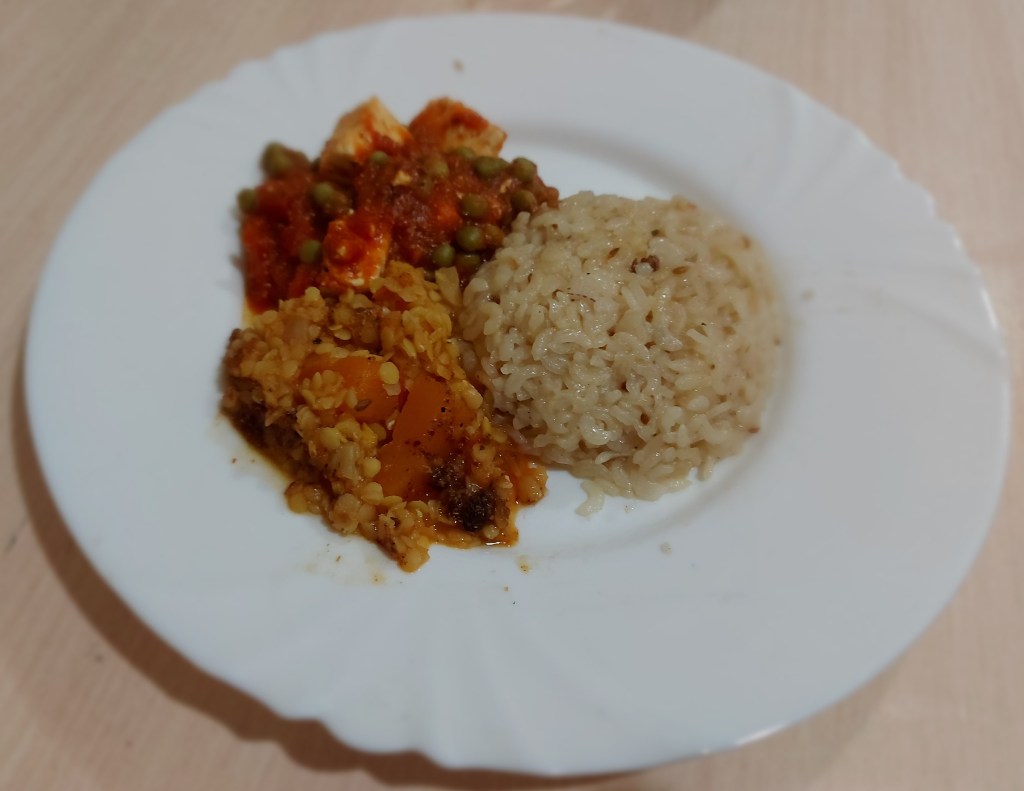
Spicy peas ‘n’ cheese aka matar paneer

We’ve been in Bishkek, Kyrgyzstan for the last two weeks to polish off the final chapter in a gruelling two-year run of Central Asian elections. While browsing around the supermarket, we came across a pack of locally made Ricotta cheese. Its dry, crumbly texture immediately reminded us of fresh paneer cheese from the Indian sub-continent, bringing to mind matar paneer.

Spicy peas and cheese with pumpkin dhal and rice

This white cheese does not taste of much on its own so it needs to soak up some flavour. We prepared a tomato gravy and then marinated the cubes of cheese and the peas in the sauce overnight before heating it through just before serving. For any vegans reading, substitute chunks of plain tofu for the paneer cheese – tofu is another ingredient that benefits from being marinated for a while. Serve with our pumpkin dhal and rice or flat bread.

Ingredients (makes 4 servings)

  • 3 medium tomatoes (approx 250 g)
  • 1 medium onion
  • 1 clove of garlic
  • 200 g paneer cheese or tofu
  • 250 g peas (tinned, frozen or fresh if you can get them) 
  • 25 ml olive oil or other vegetable oil
  • 1 teaspoon cumin seeds
  • 1 teaspoon chilli powder
  • 1 teaspoon cinnamon
  • 1 teaspoon black pepper
  • 1 cm knob of chopped ginger
  • 1 small bunch fresh coriander

Method

  1. Finely chop the onion and cook for five minutes in the oil over a medium heat in a heavy-based pan. Turn down to a low heat and add the spices and the minced garlic and stir well. Cook for another two minutes and then add the chopped, peeled tomatoes. Cook for 20-30 minutes over a low heat until the tomatoes have formed a smooth gravy with the onions.
  2. Allow the sauce to cool and then add the white cheese (paneer) or tofu, cut into 1 cm cubes, and the peas and mix well. Leave to marinate for an hour or two at least – overnight in the fridge is better, and then heat through. Sprinkle with fresh coriander before serving with our pumpkin dhal and rice. Also goes well with a flat bread of your choice.

Battered Halloumi = Pakora Paradise

5 December 2019

Over the last few days, we’ve been experimenting with perfecting a batter to make pakora – a deep-fried snack from the Indian sub-continent. After testing a few recipes we’ve hit on a formula that can be used to coat a variety of vegetables from cauliflowers to carrots, parsnips to peas, and also cheese!

20191101_234037
Halloumi pakora with potato wedges and peas

While on a recent visit to the UK, we came across battered halloumi on many menus – the squeaky cheese from Cyprus that stays firm when cooked. We’ve discovered that it makes a perfect partner for our pakora batter when deep-fried.  We recommend you try it with this spicy Yemini sauce, zhug.

But you’ll need to be quick, as halloumi has been a victim of its own success. Severe global shortages of this versatile cheese are predicted as demand far outstrips supply. Luckily for us here in Kazakhstan, a local producer has started making a version of this cheese. We’re pleased to report that it tastes pretty good, so for now the crisis has been averted in our winter base.

Ingredients (makes enough batter for a  sliced up 250 g block of halloumi)

  • 100 g chickpea flour (also known as gram flour or besan)
  • One small onion
  • 1 cm knob of ginger
  • One garlic clove
  • One teaspoon red chilli flakes
  • One tablespoon of fresh coriander
  • 50-100 ml cold water

Method  

  • Mix all the ingredients together with a fork or a whisk, adding water until you get a smooth consistency that is neither too runny not too thick with no lumps. Cover the batter with clingfilm and let it stand for an hour or so before using.
  • Heat a litre of cooking oil, we used sunflower oil but any will do, in a heavy-based pan over a medium heat until it reaches 180 c. To test the temperature, dip a chopstick or the handle of a wooden spoon in the oil – if the oil starts to bubble vigorously,  then it is at the right temperature.
  • Slice a 250 g block of halloumi into eight pieces. Coat the halloumi slices in the pakora batter and drop into the oil. When the pakora rise to the surface and are a golden-brown colour, remove with a slotted metal spoon and drain on kitchen towel.
  • Serve hot with potato wedges or roast potatoes and minted peas. The pakora goes well with a coriander and coconut chutney – this site has a good recipe for this sauce, or with our zhug sauce.


The Mücver Variations

29 June 2017

This time round on Knidos Cookery Club we’re revisiting an old favourite – mücver, Turkey’s tasty courgette fritter.

20170531_132309
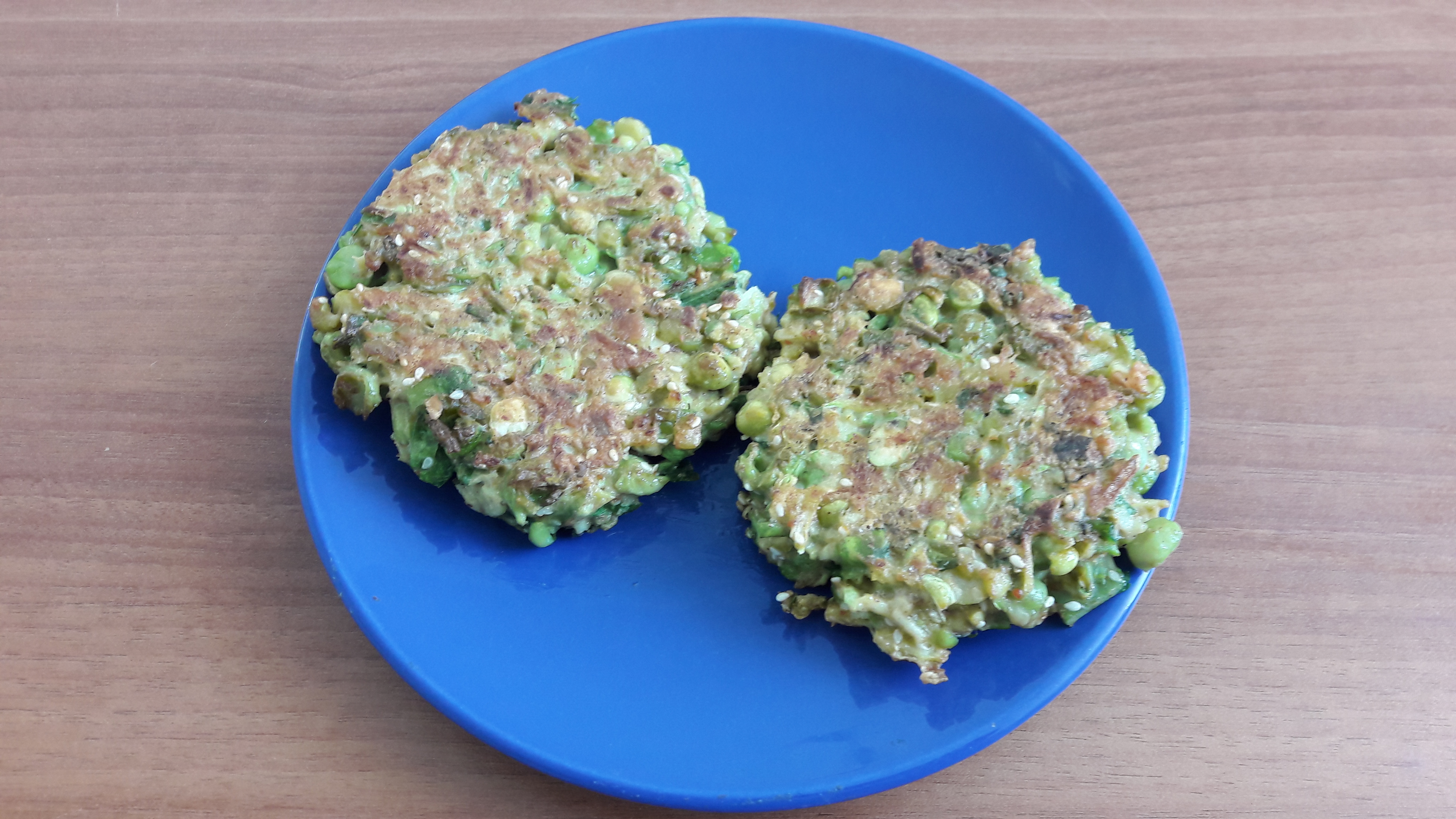
Could this be called a pea fritter?

The mücver usually served up in Turkish eateries are made from grated courgettes, so we’ve decided to spice up this old favourite by adding some other ingredients. Why not try them with fresh peas or grated carrot? Mushrooms work well, as do green beans.

20170609_133418
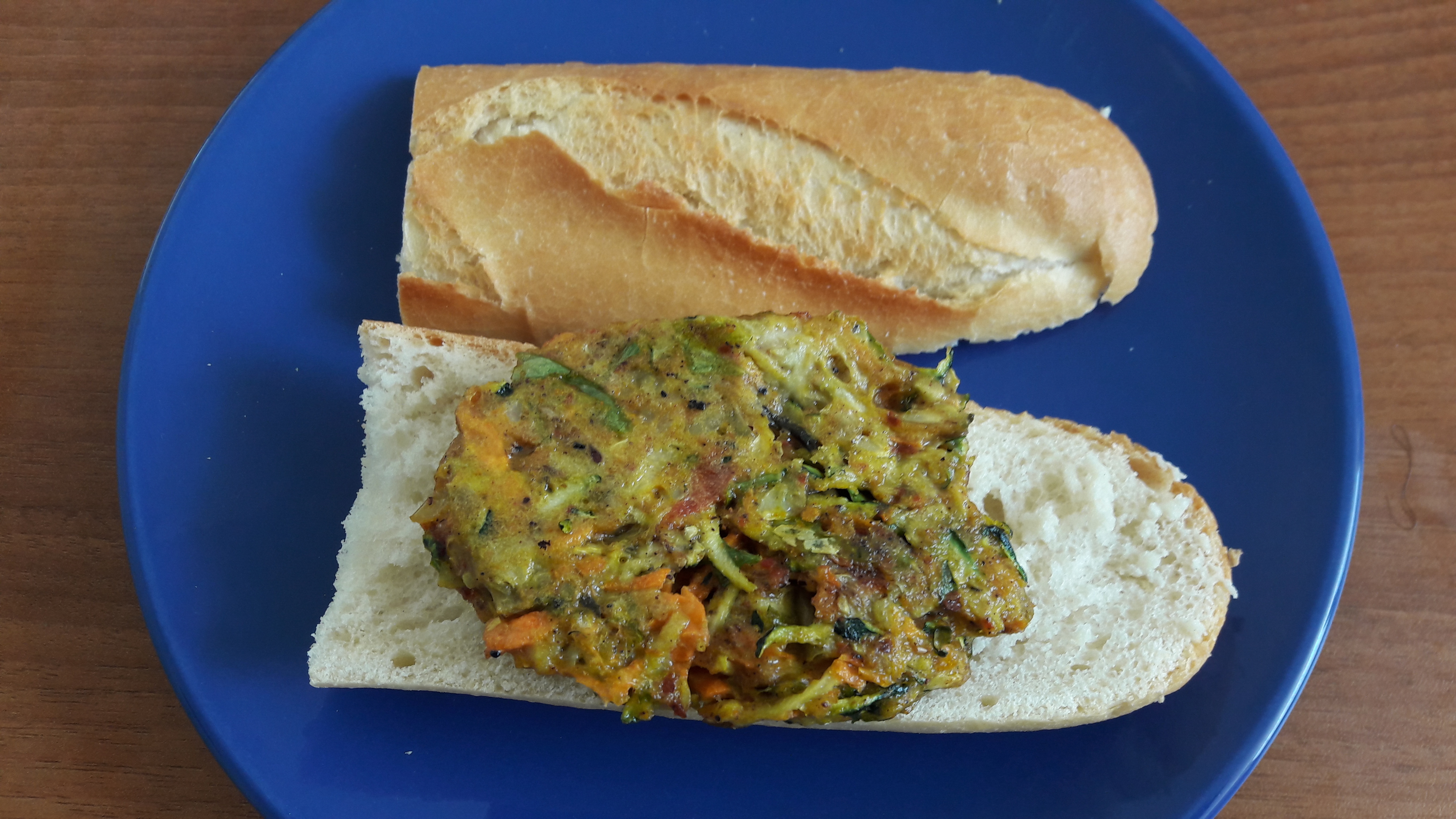
Putting some carrots in the mix

You can even add all these ingredients to the basic mix, chuck in a few chopped almonds or walnuts and, hey presto, you have a chunky veggie nut burger!

Serve the fritters in a pita, on a baguette, in a burger bun, rolled up in flat lavaş bread or just plain with a salad and condiments of your choice.

Ingredients (for around 8 fritters)

Two medium-sized courgettes

One small onion

One egg (or 15 ml of olive oil for vegan version)

Choose one or more from: 100 g chopped mushroom / grated carrot / peas (fresh if you have them, otherwise frozen or tinned) / sliced green beans (use 50 g of each if using more ingredients)

50 g of plain flour

Bunch of parsley, mint and/or dill (if you like that sort of thing)

Dried herbs to taste

A generous sprinkle of sesame seeds

An  optional dusting of chili flakes and grated cinnamon

Salt and pepper

A dash of olive oil for frying

Plain yogurt for serving

Method

Grate or chop up the courgettes and the extra of your choice (mushroom, carrot  peas, green beans or even all three) finely and mix with the chopped onion. Add fresh parsley, mint and/or dill, dried herbs, chili flakes, cinnamon, sesame seeds salt and pepper and blend well.

Make a well in the centre of the mix and break the egg into it. Sprinkle in the crumbled white cheese. Mix well. (Vegan readers should skip the egg and add 25 ml of olive oil instead)

Gradually add the plain flour and blend  until the mixture has quite a thick consistency – you don’t want it to be too wet and sloppy.

Drizzle some olive oil in a frying pan and put over a medium heat.

Place golf ball-sized scoops of the courgette mixture into the pan and flatten with a spatula or fork.

After a few minutes turn the fritter. Keep cooking until both sided are a golden-brown colour.

Serve hot with a dollop of yogurt on top.

Olivier with an Edge

12 January 2017

Welcome to the first Knidos Cookery Club of the new year. While many of us have returned to the daily grind, it’s still party-time in some parts of the world.

in Russia, people are preparing to celebrate New Year’s Eve on 13 January – the Orthodox Church still follows the Julian calendar rather than the Gregorian calendar, which Russia adopted after 1917’s October Revolution. This switch created a 13-day lag between the calendars so, for followers of the Orthodox faith, Christmas Eve falls on 6 January and 13 January marks the end of the old year.

20170107_183144
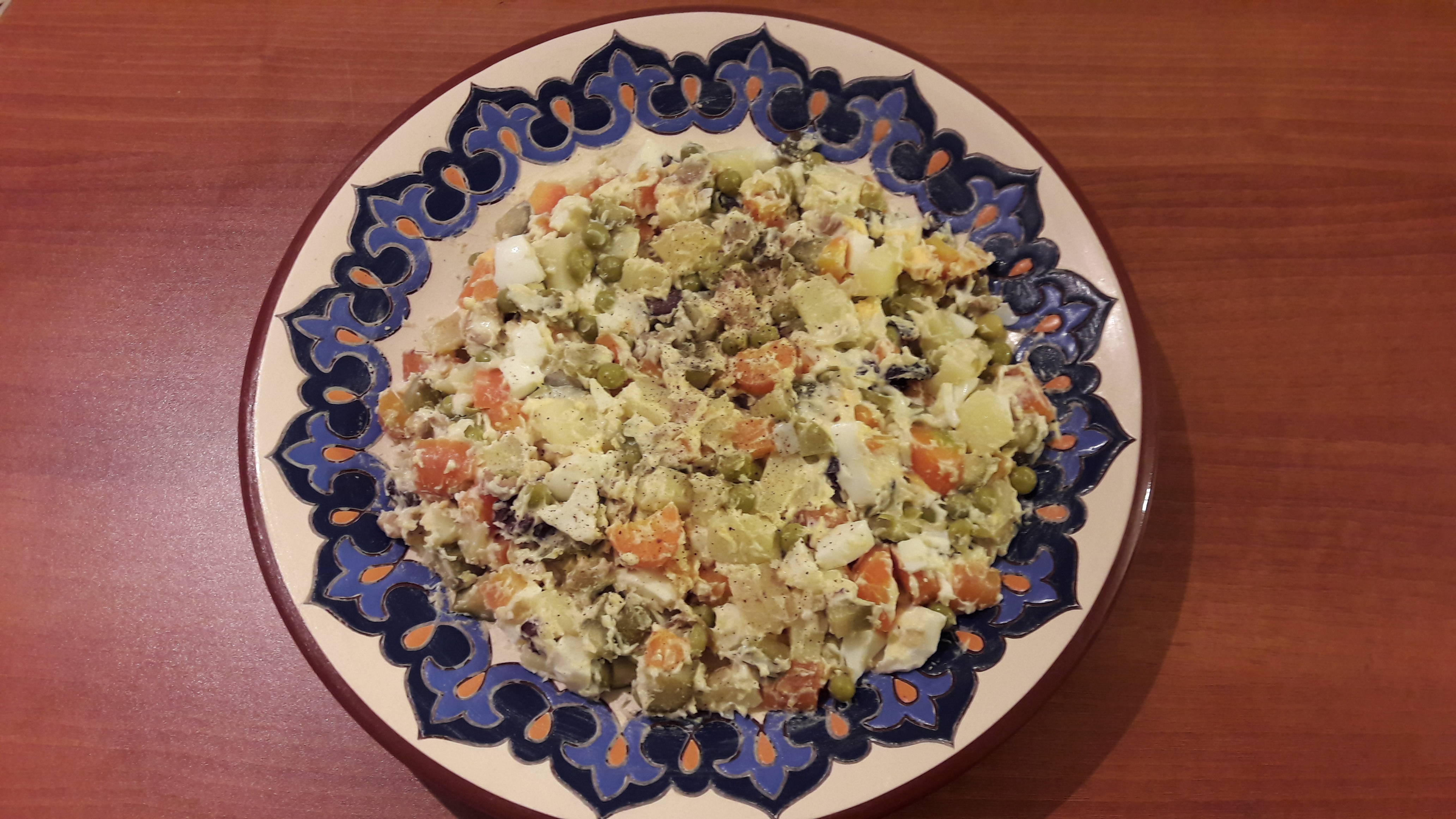
KCC’s take on Russia’s classic Olivier salad

A centre-piece of Russian tables on this day, as people prepare to welcome in novy god, is the Olivier salad – a concoction of boiled potatoes, pickled cucumbers, peas, eggs, carrots and boiled beef or chicken in a mayonnaise dressing. This version dates from Soviet times as all the ingredients could usually be procured even in the depths of winter and despite chronic shortages.

A version of the salad, omitting the meat and eggs, is made in Turkey where it’s known as Rus Salatası – we’ve made our own veggie version that replaces the meat (Olivier purists look aside now, please) with black and green olives and uses sour cream in place of mayonnaise.

When I lived in Moscow in the 1990s I got it into my head that Olivier salad should include olives (mistakenly thinking that Olivier referred to olives rather than the salad’s originator!) and I was disappointed when it came minus olives – so now I finally have a chance to put this right!

Ingredients (serves 3-4)

  • 150 g potatoes
  • 150 g carrots
  • 150 g peas
  • 150 g pickled cucumbers
  • 150 g black and green olives
  • two hard boiled eggs
  • 150 ml sour cream or natural yogurt
  • pinches of salt and black pepper

Method

  • Boil the whole carrots and potatoes until cooked but not going mushy and boil the eggs for 5 minutes or so. While they’re all cooking, chop the pickled cucumbers and olives into small cubes.
  • Drain the potatoes and carrots and cover with cold water to stop them cooking. Do the same with the eggs. Chop the potatoes, carrots and eggs into small cubes and arrange around the side of a large serving dish in separate sections with the olives, peas and cucumbers.
  • Pour the sour cream or yogurt into the middle of the bowl and season with salt and pepper. Now mix all the ingredients thoroughly, making sure they all get a good coating of sour cream or yogurt.
  • Leave in the fridge before serving alongside other Russian-themed salads, such as this veggie take on caviar made from beluga lentils, and wish a hearty S Novym Godom with shots of vodka and/or a glass of chilled Sovyetskoye Shampankskoye (if you can get hold of it in your local offie!) as you prepare to welcome Old New Year in true Russian-style!