The courgette is one of the most versatile vegetables in the Knidos Cookery Club kitchen. Earlier it featured in a stuffed platter and as a fritter. We also like it in an omelette, in a börek or just sliced and grilled on the barbecue.
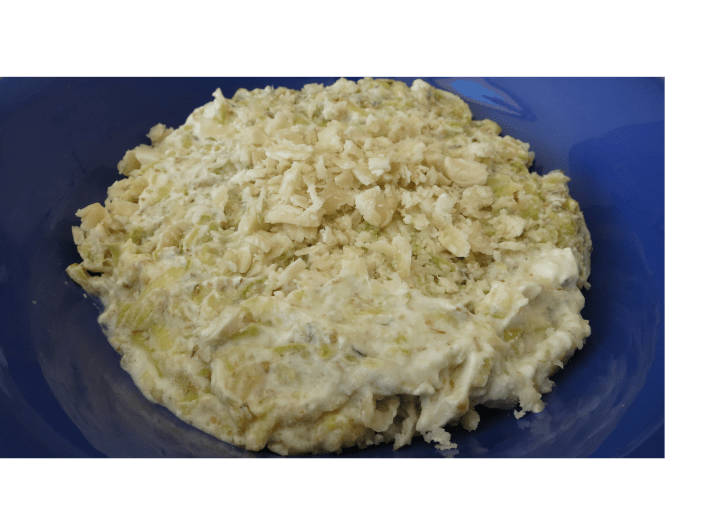
Creamy Almond and Courgette Dip
This week we’ve incorporated this key ingredient into a creamy almond and courgette dip that can be used as part of a starter, or meze, combo with other dips such as our Carrot and Walnut Tarator.
Yogurt and chopped almonds were added to the grated courgette to make it creamy and some wholemeal flour was used to hold it all together.
Ingredients (Serves 3-4)
250 g grated courgette
100 ml plain, natural yogurt
50 g wholemeal flour
50 g chopped almonds
One garlic clove
25 ml olive oil
Method
Heat the olive oil in a frying pan over a medium heat then add the grated courgette and garlic and stir fry for five minutes. Add the flour and stir fry for two more minutes. Take the frying pan off the heat, mix in the yogurt and almonds, reserving a few nuts to sprinkle over the top.
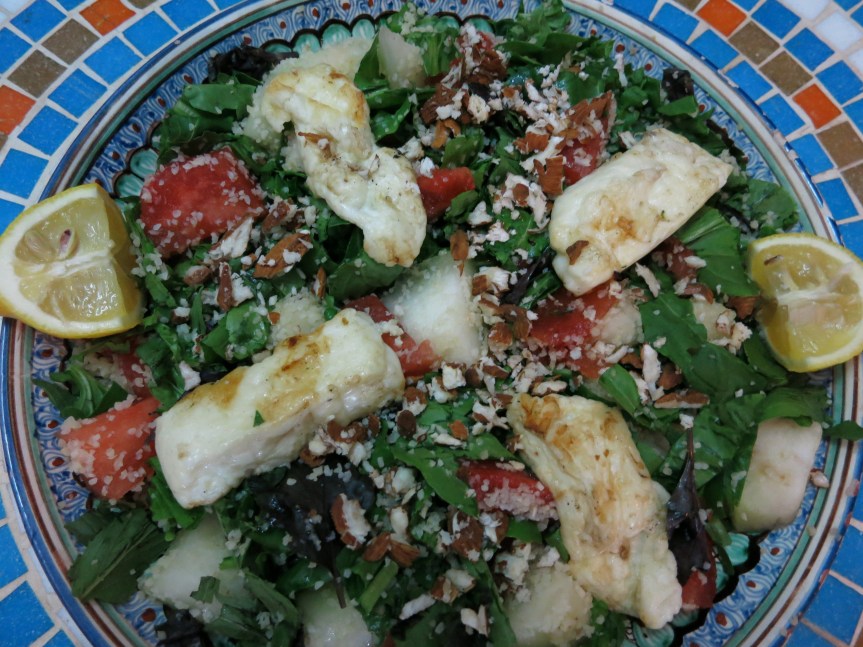
This summer has seen a rash of articles in the UK press about salads combining melon and white cheese and here at Knidos Cookery Club we love to tap into any zeitgeist that’s going – here’s our own take on this refreshing summery salad using watermelon, honeydew melon and halloumi cheese.
Double Meloned Squeaky Cheese
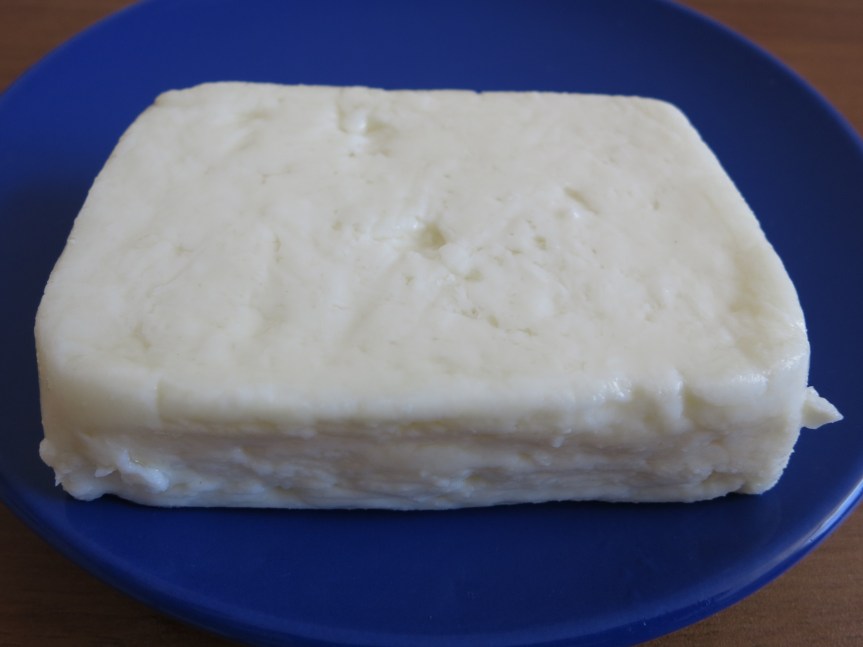
Halloumi, hellim in Turkish, is a salty white cheese with a high melting point that makes it perfect for grilling or frying. It originated in Cyprus – it’s a semi-hard cheese preserved in brine that can be stored for use in the winter months. It’s known in some quarters as ‘squeaky cheese’ because of its tendency to emit a mouse-like sound when you bite into it.
A slab of halloumi – the cheese that squeaks!
It’s peak season for melons at the moment in the Knidos area so the time was ripe to attempt our own melon cheese combo. With the addition of some halloumi, that had been grilled into submission on the barbecue, and some rocket leaves, fresh mint and basil, along with bulgur wheat and crushed almonds to add some body, the salad was a winner and set to be a fixture on the Knidos Cookery Club menu.
Ingredients (serves 3-4)
300 g watermelon cut into wedges
300 g honeydew melon cut into wedges
250 g halloumi cheese
One bunch of rocket (approx 125 g)
A handful of fresh mint and basil leaves
100 g fine bulgur wheat
50 g chopped almonds
100 ml hot water
One small lemon, juiced
A glug of olive oil
Method
Soak the bulgur wheat in 100 ml hot water until all the water is absorbed
Tear the rocket, mint and basil leaves and scatter into a large bowl and then add the bulgur wheat. Add the melon wedges and mix well. Dress the salad with lemon juice and olive oil.
Cut the halloumi into slices and grill or fry until going golden-brown on the outside. Arrange the halloumi slices on top of the melon and leaves and sprinkle chopped almonds over the salad. Serve with crusty bread.
This week, Knidos Cookery Club is cooking with okra, another vegetable that arouses strong emotions in the love it or hate it camps.
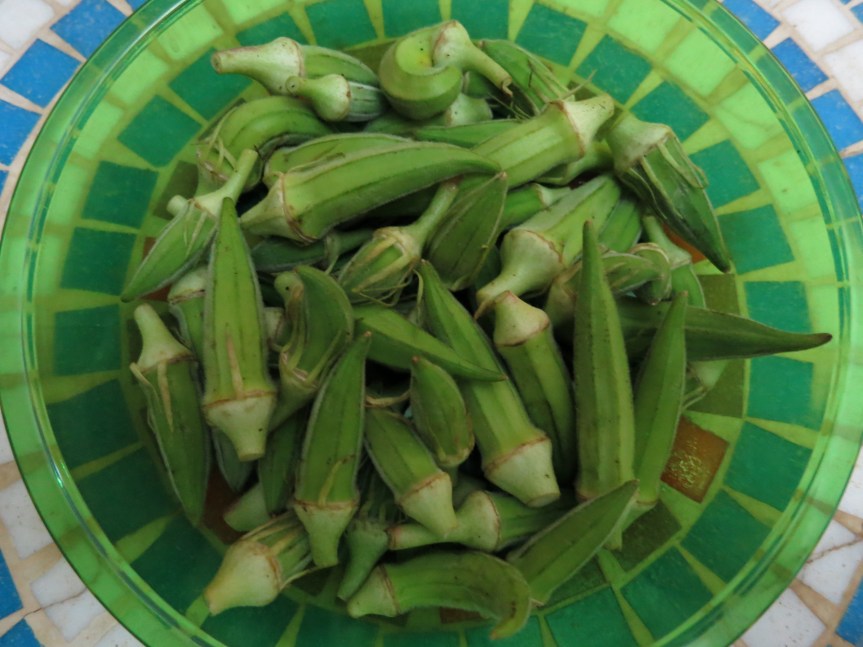
Okra – washed, dried and ready for action
Many are put off this green pod, also known as lady’s fingers, for its tendency to taste a bit slimy at times. This sliminess can be avoided by making sure that after washing, the pods are thoroughly dried before being cooked. Stir frying can also help retain okra’s natural crunchiness.
The origins of okra are unclear – South Asia, West Africa and Ethiopia all make claims to be the home of this vegetable. Okra was brought to Turkey by Arab merchants and is known by its Arabic name, bamya. It’s often cooked with olive oil and tomatoes and served as a side dish in Turkey.
Bhindi bhaji – dry okra curry
Our favourite recipe for okra is to prepare it Indian-style, stir fried with spices to make a dry bhindi bhaji, which works as a standalone dish or can be accompanied with a lentil dhal and rice combo.
Ingredients (serves 3-4)
500 g okra washed and dried
250 g tomatoes
One medium-sized onion
One clove of garlic
1 cm fresh ginger
One teaspoon mustard seeds
One teaspoon cumin
One teaspoon dried coriander
One teaspoon cinnamon
One teaspoon turmeric
One teaspoon chili flakes
50 ml olive oil
Method
Heat the olive oil in a frying pan and tip in the mustard seeds. When the seeds begin to pop, add the diced onion and garlic and cook for five minutes or so until just starting to brown. Add the spices (ginger, cumin, coriander, cinnamon, turmeric and chili flakes) and stir well.
Throw the tomatoes into the spicy onion mix and cook for another five minutes or so until the tomatoes begin to break up. Now add the okra and stir fry for ten minutes, making sure the okra are well-coated with the curry sauce.
Serve immediately with a lentil dhal and basmati rice or chapatis, or both if you’re feeling famished.
As Knidos Cookery Club turns 20, we’re celebrating this week with a look at two of the mainstay crops of the Datça Peninsula – melons and almonds.
This year’s almond crop has arrived!
This year’s new nut harvest is already arriving in the market. Datça’s almonds, badem in Turkish, are rightly famous in Turkey – I remember sitting at a terrace in Istanbul’s Beyoğlu district, back in the days when it still had street tables, and a guy came round selling fresh Datça almonds, cooled on a bed of ice.
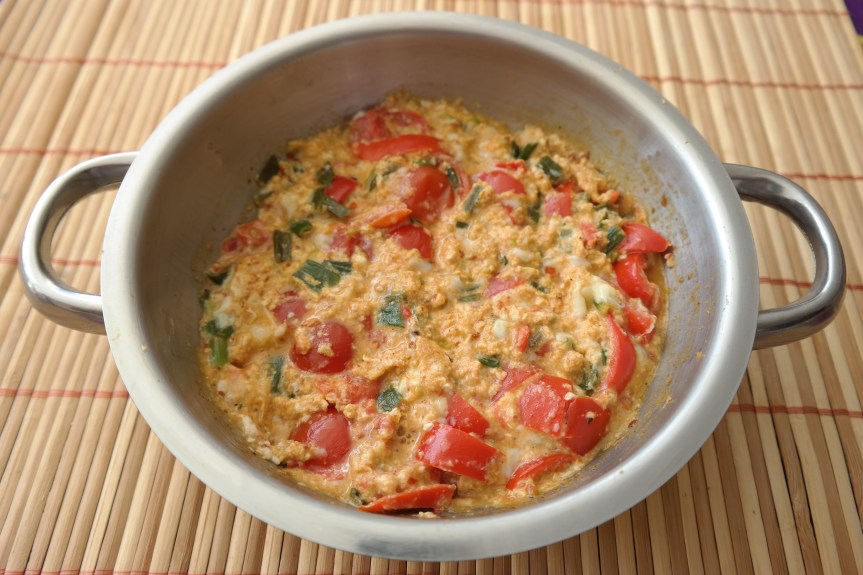
Yogurt, courgette and almond dip
Beans with chopped almonds
In the Knidos area, almonds are widely used in cooking, in making soaps and creams and in Datça many cafes offer a milky ‘almond coffee’. Last week we had some mezes at Kasapoğlu Pansiyon in Ovabükü which came liberally sprinkled with almonds – one green bean dish and another made from grated courgette and yogurt.
The area around Knidos is perfect for growing melons, kavun in Turkish. The market is full at the moment with a green and yellow striped variety – I’m not sure what it’s called, but it sure tastes good!
We’ve decided to attempt something unusual for the 20th edition of Knidos Cookery Club – stuffed melon. This dish was popular in the palaces of the Ottoman Empire, drawing on a Persian and Armenian-influenced fusion of sweet and savoury tastes.
Plov in a melon
The Knidos Cookery Club version is fully veggie-friendly and uses mushrooms in place of meat, along with rice, dried fruit and fresh Datça almonds. The end result is basically plov in a melon, a most unusual taste sensation!
Ingredients (serves 4)
One melon (honeydew or similar – not watermelon!)
125 g rice
25 g orzu or pine nuts, if you’re feeling flush
One medium-sized onion
One garlic clove
100 g almonds
75 g mixed dried fruit (raisins, currants, chopped apricot, chopped fig)
250 g mushrooms
50 ml olive oil
One teaspoon of cumin, cinnamon and red pepper flakes
Salt and black pepper to season
Method
Wash the rice and soak for an hour or so. Heat 25 ml olive oil in a pan and cook the orzu or pine nuts until golden brown. Add the rice and stir to coat the grains with oil. Pour in 300 ml cold water, add a pinch of salt and cook until all the liquid is absorbed.
Heat the rest of the olive oil in a heavy-based pan and add the chopped onion and garlic. Cook until translucent and then add the peeled almonds. Keep stirring for five minutes and then add the mixed dried fruit and one teaspoon of cumin, cinnamon and red pepper flakes.
Chop the mushrooms up and then pour into the sizzling mix. Stir regularly – you don’t need to add any liquid as the mushrooms contain a lot of water. Cook for ten minutes or so and then turn off the heat. Mix in the rice, blending well.
Prepare the melon by cutting it in half and scooping out the seeds. Then scoop out the flesh, leaving about 1 cm inside the melon. Stuff with the rice mix, arranging some almonds on top.
Place the melon halves in a shallow dish, add 100 ml warm water and bake at 200°C or gas mark 6 for one hour.
Serve a quarter of the melon to each person with an Uzbek-style salad of sliced tomatoes, onions and chili pepper – achik chuchuk.
This week in Knidos Cookery Club the focus is on capers, the unripened flower buds of Capparis spinosa, a thorny evergreen shrub that is native to the Mediterranean region.
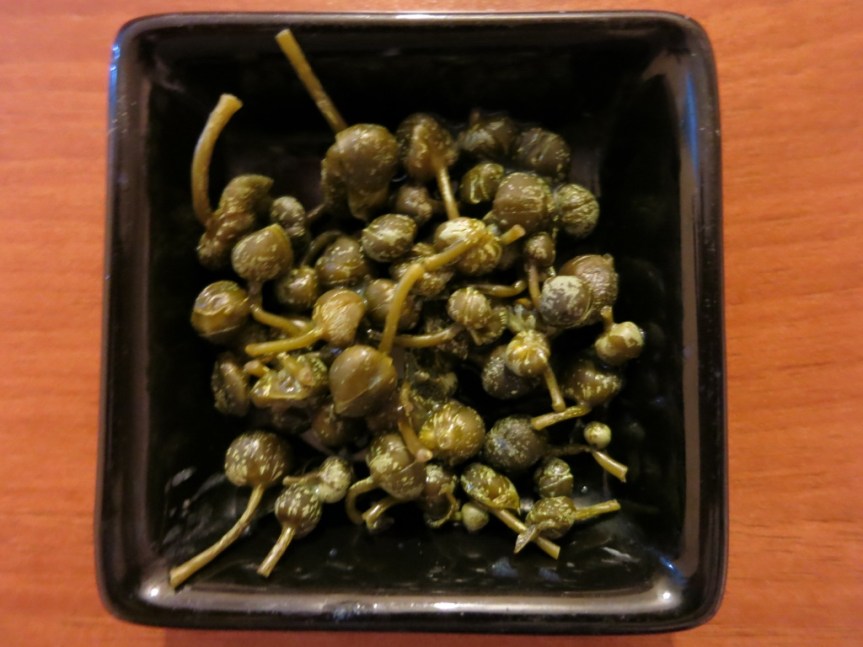
This wonder bud can be used to add taste to a variety of dishes from pastas and pizzas to salads and stews. They can be preserved in brine, sun-dried or salted to allow their complex lemony flavours to come to the fore.
Capers preserved in brine
A few weeks ago, Knidos Cookery Club was treated to a tasty lasagne topped with salted capers from the kitchen of Mr Alan in Tashkent, Uzbekistan. On returning to Knidos, our tastebuds awakened, the Saturday market and the local shops were scoured and a jar of capers in brine was tracked down.
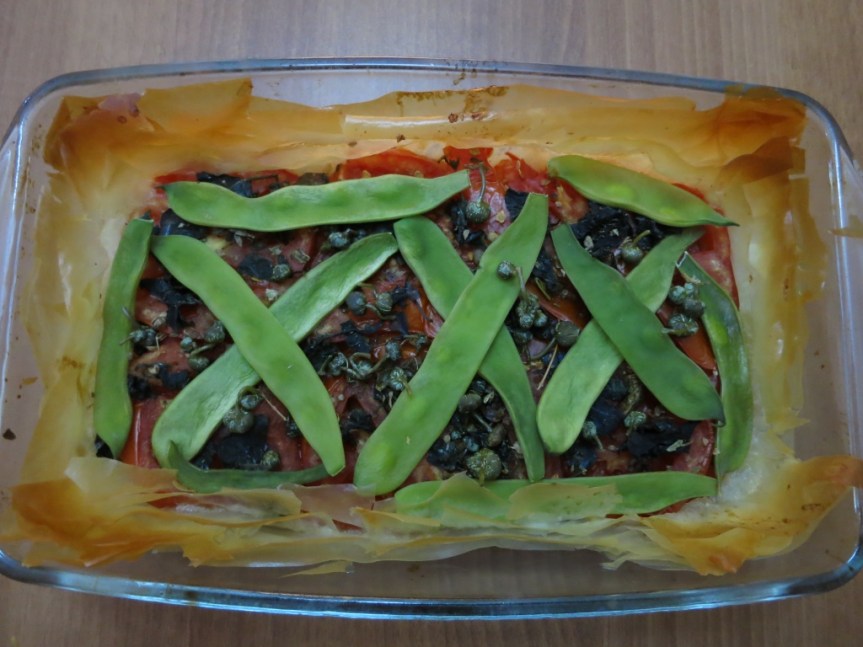
We spotted a Nigel Slater recipe in The Guardian recently for a tomato, olive and French bean tart – we decided to give it a go with some modifications, using some Datça capers in place of the olives. Here’s what the finished product should look like:
Ingredients (serves 3-4)
100 g filo pastry (yufka)
500 g tomatoes (any sort or a mix)
25 capers
20 green beans
25 ml olive oil infused with dried thyme
Seasoning: pinches of salt, black pepper, cumin, dried thyme
Method
Grease a large baking dish with some olive infused with dried thyme and place a sheet of filo pastry in the dish. Brush with more oil and put another layer of filo pastry – continue oiling and layering until pastry is used up.
Thinly slice the tomatoes and layer on the pastry base. Dot with capers and season with pinches of salt, black pepper, cumin and dried thyme.
Put the dish in a pre-heated oven (200 °C/gas mark 6) and bake for 30 minutes or until the pastry starts to go a deep golden colour. Keep an eye on it to make sure the pastry doesn’t burn.
While the tart is baking, cook the beans in boiling water for 4 minutes.
When the tart is cooked, arrange the beans in a criss-cross pattern on top of the tomato and caper base. Serve with a green salad – we had a purslane, rocket, sorrel, cucumber and onion salad dressed with lemon, olive oil and pomegranate sauce.
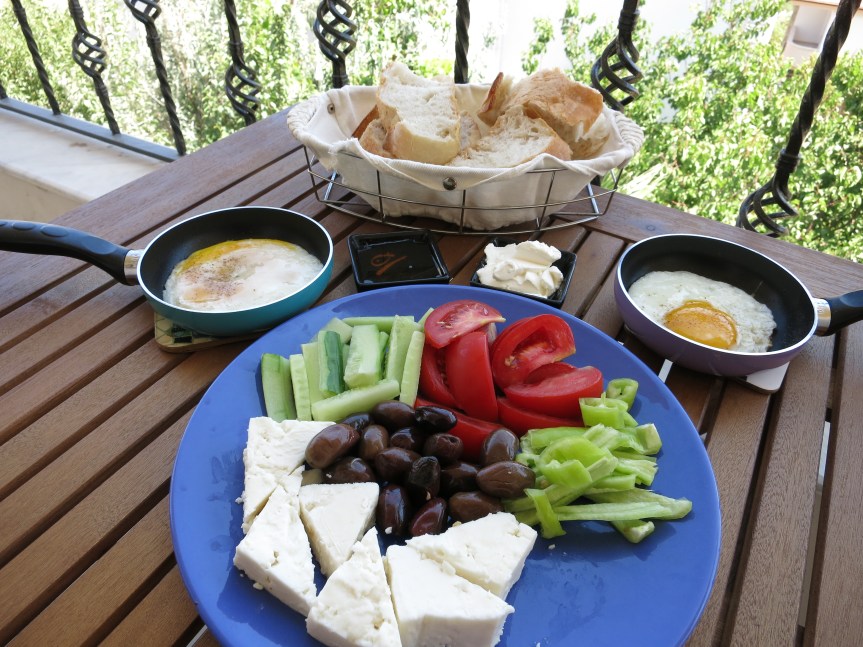
Turkey has turned the first meal of the day into an art form with ever-more elaborate spreads of cheeses, jams, honey, olives, tomatoes, cucumbers, peppers and egg dishes spilling across the table with different regions of the country bringing local additions to the mix.
Turk Brekkie!
At the heart of the breakfast there is usually an egg dish – often a soft-boiled or fried egg, or a speciality dish such as menemen, a hearty scramble of eggs, onions peppers and tomatoes.
In Datça, the köy, or village, breakfast can come with lashings of local honey and gözleme, a pancake filled with white cheese and fresh herbs. The Van Breakfast, originating in the east of the country, has conquered the rest of Turkey with its array of 20 or more dishes. It includes otlu peynir, a herb-infused cheese, martuğa, made from flour, butter and egg, and kavut, a porridge made from cornmeal and ground barley.
Menemen
This week on Knidos Cookery Club, we’ll be cooking up menemen. I first encountered this breakfast-time treat when staying in Izmir, on the Aegean coast. Walking out of my hotel, I was met be the mouth-watering aroma of eggs bubbling away with peppers and tomatoes. Street hawkers, hunched over single-burner camping stoves, were busily whipping up pans of scrambled delight.
Ingredients (for one hearty serving)
Two eggs
One spring onion
One small red or green pepper (if you like it hot, use a chili pepper)
One small tomato
Seasoning: pinches of salt, black pepper, cumin and chill pepper flakes
Parsley for garnishing
Olive oil for frying
Method
Heat the oil in a small frying pan. Add the diced spring onion and cook over a medium heat until starting to brown. Add the diced tomato and diced pepper and season with salt, black pepper, cumin and chill pepper flakes.
Cook until the peppers begin to soften then reduce to a low heat and crack in the eggs. Keep stirring as you would for scrambled eggs. When the egg begins to set, remove from the heat – it’ll carry on cooking in the pan. Garnish with some chopped parsley.
Serve immediately with crusty bread and a plate of white cheese, honey, olives, tomatoes, cucumbers and peppers for the full-on Turk brekkie effect.
This week, Knidos Cookery Club is going to have a look at a local take on the pie – börek.
This member of the baked, filled pastry club is made from thin layers of filo pastry, known as yufka in Turkey. It comes with a variety of fillings including spinach, white cheese, potatoes, grated courgettes, swiss chard, leeks or combinations of these fillings.
Individual spinach börek ready for the oven
There are two main ways of preparing börek – in a large pan and then sliced after baking, or as an individual serving in a cigar-shape. Either way, the börek is a moreish treat so always make more than you think you’ll need!
Kindos Cookery Club will tell you how to make the individual servings today. To make the pan version, layer 3-4 sheets of filo pastry in a large, greased dish, brushing glaze between the layers (as in this recipe for a zesty leek, goat cheese and walnut tart). Next add the filling of your choice and then top it off with 3-4 more sheets of filo and sprinkle with nigella seeds. Follow the baking instructions below for the individual pies to cook the pan version.
Follow these steps to make some tasty individual white cheese and spinach börek.
Ready to roll…
Ingredients (To make 5 individual pies)
15 sheets of filo pastry
500 g spinach
One medium-sized onion
100 g white cheese
50 ml olive oil
50 ml natural yogurt or milk
Fresh mixed herbs (mint, oregano, thyme,dill)
Salt and pepper
Nigella seeds
Method
To make the filling, heat some olive oil in a heavy-based pan and cook the chopped onion over a medium heat until translucent. Add the chopped, fresh herbs and washed and shredded spinach. Season with dashes of salt and pepper.
Cook until the spinach wilts and then add the crumbled white cheese. Mix well and allow to cool.
Make a glaze for the filo pastry by blending equal parts of olive oil and natural yogurt (or milk). Brush the glaze over one 15 cm x 15 cm sheet of filo (or triangle shapes if you can find them), then place another layer of pastry, glaze and finally one more sheet and glaze.
Put two generous dollops of filling onto the bottom edge of the layered filo sheets, leaving about 2 cm at each end. Roll the pie into a cigar shape and press the ends down.
Brush with glaze and sprinkle nigella seeds over the cigar.
Place on a greased baking tray and put into a pre-heated oven and bake at 200 °C (gas mark 6) for 30 minutes or until the pies are golden brown in colour.
Swiss chard, a surprisingly divisive green leaf, is in the spotlight on Knidos Cookery Club this week.
Swiss chard – friend or foe?
Swiss chard, pazı in Turkish, is one of those love it or hate it vegetables. In arestaurant in Istanbul a few years ago, a Turkish friend was fine with the spinach order but when I suggested the pazı side dish he looked at me as if I had gone mad. He refused to countenance eating it, leaving these particular green leaves to the three foreigners he was with.
On the positive side, in Croatia last summer friends from HaMASin the UK introduced me to blitva, a local take on this leafy green vegetable that sees it sautéed with potatoes and garlic.
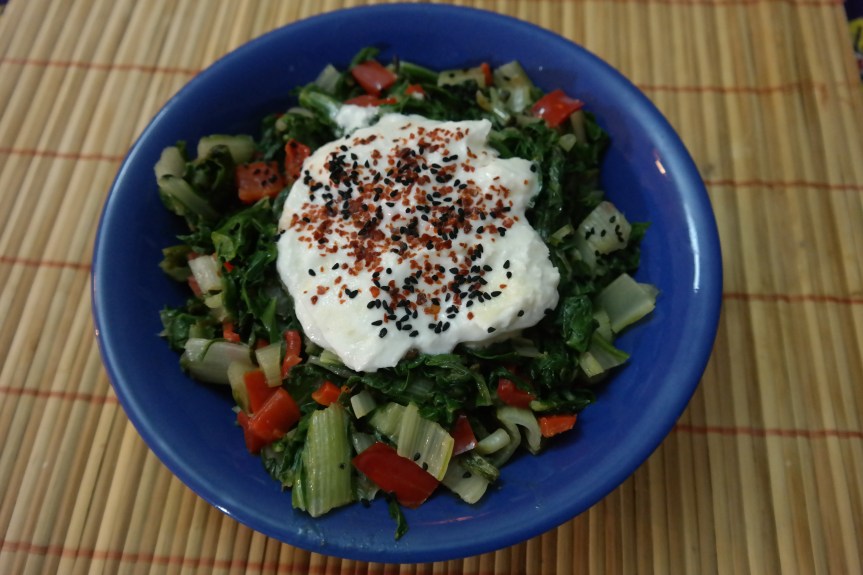
Here at Knidos Cookery Club we love it, especially when the vitamin-packed leaves are combined with red peppers, added more for colour than heat, and topped off with a healthy dollop of natural yogurt, to re-create a dish that is a mainstay in Turkey’s home-cooking lokanta restaurants.
Turkish-style Swiss chard with red pepper and yogurt
Try this recipe yourself to see which side of the Swiss chard fence you fall on.
Heat the olive oil in a frying pan and when hot add the finely chopped spring onions.
After a few minutes over a medium heat, add the finely chopped red pepper and the bay leaf. Season with pinches of cumin, cinnamon, salt and black pepper.
Clean the Swiss chard thoroughly, shake dry and then roughly chop the leaves and stalks. After cooking the red peppers for five minutes, add the Swiss chard to the pan and stir continuously. You shouldn’t need to add any extra water. Continue cooking and stirring until the Swiss chard begins to soften – 8-10 minutes or so.
Serve with a dollop of yogurt and sprinkle the chili flakes and nigella seeds over this.
This week, Knidos Cookery Club is returning to the zeytinyağlı style of cooking to cook up a real bean feast with freshly-picked, tender green beans and juicy tomatoes.
Around this time of year, markets in Turkey are teeming with fresh beans in a variety of shapes and sizes. For a quick and easy meal, Knidos Cookery Club likes to chop the beans up and chuck them into a boiling pan of pasta and serve it all up with some generous dollops of pesto and shavings of parmesan.
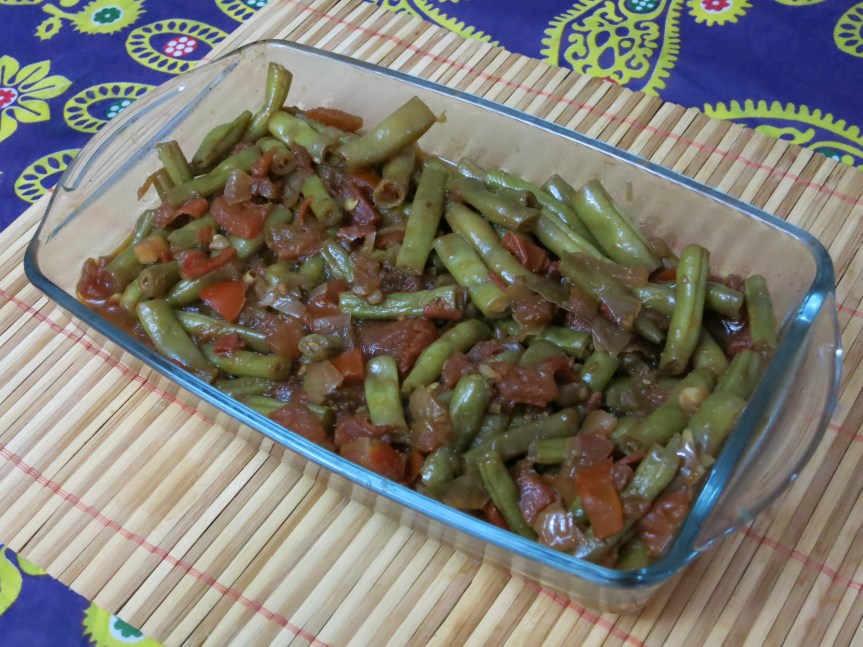
For a traditional Turkish twist, combine your green beans with tomatoes to make zeytinyağlıtaze fasulye and serve it as a side-dish alongside other seasonal, vegetable dishes. Serving this dish on top of a bowl of steamed rice makes for a more substantial main meal.
Recipes for this bean feast often call for the addition of some sugar, but you can replace this with honey. For a richer sauce, I found some pekmez, molasses (usually made from crushed grapes), in the store cupboard and poured a bountiful slug of this into the mix, giving the onions in the finished dish a deep burgundy hue.
Another use for pekmez is to mix it with tahini, sesame seed paste, and this fabulous combination frequently features in a full-on Turkish breakfast; more on this in a later edition of Knidos Cookery Club.
Ingredients (Serves 3-4)
500 g fresh green beans
One medium-sized onion
One or two garlic cloves
Four medium-sized tomatoes
50 ml Olive oil
One teaspoon of honey or pekmez
Juice of one lemon
Pinches of salt, pepper and cumin
One bay leaf
250 ml warm water
Method
Heat the oil in a heavy-based pan and add the finely chopped onion and garlic when the oil’s sizzling.
When the onions are looking translucent, add the green beans, topped and tailed and sliced into 3-5 cm lengths, the chopped tomatoes and the bay leaf, salt, pepper and cumin and mix well.
Pour in the lemon juice, water and a dollop of pekmez or honey. Bring to the boil and then put the lid on the pan and cook over a low heat for 30 minutes or so until the beans are tender.
Serve with other vegetable dishes, bread and/or steamed rice.
Welcome to leek week on Knidos Cookery Club. Last weekend, the market stalls in Datça, south-west Turkey, were laden with a selection of oversized leeks of proportions that would turn Welsh rugby fans green with envy. The last of the season’s plump lemons were also well represented, providing the inspiration for a lemony leeky fest.
The leek, pırasa in Turkish, is a cousin of garlic and onion and the largest member of the Allium family. Leeks are used in a number of dishes in Turkey – braised in olive oil with rice, in a hearty vegetable stew, in a lighter, creamy soup or baked in something akin to a pasty.
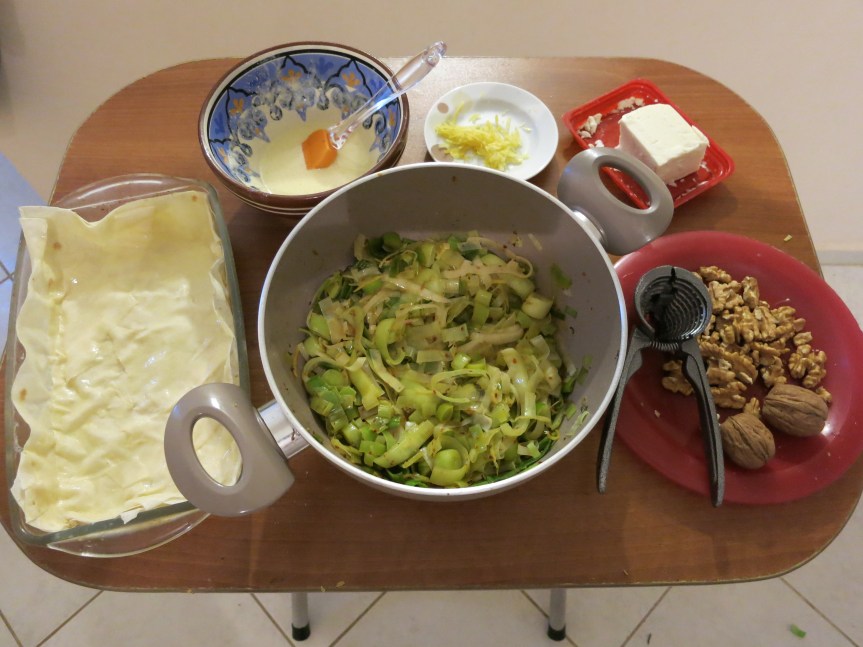
In this week’s recipe, Knidos Cookery Club will combine the mild oniony flavour of sliced leek with other ingredients readily found in Turkey – tangy lemon juice and zest, some salty white cheese and fresh walnuts, and put it all in a filo pastry case to make a zesty leek, goat cheese and walnut tart.
All systems go on assembling the tart:
Thirty minutes later – the finished product:
Ingredients (3-4 servings)
One large leek, cleaned and sliced into 50 mm rounds
50 ml olive oil blended with 50 ml of milk or natural yogurt to make a glaze for the filo pastry
A sprinkling of thyme and chili pepper flakes
Method
Pre-heat the oven to 200 °C (gas mark 6)
While the oven warms up, heat a dash of olive oil and a knob of butter in a heavy-based pan. Add the leeks and half the lemon zest and cook over a medium heat. When the leeks are softened, add the lemon juice and a sprinkle of thyme and raise the heat to reduce the liquid for a minute or so.
Now prepare the tart base. Layer sheets of filo pastry in a greased dish; as you go brush the glaze over each layer of filo pastry. (NB: If you can’t find filo pastry, any other sort of pastry will do the job).
Pour the leaks onto the tart base then crumble the goat cheese and sprinkle the walnuts pieces over the leeky layer. Add chili flakes, black pepper and thyme to taste – the salt from the cheese should be sufficient, but add more if you want. Drizzle a bit more olive oil over the tart.
Bake at 200 °C (gas mark 6) for 30 minutes or until the cheese starts to brown.
Remove from the oven and garnish with the rest of the lemon zest and a few more sprigs of thyme.
Serve with a green salad or side dishes of your choice.






 Knidos Cookery Club