No Beef with the Beetburger

19 October 2017

The beet is back on Knidos Cookery Club and this time round we’ll be using our burgundy-coloured friend to tap into another zeitgeist treat in the form of the tasty beetburger.

20171013_210527

The stalls in Datça market last Saturday were overflowing with bunches of beetroots so we picked up a bunch, chopped off the leaves and stems for sautéing, and wrapped the beets in foil and roasted them in the oven for an hour or so.

Beetroot burgers have been a bit of a barbecue craze in the UK over the summer, with supermarkets reporting soaring sales as people turn towards healthier options to meat.

20171013_175647
Turkey’s papatya, or daisy, loaf of bread

We’ve done some experimentation and come up with a patty that will hold together under the grill, on the barbie, in the oven or can be shallow-fried. Stuff it in a bun – we’ve used the papatya loaf as pictured above, and serve with chips and salad for a delicious yet healthy meal (the chips were roasted in the oven, not fried).

Ingredients (makes 6-8 burgers)

100 g red lentils

50 g fine bulgur wheat

150 g roasted beetroot, grated

One medium onion

One garlic clove

50 ml olive oil

Two teaspoons dried thyme

One teaspoon each of sumac, cumin and chilli flakes

Dash of soy sauce

Method

Heat 25 ml of the olive oil in a heavy-based pan, add the herbs and spices and the chopped onion and garlic and fry for five minutes until the onion starts to soften. Add the lentils and water, bring to the boil and then simmer until the liquid is absorbed.

Add the bulgur wheat to the mix and allow to cool for 30 minutes – this should thicken the mixture. Then add the grated beetroot and stir to combine all the ingredients. Form into burger shapes (take a dollop of walnut-sized mix and flatten with a spatula and shallow fry in the rest of the olive oil on both sides until going crispy on the outside.

Alternatively, these burgers can be baked in the oven for 30-40 minutes at 200 c or grilled or cooked on the barbecue until crispy on both sides. Serve in a burger bun with salad and chips.

Fava à la Grecque

12 October 2017

There are a lot of similarities between Turkish and Greek cuisine with both claiming baklava as their own and many other shared dishes, but there are also some striking differences. One variation we’ve noticed on our travels around Turkey and Greece has been with the dish known as fava in both countries.

20171006_134319
Fava à la Grecque

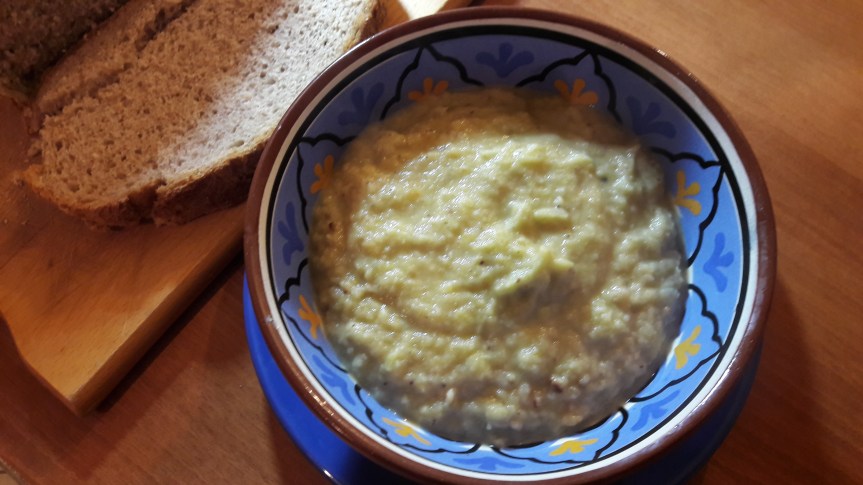
Last week we featured Turkey’s take on fava, made with broad beans, so this week we’re going to balance things up and have a look at Greece’s take on this dish, which is made with yellow split peas.

20171006_131423
Ingredients for fava à la Grecque

These dried peas proved quite hard to track down in Turkey – most supermarkets don’t stock them, but we eventually found them on sale in Datça market, mixed in with a few lentils and whole grains for good measure!

Greece’s version of this dish is runnier than Turkey’s, more like a hummus consistency, so it’s more suitable to use as a dip or spread. We’ve added some sumac to bring together these two esteemed cuisines in a spirit of gastronomic entente cordiale!

Ingredients (makes 6-8 healthy servings)

250 g yellow split peas, soaked in cold water for 1-2 hours

One medium red onion

One garlic clove

One teaspoon dried thyme

25 ml olive oil

500 ml water

Juice of one lemon

Pinches of salt and black pepper

Use a pinch of sumac, slices of red onion and a squeeze of lemon juice to garnish the fava

Method

Fry the finely chopped onion and garlic in the olive oil over a medium to high heat until the onions start to caramelise. Add the split peas and thyme, season with salt and pepper and stir well. Pour in the water, bring to the boil and then reduce the heat and simmer for 30 minutes or so until all the liquid is absorbed.

Allow the cooked mixture to cool for ten minutes and then use a hand blender to make it into a smooth paste. As you’re blending the mix, add the lemon juice to give it a creamier consistency.

Use a pinch of sumac, slices of red onion and a squeeze of lemon juice to garnish the fava and then serve warm with crusty bread and a green salad.


Bitter Melon Menemen

7 September 2017

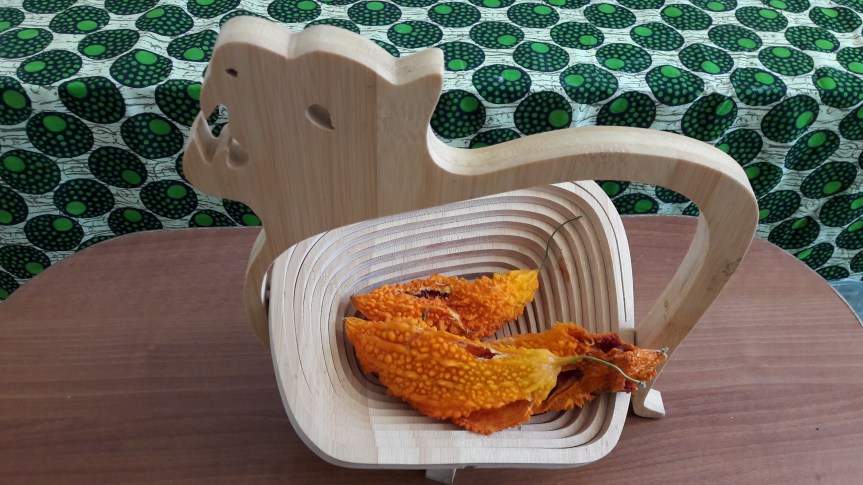
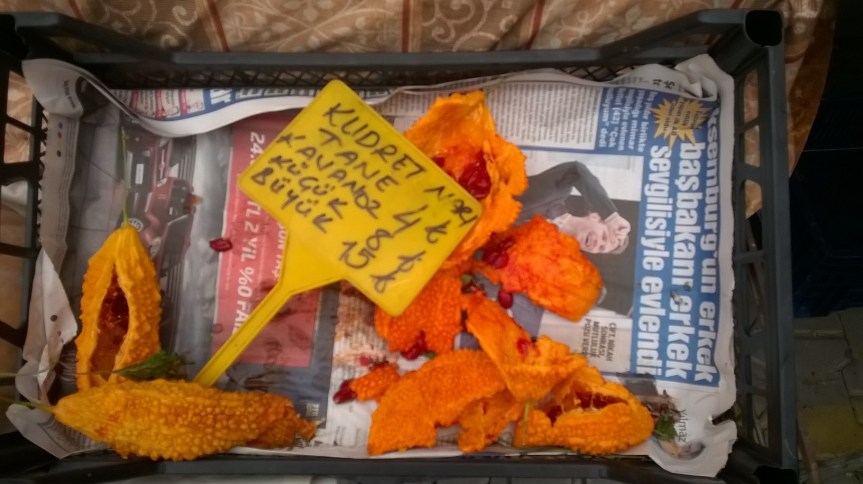
While shopping at Datça market recently, this spectacular-looking, knobbly, bright orange fruit grabbed our attention.

20170828_145746
What’s in the dragon today? Bitter melon, of course

Subsequent googling revealed it to be a bitter melon, or bitter gourd, kudret narı in Turkish. Despute being popular in pan-Asian cooking, we couldn’t find too many Turkish recipes using bitter melon so we decided to mix it in with menemen, that breakfast fave in Turkey.

WP_20170826_12_29_42_Pro

You’ll probably be able to track down bitter melons in your local Asian grocer’s. When picked they are yellow-green, resembling a bumpy cucumber, and when ripe they turn orange. Cooking helps remove some of the bitter taste of this curious-looking member of the squash family. Inside are bright red coloured seeds that can be removed and eaten.

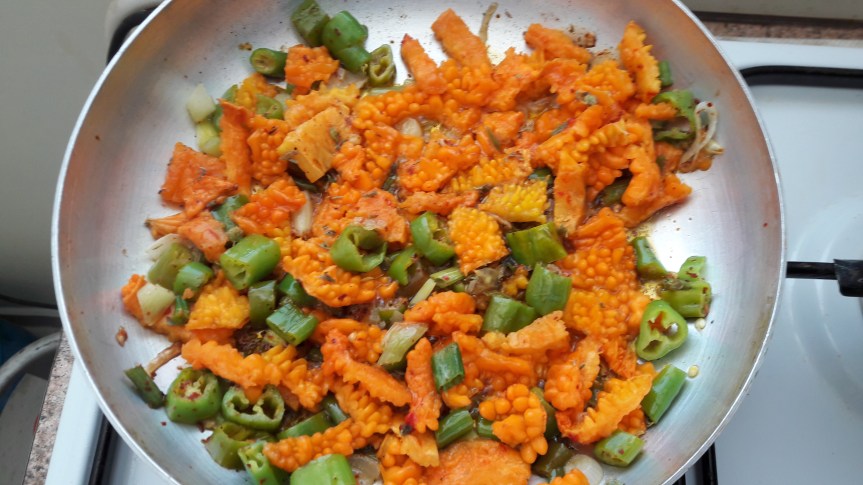
20170829_134255
Step one: Fry the bitter melon
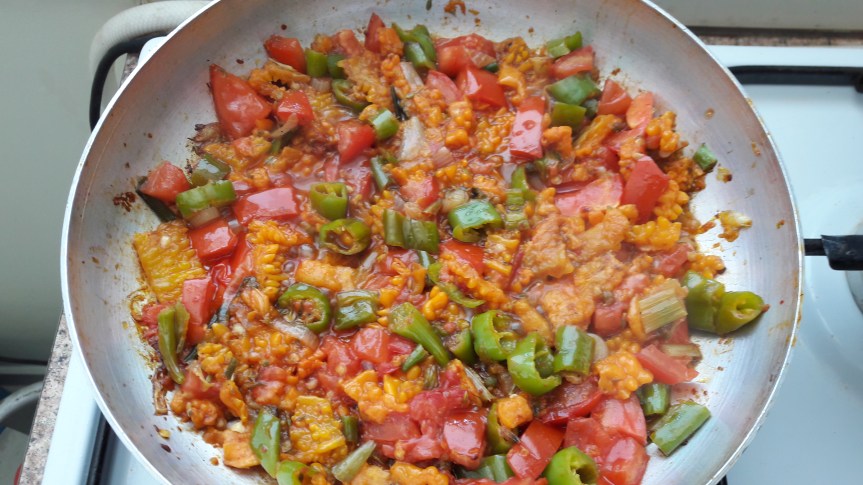
20170829_134858
Step two: Add the tomato
20170829_135537
Step three: add the eggs and scramble

Ingredients (serves 2-4)

100 g bitter melon

60 g green peppers

2 spring onions

1 medium-sized tomato

1 teaspoon each of dried thyme, oregano, black pepper and red chilli flakes

4 eggs

A dash of soy sauce

25 ml olive oil

Method

Heat the olive oil in a frying pan and when hot add the chopped spring onion. Cook for two minutes over a medium heat and then add the peppers and seeded bitter melon, cut into 1-2 mm strips.

Cook for another two minutes and then add the chopped tomato, herbs and spices and a dash of soy sauce. Fry for 5 minutes and then reduce the heat and break the eggs into the mix. Keep stirring until you achieve the desired consistency of scrambled egg to your taste.

Serve with lashing of  crusty bread.

Figito Fiesta

17 August 2017

The year’s first succulent figs, in delicate green shades or striking mauve hues, are making their annual debut in Datça and to mark this moment we’ve come up with the figito, a cocktail that combines new season figs with white rum, mint and  lemon  – our spin on the classic mojito.

20170816_201256
Who’s for a figito?

One of the pleasures of walking round town at this time of year is stopping off to pick a juicy fig or two from the trees that abound in this area. Here’s a tree near the Knidos Cookery Club HQ with some prime fruits drying in the August heat.

20170817_130245
Figs drying in a garden in Datça, Turkey 

If you’ve got a glut of figs, then why not try this old favourite from last summer: Lord Venal’s Fiendishly Figgish Chutney, and enjoy a figito or two while you’re making it! Cheers, or Şerefe as they say in Turkey!

Ingredients (makes one litre)

6 ripe, fresh figs

4 sprigs of mint

2 lemons

100 ml White Rum (Bacardi or Havana Club)

600 ml soda water

200 ml Schweppes Bitter Lemon

Method

Peel and dice four of the figs and muddle with the mint and the juice from the lemons with a wooden spoon in a glass serving jug. Add the rum and mix well and then top up with bitter lemon and soda water. Serve over ice with a slice of lemon, a mint sprig and half a fig.


Mr Alan’s Top Tips

18 May 2017

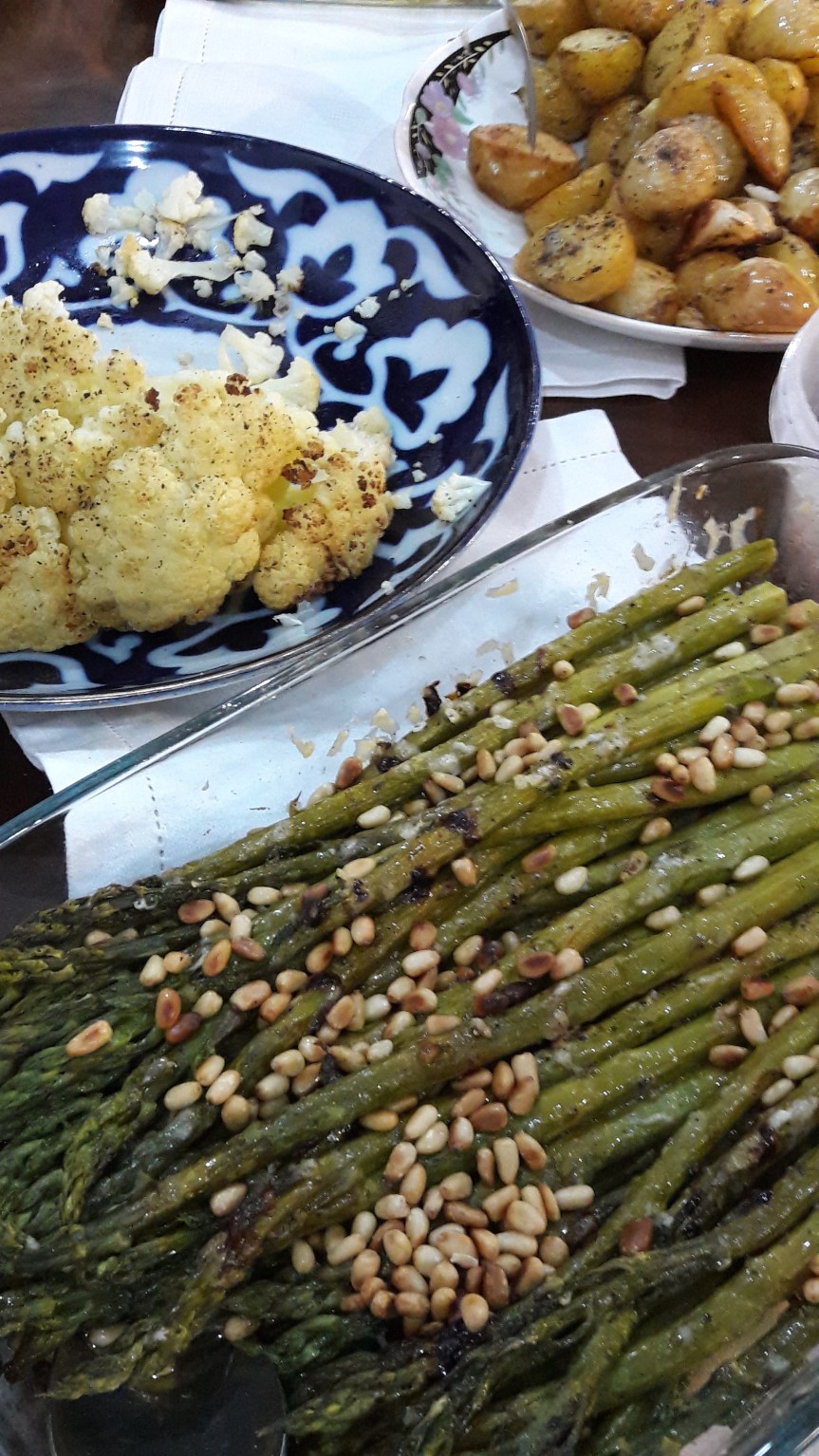
Knidos Cookery Club is just back from a flying visit to Uzbekistan where we met up with dilettante chef Mr Alan, who invited us round to sample his take on asparagus tips.

He’d tracked down some sizeable spears in Tashkent’s Alay, or Alaysky, bazaar and we added some first cold press Datça olive oil and some sun-dried tomatoes from the peninsula, which, with the addition of some toasted pine nuts and a smattering of grated pecorino cheese, made for quite a feast.

20170512_213305
Mr Alan’s way with asparagus


The asparagus tips, which are easy to bake and go well with potatoes, rice or pasta, were served up with a head of roasted cauliflower drizzled with truffle oil and roast new potatoes. Oh, and there was a duck and some fish for the carnivores, along with lashings of wine from Mr Alan’s cellar!

Ingredients (easily serves 6-8)

1 kg asparagus spears

200 g sun-dried tomatoes

50 ml olive oil

100 g pine nuts

50 g pecorino or similar hard cheese

One cauliflower, leaves removed

Truffle oil

Mixed dried herbs such as thyme or oregano

Method

Place a layer of sun-dried tomatoes on the bottom of a large baking dish. Arrange the spears over the top of the tomatoes, pour the olive oil on top, sprinkle some mixed herbs over the spears and grate the cheese over everything.

Bake in a hot, pre-heated oven at 200 c /gas mark 6 for twenty minutes or so until the spears are just beginning to char. Sprinkle the cauliflower with truffle oil and olive oil and cook for 30 minutes for so in the hot oven along with the asparagus tips. While the tips are baking, toast the pine nuts over a medium heat.

Serve the asparagus tips with the pine nuts alongside the cauliflower and potatoes and a bottle or two of your favourite wine.


Brandy Almonzandas All Round!

It’s time to kick back and enjoy a cocktail or two as this week we’re celebrating Knidos Cookery Club’s first anniversary.

20170331_210127

Our first post was made on 31 March 2016, and over the last year we’ve been on a journey that has taken in many seasonal dishes from Turkey and guest appearances inspired by travels to Greece, Georgia, Iceland, Kazakhstan and Uzbekistan.

To celebrate this momentous milestone, we’ve gone back to our roots in Datça, Turkey and come up with our second ever cocktail – the Brandy Almonzanda, a very close relative to the Brandy Alexander, a creamy combination of brandy, homemade almond milk and Dalkowski Chocotella (we couldn’t find Creme de Cacao) with a dusting of grated nutmeg on top.

20170331_153140
Dalkowski Chocotella – a chocolate liqueur from Poland

Datça’s tasty almonds, badem in Turkish, are rightly famous all over Turkey – I remember sitting on a terrace in Istanbul’s Beyoğlu district, back in the days when it still had tables on the street, when a guy came round selling ice-chilled Datça almonds.

IMG_20170107_164230_152
A cup of frothy almond coffee served up at Karia Cafe, Datça, Turkey

Not content with selling the raw nuts, adding them to rice in a stuffed melon or adding them to local mezes, many enterprising cafes along the town’s beachfront have started offering Datça almond coffee – a frothy concoction made from the peninsula’s staple product.

Almond coffee came about because of the isolated position of Datça and the Knidos Peninsula. Sometimes bad weather would mean that supplies of coffee beans could not make it onto the peninsula so the locals made do with something they had in abundance – almonds.

For our Brandy Almonzanda we’ve prepared our own almond milk – it’s pretty easy to do: just soak the raw (unsalted) nuts overnight (or up to 48 hours – the longer you leave them, the better the milk tastes), adding a pinch of salt, a cinnamon stick and a date (we didn’t have any dates so we used some dried apricots).

After soaking overnight, drain and rinse the nuts in fresh water and then put in a blender with 400 ml of cold water and blend to a smooth paste. Strain the almond milk to remove any remaining bits in a metal strainer, using a wooden spoon to press out all the liquid – this will produce around 450 ml – and, hey presto, your almond milk is ready!

To make the cocktail, pour one part of brandy, one part of Creme de Cacao (or similar) and two parts almond milk into a cocktail shaker filled with ice. Shake vigorously and pour into suitable glasses, sprinkle nutmeg over the top, add a straw and serve immediately.

Getting Down to the Nuts and Roots

26 January 2017

This time round on Knidos Cookery Club we’re getting back to the roots with a comforting winter soup made from some of our favourite root vegetables, a leek or two and some roasted chestnuts.

20170124_204349
Roasted chestnuts – a winter treat

One of the big events in the world of Knidos Cookery Club so far in 2017 has been the relocation of Datça’s weekly market to a new, purpose-built site. Previously, when the market came to town on Friday and Saturday, it would spill down the hill in the centre of town, causing considerable congestion with the stallholders looking for parking spots and the customers squeezed in-between.

The new site has a covered area for the local fruit and vegetable growers with the other stalls – spices and nuts, clothes, household goods etc., setting up around the covered market. It’s a lot more user-friendly, with plenty of space for shoppers and stall holders.

The last few visits to the market have entailed searching for some of our regular suppliers in the new layout, and we’re pleased to report that most of them have been accounted for!

20170108_222106
A warming bowl of rooty, chestnut pureed soup

In season at the moment are chestnuts – anyone who’s visited Istanbul in winter will probably remember trying fresh roasted chestnuts while on the move around the centre, a delicious snack that epitomises the city in the colder months of the year to me.

There were also root vegetables aplenty – including black carrots (these root vegetables were first cultivated in Afghanistan and were yellow and purple in colour) and celeriac, lengthy leeks and lashings of oranges and lemons. So this week we’ll be making a rooty nutty soup containing celeriac, potato, carrot, leek, shallots and chestnuts.

Ingredients (serves 3-4)

75 g shallots

250 g leeks

250 g celeriac

one medium-sized potato

100 g carrot (black if you can find them!)

500 ml vegetable stock

25 ml olive oil

150 g chestnuts

one teaspoon dried thyme

salt and pepper for seasoning

juice of one lemon

Method 

Fry the finely sliced leeks and chopped shallots in the olive oil, which has been seasoned with dried thyme, over a medium-high heat until just beginning to brown. Peel and dice the celeriac, potato and carrot into 1 cm cubes  and add to the pan of leeks and shallots.

Stir in well to coat the cubed root vegetables with oil and thyme and then add the stock and the juice of the lemon and simmer for 20 minutes over a low-medium heat. While this is bubbling away, score the outside of each chestnut with a cross shape (on one side) and roast the chestnuts in an oven pre-heated to 220 c /gas mark 7.

Check the chestnuts after 20 minutes or so – if they are easy to peel and are roasted sufficiently, then they are ready for use. If not, check every 5 minutes until the shell comes off easily.

Add the peeled chestnuts to the soup pan, stir well and season with salt and pepper to taste. Then use a hand blender to make a smooth, thick soup and serve straight away with hunks of wholemeal bread.

Melon Almond a Go-Go

11 August 2016

As Knidos Cookery Club turns 20, we’re celebrating this week with a look at two of the mainstay crops of the Datça Peninsula – melons and almonds.

WP_20160810_13_03_46_Pro
This year’s almond crop has arrived!

This year’s new nut harvest is already arriving in the market. Datça’s almonds, badem in Turkish, are rightly famous in Turkey – I remember sitting at a terrace in Istanbul’s Beyoğlu district, back in the days when it still had street tables,  and a guy came round selling fresh Datça almonds, cooled on a bed of ice.

In the Knidos area, almonds are widely used in cooking, in making soaps and creams and in Datça many cafes offer a milky ‘almond coffee’. Last week we had some mezes at Kasapoğlu Pansiyon in Ovabükü which came liberally sprinkled with almonds – one green bean dish and another made from grated courgette and yogurt.

The area around Knidos is perfect for growing melons, kavun in Turkish. The market is full at the moment with a green and yellow striped variety – I’m not sure what it’s called, but it sure tastes good!

We’ve decided to attempt something unusual for the 20th edition of Knidos Cookery Club – stuffed melon. This dish was popular in the palaces of the Ottoman Empire, drawing on a Persian and Armenian-influenced fusion of sweet and savoury tastes.

IMG_1096
Plov in a melon

The Knidos Cookery Club version is fully veggie-friendly and uses mushrooms in place of meat, along with rice, dried fruit and fresh Datça almonds. The end result is basically plov in a melon, a most unusual taste sensation!

Ingredients (serves 4)

One melon (honeydew or similar – not watermelon!)

125 g rice

25 g orzu or pine nuts, if you’re feeling flush

One medium-sized onion

One garlic clove

100 g almonds

75 g mixed dried fruit (raisins, currants, chopped apricot, chopped fig)

250 g mushrooms

50 ml olive oil

One teaspoon of cumin, cinnamon and red pepper flakes

Salt and black pepper to season

Method

Wash the rice and soak for an hour or so. Heat 25 ml olive oil in a pan and cook the orzu or pine nuts until golden brown. Add the rice and stir to coat the grains with oil. Pour in 300 ml cold water, add a pinch of salt and cook until all the liquid is absorbed.

Heat the rest of the olive oil in a heavy-based pan and add the chopped onion and garlic. Cook until translucent and then add the peeled almonds. Keep stirring for five minutes and then add the mixed dried fruit and one teaspoon of cumin, cinnamon and red pepper flakes.

Chop the mushrooms up and then pour into the sizzling mix. Stir regularly – you don’t need to add any liquid as the mushrooms contain a lot of water. Cook for ten minutes or so and then turn off the heat. Mix in the rice, blending well.

Prepare the melon by cutting it in half and scooping out the seeds. Then scoop out the flesh, leaving about 1 cm inside the melon. Stuff with the rice mix, arranging some almonds on top.

Place the melon halves in a shallow dish, add 100 ml warm water and bake at 200°C or gas mark 6 for one hour.

Serve a quarter of the melon to each person with an Uzbek-style salad of sliced tomatoes, onions and chili pepper  – achik chuchuk.


A Taste of Spring

31 March 2016

Welcome to Knidos Cookery Club, a new blog that will explore the culinary culture around the point where the Aegean Sea meets the Mediterranean Sea in south-west Turkey. The blog is inspired by the ancient port city of Knidos, the ruins of which can be seen on the tip of the Turkey’s Datça peninsula, and the amazing array of locally-sourced ingredients used in the region’s kitchens.

Every Friday evening the small town of Datça springs into life with farmers from all over the peninsula driving in by pick-up, tractor or even on horseback to sell their produce at the weekly market that stays in town until Saturday evening.

IMG_0087
Datça market in full swing on Saturday

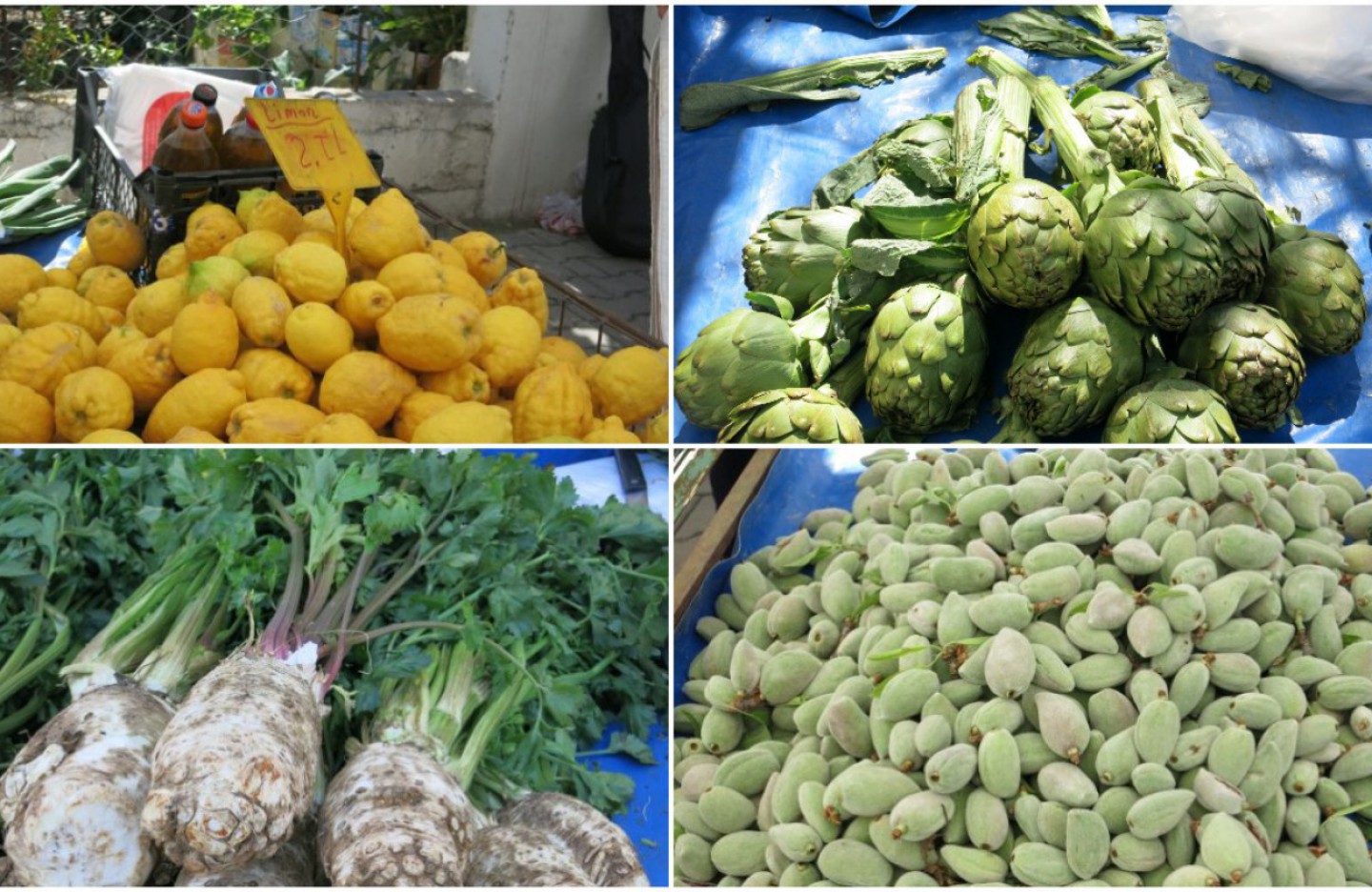
Spring is in the air and vegetables like asparagus and artichokes are making an appearance alongside the staple root vegetables of the winter months.

Stalls are piled high with the last of the season’s citrus fruits – luscious lemons and juicy oranges; alongside enormous leeks, bulbous celeriac roots and the year’s first green almonds.

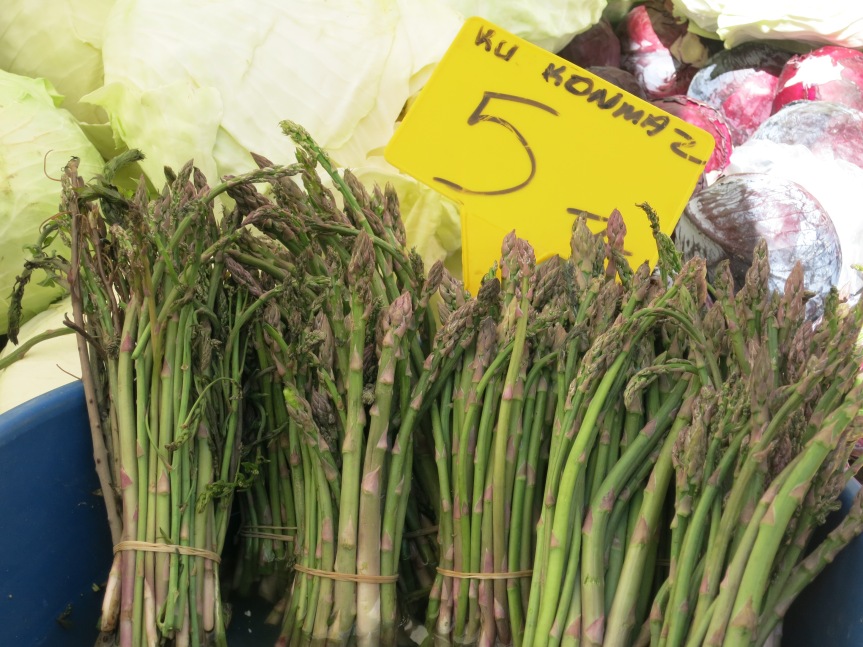
Some purple-tinged asparagus tips caught my eye, and the idea for the culinary club’s first recipe began to take shape – a risotto based around these flavour-packed spears of goodness.

IMG_0123
Asparagus on sale in the market

Asparagus, known in Turkish as kuşkonmaz, or ‘birds don’t land on it’, grows all around the Mediterranean region in springtime, with the first tips  ready for harvest shortly after the ground temperature hits 10°C.

To give the risotto a Turkish twist, I’ve used bulgur wheat, a parboiled grain which is a favourite in Turkey, in place of the usual Arborio rice.

IMG_0177
The finished product

Ingredients: (3-4 servings)

Bunch of asparagus spears

One medium onion

A smattering of garlic

One cup (100 g approx) of bulgur wheat (coarse not fine ground)

A generous sprinkle of fresh or dried herbs (oregano, mint, parsley, thyme)

Salt and pepper to taste

One 175 ml glass of white wine

750 ml vegetable stock

Two generous splashes of olive oil

Optional: Add fresh Parmesan or your preferred cheese to the finished risotto.

Method:

Arrange the asparagus spears on a baking tray and drizzle with olive oil. Oven bake at 180 °C (gas mark 5) for 30 minutes or so until tender.

While the asparagus is cooking, start the risotto. Fry the diced onion and garlic in olive oil until translucent, then add mixed herbs and season with salt and pepper if needed.

Add the bulgur wheat and stir to coat the grains. Pour the glass of wine into the mix and keep stirring until all the liquid has been absorbed.

Introduce a ladleful of stock at a time and keep stirring until it’s all soaked up. Continue until the risotto reaches the creamy consistency you prefer.

Chop the roasted asparagus into 2cm lengths and stir into the risotto.

Take the risotto off the heat and allow to stand for five minutes or so and then mix in cheese and herbs to taste and serve with a green salad.