This week KCC is in London for the literary event of the year – the launch of Joanna Lillis’s compelling book Dark Shadows: Inside the Secret World of Kazakhstan.
To celebrate this momentous occasion, we have invented the Dark Shadows cocktail: a blend of one part vodka (Kazakhstan’s favourite tipple), three parts cloudy cider (apples are from Kazakhstan!), and a splash of blood-like Grenadine (or pomegranate syrup or juice) to convey something of the secretive nature of Kazakhstan. It makes the perfect companion when reading this gripping saga.
Dark Shadows – the cocktail
Based on 13-years of on-the-ground reporting, this book lifts the veil to take a glimpse at what’s really going on in this Central Asian oil and gas powerhouse, making it the ideal stocking-filler for Kazakhstan fans. you can order a copy from the publisher, I.B.Tauris or look for a copy signed by the author in Foyles in London.
Joanna Lillis signing copies of her book in Foyles, London
We finally got round to tasting our first batch of cider made with apples sourced from Almaty, widely acknowledged as the place where the ancestors of today’s apples evolved. We’re pleased to announce that the experiment was a success!
This slideshow requires JavaScript.
We used locally grown aport apples, a large red and yellow coloured variety, that grows around Almaty, Kazakhstan. a big clue as to the apple’s origins can be found in the name Almaty which translates from the Kazakh as ‘the place of apples.’
For the experiment, we used five kilos of fruit, which was pressed to produce around three litres of juice. We used a juicer and a sieve with some cloth to press and filter the leftover apple pulp to squeeze out a bit more liquid.
Then the juice was poured into a clean 5-litre water container. We allowed nature to take its course, and no yeast was added to aid the fermentation process. We made an improvised airlock using a balloon with a pinhole in it (to allow the gas to escape from the fermenting liquid whilst keeping unwanted bacteria out).
Fermentation took around two weeks and then the cider was siphoned off into clean wine bottles, where it was left to mature for a year or so. The resulting cider, about 1.7 litres was produced from this batch, was a dry, pale-coloured liquid that went down all too easily.
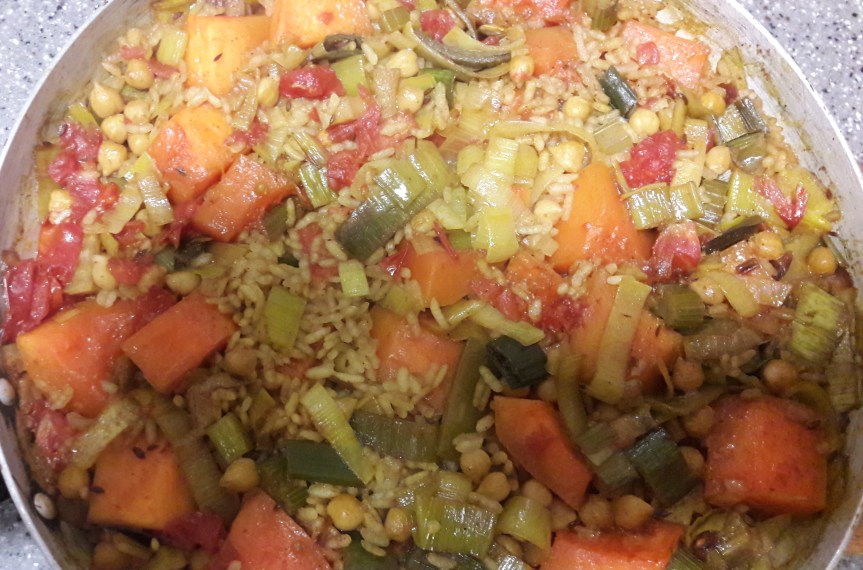
Welcome back to Knidos Cookery Club, this time round we’re drawing on our summer trip to Spain to bring you a paella (Warning: any Valencians reading this, please stop now!) that’s packed with pumpkin and other seasonal vegetables such as celery and leeks.
KCC’s pumpkin paella
With Halloween just around the corner, you might be looking for a dish that uses up some of the leftovers from carving out your Jack O’ Lantern – this rice combo should help shift some of the backlog.
Paella originates from Valencia in Spain, where it is taken very seriously. The name derives from the Old French word paelle for pan, which in turn is from the Latin word patella, which also means pan. The contemporary name refers to the shallow metal dish in which paella is prepared.
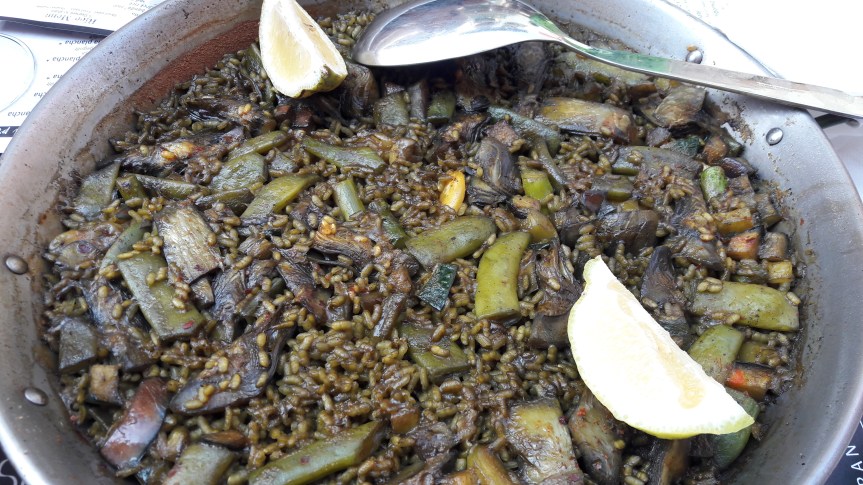
Green veg paella, Dénia, Spain
In essence, paella is a combination of whatever is to hand rather than a fixed, unchanging blend of ingredients. While visiting Dénia, which is part of the Community of Valencia, we had a great green paella made with artichokes one other green vegetables.
Ingredients (serves 2)
25ml olive oil
150g short grain rice
300g leek
50g celery
300g pumpkin
100g tomatoes
75g chickpeas
600ml vegetable stock
One teaspoon each of cumin/chilli powder/turmeric
Method
heat oil in a frying pan (or paella pan if you have one)
add chopped leek and celery and sauté until soft
add spices and stir
add pumpkin cubes and cook for ten minutes, stirring occasionally
add vegetable stock
bring to a boil, then simmer to make a broth and allow it to reduce by half
add rice and simmer until the liquid is absorbed and the rice is cooked (around 20-30 minutes)
Autumn is well and truly here now, so it’s time to start preserving that seasonal abundance of fruit and vegetables. While looking around the net for something quick and easy to make, we came across some variations on the theme of plum chutney.
It’s amazing what you can learn when researching recipes – did you know, for instance, that in the Indian sub-continent aloo is the word for potato, as in that curry house fave aloo gobi (potato and cauliflower).
This slideshow requires JavaScript.
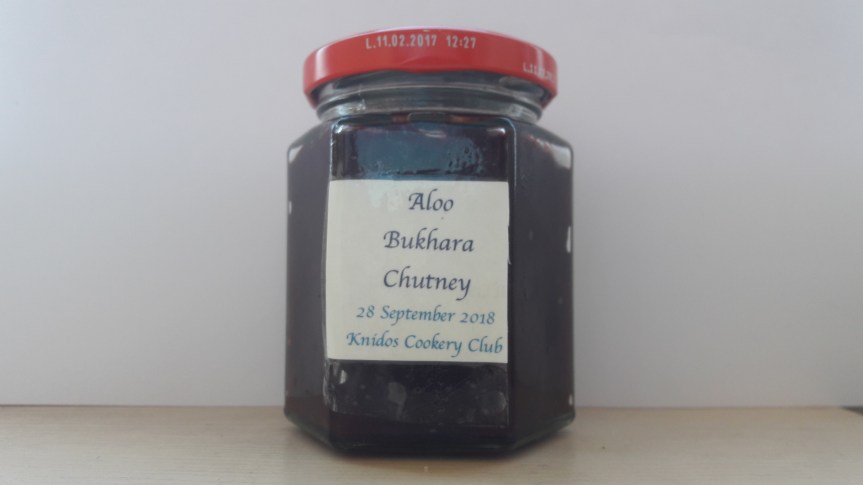
More surprisingly, it is also used for the humble plum – known as aloo bukhara, so called because the plum first appeared in the sub-continent via the fabled Central Asian city of Bukhara.
Ingredients (makes around 880g – 1kg of chutney
1kg ripe plums
250 g red onion
200g light brown sugar
300 ml apple vinegar
100 g raisins
2 teaspoons mustard seeds
2 teaspoons cumin seeds
2 teaspoons red pepper flakes
One cinnamon stick
2 cm fresh ginger, peeled and diced
Glass jars for storage
Method
Wash and cut the plums in half, remove the stones then half again and half again so you have eight pieces of plum. Finely chop the onion and then mix all the ingredients together except for the sugar in a large stainless steel saucepan.
Bring to a boil over a medium heat, stirring occasionally, and when it’s bubbling add the sugar. Keep stirring until the sugar dissolves and then reduce the heat to low and keep it simmering for two hours or so, stirring every now and then so the mixture doesn’t stick to the bottom of the pan.
The mixture should thicken and turn a deep ruby red colour, as in the picture above. Allow the mix to cool a bit and then pour it into sterilised glass jars – wash them and leave in the oven at 50 c for 30 minutes. Put a lid on tightly and store the chutney for at least two weeks in a cool, dark place before eating.
This week we’ll be cooking something for the chillier autumnal evenings, a tasty bake that combines chickpeas, tomatoes and courgettes with a breadcrumb topping.
Chickpea and Courgette au Gratin
The autumn months are always a busy time in the KCC kitchen with not much time for shopping so we dug deep into the kitchen cupboard and found some dried chickpeas and then located a bag of breadcrumbs in the freezer. After some googling, we came up with a recipe for this gratin.
Ready,
Steady,
Bake!
If you’re using dried chickpeas, then we suggest soaking overnight in cold water and then simmering for an hour or so in fresh water until they are beginning to soften. You can even try this method that was featured in the Guardian recently, which soaks the chickpeas for 48 hours to make them ultra soft.
Ingredients (serves 3-4)
75 ml olive oil
1 teaspoon cumin
One medium-sized onion
250 g tomatoes
250 g chickpeas (cooked)
100 ml chickpea cooking liquid (or vegetable stock)
200 g courgettes
For the topping:
125 g breadcrumbs
15 g parsley
2 teaspoons red chilli flakes
Black pepper
Method
Heat 25ml of olive oil in a frying pan and add the cumin seeds and finely chopped onion. Fry for 10 minutes or so over a medium heat until the onions are translucent. Add the peeled, chopped tomatoes and cook for another 10 minutes and then add the chickpeas and stock and simmer over a low heat for 10 more minutes.
While this is cooking, heat another 25ml of olive oil in a frying pan and fry the courgette (cut it into 0.5 cm rounds) over a medium heat, turn the courgette rounds over after five minutes so both sides are charred.
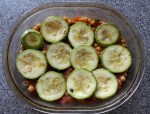
Pour the chickpea and tomato mix into a greased oven dish, cover this with fried courgettes. Mix the breadcrumbs, the remaining oil and the herbs and spices together well and then cover the bake with this mixture.
Bake in a pre-heated oven at 180 c for 30 minutes or so, until the mix is bubbling and the topping has gone a nice golden brown. Serve with a green salad and boiled or fried potatoes
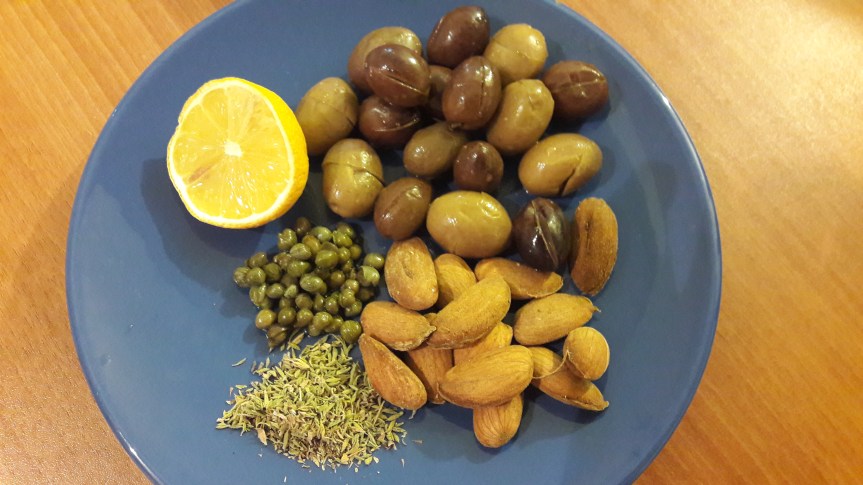
As promised a few weeks back on Knidos Cookery Club, here’s another use for those tasty vine leaves. While jetting down to KCC HQ in Datça recently, we spotted a Cypriot recipe in an airline magazine for halloumi cheese wrapped in vine leaves and we decided to adapt it by using some of the Datça Peninsula’s key ingredients:
Yep, that’s almonds, olives, thyme, capers and lemon. We mixed all these up to make our 5-star Datça paste which we then used to coat slices of our favourite squeaky cheese. After applying the paste, wrap the cheese slices with the leaves and then bake in the oven for 30 minutes or so until they look like this:
Ingredients (makes four servings)
200 g halloumi
12 vine leaves
75 g almonds
150 g olives
One lemon
two teaspoons dried thyme
25 g capers
Method
Soak and wash the vine leaves to remove any taste of brine, and then cut the stalk from the bottom of the leaf. You’ll need about three vine leaves for each slice of halloumi.
Now prepare the paste – stone the olives and place the bits of olive in a small dish. Soak the almonds in hot water for a minute or so and then put in cold water and peel off the skin. Break and add to the olives.
Add the capers and lemon juice and the thyme and use a hand blender to make a smooth paste. Cut the halloumi into four slices and smear each slice generously with the paste. Wrap the vine leaves around the cheese and then place in a baking dish or on a baking tray.
Bake in the oven at 180 c for thirty minutes or so and serve while hot with a seasonal salad and a selection of mezes.
Welcome to the 80th edition of your favourite veggie food blog Knidos Cookery Club – we’re celebrating with a glass or two of Tinto de Verano, a close cousin to Sangria that’s a lot easier to make.
Tinto de Verano with lazy patatas bravas
It’s a drink that sums up the lazy, hazy days of summer. Put some ice cubes in glass, add a glass of red wine and a slice of lemon and top up with soda water or lemonade, no need to chop up all that pesky fruit like in Sangria.
Green Paella
KCC is currently on a fact-finding mission on the Iberian peninsula, taking in the tapas trail in Andalucia and walking the paella path on the Costa Blanca – we’ll be decoding some dishes from these trips at a later date on KCC, in the meantime enjoy the last days of summer with a lazy pinto of Tinto de Verano.
This time round on Knidos Cookery Club we’re stuffing again to make one of favourite summertime snacks – dolma (stuffed vine leaves).
These stuffed vine leaves are great as part of a barbecue spread or to add some rice oomph to a selection of dips and mezes.
Ready to roll…
Rolling the leaves can be a bit fiddly at first, but you’ll soon find yourself getting into the rhythm. it’s best to make a big batch of these little stuffed marvels so you’ve got some ready-made snacks giving your more time at the beach.
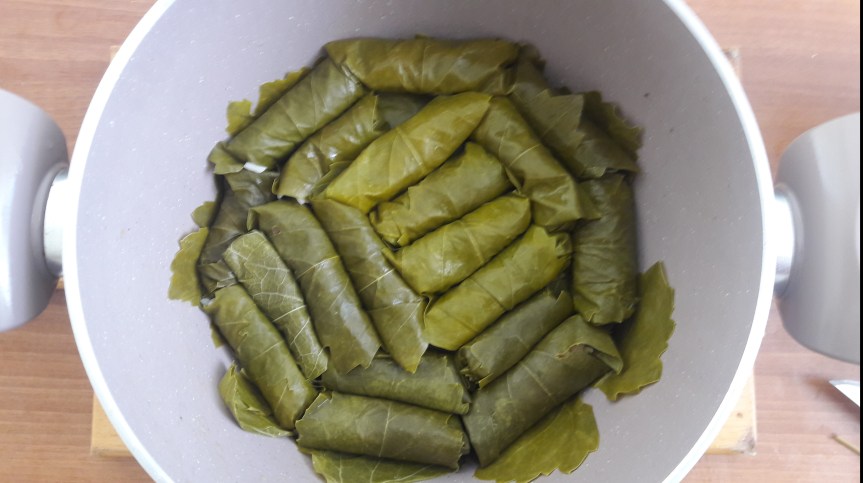
Layer the cylinders tightly in the pan
If you have any vine leaves left over, then hang on to them as we’ll be featuring another vine leaf recipe next time round on KCC.
Ingredients (makes 48 dolmas)
One onion
200 g long grain rice
50 ml olive oil
750 ml water
One lemon (zested and juiced)
50 g chopped almonds
two teaspoons dried thyme
one teaspoon cinnamon
one teaspoon cumin
10 g fresh mint
Pack of preserved vine leaves (or fresh leaves if you can get them)
Method
Fry the finely chopped onion in 25 ml of oil for five minute over a medium heat. While this is cooking, wash the rice until the water runs clear. Now soak the vine leaves for 30 minutes and then rinse well to remove any taste of brine or other preserving agents.
Add the thyme, cinnamon and cumin to the onion and stir. Now add the rice, mixing well to coat the grains. Cover with 375 ml of water and cook until the water is absorbed. The rice does not need to be fully cooked at this stage. When ready, add the chopped almonds, lemon zest and mint and mix well.
Now it’s time to stuff. Take a vine leaf, cut off the stalk and place a teaspoonful of rice mix on the leaf (see picture above). Tuck in the sides of the leaf and roll into a tight cylinder.
Put a layer of unstuffed vine leaves on the bottom of the pan to stop the stuffed ones sticking to the bottom. Layer the dolmas tightly in a heavy-based pan, putting another layer on top if you run out of space. Pour 25 ml of olive oil, the juice of the lemon and 375 ml of water over the vine leaf parcels.
Put a plate on top of the vine leaves and then put the lid on the pan and cook over a low heat for 45 minutes or until all the liquid is absorbed. Allow to cool before serving. If left in the fridge for a few hours, the stiffed vine leaves will firm up nicely.
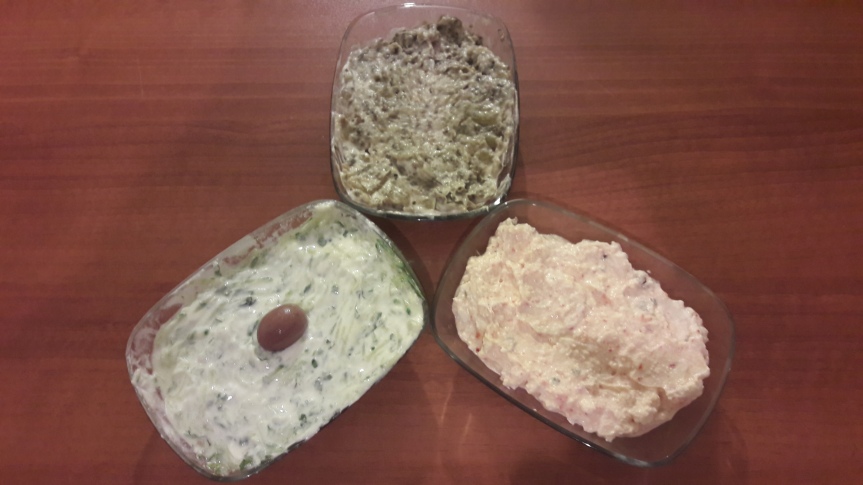
Amorgoan Delight: smoky aubergine dip, Psimeni Raki and feta dip and tsatsiki
You can serve this simple to prepare red Lentil Pâté alongside these other dishes for a great spread of mezeler for a light feast that’s perfect for sharing with friends on a balmy summer’s night.
Ingredients (makes around 200g)
125 g red lentils
One bayleaf
300 ml cold water
Two tablespoons fine bulgur wheat
4 or 5 spring onions
10 g fresh parsley
25 ml olive oil
One teaspoon mustard seeds
One teaspoon cumin seeds
Two teaspoons paprika
One teaspoon ground coriander seeds
One teaspoon black pepper
Half a teaspoon turmeric
Method
Clean the lentils in cold water and then put them in a pan with the bayleaf. Pour 300 ml of water over the lentils and bring to a boil. Reduce the heat and simmer until the lentils are beginning to go mushy and most of the water has been absorbed.
Remove the bayleaf and add the fine bulgur wheat to the lentils and mix well. Leave covered for 30 minutes. heat the oil in a heavy-based pan and add the mustard and cumin seeds. Fry for a few minutes and then add the paprika, coriander, black pepper and turmeric, cook for a minute stirring constantly and then add the finely chopped spring onion and parsley and cook for five more minutes over a medium heat.
Stir this into the lentil and bulgur mix and leave to stand for a few hours in the fridge. Garnish with a sprig of fresh mint and serve with crusty bread.
This time round on Knidos Cookery Club we’re taking inspiration again from our recent Balkan odyssey. While on our mission to Albania, we tasted the local take on stuffed peppers and on returning to KCC H.Q. we decided to recreate this delicious dish with a few time saving tricks of our own devising.
Hasty tasty stuffed peppers with baked cauliflower and tomato
Rice is the usual go-to base for stuffing peppers, but it can be a bit time-consuming to prepare properly. With the World Cup reaching its conclusion, we didn’t fancy spending too much time slaving away in the kitchen so we’ve used some coarse bulgur wheat, which just needs soaking in hot water for a short while before it’s ready to use.
We cooked the peppers alongside some cauliflower, broken up into large florets, and some quartered tomatoes to make a ready made meal for two with only a green salad needed to complete the show, allowing plenty of time to sit down and enjoy what’s left of the football!
Ingredients (for two people)
Two medium-sized green peppers
Two medium-sized tomatoes
Half a cauliflower
50 g cooked green lentils
50 g coarse bulgur wheat
200 ml hot water
25 ml olive oil
One teaspoon cumin seeds
One teaspoon dried thyme
25 g raisins or currants
Black pepper (a generous twist)
Method
Cook the green lentils in twice the amount of water (put the lentils in a cup and then measure out twice as much water) until they start to go mushy. Put the bulgur wheat in a bowl and add the lentils and 200 ml hot water, stir and leave until the water is absorbed (20-30 minutes). Add the cumin, thyme, raisins and black pepper to the bulgur wheat and stir in well.
Pre-heat the oven to 180 c and prepare the peppers by slicing the top off and scooping out the seeds. Fill the hollowed-out peppers with the bulgur lentil mix, place the top back on and place in an oven dish. Arrange the cauliflower florets and quartered tomatoes around the pepper.
Drizzle the olive oil over the vegetables, add 50 ml water and bake in the oven for 40-50 minutes until the pepper skins start to burn and the florets are turning golden brown. Serve with a green salad.










 Knidos Cookery Club