The Turk Brekkie Club

7 July 2016

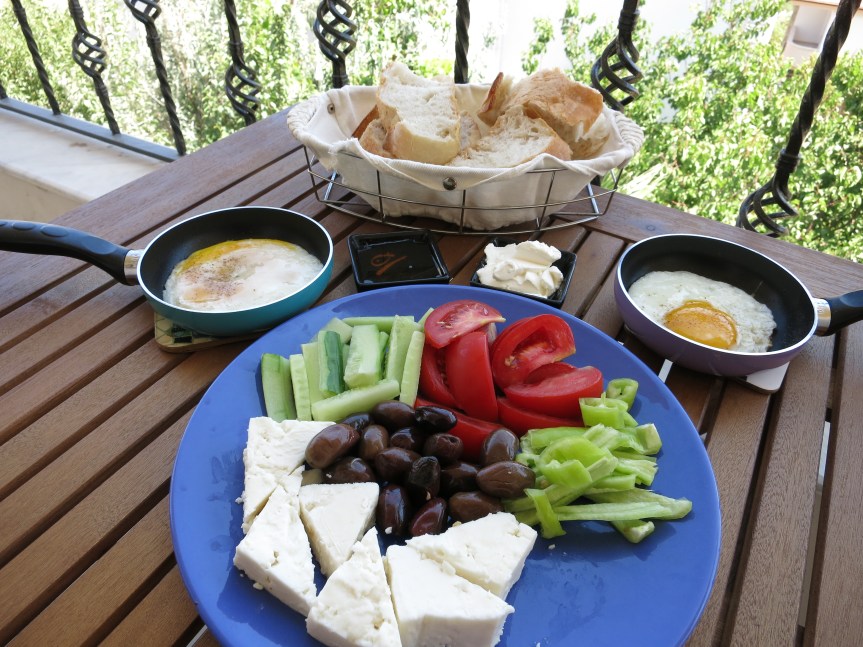
Turkey has turned the first meal of the day into an art form with ever-more elaborate spreads of cheeses, jams, honey, olives, tomatoes, cucumbers, peppers and egg dishes spilling across the table with different regions of the country bringing local additions to the mix.

IMG_0964
Turk Brekkie!

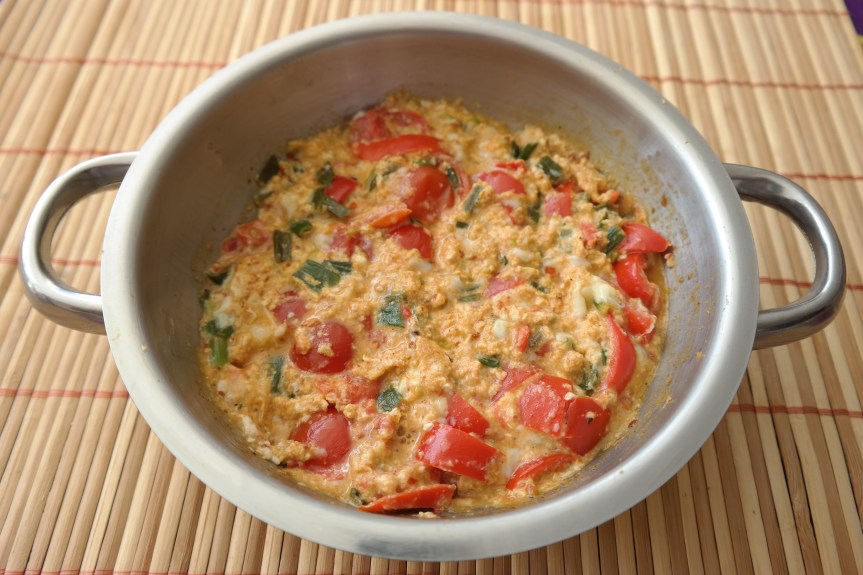
At the heart of the breakfast there is usually an egg dish – often a soft-boiled or fried egg, or a speciality dish such as menemen, a hearty scramble of eggs, onions peppers and tomatoes.

In Datça, the köy, or village, breakfast can come with lashings of local honey and gözleme, a pancake filled with  white cheese and fresh herbs. The Van Breakfast, originating in the east of the country, has conquered the rest of Turkey with its array of 20 or more dishes. It  includes otlu peynir, a herb-infused cheese, martuğa, made from flour, butter and egg, and kavut, a porridge made from cornmeal and ground barley.

SAMSUNG CSC
Menemen

This week on Knidos Cookery Club, we’ll be cooking up menemen. I first encountered this breakfast-time treat when staying in Izmir, on the Aegean coast. Walking out of my hotel, I was met be the mouth-watering aroma of eggs bubbling away with peppers and tomatoes.  Street hawkers, hunched over single-burner camping stoves, were busily whipping up pans of scrambled delight.

Ingredients (for one hearty serving)

Two eggs

One spring onion

One small red or green pepper (if you like it hot, use a chili pepper)

One small tomato

Seasoning: pinches of salt, black pepper, cumin and chill pepper flakes

Parsley for garnishing

Olive oil for frying

Method

Heat the oil in a small frying pan. Add the diced spring onion and cook over a medium heat until starting to brown. Add the diced tomato and diced pepper and season with salt, black pepper, cumin and chill pepper flakes.

Cook until the peppers begin to soften then reduce to a low heat and crack in the eggs. Keep stirring as you would for scrambled eggs. When the egg begins to set, remove from the heat – it’ll carry on cooking in the pan. Garnish with some chopped parsley.

Serve immediately with crusty bread and a plate of white cheese, honey, olives, tomatoes, cucumbers and peppers for the full-on Turk brekkie effect.


Pass the Glasswort

30 June 2016

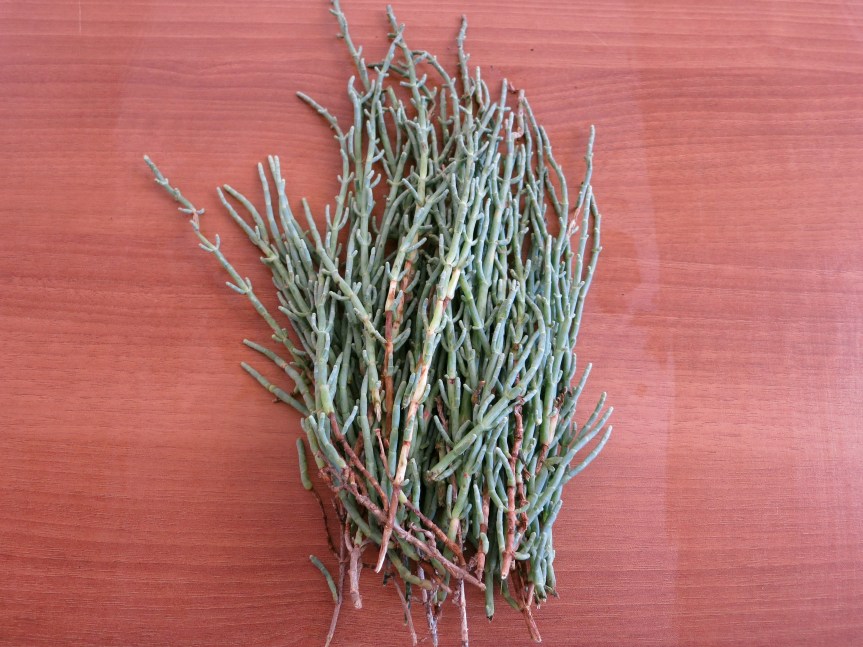
This week on Knidos Cookery Club we’re back in Turkey and we’ll be looking at a plant that grows in abundance on the salty shores of the Mediterranean and Aegean Seas – glasswort, or marsh samphire (salicornia europa). It’s known as glasswort because it used to be used as a source of sodium sulphate in the glass-making process until the nineteenth century.

IMG_0951
Freshly-picked samphire/glasswort

This bright green plant thrives in salty conditions and grows wild along seashores, estuaries and salt marshes all over Europe. It used to be widely eaten in the UK, it’s rich in minerals and has a pleasing flavour of the sea, but has only recently started re-appearing on menus as a much sought after ‘designer vegetable’- you might see it referred to as ‘sea asparagus’.

It’s called deniz börülcesi in Turkey, which translates as sea beans, and is served as a side dish dressed with olive oil, lemon and garlic alongside an array of other starters.

IMG_0954
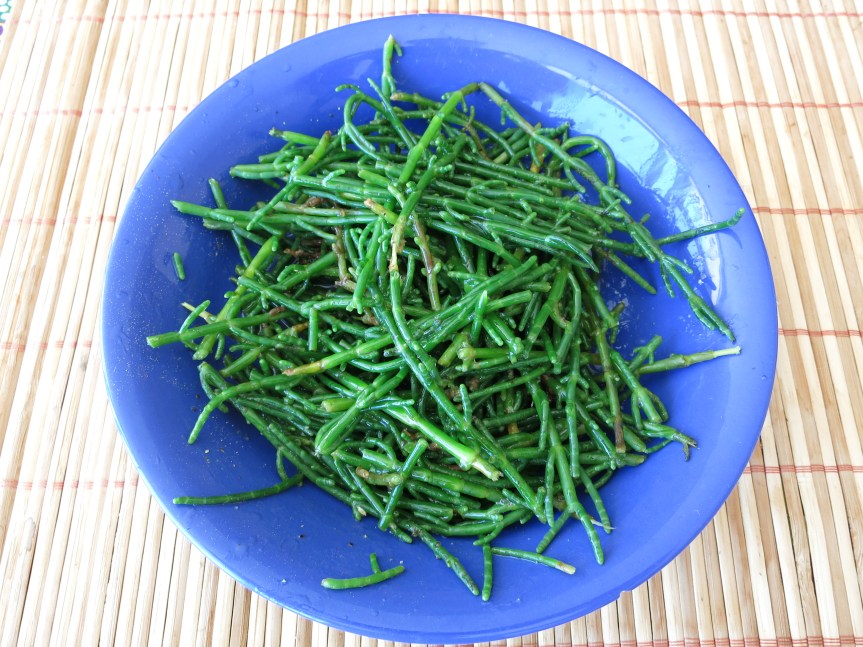
Blanched glasswort dressed with olive oil, lemon juice and black pepper

For this simple dish, you’ll need around 50-75 g of glasswort for each person. When preparing the glasswort, take care to wash it thoroughly and clean any sand and grit away. Cut off any tough stalks and roots and then blanch it in unsalted, boiling water for three minutes.

Drain the water away and then dress the stems with olive oil, a squeeze of fresh lemon juice and a sprinkling of black pepper – you won’t need to add any extra salt as it will already be salty enough. Serve warm alongside a salad of rocket, tomato, olives and onion and some fresh, crunchy bread for a light but tasty lunch.


You Like Tomato, I Like Ntomato

23 June 2016

Knidos Cookery Club’s fact-finding mission to Greece continues with a look at the contribution of the tomato to local culinary culture.

It may be hard to believe, but it is only in the last two hundred years that the tomato has established itself as a key ingredient in Greek kitchens.

Kos June 2016 025
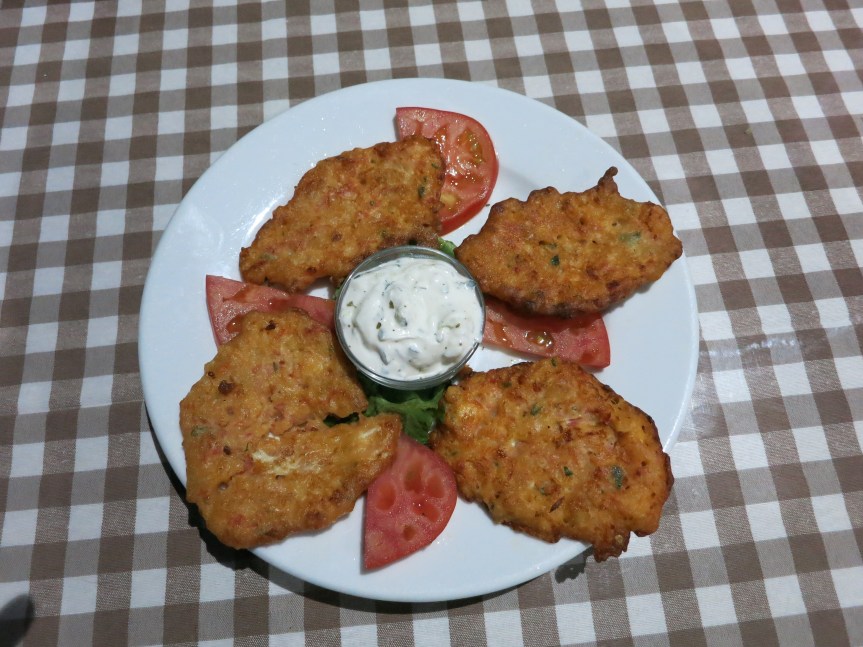
A plate of tomato fritters from Kos, Greece

It’s found in the classic horiatiki salad that pairs it with cucumber, onion, green pepper, olives and feta cheese. It plays a key role in gemista, platters of vegetables stuffed with rice.

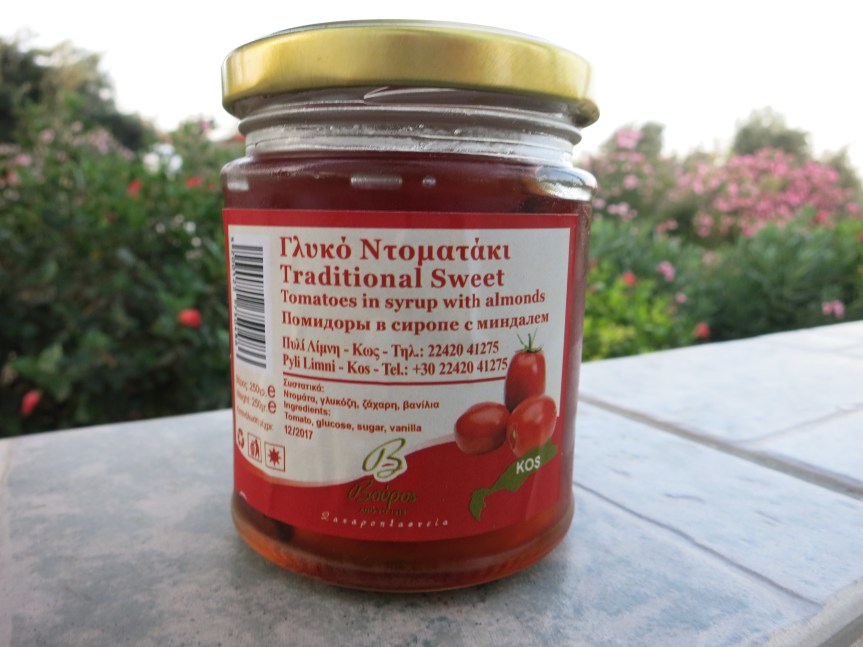
On the island of Kos the sweet local varieties of tomatoes are preserved in syrup or made into jam that makes an orange marmalade rival for a slice of toast.

Kos June 2016 041
Tomatoes preserved in syrup with almonds from Kos, Greece

In Greece the tomato is called ντοματο, pronounced with a ‘d’ sound at the beginning. Modern Greek has no single letter for the ‘d’ sound and uses the letters for ‘n’ and ‘t’ to make this sound.

This week Knidos Cookery Club is serving up tomato fritters, a close cousin of Turkey’s mücver. We’ve used plum tomatoes as they tend to be a bit less juicy than other varieties. The mix needs to find a balance between not being too dry or too wet for the fritters to hold together in the pan.

Ingredients (makes 10-12 fritters)

500 g plum tomatoes

One medium-sized red onion

Fresh herbs – small bunches of parsley, basil and mint or a teaspoon of dried parsley, basil and mint

100 g plain flour

Seasoning mix – pinches of salt and pepper, one teaspoon of cinnamon and one of cumin

Olive oil for frying

Method

Grate the tomatoes and mix with the herbs and flour until you have a mix that is neither too dry nor too wet.

Heat the oil in a frying pan and when hot add fritters made into walnut-sized shapes and flatten with a fish slice or spatula.

Cook on both sides until golden brown in colour and serve with a sauce of natural yogurt, grated cucumber and garlic.

Head to the Islands

16 June, 2016

This week Knidos Cookery Club is on location in Greece, on the island of Kos, which is a short hop by boat from the ruins of the ancient Carian port city of Knidos.

Turkey and Greece have a lot of similarities when it comes to food with both cuisines drawing on herbs and vegetables common to the areas around the Mediterranean and Aegean Seas. Much of Greek cooking tends towards heartier fare, whereas the Ottoman influence on Turkish cooking lends it a more regal and refined air.

Historically, Greece’s islands have depended on what was grown and produced on the island. This sees the use of dried beans and pulses, olives, cheeses preserved in red wine and bread dried into rusks.

IMG_0831
Aegli restaurant, Kos Town

Knidos Cookery Club’s favourite restaurant in Kos Town is Aegli, glamour in Greek, which is a women’s cooperatve that employs single mothers and women over 50. It uses local recipes and serves dishes made from ingredients sourced only from the island.

IMG-20160614-WA0004
Aegli’s mixed starter plate

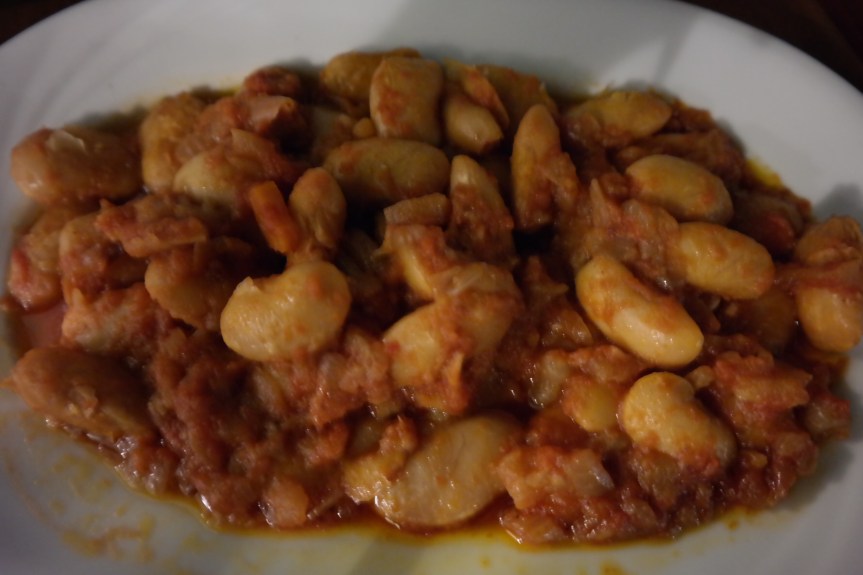
The excellent mixed starter plate came with fava, a mashed broad bean paste, a dip made from fresh aubergenes, a cheese and chili pepper blend, giant beans in a tomato sauce and two types of fritters – one made with mashed potato and onion, and the other with mashed chick peas.

This week, Knidos Cookery Club will serve up some revithokeftedes (ρεβυθοκεφτεδες), a chick pea fritter that is a mintier version of falafel.

Ingredients (for 10-12 fritters)

One can of chick peas or 150 g dried chick peas soaked overnight and boiled for an hour or so

Two spring onions

A bunch of fresh mint, sprinkles of salt and pepper

100 g flour

25 g sesame seeds

100 ml olive oil for frying

Method

Mash the chick peas with a potato masher or blender. Add the chopped spring onion, mint and salt and pepper. Mix in the flour and then shape the mix into golf ball-sized fritters and roll them in sesame seeds.

Heat the olive oil in a frying pan then cook the fritters, flattening them with a spatula. Fry until a golden brown colour on both sides.


Who Ate All the Pies?

9 June 2016

This week, Knidos Cookery Club is going to have a look at a local take on the pie – börek. 

This member of the baked, filled pastry club is made from thin layers of filo pastry, known as yufka in Turkey. It comes with a variety of fillings including spinach, white cheese, potatoes, grated courgettes, swiss chard, leeks or combinations of these fillings.

IMG_0227
Individual spinach börek ready for the oven

There are two main ways of preparing börek – in a large pan and then sliced after baking, or as an individual serving in a cigar-shape. Either way, the börek is a moreish treat so always make more than you think you’ll need!

Kindos Cookery Club will tell you how to make the individual servings today. To make the pan version, layer 3-4 sheets of filo pastry in a large, greased dish, brushing glaze between the layers (as in this recipe for a zesty leek, goat cheese and walnut tart). Next add the filling of your choice and then top it off with 3-4 more sheets of filo and sprinkle with nigella seeds. Follow the baking instructions below for the individual pies to cook the pan version.

Follow these steps to make some tasty individual white cheese and spinach börek.

IMG_0225
Ready to roll…


Ingredients (To make 5 individual pies)

15 sheets of filo pastry

500 g spinach

One medium-sized onion

100 g white cheese

50 ml olive oil

50 ml natural yogurt or milk

Fresh mixed herbs (mint, oregano, thyme,dill)

Salt and pepper

Nigella seeds

Method

To make the filling, heat some olive oil in a heavy-based pan and cook the chopped onion over a medium heat until translucent. Add the chopped, fresh herbs and washed and shredded spinach. Season with dashes of salt and pepper.

Cook until the spinach wilts and then add the crumbled white cheese. Mix well and allow to cool.

Make a glaze for the filo pastry by blending equal parts of olive oil and natural yogurt (or milk). Brush the glaze over one 15 cm x 15 cm sheet of filo (or triangle shapes if you can find them), then place another layer of pastry, glaze and finally one more sheet and glaze.

Put two generous dollops of filling onto the bottom edge of the layered filo sheets, leaving about 2 cm at each end. Roll the pie into a cigar shape and press the ends down.

Brush with glaze and sprinkle nigella seeds over the cigar.

Place on a greased baking tray and put into a pre-heated oven and bake at 200 °C (gas mark 6) for 30 minutes or until the pies are golden brown in colour.


Sundowner Time

2 June 2016

Welcome to the tenth edition of Knidos Cookery Club! This calls for a celebration and this week we’ll be looking at some snacks and starters commonly associated with Turkey’s favourite alcoholic tipple, rakı.

IMG_0383
A classic sundowner set with rakı, white cheese and cucumber

Rakı is a member of the family of anise-flavoured drinks common to many countries with coastlines on the Mediterranean  Sea – ouzo in Greece, pastis in France, sambuca in Italy, arak in Lebanon and chinchón in Spain.

When rakı is diluted with water, it turns a milky white colour leading to its Turkish nickname, aslan sütü, or lion’s milk. It’s drunk as an aperitif and is accompanied by white cheese and cucumber. In spring and early summer, it’s often served with tart, sour green plums, known as can erik.

SAMSUNG CSC
Sour plums

Rakı also accompanies a long, lazy lunch or evening meal with the drink served alongside a selection of mezeler, or appetizers that include, among many others, a spicy tomato and chili paste, acılı ezme, yogurt, grated cucumber and crushed garlic, cacık, and semizotu, purslane mixed with yogurt. These starters are usually followed by a grilled fish course and the meal is finished with slices of fresh melon.

SAMSUNG CSC
The new season’s carrots have arrived!

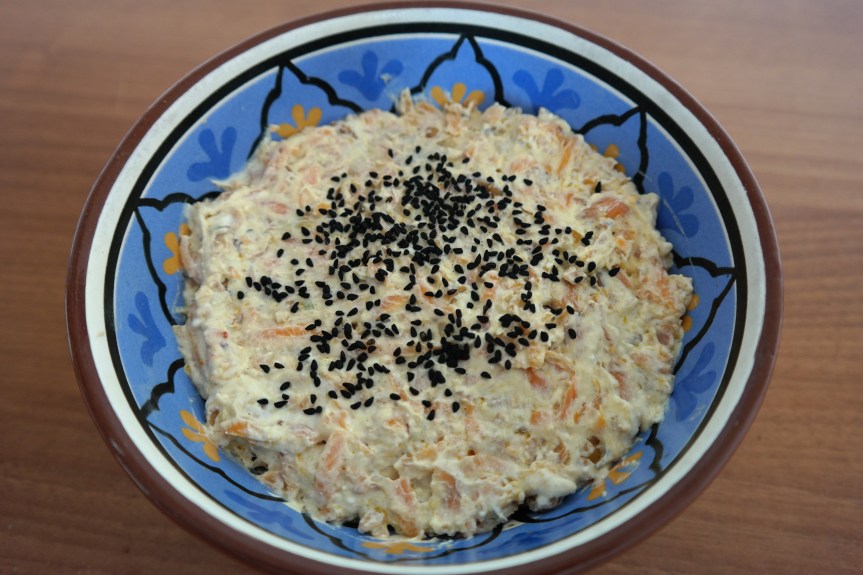
We couldn’t resist these great carrots in the market last week, and they’ve inspired this meze to go with a glass or two of lion’s milk. This week’s recipe is for cezizli havuç tarator, a combo of walnuts, carrots and yogurt.

SAMSUNG CSC
Carrot and Walnut Tarator

Ingredients (serves 3-4)

200 g baby carrots

Eight walnuts

200 ml Greek (strained) yogurt

One or two garlic cloves

Splash of olive oil

Salt, black pepper, dried oregano, chili flakes, cumin and nigella seeds

Method

Heat the olive oil in a frying pan. Clean and grate the carrots (keep the carrot tops to make this pesto) then cook the grated carrot over a low heat for ten minutes or so to help release the natural sugars in the carrots. While it’s cooking, keep stirring and add pinches of salt, black pepper, dried oregano, chili flakes and cumin.

Allow the carrots to cool then add the crushed walnuts (use a blender or a rolling pin to crush them), as much garlic as you prefer and the yogurt. Blend together well and drizzle with nigella seeds.

Serve as a dip with crackers and slices of red pepper and cucumber along with a glass of rakı, water and ice.


Swiss Chard: No Fence Sitting Allowed

26 May 2016

Swiss chard, a surprisingly divisive green leaf, is in the spotlight on Knidos Cookery Club this week.

SAMSUNG CSC
Swiss chard – friend or foe?


Swiss chard, pazı  in Turkish, is one of those love it or hate it vegetables. In a restaurant in Istanbul a few years ago, a Turkish friend was fine with the spinach order but when I suggested the pazı side dish he looked at me as if I had gone mad. He refused to countenance eating it, leaving these particular green leaves to the three foreigners he was with.

On the positive side, in Croatia last summer friends from HaMAS in the UK introduced me to blitva, a local take on this leafy green vegetable that sees it sautéed with potatoes and garlic.

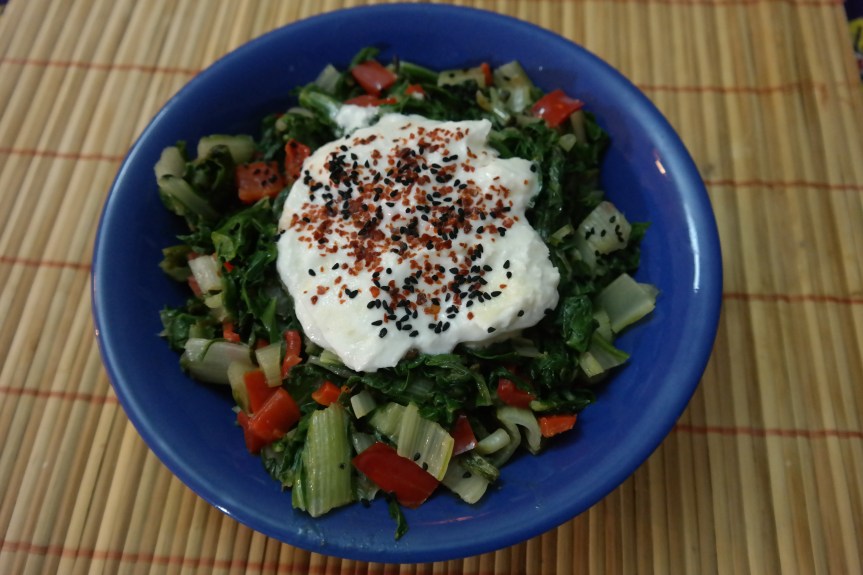
Here at Knidos Cookery Club we love it, especially when the vitamin-packed leaves are combined with red peppers, added more for colour than heat, and topped off with a healthy dollop of natural yogurt, to re-create a dish that is a mainstay in Turkey’s home-cooking lokanta restaurants.

SAMSUNG CSC
Turkish-style Swiss chard with red pepper and yogurt

Try this recipe yourself to see which side of the Swiss chard fence you fall on.

Ingredients (serves 3-4)

One bunch of Swiss chard (approx 500g)

Three spring onions

Two medium-sized red peppers

Dash of olive oil

Pinches of cumin, cinnamon, salt and black pepper

One bay leaf

Dollop of yogurt

Sprinkle of chili flakes and nigella seeds

Method

Heat the olive oil in a frying pan and when hot add the finely chopped spring onions.

After a few minutes over a medium heat, add the finely chopped red pepper and the bay leaf. Season with pinches of cumin, cinnamon, salt and black pepper.

Clean the Swiss chard thoroughly, shake dry and then roughly chop the leaves and stalks. After cooking the red peppers for five minutes, add the Swiss chard to the pan and stir continuously. You shouldn’t need to add any extra water. Continue cooking and stirring until the Swiss chard begins to soften – 8-10 minutes or so.

Serve with a dollop of yogurt and sprinkle the chili flakes and nigella seeds over this.


A Passion for Purslane

19 May 2016

This week on Knidos Cookery Club we’ll be looking at some ways of using purslane, our favourite weed. This highly-nutritious plant is called semizotu and is widely cultivated in Turkey, where it also grows wild. It’s used in salads, soups and stews.

IMG_0796
Freshly-picked purslane

Purslane has a crunchy texture and a lemony taste and can be used as a substitute for spinach and watercress. This superweed is packed with vitamins – it has the highest concentration of vitamin E of any plant and also contains a useful essential omega-3 fatty acid called alpha-linolenic acid, reports motherearthnews.com.

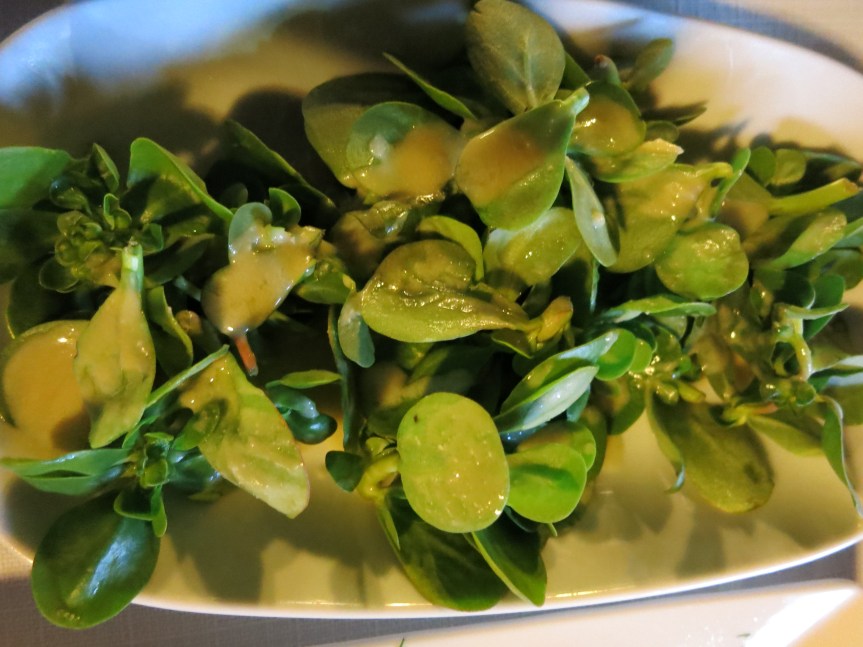
In the Knidos area, it’s a mainstay of meze, or starter, combos when served with yogurt and a hint of garlic. The leaves and stems are also good as a simple but tasty salad dressed with a tahini sauce.

IMG_0776
Purslane in a tahini dressing

We’ve opted for a vitamin-packed spring stew, Semizotu Nohutlu Bulgur Pilavı with purslane, chick peas (garbanzo beans), tomato. carrot and bulgur wheat. Here’s what the finished dish should look like:

IMG_0807

Ingredients (serves3-4)

One bunch of purslane

One medium-sized onion

Two carrots

Four medium-sized tomatoes

100 g coarse bulgur wheat

One can chick peas or 150 g dried chick peas soaked overnight and boiled for an hour or so

One bay leaf

Fresh herbs – parsley and mint

A pinch of cumin, cinnamon, black pepper, red chili flakes, thyme and salt

250 ml warm water

25 ml olive oil

Method

Heat the olive oil in a heavy-based pan and add the chopped onion, the bay leaf and a sprinkle of dried thyme.

Slice the carrot into 50 mm rounds then chop up the tomatoes. When the onions are translucent, add the carrots to the mix and after five minutes or so add the tomatoes.

Cook for another five minutes then add the chick peas, bulgur wheat and water and season with the fresh herbs and spices.

Stir well and bring to the boil. Then turn the heat down, add the purslane and cook over a low heat for 20-25 minutes until the bulgur wheat is cooked but still a bit chewy.

Allow to rest for 5-10 minutes then serve with yogurt and garnish with mint.

Afiyet olsun!


Red Green Bean Feast

12 May 2016

This week, Knidos Cookery Club is returning to the zeytinyağlı style of cooking to cook up a real bean feast with freshly-picked, tender green beans and juicy tomatoes.

Around this time of year, markets in Turkey are teeming with fresh beans in a variety of shapes and sizes. For a quick and easy meal, Knidos Cookery Club likes to chop the beans up and chuck them into a boiling pan of pasta and serve it all up with some generous dollops of pesto and shavings of parmesan.

For a traditional Turkish twist, combine your green beans with tomatoes to make zeytinyağlı taze fasulye and serve it as a side-dish alongside other seasonal, vegetable dishes. Serving this dish on top of a bowl of steamed rice makes for a more substantial main meal.

IMG_0500

Recipes for this bean feast often call for the addition of some sugar, but you can replace this with honey. For a richer sauce, I found some pekmez, molasses (usually made from crushed grapes), in the store cupboard and poured a bountiful slug of this into the mix, giving the onions in the finished dish a deep burgundy hue.

Another use for pekmez is to mix it with tahini, sesame seed paste, and this fabulous combination frequently features in a full-on Turkish breakfast; more on this in a later edition of Knidos Cookery Club.

Ingredients (Serves 3-4)

500 g fresh green beans

One medium-sized onion

One or two garlic cloves

Four medium-sized tomatoes

50 ml Olive oil

One teaspoon of honey or pekmez

 Juice of one lemon

Pinches of salt, pepper and cumin

One bay leaf

250 ml warm water

Method

 Heat the oil in a heavy-based pan and add the finely chopped onion and garlic when the oil’s sizzling.

When the onions are looking translucent, add the green beans,  topped and tailed and sliced into 3-5 cm lengths, the chopped tomatoes and the bay leaf, salt, pepper and cumin and mix well.

Pour in the lemon juice, water and a dollop of pekmez or honey. Bring to the boil and then put the lid on the pan and cook over a low heat for 30 minutes or so until the beans are tender.

Serve with other vegetable dishes, bread and/or steamed rice.


Adventures with Artichokes

5 May 2016

This week Knidos Cookery Club is attempting to tackle one of the most daunting vegetables out there – the globe artichoke. This enormous edible thistle with its armadillo-like outer leaves has always intrigued me – you never quite know what might be lurking inside the beast.

Known as enginar in Turkish, it is widely cultivated in the Aegean and Mediterranean regions. It is a measure of the regard that this vegetable is held in that it has its own international festival in Urla near Izmir, Turkey (this year’s has just gone – it was held from 28 April – 1 May).

IMG_0468
An artichoke plant in Turkey

On 1 May, Knidos Cookery Club donned its walking boots and joined the annual walk from Datça on the Mediterranean Sea to the shore of the Aegean Sea, north of the village of Kızlan. On the way a number of artichokes were spotted growing in people’s gardens.

On returning home, my aim was to try and serve up something close to a dish that is a staple of many home-cooking restaurants in Turkey – an artichoke bottom filled to the brim with mixed vegetables or, sometimes, broad beans, but after peeling away the outer leaves and the choke my specimen’s bottoms were found to be a bit lacking in the size department.

IMG_0428

The planned dish of broad beans, bakla in Turkish, overflowing from an abundant base had to be modified at the last moment and instead I settled on a salad of diced artichoke and broad beans in a lemony sauce, garnished with strips of avocado.

Broad beans appear around the same time as artichokes in the market in early spring and the two team together well, especially with the addition of a lemon or two. For an even greener salad, I picked up some ripe avocadoes in the market and topped the finished dish with a few slices of alligator pear.

The tough outer leaves can be eaten as well. After steaming for 30 minutes or so, the bottoms of the leaves reveal some tasty artichoke flesh that you can pull through you teeth to get at the goodness. Dipping them in melted butter with a dash of garlic makes them even more delicious.

Ingredients

Two medium sized globe artichokes

250 g fresh broad beans

Two spring onions

The juice of one lemon

One ripe avocado

Olive oil

Herbs and spices

Method

Wash the artichoke and cut away the stem. Steam it in a large pan for 30 minutes or so until the outer leaves are tender.

Peel the leaves away from the main body and save to eat as a starter, dipped in olive oil or melted butter.

Now remove the fibrous choke that surrounds the fleshy, edible part of our oversized thistle. You should be left with a concave disc of artichoke.

Place the artichoke in lemon juice to stop it discolouring.

Heat the olive oil in a pan and add the diced spring onion.

After a few minutes stir in the peeled broad beans and chunks of squeezed lemon and cover with a mix of water and the rest of your lemon juice and keep at a rolling boil for 30 minutes. Boil off as much liquid as you can to leave a runny, lemony sauce.

Chop up the artichoke and mix with the broad beans in the lemony sauce. Add fresh herbs such as mint and parsley and season lightly with salt and pepper. Garnish with thin strips of avocado and serve with a tomato and onion salad to contrast the vivid reds with the verdant greens of the artichoke medley.