Summer is that time of the year when you just want to kickback and enjoy a sundowner or two. As the heat of the day begins to recede, there’s nothing better than a refreshing fizzy cocktail.
Start by stepping peach slices in vodka in a glass jar – leave in a cool, dark place for a least two weeks. Brew a pot of your favourite green tea, let it cool, and then add 100 ml to 25 ml of peach vodka in an ice-filled glass. Top up with tonic or soda water, kickback and relax!
We’re almost two weeks into 2024, but in some parts of the world the new year is marked according to the Julian calendar rather than the Gregorian, which means that Old New Year’s Eve is celebrated on 13 January. This date is still marked in many parts of Eastern Europe. It’s also celebrated in parts of Wales, where it’s calledHen Galan(old new year), and some parts of Scotland, on 12 January .
Cheers, and Happy Old New Year, with an Almaty Apple Spritz!
Here at KCC, we regard old new year as the end of the holiday season, allowing a few weeks of respite before Chinese New Year! To mark the occasion, this cocktail combines cloudy apple juice with a cinnamon-infused cold brew. To see off the old year with a kick, add some shots of vodka to this apple spritz.
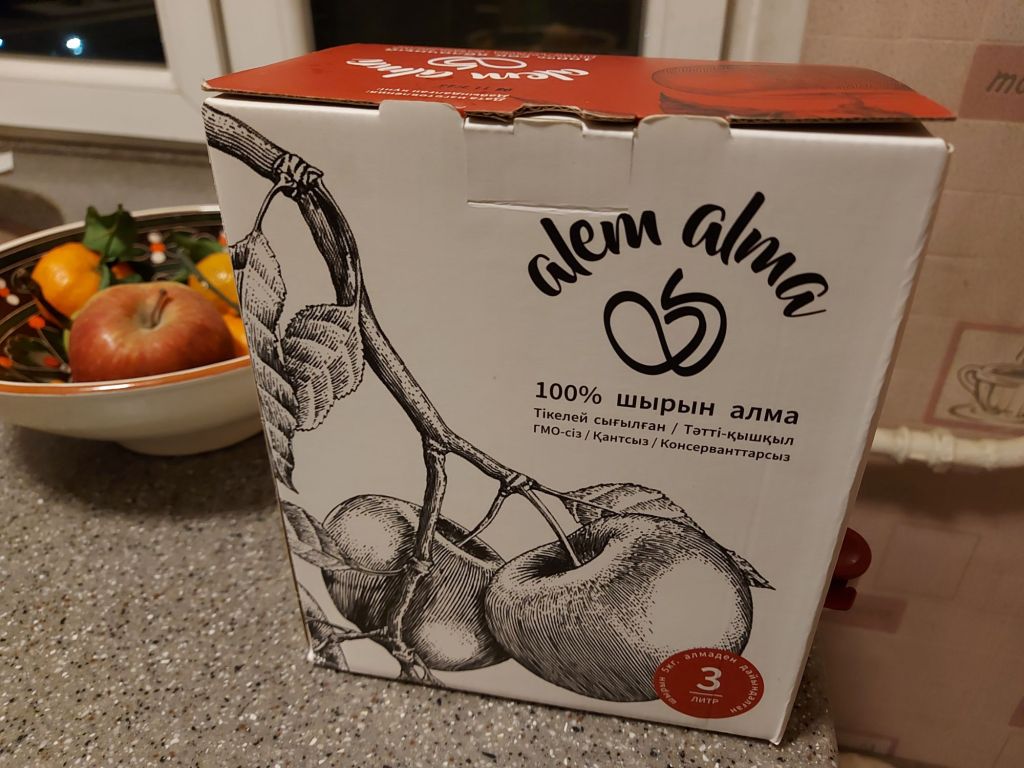
Any apple juice can be used – we used a local one from Almaty, Kazakhstan that’s free from extra sugar and other additives and is naturally cloudy. Almaty, whose name translates as “place of apples”, is where the antecedents of today’s apples evolved.
Apples are from Almaty!
To make the cold brew, add a cinnamon stick, or a teaspoon of powdered cinnamon, five cloves, two teaspoons of fresh ginger and a pinch of nutmeg to a litre of cold water. Shake well and leave overnight in the fridge.
For one serving of the the Almaty Apple Spritz, put some ice cubes into a tall glass, pour in 25 ml of any vodka of your choice (or 50 ml if you want to get a jag on, if you’re doing dry January, just omit the vodka!). Add 75 ml of the cinnamon cold brew, 50 ml of apple juice and top up with fizzy water, garnish with a slice of apple and stir before drinking.
This cocktail also works well warmed up (you don’t need the ice or fizzy water).The spices and apple juice evoke a cosy mulled cider vibe. Simply heat until it’s just about to boil and serve asap. A recommended food pairing is with KCC’s coleslaw variation or a traditional new year Olivier salad.
With the summer temperatures peaking, we’ve come up with a melon and raspberry fuelled rum cocktail to help you keep cool.
Chill out with a Meloncoolia
The melon season is in full swing in Kazakhstan with honeydew melons and watermelons both at their sweetest. You can find piles of ripe melons on sale all over the country. Its hot, arid climate is particularly well-suited to this instant summer dessert. Stalls appear on street corners with tempting mounds of golden yellow and green streaked melons.
Melonmania in Mangystau, Kazakhstan
We’ve used melon in a cocktail this time round, along with raspberries, white rum or vodka and Martini Fiero, an orange-flavoured aperitif that’s been a hit with the KCC crew this summer. You can also try melon in a seasonal salad with halloumi cheese – here’s our recipe for this summertime special from a few years back.
Double meloned squeaky cheese salad
Ingredients (makes one litre)
150 g honeydew melon
100 g raspberries
250 ml water
200 ml Martini Fiero
100 ml white rum or vodka
250 – 300 ml tonic or soda water
Method
Put the fruit in a blender with the water and mix it into a smooth consistency. Pour the juice, spirit and Martini Fiero into an empty one litre plastic or glass bottle. Top up to a litre with tonic water or soda water and shake well. Fill a tumbler with ice and pour the Meloncoolia over the rocks, put your feet up and enjoy!
If you’re feeling down after all the partying in December, then never fear as Russian Christmas is here! To help celebrate it in style we’ve opened up our Vodkatopf (a slavic cousin of the Rumtopf) and used the fruit that’s been stewing in the vodka since summer to make a booze-infused fruitcake.
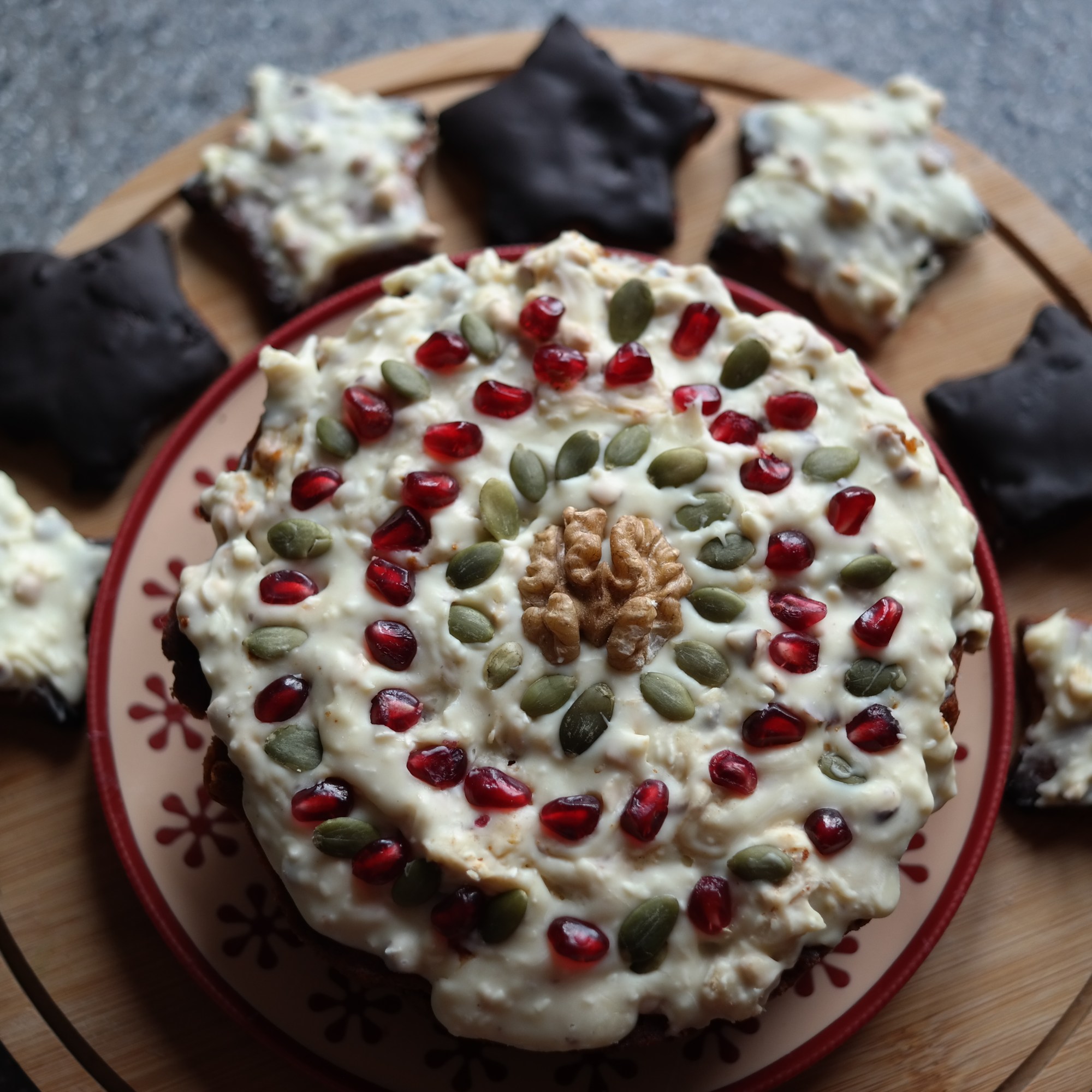
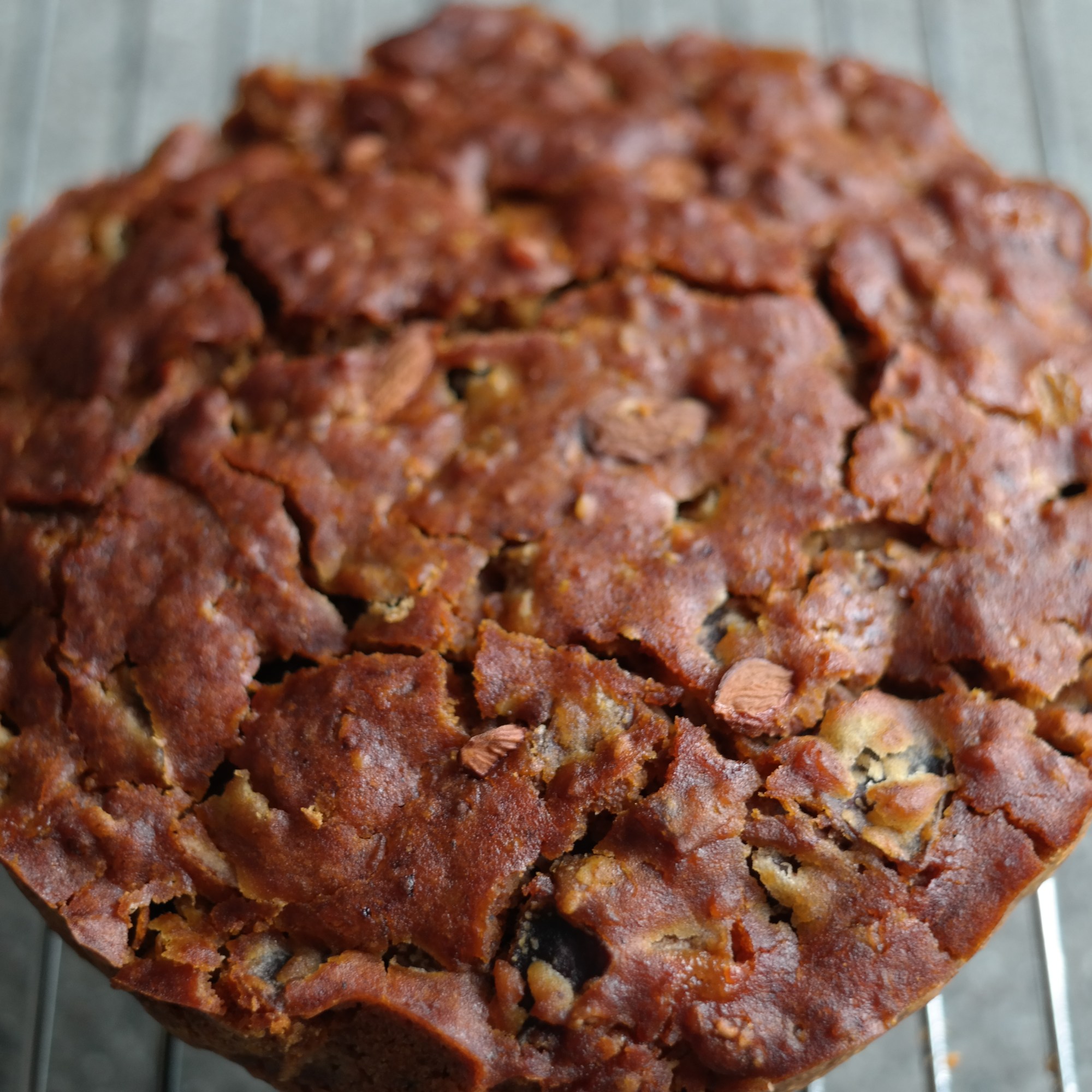
KCC’s booze-fuelled festive fruitcake
In Russia, Christmas is celebrated on 7 January – the Orthodox Church still follows the Julian calendar rather than the Gregorian calendar whereas Russia switched to the latter in 1917. The switch created a 13-day lag between the calendars so, for followers of the Orthodox faith, Christmas Eve falls on 6 January and 13 January marks the end of the old year
To make the vodkatopf we poured vodka over layers of different fruits as they appeared over the summer. The apricots, cherries and raspberries of early summer were followed by peaches and plums to make a great , fruity vodka for shooting or mixing. As an added bonus, the preserved fruit went into a the fruitcake mix. We decorated the cake with melted white chocolate and crushed almonds and used pumpkin and pomegranate seeds as the finishing touch.
Ingredients (for 6 – 8 servings)
325 g vodka-soaked mixed fruit (soak overnight in 250 ml vodka or other spirit if using dried fruit)
90 g olive oil
100 g honey (or golden syrup for a vegan cake)
175 g plain flour (we used rice flour for a gluten free cake)
50 g mixed nuts
100 ml coconut milk
25 g desiccated coconut
One teaspoon baking powder
One teaspoon each of cloves, ginger, nutmeg and cinnamon
25 ml vodka
100 g melted white chocolate
pumpkin and pomegranate seeds to decorate the cake
Method
Line a 15cm cake tin with a double layer of parchment paper, this will help stop the cake from burning
Sieve the flour and combine with the coconut milk, vodka, 30 g of chopped nuts, desiccated coconut, baking powder, cloves, ginger, nutmeg and cinnamon and stir together to make a thick batter
Melt the honey into the olive oil in a heavy-bottomed pan over a low heat and stir.
Combine the honey and oil mix with the batter.
Stir in the soaked fruits into the batter, along with any leftover liquid.
Layer the batter into the prepared tin and use a spatula to spread it level.
Melt the white chocolate in a glass or ceramic bowl over a pan of boiling water.
Spread the chocolate evenly over the top of the cake, sprinkle some mixed nuts over the icing and then decorate with pomegranate and pumpkin seeds.
This week saw the 100th anniversary of Russia’s October Revolution, which led to the creation of the Soviet Union. To mark this momentous occasion in world history, Knidos Cookery Club has turned to a soup made from the close relative of a vegetable that was at the heart of Soviet cuisine – the humble cabbage.
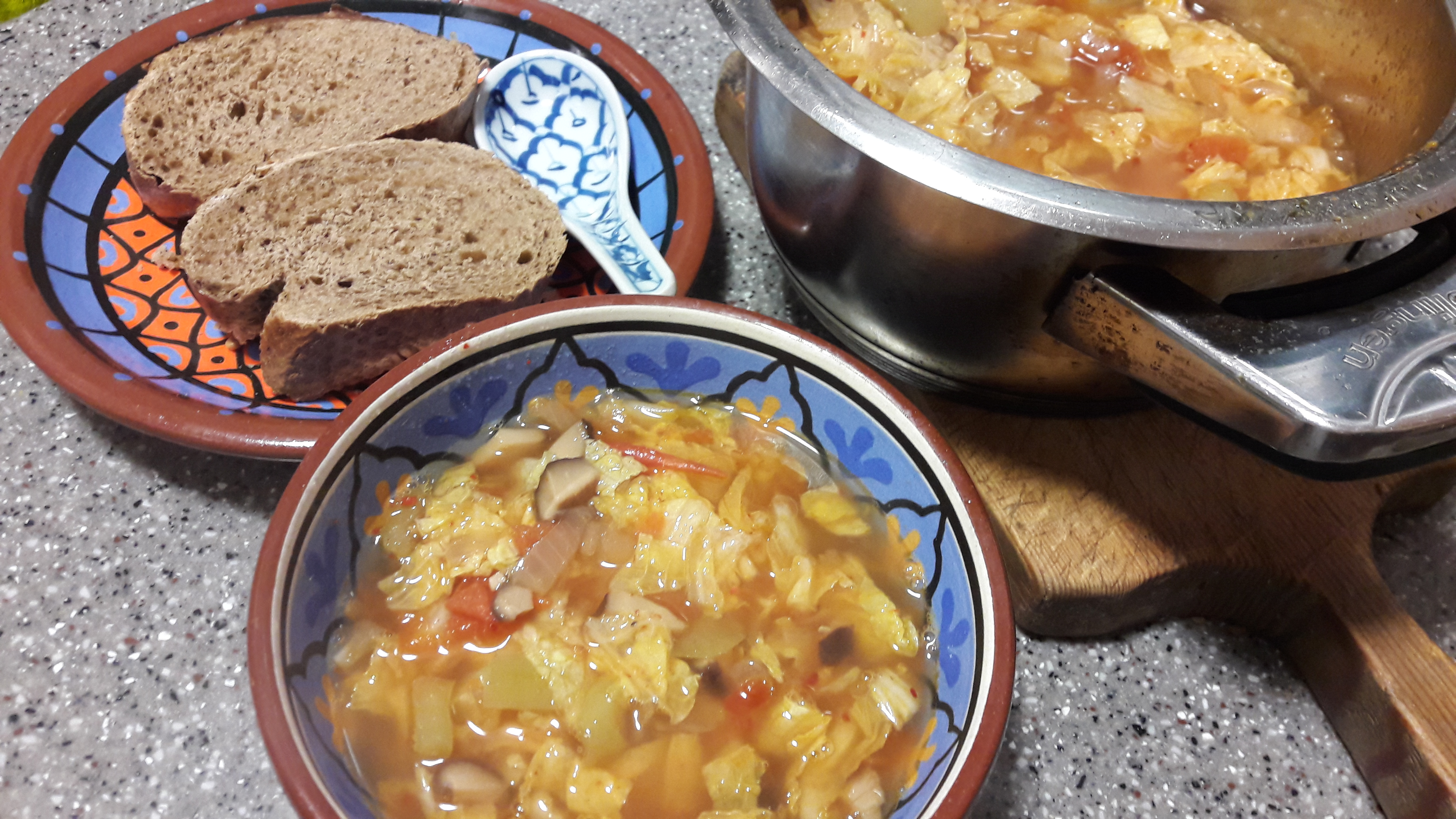
KCC’s cabbage soup with brown bread
The cabbage, and soups such as shchi that were made from it, was a mainstay of the Soviet diet. I remember hearing jokes about it when I was a lad such as this gem:
Q. What’s three miles long and eats cabbage?
A. A Soviet meat queue.
We’ve used Chinese cabbage as a twist on the traditional recipe that uses the more familiar member of the Brassica family and spiced up the mix with a few Shiitake mushrooms and some chilli powder.
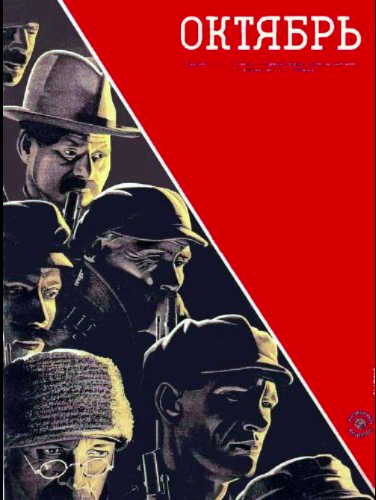
It makes a great accompaniment, along with a few shots of vodka, to October: Ten Days that Shook the World, the classic 1928 Soviet silent classic directed by Sergei M. Eisenstein and Grigori Aleksandrov (which is available on BBC iPlayer until the end of this November).
The film was based on John Reed’s book of the same name, which told the story of the revolution from the abdication of the last Czar to the Bolshevik seizure of power. Another good read on the same topic follows Lenin on the Train, an account by Catherine Merridale of Lenin’s trip back to Petrograd on the eve of the revolution.
Ingredients (serves 4)
300 g shredded Chinese cabbage
2 medium onions
1 green pepper
4 dried mushrooms (rehydrated)
2 garlic cloves
2 medium tomatoes
25 ml cooking oil (sunflower or another neutral, refined oil)
1 litre vegetable stock
1 bayleaf
Pinch of black pepper
One teaspoon red chilli flakes
Dash of soy sauce
Rye bread (or a similar hearty brown bread)
Method
You’ll need a good hearty stock for this soup, so prepare some in advance or use stock cubes. Heat the oil in a heavy-based pan and then add the chopped onions and garlic. Cook for 10 minutes or so over a medium heat – while it’s cooking chop up the mushrooms and green pepper and then add to the mix,
Stir and cook for five more minutes then add the chopped tomatoes, black pepper, chilli flakes and bayleaf and cook until the tomatoes start to collapse. Then add the vegetable stock and bring to the boil.
Next add the shredded cabbage and cook for ten minutes or so until the cabbage is tender. Add soy sauce, remove the bay leaf and serve with brown or black bread and a shot of vodka!
Welcome to the first Knidos Cookery Club of the new year. While many of us have returned to the daily grind, it’s still party-time in some parts of the world.
in Russia, people are preparing to celebrate New Year’s Eve on 13 January – the Orthodox Church still follows the Julian calendar rather than the Gregorian calendar, which Russia adopted after 1917’s October Revolution. This switch created a 13-day lag between the calendars so, for followers of the Orthodox faith, Christmas Eve falls on 6 January and 13 January marks the end of the old year.
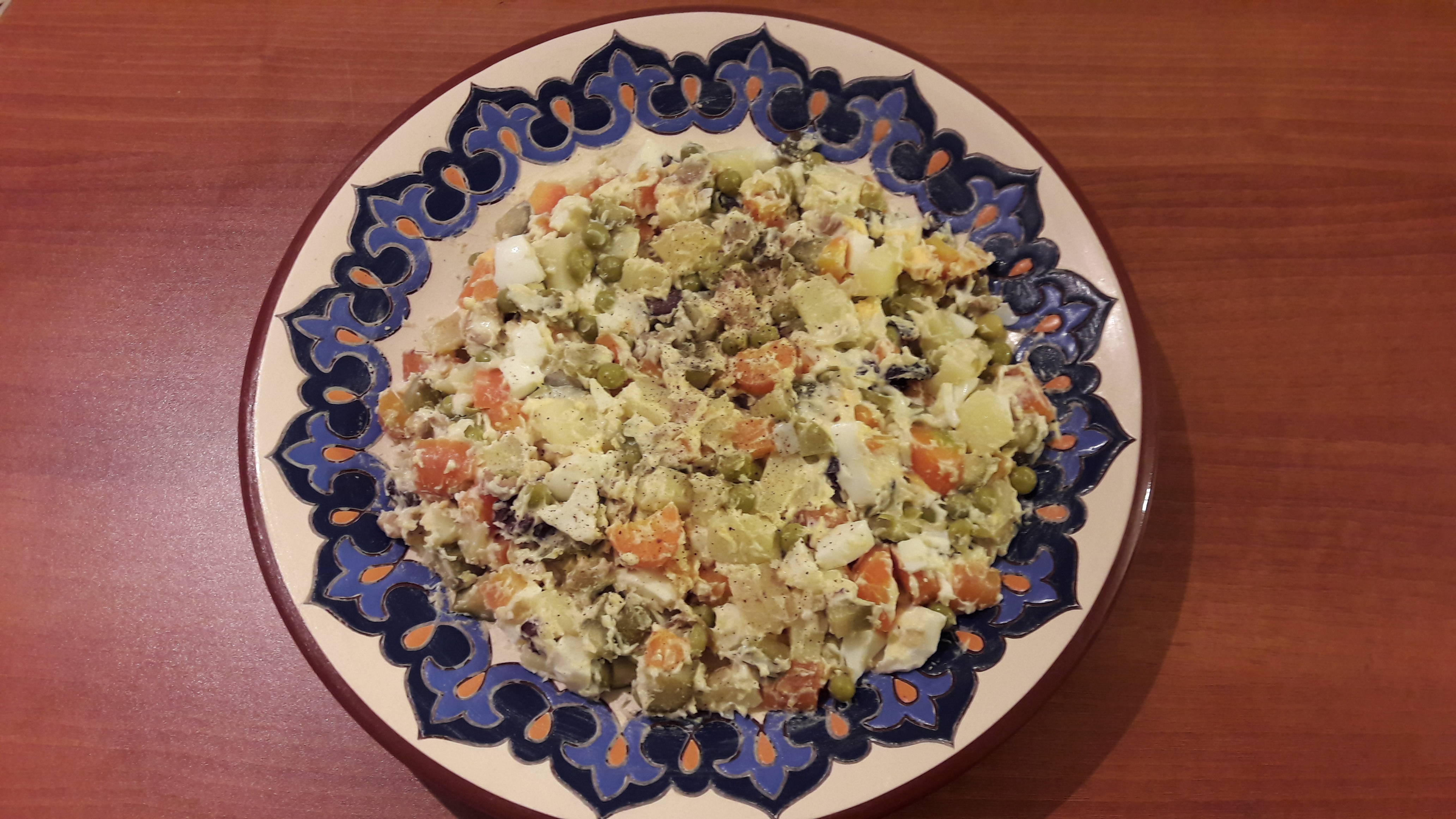
KCC’s take on Russia’s classic Olivier salad
A centre-piece of Russian tables on this day, as people prepare to welcome in novy god, is the Olivier salad – a concoction of boiled potatoes, pickled cucumbers, peas, eggs, carrots and boiled beef or chicken in a mayonnaise dressing. This version dates from Soviet times as all the ingredients could usually be procured even in the depths of winter and despite chronic shortages.
Arrange
Mix
Serve!
A version of the salad, omitting the meat and eggs, is made in Turkey where it’s known as Rus Salatası – we’ve made our own veggie version that replaces the meat (Olivier purists look aside now, please) with black and green olives and uses sour cream in place of mayonnaise.
When I lived in Moscow in the 1990s I got it into my head that Olivier salad should include olives (mistakenly thinking that Olivier referred to olives rather than the salad’s originator!) and I was disappointed when it came minus olives – so now I finally have a chance to put this right!
Ingredients (serves 3-4)
150 g potatoes
150 g carrots
150 g peas
150 g pickled cucumbers
150 g black and green olives
two hard boiled eggs
150 ml sour cream or natural yogurt
pinches of salt and black pepper
Method
Boil the whole carrots and potatoes until cooked but not going mushy and boil the eggs for 5 minutes or so. While they’re all cooking, chop the pickled cucumbers and olives into small cubes.
Drain the potatoes and carrots and cover with cold water to stop them cooking. Do the same with the eggs. Chop the potatoes, carrots and eggs into small cubes and arrange around the side of a large serving dish in separate sections with the olives, peas and cucumbers.
Pour the sour cream or yogurt into the middle of the bowl and season with salt and pepper. Now mix all the ingredients thoroughly, making sure they all get a good coating of sour cream or yogurt.
Leave in the fridge before serving alongside other Russian-themed salads, such as this veggie take on caviar made from beluga lentils, and wish a hearty S Novym Godom with shots of vodka and/or a glass of chilled Sovyetskoye Shampankskoye (if you can get hold of it in your local offie!) as you prepare to welcome Old New Year in true Russian-style!








 Knidos Cookery Club