A Must-Have Mastava

26 April 2018

Knidos Cookery Club is just back from a foodie fact-finding mission to uncover some new recipes along the Silk Roads. While on the expedition, we inadvertently fell foul of Kazakhstan’s strict zero tolerance laws while munching on a local delicacy, sunflower seeds.

20180315_110927.jpg
Sunflower seed munchers are not welcome in this park in Shymkent, Kazakhstan

It turns out that eating this tasty little snack in public is an offence, classified as “petty hooliganism”, and punishable by watching a video of Kazakhstan’s president Nursultan Nazarbayev railing against this social evil and the payment of a fine (4 x the Monthly Calculation Index (MCI) that is used to calculate benefits and fines – approx £25).

After this contribution was made to the Shymkent Police Nauryz party fund, the situation was resolved amicably and we were all able to go on our merry way, suitably chastised!

The road trip also took in a visit to Uzbekistan, which has inspired KCC to attempt Mastava a traditional Uzbek rice and chunky vegetable soup  – it’s usually prepared with lamb or beef but we’ve used lentils and red beans instead of meat to add the protein in our version.

20180320_225344
A hearty bowl of mastava and a cup of green tea

Mastava uses whatever seasonal vegetables are to hand – we had carrots, potatoes, tomatoes, pumpkin and some red peppers for our version. We’ve liberally spiced it with cumin, coriander seeds, red chilli flakes and black pepper as well as some fresh coriander to garnish the soup.

Ingredients (makes around 4 – 6 servings)

150 g green lentils or similar

250 g red beans

150 g pumpkin

150 g rice

200 g cherry tomatoes

Four small potatoes

One large carrot

One red pepper

Six spring onions

30 ml olive oil or other vegetable oil

1 litre vegetable stock

One teaspoon cumin seeds

One teaspoon coriander seeds

One teaspoon black pepper

One teaspoon red chilli flakes

One bunch fresh coriander

Method

Heat the oil in a heavy based pan and add the crushed black pepper, cumin and coriander seeds and chopped spring onions. fry for five minutes over a medium heat and then add chunks of carrots, tomatoes and red pepper. Cook for 10 minutes and then add the vegetable stock, red chilli flakes, potatoes and rice and bring to a boil.

Simmer over a low heat for 20 minutes, and then add the cooked green lentils and red beans and chunks of pumpkin. Keep simmering until the rice is cooked, stirring occasionally. Serve in bowls and garnish with fresh coriander.


Fesenjan for Beginners

18 January 2018

This week on Knidos Cookery Club we’re going to be bucking the January detox trend with this super-rich, calorie-laden Iranian stew, Fesenjan (pronounced fesenjoon), that combines three of our favourite go-to ingredients – pomegranate, walnut and pumpkin.

20180112_221142
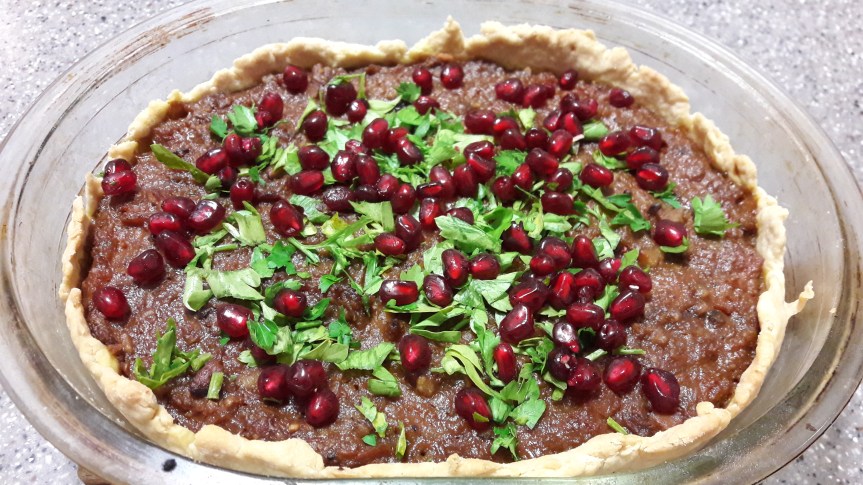
KCC’s Fesenjan Tart

Usually served as a thick stew with rice, we’ve decided to put it in a pie case to make a tasty walnut and pomegranate infused tart. Making this stew can be quite labour-intensive – shelling the walnuts, toasting them, crushing them, extracting the pomegranate seeds and so on, but the end result makes it well worth all the effort.

20180112_185716
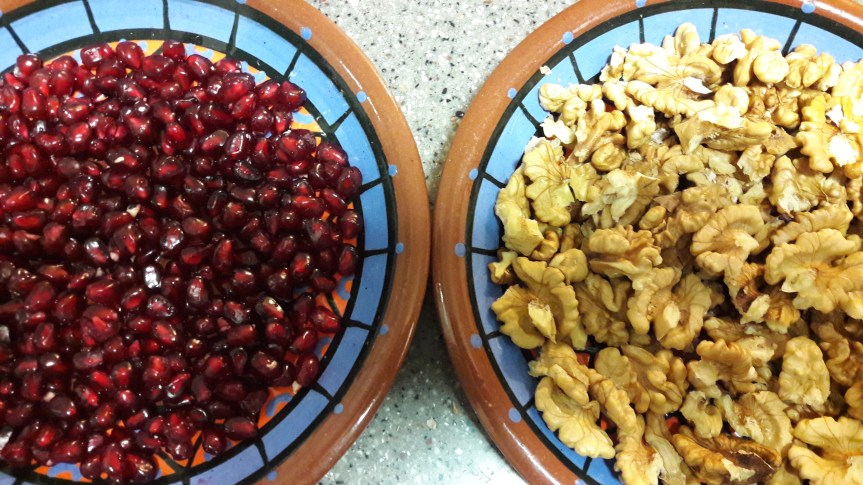
Can’t get much fresher than this!

Look out for Nar Ekşisi (pomegranate syrup) or the sweeter Nar Ekşili Sos (pomegranate sauce) in your local Middle-Eastern shop or make your own. If using Nar Ekşisi, add a teaspoon or two of honey to the stew to make it a bit sweeter.

To save time you can use shop-bought pastry, but we think it tastes better with a homemade pie crust. To keep it vegan, we’ve used olive oil instead of butter to make our shortcrust pastry.

Ingredients (serves 4)

125 g shelled walnuts

one medium onion

500 g pumpkin or butternut squash

300 ml vegetable stock

30 ml olive oil

2-3 tablespoons pomegranate syrup or sauce (Nar Ekşisi or Nar Ekşili Sos in Turkish)

0.5 teaspoon cumin seeds

0.25 teaspoon cinnamon and turmeric

Black pepper

Handful of pomegranate seeds

Bunch of fresh parsley

200 g shortcrust pastry

Method

Toast the walnuts for 10 minutes over a low heat and then mince in a blender. Heat the olive oil and fry the onion in a heavy-based pan over a medium heat for ten minutes. Add the spices and then add the cubed pumpkin and stir to cover.

Pour over the vegetable stock, add the pomegranate molasses and the minced walnuts and cook over a medium heat for 30 minutes until the pumpkin is cooked. Make sure the sauce is quite thick – if it’s runny, boil it until it starts to thicken.

Roll out the pastry and place it in a greased baking tray. Bake blind for ten minutes at 180c and then put the filling into the pie case. Cook for 40 minutes or so until the pastry starts to go golden brown.

Garnish the tart with chopped parsley and pomegranate seeds and serve with saffron rice and a green salad.

Courgette Flower Power

4 May 2017

This time round on Knidos Cookery Club we’ve been busy stuffing courgette flowers, a popular starter all around the Aegean Sea. In Turkey, these delicate taste-bud ticklers, known as kabak çiçeği dolması, are stuffed with a rice mixture and baked, unlike their Italian cousins which are filled with ricotta cheese and deep fried.

IMG_1295
Succulent stuffed courgette flower power

The courgette, zucchini to our north American readers, is a really versatile vegetable – in the past we’ve used it in a tasty fritter mücverstuffed courgettes and in a creamy almond dip, and it’s great that we’ve found a use for its flowers as well.

If you’re growing your own courgettes, then you should have a ready supply of flowers, otherwise you may need to scour your local farmers’ market for these vivid orange blossoms.

Ingredients 

20-25 courgette flowers

One cup (approx. 100g) of short or long grain rice (We recommend brown rice for its earthier flavour)

250 ml vegetable stock

One medium-sized onion

One medium-sized tomato

One garlic clove

Pinches of dried thyme, oregano, black pepper, chili pepper flakes, cinnamon and salt

5 g fresh parsley

5 g fresh mint

25 g raisins

25 g  pine nuts

25 ml olive oil for frying

Juice of one lemon

One sliced lemon

100 ml natural yogurt

Method

Pour the olive oil into a heavy-based pan and add the chopped onion and garlic. Cook over a medium heat until the onion becomes translucent. Add the chopped tomato, dried and fresh herbs, seasoning, dried fruit and pine nuts and cook for five minutes over a high heat.

Turn the heat down and add the washed and soaked rice to the onion mix and stir to cover the grains with oil. Add the stock and cook over a low heat until the liquid is absorbed.

Make sure that the courgette flowers are free from any green, leafy bits or stem and remove the stamen from the inside of the flower. Allow the rice mixture to cool and then fill each flower with a teaspoon of rice mix – don’t overfill them as the rice will continue to expand as it cooks.

Fold the end of the blossom together to seal the rice mix in and place the filled flowers into a heavy based frying pan or casserole dish. Pour water over the flowers to just cover them, add a generous glug of olive oil and the lemon juice, put a lid on the pan and cook over a low heat until all the water is absorbed.

Leaving the pan covered, let the cooked courgette flowers rest for 30 minutes or so with the heat turned off and then serve with lemon slices and a dollop of natural yogurt.


Ezo the Bride’s Soup

20 October 2016

Knidos Cookery Club is off to a wedding soon so we did a quick google to see what Turkey has in the way of wedding-related foodstuffs and chanced upon this soup with a great backstory.

One wedding day tradition in Turkey is to the feed up the bride-to-be with a hearty soup, Ezogelin Çorbası, to help her prepare for the rigours of her wedding day and the subsequent move into the groom’s household.

img_2061

The name translates as ‘Ezo the Bride’s Soup’ and the recipe comes from the tale of a woman, Ezo, short for Zöhre, who was born in 1909 in a village near Gaziantep, now in south-eastern Turkey on the border with Syria.

She became famed in the region for her her looks and was highly sought after as a bride. Eventually, she married a man from a neighbouring village but unfortunately the marriage didn’t work out. One version of the tale, that has inspired short stories, folk songs, a film and a TV series in Turkey, as well as the soup, has it that her husband loved another so Ezo left him.

In 1936, Ezo married again and moved with her husband over the border to the town of Jarabulus in Syria. She pined for her homeland and to quell her homesickness she would cook a soup that reminded her of Turkey – a filling combination of red lentils, bulgur wheat, rice, tomato paste, herbs and spices. She also used the soup to win over her mother-in-law, a move crucial to finding happiness in her new home.

Ezo had nine children with her second husband, but she only lived to her mid-40s, dying in 1956 in Jarabulus. Her last wish was to be buried on a hillside overlooking her beloved homeland. Her memory lives on in this soup and in the legends that have grown up around her life story.

Ingredients (Makes four servings)

150 g red lentils

50 g coarse bulgur wheat

25 g rice

one medium-sized onion

one or two cloves of garlic

one lemon

25 ml olive oil

1.2 l warm water

3-4 tablespoons of tomato paste (a more liquid form of tomato purée – if using purée then two tablespoons should suffice)

two teaspoons of dried mint

black pepper

two teaspoons of chili flakes

sprig of fresh mint

Method

Wash the red lentils, bulgur wheat and rice and soak for two hours in cold water.

Finely chop the onion and garlic and fry for five minutes in the olive oil in a heavy-based pan. Add the red lentils, bulgur wheat and rice, pour in one litre of water and simmer over a low to medium heat for 30 minutes or until everything is cooked.

Add the tomato paste, the dried mint, chili flakes and some black pepper and 200 ml of water and the juice of one lemon and stir well. Simmer for ten or fifteen minutes until the soup is taking on a creamy texture.

Ladle the soup into bowls and garnish with a sprig of fresh mint and sprinkle more chili flakes over the top. Serve with a slice of lemon and some crusty bread.

Dolma Dreaming

21 April 2016

This week, Knidos Cookery Club is turning its attention to stuffed vegetables – dolma in Turkish, from the verb dolmak which means to fill or stuff.

Any vegetable that can be hollowed out can be used to make dolma – aubergines, courgettes, peppers or tomatoes are great for this. The filling can consist of rice mixed with herbs and spices and sometimes dried fruit such as raisins or currants and pine nuts.

Knidos Cookery Club particularly likes the way tomatoes go all soft and mushy when baked and some perfect specimens were sourced from the market. Courgettes are beginning to re-appear after their winter break and a kilo were added to the shopping basket for subsequent stuffing. With spinach also in abundance, we picked up a few bunches to add to the rice for the dolma mix.

Here’s what the finished dish should look like …

IMG_0192 copy 2

Ingredients (serves 3-4)

Two medium-sized courgettes

Four medium-sized tomatoes

250 g fresh spinach

One cup (approx. 100g) of short or long grain rice (We recommend brown rice for its nuttier flavour)

250 ml vegetable stock

One medium-sized onion

Mixed herbs and spices (thyme, parsley, mint, oregano, black pepper, chili pepper, salt)

A handful of dried fruit (currants and/or raisins) and a few pine nuts

Olive oil for cooking

Juice of two medium-sized lemons

A knob of garlic

For the cucumber sauce: one small cucumber, fresh chopped mint, 100ml thick natural yogurt

Method

Pour a generous glug of olive oil into a heavy-based pan and add the chopped onion and garlic. Cook over a medium heat until the onion becomes translucent. Add mixed herbs, seasoning, dried fruit and pine nuts.

Add the washed and soaked rice to the onion mix and stir to cover the grains with oil. Next add the stock and cook over a low heat until the liquid is absorbed.

While the rice is cooking, pre-heat the oven to 200 °C (gas mark 6) and soften the washed spinach in a frying pan with a little splash of olive oil until it starts to wilt.

Slice the tops off the tomatoes and scoop out the liquid from the middle. Top and tail the courgettes and scoop out the contents with a teaspoon in a drilling motion. (Keep the tomato liquid and courgette middles to cook with later).

When the rice has absorbed all the liquid, add the wilted spinach to the mixture, stirring it thoroughly into the cooked rice.

Stuff the tomatoes and courgettes with the rice mixture and arrange in a baking dish. Pour the lemon juice and a healthy dash of olive oil over the vegetables. Put the tops back on the tomatoes.

Place in the pre-heated oven and bake at 200 °C (gas mark 6) for 30 minutes or so or until the skin of the vegetables starts to go brown and bubbly. Add a small amount of water if the lemon juice is all absorbed.

While they’re cooking, make the cucumber sauce. Combine the grated cucumber with the yogurt and fresh mint. Add garlic to taste.

Serve immediately or allow to cool – it’s up to you. Don’t forget to pour the cucumber sauce over the dolma before eating.