Mungo Pumpkin Patties

6 October 2016

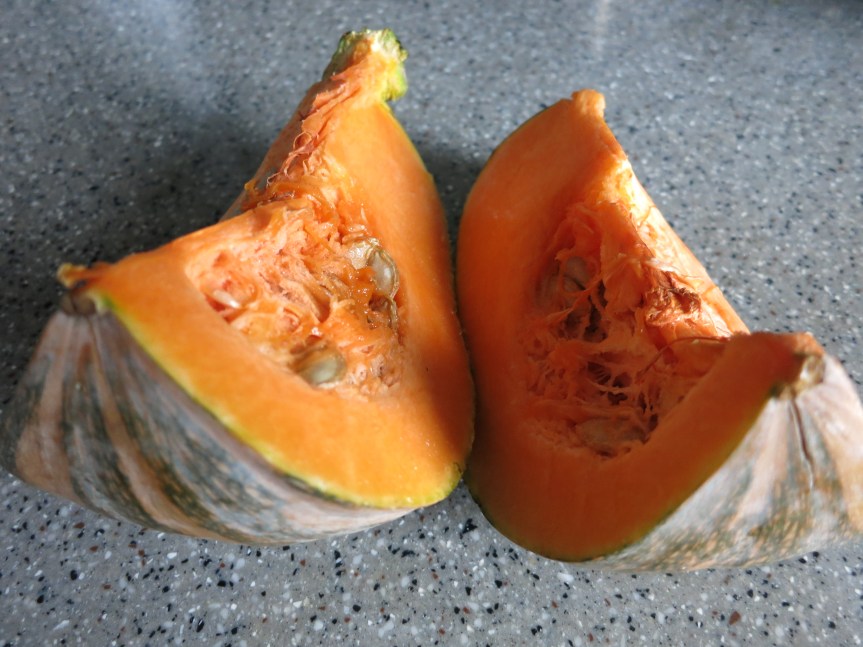
Knidos Cookery Club’s autumnal vibe continues apace with the re-appearance of pumpkins of all shapes and sizes in the market. This is one vegetable that acts as a surefire marker of the onset of longer and chillier nights, with thoughts turning towards the comforting pumpkin-rich soups and stews of winter.
img_2044

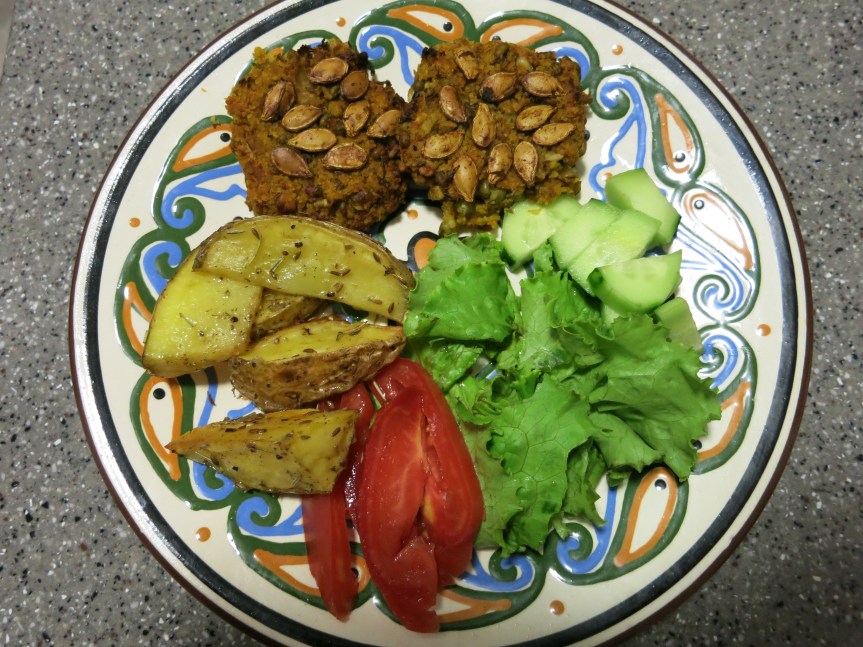
In Turkey, pumpkin is often served as a desert – kabak tatlısı , that coats the orange-coloured slices in sugar syrup. Here at Knidos Cookery Club we prefer the savoury approach to pumpkin and have come up with some mung bean, bulgur wheat and mashed pumpkin patties.
pumpkin-patties

The mung beans add a nutty, earthy flavour that compliments the natural sweetness of pumpkin, while the bulgur wheat helps to hold it all together so the patty can be fried or oven-baked. Roast the seeds and use them to decorate the patties and give tham a bit of crunch.

Ingredients (makes 6-8 patties)

300 g pumpkin

75 g mung beans

50 g fine bulgur wheat

one medium-sized onion

one garlic clove

one teaspoon cumin seeds

one teaspoon dried thyme

black pepper

one teaspoon turmeric powder

25 ml olive oil

250 ml water

Method

Wash and soak the mung beans in cold water for two hours. Then cook in 250 ml water for 45 minutes or until the beans are just starting to go mushy – add more water if necessary.

Cut the pumpkin in half and remove the seeds, retain them to use later. Peel the pumpkin and dice into 1 cm cubes. Finely chop the onion and garlic. Place the pumpkin cubes, onion and garlic in a baking dish and pour 25 ml of olive oil over them. Add the cumin seeds, dried thyme and black pepper and mix well to coat the cubes.

Bake in a pre-heated oven (220 c /gas mark 7) for 45 minutes or until the pumpkin mashes easily with a fork. While the pumpkin mix is cooking, put the seeds on some tin foil and roast in the oven until starting to char a little bit.

Mash the pumpkin mix with a fork or a potato masher and then add the cooked mung beans and blend well. Stir in the turmeric powder and then add the bulgur wheat. Mix well and allow to stand for 30 minutes.

Tak a golf-ball sized portion of the mix and flatten to a round shape. Decorate with pumpkin seeds and shallow fry in oil or oven-bake for 30 minutes at 220 c (gas mark 7).

Serve with roast potatoes or chips and a mixed salad or in a burger bun with toppings of your choice.


Taking the Lor into Your Own Hands

15 September 2016

This week on Knidos Cookery Club we’ll be looking at  lor – Turkey’s answer to ricotta cheese. Drier than its Italian cousin,  lor is made from whey after it has been separated from the curd. It’s used in Turkish dishes such as börek or mixed with herbs and nigella seeds as part of a breakfast spread.

img_1402
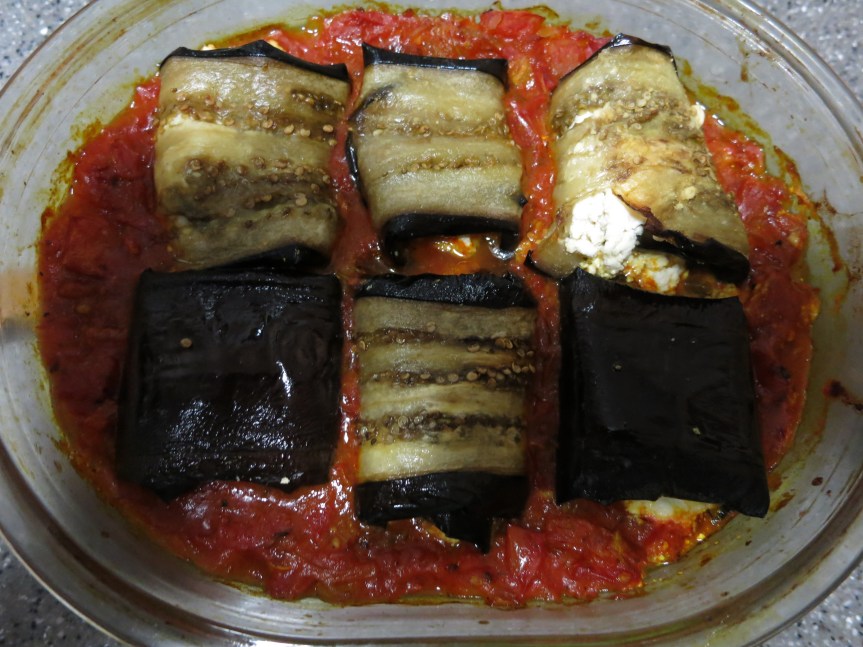
Lor stuffed aubergine slices in a spicy tomato sauce

It’s peak season for aubergines at the moment and we found that this adaptable vegetable paired excellently with lor cheese. We stuffed some slices of aubergine with the cheese, adding some spinach or sorrel leaves to the parcels to give the lor a bit more oomph. The dish was finished off by submerging the aubergine wraps in a spicy, gingery tomato sauce.

wp_20160914_18_29_47_pro
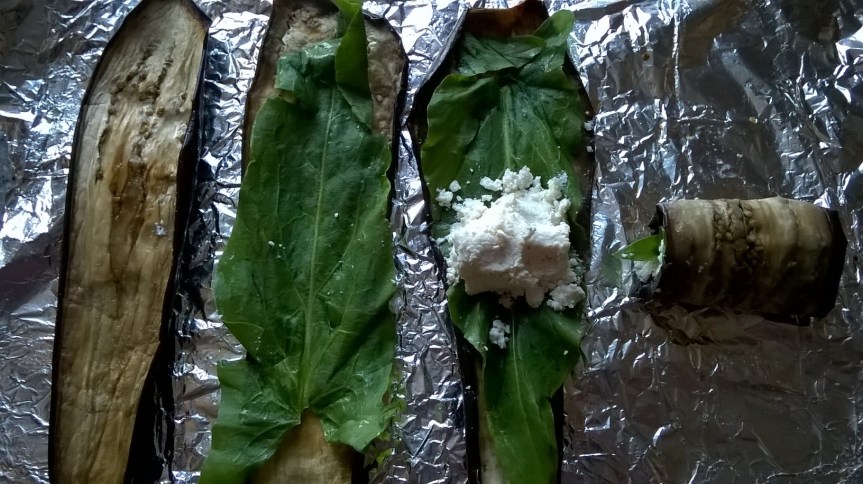
Line up the aubergine slices, add a sorrel leaf and a dollop of lor, then roll

For some reason, this combination of aubergine, white cheese and tomato just works so well.

If you’re having trouble sourcing the lor cheese, it’s dead easy to make yourself from milk or yogurt – here’s some easy-to-follow instructions from Binnur’s Turkish Cookbook.

Ingredients (serves 3-4)

Two large aubergines cut lengthways into 0.5 cm thick slices (this should yield 8-10 slices)

250 g  lor cheese (or ricotta)

Eight-ten sorrel or spinach leaves (one for each aubergine slice)

500 g tomatoes

One medium-sized onion

One or two garlic cloves

3 cm fresh ginger

One teaspoon paprika

One teaspoon chili flakes

One teaspoon turmeric

50 ml olive oil

Method

Brush the aubergine slices on both sides with olive oil, sprinkle some salt and black pepper over the slices and bake for 20 minutes or until turning a golden-brown colour in an oven pre-heated to 220°C or gas mark 7.

While the slices are cooking, prepare the sauce. Heat a glug of olive oil in a frying pan and add the finely chopped onion to the pan along with the minced garlic and ginger.

Cook over a medium heat for ten minutes then stir in the paprika, chili flakes and turmeric. Chop the tomatoes or grate them and pour into the mix. Cook for twenty minutes or so, stirring occasionally, until the sauce is reduced by about half.

Allow the aubergine slices to cool and then make the wraps – put a sorrel or spinach leaf, with the stem removed, and a dollop of lor in the middle of the slice and roll it up.

Pour the sauce into a baking dish and place the aubergine parcels in the spicy sauce. Bake in the oven at 220°C or gas mark 7 for twenty minutes or until the sauce is bubbling.

As usual, serve with a green salad and some crusty bread.


A Creamy Almond and Courgette Dipfest

8 September 2016

The courgette is one of the most versatile vegetables in the Knidos Cookery Club kitchen. Earlier it featured in a stuffed platter and as a fritter. We also like it in an omelette, in börek or just sliced and grilled on the barbecue.

IMG_1169
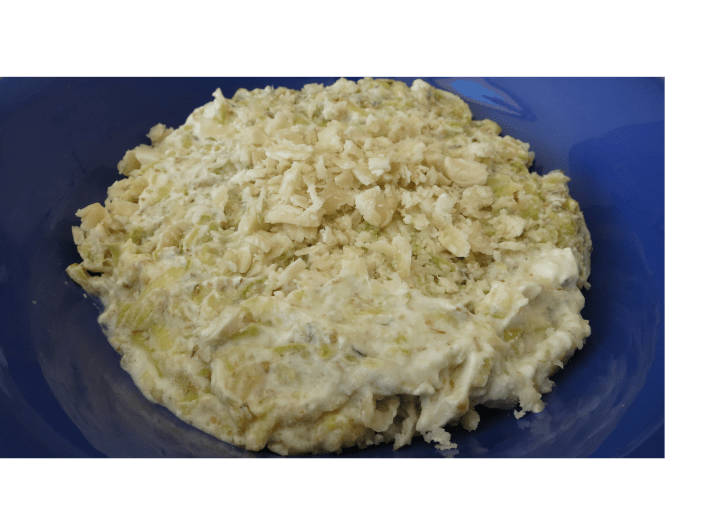
Creamy Almond and Courgette Dip

This week we’ve  incorporated this key ingredient into a creamy almond and courgette dip that can be used as part of a starter, or meze, combo with other dips such as our Carrot and Walnut Tarator.

Yogurt and chopped almonds were added to the grated courgette to make it creamy and some wholemeal flour was used to hold it all together.

Ingredients (Serves 3-4)

250 g  grated courgette

100 ml plain, natural yogurt

50 g wholemeal flour

50 g chopped almonds

One garlic clove

25 ml olive oil

Method

Heat the olive oil in a frying pan over a medium heat then add the grated courgette and garlic and stir fry for five minutes. Add the flour and stir fry for two more minutes. Take the frying pan off the heat, mix in the yogurt and almonds, reserving a few nuts to sprinkle over the top.


Double Meloned Squeaky Cheese

1 September 2016

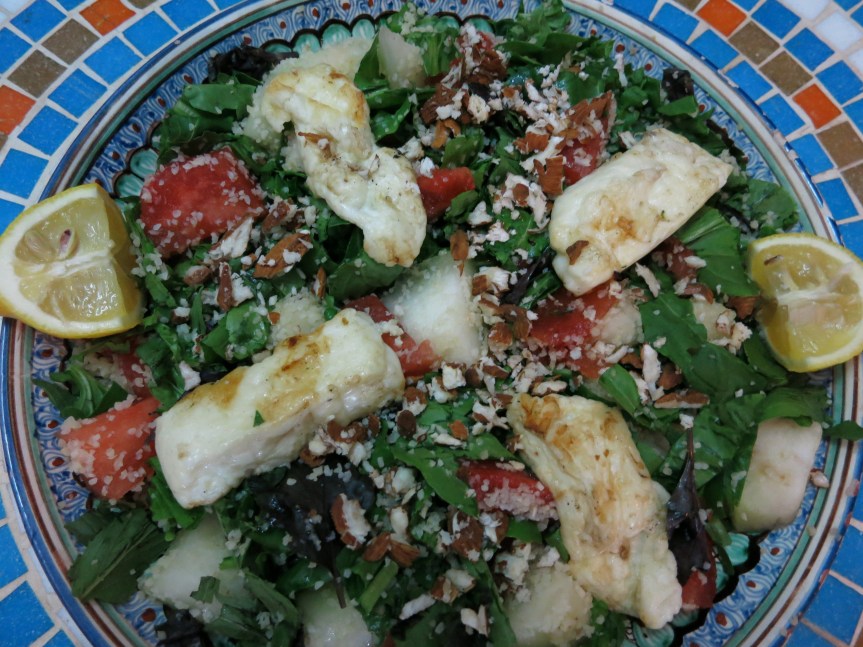
This summer has seen a rash of articles in the UK press about salads combining melon and white cheese and here at Knidos Cookery Club we love to tap into any zeitgeist that’s going – here’s our own take on this refreshing summery salad using watermelon, honeydew melon and halloumi cheese.

IMG_1324
Double Meloned Squeaky Cheese

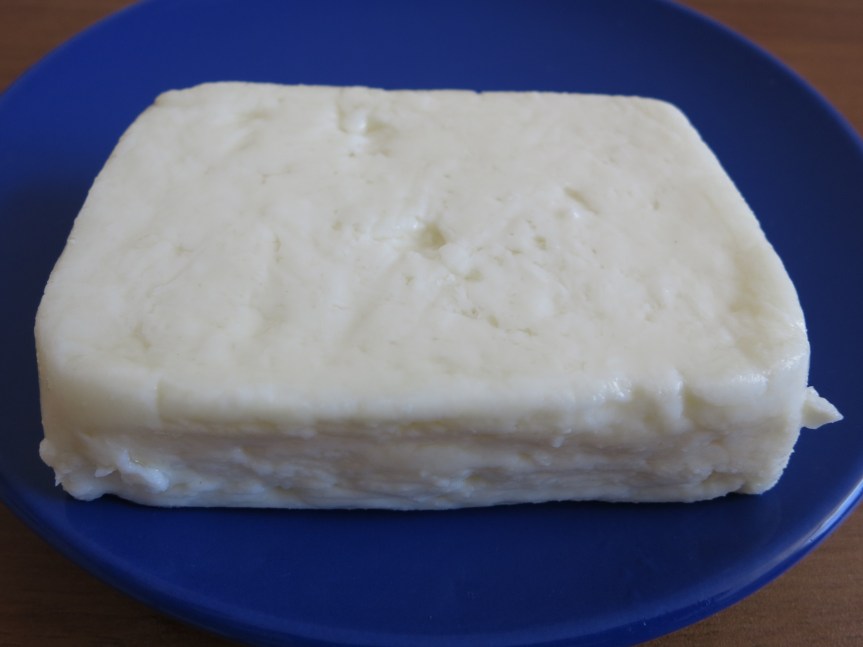
Halloumi, hellim in Turkish, is a salty white cheese with a high melting point that makes it perfect for grilling or frying. It originated in Cyprus – it’s a semi-hard cheese preserved in brine that can be stored for use in the winter months. It’s known in some quarters as ‘squeaky cheese’ because of its tendency to emit a mouse-like sound when you bite into it.

IMG_1337
A slab of halloumi – the cheese that squeaks!

It’s peak season for melons at the moment in the Knidos area so the time was ripe to attempt our own melon cheese combo. With the addition of some halloumi, that had been grilled into submission on the barbecue, and some rocket leaves, fresh mint  and basil, along with bulgur wheat and crushed almonds to add some body, the salad was a winner and set to be a fixture on the Knidos Cookery Club menu.

Ingredients (serves 3-4)

300 g watermelon cut into wedges

300 g honeydew melon cut into wedges

250 g halloumi cheese

One bunch of rocket (approx 125 g)

A handful of fresh mint and basil leaves

100 g fine bulgur wheat

50 g chopped almonds

100 ml hot water

One small lemon, juiced

A glug of olive oil

Method

Soak the bulgur wheat in 100 ml hot water until all the water is absorbed

Tear the rocket, mint and basil leaves and scatter into a large bowl and then add the bulgur wheat. Add the melon wedges and mix well. Dress the salad with lemon juice and olive oil.

Cut the halloumi into slices and grill or fry until going golden-brown on the outside. Arrange the halloumi slices on top of the melon and leaves and sprinkle chopped almonds over the salad. Serve with crusty bread.


A Prickly Pear Pick-Me-Up

25 August 2016

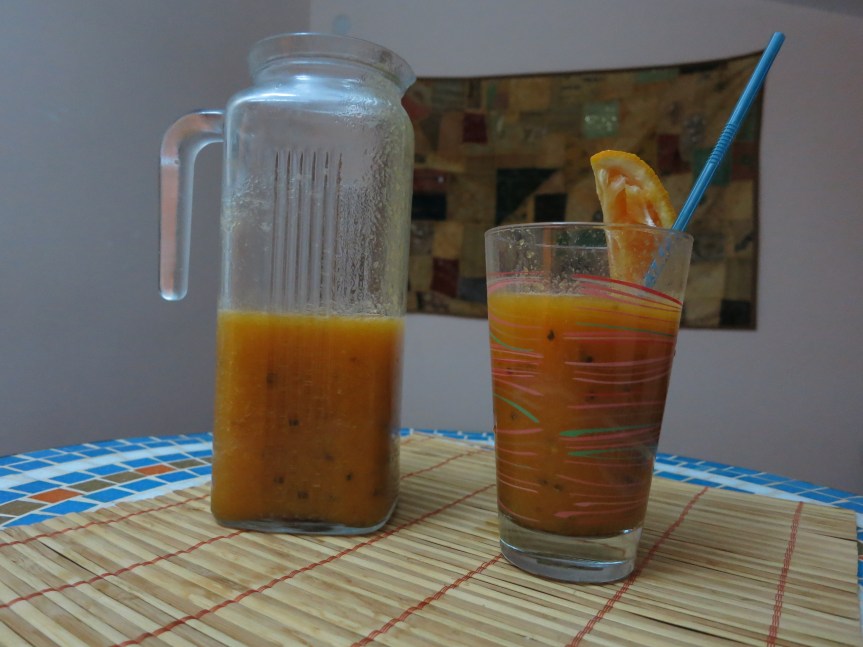
Move aside Bloody Mary – there’s a new hair of the dog on the block: Lord Venal’s Prickly Pear Pick-Me-Up!

IMG_1183
Lord Venal’s Prickly Pear Pick-Me-Up

After overindulging while celebrating Ukraine’s 25th anniversary of independence from the Soviet Union, Knidos Cookery Club was in need of a little kickstart to the day. This was provided by Lord Venal with his patent Prickly Pear Pick-Me-Up.

20160821_114238
Prickly pears growing wild in south-west Turkey

Apparently, the prickly pear, which grows in arid regions on the Opuntia cactus, has properties that make it a perfect antidote to a hangover. This spiny fruit is full of vitamin C, so that may explain some of its health-giving powers.

IMG_1178
Peeling the prickly pear

Care must be taken to peel the pear properly as the spines are painful if ingested. Top and tail the prickly pear then slice the peel off with a sharp knife. Halve the pear and scoop out the seeds, or leave them in for a crunchier cocktail.

Lord Venal recommends the following for his pick-me-up:

Ingredients (makes two large cocktails)

3 prickly pears
200g honeydew melon
100 ml white rum

2 cm fresh ginger
Ice
100 ml cold water

Method

Peel the pears and slice the melon into small cubes. Put into a plastic container with the water and the chopped ginger and use a hand blender to juice the fruit.

Pour in the rum and ice and stir well. Serve with a slice of orange.

Battle of the Beans 2: Land of the Giants

SAMSUNG CSC

Giant beans served up at Aigli restaurant, Kos Town, Greece

21 July 2016

When it comes to food, Turkey and Greece have more in common than they’ll often admit. They share a love for small cups of strong coffee and sweet tooths all around the Aegean Sea love baklava,  made from chopped nuts and layers of filo pastry drenched in honey.

WP_20160720_23_55_39_Pro
Baklava and coffee a la Turca

On the savoury side, no selection of starters is complete without that famous yogurt dip made with cucumber and garlic – known as cacık in Turkish, tzatziki in Greek. A Turk’s ıspanaklı börek is a spanakopita to a Greek.

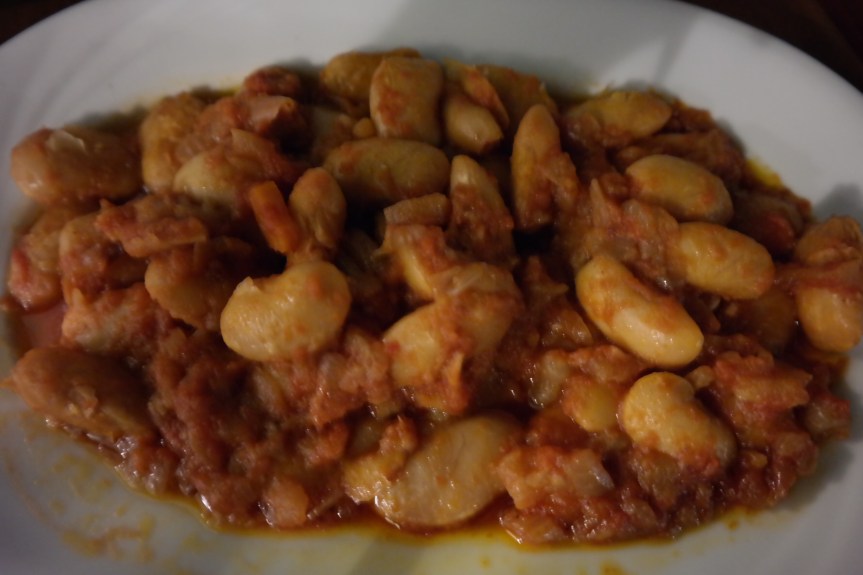
Last week’s Knidos Cookery Club looked at Turkey’s signature bean dish, kuru fasulye, using haricot beans. This week, we will attempt to make the brasher Greek version, gigantes plaki, which uses the biggest beans you can get your hands on and bakes them in a thick tomato sauce in the oven

There’s something about the humble bean that makes it a great comfort food when your body craves something plain and wholesome. After a period of indulging in Greece’s myriad takes on feta cheese: a slab placed atop a horiatiki salad, deep fried in a honey and sesame seed coating or wrapped in layers of flaky filo pastry, feta fatigue can sometimes set in.  If this happens, then there’s nothing like a bowl of giant beans served with a light green salad to bring your appetite back to life.

Butter beans, also called lima beans, work well in this dish, with their insides going soft and mushy while the exterior remains firm. Reserve some of the liquid (around 200 ml) from cooking the dried beans to use for these baked beans with an edge. A secret ingredient that gives this dish it’s distinctive taste is celery.

Ingredients (serves 5-6 generous portions)

250 g dried butter (lima) beans soaked overnight

Two medium-sized red onions

Two small stalks of celery

One or two cloves of garlic

Three medium-sized plum tomatoes

A small bunch of parsley

Pinches of salt, pepper and cumin

One teaspoon of cinnamon

One teaspoon dried thyme

50 g olive oil

Method

Boil the butter beans over a low heat for an hour or so until they are tender but not falling apart. Stick around and every five minutes or so scoop off the foam that forms while the beans are cooking. Drain the beans, reserving 200 ml of the cooking water for use later.

While the beans are cooking, prepare the sauce. Heat the olive oil in a frying pan and add most of the finely diced onion (save some slices to sprinkle over the cooked beans) and the chopped garlic. Fry until translucent and then add the finely chopped celery. Cook for five minutes or so and then add the parsley, thyme and cinnamon and season with salt, pepper and cumin.

Peel the tomatoes (dunking them in boiling water for 30 seconds and then into cold water will help loosen the skins) and chop finely and add to the other ingredients in the frying pan and cook for ten minutes.

Pour the beans into a large baking dish, cover them with the sauce and add the reserved cooking liquid. Bake in an oven pre-heated to 180 °C (gas mark 5) for one hour. The beans should still be fairly firm on the outside but mushy and soft on the inside. Leave in the oven for longer if the insides are firm other than mushy.

Allow to cool for 15 minutes or so and then serve with a green salad and crusty bread to soak up the juices.

SAMSUNG CSC
SAMSUNG CSC

T

Battle of the Beans 1: Small is Beautiful

14 July 2016

When it comes to food, Turkey and Greece have more in common than they’ll often admit. They share a love for small cups of strong coffee and sweet tooths all around the Aegean Sea love baklava,  made from chopped nuts and layers of filo pastry drenched in honey.

On the savoury side, no selection of starters is complete without that famous yogurt dip made with cucumber and garlic – known as cacık in Turkish, tzatziki in Greek. A Turk’s ıspanaklı börek is a spanakopita to a Greek.

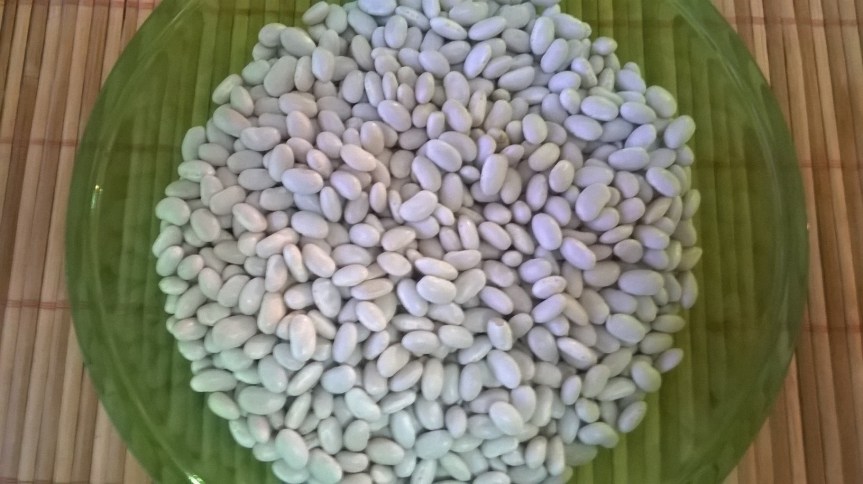
One area where there is some clear water between the Greek and Turkish kitchen is the choice of which bean to combine with a rich tomato sauce. While the Greeks favour dried giant white beans to make the dish known as gigantes plaki, in Turkey this dish is made with the smaller haricot, or navy, bean and is called kuru fasulye. Greece also has a dish made from small white beans called fasolada, but this is more of a soup.

WP_20160703_20_38_46_Pro
Dried white beans awaiting a soaking

This week on Knidos Cookery Club, we’ll be looking at the Turkish version. When thinking about Turkey’s national dish the döner kebab or köfte, meatballs, generally spring to mind, but in fact it is the humble kuru fasulye that takes the honour. It’s the ultimate Turkish comfort food when served up with pilav, a portion of rice cooked with orzo pasta.

IMG_0992
Kindos Cookery Club’s take on the Turkish classic kuru fasulye and pilav

The version that came out of the Knidos Cookery Club kitchen was a bit drier than some found in Turkish cafes. For a saucier version of this dish, add more liquid during the cooking stage; perhaps 100 ml more of water or stock or reserved cooking liquid from the beans.

Ingredients (serves 3-4)

250 g dried white beans (haricot or any small white beans you can find) soaked overnight

Four medium-sized plum tomatoes

One medium-sized red onion

One green pepper (the long, thin banana-shaped one)

3-4 teaspoons red pepper paste

200 ml cooking liquid reserved from the beans (use 100 ml more for a runnier sauce)

Seasoning: pinches  of salt and pepper, a teaspoon of cumin

Fresh parsley to garnish the finished dish

50 ml olive oil

100 g orzo pasta (pasta shaped like grains of rice)

300 g washed rice

Method 

Cook the beans in a pan of water. Bring to the boil, then simmer over a lower heat for up to 45 minutes or so until the beans are cooked but not going soft. Skim off the foam periodically.

Heat the 25 ml of oil in a heavy-based pan and then add the chopped onion. Cook until translucent over a medium heat. Add the diced green pepper and keep cooking for another 4-5 minutes.

Add  the tomatoes – grate them to remove the skins. Add the red pepper paste and season with salt, black pepper and cumin. Pour in the reserved cooking water from the beans and stir. Add the beans, give it a good stir and keep it bubbling away for 15 minutes or so. You want the beans to stay firm.

To make the rice, heat 25 ml olive oil in a heavy-based pan then add the orzo and stir. Cook until the orzo starts to turn a golden colour. Now add the drained, washed rice and keep stirring. When the rice is coated with oil, pour in water or stock so the rice is covered by about 1 cm of liquid. Add salt if required.

Turn the heat down and cook until all the water is absorbed. turn off the heat and allow it to stand for 10 minutes or so and cover with a clean tea towel or some kitchen roll and put the lid on.

Serve the rice and beans together, garnishing the beans with some chopped parsley. have some crusty bread like a baguette on hand to soak up the juices.


The Turk Brekkie Club

7 July 2016

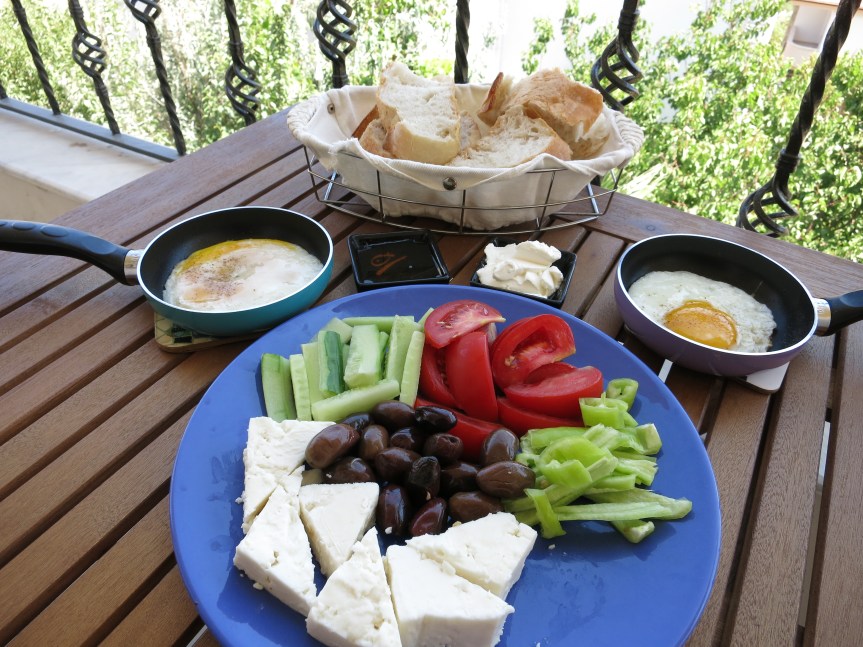
Turkey has turned the first meal of the day into an art form with ever-more elaborate spreads of cheeses, jams, honey, olives, tomatoes, cucumbers, peppers and egg dishes spilling across the table with different regions of the country bringing local additions to the mix.

IMG_0964
Turk Brekkie!

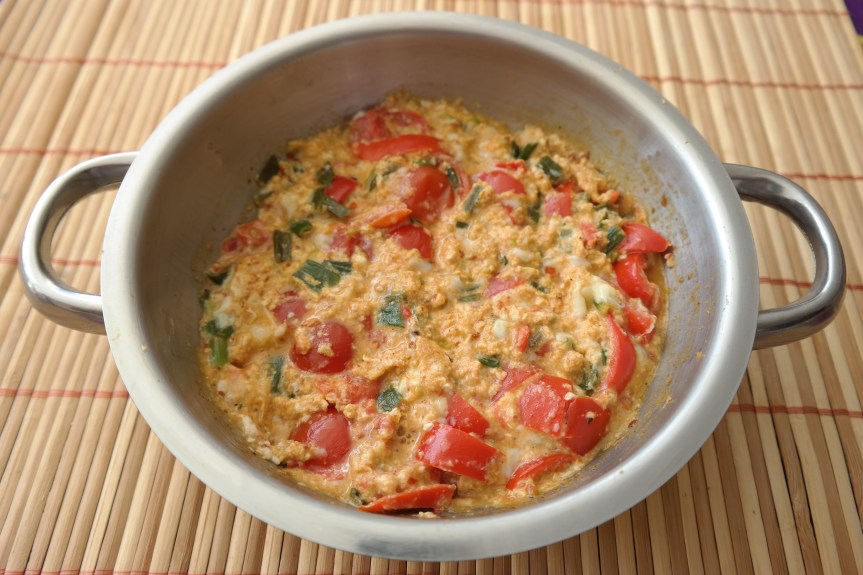
At the heart of the breakfast there is usually an egg dish – often a soft-boiled or fried egg, or a speciality dish such as menemen, a hearty scramble of eggs, onions peppers and tomatoes.

In Datça, the köy, or village, breakfast can come with lashings of local honey and gözleme, a pancake filled with  white cheese and fresh herbs. The Van Breakfast, originating in the east of the country, has conquered the rest of Turkey with its array of 20 or more dishes. It  includes otlu peynir, a herb-infused cheese, martuğa, made from flour, butter and egg, and kavut, a porridge made from cornmeal and ground barley.

SAMSUNG CSC
Menemen

This week on Knidos Cookery Club, we’ll be cooking up menemen. I first encountered this breakfast-time treat when staying in Izmir, on the Aegean coast. Walking out of my hotel, I was met be the mouth-watering aroma of eggs bubbling away with peppers and tomatoes.  Street hawkers, hunched over single-burner camping stoves, were busily whipping up pans of scrambled delight.

Ingredients (for one hearty serving)

Two eggs

One spring onion

One small red or green pepper (if you like it hot, use a chili pepper)

One small tomato

Seasoning: pinches of salt, black pepper, cumin and chill pepper flakes

Parsley for garnishing

Olive oil for frying

Method

Heat the oil in a small frying pan. Add the diced spring onion and cook over a medium heat until starting to brown. Add the diced tomato and diced pepper and season with salt, black pepper, cumin and chill pepper flakes.

Cook until the peppers begin to soften then reduce to a low heat and crack in the eggs. Keep stirring as you would for scrambled eggs. When the egg begins to set, remove from the heat – it’ll carry on cooking in the pan. Garnish with some chopped parsley.

Serve immediately with crusty bread and a plate of white cheese, honey, olives, tomatoes, cucumbers and peppers for the full-on Turk brekkie effect.


Pass the Glasswort

30 June 2016

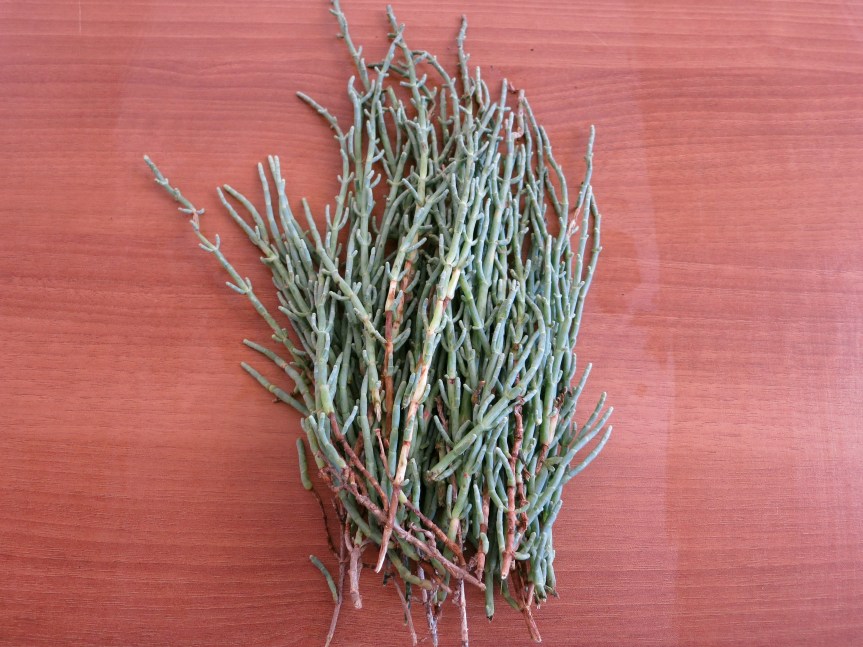
This week on Knidos Cookery Club we’re back in Turkey and we’ll be looking at a plant that grows in abundance on the salty shores of the Mediterranean and Aegean Seas – glasswort, or marsh samphire (salicornia europa). It’s known as glasswort because it used to be used as a source of sodium sulphate in the glass-making process until the nineteenth century.

IMG_0951
Freshly-picked samphire/glasswort

This bright green plant thrives in salty conditions and grows wild along seashores, estuaries and salt marshes all over Europe. It used to be widely eaten in the UK, it’s rich in minerals and has a pleasing flavour of the sea, but has only recently started re-appearing on menus as a much sought after ‘designer vegetable’- you might see it referred to as ‘sea asparagus’.

It’s called deniz börülcesi in Turkey, which translates as sea beans, and is served as a side dish dressed with olive oil, lemon and garlic alongside an array of other starters.

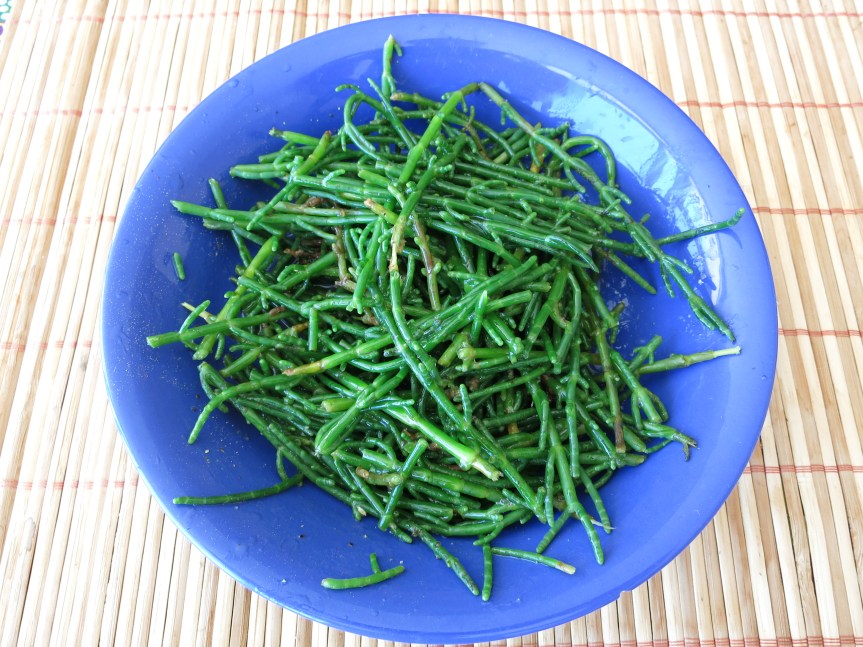
IMG_0954
Blanched glasswort dressed with olive oil, lemon juice and black pepper

For this simple dish, you’ll need around 50-75 g of glasswort for each person. When preparing the glasswort, take care to wash it thoroughly and clean any sand and grit away. Cut off any tough stalks and roots and then blanch it in unsalted, boiling water for three minutes.

Drain the water away and then dress the stems with olive oil, a squeeze of fresh lemon juice and a sprinkling of black pepper – you won’t need to add any extra salt as it will already be salty enough. Serve warm alongside a salad of rocket, tomato, olives and onion and some fresh, crunchy bread for a light but tasty lunch.


You Like Tomato, I Like Ntomato

23 June 2016

Knidos Cookery Club’s fact-finding mission to Greece continues with a look at the contribution of the tomato to local culinary culture.

It may be hard to believe, but it is only in the last two hundred years that the tomato has established itself as a key ingredient in Greek kitchens.

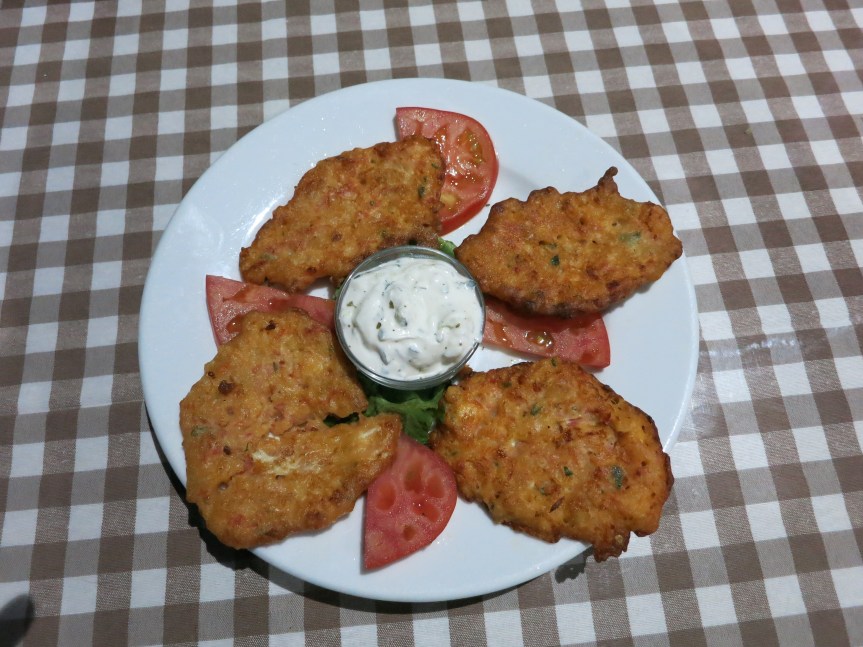
Kos June 2016 025
A plate of tomato fritters from Kos, Greece

It’s found in the classic horiatiki salad that pairs it with cucumber, onion, green pepper, olives and feta cheese. It plays a key role in gemista, platters of vegetables stuffed with rice.

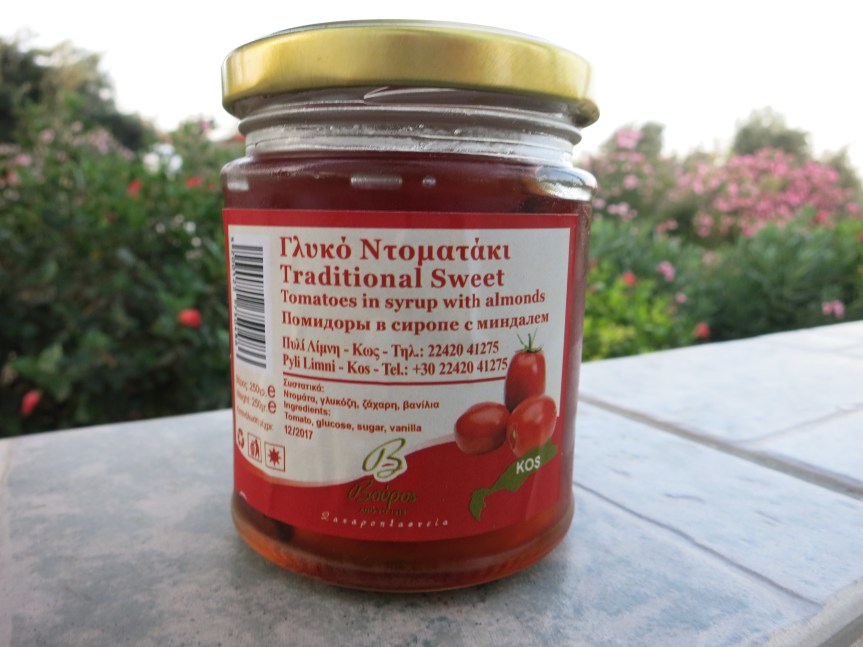
On the island of Kos the sweet local varieties of tomatoes are preserved in syrup or made into jam that makes an orange marmalade rival for a slice of toast.

Kos June 2016 041
Tomatoes preserved in syrup with almonds from Kos, Greece

In Greece the tomato is called ντοματο, pronounced with a ‘d’ sound at the beginning. Modern Greek has no single letter for the ‘d’ sound and uses the letters for ‘n’ and ‘t’ to make this sound.

This week Knidos Cookery Club is serving up tomato fritters, a close cousin of Turkey’s mücver. We’ve used plum tomatoes as they tend to be a bit less juicy than other varieties. The mix needs to find a balance between not being too dry or too wet for the fritters to hold together in the pan.

Ingredients (makes 10-12 fritters)

500 g plum tomatoes

One medium-sized red onion

Fresh herbs – small bunches of parsley, basil and mint or a teaspoon of dried parsley, basil and mint

100 g plain flour

Seasoning mix – pinches of salt and pepper, one teaspoon of cinnamon and one of cumin

Olive oil for frying

Method

Grate the tomatoes and mix with the herbs and flour until you have a mix that is neither too dry nor too wet.

Heat the oil in a frying pan and when hot add fritters made into walnut-sized shapes and flatten with a fish slice or spatula.

Cook on both sides until golden brown in colour and serve with a sauce of natural yogurt, grated cucumber and garlic.