Say Aloo to Broccoli

28 February 2019

After touring through North America and Mexico, we’re finally back at KCC’s winter HQ in Almaty, Kazakhstan. We’ve been craving for something spicy and Asian and, with broccoli in season, decided on this take on the Indian classic aloo gobi.
20190223_215808.jpg
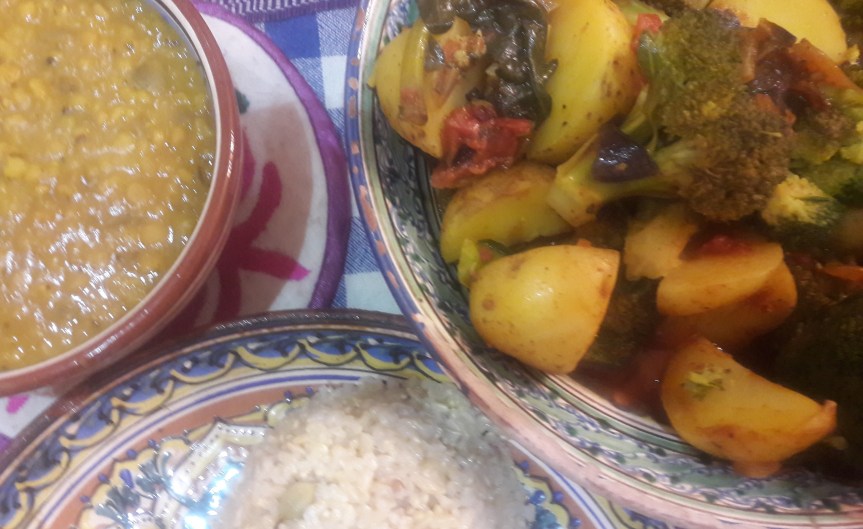
Aloo broccoli, rice and dal

You’ll probably be familiar with aloo gobi, which combines potato and cauliflower in a spicy sauce, if you’re a fan of food from the Indian sub-continent. Having eaten the cauliflower version numerous times, we started to wonder why we’d never come across the dish made with broccoli instead.

It turns out that broccoli is a fairly recent arrival to the tables of India – it was first brought to the country in the early 1990s by a farmer called Jitendra Ladkat, according to this article. So, therefore, there’s no great surprise that it does not feature as a mainstay of Indian cooking.

We served up our aloo broccoli with a split pea dal, brown rice and some flat bread and can thoroughly recommend it as an alternative to the tried and tested aloo gobi.

Ingredients (for 3-4 servings)

  • 400 g small potatoes
  • 400 g broccoli florets
  • One small red onion
  • 200 g tomatoes
  • 50 ml cooking oil
  • Spices: one teaspoon each of cumin seeds, coriander, chilli powder, turmeric, six cloves, one star anise.

Method

  • Cut the potatoes into quarters and put into a pan of boiling water and simmer over a low heat for five minutes, then add the broccoli, cover the pan and cook for another five minutes.
  • Heat the oil in a heavy-based pan and add the cumin seeds, cloves, star anise and cinnamon stick. After five minutes add the chopped onion and cook over a medium heat. Add the coriander, chilli powder and turmeric and mix well.
  • Add the tomatoes and cook for a few minutes over a low heat and then add the cooked broccoli and potatoes. Mix well and cook for ten minutes, stirring occasionally.
  • Serve with rice, dal and flat bread. The dish tastes even better if left overnight and reheated as this allows time for the flavours to blend.

Artful Artichokes Meet Crafty Celeriac in Solstice Showdown

20 December 2018

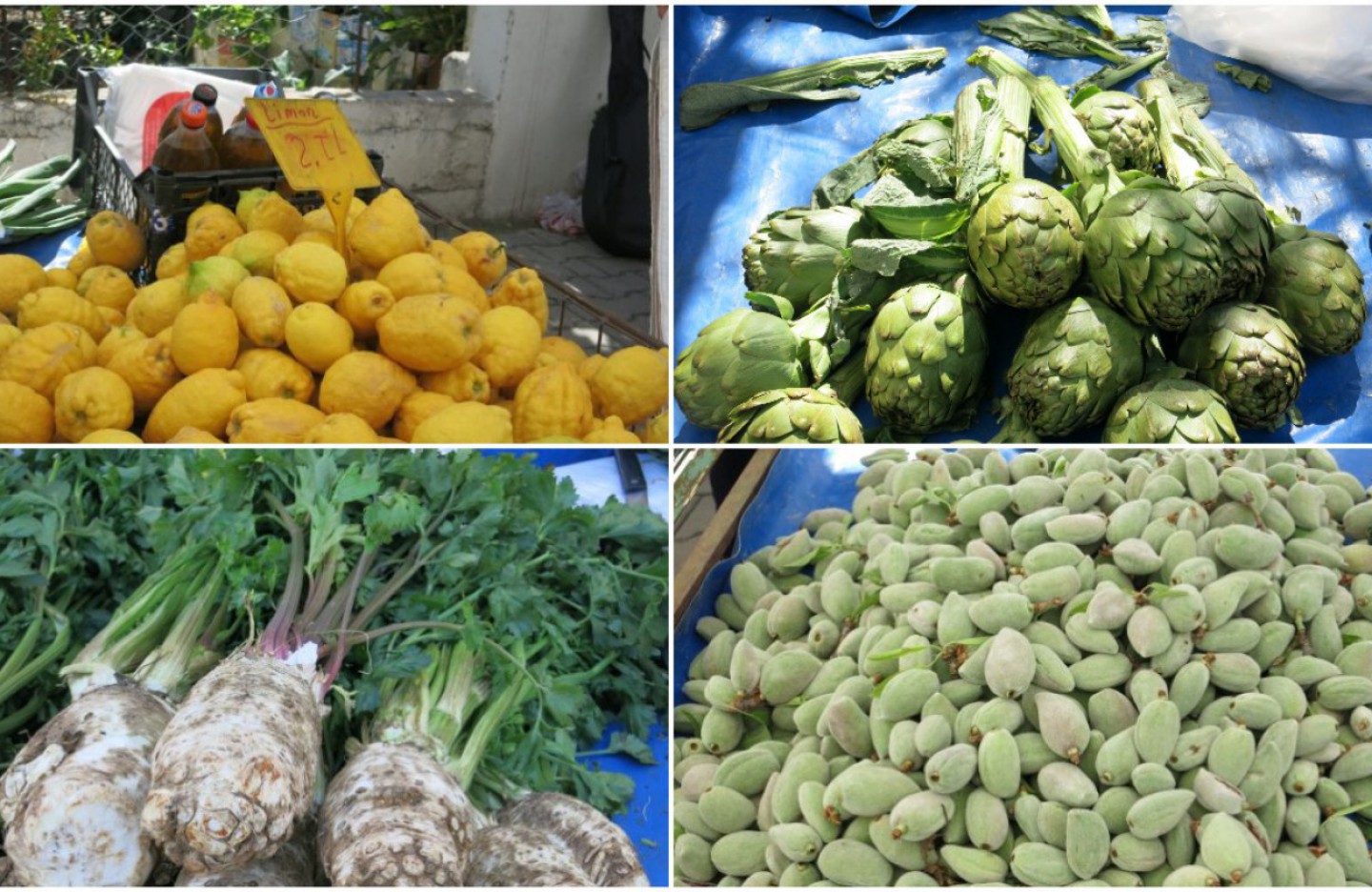
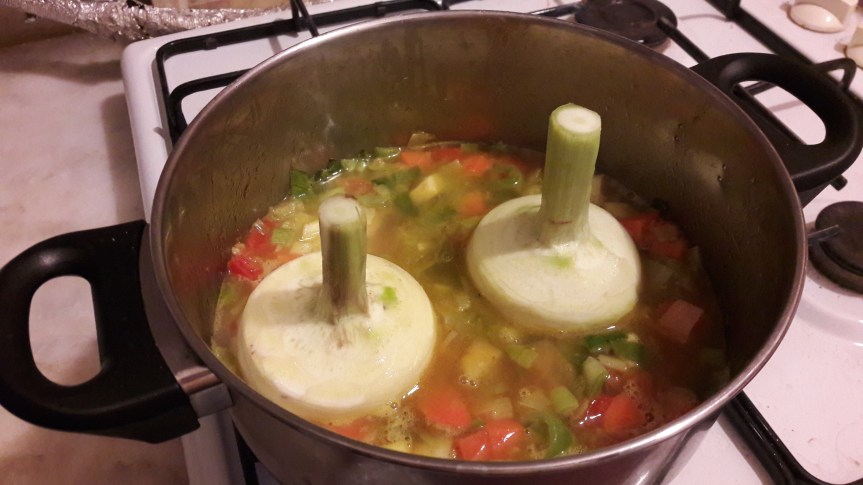
To celebrate the Winter Solstice, we’re combining two of our favourite oddball vegetables  – globe artichokes and celeriac. For the longest night of the year, we’ve come up with phallic artichokes steamed in a hearty winter root vegetable broth – Knidos Cookery Club’s take on the Turkish classic Zeytinyağlı Enginar, a dish of artichokes served with cubed vegetables cooked in olive oil and lemon juice.

20181212_221549
An artful artichoke

To get to the heart of the matter, artichokes need a bit of preparation to reveal the edible heart of the vegetable. If you don’t have a neighbourhood artichoke peeler on the corner of your street, as we do in Istanbul, than check out this link from The Spruce Eats website for some useful tips on removing the fibrous, inedible choke.

20181212_203036
Let the simmering begin

Celeriac, with its bulbous appearance, is an often overlooked root vegetable. It’s nutty taste, with a hint of celery, makes a delicious addition to soups and stews and it’s also great served raw in salads. We’ve used it as a replacement for potato in this Turkish favourite.

Ingredients (for four servings)

  • Four artichoke hearts
  • Two leeks
  • Four small carrots
  • Two small celeriac bulbs
  • Two medium-sized tomato
  • Four green peppers
  • Juice of half a lemon
  • 50 ml olive oil
  • 500 ml cold water
  • Two teaspoons garam masala (or curry powder)
  • Pinch of black pepper

Method

  1. Heat the oil in a heavy based-pan (with a lid) and and  the finely sliced leeks and peppers and cook over a medium heat for five minutes. Cube the carrots and celeriac and stir into the leek and pepper base and cook for a further five minutes. Add the chopped tomato, garam masala and black pepper and cook for five more minutes, stirring frequently.
  2. Pour the water over the vegetables, add the lemon juice and place the artichoke hearts on top of the bubbling veggies. Put the lid on the pan and cook over a low to medium heat for 30 minutes.
  3. Put one artichoke heart on each plate and pour the vegetables and cooking liquid over the top and around the artichoke and serve hot with crusty bread.


Piccata: a Zingy Sauce to Pique your Interest

31 May 2018

As the market stalls overflow with fresh spring produce, this time round on Knidos Cookery Club we’ve selected some zingy greens to make a zesty, lemony piccata sauce to go with pasta and some other leafy greens.

20180524_181759
KCC’s Chick Pea Picatta on a bed of sorrel

The piccata sauce comes from Italy and is a lemon-fuelled accompaniment to a variety of dishes. The name derives form the Italian word for ‘annoyed’, piccato, and it is from the same root as the word used in English expressions such as ‘a fit of pique’ or ‘to pique your interest’.

We’ve used jusai, garlic chives, to add more flavour to the sauce, along with white wine, capers and lemon zest and juice to give it a picquant bite. Add some chick peas and serve on a mound of pasta placed on top of a bed of fresh sorrel leaves for a tangy treat.

Ingredients (serves 3-4)

250 g cooked chick peas

25 ml olive oil

50 g garlic chives

2 tablespoons flour

100 ml white wine

500 ml vegetable stock

12 capers

Zest and juice of one lemon

1 teaspoon dried thyme

black pepper

250g dried pasta (we used spirals) cooked according to instructions on pack

Bunch of fresh sorrel

Method

Heat the olive oil in a heavy-bottomed pan over a medium heat and then add the chopped garlic chives. Cook for five minutes and then add the flour and stir well. Pour in the wine and mix to a paste and then slowly add the stock, stirring all the while.

Simmer over a low heat until the sauce starts to thicken, then add the chick peas, capers and thyme and cook for three minutes. While the sauce is simmering, cook the pasta. Grind a generous amount of black pepper into the sauce along with the lemon juice and zest.

Tear up the sorrel leaves and scatter over a plate. Place a pile of pasta in the middle of the plate on the leaves, and then pour the piccata sauce over the pasta and serve immediately.


Leeky Pastitsio

5 April 2018

We’re back and, with Orthodox Easter just around the corner, this time round on Knidos Cookery Club we’ll be making our own version of pastitsio, a Greek take on Italy’s lasagne. Our version comes with a red wine, tomato and lentil ragu and a leek infused béchamel sauce.

leeky pastitsio
KCC’s Leeky Pastitsio

A few weeks ago, I left some beans soaking overnight and when I checked them in morning the pan was mysteriously filled with soaked penne rigate pasta! A quick look online to determine if the pasta was usable led me to this post on the Ideas in Food blog, and this confirmed pre-soaking in cold water as an effective way of preparing dried pasta.

20180402_204515
Leeky pastitsio and salad

Pastitsio is one of those dishes that tastes great straight from the oven but improves with age as the cinnamon, nutmeg and other flavours have time to blend properly. It works well heated up the next day or even tastes good cold. We served ours with a crisp salad of rocket leaves, carrot. radish and tomato.

Ingredients (For 3-4 hearty servings)

200 g penne rigate pasta

For the ragu:

25 ml olive oil

4 spring onions

200 g cherry tomatoes

2 tablespoons tomato paste

100 g red lentils

175 ml red wine

1 teaspoon of cinnamon, cumin, black pepper and red chilli flakes

For the Béchamel sauce:

50 ml olive oil

250 g leek

3 tablespoons flour

400 ml milk (dairy or non-dairy)

60 g cheese (dairy or non-dairy)

One teaspoon of nutmeg

Method

Soak the pasta in a pan of cold water for two hours and while it’s soaking cook the red lentils in 200 ml water until mushy and all the liquid is absorbed. Then prepare the ragu and after that the béchamel sauce.

For the ragu, heat the oil in a heavy-based pan and then fry the chopped spring onions for a few minutes. Add the quartered cherry tomatoes, tomato paste and spices and mix well. Add the wine and when it starts to bubble add the cooked and drained lentils. Cook for ten minutes over a low heat.

For the béchamel sauce, heat the oil in a heavy-based pan and then add the sliced leeks and cook for five minutes over a medium heat. Add the flour and mix well and then ad  the milk slowly, stirring continuously with a wooden spoon. Add half the grated cheese and nutmeg and cook until the sauce is just starting to boil, stirring all the while.

Layer half the soaked penne in the bottom of an oven proof dish and pour the ragu over. then layer the rest of the pasta on top of this and pout the béchamel sauce over. Add the remainder of the grated cheese and bake in a pre-heated oven at 200c for thirty minutes.

Serve straight away with a green salad or let it sit overnight in the fridge for a tastier pastitsio that can be served hot or cold.

Getting Down to the Nuts and Roots

26 January 2017

This time round on Knidos Cookery Club we’re getting back to the roots with a comforting winter soup made from some of our favourite root vegetables, a leek or two and some roasted chestnuts.

20170124_204349
Roasted chestnuts – a winter treat

One of the big events in the world of Knidos Cookery Club so far in 2017 has been the relocation of Datça’s weekly market to a new, purpose-built site. Previously, when the market came to town on Friday and Saturday, it would spill down the hill in the centre of town, causing considerable congestion with the stallholders looking for parking spots and the customers squeezed in-between.

The new site has a covered area for the local fruit and vegetable growers with the other stalls – spices and nuts, clothes, household goods etc., setting up around the covered market. It’s a lot more user-friendly, with plenty of space for shoppers and stall holders.

The last few visits to the market have entailed searching for some of our regular suppliers in the new layout, and we’re pleased to report that most of them have been accounted for!

20170108_222106
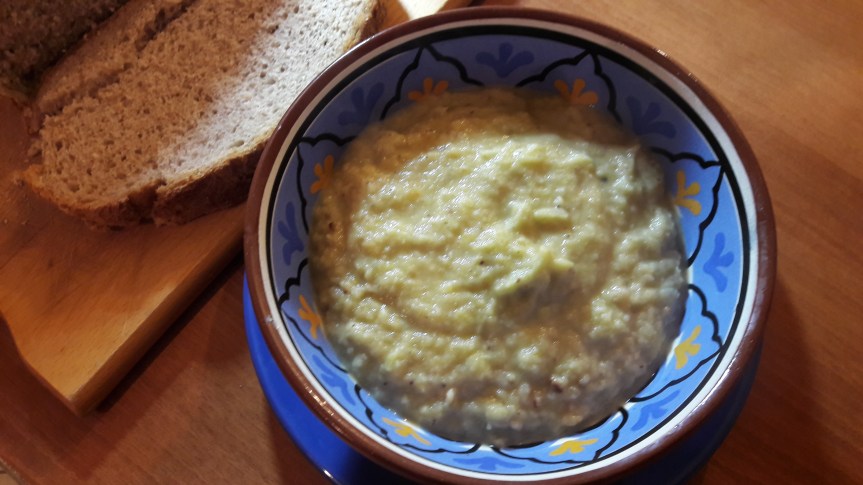
A warming bowl of rooty, chestnut pureed soup

In season at the moment are chestnuts – anyone who’s visited Istanbul in winter will probably remember trying fresh roasted chestnuts while on the move around the centre, a delicious snack that epitomises the city in the colder months of the year to me.

There were also root vegetables aplenty – including black carrots (these root vegetables were first cultivated in Afghanistan and were yellow and purple in colour) and celeriac, lengthy leeks and lashings of oranges and lemons. So this week we’ll be making a rooty nutty soup containing celeriac, potato, carrot, leek, shallots and chestnuts.

Ingredients (serves 3-4)

75 g shallots

250 g leeks

250 g celeriac

one medium-sized potato

100 g carrot (black if you can find them!)

500 ml vegetable stock

25 ml olive oil

150 g chestnuts

one teaspoon dried thyme

salt and pepper for seasoning

juice of one lemon

Method 

Fry the finely sliced leeks and chopped shallots in the olive oil, which has been seasoned with dried thyme, over a medium-high heat until just beginning to brown. Peel and dice the celeriac, potato and carrot into 1 cm cubes  and add to the pan of leeks and shallots.

Stir in well to coat the cubed root vegetables with oil and thyme and then add the stock and the juice of the lemon and simmer for 20 minutes over a low-medium heat. While this is bubbling away, score the outside of each chestnut with a cross shape (on one side) and roast the chestnuts in an oven pre-heated to 220 c /gas mark 7.

Check the chestnuts after 20 minutes or so – if they are easy to peel and are roasted sufficiently, then they are ready for use. If not, check every 5 minutes until the shell comes off easily.

Add the peeled chestnuts to the soup pan, stir well and season with salt and pepper to taste. Then use a hand blender to make a smooth, thick soup and serve straight away with hunks of wholemeal bread.

Rip-Red Risotto

17 November 2016

This week on Knidos Cookery Club, we’re featuring beetroot as the basis for a rip-roaringly red risotto.

In Turkish, if you want to say something is, for instance, very blue, then you add a prefix. By adding mas to mavi (blue) you end up with masmavi.  As an example, to talk about the deep blue sea you could say masmavi engin deniz.

img_2365

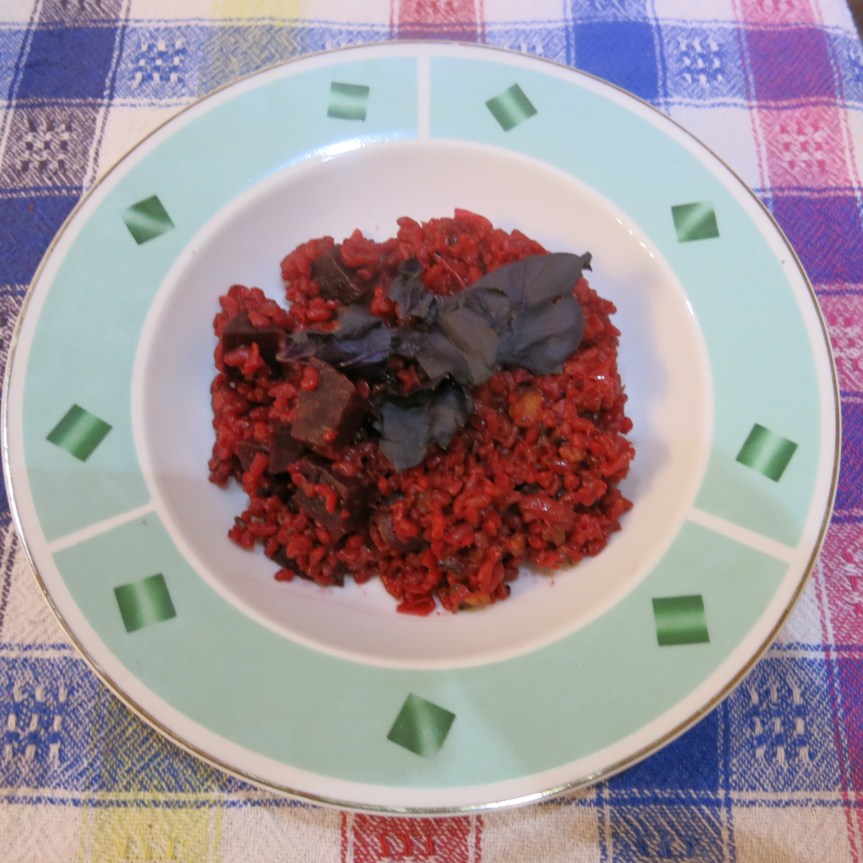
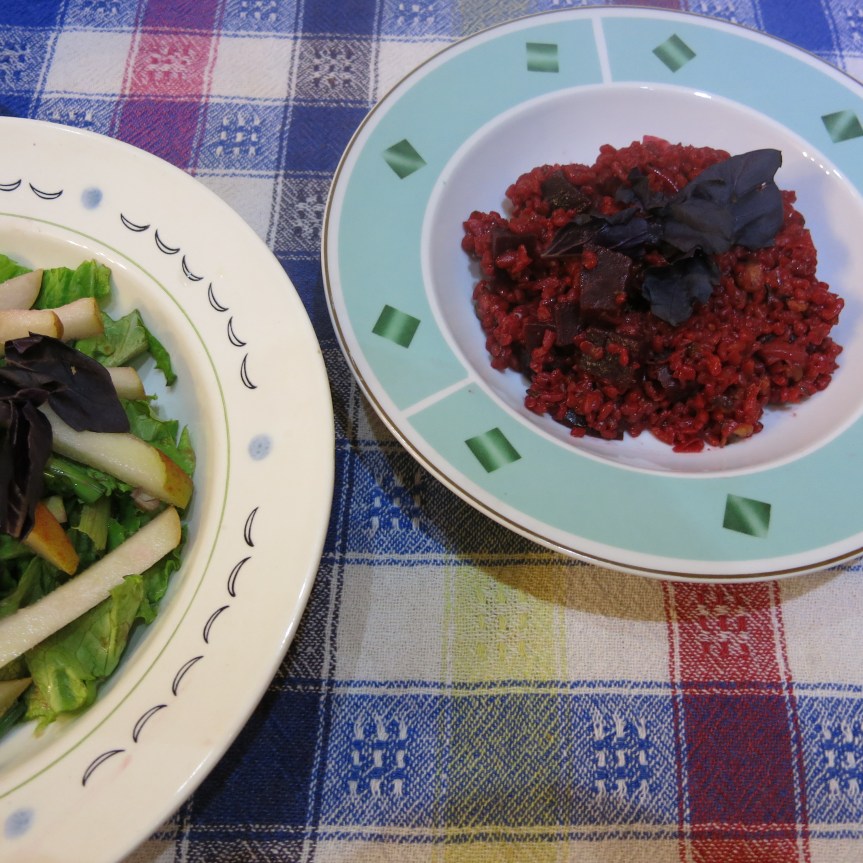
A rich red colour, such as that imparted by beetroot, would come out as kıpkırmızı, or, in English, rip-red, which seems a perfect way to describe out beetroot risotto. To add a Turkish-edge to the dish, we used coarse bulgur wheat, but you can use arborio rice if you prefer.

img_2363

We added some walnuts to the mix, as they combine so well with the sweet edge of beetroot. This is quite a common combination – in Georgia walnuts are blended with grated beetroot to make pkhali.

Ingredients (serves 3-4)

  • 250 g  whole, uncooked beetroot
  • 50 g walnuts
  • 100 g coarse bulgur wheat
  • 150 ml red wine
  • 500 ml beetroot cooking water
  • 25 ml olive oil
  • one medium-sized onion
  • one garlic clove
  • one teaspoon dried thyme
  • one teaspoon dried rosemary
  • one teaspoon cumin seeds
  • black pepper and salt to taste
  • sprig of fresh basil leaves

Method

  • Boil the washed but unpeeled beetroot in a saucepan for 30 minutes. Put the beetroot in cold water, keeping the water you used to cook the beetroot separate, and then peel and top and tail the beetroot when cool. Put to one side.
  • Heat the olive oil in a heavy-based pan and add the cumin seeds. Cook until the seeds are beginning to burn and then add the diced onion and garlic, dried thyme and rosemary and season with salt and pepper. Cook until the onion is going translucent.
  • Add the washed bulgur wheat and stir to coat the grains. Add the glass of wine and stir occasionally until the liquid is absorbed. Add a third of the vegetable stock and keep cooking and stirring until the liquid is absorbed. Add more stock until the bulgur wheat is cooked and the risotto has a creamy consistency and then turn off the heat.
  • Meanwhile, gently toast the walnut pieces in a small frying pan and chop the beetroot into small, 1 cm cubes. Mix the beetroot and toasted walnut into the bulgur wheat risotto.
  • Garnish with fresh basil leaves -green ones make a better contrast to the red of the risotto, but we could only find the mauve coloured variety. Serve with a green salad.


Riding the Bread Bowl Zeitgeist

3 November 2016

Ok, so we’ve all heard of dunking bread into a wholesome bowl of soup, but, until last week, Knidos Cookery Club had not come across soup being served in a bread bowl. It’s a craze that had seemed to pass us by.

On a chilly night during a recent trip to Reykjavik, Iceland, we found a restaurant that was serving just two dishes – asparagus soup or a thick, meaty broth, both served in a bread bowl. We were instant converts.

20161030_160310A few days after this, a restaurant was spotted in Pendik, a district of Istanbul in Turkey, that had a poster for Ekmekte Çorba, yes, that’s right, soup in a bread bowl. Looks like there could be a craze starting here so let’s chase the zeitgeist and try and recreate this in the Knidos Cookery Club kitchen.

Wondering what to do with all that pumpkin left over from Halloween? Why not turn it into a hearty soup that should pass the bread bowl test – you don’t want your soup to be too liquid as there’s a danger of ending up with a soggy mess of soup and bread. We’ve thickened ours with red lentils and bulgur wheat, so combined with the bread, this one’s going to be a real winter warmer.

Ingredients: (serves 3-4)

four medium-sized round brown loaves

300 g pumpkin (save the seeds for roasting)

50 g red lentils

50 g coarse bulgur wheat

one medium-sized pear

one medium-sized onion

one garlic clove

750 ml vegetable stock

sprinkle of dried sage

one teaspoon of dried thyme

two bay leaves

one teaspoon of cumin seeds

one cinnamon stick

half a teaspoon of turmeric

Method:

Cut the pumpkin in half and remove the seeds, retain them to use later. Peel the pumpkin and dice into 1 cm cubes. Place the pumpkin cubes in a baking dish, pour in 50 ml of olive oil and sprinkle the sage and thyme over the pumpkin and mix well.

Bake in a pre-heated oven (220 c /gas mark 7) for 45 minutes or until the pumpkin mashes easily with a fork. While the pumpkin mix is cooking, put the seeds on some tin foil and roast in the oven until starting to char a little bit.

Finely chop the onion and garlic and fry in 50 ml olive oil over a medium heat. As they’re cooking add the cumin seeds, turmeric and cinnamon stick and bay leaves. Cook until the onions are starting to brown.

Chop up the pear finely and add with the roasted, mashed pumpkin to the onion mix and pour the stock over the top. Bring to the boil and then reduce the heat and add the bulgur wheat and red lentils. Cook over a medium heat for thirty minutes or so until the bulgur and lentils are beginning to go a bit mushy.

Slice the top off the loaf and scoop out the contents, leaving around 1 cm of bread as a lining for the bowl. Pour the soup into the bread bowl, garnish with roasted pumpkin seeds and serve immediately. Use the top of the bread to dip in the soup and eat the bowl as you go, depending on how hungry you are!