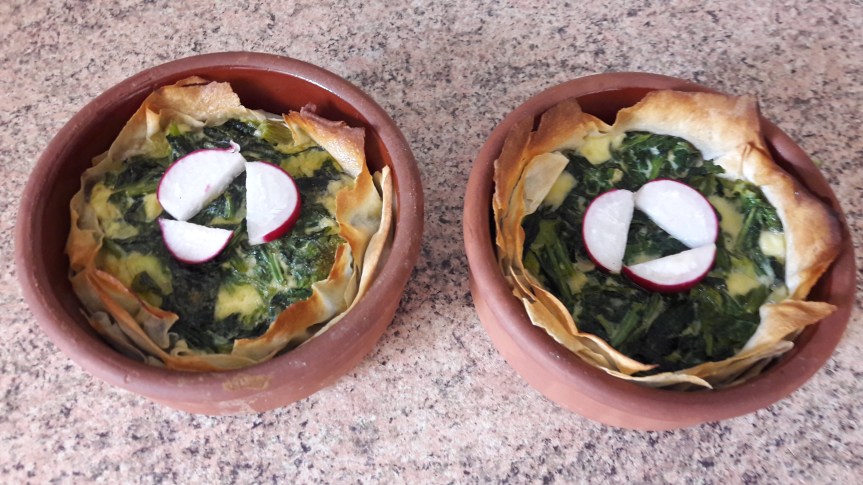
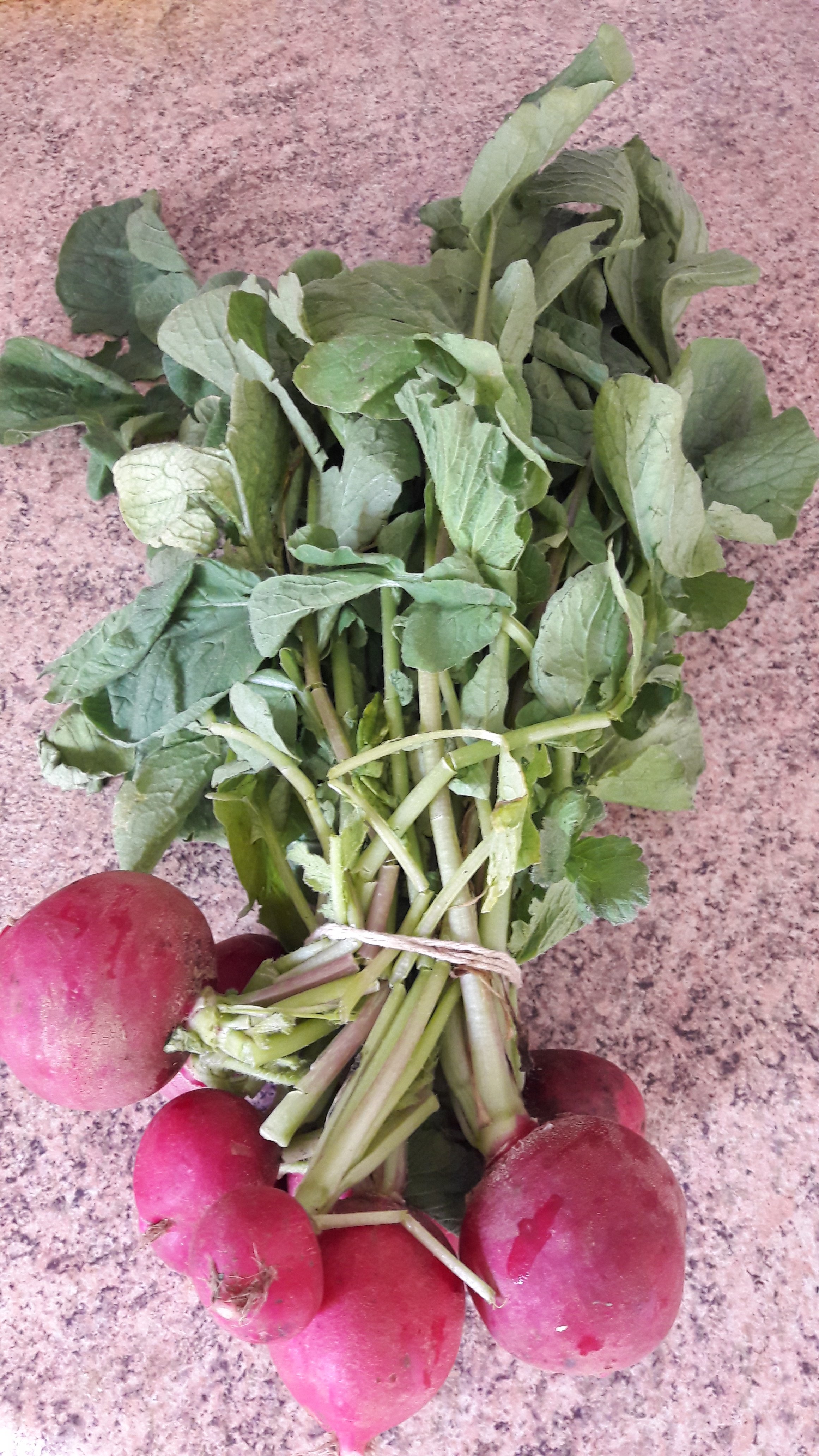
In keeping with the ‘Waste not, want not‘ mantra, this week we’ll be using some radish greens in a mini quiche.
Often discarded, these peppery leaves taste great when fried up with some spring onion, garlic and a dash of soy sauce.
Ingredients ( makes four mini-quiches)
150 g radish leaves
1 radish (for decoration)
2 spring onions
1 garlic clove
Dash of soy sauce
60 g crumbly white cheese
2 eggs
25 ml olive oil
150 g filo pastry or shortcrust pastry
Method
Saute the chopped onions and garlic in a little olive oil in a heavy-based pan for 2-3 minutes, add a dash of soy sauce and then add the radish leaves and cook for another 2-3 minutes until the leaves start to wilt.
Allow the mix to cool for ten minutes then mix in the eggs and cheese. Prepare cases in small baking dishes with the filo pastry, brushing each filo leaf with olive oil.
Pour the mix into each pastry case to half way and then bake for 20 minutes in an oven pre-heated to 180 c.
Garnish with radish slices and serve with a green salad laced with more sliced radish!
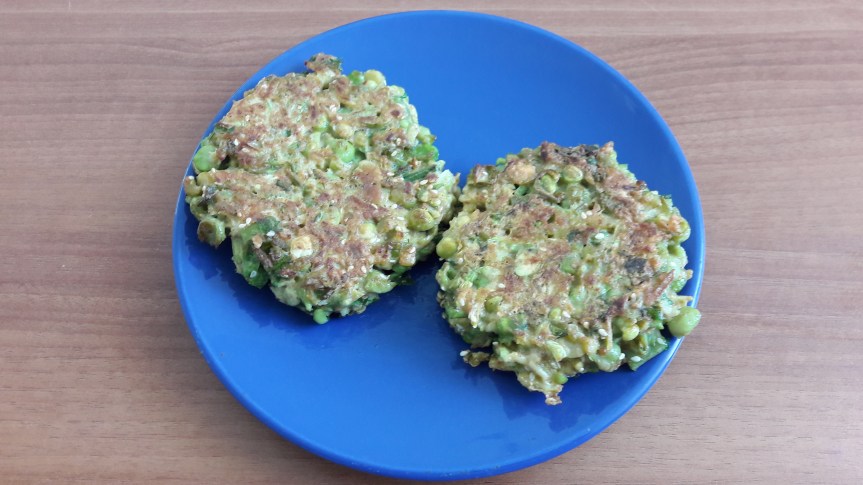
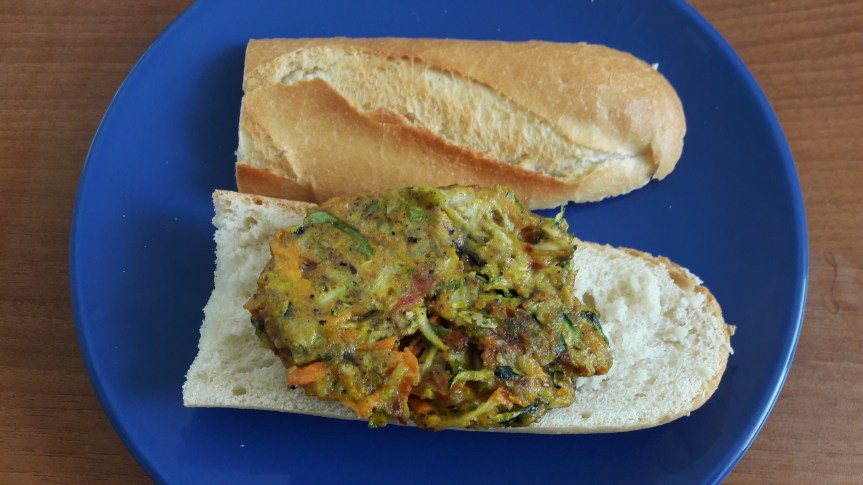
This time round on Knidos Cookery Club we’re revisiting an old favourite – mücver, Turkey’s tasty courgette fritter.
Could this be called a pea fritter?
The mücver usually served up in Turkish eateries are made from grated courgettes, so we’ve decided to spice up this old favourite by adding some other ingredients. Why not try them with fresh peas or grated carrot? Mushrooms work well, as do green beans.
Putting some carrots in the mix
You can even add all these ingredients to the basic mix, chuck in a few chopped almonds or walnuts and, hey presto, you have a chunky veggie nut burger!
Serve the fritters in a pita, on a baguette, in a burger bun, rolled up in flat lavaş bread or just plain with a salad and condiments of your choice.
Ingredients (for around 8 fritters)
Two medium-sized courgettes
One small onion
One egg (or 15 ml of olive oil for vegan version)
Choose one or more from: 100 g chopped mushroom / grated carrot / peas (fresh if you have them, otherwise frozen or tinned) / sliced green beans (use 50 g of each if using more ingredients)
50 g of plain flour
Bunch of parsley, mint and/or dill (if you like that sort of thing)
Dried herbs to taste
A generous sprinkle of sesame seeds
An optional dusting of chili flakes and grated cinnamon
Salt and pepper
A dash of olive oil for frying
Plain yogurt for serving
Method
Grate or chop up the courgettes and the extra of your choice (mushroom, carrot peas, green beans or even all three) finely and mix with the chopped onion. Add fresh parsley, mint and/or dill, dried herbs, chili flakes, cinnamon, sesame seeds salt and pepper and blend well.
Make a well in the centre of the mix and break the egg into it. Sprinkle in the crumbled white cheese. Mix well. (Vegan readers should skip the egg and add 25 ml of olive oil instead)
Gradually add the plain flour and blend until the mixture has quite a thick consistency – you don’t want it to be too wet and sloppy.
Drizzle some olive oil in a frying pan and put over a medium heat.
Place golf ball-sized scoops of the courgette mixture into the pan and flatten with a spatula or fork.
After a few minutes turn the fritter. Keep cooking until both sided are a golden-brown colour.
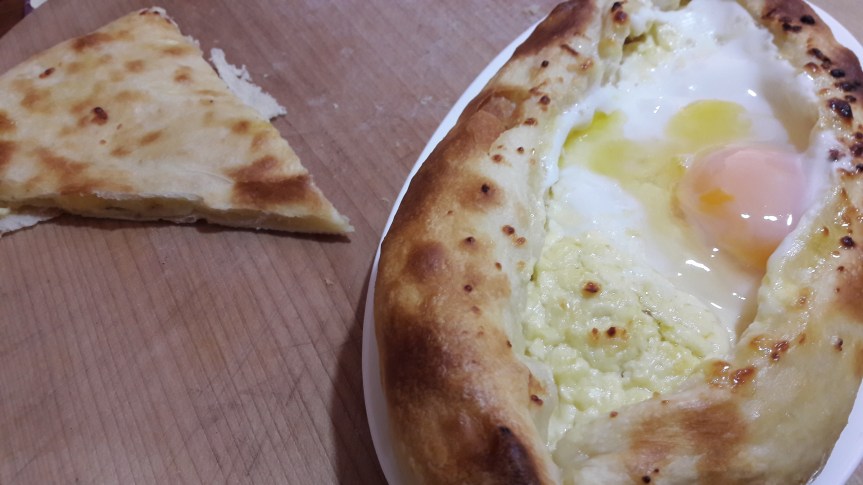
This time round on Knidos Cookery Club we’re off to Turkey’s far north-east corner and across the border into Georgia. This mountainous country shares some dishes in common with the people of Turkey’s Black Sea coast such as the bread and cheese concoction known as khachapuriin Georgia, pide in Turkey.
Georgian dishes rely on both fresh and dried local ingredients. The diet is generally meat-heavy – this point was crudely pushed home last year when outraged sausage-wielding activists attacked Kiwi Café, a vegan café in Georgia’s capital Tbilisi, throwing chunks of meat and fish at diners, but there are lots of options for non-carnivores as its cuisine also features a wide range of veggie dishes.
Georgia’s location on a number of east-west trade routes heading through the Caucasus Mountains has seen different influences make their mark on its eating culture over the years, with spices playing a key role.
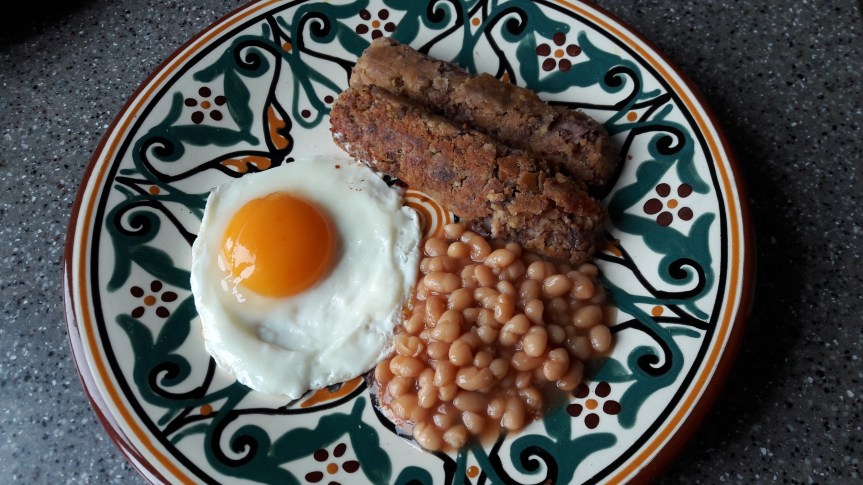
KCC’s new brunch treat –lobiani sausagiani
Dried beans, or lobio, walnuts, pomegranates and spices like coriander and blue fenugreek give a distinctive taste to the local fare. Cheese also features strongly on the Georgian table, from the versatile sulguni, an elastic, brined cheese akin to mozzarella, that can be deep fried to the fresh white imeruli cheese.
Georgia’s dried red beans are made into a dish calledlobio, that, depending on the region of the country it’s prepared in, can be like a soup, a stew or re-fried beans. It is usually cooked in a clay pot and sometimes comes with a thin layer of bread as a cover on top. Mashed red beans are also cooked inside bread in a dish called lobiani.
We’ve decided to do our own take on a lobio dish, and to get our own back on those meat-wielding activists, by making a Georgian-influenced veggie sausage, to be served as part of a brunch or main meal.
Ingredients (makes 8-10 sausages)
200 g dried red beans, soaked overnight
100 g red lentils (one cup)
150 g fine bulgur wheat (1.5 cups)
50 g chopped walnuts
1 teaspoon dried coriander
1 teaspoon cumin
1 teaspoon black pepper
1 teaspoon red chili flakes
25 ml olive oil for frying the sausages
1 tablespoon plain flour
Method
Soak the beans overnight and then cook for an hour or so over a low heat until the beans are cooked and beginning to break up. Drain and reserve the cooking water , then mash the beans roughly.
Wash the lentils until the water goes clear and then place in a pan with the water from the cooked beans – add more water so the lentils are covered by 2 cm of liquid. Bring to the boil and simmer over a low heat for 20 minutes or so. The lentils should be going mushy and there should be about 1 cm of water covering the lentils – add more water if necessary.
Add the washed bulgur wheat to the cooked lentils and blend well. Allow to stand for 30 minutes or so and then add the toasted, chopped walnuts and the mashed beans. Then grind the spices together and add to the mix. Leave overnight in the fridge to allow the flavours to blend.
Sprinkle some flour on a chopping board and roll lemon-sized portions of the mix into sausage shapes, coating evenly with flour. Fry the sausages in the oil until browned on the outside and then serve with baked beans and a fried egg for a top brunch.
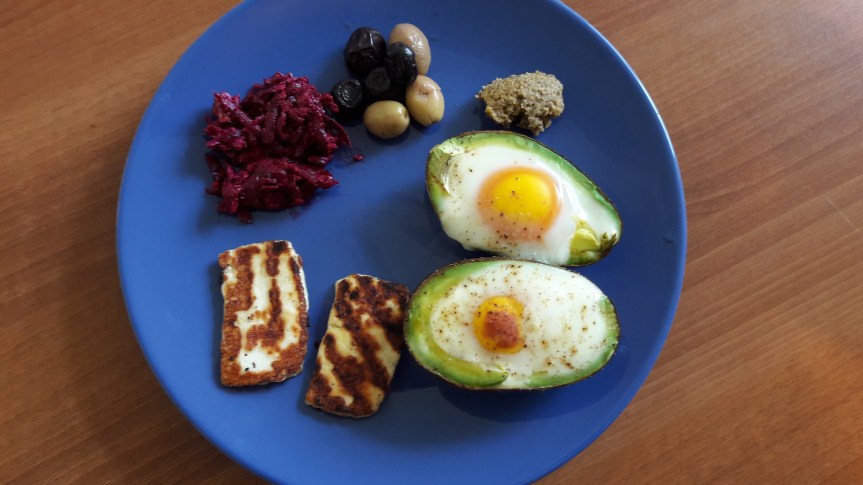
This week at Knidos Cookery Club we have a guest post that combines two of our all-time fave foods: avocado and egg, dished up with olives, beetroot with walnuts and halloumi cheese.
Avocados love the mild winters of the Knidos region as the shores of the Mediterranean Sea provide ideal growing conditions for this large green fruit that’s packed with nutritious vitamins and healthy fats.
Our guest chef Jasha, who has worked in the hospitality industry in the UK, has kindly agreed to share her favourite way of combining eggs with avocado. Served up with pan-seared halloumi, olives and grated beetroot with walnut, this great dish sent us into brunch heaven!
Ingredients
One avocado per person
Two eggs per person
250 g pack halloumi cheese cut into four slices (enough for two people)
Black and green olives
A few scoops of olive paste
One grated large beetroot (raw or cooked) mixed with 50 g crushed walnuts and two teaspoons of sour cream or natural yogurt
Black pepper and red chili flakes
Method
Slice the avocados in half and remove the stone. Be careful not to stab yourself in the hand as I once did – it’s apparently quite a common kitchen injury. Scoop out some of the flesh to leave a hollow space for the egg.
Place the avocado halves in a baking dish, round side down, and pour an egg into the scooped out shell. Grind some black pepper over each egg and bake the avocados in an oven pre-heated to to 200 c /gas mark 6 for 20 minutes or until the underside of the eggs are cooked. Finish the eggs off under a grill and then season with some red chili flakes and a grind of black pepper.
While the eggs are cooking, fry the halloumi slices in a non-stick or heavy-based frying pan until browned on both sides.
Serve the avocados immediately with the pan-seared halloumi, beetroot and walnuts, olive paste and olives and some doorsteps of fresh bread.
Welcome to the first Knidos Cookery Club of the new year. While many of us have returned to the daily grind, it’s still party-time in some parts of the world.
in Russia, people are preparing to celebrate New Year’s Eve on 13 January – the Orthodox Church still follows the Julian calendar rather than the Gregorian calendar, which Russia adopted after 1917’s October Revolution. This switch created a 13-day lag between the calendars so, for followers of the Orthodox faith, Christmas Eve falls on 6 January and 13 January marks the end of the old year.
KCC’s take on Russia’s classic Olivier salad
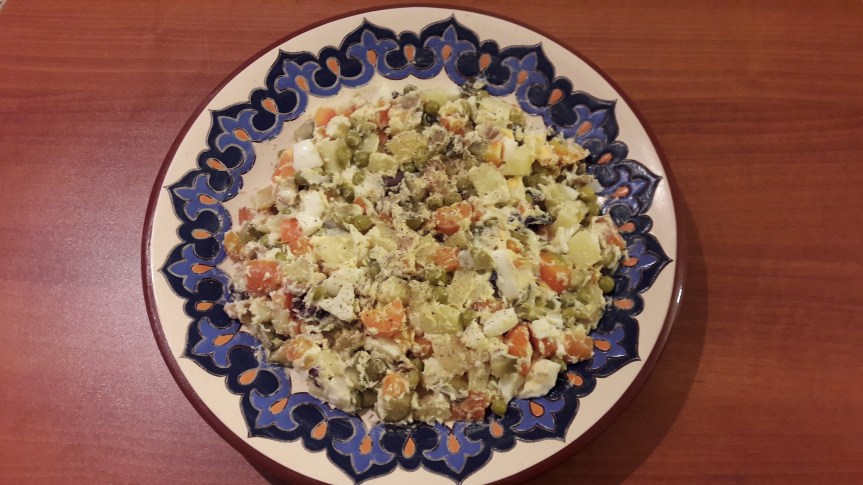
A centre-piece of Russian tables on this day, as people prepare to welcome in novy god, is the Olivier salad – a concoction of boiled potatoes, pickled cucumbers, peas, eggs, carrots and boiled beef or chicken in a mayonnaise dressing. This version dates from Soviet times as all the ingredients could usually be procured even in the depths of winter and despite chronic shortages.
Arrange
Mix
Serve!
A version of the salad, omitting the meat and eggs, is made in Turkey where it’s known as Rus Salatası – we’ve made our own veggie version that replaces the meat (Olivier purists look aside now, please) with black and green olives and uses sour cream in place of mayonnaise.
When I lived in Moscow in the 1990s I got it into my head that Olivier salad should include olives (mistakenly thinking that Olivier referred to olives rather than the salad’s originator!) and I was disappointed when it came minus olives – so now I finally have a chance to put this right!
Ingredients (serves 3-4)
150 g potatoes
150 g carrots
150 g peas
150 g pickled cucumbers
150 g black and green olives
two hard boiled eggs
150 ml sour cream or natural yogurt
pinches of salt and black pepper
Method
Boil the whole carrots and potatoes until cooked but not going mushy and boil the eggs for 5 minutes or so. While they’re all cooking, chop the pickled cucumbers and olives into small cubes.
Drain the potatoes and carrots and cover with cold water to stop them cooking. Do the same with the eggs. Chop the potatoes, carrots and eggs into small cubes and arrange around the side of a large serving dish in separate sections with the olives, peas and cucumbers.
Pour the sour cream or yogurt into the middle of the bowl and season with salt and pepper. Now mix all the ingredients thoroughly, making sure they all get a good coating of sour cream or yogurt.
Leave in the fridge before serving alongside other Russian-themed salads, such as this veggie take on caviar made from beluga lentils, and wish a hearty S Novym Godom with shots of vodka and/or a glass of chilled Sovyetskoye Shampankskoye (if you can get hold of it in your local offie!) as you prepare to welcome Old New Year in true Russian-style!
This week on Knidos Cookery Club we’re looking to Central Asia for inspiration in the form of the noodle, which, Marco Polo legends aside, is thought by some to have originated in this part of the world.
While the question of who first came up with the idea of combining wheat flour, water, egg and salt to make pasta is still being debated, one thing is certain – the dish (most likely) came from somewhere in Asia!
Noodles from Kazakhstan – where they’re called kespe
The noodle probably came into Turkey with the nomadic tribes who swept across the Eurasian steppe, located between China and Eastern Europe, in the wake the Mongol invasions of Anatolia from the 13th century onwards. Pasta dishes in Turkey include manti, small meat-filled dumplings and erişte, thin strips of pasta dressed with cream and walnuts or added to soups and stews to add body.
Chick pea, pumpkin and noodle soup
Another name for erişte is kesme – this caused some confusion when researching this article as kesme can be a negative (do not cut) or the ‘-me‘ ending can turn the word into a noun – in this case it’s the latter as the name refers to a large sheet of pasta cut into strips. Erişte, by the way, is from the Persian reshteh, which means string or thread.
We’ve decided to stick with the Persian vibe – a popular dish in Iran is ash reshteh, a vegetable and noodle soup, and make a version of this hearty soup cum stew with chickpeas, pumpkin, tomato and noodle strips.
Ingredients (serves 3-4)
For the noodles:
If you have time and want to make your own noodles, follow this link, otherwise use about 100 g of shop-bought dried egg noodles, broken up into 2 cm strips.
For the stew:
100 g egg noodles, broken into 2 cm strips
400 g pumpkin
200g dried chick peas, soaked overnight and cooked for an hour or so until tender but not mushy
25 ml olive oil
one medium-sized onion
three medium-sized tomatoes
500 ml vegetable stock or reserved cooking water form the chick peas
one clove of garlic
one teaspoon coriander seeds
one teaspoon red chili flakes
one teaspoon cumin seeds
salt and black pepper to taste
dollop of sour cream
Method
Cut the pumpkin into 2 cm chunks and roast in a baking dish in an oven pre-heated to 220 c /gas mark 7 for 30 minutes or so. If you have any seeds from the pumpkin, place these on tin foil and roast alongside the pumpkin until turning brown.
Chop up the onion and fry in the olive oil in a heavy-based pan with the garlic and spices on a medium heat until beginning to brown. Turn down the heat, add the chopped up tomatoes and stir.
Cook for five minutes and then add the chick peas and 200 ml of the stock. Bring to the boil and simmer for ten minutes. Add the roasted pumpkin and the rest of the stock and bring to the boil again. Add the broken-up noodles and cook for five minutes until the noodle pieces are cooked.
Serve in a bowl with a dollop of sour cream or yogurt and sprinkle some roasted pumpkin seeds over the top.
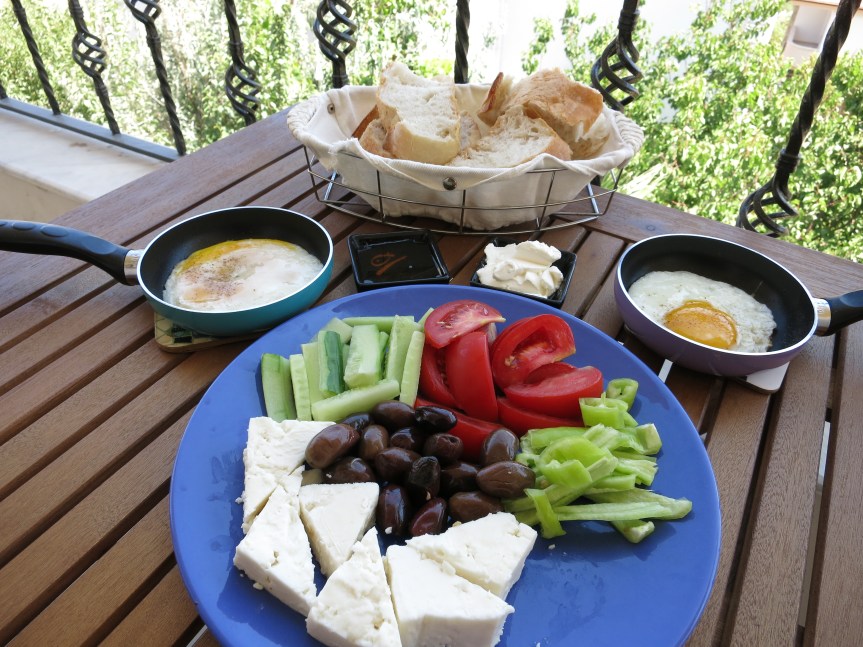
Turkey has turned the first meal of the day into an art form with ever-more elaborate spreads of cheeses, jams, honey, olives, tomatoes, cucumbers, peppers and egg dishes spilling across the table with different regions of the country bringing local additions to the mix.
Turk Brekkie!
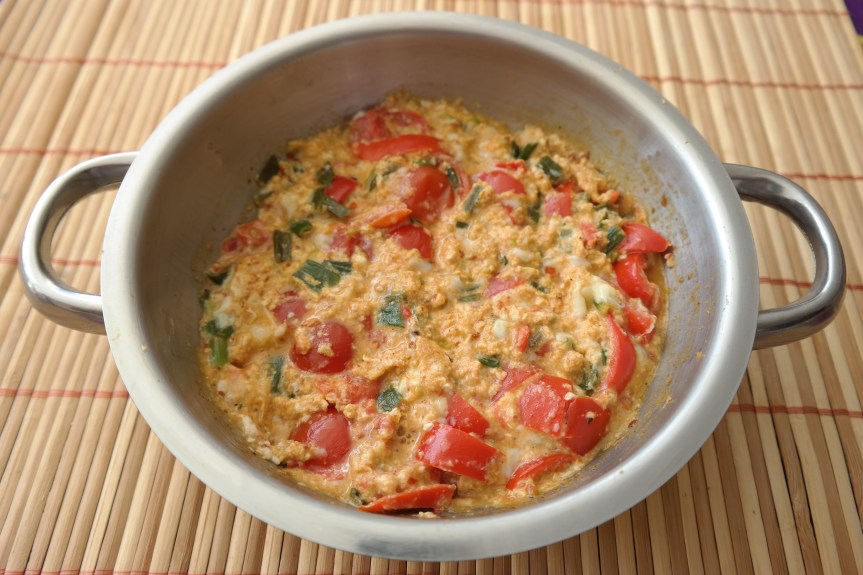
At the heart of the breakfast there is usually an egg dish – often a soft-boiled or fried egg, or a speciality dish such as menemen, a hearty scramble of eggs, onions peppers and tomatoes.
In Datça, the köy, or village, breakfast can come with lashings of local honey and gözleme, a pancake filled with white cheese and fresh herbs. The Van Breakfast, originating in the east of the country, has conquered the rest of Turkey with its array of 20 or more dishes. It includes otlu peynir, a herb-infused cheese, martuğa, made from flour, butter and egg, and kavut, a porridge made from cornmeal and ground barley.
Menemen
This week on Knidos Cookery Club, we’ll be cooking up menemen. I first encountered this breakfast-time treat when staying in Izmir, on the Aegean coast. Walking out of my hotel, I was met be the mouth-watering aroma of eggs bubbling away with peppers and tomatoes. Street hawkers, hunched over single-burner camping stoves, were busily whipping up pans of scrambled delight.
Ingredients (for one hearty serving)
Two eggs
One spring onion
One small red or green pepper (if you like it hot, use a chili pepper)
One small tomato
Seasoning: pinches of salt, black pepper, cumin and chill pepper flakes
Parsley for garnishing
Olive oil for frying
Method
Heat the oil in a small frying pan. Add the diced spring onion and cook over a medium heat until starting to brown. Add the diced tomato and diced pepper and season with salt, black pepper, cumin and chill pepper flakes.
Cook until the peppers begin to soften then reduce to a low heat and crack in the eggs. Keep stirring as you would for scrambled eggs. When the egg begins to set, remove from the heat – it’ll carry on cooking in the pan. Garnish with some chopped parsley.
Serve immediately with crusty bread and a plate of white cheese, honey, olives, tomatoes, cucumbers and peppers for the full-on Turk brekkie effect.


 Knidos Cookery Club